EP1359708A1 - Procede utilise par un terminal de videoconference pour appeler un service de videoconference et forme de donnees de message associee - Google Patents
Procede utilise par un terminal de videoconference pour appeler un service de videoconference et forme de donnees de message associee Download PDFInfo
- Publication number
- EP1359708A1 EP1359708A1 EP02700119A EP02700119A EP1359708A1 EP 1359708 A1 EP1359708 A1 EP 1359708A1 EP 02700119 A EP02700119 A EP 02700119A EP 02700119 A EP02700119 A EP 02700119A EP 1359708 A1 EP1359708 A1 EP 1359708A1
- Authority
- EP
- European Patent Office
- Prior art keywords
- conference
- video communication
- information
- mcu
- communication terminal
- Prior art date
- Legal status (The legal status is an assumption and is not a legal conclusion. Google has not performed a legal analysis and makes no representation as to the accuracy of the status listed.)
- Granted
Links
Images



Classifications
-
- H—ELECTRICITY
- H04—ELECTRIC COMMUNICATION TECHNIQUE
- H04L—TRANSMISSION OF DIGITAL INFORMATION, e.g. TELEGRAPHIC COMMUNICATION
- H04L12/00—Data switching networks
- H04L12/02—Details
- H04L12/16—Arrangements for providing special services to substations
- H04L12/18—Arrangements for providing special services to substations for broadcast or conference, e.g. multicast
- H04L12/1813—Arrangements for providing special services to substations for broadcast or conference, e.g. multicast for computer conferences, e.g. chat rooms
-
- H—ELECTRICITY
- H04—ELECTRIC COMMUNICATION TECHNIQUE
- H04L—TRANSMISSION OF DIGITAL INFORMATION, e.g. TELEGRAPHIC COMMUNICATION
- H04L65/00—Network arrangements, protocols or services for supporting real-time applications in data packet communication
- H04L65/1066—Session management
- H04L65/1101—Session protocols
- H04L65/1106—Call signalling protocols; H.323 and related
-
- H—ELECTRICITY
- H04—ELECTRIC COMMUNICATION TECHNIQUE
- H04L—TRANSMISSION OF DIGITAL INFORMATION, e.g. TELEGRAPHIC COMMUNICATION
- H04L65/00—Network arrangements, protocols or services for supporting real-time applications in data packet communication
- H04L65/40—Support for services or applications
- H04L65/403—Arrangements for multi-party communication, e.g. for conferences
- H04L65/4038—Arrangements for multi-party communication, e.g. for conferences with floor control
-
- H—ELECTRICITY
- H04—ELECTRIC COMMUNICATION TECHNIQUE
- H04M—TELEPHONIC COMMUNICATION
- H04M3/00—Automatic or semi-automatic exchanges
- H04M3/42—Systems providing special services or facilities to subscribers
- H04M3/56—Arrangements for connecting several subscribers to a common circuit, i.e. affording conference facilities
-
- H—ELECTRICITY
- H04—ELECTRIC COMMUNICATION TECHNIQUE
- H04N—PICTORIAL COMMUNICATION, e.g. TELEVISION
- H04N7/00—Television systems
- H04N7/14—Systems for two-way working
- H04N7/15—Conference systems
-
- H—ELECTRICITY
- H04—ELECTRIC COMMUNICATION TECHNIQUE
- H04M—TELEPHONIC COMMUNICATION
- H04M2203/00—Aspects of automatic or semi-automatic exchanges
- H04M2203/50—Aspects of automatic or semi-automatic exchanges related to audio conference
- H04M2203/5063—Centrally initiated conference, i.e. conference server dials participants
Definitions
- the invention relates to a video communication service technology in multimedia communication technology field.
- Video communication service is a multimedia service that synthesizes information such as voice, image and data etc. and makes long haul transmission of them.
- a video communication service may be a videoconference and includes three types of information: image, voice and data.
- a videoconference service can be seen as a conventional conference television service and is one kind of video communication services.
- the videoconference is one kind of communication modes for a conference held at two or many different sites. This telecommunication mode uses television technology and equipment, and through transmission channel to serve a conference.
- Video communication service makes it is possible that when people communicate at different sites, they can hear voice of each other and can see images of each other. This enhances real feelings, sincere feelings and at site feelings of communication.
- Video communication service is used in military, politic, economic, education and health fields etc., and has reality, high efficiency and real time advantages.
- Video communication service provides an effective mean for communication, management and collaboration of decision making etc.
- a video communication service system is consisted of video communication terminals, transmission channels and multipoint control units (MCU), which will be described in the following, respectively.
- MCU multipoint control units
- a video communication terminal samples, compress codes and multiplexes image, voice and relating data signal, which happen at a conference site, then sends to a transmission channel.
- the video communication terminal sorts, decodes a received video communication service signal and returns to the image, voice and data signal of the conference site where the signals originally happen.
- the video communication terminal sends conference control signal (such as apply for speaking, apply for the control of a conference etc.) to a MCU, and executes control commands from the MCU for the site.
- the video communication terminal also makes capability exchange and mode switching with the MCU.
- a capability exchange means a procedure that both sides of the communication exchange the service capability, which they support respectively.
- a transmission channel can be optical fiber, cable, microwave or satellite mode etc.
- the communication networks that are commonly used for video communication service are a public switcher telephone network (PSTN), a packet switched public data network (PSPDN) and a digital data network (DDN) etc.
- PSTN public switcher telephone network
- PSPDN packet switched public data network
- DDN digital data network
- broadband network based on ATM technology is developed rapidly, this gives video communication service a wider development area, such as ISDN network, IP network and IQ network.
- video communication service has a better condition to spread rapidly general people.
- the H.323 is a member of H.32X family developed by ITU-T. Other members of H.32X family are used in different networks for implementing multimedia communication, such as H.324 for SCN, H.320 for ISDN, H321and H310 for B-ISDN and H.322 for LAN with Q o S guarantee.
- the H.323 recommendation is a standard for a multimedia conference system (also called H.323 conference system) based on a public switched network (PSN).
- the H.323 conference system supposes that the network which it bases on is a network without providing Q o S guarantee.
- IP network the H.323 standard is mainly applied in IP network.
- An important purpose of H.323 standard is to interconnect with multimedia services on other networks, and this is performed by a gateway.
- GK gatekeeper
- one important optional component is gatekeeper (GK), which can be understood as a "brain" of the network and is a focus of all internal calls in the H.323 network.
- MCUs are the control kernel of a video communication service system. When terminals attending a conference are more than two, they must be controlled by a MCU. All terminals are connected to a MCU with standard interface. A MCU implements exchange and mixture of image and voice, and all conference control functions according to the international standards: H.221, H.242, H.243 and T.120 etc.
- a video communication service is implemented that before a conference has been convened, resources must be pre-allocated in MCUs between all sites of the conference.
- resources must be pre-allocated in MCUs between all sites of the conference.
- a conference and its sites are defined in a MCU, the conference is controlled by the MCU, and resources are distributed accordingly. Once resources are satisfied, the conference can be convened.
- this kind of operation mode cannot satisfy a requirement of video communication service providing publicly.
- the disadvantages are as follow. First, from the service provider point of view, it is necessary to have a special operator to control the MCU, to define a conference and sites, to manage the conference. This will greatly decrease efficiency of a video communication service network and limit profit of a video communication service system.
- a user must take a phone call or go to a video communication service office to schedule a conference, then the staffer of the office informs a MCU operator to call the conference at the scheduled time. This not only cannot provide real time service, but also less of security.
- the purpose of the invention is to provide a method for calling a video communication service by a video communication terminal and a message data form used in the method.
- the first aspect of the invention is to propose a method for calling a video communication service from a video communication terminal, when MCUs and video communication terminals are connected through communication network; it is characterized that comprising the following steps:
- the MCU retransmits the conference information to a service management center.
- the service management center dispatches related MCUs resources for the conference. Then the service management center sends the conference information to the related MCUs and instructs the MCUs to convene the conference.
- an In-Band mode means a communication channel inside the service bandwidth; an Out-of-Band mode means a communication channel outside the service bandwidth.
- An In-Band channel can be: a MLP (Multi-Layer Protocol) channel, a H-MLP (High-speed Multi-Layer Protocol) channel, a LSD (Low Speed Data) channel, a HSD (High Speed Data) channel, a BAS (Bit Allocation Signaling) channel or an IP channel which is used for multimedia service in IP network and coincides with the H.323 specification.
- MLP Multi-Layer Protocol
- H-MLP High-speed Multi-Layer Protocol
- LSD Low Speed Data
- HSD High Speed Data
- BAS Bit Allocation Signaling
- the conference information is transferred by a specific message data form.
- the conference information includes sub-information for a conference, sub-information for sites and common sub-information for a conference and sites.
- the first video communication terminal can be seen in default as the chairman video communication terminal of a conference.
- the second aspect of the invention is to provide a method for calling a video communication service from a video communication terminal, when MCUs and video communication terminals are connected through IP communication network; it is characterized that comprising the following steps:
- the third aspect of the invention is to provide a message data form that is used for information transmission through In-Band channels in a video communication service.
- the message data form is characterized that includes sequentially: a data starting mark field, a data type field, a data length field, a field for no less than one piece of sub-information, a data ending mark field and a cyclic redundancy check field.
- the sub-information field includes sequentially: a sub-information type field, a sub-information length field and a sub-information data field.
- the invention is used but not limited in the following situations:
- a user launches a video communication service in an Out-of-Band mode.
- the conference control function and conference definition function is concentrated on a MCU, so efficiency of the MCU is low.
- efficiency of a video communication service network is low.
- the invention separates conference control function and conference definition function, where the MCU implements conference control function and the video communication terminal implements conference definition function.
- the information for convening a conference and various control requirements during a conference are transferred to MCUs by video communication terminals through an In-Band mode.
- In-Band mode for video communication service is named by us as caller convening conference mode (i.e. SiteCall mode).
- the caller convening conference mode is more suitable for popularized video communication service comparing with the present technologies.
- the invention has broken through the conventional videoconference mode and has proposed a new technical thought, which implements a real separation of user and service provider. This gives a better technical basis for the spread and applying of the popularized video communication service.
- the caller convening conference technology implements In-Band mode, which is reliable and secure.
- the right for convening a conference is moved to the user, so there is no need to have a special operator at MCU, i.e. an unmanned MCU. Consequently, a user use a video communication service likes to take a telephone call, and is flexible and convenient.
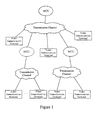
- Figure1 shows a network connection mode for a video communication service system, which can be applied in the invention.
- the invention can also apply other types of network connection.
- Figure1 is only an example.
- a method proposed by the first aspect of the invention for calling a video communication service from a video communication terminal, when MCUs and video communication terminals are connected through communication network, is characterized that comprising the following steps:
- the conference information is transferred with a specific message data form, which includes sequentially: a data starting mark field, a data type field, a data length field, a field for no less than one piece of sub-information, a data ending mark field and a cyclic redundancy check field.
- a specific bit in the data type byte is defined as an extended bit, the value of which defines whether the next byte is also a data type byte.
- the sub-information field includes sequentially: sub-information type field, sub-information length field and sub-information data field.
- a specific bit in the sub-information type byte is defined as an extended bit, the value of which defines whether the next byte is also a sub-information type byte.
- the conference information includes sub-information for a conference, sub-information for sites and common sub-information for a conference and sites.
- the MCU retransmits the conference information to a service management center.
- the service management center dispatches resources of related MCUs for the conference. Then the service management center sends the conference information to the related MCUs and instructs the MCUs to convene the conference.
- step (a) further comprises the following steps:
- the In-Band channel is a MLP channel, a H-MLP channel, a LSD channel, a HSD channel or a BAS channel.
- the In-Band channel has a 6.4kbps rate.
- step (b) further comprises the following steps:
- the first video communication terminal is seen in default as the chairman video communication terminal of the conference.
- the method of the invention further includes:
- the method of the invention further includes:
- the method of the invention further includes the following steps:
- a message data form is used for information transmission through In-Band channels in a video communication service.
- a message data form is characterized that includes sequentially: a data starting mark field, a data type field, a data length field, a field for no less than one piece of sub-information, a data ending mark field and a cyclic redundancy check field.
- a specific bit in the data type byte is defined as an extended bit, the value of which defines whether the next byte is also a data type byte.
- the sub-information includes sequentially: a sub-information type field, a sub-information length field and a sub-information data field.
- a specific bit in the sub-information type byte is defined as an extended bit, the value of which defines whether the next byte is also a sub-information type byte.
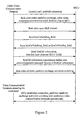
- FIG.2 shows a video communication terminal calls a video communication service procedure for the first embodiment of the invention.
- a caller convening conference procedure is sequentially happened as follow.
- a video communication terminal (called first video communication terminal) as a caller video communication terminal calls a MCU and establishes connection with the MCU.
- the first video communication terminal sends a SiteCall capability mark SiteCall_Cap to the MCU.
- Both sides, the video communication terminal and the exchange platform are all definitely opened a MLP channel, and the bit speed can be 4kbps, 6.4kbps 8kbps or 14.4kbps with priority of 6.4kbps.
- the first video communication terminal sends a sending SiteCall information request SiteCallInfoReq_BAS to the MCU.
- the MCU responds with the SiteCallInfoReq_BAS a receiving sending SiteCall information request SiteCallInfoResp_BAS to the first video communication terminal. Then, the first video communication terminal sends SiteCall information to the MCU.
- the data link layer deploys ITU-T Q.922 protocol and DCLCI 1 is used for SiteCall information transmission. After the SiteCall information has been transferred, the MCU sends a SiteCall response information to the first video communication terminal.
- the first video communication terminal and the MCU perform capability exchange and mode switching. The MCU establishes connection with other video communication terminals of the conference automatically.
- the SiteCall capability mark SiteCall_Cap is a specific multiple bytes or single byte extended code.
- the SiteCall_Cap shows that the terminal needs to open the MLP channel for transferring SiteCall information after attending the conference.
- the SiteCallInfoReq_BAS is a command sent to the MCU from the video communication terminal after MLP channel has been opened and shows SiteCall information will be transferred immediately. After the MCU has received the command, it guarantees that the MLP will not be occupied by other applications.
- the SiteCallInfoResp_BAS sent to the video communication terminal from the MCU shows that the MCU is ready to receive SiteCall information. If for some reasons, such as MLP channel cannot be opened, the MCU cannot receive SiteCall information from the video communication terminal, then a reject response of SiteCall information SiteCallInfoRej_BAS is sent to the video communication terminal.
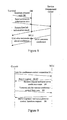
- FIG3 shows an adding conference sites procedure in a method that a video communication terminal calls a video communication service for the second embodiment of the invention.
- the chairman video communication terminal has the right to add conference sites during a video communication service.
- the adding conference sites procedure is sequentially happened as follow.
- the chairman video communication terminal sends an adding conference sites information to the MCU through the MLP channel.
- the MCU responds an acknowledgement message of the adding conference sites information to the chairman video communication terminal. Then, the MCU established connections with the new added video communication terminals automatically.
- Figure4 shows an message data form for third embodiment of the invention.
- the message data form includes sequentially: a data starting mark field, a data type field, a data length field, a field for no less than one piece of sub-information, a data ending mark field and a cyclic redundancy check field.
- the data starting mark 0xFE shows start of an information data.
- the data type shows the type of an information data to be transferred.
- bit R is used for extension; when R is 0, then next byte is not a data type byte; and when R is 1, then next byte is also a data type byte.
- the data length field taking two bytes, shows the total length of the information data to be transferred, including all control fields: the data starting mark field, the data ending mark field, the CRC field and all sub-information fields.
- the data ending field taking one byte, 0xFD shows that the information data is ended.
- the CRC field is a cyclic redundancy check using CCITT 16 bits standard algorithm.
- Figure5 shows a sub-information data form within an message data form for third embodiment of the invention.
- the sub-information includes sequentially: a sub-information type field, a sub-information length field and a sub-information data field.
- the sub-information type field shows the data type of a sub-information.
- the R bit is used for extension; when R is 0, then next byte is not a sub-information type byte again; when R is 1, then next byte also belongs to the sub-information type field.
- the sub-information length taking one byte, shows the length of the sub-information data.
- the sub-information data is the data brought in the sub-information packet.
- FIG.6 shows that a video communication terminal calls a video communication service procedure for the forth embodiment of the invention, wherein a video communication terminal is a H.320 terminal.
- a video communication terminal is a H.320 terminal.
- the H.320 terminal launches a call and negotiates with a MCU for establishing a data transmission channel (such as MLP channel etc.), then sends the information of a conference to be convened to the MCU.
- the conference may relate to more than one MCU, the MCU retransmits the conference information to a service management center, which will convene the conference and finally will return the result to the SiteCall terminal.
- MCU can actively call other terminals of the conference to attend the conference.
- a terminal also can call MCUs to attend the conference.
- the conference information may not be sending to the service management center and the MCU convenes the conference itself.
- Figure7 shows adding conference sites procedure in a method that a video communication terminal calls a video communication service for the forth embodiment of the invention.
- the procedure is simpler, it uses the channel having been established for the conference to send the adding conference sites information.
- the simplest way is to use the BAS to send the adding conference sites information. In general, it is defined that only the chairman terminal can perform the adding conference sites operation.
- Figure8 shows a video communication terminal calls a video communication service procedure for the fifth embodiment of the invention, i.e. in IP network a H.323 terminal makes a calling conference procedure.
- the calling conference procedure of H.323 may be identical with the calling conference procedure of H.320, i.e. using the calling conference procedure of H.320.
- GK for registration
- the mode is that SiteCall information of H.323 can be transferred through GK.
- the GK sends the SiteCall information to the service management center to convene a conference.
- FIG.9 shows a H.323 terminal controls a conference procedure in a method that a video communication terminal calls a video communication service for the fifth embodiment of the invention.
- a H.323 terminal applies to the MCU for various control functions of a conference by using console software.
- Controlling a conference through console software comprises the following steps:
- step 2 When the MCU has received the request, whether there is the conference control connection of the terminal is decided. If there is the conference control connection of the terminal, the conference control connection request is rejected and the operation is ended.
- the MCU accepts the conference control request of the console and sends the present conference state information to the console.
- the console After the console has received the message that MCU has accepted the request, the console can send various conference control functions to the MCU through the conference control channel.
- step6 After the MCU has received a conference control application from the console, the MCU processes the conference control accordingly, and sends the conference state to the console through the conference control channel.
- Figure 10 shows a detail procedure in a video communication terminal for obtaining a list of conference sites having not entered the conference for the fifth embodiment of the invention. After knowing the conference sites that have not entered the conference, a call or delete operation can be taken to those conference sites.
- the invention discloses a method to implement calling a conference from a video communication terminal and to control the conference, and an message data form for data transmission through an In-Band channel. Comparing with the present technology, the invention has obvious advantages. First, from the service provider point of view, it is no need to have a special operator to control MCU and to cooperate with service office for defining a conference. The conference is automatically proceeded by the cooperation of video communication terminals and MCUs. This will greatly increase efficiency and get more profit of a video communication service system. Secondly, from the user point of view, for convening a conference, a user only needs to define the conference in a video communication terminal, then as simple as making a phone call, the video communication service is started in real time. This is not only avoiding a complex and tedious pre-registration procedure, but also increasing the expected security.
Landscapes
- Engineering & Computer Science (AREA)
- Multimedia (AREA)
- Signal Processing (AREA)
- Computer Networks & Wireless Communication (AREA)
- General Engineering & Computer Science (AREA)
- Business, Economics & Management (AREA)
- General Business, Economics & Management (AREA)
- Two-Way Televisions, Distribution Of Moving Picture Or The Like (AREA)
- Telephonic Communication Services (AREA)
- Data Exchanges In Wide-Area Networks (AREA)
Applications Claiming Priority (3)
| Application Number | Priority Date | Filing Date | Title |
|---|---|---|---|
| CN01102487 | 2001-02-06 | ||
| CNB011024879A CN1134936C (zh) | 2001-02-06 | 2001-02-06 | 一种视讯业务的实现方法 |
| PCT/CN2002/000063 WO2002067500A1 (fr) | 2001-02-06 | 2002-02-06 | Procede utilise par un terminal de videoconference pour appeler un service de videoconference et forme de donnees de message associee |
Publications (3)
| Publication Number | Publication Date |
|---|---|
| EP1359708A1 true EP1359708A1 (fr) | 2003-11-05 |
| EP1359708A4 EP1359708A4 (fr) | 2006-08-16 |
| EP1359708B1 EP1359708B1 (fr) | 2009-03-18 |
Family
ID=4652757
Family Applications (1)
| Application Number | Title | Priority Date | Filing Date |
|---|---|---|---|
| EP02700119A Expired - Lifetime EP1359708B1 (fr) | 2001-02-06 | 2002-02-06 | Procede utilise par un terminal de videoconference pour appeler un service de videoconference et forme de donnees de message associee |
Country Status (7)
| Country | Link |
|---|---|
| US (1) | US7808522B2 (fr) |
| EP (1) | EP1359708B1 (fr) |
| CN (1) | CN1134936C (fr) |
| DE (1) | DE60231598D1 (fr) |
| HK (1) | HK1047664B (fr) |
| RU (1) | RU2263410C2 (fr) |
| WO (1) | WO2002067500A1 (fr) |
Cited By (1)
| Publication number | Priority date | Publication date | Assignee | Title |
|---|---|---|---|---|
| US7456858B2 (en) | 2003-07-07 | 2008-11-25 | Tandberg Telcom As | Distributed MCU |
Families Citing this family (15)
| Publication number | Priority date | Publication date | Assignee | Title |
|---|---|---|---|---|
| CN100359942C (zh) | 2003-11-05 | 2008-01-02 | 华为技术有限公司 | 视讯会议系统及其管理方法 |
| CN100438542C (zh) * | 2004-05-27 | 2008-11-26 | 华为技术有限公司 | 实现电话会议的方法 |
| US7835503B2 (en) * | 2004-09-27 | 2010-11-16 | Alcatel-Lucent Usa Inc. | Systems and methods of adding attachments to voice calls over a circuit-based network |
| CN100417220C (zh) * | 2004-09-28 | 2008-09-03 | 中兴通讯股份有限公司 | 一种通过终端拨号召开多点视频会议的方法 |
| CN100505864C (zh) * | 2005-02-06 | 2009-06-24 | 中兴通讯股份有限公司 | 一种多点视频会议系统及其媒体处理方法 |
| CN1893626B (zh) * | 2005-07-08 | 2010-10-13 | 中国电信股份有限公司 | 用户终端以带内方式自主发起会议召集的方法 |
| KR20080000719A (ko) * | 2006-06-28 | 2008-01-03 | 삼성전자주식회사 | 이동통신 시스템에서 화상통화 연결 장치 및 방법 |
| US7937442B2 (en) * | 2006-09-22 | 2011-05-03 | Microsoft Corporation | Multipoint control unit (MCU) failure detection and rollover |
| US8150917B2 (en) * | 2006-09-22 | 2012-04-03 | Microsoft Corporation | High availability conferencing |
| CN101102455B (zh) * | 2007-07-26 | 2010-09-01 | 中兴通讯股份有限公司 | 一种利用会议电视终端查询会场声音状态的系统及方法 |
| CN101540872B (zh) * | 2009-02-23 | 2012-07-04 | 华为终端有限公司 | 媒体控制服务器多通道级联的控制方法、装置和系统 |
| CN101594512B (zh) * | 2009-06-30 | 2012-01-18 | 中兴通讯股份有限公司 | 实现高清多画面的终端、多点控制单元、系统及方法 |
| US8169936B2 (en) * | 2009-12-22 | 2012-05-01 | Motorola Solutions, Inc. | Decoupled cascaded mixers architechture and related methods |
| CN104683728B (zh) * | 2013-11-29 | 2018-09-11 | 中国电信股份有限公司 | 建立视频通信的方法和系统 |
| CN106331580A (zh) * | 2015-07-02 | 2017-01-11 | 中兴通讯股份有限公司 | 会议呼叫方法及装置 |
Family Cites Families (25)
| Publication number | Priority date | Publication date | Assignee | Title |
|---|---|---|---|---|
| SU1608828A1 (ru) * | 1988-06-15 | 1990-11-23 | Gruzinsk Polt Inst | Уctpoйctbo koдиpobahия и дekoдиpobahия cиctemы bидeokohфepehции c учetom bektopa пepemeщehия |
| ATE139400T1 (de) * | 1991-02-28 | 1996-06-15 | Rai Radiotelevisione Italiana | Verfahren zur nachrichtenübertragung über einen fernsehkanal mit dem teletextsystem |
| US5530472A (en) * | 1993-06-29 | 1996-06-25 | Sprint Communications Company L.P. | Video conference system including a non-reserved video conference capability |
| JP2768248B2 (ja) * | 1993-12-24 | 1998-06-25 | 日本電気株式会社 | 多地点テレビ会議システム |
| US5555017A (en) * | 1994-07-08 | 1996-09-10 | Lucent Technologies Inc. | Seamless multimedia conferencing system using an enhanced multipoint control unit |
| CA2150060C (fr) * | 1994-07-08 | 2000-01-11 | John T. Biggs | Systeme de conference multimedia transparent utilisant des dispositifs terminaux ameliores |
| US5600646A (en) * | 1995-01-27 | 1997-02-04 | Videoserver, Inc. | Video teleconferencing system with digital transcoding |
| RU2144283C1 (ru) * | 1995-06-02 | 2000-01-10 | Интел Корпорейшн | Способ и устройство для управления вводом участников в систему конференц-связи |
| US5559876A (en) * | 1995-09-01 | 1996-09-24 | Telefonaktiebolaget L M Ericsson (Publ) | Conferencing circuit, and associated method, for automatically conferencing subscriber units together in a telephonic conference |
| KR19980701471A (ko) * | 1995-11-15 | 1998-05-15 | 이데이 노부유키 | 다지점 비디오 회의 장치(Multipoint video conference apparatus) |
| US5680392A (en) * | 1996-01-16 | 1997-10-21 | General Datacomm, Inc. | Multimedia multipoint telecommunications reservation systems |
| US5668738A (en) * | 1996-05-31 | 1997-09-16 | Intel Corporation | Dynamic idle aggregation in digital signal transmission |
| US5784561A (en) * | 1996-07-01 | 1998-07-21 | At&T Corp. | On-demand video conference method and apparatus |
| JP3748952B2 (ja) * | 1996-08-08 | 2006-02-22 | 株式会社リコー | 多地点接続ネットワークの構築方法及び多地点接続ネットワークシステム |
| JPH1127262A (ja) * | 1997-07-04 | 1999-01-29 | Sharp Corp | 多地点会議接続システム |
| US6163531A (en) * | 1997-10-31 | 2000-12-19 | Intel Corporation | Method and apparatus to throttle connections to a H.323 multipoint controller by receiver terminals in a loosely-coupled conference |
| JPH11191882A (ja) * | 1997-12-25 | 1999-07-13 | Nec Corp | テレビ会議予約システムおよびテレビ会議予約プログラムを記録した記録媒体 |
| US6157401A (en) * | 1998-07-17 | 2000-12-05 | Ezenia! Inc. | End-point-initiated multipoint videoconferencing |
| US6018360A (en) * | 1998-09-09 | 2000-01-25 | Motorola, Inc. | Method of switching a call to a multipoint conference call in a H.323 communication compliant environment |
| US6457043B1 (en) * | 1998-10-23 | 2002-09-24 | Verizon Laboratories Inc. | Speaker identifier for multi-party conference |
| US6754322B1 (en) * | 1999-08-31 | 2004-06-22 | William Jackson Bushnell | Call me conference call system |
| US6687234B1 (en) * | 1999-10-05 | 2004-02-03 | Siemens Information & Communication Networks, Inc. | Apparatus and method for optimal conference call renegotiation in telephony over LAN systems |
| WO2001072022A1 (fr) * | 2000-03-20 | 2001-09-27 | Sonexis, Inc. | Systeme et procede de fourniture de services d'audioconference |
| AU2002231282A1 (en) * | 2000-11-02 | 2002-05-15 | Polycom, Inc. | Conferencing network resource management for call connectivity |
| EP1348165A4 (fr) * | 2000-12-26 | 2009-01-28 | Polycom Inc | Systeme et procede permettant de coordonner une conference a l'aide d'un serveur specialise |
-
2001
- 2001-02-06 CN CNB011024879A patent/CN1134936C/zh not_active Expired - Lifetime
-
2002
- 2002-02-06 EP EP02700119A patent/EP1359708B1/fr not_active Expired - Lifetime
- 2002-02-06 RU RU2003124305/09A patent/RU2263410C2/ru active
- 2002-02-06 WO PCT/CN2002/000063 patent/WO2002067500A1/fr not_active Ceased
- 2002-02-06 DE DE60231598T patent/DE60231598D1/de not_active Expired - Lifetime
- 2002-12-19 HK HK02109222.9A patent/HK1047664B/zh not_active IP Right Cessation
-
2003
- 2003-02-26 US US10/373,062 patent/US7808522B2/en not_active Expired - Lifetime
Cited By (1)
| Publication number | Priority date | Publication date | Assignee | Title |
|---|---|---|---|---|
| US7456858B2 (en) | 2003-07-07 | 2008-11-25 | Tandberg Telcom As | Distributed MCU |
Also Published As
| Publication number | Publication date |
|---|---|
| HK1047664B (zh) | 2004-10-21 |
| US7808522B2 (en) | 2010-10-05 |
| RU2003124305A (ru) | 2005-02-20 |
| EP1359708A4 (fr) | 2006-08-16 |
| CN1134936C (zh) | 2004-01-14 |
| EP1359708B1 (fr) | 2009-03-18 |
| CN1368808A (zh) | 2002-09-11 |
| US20030147357A1 (en) | 2003-08-07 |
| HK1047664A1 (en) | 2003-02-28 |
| RU2263410C2 (ru) | 2005-10-27 |
| WO2002067500A1 (fr) | 2002-08-29 |
| DE60231598D1 (de) | 2009-04-30 |
Similar Documents
| Publication | Publication Date | Title |
|---|---|---|
| US7808522B2 (en) | Method for calling video communication service by video communication terminal and associated message data form | |
| CA2173017C (fr) | Participation selective dans un appel de conference multimedia | |
| DE60104532T2 (de) | Proxy-vorrichtung und -verfahren | |
| US5680392A (en) | Multimedia multipoint telecommunications reservation systems | |
| US7436428B2 (en) | System and method for including participants in a conference call | |
| US5675583A (en) | Variable communication bandwidth for conference call initiation | |
| EP1263242B1 (fr) | Service d'attente d'appels dans un réseau multimédia | |
| US7079526B1 (en) | Protocol for launching a software application remotely and for reserving network resources with quality of service | |
| US6967933B2 (en) | Processing multimedia calls in a packet-based network | |
| DE60225457T2 (de) | Aufgeteilter vermittlungsknoten und verfahren zu dessen betrieb | |
| KR19990016458A (ko) | 컴퓨터-전화 통합 시스템 및 그를 이용한 중계방법 | |
| CN100379231C (zh) | 一种多媒体通信安全代理网关及安全代理方法 | |
| EP1292091A2 (fr) | Méthode d'émission de messages SMS utilisant des postes téléphoniques Internet | |
| DE10085359B3 (de) | Kommunikationssystem und darin verwendetes Verfahren | |
| WO1998057485A9 (fr) | Procédé permettant d'établir des conférences multipoint | |
| US7474665B2 (en) | Apparatus and method for compulsively receiving multi-calls over internet protocol phones in internet protocol telephony system | |
| US8675039B2 (en) | Method of transferring communication streams | |
| US7626949B2 (en) | Method and device for simultaneous multipoint distributing of video, voice and data | |
| KR0175608B1 (ko) | 영상회의 시스템의 공동작업 방법 | |
| US20040076141A1 (en) | Digital closed network constructed from a telephone exchange and a key telephone system and signal transmission method of the digital closed network | |
| Baurens | Groupware | |
| HK1103324A1 (en) | Video conference call setup via out-bound controlling message | |
| WO2004088964A1 (fr) | Procede et programme de commande permettant de fournir des services a valeur ajoutee a des terminaux de communication | |
| HK1103324B (en) | Video conference call setup via out-bound controlling message |
Legal Events
| Date | Code | Title | Description |
|---|---|---|---|
| PUAI | Public reference made under article 153(3) epc to a published international application that has entered the european phase |
Free format text: ORIGINAL CODE: 0009012 |
|
| 17P | Request for examination filed |
Effective date: 20030311 |
|
| AK | Designated contracting states |
Kind code of ref document: A1 Designated state(s): AT BE CH CY DE DK ES FI FR GB GR IE IT LI LU MC NL PT SE TR |
|
| AX | Request for extension of the european patent |
Extension state: AL LT LV MK RO SI |
|
| A4 | Supplementary search report drawn up and despatched |
Effective date: 20060713 |
|
| RIC1 | Information provided on ipc code assigned before grant |
Ipc: H04L 29/06 20060101AFI20060707BHEP Ipc: H04L 12/18 20060101ALI20060707BHEP |
|
| 17Q | First examination report despatched |
Effective date: 20060920 |
|
| GRAP | Despatch of communication of intention to grant a patent |
Free format text: ORIGINAL CODE: EPIDOSNIGR1 |
|
| RBV | Designated contracting states (corrected) |
Designated state(s): DE ES FR GB IT |
|
| GRAS | Grant fee paid |
Free format text: ORIGINAL CODE: EPIDOSNIGR3 |
|
| GRAA | (expected) grant |
Free format text: ORIGINAL CODE: 0009210 |
|
| AK | Designated contracting states |
Kind code of ref document: B1 Designated state(s): DE ES FR GB IT |
|
| REG | Reference to a national code |
Ref country code: GB Ref legal event code: FG4D |
|
| REF | Corresponds to: |
Ref document number: 60231598 Country of ref document: DE Date of ref document: 20090430 Kind code of ref document: P |
|
| PG25 | Lapsed in a contracting state [announced via postgrant information from national office to epo] |
Ref country code: ES Free format text: LAPSE BECAUSE OF FAILURE TO SUBMIT A TRANSLATION OF THE DESCRIPTION OR TO PAY THE FEE WITHIN THE PRESCRIBED TIME-LIMIT Effective date: 20090629 |
|
| PLBE | No opposition filed within time limit |
Free format text: ORIGINAL CODE: 0009261 |
|
| STAA | Information on the status of an ep patent application or granted ep patent |
Free format text: STATUS: NO OPPOSITION FILED WITHIN TIME LIMIT |
|
| 26N | No opposition filed |
Effective date: 20091221 |
|
| REG | Reference to a national code |
Ref country code: FR Ref legal event code: PLFP Year of fee payment: 15 |
|
| REG | Reference to a national code |
Ref country code: FR Ref legal event code: PLFP Year of fee payment: 16 |
|
| REG | Reference to a national code |
Ref country code: FR Ref legal event code: PLFP Year of fee payment: 17 |
|
| PGFP | Annual fee paid to national office [announced via postgrant information from national office to epo] |
Ref country code: FR Payment date: 20210113 Year of fee payment: 20 |
|
| PGFP | Annual fee paid to national office [announced via postgrant information from national office to epo] |
Ref country code: DE Payment date: 20210126 Year of fee payment: 20 Ref country code: GB Payment date: 20210127 Year of fee payment: 20 |
|
| PGFP | Annual fee paid to national office [announced via postgrant information from national office to epo] |
Ref country code: IT Payment date: 20210112 Year of fee payment: 20 |
|
| REG | Reference to a national code |
Ref country code: DE Ref legal event code: R071 Ref document number: 60231598 Country of ref document: DE |
|
| REG | Reference to a national code |
Ref country code: GB Ref legal event code: PE20 Expiry date: 20220205 |
|
| PG25 | Lapsed in a contracting state [announced via postgrant information from national office to epo] |
Ref country code: GB Free format text: LAPSE BECAUSE OF EXPIRATION OF PROTECTION Effective date: 20220205 |
|
| P01 | Opt-out of the competence of the unified patent court (upc) registered |
Effective date: 20230524 |