EP1364314B1 - Base de donnees - Google Patents
Base de donnees Download PDFInfo
- Publication number
- EP1364314B1 EP1364314B1 EP01998908A EP01998908A EP1364314B1 EP 1364314 B1 EP1364314 B1 EP 1364314B1 EP 01998908 A EP01998908 A EP 01998908A EP 01998908 A EP01998908 A EP 01998908A EP 1364314 B1 EP1364314 B1 EP 1364314B1
- Authority
- EP
- European Patent Office
- Prior art keywords
- key
- decision
- index
- node
- data
- Prior art date
- Legal status (The legal status is an assumption and is not a legal conclusion. Google has not performed a legal analysis and makes no representation as to the accuracy of the status listed.)
- Expired - Lifetime
Links
Images






Classifications
-
- G—PHYSICS
- G06—COMPUTING OR CALCULATING; COUNTING
- G06F—ELECTRIC DIGITAL DATA PROCESSING
- G06F16/00—Information retrieval; Database structures therefor; File system structures therefor
- G06F16/20—Information retrieval; Database structures therefor; File system structures therefor of structured data, e.g. relational data
- G06F16/22—Indexing; Data structures therefor; Storage structures
- G06F16/2228—Indexing structures
- G06F16/2255—Hash tables
-
- G—PHYSICS
- G06—COMPUTING OR CALCULATING; COUNTING
- G06F—ELECTRIC DIGITAL DATA PROCESSING
- G06F16/00—Information retrieval; Database structures therefor; File system structures therefor
- G06F16/20—Information retrieval; Database structures therefor; File system structures therefor of structured data, e.g. relational data
- G06F16/22—Indexing; Data structures therefor; Storage structures
- G06F16/2228—Indexing structures
- G06F16/2246—Trees, e.g. B+trees
-
- G—PHYSICS
- G06—COMPUTING OR CALCULATING; COUNTING
- G06F—ELECTRIC DIGITAL DATA PROCESSING
- G06F16/00—Information retrieval; Database structures therefor; File system structures therefor
- G06F16/20—Information retrieval; Database structures therefor; File system structures therefor of structured data, e.g. relational data
- G06F16/22—Indexing; Data structures therefor; Storage structures
- G06F16/2228—Indexing structures
- G06F16/2272—Management thereof
Definitions
- the present invention relates to a method of indexing, placing information into, and querying a database.
- the invention allows efficient searching of scalar data within a data storage system.
- Scalar data types include, for example, logical data, text strings, numeric data, and date-time data.
- Index mechanisms require the creation and maintenance of an internal index structure.
- the navigation and maintenance of this structure incurs a processing overhead in its own right.
- the overhead can vary as a function of the indexing mechanism used. It can also vary as the size of the database changes or as, for example, the data in the database changes from time to time.
- a simple example is in a database storing chronological information, such as dates of birth.
- the designer may, for example, structure the data such that those people born before 2000 AD have data relating to them segregated from those born after 2000 AD.
- This strategy may work for a while but, it can be seen that the number of people born before 2000 AD is a constrained set, whereas the number born after this date is unbounded. Thus, as time passes this indexing key may become redundant as the proportion of entries relating to people born after 2000 AD increases.
- the effectiveness of the indexing method can be judged against a number of attributes, such as:
- a method of organising a database which in use comprises an index and data, wherein the index is queried using a search key comprising at least one symbol, the symbol being represented by a plurality of bits, in order to locate data matching a search criterion, and wherein the index is a hierarchical structure of nodes that is navigated during a search until a conclusion set is reached, wherein the index is searched by comparing a decision group of the search key at each node with a decision value of the node, each decision group comprising at least one bit and at least some of the decision groups comprise a plurality of bits, the structure is organised such that key symbols are not stored at a node in the structure, each node has less than three exit paths therefrom and the number of bits in the decision group can be set to include any number of bits between a single bit and all the bits of the key.
- the index structure is much smaller than prior art indexes because the nodes do not store the whole of the key associated with the node. Indeed a node need not store any key associated with it. Furthermore the nodes do not store the decision rules relating to interrogation of a node. This is because the rules are global in that they are shared by all nodes rather than being node specific.
- Each decision node makes a binary decision. That is, each node only has a maximum of two exit paths.
- the decision applied at each node is a simple query.
- the query compares the key or part of the key with the decision criterion at a node, and that in binary terms
- Known prior art systems typically use tree graphs with nodes containing one or more items of key data. In order to interrogate the database the trees are navigated by comparing key values at each node visited with a required search key. It is inherent in such a design that each node includes the entirety of a key associated with the creation of the node and hence the "size" of the node in data storage terms can be quite large.
- test is typically (though not necessarily exclusively) is the key, or part thereof being tested, greater than or less than the decision criterion. This removes the need to store features of the search key within the structure of the index itself.
- Each exit from a node may point to a further decision node, a conclusion set or to a null result.
- Every "record” in the database belongs to a conclusion set.
- the conclusion set itself points to the data that satisfies the specific search criteria, or in some circumstances may store the data itself.
- the hierarchical structure of decision nodes may be regarded as a decision graph.
- the decision graph may be of any arbitrary size and internal structure. However, the decision graph is generally a small entity in terms of its size in a memory of a processor.
- the decision graph is, in use, held within electronic memory of a data processor.
- the data processor can quickly find the result of the query.
- access times associated with such media are eliminated thereby enhancing performance.
- each conclusion set can only be reached by one single route through the decision graph. This ensures that all the keys in a conclusion set conform to a shared unique set of decisions.
- Database indexes can, and indeed must, evolve with time and this can lead to degradation in performance as the database grows. It is therefore necessary to allow for insertion and deletion of data within conclusion sets, and also for the creation of new conclusion sets.
- each conclusion set has a maximum size.
- the maximum size is a user or designer controlled parameter.
- the size may advantageously be related to the size of data or addressing blocks used by a storage device, such as a magnetic store which may comprise one or more hard disks.
- a storage device such as a magnetic store which may comprise one or more hard disks.
- any random access data storage may be used, such as optical storage devices.
- a new decision node is inserted into the decision tree and the data which was in the conclusion set is re-indexed into new conclusion sets reached via the exit paths of the new decision node.
- the new decision node is inserted in the exit path of a node that had pointed to the conclusion set that outgrew its maximum size.
- the decision graph does not contain any search key data itself. All key data is implied or deduced from the structure of the decision graph. This keeps the decision graph compact. Also, this means that the size of the decision graph is independent of the key size.
- a further advantage of the present invention is that changes to the structure of the decision graph can be made, and that these changes are local. That is only one or a few decision nodes are affected by the change. This means that structural reorganisation is not a significant computational overhead.
- the decision nodes are related to portions, and more preferably relatively small portions, of the key.
- the decision graph is largely independent of the structure of the key.
- the decision graph places few, if any, restrictions on the structure of the key.
- the portion of the key to which a node is related does not have to follow a structured order as the decision graph is navigated.
- the portion of the key in question does not have to progress along the key in a monotonic fashion as the graph is navigated.
- the decision graph is structured such that the semantic order of key sequences is preserved.
- the decision graph may be structured such that a first node or set of nodes test a first bit or a first group of bits in a search key and that, as the decision graph is navigated towards a conclusion set, the bits of the key that are tested at subsequent nodes become increasingly less significant.
- the decision graph can be navigated to locate keys either by exact matching or by range matching. The range may be partially or fully bounded during the search.
- the structure of decision graph and in particular the fact that changes to the structure are local, in that they only affect a node or two, rather than being global means that the computational task of maintaining the decision graph is generally low.
- the localised nature of the reorganisation facilitates insertion, deletion and retrieval of data using the index. In fact, two or more of these events may occur concurrently.
- the size of the decision graph Preferably there is no functional limitation to the size of the decision graph.
- the structure of the index gives rise to a well behaved increase in search time as the decision graph grows to accommodate increased amounts of data.
- a database which in use comprises an index and data, wherein the index is queried using a search key comprising at least one symbol, the symbol being represented by a plurality of bits, in order to locate data matching a search criterion, and wherein the index is a hierarchical structure of nodes that is navigated during a search until a conclusion set reached, characterised in that the index is searched by comparing a decision group of the search key at each node with a decision value of the node, in that each decision group comprising at least one bit and at least some of the decision groups comprise a plurality of bits, in that the structure is organised such that key symbols are not stored at a node in the structure, and in that each node has less than three exit paths therefrom.
- the localised structural changes in the index facilitates concurrent insert, delete and retrieval events within the index.
- each item of data within the database can belong to only one conclusion set.
- the decision graph should reside wholly within semiconductor memory this may not always be possible. This may be because the index becomes too large, or it may be because the host data processor implements a "virtual machine" environment for the database such that the host can multitask, and the operating system does not allocate sufficient memory resource to the database.
- the disk controller manages the disk in terms of discrete blocks of data.
- the minimum block size used by the disk controller is 64Kbytes
- a 40K index and a 60K index both occupy the same storage space on the disk, namely one block
- a 65K index and a 130K index also occupy the same storage space, namely two blocks.
- a new block is created and the new node is placed in the new block.
- the decision graph is amended such that the node that points to the new node also causes the new block to be fetched from the magnetic store if that block is not already resident in semiconductor memory. Navigation then continues from the new node.
- This method is simple but inefficient as it is likely to lead to the creation of many, possibly hundreds, of nearly empty memory block from each parent full block. This may not be considered to be a problem in terms of space taken as disk drives can hold phenomenal amounts of data, but it may compromise index performance as more disk I/O operations are required to navigate the index.
- a preferred approach is to create a new block and then to split the parent block (i.e. the full block) substantially equally between the two blocks.
- This approach does require that the original block be interrogated to find the node that best divides the block into two. This might be done from an ab-initio analysis of the nodes in the block or by approaches which are more statistical in nature.
- a recursive algorithm might be used which repeatedly picks a test node for the split, calculates the division of the index resulting from the choice of node and on the basis of the result modifies the choice of test node until an approximately even distribution is achieved.
- An index query can lead to many key hits.
- Each result returned from the query may result in a retrieval of the associated data from a mass data storage device. Since this is typically a hard disk, then a disk I/O operation may be required for each result returned from the query.
- key data need not be stored in its original form but can in fact be encoded or represented by a word or bit sequence of significantly reduced length.
- the first key in the index, and every subsequent key in a concatenated key can be represented in such a modified form.
- the index key is a composite key containing at least one key, and in which one or more keys are represented in a compressed form.
- a plurality of keys are provided in compressed form.
- the keys are compressed by mapping them from an uncompressed form to a compressed form.
- the mapping need not be unique but must be well behaved. Suitable mapping can be performed by the use of hashing algorithms.
- the new key When performing insertion, deletion or retrieval, the new key must be compressed using the same key translation process as was used to build the index.
- each additional element after the first element of a concatenated key can be represented as a "qualifier".
- Each qualifier is preferably only 1 byte long.
- a prior art concatenated key comprising eight key elements, each of eight bytes, occupies 64 bytes.
- the principal key may be represented in an uncompressed format, thereby occupying 8 bytes, whilst the seven additional keys may be respectively represented a one byte qualifier.
- the total key length is now only 15 bytes.
- the qualifier keys are optional, and none, any or all of the keys may be provided during an index query because they do not affect the navigation of the index structure.
- the testing of hits against the qualifier keys is performed when scanning the conclusion sets.
- qualifiers can be used in conjunction with an index where the information relating to a node is inferred from the position of a node rather than explicitly defined by or contained within the node itself (such as an index constituting an embodiment of the first aspect of the present invention).
- a database wherein the index contains at least one key, and in which one or more keys are represented in a compressed form.
- the efficiency of data base indexes can be highly dependent upon the key characteristics used therewith, leading to potentially inefficient indexing systems where the key value is continually increasing or decreasing.
- An example of such an unbounded key is the date/time key that constantly increases with current time. As these keys are added to the index, they cause new areas of the index to be created, and as the old keys are deleted from the index they may cause fragmentation where obsolete areas of the index cannot be reused for new key values. It would be highly advantageous if the index structure could be organised in such a way that the use of an unbounded key did not cause the index to become unbalanced.
- a method of navigating a database with a range of keys between a first key and a second key representing limits of the range and wherein the keys mapped to a reduced range, and if the order of the keys is not preserved during the mapping a search is made of the mapped space greater than the larger of the keys and less than the smaller of the keys.
- the key is operated on by a hashing or modulo function such that the keys are substantially equally distributed throughout the database.
- a hashing or modulo function such that the keys are substantially equally distributed throughout the database.
- K unbounded date/time
- N the number of milliseconds since 1st January 1970
- the converter key value will always fall into the range 0 to (N-1).
- the modulo value applied to the keys is greater than or equal to the maximum number of distinct key values which would be held within the index. However it must be pointed out that this condition is not mandatory.
- the conclusion sets (nodes at the end of the tree index) contain the key in the unmapped form. This reduces the possibility of error since the search key can then compared with key data in the conclusion set, both in their native form, such that mapping errors can be avoided.
- This invention can be applied to conventional B-tree or other indexes.
- a database including a method of coding unbounded keys for use within a data base, characterised in that each key is processed by an operator which maps the key to a bounded range.
- a method managing keys within a data base characterised in that the keys include a data field indicating a duration for which the key and its associated data should be maintained within the data base.
- conclusion sets may be modified to include data indicating the duration for which a key and its associated properties can be considered valid.
- expired keys are not actively removed from the conclusion sets, but they become available for overwriting by new data once they have expired.
- transient keys there is no need to explicitly delete transient keys and hence no performance overhead is involved in a deletion process. Rather, once the marker indicates that the data is no longer valid, the space that it occupies is made available for re-use.
- the key is associated with an age unit, which gives a measure of its current age, and an age limit which indicates the age at which the data and key are no longer valid and become available for overwriting.
- the age unit is a variable, whose length represents the number of seconds in a single age unit.
- the age limit represents the number of age units after which a key may be removed from the index.
- each conclusion set contains an age base which is a date/time stamp of the most recently inserted/updated entry in that set.
- the age of each entry is calculated, and advantageously the results of the calculations are stored in an entry age field. A comparison may be made between the entry age and the age limit to determine when the entry can be overwritten.
- prior art (B-tree) decision graphs are navigated down to leaf blocks that hold the key value and pointer information. Navigating the decision index may require one or more disk input/output operations to find a chosen key. If the index is used to record the existence of unique key combinations, where duplicate combinations are frequent, then the disk structure of the index may be inappropriate for a high performance system.
- a method of organising a data base such that it has a decision index and a key index, wherein the keys in the key index are stored in a compressed manner, and wherein a check may be made of the key index to see if the key exists prior to interrogating the decision index using the key.
- the invention effectively compliments a standard index structure by holding encoded key values in semiconductor memory.
- the existence of a key is checked to memory prior to searching the index. If a matching entry is found in memory, the key is rejected as a duplicate, otherwise an attempt is made to insert the entry into the index.
- the key index uses a one way mapping function, such as a hash function.
- a hash function such as a hash function.
- the features of the hash function or other mapping function are such that;
- the memory may be arranged as a homogeneous array of four byte elements.
- This array is known as the identity array.
- the number of elements in the identity array is 1.1 times or more the number of unique key elements held within the index structure.
- the identity array is at least as large as the index.
- Two hash functions, A and B, are used in conjunction with the array. The functions are selected such that;
- Each element in the identity array stores B(K) where the element offset is given by E(K).
- a key (K) is deemed duplicate if the element at offset E(K) contains E(K). If the element contains any other value, the index structure must be searched to determine its duplicity.
- E(K) is calculated.
- B(K) is calculated. If the element at E(K) in the identity array contains B(K), then the insert is rejected as a duplicate K. However, if the element at E(K) in the identity array does not contain B(K) then the element is overwritten with B(K) and a search is made of the index to determine if the key is a duplicate.
- identity array considerably reduces the storage area required to hold the list of the keys. If a data base had one million entries, and each key was 32 bytes long, then it would require over 32Mb of memory to cache the index in memory. However the equivalent identity array would only occupy 4.4Mb of memory.
- indexes typically use tree graphs with nodes containing one or more items of four key data.
- the tree graphs (decision graphs) are navigated down to leaf blocks (conclusion sets) that hold the key value and pointer information to the stored data structure. Navigating the index may require one or more disk input/output operations to find a chosen key.
- Disk access operations generally represent the highest performance overhead of the index since, in general, disk access is slow compared to memory access and data bottlenecks can occur.
- indexes are often partitioned with each partition assigned to a different physical disk, thereby allowing disk I-O's to be overlapped during index operations to increase the overall throughput of the index. This method of subdividing the index presents a flat one dimensional view of index division.
- a fourteenth aspect of the present invention there is provided a data base index divided in a hierarchical structure such that an index may delegate some of its workload to one or more other indexes.
- a delegate index may itself delegate some of its work load to one or more other indexes.
- index participating in such a hierarchy of indexes is responsible for a range of sub keys. Where such an index is handling a sub-range of keys on behalf of another index, it is known as a delegate index, and its key sub-range is known as a key manifest.
- the key manifest of an index is defined by limiting a contiguous subset of bytes within the key to a contiguous range of possible values. Any attempt to insert, delete or update or search for a key that does not conform to an index key manifest is rejected by an index, otherwise the key operation is handled by the index or one of its delegate indexes.
- the hierarchy may be arranged such that each index may have a zero, one or more delegate indexes, but each index may only be a delegate to one other index.
- an operation to insert, update or delete a key is submitted to the delegate index with the appropriate key manifest. If none of the delegate indexes have an appropriate key manifest, then the operation must be handled by the index itself.
- an operation to search for a key range is submitted to all of the delegate indexes with appropriate key manifests and the search is made by the index itself.
- the query results from the search delegate indexes are combined with the result from the index's own search. All of the queries can be performed simultaneously. It is thus possible to modify an index structure such that work can be subdivided across various sub-indexes therein. Each sub-index may point to an associated physical storage device thereby allowing multiple concurrent disk accesses to occur. This reduces the disk bottleneck and allows faster operation of the data bases as whole.
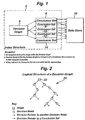
- Figure 1 schematically illustrates a database incorporating an index constituting an embodiment of the present invention and a data store.
- the index 2 comprises a decision graph 4 and a plurality of conclusions sets, 6, 8, 10, 12 and 14. Each conclusion set is reached by one, and only one, path through the decision graph. However each conclusion set then points to relevant entries within a data store 16.
- FIG. 2 schematically illustrates the structure of a decision graph, generally indicated 20.
- the decision graph commences at an origin 22. All navigation through the decision graph must start at the origin.
- the origin may have zero (for example when the database is new), one or two decision pointers pointing to further nodes within the decision graph or to conclusion sets.
- Each other decision node may contain 0, 1 or 2 decision pointers, with each decision pointer pointing to either another decision node or to a conclusion set.
- the decision pointers at a decision node will be referred herein to as "the low pointer” and "the high pointer".
- a decision pointer at any decision node in the decision graph can only point to either one other decision node in the same decision graph or to a single conclusion set. Any decision graph node must be pointed to exactly by one other decision node within the same decision graph or by the origin. Similarly, any conclusion set must be pointed to exactly by only one decision node within the decision graph. Thus any conclusion set can only be reached by following a single and unique path through the decision graph from the origin. This unique path in known as a navigation path.
- FIG. 3 schematically illustrates the logical structure of a decision node, generally indicated 40, in greater detail.
- the decision node includes a low pointer type, a low pointer, a high pointer type and a high pointer.
- the low pointer type 41 indicates the purpose of the low pointer 42.
- the low pointer type 41 can indicate whether low pointer 42 points to a decision node or to a conclusion set.
- the low pointer 42 gives the address of the decision node or of the conclusion set that it points to. A zero value can be inserted to indicate that no pointer exists.
- a high pointer type 44 indicates whether the high pointer 45 points to a decision node or a conclusion set.
- the high pointer indicates the address of the decision node or the conclusion set that it points to. Again, a zero value can be used to indicate that no pointer exists. This enables the "tree" like structure of the decision graph to be represented and stored with a data processor and its memory.
- Figure 4 schematically illustrates the structure of a conclusion set.
- a conclusion set comprises a plurality of key and property entries, 60, 62, 64, 66 and 68 each linked together by a directed link giving the address of the next entry in the conclusion set.
- Figure 5 schematically illustrates the logical structure of each entry within the conclusion set.
- the entry consists of three fields, namely a link field 80, a key field 82 and a property field 84.
- the link field points to the next conclusion set entry.
- the zero value can indicate that there are no more entries.
- the key field 82 holds the exact value of a key whereas the properties field 84 holds the properties associated with that key for example the address of the data corresponding to the key field 82. Having defined the components of the index, there follows a discussion of how to use and navigate the index.
- each decision node visited along a navigation path refers to one or a group of bits within the key.
- This group of bits is known as a "decision group" the number of bits in the decision group can be set to include any number of bits between a single bit and all the bits of the key.
- the range of possible values taken by the decision group is known as the "decision range” and is bounded by a decision range minimum value and a decision range maximum value.
- the decision range minimum value may be any value less than all bits set in the decision group, and similarly the decision range maximum value may be any value greater than the decision range minimum.
- minimum and maximum values may be represented in an unsigned magnitude notation system.
- Each decision node has an associated decision value.
- the decision value determines whether a low pointer or high pointer is followed when navigating through the decision node.
- the high pointer is used when the value of the examined decision bit group in the key is greater than the decision value, otherwise the low pointer is used.
- the decision value can be set to any value chosen by the system manager, designer or operator, but advantageously is selected from one of the following:
- the selection of a decision group at a visited decision node can, advantageously but not necessarily, be based on one or more of the following:
- the size of the decision group at a decision node may be determined on the basis of one or more parameters.
- the size of a decision group may, for example, be fixed for all decision nodes. However, the size may be increased from the previous decision group when a new decision group is selected or, alternatively, the size may be decreased from the previous decision group when a new decision group is selected.
- the position of a decision group, relative to the key, at a decision node can be based on one or more of the following.
- the position of the decision group may be fixed for all decision nodes. Additionally and/or alternatively, the position of the decision group may be a fixed offset from the previous decision group when a new decision group is selected.
- index is to support key retrieval by range matching.
- most significant bit must be included within a hierarchically significant node, such as the origin. Then the significance of the decision group within the overall key should then be changed in a monotonic manner of decreasing significance.
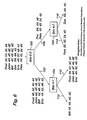
- Figure 6 shows how a four byte key can be navigated in an exact match search.
- the keys are stored in ASCII coding and the numbers shown against each key show its value in hexadecimal notation.
- each decision group has a fixed size of four bits. The decision group is moved sequentially down to the next four less significant bits at each new node visited. In this example, the most significant bit is designated zero, the next most significant bit is one, the next most significant two, and so on. Furthermore, for simplicity, the decision value applied at every node is four. Thus, if the decision group has the value zero, one, two, three or four the graph is traversed to the left. However, if the decision group has a value of the range of five to fifteen the graph is traversed to the right.
- bits zero to three correspond to the first character in the keys.
- Fred, John, Bill and Eric all start with a "4" their keys are propagated leftwardly along the branch 102 to a second level node 104.
- Zoe and Pete have an initial four bits falling outside of the range zero to three, and consequently their keys are propagated along a high pointer path 106 to node 108.
- the nodes 104 and 108 occupy the second level of the decision graph and consequently their decisions are based on the next four bits in the key. This corresponds to looking at the next character in the hexadecimal representation.
- the node 104 Bill is passed along a low level pointer 110 to a subsequent node (not shown) as bits 4 to 7 in the key encode the value 2
- Fred, John and Eric are passed along a high level pointer 112 to a further node (not shown) because bits four to seven in their key encode the values 6, A and 5 respectively in hexadecimal notation.
- the key Pete is passed along a low level pointer 114 as bits 4 to 7 therein encode the value zero, whereas Zoe is passed along a high level pointer 116 as bits 4 to 7 encode the value "A". This process can be repeated until sufficient of the key has been searched to reach a conclusion set.
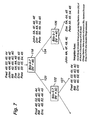
- Figure 7 schematically illustrates how a four byte key can be navigated in a range match search.
- keys are stored in ASCII coding and the ASCII values against each key to show its value in hexadecimal notation.
- the decision group has a fixed size of eight bits.
- the decision group is moved down to the next eight less significant bits only when the decision range is exhausted; that is, when the decision value reaches either boundary of the decision range.
- the most significant bit is designated bit zero, the next most bit one, and so one as was the case with the example shown in Figure 6 .
- the decision range at every node is 30 to 50 hexadecimal in order to cover all digits and uppercase letters represented in the ASCII format.
- the decision value at every node used for a new decision group is 48 hexadecimal, and is then changed to be the average of the previous decision values of the same decision group at each subsequent node for that same group. Where only one previous decision value is known, then the minimum or maximum bound of the decision value range is used depending on whether we have just navigated the left or the right, respectively.
- the keys are presented to a first node 118 which examines the first eight bits, zero to seven, and compares them against the decision value 48 (hexadecimal). With the keys as shown, Fred, Bill and Eric pass along a low pointer to node 122, whereas John, Zoe and Pete along a high pointer 124 to node 126.
- the decision value used for this new decision group is changed to the median value of the previous decision groups reached along the same path. Whereas only one previous decision value is known, as in this case, the minimum or maximum bound of the decision value range is used. Given that four node 122 was navigated against the low pointer 120, then the lower bound of the decision range is used.
- this group of numbers is 30, 31, 32, 33, 34, 35, 36, 37, 38, 39, 3A, 3B, 3C, 3D, 3E, 3F, 40, 41, 42, 43, 44, 45, 46, 47 and 48. From this, it can be seen that the median value is 3C. Setting this as the decision value, Fred, Bill and Eric all proceed along the high pointer 127. To the next node (not shown) whose decision value will be the median value of the range extending from 3C hexadecimal to 48 hexadecimal.
- node 126 reached along the high point 124 from node 118 has a new decision value calculated, which in this instance will be 4C (hexadecimal).
- 4C hexadecimal
- a further example of searching can be seen in the context of character searching, thus a search is performed using the following criteria:
- the ASCII codes for "A” and “Z” are 65 and 90 respectively. Therefore a sensible decision value for this group is the median value (i.e. 78).
- the decision group advances by one character (8 bits) every time that a new decision node is reached.
- a comparison is made of the value of the bits in the decision group within the key to the fixed decision value (78) to determine which pointer to follow.
- a more sophisticated approach involves changing the decision value at each move to a new decision node.
- the decision range for a decision group is limited by the decision range minimum and decision range maximum, which are 65 to 90 respectively.
- an operator may choose to select the new decision value by using the median of the current and previous decision value.
- this is a new decision group and no previous decision value is available then we may use the decision range value minimum or maximum (depending on whether a low or high pointer was followed, respectively).
- the selection of a new decision group may be made when the decision value changes by less than 1 or some other predefined threshold. An example of how a decision value changes is given below.
- Decision group in the key has a value of 82.
- the starting decision value for a new group is 78.
- the decision range is 65 to 90.
- the decision group has been set such that a new group is selected when the decision value changes by less than 1.
- Decision Value Change in Decision Value Action 78 - high pointer (82 > 78).
- New decision value (82.5+81)/2 81.75 0.75 Change decision group
- indexes which are not required to support key retrieval by range matching are not so heavily constrained as those that do.
- indexes that are not required to support range matching can have any decision group at its origin, and can change the decision group position arbitrarily and can also change decision groups arbitrarily when the decision value gets close (as may be defined by the system designer or as may be selected by a user or some management function) to the decision range limits, that is the maximum and minimum values of the decision range, or decision value changes by less than a preselected amount.
- the decision group of the candidate key is compared at each decision node visited with the decision value of the decision node and the low pointer or high pointer is followed to the next decision node or conclusion set. Once a conclusion set has been reached the journey along the navigation path is complete. The journey along the navigation path is also complete when a decision group value indicates the use of a decision pointer that does not exist.
- a conclusion set consists of a series of keys and associated properties.
- the number of keys contained within a conclusion set is limited by an upper bound which can be determined by one or more of a combination of:
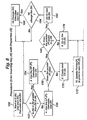
- Figure 8 illustrates the procedure for inserting a key (K) with properties (Q).
- the procedure commences at step 150 where the index is entered at its origin with a default or initial decision group, DG, as set by the designer. An algorithm is implemented in order to calculate a start decision value DV 0 . Control is then passed to step 152 which tests whether the decision group in the key is greater than the decision value. If the test is satisfied, control is passed to step 154 where the high pointer HP is examined and a new decision value DV 1 is created.
- step 154 control is passed to step 156 where a check is performed to see that the pointer (whether this be a high pointer or a low pointer) exists. Similarly, if step 152 indicates that the decision group in the key is not greater than the decision value, then control is passed to step 158 where the low pointer is examined and a new decision value DV 1 is calculated. Control passes from step 158 to step 156. From step 156, control is passed to step 160 provided that the pointer exists. Step 160 tests to see if the pointer points to a further decision node. If the pointer does point to a decision node, then control is passed to step 162 which advances the test to the next decision node.
- step 162 control is passed to step 164 which performs a test to see whether the decision group should be changed. If the answer to this test is yes, then control is passed to step 166 which calculates the value of the new decision group in accordance with the criteria as set out hereinabove. Control is then passed from either step 164 or 166 back to step 152.
- step 156 determines that a pointer does not exist, control is passed to step 170 to cause the creation of a new conclusion set and then to step 172 which updates the pointer to point to the new conclusion set. Control is then passed to step 174 which adds the key and its properties to the conclusion set.
- step 160 does not point to a decision node, then it must point to a conclusion set and control is passed to step 176 which causes a jump to be made to the relevant conclusion set and from then to step 174 such that the key and its properties are added to the conclusion set.
- step 175 A test is made at step 175 to see whether the conclusion set has exceeded its size limit. If the conclusion set has not grown too large, control is passed to step 178 which represents an exit from the key insertion procedure, however if the conclusion set has reached its size limit then control is passed to step 180 which creates a new decision node with no pointers. From step 180 control passes to step 182 which updates the pointer of the previous decision node to point to the new decision node rather than the old conclusion set. Control is then passed to step 184 which examines the old conclusion set CS(S) to see if it is empty.
- step 186 If it is not empty control is passed to step 186 which goes to the first key and property entry in the conclusion set CS(S) and re-navigates the index in order to find the new conclusion set into which this entry should be placed. Once the entry has been reallocated to a conclusion set, it is removed from its current conclusion set CS(S) at step 188. Control is then returned to step 184 and the process is repeated until such time as the conclusion set CS(S) is empty. Control is then passed to step 190 which represents an exit point from the key insertion procedure.
- the procedure for inserting a key and its associated properties into the index requires the navigation along the decision path for the key to be inserted. If the navigation path terminates without arriving at a conclusion set, then a new conclusion set has to be created and a decision pointer updated such that it points at the new conclusion set. The new decision pointer must be placed in the decision graph at the point that traversal of the decision graph terminated. However, if the navigation path terminates at a conclusion set, then the key and its properties are inserted into this conclusion set. Each modification of a conclusion set varies the size of that set. Thus, if a new key is inserted into a conclusion set and this causes or would cause the set to exceed its upper bound, then a new decision node has to be created.
- a new decision group and/or decision value has to be associated with the new decision node and the decision pointer which previously pointed to the full conclusion set has to be amended to point to the new decision node. Then every item from the old (now full) conclusion set has to be reinserted into the new conclusion set or sets following the navigation path along the index.
- FIG. 9 schematically illustrates the procedure for deleting a key. Some of the steps are identical to those which were described with respect to Figure 8 , and consequently these steps have been given the same reference numerals. Thus steps 150 to 166 are identical to those already described, with the exception that if the test made at step 156 indicates that the pointer does not exist, then control is passed to step 200 which represents an exit from the deletion procedure.
- Step 160 passes control to step 176 if the test at step 160 determines that the pointer does not point to a decision node (as was the case with the procedure for inserting a key). From step 176 control is passed to step 202 where a test is performed to see if the conclusion set CS(S) is empty. If the conclusion set is empty, control is passed to step 204 which represents an exit from the procedure otherwise control is passed to step 206 which implements a scan through the entries in the conclusion set. The scan commences with the first key (L) in the conclusion set and control is then passed to step 208 where a test is made to see if the key (L) is equal to the deletion key.
- control is passed to step 210 where the key (L) and its properties are deleted from the conclusion set. From step 210 control is passed to step 214 where a test is made to see if the key (L) is the last key in the conclusion set. Control is also passed to step 214 from step 208 if the key (L) is not the same as the deletion last key. Control is then passed to step 216 where the next key is selected and control is then passed to 208. Otherwise, control is passed from step 214 to step 218 which represents an exit from this procedure.
- to delete a key and its associated properties from the index requires the navigation along the navigation path for the key to be deleted. If the navigation path terminates without arriving at a conclusion set, then it is deemed that the key does not exist in the index. However, if the navigation path terminates at a conclusion set, then a scan must be commenced through a conclusion set for all keys which are exactly equal to the key to be deleted. These keys and their associated properties are then removed from the conclusion set.
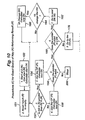
- Figure 10 shows the procedure for an exact query of a key, and for returning the result.
- the procedure shares a great many similarities with the procedure for deleting a key and steps 150 to 206 are as described with reference to Figure 9 .
- an additional step 151 is inserted between the steps 150 and 152 in which a result set (R) is reset to the empty condition.
- control is passed to step 206 which initiates a sequential scan through the conclusion set. From step 206, control is passed to step 230 where a test is made to see if the key (L) currently being examined is equal to the search key. If yes, control is passed to step 232, otherwise control is passed to step 234.
- step 232 the key and its properties are added to the search query result list (R), control is then passed to step 234.
- Step 234 tests to see if the key currently being examined is the last in the conclusion set. If no, the next key is examined and control is passed to step 230. If the key is the last key, control is passed from 234 to step 236 which represents an exit from this routine.
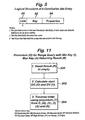
- Figure 11 schematically illustrates the procedure for performing a range query with a minimum key value (I) a maximum key value (A) and for returning the result (R).
- the procedure commences at step 300 where the results set (R) is reset to a null or empty condition. Control then passes to step 302 where the decision group and decision values are calculated and from then on control is passed to step 304 where the index is traversed in order to find those results which match the range query.
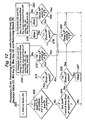
- the procedure for traversing the index is shown in greater detail in Figure 12 .
- the procedure commences at step 350 where the procedure is entered at its starting node.
- Control then passes to step 352 where a test is made to see if the minimum key is less than or equal to the decision value (or omitted) and if the maximum key is greater than its associated decision value (or omitted). If the result of the test is such that both conditions are satisfied control passes to step 370 otherwise control passes to step 354. Step 370 checks to see whether a low pointer has been set, if it has control passes to step 372 where a check is made to see if the low pointer points to a conclusion set. If yes, control is passed to step 400. If no, control is passed to step 374 where the decision group and decision values are recalculated and used to traverse the index from the node reached via the pointer.
- Control passes to step 376 where a check is made to see if a high pointer exists, if no, control is passed to step 378 which represents an exit, and if yes, control is passed to step 390 where a test is made to see if the high pointer points to a conclusion set, if yes, control is passed to step 400, whereas if the high pointer does not point to a conclusion set control is passed to step 392 where a new decision group and decision value are calculated and further traversal of the index is performed taking the new node as a start node.
- step 354 performs a test to see if both the minimum key value and the maximum key value are less than or equal to the decision value. If they are, control is passed to step 356 otherwise control is passed to step 358. Step 356 performs a test to see if a low pointer exists, if it does not, control is passed to 357 which represents an exit from the procedure otherwise control is passed to step 360. Step 360 tests to see if the low pointer points to a conclusion set, if yes, control is passed to step 400 otherwise control is passed to step 402 which recalculates the decision group and decision value and invokes the traversal procedure in a recursive manner.
- step 358 a test is performed to see if the high pointer does exist, if yes, control is passed to step 362 otherwise control is passed to step 364 which represents an exit from the procedure.
- Step 362 performs a test to see if the high pointer points to a conclusion set, if yes, control is passed to step 400, otherwise control is passed to step 364 which calculates a new decision group and decision value and causes further traversal of the index to be performed starting from these new values.
- Step 400 performs a test to see if the conclusion set (S) is empty, if yes, control is passed to step 404 which represents an exit from the procedure. If the conclusion set is not empty, then a sequential scan of those entries in the conclusion set is initiated, starting at step 406 where the first key in the conclusion set is selected. Control is then passed to step 408 where a test is performed to see if the key (L) is within the range defined by the minimum and maximum key values.
- step 410 If the result of the test is "yes” then the key and its properties are added to the conclusion set (S) at step 410 whereas if the test at step 408 is negative control is passed to step 412 in which a test is made to see if the key currently under consideration is the last key in the conclusion set, if it is, control is passed to step 414 which represents an exit from the procedure. Step 410 also passes control to step 412. If the test at step 412 determines that the key under consideration is not the last key, then the next key in the conclusion set is selected at step 416 and control is returned to step 408.
- retrieving keys and their range properties by a range match using an optional minimal search key value and an optional maximum search key value requires recursive traversal of the decision graph from the origin, with the continued comparing of the decision group bits in the minimum and maximum search keys with the decision value at each decision node. If the unsigned magnitude of the minimum search key bits in the decision group is less than or equal to the decision value and the unsigned magnitude of the maximum search key bits in the decision group is greater than the decision value then, firstly, action is taken to traverse the decision graph reached from the low pointer using the minimal search key and omitting the maximum search key; and secondly actions are taken to traverse the decision graph reached from the high pointer using the maximum search key and omitting the minimum search key.
- the unsigned magnitude of the minimum search key and the maximum search key bits in the decision group are both less than or equal to the decision value, then a traverse of the decision graph reached from the low pointer using both the minimum search key and the maximum search key is performed. If the unsigned magnitude of the minimum search key and the maximum search key bits in the decision group are both greater than the decision value, then a traverse of the decision graph reached from the high pointer using both the minimum search key and maximum search key is performed.
- the size of the conclusion set should be an integer multiple of the storage device block transfer size, this provides optimal usage of the physical memory. It is also advantageous, though not mandatory, that the decision graph be divided into blocks that are of a size which is an integer multiple of the storage device block transfer size. This has the advantage that, when a decision block becomes full, a new block can be created and new decision pointers can point into the new block as appropriate.
- the decision graph be wholly or partially held, in use, within the semiconductor memory of the data processing system, thereby avoiding the time overheads associated with disk access.
- the conclusion sets be stored within the semiconductor memory, or that at least, once a conclusion set has been identified, it is swapped into semiconductor memory such that the sequential scanning of the conclusion set can be performed quickly.
- the optimal configuration for range matching of all key types is to use a decision bit group of one bit with a fixed decision value of zero.
- the decision group at the origin is the most significant bit and the decision group advances by one bit (towards the least significant bit) for every decision node visited.
- the optimal bit configuration seems to be to use a decision bit group of one bit with a fixed decision value of zero.
- the decision group at the origin is the least significant bit and the decision group advances by one bit (towards the most significant bit) for each decision node visited.
- the optimal bit configuration for exact matching is to use a decision group of eight bits. The optimal decision values will depend upon the range of expected characters.
- Figure 13 schematically illustrates the data structure of a conclusion set/leaf block 600 constituting an embodiment of the present invention.
- the conclusion set contains an age base 602 which represents the date and time of the most recent update to the conclusion set 600. It also contains a plurality of key entries 604, 606 and 608. Considering only key entry 608 for brevity, this is further divided into three parts, namely an entry age 608A, entry key information 608B and entry property information 608C.
- entry age data 608A When a transient entry is made, it has entry age data 608A associated with it.
- This data refers to an age unit and an age limit which may be set for the index as a whole, but optionally could be set for individual conclusion sets.
- the age unit specifies the number of seconds in a single age unit. Thus, for example, a value of 60 implies one minute, whereas 86400 implies one day.
- the age limit represents the number of age units after which the key may be lost from the index. This is typically in the range of 1 to 254, thereby enabling it to fit within an 8 bit word. Thus, if a key is set to expire after 31 days, the age unit is set to 86400 seconds and the age limit is set to 31. For keys to expire after one day, the age unit and age limit may be set to 3600 seconds and 24, respectively.
- Each entry contains an entry age, expressed in one byte for efficiency, and this can be set between the value zero and 255, in this example, although other value ranges may be chosen as appropriate.
- Zero indicates that an entry is new, or less than one age unit older than the age base.
- 255 indicates that the entry is obsolete.
- the following sequence is followed. Firstly the current date and time is noted, and then the number of elapsed age units between the age base and the current data and time is calculated. Then, every entry in the conclusion set has its entry age incremented by the number of elapsed age units. Any entry with an entry age calculated to be greater than or equal to 255 has its entry age set to 255. Any such entry then becomes available for re-use. Then the age base is set to the date and time noted at the beginning of the procedure. Any key to be inserted is placed into an available slot in the conclusion set and is set to an entry age of zero. An available slot may either be a slot which has not yet been allocated, or a slot which has become obsolete (because its entry age has reached 255). Furthermore, any entry which is updated has its entry age reset to zero.
- the entry age was stored as a single byte. This gives a range of 254 time periods in which a type of data may become obsolete. It is possible to use more than one byte giving a wider range of age limits, but with an increased storage overhead. Alternatively, less than one byte may be used as the entry age, thereby reducing storage overhead, but also reducing the range of age limits that can be individually defined.
- the entirety of the decision graph (index) is held within semiconductor memory as this allows fast access.
- the capabilities of the hardware platform running the database or the size of the database may be such that it is not possible to hold the entirety of the index within semiconductor memory or the time. This may, for example, be because the machine is expected to multi-task and perform other functions.
- memory block 700 represents the physical size of a block on the hard disk of a computer system, and that the block is subdivided to contain individual portions 702, 704, 706 and 708, amongst others, each of which relates to the data in respect of an associated node within the decision graph. Furthermore, suppose that the index has now reached such a size that the block 700 is completely full.
- each decision node ( Figure 3 ) comprises a decision value, and a low pointer and a high pointer which indicates the next node in the graph.
- local amendments to the graph can be made such that a new node can be inserted after any existing node.
- supposing that as a result of an insert it is required to insert a new node following the node whose data is represented by data item 706. Firstly, as the new node is inserted one of the output pointers of node 706 is modified to point to the new node.
- the output pointers of the new node are also set up correctly such that the decision graph does not become broken.
- the details relating to new node 710 must be stored in a further block 712. Further nodes relating to that new node may also be created and information stored in the memory block 712.
- Figure 15 illustrates an alternative method for growing the index. Again, assume that memory block 700 is full and that it is now required to insert a new node. As before, a new memory graph block is created. But now the parent decision graph is split into equal parts. One part is placed in the old block 700 whilst the other part is placed in the new block 712.
- An algorithm recursively scans the index structure, by selecting a test node and then calculating the nodes depending therefrom in order to find a suitable candidate node for splitting the index.
- node 724 and the nodes encircled by line 726 would be placed in the old memory block 700, whereas the nodes encircled by chain-dot line 728 would be placed in the new memory block 712. This process ensures that each memory block is optimally and equitably utilised and stops the proliferation of substantially empty memory blocks.
- search term in the index should be performed using two or more search criteria. These criteria are combined, generally recording to the principles of boolean algebra.
- the query it is possible for the query to be divided down into individual parts with each part being performed before the next is down and then the results combined at the end.
- This can be very computationally intensive and require many read write operations to a block data store, such as a hard disk.
- a query which returned 100 hits might then require another 100 slow disk I/O operations in order to fetch the data pointer to by the index query.
- the applicant has realised that improved search performance can be made by associating qualifiers, and in particular appending qualifiers, to the primary search key.
- the qualifier does not directly the represent the second or subsequent search term, but rather is a shortened form of that subsequent term.
- the qualifier is generated by performing a hashing function on the or each subsequent search term. The same hashing function is used to query a database as is used to insert or delete data from it. Thus, during creation of the database, the index is created with a principal key (as before) and with zero or more qualifier keys.
- each qualifier key is hash encoded down to a single byte, that is a number in the range zero to 255, and is stored alongside the key entry in the conclusion set.
- the principal key is supplied with zero or more qualifier keys.
- the index is then navigated using the principal key, as before.
- these are then scanned by matching the principal key value and the qualifier key hash codes with the entries in the conclusion set. Only those entries that match all of the principal key and all of the qualifier hash codes are returned.
- qualifier keys can map to the same single byte hash code. There is therefore a small but finite probability that unwanted data will be returned. However, assuming that a good randomising hash encoding is used, the probability of a wrong match is one in 255 (or less than 0.5%) it can be seen that the present invention guarantees to return all the correct results, but with a small percentage of incorrect results as well. Thus all the key hits returned must then be inspected in a data store to remove any of the unwanted entries. However the reduction in size of the index and the simplification of the query process more than compensates for the additional analysis of the returned hits. This advantage increases as more qualifiers are used given that the probability for an incorrect hit decreases with an increasing number of qualifiers.
- the probability of a bad result is, under ideal circumstances, (1/255) N .
- N two qualifiers
- the probability of a bad result is 1 in 65025 or less than 0.002%.
- the chance of returning an incorrect item of data reduces to approximately 14 million to 1.
- each qualifier key is optional and none, any or all of the keys may be supplied because they do not affect navigation of the index structure.
- the qualifier keys only affect the number of hits which are returned when scanning the conclusion sets. Thus, the more qualifiers that are supplied the more precise the query result.
- Figure 16 schematically illustrates the format of search key in accordance with this aspect of the present invention in which a first portion of the key contains the primary key data, and then the remainder of the key comprises the qualifiers Q1, Q2 and so on to Q7, each of which is a 1 byte long word produced by a hashing function on the original additional keys.
Landscapes
- Engineering & Computer Science (AREA)
- Theoretical Computer Science (AREA)
- Software Systems (AREA)
- Data Mining & Analysis (AREA)
- Databases & Information Systems (AREA)
- Physics & Mathematics (AREA)
- General Engineering & Computer Science (AREA)
- General Physics & Mathematics (AREA)
- Information Retrieval, Db Structures And Fs Structures Therefor (AREA)
- Management, Administration, Business Operations System, And Electronic Commerce (AREA)
- Navigation (AREA)
Abstract
Claims (40)
- Procédé destiné à organiser une base de données, qui, en cours d'utilisation, comporte un index (2) et des données (16), dans lequel l'index (2) fait l'objet d'une requête en utilisant une clé de recherche comportant au moins un symbole, le symbole étant représenté par plusieurs bits, afin de localiser des données correspondant à un critère de recherche, dans lequel l'index est constitué d'une structure hiérarchique de noeuds qui fait l'objet d'un parcours pendant une recherche jusqu'à atteindre un ensemble de conclusions (6-14), l'index (2) faisant l'objet d'une recherche en comparant un groupe de décisions de la clé de recherche au niveau de chaque noeud avec une valeur de décision du noeud, chaque groupe de décisions comportant au moins un bit, et au moins certains des groupes de décisions comportent plusieurs bits, et la structure est organisée de telle sorte que les symboles de clé ne soient pas stockés sur un noeud au sein de la structure, caractérisé en ce que chaque noeud possède moins de trois chemins de sortie de cette structure, et en ce que le nombre de bits au sein du groupe de décisions peut être défini pour comporter un nombre quelconque de bits compris entre un seul bit et le nombre total des bits de la clé.
- Procédé selon la revendication 1, caractérisé en ce que les noeuds ne contiennent pas l'intégralité de la clé associée au noeud.
- Procédé selon la revendication 1 ou 2, dans lequel les noeuds ne contiennent pas les règles de décision relatives à l'interrogation du noeud.
- Procédé selon l'une quelconque des revendications précédentes, dans lequel la décision au niveau de chaque noeud est une requête simple.
- Procédé selon la revendication 4, dans lequel, au niveau d'un noeud, la clé ou une partie de la clé utilisée pour une requête est comparée au critère de décision au niveau du noeud, et le test appliqué consiste à établir si la clé ou une partie de celle-ci est supérieure ou égale au critère de décision.
- Procédé selon l'une quelconque des revendications précédentes, dans lequel chaque enregistrement de la base de données appartient à un ensemble de conclusions.
- Procédé selon l'une quelconque des revendications précédentes, dans lequel, en cours d'utilisation, la structure hiérarchique de noeuds de décision forme un graphe de décision conservé dans la mémoire électronique d'un processeur de données.
- Procédé selon la revendication 6, dans lequel chaque ensemble de conclusions possède une taille maximale.
- Procédé selon la revendication 8, dans lequel la taille d'un ensemble de conclusions est identique ou constitue un multiple de la taille d'un bloc de données ou d'adresses utilisé dans un dispositif de stockage de données.
- Procédé selon la revendication 8, dans lequel, lorsqu'un ensemble de conclusions approche une taille prédéterminée, un nouveau noeud de décision est inséré dans la structure hiérarchique de noeuds et les données qui se trouvaient dans l'ensemble de conclusions sont ré-indexées pour obtenir de nouveaux ensembles de conclusions qu'il est possible d'atteindre via les chemins de sortie du nouveau noeud de décision.
- Procédé selon la revendication 10, dans lequel le nouveau noeud de décision est inséré dans le chemin de sortie à partir d'un noeud qui pointait vers l'ensemble de conclusions qui a atteint la taille prédéterminée.
- Procédé selon l'une quelconque des revendications précédentes, dans lequel la réorganisation structurelle de la base de données n'influe simultanément que sur un ou deux noeuds de décision.
- Procédé selon l'une quelconque des revendications précédentes, dans lequel les noeuds de décision sont relatifs à des parties de la clé de recherche.
- Procédé selon la revendication 13, dans lequel le graphe de décision est dans une large mesure indépendant de la structure de la clé.
- Procédé selon l'une quelconque des revendications précédentes, dans lequel la structure hiérarchique des noeuds est structurée de manière à préserver l'ordre sémantique des séquences de clés.
- Procédé selon la revendication 6, dans lequel chaque entrée appartenant à l'ensemble de conclusions comporte un champ de lien pointant vers l'élément suivant de l'ensemble de conclusions, un champ de clé contenant la valeur exacte d'une clé associée à l'entrée contenue dans l'ensemble de conclusions et un champ de propriétés qui contient l'une des données correspondant à la clé ou un pointeur pointant sur les données correspondant à la clé.
- Procédé selon l'une quelconque des revendications précédentes, dans lequel chacun des noeuds possède une valeur de décision associée qui est comparée, en cours d'utilisation, à un groupe de bits de décision contenu dans une clé, et le résultat de la comparaison est utilisé pour sélectionner un chemin de sortie du noeud.
- Procédé selon l'une quelconque des revendications précédentes, dans lequel la valeur de décision est sélectionnée parmi les valeurs suivantes :la valeur médiane mathématique de toutes les valeurs possibles des groupes de décisions ;la valeur médiane mathématique des valeurs prévues des groupes de décisions ;la valeur moyenne mathématique de toutes les valeurs prévues du groupe de décisions ;une valeur prédéterminée sélectionnée lors de la création de l'index ; etune valeur sélectionnée constituant une fonction de la valeur de décision la plus récente utilisée et de la valeur de décision précédant cette valeur.
- Procédé selon l'une quelconque des revendications précédentes, dans lequel la sélection du groupe de décisions pour un noeud de décision visité est sélectionnée parmi les groupes suivantes :un groupe de décisions qui est le même pour tous les noeuds ;un groupe de décisions qui varie pour chaque visite d'un noeud de décision ;un groupe de décisions qui varie lorsqu'une valeur de décision au niveau d'un noeud précédent atteint une valeur maximale de plage de décision ou une valeur minimale de plage de décision du groupe de décisions en cours ; etun groupe de décisions qui est modifié lorsque la valeur de décision pour des noeuds successifs est susceptible de changer d'une valeur inférieure à un seuil prédéterminé.
- Procédé selon l'une quelconque des revendications précédentes, dans lequel, lors de l'ajout de données, l'index fait l'objet d'un parcours jusqu'à atteindre un ensemble de conclusions, ou si la nécessité de créer un ensemble de conclusions est identifiée et que les données sont ensuite ajoutées à l'ensemble de conclusions.
- Procédé selon l'une quelconque des revendications précédentes, dans lequel les clés stockées dans des ensembles de conclusions comportent un champ de données indiquant la durée pour laquelle la clé et ses données doivent être conservées dans la base de données.
- Procédé selon la revendication 21, dans lequel les clés et les données qui ont atteint leur limite d'expiration sont mises à disposition pour les réécrire au moyen de nouvelles données.
- Procédé selon la revendication 21 ou 22, dans lequel les clés et les données qui ont atteint la limite d'expiration ne sont pas supprimées de manière active de la base de données.
- Procédé selon la revendication 21, 22 ou 23, dans lequel, lorsqu'un ensemble de conclusions fait l'objet d'un accès, l'âge de chaque entrée possédant une durée fait l'objet d'un calcul et les résultats du calcul peuvent être stockés ou utilisés pour déterminer les entrées qu'il y a lieu de réécrire.
- Procédé selon l'une quelconque des revendications précédentes, dans lequel la base de données comporte un index de clés et un index de décisions, dans lequel les clés de l'index de clés sont stockées de manière compressée, et dans lequel l'index de clés est vérifié pour constater si la clé existait préalablement à l'interrogation de l'index de décisions en utilisant la clé.
- Procédé selon la revendication 25, dans lequel l'index de décision ne fait pas l'objet d'une recherche si la clé n'existe pas dans l'index de clés.
- Procédé selon la revendication 25 ou 26, dans lequel, au cours d'une opération destinée à insérer une clé, une vérification de l'index de clés est effectuée, et la clé est refusée, pour redondance, si une entrée correspondante est identifiée.
- Procédé selon l'une quelconque des revendications 25 à 27, dans lequel les clés appartenant à l'index de clés sont stockées sous une forme compressée, codée ou de mise en correspondance.
- Procédé selon la revendication 28, dans lequel les clés sont mises en correspondance en utilisant une fonction de hachage.
- Procédé selon l'une quelconque des revendications 25 à 29, dans lequel l'index de clés comporte un tableau d'éléments, le nombre d'éléments appartenant au tableau étant au moins aussi important que le nombre d'éléments de clé uniques contenus dans l'index.
- Procédé selon la revendication 30, dans lequel deux fonctions différentes sont utilisées, et dans lequel une fonction de hachage est utilisée dans le cadre d'un processus destiné à calculer un élément de destination E(K) au sein de l'index de clé et l'autre fonction de hachage est utilisée pour coder la clé et le résultat B(K) est stocké dans l'élément de destination.
- Procédé selon la revendication 31, dans lequel, au cours d'une requête de l'index de clés, l'élément de destination est calculé pour une clé cible, et la valeur codée qui utilise la seconde fonction de hachage est calculée pour la clé cible, et la clé est considérée comme étant redondante si la valeur codée correspond à une valeur préexistante dans l'élément de destination.
- Procédé selon l'une quelconque des revendications précédentes, dans lequel l'index est constitué d'une structure hiérarchique d'index de telle sorte qu'un index puisse déléguer une partie de sa charge de traitement à au moins un autre index.
- Procédé selon la revendication 33, dans lequel un index à qui il a été délégué un traitement peut déléguer ce traitement à d'autres index.
- Procédé selon la revendication 33 ou 34, dans lequel un manifeste de clé d'un index est défini par une plage, et toute requête destinée à opérer sur une clé située hors de la plage est refusée par l'index.
- Procédé selon la revendication 35, dans lequel si la clé appartient à la plage d'index de la base de données, la base de données peut procéder à une opération sur la clé elle-même ou déléguer la tâche si la clé appartient à la plage de manifestes de l'un quelconque des index faisant l'objet d'une délégation.
- Procédé selon l'une quelconque des revendications 33 à 36, dans lequel chaque index est associé à un dispositif de stockage physique, ce qui permet l'exécution de plusieurs accès disque en parallèle.
- Instructions lisibles par ordinateur destinées à provoquer la mise en oeuvre du procédé selon l'une quelconque des revendications 1 à 37 par un ordinateur.
- Instructions lisibles par ordinateur selon la revendication 38, dans lequel les instructions sont transportées sur un support de données.
- Base de données qui, en cours d'utilisation, comporte un index (2) et des données (16), dans laquelle l'index (2) fait l'objet d'une requête en utilisant une clé de recherche comportant au moins un symbole, le symbole étant représenté par plusieurs bits, afin de localiser des données correspondant à un critère de recherche, et dans laquelle l'index est une structure hiérarchique de noeuds et fait l'objet d'une navigation au cours d'une recherche jusqu'à atteindre un ensemble de conclusions (6-14), l'index (2) faisant l'objet d'une recherche en comparant un groupe de décisions de la clé de recherche au niveau de chaque noeud avec une valeur de décision du noeud, chaque groupe de décisions comportant au moins un bit, et au moins certains des groupes de décisions comportent plusieurs bits, et dans laquelle la structure est organisée de telle sorte que les symboles de clé ne soient pas stockés au niveau d'un noeud de la structure, caractérisée en ce que chaque noeud possède moins de trois chemins de sortie de cette structure, et en ce que le nombre de bits au sein du groupe de décisions peut être défini pour comporter un nombre quelconque de bits entre un seul bit et le nombre total des bits de la clé.
Priority Applications (2)
| Application Number | Priority Date | Filing Date | Title |
|---|---|---|---|
| EP10181189A EP2270680A3 (fr) | 2000-11-30 | 2001-11-28 | Base de données |
| EP08016612A EP2009559A1 (fr) | 2000-11-30 | 2001-11-28 | Banque de données |
Applications Claiming Priority (3)
| Application Number | Priority Date | Filing Date | Title |
|---|---|---|---|
| GB0029238A GB2369695B (en) | 2000-11-30 | 2000-11-30 | Database |
| GB0029238 | 2000-11-30 | ||
| PCT/GB2001/005242 WO2002044940A2 (fr) | 2000-11-30 | 2001-11-28 | Base de donnees |
Related Child Applications (1)
| Application Number | Title | Priority Date | Filing Date |
|---|---|---|---|
| EP08016612A Division EP2009559A1 (fr) | 2000-11-30 | 2001-11-28 | Banque de données |
Publications (2)
| Publication Number | Publication Date |
|---|---|
| EP1364314A2 EP1364314A2 (fr) | 2003-11-26 |
| EP1364314B1 true EP1364314B1 (fr) | 2009-07-08 |
Family
ID=9904192
Family Applications (3)
| Application Number | Title | Priority Date | Filing Date |
|---|---|---|---|
| EP10181189A Withdrawn EP2270680A3 (fr) | 2000-11-30 | 2001-11-28 | Base de données |
| EP08016612A Withdrawn EP2009559A1 (fr) | 2000-11-30 | 2001-11-28 | Banque de données |
| EP01998908A Expired - Lifetime EP1364314B1 (fr) | 2000-11-30 | 2001-11-28 | Base de donnees |
Family Applications Before (2)
| Application Number | Title | Priority Date | Filing Date |
|---|---|---|---|
| EP10181189A Withdrawn EP2270680A3 (fr) | 2000-11-30 | 2001-11-28 | Base de données |
| EP08016612A Withdrawn EP2009559A1 (fr) | 2000-11-30 | 2001-11-28 | Banque de données |
Country Status (22)
| Country | Link |
|---|---|
| US (1) | US8224829B2 (fr) |
| EP (3) | EP2270680A3 (fr) |
| JP (3) | JP4810785B2 (fr) |
| KR (2) | KR20080024237A (fr) |
| CN (2) | CN1822003A (fr) |
| AR (1) | AR035508A1 (fr) |
| AT (1) | ATE436055T1 (fr) |
| AU (4) | AU2002222096B2 (fr) |
| CA (1) | CA2429990A1 (fr) |
| CY (1) | CY1109459T1 (fr) |
| DE (1) | DE60139212D1 (fr) |
| DK (1) | DK1364314T3 (fr) |
| EA (4) | EA005641B1 (fr) |
| EG (1) | EG23400A (fr) |
| ES (1) | ES2329339T3 (fr) |
| GB (6) | GB2369695B (fr) |
| IL (3) | IL156117A0 (fr) |
| MY (2) | MY142616A (fr) |
| NO (2) | NO20032416L (fr) |
| NZ (3) | NZ543307A (fr) |
| SG (1) | SG148842A1 (fr) |
| WO (1) | WO2002044940A2 (fr) |
Families Citing this family (72)
| Publication number | Priority date | Publication date | Assignee | Title |
|---|---|---|---|---|
| US8352400B2 (en) | 1991-12-23 | 2013-01-08 | Hoffberg Steven M | Adaptive pattern recognition based controller apparatus and method and human-factored interface therefore |
| US7966078B2 (en) | 1999-02-01 | 2011-06-21 | Steven Hoffberg | Network media appliance system and method |
| GB2383153A (en) * | 2001-12-17 | 2003-06-18 | Hemera Technologies Inc | Search engine for computer graphic images |
| US7007027B2 (en) * | 2002-12-02 | 2006-02-28 | Microsoft Corporation | Algorithm for tree traversals using left links |
| US7072904B2 (en) | 2002-12-02 | 2006-07-04 | Microsoft Corporation | Deletion and compaction using versioned nodes |
| GB0304782D0 (en) * | 2003-03-03 | 2003-04-09 | Percy Richard | System and method using alphanumeric codes for the identification, description, classification and encoding of information |
| US20050144241A1 (en) * | 2003-10-17 | 2005-06-30 | Stata Raymond P. | Systems and methods for a search-based email client |
| US7620624B2 (en) * | 2003-10-17 | 2009-11-17 | Yahoo! Inc. | Systems and methods for indexing content for fast and scalable retrieval |
| US7849063B2 (en) * | 2003-10-17 | 2010-12-07 | Yahoo! Inc. | Systems and methods for indexing content for fast and scalable retrieval |
| US20050183120A1 (en) * | 2004-01-13 | 2005-08-18 | Saurabh Jain | Multi-user personalized digital multimedia distribution methods and systems |
| US8316060B1 (en) | 2005-01-26 | 2012-11-20 | 21st Century Technologies | Segment matching search system and method |
| US8515983B1 (en) * | 2005-10-28 | 2013-08-20 | 21st Century Technologies | Segment matching search system and method |
| US7567968B2 (en) * | 2005-01-31 | 2009-07-28 | Microsoft Corporation | Integration of a non-relational query language with a relational data store |
| US7565217B2 (en) * | 2005-04-01 | 2009-07-21 | International Business Machines Corporation | Traversal of empty regions in a searchable data structure |
| US8412528B2 (en) * | 2005-06-21 | 2013-04-02 | Nuance Communications, Inc. | Back-end database reorganization for application-specific concatenative text-to-speech systems |
| JP4810915B2 (ja) * | 2005-07-28 | 2011-11-09 | 日本電気株式会社 | データ検索装置及び方法、並びにコンピュータ・プログラム |
| US7792368B2 (en) * | 2005-08-10 | 2010-09-07 | Xerox Corporation | Monotonic classifier |
| US8768777B2 (en) * | 2005-08-31 | 2014-07-01 | Sap Ag | Tracking assets between organizations in a consortium of organizations |
| US8478755B2 (en) * | 2006-04-20 | 2013-07-02 | Microsoft Corporation | Sorting large data sets |
| US8229902B2 (en) * | 2006-11-01 | 2012-07-24 | Ab Initio Technology Llc | Managing storage of individually accessible data units |
| GB2445764A (en) * | 2007-01-22 | 2008-07-23 | Surfcontrol Plc | Resource access filtering system and database structure for use therewith |
| GB2452760A (en) * | 2007-09-14 | 2009-03-18 | Data Connection Ltd | Storing and searching data in a database tree structure for use in data packet routing applications. |
| US20110225158A1 (en) * | 2007-12-12 | 2011-09-15 | 21Ct, Inc. | Method and System for Abstracting Information for Use in Link Analysis |
| US20090189894A1 (en) * | 2008-01-27 | 2009-07-30 | Petrov Julian | Methods and systems for analyzing a remoting system to determine where to render three dimensional data |
| JP5220483B2 (ja) * | 2008-06-06 | 2013-06-26 | インターナショナル・ビジネス・マシーンズ・コーポレーション | 木構造のデータに対する集約計算を行うコンピュータ・システム、並びにその方法及びコンピュータ・プログラム |
| CN101295312B (zh) * | 2008-06-18 | 2011-12-28 | 中兴通讯股份有限公司 | 一种使用表格呈现数据的方法 |
| US8055646B2 (en) * | 2008-08-05 | 2011-11-08 | International Business Machines Corporation | Prevention of redundant indexes in a database management system |
| US8095548B2 (en) | 2008-10-14 | 2012-01-10 | Saudi Arabian Oil Company | Methods, program product, and system of data management having container approximation indexing |
| US9047330B2 (en) * | 2008-10-27 | 2015-06-02 | Ianywhere Solutions, Inc. | Index compression in databases |
| US20100257181A1 (en) * | 2009-04-01 | 2010-10-07 | Sybase, Inc. | Dynamic Hash Table for Efficient Data Access In A Relational Database System |
| US8306958B2 (en) * | 2009-09-14 | 2012-11-06 | At&T Intellectual Property I, L.P. | Time-outs with time-reversed linear probing |
| US20110093439A1 (en) * | 2009-10-16 | 2011-04-21 | Fanglu Guo | De-duplication Storage System with Multiple Indices for Efficient File Storage |
| DE102009054753A1 (de) * | 2009-12-16 | 2011-06-22 | Robert Bosch GmbH, 70469 | Verfahren zum Betreiben einer Sicherheitseinrichtung |
| RU2613034C2 (ru) * | 2010-11-16 | 2017-03-14 | Тибко Софтвеар Инк. | Быстрое установление соответствия при адресации по содержанию (контенту) |
| CN102087666B (zh) * | 2011-01-30 | 2012-10-31 | 华东师范大学 | 一种基于节点与关键字覆盖关系的索引及其构建方法和查询方法 |
| EP2490134A1 (fr) | 2011-02-18 | 2012-08-22 | Amadeus S.A.S. | Procédé, système et programme informatique pour fournir la détection de tarifs à partir d'attributs de règles |
| US8983995B2 (en) | 2011-04-15 | 2015-03-17 | Microsoft Corporation | Interactive semantic query suggestion for content search |
| US8788505B2 (en) | 2011-04-27 | 2014-07-22 | Verisign, Inc | Systems and methods for a cache-sensitive index using partial keys |
| US8799240B2 (en) * | 2011-06-23 | 2014-08-05 | Palantir Technologies, Inc. | System and method for investigating large amounts of data |
| US8676951B2 (en) * | 2011-07-27 | 2014-03-18 | Hitachi, Ltd. | Traffic reduction method for distributed key-value store |
| US8965921B2 (en) * | 2012-06-06 | 2015-02-24 | Rackspace Us, Inc. | Data management and indexing across a distributed database |
| WO2014078681A1 (fr) * | 2012-11-16 | 2014-05-22 | Dahn David W | Systèmes, affichages et procédés mis en œuvre par ordinateur de suivi de décision |
| KR101441869B1 (ko) * | 2013-02-21 | 2014-09-22 | 고려대학교 산학협력단 | 단축 url 생성 시스템 및 그 방법 |
| EP3182304A1 (fr) | 2013-03-29 | 2017-06-21 | Pilab S.A. | Procédé mis en uvre par ordinateur destiné à mémoriser une quantité illimitée de données sous forme d'une carte conceptuelle dans des systèmes de bases de données relationnelles |
| EP2819030A1 (fr) | 2013-06-30 | 2014-12-31 | Pilab S.A. | Forage de données hiérarchiquement indépendantes de base de données |
| EP2843568A1 (fr) | 2013-08-30 | 2015-03-04 | Pilab S.A. | Procédé informatique permettant de créer des structures de base de données sans connaissance sur le fonctionnement du système de base de données relationnelle |
| EP2843567B1 (fr) | 2013-08-30 | 2017-05-10 | Pilab S.A. | Procédé informatique pour améliorer l'exécution de requête dans les bases de données relationnelles normalisées au niveau 4 et supérieur |
| US10061792B2 (en) | 2013-12-31 | 2018-08-28 | Sybase, Inc. | Tiered index management |
| US9400817B2 (en) | 2013-12-31 | 2016-07-26 | Sybase, Inc. | In-place index repair |
| US9450602B2 (en) * | 2014-01-02 | 2016-09-20 | Sap Se | Efficiently query compressed time-series data in a database |
| US9667704B1 (en) * | 2014-04-26 | 2017-05-30 | Google Inc. | System and method for classifying API requests in API processing systems using a tree configuration |
| CN105404437B (zh) | 2014-08-05 | 2019-07-26 | 阿里巴巴集团控股有限公司 | 一种信息操作的方法及装置 |
| CN104268146A (zh) * | 2014-08-21 | 2015-01-07 | 南京邮电大学 | 一种适合分析型应用的静态b+树索引方法 |
| CN104182522B (zh) * | 2014-08-26 | 2017-04-19 | 中国科学院信息工程研究所 | 一种基于循环位图模型的辅助索引方法及装置 |
| US20160063051A1 (en) * | 2014-08-29 | 2016-03-03 | Netapp, Inc. | Methods for persisting data on nonvolatile memory for fast updates and instantaneous recovery and devices thereof |
| DE102014112741A1 (de) | 2014-09-04 | 2016-03-10 | Dr. Ing. H.C. F. Porsche Aktiengesellschaft | Kraftfahrzeug |
| US9836695B2 (en) * | 2015-03-24 | 2017-12-05 | International Business Machines Corporation | Automated decision support provenance and simulation |
| CN106294371B (zh) * | 2015-05-15 | 2019-08-16 | 阿里巴巴集团控股有限公司 | 字符串值域切分方法及装置 |
| JP6241449B2 (ja) * | 2015-05-21 | 2017-12-06 | 横河電機株式会社 | データ管理システム及びデータ管理方法 |
| US10846275B2 (en) * | 2015-06-26 | 2020-11-24 | Pure Storage, Inc. | Key management in a storage device |
| US9811524B2 (en) | 2015-07-27 | 2017-11-07 | Sas Institute Inc. | Distributed data set storage and retrieval |
| US9946719B2 (en) | 2015-07-27 | 2018-04-17 | Sas Institute Inc. | Distributed data set encryption and decryption |
| WO2017186774A1 (fr) | 2016-04-26 | 2017-11-02 | Pilab S.A. | Systèmes et procédés d'interrogation de bases de données |
| CN109983456B (zh) * | 2016-09-22 | 2023-08-15 | 维萨国际服务协会 | 存储器内密钥范围搜索方法和系统 |
| JP2018206084A (ja) * | 2017-06-05 | 2018-12-27 | 株式会社東芝 | データベース管理システムおよびデータベース管理方法 |
| CN110427340B (zh) * | 2018-04-28 | 2023-08-04 | 伊姆西Ip控股有限责任公司 | 用于文件存储的方法、装置和计算机存储介质 |
| US11216432B2 (en) | 2018-07-06 | 2022-01-04 | Cfph, Llc | Index data structures and graphical user interface |
| US10423662B1 (en) * | 2019-05-24 | 2019-09-24 | Hydrolix Inc. | Efficient and scalable time-series data storage and retrieval over a network |
| US11263195B2 (en) * | 2020-05-11 | 2022-03-01 | Servicenow, Inc. | Text-based search of tree-structured tables |
| US11960483B1 (en) * | 2021-09-16 | 2024-04-16 | Wells Fargo Bank, N.A. | Constant time data structure for single and distributed networks |
| WO2023148411A1 (fr) * | 2022-02-04 | 2023-08-10 | Navarro Arteaga Angel | Procédé d'étalonnage de graphiques |
| US11803545B1 (en) * | 2022-06-24 | 2023-10-31 | Sap Se | Runtime statistics feedback for query plan cost estimation |
Family Cites Families (53)
| Publication number | Priority date | Publication date | Assignee | Title |
|---|---|---|---|---|
| US3593309A (en) * | 1969-01-03 | 1971-07-13 | Ibm | Method and means for generating compressed keys |
| JPH0772898B2 (ja) * | 1981-06-27 | 1995-08-02 | 富士通株式会社 | インデックスの作成方式 |
| JPS607557A (ja) * | 1983-06-27 | 1985-01-16 | Fujitsu Ltd | 文字型デ−タの区分化圧縮法 |
| US5010478A (en) | 1986-04-11 | 1991-04-23 | Deran Roger L | Entity-attribute value database system with inverse attribute for selectively relating two different entities |
| JPS63285629A (ja) | 1987-05-19 | 1988-11-22 | Fujitsu Ltd | インデックス構成処理方法 |
| US5121495A (en) | 1988-02-02 | 1992-06-09 | Bell Communications Research, Inc. | Methods and apparatus for information storage and retrieval utilizing hashing techniques |
| JPH038083A (ja) | 1989-06-06 | 1991-01-16 | Fujitsu Ltd | 識別子付情報の木構造管理方式 |
| US5117349A (en) * | 1990-03-27 | 1992-05-26 | Sun Microsystems, Inc. | User extensible, language sensitive database system |
| US5230047A (en) * | 1990-04-16 | 1993-07-20 | International Business Machines Corporation | Method for balancing of distributed tree file structures in parallel computing systems to enable recovery after a failure |
| EP0558505B1 (fr) | 1990-10-05 | 2000-01-26 | Microsoft Corporation | Systeme et procede pour la recherche d'informations |
| JPH05120339A (ja) | 1991-05-24 | 1993-05-18 | Nec Ic Microcomput Syst Ltd | 二分木構造データ登録処理方法 |
| US5355473A (en) * | 1991-06-20 | 1994-10-11 | Lawrence Au | Indexed record locating and counting mechanism |
| JPH05334153A (ja) | 1992-06-01 | 1993-12-17 | Nippon Telegr & Teleph Corp <Ntt> | インデックス管理方式 |
| US5689699A (en) | 1992-12-23 | 1997-11-18 | International Business Machines Corporation | Dynamic verification of authorization in retention management schemes for data processing systems |
| JP2583010B2 (ja) * | 1993-01-07 | 1997-02-19 | インターナショナル・ビジネス・マシーンズ・コーポレイション | 多層インデックス構造におけるローカルインデックステーブル及び大域インデックステーブルの間の一貫性を維持する方法 |
| US5497485A (en) * | 1993-05-21 | 1996-03-05 | Amalgamated Software Of North America, Inc. | Method and apparatus for implementing Q-trees |
| US5560007A (en) | 1993-06-30 | 1996-09-24 | Borland International, Inc. | B-tree key-range bit map index optimization of database queries |
| JP2683870B2 (ja) * | 1994-05-23 | 1997-12-03 | 日本アイ・ビー・エム株式会社 | 文字列検索システム及び方法 |
| JPH07319924A (ja) * | 1994-05-24 | 1995-12-08 | Matsushita Electric Ind Co Ltd | 手書き電子文書のインデックス付けおよび探索方法 |
| US5619199A (en) * | 1995-05-04 | 1997-04-08 | International Business Machines Corporation | Order preserving run length encoding with compression codeword extraction for comparisons |
| JPH08314957A (ja) * | 1995-05-18 | 1996-11-29 | Mitsubishi Electric Corp | データベースシステム |
| JPH08320648A (ja) * | 1995-05-24 | 1996-12-03 | Matsushita Electric Ind Co Ltd | ナビゲーション装置 |
| US5664179A (en) * | 1995-06-27 | 1997-09-02 | Mci Corporation | Modified skip list database structure and method for access |
| JPH0936747A (ja) | 1995-07-18 | 1997-02-07 | Toshiba Corp | データ圧縮方法及びデータ圧縮装置 |
| US6427147B1 (en) * | 1995-12-01 | 2002-07-30 | Sand Technology Systems International | Deletion of ordered sets of keys in a compact O-complete tree |
| US5819286A (en) * | 1995-12-11 | 1998-10-06 | Industrial Technology Research Institute | Video database indexing and query method and system |
| US5806065A (en) * | 1996-05-06 | 1998-09-08 | Microsoft Corporation | Data system with distributed tree indexes and method for maintaining the indexes |
| US5706495A (en) * | 1996-05-07 | 1998-01-06 | International Business Machines Corporation | Encoded-vector indices for decision support and warehousing |
| US5768581A (en) * | 1996-05-07 | 1998-06-16 | Cochran; Nancy Pauline | Apparatus and method for selecting records from a computer database by repeatedly displaying search terms from multiple list identifiers before either a list identifier or a search term is selected |
| IL118959A (en) * | 1996-07-26 | 1999-07-14 | Ori Software Dev Ltd | Database apparatus |
| JPH1040255A (ja) | 1996-07-29 | 1998-02-13 | Nec Software Ltd | ハッシュ表管理装置 |
| US5899992A (en) * | 1997-02-14 | 1999-05-04 | International Business Machines Corporation | Scalable set oriented classifier |
| US5926820A (en) | 1997-02-27 | 1999-07-20 | International Business Machines Corporation | Method and system for performing range max/min queries on a data cube |
| US5898760A (en) | 1997-03-05 | 1999-04-27 | Bellsouth Corporation | Method and apparatus for automating the management of a database |
| US6115716A (en) * | 1997-03-14 | 2000-09-05 | Nokia Telecommunications Oy | Method for implementing an associative memory based on a digital trie structure |
| JP3087694B2 (ja) * | 1997-07-15 | 2000-09-11 | 日本電気株式会社 | 情報検索装置及びプログラムを記録した機械読み取り可能な記録媒体 |
| SE510000C2 (sv) * | 1997-07-21 | 1999-03-29 | Ericsson Telefon Ab L M | Struktur vid databas |
| US6041053A (en) * | 1997-09-18 | 2000-03-21 | Microsfot Corporation | Technique for efficiently classifying packets using a trie-indexed hierarchy forest that accommodates wildcards |
| WO1999038094A1 (fr) * | 1998-01-22 | 1999-07-29 | Ori Software Development Ltd. | Base de donnees |
| JP3849279B2 (ja) | 1998-01-23 | 2006-11-22 | 富士ゼロックス株式会社 | インデクス作成方法および検索方法 |
| US6047283A (en) * | 1998-02-26 | 2000-04-04 | Sap Aktiengesellschaft | Fast string searching and indexing using a search tree having a plurality of linked nodes |
| JP2000076106A (ja) | 1998-08-31 | 2000-03-14 | Nec Eng Ltd | 索引順編成ファイルの管理方法 |
| US6370518B1 (en) * | 1998-10-05 | 2002-04-09 | Openwave Systems Inc. | Method and apparatus for displaying a record from a structured database with minimum keystrokes |
| US6345266B1 (en) * | 1998-12-23 | 2002-02-05 | Novell, Inc. | Predicate indexing for locating objects in a distributed directory |
| JP2000201080A (ja) * | 1999-01-07 | 2000-07-18 | Fujitsu Ltd | 付加コ―ドを用いたデ―タ圧縮/復元装置および方法 |
| TW460812B (en) * | 1999-03-31 | 2001-10-21 | Ibm | Automated file pruning |
| US6662180B1 (en) * | 1999-05-12 | 2003-12-09 | Matsushita Electric Industrial Co., Ltd. | Method for searching in large databases of automatically recognized text |
| US6421664B1 (en) * | 1999-06-16 | 2002-07-16 | International Business Machines Corporation | Apparatus, program product and method for estimating the number of keys within an index key range |
| US6356888B1 (en) * | 1999-06-18 | 2002-03-12 | International Business Machines Corporation | Utilize encoded vector indexes for distinct processing |
| US6681218B1 (en) * | 1999-11-04 | 2004-01-20 | International Business Machines Corporation | System for managing RDBM fragmentations |
| US7043641B1 (en) * | 2000-03-08 | 2006-05-09 | Igt | Encryption in a secure computerized gaming system |
| EP1158431A3 (fr) * | 2000-05-22 | 2006-05-17 | Broadcom Corporation | Procédé et appareil permettant une recherche binaire dans un arbre enrichi |
| US6938046B2 (en) * | 2001-03-02 | 2005-08-30 | Dow Jones Reuters Business Interactive, Llp | Polyarchical data indexing and automatically generated hierarchical data indexing paths |
-
2000
- 2000-11-30 GB GB0029238A patent/GB2369695B/en not_active Expired - Fee Related
- 2000-11-30 GB GB0427860A patent/GB2407417B/en not_active Expired - Fee Related
- 2000-11-30 GB GB0427854A patent/GB2406678B/en not_active Expired - Fee Related
- 2000-11-30 GB GB0427855A patent/GB2406679B/en not_active Expired - Fee Related
- 2000-11-30 GB GB0427859A patent/GB2406680B/en not_active Expired - Fee Related
- 2000-11-30 GB GB0427862A patent/GB2406681B/en not_active Expired - Fee Related
-
2001
- 2001-11-28 WO PCT/GB2001/005242 patent/WO2002044940A2/fr not_active Ceased
- 2001-11-28 EP EP10181189A patent/EP2270680A3/fr not_active Withdrawn
- 2001-11-28 JP JP2002547038A patent/JP4810785B2/ja not_active Expired - Fee Related
- 2001-11-28 IL IL15611701A patent/IL156117A0/xx unknown
- 2001-11-28 EA EA200300522A patent/EA005641B1/ru not_active IP Right Cessation
- 2001-11-28 CN CNA2006100515624A patent/CN1822003A/zh active Pending
- 2001-11-28 EP EP08016612A patent/EP2009559A1/fr not_active Withdrawn
- 2001-11-28 EA EA200500008A patent/EA006640B1/ru not_active IP Right Cessation
- 2001-11-28 EG EG20011268A patent/EG23400A/xx active
- 2001-11-28 NZ NZ543307A patent/NZ543307A/en not_active IP Right Cessation
- 2001-11-28 DE DE60139212T patent/DE60139212D1/de not_active Expired - Lifetime
- 2001-11-28 ES ES01998908T patent/ES2329339T3/es not_active Expired - Lifetime
- 2001-11-28 NZ NZ526102A patent/NZ526102A/en not_active IP Right Cessation
- 2001-11-28 AU AU2002222096A patent/AU2002222096B2/en not_active Ceased
- 2001-11-28 KR KR1020087004578A patent/KR20080024237A/ko not_active Abandoned
- 2001-11-28 DK DK01998908T patent/DK1364314T3/da active
- 2001-11-28 CA CA002429990A patent/CA2429990A1/fr not_active Abandoned
- 2001-11-28 AU AU2209602A patent/AU2209602A/xx active Pending
- 2001-11-28 EA EA200500010A patent/EA007209B1/ru not_active IP Right Cessation
- 2001-11-28 AT AT01998908T patent/ATE436055T1/de active
- 2001-11-28 NZ NZ554641A patent/NZ554641A/en unknown
- 2001-11-28 EP EP01998908A patent/EP1364314B1/fr not_active Expired - Lifetime
- 2001-11-28 KR KR1020037007328A patent/KR100886189B1/ko not_active Expired - Fee Related
- 2001-11-28 EA EA200500009A patent/EA006562B1/ru not_active IP Right Cessation
- 2001-11-28 SG SG200503365-9A patent/SG148842A1/en unknown
- 2001-11-28 US US10/432,769 patent/US8224829B2/en not_active Expired - Fee Related
- 2001-11-28 CN CN018221858A patent/CN1552032B/zh not_active Expired - Fee Related
- 2001-11-29 MY MYPI20052453A patent/MY142616A/en unknown
- 2001-11-29 MY MYPI20015464A patent/MY132130A/en unknown
- 2001-11-30 AR ARP010105580A patent/AR035508A1/es not_active Application Discontinuation
-
2003
- 2003-05-26 IL IL156117A patent/IL156117A/en not_active IP Right Cessation
- 2003-05-27 NO NO20032416A patent/NO20032416L/no not_active Application Discontinuation
-
2005
- 2005-04-21 NO NO20051945A patent/NO332645B1/no not_active IP Right Cessation
-
2007
- 2007-10-15 JP JP2007267872A patent/JP4267046B2/ja not_active Expired - Fee Related
-
2008
- 2008-11-26 AU AU2008249232A patent/AU2008249232B2/en not_active Ceased
- 2008-11-27 JP JP2008303206A patent/JP2009080833A/ja active Pending
-
2009
- 2009-10-07 CY CY20091101032T patent/CY1109459T1/el unknown
- 2009-11-15 IL IL202125A patent/IL202125A/en not_active IP Right Cessation
-
2011
- 2011-05-02 AU AU2011202009A patent/AU2011202009A1/en not_active Ceased
Also Published As
Similar Documents
| Publication | Publication Date | Title |
|---|---|---|
| EP1364314B1 (fr) | Base de donnees | |
| AU2002222096A1 (en) | Method of organising, interrogating and navigating a database | |
| US7558802B2 (en) | Information retrieving system | |
| US6678687B2 (en) | Method for creating an index and method for searching an index | |
| US6725223B2 (en) | Storage format for encoded vector indexes | |
| EP1211610A1 (fr) | Méthode pour l'organisation de données et pour le traitement de demandes dans un système de base de données | |
| WO2018148198A1 (fr) | Modifications d'arbre de fusion pour opérations de maintenance | |
| JP4071816B1 (ja) | 合成関係演算を利用したマルチオペレーション・プロセッシングを用いたデータベースのクエリー処理システム | |
| Hartson et al. | Implementation of B-Trees Using Dynamic Address Computation | |
| TJOUMAS | FILE ACCESS TECHNIQUES |
Legal Events
| Date | Code | Title | Description |
|---|---|---|---|
| PUAI | Public reference made under article 153(3) epc to a published international application that has entered the european phase |
Free format text: ORIGINAL CODE: 0009012 |
|
| 17P | Request for examination filed |
Effective date: 20030610 |
|
| AK | Designated contracting states |
Kind code of ref document: A2 Designated state(s): AT BE CH CY DE DK ES FI FR GB GR IE IT LI LU MC NL PT SE TR |
|
| AX | Request for extension of the european patent |
Extension state: AL LT LV MK RO SI |
|
| 17Q | First examination report despatched |
Effective date: 20050708 |
|
| GRAP | Despatch of communication of intention to grant a patent |
Free format text: ORIGINAL CODE: EPIDOSNIGR1 |
|
| GRAS | Grant fee paid |
Free format text: ORIGINAL CODE: EPIDOSNIGR3 |
|
| GRAA | (expected) grant |
Free format text: ORIGINAL CODE: 0009210 |
|
| AK | Designated contracting states |
Kind code of ref document: B1 Designated state(s): AT BE CH CY DE DK ES FI FR GB GR IE IT LI LU MC NL PT SE TR |
|
| REG | Reference to a national code |
Ref country code: GB Ref legal event code: FG4D |
|
| REG | Reference to a national code |
Ref country code: CH Ref legal event code: EP |
|
| REG | Reference to a national code |
Ref country code: IE Ref legal event code: FG4D |
|
| REF | Corresponds to: |
Ref document number: 60139212 Country of ref document: DE Date of ref document: 20090820 Kind code of ref document: P |
|
| REG | Reference to a national code |
Ref country code: CH Ref legal event code: NV Representative=s name: BOHEST AG |
|
| REG | Reference to a national code |
Ref country code: SE Ref legal event code: TRGR |
|
| REG | Reference to a national code |
Ref country code: DK Ref legal event code: T3 |
|
| REG | Reference to a national code |
Ref country code: GR Ref legal event code: EP Ref document number: 20090402466 Country of ref document: GR |
|
| REG | Reference to a national code |
Ref country code: ES Ref legal event code: FG2A Ref document number: 2329339 Country of ref document: ES Kind code of ref document: T3 |
|
| PLBE | No opposition filed within time limit |
Free format text: ORIGINAL CODE: 0009261 |
|
| STAA | Information on the status of an ep patent application or granted ep patent |
Free format text: STATUS: NO OPPOSITION FILED WITHIN TIME LIMIT |
|
| 26N | No opposition filed |
Effective date: 20100409 |
|
| REG | Reference to a national code |
Ref country code: DE Ref legal event code: R082 Ref document number: 60139212 Country of ref document: DE Representative=s name: STIPPL PATENTANWAELTE, DE |
|
| BECA | Be: change of holder's address |
Owner name: BERNARD CONSULTING LIMITEDGENEVA PLACE WATERFRONT Effective date: 20110830 |
|
| BECH | Be: change of holder |
Owner name: BERNARD CONSULTING LIMITED Effective date: 20110830 |
|
| REG | Reference to a national code |
Ref country code: NL Ref legal event code: TD Effective date: 20110830 |
|
| REG | Reference to a national code |
Ref country code: DE Ref legal event code: R082 Ref document number: 60139212 Country of ref document: DE Representative=s name: STIPPL PATENTANWAELTE, DE Effective date: 20110715 Ref country code: DE Ref legal event code: R081 Ref document number: 60139212 Country of ref document: DE Owner name: BERNARD CONSULTING LTD., ROAD TOWN, VG Free format text: FORMER OWNER: COPPEREYE LTD., BOX, WILTSHIRE, GB Effective date: 20110715 |
|
| REG | Reference to a national code |
Ref country code: CH Ref legal event code: PUE Owner name: BERNARD CONSULTING LIMITED Free format text: COPPEREYE LIMITED#BOX HOUSE#BOX, WILTSHIRE SN13 8AA (GB) -TRANSFER TO- BERNARD CONSULTING LIMITED#GENEVA PLACE WATERFRONT DRIVE PO BOX 3469#ROAD TOWN, TORTOLA (VG) |
|
| REG | Reference to a national code |
Ref country code: NL Ref legal event code: SD Effective date: 20110921 |
|
| REG | Reference to a national code |
Ref country code: FR Ref legal event code: TP Owner name: BERNARD CONSULTING LIMITED, VG Effective date: 20111007 |
|
| REG | Reference to a national code |
Ref country code: ES Ref legal event code: PC2A Owner name: BERNARD CONSULTING LIMITED Effective date: 20120201 |
|
| REG | Reference to a national code |
Ref country code: GB Ref legal event code: 732E Free format text: REGISTERED BETWEEN 20120329 AND 20120404 |
|
| REG | Reference to a national code |
Ref country code: AT Ref legal event code: PC Ref document number: 436055 Country of ref document: AT Kind code of ref document: T Owner name: BERNARD CONSULTING LIMITED, GB Effective date: 20120705 |
|
| PGFP | Annual fee paid to national office [announced via postgrant information from national office to epo] |
Ref country code: DK Payment date: 20121123 Year of fee payment: 12 Ref country code: LU Payment date: 20121126 Year of fee payment: 12 |
|
| PGFP | Annual fee paid to national office [announced via postgrant information from national office to epo] |
Ref country code: FI Payment date: 20121122 Year of fee payment: 12 Ref country code: MC Payment date: 20121116 Year of fee payment: 12 Ref country code: DE Payment date: 20121116 Year of fee payment: 12 Ref country code: CH Payment date: 20121128 Year of fee payment: 12 Ref country code: IE Payment date: 20121115 Year of fee payment: 12 |
|
| PGFP | Annual fee paid to national office [announced via postgrant information from national office to epo] |
Ref country code: PT Payment date: 20120528 Year of fee payment: 12 Ref country code: GB Payment date: 20121116 Year of fee payment: 12 Ref country code: GR Payment date: 20121121 Year of fee payment: 12 Ref country code: IT Payment date: 20121115 Year of fee payment: 12 Ref country code: ES Payment date: 20121119 Year of fee payment: 12 Ref country code: SE Payment date: 20121120 Year of fee payment: 12 Ref country code: TR Payment date: 20121119 Year of fee payment: 12 |
|
| PGFP | Annual fee paid to national office [announced via postgrant information from national office to epo] |
Ref country code: NL Payment date: 20121128 Year of fee payment: 12 Ref country code: FR Payment date: 20121217 Year of fee payment: 12 Ref country code: AT Payment date: 20121128 Year of fee payment: 12 |
|
| PGFP | Annual fee paid to national office [announced via postgrant information from national office to epo] |
Ref country code: BE Payment date: 20121210 Year of fee payment: 12 |
|
| PGFP | Annual fee paid to national office [announced via postgrant information from national office to epo] |
Ref country code: CY Payment date: 20121127 Year of fee payment: 12 |
|
| BERE | Be: lapsed |
Owner name: BERNARD CONSULTING LIMITED Effective date: 20131130 |
|
| REG | Reference to a national code |
Ref country code: NL Ref legal event code: V1 Effective date: 20140601 |
|
| REG | Reference to a national code |
Ref country code: DK Ref legal event code: EBP Effective date: 20131130 |
|
| REG | Reference to a national code |
Ref country code: CH Ref legal event code: PL |
|
| REG | Reference to a national code |
Ref country code: SE Ref legal event code: EUG |
|
| REG | Reference to a national code |
Ref country code: AT Ref legal event code: MM01 Ref document number: 436055 Country of ref document: AT Kind code of ref document: T Effective date: 20131128 |
|
| GBPC | Gb: european patent ceased through non-payment of renewal fee |
Effective date: 20131128 |
|
| PG25 | Lapsed in a contracting state [announced via postgrant information from national office to epo] |
Ref country code: LI Free format text: LAPSE BECAUSE OF NON-PAYMENT OF DUE FEES Effective date: 20131130 Ref country code: MC Free format text: LAPSE BECAUSE OF NON-PAYMENT OF DUE FEES Effective date: 20131202 Ref country code: CH Free format text: LAPSE BECAUSE OF NON-PAYMENT OF DUE FEES Effective date: 20131130 |
|
| REG | Reference to a national code |
Ref country code: GR Ref legal event code: ML Ref document number: 20090402466 Country of ref document: GR Effective date: 20140603 |
|
| REG | Reference to a national code |
Ref country code: FR Ref legal event code: ST Effective date: 20140731 |
|
| REG | Reference to a national code |
Ref country code: IE Ref legal event code: MM4A |
|
| PG25 | Lapsed in a contracting state [announced via postgrant information from national office to epo] |
Ref country code: SE Free format text: LAPSE BECAUSE OF NON-PAYMENT OF DUE FEES Effective date: 20131129 Ref country code: DE Free format text: LAPSE BECAUSE OF NON-PAYMENT OF DUE FEES Effective date: 20140603 Ref country code: AT Free format text: LAPSE BECAUSE OF NON-PAYMENT OF DUE FEES Effective date: 20131128 Ref country code: FI Free format text: LAPSE BECAUSE OF NON-PAYMENT OF DUE FEES Effective date: 20131128 Ref country code: NL Free format text: LAPSE BECAUSE OF NON-PAYMENT OF DUE FEES Effective date: 20140601 Ref country code: PT Free format text: LAPSE BECAUSE OF NON-PAYMENT OF DUE FEES Effective date: 20140528 Ref country code: CY Free format text: LAPSE BECAUSE OF NON-PAYMENT OF DUE FEES Effective date: 20131128 Ref country code: IT Free format text: LAPSE BECAUSE OF NON-PAYMENT OF DUE FEES Effective date: 20131128 Ref country code: GR Free format text: LAPSE BECAUSE OF NON-PAYMENT OF DUE FEES Effective date: 20140603 |
|
| REG | Reference to a national code |
Ref country code: DE Ref legal event code: R119 Ref document number: 60139212 Country of ref document: DE Effective date: 20140603 |
|
| PG25 | Lapsed in a contracting state [announced via postgrant information from national office to epo] |
Ref country code: BE Free format text: LAPSE BECAUSE OF NON-PAYMENT OF DUE FEES Effective date: 20131130 |
|
| PG25 | Lapsed in a contracting state [announced via postgrant information from national office to epo] |
Ref country code: IE Free format text: LAPSE BECAUSE OF NON-PAYMENT OF DUE FEES Effective date: 20131128 Ref country code: DK Free format text: LAPSE BECAUSE OF NON-PAYMENT OF DUE FEES Effective date: 20131130 |
|
| PG25 | Lapsed in a contracting state [announced via postgrant information from national office to epo] |
Ref country code: GB Free format text: LAPSE BECAUSE OF NON-PAYMENT OF DUE FEES Effective date: 20131128 Ref country code: FR Free format text: LAPSE BECAUSE OF NON-PAYMENT OF DUE FEES Effective date: 20131202 |
|
| REG | Reference to a national code |
Ref country code: ES Ref legal event code: FD2A Effective date: 20150331 |
|
| PG25 | Lapsed in a contracting state [announced via postgrant information from national office to epo] |
Ref country code: ES Free format text: LAPSE BECAUSE OF NON-PAYMENT OF DUE FEES Effective date: 20131129 |
|
| PG25 | Lapsed in a contracting state [announced via postgrant information from national office to epo] |
Ref country code: LU Free format text: LAPSE BECAUSE OF NON-PAYMENT OF DUE FEES Effective date: 20131128 |
|
| PG25 | Lapsed in a contracting state [announced via postgrant information from national office to epo] |
Ref country code: TR Free format text: LAPSE BECAUSE OF NON-PAYMENT OF DUE FEES Effective date: 20131128 |