EP1365332A2 - Identifizierung und Organisation der neuen Informationen - Google Patents
Identifizierung und Organisation der neuen Informationen Download PDFInfo
- Publication number
- EP1365332A2 EP1365332A2 EP03252903A EP03252903A EP1365332A2 EP 1365332 A2 EP1365332 A2 EP 1365332A2 EP 03252903 A EP03252903 A EP 03252903A EP 03252903 A EP03252903 A EP 03252903A EP 1365332 A2 EP1365332 A2 EP 1365332A2
- Authority
- EP
- European Patent Office
- Prior art keywords
- data
- relevant
- locally
- local
- formatted
- Prior art date
- Legal status (The legal status is an assumption and is not a legal conclusion. Google has not performed a legal analysis and makes no representation as to the accuracy of the status listed.)
- Withdrawn
Links
Images

Classifications
-
- G—PHYSICS
- G06—COMPUTING OR CALCULATING; COUNTING
- G06F—ELECTRIC DIGITAL DATA PROCESSING
- G06F16/00—Information retrieval; Database structures therefor; File system structures therefor
- G06F16/30—Information retrieval; Database structures therefor; File system structures therefor of unstructured textual data
- G06F16/33—Querying
- G06F16/335—Filtering based on additional data, e.g. user or group profiles
-
- Y—GENERAL TAGGING OF NEW TECHNOLOGICAL DEVELOPMENTS; GENERAL TAGGING OF CROSS-SECTIONAL TECHNOLOGIES SPANNING OVER SEVERAL SECTIONS OF THE IPC; TECHNICAL SUBJECTS COVERED BY FORMER USPC CROSS-REFERENCE ART COLLECTIONS [XRACs] AND DIGESTS
- Y10—TECHNICAL SUBJECTS COVERED BY FORMER USPC
- Y10S—TECHNICAL SUBJECTS COVERED BY FORMER USPC CROSS-REFERENCE ART COLLECTIONS [XRACs] AND DIGESTS
- Y10S707/00—Data processing: database and file management or data structures
- Y10S707/99931—Database or file accessing
- Y10S707/99933—Query processing, i.e. searching
- Y10S707/99934—Query formulation, input preparation, or translation
-
- Y—GENERAL TAGGING OF NEW TECHNOLOGICAL DEVELOPMENTS; GENERAL TAGGING OF CROSS-SECTIONAL TECHNOLOGIES SPANNING OVER SEVERAL SECTIONS OF THE IPC; TECHNICAL SUBJECTS COVERED BY FORMER USPC CROSS-REFERENCE ART COLLECTIONS [XRACs] AND DIGESTS
- Y10—TECHNICAL SUBJECTS COVERED BY FORMER USPC
- Y10S—TECHNICAL SUBJECTS COVERED BY FORMER USPC CROSS-REFERENCE ART COLLECTIONS [XRACs] AND DIGESTS
- Y10S707/00—Data processing: database and file management or data structures
- Y10S707/99931—Database or file accessing
- Y10S707/99933—Query processing, i.e. searching
- Y10S707/99935—Query augmenting and refining, e.g. inexact access
-
- Y—GENERAL TAGGING OF NEW TECHNOLOGICAL DEVELOPMENTS; GENERAL TAGGING OF CROSS-SECTIONAL TECHNOLOGIES SPANNING OVER SEVERAL SECTIONS OF THE IPC; TECHNICAL SUBJECTS COVERED BY FORMER USPC CROSS-REFERENCE ART COLLECTIONS [XRACs] AND DIGESTS
- Y10—TECHNICAL SUBJECTS COVERED BY FORMER USPC
- Y10S—TECHNICAL SUBJECTS COVERED BY FORMER USPC CROSS-REFERENCE ART COLLECTIONS [XRACs] AND DIGESTS
- Y10S707/00—Data processing: database and file management or data structures
- Y10S707/99941—Database schema or data structure
- Y10S707/99942—Manipulating data structure, e.g. compression, compaction, compilation
Definitions
- the present invention pertains to a method of facilitating identification and organization of new information that is relevant to the context of a user's locally stored information. It also relates to software systems supporting data gathering and interpretation, and particularly those that can effectively capture the context of a user query.
- biologists In addition to data from their own experiments, biologists also utilize a rich body of available information from internet-based sources, e.g. genomic and proteomic databases, and from the scientific literature. The structure and content of these sources is also rapidly evolving. The software tools used by molecular biologists need to gracefully accommodate new and rapidly changing data types.
- search results returned by a literature database are based on the occurrence of keywords provided by the user as search terms, and these search terms are limited in their ability to capture the exact information the user is searching for. Therefore, results returned by these search engines can be very broad and users are left to sift through all the text in the returned results to extract information of interest. In other words, the actual content in the text is not understood, and the onus is on the user to manually read the abstract and judge relevance of the search results. It is clearly not possible to capture any arbitrary user query's context on the server side, i.e., at the central database server.
- the proposed invention uses local context to facilitate ranking, filtering, selectively-browsing, and categorization of search results from databases including textual databases, biological model databases and experimental data databases.
- a relevance score, to rank the results or filter them, can be computed as a function of the amount of overlap between experimental data (or other locally collected data) and textual data (or biological models, or other experimental data), or presented as visualizations for a manual relevance assignment.
- the present invention allows users to judge relevance of text or experimental data based on the visual comparisons of their interpretations. Opposing and supporting interpretations can be differentially overlaid on the text, model or other experimental data to draw attention and for easier comparison. Manual inspection and/or semi-automated procedures can allow assignment of trust/confidence to text, models and experimental data.
- a method of facilitating identification and organization of new information that is relevant to the context of a user's locally stored information includes extracting relevant data from a first data set; converting the relevant data from the first data set to a local format; linking the relevant data in the local format with locally formatted data from a second, locally stored data set which matches the relevant data; and comparing data from the first data set that is relevant to the locally stored data set, based on links set up by the linking of data in the local format.
- Ranking the relevancy of the data can be performed on a whole document text basis and or on a basis of paragraphs or portions within documents. Similarly, parts or all (or both) of models or experimental data sets may be ranked. Ranking is done with regard to the number of links established between the local formatting of the data and the user's local data.
- Filtering of data may be performed by identifying a subset of the user's locally formatted data; linking the relevant data in the local format with subset of the locally formatted user's data which matches the locally formatted relevant data; and filtering the data based on the links formed thereby. Only those data that pass the filter are then presented to the user.
- Categorizing may be performed by defining multiple subsets of the locally formatted user's data and assigning a bucket to each subset; linking the relevant data in the local format with each of the subsets of the locally formatted user's data which matches the locally formatted relevant data; and categorizing the data based on the links formed thereby, wherein portions of the data having links to a particular subset of the locally formatted user's data are categorized in the bucket which corresponds to that subset, respectively.
- a method of identifying and organizing new information that is relevant to the context of a user's locally stored information is described to include retrieving data resultant from a query of one or more databases; mining the data to extract relevant data (mining may be based on terms of the query, a lexicon of nouns and verbs, a combination of these, or the like, for example); converting the relevant data from the first data set to a local format; linking the relevant data in the local format with locally formatted data from a local data set which matches the locally formatted relevant data; and ranking the data based on the number of links established between the locally formatted relevant data and the locally formatted local data. Filtering and/or categorizing may be performed in addition thereto or in lieu thereof. Selective browsing of the results may also be performed, as well as overlaying.
- a system for identifying data relevant to the context of a user's local data includes means for retrieving data resultant from a query of at least one scientific text database or biological model database; means for mining the data to extract relevant data; means for converting the relevant data from the first data set to a local format; means for linking the relevant data in the local format with locally formatted data from a local data set which matches the locally formatted relevant data; and means for organizing the relevancy of the data based on the number of links established between the locally formatted relevant data and the locally formatted local data.
- An application for ranking data retrieved from one or more scientific text databases or biological model databases is described to include means for converting relevant data extracted from the data to a local format; means for linking the locally formatted relevant data with locally formatted local data of a user of the application; and means for ranking the relevancy of the data based on the number of links established between the locally formatted relevant data and the locally formatted local data.
- An application for filtering data retrieved from one or more scientific text databases or biological model databases is described to include means for converting relevant data extracted from the data to a local format; means for linking the locally formatted relevant data with a subset of locally formatted local data of a user of the application; and means for filtering the data based on the number of links established between the locally formatted relevant data and the subset of the locally formatted local data.
- An application for categorizing data retrieved from one or more scientific text databases or biological model databases is described to include means for converting relevant data extracted from the data to a local format; means for linking the locally formatted relevant data with subsets of locally formatted local data of a user of the application; and means for categorizing the data based on the number of links established between the locally formatted relevant data and each of the subsets of the locally formatted local data.
- a computer readable medium carrying one or more sequences of instructions from a user of a computer system for identifying data relevant to the context of a user's local data is described, wherein the execution of the one or more sequences of instructions by one or more processors cause the one or more processors to perform the steps of converting relevant data extracted from the data to a local format; linking the locally formatted relevant data with locally formatted local data of the user which matches the locally formatted relevant data; and organizing the relevancy of the data based on the number of links established between the locally formatted relevant data and the locally formatted local data.
- the execution may perform ranking of the data; filtering of the data and/or categorizing of the data. Further steps may include selectively browsing the organized data; mining the data to extract the relevant data; retrieving the data as a result of a query of at least one scientific text database or biological model database; and/or overlaying at least a portion of the locally stored data on at least a portion of the data, or vice versa.
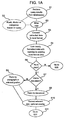
- Figs. 1A-1B show a flowchart showing processing of scientific textual documents retrieved from performing a query on one or more scientific text databases.
- an “entity” is defined herein as a subject of interest that a researcher is endeavoring to learn more about.
- an entity may be a gene, protein, molecule, disease, drug or other compound, but is not limited to these specific examples.
- verb refers to a relationship or action that occurs between nouns. Verbs are also identified for use in the local format to construct a grammar, language or Boolean logic. Examples of verbs include upregulation, downregulation, promotion, inhibition, bind, cleave and status of genes, protein-protein interactions, drug actions and reactions, etc.
- Textual form scientific documents, as well as diagrammatic form documents containing one or more biological models may be dependent upon or related to many different cellular processes, genes, and various expressions of genes with resultant variations in protein abundance. Correlation and testing of data against these documents is becoming increasingly more tedious and lengthy with the increased automation of the ways in which gene expression, protein expression, and other data is generated (e.g., microarrays, RT-PCR, mass spectroscopy, 2-D Gels, etc.), and with the consequent increasing complexity and number of the documents that describe this data.
- the present invention allows a user's context to be captured in terms of experimental results and other locally collected data.
- the invention makes use of manually, semi-automatically or automatically extracted links between imported scientific text or biological models and proprietary or public data to provide relevance ranking, filtering, and categorization of imported scientific text or biological models.
- a search may be performed on a scientific text or biological model database using a search engine provided for that database, or other search engine, such as one disclosed in co-pending and commonly assigned U.S. Application Serial No. 10/033,823, filed December 19, 2001 and titled "Domain Specific Knowledge-Based Metasearch System and Methods of Using”, which is incorporated herein in its entirety, by reference thereto.
- Further examples of knowledge discovery and data mining tools can be found in co-owned, co-pending Application (Application Serial No., not yet assigned; Attorney's Docket No. 10020142-1) filed concurrently herewith and titled “Biotechnology Information Naming System", which is incorporated herein, in its entirety, by reference thereto.
- the search is generally performed, using a client query that is fairly broad. Since this type of search cannot capture the context of a query, if the query is not broad there is a good chance that documents containing useful information will be missed. Therefore, the query of such a database must be fairly broad to be effective.
- results received from such a query are generally quite voluminous. For example, it is not unusual for a typical query of a scientific text database to return thousands of documents. Still further, any or all of these documents can be lengthy in and of themselves, and a large portion of any particular document may not pertain or be relevant to the context of the user's search. Without the present invention, the user is then left to read or browse the entirety of this mass of retrieved documents in an attempt to find the actual relevant data within them.
- the system in U.S. Application Serial No. 10/033,823 can rank, cluster and/or categorize textual documents retrieved by such a search, any of these functions is based upon the initial query performed and the contents of the retrieved documents alone, and not the context of the user's data. Thus, although these functions can be helpful, they only organize the retrieved documents with respect to one another, with no consideration of the user's material on the client side.
- the present system allows a user to manually, semi-automatically or automatically extract links between imported scientific text/biological models and proprietary/public data, as well as experimental data.
- the links can be used according to the present invention to provide relevance ranking, categorization and filtering of scientific text/biological models retrieved from a generalized search procedure described above.
- Figs. 1A-1B show a flowchart showing processing of scientific textual documents retrieved from performing a query on one or more scientific text databases.
- substantially the same processing may be performed on biological models or other existing experimental data sets that the user may want to compare with his experimental or other locally stored data.
- step S1 scientific text documents which are identified by a query of one or more databases are downloaded or retrieved to the client side workstation for further processing.
- text documents may be loaded from an internal source such as a diskette, hard drive or other storage medium, or the data may be manually input by the user, for example.
- the documents that are retrieved by a search of a database are typically those that match one or more words in the query that was submitted to the one or more databases.
- the search engine application may also have some capability of data mining, as in the case of the disclosure in U.S. Application Serial No. 10/033,823, and when using such a tool, the user may optionally wish to rank, cluster or categorize the retrieved documents based upon the query terms, wherein any such organization is based upon the documents identified in the query results and the contents of the retrieved documents alone, and not on the context of the user's information. This may be helpful if the user gets a good result from such an operation, in making a first cut of information that is less relevant. However, it is not necessary, as the further processing described below will more accurately tailor the relevancy of the textual documents to the user's particular information.
- step S2 is optional. Not only is step S2 not necessary, but it also runs the risk of eliminating text that may be more relevant to the context of the user's search than can be identified by the tools based upon the query terms and the downloaded documents. However, as long as the lowly ranked documents are not discarded or deleted completely, the user can still have a chance to differentially process the lower ranked documents after processing what this step has identified as the more relevant documents.
- step S3 the procedure can go directly from step S 1 to step S3, where all of the downloaded documents may be processed. If step S2 was chosen as an option, the user would further have the option in step S3 to process a portion of the documents at a time, starting with any rank, category or cluster the user should so choose, and iterating through the remaining groups if so desired. Assuming step S2 was not carried out, in step S3 a data mining tool, as described in U.S. Application Serial No. 10/033,823, or other data mining tool is used to mine relevant nouns and possibly relationships between these nouns.
- a data mining tool as described in U.S. Application Serial No. 10/033,823, or other data mining tool is used to mine relevant nouns and possibly relationships between these nouns.
- the data mining tool can extract the nouns "gene A” and “gene B", as well as the verb or relationship "upregulates”. For more complex language that must be interpreted to include that gene A upregulates gene B, this may still possibly be automatically accomplished using an NLP tool.
- the nouns "gene A” and “gene B” can still be automatically extracted. After that the user can access those portions of the text that contain the extracted nouns, read those portions and make interpretations as to the relationships being described.
- relevant data may be sets of all sentences that have a gene name and an interaction of interest identified by a verb of interest.
- a lexicon of nouns and verbs may be used to judge relevancy of sentences, and this may differ from the user's query terms.
- the local format module converts the relevant data to the local format at step S4.
- the local format is a much reduced expression of what may have appeared in the scientific text from which the relevant data was extracted.
- the local formatting expresses the relevant data in a way that allows direct comparison of the user's data, which is also expressed in the local format, with the relevant data from the scientific text.
- the local format module further links the locally formatted data which was converted from the relevant data extracted from the scientific text, with any other information existing in the user's system in the local format that matches the converted scientific data.
- the user's experimental data, or whatever data is desired to evaluate/compare with the scientific text data has already been converted to the local format, either automatically, semi-automatically or manually, as described in the co-pending application claiming priority from Application Serial No. US 10/154,524 (Attorneys' Ref N13211), filed concurrently herewith and titled "System and Methods for Extracting Pre-Existing Data From Multiple Formats".
- the user's data has not yet been converted, it can be converted to the local format after converting the scientific text data. In either case, after both datasets have been placed into the common local format, the linking is performed at step S5.
- the links provide information that can be used in ranking, and otherwise discriminating the scientific textual data in a way that is directly related to the user's own experimental data or other data on the user's system. In this way, the results are much better tailored according to the context of what the user is searching for, not just according to the words of a query and comparison of scientific text documents against one another. For example, if a first scientific text document mentions both gene A and gene B in a mechanism relating to gene C, whereas a second scientific document relates to an upregulation of gene B by gene A, ranking and other ordering according to only a query regarding both genes A and B, and comparison among the scientific articles would rank articles 1 and 2 equally.
- the present invention would rank scientific text article 2 much higher than article 1, since the locally formatting of article 2 would be linked to the local formatting of the user's experimental data, whereas article 1's local formatting may only be linked to the experimental data by the nouns (gene A, gene B) associated with the datasets, if linked at all.
- step S6 the user is given the option to rank the scientific text articles (or subset of the articles if step S2 was carried out and the user wishes to process only a portion of the retrieved articles at one time) according to their relevance.
- Relevance rankings may be predicated upon the number of links that each particular document (or portion of a documents as described below) has with the user's data of interest. Thus, whenever genes, proteins or whatever entity or entities the experimental data is dealing with is mentioned, those documents that mention more of them are ranked higher than those with less mention.
- the verbs that describe the experimental data and which are linked with verbs in the local formatting of a scientific document also contribute to the ranking score. In fact, the verbs may be given a different weighting factor than the nouns, if desired, so that they count differently towards the ranking of a scientific text document.
- the ranking may be carried out on a per document basis, which can be selected at step S7, and when selected, the documents are ranked at step S8.
- the user may choose at step S7 to rank the material according to paragraphs of the textual data, or other smaller relevant portions of a document, such as sentences, or a predefined number of words around the relevant nouns or verbs in step S9.
- the present invention can more accurately hone in and identify a particular portion of a scientific text document which describes or relates to the data of interest. This option is particularly useful in situations where scientific article is relatively lengthy, but only a small portion of the article is relevant to the user's data.
- this feature can also be useful and save a lot of time, allowing the user to go directly to the relevant information in each document.
- the ranking procedures need not be exclusive of one another. That is, even after ranking by documents in step S8, the user can choose to further rank according to paragraphs or relevant portions of the documents as indicated by the dashed line between steps S8 and S9.
- the ranking processing of the scientific text data is based on some rendition of the local context, which, in its simplest form, could be simply nouns and verbs.
- the user may have experimental data expressed in terms of nouns and verbs (e.g., local format).
- the present invention uses a processing engine to process the nouns and verbs that represent the experimental data, and look for them in the scientific text documents.
- the scientific text documents which may be numerous, are realigned by the processing engine which finds matches of the nouns and verbs in the scientific text.
- the ranking may be done according to document, according to relevant passages or paragraphs within documents, or according to document, with an additional ranking of paragraphs/passages within each document.
- step S10 the user can select any textual document or portion of a textual document if the ranking has the material broken down in this fashion for review on a viewer. Moreover, the user is given the option to overlay the experimental data that is linked with that particular textual material being reviewed, using any of a number of overlaying techniques described in co-pending and co-owned Applications which claim priority from US 10/154,524 and US 10/155,616 (Attorney Refs. N13209 and N13211) filed concurrently herewith and titled “System and Methods for Extracting Pre-Existing Data From Multiple Formats" and “System and Methods for Visualizing Diverse Biological Relationships", respectively, both of which are incorporated herein, in their entireties, by reference thereto.
- Visualizations of the relationships between the experimental data and the scientific textual data can also facilitate manual relevance ranking of the scientific text. For example, by overlaying experimental data on selected scientific text for direct comparison of the two, the user may discover that a textual document or excerpt rated below a second textual document or excerpt may describe some data or results which are actually more relevant to the user's experimental data than that of the more highly rated document or excerpt. In this situation, the user can manually change the ranking of one or both of such documents or excerpts to reflect his findings.
- the overlaying process also affords the user the opportunity to compare the content of the experimental data versus the scientific literature and determine whether the experimental data concurs with the scientific text. If it does not, the user can annotate the experimental data to the effect that it is untrustworthy, needs revision, or the like. Or, there may be a situation where the experimental data concurs with several journal articles, but one journal article opposes the experimental findings. This alerts the user that a further investigation of not only the experimental data, but particularly the opposing scientific journal article may be in order. In this case, the user may label the opposing journal article as errant, less trustworthy, or something to that effect. It is further possible to set up a reliability scale, where the user could label supporting and opposing data on a sliding scale as to it's reliability. This could be used by others on the user's team as well as the user and aid them in letting them know in advance how reliable each document is.
- step S11 or if the user decides not to rank the data at step S6, the procedure goes to step S20, where the user is given the opportunity to filter the data.
- Filtering can be an extremely useful tool in situations where the user wants to more specifically examine only a portion of the experimental data that is linked with the scientific textual documents. For example, if the experimental data contains experiments and relationships regarding genes A, B,C and D, the user may be interested only in examining relationships between genes A and B at that moment. Even if a general query is done specific to only genes A and B, some of the scientific journal articles may also contain information regarding gene C and/or gene D, even if only incidentally. In such a situation, the local format module could form links between the local formatting of the experimental data pertaining to genes C and D and the description of these genes in the scientific text articles.
- the user can select a subset of the local formatting of the experimental data at step S26. In this instance, for example, the user could select to process only genes A and B and the relationships therebetween. Then the processing engine processes that subset of the local formatting of the experimental data against the local formatting of the scientific text documents at step S26. If there were documents relating only to gene C or to gene D or to genes C and D, these documents will be filtered out as a result of the processing at step S26. At step S28, there is another opportunity to rank the remaining documents. It is likely that the ranking of the remaining documents will have changed with respect to one another even if they have been previously ranked due to the change in ranking criteria. The ranking of these results can be performed by returning to step S7.
- the user may wish to access and review the filtered documents at step S30 without any further ranking. This may be particularly preferred when the documents have already been previously ranked, although this option can also be chosen if the documents have not been previously ranked.
- the user can select any textual document or portion of a textual document if the ranking has the material broken down in this fashion for review on a viewer.
- the user is given the option to overlay the experimental data that is linked with that particular textual material being reviewed, using any of an number of overlaying techniques described in co-pending and commonly assigned Applications based on US 10/154,524 and US 10/155,616, filed concurrently herewith. Visualizations of the relationships between the experimental data and the scientific textual data can also facilitate manual relevance ranking or filtering out of scientific text that is not relevant.
- step S40 For categorization.
- the process is advanced to step S40 where the user is given the option of categorizing.
- the user may optionally decide at step S24 to filter based upon a subset of the scientific text documents that were retrieved by the query.
- This step may be performed in addition to identifying a subset of the experimental data at step S22, or as an alternative to identifying a subset of the experimental data, in which case the user could simply input the entire set of experimental data at step S22.
- the identification of a subset of the scientific documents, or excerpts thereof may be a particularly appealing option when a ranking process has already been performed on the scientific text documents, either according to the documents as a whole, paragraphs or excerpts of the documents, or paragraphs or subsets of the documents ranked within the documents which have also been ranked according to whole documents.
- step S24 the process can then proceed to step S26, having already filtered out a certain amount of the textual document.
- the user is given the option to categorize the results of the scientific text documents.
- the text documents may or may not have been ranked according to any of the procedures described above, may or may not have been filtered according to any of the procedures described above, or any combination of those. That is, the mined data may be directly processed at step S40 by way of steps S6 and S20, ranked only documents may be processed at step S40 by way of steps S 11 and S20, ranked and filtered documents may be processed at step S40 by way of steps S11, S20 and S32, filtered only documents may be processed at step S40 by way of steps S6, S20 and S32, and other combinations of the data processed through various routes of the flow chart may be processed at step S40.
- subsets of the local formatting of the experimental data are defined in "buckets" at step S42. That is, one subset of nouns and/or verbs taken from the local formatting of the experimental or local data are chosen for bucket one, another subset of nouns and/or verbs taken from the local formatting of the experimental or local data are chosen for bucket two, and so forth.
- the nouns and/or verbs in each bucket may be completely distinct from one another, or they may have overlap.
- bucket one may contain "A upregulates B", for example, while bucket two could contain "B upregulates D" and so forth.
- the processing engine at step S44 can then individually process the local formatting of each bucket with respect to the textual data.
- What results is a set of textual documents or excerpts with respect to each bucket, which is relevant to that bucket, respectively.
- the user can select any of the bucket results to selectively browse the results for the bucket that he is interested in at the time, with an option to overlay the experimental data over the results in the same manner described above with regard to steps S10 and S30. After selectively browsing one set of results, the user can select another set of results relating to a second bucket and so forth.
- the user may decide that further processing is in order.
- the user is given the option to rank one or more of the result categories corresponding to the defined buckets. If the user chooses to do a further ranking procedure the processing returns to step S7. If the user chooses not to rank, the user is then given an option to do filtering at step S50. If the user chooses to filter one or more of the result categories corresponding to the defined buckets, then the processing is returned to step S22. If the user chooses not to filter any of the results, the process ends.
- step S40 should the decision be made not to categorize, the user is given the option to rank at step S60. If the user chooses to rank, the process goes to step S7. If the user chooses not to rank, the process ends.
- Each of the tools according to the present invention enhances the user's ability to identify textual documents relevant to the local data that the user is working on and developing.
- These tools and processes by enabling the user to better identify the context of what he is searching for, and then to compare the local data with highly relevant data downloaded or otherwise obtained from an existing database, optionally thorough the additional aid of overlaying one over the other, can help user to judge relevance of different. types of data. For example, if a scientific text document says “A upregulates B”, but the user's experimental data says that "A does not upregulate B", the user is, at a minimum, alerted to the fact that there is a discrepancy.
- the user may be motivated to repeat the experiments, and compare those results. Other actions may be taken by the user to determine validity, for example, the user may alter a hypothesis such that the apparent discrepancy is accounted for. Or, after further experimentation the user may determine that the scientific text document is inaccurate and take steps either to annotate this, for internal use, that it is not reliable, or to contact the author and have the text document retracted or modified.
- the present invention also allows validation and ranking of identified text documents as to their reliability/validity, and the same ability for characterizing the user's experimental data. That is the results of the present tools permit further human judgment as to what data is reliable or valid. Values may be assigned on a sliding scale or on a binary scale (i.e., valid/invalid) to characterize the validity, reliability or trustworthiness of data as well as scientific text documentation. This documentation of values may be attached or linked to the documents/experimental data in the local formatting of the same so that each time further data is linked with the existing locally formatted data, these annotations/documentations will alert the user as to the judgments that have been made previously.
- the present invention is not limited to the processing of textual documents with respect to the user's locally stored data, but the same processes may be applied to biological models as well as other experimental data sets.
- biological models it is currently more difficult to import biological models (such as pathways, for example) than it is textual documents. Therefore, a complete automatic conversion of such a biological model to the local format occurs less frequently than an automatic conversion of a textual document.
- biological models can often be semi-automatically converted, where some or all of the nouns identified in the model or pathway may be automatically converted, but where a user must analyze the pathway or model to determine the interrelationships between these nouns and manually enter some or all of the verbs.
- step S 1, S2 and S3 the remaining process steps described above for ranking, filtering and categorizing of biological model data can be carried out in the same way once the biological models have been converted to local formatting (although the local format conversion may be more difficult, as noted).
- step S 3 different pathways or models, or portions thereof, may be categorized in different buckets much in the same way as textual documents are treated.
- a user may be working with a gene A and has experimental data regarding the same.
- a query performed from one or more biological databases for all pathways in which gene A is involved may return 10 or 20 different pathways; for example. Some of these pathways may be characterizing gene A's role in mechanisms in the heart tissue, some may be with regard to gene A's relevance in the liver cells, and some may relate to breast tissue. If the user is currently researching breast cancer, he may choose to filter for breast cancer pathway, and therefore select nouns and/or verbs (at step S22) from the locally formatted experimental data that are selective for the breast cancer pathways.
- the filter process will then automatically find those pathways that are involved in breast cancer and rank them higher, or eliminate the non-selected (irrelevant pathways to breast cancer) altogether. If the experimental data pertains only to breast cancer and the local format contains nouns or verbs exclusive to the same, then the ranking procedures (step S7 and S9) will rank the breast cancer pathways higher, and the other pathways will likely not be eliminated (since they will link at least with the noun "gene A"), but they will be ranked lower.
- a categorization process could be carried out (step S40+) wherein the user could define a first bucket containing gene A and other nouns/verbs exclusive to breast cancer, while defining a second bucket containing gene A and other nouns/verbs exclusive to heart tissue. The process would then automatically distribute the breast cancer pathways to bucket one and the heart tissue pathways to bucket 2.
- Ranking, filtering and categorization of an existing data set of experimental data vis a vis the user's current set of experimental data or other locally stored data can also be performed using the system tools and processes according to the present invention. Particularly if the existing data set is of the same format, it is straightforward to convert this data to the local format in the same way that the user's data is converted. If the existing data set is of a different format, conversion to local formatting can still be accomplished, as described in more detail in the Application based on US 10/154,554.
Landscapes
- Engineering & Computer Science (AREA)
- Theoretical Computer Science (AREA)
- Computational Linguistics (AREA)
- Data Mining & Analysis (AREA)
- Databases & Information Systems (AREA)
- Physics & Mathematics (AREA)
- General Engineering & Computer Science (AREA)
- General Physics & Mathematics (AREA)
- Information Retrieval, Db Structures And Fs Structures Therefor (AREA)
Applications Claiming Priority (2)
| Application Number | Priority Date | Filing Date | Title |
|---|---|---|---|
| US155304 | 2002-05-22 | ||
| US10/155,304 US7058643B2 (en) | 2002-05-22 | 2002-05-22 | System, tools and methods to facilitate identification and organization of new information based on context of user's existing information |
Publications (2)
| Publication Number | Publication Date |
|---|---|
| EP1365332A2 true EP1365332A2 (de) | 2003-11-26 |
| EP1365332A3 EP1365332A3 (de) | 2005-07-06 |
Family
ID=29400575
Family Applications (1)
| Application Number | Title | Priority Date | Filing Date |
|---|---|---|---|
| EP03252903A Withdrawn EP1365332A3 (de) | 2002-05-22 | 2003-05-09 | Identifizierung und Organisation der neuen Informationen |
Country Status (2)
| Country | Link |
|---|---|
| US (1) | US7058643B2 (de) |
| EP (1) | EP1365332A3 (de) |
Families Citing this family (24)
| Publication number | Priority date | Publication date | Assignee | Title |
|---|---|---|---|---|
| US7003463B1 (en) | 1998-10-02 | 2006-02-21 | International Business Machines Corporation | System and method for providing network coordinated conversational services |
| US8396859B2 (en) | 2000-06-26 | 2013-03-12 | Oracle International Corporation | Subject matter context search engine |
| US20050188294A1 (en) * | 2004-02-23 | 2005-08-25 | Kuchinsky Allan J. | Systems, tools and methods for constructing interactive biological diagrams |
| US20030220747A1 (en) * | 2002-05-22 | 2003-11-27 | Aditya Vailaya | System and methods for extracting pre-existing data from multiple formats and representing data in a common format for making overlays |
| US7366673B2 (en) * | 2001-06-15 | 2008-04-29 | International Business Machines Corporation | Selective enablement of speech recognition grammars |
| US7428517B2 (en) * | 2002-02-27 | 2008-09-23 | Brands Michael Rik Frans | Data integration and knowledge management solution |
| US7536650B1 (en) | 2003-02-25 | 2009-05-19 | Robertson George G | System and method that facilitates computer desktop use via scaling of displayed objects with shifts to the periphery |
| US8230359B2 (en) * | 2003-02-25 | 2012-07-24 | Microsoft Corporation | System and method that facilitates computer desktop use via scaling of displayed objects with shifts to the periphery |
| US8225224B1 (en) | 2003-02-25 | 2012-07-17 | Microsoft Corporation | Computer desktop use via scaling of displayed objects with shifts to the periphery |
| US7730054B1 (en) * | 2003-09-30 | 2010-06-01 | Google Inc. | Systems and methods for providing searchable prior history |
| US7149679B2 (en) * | 2003-12-12 | 2006-12-12 | Expand, Inc. | Complex process modeling and simulation system and method |
| US7536634B2 (en) * | 2005-06-13 | 2009-05-19 | Silver Creek Systems, Inc. | Frame-slot architecture for data conversion |
| US7792884B2 (en) * | 2005-05-26 | 2010-09-07 | Itelehealth, Inc. | System and method for conducting tailored search |
| US20070031801A1 (en) * | 2005-06-16 | 2007-02-08 | Ctb Mcgraw Hill | Patterned response system and method |
| US9202221B2 (en) * | 2008-09-05 | 2015-12-01 | Microsoft Technology Licensing, Llc | Content recommendations based on browsing information |
| CN102063432A (zh) | 2009-11-12 | 2011-05-18 | 阿里巴巴集团控股有限公司 | 一种检索方法和系统 |
| US8898065B2 (en) | 2011-01-07 | 2014-11-25 | Nuance Communications, Inc. | Configurable speech recognition system using multiple recognizers |
| US9690770B2 (en) | 2011-05-31 | 2017-06-27 | Oracle International Corporation | Analysis of documents using rules |
| CN107066509B (zh) | 2012-04-26 | 2020-12-04 | 阿里巴巴集团控股有限公司 | 信息提供方法、处理服务器及合并服务器 |
| KR20150063423A (ko) | 2012-10-04 | 2015-06-09 | 뉘앙스 커뮤니케이션즈, 인코포레이티드 | Asr을 위한 개선된 하이브리드 컨트롤러 |
| US9639818B2 (en) * | 2013-08-30 | 2017-05-02 | Sap Se | Creation of event types for news mining for enterprise resource planning |
| JP5985080B2 (ja) | 2013-12-19 | 2016-09-06 | 三菱電機株式会社 | グラフ生成装置、グラフ表示装置、グラフ生成プログラムおよびグラフ表示プログラム |
| US10971157B2 (en) | 2017-01-11 | 2021-04-06 | Nuance Communications, Inc. | Methods and apparatus for hybrid speech recognition processing |
| US20230297627A1 (en) * | 2020-08-07 | 2023-09-21 | Frederick James Meyler | System and methods for monitoring and validating scientific research sources |
Family Cites Families (12)
| Publication number | Priority date | Publication date | Assignee | Title |
|---|---|---|---|---|
| US6076088A (en) * | 1996-02-09 | 2000-06-13 | Paik; Woojin | Information extraction system and method using concept relation concept (CRC) triples |
| US6457017B2 (en) * | 1996-05-17 | 2002-09-24 | Softscape, Inc. | Computing system for information management |
| US6285999B1 (en) * | 1997-01-10 | 2001-09-04 | The Board Of Trustees Of The Leland Stanford Junior University | Method for node ranking in a linked database |
| US5956708A (en) * | 1997-03-06 | 1999-09-21 | International Business Machines Corporation | Integration of link generation, cross-author user navigation, and reuse identification in authoring process |
| US6289342B1 (en) * | 1998-01-05 | 2001-09-11 | Nec Research Institute, Inc. | Autonomous citation indexing and literature browsing using citation context |
| US6457028B1 (en) * | 1998-03-18 | 2002-09-24 | Xerox Corporation | Method and apparatus for finding related collections of linked documents using co-citation analysis |
| US6496832B2 (en) | 1998-10-20 | 2002-12-17 | University Of Minnesota | Visualization spreadsheet |
| US6493702B1 (en) | 1999-05-05 | 2002-12-10 | Xerox Corporation | System and method for searching and recommending documents in a collection using share bookmarks |
| EP1208474A2 (de) * | 1999-07-20 | 2002-05-29 | Inmentia Inc | Methode und system zur datenorganisation |
| US6539396B1 (en) * | 1999-08-31 | 2003-03-25 | Accenture Llp | Multi-object identifier system and method for information service pattern environment |
| EP1170677B1 (de) | 2000-07-04 | 2009-03-18 | International Business Machines Corporation | Methode und System einer gewichteten Kontextrückmeldung zur Verbesserung von Ergebnissen in der Informationswiederauffindung |
| US20020178184A1 (en) | 2001-05-22 | 2002-11-28 | Allan Kuchinsky | Software system for biological storytelling |
-
2002
- 2002-05-22 US US10/155,304 patent/US7058643B2/en not_active Expired - Lifetime
-
2003
- 2003-05-09 EP EP03252903A patent/EP1365332A3/de not_active Withdrawn
Also Published As
| Publication number | Publication date |
|---|---|
| EP1365332A3 (de) | 2005-07-06 |
| US20030220895A1 (en) | 2003-11-27 |
| US7058643B2 (en) | 2006-06-06 |
Similar Documents
| Publication | Publication Date | Title |
|---|---|---|
| US7058643B2 (en) | System, tools and methods to facilitate identification and organization of new information based on context of user's existing information | |
| Krallinger et al. | Text-mining and information-retrieval services for molecular biology | |
| Wiegers et al. | Text mining and manual curation of chemical-gene-disease networks for the comparative toxicogenomics database (CTD) | |
| Jagadish et al. | Database management for life sciences research | |
| JP2008537821A (ja) | 生体分子及び疾患の間の関係に関する証拠を収集するシステム及び方法 | |
| JP2007004807A (ja) | 領域に固有のメタサーチを実行し、そのサーチ結果を視覚化するシステム、方法、及びコンピュータ可読媒体 | |
| James‐Zorn et al. | Xenbase: Core features, data acquisition, and data processing | |
| JP2009520278A (ja) | 科学情報知識管理のためのシステムおよび方法 | |
| US20040249791A1 (en) | Method and system for developing and querying a sequence driven contextual knowledge base | |
| EP1367508A1 (de) | System und Verfahren zum Extrahieren bereits vorhandene Daten aus mehreren Formaten | |
| Charbonneau et al. | Making Common Fund data more findable: catalyzing a data ecosystem | |
| Pasche et al. | Variomes: a high recall search engine to support the curation of genomic variants | |
| Denti et al. | Shark: fishing relevant reads in an RNA-Seq sample | |
| Mulero-Hernández et al. | Integration of chromosome locations and functional aspects of enhancers and topologically associating domains in knowledge graphs enables versatile queries about gene regulation | |
| Wei et al. | Finding relevant biomedical datasets: the UC San Diego solution for the bioCADDIE Retrieval Challenge | |
| Cohen-Boulakia et al. | Selecting biomedical data sources according to user preferences | |
| Van Vooren et al. | Mapping biomedical concepts onto the human genome by mining literature on chromosomal aberrations | |
| Szakonyi et al. | The KnownLeaf literature curation system captures knowledge about Arabidopsis leaf growth and development and facilitates integrated data mining | |
| Theodosiou et al. | BioTextQuest v2. 0: an evolved tool for biomedical literature mining and concept discovery | |
| McGarry et al. | Recent trends in knowledge and data integration for the life sciences | |
| Mougin et al. | Mapping data elements to terminological resources for integrating biomedical data sources | |
| Samuel et al. | Mining online full-text literature for novel protein interaction discovery | |
| US20040133414A1 (en) | Method, system and machine readable medium for publishing documents using an ontological modeling system | |
| US20050004785A1 (en) | System, method and computer product for predicting biological pathways | |
| Markowitz et al. | The integrated microbial genomes (IMG) system: a case study in biological data management |
Legal Events
| Date | Code | Title | Description |
|---|---|---|---|
| PUAI | Public reference made under article 153(3) epc to a published international application that has entered the european phase |
Free format text: ORIGINAL CODE: 0009012 |
|
| AK | Designated contracting states |
Kind code of ref document: A2 Designated state(s): AT BE BG CH CY CZ DE DK EE ES FI FR GB GR HU IE IT LI LU MC NL PT RO SE SI SK TR |
|
| AX | Request for extension of the european patent |
Extension state: AL LT LV MK |
|
| PUAL | Search report despatched |
Free format text: ORIGINAL CODE: 0009013 |
|
| AK | Designated contracting states |
Kind code of ref document: A3 Designated state(s): AT BE BG CH CY CZ DE DK EE ES FI FR GB GR HU IE IT LI LU MC NL PT RO SE SI SK TR |
|
| AX | Request for extension of the european patent |
Extension state: AL LT LV MK |
|
| 17P | Request for examination filed |
Effective date: 20051128 |
|
| AKX | Designation fees paid |
Designated state(s): DE FR GB |
|
| RAP1 | Party data changed (applicant data changed or rights of an application transferred) |
Owner name: AGILENT TECHNOLOGIES, INC. |
|
| 17Q | First examination report despatched |
Effective date: 20080117 |
|
| STAA | Information on the status of an ep patent application or granted ep patent |
Free format text: STATUS: THE APPLICATION IS DEEMED TO BE WITHDRAWN |
|
| 18D | Application deemed to be withdrawn |
Effective date: 20080528 |