EP1367094A2 - Composition recyclable ne contenant pas d'halogène et câble revêtu de cette composition - Google Patents
Composition recyclable ne contenant pas d'halogène et câble revêtu de cette composition Download PDFInfo
- Publication number
- EP1367094A2 EP1367094A2 EP03011108A EP03011108A EP1367094A2 EP 1367094 A2 EP1367094 A2 EP 1367094A2 EP 03011108 A EP03011108 A EP 03011108A EP 03011108 A EP03011108 A EP 03011108A EP 1367094 A2 EP1367094 A2 EP 1367094A2
- Authority
- EP
- European Patent Office
- Prior art keywords
- insulation
- plastic mixture
- conductor
- cable according
- layer
- Prior art date
- Legal status (The legal status is an assumption and is not a legal conclusion. Google has not performed a legal analysis and makes no representation as to the accuracy of the status listed.)
- Withdrawn
Links
- 239000000203 mixture Substances 0.000 title claims abstract description 107
- 239000011248 coating agent Substances 0.000 title claims description 4
- 238000000576 coating method Methods 0.000 title claims description 4
- 238000002955 isolation Methods 0.000 title description 2
- 229920003023 plastic Polymers 0.000 claims abstract description 68
- 239000004033 plastic Substances 0.000 claims abstract description 68
- 239000000945 filler Substances 0.000 claims abstract description 39
- 229920001577 copolymer Polymers 0.000 claims abstract description 27
- 230000003287 optical effect Effects 0.000 claims abstract description 15
- 239000003381 stabilizer Substances 0.000 claims abstract description 13
- 239000000654 additive Substances 0.000 claims abstract description 11
- 238000012545 processing Methods 0.000 claims abstract description 10
- 238000009413 insulation Methods 0.000 claims description 71
- 239000004020 conductor Substances 0.000 claims description 60
- 239000003063 flame retardant Substances 0.000 claims description 31
- -1 polypropylene Polymers 0.000 claims description 31
- RNFJDJUURJAICM-UHFFFAOYSA-N 2,2,4,4,6,6-hexaphenoxy-1,3,5-triaza-2$l^{5},4$l^{5},6$l^{5}-triphosphacyclohexa-1,3,5-triene Chemical compound N=1P(OC=2C=CC=CC=2)(OC=2C=CC=CC=2)=NP(OC=2C=CC=CC=2)(OC=2C=CC=CC=2)=NP=1(OC=1C=CC=CC=1)OC1=CC=CC=C1 RNFJDJUURJAICM-UHFFFAOYSA-N 0.000 claims description 29
- 239000004743 Polypropylene Substances 0.000 claims description 27
- 229920001155 polypropylene Polymers 0.000 claims description 19
- 229920000642 polymer Polymers 0.000 claims description 18
- 239000000463 material Substances 0.000 claims description 16
- 238000009472 formulation Methods 0.000 claims description 8
- 150000001336 alkenes Chemical class 0.000 claims description 6
- 125000005250 alkyl acrylate group Chemical group 0.000 claims description 6
- 238000010276 construction Methods 0.000 claims description 6
- 238000002844 melting Methods 0.000 claims description 6
- 230000008018 melting Effects 0.000 claims description 6
- 229920001400 block copolymer Polymers 0.000 claims description 5
- VTHJTEIRLNZDEV-UHFFFAOYSA-L magnesium dihydroxide Chemical compound [OH-].[OH-].[Mg+2] VTHJTEIRLNZDEV-UHFFFAOYSA-L 0.000 claims description 5
- 239000000347 magnesium hydroxide Substances 0.000 claims description 5
- 229910001862 magnesium hydroxide Inorganic materials 0.000 claims description 5
- 239000002245 particle Substances 0.000 claims description 5
- 229920000089 Cyclic olefin copolymer Polymers 0.000 claims description 4
- JOYRKODLDBILNP-UHFFFAOYSA-N Ethyl urethane Chemical compound CCOC(N)=O JOYRKODLDBILNP-UHFFFAOYSA-N 0.000 claims description 4
- ISWSIDIOOBJBQZ-UHFFFAOYSA-N Phenol Chemical compound OC1=CC=CC=C1 ISWSIDIOOBJBQZ-UHFFFAOYSA-N 0.000 claims description 4
- 239000004721 Polyphenylene oxide Substances 0.000 claims description 4
- 150000001408 amides Chemical class 0.000 claims description 4
- 150000002148 esters Chemical class 0.000 claims description 4
- 239000000155 melt Substances 0.000 claims description 4
- 239000006078 metal deactivator Substances 0.000 claims description 4
- 229920000570 polyether Polymers 0.000 claims description 4
- 229920002725 thermoplastic elastomer Polymers 0.000 claims description 4
- KWKAKUADMBZCLK-UHFFFAOYSA-N 1-octene Chemical compound CCCCCCC=C KWKAKUADMBZCLK-UHFFFAOYSA-N 0.000 claims description 3
- 125000001495 ethyl group Chemical group [H]C([H])([H])C([H])([H])* 0.000 claims description 3
- JRZJOMJEPLMPRA-UHFFFAOYSA-N olefin Natural products CCCCCCCC=C JRZJOMJEPLMPRA-UHFFFAOYSA-N 0.000 claims description 3
- 150000002894 organic compounds Chemical class 0.000 claims description 3
- 229920000098 polyolefin Polymers 0.000 claims description 3
- 125000002924 primary amino group Chemical group [H]N([H])* 0.000 claims description 3
- UKRDPEFKFJNXQM-UHFFFAOYSA-N vinylsilane Chemical class [SiH3]C=C UKRDPEFKFJNXQM-UHFFFAOYSA-N 0.000 claims description 3
- 239000001993 wax Substances 0.000 claims description 3
- VGGSQFUCUMXWEO-UHFFFAOYSA-N Ethene Chemical compound C=C VGGSQFUCUMXWEO-UHFFFAOYSA-N 0.000 claims description 2
- 239000005977 Ethylene Substances 0.000 claims description 2
- 239000002318 adhesion promoter Substances 0.000 claims description 2
- WNROFYMDJYEPJX-UHFFFAOYSA-K aluminium hydroxide Chemical compound [OH-].[OH-].[OH-].[Al+3] WNROFYMDJYEPJX-UHFFFAOYSA-K 0.000 claims description 2
- 239000000975 dye Substances 0.000 claims description 2
- 229910000000 metal hydroxide Inorganic materials 0.000 claims description 2
- 150000004692 metal hydroxides Chemical class 0.000 claims description 2
- 125000002496 methyl group Chemical group [H]C([H])([H])* 0.000 claims description 2
- 125000000484 butyl group Chemical group [H]C([*])([H])C([H])([H])C([H])([H])C([H])([H])[H] 0.000 claims 1
- 229920001038 ethylene copolymer Polymers 0.000 claims 1
- 229920002635 polyurethane Polymers 0.000 claims 1
- 239000004814 polyurethane Substances 0.000 claims 1
- 229920000800 acrylic rubber Polymers 0.000 abstract 1
- QQONPFPTGQHPMA-UHFFFAOYSA-N propylene Natural products CC=C QQONPFPTGQHPMA-UHFFFAOYSA-N 0.000 abstract 1
- 238000012360 testing method Methods 0.000 description 55
- 239000010410 layer Substances 0.000 description 33
- 238000005299 abrasion Methods 0.000 description 8
- 229920001971 elastomer Polymers 0.000 description 8
- 238000004804 winding Methods 0.000 description 8
- 230000032683 aging Effects 0.000 description 7
- 239000000806 elastomer Substances 0.000 description 7
- 230000007774 longterm Effects 0.000 description 6
- 229920002379 silicone rubber Polymers 0.000 description 6
- 239000004945 silicone rubber Substances 0.000 description 6
- 238000009826 distribution Methods 0.000 description 5
- 239000012774 insulation material Substances 0.000 description 5
- 239000000126 substance Substances 0.000 description 5
- 239000004698 Polyethylene Substances 0.000 description 4
- 238000004519 manufacturing process Methods 0.000 description 4
- 239000010949 copper Substances 0.000 description 3
- 230000001419 dependent effect Effects 0.000 description 3
- 239000002355 dual-layer Substances 0.000 description 3
- 239000000446 fuel Substances 0.000 description 3
- 239000000178 monomer Substances 0.000 description 3
- 229920000573 polyethylene Polymers 0.000 description 3
- HCILJBJJZALOAL-UHFFFAOYSA-N 3-(3,5-ditert-butyl-4-hydroxyphenyl)-n'-[3-(3,5-ditert-butyl-4-hydroxyphenyl)propanoyl]propanehydrazide Chemical compound CC(C)(C)C1=C(O)C(C(C)(C)C)=CC(CCC(=O)NNC(=O)CCC=2C=C(C(O)=C(C=2)C(C)(C)C)C(C)(C)C)=C1 HCILJBJJZALOAL-UHFFFAOYSA-N 0.000 description 2
- 229920001774 Perfluoroether Polymers 0.000 description 2
- QAOWNCQODCNURD-UHFFFAOYSA-N Sulfuric acid Chemical compound OS(O)(=O)=O QAOWNCQODCNURD-UHFFFAOYSA-N 0.000 description 2
- 230000008901 benefit Effects 0.000 description 2
- 150000001875 compounds Chemical class 0.000 description 2
- PWWSSIYVTQUJQQ-UHFFFAOYSA-N distearyl thiodipropionate Chemical compound CCCCCCCCCCCCCCCCCCOC(=O)CCSCCC(=O)OCCCCCCCCCCCCCCCCCC PWWSSIYVTQUJQQ-UHFFFAOYSA-N 0.000 description 2
- 230000000694 effects Effects 0.000 description 2
- HQQADJVZYDDRJT-UHFFFAOYSA-N ethene;prop-1-ene Chemical group C=C.CC=C HQQADJVZYDDRJT-UHFFFAOYSA-N 0.000 description 2
- 239000005038 ethylene vinyl acetate Substances 0.000 description 2
- 229910052736 halogen Inorganic materials 0.000 description 2
- 150000002367 halogens Chemical class 0.000 description 2
- 229920001519 homopolymer Polymers 0.000 description 2
- 238000000034 method Methods 0.000 description 2
- 238000012986 modification Methods 0.000 description 2
- 230000004048 modification Effects 0.000 description 2
- 229920001200 poly(ethylene-vinyl acetate) Polymers 0.000 description 2
- 229920000728 polyester Polymers 0.000 description 2
- 238000007790 scraping Methods 0.000 description 2
- 238000003860 storage Methods 0.000 description 2
- 238000004154 testing of material Methods 0.000 description 2
- 238000011179 visual inspection Methods 0.000 description 2
- 238000004073 vulcanization Methods 0.000 description 2
- XLYOFNOQVPJJNP-UHFFFAOYSA-N water Substances O XLYOFNOQVPJJNP-UHFFFAOYSA-N 0.000 description 2
- NIXOWILDQLNWCW-UHFFFAOYSA-M Acrylate Chemical compound [O-]C(=O)C=C NIXOWILDQLNWCW-UHFFFAOYSA-M 0.000 description 1
- 239000010754 BS 2869 Class F Substances 0.000 description 1
- 239000010755 BS 2869 Class G Substances 0.000 description 1
- RYGMFSIKBFXOCR-UHFFFAOYSA-N Copper Chemical compound [Cu] RYGMFSIKBFXOCR-UHFFFAOYSA-N 0.000 description 1
- FAPWRFPIFSIZLT-UHFFFAOYSA-M Sodium chloride Chemical compound [Na+].[Cl-] FAPWRFPIFSIZLT-UHFFFAOYSA-M 0.000 description 1
- 238000010521 absorption reaction Methods 0.000 description 1
- 239000000853 adhesive Substances 0.000 description 1
- 230000001070 adhesive effect Effects 0.000 description 1
- 150000001412 amines Chemical class 0.000 description 1
- 230000002528 anti-freeze Effects 0.000 description 1
- 239000003963 antioxidant agent Substances 0.000 description 1
- 230000003078 antioxidant effect Effects 0.000 description 1
- 239000010718 automatic transmission oil Substances 0.000 description 1
- DQXBYHZEEUGOBF-UHFFFAOYSA-N but-3-enoic acid;ethene Chemical compound C=C.OC(=O)CC=C DQXBYHZEEUGOBF-UHFFFAOYSA-N 0.000 description 1
- CQEYYJKEWSMYFG-UHFFFAOYSA-N butyl acrylate Chemical compound CCCCOC(=O)C=C CQEYYJKEWSMYFG-UHFFFAOYSA-N 0.000 description 1
- QYMGIIIPAFAFRX-UHFFFAOYSA-N butyl prop-2-enoate;ethene Chemical compound C=C.CCCCOC(=O)C=C QYMGIIIPAFAFRX-UHFFFAOYSA-N 0.000 description 1
- 230000015556 catabolic process Effects 0.000 description 1
- 239000003518 caustics Substances 0.000 description 1
- 230000008859 change Effects 0.000 description 1
- 238000004040 coloring Methods 0.000 description 1
- 229910052802 copper Inorganic materials 0.000 description 1
- 239000004703 cross-linked polyethylene Substances 0.000 description 1
- 229920003020 cross-linked polyethylene Polymers 0.000 description 1
- 239000011243 crosslinked material Substances 0.000 description 1
- 239000013078 crystal Substances 0.000 description 1
- 230000006866 deterioration Effects 0.000 description 1
- 238000010586 diagram Methods 0.000 description 1
- QHSJIZLJUFMIFP-UHFFFAOYSA-N ethene;1,1,2,2-tetrafluoroethene Chemical group C=C.FC(F)=C(F)F QHSJIZLJUFMIFP-UHFFFAOYSA-N 0.000 description 1
- 229920000840 ethylene tetrafluoroethylene copolymer Polymers 0.000 description 1
- 229920006245 ethylene-butyl acrylate Polymers 0.000 description 1
- 229920006225 ethylene-methyl acrylate Polymers 0.000 description 1
- 238000002474 experimental method Methods 0.000 description 1
- 238000001125 extrusion Methods 0.000 description 1
- 239000011152 fibreglass Substances 0.000 description 1
- 239000012467 final product Substances 0.000 description 1
- 238000007706 flame test Methods 0.000 description 1
- 239000012530 fluid Substances 0.000 description 1
- 239000012208 gear oil Substances 0.000 description 1
- 230000007062 hydrolysis Effects 0.000 description 1
- 238000006460 hydrolysis reaction Methods 0.000 description 1
- 230000003301 hydrolyzing effect Effects 0.000 description 1
- 229910001867 inorganic solvent Inorganic materials 0.000 description 1
- 239000003049 inorganic solvent Substances 0.000 description 1
- 230000010354 integration Effects 0.000 description 1
- 238000002372 labelling Methods 0.000 description 1
- 238000007561 laser diffraction method Methods 0.000 description 1
- 239000011777 magnesium Substances 0.000 description 1
- 239000002480 mineral oil Substances 0.000 description 1
- 239000010705 motor oil Substances 0.000 description 1
- 230000006855 networking Effects 0.000 description 1
- 239000003960 organic solvent Substances 0.000 description 1
- 230000008569 process Effects 0.000 description 1
- 239000000047 product Substances 0.000 description 1
- 230000001681 protective effect Effects 0.000 description 1
- 238000007789 sealing Methods 0.000 description 1
- 239000002356 single layer Substances 0.000 description 1
- 239000002904 solvent Substances 0.000 description 1
- 238000004381 surface treatment Methods 0.000 description 1
- 230000002195 synergetic effect Effects 0.000 description 1
- 229920001169 thermoplastic Polymers 0.000 description 1
- 239000004416 thermosoftening plastic Substances 0.000 description 1
- 239000010409 thin film Substances 0.000 description 1
- 238000010792 warming Methods 0.000 description 1
- 238000009736 wetting Methods 0.000 description 1
- DXZMANYCMVCPIM-UHFFFAOYSA-L zinc;diethylphosphinate Chemical compound [Zn+2].CCP([O-])(=O)CC.CCP([O-])(=O)CC DXZMANYCMVCPIM-UHFFFAOYSA-L 0.000 description 1
Images

Classifications
-
- H—ELECTRICITY
- H01—ELECTRIC ELEMENTS
- H01B—CABLES; CONDUCTORS; INSULATORS; SELECTION OF MATERIALS FOR THEIR CONDUCTIVE, INSULATING OR DIELECTRIC PROPERTIES
- H01B7/00—Insulated conductors or cables characterised by their form
- H01B7/17—Protection against damage caused by external factors, e.g. sheaths or armouring
- H01B7/29—Protection against damage caused by extremes of temperature or by flame
- H01B7/295—Protection against damage caused by extremes of temperature or by flame using material resistant to flame
-
- C—CHEMISTRY; METALLURGY
- C08—ORGANIC MACROMOLECULAR COMPOUNDS; THEIR PREPARATION OR CHEMICAL WORKING-UP; COMPOSITIONS BASED THEREON
- C08K—Use of inorganic or non-macromolecular organic substances as compounding ingredients
- C08K3/00—Use of inorganic substances as compounding ingredients
- C08K3/01—Use of inorganic substances as compounding ingredients characterized by their specific function
- C08K3/013—Fillers, pigments or reinforcing additives
-
- C—CHEMISTRY; METALLURGY
- C08—ORGANIC MACROMOLECULAR COMPOUNDS; THEIR PREPARATION OR CHEMICAL WORKING-UP; COMPOSITIONS BASED THEREON
- C08K—Use of inorganic or non-macromolecular organic substances as compounding ingredients
- C08K3/00—Use of inorganic substances as compounding ingredients
- C08K3/01—Use of inorganic substances as compounding ingredients characterized by their specific function
- C08K3/016—Flame-proofing or flame-retarding additives
-
- C—CHEMISTRY; METALLURGY
- C08—ORGANIC MACROMOLECULAR COMPOUNDS; THEIR PREPARATION OR CHEMICAL WORKING-UP; COMPOSITIONS BASED THEREON
- C08L—COMPOSITIONS OF MACROMOLECULAR COMPOUNDS
- C08L23/00—Compositions of homopolymers or copolymers of unsaturated aliphatic hydrocarbons having only one carbon-to-carbon double bond; Compositions of derivatives of such polymers
- C08L23/02—Compositions of homopolymers or copolymers of unsaturated aliphatic hydrocarbons having only one carbon-to-carbon double bond; Compositions of derivatives of such polymers not modified by chemical after-treatment
- C08L23/04—Homopolymers or copolymers of ethene
- C08L23/08—Copolymers of ethene
- C08L23/0846—Copolymers of ethene with unsaturated hydrocarbons containing atoms other than carbon or hydrogen
- C08L23/0869—Copolymers of ethene with unsaturated hydrocarbons containing atoms other than carbon or hydrogen with unsaturated acids, e.g. [meth]acrylic acid; with unsaturated esters, e.g. [meth]acrylic acid esters
-
- C—CHEMISTRY; METALLURGY
- C08—ORGANIC MACROMOLECULAR COMPOUNDS; THEIR PREPARATION OR CHEMICAL WORKING-UP; COMPOSITIONS BASED THEREON
- C08L—COMPOSITIONS OF MACROMOLECULAR COMPOUNDS
- C08L23/00—Compositions of homopolymers or copolymers of unsaturated aliphatic hydrocarbons having only one carbon-to-carbon double bond; Compositions of derivatives of such polymers
- C08L23/02—Compositions of homopolymers or copolymers of unsaturated aliphatic hydrocarbons having only one carbon-to-carbon double bond; Compositions of derivatives of such polymers not modified by chemical after-treatment
- C08L23/10—Homopolymers or copolymers of propene
-
- C—CHEMISTRY; METALLURGY
- C08—ORGANIC MACROMOLECULAR COMPOUNDS; THEIR PREPARATION OR CHEMICAL WORKING-UP; COMPOSITIONS BASED THEREON
- C08L—COMPOSITIONS OF MACROMOLECULAR COMPOUNDS
- C08L53/00—Compositions of block copolymers containing at least one sequence of a polymer obtained by reactions only involving carbon-to-carbon unsaturated bonds; Compositions of derivatives of such polymers
-
- C—CHEMISTRY; METALLURGY
- C08—ORGANIC MACROMOLECULAR COMPOUNDS; THEIR PREPARATION OR CHEMICAL WORKING-UP; COMPOSITIONS BASED THEREON
- C08L—COMPOSITIONS OF MACROMOLECULAR COMPOUNDS
- C08L2203/00—Applications
- C08L2203/20—Applications use in electrical or conductive gadgets
- C08L2203/202—Applications use in electrical or conductive gadgets use in electrical wires or wirecoating
-
- C—CHEMISTRY; METALLURGY
- C08—ORGANIC MACROMOLECULAR COMPOUNDS; THEIR PREPARATION OR CHEMICAL WORKING-UP; COMPOSITIONS BASED THEREON
- C08L—COMPOSITIONS OF MACROMOLECULAR COMPOUNDS
- C08L2207/00—Properties characterising the ingredient of the composition
- C08L2207/02—Heterophasic composition
Definitions
- the present invention relates to a recyclable halogen-free flame retardant Plastic mixture, in particular for electrical or optical cables, on the basis of polypropylene and / or its copolymers, which have a flame-retardant effect Filler and a thermoelastic based on at least one olefin copolymer Contains component.
- the present invention relates to an electrical or optical cable, which comprises an electrical or optical conductor and insulation, the latter from a recyclable halogen-free flame-retardant plastic mixture, in particular consists of a plastic mixture of the type mentioned above, which on the base of polyolefins, in particular polypropylene, and / or their Copolymers is made and contains a flame retardant filler.
- a recyclable halogen-free flame-retardant plastic mixture in particular consists of a plastic mixture of the type mentioned above, which on the base of polyolefins, in particular polypropylene, and / or their Copolymers is made and contains a flame retardant filler.
- Plastic mixtures of the type described at the outset include also demands regarding their thermal resilience. So must these mixtures, for example, long-term temperature loads at high and can withstand low temperatures without damage. While plastic mixtures containing halogen, like PVC, for a long-term temperature load of 90 ° C are designed using mixtures based on soft (uncrosslinked) Polyethylene can be substituted relatively easily, this is higher designed thermal loads no longer exist. Yes, even for PVC cable insulation themselves are temperature classes of 125 ° C and 150 ° C no longer achievable. For these cases, it is known that Plastic mixtures used on the basis of cross-linked polyethylene or Polypropylene and / or its copolymers are produced.
- the minimum and maximum continuous use temperature (Tu and To) for one The exposure time of 3,000 h is in accordance with the temperature class mentioned at - 40 ° C and at 125 ° C, the material having a short-term temperature (240 Hours) of 150 ⁇ 3 ° C and an overload temperature (6 hours) of 175 ⁇ 3 ° C must withstand.
- the line In general, the line must be constructed in such a way that it can process itself properly can and is weldable on standard equipment.
- the abrasion resistance by scraping is defined by the number of complete cycles that are necessary until the scraping needle has rubbed through the insulation and the machine has been switched off by the electrical contact.
- the minimum number of cycles required must be met by each individual test specimen and is shown in Table 1 below.
- the test is structured and carried out in accordance with DIN ISO 6722-1 (section abrasion resistance), needle diameter (0.45 ⁇ 0.01) mm. The experiment can be ended as soon as the number of cycles exceeds the minimum number of cycles by 50%. Make sure that the needle is raised at the point of reversal.
- the test is carried out on samples with a length of 500 ⁇ 5 mm.
- the The test is carried out in accordance with DIN ISO 6722-1 (section flame retardancy).
- DIN ISO 6722-1 section flame retardancy
- For the test is a Bunsen burner with a burner tube of about 9 mm Inner diameter and an approximately 100 mm high flame used.
- the length the inner blue cone of the flame must be about 50 mm and its Temperature 950 ⁇ 50 ° C.
- the sample is hung in a draft-free environment and exposed to the tip of the inner cone of the test flame.
- the flame is for max.
- test the hydrolytic resistance To test the hydrolytic resistance, a test specimen of sufficient length is wound in the middle in ten turns on a mandrel with a standard diameter. The line is tied off and the mandrel removed. Then the test object is connected to the positive pole of a 48 V DC voltage source and stored for 40 days in saline solution (1% NaCI) at the temperature (80 ⁇ 2) ° C, so that approx. 2 m of the test object are completely immersed.
- the electrode surface should have a size of 100 ⁇ 10 cm2 (material Cu).
- the length-related resistance must not fall below 90% of the initial value after the test, and the insulation resistance must not fall below 10 10 cm during water storage. Immediately after storage in water, all samples are checked for the presence of a specified dielectric strength (DIN ISO 6722-1).
- the media used are divided into two test groups according to a standardized list, each of which has different requirements.
- Group 1 media are multi-grade engine oils, CVT / ECVT automatic transmission oils, radiator antifreeze, various cleaners, engine compartment sealing compounds, fuels etc.
- Group 2 media include battery acid, brake fluids and steering gear oils.
- the insulation must not show any cracks, breaks or other function-related damage. No breakdown may occur during the subsequent voltage test.
- a resistance of at least 1,000 h to group 1 media is required.
- Group 2 media require a minimum resistance of 240 hours. If the resistance falls below 1000 h, appropriate protection against the respective media of group 2 in the affected cable harness area must be provided when using the cable (e.g. with corrugated pipe, protective hose).
- test is carried out in detail as follows: Two lines of the same material, each with a cross-section of 0.35 mm 2 , are twisted together (lay length approx. 2 cm) and 40 cm long samples are cut off. Three test groups are to be prepared, whereby for test group 1 the samples are bent in the middle in a U-shape so that they each fit into an open test tube with a diameter of approx. 25 mm. The test specimens are then wrapped with a 50% overlap with a standardized winding tape of a first group, it being important to ensure that the continuous use temperature of the winding tape corresponds at least to the continuous use temperature of the line.
- the procedure for test group 2 is the same as for test group 1 - but using different winding tapes.
- test group 3 the test items are tested without a winding tape. At least four test specimens from each test group are immersed in the respective medium for 2 minutes at room temperature, whereby the cable ends must not come into contact with the medium. The test specimens must then drain for 2 minutes (10 minutes for fuels). Thereafter, 1 test piece is placed in a test tube with the cable ends facing upwards, and the test tubes are stored in a warming cabinet at the above-mentioned temperature TO 1,000 h. After 240 h, 480 h, 720 h and 1000 h, one of the test specimens is removed and the remaining test specimens are immersed in the respective medium again and stored again after dripping. The test specimen is drilled out and subjected to a visual inspection. The cable is then wound around a mandrel with a diameter of 2 mm, again a visual inspection and also (as described above) a test of the dielectric strength is carried out.
- the present invention addresses the problem of an uncrosslinked recyclable halogen-free flame-retardant plastic mixture of the type mentioned at the beginning create that assigned at least the service temperature class of 125 ° C can and which is characterized by high abrasion resistance, media resistance and Cold flexibility distinguishes.
- This problem also includes the task of an electrical or optical cable, of the type mentioned at the beginning to create its insulation from a recyclable halogen-free flame-retardant polyolefinic plastic mixture, in particular a plastic mixture of the type mentioned, exists and in optimized Way of the required requirements regarding temperature resistance, cold flexibility, Recyclability, media resistance and abrasion resistance is adjusted.
- thermoelastic component as the comonomer (s) of the olefin contains octene and / or at least one alkyl acrylate.
- the unit “phr” stands for the mass fractions which are related to the total amount of plastic, i.e. to the sum of the masses of the polypropylene polymer or copolymer and the thermoelastic component.
- thermoelastic Component as comonomer (s) of the olefin octene and / or an alkyl acrylate in particular Contains ethyl, methyl or butyl acrylate
- the plastic mixture receives extremely high absorption capacity for the filler (> 170 phr), which on the one hand allows the setting of high flame resistance, but on the other hand not to a deterioration in the mechanical properties, such as in particular Abrasion resistance and elongation at break.
- amorphous or spherical areas and Semi-crystalline areas can be found, typically such a material can consist of three components: a PP homopolymer, a rubber-like Ethylene-propylene bipolymer and a predominantly crystalline ethylene-rich ethylene-propylene bipolymer. Due to the heterophasic structure, the impact strength of the Material can be influenced in a positive way ("impact modifying"). Details about different possible production methods of heterophase PP copolymers are described in WO 02/20628 A1.
- the filler which in particular can be a metal hydroxide, can be a magnesium hydroxide which has an average particle size (d 50 ) of 0.9-2.1 ⁇ m, in particular of 1.2-1.7 ⁇ m , has a BET surface area of more than 3 m 2 / g, in particular 4-6 m 2 / g, and / or has an electrical conductivity of less than 155 ⁇ S / cm.
- This filler can be used both uncoated and with a coating (preferably with amino or vinyl silanes).
- the desired flame retardancy can be set by means of these filler properties, while at the same time excellent processability, wetting of the filler particles by the plastic component and therefore finely dispersed, homogeneously distributed and highly adhesive integration of the filler particles is achieved.
- the filler can advantageously be contained in the plastic mixture in high doses, for example in an amount of 170-220 phr.
- the stabilizer system used can preferably react on a synergistically Mixture of thiocarboxylic acid esters with a sterically hindered phenol and hydrazide metal deactivators, especially in a ratio of 1: (1.2-1.8) : (0.8 -1.2).
- the processing additives can advantageously consist of additives which increase the extrudability facilitated and preferably waxes and / or other organic compounds based on amides, esters or olefins.
- the plastic mixture according to the invention can also, e.g. for labeling purposes when used for cable insulation, one or more dyes included as recipe components.
- the insulation consists of a plastic mixture with the recipe structure according to the invention.
- the above-mentioned sub-task underlying the invention which is the creation an electrical adapted in an optimized manner to the required requirements or optical cable, is solved in that the composition the formulation of the plastic mixture based on selected physical and / or geometric properties of the conductor is matched.
- the share of the flame retardant filler is set depending on the conductor cross section his.
- the proportion of the component, which comprises one or more thermal loads depending on the cross section of the leader.
- the insulation of a cable of the invention Art is made of two or more layers, with one so-called dual-layer insulation in the outer layer, if necessary recipe dependent on the conductor cross-section is used.
- the insulation can then (without risk to the value of flame resistance) a recipe with a reduced flame retardant content can be used.
- the advantage can be in a cost saving for the expenditure on flame retardants exist - and in particular in a cost saving that the Inner layer requires no coloring.
- the layer thickness of the outer layer should be in in such a case at least half the thickness of the entire insulation turn off.
- the inventive if necessary, depending on the conductor cross-section, recipe can be used.
- An insulation material known per se can then be used for the outer layer of the insulation, preferably a flame-retardant and halogen-free plastic, such as a thermoplastic Elastomer and / or PUR material can be used.
- a flame-retardant and halogen-free plastic such as a thermoplastic Elastomer and / or PUR material can be used. Even through one such a combination can be the manufacturing or material costs in relation to the desired property profile can be optimized.
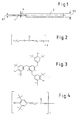
- an electrical or optical cable an electrical or optical conductor 1 and insulation 2, the consists of a recyclable halogen-free flame-retardant plastic mixture.
- This plastic mixture is based on polyolefins, especially polypropylene, and / or their / their copolymers produced and contains a flame retardant acting filler.
- the composition of the formulation of the plastic mixture is Insulation - as will be explained in more detail below by way of example - on selected ones physical and / or geometric properties of the conductor 1 matched.
- the proportion of the flame-retardant filler and / or the proportion a component contained in the plastic mixture that contains one or more thermal loads is dependent on the diameter d1 of the conductor 1 certain cross section of the conductor 1 is set.
- the reference symbol d2 denotes the diameter of the cable, the Wall thickness s of the insulation 2 results in half the value of the diameter difference d2-d1.
- the possible values, which d1, d2 and s for different nominal cross sections of the May accept conductor 1 can by standards, such as the entry mentioned factory standard (LV 112 - low-voltage cables for motor vehicles, Version from 18.03. 2002).
- the conductor 1 itself can preferably a bare single wire E-Cu 58 F21 according to DIN 40 500-4, whereby this, for example, also other than those provided for in the standard Surfaces (e.g. tinned, silver-plated).
- plastic mixture according to the invention covering the entire range of the composition mentioned, being below the individual components with the letters in brackets are: 50 - 95 phr polypropylene polymer or copolymer (A), 5 - 50 phr thermoelastic Component (B), 90-250 phr filler (C), 0.1-5 phr stabilizer system (D), 0.5 - 5 phr processing additives (E).
- the proportion of the flame-retardant filler (C) is therefore smaller in the case of a larger cross-section AL of the conductor 1 than in the case of a smaller cross-section AL of the conductor 1. It is inversely proportional to the first approximation between a maximum value which cannot be exceeded and a minimum value which is not to be undercut Cross-section AL of the conductor 1 is set, whereby thickness variations of the wall thickness s of the insulation 2 which are permitted as standard are also taken into account for different nominal cross-sections of the conductor 1.
- the proportion of the flame-retardant filler (component C) could advantageously be approximately 63-67 percent with a conductor cross-section AL of 0.35 mm 2 and with a cross-section AL of conductor 1 of 6.0 mm 2 (converted into percent) is about 44-49 percent of the total mix.
- the proportion of component B which comprises one or more thermal loads
- the proportion of the component B is advantageously about 1.4-2.0 percent with a conductor cross-section AL of 0.35 mm 2 and about 24-28 percent of the total mixture with a cross-section AL of conductor 1 of 6.0 mm 2 .
- the filler (component C) consisted of high-purity magnesium hydroxide (> 99.8%) with a high bulk density and a uniform crystal structure, which had been subjected to a special surface treatment (with amino or vinyl silanes).
- the BET surface area was between 4 and 6 m 2 / g.
- the maximum value of the electrical conductivity was 150 ⁇ S / cm.
- the stabilizer system used (component D) consisted of a synergistic acting mixture of a thiocarboxylic acid ester: dioctadecyl 3, 3 '- thiodipropionate (Chemical structural formula - see Fig. 1, CAS number: 693-36-7) as one Long-term heat resistance stabilizer, a sterically hindered phenol: 3, 3 ', 3 ', 5, 5', 5 '- hexa-tert-butyl-a, a', a '- (mesitylene - 2, 4, 6 - triyl) tri-p-cresol (chemical Structural formula - see Fig.
- Component E to facilitate extrudability processing additives in one Amount of 2 phr used from waxes or other organic compounds existed on the basis of amides, esters or olefins.
- the cables according to the invention or depending on the prescribed test conditions exclusively their insulation 2, that from the uncrosslinked invention Plastic mixture existed, met all requirements in the material testing of the automotive tests listed above for the service temperature class 125 ° C.
- Table 3 contains the test results for a cable with a cross-section AL of conductor 1 of 0.5 mm 2 .
- Test results (conductor cross section 0.5 mm 2 ) parameter value unit comment tensile force 11.7 N / mm 2 elongation 380 % flame test 10 s Verlöschzeit Cold winding test (-40 ° C) passed no cracks and punctures abrasion resistance 552 cycles
- Target 300 hydrolysis > 40 days no deviation from the initial value media resistance > 1000 H no damage, no breakthroughs Aging 125 ° C / 3000 h 0 punches no cracks and punctures Aging 150 ° C / 240 h 0 punches no cracks and punctures
- Thermal overload test 175 ° C / 6h 0 punches no cracks and punctures
- the insulation 2 is one Cable according to the invention constructed from two layers 2a, 2b.
- the cross section AL of the conductor 1 had a size of 0.5 mm 2 .
- the thickness sa of the inner layer 2a was 0.12 mm
- the thickness sb of the outer layer 2b was in the range between 0.18 and 0.23 mm.
- a plastic mixture was used for the outer layer 2b of the insulation 2, the composition of which was such as is given in Table 2 above for the nominal cross section 0.5 mm 2 .
- the inner layer 2a of the insulation 2 had the following composition: 86 phr Polypropylene polymer or copolymer (component A1), 14 phr thermoelastic component - POE (component B1), 43 phr Filler - Mg (OH) 2 (component C1), 1.9 phr Stabilizers (component D1).
- Dual-layer insulation also appears particularly suitable for cables whose conductors 1 have a cross-section AL in the range of more than 6 mm 2 , for example 8 to 180 mm 2 , in particular in the range of 16 to 95 mm 2 .
- it is suitable for conductors 1 with a cross section AL in the range from 4 to 180 mm 2 , particularly preferably in the range from 10 to 125 mm 2 .
- the two layers 2a, 2b of the insulation 2 can be connected to one another in a material, non-positive and / or form-fitting manner, if appropriate using an adhesion promoter.
- the layers 2a, 2b of the insulation 2 can also be applied together to the conductor 1 in one operation. Known extrusion lines can be used to form the insulation 2.
- the cross section AL of the conductor 1 had a size of more than 8 mm 2 in each case.
- the minimum thickness sa of the inner layer 2a was 0.08 mm
- the minimum thickness sb of the outer layer 2b was 0.05 mm.
- plastic mixtures were used for the inner layer 2a of the insulation, the compositions of which were those as given in Table 2 above.
- the outer layer 2b of the insulation 2 consisted of a flame-retardant, halogen-free, thermoplastic polyether urethane.
- test parameters of the cable compared to those listed in the above Values given in Table 3 also only slight deviations on and met at least all requirements for the service temperature class with the upper limit temperature of 125 ° C (class C), in addition to the specified
- a value was measured in the outer layer 2b of the insulation 2
- Hardness set in the range of about 75 Shore A to 72 Shore D, preferably in Range from 80 to 90 Shore A, was.
- the hardness - also as a measure of the flexibility of the Isolation 2 - was set so that it AL with a larger cross section of the conductor 1 was smaller than with a smaller cross section AL of the conductor 1.
- Component A (or A1) does not necessarily have to be a heterophase PP block copolymer act, but component A (or A1) could also be a homophase PP copolymer, the monomer components of which are in the molecule e.g. have a statistical distribution - or it could be a homopolymer at all his.
- thermoelastic component B could optionally also be an olefin copolymer comprise in which the alkyl radical of the alkyl acrylate of the comonomer (s) is a Is ethyl group or it could consist of several of the copolymers mentioned (as a blend) consist. From the different ones according to the examples already described possible material properties of this component, through which (e.g. melting point, Melt index, viscosity) on the one hand final product properties (e.g. thermal Resistance) but also processing properties of the mixture are influenced, it is evident that these are not within narrow limits without Disadvantage can be varied.
- a filler instead of the coated magnesium hydroxide also an uncoated or otherwise coated magnesium hydroxide or - accordingly -
- An aluminum hydroxide can be used.
- the grain size distribution of the Filler could differ from the one specified.
- the inner layer 2a (advantageously with respect to the outer layer 2b in particular up to approximately a quarter reduced filler content) from a plastic mixture with all characteristics exist as for the above for the plastic mixture according to the invention have been described (e.g. this applies to processing additives E1 described in the exemplary embodiment are not mentioned, or with regard to a ladder-dependent recipe structure).
- the outer layer 2b not from the described flame-retardant, halogen-free polyether urethane consist, but could also consist of another, e.g. a polyester urethane, or any other, preferably halogen-free and flame-retardant, Made of material such as a thermoplastic elastomer based on Polyether esters or amides. Predestined for this - without claim to Completeness to be raised - according to the respective required temperature class the materials mentioned at the beginning.
Landscapes
- Chemical & Material Sciences (AREA)
- Health & Medical Sciences (AREA)
- Chemical Kinetics & Catalysis (AREA)
- Medicinal Chemistry (AREA)
- Polymers & Plastics (AREA)
- Organic Chemistry (AREA)
- Compositions Of Macromolecular Compounds (AREA)
- Insulated Conductors (AREA)
Applications Claiming Priority (4)
| Application Number | Priority Date | Filing Date | Title |
|---|---|---|---|
| DE20208542 | 2002-05-29 | ||
| DE20208542U | 2002-05-29 | ||
| DE20301100U | 2003-01-23 | ||
| DE20301100U DE20301100U1 (de) | 2002-05-29 | 2003-01-23 | Recycelbare halogenfrei flammgeschützte Kunststoffmischung und Kabel mit einer aus einer solchen Mischung bestehenden Isolation |
Publications (3)
| Publication Number | Publication Date |
|---|---|
| EP1367094A2 true EP1367094A2 (fr) | 2003-12-03 |
| EP1367094A9 EP1367094A9 (fr) | 2004-03-31 |
| EP1367094A3 EP1367094A3 (fr) | 2004-08-11 |
Family
ID=29421747
Family Applications (1)
| Application Number | Title | Priority Date | Filing Date |
|---|---|---|---|
| EP20030011108 Withdrawn EP1367094A3 (fr) | 2002-05-29 | 2003-05-22 | Composition recyclable ne contenant pas d'halogène et câble revêtu de cette composition |
Country Status (1)
| Country | Link |
|---|---|
| EP (1) | EP1367094A3 (fr) |
Cited By (5)
| Publication number | Priority date | Publication date | Assignee | Title |
|---|---|---|---|---|
| WO2006063317A1 (fr) * | 2004-12-10 | 2006-06-15 | 3M Innovative Properties Company | Composites polymères chargés |
| EP1857502A1 (fr) * | 2006-04-27 | 2007-11-21 | Borealis Technology Oy | Composition de polypropylène ignifugée comprenant un hydroxyde de métal ou hydraté pour cable automobile |
| US7495174B2 (en) * | 2004-06-03 | 2009-02-24 | Autonetworks Technologies, Limited | Coated Electric Wire |
| US9321912B2 (en) | 2009-12-31 | 2016-04-26 | Dow Global Technologies Llc | Halogen-free flame retardant thermoplastic compositions for wire and cable applications |
| DE102017117295A1 (de) | 2017-07-31 | 2019-01-31 | Lisa Dräxlmaier GmbH | Kunststoffummantelung von Flachleiterprofilen |
Citations (3)
| Publication number | Priority date | Publication date | Assignee | Title |
|---|---|---|---|---|
| EP0893801A1 (fr) | 1997-07-23 | 1999-01-27 | PIRELLI CAVI E SISTEMI S.p.A. | Câbles revêtus d'une couche recyclable et exempte d'halogène contenant du polypropylène et un copolymère d'éthylène, à grande récupération élastique |
| EP0972803A1 (fr) | 1998-07-15 | 2000-01-19 | Sumitomo Wiring Systems, Ltd. | Compositions de résines ignifuges et résistantes à l'usure |
| WO2002008331A2 (fr) | 2000-07-20 | 2002-01-31 | Kromberg & Schubert | Melange de plastiques reticulable, sans halogenes, ignifuge, particulierement destine a des cables |
Family Cites Families (2)
| Publication number | Priority date | Publication date | Assignee | Title |
|---|---|---|---|---|
| WO1993008986A1 (fr) * | 1991-11-08 | 1993-05-13 | Csaba Truckai | Tube renforce par des fils enrobes |
| EP0889088A1 (fr) * | 1997-07-01 | 1999-01-07 | Du Pont De Nemours International S.A. | Compositions de polyoléfine |
-
2003
- 2003-05-22 EP EP20030011108 patent/EP1367094A3/fr not_active Withdrawn
Patent Citations (3)
| Publication number | Priority date | Publication date | Assignee | Title |
|---|---|---|---|---|
| EP0893801A1 (fr) | 1997-07-23 | 1999-01-27 | PIRELLI CAVI E SISTEMI S.p.A. | Câbles revêtus d'une couche recyclable et exempte d'halogène contenant du polypropylène et un copolymère d'éthylène, à grande récupération élastique |
| EP0972803A1 (fr) | 1998-07-15 | 2000-01-19 | Sumitomo Wiring Systems, Ltd. | Compositions de résines ignifuges et résistantes à l'usure |
| WO2002008331A2 (fr) | 2000-07-20 | 2002-01-31 | Kromberg & Schubert | Melange de plastiques reticulable, sans halogenes, ignifuge, particulierement destine a des cables |
Non-Patent Citations (1)
| Title |
|---|
| "Research Disclosure", vol. 407, 1 March 1998, KENNETH MASON PUBLICATIONS, pages: 245 - 262 |
Cited By (6)
| Publication number | Priority date | Publication date | Assignee | Title |
|---|---|---|---|---|
| US7495174B2 (en) * | 2004-06-03 | 2009-02-24 | Autonetworks Technologies, Limited | Coated Electric Wire |
| WO2006063317A1 (fr) * | 2004-12-10 | 2006-06-15 | 3M Innovative Properties Company | Composites polymères chargés |
| EP1857502A1 (fr) * | 2006-04-27 | 2007-11-21 | Borealis Technology Oy | Composition de polypropylène ignifugée comprenant un hydroxyde de métal ou hydraté pour cable automobile |
| US9321912B2 (en) | 2009-12-31 | 2016-04-26 | Dow Global Technologies Llc | Halogen-free flame retardant thermoplastic compositions for wire and cable applications |
| DE102017117295A1 (de) | 2017-07-31 | 2019-01-31 | Lisa Dräxlmaier GmbH | Kunststoffummantelung von Flachleiterprofilen |
| DE102017117295B4 (de) | 2017-07-31 | 2022-09-22 | Lisa Dräxlmaier GmbH | Flachleiterschiene |
Also Published As
| Publication number | Publication date |
|---|---|
| EP1367094A9 (fr) | 2004-03-31 |
| EP1367094A3 (fr) | 2004-08-11 |
Similar Documents
| Publication | Publication Date | Title |
|---|---|---|
| DE19941180B4 (de) | Partiell vernetzte thermoplastische Feuerhemmende Harzzusammensetzung, deren Verwendung, Verfahren zu deren Herstellung sowie Formteil | |
| DE60035501T2 (de) | Beschlagfreies druckempfindliches klebematerial | |
| DE60107864T2 (de) | Kabel mit einem wiederverwertbaren kabelmantel | |
| DE112008001781B4 (de) | Zusammensetzung für ein flammwidriges Silan-quervernetztes Olefinharz, Verfahren zu ihrer Herstellung und ihre Verwendung zum Beschichten eines Leiters, flammwidriges Silan-quervernetzten Olefinharz sowie Verfahren zu seiner Herstellung | |
| DE69608530T2 (de) | Nicht-entflammbare thermoplastische Olefinelastomerzusammmensetzung, daraus hergestellte Laminierfolie sowie Verwendungen der Zusammensetzung und des Laminats | |
| DE69812632T2 (de) | Optisches kabel mit hohen zugwiderstand | |
| DE112006001039B4 (de) | Nicht-halogenhaltiger isolierter Draht und Kabelbaum | |
| EP1848006A2 (fr) | Bande de colle destinée à l'enrobage de biens allongés, utilisation de cette bande de colle tout comme faisceau de câble doté de cette bande de colle | |
| DE112004002371B4 (de) | Vernetzte flammhemmende Harzzusammensetzung und deren Verwendung in einem nichthalogenhaltigen Draht | |
| DE112014005050B4 (de) | Wärme-rückformbarer Artikel, Kabelverbindung und Kabelbaum | |
| DE60008784T2 (de) | Kabel mit wiederverwertbarem mantel | |
| EP0740993A2 (fr) | Procédé pour la fabrication de films et polypropylène | |
| DE69912868T2 (de) | Elektrisches Kabel mit selbstheilendem Kabelschutz | |
| DE102020123056A1 (de) | Kommunikationskabel und Kabelbaum | |
| EP1102282A1 (fr) | Câble électrique | |
| DE102015226788B4 (de) | Harzzusammensetzung und Verfahren zur Herstellung eines Kabelmaterials für ein Fahrzeug | |
| DE69509491T2 (de) | Selbstverlöschendes Kabel mit niedriger giftigen und korrosiven Rauch- und Gasabgabe, sowie Verfahren zu dessen Herstellung | |
| DE69817386T2 (de) | Elektrisches kabel und ein verfahren sowie zusammensetzung zu dessen herstellung | |
| EP1675906A1 (fr) | Pellicule de gainage composee de copolymere de polypropylene et d'un polymere incompatible avec le polypropylene | |
| EP1367094A2 (fr) | Composition recyclable ne contenant pas d'halogène et câble revêtu de cette composition | |
| DE3813200C2 (de) | Thermoplastisch verarbeitbare Kunststoffmischung | |
| DE2909845A1 (de) | Polymere flammverzoegernde masse, deren herstellung und verwendung | |
| EP0111287B1 (fr) | Masses moulables, conductrices de l'électricité, non réticulables, à base de matières synthétiques thermoplastiques et de noir de fumée | |
| DE112006001102B4 (de) | Halogenfreie isolierte Leitung und Kabelbaum | |
| DE20301100U1 (de) | Recycelbare halogenfrei flammgeschützte Kunststoffmischung und Kabel mit einer aus einer solchen Mischung bestehenden Isolation |
Legal Events
| Date | Code | Title | Description |
|---|---|---|---|
| PUAI | Public reference made under article 153(3) epc to a published international application that has entered the european phase |
Free format text: ORIGINAL CODE: 0009012 |
|
| AK | Designated contracting states |
Kind code of ref document: A2 Designated state(s): AT BE BG CH CY CZ DE DK EE ES FI FR GB GR HU IE IT LI LU MC NL PT RO SE SI SK TR |
|
| AX | Request for extension of the european patent |
Extension state: AL LT LV MK |
|
| PUAL | Search report despatched |
Free format text: ORIGINAL CODE: 0009013 |
|
| AK | Designated contracting states |
Kind code of ref document: A3 Designated state(s): AT BE BG CH CY CZ DE DK EE ES FI FR GB GR HU IE IT LI LU MC NL PT RO SE SI SK TR |
|
| AX | Request for extension of the european patent |
Extension state: AL LT LV MK |
|
| 17P | Request for examination filed |
Effective date: 20050208 |
|
| AKX | Designation fees paid |
Designated state(s): AT BE BG CH CY CZ DE DK EE ES FI FR GB GR HU IE IT LI LU MC NL PT RO SE SI SK TR |
|
| 17Q | First examination report despatched |
Effective date: 20051223 |
|
| STAA | Information on the status of an ep patent application or granted ep patent |
Free format text: STATUS: THE APPLICATION IS DEEMED TO BE WITHDRAWN |
|
| 18D | Application deemed to be withdrawn |
Effective date: 20121201 |