EP1370082A2 - Rundfunkempfänger, Informationsverarbeitungsvorrichtung und Informationsverteilungsverfahren - Google Patents
Rundfunkempfänger, Informationsverarbeitungsvorrichtung und Informationsverteilungsverfahren Download PDFInfo
- Publication number
- EP1370082A2 EP1370082A2 EP03011660A EP03011660A EP1370082A2 EP 1370082 A2 EP1370082 A2 EP 1370082A2 EP 03011660 A EP03011660 A EP 03011660A EP 03011660 A EP03011660 A EP 03011660A EP 1370082 A2 EP1370082 A2 EP 1370082A2
- Authority
- EP
- European Patent Office
- Prior art keywords
- distribution
- broadcast receiver
- section
- signal
- information
- Prior art date
- Legal status (The legal status is an assumption and is not a legal conclusion. Google has not performed a legal analysis and makes no representation as to the accuracy of the status listed.)
- Withdrawn
Links
Images



Classifications
-
- H—ELECTRICITY
- H04—ELECTRIC COMMUNICATION TECHNIQUE
- H04H—BROADCAST COMMUNICATION
- H04H60/00—Arrangements for broadcast applications with a direct linking to broadcast information or broadcast space-time; Broadcast-related systems
- H04H60/76—Arrangements characterised by transmission systems other than for broadcast, e.g. the Internet
- H04H60/78—Arrangements characterised by transmission systems other than for broadcast, e.g. the Internet characterised by source locations or destination locations
- H04H60/80—Arrangements characterised by transmission systems other than for broadcast, e.g. the Internet characterised by source locations or destination locations characterised by transmission among terminal devices
-
- H—ELECTRICITY
- H04—ELECTRIC COMMUNICATION TECHNIQUE
- H04H—BROADCAST COMMUNICATION
- H04H60/00—Arrangements for broadcast applications with a direct linking to broadcast information or broadcast space-time; Broadcast-related systems
- H04H60/09—Arrangements for device control with a direct linkage to broadcast information or to broadcast space-time; Arrangements for control of broadcast-related services
- H04H60/14—Arrangements for conditional access to broadcast information or to broadcast-related services
- H04H60/18—Arrangements for conditional access to broadcast information or to broadcast-related services on copying information
-
- H—ELECTRICITY
- H04—ELECTRIC COMMUNICATION TECHNIQUE
- H04H—BROADCAST COMMUNICATION
- H04H60/00—Arrangements for broadcast applications with a direct linking to broadcast information or broadcast space-time; Broadcast-related systems
- H04H60/09—Arrangements for device control with a direct linkage to broadcast information or to broadcast space-time; Arrangements for control of broadcast-related services
- H04H60/14—Arrangements for conditional access to broadcast information or to broadcast-related services
- H04H60/19—Arrangements for conditional access to broadcast information or to broadcast-related services on transmission of information
-
- H—ELECTRICITY
- H04—ELECTRIC COMMUNICATION TECHNIQUE
- H04H—BROADCAST COMMUNICATION
- H04H60/00—Arrangements for broadcast applications with a direct linking to broadcast information or broadcast space-time; Broadcast-related systems
- H04H60/09—Arrangements for device control with a direct linkage to broadcast information or to broadcast space-time; Arrangements for control of broadcast-related services
- H04H60/14—Arrangements for conditional access to broadcast information or to broadcast-related services
- H04H60/23—Arrangements for conditional access to broadcast information or to broadcast-related services using cryptography, e.g. encryption, authentication, key distribution
-
- H—ELECTRICITY
- H04—ELECTRIC COMMUNICATION TECHNIQUE
- H04N—PICTORIAL COMMUNICATION, e.g. TELEVISION
- H04N21/00—Selective content distribution, e.g. interactive television or video on demand [VOD]
- H04N21/40—Client devices specifically adapted for the reception of or interaction with content, e.g. set-top-box [STB]; Operations thereof
- H04N21/43—Processing of content or additional data, e.g. demultiplexing additional data from a digital video stream; Elementary client operations, e.g. monitoring of home network or synchronising decoder's clock; Client middleware
- H04N21/436—Interfacing a local distribution network, e.g. communicating with another STB or one or more peripheral devices inside the home
- H04N21/43615—Interfacing a Home Network, e.g. for connecting the client to a plurality of peripherals
-
- H—ELECTRICITY
- H04—ELECTRIC COMMUNICATION TECHNIQUE
- H04N—PICTORIAL COMMUNICATION, e.g. TELEVISION
- H04N21/00—Selective content distribution, e.g. interactive television or video on demand [VOD]
- H04N21/40—Client devices specifically adapted for the reception of or interaction with content, e.g. set-top-box [STB]; Operations thereof
- H04N21/43—Processing of content or additional data, e.g. demultiplexing additional data from a digital video stream; Elementary client operations, e.g. monitoring of home network or synchronising decoder's clock; Client middleware
- H04N21/436—Interfacing a local distribution network, e.g. communicating with another STB or one or more peripheral devices inside the home
- H04N21/4367—Establishing a secure communication between the client and a peripheral device or smart card
-
- H—ELECTRICITY
- H04—ELECTRIC COMMUNICATION TECHNIQUE
- H04N—PICTORIAL COMMUNICATION, e.g. TELEVISION
- H04N7/00—Television systems
- H04N7/16—Analogue secrecy systems; Analogue subscription systems
- H04N7/162—Authorising the user terminal, e.g. by paying; Registering the use of a subscription channel, e.g. billing
- H04N7/165—Centralised control of user terminal ; Registering at central
-
- H—ELECTRICITY
- H04—ELECTRIC COMMUNICATION TECHNIQUE
- H04N—PICTORIAL COMMUNICATION, e.g. TELEVISION
- H04N7/00—Television systems
- H04N7/16—Analogue secrecy systems; Analogue subscription systems
- H04N7/173—Analogue secrecy systems; Analogue subscription systems with two-way working, e.g. subscriber sending a programme selection signal
- H04N7/17345—Control of the passage of the selected programme
- H04N7/17354—Control of the passage of the selected programme in an intermediate station common to a plurality of user terminals
Definitions
- the present invention relates to a broadcast receiver which has a function for carrying out an encoding process of an accounting broadcast or the like, and particularly, to a broadcast receiver for distributing a received information signal to another image receiver at home or the like, an information processing apparatus, and an information distributing method.
- a signal is encoded at a stage at which transmission is carried out with broadcast radio waves so that a viewer having purchased only a viewing permission of an arbitrary program can enjoy such a program, and such a program cannot be reproduced without a decoding function, thereby managing charged programs.
- an inputted signal of broadcast radio waves is frequency converted into an I/F frequency band by means of a tuner.
- the signal converted into the I/F band is demodulated by a demodulator, and a digital signal is sampled.
- QPSK or 8PSK is utilized for satellite broadcasting, and a QAM scheme is widely used in a wired broadcasting network such as a cable network.
- 8VSK is employed in North American area, and a scheme called OFDM is employed in Europe.
- the signal outputted from the modulator is in a state in which encoding is provided as described above.
- This signal cannot be provided to an audio/video decoder 18 such as MPEG as is.
- the above signal is decoded by means of a decoder to be in a form such that the signal can be processed by the audio/video decoder 18.
- a viewer makes an application for purchasing a program to a broadcasting service provider.
- This application may be made orally via a telephone or may be made in online.
- the broadcasting service provider assigns a permission for decoding a program specified for a receiver possessed by the viewer according to such an application from the viewer.
- a decoding permission itself may be assigned by electrically providing information to a receiver by using a telephone line, assuming that broadcast radio waves or modem are provided at the receiver side.
- the receiver has identification information for identifying each one, namely, an ID key. Then, the identification information on a receiver having a decoding permission assigned thereto is drawn based on a predetermined computation processing, which limits a receiver in which decoding is possible.
- the receiver has a key data producing section which produces key information for carrying out decoding based on identification information and decoding permission information from a broadcasting service provider.
- the ID key itself is assigned from the broadcasting service provider.
- This ID key is completely incorporated into the broadcast receiver R by a ROM device or can be mechanically mounted removably by a smart card or a PC's MCIA card.
- a mount type key has provided a user with portability, there may be employed a scheme having incorporated therein a mechanism such that a mountable receiver cannot be changed without broadcasting service provider's permission in order to improve security.
- the receiver starts a decoder operation based on this key information.
- a program is specified in advance based on decoding permission information from the above broadcasting service provider.
- the receiver must identify whether or not an inputted program is the specified program.
- Program information is generally determined from identification information on programs included in an EPG (Electric Program Guide).
- EPG Electronic Program Guide
- a transport decoder samples these items of program information from an input signal, and delivers them to a decoding control device.
- the decoding control device supplies key data to the decoder based on program specification information from the key data producing section, and control an operation timing so as to operate the decoder relevant to only the specified program.
- the transport decoder further separates voice/video image streams, and supplies them to an audio/video decoder.
- a video image output of the audio/video decoder is supplied to a video processing section, and a voice output is supplied to an audio processing section.
- a video image is displayed on a display device.
- As an interface with the display device there is utilized a general analog type video/audio terminal or a D terminal which enables HD image transmission using a color difference signal in a new type of television receiver.
- a system controller is composed of its periphery devices specifically represented by a microprocessor and memory. This system controller carries out sequence or job control of the entire receiver. Occasionally, part of the control data received from a model must fully assure its security. For example, in the case of making an application for accounting program viewing online, it is required to fully protect ID information or the like in order to reliably check and protect a person targeted for accounting. Thus, although there can be a case in which encoding is applied to such data, such data is extremely small in data size, as compared with video image or voice. Therefore, it is not always necessary to provide a dedicated device such as a decoder, and such data may be software processed by the above system controller.
- a method for connecting the limited receiver to a television image receiver that is a display device it is possible to connect one television image receiver to an output terminal of such one limited receiver, or to connect a plurality of television image receivers by branching the one television image receiver.
- the same program as that received by the limited receiver is supplied to all of the television image receivers, which lacks flexibility.
- a plurality of limited receivers and a plurality of television image receivers are connected to each other, an arbitrary broadcast is received by each of the limited receivers, whereby such each limited receiver can select a program or channel freely.
- a plurality of limited receivers must be provided, resulting in high cost.
- the limited receivers are reconnected to an arbitrary one of a plurality of television image receivers according to the viewing contents, whereby an arbitrary broadcast signal can be supplied to a proper television image receiver.
- wiring must be reconnected every time, and the user's burden is increased.
- a technique for sharing a management signal or the like in the case where a plurality of receivers for receiving an accounting broadcast or the like are provided at home is disclosed in Jpn. Pat. Appln. KOKAI Publication No. 2001-298722.
- this reference there is disclosed a technique for carrying out an authentication processing by referring to ID information mutually among a plurality of receivers connected via a network, thereby making it possible to share contract information or the like, to share a line connection function, and to smoothly receive a plurality of accounting broadcasts or the like at home, etc.
- broadcast receivers for charged broadcasting are provided in plurality, and a display device such as a television image receiver is provided to be connected in correspondence with each of these broadcast receivers.
- a display device such as a television image receiver
- a broadcast receiver comprising:
- the number of external display devices such as television image receivers is limited by providing a distribution control section, and a broadcast signal such as accounting broadcast is distributed.
- a broadcast signal such as accounting broadcast is distributed.
- FIG. 1 is a block diagram depicting an example of a broadcast receiver, a television image receiver, and a communication apparatus according to one embodiment of the present invention.
- FIG. 2 is an illustrative view illustrating an example of a permissible list according to one embodiment of the present invention.
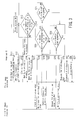
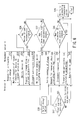
- FIG. 3 is a flow chart showing an example of a distribution limitation processing of a broadcast receiver according to a first embodiment of the present invention.
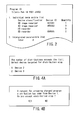
- FIG. 4A and FIG. 4B are illustrative views of an example of a screen for selecting a distribution stop device of the broadcast receiver according to the present invention.
- a broadcast receiver R that is a limited receiver according to the present invention, as shown in FIG. 1, has: an antenna terminal 11 to which a signal from an external antenna is supplied; a tuner 14 connected to the antenna terminal and demodulating the signal; and a demodulator 15 for modulating a broadcast signal of a channel selected by the tuner 14. Further, when the broadcast signal demodulated by the modulator 15 is used for a charged broadcast such as an accounting broadcast, it denotes a scrambled and encoded broadcast signal. Thus, this broadcast signal is supplied to a decoding section 16 for decoding it. Further, this decoding section 16 is connected to a decoding control section 19 which controls this decoding operation.
- the decoding control section 19 is connected to an external management server S, and a signal is supplied from a communication modem 24 for carrying out communication. Further, a distribution control section 24 connected to the communication modem 24 is provided, and is also connected to the decoding control section as well.
- the decoding control section 19 is connected to a key supply section 20 connected to an ID key 21.
- the key produced at the key supply section 20 is supplied to the decoding control section 19, whereby a decoding process of the decoding section 16 is carried out.
- an output from the decoding section 16 is supplied to a transport decoder 17.
- An output of the transport decoder 17 is connected to a re-encoding section 38 to which a control output from the distribution control section 24 is to be supplied.
- the thus re-encoded signals at the re-encoding section 38 are transmitted respectively via a communicating section 26 to an external first television image receiver V1, a communication apparatus T connected to a second television image receiver V2, and a third television image receiver V3.
- a broadcast signal outputted from the transport decoder 17 is supplied to an audio/video decoder 18 as well at the same time.
- An audio signal is supplied to an audio processing section 23, and a video signal is supplied to a video processing section 22, respectively.
- the audio signal processed at the audio processing section 23 is outputted to an audio output terminal 12, and the video signal processed at the video processing section 22 is outputted to a video output terminal 13, respectively.
- a system controller 25 is provided as a controller which integrally controls these entire operations.
- Such information processing apparatuses in which a voice/video image signal is distributed from a broadcast receiver for an encoded broadcast such as an accounting broadcast according to the present invention include: television image receivers V1, V2, and V3; a communication apparatus T; and an information recording/reproducing apparatus such as an optical disk recording/reproducing apparatus (not shown).
- a re-encoding section 29 of the communication apparatus T is compatible with an output section for outputting a signal to the television image receiver V2.
- the first television image receiver V1 or third television image receiver V3 shown in FIG. 1 has; a function for receiving a voice/video image signal distributed from the broadcast receiver R having a distributing function according to the present invention; and a function for making a response to the broadcast receiver R, as well as a general television receiver's function.
- the second television image receiver V2 is a general television image receiver which has an input terminal.
- the communication apparatus T has a function for receiving a voice/video image signal and a function for making a response to the broadcast receiver R of the invention. Therefore, in the case where an information distributing system according to the present invention is introduced into a general family having a plurality of general television image receivers, one broadcast receiver R and communication apparatuses T corresponding to television image receivers in number may be provided.
- the first television image receiver V1 has: a communicating section 27 for making communication with a communicating section 26 of the broadcast receiver R; a device authenticating section 28 connected to the communicating section 27, for carrying out an identification processing of the first television image receiver V1; and a re-decoding section 29 for re-decoding and reproducing the voice/video image signal acquired from the communicating section 27.
- this image receiver has: an audio/video decoder 30 for decoding the voice/video image signal decoded by the re-decoding section 29; an audio processing section 31 for processing the decoded audio signal; a video processing section 32 for processing the decoded video signal; a speaker in which an output from the audio processing section 31 is supplied; and a display section 34 for displaying a video image after the video signal has been supplied from the video processing section 32.
- the third television image receiver V3 may have a structure identical to the first television image receiver.
- the second television image receiver V2 is a general television image receiver.
- This image receiver has at least the audio/video decoder 30, the audio processing section 31, the video processing section 32, the speaker 33, and the display section 34 as described with respect to the television image receiver 1.
- the communication apparatus T is provided as an interface between a general television and the broadcast receiver R according to the present invention.
- This communication apparatus has at least the communicating section 27, the device authenticating section 28, and the re-decoding section 29 as shown with respect to the first television image receiver V1.
- a broadcast receiver capable of arbitrarily changing a distribution destination in the range of a permissible list and an information processing apparatus such as a television image receiver according thereto, are provided to information processing apparatuses such as a plurality of television image receivers.
- the broadcast receiver R is a so-called limited receiver for receiving an accounting program from a broadcasting service provider, and reproducing the program.
- a description will be given, assuming a case in which the first television image receiver V1, the second television image receiver V2 connected to the communication apparatus T, and the third television image receiver V3 each are installed in another room, thereby receiving weak radio waves of a voice signal and a video image signal distributed from the broadcast receiver R.
- a radio wave signal distributed from the broadcasting service provider is inputted to the antenna terminal 11.
- the inputted radio signal is tuned by the tuner 14 in accordance with a channel number.
- the tuned radio signal is converted into a signal obtained by weighting a signal at a predetermined carrier frequency irrespective of a channel frequency.
- the thus obtained signal is then converted into an actual digital signal by a demodulator 15.
- a signal outputted from the demodulator 15 is in a state in which encoding is carried out by the broadcasting service provider.
- this outputted signal cannot be provided to the audio/video decoder 18 such as a MPEG (Moving Picture Coding Experts Group) as is.
- MPEG Motion Picture Coding Experts Group
- the above signal is decoded by the decoding section 16 to be in a form such that processing can be carried out by the audio/video decoder 18.
- a decoding key is produced by the key supply section 20 based on the ID key 21.
- key management required for decoding by the decoding section 16 is carried out by the decoding control section 19 based on this decoding key; program information concerning an encoded program notified from the broadcasting service provider's management server S via the modem 24; and current reception program information extracted by the transport decoder 17.
- At least information concerning an encoding technique exchanged between the management server S and the modem 24 should be encoded in order to ensure security.
- This data is extremely small in volume, as compared with a video image signal or a voice signal, and there is no need to provide a large resource in order to carry out decoding. Therefore, the above data can be handled by a software processing using the system controller 25, and can be processed by providing a dedicated resource in the modem 24.
- the transport decoder 17 further separates voice/video image streams, and supplies these streams to the audio/video decoder 18.
- a video image output of the audio/video decoder 18 is supplied to the video processing section 22, and a voice output is supplied to the audio processing section 23. Finally, these outputs are supplied to a speaker or display (not shown) via the audio output terminal 12 or the video output terminal 13.
- a general analog type video/audio terminal or a D terminal enabling HD image transmission using a color difference signal in a new type of television image receiver.
- a permissible list display destination limitation information
- This permissible list provides the broadcast receiver R with information on what device type and how many devices are permitted to be distributed by the broadcasting service provider in order to ensure final program display.
- FIG. 2 shows an example of this permissible list.
- the permissible list is divided into an individual permissible list in which device type of the distribution destination or its modality specification are limited in detail and an integrated permissible list showing a total number of devices of the distribution destination.
- the integrated permissible list merely specifies how many devices are permitted for TV display or VCR recording in order to ensure viewing without particularly specifying the device of distribution destination, as illustrated.
- the individual permissible list the type and number of devices which can be finally received are further limited. For example, one hard disk television image receiver and two SD television image receivers are limited. Therefore, in this example, limitation of the integrated permissible list should take its priority highly.
- a total of four television image receivers which comprise three SD television image receivers and one hard disk television image receiver are not permitted for reception.
- permissible list as illustrated, limitation applies to a predetermined program.
- a plurality of programs may be specified for the same contents of permission by continuing a one-week program in one list, or the contents of permission may be specified on a channel by channel basis.
- This management list is stored in the distribution control section 24. Further, the distribution control section 24 knows a current encoding state from the decoding control section 19. This control section is intended to determine what information in the above permissible list corresponds to a currently received program.
- the distribution control section 24 manages a variety of sequences or job resources in order to ensure distribution. This control section is basically composed of a CPU and its software.
- the broadcast receiver shown in FIG. 1 further comprises a distributing device composed of the re-decoding section 38 and the communicating section 26 as well as video/audio terminals 12 and 13 which are identical to conventional ones, as an output destination of final video image/voice signal of a television image receiver or the like.
- the communicating section 26 assumes a digital type radio communication apparatus using weak radio waves. Specifically, radio waves of 5G band or the like represented by IEEE 802 currently discussed in IEEE are available for use.
- the communicating section 26 can utilize a wired network or Ethernet such as IEEE 1394 or USB 2.0 in the world of PC (personal computers).
- the re-encoding section 38 is required so that a video image/voice signal cannot be reproduced by a device permitted as a destination as a result of specifying a receiving destination.
- an algorithm such as DES (Data Encryption Standard) is well known.
- a technique of this re-encoding section 38 is basically intended to encode a video image and a voice. It is preferable that this technique has high security.
- a distribution control section 24 controls selection of an external television image receiver or the like for finally distributing a video image/voice signal from the above described management list and a current decoding state. Now, a specific control method will be described here.
- a description will be given with respect to a distribution destination in the case where a certain limitation applies to a receiver in which encoding is carried out, and finally reception is enabled.
- an initial state for example, when power is first turned ON, or when the broadcast receiver R is reset from the broadcasting service provider via a user or server, it is desirable that a video image and voice be first outputted from the output terminals 12 and 13 that are native outputs of this broadcast receiver R. This is because a minimum number of output terminals are maintained by limiting an output destination in an initial state such as a reset state.
- the distribution control section 24 controls the re-encoding section 38 to stop program distribution to these first television image receiver V1 and the output terminals 12 and 13.
- FIG. 3 shows an example of check communication procedures among the first television image receiver V1, the third television image receiver V3, and the broadcast receiver R.
- the communications enclosed within brackets [ ] denote procedures encoded and communicated in order to prevent information leakage described later.
- the communications shown in FIG. 3 are physically carried out by using the communicating section 26 of the broadcast receiver R, the communicating section 27 incorporated in the first television image receiver V3, and a like communicating section (not shown) incorporated in the third television image receiver V3.
- Interactive management and operational sequences in communication shown in FIG. 3 are processed by a system controller basically incorporated in each device (system controller 25 in the broadcast receiver R).
- system controller 25 in the broadcast receiver R system controller 25 in the broadcast receiver R
- a request is made so as to change a distribution destination from the first television image receiver V1 serving as a device of a new distribution destination to the broadcast receiver R (S11).
- the image receiver transmits an encoding key for encoding transmission data to the broadcast receiver R.
- This encoding key must be made different every time communication is carried out.
- an encoding key for decoding encoded data there is used a confidential, unique technique such that the first television image receiver V1 cannot decode the data.
- the broadcast receiver R transmits its return to the first television image receiver V1, and assigns to the first television image receiver V1 key data for carrying out encoding similarly relevant to next and subsequent important data (S12). It is desirable that this key data be encoded by an encoding key transmitted from the first television image receiver V1 described above.
- the first television image receiver V1 Having received the response from the broadcast receiver R and the encoding key, the first television image receiver V1 transmits its entity or device ID that is device type information to the broadcast receiver R (S13). These items of information are encoded by the encoding key from the broadcast receiver R.
- the broadcast receiver R having received the device ID carries out correlation to make checks with its own permissible list delivered from the broadcasting service provider (S14).
- the device ID of the first television image receiver V1 is not so important.
- the distribution control section 24 determines whether or not there is infringement against this limitation. Then, it is determined whether the number of distributions is within a permissible range (S15).
- step S15 if it is determined that the first television image receiver V1 being a new distribution destination exceeds a permissible range, distribution to at least one video image receiver must be stopped. Therefore, the notification of distribution disable is transmitted from the broadcast receiver R (S16). Concurrently, the first television image receiver V1 can specify another image receiver to be stopped.
- the GUI message as shown in FIG. 4 is displayed on a screen, a user oneself makes a selection, and a signal for specifying a device whose distribution is stopped is transmitted to the broadcast receiver R (S17).
- the broadcast receiver R having received this signal supplies a distribution stop check signal to the third television image receiver V3 (S18). This process prevents the user from being confused in the case where another user has already viewed a program by using the broadcast receiver R, if program distribution is stopped without notice.
- the third television image receiver V3 having received stop check causes the GUI message shown in FIG. 4B, for example, to be displayed on a screen. If there exists a currently viewing user, it can be rejected.
- the broadcast receiver R determines whether or nor forced stop is enabled (S21). If the forced stop is enabled, distribution procedures in step S25 and subsequent are carried out after forced stop. If the forced stop is disabled, procedures for determining the number of distributions in step S15 and subsequent are continued. Namely, if there is no response indicating that reception has been done for a predetermined period of time or more, it is determined that the third television image receiver V3 is not powered ON, or that the third television image receiver V3 broadcasts a completely different program by using another method. Even if distribution is eventually stopped, it can be determined that no problem occurs.
- the third television image receiver V3 After the third television image receiver V3 has notified receipt of a distribution stop request (S22), in the case where a response of YES or NO is made (S23), it is determined whether this response is accepted or not (S28). If accepted, the notification of distribution stop is transmitted to the third television receiver V3 (S24), and distribution procedures in step 25 and subsequent are carried out. If rejected, procedures for determining the number of distributions in step 15 and subsequent are continued.
- the user can freely change a video image/voice signal distribution destination in a range permitted in a permissible list between a plurality of television image receivers or information recording devices.
- a video image/voice signal distribution destination in a range permitted in a permissible list between a plurality of television image receivers or information recording devices.
- the permissible list L is electronically distributed from the management server S managed by a broadcasting service provider via the modem 24 or the like.
- the management list itself may not always be electrically distributed.
- a card C represented by a smart card is inserted into the broadcast receiver R, a permissible list is read via a card reader 35, and the read list can be supplied to the broadcast receiver R.
- permissible list data for deciding a distribution destination according to the present invention can be acquired in a variety of ways.
- an arbitrary distribution destination is selected within the range permitted by a permissible list from among a plurality of television image receivers or information recording devices, thereby making it possible to view an accounting broadcast or the like.
- FIG. 6 is a flow chart showing an example of processing for changing a permissible list of broadcast receivers according to the third embodiment of the present invention.
- connection to the broadcasting service provider's management server S as shown in FIG. 1, or providing a permissible list of designations to which a user finally connects by means of a removable physical medium as shown in FIG. 5, is close to managing the number of broadcast receivers R that are limited receivers receivable to the broadcasting service provider.
- a permissible list of designations to which a user finally connects by means of a removable physical medium as shown in FIG. 5
- FIG. 6 An example of procedures for an accounting process when the broadcasting service provider carries out accounting service by providing and/or updating such a permissible list, will be described with reference to FIG. 6.
- communications enclosed in brackets [ ] are procedures encoded and communicated in order to prevent information leakage described below.
- the user's broadcast receiver R provides a request for changing a permissible list to the management server S (S31).
- the server S Upon the receipt of this request, the server S notifies that it has received the request and requests a device ID. Further, the server S supplies to the first broadcast receiver R an encoding key for protecting information contained in the broadcast receiver R during subsequent communication (S32).
- a decoding key is required to decode data encoded by this encoding key.
- This decoding key can be sensed by the management server S only. For example, as the existing technique, a technique called PGP is available for use. Further, the management server S requests to the broadcast receiver R transmission of an encoding key for encoding data transmitted from the server itself similarly. The mechanism for his request is similar to that described above. Only the broadcast receiver R possessing the decoding key can decode the data encoded by this encoding key.
- the broadcast receiver R encodes its own device ID by an encoding key oriented to the above management server, and returns the ID (S33).
- the management server S having received this return decodes this device ID and checks whether the device ID itself is valid data or not (S34).
- the device ID itself is uniquely assigned when the broadcasting service provider provides the broadcast receiver R to the user, and starts service. Only the broadcasting service provider knows valid ID information. By making check of this device ID, it is checked that the broadcast receiver R itself targeted for changing the current permissible list is a regular receiver reliably authorized by the broadcasting service provider itself. This check safeguards against an illegally used device such as an unauthorized receiver.
- the management server S requests transmission of the current permissible list to the broadcast receiver R (S35), and the broadcast receiver R returns the fact to the management server S while the permissible list is encoded (S36).
- the management server S decodes the received permissible list, and correlates the decoded list with a record of the permissible list managed for each of its own device IDs (S37). When the correlation result is not coincident, it is determined that the corresponding device is illegal in the same way as when the device ID is checked. Then, processing is stopped and terminated in order to reject the subsequent procedures. This process is one of the safeguards against illegal use of device as in device ID check. When it is checked that the permissible list is coincident with the managed permissible list record, the management server S transmits to the broadcast receiver R a user selection option that can be changed by the current service together with the corresponding accounting information (S38).
- a predetermined degree of upper limit should be set. This upper limit is notified to the broadcast receiver R.
- the management server S needs to check whether or not the television image receiver should be permitted. If this check is neglected, when the user making an application for a television image receiver actually uses a recording device, a program can be copied without permission.
- the user selects a serviceable option transmitted via the broadcast receiver R (S39), and returns the selection result to the management server S (S40).
- the management server S requests the broadcast receiver R to transmit the requester's check ID in order to check whether or not the user oneself requesting this service is an authorized user (S41).
- applicants themselves are checked in order to strictly carry out accounting to the service applicants (S42).
- the simplest way is password check. Highly strict check is using a credit card ID or the like.
- Information for authentication of the individual applicants is apparently important privacy information. As shown in FIG. 6, it is preferable that return of privacy information from the broadcast receiver R be encoded. This privacy information check serves as final check of utilization of this service. Therefore, it is preferable that the selected option and the corresponding accounting information be provided. By providing this final check, it is possible to give an opportunity that the user stops service by one's discretion such that the user does not mistakenly complete the service procedures.
- the management server S makes this final check (S44).
- S44 a new permissible list is transmitted to the broadcast receiver R (S45), and further, this accounting record is added to the accounting management server managed by the broadcasting service provider (S46).
- the broadcast receiver R can carry out a distribution processing for an arbitrary external device relevant to a video image/voice signal in accordance with the above described procedures.
- the broadcast receiver R thus requests the management server S for a permissible list of distribution destinations, thereby making it possible for the user to freely change the list by one's discretion within the range of options indicated by the management server S.
- accounting broadcast or the like can be distributed to a plurality of television image receivers or information recording devices such as hard disk recorders in a flexible manner.
- a video image/voice signal can be distributed to an arbitrary display device or the like without carrying out complicated operation such as frequent wire or connection changes.
- FIG. 7 is a block diagram depicting an example of an optical disk device according to the fourth embodiment of the present invention.
- content information such as video image information to be distributed to external devices V1, V2, and V3 is assigned from an optical disk driver 42 for reading a DVD (Digital Versatile Disc) or the like and an external input terminal 41.
- a permissible list C is not only assigned after read by a card reader 35, but can be read from the optical disk driver 42.
- the optical disk device DP comprises a tuner 11 and a modulator 15 in the same way as the receiver R of FIG. 1. At the same time, this optical disk device can obtain content information to be distributed as a broadcast signal. However, even an optical disk device DP does not comprise the tuner 11 or demodulator 15, the disk can distribute a video image/video signal or the like to an arbitrary one from among a plurality of information processing apparatuses. In this manner, there can be provided an information processing apparatus capable of viewing a video image/voice signal or the like to be protected under copyright by an arbitrary one of the apparatuses given in the permissible list.
- the distribution processing according to the present invention can be carried out in a case of reproducing a video image and/or voice recorded in an optical disk 27 illustrated in FIG. 7, or in a case in which a permissible list is recorded on this optical disk.
- a video image/voice program is provided by using a recording medium such as an optical disk, distributing a permissible list by an optical disk can provide service remarkably readily rather than distributing the list by another medium or distributing the list using broadcasting radio waves.
- a typical example of the optical disk 27 is a DVD.
- the data streams of the current DVD is formed in the shape of program streams. These data streams are different from transport streams for use in broadcasting radio waves.
- a stream decoder 43 shown in FIG. 7 is compatible with both of the transport streams and program streams. This decoder automatically senses type of the input signal, and operates by switching two functions.
- a video image/voice signal or the like of an accounting broadcast or the like can be distributed from among a plurality of information processing apparatuses within the range permitted in the permissible list.
- a broadcast receiver, an information processing apparatus, a communication apparatus, and an information distributing method capable of viewing even highly confidential information on an accounting broadcast or the like by using an arbitrary apparatus.
Landscapes
- Engineering & Computer Science (AREA)
- Signal Processing (AREA)
- Multimedia (AREA)
- Computer Security & Cryptography (AREA)
- Theoretical Computer Science (AREA)
- Two-Way Televisions, Distribution Of Moving Picture Or The Like (AREA)
- Storage Device Security (AREA)
Applications Claiming Priority (2)
| Application Number | Priority Date | Filing Date | Title |
|---|---|---|---|
| JP2002159512 | 2002-05-31 | ||
| JP2002159512A JP3708905B2 (ja) | 2002-05-31 | 2002-05-31 | 放送受信機、放送受信システム及び情報配信方法 |
Publications (2)
| Publication Number | Publication Date |
|---|---|
| EP1370082A2 true EP1370082A2 (de) | 2003-12-10 |
| EP1370082A3 EP1370082A3 (de) | 2004-02-11 |
Family
ID=29545574
Family Applications (1)
| Application Number | Title | Priority Date | Filing Date |
|---|---|---|---|
| EP03011660A Withdrawn EP1370082A3 (de) | 2002-05-31 | 2003-05-22 | Rundfunkempfänger, Informationsverarbeitungsvorrichtung und Informationsverteilungsverfahren |
Country Status (3)
| Country | Link |
|---|---|
| US (1) | US20030236066A1 (de) |
| EP (1) | EP1370082A3 (de) |
| JP (1) | JP3708905B2 (de) |
Families Citing this family (9)
| Publication number | Priority date | Publication date | Assignee | Title |
|---|---|---|---|---|
| US8812850B2 (en) | 2000-03-02 | 2014-08-19 | Tivo Inc. | Secure multimedia transfer system |
| US7908635B2 (en) | 2000-03-02 | 2011-03-15 | Tivo Inc. | System and method for internet access to a personal television service |
| US8171520B2 (en) | 2000-03-02 | 2012-05-01 | Tivo Inc. | Method of sharing personal media using a digital recorder |
| JP5367262B2 (ja) * | 2004-04-12 | 2013-12-11 | ティヴォ インク | マルチメディアコンテンツのマルチキャスト配信システム |
| KR100643614B1 (ko) * | 2004-09-08 | 2006-11-10 | 한국전자통신연구원 | 댁내 방송분배 기능을 갖는 유무선 방송분배 장치 및 이를이용한 방송채널 생성/해지 방법 |
| CN102665112B (zh) | 2004-11-19 | 2015-08-19 | Tivo股份有限公司 | 用于多媒体内容的安全传输和回放的方法和设备 |
| WO2006068172A1 (ja) * | 2004-12-21 | 2006-06-29 | Matsushita Electric Industrial Co., Ltd. | ディジタル放送受信装置 |
| JP5007741B2 (ja) * | 2009-12-10 | 2012-08-22 | マックス株式会社 | ラベル発行情報処理システム |
| JP6138057B2 (ja) * | 2012-01-31 | 2017-05-31 | シャープ株式会社 | 提示制御装置、及び提示制御方法 |
Family Cites Families (16)
| Publication number | Priority date | Publication date | Assignee | Title |
|---|---|---|---|---|
| US5151782A (en) * | 1989-05-17 | 1992-09-29 | Reiss Media Enterprises | Control system for satellite delivered pay-per-view television system |
| US5245420A (en) * | 1990-11-27 | 1993-09-14 | Scientific-Atlanta, Inc. | CATV pay per view interdiction system |
| US5654747A (en) * | 1994-12-29 | 1997-08-05 | International Business Machines Corporation | Intelligent multimedia set-top control method and apparatus in which billing signals are communicated to an information network upon presentation of downloaded media programs |
| US6742118B1 (en) * | 1995-05-12 | 2004-05-25 | Sony Corporation | Information processing apparatus, information processing method, data recording medium, and information processing system |
| JPH11225292A (ja) * | 1998-02-04 | 1999-08-17 | Sony Corp | デジタル放送受信装置および受信方法 |
| US7257132B1 (en) * | 1998-02-26 | 2007-08-14 | Hitachi, Ltd. | Receiver set, information apparatus and receiving system |
| EP0949781A1 (de) * | 1998-04-08 | 1999-10-13 | THOMSON multimedia | Verfahren und Vorrichtung zur Optimierung der Verteilung von Ressourcen für Audio- und Datenverarbeitungsvorrichtungen in einer Hausnetzwerk-Umgebung |
| US7162642B2 (en) * | 1999-01-06 | 2007-01-09 | Digital Video Express, L.P. | Digital content distribution system and method |
| JP2001069475A (ja) * | 1999-08-27 | 2001-03-16 | Pioneer Electronic Corp | ケーブルテレビジョンの端末装置 |
| JP4752093B2 (ja) * | 2000-08-16 | 2011-08-17 | ソニー株式会社 | 情報処理装置及び情報処理方法 |
| EP1182874A1 (de) * | 2000-08-24 | 2002-02-27 | Canal+ Technologies Société Anonyme | System zum Schutz digitaler Inhalte |
| JP4552294B2 (ja) * | 2000-08-31 | 2010-09-29 | ソニー株式会社 | コンテンツ配信システム、コンテンツ配信方法、および情報処理装置、並びにプログラム提供媒体 |
| US7133408B1 (en) * | 2000-10-13 | 2006-11-07 | Sun Microsystems, Inc. | Shared decoder |
| US7266704B2 (en) * | 2000-12-18 | 2007-09-04 | Digimarc Corporation | User-friendly rights management systems and methods |
| WO2002065771A1 (en) * | 2001-02-09 | 2002-08-22 | Quadriga Technology Limited | System for and method of distributing television, video and other signals |
| US20030028887A1 (en) * | 2001-07-02 | 2003-02-06 | Laurent Frouin | Method to control the copying and/or broadcasting of audiovisual signals transmitted to within a home audiovisual network |
-
2002
- 2002-05-31 JP JP2002159512A patent/JP3708905B2/ja not_active Expired - Fee Related
-
2003
- 2003-05-22 EP EP03011660A patent/EP1370082A3/de not_active Withdrawn
- 2003-05-30 US US10/448,330 patent/US20030236066A1/en not_active Abandoned
Also Published As
| Publication number | Publication date |
|---|---|
| JP3708905B2 (ja) | 2005-10-19 |
| JP2004007185A (ja) | 2004-01-08 |
| EP1370082A3 (de) | 2004-02-11 |
| US20030236066A1 (en) | 2003-12-25 |
Similar Documents
| Publication | Publication Date | Title |
|---|---|---|
| JP4394833B2 (ja) | 通信ネットワーク | |
| EP0923247B1 (de) | Nachrichtenrundfunksystem, Empfänger und Nachrichtenbearbeitungsgerät | |
| RU2302706C2 (ru) | Способ и система для условного доступа | |
| US9516364B2 (en) | Secure transcoding of content | |
| US20070044132A1 (en) | Data processing device, data processing system | |
| JP2003503941A (ja) | メッセージの一斉送信および受信 | |
| JP2002514834A (ja) | 暗号化ディジタルデータの記録方法および装置 | |
| WO2010149161A1 (en) | Access control system | |
| JP4539996B2 (ja) | 遠隔再生機能付きペーパープレーアーキテクチャにおけるメディア配送の方法と装置 | |
| JP4644850B2 (ja) | ビデオシーケンス供給方法、ビデオストリーム送信装置、ビデオストリーム受信装置、カード型ビデオストリーム受信装置、およびビデオストリーム伝送システム | |
| EP1878231B1 (de) | Zugangsberechtigungsverfahren und system für ausstrahlungsdienste | |
| KR20030094381A (ko) | 수신 장치, 수신 방법, 기록 매체 및 프로그램, 전송 장치 및 전송 방법, 및 축적 장치, 축적 방법 및 기록 매체 | |
| US20030236066A1 (en) | Broadcast receiver, information processing apparatus, and information distributing method | |
| US20050198662A1 (en) | Content distribution system | |
| JP4611748B2 (ja) | デジタル・マルチメディア網用の携帯電話網上での通信におけるメッセージ分配方法及びそれに使用するレシーバ・デコーダ | |
| RU2329612C2 (ru) | Система дешифрования данных с условным доступом | |
| JP2011078043A (ja) | 受信装置 | |
| EP1722567B1 (de) | Inhaltsverwaltung | |
| US7764791B2 (en) | Method for secured transmission of audiovisual files | |
| EP1595383B1 (de) | Vorrichtung und verfahren zur integration ein- und zweiwegssicherheitssystemen zum ermöglichen sicherer verteilung verschlüsselter diensten | |
| US20060015461A1 (en) | Multimedia data transacting system and method | |
| JP2002271772A (ja) | 情報処理システムおよび方法、記録媒体、並びにプログラム | |
| JPH11317682A (ja) | 受信帰情報機器および受信システム | |
| JP2002033725A (ja) | 受信方法及び送信方法 | |
| JP2005523657A (ja) | コンディショナル・アクセス・システム及び装置 |
Legal Events
| Date | Code | Title | Description |
|---|---|---|---|
| PUAI | Public reference made under article 153(3) epc to a published international application that has entered the european phase |
Free format text: ORIGINAL CODE: 0009012 |
|
| 17P | Request for examination filed |
Effective date: 20030522 |
|
| AK | Designated contracting states |
Kind code of ref document: A2 Designated state(s): AT BE BG CH CY CZ DE DK EE ES FI FR GB GR HU IE IT LI LU MC NL PT RO SE SI SK TR |
|
| AX | Request for extension of the european patent |
Extension state: AL LT LV MK |
|
| PUAL | Search report despatched |
Free format text: ORIGINAL CODE: 0009013 |
|
| AK | Designated contracting states |
Kind code of ref document: A3 Designated state(s): AT BE BG CH CY CZ DE DK EE ES FI FR GB GR HU IE IT LI LU MC NL PT RO SE SI SK TR |
|
| AX | Request for extension of the european patent |
Extension state: AL LT LV MK |
|
| AKX | Designation fees paid |
Designated state(s): DE FR GB |
|
| 17Q | First examination report despatched |
Effective date: 20080714 |
|
| STAA | Information on the status of an ep patent application or granted ep patent |
Free format text: STATUS: THE APPLICATION IS DEEMED TO BE WITHDRAWN |
|
| 18D | Application deemed to be withdrawn |
Effective date: 20091201 |