EP1375512B1 - Infektiöse cDNA eines zugelassenen Impfstammes des Masern Virus. Verwendung in immunogenen Zusammensetzungen - Google Patents
Infektiöse cDNA eines zugelassenen Impfstammes des Masern Virus. Verwendung in immunogenen Zusammensetzungen Download PDFInfo
- Publication number
- EP1375512B1 EP1375512B1 EP02291551A EP02291551A EP1375512B1 EP 1375512 B1 EP1375512 B1 EP 1375512B1 EP 02291551 A EP02291551 A EP 02291551A EP 02291551 A EP02291551 A EP 02291551A EP 1375512 B1 EP1375512 B1 EP 1375512B1
- Authority
- EP
- European Patent Office
- Prior art keywords
- sequence
- cdna
- anyone
- cdna molecule
- nucleotide
- Prior art date
- Legal status (The legal status is an assumption and is not a legal conclusion. Google has not performed a legal analysis and makes no representation as to the accuracy of the status listed.)
- Expired - Lifetime
Links
Images



Classifications
-
- C—CHEMISTRY; METALLURGY
- C12—BIOCHEMISTRY; BEER; SPIRITS; WINE; VINEGAR; MICROBIOLOGY; ENZYMOLOGY; MUTATION OR GENETIC ENGINEERING
- C12N—MICROORGANISMS OR ENZYMES; COMPOSITIONS THEREOF; PROPAGATING, PRESERVING, OR MAINTAINING MICROORGANISMS; MUTATION OR GENETIC ENGINEERING; CULTURE MEDIA
- C12N15/00—Mutation or genetic engineering; DNA or RNA concerning genetic engineering, vectors, e.g. plasmids, or their isolation, preparation or purification; Use of hosts therefor
- C12N15/09—Recombinant DNA-technology
- C12N15/11—DNA or RNA fragments; Modified forms thereof; Non-coding nucleic acids having a biological activity
-
- C—CHEMISTRY; METALLURGY
- C12—BIOCHEMISTRY; BEER; SPIRITS; WINE; VINEGAR; MICROBIOLOGY; ENZYMOLOGY; MUTATION OR GENETIC ENGINEERING
- C12N—MICROORGANISMS OR ENZYMES; COMPOSITIONS THEREOF; PROPAGATING, PRESERVING, OR MAINTAINING MICROORGANISMS; MUTATION OR GENETIC ENGINEERING; CULTURE MEDIA
- C12N7/00—Viruses; Bacteriophages; Compositions thereof; Preparation or purification thereof
-
- A—HUMAN NECESSITIES
- A61—MEDICAL OR VETERINARY SCIENCE; HYGIENE
- A61K—PREPARATIONS FOR MEDICAL, DENTAL OR TOILETRY PURPOSES
- A61K39/00—Medicinal preparations containing antigens or antibodies
- A61K39/12—Viral antigens
- A61K39/155—Paramyxoviridae, e.g. parainfluenza virus
- A61K39/165—Mumps or measles virus
-
- A—HUMAN NECESSITIES
- A61—MEDICAL OR VETERINARY SCIENCE; HYGIENE
- A61P—SPECIFIC THERAPEUTIC ACTIVITY OF CHEMICAL COMPOUNDS OR MEDICINAL PREPARATIONS
- A61P31/00—Antiinfectives, i.e. antibiotics, antiseptics, chemotherapeutics
- A61P31/12—Antivirals
- A61P31/14—Antivirals for RNA viruses
-
- C—CHEMISTRY; METALLURGY
- C07—ORGANIC CHEMISTRY
- C07K—PEPTIDES
- C07K14/00—Peptides having more than 20 amino acids; Gastrins; Somatostatins; Melanotropins; Derivatives thereof
- C07K14/005—Peptides having more than 20 amino acids; Gastrins; Somatostatins; Melanotropins; Derivatives thereof from viruses
- C07K14/08—RNA viruses
- C07K14/115—Paramyxoviridae, e.g. parainfluenza virus
- C07K14/12—Mumps virus; Measles virus
-
- C—CHEMISTRY; METALLURGY
- C12—BIOCHEMISTRY; BEER; SPIRITS; WINE; VINEGAR; MICROBIOLOGY; ENZYMOLOGY; MUTATION OR GENETIC ENGINEERING
- C12N—MICROORGANISMS OR ENZYMES; COMPOSITIONS THEREOF; PROPAGATING, PRESERVING, OR MAINTAINING MICROORGANISMS; MUTATION OR GENETIC ENGINEERING; CULTURE MEDIA
- C12N15/00—Mutation or genetic engineering; DNA or RNA concerning genetic engineering, vectors, e.g. plasmids, or their isolation, preparation or purification; Use of hosts therefor
- C12N15/09—Recombinant DNA-technology
- C12N15/63—Introduction of foreign genetic material using vectors; Vectors; Use of hosts therefor; Regulation of expression
- C12N15/79—Vectors or expression systems specially adapted for eukaryotic hosts
- C12N15/85—Vectors or expression systems specially adapted for eukaryotic hosts for animal cells
- C12N15/86—Viral vectors
-
- A—HUMAN NECESSITIES
- A61—MEDICAL OR VETERINARY SCIENCE; HYGIENE
- A61K—PREPARATIONS FOR MEDICAL, DENTAL OR TOILETRY PURPOSES
- A61K39/00—Medicinal preparations containing antigens or antibodies
- A61K2039/51—Medicinal preparations containing antigens or antibodies comprising whole cells, viruses or DNA/RNA
- A61K2039/525—Virus
- A61K2039/5254—Virus avirulent or attenuated
-
- A—HUMAN NECESSITIES
- A61—MEDICAL OR VETERINARY SCIENCE; HYGIENE
- A61K—PREPARATIONS FOR MEDICAL, DENTAL OR TOILETRY PURPOSES
- A61K39/00—Medicinal preparations containing antigens or antibodies
- A61K2039/51—Medicinal preparations containing antigens or antibodies comprising whole cells, viruses or DNA/RNA
- A61K2039/525—Virus
- A61K2039/5256—Virus expressing foreign proteins
-
- A—HUMAN NECESSITIES
- A61—MEDICAL OR VETERINARY SCIENCE; HYGIENE
- A61K—PREPARATIONS FOR MEDICAL, DENTAL OR TOILETRY PURPOSES
- A61K39/00—Medicinal preparations containing antigens or antibodies
-
- C—CHEMISTRY; METALLURGY
- C12—BIOCHEMISTRY; BEER; SPIRITS; WINE; VINEGAR; MICROBIOLOGY; ENZYMOLOGY; MUTATION OR GENETIC ENGINEERING
- C12N—MICROORGANISMS OR ENZYMES; COMPOSITIONS THEREOF; PROPAGATING, PRESERVING, OR MAINTAINING MICROORGANISMS; MUTATION OR GENETIC ENGINEERING; CULTURE MEDIA
- C12N2760/00—MICROORGANISMS OR ENZYMES; COMPOSITIONS THEREOF; PROPAGATING, PRESERVING, OR MAINTAINING MICROORGANISMS; MUTATION OR GENETIC ENGINEERING; CULTURE MEDIA ssRNA viruses negative-sense
- C12N2760/00011—Details
- C12N2760/18011—Paramyxoviridae
- C12N2760/18411—Morbillivirus, e.g. Measles virus, canine distemper
- C12N2760/18421—Viruses as such, e.g. new isolates, mutants or their genomic sequences
-
- C—CHEMISTRY; METALLURGY
- C12—BIOCHEMISTRY; BEER; SPIRITS; WINE; VINEGAR; MICROBIOLOGY; ENZYMOLOGY; MUTATION OR GENETIC ENGINEERING
- C12N—MICROORGANISMS OR ENZYMES; COMPOSITIONS THEREOF; PROPAGATING, PRESERVING, OR MAINTAINING MICROORGANISMS; MUTATION OR GENETIC ENGINEERING; CULTURE MEDIA
- C12N2760/00—MICROORGANISMS OR ENZYMES; COMPOSITIONS THEREOF; PROPAGATING, PRESERVING, OR MAINTAINING MICROORGANISMS; MUTATION OR GENETIC ENGINEERING; CULTURE MEDIA ssRNA viruses negative-sense
- C12N2760/00011—Details
- C12N2760/18011—Paramyxoviridae
- C12N2760/18411—Morbillivirus, e.g. Measles virus, canine distemper
- C12N2760/18422—New viral proteins or individual genes, new structural or functional aspects of known viral proteins or genes
-
- C—CHEMISTRY; METALLURGY
- C12—BIOCHEMISTRY; BEER; SPIRITS; WINE; VINEGAR; MICROBIOLOGY; ENZYMOLOGY; MUTATION OR GENETIC ENGINEERING
- C12N—MICROORGANISMS OR ENZYMES; COMPOSITIONS THEREOF; PROPAGATING, PRESERVING, OR MAINTAINING MICROORGANISMS; MUTATION OR GENETIC ENGINEERING; CULTURE MEDIA
- C12N2760/00—MICROORGANISMS OR ENZYMES; COMPOSITIONS THEREOF; PROPAGATING, PRESERVING, OR MAINTAINING MICROORGANISMS; MUTATION OR GENETIC ENGINEERING; CULTURE MEDIA ssRNA viruses negative-sense
- C12N2760/00011—Details
- C12N2760/18011—Paramyxoviridae
- C12N2760/18411—Morbillivirus, e.g. Measles virus, canine distemper
- C12N2760/18434—Use of virus or viral component as vaccine, e.g. live-attenuated or inactivated virus, VLP, viral protein
-
- C—CHEMISTRY; METALLURGY
- C12—BIOCHEMISTRY; BEER; SPIRITS; WINE; VINEGAR; MICROBIOLOGY; ENZYMOLOGY; MUTATION OR GENETIC ENGINEERING
- C12N—MICROORGANISMS OR ENZYMES; COMPOSITIONS THEREOF; PROPAGATING, PRESERVING, OR MAINTAINING MICROORGANISMS; MUTATION OR GENETIC ENGINEERING; CULTURE MEDIA
- C12N2760/00—MICROORGANISMS OR ENZYMES; COMPOSITIONS THEREOF; PROPAGATING, PRESERVING, OR MAINTAINING MICROORGANISMS; MUTATION OR GENETIC ENGINEERING; CULTURE MEDIA ssRNA viruses negative-sense
- C12N2760/00011—Details
- C12N2760/18011—Paramyxoviridae
- C12N2760/18411—Morbillivirus, e.g. Measles virus, canine distemper
- C12N2760/18441—Use of virus, viral particle or viral elements as a vector
- C12N2760/18443—Use of virus, viral particle or viral elements as a vector viral genome or elements thereof as genetic vector
-
- C—CHEMISTRY; METALLURGY
- C12—BIOCHEMISTRY; BEER; SPIRITS; WINE; VINEGAR; MICROBIOLOGY; ENZYMOLOGY; MUTATION OR GENETIC ENGINEERING
- C12N—MICROORGANISMS OR ENZYMES; COMPOSITIONS THEREOF; PROPAGATING, PRESERVING, OR MAINTAINING MICROORGANISMS; MUTATION OR GENETIC ENGINEERING; CULTURE MEDIA
- C12N2795/00—Bacteriophages
- C12N2795/00011—Details
- C12N2795/10011—Details dsDNA Bacteriophages
- C12N2795/10211—Podoviridae
- C12N2795/10241—Use of virus, viral particle or viral elements as a vector
- C12N2795/10243—Use of virus, viral particle or viral elements as a vector viral genome or elements thereof as genetic vector
-
- Y—GENERAL TAGGING OF NEW TECHNOLOGICAL DEVELOPMENTS; GENERAL TAGGING OF CROSS-SECTIONAL TECHNOLOGIES SPANNING OVER SEVERAL SECTIONS OF THE IPC; TECHNICAL SUBJECTS COVERED BY FORMER USPC CROSS-REFERENCE ART COLLECTIONS [XRACs] AND DIGESTS
- Y02—TECHNOLOGIES OR APPLICATIONS FOR MITIGATION OR ADAPTATION AGAINST CLIMATE CHANGE
- Y02A—TECHNOLOGIES FOR ADAPTATION TO CLIMATE CHANGE
- Y02A50/00—TECHNOLOGIES FOR ADAPTATION TO CLIMATE CHANGE in human health protection, e.g. against extreme weather
- Y02A50/30—Against vector-borne diseases, e.g. mosquito-borne, fly-borne, tick-borne or waterborne diseases whose impact is exacerbated by climate change
Definitions
- Measles virus is a member of the order mononegavirales , i.e., viruses with a non-segmented negative-strand RNA genome.
- the non segmented genome of measles virus (MV) has an antimessage polarity which results in a genomic RNA which is neither translated in vivo or in vitro nor infectious when purified.
- Transcription and replication of non-segmented (-) strand RNA viruses and their assembly as virus particles have been studied and reported especially in Fields virology (3rd edition, vol. 1, 1996, Lippincott - Raven publishers-Fields BN et al ). Transcription and replication of measles virus do not involve the nucleus of the infected cells but rather take place in the cytoplasm of said infected cells.
- the genome of the measles virus comprises genes encoding six major structural proteins from the six genes (designated N, P, M, F, H and L) and an additional two-non structural proteins from the P. gene.
- the gene order is the following : 3', N, P (including C and V), M, F, H, and L large polymerase protein at the 5' end.
- the genome further comprises non coding regions in the intergenic region M/F ; this non-coding region contains approximately 1000 nucleotides of untranslated RNA.
- the cited genes respectively encode the leader peptide (I gene), the proteins of the nucleocapsid of the virus, i.e., the nucleoprotein (N), the phosphoprotein (P), and the large protein (L) which assemble around the genome RNA to provide the nucleocapsid.
- the other genes encode the proteins of viral envelope including the hemagglutinin (H), the fusion (F) and the matrix (M) proteins.
- the measles virus has been isolated and live attenuated vaccines have been derived from the Edmonston MV isolated in 1954 ( Enders, J. F., and T. C. Peebles. 1954. Propagation in tissue cultures od cytopathogenic agents from patients with measles. Proc. Soc. Exp. Biol. Med. 86:277-286 . ), by serially passages performed on primary human kidney or amnion cells. The used strains were then adapted to chick embryo fibroblasts (CEF) to produce Edmonston A and B seeds ( Griffin, D., and W. Bellini. 1996. Measles virus, p. 1267-1312. In B. Fields, D. Knipe, et al.
- Edmonston B was licensed in 1963 as the first MV vaccine. Further passages of Edmonston A and B on CEF produced the more attenuated Schwarz and Moraten viruses ( Griffin, D., and W. Bellini. 1996. Measles virus, p. 1267-1312. In B. Fields, D. Knipe, et al. (ed.), Virology, vol. 2. Lippincott - Raven Publishers, Philadelphia ) whose sequences have recently been shown to be identical ( Parks, C. L., R. A. Lerch, P. Walpita, H. P. Wang, M. S. Sidhu, and S. A. Udem. 2001.
- Vaccine. 20:651-665 Several other vaccine strains are also used: AIK-C, Schwarz F88, CAM70, TD97 in Japan, Leningrad-16 in Russia, and Edmonston Zagreb.
- the CAM70 and TD97 Chinese strains were not derived from Edmonston.
- Schwarz/Moraten and AIK-C vaccines are produced on CEF.
- Zagreg vaccine is produced on human diploid cells (WI-38).
- the live attenuated vaccine derived from the Schwarz strain is commercialized by Aventis Pasteur (Lyon France) under the trademark Rouvax®.
- a measles vector aimed at children needs to be developed from an approved vaccine strain and have accordingly cloned an infectious cDNA starting from viral particles of the widely used Schwarz/Moraten strain of measles virus.
- This cDNA may allow the production of Schwarz/Moraten vaccine stocks without having to rely on the availability of seed stocks. It may also be used as a recombinant vaccination vector based on an approved and efficient vaccine strain, grown on CEF for safety reasons, and worldwide used.
- the invention relates to a cDNA molecule which encodes the nucleotide sequence of the full length antigenomic (+)RNA strand of a measles virus (MV) originating from the Schwarz or the Moraten strain, said cDNA molecule comprising the nucleotide sequence extending from nucleotide 83 to nucleotide 15976 of the sequence represented on figure 5 .
- MV measles virus
- the expression « encodes » in the above definition encompasses the capacity of the cDNA to allow transcription of a full length antigenomic (+)RNA, said cDNA serving especially as template for transcription. Accordingly, when the cDNA is a double stranded molecule, one of the strands has the same nucleotide sequence as the antigenomic (+) strand RNA of the measles virus, except that « U » nucleotides are substituted by « T » in the cDNA.
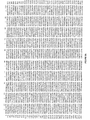
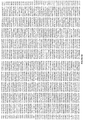
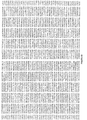
- Figure 5 illustrates the sequence of a DNA molecule of the invention which comprises a cDNA sequence as defined above, be it specified that the strand of the cDNA which is represented is identical to that of the antigenomic (+)RNA strand of a MV strain except for the substitution of « U » by « T réelle
- the cDNA molecule according to the above definition allows the production, when placed in appropriate conditions, of an infectious antigenomic (+)RNA capable of producing infectious particles of the measles virus.
- the cDNA obtained has especially the original 5'- and 3'-ends of the native antigenomic (+) strand of the viral RNA.
- the obtained cDNA complies with the rule of 6 which is required in order to express infectious viral particles.
- the cDNA molecule of the invention which is derived from an MV approved vaccine strain is obtained from the Schwarz or the Moraten strain.
- the cDNA molecule is placed under the control of a heterologous expression control sequence.
- the heterologous expression control sequence comprises the T7 promoter and T7 terminator sequences. These sequences are respectively located 5' and 3' of the coding sequence for the full length antigenomic (+)RNA strand of MV and from the adjacent sequences around this coding sequence.
- the cDNA molecule of the invention further comprises, at its 5'-end, adjacent to the first nucleotide of the nucleotide sequence encoding the full length antigenomic (+)RNA strand of the MV approved vaccine strain, a GGG motif followed by a hammerhead ribozyme sequence and which comprises, at its 3'-end, adjacent to the last nucleotide of said nucleotide sequence encoding the full length anti-genomic (+)RNA strand, the sequence of a ribozyme.
- the Hepatitis delta virus ribozyme ( ⁇ ) is appropriate to carry out the invention.
- the GGG motif placed at the 5' end, adjacent to the first nucleotide of the above coding sequence improves the efficiency of the transcription of said cDNA coding sequence.
- a ribozyme is also added at the 5' end of the coding sequence of the cDNA, 3' from the GGG motif, in order to enable cleavage of the transcript at the first coding nucleotide of the full length antigenomic (+)RNA strand of MV.
- two ribozymes are added in order to ensure the cleavage of the coding sequence for the full length antigenomic (+)RNA strand of the MV.
- cDNA encompasses a DNA molecule obtained by reverse transcription of an RNA molecule, including but not limited to an mRNA molecule.
- Any other technique for the preparation of DNA, starting from the material disclosed in the present invention or using the disclosed features relating to the cDNA of the invention can be used, including techniques involving synthesis or PCR.
- cDNA used for the description of the nucleotide sequence of the molecule of the invention merely relates to the fact that originally said molecule is obtained by reverse transcription of the full length genomic (-)RNA strand of the genome of viral particles of the measles virus. This should not be viewed as a limitation for the methods used for its preparation. Purified nucleic acids, including DNA are thus encompassed within the meaning cDNA according to the invention, provided said nucleic acid, especially DNA fulfils the above-given definitions.
- the invention also concerns a cDNA molecule according to one of the above definitions which is comprised in a plasmid capable of replication.
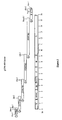
- plasmids can be prepared in order to fulfil the requirement of the invention and the invention especially relates to plasmid pTM-MVSchw which is represented on figure 2 .
- Plasmid pTM-MVSchw has been deposited at the CNCM (Paris, France) on June 12, 2002 under number 1-2889. This plasmid is described in the examples and figures which follow. It is a plasmid vector derived from Bluescript, comprising the full length sequence coding for the measles virus, strain Schwarz, placed under the control of the promoter of the T7 RNA polymerase; its size is 18967 nucleotide.
- the invention especially also relates to a cDNA molecule which is capable of producing infectious viral particles of the MV approved vaccine strain, preferably using the previously reported rescue system involving 293-3-46 helper cells (Radecke et al. and WO 97/06270 ), 293-3-46 helper cells expressing proteins necessary for transcription, replication of the RNA genome-sequence of MV from said cDNA and under conditions enabling viral particles assembly.
- 293-3-46 cells are cited as example for the preparation of the viral particles. They can however be replaced by any other appropriate cell line suitable for constituting helper cells.
- Particular preferred cDNA molecules according to the invention are the molecules having a nucleotide sequence selected among the following sequences:
- a particular cDNA molecule which is preferred to carry out the invention is the molecule which comprises the insert contained in plasmid pTMMVschw deposited at the CNCM under number I-2889, wherein said insert encodes a nucleotide sequence of the full length antigenomic (+)RNA strand of the measles virus.
- One particular insert is the one which is comprised within the sequence defined by the following restriction sites: Notl (located at position 1 on figure 5 ) and Notl (located at position 16203 on figure 5 ).
- the cDNA molecule is the product of the reverse transcription of the viral RNA purified from viral particles of the measles virus.
- the preparation of the cDNA from viral purified RNA advantageously limits the presence of cellular components and especially cellular DNA or RNA which could be present in cells used for the cultivation of the virus. It limits especially the presence of viral genomic RNA which would be incomplete or mutated and which are present in cells, and limits the presence of viral mRNA present in large quantities in the cells.
- the invention also concerns a recombinant cDNA molecule as defined above, which further comprises a heterologous DNA sequence cloned therein in conditions enabling its expression as a heterologous amino acid sequence, said cloning being performed in such a way that the obtained recombinant cDNA complies with the rule of six.
- Heterologous coding sequences especially DNA sequences are advantageously selected among sequences capable of expressing antigens or epitopes of antigens, having immunogenic properties and especially having the capacity of eliciting or favoring an immunogenic response in a host to which they are administered.
- Such heterologous DNA sequences can be derived for instance from antigens of pathogens.
- the invention advantageously enables the insertion of such heterologous DNA sequences in a sequence which is designated an Additional Transcription Unit (ATU) especially an ATU as disclosed by Billeter et al. in WO 97/06270 .
- ATU Additional Transcription Unit
- This ATU is especially represented on Figure 4 .
- the ATU is advantageously located in the N-terminal sequence of the cDNA molecule encoding the full-length (+)RNA strand of the antigenome of the MV and is especially located between the P and M genes of this virus or between the H and L genes. It has been observed that the transcription of the viral RNA of MV follows a gradient from the 5' to the 3' end. This explains that when inserted in the 5' end of the coding sequence of the cDNA, the ATU will enable a more efficient expression of the heterologous DNA sequence that it contains.
- the invention also relates to a vector comprising a cDNA molecule as defined above including a recombinant cDNA.
- a particular vector is vector for cloning and/or expressing of this cDNA.
- the vector is a plasmid and is especially pTM-MVSchw deposited at the CNCM on June 12, 2002 under No. l-2889.
- pTM-MVSchw2-gfp Another vector, designated pTM-MVSchw2-gfp is deposited at the CNCM under n° l-2890 on June 12, 2002.
- the vector is derived from pTM-MVSchw, and is accordingly a plasmid vector derived from Bluescript, comprising the full length sequence coding for the measles virus, strain Schwarz, placed under the control of the promoter of the T7 RNA polymerase, and further containing the gfp gene coding for the GFP protein, said gene being inserted in an ATU at position 2 (i.e., between the N and P genes of MV). Its size is 19800 nucleotides.
- the size of pTM-MvSchw is 18967 nucleotides.
- the size of pTM-MVSchw2-gfp is 19800 nucleotides.
- the invention also relates to a process for the preparation of infectious measles virus particles comprising:
- helper cells are derived from human embryonic kidney cell line 293, which cell line 293 is deposited with the ATCC under No. CRL-1573.
- the cells suitable for passage are CEF cells.
- CEF cells can be prepared from fertilized chicken eggs as obtained from EARL Morizeau, 8 rue Moulin, 28190 Dangers, France, or from any other producer of fertilized chicken eggs.
- the process which is disclosed according to the present invention is used advantageously for the production of infectious measles virus appropriate for use as vaccine compositions.
- the application thus discloses an immunogenic composition whose active principle comprises infection measles viral particles obtained by the process disclosed above.
- the application also discloses a vaccine composition.
- a vaccine composition has advantageously an active principle which comprises measles virus particles rescued from the cDNA of the vector which has been defined hereabove, which is expressed in a helper cell based rescue system.
- such a vaccine composition is suitable for protection against measles virus.
- the vaccine composition can further be suitable for protection against the pathogen from which the immunogenic DNA sequence derives.
- the application also discloses a cell which is recombined with a cDNA molecule according to the invention or with a vector as defined above.
- a preferred cell is a prokaryotic cell such as E. coli or Salmonella.
- Another cell is a eukaryotic cell, especially a cell selected among yeasts, such as Saccharomyces Cerevisiae.
- a cell disclosed in the application can be characterized according to a particular embodiment by the fact that this comprises nucleotide sequences expressing helper functions necessary to express an RNA polymerase and to express the N, P and L proteins of the MV virus. Such a cell can thus be used for the rescue of the viral particles.
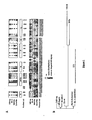
- Figure 1 Comparison of MV genomes.
- Nucleotide changes for each coding region (capital letters in boxes) and in non-coding regions (lower case letters) are shown in the lower part. Amino acid changes are shown in the upper part (one-letter amino acid symbol). Yellow color in the grid shows the wt substitutions. Blue color indicates the substitutions corresponding to the Rubeovax/Scwharz/moraten vaccine type. The red color shows the nucleotide and amino acid changes that are present only in the EdB-tag sequence. Nucleotide changes in positions 1805 and 1806 of EdB-tag correspond to the tag introduced.
- the tree was derived by neighbor-joining analysis applied to pairwise sequence distances calculated using a variety of methods including the Kimura two-parameter method to generate unrooted trees. The final output was generated with Treeview ( Page, R. D. 1996. TreeView: an application to display phylogenetic trees on personal computers. Comput Appl Biosci. 12:357-358 ).
- Figure 2 Schematic map of the pTM-MV Schw plasmid. To construct the complete sequence, the six fragments represented in the upper part were generated and recombined step by step using the unique restriction sites indicated.
- T7 T7 promoter
- hh hammerhead ribozyme
- h ⁇ v hepatitis delta ribozyme
- T7t T7 RNA polymerase terminator.
- the following oligonucleotides were used for the sequencing of the MV Schwarz strain.
- N° Sens Position N° Antisens 1 ATCCGAGATGGCCACACTTT 101 1a AAAGTGTGGCCATCTCGGAT 2 TGATTCTGGGTACCATCCTA 601 2a TAGGATGGTACCCAGAATCA 3 TATGCCATGGGAGTAGGAGT 1110 3a ACTCCTACTCCCATGGCATA 4 TGGCAGGAATCTCGGAAGAA 1609 4a TTCTTCCGAGATTCCTGCCA 5 GCATCAAGCACTGGGTTACA 2110 5a TGTAACCCAGTGCTTGATGC 6 TACAGGAGTGGACACCCGAA 2651 6a TTCGGGTGTCCACTCCTGTA 7 AGGACAGCTGCTGAAGGAAT 3096 7a ATTCCTTCAGCAGCTGTCCT 8 TTGTTGAGGACAGCGATTCC 3610 8a GGAATCGCTGTCCTCAACAA 9 AGAGTGAAGTCTACTCTGCC 4120 9a GGCAGAGTAGACTTCACTCT 10 TGACACAAGGCCACCACCAG 4608 10a
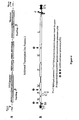
- FIG. 4 Schematic representation the additional transcription unit (ATU) and Schwarz MV vector plasmid.
- A Cis-acting elements of the ATU inserted in position 2 between phosphoprotein (P) and matrix (M) MV open reading frames.
- B Representation of the three positions of ATU insertion in the Schwarz MV vector plasmid.
- Figure 5 Complete nucleotide sequence of the pTM-MVSchw plasmid. The sequence can be described as follows with reference to the position of the nucleotides :
- Figure 1 shows that the nucleotide sequence of EdB-tag differed from that of Rubeovax (Edmonston B vaccine) by 0.24% (38 mutations) and from that of Schwarz/Moraten by 0.27% (44 mutations).
- Schwarz/Moraten and Emonston B (Rubeovax ® ) sequences differed only by 0.1% (16 mutations).
- 17 were amino acid substitutions in coding regions and 7 were located in non-coding regions.
- the 44 differences between EdB-tag and Schwarz/Moraten 22 were amino acid substitutions and 9 were in non-coding regions.
- EdB-tag cDNA 75:910-920 ) were conserved in EdB-tag cDNA. However, 5 of them were specific of the AIK-C and Zabreg subgroup, indicating that the virus from which EdB-tag was cloned diverged from Edmonston B and did not correspond to any approved vaccine strain. Moreover, 10 amino acid substitutions in EdB-tag were not related to any Edmonston subgroup, probably reflecting the adaptation to growth on HeLa cells and/or errors introduced during the cloning procedure. Among these specific changes, 5 were located in the PN/C coding sequences and 3 were located in the L polymerase gene, thus possibly affecting the replicative capacity of the virus in vivo .
- Viral particles were purified from a measles Schwarz vaccine batch kindly provided by Aventis Pasteur (Lyon, France). This bulk vaccine preparation (50 ml, 3 10 4 TCID 50 /ml) was obtained by scraping of infected CEF cells, freezethawing cells and medium, and filtration of cellular debris. Particles were concentrated by centrifugation through a 30% sucrose cushion. Viral RNA was purified from lysed particles using a silica-gel-based membrane (QIAmp, Qiagen).
- Viral RNA was reverse-transcribed into cDNA using a mixture of random hexameres (pdN6, 1 ⁇ M) and a specific oligonucleotide representing the 32 first nucleotides of MV genome (MVSchwRT1 5'-ACCAAACAAAGTTGGGTAAGGATAGTTCAATC-3', 10 ⁇ M), as primers.
- pdN6, 1 ⁇ M random hexameres
- MVSchwRT1 5'-ACCAAACAAAGTTGGGTAAGGATAGTTCAATC-3', 10 ⁇ M primers.
- the Superscript II DNA polymerase was used (GibcoBRL).
- a set of six overlapping fragments covering the full viral cDNA (numbered 1 to 6 in Fig.
- Fragment 1 at the 5' end of the viral antigenome was engineered by PCR with specific primers in order to contain a T7 RNA polymerase promoter with the GGG motif necessary for a full efficiency and a hammerhead ribozyme sequence inserted between the T7 promoter and the first viral nucleotide.
- Leader 1 (5'-TATGCGGCCGC TAATACGACT CACTATAGGG CCAACTTTGTTTGGTCTGA-3') containing a NotI site, the T7 promoter (underlined) and the 19 first nucleotides of hammerhead ribozyme sequence
- Leader 2 (5'-GGTGACCCGGGACTCCGGGTTTCGTCCTCACGGACTCATCAGACCAAACA -3') containing the hammer head sequence with a SmaI / XmaI site.
- the resulting fragment was linked by PCR extension to a second fragment also generated by PCR from Schwarz cDNA using oligonucleotides MVSchw1 (5'- GAGTCCCGGGTC ACCAA ACAAAGTTGGGTAAG-3') overlapping with hammerhead sequence (underlined) and covering MV Schwarz genome 1-15, and MVSchw160 (5'-GGTTTGTCCTTGTTTCTTTT-3', MV Schwarz genome 141-160).
- Fragment 2 (2173 nucleotides long, see Fig.
- MVSchwRT1 (5'-ACCAAACAAAGTTGGGTAAGGATAGTTCAAT C-3', MV Schwarz genome 1-32)
- MVSchw2173 (5'-ATTCCCTTAACCGCTTCACC-3', MV Schwarz genome 2155-2174).
- Fragment 3 (3142 nucleotides long) was amplified using oligonucleotides MV Schw1901 (5'-CTATGGCAGCATGGTCAGAAATA-3', MV Schwarz genome 1901-1924) and MVSch5043 (5'-ATTGTCGATGGTTGGGTGCT-3', MV Schwarz genome 5024-5043).
- Fragment 4 (4349 nucleotides long) was amplified using oligonucleotides MVSchw4869 (5'-AAACTTAGGGCCAAGGAACATAC-3', MV Schwarz genome 4869-4891) and MVSchw9218 (5'-GGACCCTACGTTTTTCTTAATTCTG-3', MV Schwarz genome 9194-9218).
- Fragment 5 (6200 nucleotides long) was amplified using oligonucleotides MVSchw9119 (5'-AGATAGGGCTGCTAGTGAACCAAT-3', MV Schwarz genome 9119-9142) and MVSchw15319 (5'-ATCAGCACCTGCTCTATAGGTGTAA-3', MV Schwarz genome 15295-15319).
- MVSchw15155 (5'-GCAGCAGATAATTGAATCATCTGTGAGGACTTCAC, MV Schwarz genome 15155-15190) and MVSchw15570 (5'-CCCGGAGTAAAGAAGAATGTGCCCCCAGAATTTGC-3', MV Schwarz genome 15535-15570).
- HDV hepatitis delta virus
- oligonucleotides MVSchw15547 (5'-GGCACATTCTTCTTTACTCCGGGAACAAAAAGTTG-3', MV Schwarz genome 15547-15581) and MVSchwEnd (5'-ATAGGGCCCGCGGCCGCATCCGG ATATAGTTCCTCCTTTCA-3' containing an ApaI restriction site linked to the last nucleotides of T7 terminator.
- the 6 fragments thus generated were cloned in pCR®2.1-TOPO® vector (Invitrogen, Groningen, Netherlands) and sequenced.
- a modified BlueScript KS (+) plasmid was constructed : two internally complementary oligonucleotides yielding a NotI, KasI / NarI, SpeI, ApaI polylinker were annealed and inserted in pTM plasmid digested with NotI / ApaI (pTM was derived from pBluescript KS (+) (Stratagene) by deletion of the T7 promoter ( Tangy, F., A. McAllister, and M. Brahic. 1989. Molecular cloning of the complete genome of Theiler's virus, strain GDVII, and production of infectious transcripts. J. Virol. 63:1101-11066 ).
- the 6 MV Schwarz cDNA fragments were assembled together step by step using unique restriction sites. Fragments 1 and 2 were assembled together using BlpI site in MV sequence ( Fig. 2 ) and BglII site in pCR®2.1-TOPO® vector backbone. The resulting plasmid was assembled with fragment 3 using SbfI site in MV sequence and BglII site in pCR®2.1-TOPO® vector backbone, yielding plasmid pCR®2.1-TOPO®-MVSchw-1-2-3 containing MV Schwarz fragments 1-3.
- pTM-MVSchw was fully sequenced (Acc. Num.). No mutation was found between this cDNA and the previously reported sequence of Schwarz genome ( Parks, C. L., R. A. Lerch, P. Walpita, H. P. Wang, M. S. Sidhu, and S. A. Udem. 2001. Analysis of the noncoding regions of measles virus strains in the Edmonston vaccine lineage. J Virol. 75:921-933 ; Parks, C. L., R. A. Lerch, P. Walpita, H. P. Wang, M. S. Sidhu, and S. A. Udem. 2001. Comparison of predicted amino acid sequences of measles virus strains in the Edmonston vaccine lineage. J Virol. 75:910-920 ).
- Human helper cells stably expressing T7 RNA polymerase and measles N and P proteins (293-3-46 cells, disclosed by Radecke et al (17) were transfected using the calcium phosphate procedure with pTM-MVSchw plasmid (5 ⁇ g) and a plasmid expressing the MV polymerase L gene (pEMC-La, 20 ng, disclosed by Radecke et al (17). After overnight incubation at 37° C, the transfection medium was replaced by fresh medium and a heat shock was applied (43° C for two hours) (12).
- CEF chicken embryo fibroblastic cells
- the capacity of the Schwarz virus rescued from cDNA to grow on CEF and Vero cells was analyzed and compared to the industrial bulk Schwarz vaccine from which it was derived (obtained from Aventis Pasteur) and to the EdB-tag virus rescued from its cDNA.
- Monolayers of Verocells in 6-well plates were infected with viruses at different multiplicity of infection. A various time post infection (pi), the cells were seraped into culture medium. After freezing and thawing, infectivity titers were determined by measuring the TCID 50 in Vero cells.
- Growth curves Monolayers of Vero cells in 6-well plates were infected with viruses at different multiplicities of infection (MOI). At various times postinfection (pi), the cells were scraped into culture medium. After freezing and thawing, infectivity titers were determined by measuring the TCID 50 in Vero cells.
- TCID 50 titration Vero cells were seeded into 96-well plate (7500 cells/well) and infected by serial 1:10 dilutions of virus sample in DMEM/5% FCS. After incubation at 37°C for 4-5 days for Ed-B virus and 7 days for Schwarz virus, cells were stained with crystal violet and the virus dilution that resulted in infection in 50% of test unit was determined. The 50% end point described as tissue culture infectious dose (TClD 50 ) was calculated by the Kärber method ( Karber, G. 1931. Beitrag zur kollektiven configure pharmaksammlungr Chandlern grease. Arch Exp Path Pharmak. 162:480-483 ).
- the yield of Schwarz virus on CEF was lower than on Vero cells (10 6 TCID 50 /ml after 4 days of infection using a multiplicity of infection of 0.05). Similar growth curves and similar titers were observed when CEF cells were infected with the original Schwarz virus from which it was cloned ( Fig. 3 E) . These observations demonstrate that the Schwarz virus rescued from its cDNA had the same growth characteristics than the original vaccine batch from which it was cloned.
- the different MV genes are expressed according to a transcriptional gradient down the genome, leading to a high expression of the N gene to a low expression of the L gene ( Lamb, R., and D. Kolakofsky. 1996. Paramyxoviridae: the viruses ans their replication, p. 1177-1199. In B. Fileds, D. Knipe, et al. (ed.), Fields Virology. Lippincott-Raven Publishers, Philadelphia ).
- the insertion of the ATU takes advantage of this gradient, allowing high or low expression of the transgene, depending on the position of insertion. Moreover, in this context the foreign transgenes are expressed using the same controls and pathways as authentic MV genes.
- the immunogenicity of the virus rescued from pTM-MVSchw plasmid and passaged two times on CEF cells was compared to the immunogenicity of Schwarz vaccine in cynomolgus macaques.
- the conditions for passage were the following:
- Viruses were prepared as follows : CEF cells (obtained from chick embryos incubated during 9 days) were infected at a moi of 0,05 and incubated at 32° C during 7 days. Viruses were purified by scraping infected cells, freeze/thawing and low speed clarification of cells debris. Stabilizing agents used in the preparation of MV vaccine were obtained from Aventis Pasteur. Different bulk vaccine preparations with and without stabilizing agents were compared at the same dose to the lyophilized final product (Rouvax, Aventis Pasteur).
Landscapes
- Health & Medical Sciences (AREA)
- Life Sciences & Earth Sciences (AREA)
- Chemical & Material Sciences (AREA)
- Genetics & Genomics (AREA)
- Organic Chemistry (AREA)
- Engineering & Computer Science (AREA)
- Virology (AREA)
- Wood Science & Technology (AREA)
- Bioinformatics & Cheminformatics (AREA)
- Zoology (AREA)
- General Health & Medical Sciences (AREA)
- Biomedical Technology (AREA)
- General Engineering & Computer Science (AREA)
- Biotechnology (AREA)
- Biochemistry (AREA)
- Molecular Biology (AREA)
- Medicinal Chemistry (AREA)
- Microbiology (AREA)
- Biophysics (AREA)
- Communicable Diseases (AREA)
- Immunology (AREA)
- Plant Pathology (AREA)
- Physics & Mathematics (AREA)
- Gastroenterology & Hepatology (AREA)
- Proteomics, Peptides & Aminoacids (AREA)
- Animal Behavior & Ethology (AREA)
- Public Health (AREA)
- Veterinary Medicine (AREA)
- Pharmacology & Pharmacy (AREA)
- Nuclear Medicine, Radiotherapy & Molecular Imaging (AREA)
- Oncology (AREA)
- Chemical Kinetics & Catalysis (AREA)
- General Chemical & Material Sciences (AREA)
- Pulmonology (AREA)
- Mycology (AREA)
- Epidemiology (AREA)
- Medicines Containing Antibodies Or Antigens For Use As Internal Diagnostic Agents (AREA)
- Micro-Organisms Or Cultivation Processes Thereof (AREA)
- Peptides Or Proteins (AREA)
Claims (37)
- cDNA-Molekül, das die Nukleotidsequenz des infektiösen antigenomischen Vol-Hingen-(+)-RNA-Stranges eines vom Schwarz-Stamm oder vom Moraten-Stamm abgeleiteten Masern-Viruses (MV) codiert, wobei das cDNA-Molekül die Nukleotidsequenz umfasst, die sich von Nultleotid 83 bis Nukleotid 15976 der in Figur 5 gezeigten Sequenz erstreckt.
- cDNA-Molekül, das die Nukleotidsequenz des infektiösen antigenomischen Vollängen-(+)-RNA-Stranges eines vom Schwarz-Stamm oder vom Moraten-Stamm abgeleiteten Masern-Viruses (MV) codiert, wobei das cDNA-Molekül in dem Plasmid pTM-MVSchw enthalten ist, das am 12. Juni 2002 bei der CNCM unter der Hinterlegungsnummer I-2889 hinterlegt wurde.
- cDNA-Molekül nach einem der Ansprüche 1 bis 2, das unter die Steuerung einer heterologen Expressionssteuerungssequenz gestellt ist, die ausgehend von dem cDNA-Molekül zur Transkription des antigenomischen (+)RNA-Stranges geeignet ist.
- cDNA-Molekül nach Anspruch 3, wobei die heterologe Expressionssteuersequenz der cDNA den T7-Promotor und T7-Terminatorsequenzen umfasst.
- cDNA-Molekül nach einem der Anspruche 1 bis 4, das weiter an dessen 5'-Ende, neben dem ersten Nukleotid der Nukleotidsequenz, die den infektiösen antigenomischen Vollängen-(+)-RNA-Stranges des Schwarz-Stammes oder des Moraten-Starmmes codiert, ein GGG-Motiv gefolgt von einer Hammerkopf-Ribozym-Sequenz aufweist, und das an dessen 3'-Ende neben dem letzten Nukleotid der Nukleotidsequenz, die den infektiösen antigenomischen Vollängen-(+)-RNA-Strang codiert, die Sequenz eines Hepatitis Delta-Virus Ribozyms umfasst.
- cDNA-Molekül nach einem der Ansprüche 1 bis 5, das infektiöse virale Partikel des Schwarz-Stammes oder des Moraten-Stammes in einer Helferzelle erzeugen kann, die Proteine exprimieren kann, die zur Transkription, Replikation der RNA-Genomsequenz des Masern-Virus aus der cDNA erforderlich sind und unter der Bedingungen, die einen viralen Partikelaufbau ermöglichen.
- cDNA-Molekül nach einem der Ansprüche 1 bis 6, das in einem Plasmid enthalten ist, das sich replizieren kann.
- cDNA-Molekül nach einem der Ansprüche 1 bis 7, das die in Fig. 5 dargestellte Nukleotidsequenz aufweist.
- cDNA-Molekül nach einem der Ansprüche 1 bis 8, das die Nukleotidsequenz umfasst, die sich von Nukleotid 83 bis Nukleotid 15976 oder 16977 der in Fig. 5 dargestellten Nukleotidsequenz erstreckt.
- cDNA-Molekül nach einem der Ansprüche 1 bis 9, das die Nukleotidsequenz, umfasst, die sich von Nukleotid 29 bis Nukleotid 16202 der in Fig. 5 dargestellten Nukleotidsequenz erstreckt, oder von Nukleotid 29 bis Nukleotid 15977 der in Fig. 5 dargestellten Nukleotidsequenz.
- cDNA-Molekül nach einem der Ansprüche 1 bis 10, das die Nukleotidsequenz umfasst, die sich von Nukleotid 26 bis Nukleotid 16202 der Sequenz des Plasmids pTM-MVSchw erstreckt.
- cDNA-Molekül nach einem der Ansprüche 1 bis 11, das die Nukleotidsequenz umfasst, die sich von Nukleotid 9 bis Nukleotid 16202 der Sequenz des Plasmids pTM-MVSchw erstreckt.
- cDNA-Molekül nach Anspruch 1 oder 2, das das Insert ist, das im bei der CNCM am 12. Juni unter der Hinterlegungsnummer 1-2889 hinterlegten Plasmid enthalten ist, worin das Insert die Nukleotidsequenz des infektiösen antigenomischen Vollängen-(+)-RNA-Stranges des Masern-Virus codiert.
- cDNA-Molekül nach einem der Ansprüche 1 bis 13, das das Produkt der reversen Transkription der aus viralen Partikeln des Masern-Virus gereinigten viralen RNA ist.
- Rekombinantes cDNA-Molekül, das ein cDNA-Molekül nach einem der Ansprüche 1 bis 14 umfaßt, und weiter eine heterologe DNA-Sequenz umfasst, die eine heterologe Aminosäuresequenz exprimieren kann, wobei die rekombinante cDNA weiter der Regel von 6 genügt.
- Rekombinante cDNA nach Anspruch 15, die weiter eine zusätzliche Transkriptionseinheit umfasst, die zur Klonierung der heterologen DNA-Sequenz verwendet wird.
- Rekombinante cDNA-Sequenz nach Anspruch 16, worin die zusätzliche Transkriptionseinheit stromaufwärts des N-Gens des Masern-Virus kloniert ist, oder zwischen dem P- und dem M-Gen des Masern-Virus, oder zwischen dem H-und L-Gen.
- cDNA nach Anspruch 16 oder 17, worin die heterologe DNA-Sequenz eine immunogene Sequenz eines Pathogens codiert.
- Vektor, der ein cDNA-Molekül nach einem der Ansprüche 1 bis 18 umfasst.
- Vektor nach Anspruch 19, der das Plasmid pTM-MVSchw ist, der am 12. Juni 2002 bei der CNCM unter der Hinterlegungsnummer I-2889 hinterlegt wurde.
- Vektor nach einem der Ansprüche 19 oder 20, der eine heterologe DNA-Sequenz umfasst, die darin inseriert ist, mit der Maßgabe, dass das erhaltene rekombinante cDNA-Molekül der Regel von 6 genügt.
- Vektor nach Anspruch 21, worin das cDNA-Molekül und die heterologe DNA-Sequenz in einem Replikon enthalten sind, wobei das Replikon der Regel von 6 genügt.
- Vektor nach einem der Ansprüche 21 oder 22, worin die heterologe DNA-Sequenz in einer weiteren Transkriptionseinheit (ATU) enthalten ist, die in das cDNA-Molekül kloniert ist.
- Vektor nach Anspruch 23, worin die ATU in den 5'-Bercich des cDNA-Moleküls kloniert ist.
- Vektor nach einem der Ansprüche 23 oder 24, worin die ATU stromaufwärts des in dem cDNA-Molekül enthaltenen M-Gens des Masern-Virus kloniert ist.
- Vektor nach Anspruch 23 oder 24, worin die ATU zwischen dem in dem cDNA-Molekül enthaltenen N- und dem P-Gen des Masern-Virus kloniert ist.
- Vektor nach Anspruch 26, der das bei der CNCM unter der Hinterlegungsnummer I-2890 hinterlegte Plasmid pTM-MVSchw2-gfp ist.
- Verfahren zur Herstellung von infektiösen Masernvirus-Partikeln, welches umfasst:1) Exprimieren der cDNA nach einem der Ansprüche 1 bis 18 oder eines Vektors nach einem der Ansprüche 19 bis 27 in einer Helferzelllinie, die weiter Proteine exprimiert, die ausgehend von der cDNA zur Transkription, Replikation und Verkapselung der antigenomischen (+)-RNA-Sequenz des Masern-Virus erforderlich sind, und unter Bedingungen, die einen Virus-Partikelaufbau ermöglichen, und2) Gewinnen der exprimierten viralen Partikel.
- Verfahren nach Anspruch 28, welches umfaßt:1) Transfizieren von Helferzellen mit einer cDNA nach einem der Ansprüche 1 bis 18 oder mit einem Vektor nach einem der Ansprüche 19 bis 27, wobei die Helferzellen Helferfunktionen exprimieren können, um eine RNA-Polymerase zu exprimieren, und um die N-, P- und L-Proteine des MV-Virus zu exprimieren;2) Co-Kultivieren der transfizierten Helferzellen von Schritt 1) mit passagierten Zellen, die zur Passage des MV-Vakzin-Stamms, von dem die cDNA abgeleitet ist, geeignet sind;3) Gewinnen der hergestellten infektiösen viralen Partikel.
- Verfahren nach Anspruch 29, wobei der Tansfektionsschritt von einem Ersatz des Transfektionsmediums durch frisches Medium und Ausüben eines Hitzeschocks vor der Inkubation gefolgt ist.
- Verfahren nach einem der Ansprüche 28 bis 30, wobei die Helferzellen von der humanen embryonalen Niererizelllinie 293 (ATCC CRL-1573) abgeleitet sind.
- Verfahren nach einem der Ansprüche 29 oder 30, wobei die zur Passage geeigneten Zellen CEF-Zellen sind.
- Verfahren nach einem der Ansprüche 28 bis 32, das zur Herstellung infektiöser Masern-Viren verwendet wird, die zur Verwendung als aktives Prinzip in einer Impfzusammensetzung geeignet sind.
- Vakzin-Zusammensetzung, dessen aktives Prinzip Masern-Virus-Partikel umfasst, die aus einem cDNA-Molekül nach einem der Ansprüche 15 bis 18, oder aus einem Vektor nach einem der Ansprüche 21 bis 27 in einem auf Helferzellen basierenden Gewinnungssystem gewonnen wurden.
- Vakzin-Zusammensetzung nach Anspruch 34, die zum Schutz gegen Masern-Viren geeignet ist.
- Vakzin-Zusammensetzung nach Anspruch 34, die geeignet ist zum Schutz gegen Masern-Viren und gegen das Pathogen, von dem die immunogene Sequenz abgeleitet ist.
- Verfahren zur Herstellung eines cDNA-Moleküls nach einem der Ansprüche 1 bis 18, das die folgenden Schritte umfasst:- Reinigen viraler RNA aus viralen Partikeln des Schwarz-Stammes oder des Moraten-Stammes; und- Erhalten des cDNA-Moleküls durch reverse Transkription der gereinigten viralen RNA.
Priority Applications (23)
| Application Number | Priority Date | Filing Date | Title |
|---|---|---|---|
| DK02291551T DK1375512T3 (da) | 2002-06-20 | 2002-06-20 | Infektiös cDNA af en godkendt vaccinestamme af mæslingevirus. Anvendelse til immunogene sammensætninger |
| ES02291551T ES2330309T3 (es) | 2002-06-20 | 2002-06-20 | Adnc infeccioso de una cepa de vacuna aprobada de virus del sarampion. uso para composiciones inmunogenicas. |
| EP09165802A EP2110382A1 (de) | 2002-06-20 | 2002-06-20 | Infektiöse cDNA eines verbesserten Vakzinstamms des Masernvirus Verwendung für immunogene Zusammensetzungen |
| EP02291551A EP1375512B1 (de) | 2002-06-20 | 2002-06-20 | Infektiöse cDNA eines zugelassenen Impfstammes des Masern Virus. Verwendung in immunogenen Zusammensetzungen |
| AT02291551T ATE437175T1 (de) | 2002-06-20 | 2002-06-20 | Infektiöse cdna eines zugelassenen impfstammes des masern virus. verwendung in immunogenen zusammensetzungen |
| PT02291551T PT1375512E (pt) | 2002-06-20 | 2002-06-20 | Adnc infeccioso de uma estirpe de vacina aprovada do vírus do sarampo. utilização de composições imunogénicas |
| DE60233038T DE60233038D1 (de) | 2002-06-20 | 2002-06-20 | Infektiöse cDNA eines zugelassenen Impfstammes des Masern Virus. Verwendung in immunogenen Zusammensetzungen |
| DK10184511.3T DK2311853T3 (en) | 2002-06-20 | 2003-06-20 | Infectious cDNA of an approved measles virus vaccine strain. Use for immunogenic compositions |
| EP10184511.3A EP2311853B1 (de) | 2002-06-20 | 2003-06-20 | Infektiöse cDNA eines zugelassenen Vakzinstamms für das Masernvirus. Verwendung für immunogene Zusammensetzungen |
| AU2003266950A AU2003266950A1 (en) | 2002-06-20 | 2003-06-20 | INFECTIOUS cDNA OF AN APPROVED VACCINE STRAIN OF MEASLES VIRUS, USE FOR IMMUNOGENIC COMPOSITIONS |
| BRPI0312173A BRPI0312173B8 (pt) | 2002-06-20 | 2003-06-20 | vetor e processo para a preparação de partículas infecciosas de vírus do sarampo |
| ES10184511.3T ES2663224T3 (es) | 2002-06-20 | 2003-06-20 | ADNc infeccioso de una cepa de vacuna aprobada del virus del sarampión. Uso para composiciones inmunogénicas |
| PCT/EP2003/007145 WO2004000876A1 (en) | 2002-06-20 | 2003-06-20 | INFECTIOUS cDNA OF AN APPROVED VACCINE STRAIN OF MEASLES VIRUS, USE FOR IMMUNOGENIC COMPOSITIONS |
| CN03814471A CN100577683C (zh) | 2002-06-20 | 2003-06-20 | 一种麻疹病毒的批准的疫苗株的感染性cDNA及其用作免疫原性组合物的用途 |
| CA2489052A CA2489052C (en) | 2002-06-20 | 2003-06-20 | Infectious cdna of an approved vaccine strain of measles virus, use for immunogenic compositions |
| KR1020047020803A KR101227128B1 (ko) | 2002-06-20 | 2003-06-20 | 홍역 바이러스의 허가된 백신 종의 감염성 cDNA 및면역학적 조성물로서의 용도 |
| EP08169719A EP2065393A1 (de) | 2002-06-20 | 2003-06-20 | Infektiöse cDNA eines zugelassenen Vakzinstamms für das Masernvirus Verwendung für immunogene Zusammensetzungen |
| EP03747858A EP1513872A1 (de) | 2002-06-20 | 2003-06-20 | INFEKTIÖSE cDNA EINES ZUGELASSENEN IMPFSTAMMES DES MASERN VIRUS. VERWENDUNG IN IMMUNOGENEN ZUSAMMENSETZUNGEN |
| HK04104400.2A HK1061568B (en) | 2004-06-16 | Infectious cdna of an approved vaccine strain of measles virus. use for immunogenic compositions | |
| US11/013,786 US9005961B2 (en) | 2002-06-20 | 2004-12-17 | Infectious cDNA of an approved vaccine strain of measles virus, use for immunogenic compositions |
| US12/219,570 US9005925B2 (en) | 2002-06-20 | 2008-07-24 | Infectious cDNA of an approved vaccine strain of measles virus, use for immunogenic compositions |
| CY20091100970T CY1109506T1 (el) | 2002-06-20 | 2009-09-18 | ΛΟΙΜΟΓΟΝΟ cDNA ΕΝΟΣ ΕΓΚΕΚΡΙΜΕΝΟΥ ΣΤΕΛΕΧΟΥΣ ΕΜΒΟΛΙΟΥ ΤΟΥ ΙΟΥ ΤΗΣ ΙΛΑΡΑΣ. ΧΡΗΣΗ ΓΙΑ ΑΝΟΣΟΓΟΝΕΣ ΣΥΝΘΕΣΕΙΣ |
| US14/667,088 US9701944B2 (en) | 2002-06-20 | 2015-03-24 | Infectious cDNA of an approved vaccine strain of measles virus, use for immunogenic compositions |
Applications Claiming Priority (1)
| Application Number | Priority Date | Filing Date | Title |
|---|---|---|---|
| EP02291551A EP1375512B1 (de) | 2002-06-20 | 2002-06-20 | Infektiöse cDNA eines zugelassenen Impfstammes des Masern Virus. Verwendung in immunogenen Zusammensetzungen |
Related Child Applications (2)
| Application Number | Title | Priority Date | Filing Date |
|---|---|---|---|
| EP09165802A Division EP2110382A1 (de) | 2002-06-20 | 2002-06-20 | Infektiöse cDNA eines verbesserten Vakzinstamms des Masernvirus Verwendung für immunogene Zusammensetzungen |
| EP08169714 Division | 2008-11-21 |
Publications (2)
| Publication Number | Publication Date |
|---|---|
| EP1375512A1 EP1375512A1 (de) | 2004-01-02 |
| EP1375512B1 true EP1375512B1 (de) | 2009-07-22 |
Family
ID=29716946
Family Applications (5)
| Application Number | Title | Priority Date | Filing Date |
|---|---|---|---|
| EP02291551A Expired - Lifetime EP1375512B1 (de) | 2002-06-20 | 2002-06-20 | Infektiöse cDNA eines zugelassenen Impfstammes des Masern Virus. Verwendung in immunogenen Zusammensetzungen |
| EP09165802A Withdrawn EP2110382A1 (de) | 2002-06-20 | 2002-06-20 | Infektiöse cDNA eines verbesserten Vakzinstamms des Masernvirus Verwendung für immunogene Zusammensetzungen |
| EP10184511.3A Expired - Lifetime EP2311853B1 (de) | 2002-06-20 | 2003-06-20 | Infektiöse cDNA eines zugelassenen Vakzinstamms für das Masernvirus. Verwendung für immunogene Zusammensetzungen |
| EP03747858A Ceased EP1513872A1 (de) | 2002-06-20 | 2003-06-20 | INFEKTIÖSE cDNA EINES ZUGELASSENEN IMPFSTAMMES DES MASERN VIRUS. VERWENDUNG IN IMMUNOGENEN ZUSAMMENSETZUNGEN |
| EP08169719A Withdrawn EP2065393A1 (de) | 2002-06-20 | 2003-06-20 | Infektiöse cDNA eines zugelassenen Vakzinstamms für das Masernvirus Verwendung für immunogene Zusammensetzungen |
Family Applications After (4)
| Application Number | Title | Priority Date | Filing Date |
|---|---|---|---|
| EP09165802A Withdrawn EP2110382A1 (de) | 2002-06-20 | 2002-06-20 | Infektiöse cDNA eines verbesserten Vakzinstamms des Masernvirus Verwendung für immunogene Zusammensetzungen |
| EP10184511.3A Expired - Lifetime EP2311853B1 (de) | 2002-06-20 | 2003-06-20 | Infektiöse cDNA eines zugelassenen Vakzinstamms für das Masernvirus. Verwendung für immunogene Zusammensetzungen |
| EP03747858A Ceased EP1513872A1 (de) | 2002-06-20 | 2003-06-20 | INFEKTIÖSE cDNA EINES ZUGELASSENEN IMPFSTAMMES DES MASERN VIRUS. VERWENDUNG IN IMMUNOGENEN ZUSAMMENSETZUNGEN |
| EP08169719A Withdrawn EP2065393A1 (de) | 2002-06-20 | 2003-06-20 | Infektiöse cDNA eines zugelassenen Vakzinstamms für das Masernvirus Verwendung für immunogene Zusammensetzungen |
Country Status (14)
| Country | Link |
|---|---|
| US (3) | US9005961B2 (de) |
| EP (5) | EP1375512B1 (de) |
| KR (1) | KR101227128B1 (de) |
| CN (1) | CN100577683C (de) |
| AT (1) | ATE437175T1 (de) |
| AU (1) | AU2003266950A1 (de) |
| BR (1) | BRPI0312173B8 (de) |
| CA (1) | CA2489052C (de) |
| CY (1) | CY1109506T1 (de) |
| DE (1) | DE60233038D1 (de) |
| DK (2) | DK1375512T3 (de) |
| ES (2) | ES2330309T3 (de) |
| PT (1) | PT1375512E (de) |
| WO (1) | WO2004000876A1 (de) |
Cited By (2)
| Publication number | Priority date | Publication date | Assignee | Title |
|---|---|---|---|---|
| US9272008B2 (en) | 2010-08-20 | 2016-03-01 | Ulrich M. Lauer | Oncolytic measles virus |
| EP3184119A1 (de) | 2015-12-23 | 2017-06-28 | Themis Bioscience GmbH | Chromatografiebasierte reinigungsstrategien für viren auf basis eines maserngerüsts |
Families Citing this family (26)
| Publication number | Priority date | Publication date | Assignee | Title |
|---|---|---|---|---|
| EP1201750A1 (de) * | 2000-10-26 | 2002-05-02 | Genopoietic | Synthetische Viren und ihre Verwendungen |
| EP1375512B1 (de) * | 2002-06-20 | 2009-07-22 | Institut Pasteur | Infektiöse cDNA eines zugelassenen Impfstammes des Masern Virus. Verwendung in immunogenen Zusammensetzungen |
| ES2427139T3 (es) * | 2002-06-20 | 2013-10-29 | Institut Pasteur | Virus recombinantes del sarampión que expresan epítopos de antígenos de virus de ARN y uso de los virus recombinantes para la preparación de composiciones de vacuna |
| CA2432738A1 (en) | 2003-02-26 | 2004-08-26 | Philippe Despres | New dengue and west nile viruses proteins and genes coding the foregoing, and their use in vaccinal, therapeutic and diagnostic applications |
| US20090004203A1 (en) * | 2007-05-29 | 2009-01-01 | Vical Incorporated | Methods of treating measles infectious disease in mammals |
| KR101718497B1 (ko) * | 2007-11-26 | 2017-03-22 | 런던 스쿨 오브 하이진 앤 트로피컬 메디신 | 레오바이러스과 바이러스의 백신용 바이러스 균주를 제조하는 방법 |
| EP2085479A1 (de) * | 2008-01-31 | 2009-08-05 | Institut Pasteur | Reverse Genetik von Negativstrang-RNA-Viren in Hefe |
| WO2013074501A1 (en) | 2011-11-14 | 2013-05-23 | Crucell Holland B.V. | Heterologous prime-boost immunization using measles virus-based vaccines |
| EP2712871A1 (de) | 2012-09-27 | 2014-04-02 | Institut Pasteur | Rekombinantes Masernvirus zur Expression von Chikungunya-Virus-Polypeptiden und deren Anwendungen |
| EP2759301A1 (de) | 2013-01-24 | 2014-07-30 | Institut Pasteur | Verwendung eines genetisch modifizierten infektiösen Masernvirus mit erhöhten pro-apoptotischen Eigenschaften (MVDeltaC-Virus) |
| WO2015092710A1 (en) | 2013-12-19 | 2015-06-25 | Glaxosmithkline Biologicals, S.A. | Contralateral co-administration of vaccines |
| EP2959915A1 (de) | 2014-06-23 | 2015-12-30 | Institut Pasteur | Chimäres Dengue-Virus-Polyepitop aus Fragmenten nichtstruktureller Proteine und deren Verbindung in einer immunogenen Zusammensetzung gegen Dengue-Virus-Infektion |
| EP3103474A1 (de) * | 2015-06-12 | 2016-12-14 | Institut Pasteur | Lebendes rekombinantes masern-m2-virus und dessen verwendung bei auslösung von immunität gegen influenzaviren |
| JP6949468B2 (ja) * | 2016-10-17 | 2021-10-13 | ルプレヒト−カールス−ウニベルジテート ハイデルベルク | 腫瘍抗原をコードする麻疹ウイルス |
| EP3622078A1 (de) * | 2017-05-09 | 2020-03-18 | Invectys | Rekombinanter masernimpfstoff mit htert-expression |
| EP3412307A1 (de) | 2017-06-07 | 2018-12-12 | Institut Pasteur | Zika-virus-proteine zur expression eines rekombinanten masernvirus und deren anwendungen |
| MX2020004833A (es) | 2017-11-09 | 2021-01-08 | Pasteur Institut | Un poliepitopo quimerico del virus del zika que comprende proteinas no estructurales y su uso en una composicion inmunogenica. |
| US11976305B2 (en) * | 2017-12-21 | 2024-05-07 | Institut Pasteur | Lassa vaccine |
| CN111218475A (zh) * | 2018-11-23 | 2020-06-02 | 成都生物制品研究所有限责任公司 | 一种拯救麻疹Schwarz/Moraten疫苗株的系统和方法 |
| EP3865180A1 (de) * | 2020-02-13 | 2021-08-18 | Institut Pasteur | Lebende rekombinante masernviren, die coronavirus-antigene exprimieren, verwendung davon zur erzeugung von immunität gegen coronaviren |
| AU2021218985A1 (en) * | 2020-02-13 | 2022-08-25 | Institut Pasteur | Measles-vectored COVID-19 immunogenic compositions and vaccines |
| EP3936517A1 (de) | 2020-07-08 | 2022-01-12 | Institut Pasteur | Verbesserter masernvirusimpfstoffvektor basierend auf mehreren zusätzlichen tandemtranskriptionseinheiten |
| US20240093233A1 (en) | 2021-01-13 | 2024-03-21 | Viroxis | Measles-hiv or measles-htlv vaccine |
| CN113293148B (zh) * | 2021-03-10 | 2022-10-25 | 上海青赛生物科技有限公司 | 一种h基因替换的嵌合麻疹减毒株的构建 |
| WO2022195900A1 (ja) * | 2021-03-15 | 2022-09-22 | 国立大学法人東京大学 | 組換え麻疹ウイルス |
| WO2026013289A1 (en) | 2024-07-12 | 2026-01-15 | Institut Pasteur | Measles-mumps-rubella (mmr) vaccines |
Family Cites Families (19)
| Publication number | Priority date | Publication date | Assignee | Title |
|---|---|---|---|---|
| AU7007491A (en) | 1990-02-02 | 1991-08-08 | Schweiz. Serum- & Impfinstitut Bern | Cdna corresponding to the genome of negative-strand rna viruses, and process for the production of infectious negative-strand rna viruses |
| JP3045581B2 (ja) | 1991-10-14 | 2000-05-29 | 社団法人北里研究所 | 麻疹ワクチンウイルス株同定方法 |
| EP0780475B2 (de) * | 1995-08-09 | 2006-07-19 | SCHWEIZ. SERUM- & IMPFINSTITUT BERN | Verfahren zur Herstellung von infektiösen minussträngigen RNA-Viren |
| WO1998013501A2 (en) * | 1996-09-27 | 1998-04-02 | American Cyanamid Company | 3' genomic promoter region and polymerase gene mutations responsible for attenuation in viruses of the order designated mononegavirales |
| ES2345614T3 (es) | 1997-02-28 | 2010-09-28 | Sanofi Pasteur Biologics Co. | Vacunas quimericas de flavivirus. |
| BRPI9701774B8 (pt) * | 1997-04-11 | 2015-09-29 | Fundação Oswaldo Cruz Fiocruz | cdna mutante e infeccioso do vírus da febre amarela, constructo de dna, vírus recombinante de febre amarela e vacina para humanos contra infecções de febre amarela. |
| US6410023B1 (en) * | 1997-05-23 | 2002-06-25 | United States Of America | Recombinant parainfluenza virus vaccines attenuated by deletion or ablation of a non-essential gene |
| IL138681A0 (en) * | 1998-03-26 | 2001-10-31 | American Cyanamid Co | Mutations responsible for attenuation in measles virus or human respiratory syncytial virus subgroup b |
| EP1995310B1 (de) * | 1998-06-03 | 2013-04-24 | Wyeth Holdings Corporation | Neuartige Verfahren zur Rettung von RNA-Viren |
| US6146642A (en) | 1998-09-14 | 2000-11-14 | Mount Sinai School Of Medicine, Of The City University Of New York | Recombinant new castle disease virus RNA expression systems and vaccines |
| BR0012938A (pt) * | 1999-08-02 | 2003-04-29 | American Home Prod | Método para a produzir um vìrus recombinante de caxumba, vìrus recombinante de caxumba, composição, método para imunizar um indivìduo, molécula de ácido nucleico, plasmìdeo, célula hospedeira, composição farmacêutica, e sequência de nucleotìdeos |
| AU5921101A (en) * | 2000-04-28 | 2001-11-12 | St Jude Childrens Res Hospital | Dna transfection system for the generation of infectious influenza virus |
| ES2427139T3 (es) * | 2002-06-20 | 2013-10-29 | Institut Pasteur | Virus recombinantes del sarampión que expresan epítopos de antígenos de virus de ARN y uso de los virus recombinantes para la preparación de composiciones de vacuna |
| EP1375512B1 (de) * | 2002-06-20 | 2009-07-22 | Institut Pasteur | Infektiöse cDNA eines zugelassenen Impfstammes des Masern Virus. Verwendung in immunogenen Zusammensetzungen |
| CA2432738A1 (en) | 2003-02-26 | 2004-08-26 | Philippe Despres | New dengue and west nile viruses proteins and genes coding the foregoing, and their use in vaccinal, therapeutic and diagnostic applications |
| CA2508266A1 (fr) | 2005-06-20 | 2006-12-20 | Institut Pasteur | Polypeptides chimeriques et leurs applications therapeutiques contre une infection a flaviviridae |
| DK1939214T3 (da) | 2006-12-22 | 2013-10-14 | Pasteur Institut | Celler og metodik til at generere ikke-segmenterede negativstrengede RNA-vira |
| BRPI0909547A2 (pt) * | 2008-05-26 | 2019-03-06 | Cadila Healthcare Ltd. | vacina combinada de sarampo - hpv, vetor e hospedero |
| KR20120014918A (ko) * | 2009-05-05 | 2012-02-20 | 카딜라 핼쓰캐어 리미티드 | 홍역-말라리아 조합 백신 |
-
2002
- 2002-06-20 EP EP02291551A patent/EP1375512B1/de not_active Expired - Lifetime
- 2002-06-20 PT PT02291551T patent/PT1375512E/pt unknown
- 2002-06-20 AT AT02291551T patent/ATE437175T1/de active
- 2002-06-20 DK DK02291551T patent/DK1375512T3/da active
- 2002-06-20 DE DE60233038T patent/DE60233038D1/de not_active Expired - Lifetime
- 2002-06-20 EP EP09165802A patent/EP2110382A1/de not_active Withdrawn
- 2002-06-20 ES ES02291551T patent/ES2330309T3/es not_active Expired - Lifetime
-
2003
- 2003-06-20 EP EP10184511.3A patent/EP2311853B1/de not_active Expired - Lifetime
- 2003-06-20 EP EP03747858A patent/EP1513872A1/de not_active Ceased
- 2003-06-20 EP EP08169719A patent/EP2065393A1/de not_active Withdrawn
- 2003-06-20 BR BRPI0312173A patent/BRPI0312173B8/pt not_active IP Right Cessation
- 2003-06-20 KR KR1020047020803A patent/KR101227128B1/ko not_active Expired - Lifetime
- 2003-06-20 CA CA2489052A patent/CA2489052C/en not_active Expired - Lifetime
- 2003-06-20 CN CN03814471A patent/CN100577683C/zh not_active Expired - Lifetime
- 2003-06-20 WO PCT/EP2003/007145 patent/WO2004000876A1/en not_active Ceased
- 2003-06-20 ES ES10184511.3T patent/ES2663224T3/es not_active Expired - Lifetime
- 2003-06-20 AU AU2003266950A patent/AU2003266950A1/en not_active Abandoned
- 2003-06-20 DK DK10184511.3T patent/DK2311853T3/en active
-
2004
- 2004-12-17 US US11/013,786 patent/US9005961B2/en active Active
-
2008
- 2008-07-24 US US12/219,570 patent/US9005925B2/en not_active Expired - Lifetime
-
2009
- 2009-09-18 CY CY20091100970T patent/CY1109506T1/el unknown
-
2015
- 2015-03-24 US US14/667,088 patent/US9701944B2/en not_active Expired - Fee Related
Cited By (4)
| Publication number | Priority date | Publication date | Assignee | Title |
|---|---|---|---|---|
| US9272008B2 (en) | 2010-08-20 | 2016-03-01 | Ulrich M. Lauer | Oncolytic measles virus |
| US9795643B2 (en) | 2010-08-20 | 2017-10-24 | Ulrich M. Lauer | Oncolytic measles virus |
| EP3184119A1 (de) | 2015-12-23 | 2017-06-28 | Themis Bioscience GmbH | Chromatografiebasierte reinigungsstrategien für viren auf basis eines maserngerüsts |
| US10894079B2 (en) | 2015-12-23 | 2021-01-19 | Themis Bioscience Gmbh | Chromatography based purification strategies for viruses |
Also Published As
Similar Documents
| Publication | Publication Date | Title |
|---|---|---|
| US9701944B2 (en) | Infectious cDNA of an approved vaccine strain of measles virus, use for immunogenic compositions | |
| US12163150B2 (en) | Recombinant measles viruses expressing epitopes of antigens of RNA viruses—use for the preparation of vaccine compositions | |
| JP5902371B2 (ja) | 非分節型マイナス鎖rnaウイルスを作出するための細胞及び方法 | |
| HK1061568B (en) | Infectious cdna of an approved vaccine strain of measles virus. use for immunogenic compositions | |
| HK1136588A (en) | Infectious cdna of an improved vaccine strain of measles virus, use for immunogenic compositions | |
| HK1152049A (en) | Infectious cdna of an approved vaccine strain of measles virus. use for immunogenic compositions | |
| HK1130269A (en) | Infectious cdna of an approved vaccine strain of measles virus. use for immunogenic compositions | |
| HK1146547A (en) | Recombinant measles viruses expressing epitopes of antigens of rna viruses and use of the recombinant viruses for the preparation of vaccine compositions | |
| HK1118837A (en) | Cells and methodology to generate non-segmented negative-strand rna viruses |
Legal Events
| Date | Code | Title | Description |
|---|---|---|---|
| PUAI | Public reference made under article 153(3) epc to a published international application that has entered the european phase |
Free format text: ORIGINAL CODE: 0009012 |
|
| AK | Designated contracting states |
Kind code of ref document: A1 Designated state(s): AT BE CH CY DE DK ES FI FR GB GR IE IT LI LU MC NL PT SE TR |
|
| AX | Request for extension of the european patent |
Extension state: AL LT LV MK RO SI |
|
| 17P | Request for examination filed |
Effective date: 20040702 |
|
| AKX | Designation fees paid |
Designated state(s): AT BE CH CY DE DK ES FI FR GB GR IE IT LI LU MC NL PT SE TR |
|
| REG | Reference to a national code |
Ref country code: HK Ref legal event code: DE Ref document number: 1061568 Country of ref document: HK |
|
| 17Q | First examination report despatched |
Effective date: 20060113 |
|
| 17Q | First examination report despatched |
Effective date: 20060113 |
|
| GRAP | Despatch of communication of intention to grant a patent |
Free format text: ORIGINAL CODE: EPIDOSNIGR1 |
|
| GRAS | Grant fee paid |
Free format text: ORIGINAL CODE: EPIDOSNIGR3 |
|
| GRAA | (expected) grant |
Free format text: ORIGINAL CODE: 0009210 |
|
| AK | Designated contracting states |
Kind code of ref document: B1 Designated state(s): AT BE CH CY DE DK ES FI FR GB GR IE IT LI LU MC NL PT SE TR |
|
| REG | Reference to a national code |
Ref country code: GB Ref legal event code: FG4D |
|
| REG | Reference to a national code |
Ref country code: CH Ref legal event code: EP |
|
| REG | Reference to a national code |
Ref country code: IE Ref legal event code: FG4D |
|
| REF | Corresponds to: |
Ref document number: 60233038 Country of ref document: DE Date of ref document: 20090903 Kind code of ref document: P |
|
| REG | Reference to a national code |
Ref country code: CH Ref legal event code: NV Representative=s name: PATENTANWAELTE SCHAAD, BALASS, MENZL & PARTNER AG |
|
| REG | Reference to a national code |
Ref country code: PT Ref legal event code: SC4A Free format text: AVAILABILITY OF NATIONAL TRANSLATION Effective date: 20090917 |
|
| REG | Reference to a national code |
Ref country code: GR Ref legal event code: EP Ref document number: 20090402279 Country of ref document: GR |
|
| REG | Reference to a national code |
Ref country code: DK Ref legal event code: T3 |
|
| REG | Reference to a national code |
Ref country code: SE Ref legal event code: TRGR |
|
| REG | Reference to a national code |
Ref country code: ES Ref legal event code: FG2A Ref document number: 2330309 Country of ref document: ES Kind code of ref document: T3 |
|
| REG | Reference to a national code |
Ref country code: HK Ref legal event code: GR Ref document number: 1061568 Country of ref document: HK |
|
| PLBI | Opposition filed |
Free format text: ORIGINAL CODE: 0009260 |
|
| PLAX | Notice of opposition and request to file observation + time limit sent |
Free format text: ORIGINAL CODE: EPIDOSNOBS2 |
|
| 26 | Opposition filed |
Opponent name: MEDIZINISCHE UNIVERSITAETSKLINIK TUEBINGEN Effective date: 20100422 |
|
| PLAF | Information modified related to communication of a notice of opposition and request to file observations + time limit |
Free format text: ORIGINAL CODE: EPIDOSCOBS2 |
|
| PLBB | Reply of patent proprietor to notice(s) of opposition received |
Free format text: ORIGINAL CODE: EPIDOSNOBS3 |
|
| PGFP | Annual fee paid to national office [announced via postgrant information from national office to epo] |
Ref country code: MC Payment date: 20110518 Year of fee payment: 10 Ref country code: GR Payment date: 20110527 Year of fee payment: 10 |
|
| PLCK | Communication despatched that opposition was rejected |
Free format text: ORIGINAL CODE: EPIDOSNREJ1 |
|
| APAH | Appeal reference modified |
Free format text: ORIGINAL CODE: EPIDOSCREFNO |
|
| APBM | Appeal reference recorded |
Free format text: ORIGINAL CODE: EPIDOSNREFNO |
|
| APBP | Date of receipt of notice of appeal recorded |
Free format text: ORIGINAL CODE: EPIDOSNNOA2O |
|
| PGFP | Annual fee paid to national office [announced via postgrant information from national office to epo] |
Ref country code: CY Payment date: 20110617 Year of fee payment: 10 |
|
| APBG | Information on invitation to file observation in appeal deleted |
Free format text: ORIGINAL CODE: EPIDOSDOBA2O |
|
| APBY | Invitation to file observations in appeal sent |
Free format text: ORIGINAL CODE: EPIDOSNOBA2O |
|
| APBU | Appeal procedure closed |
Free format text: ORIGINAL CODE: EPIDOSNNOA9O |
|
| PG25 | Lapsed in a contracting state [announced via postgrant information from national office to epo] |
Ref country code: CY Free format text: LAPSE BECAUSE OF NON-PAYMENT OF DUE FEES Effective date: 20120620 Ref country code: MC Free format text: LAPSE BECAUSE OF NON-PAYMENT OF DUE FEES Effective date: 20120630 |
|
| PLBN | Opposition rejected |
Free format text: ORIGINAL CODE: 0009273 |
|
| STAA | Information on the status of an ep patent application or granted ep patent |
Free format text: STATUS: OPPOSITION REJECTED |
|
| REG | Reference to a national code |
Ref country code: GR Ref legal event code: ML Ref document number: 20090402279 Country of ref document: GR Effective date: 20130104 |
|
| 27O | Opposition rejected |
Effective date: 20130131 |
|
| REG | Reference to a national code |
Ref country code: DE Ref legal event code: R100 Ref document number: 60233038 Country of ref document: DE Effective date: 20130131 |
|
| PG25 | Lapsed in a contracting state [announced via postgrant information from national office to epo] |
Ref country code: GR Free format text: LAPSE BECAUSE OF NON-PAYMENT OF DUE FEES Effective date: 20130104 |
|
| REG | Reference to a national code |
Ref country code: FR Ref legal event code: PLFP Year of fee payment: 15 |
|
| REG | Reference to a national code |
Ref country code: FR Ref legal event code: PLFP Year of fee payment: 16 |
|
| REG | Reference to a national code |
Ref country code: FR Ref legal event code: PLFP Year of fee payment: 17 |
|
| PGFP | Annual fee paid to national office [announced via postgrant information from national office to epo] |
Ref country code: LU Payment date: 20210519 Year of fee payment: 20 |
|
| PGFP | Annual fee paid to national office [announced via postgrant information from national office to epo] |
Ref country code: IT Payment date: 20210609 Year of fee payment: 20 Ref country code: NL Payment date: 20210517 Year of fee payment: 20 Ref country code: PT Payment date: 20210519 Year of fee payment: 20 Ref country code: FR Payment date: 20210630 Year of fee payment: 20 Ref country code: FI Payment date: 20210519 Year of fee payment: 20 Ref country code: DE Payment date: 20210616 Year of fee payment: 20 |
|
| PGFP | Annual fee paid to national office [announced via postgrant information from national office to epo] |
Ref country code: DK Payment date: 20210525 Year of fee payment: 20 Ref country code: CH Payment date: 20210628 Year of fee payment: 20 Ref country code: GB Payment date: 20210622 Year of fee payment: 20 Ref country code: TR Payment date: 20210609 Year of fee payment: 20 Ref country code: BE Payment date: 20210628 Year of fee payment: 20 Ref country code: AT Payment date: 20210519 Year of fee payment: 20 Ref country code: IE Payment date: 20210521 Year of fee payment: 20 Ref country code: SE Payment date: 20210621 Year of fee payment: 20 |
|
| PGFP | Annual fee paid to national office [announced via postgrant information from national office to epo] |
Ref country code: ES Payment date: 20210707 Year of fee payment: 20 |
|
| REG | Reference to a national code |
Ref country code: DE Ref legal event code: R071 Ref document number: 60233038 Country of ref document: DE |
|
| REG | Reference to a national code |
Ref country code: NL Ref legal event code: MK Effective date: 20220619 |
|
| REG | Reference to a national code |
Ref country code: DK Ref legal event code: EUP Expiry date: 20220620 |
|
| REG | Reference to a national code |
Ref country code: BE Ref legal event code: MK Effective date: 20220620 |
|
| REG | Reference to a national code |
Ref country code: FI Ref legal event code: MAE |
|
| REG | Reference to a national code |
Ref country code: GB Ref legal event code: PE20 Expiry date: 20220619 |
|
| REG | Reference to a national code |
Ref country code: CH Ref legal event code: PL |
|
| PG25 | Lapsed in a contracting state [announced via postgrant information from national office to epo] |
Ref country code: PT Free format text: LAPSE BECAUSE OF EXPIRATION OF PROTECTION Effective date: 20220630 Ref country code: GB Free format text: LAPSE BECAUSE OF EXPIRATION OF PROTECTION Effective date: 20220619 |
|
| REG | Reference to a national code |
Ref country code: SE Ref legal event code: EUG |
|
| REG | Reference to a national code |
Ref country code: IE Ref legal event code: MK9A |
|
| REG | Reference to a national code |
Ref country code: AT Ref legal event code: MK07 Ref document number: 437175 Country of ref document: AT Kind code of ref document: T Effective date: 20220620 |
|
| REG | Reference to a national code |
Ref country code: ES Ref legal event code: FD2A Effective date: 20220826 |
|
| PG25 | Lapsed in a contracting state [announced via postgrant information from national office to epo] |
Ref country code: IE Free format text: LAPSE BECAUSE OF EXPIRATION OF PROTECTION Effective date: 20220620 Ref country code: ES Free format text: LAPSE BECAUSE OF EXPIRATION OF PROTECTION Effective date: 20220621 |