EP1376354A2 - Procédé et dispositif pour l'allocation différée de mémoire - Google Patents
Procédé et dispositif pour l'allocation différée de mémoire Download PDFInfo
- Publication number
- EP1376354A2 EP1376354A2 EP03253561A EP03253561A EP1376354A2 EP 1376354 A2 EP1376354 A2 EP 1376354A2 EP 03253561 A EP03253561 A EP 03253561A EP 03253561 A EP03253561 A EP 03253561A EP 1376354 A2 EP1376354 A2 EP 1376354A2
- Authority
- EP
- European Patent Office
- Prior art keywords
- memory
- application thread
- application
- deferred
- memory allocation
- Prior art date
- Legal status (The legal status is an assumption and is not a legal conclusion. Google has not performed a legal analysis and makes no representation as to the accuracy of the status listed.)
- Withdrawn
Links
Images



Classifications
-
- G—PHYSICS
- G06—COMPUTING OR CALCULATING; COUNTING
- G06F—ELECTRIC DIGITAL DATA PROCESSING
- G06F9/00—Arrangements for program control, e.g. control units
- G06F9/06—Arrangements for program control, e.g. control units using stored programs, i.e. using an internal store of processing equipment to receive or retain programs
- G06F9/46—Multiprogramming arrangements
- G06F9/50—Allocation of resources, e.g. of the central processing unit [CPU]
- G06F9/5005—Allocation of resources, e.g. of the central processing unit [CPU] to service a request
- G06F9/5011—Allocation of resources, e.g. of the central processing unit [CPU] to service a request the resources being hardware resources other than CPUs, Servers and Terminals
- G06F9/5016—Allocation of resources, e.g. of the central processing unit [CPU] to service a request the resources being hardware resources other than CPUs, Servers and Terminals the resource being the memory
Definitions
- the present invention relates to a method of and apparatus for providing deferred memory allocation, particularly for application threads.
- various computer systems such as laptops, desktops, workstations, personal digital assistants (PDAs) and other systems may include a number of applications that are executed thereon.
- Such applications may include, for example, word processors, spreadsheets, calendars, task tracking systems, and other applications.
- Due to the increasing size of the various applications that may be executed on existing computer systems it is often the case that there is not enough memory that can be allocated for the execution of various applications/application threads generated by these applications. This is especially the case given that a user may execute a number of applications on a computer system concurrently. If no additional memory is available when a user attempts to execute a particular application or take other action that requires the allocation of memory, then the computer system may respond by providing a message that memory was unavailable. In such case, the attempted execution is aborted which creates frustration and limits the usefulness of the computer system.
- the present invention seeks to provide improved operation of such devices.
- the computer system 100 includes a processor circuit having a processor 103 and a memory 106, both of which are coupled to a local interface 109.
- the computer system 100 may be, for example, a general-purpose computer, a personal digital assistant, a laptop, a workstation, or other apparatus with like capability.
- the application 113 may be, for example, word processor programs, spreadsheet programs, browsers, or any other application given that virtually thousands, if not millions, of applications have been created.
- the memory status API 116 includes a queue manager 126 and a holding queue 129. Stored in the holding queue 129 is/are one or more application threads 131 that are generated by corresponding one or more applications 113. The operation of the memory status API 116, the queue manager 126 and the holding queue 129 provide for deferred memory allocation as will be discussed.
- the operating system 123 includes memory management APIs 133 that operate to control allocation of the memory 106.
- the memory 106 is defined herein as both volatile and nonvolatile memory and data storage components. Volatile components are those that do not retain data values upon loss of power. Nonvolatile components are those that retain data upon a loss of power.
- the memory 106 may comprise, for example, random access memory (RAM), read-only memory (ROM), hard disk drives, floppy disks accessed via an associated floppy disk drive, compact discs accessed via a compact disc drive, magnetic tapes accessed via an appropriate tape drive, and/or other memory components, or a combination of any two or more of these memory components.
- the RAM may comprise, for example, static random access memory (SRAM), dynamic random access memory (DRAM), or magnetic random access memory (MRAM) and other such devices.
- the ROM may comprise, for example, a programmable read-only memory (PROM), an erasable programmable read-only memory (EPROM), an electrically erasable programmable read-only memory (EEPROM), or other like memory device.
- the processor 103 may represent multiple processors and the memory 106 may represent multiple memories that operate in parallel.
- the local interface 109 may be an appropriate network that facilitates communication between any two of the multiple processors, between any processor and any one of the memories, or between any two of the memories etc.
- the processor 103 may be electrical, molecular, or optical in nature.
- the operating system 123 is executed to control the allocation and usage of hardware resources in the computer system 100 such as the memory, processing time and peripheral devices. In this manner, the operating system 123 serves as the foundation on which applications depend as is generally known by those with ordinary skill in the art.
- the specific memory allocation functions of the operating system 123 are performed by the memory management API's 133 and other portions of the operating system 123.
- the applications 113 have been executed by the processor 103 and are stored in a portion of the memory 106 such as, for example, random access memory or virtual memory to facilitate the execution thereof.
- the user of the computer system 100 may wish to execute a further application 113 in addition to those already executed.
- the new application 113 generates a request for memory or application thread 131 that is applied to the memory status API 116.
- a user may employ a feature of a currently executed application 113 that my require allocation of additional memory.
- the application thread 131 calls the memory status API 116 to allocate memory.
- the memory status API 116 then calls appropriate ones of the runtime library functions 119 to attempt to allocate memory for the execution of the new application 113.
- a portion of the memory 106 that is employed to facilitate the execution of the application 113 may include enough available memory to accommodate the new application thread.
- the memory management APIs 133 allocate the needed memory and return a memory pointer to the runtime library functions 119.
- the runtime library functions 119 return the memory pointer to the memory status API 116 which in turn provides such information to the new or existing application 113 requesting the allocation of memory.
- the new application 113 or additional feature of a currently executed application 113 is executed using the memory identified by the memory pointer for operation.
- the memory status API 116 simply passes through the memory allocation request to the runtime library functions 119.
- the memory management APIs 133 return a failure to allocate the memory to the runtime library functions 119 which, in turn, provide the failure to allocate memory to the memory status API 116.
- the memory status API 116 determines whether the application thread 131 has been designated for deferred memory allocation. If the application thread 131 is so designated, then it can be stored in the holding queue 129 to await further attempts to reallocate a portion of the memory 106 to accommodate the new application 113.
- the memory status API 116 places the application thread 131 in the holding queue 129.
- the designation of the application thread 131 for deferred memory allocation may take any one of multiple forms. For example, in one instance, the application thread 131 may be designated to be held in the holding queue 129 for a predetermined period of time. Alternatively, the application thread 131 may be designated to be held indefinitely until memory is available. Where the application thread 131 is to be stored in the holding queue 129 for a predetermined period of time, a storage turnout is associated with the application thread 131 by the originating application 113 that indicates a maximum period of time that the application thread 131 can be stored in the holding queue 129. If the application thread 131 is designated for indefinite storage in the holding queue 129, then the application thread 131 is held in the holding queue 129 until memory has been allocated for the execution thereof.
- the application thread 131 If the application thread 131 has been designated for temporary storage in the holding queue 129 by virtue of having a storage timeout associated therewith, then the application thread 131 will be stored in the holding queue 129 for the predetermined storage timeout. Upon an expiration of the storage timeout, the application thread 131 is removed from the holding queue 129 and a failure to allocate the amount of memory for the application thread 131 is returned to the respective application 113.
- an application 113 designates an application thread 131 for non-deferred memory allocation.
- the memory status API 116 receives a failure to allocate the memory for such an application thread 131 from the runtime library function 119, then the memory status API 116 immediately returns the failure to allocate the memory for the application thread 131 to the respective application 113 that originated the application thread 131.
- the application 113 assign a designation to the application thread 131 as to whether or not deferred memory allocation is to be used. This may done, for example, by setting one or more flags associated with the application thread 131 that indicate whether deferred memory allocation applies.
- the applications 113 assign a storage timeout thereto.
- the queue manager 126 operates to maintain the holding queue 129. Specifically, the queue manager 126 operates "in the background" of the memory status API 116 and attempts to reallocate memory for application threads 131 that are stored therein. The queue manager 126 removes application threads 131 from the holding queue 129 when memory has been successfully allocated therefor. In addition, the queue manager 126 tracks the countdown of all storage timeouts associated with any application threads 131 held in the holding queue 129 and removes such application threads 131 from the holding queue 129 when the storage timeouts have expired. Upon an expiration of a storage timeout, the queue manager 126 also returns a failure to allocate memory to the appropriate application 113 for the expired application thread 131.
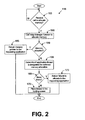
- FIG. 2 shown is an exemplary flow chart of the operation of the memory status API 116 in processing calls to allocate memory received from applications 116 for specific application threads 131 (FIG. 1).
- the flow chart of FIG. 2 may be viewed as depicting steps of a method implemented in the computer system 100 (FIG. 1) to facilitate deferred memory allocation.
- the memory status API 116 waits to receive a call to allocate memory from a specific application thread 131. If such is received, then in box 156, the memory status API 116 calls heap manager functions in the runtime library functions 119 (FIG. 1) to allocate the memory. In box 159, the memory status API 116 determines whether memory has been successfully allocated for the current application thread 131. This determination is made, for example, based upon the response returned from the runtime library functions 119 called by the memory status API 116. If memory has successfully been allocated, then the memory status API proceeds to box 163 in which the memory pointer for the allocated memory is returned to the requesting application so that the application thread 131 may be executed accordingly. Thereafter, the operation of the memory status API 116 ends.
- the memory status API 116 proceeds to box 166 in which the memory status API 116 determines if the application thread 131 has been designated for deferred memory allocation. This may be done, for example, by examining flags that are associated with the application thread 131 that provide such an indication. Thereafter, in box 169, if the application thread 131 has not been designated for deferred memory allocation then the memory status API 116 proceeds to box 173 in which the failure to allocate the memory is returned to the requesting application 116. Thereafter, the operation of the memory status API 116 ends.
- the memory status API 116 proceeds to box 176 in which the application thread 131 is placed in the holding queue 129. Thereafter, the operation of the memory status API 116 ends. In this manner, the memory status API 116 places appropriate application threads 131 into the holding queue 129 (FIG. 1) to facilitate deferred memory allocation for those application threads 131 that are so designated.
- FIG. 3 shown is an exemplary flow chart that provides an example of the operation of the queue manager 126 according to an embodiment of the present invention.
- the queue manager 126 operates continuously in the background of the memory status API 116 to maintain the holding queue 129 (FIG. 1).
- the flow chart of FIG. 3 may be viewed as depicting steps of a method implemented in the computer system 100 (FIG. 1) to maintain the holding queue 129.
- the queue manager 126 determines whether the holding queue 129 is empty. If so, then the queue manager 126 proceeds to box 206 in which a time delay is implemented for a predetermined period of time. In one embodiment, this time delay is approximately 10 milliseconds in duration, although any length of time may be used. Thereafter, the queue manager 126 reverts back to box 203.
- the queue manager 126 proceeds to box 209.
- the top application thread 131 (FIG. 1) in the holding queue 129 is designated for further processing.
- the queue manager 126 calls the heap manager function included in the runtime library functions 119 (FIG. 1) to allocate memory for the designated application thread 131.
- the queue manager 126 determines whether the memory was successfully allocated based upon the return of either a memory pointer or failure to allocate the memory from the runtime library functions 119.
- the queue manager 126 proceeds to box 219 to return the memory pointer for the allocated memory back to the requesting application 113 that generated the designated application thread 131.
- the queue manager 126 then proceeds to box 223 in which the designated application thread 131 is removed from the holding queue 129.
- the queue manager 126 proceeds to box 226 to determine whether the last application thread 131 has been processed in the holding queue 129. If the last application thread 131 listed in the holding queue 129 has not been processed, then the queue manager 126 proceeds to box 229 to designate the next application thread 131 in the holding queue for processing. Thereafter, the queue manager 126 reverts back to box 213. On the other hand, if in box 226 the last application thread 131 in the holding queue 129 has been processed, then the queue manager 126 reverts back to box 206.
- the queue manager 126 proceeds to box 233 in which it is determined whether the application thread 131 is to be held in the holding queue 129 indefinitely. If such is the case, then the queue manager 126 proceeds to box 226. This application thread 131 will remain in the holding queue 129 until a successful attempt to allocate memory for such application thread 131 occurs. In order to determine whether or not the application thread 131 is to be held in the holding queue 129 indefinitely, the queue manager 126 may examine appropriate flags or other characteristics of the application thread 131 itself that provide such information.
- the queue manager 126 proceeds to box 236 in which it is determined whether a storage timeout associated with the application thread 131 has expired. If such is the case, then in box 239 the queue manager 126 returns a failure to allocate memory for the respective application thread 131 to the respective application 113 (FIG. 1) from which the application thread 131 originated. Thereafter, the queue manager 126 moves to box 223 in which the designated application thread 131 is removed from the holding queue 129.
- the queue manager 126 reduces the time remaining for the designated application thread 131 by a predetermined interval amount. In this manner, the storage timeout is reduced every time the queue manager 126 attempts to reallocate memory therefore until a value of zero is achieved, thereby indicating that the storage timeout has expired. Once the storage timeout has been reduced in box 243, then the queue manager 126 proceeds to box 226.
- the queue manager 126 provides a continuous loop in which repeated attempts to reallocate memory for those application threads 131 in the holding queue 129 are made until either a failure to allocate the appropriate memory for the respective application threads 131 is reported to the originating application 113 or memory is successfully allocated for the respective allocation threads 131.
- FIG. 4 shown is an exemplary flow chart of a portion of an application 113 denoted application portion 113a that is implemented to designate whether a particular application thread 131 is to be subject to deferred memory allocation.
- the flow chart of FIG. 4 may be viewed as depicting steps of a method implemented in the computer system 100 (FIG. 1) to properly designate an application thread 131 for deferred memory allocation including setting appropriate flags and assigning appropriate storage timeouts thereto.
- the portion of the application portion 113a determines whether an application thread 131 is to be designated for deferred memory allocation. If so, then in box 256, the appropriate flags are set in the application thread 131 that indicate whether or not the application thread 131 is subject to deferred memory allocation. Thereafter, in box 259, a storage timeout is associated with the application thread 131 if the application thread 131 is to be temporarily stored in the holding queue 129 (FIG. 1). Then, in box 263, the application thread 131 is caused to call the memory status API 116 (FIG. 1) to begin the process of allocating memory. Thereafter, the operation of the application portion 113a ends.
- the memory status API 116 and the application portion 113a are embodied in software or code executed by general purpose hardware as discussed above, as an alternative they may also be embodied in dedicated hardware or a combination of software/general purpose hardware and dedicated hardware. If embodied in dedicated hardware, the memory status API 116 and the application portion 113a can be implemented as a circuit or state machine that employs any one of or a combination of a number of technologies. These technologies may include, but are not limited to, discrete logic circuits having logic gates for implementing various logic functions upon an application of one or more data signals, application specific integrated circuits having appropriate logic gates, programmable gate arrays (PGA), field programmable gate arrays (FPGA), or other components, etc. Such technologies are generally well known by those skilled in the art and, consequently, are not described in detail herein.
- each block may represent a module, segment, or portion of code that comprises program instructions to implement the specified logical function(s).
- the program instructions may be embodied in the form of source code that comprises human-readable statements written in a programming language or machine code that comprises numerical instructions recognizable by a suitable execution system such as a processor in a computer system or other system.
- the machine code may be converted from the source code, etc.
- each block may represent a circuit or a number of interconnected circuits to implement the specified logical function(s).
- FIGS. 2-4 show a specific order of execution, it is understood that the order of execution may differ from that which is depicted. For example, the order of execution of two or more blocks may be scrambled relative to the order shown. Also, two or more blocks shown in succession in FIGS. 2-4 may be executed concurrently or with partial concurrence. In addition, any number of counters, state variables, warning semaphores, or messages might be added to the logical flow described herein, for purposes of enhanced utility, accounting, performance measurement, or providing troubleshooting aids, etc. It is understood that all such variations are within the scope of the present invention.
- the memory status API 116 and the application portion 113a comprise software or code
- they can be embodied in any computer-readable medium for use by or in connection with an instruction execution system such as, for example, a processor in a computer system or other system.
- the logic may comprise, for example, statements including instructions and declarations that can be fetched from the computer-readable medium and executed by the instruction execution system.
- a "computer-readable medium" can be any medium that can contain, store, or maintain the memory status API 116 and the application portion 113a for use by or in connection with the instruction execution system.
- the computer readable medium can comprise any one of many physical media such as, for example, electronic, magnetic, optical, electromagnetic, infrared, or semiconductor media.
- the computer-readable medium may be a random access memory (RAM) including, for example, static random access memory (SRAM) and dynamic random access memory (DRAM), or magnetic random access memory (MRAM).
- RAM random access memory
- SRAM static random access memory
- DRAM dynamic random access memory
- MRAM magnetic random access memory
- the computer-readable medium may be a read-only memory (ROM), a programmable read-only memory (PROM), an erasable programmable read-only memory (EPROM), an electrically erasable programmable read-only memory (EEPROM), or other type of memory device.
- ROM read-only memory
- PROM programmable read-only memory
- EPROM erasable programmable read-only memory
- EEPROM electrically erasable programmable read-only memory
Landscapes
- Engineering & Computer Science (AREA)
- Software Systems (AREA)
- Theoretical Computer Science (AREA)
- Physics & Mathematics (AREA)
- General Engineering & Computer Science (AREA)
- General Physics & Mathematics (AREA)
- Debugging And Monitoring (AREA)
- Multi Processors (AREA)
- Memory System (AREA)
Applications Claiming Priority (2)
| Application Number | Priority Date | Filing Date | Title |
|---|---|---|---|
| US184863 | 2002-06-27 | ||
| US10/184,863 US7069396B2 (en) | 2002-06-27 | 2002-06-27 | Deferred memory allocation for application threads |
Publications (2)
| Publication Number | Publication Date |
|---|---|
| EP1376354A2 true EP1376354A2 (fr) | 2004-01-02 |
| EP1376354A3 EP1376354A3 (fr) | 2005-07-06 |
Family
ID=29717980
Family Applications (1)
| Application Number | Title | Priority Date | Filing Date |
|---|---|---|---|
| EP03253561A Withdrawn EP1376354A3 (fr) | 2002-06-27 | 2003-06-05 | Procédé et dispositif pour l'allocation différée de mémoire |
Country Status (3)
| Country | Link |
|---|---|
| US (1) | US7069396B2 (fr) |
| EP (1) | EP1376354A3 (fr) |
| JP (1) | JP2004054933A (fr) |
Cited By (4)
| Publication number | Priority date | Publication date | Assignee | Title |
|---|---|---|---|---|
| EP1684179A4 (fr) * | 2004-09-29 | 2009-01-21 | Sony Corp | Dispositif de traitement d'informations, methode de gestion de zone de memoire, et programme informatique associe |
| EP2024837A4 (fr) * | 2006-05-02 | 2011-01-26 | Intel Corp | Système et procédé d'attribution et de désattribution de mémoire dans un code transactionnel |
| EP2721482A4 (fr) * | 2011-06-20 | 2016-04-13 | Microsoft Technology Licensing Llc | Modèle de gestion de mémoire et interface pour de nouvelles applications |
| WO2022173746A1 (fr) | 2021-02-09 | 2022-08-18 | Alteryx, Inc. | Gestion de mémoire par commande de tâches de traitement de données |
Families Citing this family (23)
| Publication number | Priority date | Publication date | Assignee | Title |
|---|---|---|---|---|
| US7689794B2 (en) * | 2004-10-22 | 2010-03-30 | Scientific-Atlanta, Llc | System and method for handling memory allocation failures through reserve allocation of event data |
| JP2006221476A (ja) * | 2005-02-10 | 2006-08-24 | Fujitsu Ltd | 管理装置、データ受信装置、操作端末及び情報処理装置 |
| US20070091088A1 (en) * | 2005-10-14 | 2007-04-26 | Via Technologies, Inc. | System and method for managing the computation of graphics shading operations |
| US8144149B2 (en) | 2005-10-14 | 2012-03-27 | Via Technologies, Inc. | System and method for dynamically load balancing multiple shader stages in a shared pool of processing units |
| US20090189896A1 (en) * | 2008-01-25 | 2009-07-30 | Via Technologies, Inc. | Graphics Processor having Unified Shader Unit |
| US8782371B2 (en) | 2008-03-31 | 2014-07-15 | Konica Minolta Laboratory U.S.A., Inc. | Systems and methods for memory management for rasterization |
| US8356308B2 (en) * | 2008-06-02 | 2013-01-15 | Microsoft Corporation | Blocking and bounding wrapper for thread-safe data collections |
| US8817032B2 (en) * | 2008-08-29 | 2014-08-26 | Konica Minolta Laboratory U.S.A., Inc. | Systems and methods for framebuffer management |
| US8854680B2 (en) | 2008-09-11 | 2014-10-07 | Konica Minolta Laboratory U.S.A., Inc. | Systems and methods for optimal memory allocation units |
| US8861014B2 (en) | 2008-09-30 | 2014-10-14 | Konica Minolta Laboratory U.S.A., Inc. | Systems and methods for optimized printer throughput in a multi-core environment |
| US9558040B2 (en) * | 2011-06-20 | 2017-01-31 | Microsoft Technology Licensing, Llc | Memory manager with enhanced application metadata |
| JP5776776B2 (ja) * | 2011-08-05 | 2015-09-09 | 富士通株式会社 | データ処理システム、およびデータ処理方法 |
| WO2013051154A1 (fr) * | 2011-10-07 | 2013-04-11 | 富士通株式会社 | Procédé de commande d'allocation de mémoire, programme et dispositif de traitement d'informations |
| JPWO2013051154A1 (ja) * | 2011-10-07 | 2015-03-30 | 富士通株式会社 | メモリ割り当て制御方法、プログラムおよび情報処理装置 |
| US9384711B2 (en) | 2012-02-15 | 2016-07-05 | Microsoft Technology Licensing, Llc | Speculative render ahead and caching in multiple passes |
| US9286122B2 (en) | 2012-05-31 | 2016-03-15 | Microsoft Technology Licensing, Llc | Display techniques using virtual surface allocation |
| US9230517B2 (en) | 2012-05-31 | 2016-01-05 | Microsoft Technology Licensing, Llc | Virtual surface gutters |
| US9235925B2 (en) | 2012-05-31 | 2016-01-12 | Microsoft Technology Licensing, Llc | Virtual surface rendering |
| US9177533B2 (en) | 2012-05-31 | 2015-11-03 | Microsoft Technology Licensing, Llc | Virtual surface compaction |
| US9772888B2 (en) * | 2013-04-10 | 2017-09-26 | Wind River Systems, Inc. | Semaphore with timeout and lock-free fast path for message passing architectures |
| US9307007B2 (en) | 2013-06-14 | 2016-04-05 | Microsoft Technology Licensing, Llc | Content pre-render and pre-fetch techniques |
| US9836330B2 (en) * | 2013-07-16 | 2017-12-05 | Hitachi, Ltd. | Virtual resource management tool for cloud computing service |
| US9904337B2 (en) | 2015-06-25 | 2018-02-27 | International Business Machines Corporation | Affinity-aware parallel zeroing of pages in non-uniform memory access (NUMA) servers |
Family Cites Families (6)
| Publication number | Priority date | Publication date | Assignee | Title |
|---|---|---|---|---|
| CA2136154C (fr) * | 1994-11-18 | 1999-08-24 | Jay William Benayon | Controle par l'utilisateur des multiplicites de segments de memoire |
| US6088764A (en) * | 1997-07-14 | 2000-07-11 | International Business Machines Corporation | Method and apparatus for reducing space allocation failures in storage management systems |
| US6230247B1 (en) * | 1997-10-29 | 2001-05-08 | International Business Machines Corporation | Method and apparatus for adaptive storage space allocation |
| US6233666B1 (en) * | 1998-09-17 | 2001-05-15 | International Business Machines Corporation | Deferred disk drive space allocation for virtual memory pages with management of disk address recording in multipage tables without external process interrupts for table for input/output to memory |
| AU2001236989A1 (en) | 2000-02-16 | 2001-08-27 | Sun Microsystems, Inc. | An implementation for nonblocking memory allocation |
| US6629227B1 (en) * | 2000-05-04 | 2003-09-30 | Scientific-Atlanta, Inc. | System and method for a communication terminal to manage memory and maintain a current application version for multiple applications |
-
2002
- 2002-06-27 US US10/184,863 patent/US7069396B2/en not_active Expired - Lifetime
-
2003
- 2003-06-05 EP EP03253561A patent/EP1376354A3/fr not_active Withdrawn
- 2003-06-26 JP JP2003182256A patent/JP2004054933A/ja active Pending
Cited By (8)
| Publication number | Priority date | Publication date | Assignee | Title |
|---|---|---|---|---|
| EP1684179A4 (fr) * | 2004-09-29 | 2009-01-21 | Sony Corp | Dispositif de traitement d'informations, methode de gestion de zone de memoire, et programme informatique associe |
| US7770177B2 (en) | 2004-09-29 | 2010-08-03 | Sony Corporation | System for memory reclamation based on thread entry and release request times |
| EP2024837A4 (fr) * | 2006-05-02 | 2011-01-26 | Intel Corp | Système et procédé d'attribution et de désattribution de mémoire dans un code transactionnel |
| US8190845B2 (en) | 2006-05-02 | 2012-05-29 | Intel Corporation | System and method for allocating and deallocating memory within transactional code |
| EP2721482A4 (fr) * | 2011-06-20 | 2016-04-13 | Microsoft Technology Licensing Llc | Modèle de gestion de mémoire et interface pour de nouvelles applications |
| US9946641B2 (en) | 2011-06-20 | 2018-04-17 | Microsoft Technology Licensing, Llc | Memory management model and interface for new applications |
| WO2022173746A1 (fr) | 2021-02-09 | 2022-08-18 | Alteryx, Inc. | Gestion de mémoire par commande de tâches de traitement de données |
| EP4268079A4 (fr) * | 2021-02-09 | 2025-01-01 | Alteryx, Inc. | Gestion de mémoire par commande de tâches de traitement de données |
Also Published As
| Publication number | Publication date |
|---|---|
| US20040003188A1 (en) | 2004-01-01 |
| US7069396B2 (en) | 2006-06-27 |
| EP1376354A3 (fr) | 2005-07-06 |
| JP2004054933A (ja) | 2004-02-19 |
Similar Documents
| Publication | Publication Date | Title |
|---|---|---|
| US7069396B2 (en) | Deferred memory allocation for application threads | |
| US7962707B2 (en) | Apparatus and method for deterministic garbage collection of a heap memory | |
| US8209692B2 (en) | Deallocation of computer data in a multithreaded computer | |
| KR100289628B1 (ko) | 멀티태스킹 기능의 정보처리시스템을 위한 자원관리방법및 그 장치 | |
| US8245239B2 (en) | Deterministic runtime execution environment and method | |
| US7840965B2 (en) | Selective generation of an asynchronous notification for a partition management operation in a logically-partitioned computer | |
| US7073177B2 (en) | Resource managing system for changing resource consumption state of the lower priority resource entity to more restrictive state when resource reached critical level | |
| US20100031269A1 (en) | Lock Contention Reduction | |
| US20140208083A1 (en) | Multi-threaded logging | |
| US7882285B2 (en) | Buffer cache management to prevent deadlocks | |
| JP2003345612A (ja) | 演算処理システム、コンピュータ・システム上でのタスク制御方法、並びにコンピュータ・プログラム | |
| KR20040032199A (ko) | 비휘발성 메모리에의 데이터 저장 방법 및 장치 | |
| JP7304119B2 (ja) | ポーズレスなガベージ・コレクションのための活性化フレームを表す方法および装置 | |
| US7761873B2 (en) | User-space resource management | |
| CN111966511B (zh) | 消息队列数据读写处理方法及装置 | |
| US10417121B1 (en) | Monitoring memory usage in computing devices | |
| JP2004078322A (ja) | タスク管理システム、プログラム、記録媒体、及び制御方法 | |
| US6799253B1 (en) | Stochastic scratchpad storage management technique | |
| US20180270306A1 (en) | Coexistence of a synchronous architecture and an asynchronous architecture in a server | |
| US6981244B1 (en) | System and method for inheriting memory management policies in a data processing systems | |
| US7496928B2 (en) | Method and system for moderating thread priority boost for I/O completion | |
| US12032858B1 (en) | Data storage system employing partial responses to influence rate of bulk storage operations | |
| CN117472568A (zh) | 一种多线程任务处理方法及终端 | |
| Finkelstein et al. | Real time threads interface | |
| US20180270304A1 (en) | Asynchronous connection handling in a multi-threaded server |
Legal Events
| Date | Code | Title | Description |
|---|---|---|---|
| PUAI | Public reference made under article 153(3) epc to a published international application that has entered the european phase |
Free format text: ORIGINAL CODE: 0009012 |
|
| AK | Designated contracting states |
Kind code of ref document: A2 Designated state(s): AT BE BG CH CY CZ DE DK EE ES FI FR GB GR HU IE IT LI LU MC NL PT RO SE SI SK TR |
|
| AX | Request for extension of the european patent |
Extension state: AL LT LV MK |
|
| PUAL | Search report despatched |
Free format text: ORIGINAL CODE: 0009013 |
|
| AK | Designated contracting states |
Kind code of ref document: A3 Designated state(s): AT BE BG CH CY CZ DE DK EE ES FI FR GB GR HU IE IT LI LU MC NL PT RO SE SI SK TR |
|
| AX | Request for extension of the european patent |
Extension state: AL LT LV MK |
|
| 17P | Request for examination filed |
Effective date: 20060106 |
|
| AKX | Designation fees paid |
Designated state(s): DE FR GB |
|
| STAA | Information on the status of an ep patent application or granted ep patent |
Free format text: STATUS: THE APPLICATION IS DEEMED TO BE WITHDRAWN |
|
| 18D | Application deemed to be withdrawn |
Effective date: 20060620 |