EP1380643A1 - Prozess, Konstrukt und Konjugat zur Herstellung mehrerer Nukleinsäureproben - Google Patents
Prozess, Konstrukt und Konjugat zur Herstellung mehrerer Nukleinsäureproben Download PDFInfo
- Publication number
- EP1380643A1 EP1380643A1 EP03018714A EP03018714A EP1380643A1 EP 1380643 A1 EP1380643 A1 EP 1380643A1 EP 03018714 A EP03018714 A EP 03018714A EP 03018714 A EP03018714 A EP 03018714A EP 1380643 A1 EP1380643 A1 EP 1380643A1
- Authority
- EP
- European Patent Office
- Prior art keywords
- nucleic acid
- construct
- dna
- specific
- primers
- Prior art date
- Legal status (The legal status is an assumption and is not a legal conclusion. Google has not performed a legal analysis and makes no representation as to the accuracy of the status listed.)
- Pending
Links
- 150000007523 nucleic acids Chemical class 0.000 title claims abstract description 272
- 102000039446 nucleic acids Human genes 0.000 title claims abstract description 262
- 108020004707 nucleic acids Proteins 0.000 title claims abstract description 261
- 238000000034 method Methods 0.000 title claims abstract description 151
- 230000008569 process Effects 0.000 title claims abstract description 115
- 108090000626 DNA-directed RNA polymerases Proteins 0.000 claims abstract description 49
- 102000004163 DNA-directed RNA polymerases Human genes 0.000 claims abstract description 48
- 108090000623 proteins and genes Proteins 0.000 claims abstract description 43
- 238000001727 in vivo Methods 0.000 claims abstract description 18
- 238000013518 transcription Methods 0.000 claims abstract description 18
- 230000035897 transcription Effects 0.000 claims abstract description 18
- 108091028043 Nucleic acid sequence Proteins 0.000 claims abstract description 17
- 238000013519 translation Methods 0.000 claims abstract description 7
- 102000004169 proteins and genes Human genes 0.000 claims description 29
- 230000000295 complement effect Effects 0.000 abstract description 40
- 238000000338 in vitro Methods 0.000 abstract description 35
- 239000000872 buffer Substances 0.000 abstract description 26
- 230000037452 priming Effects 0.000 abstract description 13
- 102000044158 nucleic acid binding protein Human genes 0.000 abstract description 4
- 108700020942 nucleic acid binding protein Proteins 0.000 abstract description 4
- 102000005962 receptors Human genes 0.000 abstract description 3
- 108020003175 receptors Proteins 0.000 abstract description 3
- 239000003446 ligand Substances 0.000 abstract description 2
- 239000013615 primer Substances 0.000 description 167
- 108020004414 DNA Proteins 0.000 description 107
- 230000003321 amplification Effects 0.000 description 61
- 238000003199 nucleic acid amplification method Methods 0.000 description 61
- 125000003729 nucleotide group Chemical group 0.000 description 61
- 239000000047 product Substances 0.000 description 51
- 238000006243 chemical reaction Methods 0.000 description 48
- 238000004519 manufacturing process Methods 0.000 description 41
- 102000004190 Enzymes Human genes 0.000 description 39
- 108090000790 Enzymes Proteins 0.000 description 39
- 239000002773 nucleotide Substances 0.000 description 39
- 239000002243 precursor Substances 0.000 description 37
- 239000000203 mixture Substances 0.000 description 34
- 239000000523 sample Substances 0.000 description 31
- -1 nucleoside triphosphates Chemical class 0.000 description 29
- QTANTQQOYSUMLC-UHFFFAOYSA-O Ethidium cation Chemical compound C12=CC(N)=CC=C2C2=CC=C(N)C=C2[N+](CC)=C1C1=CC=CC=C1 QTANTQQOYSUMLC-UHFFFAOYSA-O 0.000 description 28
- 210000004027 cell Anatomy 0.000 description 28
- 102000053602 DNA Human genes 0.000 description 27
- 230000000977 initiatory effect Effects 0.000 description 24
- 239000002777 nucleoside Substances 0.000 description 24
- 108091034117 Oligonucleotide Proteins 0.000 description 23
- 238000009396 hybridization Methods 0.000 description 22
- 230000015572 biosynthetic process Effects 0.000 description 21
- 230000000694 effects Effects 0.000 description 21
- 238000010348 incorporation Methods 0.000 description 20
- 238000006116 polymerization reaction Methods 0.000 description 19
- 239000003054 catalyst Substances 0.000 description 18
- 239000001226 triphosphate Substances 0.000 description 18
- 235000011178 triphosphate Nutrition 0.000 description 18
- 102100034343 Integrase Human genes 0.000 description 17
- 238000003786 synthesis reaction Methods 0.000 description 17
- 239000011541 reaction mixture Substances 0.000 description 16
- 239000012634 fragment Substances 0.000 description 15
- 229920002477 rna polymer Polymers 0.000 description 15
- 238000002474 experimental method Methods 0.000 description 13
- 239000013612 plasmid Substances 0.000 description 13
- 102000040430 polynucleotide Human genes 0.000 description 13
- 108091033319 polynucleotide Proteins 0.000 description 13
- VVJKKWFAADXIJK-UHFFFAOYSA-N Allylamine Chemical compound NCC=C VVJKKWFAADXIJK-UHFFFAOYSA-N 0.000 description 12
- 102000016928 DNA-directed DNA polymerase Human genes 0.000 description 12
- 108010014303 DNA-directed DNA polymerase Proteins 0.000 description 12
- 239000002157 polynucleotide Substances 0.000 description 12
- YBJHBAHKTGYVGT-ZKWXMUAHSA-N (+)-Biotin Chemical compound N1C(=O)N[C@@H]2[C@H](CCCCC(=O)O)SC[C@@H]21 YBJHBAHKTGYVGT-ZKWXMUAHSA-N 0.000 description 10
- LFQSCWFLJHTTHZ-UHFFFAOYSA-N Ethanol Chemical compound CCO LFQSCWFLJHTTHZ-UHFFFAOYSA-N 0.000 description 10
- 244000309466 calf Species 0.000 description 10
- 210000001541 thymus gland Anatomy 0.000 description 10
- 101710203526 Integrase Proteins 0.000 description 9
- 239000011543 agarose gel Substances 0.000 description 9
- 229920001577 copolymer Polymers 0.000 description 9
- 125000005842 heteroatom Chemical group 0.000 description 9
- 230000004048 modification Effects 0.000 description 9
- 238000012986 modification Methods 0.000 description 9
- 229920000642 polymer Polymers 0.000 description 9
- IJGRMHOSHXDMSA-UHFFFAOYSA-N Atomic nitrogen Chemical compound N#N IJGRMHOSHXDMSA-UHFFFAOYSA-N 0.000 description 8
- 108010092799 RNA-directed DNA polymerase Proteins 0.000 description 8
- JLCPHMBAVCMARE-UHFFFAOYSA-N [3-[[3-[[3-[[3-[[3-[[3-[[3-[[3-[[3-[[3-[[3-[[5-(2-amino-6-oxo-1H-purin-9-yl)-3-[[3-[[3-[[3-[[3-[[3-[[5-(2-amino-6-oxo-1H-purin-9-yl)-3-[[5-(2-amino-6-oxo-1H-purin-9-yl)-3-hydroxyoxolan-2-yl]methoxy-hydroxyphosphoryl]oxyoxolan-2-yl]methoxy-hydroxyphosphoryl]oxy-5-(5-methyl-2,4-dioxopyrimidin-1-yl)oxolan-2-yl]methoxy-hydroxyphosphoryl]oxy-5-(6-aminopurin-9-yl)oxolan-2-yl]methoxy-hydroxyphosphoryl]oxy-5-(6-aminopurin-9-yl)oxolan-2-yl]methoxy-hydroxyphosphoryl]oxy-5-(6-aminopurin-9-yl)oxolan-2-yl]methoxy-hydroxyphosphoryl]oxy-5-(6-aminopurin-9-yl)oxolan-2-yl]methoxy-hydroxyphosphoryl]oxyoxolan-2-yl]methoxy-hydroxyphosphoryl]oxy-5-(5-methyl-2,4-dioxopyrimidin-1-yl)oxolan-2-yl]methoxy-hydroxyphosphoryl]oxy-5-(4-amino-2-oxopyrimidin-1-yl)oxolan-2-yl]methoxy-hydroxyphosphoryl]oxy-5-(5-methyl-2,4-dioxopyrimidin-1-yl)oxolan-2-yl]methoxy-hydroxyphosphoryl]oxy-5-(5-methyl-2,4-dioxopyrimidin-1-yl)oxolan-2-yl]methoxy-hydroxyphosphoryl]oxy-5-(6-aminopurin-9-yl)oxolan-2-yl]methoxy-hydroxyphosphoryl]oxy-5-(6-aminopurin-9-yl)oxolan-2-yl]methoxy-hydroxyphosphoryl]oxy-5-(4-amino-2-oxopyrimidin-1-yl)oxolan-2-yl]methoxy-hydroxyphosphoryl]oxy-5-(4-amino-2-oxopyrimidin-1-yl)oxolan-2-yl]methoxy-hydroxyphosphoryl]oxy-5-(4-amino-2-oxopyrimidin-1-yl)oxolan-2-yl]methoxy-hydroxyphosphoryl]oxy-5-(6-aminopurin-9-yl)oxolan-2-yl]methoxy-hydroxyphosphoryl]oxy-5-(4-amino-2-oxopyrimidin-1-yl)oxolan-2-yl]methyl [5-(6-aminopurin-9-yl)-2-(hydroxymethyl)oxolan-3-yl] hydrogen phosphate Polymers Cc1cn(C2CC(OP(O)(=O)OCC3OC(CC3OP(O)(=O)OCC3OC(CC3O)n3cnc4c3nc(N)[nH]c4=O)n3cnc4c3nc(N)[nH]c4=O)C(COP(O)(=O)OC3CC(OC3COP(O)(=O)OC3CC(OC3COP(O)(=O)OC3CC(OC3COP(O)(=O)OC3CC(OC3COP(O)(=O)OC3CC(OC3COP(O)(=O)OC3CC(OC3COP(O)(=O)OC3CC(OC3COP(O)(=O)OC3CC(OC3COP(O)(=O)OC3CC(OC3COP(O)(=O)OC3CC(OC3COP(O)(=O)OC3CC(OC3COP(O)(=O)OC3CC(OC3COP(O)(=O)OC3CC(OC3COP(O)(=O)OC3CC(OC3COP(O)(=O)OC3CC(OC3COP(O)(=O)OC3CC(OC3COP(O)(=O)OC3CC(OC3CO)n3cnc4c(N)ncnc34)n3ccc(N)nc3=O)n3cnc4c(N)ncnc34)n3ccc(N)nc3=O)n3ccc(N)nc3=O)n3ccc(N)nc3=O)n3cnc4c(N)ncnc34)n3cnc4c(N)ncnc34)n3cc(C)c(=O)[nH]c3=O)n3cc(C)c(=O)[nH]c3=O)n3ccc(N)nc3=O)n3cc(C)c(=O)[nH]c3=O)n3cnc4c3nc(N)[nH]c4=O)n3cnc4c(N)ncnc34)n3cnc4c(N)ncnc34)n3cnc4c(N)ncnc34)n3cnc4c(N)ncnc34)O2)c(=O)[nH]c1=O JLCPHMBAVCMARE-UHFFFAOYSA-N 0.000 description 8
- 230000000692 anti-sense effect Effects 0.000 description 8
- 230000029087 digestion Effects 0.000 description 8
- 230000000379 polymerizing effect Effects 0.000 description 8
- 108091008146 restriction endonucleases Proteins 0.000 description 8
- 108091093088 Amplicon Proteins 0.000 description 7
- 229910019142 PO4 Inorganic materials 0.000 description 7
- 230000000536 complexating effect Effects 0.000 description 7
- 230000001419 dependent effect Effects 0.000 description 7
- 230000006870 function Effects 0.000 description 7
- 238000002844 melting Methods 0.000 description 7
- 230000008018 melting Effects 0.000 description 7
- NBIIXXVUZAFLBC-UHFFFAOYSA-K phosphate Chemical group [O-]P([O-])([O-])=O NBIIXXVUZAFLBC-UHFFFAOYSA-K 0.000 description 7
- 239000010452 phosphate Substances 0.000 description 7
- 230000010076 replication Effects 0.000 description 7
- 239000000126 substance Substances 0.000 description 7
- 102000004594 DNA Polymerase I Human genes 0.000 description 6
- 238000001514 detection method Methods 0.000 description 6
- 239000012954 diazonium Substances 0.000 description 6
- IJGRMHOSHXDMSA-UHFFFAOYSA-O diazynium Chemical compound [NH+]#N IJGRMHOSHXDMSA-UHFFFAOYSA-O 0.000 description 6
- 238000006073 displacement reaction Methods 0.000 description 6
- 238000005755 formation reaction Methods 0.000 description 6
- 239000000499 gel Substances 0.000 description 6
- 238000011534 incubation Methods 0.000 description 6
- 238000000926 separation method Methods 0.000 description 6
- 101710137500 T7 RNA polymerase Proteins 0.000 description 5
- 229960002685 biotin Drugs 0.000 description 5
- 235000020958 biotin Nutrition 0.000 description 5
- 239000011616 biotin Substances 0.000 description 5
- 239000003795 chemical substances by application Substances 0.000 description 5
- 239000000463 material Substances 0.000 description 5
- 229910052757 nitrogen Inorganic materials 0.000 description 5
- 229910052717 sulfur Inorganic materials 0.000 description 5
- 108090001008 Avidin Proteins 0.000 description 4
- 108020004635 Complementary DNA Proteins 0.000 description 4
- 108010017826 DNA Polymerase I Proteins 0.000 description 4
- 239000003155 DNA primer Substances 0.000 description 4
- XKMLYUALXHKNFT-UUOKFMHZSA-N Guanosine-5'-triphosphate Chemical compound C1=2NC(N)=NC(=O)C=2N=CN1[C@@H]1O[C@H](COP(O)(=O)OP(O)(=O)OP(O)(O)=O)[C@@H](O)[C@H]1O XKMLYUALXHKNFT-UUOKFMHZSA-N 0.000 description 4
- 238000002105 Southern blotting Methods 0.000 description 4
- NINIDFKCEFEMDL-UHFFFAOYSA-N Sulfur Chemical compound [S] NINIDFKCEFEMDL-UHFFFAOYSA-N 0.000 description 4
- 238000001668 nucleic acid synthesis Methods 0.000 description 4
- 239000008363 phosphate buffer Substances 0.000 description 4
- 238000000746 purification Methods 0.000 description 4
- 239000011593 sulfur Substances 0.000 description 4
- 238000011144 upstream manufacturing Methods 0.000 description 4
- ZKHQWZAMYRWXGA-KQYNXXCUSA-N Adenosine triphosphate Chemical compound C1=NC=2C(N)=NC=NC=2N1[C@@H]1O[C@H](COP(O)(=O)OP(O)(=O)OP(O)(O)=O)[C@@H](O)[C@H]1O ZKHQWZAMYRWXGA-KQYNXXCUSA-N 0.000 description 3
- ZKHQWZAMYRWXGA-UHFFFAOYSA-N Adenosine triphosphate Natural products C1=NC=2C(N)=NC=NC=2N1C1OC(COP(O)(=O)OP(O)(=O)OP(O)(O)=O)C(O)C1O ZKHQWZAMYRWXGA-UHFFFAOYSA-N 0.000 description 3
- 108020005544 Antisense RNA Proteins 0.000 description 3
- 108700039691 Genetic Promoter Regions Proteins 0.000 description 3
- 108020004682 Single-Stranded DNA Proteins 0.000 description 3
- 108010006785 Taq Polymerase Proteins 0.000 description 3
- 229960001456 adenosine triphosphate Drugs 0.000 description 3
- 238000003556 assay Methods 0.000 description 3
- 239000003184 complementary RNA Substances 0.000 description 3
- 238000004925 denaturation Methods 0.000 description 3
- 230000036425 denaturation Effects 0.000 description 3
- 239000003365 glass fiber Substances 0.000 description 3
- 125000002887 hydroxy group Chemical group [H]O* 0.000 description 3
- 239000000138 intercalating agent Substances 0.000 description 3
- 238000009830 intercalation Methods 0.000 description 3
- 238000002955 isolation Methods 0.000 description 3
- 238000007834 ligase chain reaction Methods 0.000 description 3
- 238000003752 polymerase chain reaction Methods 0.000 description 3
- 230000002285 radioactive effect Effects 0.000 description 3
- 239000000243 solution Substances 0.000 description 3
- 230000001360 synchronised effect Effects 0.000 description 3
- 230000010474 transient expression Effects 0.000 description 3
- UNXRWKVEANCORM-UHFFFAOYSA-N triphosphoric acid Chemical compound OP(O)(=O)OP(O)(=O)OP(O)(O)=O UNXRWKVEANCORM-UHFFFAOYSA-N 0.000 description 3
- 239000013598 vector Substances 0.000 description 3
- UFBJCMHMOXMLKC-UHFFFAOYSA-N 2,4-dinitrophenol Chemical compound OC1=CC=C([N+]([O-])=O)C=C1[N+]([O-])=O UFBJCMHMOXMLKC-UHFFFAOYSA-N 0.000 description 2
- 108091027075 5S-rRNA precursor Proteins 0.000 description 2
- 108020004491 Antisense DNA Proteins 0.000 description 2
- PCDQPRRSZKQHHS-UHFFFAOYSA-N Cytidine 5'-triphosphate Natural products O=C1N=C(N)C=CN1C1C(O)C(O)C(COP(O)(=O)OP(O)(=O)OP(O)(O)=O)O1 PCDQPRRSZKQHHS-UHFFFAOYSA-N 0.000 description 2
- 230000006820 DNA synthesis Effects 0.000 description 2
- KCXVZYZYPLLWCC-UHFFFAOYSA-N EDTA Chemical compound OC(=O)CN(CC(O)=O)CCN(CC(O)=O)CC(O)=O KCXVZYZYPLLWCC-UHFFFAOYSA-N 0.000 description 2
- 102100031780 Endonuclease Human genes 0.000 description 2
- 108010042407 Endonucleases Proteins 0.000 description 2
- 241000588724 Escherichia coli Species 0.000 description 2
- 101000686777 Escherichia phage T7 T7 RNA polymerase Proteins 0.000 description 2
- ZHNUHDYFZUAESO-UHFFFAOYSA-N Formamide Chemical compound NC=O ZHNUHDYFZUAESO-UHFFFAOYSA-N 0.000 description 2
- 102000003960 Ligases Human genes 0.000 description 2
- 108090000364 Ligases Proteins 0.000 description 2
- FYYHWMGAXLPEAU-UHFFFAOYSA-N Magnesium Chemical compound [Mg] FYYHWMGAXLPEAU-UHFFFAOYSA-N 0.000 description 2
- 101710163270 Nuclease Proteins 0.000 description 2
- 108020004711 Nucleic Acid Probes Proteins 0.000 description 2
- 108010066717 Q beta Replicase Proteins 0.000 description 2
- 102000001218 Rec A Recombinases Human genes 0.000 description 2
- 108010055016 Rec A Recombinases Proteins 0.000 description 2
- 108020004511 Recombinant DNA Proteins 0.000 description 2
- FAPWRFPIFSIZLT-UHFFFAOYSA-M Sodium chloride Chemical compound [Na+].[Cl-] FAPWRFPIFSIZLT-UHFFFAOYSA-M 0.000 description 2
- 108010090804 Streptavidin Proteins 0.000 description 2
- RZCIEJXAILMSQK-JXOAFFINSA-N TTP Chemical compound O=C1NC(=O)C(C)=CN1[C@H]1[C@H](O)[C@H](O)[C@@H](COP(O)(=O)OP(O)(=O)OP(O)(O)=O)O1 RZCIEJXAILMSQK-JXOAFFINSA-N 0.000 description 2
- 239000007984 Tris EDTA buffer Substances 0.000 description 2
- PGAVKCOVUIYSFO-XVFCMESISA-N UTP Chemical compound O[C@@H]1[C@H](O)[C@@H](COP(O)(=O)OP(O)(=O)OP(O)(O)=O)O[C@H]1N1C(=O)NC(=O)C=C1 PGAVKCOVUIYSFO-XVFCMESISA-N 0.000 description 2
- 230000009471 action Effects 0.000 description 2
- 238000005054 agglomeration Methods 0.000 description 2
- 230000002776 aggregation Effects 0.000 description 2
- 239000003816 antisense DNA Substances 0.000 description 2
- 102000023732 binding proteins Human genes 0.000 description 2
- 108091008324 binding proteins Proteins 0.000 description 2
- 230000008827 biological function Effects 0.000 description 2
- 108700021042 biotin binding protein Proteins 0.000 description 2
- 102000043871 biotin binding protein Human genes 0.000 description 2
- 230000001413 cellular effect Effects 0.000 description 2
- 238000007385 chemical modification Methods 0.000 description 2
- PCDQPRRSZKQHHS-ZAKLUEHWSA-N cytidine-5'-triphosphate Chemical compound O=C1N=C(N)C=CN1[C@H]1[C@H](O)[C@@H](O)[C@H](CO[P@](O)(=O)O[P@@](O)(=O)OP(O)(O)=O)O1 PCDQPRRSZKQHHS-ZAKLUEHWSA-N 0.000 description 2
- OPTASPLRGRRNAP-UHFFFAOYSA-N cytosine Chemical compound NC=1C=CNC(=O)N=1 OPTASPLRGRRNAP-UHFFFAOYSA-N 0.000 description 2
- SUYVUBYJARFZHO-RRKCRQDMSA-N dATP Chemical compound C1=NC=2C(N)=NC=NC=2N1[C@H]1C[C@H](O)[C@@H](COP(O)(=O)OP(O)(=O)OP(O)(O)=O)O1 SUYVUBYJARFZHO-RRKCRQDMSA-N 0.000 description 2
- RGWHQCVHVJXOKC-SHYZEUOFSA-N dCTP Chemical compound O=C1N=C(N)C=CN1[C@@H]1O[C@H](CO[P@](O)(=O)O[P@](O)(=O)OP(O)(O)=O)[C@@H](O)C1 RGWHQCVHVJXOKC-SHYZEUOFSA-N 0.000 description 2
- HAAZLUGHYHWQIW-KVQBGUIXSA-N dGTP Chemical compound C1=NC=2C(=O)NC(N)=NC=2N1[C@H]1C[C@H](O)[C@@H](COP(O)(=O)OP(O)(=O)OP(O)(O)=O)O1 HAAZLUGHYHWQIW-KVQBGUIXSA-N 0.000 description 2
- NHVNXKFIZYSCEB-XLPZGREQSA-N dTTP Chemical compound O=C1NC(=O)C(C)=CN1[C@@H]1O[C@H](COP(O)(=O)OP(O)(=O)OP(O)(O)=O)[C@@H](O)C1 NHVNXKFIZYSCEB-XLPZGREQSA-N 0.000 description 2
- 230000006862 enzymatic digestion Effects 0.000 description 2
- GNBHRKFJIUUOQI-UHFFFAOYSA-N fluorescein Chemical compound O1C(=O)C2=CC=CC=C2C21C1=CC=C(O)C=C1OC1=CC(O)=CC=C21 GNBHRKFJIUUOQI-UHFFFAOYSA-N 0.000 description 2
- 238000002189 fluorescence spectrum Methods 0.000 description 2
- 230000002401 inhibitory effect Effects 0.000 description 2
- 230000002452 interceptive effect Effects 0.000 description 2
- 230000000670 limiting effect Effects 0.000 description 2
- 239000007788 liquid Substances 0.000 description 2
- 239000011777 magnesium Substances 0.000 description 2
- 229910052749 magnesium Inorganic materials 0.000 description 2
- 239000002853 nucleic acid probe Substances 0.000 description 2
- 239000013641 positive control Substances 0.000 description 2
- 230000001737 promoting effect Effects 0.000 description 2
- XKMLYUALXHKNFT-UHFFFAOYSA-N rGTP Natural products C1=2NC(N)=NC(=O)C=2N=CN1C1OC(COP(O)(=O)OP(O)(=O)OP(O)(O)=O)C(O)C1O XKMLYUALXHKNFT-UHFFFAOYSA-N 0.000 description 2
- 230000001172 regenerating effect Effects 0.000 description 2
- 230000008929 regeneration Effects 0.000 description 2
- 238000011069 regeneration method Methods 0.000 description 2
- 230000008439 repair process Effects 0.000 description 2
- 230000029058 respiratory gaseous exchange Effects 0.000 description 2
- 239000007787 solid Substances 0.000 description 2
- 239000011550 stock solution Substances 0.000 description 2
- 238000006467 substitution reaction Methods 0.000 description 2
- 239000000758 substrate Substances 0.000 description 2
- 150000003573 thiols Chemical class 0.000 description 2
- 210000001519 tissue Anatomy 0.000 description 2
- 125000002264 triphosphate group Chemical class [H]OP(=O)(O[H])OP(=O)(O[H])OP(=O)(O[H])O* 0.000 description 2
- PGAVKCOVUIYSFO-UHFFFAOYSA-N uridine-triphosphate Natural products OC1C(O)C(COP(O)(=O)OP(O)(=O)OP(O)(O)=O)OC1N1C(=O)NC(=O)C=C1 PGAVKCOVUIYSFO-UHFFFAOYSA-N 0.000 description 2
- ZDHWTWWXCXEGIC-UHFFFAOYSA-N 2-ethenylpyrimidine Chemical class C=CC1=NC=CC=N1 ZDHWTWWXCXEGIC-UHFFFAOYSA-N 0.000 description 1
- 229920000936 Agarose Polymers 0.000 description 1
- 102000002260 Alkaline Phosphatase Human genes 0.000 description 1
- 108020004774 Alkaline Phosphatase Proteins 0.000 description 1
- 241000894006 Bacteria Species 0.000 description 1
- 108091026890 Coding region Proteins 0.000 description 1
- 102000012410 DNA Ligases Human genes 0.000 description 1
- 108010061982 DNA Ligases Proteins 0.000 description 1
- 108020001019 DNA Primers Proteins 0.000 description 1
- 239000003298 DNA probe Substances 0.000 description 1
- AHCYMLUZIRLXAA-SHYZEUOFSA-N Deoxyuridine 5'-triphosphate Chemical compound O1[C@H](COP(O)(=O)OP(O)(=O)OP(O)(O)=O)[C@@H](O)C[C@@H]1N1C(=O)NC(=O)C=C1 AHCYMLUZIRLXAA-SHYZEUOFSA-N 0.000 description 1
- 241001534160 Escherichia virus Qbeta Species 0.000 description 1
- 241000206602 Eukaryota Species 0.000 description 1
- 108010001336 Horseradish Peroxidase Proteins 0.000 description 1
- HAEJPQIATWHALX-KQYNXXCUSA-N ITP Chemical compound O[C@@H]1[C@H](O)[C@@H](COP(O)(=O)OP(O)(=O)OP(O)(O)=O)O[C@H]1N1C(N=CNC2=O)=C2N=C1 HAEJPQIATWHALX-KQYNXXCUSA-N 0.000 description 1
- 239000007993 MOPS buffer Substances 0.000 description 1
- 108060004795 Methyltransferase Proteins 0.000 description 1
- 206010036790 Productive cough Diseases 0.000 description 1
- 108010078067 RNA Polymerase III Proteins 0.000 description 1
- 102000014450 RNA Polymerase III Human genes 0.000 description 1
- 108020004518 RNA Probes Proteins 0.000 description 1
- 239000003391 RNA probe Substances 0.000 description 1
- 230000006819 RNA synthesis Effects 0.000 description 1
- 102000009661 Repressor Proteins Human genes 0.000 description 1
- 108010034634 Repressor Proteins Proteins 0.000 description 1
- 241000589500 Thermus aquaticus Species 0.000 description 1
- 229920004890 Triton X-100 Polymers 0.000 description 1
- 239000013504 Triton X-100 Substances 0.000 description 1
- 238000009825 accumulation Methods 0.000 description 1
- 239000002253 acid Substances 0.000 description 1
- 150000007513 acids Chemical class 0.000 description 1
- 238000004458 analytical method Methods 0.000 description 1
- 230000001745 anti-biotin effect Effects 0.000 description 1
- 238000013459 approach Methods 0.000 description 1
- 230000001580 bacterial effect Effects 0.000 description 1
- 108010028263 bacteriophage T3 RNA polymerase Proteins 0.000 description 1
- 210000004369 blood Anatomy 0.000 description 1
- 239000008280 blood Substances 0.000 description 1
- 239000007853 buffer solution Substances 0.000 description 1
- 238000010804 cDNA synthesis Methods 0.000 description 1
- 210000001175 cerebrospinal fluid Anatomy 0.000 description 1
- 239000007795 chemical reaction product Substances 0.000 description 1
- 239000003153 chemical reaction reagent Substances 0.000 description 1
- 210000000349 chromosome Anatomy 0.000 description 1
- 238000010367 cloning Methods 0.000 description 1
- 239000002299 complementary DNA Substances 0.000 description 1
- 239000013068 control sample Substances 0.000 description 1
- 230000001351 cycling effect Effects 0.000 description 1
- 210000000805 cytoplasm Anatomy 0.000 description 1
- 229940104302 cytosine Drugs 0.000 description 1
- 230000007423 decrease Effects 0.000 description 1
- 230000002950 deficient Effects 0.000 description 1
- 230000000593 degrading effect Effects 0.000 description 1
- 239000005547 deoxyribonucleotide Substances 0.000 description 1
- 125000002637 deoxyribonucleotide group Chemical group 0.000 description 1
- 230000001687 destabilization Effects 0.000 description 1
- 238000003745 diagnosis Methods 0.000 description 1
- 239000013024 dilution buffer Substances 0.000 description 1
- 201000010099 disease Diseases 0.000 description 1
- 208000037265 diseases, disorders, signs and symptoms Diseases 0.000 description 1
- 238000010494 dissociation reaction Methods 0.000 description 1
- 230000005593 dissociations Effects 0.000 description 1
- 238000009826 distribution Methods 0.000 description 1
- VHJLVAABSRFDPM-QWWZWVQMSA-N dithiothreitol Chemical compound SC[C@@H](O)[C@H](O)CS VHJLVAABSRFDPM-QWWZWVQMSA-N 0.000 description 1
- 230000003828 downregulation Effects 0.000 description 1
- 230000009977 dual effect Effects 0.000 description 1
- 230000002255 enzymatic effect Effects 0.000 description 1
- 238000001976 enzyme digestion Methods 0.000 description 1
- 238000011156 evaluation Methods 0.000 description 1
- 238000013401 experimental design Methods 0.000 description 1
- 210000003608 fece Anatomy 0.000 description 1
- 238000001502 gel electrophoresis Methods 0.000 description 1
- 238000001415 gene therapy Methods 0.000 description 1
- 230000026030 halogenation Effects 0.000 description 1
- 238000005658 halogenation reaction Methods 0.000 description 1
- 230000028993 immune response Effects 0.000 description 1
- 238000007901 in situ hybridization Methods 0.000 description 1
- 238000011065 in-situ storage Methods 0.000 description 1
- 230000005764 inhibitory process Effects 0.000 description 1
- 230000003993 interaction Effects 0.000 description 1
- 238000007169 ligase reaction Methods 0.000 description 1
- 108010026228 mRNA guanylyltransferase Proteins 0.000 description 1
- 239000003550 marker Substances 0.000 description 1
- 239000011159 matrix material Substances 0.000 description 1
- 239000012528 membrane Substances 0.000 description 1
- 239000013642 negative control Substances 0.000 description 1
- 150000003833 nucleoside derivatives Chemical class 0.000 description 1
- 210000004940 nucleus Anatomy 0.000 description 1
- 229940046166 oligodeoxynucleotide Drugs 0.000 description 1
- 230000036961 partial effect Effects 0.000 description 1
- 230000026731 phosphorylation Effects 0.000 description 1
- 238000006366 phosphorylation reaction Methods 0.000 description 1
- 239000011736 potassium bicarbonate Substances 0.000 description 1
- 229910000028 potassium bicarbonate Inorganic materials 0.000 description 1
- TYJJADVDDVDEDZ-UHFFFAOYSA-M potassium hydrogencarbonate Chemical compound [K+].OC([O-])=O TYJJADVDDVDEDZ-UHFFFAOYSA-M 0.000 description 1
- 239000002244 precipitate Substances 0.000 description 1
- 230000001376 precipitating effect Effects 0.000 description 1
- 238000001556 precipitation Methods 0.000 description 1
- 238000002360 preparation method Methods 0.000 description 1
- 150000003141 primary amines Chemical class 0.000 description 1
- 230000002797 proteolythic effect Effects 0.000 description 1
- 210000004915 pus Anatomy 0.000 description 1
- 238000004451 qualitative analysis Methods 0.000 description 1
- 230000002829 reductive effect Effects 0.000 description 1
- 230000003362 replicative effect Effects 0.000 description 1
- 238000010839 reverse transcription Methods 0.000 description 1
- 230000002441 reversible effect Effects 0.000 description 1
- 150000003839 salts Chemical class 0.000 description 1
- 239000011780 sodium chloride Substances 0.000 description 1
- 239000001488 sodium phosphate Substances 0.000 description 1
- 229910000162 sodium phosphate Inorganic materials 0.000 description 1
- 238000000527 sonication Methods 0.000 description 1
- 238000001228 spectrum Methods 0.000 description 1
- 210000003802 sputum Anatomy 0.000 description 1
- 208000024794 sputum Diseases 0.000 description 1
- 125000000446 sulfanediyl group Chemical group *S* 0.000 description 1
- BDHFUVZGWQCTTF-UHFFFAOYSA-M sulfonate Chemical compound [O-]S(=O)=O BDHFUVZGWQCTTF-UHFFFAOYSA-M 0.000 description 1
- 230000009469 supplementation Effects 0.000 description 1
- 230000004083 survival effect Effects 0.000 description 1
- 230000002459 sustained effect Effects 0.000 description 1
- 210000001179 synovial fluid Anatomy 0.000 description 1
- 230000002194 synthesizing effect Effects 0.000 description 1
- 229920001059 synthetic polymer Polymers 0.000 description 1
- 238000012360 testing method Methods 0.000 description 1
- 238000005382 thermal cycling Methods 0.000 description 1
- 125000003396 thiol group Chemical group [H]S* 0.000 description 1
- 239000005451 thionucleotide Substances 0.000 description 1
- 238000010490 three component reaction Methods 0.000 description 1
- 238000006257 total synthesis reaction Methods 0.000 description 1
- 230000002103 transcriptional effect Effects 0.000 description 1
- 230000001052 transient effect Effects 0.000 description 1
- LENZDBCJOHFCAS-UHFFFAOYSA-N tris Chemical compound OCC(N)(CO)CO LENZDBCJOHFCAS-UHFFFAOYSA-N 0.000 description 1
- RYFMWSXOAZQYPI-UHFFFAOYSA-K trisodium phosphate Chemical compound [Na+].[Na+].[Na+].[O-]P([O-])([O-])=O RYFMWSXOAZQYPI-UHFFFAOYSA-K 0.000 description 1
- 210000002700 urine Anatomy 0.000 description 1
- XLYOFNOQVPJJNP-UHFFFAOYSA-N water Substances O XLYOFNOQVPJJNP-UHFFFAOYSA-N 0.000 description 1
- 101150069452 z gene Proteins 0.000 description 1
Images










Classifications
-
- C—CHEMISTRY; METALLURGY
- C12—BIOCHEMISTRY; BEER; SPIRITS; WINE; VINEGAR; MICROBIOLOGY; ENZYMOLOGY; MUTATION OR GENETIC ENGINEERING
- C12Q—MEASURING OR TESTING PROCESSES INVOLVING ENZYMES, NUCLEIC ACIDS OR MICROORGANISMS; COMPOSITIONS OR TEST PAPERS THEREFOR; PROCESSES OF PREPARING SUCH COMPOSITIONS; CONDITION-RESPONSIVE CONTROL IN MICROBIOLOGICAL OR ENZYMOLOGICAL PROCESSES
- C12Q1/00—Measuring or testing processes involving enzymes, nucleic acids or microorganisms; Compositions therefor; Processes of preparing such compositions
- C12Q1/68—Measuring or testing processes involving enzymes, nucleic acids or microorganisms; Compositions therefor; Processes of preparing such compositions involving nucleic acids
- C12Q1/6844—Nucleic acid amplification reactions
- C12Q1/6865—Promoter-based amplification, e.g. nucleic acid sequence amplification [NASBA], self-sustained sequence replication [3SR] or transcription-based amplification system [TAS]
-
- C—CHEMISTRY; METALLURGY
- C12—BIOCHEMISTRY; BEER; SPIRITS; WINE; VINEGAR; MICROBIOLOGY; ENZYMOLOGY; MUTATION OR GENETIC ENGINEERING
- C12N—MICROORGANISMS OR ENZYMES; COMPOSITIONS THEREOF; PROPAGATING, PRESERVING, OR MAINTAINING MICROORGANISMS; MUTATION OR GENETIC ENGINEERING; CULTURE MEDIA
- C12N15/00—Mutation or genetic engineering; DNA or RNA concerning genetic engineering, vectors, e.g. plasmids, or their isolation, preparation or purification; Use of hosts therefor
- C12N15/09—Recombinant DNA-technology
- C12N15/10—Processes for the isolation, preparation or purification of DNA or RNA
-
- C—CHEMISTRY; METALLURGY
- C12—BIOCHEMISTRY; BEER; SPIRITS; WINE; VINEGAR; MICROBIOLOGY; ENZYMOLOGY; MUTATION OR GENETIC ENGINEERING
- C12Q—MEASURING OR TESTING PROCESSES INVOLVING ENZYMES, NUCLEIC ACIDS OR MICROORGANISMS; COMPOSITIONS OR TEST PAPERS THEREFOR; PROCESSES OF PREPARING SUCH COMPOSITIONS; CONDITION-RESPONSIVE CONTROL IN MICROBIOLOGICAL OR ENZYMOLOGICAL PROCESSES
- C12Q1/00—Measuring or testing processes involving enzymes, nucleic acids or microorganisms; Compositions therefor; Processes of preparing such compositions
- C12Q1/68—Measuring or testing processes involving enzymes, nucleic acids or microorganisms; Compositions therefor; Processes of preparing such compositions involving nucleic acids
- C12Q1/6844—Nucleic acid amplification reactions
-
- C—CHEMISTRY; METALLURGY
- C12—BIOCHEMISTRY; BEER; SPIRITS; WINE; VINEGAR; MICROBIOLOGY; ENZYMOLOGY; MUTATION OR GENETIC ENGINEERING
- C12Q—MEASURING OR TESTING PROCESSES INVOLVING ENZYMES, NUCLEIC ACIDS OR MICROORGANISMS; COMPOSITIONS OR TEST PAPERS THEREFOR; PROCESSES OF PREPARING SUCH COMPOSITIONS; CONDITION-RESPONSIVE CONTROL IN MICROBIOLOGICAL OR ENZYMOLOGICAL PROCESSES
- C12Q1/00—Measuring or testing processes involving enzymes, nucleic acids or microorganisms; Compositions therefor; Processes of preparing such compositions
- C12Q1/68—Measuring or testing processes involving enzymes, nucleic acids or microorganisms; Compositions therefor; Processes of preparing such compositions involving nucleic acids
- C12Q1/6844—Nucleic acid amplification reactions
- C12Q1/6853—Nucleic acid amplification reactions using modified primers or templates
-
- C—CHEMISTRY; METALLURGY
- C12—BIOCHEMISTRY; BEER; SPIRITS; WINE; VINEGAR; MICROBIOLOGY; ENZYMOLOGY; MUTATION OR GENETIC ENGINEERING
- C12Q—MEASURING OR TESTING PROCESSES INVOLVING ENZYMES, NUCLEIC ACIDS OR MICROORGANISMS; COMPOSITIONS OR TEST PAPERS THEREFOR; PROCESSES OF PREPARING SUCH COMPOSITIONS; CONDITION-RESPONSIVE CONTROL IN MICROBIOLOGICAL OR ENZYMOLOGICAL PROCESSES
- C12Q1/00—Measuring or testing processes involving enzymes, nucleic acids or microorganisms; Compositions therefor; Processes of preparing such compositions
- C12Q1/68—Measuring or testing processes involving enzymes, nucleic acids or microorganisms; Compositions therefor; Processes of preparing such compositions involving nucleic acids
- C12Q1/6844—Nucleic acid amplification reactions
- C12Q1/6858—Allele-specific amplification
-
- C—CHEMISTRY; METALLURGY
- C12—BIOCHEMISTRY; BEER; SPIRITS; WINE; VINEGAR; MICROBIOLOGY; ENZYMOLOGY; MUTATION OR GENETIC ENGINEERING
- C12Q—MEASURING OR TESTING PROCESSES INVOLVING ENZYMES, NUCLEIC ACIDS OR MICROORGANISMS; COMPOSITIONS OR TEST PAPERS THEREFOR; PROCESSES OF PREPARING SUCH COMPOSITIONS; CONDITION-RESPONSIVE CONTROL IN MICROBIOLOGICAL OR ENZYMOLOGICAL PROCESSES
- C12Q1/00—Measuring or testing processes involving enzymes, nucleic acids or microorganisms; Compositions therefor; Processes of preparing such compositions
- C12Q1/68—Measuring or testing processes involving enzymes, nucleic acids or microorganisms; Compositions therefor; Processes of preparing such compositions involving nucleic acids
- C12Q1/6844—Nucleic acid amplification reactions
- C12Q1/686—Polymerase chain reaction [PCR]
Definitions
- This invention relates to the field of in vitro and in vivo production of nucleic acid production and to nucleic constructs and protein-nucleic acid conjugates for use in such production.
- Separation can be accomplished thermally or by enzymatic means. Following this separation, production is accomplished enzymatically using the separated strands as templates.
- PCR Polymerase Chain Reaction
- NASBA Nucleic Acid Sequence Based Amplification
- 3SR Self Sustained Sequence Reaction
- the primer For the intermediate construct formation, the primer must contain the promotor for the DNA dependent RNA polymerase. The process is further complicated because the primer is, by itself, a template for the RNA polymerase, due to its single-stranded nature.
- SDA Strand Displacement Amplification
- the intermediate structure of this procedure is formed by the introduction of an artificial sequence not present in the specific target nucleic acid and which is required for the assymetric recognition site of the restriction enzyme. Again this procedure involves more than one enzyme and the use of thio nucleotide triphosphate precursors in order to produce this assymetric site necessary for the production step of this amplification scheme.
- the random priming amplification procedure does not relate to specific target nucleic acid amplification.
- Probe amplification systems have been disclosed which rely on either the amplification of the probe nucleic acid or the probe signal following hybridization between probe and target.
- probe amplification is the Q-Beta Replicase System (Q ⁇ ) developed by Lizardi and Kramer and their colleagues.
- Q ⁇ amplification is based upon the RNA-dependent RNA polymerase derived from the bacteriophage Q ⁇ . This enzyme can synthesize large quantities of product strand from a small amount of template strand, roughly on the order of 10 6 to 10 9 (million to billion) increases.
- the Q ⁇ replicase system and its replicatable RNA probes are described by Lizardi et al., "Exponential amplification of recombinant RNA hybridization probes," Biotechnology 6 :1197-1202 (1988); Chu et al., U.S. Patent No. 4,957,858; and well as by Keller and Manak ( DNA Probes . MacMillan Publishers Ltd, Great Britain, and Stockton Press (U.S. and Canada, 1989, pages 225-228).
- the Qß replicase system is disadvantaged by non-specific amplification, that is, the amplification of non-hybridized probe material, which contributes to high backgrounds and low signal-to-noise ratios. Such attendent background significantly reduces probe amplification from its potential of a billion-fold amplification to something on the order of 10 4 (10,000 fold).
- the Q beta amplification procedure is a signal amplification - and not a target amplification.
- the present invention as it relates to in vitro and in vivo production of nucleic acids is based on novel processes, constructs and conjugates which overcome the complexity and limitations of the above-mentioned documents.
- the present invention provides an in vitro process for producing more than one copy of a specific nucleic acid in which the process is independent of any requirement for the introduction of an intermediate structure for the production of the specific nucleic acid.
- the process comprises three steps, including (a) providing a nucleic acid sample containing or suspected of containing the sequence of the specific nucleic acid; (b) contacting the sample with a three component reaction mixture; and (c) allowing the mixture to react under isostatic conditions of temperature, buffer and ionic strength, thereby producing more than one copy of the specific nucleic acid.
- the reaction mixture comprises: (i) nucleic acid precursors, (ii) one or more specific nucleic acid primers each of which is complementary to a distinct sequence of the specific nucleic acid, and (iii) an effective amount of a nucleic acid producing catalyst.
- the present invention provides an in vitro process for producing more than one copy of a specific nucleic acid in which the products are substantially free of any primer-coded sequences.
- a process comprises the following steps, including (a) providing a nucleic acid sample containing or suspected of containing the sequence of the specific nucleic acid; (b) contacting the sample with a three component mixture (the mixture comprising (i) nucleic acid precursors, (ii) one or more specific polynucleotide primers comprising at least one ribonucleic acid segment each of which primer is substantially complementary to a distinct sequence of the specific nucleic acid, and (iii) an effective amount of a nucleic acid producing catalyst); and (c) allowing the mixture to react under isostatic conditions of temperature, buffer and ionic strength, thereby producing at least one copy of the specific nucleic acid; and (d) removing substantially or all primer-coded sequences from the product produced in step (c). By removing such sequences, a primer binding site is
- the present invention also provides an in vitro process for producing more than one copy of a specific nucleic acid in which the products are substantially free of any primer-coded sequences.
- said process comprising a nucleic acid sample containing or suspected of containing the sequence of the specific nucleic acid is provided, and contacted with a reaction mixture.
- the mixture comprises (i) unmodified nucleic acid precursors, (ii) one or more specific chemically-modified primers each of which primer is substantially complementary to a distinct sequence of said specific nucleic acid, and (iii) an effective amount of a nucleic acid producing catalyst.
- the mixture thus contacted is allowed to react under isostatic conditions of temperature, buffer and ionic strength, thereby producing at least one copy of the specific nucleic acid.
- substantially or all primer-coded sequences from the product produced in the reacting step is removed to regenerate a primer binding site. The regeneration of a primer binding site thereby allows a new priming event to occur and the production of more than one copy of said specific nucleic acid.
- An additional provision of the present invention is an in vitro process for producing more than one copy of a specific nucleic acid in which the products are substantially free of any primer-coded sequences.
- the process comprises the steps of: (a) providing a nucleic acid sample containing or suspected of containing the sequence of the specific nucleic acid; and (b) contacting the sample with a reaction mixture (the mixture comprising (i) unmodified nucleic acid precursors, (ii) one or more specific unmodified primers comprising at least segment each of which primer comprises at least one non-complementary sequence to a distinct sequence of the specific nucleic acid, such that upon hybridization to the specific nucleic acid, at least one loop structure is formed, and (iii) an effective amount of a nucleic acid producing catalyst).
- step (c) The mixture so formed is allowed to react in step (c) under isostatic conditions of temperature, buffer and ionic strength, thereby producing at least one copy of the specific nucleic acid; which step is followed by (d) removing substantially or all primer-coded sequences from the product produced in step (c) to regenerate a primer binding site.
- the regeneration of a primer binding site thereby allows a new priming event to occur and the production of more than one copy of said specific nucleic acid.
- Another embodiment of the present invention concerns a promoter-independent non-naturally occurring nucleic acid construct which when present in a cell produces a nucleic acid without the use of any gene product coded by the construct.
- the present invention provides a conjugate comprising a protein-nucleic acid construct in which the nucleic acid construct does not code for said protein, and which conjugate produces a nucleic acid when present in a cell.
- an in vivo process for producing a specific nucleic acid.
- the in vivo process comprises the steps of (a) providing a conjugate comprising a protein-nucleic acid construct, the conjugate being capable of producing a nucleic acid when present in a cell; and (b) introducing such a conjugate into a cell, thereby producing the specific nucleic acid.
- Another significant aspect of the present invention relates to a construct comprising a host promoter located on the construct such that the host transcribes a sequence in the construct coding for a different RNA polymerase, which after translation is capable of recognizing its cognate promoter and transcribing from a DNA sequence of interest from the construct with the cognate promoter oriented such that it does not promote transcription from the construct of the different RNA polymerase.
- the present invention describes novel methods and constructs for production of multiple copies of specific nucleic acid sequences in vitro and in vivo
- One aspect of this invention represents an in vitro process for the production of more than one copy of nucleic acid from specific target nucleic acid (either DNA or RNA) sequences utilizing a biological catalyst, e.g., a DNA polymerase, primer oligonucleotides complementary to sequences (primer sites) in the target nucleic acid.
- a biological catalyst e.g., a DNA polymerase, primer oligonucleotides complementary to sequences (primer sites) in the target nucleic acid.
- the production process can proceed in the presence of a large excess of other nucleic acids and does not require thermal cycling or the introduction of specific intermediate constructs such as promoters or assymetric restriction sites, etc.
- this invention provides an in vitro process for producing more than one copy of a specific nucleic acid, the process being independent of a requirement for the introduction of an intermediate structure for the production of any such specific nucleic acid.
- the in vitro production process comprises the steps of: (a) providing a nucleic acid sample containing or suspected of containing the sequence of the specific nucleic acid; (b) contacting the sample with a three component mixture; and (c) allowing the thus-contacted mixture to react under isostatic conditions of temperature, buffer and ionic strength, thereby producing more than one copy of the specific nucleic acid.
- the three component mixture just alluded will generally comprise (i) nucleic acid precursors, (ii) one or more specific nucleic acid primers each of which is complementary to a distinct sequence of the specific nucleic acid, and (iii) an effective amount of a nucleic acid producing catalyst.
- the specific nucleic acid may be single-stranded or double-stranded, and may take the form of deoxyribonucleic acid, ribonucleic acid, a DNA.RNA hybrid or a polymer capable of acting as a template for a nucleic acid polymerizing catalyst.
- the specific nucleic acid can be in solution in which case the above-described in vitro process may further comprise the step of treating the specific nucleic acid with a blunt-end promoting restriction enzyme.
- isolation or purification procedures can be employed to enrich the specific nucleic acid. Such procedures are well-known in the art, and may be carried out on the specific nucleic acid prior to the contacting step (b) or the reacting step (c).
- One means of isolation or purification of a nucleic acid involves its immobilization, for example, by sandwich hybridization (Ranki et al., 1983), or sandwich capture. Particularly significant in the latter methodology is the disclosure of Engelhardt and Rabbani, U.S. Patent Application Serial No.
- the target nucleic can be be present in a variety of sources. For purposes of disease diagnosis these would include blood, pus, feces, urine, sputum, synovial fluid, cerebral spinal fluid, cells, tissues, and other sources.
- the production process can be performed on target nucleic that is present in samples which are free of interfering substances, or the production process can be performed on target nucleic acid separated from the sample.
- the nucleic acid can be in solution or bound to a solid support. While the replication process can be carried out in the presence of nonrelevant nucleic acids, certain applications may require prior separation of the target sequences. Methods such as sandwich hybridization or sandwich capture referenced above can then be applied to immobilize target sequences. In such instances where sandwich hybridization or sandwich capture is carried out, the above-described in vitro process may further comprise the step of releasing the captured nucleic acid, e.g., by means of a restriction enzyme.
- Target sequence need not be limited to a double-stranded DNA molecule.
- Target molecules could also be single stranded DNA or RNA.
- replication of a single-stranded target DNA could proceed using primers complementary to both the single-stranded DNA target and to the produced complementary sequence. Following the initial synthesis of the complementary sequence DNA, production from this strand would begin.
- RNA can serve as the template using a DNA polymerase I, e.g., Klenow, which can reverse transcribe under conditions that have been described (Karkas, J.D. et al., Proc Nat Acad Sci U.S.A. 69 :398-402 (1972)).
- a restriction digest or sonication, partial endonuclease treatment or denaturation could be employed for the preparation of the target nucleic acid before the onset of amplification.
- An aspect of this invention concerns its use in determining whether a specific target nucleic acid was derived from a living or a deceased organism. To make such a determination, one could in parallel amplify and detect the presence of a specific target DNA or a specific target RNA associated with the genomic makeup of the organism; and thereafter amplify and detect the presence of a specific RNA target associated to the biological function (living function) of the organism which does not survive if the organism is deceased.
- nucleic acid precursors contemplated for use in the present invention are by and large well-known to those skilled in the art. Such precursors may take the form of nucleoside triphosphates and nucleoside triphosphate analogs, or even combinations thereof. More particularly, such nucleoside triphosphates are selected from deoxyadenosine 5'-triphosphate, deoxyguanosine 5'-triphosphate, deoxythymidine 5'-triphosphate, deoxycytidine 5'-triphosphate, adenosine 5'-triphosphate; guanosine 5'-triphosphate, uridine 5'-triphosphate and cytidine 5'-triphosphate, or a combination of any of the foregoing. Such nucleoside triphosphates are widely available commercially, or they may be synthesized by techniques or equipment using commercially available precursors.
- nucleic acid precursors comprise nucleoside triphosphate analogs
- nucleoside triphosphate analogs these are also widely available from a number of commercial sources, or they may be manufactured using known techniques.
- nucleoside triphosphate analogs can be in the form of naturally occurring or synthetic analogs, or both.
- nucleoside triphosphate and nucleoside triphosphate analogs can be unmodified or modified, the latter involving modifications to the sugar, phosphate or base moieties.
- modifications see Ward et al., U.S. Patent No. 4,711,955; Engelhardt et al., U.S. Patent No. 5,241,060; Stavrianopoulos, U.S. Patent No. 4,707,440; and Wetmur, Quartin and Engelhardt, U.S. Patent Application Serial No. 07/499,938, filed on March 26, 1990, the latter having been disclosed in European Patent Application Serial No. 0 450 370 A1, published on October 9, 1991.
- the contents of the foregoing U.S. patents and patent application are incorporated by their entirety into the present application.
- the primers, one or more, described herein bind to specific sequences on the target nucleic acids and initiate the polymerizing reaction. While oligo deoxynucleotide primers may be preferred, polydeoxynucleotide as well as oligo and polyribonucleotide or nucleotide copolymer primers can be used (Kornberg, A. and T. A. Baker, second edition, 1992, W.H. Freeman and Co. New York, Karkas, J.D., PNAS 69 :2288-2291 (1972); and Karkas, J.D. et al., Proc. Natl. Acad. Sci. U.S.A. 69 :398-402 (1972)).
- the specific nucleic acid primers may be selected from deoxyribonucleic acid, ribonucleic acid, a DNA.RNA copolymer, or a polymer capable of hybridizing or forming a base-specific pairing complex and initiating nucleic acid polymerization.
- the primer can be removed from its cognate binding site using specific enzymatic digestion (e.g., RNase H, restriction enzymes and other suitable nucleases) such that another primer can bind and initiate synthesis. This can be used as a system for the multiple initiation of the synthesis of polynucleotide or oligonucleotide product.
- the specific nucleic acid primers are not substantially complementary to one another, having for example, no more than five complementary base-pairs in the sequences therein.
- the primer could contain some noncomplementary sequences to the target, whereupon hybridization would form at least one loop or bubble which could be used as a substrate for a specific endonuclease such that the primer could be removed from the target by enzymatic digestion thus allowing reinitiation.
- the primer could contain additional sequences noncomplementary to the target nucleic acid.
- the specific nucleic acid primers may comprise at least one non-complementary nucleotide or nucleotide analog base, or at least one sequence thereof.
- the range of non-complementarity may range in some cases from about 1 to about 200 noncomplementary nucleotide or nucleotide analogs, and in other cases, from about 5 to about 20 nucleotides.
- Such non complementary base sequence or sequences can be linked by other than a phosphodiester bond.
- nucleic acid producing catalyst is intended to cover any agent, biological, physical or chemical in nature, that is capable of adding nucleotides (e.g., nucleoside triphosphates, nucleoside triphosphate analogs, etc.) to the hydroxyl group on the terminal end of a specific primer (DNA or RNA) using a pre-existing strand as a template.
- nucleotides e.g., nucleoside triphosphates, nucleoside triphosphate analogs, etc.
- a number of biological enzymes are known in the art which are useful as polymerizing agents. These include, but are not limited to E . coli DNA polymerase I, Klenow polymerase (a large proteolytic fragment of E .
- thermophilic bacteria such as Thermus aquaticus.
- the latter polymerase are known for their high temperature insensitivity, and include, for example, the Taq DNA polymerase I.
- a thermostable Tag DNA polymerase is disclosed in Gelfand et al., U.S. Patent No. 4,889,818.
- Preferred as a polymerizing agent in the present invention is the Taq DNA Polymerase I.
- Many if not all of the foregoing examples of polymerizing agents are available commercially from a number of sources, e.g., Boehringer-Mannheim (Indianapolis, IND).
- nucleic acid producing catalysts are DNA polymerase and reverse transcriptase, or both.
- effective amount of the nucleic acid producing catalyst is an art-recognized term reflecting that amount of the catalyst which will allow for polymerization to occur in accordance with the present invention.
- the concentration and nucleotide sequence complexity of the total primers added to the reaction mixture will directly affect the rate at which they hybridize and accordingly the extent to which they will initiate nucleic acid synthesis.
- the reaction is run under conditions where the guanosine triphosphate is replaced by inosine triphosphate or other modified nucleoside triphosphates such that the presence of this modified nucleotide in the product nucleic acid would lower the melting temperature of the product:template double helix, then at any given temperature of the reaction the extent of breathing of the double helix will be increased and the extent of binding of the primers to the target strand will be enhanced.
- primers could displace the strands at the ends of the double stranded target and hybridize with one of the two strands and, this displacement hybridization reaction (or D loop formation reaction) is favored by adding more than one primer molecule.
- this displacement hybridization reaction or D loop formation reaction
- a greater nucleic acid production is obtained (see Example 3 below).
- Modification of the primers could either increase or decrease the binding of primer to the target at a given pH, temperature and ionic strength, in other words, at isostatic conditions of pH, temperature and ionic strength, e.g., ionic salt.
- Other primer modifications can be employed which would facilitate polymerization from the primer sites, even when the initiation site is within a double helix. For example, once an oligo primer is introduced into a target double stranded nucleic acid molecule, if such an oligo primer is modified with ethidium or any moiety that increases the melting temperature of the double stranded structure formed by the oligo and a target nucleic acid, it forms a relatively more stable single stranded structure because of the nucleotide modifications.
- the nucleic acid precursors or the specific primers (or both) can be modified by at least one intercalating agent, such as ethidium, in which case it may be useful to carry out an additional step (d) of detecting any product produced in step (c), as set forth above.
- detection can be carried out by means of incorporating into the product a labeled primer, a labeled precursor, or a combination thereof.
- Another additional aspect of the in vitro process is the inclusion of a further step of regenerating one or more specific nucleic acid primers, as described elsewhere in this disclosure, including immediately below.
- the removing step (d) is carried out by digestion with an enzyme, e.g., ribonuclease H.
- the nucleic acid precursors are modified or unmodified in the instance where one or more specific polynucleotide primers are used, the primers comprising at least one ribonucleic acid segment and wherein each primer is substantially complementary to a distinct sequence of the specific nucleic acid.
- the specific polynucleotide primers may further comprise deoxyribonucleic acid.
- the specific polynucleotide primers contain a 3'-hydroxyl group or an isoteric configuration of heteroatoms, e.g., nitrogen, sulfur, or both.
- the polynucleotide primers in this instance may further comprise from about 1 to about 200 noncomplementary nucleotide or nucleotide analogs.
- a further in vitro process for producing more than one copy of a specific nucleic acid is provided (as described in the summary), the products being substantially free of any primer-coded sequences.
- unmodified nucleic acid precursors are reacted in a mixture with one or more chemically-modified primers each of which is substantially complementary to a distinct sequence of the specific nucleic acid.
- An effective amount of a nucleic acid producing catalyst is also provided in the mixture.
- the removing step (d) may be carried out by digestion with an enzyme, e.g., ribonuclease H.
- the specific chemically modified primers are selected, for example, from ribonucleic acid, deoxyribonucleic acid, a DNA.RNA copolymer, and a polymer capable of hybridizing or forming a base-specific pairing complex and initiating nucleic acid polymerization, or a combination of any of the foregoing.
- the specific chemically modified primers can be selected from nucleoside triphosphates and nucleoside triphosphate analogs, or a combination thereof, wherein at least one of said nucleoside triphosphates or analogs is modified on the sugar, phosphate or base. Also as in other in vitro processes, the specific chemically modified primers may further comprise from about 1 to about 200 noncomplementary nucleotide or nucleotide analogs.
- unmodified nucleic acid precursors are provided in the mixture and reacting step (c), together with one or more specific unmodified primers comprising at least one segment, each of which primer comprises at least one non-complementary sequence to a distinct sequence of the specific nucleic acid, such that upon hybridization to the specific nucleic acid at least one loop structure is formed.
- digestion with an enzyme, e.g., ribonuclease H may be employed in the removing step (d).
- specific unmodified primers are selected from ribonucleic acid, deoxyribonucleic acid, a DNA.RNA copolymer, and a polymer capable of hybridizing or forming a base-specific pairing complex and initiating nucleic acid polymerization, or a combination of any of the foregoing. Further, the specific unmodified primers may further comprise from about 1 to about 200 noncomplementary nucleotide or nucleotide analogs, in accordance with the present invention.
- the rate of hybridization of the primer to target nucleic acids and, in particular, to target double stranded nucleic acids can be facilitated by binding of the primer with various proteins, e.g., rec A proteins.
- the primer is modified with an intercalating agent, e.g., ethidium (or any moiety that increases the melting temperature of the double stranded structure)
- an intercalating agent e.g., ethidium (or any moiety that increases the melting temperature of the double stranded structure)
- the addition of this primer to or with a protein such as rec A, either free or bound would facilitate the introduction of the primer into the double stranded target.
- primer binding sites on the template nucleic acid can be varied as desired.
- the distance between successive primer binding sites on one strand can also be varied as desired.
- specific primers can be employed that initiate synthesis upstream of the sequence sought to be copied. Under this scenario, multiple copies of nucleic acid are made without successive denaturation or use of other enzymes or the introduction of intermediate structures for their production.
- 'Helper' oligo in this context is defined as a oligo that does not necessarily act as a primer but will accelerate the binding and priming activity of other oligos in the vicinity to the binding site of the 'helper' oligo. Vicinity is here being defined as the location of a nucleotide sequence or the site of complementary nucleotide sequence close enough to the binding site of the 'helper' oligo to have the rate or extent of hybridization of the primer affected by the binding of the 'helper' oligo.
- the 'helper' oligo can be modified such that it does not initiate polymerization as for example through the use of a dideoxy 3' terminal nucleotide or other nucleotide with blocked 3' ends.
- the 'helper' oligo can also be modified in such a manner that the double helix formed by the 'helper' oligo and the target nucleic acid strand or the 'helper' and the complementary strand to the target strand is more stable or has a higher melting temperature than the equivalent double helix of unmodified 'helper' oligo and the target or the strand complementary to the target strand.
- Such modifications can include halogenation of certain bases, ethenyl pyrimidines (C:C triple bonds, propyne amine derivatives; the addition of ethidium or other intercalating molecules (see Stavrianopoulos and Rabbani, U.S. Patent Application Serial No. 07/956,566, filed on October 5, 1992, the contents of which are incorporated herein by reference and which were disclosed in European Patent Application Publication No.
- This invention describes a casette or nucleic acid construct into which any nucleic acid sequence can be inserted and which can be used as a template for the production of more than one copy of the specific sequence.
- This cassette is a nucleic acid construct containing a sequence of interest, which within or present within, the cell produces nucleic acid product which is independent or only partially dependent on the host system.
- the cassette or nucleic acid construct may be characterized as a promoter-independent non-naturally occurring, and in one embodiment comprises double-stranded and single-stranded nucleic acid regions.
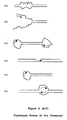
- This construct contains a region in which a portion of the opposite strands are not substantially complementary, e.g., a bubble (even comprising at least one polyT sequence), or loop, or the construct comprises at least one single-stranded region.
- the construct is composed of naturally occurring nucleotides or chemically modified nucleotides or a synthetic polymer in part or a combination thereof. These structures are designed to provide binding of polymerizing enzymes or primers and the modifications provide for nuclease resistance or facilitate uptake by the target cell.
- the single stranded regions described in the constructs will contain coding sequences for nucleic acid primers present in the cell to facilitate initiation points of DNA polymerase in said cell.
- these constructs constitute promotor independent binding and initiation of RNA polymerase reaction.
- These constructs can be used in vitro and in vivo for production of nucleic acids.
- the position of the single stranded region adjacent to the double stranded specific sequence would provide a specific and consistent transcription of these specific sequences, both in vitro and in vivo independent of promotor.
- the replication (DNA) or transcription (RNA) products of these constructs can be single stranded nucleic acid which could have a sense or antisense function or could be double stranded nucleic acid.
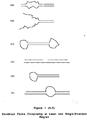
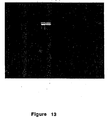
- Figure 13(A) a large bubble is located in the construct.
- Figure 13(B) the two strands are noncomplementary at their ends, and thus do not form a bubble.
- Figure 13(C) a double bubble is formed due to noncomplementarity at both ends.
- Figure 13(D) a single-stranded region is shown in the middle of the construct leading to a partially single-stranded region (and no bubble formation).
- Figure 13(E) depicts a bubble at one end of the construct (compare with the two bubbles in the construct shown in Figure 13(C)).
- Figure 13(F) a single bubble in the middle of the construct is shown.
- constructs could contain more than one specific nucleic acid sequence which in turn could produce more than one copy of each specific nucleic acid sequence. If two independent nucleic acid products are complementary, then they could hybridize and form muliple copies of a new double stranded construct that could have the properties of the novel construct. Furthermore they could contain promotor sites such as the host promotor therefore serving as an independent nucleic acid production source (the progeny).
- constructs can be made that produce single stranded DNA product that has a hairpin loop and therefore, can be used to form a double-stranded product.
- constructs can be formed that produce nucleic acid in both polarity.
- the construct can be made to contain a poly linker region into which any sequence can be cloned.
- the result will be a transient accumulation of expressing genes within the cell to deliver sense, antisense or protein or any other gene product into the target cell.
- Primers can be produced by several methods. Single-stranded oligonucleotides in the range from between from about 5 to about 100 bases long, and preferably between from about 10 to about 40, and more preferably, between from about 8 to about 20 nucleotides. These ranges may further vary with optimally between from about 13 to about 30 for bacterial nucleic acid, and optimally between from about 17 to about 35 for eukaryote nucleotides would appear to be appropriate for most applications although it may be desirable in some or numerous instances to vary the length of the primers. Oligonucleotide primers can be most conveniently produced by automated chemical methods. In this way modified bases can be introduced. Manual methods can be used and may in some cases be used in combination with automated methods. All of these methods and automation are known and available in the art.
- nucleic acid primers can be produced readily by the action of T7 RNA polymerase, T3 polymerase, SP6 polymerase or any appropriate DNA or RNA polymerase on DNA templates or RNA templates containing the primer sequences extended from the corresponding RNA polymerase promoter sites or other nucleic acid synthesis start signals.
- DNA produced by the invention described herein can be detected by a variety of hybridization methods using homogeneous or nonhomogeneous assays.
- DNA produced in tissues or cells i.e., in situ
- Probes used for the detection of produced DNA can be labeled with a variety of chemical moieties other than biotin. These include but are not limited to fluorescein, dinitrophenol, ethidium (see, for example, the disclosures of U.S. Patent Nos. 4,711,955; 5,241,060; and 4,707,440, supra).
- the hybridized, labeled nucleic acid probe can be detected by a variety of means. These include but are not limited to reaction with complexes composed of biotin binding proteins, such as avidin or streptavidin, and color generating enzymes, such as horseradish peroxidase or alkaline phosphatase, which, in the presence of appropriate substrates and chromogens, yield colored products.
- biotin binding proteins such as avidin or streptavidin
- color generating enzymes such as horseradish peroxidase or alkaline phosphatase, which, in the presence of appropriate substrates and chromogens, yield colored products.
- DNA production from target sequences generally requires nucleic acid precursors, e.g., adenosine triphosphate, guanosine triphosphate, thymidine triphosphate and cytosine triphosphate, present in sufficient quantity and concentration in the reaction mixture in other applications it may be advantageous to substitute one or more of the natural precursors with modified nucleotides.
- nucleic acid precursors e.g., adenosine triphosphate, guanosine triphosphate, thymidine triphosphate and cytosine triphosphate
- immobilization of the produced DNA may be desirable.
- nucleoside triphosphate precursors substitution of one or more of the natural nucleotide triphosphate precursors with a modified nucleotide, e.g., biotinylated deoxyuridine triphosphate, in place of thymidine triphosphate, would yield biotin-labeled DNA.
- the produced DNA could be separated by its affinity for a biotin binding protein, such as avidin, streptavidin or an anti-biotin antibody.
- a biotin binding protein such as avidin, streptavidin or an anti-biotin antibody.
- the produced DNA can be isotopically labeled by the inclusion of isotopically labeled deoxynucleotide precursors in the reaction mixture.
- Labeled DNA produced by the invention described herein, can function as probe nucleic acid to be used to detect specific target nucleic acid sequences.
- the primers may be removed from the reaction mixture by capturing the product through direct capture (Brakel et al., U.S. Patent Application Serial No. 07/998,660, filed on December 23, 1992, the contents of which have been disclosed in European Patent Application 0 435 150 A2, published on July 3, 1991; and the contents of which are also incorporated by reference herein), or sandwich capture. (Engelhardt and Rabbani, allowed U.S. Patent Application Serial No.
- the primer may be labeled with ethidium or other intercalating moiety.
- the ethidium or other intercalating moiety may be inactivated (Stavrianopoulos, U.S. Patent Application Serial No. 07/633,730, filed on December 24, 1990, published as European Patent Application Publication No. 0 492 570 A1 on July 1, 1992; the contents of which are incorporated by reference) in the unhybridized oligo and not in the hybridized oligo:target.
- nucleic acid polymerizing enzyme RNA polymerase
- nucleic acid construct contains an initiation site such as a promotor site for the corresponding RNA polymerase which is capable of producing nucleic acid both in vivo and in vitro.
- the enzyme could be linked directly to the nucleic acid or through a linkage group substantially not interfering with its function or the enzyme could be linked to the nucleic acid indirectly by a nucleic acid bridge or haptene receptor where the enzyme is biotinylated and the nucleic acid construct contains an avidin or vice versa or when the nucleic acid construct contains sequences for binding proteins such as a repressor and an enzyme linked to said nucleic acid binding protein (U.S. Patent No. 5,241,060, supra , and Pergolizzi, Stavrianopoulos, Rabbani, Engelhardt, Kline and Olsiewski, U.S. Patent Application Serial No. 08/032,769, filed on March 16, 1993, published as European Patent Application Publication No. 0 128 332 A1 on December 19, 1984, the latter having been "allowed” by the European Patent Office, and further incorporated by reference herein).
- the protein in one aspect comprises an RNA polymerase or a subunit thereof and the nucleic acid construct contains the corresponding RNA polymerase promoter.
- the RNA polymerase can be selected from T7, T3 and SP6, or a combination of any of the foregoing.
- the protein in the conjugate comprises DNA polymerase or reverse transcriptase and the nucleic acid construct contains at least one sequence complementary to an RNA molecule.
- the construct can take the form of double-stranded, single-stranded, or even partially single-stranded.
- the nucleic acid construct in the conjugate may comprise at least one chemically modified nucleotide or nucleotide analog.
- the linkages of the protein to the construct are described in the preceding paragraph.
- the nucleic acid produced by or from this conjugate comprises deoxyribonucleic acid, ribonucleic acid, or combinations thereof, or it may be antisense or sense, or both.
- the above-described conjugate may be utilized in an in vivo process for producing a specific nucleic acid.
- the construct is further characterized as comprising (independently) at least one promoter, at least one complementary sequence to a primer present in the cell, or codes for the protein in the conjugate, or for a protein other than the protein in the conjugate.
- the other protein may comprise a nucleic acid polymerase.
- the polymerase comprises an RNA polymerase
- the nucleic acid construct may comprise a promoter for the RNA polymerase.
- the polymerase can be a DNA polymerase or reverse transcriptase.
- the RNA polymerase will transcribe the nucleic acid in the construct and is completely independent of any host RNA polymerases. Each molecule introduced into a cell will produce multiple copies of a segment of the construct.
- the attached polymerase can produce the RNA for the target sequence itself.
- the promotor specific for the attached polymerase, may be linked to two separate sequences, namely the polymerase gene and the target gene. See Figure 3 (B). In this instance, the amount of polymerase initiating at the promotor site will increase as the polymerase gene is transcribed and translated.
- the coding sequence transcribed by the T 7 promotor may produce any RNA polymerase (including T 7 polymerase or polymerase III or others), and this polymerase may transcribe off of another or second promotor (or off of a different strength T 7 or other first promotor) to produce the transcript of the target sequence. (See Figure 3 (C)).
- Constructs can be made that are dependent upon transcription or replication using a host polymerase.
- the second promotor can be different than the first promotor or it can be a stronger or weaker version of the first promotor.
- Vectors can be chosen such that the constructs can either integrate into the chromosome, replicate autosomally or be replication-deficient and function only for transient expression. They can function in the nucleus or the cytoplasm if the target cell is eukaryotic.
- the figure below depicts various constructs or cassettes and is not limiting as to the possible variations contemplated by the present invention.
- the nucleic acid construct or cassette depicted in this figure contains a promotor that codes for the production of a polymerase that is not endogenous to the target cell.
- a promotor that codes for the production of a polymerase that is not endogenous to the target cell.
- an SV40 or RNA polymerase III promotor that codes for a T 7 RNA polymerase. Transcription and translation of these transcripts by cellular machinery results in the production of active T 7 RNA polymerase which will utilize the T 7 promotor to transcribe the target sequence (Fuerst, T.R.
- Figure 4 (C) the construct or cassette is similar to Figure 4 (B) with the additional element that there is a down regulation of the autocatalytic cascade by competition by a high efficiency promotor with a low efficiency transcriptional promotor.
- the present invention further provides a construct comprising a host promoter located on the construct such that the host transcribes a sequence in the construct coding for a different RNA polymerase which after translation is capable of recognizing its cognate promoter and transcribing from a DNA sequence of interest in the construct with the cognate promoter oriented such that it does not promote transcription from the construct of the different RNA polymerase.
- the host promoter comprises a prokaryotic promoter, e.g., RNA polymerase, or eukaryotic promoter, e.g., Pol I, Pol II, Pol III, or combinations thereof, such prokaryotic or eukaryotic promoter being located upstream from the host promoter.
- the second RNA polymerase may be selected from various members, including T7, T3 and SP6, or combinations thereof.
- the DNA sequence of interest may comprise sense or antisense, or both, or it may comprise DNA or RNA, or still yet, it may encode a protein.
- the construct may further comprise at least one chemically modified nucleotide.
- promotors that will be read by polymerases within the target cell can be linked to the production of additional polymerase specific for that promotor or other promotors.
- the polymerases can be for example, T7 polymerase, RNA polymerase III, or any other polymerase.
- a second promotor keyed sequence can be in the construct such that a second polynucleotide can be synthesized from the construct. It can code for the production of antisense or sense RNA or DNA molecules.
- constructs or cassettes can be created using standard recombinant DNA techniques.
- nucleic acid constructs provided in accordance with this invention are applicable to each other in combination, in toto or in part. That is to say, in the conjugate comprising a protein and a nucleic acid construct, the construct could include, for example, chemical modification and bubble structure or single-stranded regions for primer binding sites or RNA initiation sites. Other variations would be recognized by those skilled in the art in light of the detailed description of this invention.
- process A which is an in vitro process for producing more than one copy of a specific nucleic acid, said process being independent of a requirement for the introduction of an intermediate structure for the production of said specific nucleic acid, said process comprising the steps of:
- process B which is an in vitro process for producing more than one copy of a specific nucleic acid, said products being substantially free of any primer-coded sequences, said process comprising the steps of:
- a further subject matter of the present invention is process C which is an in vitro process for producing more than one copy of a specific nucleic acid, said products being substantially free of any primer-coded sequences, said process comprising the steps of:
- process D which is an in vitro process for producing more than one copy of a specific nucleic acid, said products being substantially free of any primer-coded sequences, said process comprising the steps of:
- construct A which is a promoter-independent non-naturally occurring nucleic acid construct which when present in a cell produces a nucleic acid without the use of any gene product coded by said construct.
- a further emobidment of the invention is process E which is an in vivo process for producing a specific nucleic acid, said process comprising the steps of:
- a further embodiment of the invention is construct B which is a construct comprising a host promoter located on the construct such that the host transcribes a sequence in the construct coding for a different RNA polymerase which after translation is capable of recognizing its cognate promoter and transcribing from a DNA sequence of interest in the construct with said cognate promoter oriented such that it does not promote transcription from the construct of said different RNA polymerase.
- the first set of 10 primers was complementary to one strand of M13mp18 replicative form (RF) starting at base 650 and extending to base 341. An interval of 15 nucleotides separated successive primers.
- the second set of 10 primers contained sequences identical to the single-stranded M13mp18 phage genome starting at base 351 and extending to base 635, again with 15 nucleotide gaps separating successive primers. There is a complementarity of 5 bases between opposing primers, but at an ionic concentration of 0.08M NaCl and 45°C these primers will not hybridize to each other. The sequences of the primers are shown in Figure 6.
- Primer 1 begins at base 650 and primer 11 begins at base 351.
- the target of amplification was the M13mp18 RF. This was digested with either Taq1 or a combination of BamH1 and EcoR1. EcoR1 and BamH1 cut at sites close to each other and digestion with either enzyme alone would transform the circular RF molecule into a linear DNA molecule.
- the Taq1 enzyme digests M13mp18 RF yielding 12 fragments.
- the sequence to be amplified (nucleotides 351 to 650) was flanked in the BamH1/FcoR1 digested RF by two regions, 1,371 bases and 5,601 bases, and Taq1-digested M13mp18 RF was flanked by regions of 15 and 477 nucleotides (see Figure 7).
- the precursors were added in 50 ⁇ l aliquots. One 10 ⁇ l aliquot of the precursors was mixed with 90 ⁇ l H 2 O and loaded on a glass fiber filter, dried and counted. The counts were multiplied by 5 and divided by 160 (nmoles in the incubation mix). Specific activity is the cpm/nmoles of nucleotides.
- Amplification is measured as follows. The total counts are determined and this number is divided by the specific activity of the precursors to determine the number of nanomoles of incorporation.
- the target in n grams is divided by 330 (average molecular weight of nucleotide) to determine the nanomoles of input target phosphate.
- the amplification is then calculated by dividing the nanomoles of product by the nanomoles of input target.
- An incubation mixture of 130 ⁇ l contained the following reaction components: 40 mM sodium phosphate, pH 7.5, 400 ⁇ M each of the four deoxynucleotide triphosphates, 5 mM dithiothreitol, 40 ng of Taq1-digested M13mp18 RF (containing 3.5 ng of the Taq1 fragment to be amplified), and all 20 primers (at 0.04 OD/ml, 0.4 OD/ml or 0.8 OD/ml) and 15 units of Klenow fragment of DNA polymerase.
- the mixture was left at room temperature for 20 minutes in order to allow the enzyme to cover all of the initiation sites on the template.
- the polymerization was then initiated by the addition of Mg ++ , 7 mM final concentration, and the tubes were placed in a 45°C bath. After 1 hour an additional 15 units of the enzyme were added, and the incubation was continued for another hour. The reaction was stopped with 100 ⁇ moles of EDTA, 100 ⁇ g sonicated calf thymus DNA were added, and the nucleic acids were precipitated with 1.0 ml of cold 10% TCA for 60 minutes at 0°C. The mixture was filtered through a glass fiber filter, the filter was washed 3 times with cold 5% TCA, then twice with ethanol, dried and counted in a Beckman liquid scintillation counter.
- the specific activity of the nucleotide precursors was 9,687 cpm/nmole.
- the tagged Taq1 DNA fragment contained 0.0106 nmoles of nucleotides.
- Primer Concentration Incorporation (cpm) Incorporation (nmoles nucleotide) Amplification 0.04 OD/ml 32,482 3.35 316 0.4 OD/ml 366,260 37.8 3566 0.8 OD/ml 512,260 52.88 4988
- the amplification conditions were the same as in Example 1 except that only 5 ug (15.0 nmoles) calf thymus DNA. were used as a target.
- the DNA employed was double stranded or heated at 100°C for 10 minutes in the presence or absence of primers (0.4 OD/ml each) before being chilled on ice.
- the amplification conditions were the same as in Example 1. Primers (0.4 OD/ml), 5 ug calf thymus DNA and 40 ng M13mp18 DNA containing 3.5 ng of fragment were employed in this example. Calf Thymus DNA M13mp18 DNA Incorporation cpm Incorporation nmoles Amplification + 575,440 59.4 3.96x + 338,900 35.0 3,300x + + 713,440 73.6
- the experimental results above show that the target can be amplified in the presence of large amounts of irrelevant DNA.
- the net amplification was 1,343 even though in this case the target DNA inhibits the amplification of the irrelevant DNA by competing for initiation points. It is possible that the amplification was even larger.
- the incubation conditions were the same as in Example 4. Forty nanograms of total M13mp18 DNA were used in each experiment with 0.4 OD/ml primers. In one case, the M13mp18 DNA was cut in only one position (using FcoRt) leaving the fragment to be amplified flanked by two large pieces. In the other case where the RF was treated with Taq1, the fragment was contained in one 639 base pair fragment. The specific activity of the precursors was 8.385 cpm/nmole. Incorporation cpm Incorporation nmoles Large Fragment 393,480 46.92 Small Fragment 262,808 31.34
- the enzyme was preincubated with the target-primer mixture to allow binding of the enzyme at the 3' end of the hybridized primers on the target, followed by the addition of magnesium to initiate polymerization.
- the conditions were the same as in Example 1.
- a reaction was performed according the the reaction conditions of Example 3 in which twenty primers were added to the reaction mixture as well as the Taq 1 fragments (40 nanograms,. i.e., 3.5 nanograms of insert that will hybridize with the primers) described in Example 3 with the exception that the buffer was altered.
- the reaction was performed without target DNA added.
- the reaction was performed in a phosphate buffer (0.04 M, pH 7.5).
- Lane 3 contains the molecular weight buffers of Msp I digestion of pBR322 DNA.
- the reaction was performed in which the phosphate buffer was substituted by MOPS buffer at 0.1 M and pH 7.5 (measured 25°C).
- the reaction in the phosphate buffer produced an agglomeration of DNAs that when dissociated by heat or other double helix disrupting agents lead to an number of products of a size smaller than the agglomeration structures.
- the size distribution of the products in the MOPS-buffered reaction corresponds to the distances between certain of the oligo primer binding sites. The smallest is approximately 76 nucleotide pairs in size which is approximately the distance between the closest specific oligo primer binding sites.
- the buffer used for the amplification reaction can have significant effects upon the degree of amplification.
- phosphate buffer which was employed in Example 7 was compared with the following zwitterion buffers:
- Trizma base was used to adjust MES or MOPS to pH 7.5, DMAB to pH 7.8, and DMG to pH 8.6.
- 4.0 ng of mp18 (containing 3.5 ng of the target fragment) was used as a template.
- the amount of template was reduced ten-fold compared to those experiments (4 ng of mp18; 350 pg of target fragment).
- Other changes in the experimental procedure was the omission of DTT and the use of a single addition of 10 units of Klenow polymerase.
- Mg ++ and dNTP concentrations (7.5 mM and 400 ⁇ M each dNTP) were as described previously.
- reaction were preincubated at room temperature for 30 minutes prior to the addition of the Mg ++ . After addition of Mg ++ , reactions were immediately transferred to a 45°C water bath and incubated for 4 hours. The reaction was stopped by the addition of 5 ⁇ l of 500 mM EDTA to give a final concentration of approximately 20 mM.
- Incorporation of radioactive precursors measures total synthesis of DNA including both specific as well as template-independent DNA synthesis.
- Oligos No. 1,3,5,7,9,12,14,16,18 and 20 from Example 1 were employed in a series of amplification reactions. This limited number was chosen such that there would be a region within the amplicon that does not correspond to any of the primers, allowing the use of a 30 base probe (bases 469 to 498) labeled with biotin that corresponds to this open region.
- Example 9 had previously shown little or no template-independent synthesis with DMAB and substantial template-independent synthesis with DMG.
- Reactions with and without Taq digested mp18 were carried out. The reaction mixtures were precipitated with ethanol, resuspended in TE buffer and aliquots were electrophoresed through a 2% agarose gel. A southern blot was made from this gel and probed with 200 ng/ml labeled oligo in 31 % formamide/ 2X SSC at 25°C for 2 hours and washed 3 X with 0.1X SSC/0.1% Triton X-100 for 5 minutes each at 37°C. Membranes were developed using an alkaline phosphate detection system obtained from Enzo Biochem, Inc.
- the product strands act as the template for polymerization of nucleic acid then the products should have blunt ends.
- One method of assaying for the presence of blunt ends is based on the notion that these molecules will undergo blunt end ligation. Molecules with 'ragged' ends (single stranded tails on the 3' or 5' end) will not participate in the ligation reaction.
- the 5' ends will not under phosphorylation.
- the first step of this proof will be to phosphorylate the 5' ends of both single stranded and double stranded molecules. These 5' phosphorylated molecules will then be ligated using the T4 DNA ligase.
- the unamplified DNA will act as the negative control and a PCR-generated amplicon will act as the positive control.
- T4 ligase treatment increases the molecular weight of the amplified product selectively. This is most apparant in lane 4 of Figure 12, where there is an appreciable increase in size observed as a result of the completed ligation reaction.
- the positive control with the PCR-generated amplicon (primed by oligos initiating at nucleotide 381 and from nucleotide 645 of the template which predicts an amplicon of 264 nucleotides) also show a shift in position after ligation (lane 7). Because there was not much DNA included in this reaction, the appearance of a spectrum of multimers of the amplicon was not observed, but the loss of material from the position of the unligated material (lanes 5 and 6) was noted. Some material left at the position of the untreated amplicon in lane 7 was also noted. It is possible that this material does not participate in the ligation reaction because of the addition of A to the 3' end of the amplicon which is a property of the Taq polymerase.
- RNA DNA
- the double-stranded DNA molecule used in Example 12 was ligated into the Sma l site of a vector plBl31 (obtained from International Biotechnology Corp) that contains a promotor for T7 RNA polymerase.
- a vector plBl31 obtained from International Biotechnology Corp
- an RNA transcript was synthesized encompassing the same sequences used in example 12. This transcript was amplified using standard conditions with all 20 primers in DMG buffer. Taq digested mp18 DNA was used as a control.
- Figure 14 there was extensive synthesis. There are characteristic bands that appear in lane 4, the reaction with the RNA template, as well as in lane 2, the reaction with the DNA template that do not appear in the template independent synthesis seen in lanes 1 and 5.
- oligonucleotides with the sequence listed in Figure 16 were prepared and labeled F1, F1C and F3.
- the unlabeled complement of F1C was hybridized to unlabeled F1.
- the ratio of F1C: F1 for the hybridization was 1:2.
- Hybridization was performed in 1 X SSC for two hours at 45°C.
- diazonium mixture 10 ⁇ l of the diazonium stock solution, (50 mM in 1 M HCl), was added to 100 ⁇ l of cold dilution buffer, (1 X SSC and 0.2 M KHCO 3 , prepared fresh). The diazonium stock solution is stored at -20°C .
- the diazonium will destroy the fluorescence associated with the ethidium in single stranded oligonucleotides. See, e.g., European Patent Application Publication No. 0 492 570 A1, published on July 1, 1992, based on priority document, U.S. Patent Application Serial No. 07/633,730, filed on December 24, 1990, the contents of which are incorporated by reference. But the diazonium will not destroy the fluorescence associated with the ethidium that has intercalated into the double stranded DNA.
- the survival of the ethidium, under these reaction conditions, is a measure of the extent of formation of a double helix by the ethidium-labeled oligonucleotides, thus indicating displacement of the non-ethidium containing strand by that of the ethidium labeled.
- This property of the ethidium labeled oligonucleotides by primers can be usefully employed to facilitate initiation of polymerization on double stranded templates.
- the ethidium-labeled oligo displaces the non-ethidium-labeled oligo better at 43°C than at 37°C.
- 31 plasmid constructs (plasmid sequences derived from manufacturer, International Biotechnology, Inc.) was synthesized. Its sequence is as follows: where T* represents allylamine dU, and therefore ethidium modification and the 10 base sequence set off by dashes (--AA TCA TGA AT--) was introduced to provide a restriction enzyme site.
- This nucleotide is complementary to the ATG strand of the lac z gene of
- the oligonucleotide 50-mer also contains sequences overlapping the T7 promotor in the
- Comparing the effect of the oligo on these two different target template serves to partially control for the possible non-specific inhibitory effects of ethidium groups on the RNA polymerases because the oligonucleotide would be expected to inhibit transcription from any template containing an appropriate promotor regardless of the "split" if the effect were due to the oligo's interaction with the polymerase rather than with the template.
- the ethidium-modified oligo sequence is capable of specifically inhibiting transcription by the T7 polymerase from the T7 promotor region provided that the promoter region is not interrupted by the multiple cloning region and inserted DNA.
- the effect is dependent on the template DNA and is not merely the result of inhibition of the T7 polymerase by the ethidium groups.
Landscapes
- Chemical & Material Sciences (AREA)
- Life Sciences & Earth Sciences (AREA)
- Organic Chemistry (AREA)
- Health & Medical Sciences (AREA)
- Engineering & Computer Science (AREA)
- Zoology (AREA)
- Wood Science & Technology (AREA)
- Proteomics, Peptides & Aminoacids (AREA)
- Genetics & Genomics (AREA)
- General Engineering & Computer Science (AREA)
- Biotechnology (AREA)
- Bioinformatics & Cheminformatics (AREA)
- Physics & Mathematics (AREA)
- General Health & Medical Sciences (AREA)
- Biophysics (AREA)
- Chemical Kinetics & Catalysis (AREA)
- Biochemistry (AREA)
- Microbiology (AREA)
- Molecular Biology (AREA)
- Immunology (AREA)
- Analytical Chemistry (AREA)
- Biomedical Technology (AREA)
- Crystallography & Structural Chemistry (AREA)
- Plant Pathology (AREA)
- Measuring Or Testing Involving Enzymes Or Micro-Organisms (AREA)
- Preparation Of Compounds By Using Micro-Organisms (AREA)
- Saccharide Compounds (AREA)
Applications Claiming Priority (3)
| Application Number | Priority Date | Filing Date | Title |
|---|---|---|---|
| US18262194A | 1994-01-13 | 1994-01-13 | |
| US182621 | 1994-01-13 | ||
| EP95100438A EP0667393B1 (de) | 1994-01-13 | 1995-01-13 | Prozess, Konstrukt und Konjugat zur Herstellung mehrerer Nukleinsäurekopien |
Related Parent Applications (1)
| Application Number | Title | Priority Date | Filing Date |
|---|---|---|---|
| EP95100438A Division EP0667393B1 (de) | 1994-01-13 | 1995-01-13 | Prozess, Konstrukt und Konjugat zur Herstellung mehrerer Nukleinsäurekopien |
Publications (1)
| Publication Number | Publication Date |
|---|---|
| EP1380643A1 true EP1380643A1 (de) | 2004-01-14 |
Family
ID=22669286
Family Applications (3)
| Application Number | Title | Priority Date | Filing Date |
|---|---|---|---|
| EP03018714A Pending EP1380643A1 (de) | 1994-01-13 | 1995-01-13 | Prozess, Konstrukt und Konjugat zur Herstellung mehrerer Nukleinsäureproben |
| EP95100438A Expired - Lifetime EP0667393B1 (de) | 1994-01-13 | 1995-01-13 | Prozess, Konstrukt und Konjugat zur Herstellung mehrerer Nukleinsäurekopien |
| EP09003838A Withdrawn EP2065465A3 (de) | 1994-01-13 | 1995-01-13 | Prozess, Konstrukt und Konjugat zur Herstellung mehrerer Nukleinsäurekopien |
Family Applications After (2)
| Application Number | Title | Priority Date | Filing Date |
|---|---|---|---|
| EP95100438A Expired - Lifetime EP0667393B1 (de) | 1994-01-13 | 1995-01-13 | Prozess, Konstrukt und Konjugat zur Herstellung mehrerer Nukleinsäurekopien |
| EP09003838A Withdrawn EP2065465A3 (de) | 1994-01-13 | 1995-01-13 | Prozess, Konstrukt und Konjugat zur Herstellung mehrerer Nukleinsäurekopien |
Country Status (4)
| Country | Link |
|---|---|
| EP (3) | EP1380643A1 (de) |
| AT (1) | ATE426022T1 (de) |
| CA (1) | CA2140081C (de) |
| DE (1) | DE69535931D1 (de) |
Families Citing this family (53)
| Publication number | Priority date | Publication date | Assignee | Title |
|---|---|---|---|---|
| FR2737223B1 (fr) * | 1995-07-24 | 1997-09-12 | Bio Merieux | Procede d'amplification de sequences d'acide nucleique par deplacement, a l'aide d'amorces chimeres |
| WO1997019193A2 (en) | 1995-11-21 | 1997-05-29 | Yale University | Unimolecular segment amplification and detection |
| US5854033A (en) | 1995-11-21 | 1998-12-29 | Yale University | Rolling circle replication reporter systems |
| ES2279530T3 (es) * | 1995-11-25 | 2007-08-16 | Roche Diagnostics Gmbh | Metodo para generar multiples acidos nucleicos bicatenarios. |
| CA2250759A1 (en) * | 1996-04-26 | 1997-11-06 | University Of Pittsburgh | A cytoplasmic gene expression system which utilizes a prokaryotic rna polymerase autogene |
| GB9714716D0 (en) | 1997-07-11 | 1997-09-17 | Brax Genomics Ltd | Characterising nucleic acids |
| US6124120A (en) | 1997-10-08 | 2000-09-26 | Yale University | Multiple displacement amplification |
| US6342596B1 (en) * | 1998-05-05 | 2002-01-29 | Hsf Pharmaceuticals S.A. | Molecular regulatory circuits to achieve sustained activation of genes of interest by a single stress |
| US6316229B1 (en) | 1998-07-20 | 2001-11-13 | Yale University | Single molecule analysis target-mediated ligation of bipartite primers |
| CA2342837A1 (en) | 1998-09-15 | 2000-03-23 | Yale University | Artificial long terminal repeat vectors |
| US6287824B1 (en) | 1998-09-15 | 2001-09-11 | Yale University | Molecular cloning using rolling circle amplification |
| US6692918B2 (en) * | 1999-09-13 | 2004-02-17 | Nugen Technologies, Inc. | Methods and compositions for linear isothermal amplification of polynucleotide sequences |
| WO2002000938A2 (en) | 2000-06-26 | 2002-01-03 | Nugen Technologies, Inc. | Methods and compositions for transcription-based nucleic acid amplification |
| US7846733B2 (en) | 2000-06-26 | 2010-12-07 | Nugen Technologies, Inc. | Methods and compositions for transcription-based nucleic acid amplification |
| JP2004502431A (ja) | 2000-06-30 | 2004-01-29 | モレキュラー ステージング,インコーポレイテッド | ロリポッププローブを用いたシグナル増幅 |
| JPWO2002024901A1 (ja) * | 2000-09-19 | 2004-04-08 | タカラバイオ株式会社 | 複合体の形成方法 |
| DE60142709D1 (de) | 2000-12-13 | 2010-09-09 | Nugen Technologies Inc | Methoden und zusammensetzungen zur generierung einer vielzahl von kopien von nukleinsäuresequenzen und methoden zur detektion derselben |
| IL153504A0 (en) | 2001-03-09 | 2003-07-06 | Nugen Technologies Inc | Methods and compositions for amplification of rna sequences |
| WO2002072773A2 (en) | 2001-03-09 | 2002-09-19 | Nugen Technologies, Inc. | Methods and compositions for amplification of rna sequences |
| US9261460B2 (en) | 2002-03-12 | 2016-02-16 | Enzo Life Sciences, Inc. | Real-time nucleic acid detection processes and compositions |
| US9777312B2 (en) | 2001-06-30 | 2017-10-03 | Enzo Life Sciences, Inc. | Dual polarity analysis of nucleic acids |
| US20040161741A1 (en) | 2001-06-30 | 2004-08-19 | Elazar Rabani | Novel compositions and processes for analyte detection, quantification and amplification |
| US7553619B2 (en) | 2002-02-08 | 2009-06-30 | Qiagen Gmbh | Detection method using dissociated rolling circle amplification |
| AU2003222269A1 (en) | 2002-03-11 | 2003-09-29 | Nugen Technologies, Inc. | Methods for generating double stranded dna comprising a 3' single stranded portion and uses of these complexes for recombination |
| US7166478B2 (en) | 2002-03-12 | 2007-01-23 | Enzo Life Sciences, Inc., C/O Enzo Biochem, Inc. | Labeling reagents and labeled targets, target labeling processes and other processes for using same in nucleic acid determinations and analyses |
| US9353405B2 (en) | 2002-03-12 | 2016-05-31 | Enzo Life Sciences, Inc. | Optimized real time nucleic acid detection processes |
| US9487823B2 (en) | 2002-12-20 | 2016-11-08 | Qiagen Gmbh | Nucleic acid amplification |
| US6977153B2 (en) | 2002-12-31 | 2005-12-20 | Qiagen Gmbh | Rolling circle amplification of RNA |
| US8043834B2 (en) | 2003-03-31 | 2011-10-25 | Qiagen Gmbh | Universal reagents for rolling circle amplification and methods of use |
| CA2521084A1 (en) | 2003-04-14 | 2004-10-28 | Nugen Technologies, Inc. | Global amplification using a randomly primed composite primer |
| RU2236239C1 (ru) * | 2003-07-03 | 2004-09-20 | Цыганков Владимир Владимирович | Фармацевтическая композиция для лечения и профилактики патологических состояний, связанных с недостатком эндорфинов в организме |
| AU2004311882A1 (en) | 2003-12-29 | 2005-07-21 | Nugen Technologies, Inc. | Methods for analysis of nucleic acid methylation status and methods for fragmentation, labeling and immobilization of nucleic acids |
| US8309303B2 (en) | 2005-04-01 | 2012-11-13 | Qiagen Gmbh | Reverse transcription and amplification of RNA with simultaneous degradation of DNA |
| WO2007030759A2 (en) | 2005-09-07 | 2007-03-15 | Nugen Technologies, Inc. | Improved nucleic acid amplification procedure |
| EP1762627A1 (de) | 2005-09-09 | 2007-03-14 | Qiagen GmbH | Verfahren zur Aktivierung einer Nukleinsäure für eine Polymerase-Reaktion |
| WO2007044671A2 (en) | 2005-10-06 | 2007-04-19 | Lucigen Corporation | Thermostable viral polymerases and methods of use |
| WO2008119081A1 (en) | 2007-03-28 | 2008-10-02 | Signal Diagnostics | System and method for high resolution analysis of nucleic acids to detect sequence variations |
| US20090203531A1 (en) | 2008-02-12 | 2009-08-13 | Nurith Kurn | Method for Archiving and Clonal Expansion |
| US7846666B2 (en) | 2008-03-21 | 2010-12-07 | Nugen Technologies, Inc. | Methods of RNA amplification in the presence of DNA |
| US10669574B2 (en) | 2008-11-18 | 2020-06-02 | XCR Diagnostics, Inc. | DNA amplification technology |
| SG11201401628WA (en) | 2011-10-19 | 2014-05-29 | Nugen Technologies Inc | Compositions and methods for directional nucleic acid amplification and sequencing |
| GB2513793B (en) | 2012-01-26 | 2016-11-02 | Nugen Tech Inc | Compositions and methods for targeted nucleic acid sequence enrichment and high efficiency library generation |
| GB2518078B (en) | 2012-06-18 | 2015-04-29 | Nugen Technologies Inc | Compositions and methods for negative selection of non-desired nucleic acid sequences |
| US20150011396A1 (en) | 2012-07-09 | 2015-01-08 | Benjamin G. Schroeder | Methods for creating directional bisulfite-converted nucleic acid libraries for next generation sequencing |
| EP2971130A4 (de) | 2013-03-15 | 2016-10-05 | Nugen Technologies Inc | Sequentielle sequenzierung |
| ES2925313T3 (es) | 2013-10-09 | 2022-10-14 | Fluoresentric Inc | Método para la detección de secuencias de ácido nucleico diana |
| US9546399B2 (en) | 2013-11-13 | 2017-01-17 | Nugen Technologies, Inc. | Compositions and methods for identification of a duplicate sequencing read |
| US9745614B2 (en) | 2014-02-28 | 2017-08-29 | Nugen Technologies, Inc. | Reduced representation bisulfite sequencing with diversity adaptors |
| EP3167060B1 (de) * | 2014-07-10 | 2021-11-24 | Fluoresentric, Inc. | Dna-amplifikationstechnologie |
| SG11201700891SA (en) | 2014-08-06 | 2017-03-30 | Nugen Technologies Inc | Digital measurements from targeted sequencing |
| US12492430B2 (en) | 2017-04-11 | 2025-12-09 | Tecan Genomics, Inc. | Library quantitation and qualification |
| US11099202B2 (en) | 2017-10-20 | 2021-08-24 | Tecan Genomics, Inc. | Reagent delivery system |
| CN113275053A (zh) | 2020-02-03 | 2021-08-20 | 帝肯基因组学公司 | 试剂存储系统 |
Citations (5)
| Publication number | Priority date | Publication date | Assignee | Title |
|---|---|---|---|---|
| EP0302175A2 (de) * | 1982-06-23 | 1989-02-08 | Enzo Biochem, Inc. | Markierte modifizierte Nukleotide und Polynukleotide und Verfahren zu deren Herstellung, Verwendung und Detektion |
| WO1990002819A1 (en) * | 1988-09-08 | 1990-03-22 | The Salk Institute For Biological Studies | Replicative rna-based amplification detection systems |
| EP0406738A2 (de) * | 1989-07-03 | 1991-01-09 | Takeda Chemical Industries, Ltd. | Herstellung von sauren Fibrolasten-Wachstumsfaktoren |
| WO1994026911A1 (en) * | 1993-05-14 | 1994-11-24 | Ohio University Edison Animal Biotechnology Institute | A gene expression system utilizing an rna polymerase prebound to dna |
| WO1995014789A1 (en) * | 1993-11-25 | 1995-06-01 | Buchardt, Dorte | Nucleic acid analogue induced transcription of double stranded dna |
Family Cites Families (25)
| Publication number | Priority date | Publication date | Assignee | Title |
|---|---|---|---|---|
| US3276993A (en) | 1964-02-12 | 1966-10-04 | Mobil Oil Corp | Compositions and methods for the conversion of hydrocarbons employing a crystalline alumina-silicate catalyst composite |
| US4711955A (en) | 1981-04-17 | 1987-12-08 | Yale University | Modified nucleotides and methods of preparing and using same |
| US5241060A (en) | 1982-06-23 | 1993-08-31 | Enzo Diagnostics, Inc. | Base moiety-labeled detectable nucleatide |
| CA1228811A (en) | 1983-05-05 | 1987-11-03 | Robert G. Pergolizzi | Assay method utilizing polynucleotide sequences |
| US4707440A (en) | 1984-01-30 | 1987-11-17 | Enzo Biochem, Inc. | Nucleic acid hybridization assay and detectable molecules useful in such assay |
| CA1260372A (en) | 1984-04-27 | 1989-09-26 | Elazar Rabbani | Hybridization method for the detection of genetic materials |
| US4957858A (en) | 1986-04-16 | 1990-09-18 | The Salk Instute For Biological Studies | Replicative RNA reporter systems |
| EP0178863A1 (de) * | 1984-10-15 | 1986-04-23 | Schering Corporation | Expressionssysteme die sich der Bakteriophage-T7-Promotoren bedienen und Gensequenzen |
| US4683195A (en) | 1986-01-30 | 1987-07-28 | Cetus Corporation | Process for amplifying, detecting, and/or-cloning nucleic acid sequences |
| JP3293820B2 (ja) | 1985-12-13 | 2002-06-17 | エンゾ− バイオケム インコ−ポレイテツド | 標的ポリヌクレオチドにハイブリツド形成するための新規な一工程方法とポリヌクレオチド化合物 |
| US4889818A (en) | 1986-08-22 | 1989-12-26 | Cetus Corporation | Purified thermostable enzyme |
| ATE120491T1 (de) * | 1987-06-24 | 1995-04-15 | Genentech Inc | Ausgeglichenes, konstitutives, induzierbares transkriptionssystem. |
| AU622426B2 (en) | 1987-12-11 | 1992-04-09 | Abbott Laboratories | Assay using template-dependent nucleic acid probe reorganization |
| US4883202A (en) | 1988-01-20 | 1989-11-28 | Wahl Arthur A | Liquid pumping system |
| US5130238A (en) | 1988-06-24 | 1992-07-14 | Cangene Corporation | Enhanced nucleic acid amplification process |
| US5043272A (en) | 1989-04-27 | 1991-08-27 | Life Technologies, Incorporated | Amplification of nucleic acid sequences using oligonucleotides of random sequence as primers |
| US5122457A (en) * | 1989-10-19 | 1992-06-16 | Schering Corporation | Expression systems utilizing bacteriophage t7 promoters, gene sequences, and t7 rna polymerase |
| CA2032203C (en) | 1989-12-29 | 2009-05-19 | Christine L. Brakel | Amplification capture assay |
| ES2089038T3 (es) | 1990-01-26 | 1996-10-01 | Abbott Lab | Procedimiento mejorado para amplificar acidos nucleicos blanco aplicable para la reaccion en cadena de polimerasa y ligasa. |
| CA2037349C (en) | 1990-03-26 | 2008-06-17 | James G. Wetmur | Branch migration of nucleotides |
| CA2039517C (en) | 1990-04-03 | 2006-11-07 | David Segev | Dna probe signal amplification |
| DE69132765T2 (de) | 1990-12-24 | 2002-02-21 | Enzo Diagnostics, Inc. | Verfahren zum Nachweis eines Zielpolynukleotids in einer Probe unter Verwendung eines Reagenz, das den Hintergrund verringert, und eine dieses Reagenz enthaltende Zusammensetzung und Kit. |
| US5455166A (en) | 1991-01-31 | 1995-10-03 | Becton, Dickinson And Company | Strand displacement amplification |
| AU8997991A (en) | 1991-01-31 | 1992-08-06 | Becton Dickinson & Company | Exonuclease mediated strand displacement amplification |
| US5270184A (en) | 1991-11-19 | 1993-12-14 | Becton, Dickinson And Company | Nucleic acid target generation |
-
1995
- 1995-01-12 CA CA002140081A patent/CA2140081C/en not_active Expired - Lifetime
- 1995-01-13 EP EP03018714A patent/EP1380643A1/de active Pending
- 1995-01-13 AT AT95100438T patent/ATE426022T1/de not_active IP Right Cessation
- 1995-01-13 DE DE69535931T patent/DE69535931D1/de not_active Expired - Lifetime
- 1995-01-13 EP EP95100438A patent/EP0667393B1/de not_active Expired - Lifetime
- 1995-01-13 EP EP09003838A patent/EP2065465A3/de not_active Withdrawn
Patent Citations (5)
| Publication number | Priority date | Publication date | Assignee | Title |
|---|---|---|---|---|
| EP0302175A2 (de) * | 1982-06-23 | 1989-02-08 | Enzo Biochem, Inc. | Markierte modifizierte Nukleotide und Polynukleotide und Verfahren zu deren Herstellung, Verwendung und Detektion |
| WO1990002819A1 (en) * | 1988-09-08 | 1990-03-22 | The Salk Institute For Biological Studies | Replicative rna-based amplification detection systems |
| EP0406738A2 (de) * | 1989-07-03 | 1991-01-09 | Takeda Chemical Industries, Ltd. | Herstellung von sauren Fibrolasten-Wachstumsfaktoren |
| WO1994026911A1 (en) * | 1993-05-14 | 1994-11-24 | Ohio University Edison Animal Biotechnology Institute | A gene expression system utilizing an rna polymerase prebound to dna |
| WO1995014789A1 (en) * | 1993-11-25 | 1995-06-01 | Buchardt, Dorte | Nucleic acid analogue induced transcription of double stranded dna |
Non-Patent Citations (6)
| Title |
|---|
| ELROY-STEIN O ET AL: "CYTOPLASMIC EXPRESSION SYSTEM BASED ON CONSTITUTIVE SYNTHESIS OF BACTERIOPHAGE T7 POLYMERASE IN MAMMALIAN CELLS", PROCEEDINGS OF THE NATIONAL ACADEMY OF SCIENCES OF USA, NATIONAL ACADEMY OF SCIENCE. WASHINGTON, US, vol. 87, no. 17, 1 September 1990 (1990-09-01), pages 6743 - 6747, XP000563742, ISSN: 0027-8424 * |
| GAO X ET AL: "CYTOPLASMIC EXPRESSION OF A REPORTER GENE BY CO-DELIVERY OF T7 RNA POLYMERASE AND T7 PROMOTER SEQUENCE WITH CATIONIC LIPOSOMES", NUCLEIC ACIDS RESEARCH, OXFORD UNIVERSITY PRESS, SURREY, GB, vol. 21, no. 12, 25 June 1993 (1993-06-25), pages 2867 - 2872, XP000572618, ISSN: 0305-1048 * |
| P.R. COOK AND F. GOVE: "Transcription by an immobilized RNA polymerase from bacteriophage T7 and the topology of transcription", NUCLEIC ACIDS RESEARCH, vol. 20, no. 14, 25 July 1992 (1992-07-25), IRL PRESS LIMITED,OXFORD,ENGLAND, pages 3591 - 3598, XP002259451 * |
| S. TABOR AND C.C. RICHARDSON: "A bacteriophage T7 RNA polymerase/promoter system for controlled exclusive expression of specific genes", PROC. NATL.ACAD SCI., vol. 82, no. 4, NATL. ACAD SCI.,WASHINGTON,DC,US;, pages 1074 - 1078, XP002011174 * |
| S.S. DAUBE AND P.H. VON HIPPEL: "Functional transcription elongation complexes from synthetic RNA-DNA bubble duplexes", SCIENCE, vol. 258, 20 November 1992 (1992-11-20), AAAS,WASHINGTON,DC,US, pages 1320 - 1324, XP002259448 * |
| T.R. FUERST ET AL.: "Eucaryotic transient-expression system based on recombinant vaccinia virus that synthesizes bacteriophage T7 RNA polymerase", PROC. NATL.ACAD SCI., vol. 83, no. 21, NATL. ACAD SCI.,WASHINGTON,DC,US;, pages 8122 - 8126, XP000563743 * |
Also Published As
| Publication number | Publication date |
|---|---|
| EP0667393A2 (de) | 1995-08-16 |
| EP0667393A3 (de) | 1995-11-15 |
| EP2065465A3 (de) | 2010-08-11 |
| EP0667393B1 (de) | 2009-03-18 |
| CA2140081C (en) | 2008-04-01 |
| EP2065465A2 (de) | 2009-06-03 |
| CA2140081A1 (en) | 1995-07-14 |
| DE69535931D1 (de) | 2009-04-30 |
| ATE426022T1 (de) | 2009-04-15 |
Similar Documents
| Publication | Publication Date | Title |
|---|---|---|
| EP0667393B1 (de) | Prozess, Konstrukt und Konjugat zur Herstellung mehrerer Nukleinsäurekopien | |
| US20010000077A1 (en) | Novel process, construct and conjugate for producing multiple nucleic acid copies | |
| US6180338B1 (en) | Method, reagent and kit for the detection and amplification of nucleic acid sequences | |
| JP2807202B2 (ja) | 核酸の高感度検出方法 | |
| EP0587266B1 (de) | Verfahren zur Nukleinsäurenamplifizierung, Zusammensetzung und Kit | |
| JP3330946B2 (ja) | 一本鎖dna分子の生成方法 | |
| JP3514630B2 (ja) | 核酸配列の増幅および検出 | |
| EP2867366B1 (de) | Verfahren zur isothermischen dns-amplifikation ausgehend von rns in einem einzelnen reaktionsgefäss | |
| JP3403405B2 (ja) | 核酸伸長検定 | |
| AU2329497A (en) | Target nucleic acid sequence amplification | |
| CA2467577A1 (en) | Multiplex pcr | |
| JPH10510161A (ja) | 末端反復増幅方法 | |
| CN111801427B (zh) | 用于单分子的单链环状dna模板的产生 | |
| US20200299764A1 (en) | System and method for transposase-mediated amplicon sequencing | |
| US6986985B1 (en) | Process for producing multiple nucleic acid copies in vivo using a protein-nucleic acid construct | |
| JP5436105B2 (ja) | 改善された核酸増幅のためのポリアニオン | |
| AU2018380154A1 (en) | System and method for nucleic acid library preparation via template switching mechanism | |
| JPH06327500A (ja) | 核酸配列の増幅方法および検出方法 | |
| US20050123927A1 (en) | In vitro processes for producing multiple copies of primer sequence-free specific nucleic acid | |
| US20110097791A1 (en) | Novel process, construct and conjugate for producing multiple nucleic acid copies | |
| CA2425551A1 (en) | Novel process, construct and conjugate for producing multiple nucleic acid copies | |
| JPH06501157A (ja) | 核酸の高感度検出方法 | |
| EP4621055A1 (de) | Kit und verfahren zur erkennung von unterschieden in basensequenzen | |
| JPH05211873A (ja) | 核酸鋳型の特異的増殖方法および核酸の決定方法 | |
| JP3109033B2 (ja) | 核酸配列の増幅方法、検出方法およびそれらの試薬キット |
Legal Events
| Date | Code | Title | Description |
|---|---|---|---|
| PUAI | Public reference made under article 153(3) epc to a published international application that has entered the european phase |
Free format text: ORIGINAL CODE: 0009012 |
|
| AC | Divisional application: reference to earlier application |
Ref document number: 0667393 Country of ref document: EP Kind code of ref document: P |
|
| AK | Designated contracting states |
Kind code of ref document: A1 Designated state(s): AT BE CH DE DK ES FR GB GR IE IT LI LU MC NL PT SE |
|
| RIN1 | Information on inventor provided before grant (corrected) |
Inventor name: ENGELHARDT, DEAN L. Inventor name: RABANI, ELAZAR Inventor name: STAVRIANOPOULOS, JANNIS G. Inventor name: DONEGAN, JAMES J. |
|
| 17P | Request for examination filed |
Effective date: 20040310 |
|
| AKX | Designation fees paid |
Designated state(s): AT BE CH DE DK ES FR GB GR IE IT LI LU MC NL PT SE |
|
| 17Q | First examination report despatched |
Effective date: 20041013 |
|
| 17Q | First examination report despatched |
Effective date: 20041013 |
|
| STAA | Information on the status of an ep patent application or granted ep patent |
Free format text: STATUS: THE APPLICATION HAS BEEN REFUSED |
|
| 18R | Application refused |
Effective date: 20080904 |
|
| D18D | Application deemed to be withdrawn (deleted) |