EP1380928A2 - Dispositif et procédé d'analyse d'images - Google Patents
Dispositif et procédé d'analyse d'images Download PDFInfo
- Publication number
- EP1380928A2 EP1380928A2 EP03012738A EP03012738A EP1380928A2 EP 1380928 A2 EP1380928 A2 EP 1380928A2 EP 03012738 A EP03012738 A EP 03012738A EP 03012738 A EP03012738 A EP 03012738A EP 1380928 A2 EP1380928 A2 EP 1380928A2
- Authority
- EP
- European Patent Office
- Prior art keywords
- data
- pointing device
- image
- pointing
- subject
- Prior art date
- Legal status (The legal status is an assumption and is not a legal conclusion. Google has not performed a legal analysis and makes no representation as to the accuracy of the status listed.)
- Granted
Links
Images


Classifications
-
- G—PHYSICS
- G06—COMPUTING OR CALCULATING; COUNTING
- G06F—ELECTRIC DIGITAL DATA PROCESSING
- G06F16/00—Information retrieval; Database structures therefor; File system structures therefor
- G06F16/50—Information retrieval; Database structures therefor; File system structures therefor of still image data
- G06F16/53—Querying
- G06F16/538—Presentation of query results
-
- G—PHYSICS
- G06—COMPUTING OR CALCULATING; COUNTING
- G06Q—INFORMATION AND COMMUNICATION TECHNOLOGY [ICT] SPECIALLY ADAPTED FOR ADMINISTRATIVE, COMMERCIAL, FINANCIAL, MANAGERIAL OR SUPERVISORY PURPOSES; SYSTEMS OR METHODS SPECIALLY ADAPTED FOR ADMINISTRATIVE, COMMERCIAL, FINANCIAL, MANAGERIAL OR SUPERVISORY PURPOSES, NOT OTHERWISE PROVIDED FOR
- G06Q30/00—Commerce
- G06Q30/02—Marketing; Price estimation or determination; Fundraising
-
- G—PHYSICS
- G06—COMPUTING OR CALCULATING; COUNTING
- G06F—ELECTRIC DIGITAL DATA PROCESSING
- G06F16/00—Information retrieval; Database structures therefor; File system structures therefor
- G06F16/50—Information retrieval; Database structures therefor; File system structures therefor of still image data
Definitions
- the invention relates to a device for examining Images with an image storage device that can be saved formed of image data of one or more images to be evaluated is a display device that is used for presenting the image data is formed, an input device for a subject trained to interrogate viewing data is, a control device which the aforementioned Connect devices together, a data integrator for matching image data and viewing data and an evaluation device for calculating a Viewing history, with the viewing data from the Include input device transmitted position data.
- she further relates to a method of examining images with Steps to save image data of one or more examining images in a storage device, displaying of the image, determining positions of a moving pointing device and generating viewing data from the positions, Matching the image and viewing data and calculating a viewing process.
- the invention has for its object to this effort reduce and increase applicability.
- a display device that is used for presenting the image data is formed, an input device for a subject trained to interrogate viewing data is, a control device which the aforementioned Connect devices together, a data integrator for matching image data and viewing data and an evaluation device for calculating a Viewing history, with the viewing data from the Include input device transmitted position data, provided, that the input device has a pointing device, wherein the pointing device is adapted to be of the subject is moved manually for pointing, and the input device Interactively interacting with a marker, that the position of the pointing device by means of the mark is displayed on the display device.
- Images also includes such representations that belong to one essential part or entirely of text.
- Both static frames as well as dynamic Image sequences understood. The latter can turn a sequence images that are perceived individually, as in a slide show, or it can be moving pictures or around a combination of both. The pictures need not to have been shot by a camera, it can also about presentations of computer desktops or of Trade web pages.
- Interactive is understood to mean that the subject at least a visual indication of where he is just aiming with the pointing device.
- the pointing device is equipped with a sensor to determine its position Mistake.
- the position data determined by the sensor are transmitted to the input device.
- a viewing process becomes a sequence of attention points Understood.
- An attention point is the Place on one of the display device shown Image, which at a time in the center of attention of the subject lies.
- the gist of the invention resides in being moved by the subject Pointing device instead of a complex eye movement camera to use.
- the subject can act on the pointing device, while the image material to be examined on the Display device is played.
- the eye movements of the subject done so that his Eyes on the area of the picture (attention point) directed by him at that particular moment is most noticed. It has been shown that it not just the eyes that are on the attention point be aligned.
- the invention has recognized that even one in the hands held pointing device is aligned to the area which is being noticed the most. This happens in the Usually completely involuntary.
- the subjects are subject, so to speak an inner urge to align the pointing device with the area she's the one who cares the most. This makes use of the invention.
- the invention is based on the thought, this inner urge thereby externally perceptible and to make it measurable by inserting the subjects appropriate pointing device is given in the hand.
- the invention has further recognized that these involuntary Movements thereby purposefully (to the attention point out) and thus made available for evaluation can be that a mark on the display device is displayed at the point to which the subject with the Pointing device pointing straight. This results in a feedback, which causes the subject to more accurate the pointing device aligns with the image area he most respected. This will determine the accuracy for determining the attention point elevated. Because it has been shown that the subject trying to get the marker to the attention point move. This can happen involuntarily or it can appropriate training has been carried out beforehand.
- Another advantage is that the detection of the reaction the subject takes place at the same time as his perception. This is called a perception-simultaneous Acquisition.
- the invention even allows a determination Real time. This gives the possibility the displayed images depending on the reaction to change the viewer. Delays and inaccuracies, arising from a downstream evaluation, such as in questionnaires can be avoided with the invention become. In addition, the results are much faster than at the method with the questionnaire.
- the invention allows images to materially less effort and greater accuracy and robustness to investigate.
- This allows picture material to be highly efficient Be examined and evaluated on customer impact. Thanks to the simplicity enabled by the invention and Quickness can then be carried out investigations when the artwork is still in the drafting stage. This was with the conventional methods and devices because of too much financial effort and / or too much time lost not possible.
- the invention thus makes it possible To recognize weak points early and to do so remedy.
- the invention thus opens up new fields of application, in which conventionally for cost or time reasons no investigations were made. So thanks to the invention also picture material in fastbigen areas, z. B. Websites to be examined.
- the pointing device is a computer mouse executed.
- Computer mice are in different versions cost-effective and their operation is wide groups of volunteers very familiar. Moreover, they are close to today available to all computers, so that they have no additional Costs need to be spent.
- the pointing device can also act as a light pen or in particular also be designed as a laser pointer.
- Latter offers the advantage that the current orientation of the laser pointer is still indicated by the light point, when the laser pointer is no longer on the display device has. This is particularly advantageous in locating and detecting gross misalignments. Furthermore has been shown that especially at points of light from laser pointers the urge to move him to the attention point is especially big. It is understood that the pointing device too may be designed differently, for example as Stylo or also as a touch screen.
- a pointing device for a subject, but there are several for a plurality of subjects intended. It is understood that the display device must be provided several times, if not several Subjects can share a display device. With that you can At the same time, examination data was recorded by several subjects become. This can be extensive in a short time Investigations on a broad basis with many subjects be performed. The subjects do not need all of them to be in one room, but they can be different Locations are located. With the conventional device was this is practically impossible, because then there are specialists would be required at the location where the input device located. This allowed investigations on a Variety of subjects at the same time not be performed. Thus, the invention also allows for larger numbers of subjects a faster investigation.
- the input device with the pointing device spatially separated from the evaluation arranged over a data network are connected to each other.
- a LAN is understood to be a "local area network" in the case of which the respective affiliated institutions in the same or arranged in a neighboring building.
- a LAN is Ethernet or Firewire.
- Under a WAN is understood as a "wide area network" in which the respective connected devices arbitrarily far apart can be arranged, say in another city, one other country or another continent.
- An example of one WAN is the Internet. The spatial separation of acquisition of test person behavior and evaluation allows the Decentralized study of image material.
- an event detector which is designed to evaluate position data when a specific event occurs. This ensures that the position data need not be continuously recorded and processed, but only if certain events occur. Such an event is, for example, the operation of a mouse button ( " click"). With an event detector, the data volume can thus be reduced compared to continuous detection.
- event-based additional information can also be obtained by means of downstream processing. With such event-based additional information, the examination of the image material can be refined.
- a timer may be provided to determine the frequency of events over time. For example, from the number of times the subject "clicks" on viewing in a certain amount of time, a measure of the importance that the subject area of interest is having for the subject can be generated.
- the event detector does not necessarily have to be so configured to be that only an active doing of the subject an event represents. He may as well be trained that way be that a doing of the subject is an event. Thus, as the event to be detected, both the actuation a button ("click") may be provided, but it can also instead stopping the movement of the pointing device the subjects are the event to be detected. In this In the case, the event detector measures the movement speed of the pointing device and triggers by means of a threshold detector off when a certain speed is exceeded.
- the event detector can also detect other events, z. B. a change of the displayed image in image sequences. This facilitates a synchronization of the evaluation in the evaluation displayed image data and the detected position data.
- a conversion facility is which is adapted to output from the pointing device Position data in a device-independent data format convert.
- This has the advantage that further processing the position data regardless of the pointing device used can be done. This allows different, to the respective Purpose-matched pointing devices are used without that is why the data format changes and without consuming Adjustments in the subsequent processing of the data be required.
- the conversion device is designed to that they are the measurement data of the pointing device from the coordinate system of the pointing device into a device-independent coordinate system converts. With a device-independent data format can use different pointing devices for different purposes Image materials are used. In addition, has one device-independent data format has the advantage that the comparability of investigations is improved.
- the conversion device is the event detector upstream. This allows the event detector already device-independent data are supplied. That has that Advantage that the event detector does not change every time Need to be adapted pointing device.
- a corresponding method for examining image data is the subject of the independent method claim. advantageous Further developments of the method are in the dependent Specified method claims.
- the invention relates also to a corresponding computer program product.
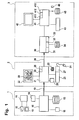
- Fig. 1 is an embodiment of an inventive Device shown.
- the main components of the device are a test design module 1, a subject module 2 and an evaluation module 3.
- the test design module 1 comprises a memory device 10 and facilities for creating tests from picture material to be examined.
- the subject module 2 comprises a control device 21, a display device 22, an input device 23 with a pointing device 24. It is preferably via unidirectional control and data lines 29, 39 connected to the test design module 1 and the evaluation module 3.
- the evaluation module 3 comprises a data matching device 30 and an evaluation device 41 with a display device 42 and an input device 43.
- each of the aforementioned modules is from a personal computer educated; It can also be several modules in one Personal computer be united.
- image data is to be examined Images stored in the form of digitized image data.
- an image acquisition device 11-13 provided. She is trained to to perform an external and an internal image acquisition.
- a camera 12 is provided with which the examining images can be recorded and digitized Image data of a selection unit 11 are supplied.
- a scanner be to scan the image to be examined.
- an internal image acquisition intended In the internal image acquisition is the sampled, which is shown on a display device 13 is. It becomes, so to speak, the screen content of the display device 13 digitally photographed - as with the external image acquisition - digitized image data to disposal.
- the image data are transmitted via the selection unit 11 for a later Presentation prepared on the subject module 2 and in the storage device 10 is stored.
- the rendering includes, in particular, determining the presentation order one of several pictures Image sequence and setting how long each of the images are displayed shall be.
- the selection unit 11 has the following Functions: it enables flexible picture navigation and a representation of the images in different resolutions, Furthermore, a naming of the images, a determination of the display duration as well as the order of the individual pictures and finally adding and removing images.
- the for These functions are each relevant parameters in one Saved control file.
- the control file contains the for the Display and advance the sequence of relevant parameters, in particular the presentation duration of each picture, the Playback speed of the image sequence expressed as frame rate as well as information about the type of image transitions, eg. B. after Time, after subject input with the pointing device 24 or other way.
- the control file also contains information about it, what kind of subject interactions later while examining allowed is.
- a transcoder unit 14 is arranged between the selection unit 11 and the Memory device 10 . It serves to create from the one created with the selection unit 11 Image sequence to generate a movie. Conveniently, In addition, the image sequence is converted into a compressed data format changed. The movie contains both the compressed image sequence as well as the control file.
- the memory device 10 serves to store the image data the images to be examined. Further, the one with the selection unit 11 and the transcoder unit 13 produced film in the Memory device 10 is stored.
- the storage device 10 has a mass storage, which expediently is realized as a hard disk 15. In addition, one is faster Semiconductor memory 16 is provided in the to be displayed Image data are loaded. This can be a timely Representation of the individual images according to the defined in the film Succession can be achieved.
- the display device 22 is used to the film with the images to be examined for viewing indicated by the subject.
- the display device 22 is designed to provide the images with the required Resolution and color depth can represent. She is for that provided with an image memory 26.
- the image memory 26 must be sufficiently large and sufficiently fast to represent the Pictures exactly in time exactly to the specified To be able to display the time.
- the controller 21 ensures that the image data of the images to be displayed from the storage device 10 and read into the image memory 26 of the subject module 2 are written.
- the control device 21 executed so that they are the image data with a provides certain time advance in the image memory 26. This can cause disturbances, especially image dropouts or jerk, by read error or overload of the memory device 10 are largely avoided.
- the control device 21 also serves the image data to the type to adapt the display 22 used in each case. she transforms the stored in device-unspecific format Image data in a specific for the display device 22 Format.
- This transformation includes in particular Converting the device - unspecific coordinate system of the memory device 10 stored image data in the specific coordinate system of the display device used 22.
- This transformation also referred to as "folders”, is guaranteed a standardized image representation also on different ones Indicators 22.
- the input device 23 serves firstly for inputting Data and the other to the connection of the pointing device 24. Die Position of the pointing device 24 is from the input device 23 displayed on the display device 22 by a mark 20 is shown in the appropriate place.
- the pointing device 24 serves as an instrument in the Examination of the images by the subject. The subject stops the pointing device 24 in the hand while the pictures in the shown in the film sequence on the display device 22 become.
- the marker 20 is shown at the point indicated by the current position of the Pointing device 24 is determined. The subject moves the pointing device 24, so is by the controller 21 in interactive Make the mark 20 according to the movement of the pointing device 24 postponed.
- the subject will then look at the pictures involuntarily try the pointing device 24 to move so that the mark 20 on the area of displayed image shows the subject just his primary Paying attention. That of the pointing device 24 at his Motion output position data are from the input device 23 detected and cached in a memory 25.
- the Input device 23, a corresponding drive unit 27th matched to the data format of the pointing device 24 are.
- the pointing device 24 is in the illustrated embodiment running as a computer mouse. Computer Mice have the advantage that they are available at low cost and the vast majority of subjects already familiar with their operation are. It is intuitive to use, so the subject not distracted from viewing the displayed image becomes.
- the invention is not limited to computer mice. It can be dependent from the respective requirements of the picture material, the used indicator 22 and the type of subjects also other pointing devices 24 are used, for example Light pen, touch screens, Stylos or laser pointers (not ) Shown. It is important that the pointing device has a sensor for determining the position of the pointing device, so that Position data in a second, from the display device 22 independent coordinate system generated and sent to the controller 24 are transmitted.
- the control device 21 further comprises an event detector 28.
- Events within the meaning of the invention are events upon the occurrence of which certain actions are carried out.
- a particular operation is the event.
- the events that determine the occurrence of the event vary depending on the device.
- an event is the manipulation of the mouse buttons by the subject. The actuation of these keys is detected by the event detector 28.
- other events can be detected, for. For example, touching the screen surface on a touch screen or interrupting movement with (near) stopping the pointing device while the subject is viewing a particular location on the display device 22.
- the event detector 28 not only monitors the input device 23 with the pointing device 24, but also other devices.
- the display device is monitored for the "screen content changes" event.
- the event detector 28 trips and a record is written to a file.
- the dataset includes the time and nature of the event and other information, e.g. With regard to the number of the event and the picture which was displayed at the time of the event and, in the case of the pointing device 24, the transmitted position data.
- the following table shows an example of some records of the event-based file: Image no. event Event no.
- the position data stored in the records is it is not about the (raw) position data of each used pointing device 24. But the raw position data become from the device-specific coordinate system into device-independent coordinate system converted. Is to the control device 21 with a conversion module 29th Mistake. The same applies to the coordinate system of Display means.
- the further processing is done by the evaluation module. 3
- This has several synchronizing modules 31-33 up.
- a first and second synchronizing module 31, 32 are designed for spatial synchronization.
- the first synchronizing module 31 serves the coordinate system of the image material contained in the film on a coordinate system of the evaluation module 4.
- the second Synchronizing module 32 serves the position data of the pointing device 24 from the device-independent coordinate system to map the coordinate system of the evaluation module 3.
- One third synchronizing module 33 is for time synchronization educated. It serves, using the event-based File and the control file the data of the pointing device 24 to synchronize with the image data in terms of time.
- the data synchronized in this way become the evaluation module 3 provided.
- the evaluation module 3 is to trained, the data in spatial, in temporal, and to evaluate spatiotemporally. That's it Evaluation module 3 with a computing device 41, an input device 43 and a display device 42 is provided. To store the results of the evaluation is a memory 45 provided.
- the data can be manually or be automatically analyzed by the computing device 41.
- An automatic analysis module 411 is designed to analyze the data based on image changes. It can but also be analyzed manually, here are the respective Time points for the analysis are freely chosen.
- the image data in regions or subdivided individual objects can be the computing device 41 automatically by means of suitable image classification modules 412, 413 or it can be done by a user (Evaluator) manually performed.
- the spatial Evaluation serves to formal or semantic objects or Regions such as photos, text, animations, etc. group and to select.
- the automatic image classification is to trained to rely solely on the initial image or in addition to using the determined pointing data in the evaluation.
- Various methods are implemented, namely grid-oriented, with a predefined grid on the Image is placed by means of a parser contained in the image Information about the presented objects interpreted (for html documents in the form of the Document Object Model), or finally by conventional image recognition methods.
- the above methods can each be used alone or in combination with each other. Often, however, a manual post-processing is required be.
- the results obtained with the spatial evaluation can be output graphically or in the form of data.
- the graphical output can take place in particular in the form of so-called heat maps.
- Heatmaps are based on a rasterized representation of the image to be examined with additional elements to highlight specific areas. They serve to represent the local distribution of the measured position data. This is usually done by means of color markings, in which areas of particular attention are marked with a specific color (eg red) and thus highlighted. When using the color red for identification, the areas of particular attention receive a reddish color, they appear red-hot. Therefore, the name Heatmap is derived.
- the computing device 41 performs three steps: calculating a two-dimensional histogram of the position data across the image plane (divided into " bins"), calculating the sum of the histograms of the neighboring "bins” and outputting for each "bin” normalizing and adding the weighted sum of the neighboring "bins".
- the result is a scalar value that is assigned a specific color and / or transparency via a table.
- the examined image is divided into regions. For each region, attention values are then calculated based on the position data, which are expediently normalized with respect to the size of the regions. From this it can be seen how the attention is distributed to the individual regions. Further findings provide a consideration over time, which is explained below.
- a "heat movie” is an animated heatmap.
- the heat movie may be based on a time scale or on a frame rate scale. The latter requires several images, while a heatmovie can be created with the time scale for an image as well.
- the time axis is divided into equal sections and calculated for each section its own sub-heat map.
- string analysis regularities in the time sequence of the input data are searched for and displayed.
- String analyzes refer to the regions already mentioned. For each region a letter is given. It is determined in which order the regions were considered. This results in a sequence of letters.
- the region analysis is therefore particularly suitable for analyzing the dynamic distribution of attention over time.
- a " Markov analysis” changes from one region to another are evaluated. For this purpose, the probability of a transition from one region to the next region is assessed. This results in probability matrices that can be evaluated with various methods known from information theory.
- the spatial variance of sequences can be determined. This can be used to detect typical transitions between regions. It can thus z. For example, it can be determined which regions, regardless of the starting point, attract attention or which regions are, so to speak, persistently ignored.
- a "sequence analysis” searches for typical region sequences.
- the above-mentioned evaluations on each subject can be applied individually or it can Averages are formed across multiple or all subjects, what target group-specific evaluations according to the requirements from market research studies.
- the results of the evaluation are displayed on the display 42 is displayed and stored in the storage device 45 as one Result file saved.
- an exporter 49 is provided to use the results also externally to be able to, for example, for further evaluation. She accesses the computing device 41 and the memory device 45 to and transmits the result file. In this way can be calculated Visualizations, data results or even raw data exported become.
- Excel export tables can be used as export formats. Text files (especially as a CSV file) and various Graphic formats, such as jpg, gif, tif, mpeg or avi, used become.
- the evaluation considering time pressure for the subject is preferably the subject module 2 with Zeitmeß- and possibly also time display devices (not shown) provided. That way the factor can be Time involved in the assessment better and more controlled become.
- a first step 51 the image data of the to be examined Images loaded.
- Sources for the image data are the Camera 12 and the display device 13.
- Based on this Image data is in a second step 52 by means of the selector 11 defines a sequence of pictures and more Control information, e.g. Over time and image change, generated.
- the transcoding module 14 By means of the transcoding module 14 then the film generated and finally in a third step 53 in the Memory device 10 is stored.
- step 54 of the output specified in the movie Image sequences are first the movie data on the Network line 29 from the test design module 1 to the subject module 2 transferred.
- the control device 21 By means of the control device 21 then in a step 54 the images in the film specified follow the indicator 22 on the subject shown. Thereafter or while the subject moves the pointing device 24. This will generate position data showing the location and the course of his attention point on the depicted Play picture.
- Step 55 the position data on the input device 23rd read into the controller 21 and thereby is by means of the controller 21 interactively the mark 20 on the Display device 22 according to the read position data shown moved.
- the event detector 28 processes the data from the pointing device 24, creating the event-based file.
- a subject module 2 need to be provided, but it can also be a second and further subjects modules be provided. In these run the same steps (54 ' - 56 ') as in the first subject module 2. However, must These steps are not necessary in all subject modules for same time. This may be true, but it is not required. That is just one of the advantages of the invention, that in a simple way several subjects for examination can be used, but that neither spatially still need to be united in time.
- the determined position data via the network line 39 to the data matching device 30 transferred, saved in a step 57 and then transmitted in a step 58 and from the computing device 41 of the evaluation module 3 evaluated, after the requirements of the local user.
- a step 59 on the results obtained in the evaluation the display device 42 of the evaluation module 3 shown.
- the results are saved and exported provided via a corresponding exporter 49; this happens in a step 60.
- FIG. 3 An example of a result after the evaluation is shown in FIG. 3 shown.
- Figure 3a In the upper picture ( Figure 3a) is shown how the display device 22 the subject in the investigation represents. One recognizes on the picture a person 71, sitting in the car and only one Part of the upper body is visible. One recognizes further one articulated doll 72, which hung on the windshield of the car is and with her feet on the dashboard of the Cars supported. Also shown is the mark 20, whose Position of the subject while watching the movie can be changed manually by moving the pointing device.
- the lower image FIG. 3b shows which course the attention points of the subject when viewing have taken this picture. In addition, in this figure nor the individual attention points 73 drawn.
- FIG. 4 shows a result for the spatial evaluation.
- FIG. 4 a shows the illustration of FIG. 3 a, after using the image classification modules 412, 413 has been processed.
- the spatial evaluation In the illustration, three regions have been classified, a region "head” 75 and a region “eyes” 76 that the Surround the head or eyes with the person's glasses 71, as well as a region "Wackelmännchen” 77, which is the articulated doll 72 surrounds.
- Fig. 4b In Fig. 4b is shown, with what frequency a group of probands considered the respective regions. For the three regions “Head” 75, “Eyes” 76 and “Wackelmännchen” 77 the respectively determined viewing frequency is indicated. She is a measure of what part of her attention the volunteers have given to the respective regions. you realizes that the region "Wackelmännchen” 77 most attention has been granted.
- a combined spatial-temporal evaluation can then in place of a column a plurality of consecutively staggered columns in Fig. 4b be shown.
- Each of the Staggered pillars stands for a certain Time. In this way it can be seen which Region at what time and to what extent has been. In this way, attention gradients can be determine. This is one for rating artwork particularly valuable function.
- the image material to be examined must contain a trade mark represents a company that has to be examined with the For example, to take pictures for advertising. It can then be examined, whether the region with the mark the one Region is the attention at the end of the viewing has attracted and thereby a high probability assures that the brand still some time in the memory of the viewer "nachwirkt".
- Such courses can be determined by a spatial-temporal evaluation become.
- imagery is otherwise z. B. using heat maps, evaluated and presented can.
- FIG. 1 An example of a heatmap is shown in FIG.
- the website has as essential components a picture of the company logo with the name of the company 81, a graphic representation buttons 82 for navigating the website, a tree - like overview of the content of the Website 83 and an arrangement of several figures 8 about in the middle of the website and in the lower left area Contact for electronic mail 85 on. It was examines which of these areas attract the attention of the viewer especially to attract. The result of the investigation is represented by a different brightness. Brightly colored are the areas 81 to 84. This means that these areas are more attentively viewed by the observers have been used as the rest of the website, e.g. The area 85.
- the difference in brightness is a measure of with what frequency the respective areas are considered have been. For example, it can be seen that the area 82 is brighter and gives him more attention This was attributed to the area 81. In other words, it means this, that buttons on the navigation on have caused the website to attract more attention as the indication of the company name with the logo. If it is z. B.
- the goal of the website is that the viewer has a lot Turning attention to the company name, one recognizes that This goal in the current construction of the website is not yet has been achieved. It can then transformations of Website and the remodeled website again be evaluated by the method according to the invention. In this way you can finally arrive at a design, which the requirements in an optimal way Fulfills.
Landscapes
- Engineering & Computer Science (AREA)
- Theoretical Computer Science (AREA)
- General Physics & Mathematics (AREA)
- Business, Economics & Management (AREA)
- Physics & Mathematics (AREA)
- Accounting & Taxation (AREA)
- Development Economics (AREA)
- Finance (AREA)
- General Engineering & Computer Science (AREA)
- Strategic Management (AREA)
- Databases & Information Systems (AREA)
- Data Mining & Analysis (AREA)
- Entrepreneurship & Innovation (AREA)
- General Business, Economics & Management (AREA)
- Marketing (AREA)
- Economics (AREA)
- Game Theory and Decision Science (AREA)
- Processing Or Creating Images (AREA)
- User Interface Of Digital Computer (AREA)
Applications Claiming Priority (2)
| Application Number | Priority Date | Filing Date | Title |
|---|---|---|---|
| DE10224948A DE10224948A1 (de) | 2002-06-05 | 2002-06-05 | Vorrichtung und Verfahren zum Untersuchen von Bildern |
| DE10224948 | 2002-06-05 |
Publications (3)
| Publication Number | Publication Date |
|---|---|
| EP1380928A2 true EP1380928A2 (fr) | 2004-01-14 |
| EP1380928A3 EP1380928A3 (fr) | 2006-02-08 |
| EP1380928B1 EP1380928B1 (fr) | 2014-11-19 |
Family
ID=29723081
Family Applications (1)
| Application Number | Title | Priority Date | Filing Date |
|---|---|---|---|
| EP03012738.5A Expired - Lifetime EP1380928B1 (fr) | 2002-06-05 | 2003-06-04 | Dispositif et procédé d'analyse d'images |
Country Status (2)
| Country | Link |
|---|---|
| EP (1) | EP1380928B1 (fr) |
| DE (2) | DE10224948A1 (fr) |
Cited By (2)
| Publication number | Priority date | Publication date | Assignee | Title |
|---|---|---|---|---|
| WO2008049403A3 (fr) * | 2006-10-25 | 2008-06-19 | Sirvaluse Consulting Gmbh | Procédé assisté par ordinateur pour saisir à distance le comportement d'un utilisateur à la réception de pages internet |
| CN111679792A (zh) * | 2020-06-04 | 2020-09-18 | 四川九州电子科技股份有限公司 | 一种嵌入式设备NandFlash I/O数据监测系统及方法 |
Families Citing this family (2)
| Publication number | Priority date | Publication date | Assignee | Title |
|---|---|---|---|---|
| DE102006009795A1 (de) * | 2006-03-01 | 2007-09-06 | Klaus Schwarzfischer | Vorrichtung und Verfahren zum Untersuchen von Bildern (mit visueller Eingabe und Ausgabe der Faktoren und Werte der Analyse) zur einfachen Ermittlung der Wichtigkeit einzelner Bild-Elemente hinsichtlich des Wiedererkennungs-Wertes (Recognition-Wert nach Daniel Starch) |
| DE102009017134A1 (de) | 2009-04-15 | 2010-11-11 | Audiantis Gmbh | Verfahren und Vorrichtung zum Erfassen und Bestimmen des Anwenderverhaltens beim Besuch von Internetseiten |
Citations (4)
| Publication number | Priority date | Publication date | Assignee | Title |
|---|---|---|---|---|
| EP0816983A2 (fr) | 1996-06-25 | 1998-01-07 | Sun Microsystems, Inc. | Méthode et dispositif de grossissement de texte commandé par le suivi du mouvement des yeux |
| WO2001024058A2 (fr) | 1999-09-28 | 2001-04-05 | Netraker Corporation | Outil de recherche automatise |
| US20010016840A1 (en) | 1999-12-27 | 2001-08-23 | International Business Machines Corporation | Information extraction system, information processing apparatus, information collection apparatus, character string extraction method, and storage medium |
| DE10049825A1 (de) | 2000-10-09 | 2002-05-02 | Siemens Ag | Verfahren zum Betrieb eines Kommunikationssystems |
Family Cites Families (8)
| Publication number | Priority date | Publication date | Assignee | Title |
|---|---|---|---|---|
| JP3422541B2 (ja) * | 1992-12-17 | 2003-06-30 | ゼロックス・コーポレーション | キーワードのモデル化方法及び非キーワードhmmの提供方法 |
| US5694150A (en) * | 1995-09-21 | 1997-12-02 | Elo Touchsystems, Inc. | Multiuser/multi pointing device graphical user interface system |
| US6396941B1 (en) * | 1996-08-23 | 2002-05-28 | Bacus Research Laboratories, Inc. | Method and apparatus for internet, intranet, and local viewing of virtual microscope slides |
| WO1999012291A1 (fr) * | 1997-09-05 | 1999-03-11 | C Y Research, Inc. | Visualisation d'une representaiton d'informations concernant un humain |
| AUPP340798A0 (en) * | 1998-05-07 | 1998-05-28 | Canon Kabushiki Kaisha | Automated video interpretation system |
| US6075535A (en) * | 1998-06-26 | 2000-06-13 | Hewlett-Packard Company | Method and apparatus for visualizing the tile access frequencies for tiled, multi-resolution images |
| US20020054082A1 (en) * | 1999-01-02 | 2002-05-09 | Karpf Ronald S. | System and method for providing accurate geocoding of responses to location questions in a computer assisted self interview |
| EP1299835A4 (fr) * | 2000-05-26 | 2007-07-11 | Hello Hello Inc | Evaluation d'attention et de reaction du public |
-
2002
- 2002-06-05 DE DE10224948A patent/DE10224948A1/de not_active Ceased
-
2003
- 2003-06-04 EP EP03012738.5A patent/EP1380928B1/fr not_active Expired - Lifetime
- 2003-06-04 DE DE20321163U patent/DE20321163U1/de not_active Expired - Lifetime
Patent Citations (4)
| Publication number | Priority date | Publication date | Assignee | Title |
|---|---|---|---|---|
| EP0816983A2 (fr) | 1996-06-25 | 1998-01-07 | Sun Microsystems, Inc. | Méthode et dispositif de grossissement de texte commandé par le suivi du mouvement des yeux |
| WO2001024058A2 (fr) | 1999-09-28 | 2001-04-05 | Netraker Corporation | Outil de recherche automatise |
| US20010016840A1 (en) | 1999-12-27 | 2001-08-23 | International Business Machines Corporation | Information extraction system, information processing apparatus, information collection apparatus, character string extraction method, and storage medium |
| DE10049825A1 (de) | 2000-10-09 | 2002-05-02 | Siemens Ag | Verfahren zum Betrieb eines Kommunikationssystems |
Non-Patent Citations (7)
| Title |
|---|
| "Auge um Auge / Multimedia-Nutzung im Blickpunkt der Forscher", NEUE ZUERCHER ZEITUNG, 13 October 2000 (2000-10-13), pages 81, XP003014942 |
| B. WYSS: "Auge um Auge", NEUE ZÜRCHER ZEITUNG, 13 October 2000 (2000-10-13), pages 81 |
| CHEN M-C. ET AL.: "What can a mouse cursor tell us more? Correlation of eye/mouse movements on web browsing", CONF. ON HUMAN FACTORS IN COMPUTING SYSTEMS, 31 March 2001 (2001-03-31), pages 281 - 282, XP003014943 |
| EGNER S. ET AL.: "Comparing attention models with different types of behavior data", INVESTIGATIVE OPHTHALMOLOGY AND VISUAL SCIENCE, vol. 41, no. 4, 15 March 2000 (2000-03-15), pages 39, XP003014941 |
| M. CHEN ET AL.: "What can a mouse cursor tell us more?", CONFERENCE ON HUMAN FACTORS IN COMPUTING SYSTEMS, 2001, pages 281, XP001167389 |
| S. EGNER ET AL.: "Comparing attention models with different types of behaviour", INVESTIGATIVE OPHTALMOLOGY & VISUAL SERVICE, vol. 41, no. 4, 2000, pages 39 |
| ULLRICH C., MELIS E.: "The poor man's eyetracker tool of ActiveMath", INT'L J ON E-LEARNING, vol. 2002, no. 1, pages 2313 - 2316, XP003014944 |
Cited By (2)
| Publication number | Priority date | Publication date | Assignee | Title |
|---|---|---|---|---|
| WO2008049403A3 (fr) * | 2006-10-25 | 2008-06-19 | Sirvaluse Consulting Gmbh | Procédé assisté par ordinateur pour saisir à distance le comportement d'un utilisateur à la réception de pages internet |
| CN111679792A (zh) * | 2020-06-04 | 2020-09-18 | 四川九州电子科技股份有限公司 | 一种嵌入式设备NandFlash I/O数据监测系统及方法 |
Also Published As
| Publication number | Publication date |
|---|---|
| EP1380928B1 (fr) | 2014-11-19 |
| EP1380928A3 (fr) | 2006-02-08 |
| DE10224948A1 (de) | 2004-05-27 |
| DE20321163U1 (de) | 2006-04-20 |
Similar Documents
| Publication | Publication Date | Title |
|---|---|---|
| DE69530367T2 (de) | Kontrolle eines Mikroskopprobenträgers | |
| DE102017008430A1 (de) | Verfahren und Systeme zum Erzeugen von virtuelle Realität-Umgebungen aus elektronischen Dokumenten | |
| DE102009044083A9 (de) | System und Verfahren zur Zählung der Personenanzahl | |
| DE102013204051A1 (de) | Dynamische Aktualisierung von Inhalten auf der Grundlage von Benutzeraktivitäten | |
| CN111062284B (zh) | 一种交互式视频摘要模型的可视理解与诊断方法 | |
| WO2017153354A1 (fr) | Procédé et dispositif d'évaluation de représentations d'observation | |
| AT15099U2 (de) | System zur Überwachung einer technischen Vorrichtung | |
| DE60310881T2 (de) | Methode und Benutzerschnittstelle für das Bilden einer Darstellung von Daten mit Meta-morphing | |
| Witt et al. | Eye-tracking research on teachers’ professional vision: A scoping review | |
| DE112008003854T5 (de) | Raum-Zeit-Medienobjektlayouts | |
| US7512289B2 (en) | Apparatus and method for examination of images | |
| DE10392386T5 (de) | System und Verfahren zur dynamischen Erzeugung einer Textbeschreibung für eine bildliche Datendarstellung | |
| EP2679147B1 (fr) | Procédé et dispositif de codage de données de suivi de l'oeil et du regard | |
| EP1380928B1 (fr) | Dispositif et procédé d'analyse d'images | |
| DE10112008A1 (de) | Bildverarbeitungsvorrichtung und computerlesbares Speichermedium | |
| Nuutinen et al. | VQone MATLAB toolbox: a graphical experiment builder for image and video quality evaluations: VQone MATLAB toolbox | |
| DE112017000075T5 (de) | Vorrichtung zur Schätzung des Grads des Interesses, Verfahren zur Schätzung des Grads des Interesses, Programm und Speichermedium | |
| DE112021004037T5 (de) | Systeme und verfahren zum bewerten der lesbarkeit von text in elektronischen dokumenten | |
| EP1300108B1 (fr) | Méthode permettant d'obtenir, d'évaluer et d'analyser les sequences de vision | |
| WO2017050997A1 (fr) | Procédé, programme informatique et système de transmission de données pour produire une image interactive | |
| Mariano et al. | Multivariate cyclical data visualization using radial visual rhythms: A case study in phenology analysis | |
| EP1553507A2 (fr) | Procédé pour la description informatif des objets d'image | |
| LU508145B1 (de) | Ein anwendungssystem der zeitgenössischen computer-vision-kunst auf dem gebiet der digitalen medien | |
| DE112019006288T5 (de) | Informationsverarbeitungsvorrichtung, programm undinformationsverarbeitungsverfahren | |
| EP0278024B1 (fr) | Procédé et dispositif pour déterminer objectivement et mesurer quantitivement le niveau d'intérêt de personnes, testées, en présence de materiel visuel ou de parties d'un tel materiel |
Legal Events
| Date | Code | Title | Description |
|---|---|---|---|
| PUAI | Public reference made under article 153(3) epc to a published international application that has entered the european phase |
Free format text: ORIGINAL CODE: 0009012 |
|
| AK | Designated contracting states |
Kind code of ref document: A2 Designated state(s): AT BE BG CH CY CZ DE DK EE ES FI FR GB GR HU IE IT LI LU MC NL PT RO SE SI SK TR |
|
| AX | Request for extension of the european patent |
Extension state: AL LT LV MK |
|
| PUAL | Search report despatched |
Free format text: ORIGINAL CODE: 0009013 |
|
| AK | Designated contracting states |
Kind code of ref document: A3 Designated state(s): AT BE BG CH CY CZ DE DK EE ES FI FR GB GR HU IE IT LI LU MC NL PT RO SE SI SK TR |
|
| AX | Request for extension of the european patent |
Extension state: AL LT LV MK |
|
| 17P | Request for examination filed |
Effective date: 20060808 |
|
| AKX | Designation fees paid |
Designated state(s): AT BE BG CH CY CZ DE DK EE ES FI FR GB GR HU IE IT LI LU MC NL PT RO SE SI SK TR |
|
| 17Q | First examination report despatched |
Effective date: 20060928 |
|
| TPAC | Observations filed by third parties |
Free format text: ORIGINAL CODE: EPIDOSNTIPA |
|
| APBK | Appeal reference recorded |
Free format text: ORIGINAL CODE: EPIDOSNREFNE |
|
| APBN | Date of receipt of notice of appeal recorded |
Free format text: ORIGINAL CODE: EPIDOSNNOA2E |
|
| APBR | Date of receipt of statement of grounds of appeal recorded |
Free format text: ORIGINAL CODE: EPIDOSNNOA3E |
|
| APAF | Appeal reference modified |
Free format text: ORIGINAL CODE: EPIDOSCREFNE |
|
| APBT | Appeal procedure closed |
Free format text: ORIGINAL CODE: EPIDOSNNOA9E |
|
| REG | Reference to a national code |
Ref country code: DE Ref legal event code: R079 Ref document number: 50315161 Country of ref document: DE Free format text: PREVIOUS MAIN CLASS: G06F0003033000 Ipc: G06F0017300000 |
|
| GRAJ | Information related to disapproval of communication of intention to grant by the applicant or resumption of examination proceedings by the epo deleted |
Free format text: ORIGINAL CODE: EPIDOSDIGR1 |
|
| GRAP | Despatch of communication of intention to grant a patent |
Free format text: ORIGINAL CODE: EPIDOSNIGR1 |
|
| RIC1 | Information provided on ipc code assigned before grant |
Ipc: G06F 17/30 20060101AFI20140414BHEP Ipc: G06Q 30/02 20120101ALI20140414BHEP |
|
| GRAJ | Information related to disapproval of communication of intention to grant by the applicant or resumption of examination proceedings by the epo deleted |
Free format text: ORIGINAL CODE: EPIDOSDIGR1 |
|
| RIC1 | Information provided on ipc code assigned before grant |
Ipc: G06F 3/033 20130101ALI20140424BHEP Ipc: G06Q 30/02 20120101ALI20140424BHEP Ipc: G06F 17/30 20060101AFI20140424BHEP |
|
| INTG | Intention to grant announced |
Effective date: 20140506 |
|
| GRAP | Despatch of communication of intention to grant a patent |
Free format text: ORIGINAL CODE: EPIDOSNIGR1 |
|
| INTG | Intention to grant announced |
Effective date: 20140605 |
|
| GRAS | Grant fee paid |
Free format text: ORIGINAL CODE: EPIDOSNIGR3 |
|
| GRAA | (expected) grant |
Free format text: ORIGINAL CODE: 0009210 |
|
| AK | Designated contracting states |
Kind code of ref document: B1 Designated state(s): AT BE BG CH CY CZ DE DK EE ES FI FR GB GR HU IE IT LI LU MC NL PT RO SE SI SK TR |
|
| REG | Reference to a national code |
Ref country code: GB Ref legal event code: FG4D Free format text: NOT ENGLISH |
|
| REG | Reference to a national code |
Ref country code: CH Ref legal event code: EP |
|
| REG | Reference to a national code |
Ref country code: AT Ref legal event code: REF Ref document number: 697388 Country of ref document: AT Kind code of ref document: T Effective date: 20141215 |
|
| REG | Reference to a national code |
Ref country code: IE Ref legal event code: FG4D Free format text: LANGUAGE OF EP DOCUMENT: GERMAN |
|
| REG | Reference to a national code |
Ref country code: DE Ref legal event code: R096 Ref document number: 50315161 Country of ref document: DE Effective date: 20141231 |
|
| REG | Reference to a national code |
Ref country code: CH Ref legal event code: NV Representative=s name: TROESCH SCHEIDEGGER WERNER AG, CH |
|
| REG | Reference to a national code |
Ref country code: NL Ref legal event code: VDEP Effective date: 20141119 |
|
| PG25 | Lapsed in a contracting state [announced via postgrant information from national office to epo] |
Ref country code: FI Free format text: LAPSE BECAUSE OF FAILURE TO SUBMIT A TRANSLATION OF THE DESCRIPTION OR TO PAY THE FEE WITHIN THE PRESCRIBED TIME-LIMIT Effective date: 20141119 Ref country code: NL Free format text: LAPSE BECAUSE OF FAILURE TO SUBMIT A TRANSLATION OF THE DESCRIPTION OR TO PAY THE FEE WITHIN THE PRESCRIBED TIME-LIMIT Effective date: 20141119 Ref country code: PT Free format text: LAPSE BECAUSE OF FAILURE TO SUBMIT A TRANSLATION OF THE DESCRIPTION OR TO PAY THE FEE WITHIN THE PRESCRIBED TIME-LIMIT Effective date: 20150319 Ref country code: ES Free format text: LAPSE BECAUSE OF FAILURE TO SUBMIT A TRANSLATION OF THE DESCRIPTION OR TO PAY THE FEE WITHIN THE PRESCRIBED TIME-LIMIT Effective date: 20141119 |
|
| PG25 | Lapsed in a contracting state [announced via postgrant information from national office to epo] |
Ref country code: CY Free format text: LAPSE BECAUSE OF FAILURE TO SUBMIT A TRANSLATION OF THE DESCRIPTION OR TO PAY THE FEE WITHIN THE PRESCRIBED TIME-LIMIT Effective date: 20141119 Ref country code: GR Free format text: LAPSE BECAUSE OF FAILURE TO SUBMIT A TRANSLATION OF THE DESCRIPTION OR TO PAY THE FEE WITHIN THE PRESCRIBED TIME-LIMIT Effective date: 20150220 Ref country code: SE Free format text: LAPSE BECAUSE OF FAILURE TO SUBMIT A TRANSLATION OF THE DESCRIPTION OR TO PAY THE FEE WITHIN THE PRESCRIBED TIME-LIMIT Effective date: 20141119 |
|
| PG25 | Lapsed in a contracting state [announced via postgrant information from national office to epo] |
Ref country code: RO Free format text: LAPSE BECAUSE OF FAILURE TO SUBMIT A TRANSLATION OF THE DESCRIPTION OR TO PAY THE FEE WITHIN THE PRESCRIBED TIME-LIMIT Effective date: 20141119 Ref country code: EE Free format text: LAPSE BECAUSE OF FAILURE TO SUBMIT A TRANSLATION OF THE DESCRIPTION OR TO PAY THE FEE WITHIN THE PRESCRIBED TIME-LIMIT Effective date: 20141119 Ref country code: SK Free format text: LAPSE BECAUSE OF FAILURE TO SUBMIT A TRANSLATION OF THE DESCRIPTION OR TO PAY THE FEE WITHIN THE PRESCRIBED TIME-LIMIT Effective date: 20141119 Ref country code: CZ Free format text: LAPSE BECAUSE OF FAILURE TO SUBMIT A TRANSLATION OF THE DESCRIPTION OR TO PAY THE FEE WITHIN THE PRESCRIBED TIME-LIMIT Effective date: 20141119 Ref country code: DK Free format text: LAPSE BECAUSE OF FAILURE TO SUBMIT A TRANSLATION OF THE DESCRIPTION OR TO PAY THE FEE WITHIN THE PRESCRIBED TIME-LIMIT Effective date: 20141119 |
|
| PGFP | Annual fee paid to national office [announced via postgrant information from national office to epo] |
Ref country code: CH Payment date: 20150623 Year of fee payment: 13 |
|
| REG | Reference to a national code |
Ref country code: DE Ref legal event code: R097 Ref document number: 50315161 Country of ref document: DE |
|
| PGFP | Annual fee paid to national office [announced via postgrant information from national office to epo] |
Ref country code: AT Payment date: 20150619 Year of fee payment: 13 |
|
| PLBE | No opposition filed within time limit |
Free format text: ORIGINAL CODE: 0009261 |
|
| STAA | Information on the status of an ep patent application or granted ep patent |
Free format text: STATUS: NO OPPOSITION FILED WITHIN TIME LIMIT |
|
| 26N | No opposition filed |
Effective date: 20150820 |
|
| PG25 | Lapsed in a contracting state [announced via postgrant information from national office to epo] |
Ref country code: IT Free format text: LAPSE BECAUSE OF FAILURE TO SUBMIT A TRANSLATION OF THE DESCRIPTION OR TO PAY THE FEE WITHIN THE PRESCRIBED TIME-LIMIT Effective date: 20141119 |
|
| PG25 | Lapsed in a contracting state [announced via postgrant information from national office to epo] |
Ref country code: MC Free format text: LAPSE BECAUSE OF FAILURE TO SUBMIT A TRANSLATION OF THE DESCRIPTION OR TO PAY THE FEE WITHIN THE PRESCRIBED TIME-LIMIT Effective date: 20141119 |
|
| PG25 | Lapsed in a contracting state [announced via postgrant information from national office to epo] |
Ref country code: LU Free format text: LAPSE BECAUSE OF FAILURE TO SUBMIT A TRANSLATION OF THE DESCRIPTION OR TO PAY THE FEE WITHIN THE PRESCRIBED TIME-LIMIT Effective date: 20150604 Ref country code: SI Free format text: LAPSE BECAUSE OF FAILURE TO SUBMIT A TRANSLATION OF THE DESCRIPTION OR TO PAY THE FEE WITHIN THE PRESCRIBED TIME-LIMIT Effective date: 20141119 |
|
| REG | Reference to a national code |
Ref country code: IE Ref legal event code: MM4A |
|
| PG25 | Lapsed in a contracting state [announced via postgrant information from national office to epo] |
Ref country code: IE Free format text: LAPSE BECAUSE OF NON-PAYMENT OF DUE FEES Effective date: 20150604 |
|
| REG | Reference to a national code |
Ref country code: FR Ref legal event code: PLFP Year of fee payment: 14 |
|
| REG | Reference to a national code |
Ref country code: CH Ref legal event code: PL |
|
| REG | Reference to a national code |
Ref country code: AT Ref legal event code: MM01 Ref document number: 697388 Country of ref document: AT Kind code of ref document: T Effective date: 20160604 |
|
| PG25 | Lapsed in a contracting state [announced via postgrant information from national office to epo] |
Ref country code: CH Free format text: LAPSE BECAUSE OF NON-PAYMENT OF DUE FEES Effective date: 20160630 Ref country code: LI Free format text: LAPSE BECAUSE OF NON-PAYMENT OF DUE FEES Effective date: 20160630 |
|
| PG25 | Lapsed in a contracting state [announced via postgrant information from national office to epo] |
Ref country code: BG Free format text: LAPSE BECAUSE OF FAILURE TO SUBMIT A TRANSLATION OF THE DESCRIPTION OR TO PAY THE FEE WITHIN THE PRESCRIBED TIME-LIMIT Effective date: 20141119 Ref country code: HU Free format text: LAPSE BECAUSE OF FAILURE TO SUBMIT A TRANSLATION OF THE DESCRIPTION OR TO PAY THE FEE WITHIN THE PRESCRIBED TIME-LIMIT; INVALID AB INITIO Effective date: 20030604 Ref country code: AT Free format text: LAPSE BECAUSE OF NON-PAYMENT OF DUE FEES Effective date: 20160604 |
|
| REG | Reference to a national code |
Ref country code: FR Ref legal event code: PLFP Year of fee payment: 15 |
|
| PG25 | Lapsed in a contracting state [announced via postgrant information from national office to epo] |
Ref country code: BE Free format text: LAPSE BECAUSE OF NON-PAYMENT OF DUE FEES Effective date: 20150630 |
|
| PG25 | Lapsed in a contracting state [announced via postgrant information from national office to epo] |
Ref country code: TR Free format text: LAPSE BECAUSE OF FAILURE TO SUBMIT A TRANSLATION OF THE DESCRIPTION OR TO PAY THE FEE WITHIN THE PRESCRIBED TIME-LIMIT Effective date: 20141119 |
|
| REG | Reference to a national code |
Ref country code: FR Ref legal event code: PLFP Year of fee payment: 16 |
|
| REG | Reference to a national code |
Ref country code: DE Ref legal event code: R079 Ref document number: 50315161 Country of ref document: DE Free format text: PREVIOUS MAIN CLASS: G06F0017300000 Ipc: G06F0016000000 |
|
| PGFP | Annual fee paid to national office [announced via postgrant information from national office to epo] |
Ref country code: FR Payment date: 20190626 Year of fee payment: 17 |
|
| PGFP | Annual fee paid to national office [announced via postgrant information from national office to epo] |
Ref country code: GB Payment date: 20190624 Year of fee payment: 17 |
|
| GBPC | Gb: european patent ceased through non-payment of renewal fee |
Effective date: 20200604 |
|
| PG25 | Lapsed in a contracting state [announced via postgrant information from national office to epo] |
Ref country code: GB Free format text: LAPSE BECAUSE OF NON-PAYMENT OF DUE FEES Effective date: 20200604 Ref country code: FR Free format text: LAPSE BECAUSE OF NON-PAYMENT OF DUE FEES Effective date: 20200630 |
|
| PGFP | Annual fee paid to national office [announced via postgrant information from national office to epo] |
Ref country code: DE Payment date: 20210629 Year of fee payment: 19 |
|
| REG | Reference to a national code |
Ref country code: DE Ref legal event code: R119 Ref document number: 50315161 Country of ref document: DE |
|
| PG25 | Lapsed in a contracting state [announced via postgrant information from national office to epo] |
Ref country code: DE Free format text: LAPSE BECAUSE OF NON-PAYMENT OF DUE FEES Effective date: 20230103 |