EP1380984B1 - Verfahren und Gerät zum Unterstützen einer biometrischen Registrierung, die auf einem Authentifizierungsserver ausgeführt wird - Google Patents
Verfahren und Gerät zum Unterstützen einer biometrischen Registrierung, die auf einem Authentifizierungsserver ausgeführt wird Download PDFInfo
- Publication number
- EP1380984B1 EP1380984B1 EP03291688A EP03291688A EP1380984B1 EP 1380984 B1 EP1380984 B1 EP 1380984B1 EP 03291688 A EP03291688 A EP 03291688A EP 03291688 A EP03291688 A EP 03291688A EP 1380984 B1 EP1380984 B1 EP 1380984B1
- Authority
- EP
- European Patent Office
- Prior art keywords
- data
- biometric
- template
- authentication server
- feature
- Prior art date
- Legal status (The legal status is an assumption and is not a legal conclusion. Google has not performed a legal analysis and makes no representation as to the accuracy of the status listed.)
- Expired - Lifetime
Links
Images




Classifications
-
- G—PHYSICS
- G06—COMPUTING OR CALCULATING; COUNTING
- G06F—ELECTRIC DIGITAL DATA PROCESSING
- G06F21/00—Security arrangements for protecting computers, components thereof, programs or data against unauthorised activity
- G06F21/30—Authentication, i.e. establishing the identity or authorisation of security principals
- G06F21/31—User authentication
- G06F21/32—User authentication using biometric data, e.g. fingerprints, iris scans or voiceprints
-
- G—PHYSICS
- G06—COMPUTING OR CALCULATING; COUNTING
- G06F—ELECTRIC DIGITAL DATA PROCESSING
- G06F21/00—Security arrangements for protecting computers, components thereof, programs or data against unauthorised activity
- G06F21/30—Authentication, i.e. establishing the identity or authorisation of security principals
- G06F21/31—User authentication
- G06F21/34—User authentication involving the use of external additional devices, e.g. dongles or smart cards
-
- G—PHYSICS
- G06—COMPUTING OR CALCULATING; COUNTING
- G06V—IMAGE OR VIDEO RECOGNITION OR UNDERSTANDING
- G06V40/00—Recognition of biometric, human-related or animal-related patterns in image or video data
- G06V40/10—Human or animal bodies, e.g. vehicle occupants or pedestrians; Body parts, e.g. hands
- G06V40/12—Fingerprints or palmprints
- G06V40/1365—Matching; Classification
Definitions
- the invention relates to a method of identifying an individual by comparing biometric information of the individual with reference data that is stored on an authentication server, and more particularly to a method of identifying an individual in which the comparison is performed on a processor of the authentication server.
- Magnetic strip cards have been widely used for controlling access by individuals to information, rooms and financial transaction instruments. Typically, the individual must "swipe" the card through a magnetic strip reader and provide a personal identification number (PIN) in order to be identified as an authorized user of the card.
- PIN personal identification number
- This system suffers from several disadvantages, including the tendency of individuals to forget an assigned PIN number, or to seriously compromise the security of an assigned PIN number by writing it down in close proximity to the card.
- individuals have a tendency to select PIN numbers that are easily remembered and that often have a personal significance, such as a birth date, which PIN numbers are easily guessed by an unauthorized individual. Accordingly, magnetic strip cards are convenient, but do not provide a high level of security.
- the server receives considerably more data. For example, for a fingerprint an image having 250,000 pixels is provided. If the pixels have a depth of 1 bit, this results in about 30KB of data. This data must be received in a secure fashion, decoded, analyzed to extract a core thereof, analyzed to extract features relative to the core, and then the features are analyzed to extract data relating thereto. The extracted data is then compared to stored template data to determine a likelihood of an accurate match. Such a process may take 0.1 seconds or more. Unfortunately, as organizations grow, the single security server approach to biometric identification becomes limiting. When 36,000 workstations are coupled to a single server the maximum delay is approximately one hour. Even for 3,600 workstations, the maximum delay is 6 minutes - far above the 0.25 sec specification set out above. Thus, there is a need for more flexible verification techniques to support centralized management and performance requirements of larger organizations.
- EP 1 385 118 A describes a method for matching biometric data on a smart card.
- a smart card is provided having biometric template data stored thereon.
- a host processor in communication with the smart card is also provided.
- a sensed biometric image is provided to the host processor from an individual.
- coordinate data relating to a plurality of non-contiguous features of the template data are provided.
- Other data is extracted from the biometric image, the other data for correlation with the provided co-ordinate data allowing for a subsequent alignment of the biometric image within a known frame of reference relative to the template data on the basis of the provided data and the other data.
- biometric data is extracted from the biometric image, the biometric data within the known frame of reference and then the extracted biometric data is transmitted to the smartcard.
- WO 01/84494 A describes a portable data carrier comprises a memory with a biometric template which is intended to be compared with a biometric sample for identity check.
- the biometric template is divided into a private part which is adapted to be exclusively used in the portable data carrier and a public part which is adapted to be transferred to and used in an external processing unit.
- a processing unit for use in biometric identity check is described.
- the processing unit is adapted to receive a biometric sample and a public part of a biometric template, compare the received public part of the template with the biometric sample, and when a comparison criterion has been satisfied, transfer at least part of the biometric sample to the portable data carrier for further comparison in the data carrier with a private part of the template.
- a method for recording a biometric template and a biometric identity check is also described.
- a fingerprint is imaged in step 10 .
- the image is then filtered using image processing filtering techniques in step 12 and the contrast is adjusted to a normalized level in step 11 .
- the image is in a standardized form for analysis.
- the image is then analyzed in step 13 to determine a core feature or features. This feature is used to align the image in space and orientation in step 14 in order to allow for more accurate correlation with template data.
- the image is analyzed and features are identified for use in correlation in step 16 .
- the features are compared to features in a stored template to determine a likelihood of a match in step 17 . When a match is likely, a user identification or authorization is performed in step 18 .
- Much of the processing that occurs during the analysis of the fingerprint is related to re-orienting the fingerprint for easier correlation and to feature identification.
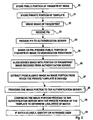
- Fig. 2 shown is a method of preprocessing a fingerprint image wherein biometric data is provided to a preprocessor from a server in the form of a public portion of a template according to the invention.
- an authorized user of a workstation in communication with an authentication server provides a fingertip having a fingerprint to an imaging device that is in communication with the authentication server.
- the imaging device senses the topological features of the fingerprint and stores an image of the fingerprint template in memory of the authentication server.
- the memory includes a public access portion for storing a public portion of the fingerprint image in step 20 and a private access portion for storing a private portion of the fingerprint image in step 21 .
- the same fingertip is provided to an imaging device in step 22 of a workstation in communication with the authentication server, the fingerprint is imaged and stored electronically in a memory of the workstation.
- the user provides a PIN to the workstation in step 23 and the PIN is provided from the workstation to the authentication server in step 24 .
- the authentication server provides the public portion of the fingerprint image to a processor of the workstation in step 25 .
- the workstation processor aligns the sensed fingerprint image with the public portion of the fingerprint image that was provided from the authentication server in step 26 .
- the workstation processor then extracts from the aligned image an image portion from which the private template is derived in step 27 .
- the image portion is provided to the authentication server in step 28 , where the authentication server processor compares the image portion with the private portion of the template to determine a likelihood of a match in step 29 . If a match is likely, the user is identified or recognized in step 30 . If a match is other than likely, then the authorization attempt is rejected and the user is denied access. In either case, the determination is transmitted to the workstation.
- the relevant information for the alignment process is contained in the public portion or in an area of the biometric template relating to the public portion, and the alignment information comprises individual specific parameters, parameters relating to image rotation, mutual positioning of a plurality of features of a predetermined type, and the like.
- a method of preprocessing a fingerprint image wherein biometric data is not provided to a preprocessor, for instance a processor of a workstation, from the authentication server.
- a preprocessor for instance a processor of a workstation
- an authentication server is used to store a plurality of biometric template images and related template information.
- the process is alterable without suffering the drawbacks of the prior art methods.
- fingerprint image data is provided from the authentication server, this reduces the security of the fingerprint registration system since correlation data is determinable from the data received from the authentication server.
- a preprocessing of the data before identification is still an integrated step in the present invention.
- the authentication server Although a processor of the authentication server is sufficiently powerful to process a single fingerprint image, when many fingerprint processing requests are received simultaneously, it has insufficient resources to provide desired levels of performance. When that data are pre-processed on a workstation, the authentication server is able to deal with a substantially larger number of approximately simultaneous identification requests.
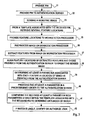
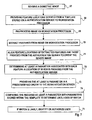
- the user provides in step 31 a PIN to a workstation in communication with the authentication server, and the workstation provides the PIN to the authentication server in step 32 .
- the PIN is used to select a user-specific template out of the plurality of templates stored on the authentication server.
- a fingerprint image of the user is captured using an imaging device of the workstation in step 33 .
- the image is filtered and the contrast is adjusted to a normalized level.
- the fingerprint image is then analyzed by the workstation processor to determine features thereof.
- features of fingerprints include ridge flow angle, minutia locations, minutia types, minutia directions, core location, core orientation, and so forth.
- any of the features to have meaning they all must be related to a global position or a position independent frame of reference; this global position and orientation is often related to the core location and orientation.
- a typical biometric fingerprint template appears as shown in the diagram of Fig.4 .
- other data formats and orders are possible.
- the core is arbitrarily assigned the coordinate (0,0).
- the core orientation is assumed to be in the Y direction.
- the minutiae are listed in order of distance from the core. About the core the minutiae are denser than at a distance therefrom.
- the template of Fig. 4 has 24 minutiae listed. Though this is the case, often fingerprint analysis and recognition systems use far fewer minutiae to perform an identification process.
- Each minutia has a location expressed as a coordinate, has a direction expressed as an angle or as a slope, and has a type expressed in the template shown by a numeric identifier, each number indicative of a particular predetermined minutia type.
- the main processing tasks in biometric registration include, image processing to filter the image and, when necessary, scale and normalize the image; global feature identification; image rotation and translation relative to the global feature; feature extraction from the image; feature analysis and identification; feature correlation with template features.
- image processing to filter the image and, when necessary, scale and normalize the image
- global feature identification to filter the image and, when necessary, scale and normalize the image
- image rotation and translation relative to the global feature
- feature analysis and identification feature correlation with template features.
- feature correlation with template features.
- the step of feature analysis and identification is unnecessary and the step of correlation is more complex or less reliable.
- feature correlation is the least processor intensive while global feature identification, image rotation, and feature extraction are the most processor intensive. That said, these are the processes that are typically performed by the correlating processor since only that processor has available thereto the data necessary for performing such a correlation.
- the method provides for provision of challenge data relating to a template, the data other than image data of a biometric information source.
- the authentication server retrieves from memory a stored template that is associated with the received PIN, and retrieves a plurality of feature locations from the template.
- the feature locations need not be stored within the template.
- the plurality of locations is of identifiable features, preferably features having accurately identifiable locations.
- a processor of the workstation receiving in step 35 the challenge and an image of a biometric information source uses the challenge data to orient the image of the biometric information source relative thereto in step 36 . This is performed by identifying features within the image in step 37 , determining feature locations in step 38 , and then moving the feature locations to overlap the provided locations in step 39 until a reasonable approximation of image positioning is achieved.
- data relating to a plurality of features within the image are provided to the authentication server for correlation in step 40 .
- the data relates to minutia locations and directions of the 12 minutiae nearest the first point provided.
- the processor of the authentication server need only compare a plurality of values to values within the template stored thereon in step 41 in order to form a registration measure for use in user authorization.
- the comparison is not a fixed comparison to allow for missed minutiae or extra minutiae within a template. If a match is likely, the user is identified or recognized in step 42 . If a match is other than likely, then the authorization attempt is rejected and the user is denied access.
- feature locations are provided from the authentication server for aligning the image, it is possible to provide features at a significant distance one from another. As is known to those of skill in the art of image processing, the longer the distance between two points to be aligned, the more accurate the rotational alignment. Of course a third point is needed to differentiate between 180° rotations. Thus, by selecting feature locations at a distance one from another, the alignment accuracy is improved relative to alignment of image data based on a single feature - core - and its orientation.
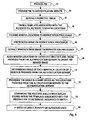
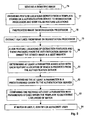
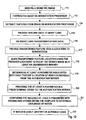
- a more specific embodiment of the method of Fig. 3 is shown.
- the user provides in step 43 a PIN to a workstation in communication with the authentication server, and the workstation provides the PIN to the authentication server in step 44 .
- the PIN is used to select a user-specific template out of the plurality of templates stored on the authentication server.
- a fingerprint image of the user is captured using an imaging device of the workstation in step 45 .
- the authentication server retrieves 12 minutia locations from a stored template, which template is associated with the provided PIN in step 46 . Of course any number of minutia locations are optionally provided.
- the 12 minutiae locations are provided from the authentication server to the processor of the workstation in step 47 .
- the captured fingerprint is filtered and the contrast is adjusted to a normalized level in step 48 .
- the image is then analyzed by the workstation processor to determine features thereof, and minutiae locations are extracted in step 49 .
- the workstation processor with the 12 minutiae locations provided from the authentication server, in order to spatially and rotationally orient the image in step 50 , then aligns the captured fingerprint image.
- the processed image is located in direct correlation to the template data.
- such a process obviates a need for core identification, extraction, and orientation.
- the processed image is then analyzed by the workstation processor to extract data relating to each minutia provided in step 51 .
- a minutia direction for instance an angle
- the workstation processor provides the angles and types to the authentication server, in a same order as the locations were provided from the authentication server to the workstation processor in step 52 .
- the authentication server processor then compares the angle returned for each minutia to an angle stored within the template data and the minutia types to known minutia types stored within the template to determine if a match between the captured fingerprint image and the template data is likely in step 53 . If a match is likely, the user is identified or recognized in step 54 . If a match is other than likely, then the authorization attempt is rejected and the user is denied access.
- the angle is provided with 12° increments and there are 8 minutiae types, only one byte of data is provided to the authentication server for each minutia.
- 12 bytes are provided thus minimizing data transfer to the authentication server and correlation processing thereby.
- the minutia direction is correlatable to a grid angle allowing for storage of minutia with only a few bits.
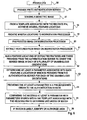
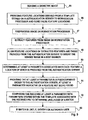
- FIG. 6 a method of preprocessing a fingerprint image according to the instant invention is shown, wherein biometric data in the form of a public portion of a template is not provided to a preprocessor, for instance a processor of a workstation, from the authentication server.
- a preprocessor for instance a processor of a workstation
- the user provides in step 55 a PIN to a workstation in communication with the authentication server, and the workstation provides the PIN to the authentication server in step 56 .
- the PIN is used to select a user-specific template out of the plurality of templates stored on the authentication server.
- a fingerprint image of the user is captured using an imaging device of the workstation in step 57 .
- the image is filtered and the contrast is adjusted to a normalized level.
- the fingerprint image is then analyzed by the workstation processor to determine features thereof.
- features of fingerprints include ridge flow angle, minutia locations, minutia types, minutia directions, core location, core orientation, and so forth.
- any of the features to have meaning they all must be related to a global position; this global position and orientation is often related to the core location and orientation.
- the method of Figure 6 provides for provision of challenge data relating to a template, the data other than image data of a biometric information source.
- the authentication server retrieves from memory a stored template that is associated with the received PIN, and retrieves a plurality of feature locations from the template in step 58 .
- the plurality of locations is of identifiable features, preferably features having accurately identifiable locations.
- a processor of the workstation receiving in step 59 the challenge and an image of a biometric information source uses the challenge data to orient the biometric information source in step 60 relative thereto in each of a plurality of unambiguous orientations. This is performed by identifying features within the image in step 61 , determining feature locations in step 62 , and then moving the feature locations to overlap the provided locations until a reasonable approximation of image positioning is achieved for each of the unambiguous orientations in step 63 .
- three feature locations 601 , 602 and 603 are provided which allows for, in this example, three orientations of the image of Fig. 6a .
- features 604 are differently positioned one relative to another. There are three unambiguous alignments though it is ambiguous which of the three is actually the intended alignment.
- data relating to a plurality of features within the image for each one of the plurality of unambiguous orientations are provided to the authentication server in a predetermined order for correlation in step 64 .
- the data relates to minutia locations and directions of the 12 minutiae nearest the first point provided.
- the data may relate only to the features at the locations provided.
- only one of the data sets relating to a single alignment is used in the step of correlation.
- the processor of the authentication server need only compare a plurality of values to values within the template stored thereon in order to form a registration measure for use in user authorization in step 65 .
- the comparison is not a fixed comparison to allow for missed minutia or extra minutia within a template.
- the template accounts for differing orders of minutia in the above example due to inaccuracies in core locating that may occur. If a match is likely, the user is identified or recognized in step 66 . If a match is other than likely, then the authorization attempt is rejected and the user is denied access.
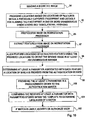
- a method of preprocessing a fingerprint image according to the instant invention is shown, wherein biometric data in the form of a public portion of a template is not provided to a preprocessor, for instance a processor of a workstation, from an authentication server.
- a preprocessor for instance a processor of a workstation
- the process is alterable without suffering the drawbacks of the prior art methods.
- a fingerprint image of the user is captured using an imaging device of the workstation in step 67 .
- Features locations derived from a template stored on an authentication server are provided to the workstation processor in step 68 .
- the image is filtered and the contrast is adjusted to a normalized level in step 69 .
- the fingerprint image is then analyzed by the workstation processor to determine features thereof, in step 70 .
- features of fingerprints include ridge flow angle, minutia locations, minutia types, minutia directions, core location, core orientation, and so forth.
- these global position and orientation is often related to the core location and orientation.
- the method provides for provision of challenge data relating to a template, the data other than image data of a biometric information source.
- the authentication server retrieves from memory a stored template, and retrieves a plurality of feature locations from the template.
- the plurality of locations is of identifiable features, preferably features having accurately identifiable locations.
- a processor of the workstation receiving the challenge and an image of a biometric information source uses the challenge data to orient the biometric information source relative thereto in step 71 . This is performed by identifying features within the image, determining feature locations, and then moving the feature locations to overlap the provided locations until a reasonable approximation of image positioning is achieved in step 72 .
- data relating to a plurality of features within the image are provided to the authentication server in a predetermined order for correlation in step 73 .
- the data relates to minutia locations and directions of the 12 minutiae nearest the first point provided.
- the processor of the authentication server need only compare a plurality of values to values within the template stored thereon in order to form a registration measure for use in user authorization in step 74 .
- the comparison is not a fixed comparison to allow for missed minutia or extra minutia within a template.
- the template accounts for differing orders of minutia in the above example due to inaccuracies in core locating that may occur. If a match is likely, the user is identified or recognized in step 75 . If a match is other than likely, then the authorization attempt is rejected and the user is denied access.
- FIG. 8 a method of preprocessing a fingerprint image according to the instant invention is shown, wherein biometric data in the form of a public portion of a template is not provided to a preprocessor, for instance a processor of a workstation, from the authentication server.
- a preprocessor for instance a processor of a workstation
- a fingerprint image of the user is captured using an imaging device of the workstation in step 76 .
- Feature locations derived from a template stored on an authentication server and some false feature locations are provided to the workstation processor in step 77 .
- the image is filtered and the contrast is adjusted to a normalized level in step 78 .
- the fingerprint image is then analyzed by the workstation processor to determine features thereof in step 79 .
- features of fingerprints include ridge flow angle, minutia locations, minutia types, minutia directions, core location, core orientation, and so forth.
- this global reference frame includes position and orientation is often related to the core location and orientation.
- the method provides for provision of challenge data relating to a template, the data other than image data of a biometric information source.
- the authentication server retrieves from memory a stored template, and retrieves a plurality of feature locations from the template.
- the plurality of locations is of identifiable features, preferably features having accurately identifiable locations.
- the authentication server further provides at least a false feature location, for instance a location that does not correspond to a location of a minutia point.
- a processor of the workstation receiving the challenge and an image of a biometric information source uses the challenge data to orient the biometric information source relative thereto and in a best manner in step 80 . This is performed by identifying features within the image, determining feature locations, and then moving the feature locations to overlap the provided locations until a reasonable approximation of image positioning is achieved in step 81 .
- data relating to a plurality of features within the image are provided to the authentication server in a predetermined order for correlation in step 82 .
- the data relates to minutia directions and types for the feature locations provided.
- the feature location is a false feature location, no such data is determinable. As such, even less information relating to the fingerprint data is provided.
- the processor of the authentication server need only compare a plurality of values to values within the template stored thereon in order to form a registration measure for use in user authorization in step 83 .
- the comparison is not a fixed comparison to allow for missed minutia or extra minutia within a template.
- the template accounts for differing orders of minutia in the above example due to inaccuracies in core locating that may occur. If a match is likely, the user is identified or recognized in step 84 . If a match is other than likely, then the authorization attempt is rejected and the user is denied access.
- FIG. 9 a method of preprocessing a fingerprint image according to the instant invention is shown, wherein biometric data in the form of a public portion of a template is not provided to a preprocessor, for instance a processor of a workstation, from the authentication server.
- a preprocessor for instance a processor of a workstation
- a fingerprint image of the user is captured using an imaging device of the workstation in step 85 .
- Feature locations derived from a template stored on an authentication server and some false feature locations are provided to the workstation processor in step 86 .
- the image is filtered and the contrast is adjusted to a normalized level in step 87 .
- the fingerprint image is then analyzed by the workstation processor to determine features thereof in step 88 .
- features of fingerprints include ridge flow angle, minutiae locations, minutiae types, minutiae directions, core location, core orientation, and so forth in step 89 .
- this global reference frame includes position and orientation is often related to the core location and orientation.
- the method provides for provision of challenge data relating to a template, the data other than image data of a biometric information source.
- the authentication server retrieves from memory a stored template, and retrieves a plurality of feature locations from the template.
- the plurality of locations is of identifiable features, preferably features having accurately identifiable locations.
- the authentication server further provided at least a false feature location, for instance a location that does not correspond to a location of a minutia point.
- a processor of the workstation receiving the challenge and an image of a biometric information source uses the challenge data to orient the biometric information source relative thereto and in a best manner. This is performed by identifying features within the image, determining feature locations, and then moving the feature locations to overlap the provided locations until a reasonable approximation of image positioning is achieved in step 90 .
- data relating to a plurality of features within the image are provided to the authentication server in a predetermined order for correlation in step 91 .
- the data relates to minutia locations and directions of the 12 minutiae nearest the first point provided.
- the data includes an indication that no feature was extracted at the at least a false feature location. This information is used to verify the accuracy of the information received from the workstation processor.
- the processor of the authentication server need only compare a plurality of values to values within the template stored thereon and to expected values for those features that are not present within the fingerprint image in order to form a registration measure for use in user authorization in step 92 .
- the comparison is not a fixed comparison to allow for missed minutia or extra minutia within a template.
- the template accounts for differing orders of minutia in the above example due to inaccuracies in core locating that may occur. If a match is likely, the user is identified or recognized in step 93 . If a match is other than likely, then the authorization attempt is rejected and the user is denied access.
- FIG. 10 a method of preprocessing a fingerprint image according to the instant invention is shown, absent a step of providing biometric data to a processor of a workstation, from an authentication server.
- a fingerprint image of the user is captured using an imaging device of the workstation in step 94 .
- the image is filtered and the contrast is adjusted to a normalized level in step 96 .
- Locations based on locations of features within a previously captured fingerprint and useable for aligning the fingerprint in one or more unambiguous orientations and translational fashions are provided in step 95 .
- the fingerprint image is then analyzed by the workstation processor to determine features thereof in step 97 .
- features of fingerprints include ridge flow angle, minutia locations, minutia types, minutia directions, core location, core orientation, and so forth in step 98 .
- any of the features to have meaning, they all must be related to a global position; this global position and orientation is often related to the core location and orientation.
- the workstation processor receives from the authentication server a plurality of locations relative to feature locations associated with the template to which the fingerprint data is to be registered.
- the locations may be 4 pixels to the right and 3 pixels below each feature location.
- the plurality of locations is a known offset and direction from identifiable features, preferably features having accurately identifiable locations.
- the known offset is preferably predetermined though it could also be dynamic in nature requiring synchronization between the authentication server and the workstation or provided from the authentication server to the workstation.
- the workstation processor uses the extracted feature locations to orient the captured fingerprint image relative to the provided locations. This is performed by identifying features within the image, determining feature locations, and then moving the feature locations to overlap feature locations determined relative to the provided locations until a reasonable approximation of image positioning is achieved in step 99 .
- data relating to a plurality of features within the image are provided in a predetermined order to the authentication server for correlation in step 100 .
- the data relates to minutia directions and types of features offset from the locations provided.
- the processor of the authentication server need only compare a plurality of values to values within a template stored thereon in order to form a registration measure for use in user authorization in step 101 .
- the comparison is not a fixed comparison to allow for missed minutiae or extra minutiae within a template. If a match is likely, the user is identified or recognized in step 102 . If a match is other than likely, then the authorization attempt is rejected and the user is denied access.
- such a method permits different offsets to be applied to different provided feature locations thereby obfuscating any feature related data that may be determined from the data provided.
- FIG. 11 a method of preprocessing a fingerprint image according to the instant invention is shown, absent a step of providing biometric data to a processor of a workstation, from an authentication server.
- a fingerprint image of the user is captured using an imaging device of the workstation in step 103 .
- Locations and offsets based on locations of features within a previously captured fingerprint and useable for aligning the fingerprint in one or more unambiguous orientations and translational fashions are provided in step 104 .
- the image is filtered and the contrast is adjusted to a normalized level in step 105 .
- the fingerprint image is then analyzed by the workstation processor to determine features thereof in step 106 .
- features of fingerprints include ridge flow angle, minutia locations, minutia types, minutia directions, core location, core orientation, and so forth.
- any of the features to have meaning they all must be related to a global position; this global position and orientation is often related to the core location and orientation.
- the workstation processor receives from the authentication server a plurality of locations relative to feature locations associated with the template to which the fingerprint data is to be registered.
- the locations may be 4 pixels away from each feature location.
- the plurality of locations is a known offset from identifiable features, preferably features having accurately identifiable locations.
- the known offset is preferably predetermined though it could also be dynamic in nature requiring synchronization between the authentication server and the workstation or provided from the authentication server to the workstation in step 107 .
- the workstation processor uses the extracted feature locations and directions to orient the captured fingerprint image relative to the provided locations. This is performed by identifying features within the image, determining feature locations and orientations, and then determining an image orientation such that the points the known offset from the features along the feature direction overlap the locations provided in step 108 .
- data relating to a plurality of features within the image are provided in a predetermined order to the authentication server for correlation in step 109 .
- the data relates to minutia directions and types of features offset from the locations provided.
- the processor of the authentication server need only compare a plurality of values to values within a template stored thereon in order to form a registration measure for use in user authorization in step 110 .
- the comparison is not a fixed comparison to allow for missed minutia or extra minutia within a template. If a match is likely, the user is identified or recognized in step 111 . If a match is other than likely, then the authorization attempt is rejected and the user is denied access.
- a method wherein locations relating to feature locations but not providing any useful information relating to the biometric image is proposed.
- locations determinable from features and their locations are provided.
- the offset of the feature locations are determined and applied on the authentication server. This eliminates drawbacks of the method of Fig. 10 . For example, if two different radii were used with a same individual, the fact that the two resulting circles, when plotted, have two intersections, limits feature locations to two locations. As such, instead of a feature lying on a circle, it is now within one of two points. A third radius would likely result in knowledge of the feature location.
- FIG. 12 a method of preprocessing a fingerprint image according to the instant invention is shown, absent a step of providing biometric data to a processor of a workstation, from the authentication server.
- a fingerprint image of the user is captured using an imaging device of the workstation in step 112 .
- the image is filtered and the contrast is adjusted to a normalized level in step 113 .
- the workstation processor then analyzes the fingerprint image to determine features thereof in step 114 .
- features of fingerprints include ridge flow angle, minutia locations, minutia types, minutia directions, core location, core orientation, and so forth.
- ridge flow angle ridge flow angle
- minutia locations minutia types
- minutia directions e.g., core location, core orientation, and so forth.
- the workstation processor provides to the authentication server data relating to the extracted features in step 115 .
- feature location and directions are provided.
- the authentication server applies a transform to each feature location in step 116 . Since the direction of each feature is provided, the authentication server can use this information in applying the transform. As such, application of radius and angle offsets to each feature location is possible with a reasonable amount of computation.
- the transformed feature locations are returned to the workstation processor in step 117 along with a plurality of alignment locations in step 118 .
- changing radii or angle or feature quality on which these are based is now possible without divulging information on the feature locations of features within the template in step 119 .
- the alignment problem for the workstation processor is a straightforward alignment process since the feature locations and the alignment locations are known at the outset and need not be re-determined for different potential alignments as is the case for the method of Fig. 11 .
- the transformed feature locations may be 4 pixels away from each feature location and the alignment locations are similarly 4 pixels from each feature location.
- data relating to a plurality of features within the image are provided in a predetermined order to the authentication server for correlation in step 120 .
- the data relates to minutia directions and types of features offset from the locations provided.
- the processor of the authentication server need only perform a simple transform for each feature location received and compare a plurality of values to values within a template stored thereon in order to form a registration measure for use in user authorization in step 121 .
- the comparison is not a fixed comparison to allow for missed minutia or extra minutia within a template. If a match is likely, the user is identified or recognized in step 122 . If a match is other than likely, then the authorization attempt is rejected and the user is denied access.
- such a method permits different offsets and/or directions to be applied to different features based on the features themselves in performing image alignment. This obfuscates any feature related data that may be determined from the data provided. This also makes alignment of the image data very difficult absent knowledge of the process and the image contents.
- a frame within which to provide image data or data relating to features therein. For example, 12 minutiae locations are provided. Once the image is aligned to the minutiae locations, a subimage within a provided frame is analyzed for features and their types and orientations - angles. Thus, only a portion of the image is used for each correlation.
- the portion used for correlation can be arbitrarily moved between correlation processes to prevent record playback attacks and to prevent interception of useful image related feature data.
- the location data is movable. For example, within a template twelve feature locations are stored for each of 20 different rotations of the image. The results for those feature locations are also stored for each of the 20 different orientations. Thus, each time a same individual attempts to gain access, a different set of locations is provided and a different result is expected. Of course, selection from any number of available features further complicates the reverse engineering and/or hacking of such a system.
- the authentication server processing is no longer a bottleneck within the critical path of a multitude of simultaneous authentication processes, and can now support any number of rotational angles and translations for any number of features.
- the authentication server provides a public portion of a fingerprint image or of the biometric data to the workstation to permit preprocessing thereby.
- the authentication server provides to the workstation to image areas from within the image of the biometric information source for use in aligning a sensed image with the template.
- an image of the biometric information source is provided absent a section thereof.
- the returned data from the workstation preferably relates to the absent section.
- the invention relates to providing data relating to the image of the biometric information source and allowing alignment thereof by a processor of the workstation.
Landscapes
- Engineering & Computer Science (AREA)
- Theoretical Computer Science (AREA)
- Computer Security & Cryptography (AREA)
- Physics & Mathematics (AREA)
- General Physics & Mathematics (AREA)
- Computer Hardware Design (AREA)
- Software Systems (AREA)
- General Engineering & Computer Science (AREA)
- Human Computer Interaction (AREA)
- Multimedia (AREA)
- Collating Specific Patterns (AREA)
Claims (93)
- Verfahren zum Authentisieren von biometrischen erfassten Daten auf einem Authentisierungsserver, wobei das Verfahren umfasst:Bereitstellen eines biometrischen Bildes, das von einer biometrischen Abbildungsvorrichtung erfasst ist, für eine Workstation, die dafür ausgelegt ist, mit dem Authentisierungsserver zu kommunizieren;in der Workstation erfolgendes Bereitstellen von Merkmalsdaten im Zusammenhang mit einer Mehrzahl von unzusammenhängenden Merkmalen von Musterdaten von dem Authentisierungsserver für die Workstation, wobei die Merkmalsdaten Koordinatendaten sind;Extrahieren von charakteristischen Daten aus dem erfassten biometrischen Bild, wobei die charakteristischen Daten der Korrelation mit den bereitgestellten Merkmalsdaten dienen;Ausrichten des erfassten biometrischen Bildes innerhalb eines bekannten Bezugsrahmens relativ zu den Musterdaten auf Grundlage der bereitgestellten Merkmalsdaten und der extrahierten charakteristischen Daten;aus dem erfassten biometrischen Bild erfolgendes Extrahieren von biometrischen Daten im Zusammenhang mit wenigstens einem Parameter, der mit jedem Merkmal verknüpft ist, wovon eine Position von dem Authentisierungsserver bereitgestellt ist, wobei die biometrischen Daten innerhalb des bekannten Bezugsrahmens sind; undBereitstellen der biometrischen erfassten Daten für den Authentisierungsserver zur Authentisierung.
- Verfahren nach Anspruch 1, dadurch gekennzeichnet, dass der Schritt des Extrahierens von biometrischen Daten ein Extrahieren von Minuzientypen und Minuzienwinkeln umfasst.
- Verfahren zum Abgleichen von biometrischen erfassten Daten nach Anspruch 1, dadurch gekennzeichnet, dass der Authentisierungsserver in Kontakt mit einer Mehrzahl von Identifizierungssystemen ist, wobei jedes von den Identifizierungssystemen eine biometrische Abbildungsvorrichtung beinhaltet.
- Verfahren nach Anspruch 1, dadurch gekennzeichnet, dass die unzusammenhängenden Merkmale der Musterdaten Minuzien beinhalten, für die Daten innerhalb eines Musters gespeichert sind, das auf dem Authentisierungsserver gespeichert ist, von dem die Musterdaten genommen sind.
- Verfahren nach Anspruch 4, dadurch gekennzeichnet, dass die unzusammenhängenden Merkmale der Musterdaten nur Minuzien beinhalten, für die Daten innerhalb des Musters gespeichert sind, das auf dem Authentisierungsserver gespeichert ist, aus dem die Musterdaten genommen sind.
- Verfahren nach Anspruch 4, dadurch gekennzeichnet, dass die unzusammenhängenden Merkmale des Musters des Weiteren Falschmerkmale beinhalten, für die Daten nicht innerhalb des Musters gespeichert sind.
- Verfahren nach Anspruch 6, des Weiteren umfassend ein Identifizieren von Falschmerkmalspositionen.
- Verfahren nach Anspruch 7, dadurch gekennzeichnet, dass die biometrischen Daten Daten im Zusammenhang mit Merkmalspositionen beinhalten, die als Falschmerkmalspositionen identifiziert sind.
- Verfahren nach Anspruch 4, dadurch gekennzeichnet, dass die charakteristischen Daten Minuzienpositionen von Minuzien beinhalten, die innerhalb des biometrischen Bildes befindlich sind.
- Verfahren nach Anspruch 9, dadurch gekennzeichnet, dass die biometrischen Daten Daten im Zusammenhang mit denjenigen Merkmalen beinhalten, für die Koordinatendaten von dem Authentisierungsserver bereitgestellt sind.
- Verfahren nach Anspruch 1, dadurch gekennzeichnet, dass die charakteristischen Daten Minuzienpositionen von Minuzien beinhalten, die innerhalb des biometrischen Bildes befindlich sind, wobei die biometrischen Daten Daten im Zusammenhang mit denjenigen Merkmalen beinhalten, für die Koordinatendaten von dem Authentisierungsserver bereitgestellt sind, wobei die unzusammenhängenden Merkmale des Musters Minuzien beinhalten, für die Daten innerhalb eines Musters gespeichert sind, das auf dem Authentisierungsserver gespeichert ist, von dem die Musterdaten genommen sind, und die biometrischen erfassten Daten für den Authentisierungsserver in einer selben Reihenfolge von Merkmalen wie die Reihenfolge der bereitgestellten Koordinatendaten bereitgestellt werden.
- Verfahren nach Anspruch 11, dadurch gekennzeichnet, dass die biometrischen Daten Minuzienrichtungen für jede Minuzienkoordinate beinhalten, für die Daten von dem Authentisierungsserver empfangen worden sind.
- Verfahren nach Anspruch 1, dadurch gekennzeichnet, dass die biometrischen erfassten Daten Minuzienrichtungen für jede Minuzienkoordinate beinhalten, für die Daten von dem Authentisierungsserver empfangen worden sind.
- Verfahren nach Anspruch 1, dadurch gekennzeichnet, dass die Mehrzahl von unzusammenhängenden Merkmalen wenigstens zehn Merkmale beinhaltet.
- Verfahren nach Anspruch 14, dadurch gekennzeichnet, dass die Mehrzahl von unzusammenhängenden Merkmalen alle Merkmale wenigstens eines Merkmalstyps beinhaltet.
- Verfahren nach Anspruch 1, dadurch gekennzeichnet, dass die Mehrzahl von unzusammenhängenden Merkmalen derart ausgewählt ist, dass nicht ausreichende Minuzien zur akkuraten Identifizierung eines dichteren Clusters rund um einen Kern eines Fingerabdruckes, von dem die Merkmale genommen sind, vorhanden sind.
- Verfahren nach Anspruch 1, dadurch gekennzeichnet, dass die Mehrzahl von unzusammenhängenden Merkmalen derart ausgewählt ist, dass Abstände dazwischen zur Verwendung bei der Ausrichtung zur Verringerung von Winkelausrichtungsfehlern maximiert werden.
- Verfahren nach Anspruch 1, des Weiteren umfassend ein Bereitstellen eines Identifizierers für den Authentisierungsserver, wobei der Identifizierer der Verwendung beim Bestimmen eines Musters, von dem die Musterdaten genommen sind, dient.
- Verfahren nach Anspruch 18, des Weiteren umfassend ein Bestimmen eines Musters, das mit dem bereitgestellten Identifizierer verknüpft ist, als das Muster und ein Wiederherstellen der Koordinatendaten aus dem Muster.
- Verfahren nach Anspruch 1, des Weiteren umfassend ein Vorverarbeiten des biometrischen Bildes mit der Workstation.
- Verfahren nach Anspruch 20, dadurch gekennzeichnet, dass das Vorverarbeiten des biometrischen Bildes durchgeführt wird, um mögliche Falschmerkmale aus dem biometrischen Bild zu beseitigen.
- Verfahren nach Anspruch 1, des Weiteren umfassend:Korrelieren der empfangenen biometrischen Daten und von innerhalb des Musters gespeicherten Daten undIdentifizieren einer Einzelperson oder Nichtidentifizieren der Einzelperson in Abhängigkeit von einem Ergebnis des Korrelierens.
- Verfahren nach Anspruch 1, des Weiteren umfassend:Korrelieren der empfangenen biometrischen Daten und von innerhalb des Musters gespeicherten Daten; unddann, wenn eine Korrelation auf eine befugte Einzelperson hinweist, erfolgendes Wiederherstellen von Daten von dem Authentisierungsserver zur Bereitstellung für die Workstation.
- Verfahren nach Anspruch 1, des Weiteren umfassend:Korrelieren der empfangenen biometrischen Daten und von innerhalb des Musters gespeicherten Daten; unddann, wenn eine Korrelation auf eine befugte Einzelperson hinweist, erfolgendes Durchführen eines sicherheitsbezogenen Prozesses auf dem Authentisierungsserver, wobei der sicherheitsbezogene Prozess dem Zugriff auf sichere Daten dient, wobei auf die sicheren Daten nur bei einem erfolgreichen Schritt der Korrelation, der auf eine befugten Einzelperson hinweist, zugegriffen werden kann.
- Verfahren nach Anspruch 1, dadurch gekennzeichnet, dass das biometrische Bild ein Fingerabdruckbild ist.
- Verfahren nach Anspruch 1, dadurch gekennzeichnet, dass das biometrische Bild innerhalb eines jeden aus einer Mehrzahl von bekannten Bezugsrahmen ausgerichtet ist, sowie dadurch gekennzeichnet, dass biometrische erfasste Daten für den Authentisierungsserver innerhalb eines jeden aus der Mehrzahl von Bezugsrahmen bereitgestellt sind.
- Verfahren nach Anspruch 26, dadurch gekennzeichnet, dass die Mehrzahl von bekannten Bezugsrahmen zwei bekannte Bezugsrahmen beinhaltet.
- Verfahren zum Registrieren von biometrischen Daten mit einem Muster eines Authentisierungsservers, umfassend:Bereitstellen von Ausrichtungsdaten mit Merkmalskoordinaten von einem gespeicherten Muster zur Übertragung von einem Authentisierungsserver, wobei die Ausrichtungsdaten der Verwendung durch eine biometrische Abbildungsvorrichtung beim Ausrichten von erfassten biometrischen Daten innerhalb eines bekannten Bezugsrahmens dienen,Empfangen von biometrischen Daten im Zusammenhang mit wenigstens einem Parameter, der mit jedem Merkmal verknüpft ist, wovon eine Position von dem Authentisierungsserver bereitgestellt wird, von der biometrischen Abbildungsvorrichtung, die innerhalb des bekannten Bezugsrahmens ausgerichtet worden ist, undKorrelieren der empfangenen biometrischen Daten mit Musterdaten des gespeicherten Musters, wobei das Korrelieren innerhalb des Authentisierungsservers zur Erzeugung eines Korrelationsergebnisses durchgeführt wird.
- Verfahren zum Registrieren von biometrischen Daten nach Anspruch 28, wobei die Koordinaten derart ausgewählt sind, dass nicht ausreichende Information zur akkuraten Identifizierung von Merkmalen des gespeicherten Musters vorhanden ist, und der Schritt des Empfangens von biometrischen Daten ein Empfangen von Minuzientypen und Minuzienwinkeln aus empfangenen biometrischen Daten von der biometrischen Abbildungsvorrichtung umfasst.
- Verfahren zum Registrieren von biometrischen Daten nach Anspruch 28, dadurch gekennzeichnet, dass die Koordinaten Koordinaten von unzusammenhängenden Merkmalen innerhalb des Musters sind.
- Verfahren zum Registrieren von biometrischen Daten nach Anspruch 30, dadurch gekennzeichnet, dass die Koordinaten Koordinaten von Minuzien sind.
- Verfahren zum Registrieren von biometrischen Daten nach Anspruch 28, dadurch gekennzeichnet, dass die Koordinaten Koordinaten sind, die auf Grundlage von Merkmalen bestimmt werden, die innerhalb des Musters beinhaltet sind, jedoch nicht die Koordinaten dieser Merkmale innerhalb des Musters.
- Verfahren zum Registrieren von biometrischen Daten nach Anspruch 32, dadurch gekennzeichnet, dass die Koordinaten Koordinaten sind, die von Merkmalskoordinaten um einen festen Versatz und in einer Richtung versetzt sind.
- Verfahren zum Registrieren von biometrischen Daten nach Anspruch 33, des Weiteren umfassend:Empfangen von Merkmalsdaten; undUmwandeln der Merkmalsdaten entsprechend dem festen Versatz und der Richtung.
- Verfahren zum Registrieren von biometrischen Daten nach Anspruch 34, dadurch gekennzeichnet, dass die Koordinaten Koordinaten sind, die von Merkmalskoordinaten um einen Vorsatz und in einer Richtung versetzt sind, wobei wenigstens eines von dem Versatz und der Richtung abhängig von einem Charakteristikum des Merkmals ist.
- Verfahren zum Registrieren von biometrischen Daten nach Anspruch 36, des Weiteren umfassend:Empfangen von Merkmalsdaten; undUmwandeln der Merkmalsdaten entsprechend dem Versatz und der Richtung.
- Verfahren zum Registrieren von biometrischen Daten nach Anspruch 30, dadurch gekennzeichnet, dass die unzusammenhängenden Merkmale Falschmerkmale beinhalten, für die Daten nicht innerhalb des Musters gespeichert sind.
- Verfahren zum Registrieren von biometrischen Daten nach Anspruch 37, des Weiteren umfassend:Empfangen von Daten im Zusammenhang mit identifizierten Falschmerkmalspositionen; undVerifizieren, dass die Merkmalspositionen, die als Falschmerkmalspositionen identifiziert sind, Falschmerkmalspositionen entsprechen.
- Verfahren nach Anspruch 28, dadurch gekennzeichnet, dass die Mehrzahl von unzusammenhängenden Merkmalen derart ausgewählt ist, dass nicht ausreichende Minuzien zur akkuraten Identifizierung eines dichteren Clusters rund um einen Kern eines Fingerabdruckes, von dem die Merkmale genommen sind, vorhanden sind.
- Verfahren zum Registrieren von biometrischen Daten nach Anspruch 28, dadurch gekennzeichnet, dass die Koordinaten Koordinaten von unzusammenhängenden Merkmalen innerhalb der Muster sind, die biometrischen Daten Daten im Zusammenhang mit denjenigen Merkmale beinhalten, für die Koordinatendaten von dem Authentisierungsserver bereitgestellt sind, und die biometrischen Daten von dem Authentisierungsserver in einer selben Reihenfolge von Merkmalen wie die Reihenfolge der bereitgestellten Koordinatendaten empfangen werden, wobei die biometrischen Daten für jedes Merkmal in einer Reihenfolge empfangen werden, die auf Grundlage der Reihenfolge bestimmt ist, in der die Merkmalskoordinaten für jenes Merkmal von dem Authentisierungsserver bereitgestellt worden sind; und des Weiteren umfassend ein Korrelieren der empfangenen biometrischen Daten mit Musterdaten des gespeicherten Musters, wobei das Korrelieren innerhalb des Authentisierungsservers zur Erzeugung eines Korrelationsergebnisses durchgeführt wird.
- Verfahren zum Registrieren von biometrischen Daten nach Anspruch 40, dadurch gekennzeichnet, dass die biometrischen Daten von dem Authentisierungsserver in einer selben Reihenfolge von Merkmalen wie die Reihenfolge der bereitgestellten Koordinatendaten empfangen werden, wobei die biometrischen Daten für jedes Merkmal in einer selben Reihenfolge empfangen werden, wie die Merkmalskoordinaten für jenes Merkmal von dem Authentisierungsserver bereitgestellt worden sind.
- Verfahren zum Registrieren von biometrischen Daten nach Anspruch 41, dadurch gekennzeichnet, dass die biometrischen Daten Minuzienrichtungen für jede Minuzienkoordinate beinhalten, für die Daten von dem Authentisierungsserver bereitgestellt worden sind.
- Verfahren zum Registrieren von biometrischen Daten nach Anspruch 28, dadurch gekennzeichnet, dass die biometrischen Daten die Minuzienrichtungen für jede Minuzienkoordinate beinhalten, für die Daten von dem Authentisierungsserver bereitgestellt worden sind.
- Verfahren zum Registrieren von biometrischen Daten nach Anspruch 28, dadurch gekennzeichnet, dass die Koordinaten wenigstens zehn Merkmalspositionen entsprechen.
- Verfahren zum Registrieren von biometrischen Daten nach Anspruch 44, dadurch gekennzeichnet, dass die Koordinaten Positionen für alle Merkmale wenigstens eines Merkmalstyps entsprechen und Daten im Zusammenhang hiermit, die innerhalb des Musters gespeichert sind, aufweisen.
- Verfahren zum Registrieren von biometrischen Daten nach Anspruch 28, dadurch gekennzeichnet, dass die Koordinaten derart ausgewählt sind, dass Abstände dazwischen zur Verwendung bei der Ausrichtung zur Verringerung von Winkelausrichtungsfehlern maximiert werden.
- Verfahren zum Registrieren von biometrischen Daten nach Anspruch 28, des Weiteren umfassend ein Empfangen eines Identifizierers, wobei der Identifizierer der Verwendung beim Bestimmen des gespeicherten Musters dient.
- Verfahren zum Registrieren von biometrischen Daten nach Anspruch 47, des Weiteren umfassend ein Bestimmen eines Musters, das mit dem empfangenen Identifizierer verknüpft ist, als das gespeicherte Muster und ein Wiederherstellen der Koordinatendaten aus dem gespeicherten Muster.
- Verfahren zum Registrieren von biometrischen Daten nach Anspruch 28, des Weiteren umfassend ein Durchführen wenigstens eines Identifizierens einer Einzelperson oder eines Nichtidentifizierens der Einzelperson in Abhängigkeit von einem Ergebnis des Korrelierens.
- Verfahren zum Registrieren von biometrischen Daten nach Anspruch 28, des Weiteren umfassend ein dann, wenn eine Korrelation auf eine befugte Einzelperson hinweist, erfolgendes Wiederherstellen von Daten von dem Authentisierungsserver zur Bereitstellung für eine mit der biometrischen Abbildungsvorrichtung verknüpfte Workstation.
- Verfahren zum Registrieren von biometrischen Daten nach Anspruch 28, des Weiteren umfassend ein dann, wenn eine Korrelation auf eine befugte Einzelperson hinweist, erfolgendes Durchführen eines sicherheitsbezogenen Prozesses auf dem Authentisierungsserver, wobei der sicherheitsbezogene Prozess dem Zugriff auf sichere Daten dient, wobei auf die sicheren Daten nur bei einem erfolgreichen Schritt der Korrelation, der auf eine befugte Einzelperson hinweist, zugegriffen werden kann.
- Verfahren zum Registrieren von biometrischen Daten nach Anspruch 28, dadurch gekennzeichnet, dass das biometrische Bild ein Fingerabdruckbild ist.
- Verfahren zum Registrieren von biometrischen Daten nach Anspruch 28, dadurch gekennzeichnet, dass die biometrischen Daten Daten beinhalten, die innerhalb eines jeden aus einer Mehrzahl von bekannten Bezugsrahmen bestimmt sind, sowie dadurch gekennzeichnet, dass der Schritt des Korrelierens zum Identifizieren der Daten innerhalb des bekannten Bezugsrahmens und Korrelieren jener Daten mit den Daten aus dem gespeicherten Muster durchgeführt wird.
- Verfahren zum Registrieren von biometrischen Daten eines Authentisierungsservers mit einer Mehrzahl von darauf gespeicherten Mustern, umfassend:Auswählen eines Musters aus der Mehrzahl von Mustern;Erfassen eine biometrischen Quelle zur Bereitstellung von biometrischen Daten;Empfangen von Ausrichtungsdaten im Zusammenhang mit dem ausgewählten Muster mit Merkmalskoordinaten von dem Authentisierungsserver, wobei die Ausrichtungsdaten der Verwendung beim Ausrichten von erfassten biometrischen Daten innerhalb eines bekannten Bezugsrahmens dienen, wobei die Koordinaten derart ausgewählt sind, dass eine nicht ausreichende Information zur akkuraten Identifizierung von unzusammenhängenden Merkmalen des gespeicherten Musters vorhanden ist;Ausrichten der erfassten biometrischen Bilddaten innerhalb des bekannten Bezugsrahmens;aus den ausgerichteten biometrischen Bilddaten erfolgendes Bestimmen von Minuzientypen und Minuzienwinkeln an die empfangenen Koordinaten als extrahierte biometrische Daten, undBereitstellen der extrahierten biometrischen Daten auf Grundlage der ausgerichteten biometrischen Bilddaten und innerhalb des bekannten Bezugsrahmens für den Authentisierungsserver.
- Verfahren zum Registrieren von biometrischen Daten nach Anspruch 54, wobei die Koordinaten derart ausgewählt sind, dass nicht ausreichende Information zur akkuraten Identifizierung von unzusammenhängenden Merkmalen des gespeicherten Musters vorhanden ist.
- Verfahren zum Registrieren von biometrischen Daten nach Anspruch 55, dadurch gekennzeichnet, dass sich die Koordinaten auf unzusammenhängende Merkmale des Musters beziehen.
- Verfahren zum Registrieren von biometrischen Daten nach Anspruch 55, dadurch gekennzeichnet, dass die unzusammenhängenden Merkmale nur Minuzien beinhalten, für die Daten innerhalb des Musters aufgezeichnet sind.
- Verfahren zum Registrieren von biometrischen Daten nach Anspruch 54, wobei die unzusammenhängenden Merkmale in den biometrischen Daten Minuzien beinhalten, für die Daten innerhalb des Musters aufgezeichnet sind.
- Verfahren zum Registrieren von biometrischen Daten nach Anspruch 54, wobei die unzusammenhängenden Merkmale Falschmerkmale beinhalten, für die Daten nicht innerhalb des Musters gespeichert sind.
- Verfahren zum Registrieren von biometrischen Daten nach Anspruch 59, des Weiteren umfassend ein Identifizieren von Falschmerkmalspositionen.
- Verfahren zum Registrieren von biometrischen Daten nach Anspruch 60, dadurch gekennzeichnet, dass die biometrischen Daten Daten im Zusammenhang mit Merkmalspositionen beinhalten, die als Falschmerkmalspositionen identifiziert sind.
- Verfahren zum Registrieren von biometrischen Daten nach Anspruch 58, dadurch gekennzeichnet, dass die extrahierten biometrischen Daten Minuzienpositionen von Minuzien beinhalten, die innerhalb des biometrischen Bildes befindlich sind.
- Verfahren nach Anspruch 62, dadurch gekennzeichnet, dass die biometrischen Daten Daten im Zusammenhang mit denjenigen Merkmalen beinhalten, für die Koordinatendaten von dem Authentisierungsserver bereitgestellt sind.
- Verfahren zum Registrieren von biometrischen Daten nach Anspruch 54, dadurch gekennzeichnet, dass die biometrischen Daten Daten im Zusammenhang mit Merkmalen beinhalten, für die Koordinatendaten von dem Authentisierungsserver bereitgestellt sind, wobei die unzusammenhängenden Merkmale in den biometrischen Daten Minuzien beinhalten, für die Daten innerhalb des Musters aufgezeichnet sind, und die biometrischen Daten für den Authentisierungsserver in einer selben Reihenfolge von Merkmalen wie die Reihenfolge der bereitgestellten Koordinatendaten bereitgestellt werden, wobei die biometrischen Daten für jedes Merkmal in einer selben Reihenfolge bereitgestellt werden, wie die Merkmalskoordinaten für jenes Merkmal von dem Authentisierungsserver empfangen worden sind.
- Verfahren zum Registrieren von biometrischen Daten nach Anspruch 64, dadurch gekennzeichnet, dass die biometrischen Daten die Minuzienrichtungen für jede Minuzienkoordinate beinhalten, für die Daten von dem Authentisierungsserver empfangen worden sind.
- Verfahren zum Registrieren von biometrischen Daten nach Anspruch 54, dadurch gekennzeichnet, dass die biometrischen Daten die Minuzienrichtungen für jede Minuzienkoordinate beinhalten, für die Daten von dem Authentisierungsserver empfangen worden sind.
- Verfahren zum Registrieren von biometrischen Daten nach Anspruch 54, des Weiteren umfassend ein Bereitstellen eines Identifizierers für den Authentisierungsserver, wobei der Identifizierer der Verwendung beim Bestimmen des Musters dient.
- Verfahren zum Registrieren von biometrischen Daten nach Anspruch 54, des Weiteren umfassend ein Vorverarbeiten des biometrischen Bildes.
- Verfahren zum Registrieren von biometrischen Daten nach Anspruch 68, dadurch gekennzeichnet, dass das Vorverarbeiten des biometrischen Bildes zur Beseitigung von möglichen Falschmerkmalen aus dem biologischen Bild durchgeführt wird.
- Verfahren zum Registrieren von biometrischen Daten nach Anspruch 54, dadurch gekennzeichnet, dass das biometrische Bild ein Fingerabdruckbild ist.
- Verfahren zum Registrieren von biometrischen Daten nach Anspruch 54, dadurch gekennzeichnet, dass das biometrische Bild innerhalb eines jeden aus einer Mehrzahl von bekannten Bezugsrahmen ausgerichtet ist, sowie dadurch gekennzeichnet, dass die extrahierten biometrischen Daten für den Authentisierungsserver innerhalb eines jeden aus der Mehrzahl von Bezugsrahmen bereitgestellt sind.
- Verfahren zum Registrieren von biometrischen Daten nach Anspruch 71, dadurch gekennzeichnet, dass die Mehrzahl von bekannten Bezugsrahmen zwei bekannte Bezugsrahmen beinhaltet.
- Authentisierungsserver zum Durchführen einer biometrischen Identifizierung, umfassend:einen Sendeempfänger zum Übertragen von Daten von dem Authentisierungsserver und zum Empfangen von Daten, die für den Authentisierungsserver bereitgestellt sind;einen Prozessor; undeinen Speicher zum Speichern von Musterdaten im Zusammenhang mit einem biometrischen Bild und zum Speichern von Daten im Zusammenhang mit Anweisungen zur Ausführung durch den Prozessor, wobei die Anweisungen Anweisungen zum Durchführen des Nachfolgenden umfassen:Bereitstellen von Ausrichtungsdaten, die Merkmalskoordinaten von einem gespeicherten Muster beinhalten für den Sendeempfänger zur Übertragung von dem Authentisierungsserver, wobei die Ausrichtungsdaten der Verwendung durch eine biometrische Abbildungsvorrichtung beim Ausrichten von erfassten biometrischen Daten innerhalb eines bekannten Bezugsrahmens dienen, wobei die Koordinaten derart ausgewählt sind, dass nicht ausreichende Information zur akkuraten Identifizierung von Merkmalen des gespeicherten Musters vorhanden ist;Empfangen von Minuzientypen und Minuzienwinkeln an die bereitgestellten Koordinaten aus den erfassten biometrischen Daten von der biometrischen Abbildungsvorrichtung, die mit dem bekannten Bezugsrahmen ausgerichtet worden sind;Korrelieren der empfangenen Minuzientypen und Minuzienwinkel mit Musterdaten des gespeicherten Musters innerhalb des Speichers, wobei das Korrelieren innerhalb des Authentisierungsservers zur Erzeugung eines Korrelationsergebnisses durchgeführt wird; undIdentifizieren oder Authentisieren einer Einzelperson in Abhängigkeit vom Korrelationsergebnis.
- Authentisierungsserver nach Anspruch 73, wobei der Sendeempfänger dafür ausgelegt ist, Daten an eine Mehrzahl von Identifizierungssystemen, die biometrische Abbildungsvorrichtungen zum Erfassen von biometrischen Daten umfassen, zu übertragen und Daten von diesen zu empfangen.
- Authentisierungsserver nach Anspruch 73, wobei der Sendeempfänger dafür ausgelegt ist, einen Identifizierer zu empfangen, wobei der Identifizierer der Verwendung durch den Prozessor beim Bestimmen des gespeicherten Musters, von dem die Musterdaten zu nehmen sind, dient.
- Authentisierungsserver nach Anspruch 75, wobei die Anweisungen Anweisungen zum Bestimmen eines mit dem bereitgestellten Identifizierer verknüpften Musters als das gespeicherte Muster und ein Wiederherstellen der Koordinaten aus dem gespeicherten Muster beinhalten.
- Authentisierungsserver nach Anspruch 73, wobei dann, wenn eine Korrelation auf eine befugte Einzelperson hinweist, der Sendeempfänger Daten für einen weiteren Prozessor bereitstellt.
- Authentisierungsserver nach Anspruch 73, wobei dann, wenn eine Korrelation auf eine befugte Einzelperson hinweist, der Prozessor einen sicherheitsbezogenen Prozess zum Zugreifen auf sichere Daten durchführt, wobei auf die sicheren Daten nur bei einer erfolgreichen Korrelation, die auf eine befugte Einzelperson hinweist, zugegriffen werden kann.
- Authentisierungsserver nach Anspruch 73, wobei das biometrische Bild innerhalb eines jeden aus einer Mehrzahl von bekannten Bezugsrahmen ausgerichtet ist und wobei der Sendeempfänger dafür ausgelegt ist, biometrische erfasste Daten innerhalb eines jeden aus der Mehrzahl von Bezugsrahmen zu empfangen.
- Authentisierungsserver zum darauf erfolgenden Durchführen einer biometrischen Identifizierung, umfassend:einen Sendeempfänger zum Übertragen von Daten von dem Authentisierungsserver und zum Empfangen von Daten, die für den Authentisierungsserver bereitgestellt sind;einen Prozessor; undeinen Speicher zum Speichern einer Mehrzahl von Mustern, die Musterdaten im Zusammenhang mit biometrischen Daten beinhalten, und zum Speichern von Daten im Zusammenhang mit Anweisungen zur Ausführung durch den Prozessor, wobei die Anweisungen Anweisungen zum Durchführen des Nachfolgenden umfassen:Auswählen eines Musters aus der Mehrzahl von Mustern;Bereitstellen von Ausrichtungsdaten im Zusammenhang mit dem ausgewählten Muster, die Koordinaten von dem Authentisierungsserver beinhalten für den Sendeempfänger zur Übertragung an eine biometrische Abbildungsvorrichtung, wobei die Ausrichtungsdaten der Verwendung durch die biometrische Abbildungsvorrichtung beim Ausrichten von erfassten biometrischen Daten innerhalb eines bekannten Bezugsrahmens dienen, wobei die Koordinaten derart ausgewählt sind, dass nicht ausreichende Information zur akkuraten Identifizierung von unzusammenhängenden Merkmalen des gespeicherten Musters vorhanden ist;Empfangen von biometrischen Daten, die mit dem bekannten Bezugsrahmen ausgerichtet sind, wobei die ausgerichteten biometrischen Daten Minuzientypen und Minuzienwinkel an die empfangene Koordinaten beinhalten; undKorrelieren der empfangenen biometrischen Daten mit Musterdaten, die in dem ausgewählten Muster gespeichert sind, zur Erzeugung eines Korrelationsergebnisses.
- Authentisierungsserver nach Anspruch 80, wobei die Koordinaten Koordinaten sind, die von Merkmalskoordinaten um einen festen Versatz und in einer Richtung versetzt sind, und wobei der Sendeempfänger Merkmalsdaten empfängt, die von dem Prozessor entsprechend dem festen Versatz und der Richtung umgewandelt worden sind.
- Authentisierungsserver nach Anspruch 80, wobei die Koordinaten Koordinaten sind, die von Merkmalskoordinaten um einen Versatz und in einer Richtung versetzt sind, wobei wenigstens eines von dem Versatz und der Richtung von einem Charakteristikum des Merkmals abhängt und wobei der Sendeempfänger Merkmalsdaten empfängt, die von dem Prozessor entsprechend dem Versatz und der Richtung umgewandelt sind.
- Authentisierungsserver nach Anspruch 80, wobei der Sendeempfänger des Weiteren dafür ausgelegt ist, Daten im Zusammenhang mit identifizierten Falschmerkmalspositionen zu empfangen, und wobei der Prozessor dafür ausgelegt ist zu verifizieren, dass die identifizierten Falschmerkmalspositionen tatsächlichen Falschmerkmalspositionen entsprechen.
- Authentisierungsserver nach Anspruch 80, wobei der Sendeempfänger dafür ausgelegt ist, einen Identifizierer zu empfangen, wobei der Identifizierer der Verwendung durch den Prozessor beim Bestimmen des Musters, von dem die Musterdaten zu nehmen sind, dient.
- Authentisierungsserver nach Anspruch 84, wobei die Anweisungen Anweisungen zum Bestimmen eines mit dem bereitgestellten Identifizierer verknüpften Musters als das ausgewählte Muster und ein Wiederherstellen der Koordinaten aus dem ausgewählten Muster beinhalten.
- Authentisierungsserver nach Anspruch 80, wobei die Anweisungen des Weiteren Anweisungen zum Durchführen eines Identifizierens einer Einzelperson oder Nichtidentifizierens einer Einzelperson abhängig von den Ergebnissen der Korrelation beinhalten.
- Authentisierungsserver nach Anspruch 80, wobei dann, wenn eine Korrelation auf eine befugte Einzelperson hinweist, der Prozessor Daten aus dem Speicher wiederherstellt und die Daten für den Sendeempfänger zur Übertragung an einen weiteren Prozessor bereitstellt.
- Authentisierungsserver nach Anspruch 80, wobei dann, wenn eine Korrelation auf eine befugte Einzelperson hinweist, der Prozessor einen sicherheitsbezogenen Prozess zum Zugreifen auf sichere Daten durchführt, wobei auf die sicheren Daten nur bei einem erfolgreichen Schritt der Korrelation, der auf eine befugte Einzelperson hinweist, zugegriffen werden kann.
- Authentisierungsserver nach Anspruch 80, wobei die biometrischen Daten Daten beinhalten, die innerhalb eines jeden aus einer Mehrzahl von bekannten Bezugsrahmen bestimmt sind, und wobei die Korrelation zum Identifizieren der Daten innerhalb des bekannten Bezugsrahmens und Korrelieren jener Daten mit Daten aus dem ausgewählten Muster durchgeführt wird.
- Authentisierungsserver nach Anspruch 80, wobei die unzusammenhängenden Merkmale in den biometrischen Daten Minuzien beinhalten, für die Daten innerhalb des Musters aufgezeichnet sind.
- Authentisierungsserver nach Anspruch 90, wobei die unzusammenhängenden Merkmale Falschmerkmale beinhalten, für die Daten nicht innerhalb des Musters gespeichert sind.
- Computerlesbares Medium, umfassend darauf gespeicherte Anweisungsdaten, die bei Verarbeitung durch einen Prozessor den Prozessor veranlassen, Daten für eine biometrische Identifizierung mittels Durchführen des Nachfolgenden bereitzustellen:Bereitstellen eines biometrischen Bildes, das von einer biometrischen Abbildungsvorrichtung erfasst ist, für eine Workstation, die dafür ausgelegt ist, mit einem Authentisierungsserver zu kommunizieren;Empfangen von Merkmalsdaten im Zusammenhang mit einer Mehrzahl von unzusammenhängenden Merkmalen von Musterdaten von dem Authentisierungsserver, wobei die Merkmalsdaten Koordinatendaten sind, die derart ausgewählt sind, dass nicht ausreichende Information zur akkuraten Identifizierung der unzusammenhängenden Merkmale vorhanden ist;Extrahieren von charakteristischen Daten aus dem erfassten biometrischen Bild, wobei die charakteristischen Daten der Korrelation mit den bereitgestellten Merkmalsdaten dienen;Ausrichten des erfassten biometrischen Bildes innerhalb eines bekannten Bezugsrahmens relativ zu den Musterdaten auf Grundlage der bereitgestellten Merkmalsdaten und der extrahierten charakteristischen Daten;Extrahieren von Minuzientypen und Minuzienwinkeln bei den empfangenen Koordinaten aus biometrischen erfassten Daten aus dem ausgerichteten erfassten biometrischen Bild, wobei die biometrischen erfassten Daten innerhalb des bekannten Bezugsrahmens sind; undBereitstellen der Minuzientypen und Minuzienwinkel für den Authentisierungsserver zur Authentisierung mittels biometrischer Identifizierung.
- Computerlesbares Medium, umfassend darauf gespeicherte Anweisungsdaten, die bei Verarbeitung durch einen Prozessor den Prozessor veranlassen, eine biometrische Identifizierung mittels Durchführen des Nachfolgenden durchzuführen:Bereitstellen von Ausrichtungsdaten, die Merkmalskoordinaten aus einem gespeicherten Muster beinhalten, zur Übertragung an eine biometrische Abbildungsvorrichtung, wobei die Ausrichtungsdaten der Verwendung durch die biometrische Abbildungsvorrichtung beim Ausrichten von erfassten biometrischen Daten innerhalb eines bekannten Bezugsrahmens dienen, wobei die Koordinaten derart ausgewählt sind, dass nicht ausreichende Information zur akkuraten Identifizierung von Merkmalen des gespeicherten Musters vorhanden ist;Empfangen von Minuzientypen und Minuzienwinkeln an die bereitgestellten Koordinaten aus den erfassten biometrischen Daten von der biometrischen Abbildungsvorrichtung, die innerhalb des bekannten Bezugsrahmens ausgerichtet worden sind;Korrelieren der empfangenen Minuzientypen und Minuzienwinkel mit Musterdaten des gespeicherten Musters zur Erzeugung eines Korrelationsergebnisses; undIdentifizieren oder Nichtidentifizieren einer Einzelperson in Abhängigkeit vom Korrelationsergebnis.
Applications Claiming Priority (2)
| Application Number | Priority Date | Filing Date | Title |
|---|---|---|---|
| US189526 | 1994-01-31 | ||
| US10/189,526 US7400749B2 (en) | 2002-07-08 | 2002-07-08 | Method and apparatus for supporting a biometric registration performed on an authentication server |
Publications (3)
| Publication Number | Publication Date |
|---|---|
| EP1380984A2 EP1380984A2 (de) | 2004-01-14 |
| EP1380984A3 EP1380984A3 (de) | 2005-06-01 |
| EP1380984B1 true EP1380984B1 (de) | 2010-02-24 |
Family
ID=29735267
Family Applications (1)
| Application Number | Title | Priority Date | Filing Date |
|---|---|---|---|
| EP03291688A Expired - Lifetime EP1380984B1 (de) | 2002-07-08 | 2003-07-07 | Verfahren und Gerät zum Unterstützen einer biometrischen Registrierung, die auf einem Authentifizierungsserver ausgeführt wird |
Country Status (3)
| Country | Link |
|---|---|
| US (2) | US7400749B2 (de) |
| EP (1) | EP1380984B1 (de) |
| DE (1) | DE60331388D1 (de) |
Families Citing this family (37)
| Publication number | Priority date | Publication date | Assignee | Title |
|---|---|---|---|---|
| WO2003003169A2 (en) * | 2001-06-28 | 2003-01-09 | Cloakware Corporation | Secure method and system for biometric verification |
| US7574734B2 (en) * | 2002-08-15 | 2009-08-11 | Dominique Louis Joseph Fedronic | System and method for sequentially processing a biometric sample |
| US7194116B2 (en) * | 2004-04-23 | 2007-03-20 | Sony Corporation | Fingerprint image reconstruction based on motion estimate across a narrow fingerprint sensor |
| US7212658B2 (en) * | 2004-04-23 | 2007-05-01 | Sony Corporation | System for fingerprint image reconstruction based on motion estimate across a narrow fingerprint sensor |
| JP4340618B2 (ja) * | 2004-10-08 | 2009-10-07 | 富士通株式会社 | 生体情報認証装置及び方法,並びに生体情報認証プログラム及び生体情報認証プログラムを記録したコンピュータ読取可能な記録媒体 |
| US7784091B2 (en) * | 2005-01-21 | 2010-08-24 | Ricoh Company, Ltd. | Data processing system |
| US20060206429A1 (en) * | 2005-01-28 | 2006-09-14 | Martinez Pamela J | Secure identification apparatus, system and method in a portable electronic device for financial and other secure systems |
| US9424563B2 (en) | 2005-03-11 | 2016-08-23 | Microsoft Technology Licensing, Llc | Accessing medial context information using contextual links |
| US20070248249A1 (en) * | 2006-04-20 | 2007-10-25 | Bioscrypt Inc. | Fingerprint identification system for access control |
| JP4321597B2 (ja) * | 2007-01-31 | 2009-08-26 | コニカミノルタビジネステクノロジーズ株式会社 | 情報処理装置、認証システム、認証方法および認証プログラム |
| WO2009011661A1 (en) * | 2007-07-18 | 2009-01-22 | Agency For Science, Technology And Research | Method and device for determining a similarity value between minutiae templates |
| JP2010033193A (ja) * | 2008-07-25 | 2010-02-12 | Fujitsu Ltd | 認証システム及び認証用サーバ装置 |
| JP2010146120A (ja) * | 2008-12-16 | 2010-07-01 | Sony Corp | 生体認証システムおよび生体認証方法 |
| JP5147673B2 (ja) * | 2008-12-18 | 2013-02-20 | 株式会社日立製作所 | 生体認証システムおよびその方法 |
| US8655026B2 (en) * | 2009-06-24 | 2014-02-18 | Koninklijke Philips N.V. | Robust biometric feature extraction with and without reference point |
| US7865937B1 (en) | 2009-08-05 | 2011-01-04 | Daon Holdings Limited | Methods and systems for authenticating users |
| US8520903B2 (en) * | 2010-02-01 | 2013-08-27 | Daon Holdings Limited | Method and system of accounting for positional variability of biometric features |
| US8041956B1 (en) | 2010-08-16 | 2011-10-18 | Daon Holdings Limited | Method and system for biometric authentication |
| US8457370B2 (en) | 2011-01-20 | 2013-06-04 | Daon Holdings Limited | Methods and systems for authenticating users with captured palm biometric data |
| US8548206B2 (en) | 2011-01-20 | 2013-10-01 | Daon Holdings Limited | Methods and systems for capturing biometric data |
| US20140003674A1 (en) * | 2012-06-27 | 2014-01-02 | Christopher D. Coley | Skin-Based User Recognition |
| CO6820276A1 (es) * | 2012-06-29 | 2013-12-31 | Identica S A | Red paralela de autenticacion biométrica |
| US9092652B2 (en) | 2012-06-29 | 2015-07-28 | Apple Inc. | Zero reference based ridge flow map |
| US9342725B2 (en) | 2012-06-29 | 2016-05-17 | Apple Inc. | Image manipulation utilizing edge detection and stitching for fingerprint recognition |
| US9035895B2 (en) | 2012-07-13 | 2015-05-19 | Apple Inc. | Redundant sensing element sampling |
| FR2998391B1 (fr) * | 2012-11-19 | 2018-10-26 | Morpho | Procede d'identification ou d'authentification par comparaison d'images biometriques |
| US9218544B2 (en) | 2013-02-01 | 2015-12-22 | Apple Inc. | Intelligent matcher based on situational or spatial orientation |
| US9152869B2 (en) * | 2013-02-26 | 2015-10-06 | Qtech Systems Inc. | Biometric authentication systems and methods |
| US9436863B2 (en) * | 2013-09-09 | 2016-09-06 | Apple Inc. | Reconstructing a biometric image |
| US20150071507A1 (en) * | 2013-09-09 | 2015-03-12 | Apple Inc. | Reconstructing a Biometric Image |
| CN104639517B (zh) | 2013-11-15 | 2019-09-17 | 阿里巴巴集团控股有限公司 | 利用人体生物特征进行身份验证的方法和装置 |
| KR102123092B1 (ko) * | 2013-11-21 | 2020-06-15 | 삼성전자주식회사 | 지문 인식 방법 및 그 전자 장치 |
| EP3140724A4 (de) * | 2014-05-08 | 2017-12-13 | Northrop Grumman Systems Corporation | Verfahren, vorrichtungen und computerlesbare medien für biometrische erhebung qualitätsprüfung und abgleich |
| CN106330850B (zh) * | 2015-07-02 | 2020-01-14 | 创新先进技术有限公司 | 一种基于生物特征的安全校验方法及客户端、服务器 |
| US10127429B2 (en) * | 2016-11-10 | 2018-11-13 | Synaptics Incorporated | Systems and methods for spoof detection based on local interest point locations |
| CN107563171B (zh) * | 2017-09-11 | 2020-08-28 | 英业达科技有限公司 | 具有生物特征辨识模块的储存装置 |
| US20220156349A1 (en) * | 2019-03-26 | 2022-05-19 | Nec Corporation | Authentication method, authentication device, program |
Family Cites Families (25)
| Publication number | Priority date | Publication date | Assignee | Title |
|---|---|---|---|---|
| ES2161250T3 (es) | 1987-02-20 | 2001-12-01 | Sagem | Procedimientos para comparar huellas digitales. |
| JP2908204B2 (ja) | 1993-11-12 | 1999-06-21 | 日本電気ソフトウェア株式会社 | 十指指紋カード入力装置 |
| US5802199A (en) * | 1994-11-28 | 1998-09-01 | Smarttouch, Llc | Use sensitive identification system |
| US5513272A (en) | 1994-12-05 | 1996-04-30 | Wizards, Llc | System for verifying use of a credit/identification card including recording of physical attributes of unauthorized users |
| US6011858A (en) * | 1996-05-10 | 2000-01-04 | Biometric Tracking, L.L.C. | Memory card having a biometric template stored thereon and system for using same |
| US5920640A (en) | 1997-05-16 | 1999-07-06 | Harris Corporation | Fingerprint sensor and token reader and associated methods |
| US6016476A (en) | 1997-08-11 | 2000-01-18 | International Business Machines Corporation | Portable information and transaction processing system and method utilizing biometric authorization and digital certificate security |
| US6185316B1 (en) * | 1997-11-12 | 2001-02-06 | Unisys Corporation | Self-authentication apparatus and method |
| US6167517A (en) * | 1998-04-09 | 2000-12-26 | Oracle Corporation | Trusted biometric client authentication |
| US6219439B1 (en) | 1998-07-09 | 2001-04-17 | Paul M. Burger | Biometric authentication system |
| AUPQ702900A0 (en) | 2000-04-20 | 2000-05-18 | Grosvenor Leisure Incorporated | Secure biometric loop |
| US6546122B1 (en) * | 1999-07-29 | 2003-04-08 | Veridicom, Inc. | Method for combining fingerprint templates representing various sensed areas of a fingerprint to derive one fingerprint template representing the fingerprint |
| US6719200B1 (en) * | 1999-08-06 | 2004-04-13 | Precise Biometrics Ab | Checking of right to access |
| AU755933B2 (en) | 1999-08-06 | 2003-01-02 | Precise Biometrics Ab | Checking of right to access |
| US7054470B2 (en) * | 1999-12-02 | 2006-05-30 | International Business Machines Corporation | System and method for distortion characterization in fingerprint and palm-print image sequences and using this distortion as a behavioral biometrics |
| JP4426733B2 (ja) * | 2000-03-31 | 2010-03-03 | 富士通株式会社 | 指紋データ合成方法,指紋データ合成装置,指紋データ合成プログラムおよび同プログラムを記録したコンピュータ読取可能な記録媒体 |
| AU2001230699A1 (en) * | 2000-04-28 | 2001-11-12 | Precise Biometrics Ab | Biometric identity check |
| SE523463C2 (sv) | 2000-06-20 | 2004-04-20 | Precise Biometrics Ab | Anordning för fingeravtrycksläsning |
| EP1423821B1 (de) * | 2001-06-29 | 2006-08-16 | Precise Biometrics AB | Verfahren und vorrichtung zur prüfung der identität einer person, wobei ein für den fingerabdruck konstantes koordinatensystem der bezug ist |
| US20040175023A1 (en) * | 2001-07-05 | 2004-09-09 | Ola Svedin | Method and apparatus for checking a person's identity, where a system of coordinates, constant to the fingerprint, is the reference |
| DE60214033T2 (de) * | 2001-11-12 | 2007-01-04 | Precise Biometrics Ab | Verfahren und einrichtung zum vergleichen von fingerabdrücken |
| AU2003206360A1 (en) * | 2002-02-18 | 2003-09-04 | Precise Biometrics Ab | Method and device for recording fingerprint data |
| US7274807B2 (en) * | 2002-05-30 | 2007-09-25 | Activcard Ireland Limited | Method and apparatus for supporting a biometric registration performed on a card |
| EP1385118B1 (de) | 2002-05-30 | 2009-10-07 | Activcard Ireland Limited | Verfahren und Vorrichtung zum Unterstützen einer biometrischen Registrierung, die auf einer Karte ausgeführt wird |
| US7574734B2 (en) * | 2002-08-15 | 2009-08-11 | Dominique Louis Joseph Fedronic | System and method for sequentially processing a biometric sample |
-
2002
- 2002-07-08 US US10/189,526 patent/US7400749B2/en not_active Expired - Lifetime
-
2003
- 2003-07-07 EP EP03291688A patent/EP1380984B1/de not_active Expired - Lifetime
- 2003-07-07 DE DE60331388T patent/DE60331388D1/de not_active Expired - Lifetime
-
2006
- 2006-08-31 US US11/514,797 patent/US7391891B2/en not_active Expired - Lifetime
Also Published As
| Publication number | Publication date |
|---|---|
| EP1380984A2 (de) | 2004-01-14 |
| DE60331388D1 (de) | 2010-04-08 |
| US7400749B2 (en) | 2008-07-15 |
| US20070110288A1 (en) | 2007-05-17 |
| US20040005087A1 (en) | 2004-01-08 |
| EP1380984A3 (de) | 2005-06-01 |
| US7391891B2 (en) | 2008-06-24 |
Similar Documents
| Publication | Publication Date | Title |
|---|---|---|
| US7400749B2 (en) | Method and apparatus for supporting a biometric registration performed on an authentication server | |
| US7274807B2 (en) | Method and apparatus for supporting a biometric registration performed on a card | |
| US7162058B2 (en) | Authentication system by fingerprint | |
| US6799275B1 (en) | Method and apparatus for securing a secure processor | |
| EP1290632B1 (de) | Biometrische identitätsprüfung | |
| EP2238562B1 (de) | Auf biometrik basierende identifikation | |
| EP1865442B1 (de) | Verfahren, System und Programm zur Authentifizierung eines Benutzers mittels biometrischer Information | |
| US8417960B2 (en) | Method for generating an encryption key using biometrics authentication and restoring the encryption key and personal authentication system | |
| US20060206723A1 (en) | Method and system for integrated authentication using biometrics | |
| KR101120091B1 (ko) | 사용자 식별을 위한 생체정보를 저장하는 카드, 그를이용한 사용자 식별 방법 및 장치. | |
| US20030140234A1 (en) | Authentication method, authentication system, authentication device, and module for authentication | |
| JPH1139483A (ja) | 指紋認証カード、メモリカード、認証システム、認証装置及び携帯機器 | |
| US7844827B1 (en) | Method of key generation using biometric features | |
| EP1385118B1 (de) | Verfahren und Vorrichtung zum Unterstützen einer biometrischen Registrierung, die auf einer Karte ausgeführt wird | |
| CN1959750B (zh) | 现金自动存取系统及装置 | |
| JP2008021074A (ja) | 取引処理システム | |
| JP4586055B2 (ja) | 生体認証システム | |
| EP3072094B1 (de) | Biometrisches identifikationsverfahren und vorrichtung | |
| JP4104621B2 (ja) | 生体認証システム | |
| KR20060109209A (ko) | 지문 인증 처리 방법, 및 지문 획득 장치와 보안 인증모듈을 포함하는 지문 인증 처리 시스템 | |
| CN101925914B (zh) | 基于生物测定的标识 | |
| JPH02270076A (ja) | 指紋照合装置及び指紋照合方法 | |
| KR20050041132A (ko) | 생체정보를 이용한 신분확인 시스템 및 그 방법 |
Legal Events
| Date | Code | Title | Description |
|---|---|---|---|
| PUAI | Public reference made under article 153(3) epc to a published international application that has entered the european phase |
Free format text: ORIGINAL CODE: 0009012 |
|
| AK | Designated contracting states |
Kind code of ref document: A2 Designated state(s): AT BE BG CH CY CZ DE DK EE ES FI FR GB GR HU IE IT LI LU MC NL PT RO SE SI SK TR |
|
| AX | Request for extension of the european patent |
Extension state: AL LT LV MK |
|
| PUAL | Search report despatched |
Free format text: ORIGINAL CODE: 0009013 |
|
| AK | Designated contracting states |
Kind code of ref document: A3 Designated state(s): AT BE BG CH CY CZ DE DK EE ES FI FR GB GR HU IE IT LI LU MC NL PT RO SE SI SK TR |
|
| AX | Request for extension of the european patent |
Extension state: AL LT LV MK |
|
| RIC1 | Information provided on ipc code assigned before grant |
Ipc: 7G 07F 7/10 B Ipc: 7G 06K 9/00 A Ipc: 7H 04L 9/32 B |
|
| 17P | Request for examination filed |
Effective date: 20051201 |
|
| AKX | Designation fees paid |
Designated state(s): DE FR GB |
|
| 17Q | First examination report despatched |
Effective date: 20071119 |
|
| GRAP | Despatch of communication of intention to grant a patent |
Free format text: ORIGINAL CODE: EPIDOSNIGR1 |
|
| GRAS | Grant fee paid |
Free format text: ORIGINAL CODE: EPIDOSNIGR3 |
|
| GRAA | (expected) grant |
Free format text: ORIGINAL CODE: 0009210 |
|
| AK | Designated contracting states |
Kind code of ref document: B1 Designated state(s): DE FR GB |
|
| REG | Reference to a national code |
Ref country code: GB Ref legal event code: FG4D |
|
| REF | Corresponds to: |
Ref document number: 60331388 Country of ref document: DE Date of ref document: 20100408 Kind code of ref document: P |
|
| PLBE | No opposition filed within time limit |
Free format text: ORIGINAL CODE: 0009261 |
|
| STAA | Information on the status of an ep patent application or granted ep patent |
Free format text: STATUS: NO OPPOSITION FILED WITHIN TIME LIMIT |
|
| 26N | No opposition filed |
Effective date: 20101125 |
|
| REG | Reference to a national code |
Ref country code: FR Ref legal event code: PLFP Year of fee payment: 14 |
|
| REG | Reference to a national code |
Ref country code: FR Ref legal event code: PLFP Year of fee payment: 15 |
|
| REG | Reference to a national code |
Ref country code: FR Ref legal event code: PLFP Year of fee payment: 16 |
|
| PGFP | Annual fee paid to national office [announced via postgrant information from national office to epo] |
Ref country code: FR Payment date: 20210629 Year of fee payment: 19 |
|
| PGFP | Annual fee paid to national office [announced via postgrant information from national office to epo] |
Ref country code: GB Payment date: 20210629 Year of fee payment: 19 |
|
| REG | Reference to a national code |
Ref country code: DE Ref legal event code: R079 Ref document number: 60331388 Country of ref document: DE Free format text: PREVIOUS MAIN CLASS: G06K0009000000 Ipc: G06V0010000000 |
|
| PGFP | Annual fee paid to national office [announced via postgrant information from national office to epo] |
Ref country code: DE Payment date: 20210616 Year of fee payment: 19 |
|
| REG | Reference to a national code |
Ref country code: DE Ref legal event code: R119 Ref document number: 60331388 Country of ref document: DE |
|
| GBPC | Gb: european patent ceased through non-payment of renewal fee |
Effective date: 20220707 |
|
| PG25 | Lapsed in a contracting state [announced via postgrant information from national office to epo] |
Ref country code: FR Free format text: LAPSE BECAUSE OF NON-PAYMENT OF DUE FEES Effective date: 20220731 |
|
| PG25 | Lapsed in a contracting state [announced via postgrant information from national office to epo] |
Ref country code: GB Free format text: LAPSE BECAUSE OF NON-PAYMENT OF DUE FEES Effective date: 20220707 Ref country code: DE Free format text: LAPSE BECAUSE OF NON-PAYMENT OF DUE FEES Effective date: 20230201 |