EP1383263A1 - Schätzverfahren für einen flat-fading-kanal in einem cdma-kommunikationssystem und vorrichtung dafür - Google Patents
Schätzverfahren für einen flat-fading-kanal in einem cdma-kommunikationssystem und vorrichtung dafür Download PDFInfo
- Publication number
- EP1383263A1 EP1383263A1 EP01947100A EP01947100A EP1383263A1 EP 1383263 A1 EP1383263 A1 EP 1383263A1 EP 01947100 A EP01947100 A EP 01947100A EP 01947100 A EP01947100 A EP 01947100A EP 1383263 A1 EP1383263 A1 EP 1383263A1
- Authority
- EP
- European Patent Office
- Prior art keywords
- channel
- time
- fading
- paths
- adaptive
- Prior art date
- Legal status (The legal status is an assumption and is not a legal conclusion. Google has not performed a legal analysis and makes no representation as to the accuracy of the status listed.)
- Granted
Links
Images


Classifications
-
- H—ELECTRICITY
- H04—ELECTRIC COMMUNICATION TECHNIQUE
- H04L—TRANSMISSION OF DIGITAL INFORMATION, e.g. TELEGRAPHIC COMMUNICATION
- H04L25/00—Baseband systems
- H04L25/02—Details ; arrangements for supplying electrical power along data transmission lines
- H04L25/0202—Channel estimation
- H04L25/024—Channel estimation channel estimation algorithms
- H04L25/025—Channel estimation channel estimation algorithms using least-mean-square [LMS] method
-
- H—ELECTRICITY
- H04—ELECTRIC COMMUNICATION TECHNIQUE
- H04B—TRANSMISSION
- H04B1/00—Details of transmission systems, not covered by a single one of groups H04B3/00 - H04B13/00; Details of transmission systems not characterised by the medium used for transmission
- H04B1/69—Spread spectrum techniques
- H04B1/707—Spread spectrum techniques using direct sequence modulation
- H04B1/7097—Interference-related aspects
- H04B1/7103—Interference-related aspects the interference being multiple access interference
- H04B1/7105—Joint detection techniques, e.g. linear detectors
- H04B1/71057—Joint detection techniques, e.g. linear detectors using maximum-likelihood sequence estimation [MLSE]
-
- H—ELECTRICITY
- H04—ELECTRIC COMMUNICATION TECHNIQUE
- H04L—TRANSMISSION OF DIGITAL INFORMATION, e.g. TELEGRAPHIC COMMUNICATION
- H04L25/00—Baseband systems
- H04L25/02—Details ; arrangements for supplying electrical power along data transmission lines
- H04L25/0202—Channel estimation
- H04L25/0212—Channel estimation of impulse response
-
- H—ELECTRICITY
- H04—ELECTRIC COMMUNICATION TECHNIQUE
- H04L—TRANSMISSION OF DIGITAL INFORMATION, e.g. TELEGRAPHIC COMMUNICATION
- H04L25/00—Baseband systems
- H04L25/02—Details ; arrangements for supplying electrical power along data transmission lines
- H04L25/03—Shaping networks in transmitter or receiver, e.g. adaptive shaping networks
- H04L25/03006—Arrangements for removing intersymbol interference
- H04L25/03178—Arrangements involving sequence estimation techniques
-
- H—ELECTRICITY
- H04—ELECTRIC COMMUNICATION TECHNIQUE
- H04B—TRANSMISSION
- H04B1/00—Details of transmission systems, not covered by a single one of groups H04B3/00 - H04B13/00; Details of transmission systems not characterised by the medium used for transmission
- H04B1/69—Spread spectrum techniques
- H04B1/707—Spread spectrum techniques using direct sequence modulation
- H04B1/7097—Interference-related aspects
- H04B1/711—Interference-related aspects the interference being multi-path interference
- H04B1/7115—Constructive combining of multi-path signals, i.e. RAKE receivers
- H04B1/7117—Selection, re-selection, allocation or re-allocation of paths to fingers, e.g. timing offset control of allocated fingers
Definitions
- the invention relates to a method and apparatus for estimating flat fading channel in CDMA communication system.
- wideband transmitting signals pass frequency selective fading channel during transmission, thus the identifiable multi-paths may be effectively separated at the receiving end.
- the optimal receiver may be equivalent as performing maximum ratio combination (i.e., coherent RAKE reception) for multiple of multi-path signals with independent flat fading channel (or frequency nonselective channel) characteristics. Accordingly, the issue of frequency selective channel equalization may be simplified to compensation and diversity reception for multiple frequency nonselective channels.
- a traditional coherent receiver has good receiving function.
- channel estimation technique is the core or foundation of many important techniques, such as coherent RAKE reception, coherent trace for spread spectrum code, Signal to Interference Ratio (SIR) measurement in fast transmitting power control (TPC) or Turbo Code, interference suppression technique, decision and back-substitution-based time domain reference adaptive antenna array, etc.
- coherent RAKE reception coherent trace for spread spectrum code
- SIR Signal to Interference Ratio
- TPC fast transmitting power control
- Turbo Code interference suppression technique
- decision and back-substitution-based time domain reference adaptive antenna array etc.
- Pilot Symbol Assistant Modulation is used in WCDMA system, and uplink CDMA2000 system.
- pilot symbols are inserted into data stream periodically to estimate the channel, i.e., it is an interpolation-type channel estimation technique.
- the insertion frequency of pilot symbols should meet Nyquist sampling rate for for fading courses. In the case of low fading rate, PSAM can deliver both good estimation performance and simplicity.
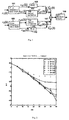
- Fig.1 is a structure diagram of a receiver implemented according to above method. Said receiver comprises: pilot frequency/data shunt units 101, ... 102, channel estimation units 103, ... 104, multiplier units 105, ... 106, adder unit 107, output unit 108, and delay units 109, ... 110.
- the received signals r 1 (k) ... r L (k) enter corresponding pilot frequency/data shunt units 101, ... 102 respectively; the output pilot symbols are sent to PSAM channel estimation units 103, ... 104, and the channel information ⁇ d,l (k), ..., ⁇ d,L (k) corresponding to data code part of every path is calculated with interpolation method and like, data codes output from the other exits of the pilot frequency/data shunt units 101, ... 102 pass through delay units 109, ... 110 and then are multiplied in conjugation with above estimated channel values at the multiplier units 105 and 106, and then are added at the adder unit 107, finally, they pass the soft decision output unit 108 to the subsequent decoding part.
- Fig.2 shows the Bit Error Rate (BER) curve of a preferable Gauss Second-Order Interpolation Method at several typical Doppler frequencies. It is observed that the methods can satisfy performance requirement in the case of slow fading channel; however, as channel-fading rate accelerates and channel properties vary significantly within just several time slots, such methods can't trace channel variations ideally.
- BER Bit Error Rate
- the Viterbi decoding sequence detection method that utilizes linear prediction filter to estimate channels or the adaptive differentiation-based Viterbi algorithm described in some literatures is an implementation of the techniques.
- linear prediction filter requires prior knowledge about the statistical properties of the channels to calculate its coefficient, which is difficult to do in practice; the adaptive differentiation-based Viterbi algorithm is very sensitive to Doppler frequency expansion, thus the flooring effect of error rate may appear.
- traditional techniques are difficult to use in real systems. Furthermore, traditional methods consider little about hardware feasibility.
- the object of the present invention is to provide a practical and feasible method and apparatus for estimating flat fading channels in CDMA system, wherein said method and apparatus is based on optimal sequence estimation for statistical signal processing and may eliminate the influence of fast fading channel.
- the technical solution of the present invention is: a method for estimating flat fading channel in CDMA communication system, wherein: it is implemented with adaptive lattice filter-based adaptive forward prediction technique and maximum likelihood detection technique of Viterbi algorithm, said adaptive lattice filter is used to predict channel fading according to LS rule, said maximum likelihood detection technique is used to perform Viterbi algorithm according to the value of predicted channel fading, and thus estimation and determination for transmitted signal can be finished, said method comprising the following steps:
- step b is the sum of squares of errors between estimated values and actual values of received signals in paths between nodes from time n-1 to time n.
- An apparatus for implementing said method is a receiver comprising a channel equalization apparatus, wherein: said channel equalization appratus is an adaptive lattice filter comprising a delay unit, a multiplier unit, a lattice filtering channel prediction unit, branch metric-computing units, an adder unit, and a Viterbi decoding unit; despreaded signals are inputted to the channel equalization apparatus; in the lattice filtering channel prediction unit and other parallel units, the value of received signal at the node at time n may be estimated according the channel value at time n, which are estimated according to the nodes in the transmission paths at time n-1; in branch metric calculating units, the sum of squares of errors between the estimated values and actual values of received signals are used as branch metric in paths between the nodes from time n-1 to time n; in paths between nodes from time n-1 to time n.
- said channel equalization appratus is an adaptive lattice filter comprising a delay unit, a multiplier unit, a
- the branch measuring results corresponding to the transmission paths are added together to calculate the path metric of each node at time n; then, in the Viterbi decoding unit, Viterbi algorithm operations (add, compare, and select) are performed to obtain the survived paths; next, the symbol estimation values for the survived paths are used to demodulate the next received signal in the multiplier unit; then, channel estimation for time n+1 is performed in the RLS lattice filtering channel prediction unit, repeat said steps till all survived paths converge into one path at the pilot symbol of the time slot, and the phase corresponding to the nodes in the path is the estimated phase value for the transmitted signals.
- the equalizing apparatus can be used in uplink and downlink receivers in CDMA cellular system that employs PSAM technique.
- a method for estimating flat fading channel in CDMA communication system wherein: it is implemented by using adaptive lattice filter-based adaptive forward prediction technique and maximum likelihood detection technique of Viterbi algorithm; said adaptive lattice filter is used to predict channel fading according to LS rule, saidmaximum likelihood detection technique is used to perform Viterbi algorithm according to the value of predicted channel fading, and thus estimation and determination for transmitted signal can be finished, said method comprises the following steps:
- Fig.4 is a block diagram of the detection receiver according to the present invention, the receiver employs adaptive lattice filter-based adaptive forward prediction technique and per-survivor processing principle (PSPP)-based technique and maximum likelihood detection technique of Viterbi algorithm.
- said adaptive lattice filter is used to predict channel fading according to LS rule
- said maximum likelihood detection technique is used to perform Viterbi algorithm according to the value of predicted channel fading, and thus estimation and determination for transmitted signal can be finished.
- PSPP per-survivor processing principle
- Said receiver comprises a channel equalization apparatus, which is a RLS lattice filter and said RLS lattice filter comprises a delay unit 201, a multiplier unit 202, a RLS lattice filtering channel prediction unit 203, a branch metric-calculating unit 204, an adder unit 206, and a Viterbi decoding unit 205.
- a channel equalization apparatus which is a RLS lattice filter and said RLS lattice filter comprises a delay unit 201, a multiplier unit 202, a RLS lattice filtering channel prediction unit 203, a branch metric-calculating unit 204, an adder unit 206, and a Viterbi decoding unit 205.
- the despreaded signals are input to the channel equalization apparatus 200 in the present invention; in the RLS lattice filtering channel prediction unit 203 and other units corresponding to parallel paths (finger), the estimated value of received signal corresponding to the node at time n can be obtained according to the value for the channel at time n estimated at node at time n-1; in the branch metric calculating unit 204, the sum of square of said estimated value and square of the error of actual received signal is used as the branch metric in the paths between node and from time n-1 to time n; in the adder unit 206, the branch metric results of the transmission paths are added together to calculate the path metric of each node at time n; then, in the Viterbi decoding unit 205, Viterbi algorithm operations (add, compare, and select) are performed to obtain the survived path; next, the symbol estimation values for the survived paths are used to demodulate the next received signal in the multiplier unit 202; then the channel at at time n+1 is estimated at the RLS lattic
- Tslot (Np+Nd)T
- 'T' is the duration of a single symbol
- 'Nd' is the length of data symbol
- Np is the length of pilot symbol.
- the structure of time slot is shown in Fig.5.
- the received signals may be:
- n (t) is background noise and may be considered as additive Gaussian white noise
- the density of one sided power spectrum is N 0
- ⁇ 1 (t) and ⁇ 1 are gain and delay of a plurality of channels in path 1 respectively
- s (t) is corresponding baseband signal transmitted
- L is the number of channel paths received.
- N 0 is one sided power spectrum density of Gaussian white noise.
- each node represents a point in the four-state signal planisphere.
- the collection of the states and the variation from one moment to the next moment constitute the four-state grid chart.
- ⁇ l,n in equation (1) is unknown and must be replaced by its estimated value , for example, the RLSL adaptive forward prediction for channel estimation that will be described hereafter is used to complete the estimation of the channel fading coefficient ⁇ l,n for all grid nodes at a moment .
- the estimated value obtained at node is represented as The branch metric from node to node is calculated as follows:
- the path metric corresponding to node is:
- the phase of pilot signal of a symbol is preset and is used as the end tag so that only one survived path in the entire grid chart is reserved.
- the phase values of the nodes in this path are regarded as the estimated phases of the transmitted signals in that time slot.
- the length of time slot symbol is D, the Viterbi receiver output once every D symbols.
- the optimal channel estimation filter shall adjust itself dynamically along with channel variation. Therefore, in order to obtain good channel estimation in different environments, recursive least square (RLS) adaptive lattice filters are used as the channel estimation filter in the present invention. Such a filter has superior performance.
- RLS recursive least square
- Fig.6 is a block diagram of the RLS lattice adaptive filter. are estimated values of channel fading coefficients, which is output from orders of lattice filters.
- ⁇ 1 (n-k) is the estimated value of channel fading expected from RLSL at time n-k, and the error between it and the value of channel fading at time n-k predicted by RLSL is the estimated error, which is used to adjust the coefficient of the adaptive filter.
- the ⁇ 1 (n) at a new moment will be loaded into RLSL, and the coefficients of the filters are refreshed, in order to calculate the estimated value for channel fading at the next moment. Then, the estimated value is sent to the branch metric calculation and Viterbi decoding parts to obtain the estimated value of the phase of corresponding transmitted signal, and the process is repeated.
- forward prediction with adaptive RLS lattice filter technique is used for channel estimation.
- RLSL method is based on the minimum mean square error Criteria and doesn't require prior knowledge about channel variation characteristic.
- the lattice filter has the following advantages:
- Fig.7 shows SNR-BER curves of the channel estimation method utilizing RLSL adaptive prediction - MLSE sequence detection technique at several channel fading Doppler frequencies. It is observed that in the case of low fading rate, the performance of this method is similar to Second-Order Gaussian Interpolation channel estimation method; however, in the case of fast channel fading, flooring phenomenon will occur in the BER curves of interpolation methods, causing interpolation methods invalid; but the BER of the present invention still can meet the challenge.
- Fig.8a, 8band Fig.9a, 9b are diagrams of trace-ability of second-order Gaussian interpolation methods and RLSL adaptive prediction - MLSE sequence detection channel estimation method, respectively.
- the equalizing apparatus in the present invention can works in case of fast fading channels, and it eliminates fast fading influence resulted from mobile station speeding up and can satisfy requirement of 3G mobile communication for the speed of mobile station.
Landscapes
- Engineering & Computer Science (AREA)
- Computer Networks & Wireless Communication (AREA)
- Signal Processing (AREA)
- Power Engineering (AREA)
- Cable Transmission Systems, Equalization Of Radio And Reduction Of Echo (AREA)
- Error Detection And Correction (AREA)
- Mobile Radio Communication Systems (AREA)
- Monitoring And Testing Of Transmission In General (AREA)
- Two-Way Televisions, Distribution Of Moving Picture Or The Like (AREA)
- Circuit For Audible Band Transducer (AREA)
- Near-Field Transmission Systems (AREA)
Applications Claiming Priority (1)
| Application Number | Priority Date | Filing Date | Title |
|---|---|---|---|
| PCT/CN2001/000556 WO2002091643A1 (en) | 2001-04-16 | 2001-04-16 | Estimation method of flat fading channel in cdma communication system and apparatus for the same |
Publications (3)
| Publication Number | Publication Date |
|---|---|
| EP1383263A1 true EP1383263A1 (de) | 2004-01-21 |
| EP1383263A4 EP1383263A4 (de) | 2005-01-12 |
| EP1383263B1 EP1383263B1 (de) | 2005-11-02 |
Family
ID=32514434
Family Applications (1)
| Application Number | Title | Priority Date | Filing Date |
|---|---|---|---|
| EP01947100A Expired - Lifetime EP1383263B1 (de) | 2001-04-16 | 2001-04-16 | Schätzverfahren für einen flat-fading-kanal in einem cdma-kommunikationssystem und vorrichtung dafür |
Country Status (8)
| Country | Link |
|---|---|
| US (1) | US7277472B2 (de) |
| EP (1) | EP1383263B1 (de) |
| CN (1) | CN1110163C (de) |
| AT (1) | ATE308835T1 (de) |
| BR (1) | BR0116978A (de) |
| DE (1) | DE60114670T2 (de) |
| ES (1) | ES2252249T3 (de) |
| WO (1) | WO2002091643A1 (de) |
Cited By (3)
| Publication number | Priority date | Publication date | Assignee | Title |
|---|---|---|---|---|
| US7400692B2 (en) | 2004-01-14 | 2008-07-15 | Interdigital Technology Corporation | Telescoping window based equalization |
| US7437135B2 (en) | 2003-10-30 | 2008-10-14 | Interdigital Technology Corporation | Joint channel equalizer interference canceller advanced receiver |
| CN1722712B (zh) * | 2004-05-25 | 2011-01-26 | 特莱登特微系统(远东)有限公司 | 移动无线通信系统中进行运动补偿噪声预测的方法和装置 |
Families Citing this family (25)
| Publication number | Priority date | Publication date | Assignee | Title |
|---|---|---|---|---|
| US8374218B2 (en) | 2000-12-05 | 2013-02-12 | Google Inc. | Combining signals with a shuffled-hadamard function |
| US8385470B2 (en) * | 2000-12-05 | 2013-02-26 | Google Inc. | Coding a signal with a shuffled-Hadamard function |
| US7545849B1 (en) | 2003-03-28 | 2009-06-09 | Google Inc. | Signal spectrum spreading and combining system and method |
| US7453921B1 (en) * | 2001-12-11 | 2008-11-18 | Google Inc. | LPC filter for removing periodic and quasi-periodic interference from spread spectrum signals |
| US7352833B2 (en) | 2002-11-18 | 2008-04-01 | Google Inc. | Method and system for temporal autocorrelation filtering |
| US7856052B2 (en) | 2004-10-06 | 2010-12-21 | Broadcom Corp. | Method and system for low complexity conjugate gradient based equalization in a wireless system |
| US20060072449A1 (en) * | 2004-10-06 | 2006-04-06 | Mark Kent | Method and system for channel equalization |
| US7471746B2 (en) * | 2004-10-28 | 2008-12-30 | Seagate Technology, Llc | Whitening of data-dependent, non-stationary noise in an inter-symbol interference channel detector |
| US20080205555A1 (en) * | 2005-01-12 | 2008-08-28 | Nxp B.V. | Method and Apparatus for Channel Estimation |
| US7734466B2 (en) * | 2005-06-20 | 2010-06-08 | Motorola, Inc. | Reduced complexity recursive least square lattice structure adaptive filter by means of limited recursion of the backward and forward error prediction squares |
| CN100466505C (zh) * | 2006-03-28 | 2009-03-04 | 华为技术有限公司 | 实现高速下行链路分组调度的方法和装置 |
| JP5105834B2 (ja) * | 2006-11-17 | 2012-12-26 | キヤノン株式会社 | 制御装置及びその制御方法、通信装置及びその制御方法、通信システム、及び、プログラム |
| CA2571385C (en) * | 2006-12-18 | 2015-11-24 | University Of Waterloo | Adaptive channel prediction system and method |
| CN101257323B (zh) * | 2008-04-19 | 2011-11-16 | 桂林电子科技大学 | 脉冲超宽带信号检测中分离多径和多址干扰的方法 |
| US9021342B2 (en) * | 2009-10-01 | 2015-04-28 | Stmicroelectronics, Inc. | Methods to improve ACS performance |
| CN101765161B (zh) * | 2009-12-29 | 2015-08-12 | 中兴通讯股份有限公司 | 一种链路自适应方法及装置 |
| CN102263717B (zh) * | 2010-05-26 | 2014-03-12 | 北京创毅视讯科技有限公司 | 信号解调装置和信号解调方法 |
| EP2883321A1 (de) * | 2012-08-09 | 2015-06-17 | Telefonaktiebolaget L M Ericsson (Publ) | Mikrowellenverbindungssteuerung |
| US9167536B2 (en) * | 2013-04-10 | 2015-10-20 | Qualcomm Incorporated | Method and apparatus for sir estimation using time multiplexed pilots and TPC commands |
| CN104378787B (zh) * | 2014-11-26 | 2017-09-29 | 南京航空航天大学 | 基于扩展Prony算法的平坦快衰落长距离信道预测方法 |
| US10135661B2 (en) | 2016-06-22 | 2018-11-20 | Huawei Technologies Co., Ltd. | Phase noise estimation and cancellation |
| CN107018097B (zh) * | 2017-02-15 | 2020-02-28 | 浙江科技学院 | 一种无线光通信基于广义似然比检测原理的序列检测方法 |
| CN107682115B (zh) * | 2017-09-02 | 2020-09-22 | 中国人民解放军91388部队 | 基于ClassA海洋环境噪声模型的卷积码维特比软判决译码方法 |
| CN109787664A (zh) * | 2017-11-15 | 2019-05-21 | 索尼公司 | 用于无线通信系统的电子设备、方法、装置和存储介质 |
| CN109274630B (zh) * | 2018-11-29 | 2020-04-07 | 西安电子科技大学 | 抗频率选择性衰落的多载波信号矢量分集合并方法 |
Family Cites Families (6)
| Publication number | Priority date | Publication date | Assignee | Title |
|---|---|---|---|---|
| US5329547A (en) * | 1993-03-11 | 1994-07-12 | Motorola, Inc. | Method and apparatus for coherent communication in a spread-spectrum communication system |
| US5862190A (en) * | 1995-12-29 | 1999-01-19 | Motorola, Inc. | Method and apparatus for decoding an encoded signal |
| JP3289676B2 (ja) | 1998-05-28 | 2002-06-10 | 日本電気株式会社 | パイロット信号を含む受信信号の復調方法及びその装置 |
| JP3728116B2 (ja) | 1998-06-02 | 2005-12-21 | キヤノン株式会社 | 通信方法及び装置 |
| US6363104B1 (en) * | 1998-10-02 | 2002-03-26 | Ericsson Inc. | Method and apparatus for interference cancellation in a rake receiver |
| AU730282B2 (en) * | 1999-02-18 | 2001-03-01 | Nippon Telegraph & Telephone Corporation | Coherent detection system for multicarrier modulation |
-
1999
- 1999-12-29 CN CN99127037.1A patent/CN1110163C/zh not_active Expired - Fee Related
-
2001
- 2001-04-16 BR BR0116978-5A patent/BR0116978A/pt not_active Application Discontinuation
- 2001-04-16 ES ES01947100T patent/ES2252249T3/es not_active Expired - Lifetime
- 2001-04-16 DE DE60114670T patent/DE60114670T2/de not_active Expired - Lifetime
- 2001-04-16 US US10/474,192 patent/US7277472B2/en not_active Expired - Fee Related
- 2001-04-16 AT AT01947100T patent/ATE308835T1/de not_active IP Right Cessation
- 2001-04-16 WO PCT/CN2001/000556 patent/WO2002091643A1/zh not_active Ceased
- 2001-04-16 EP EP01947100A patent/EP1383263B1/de not_active Expired - Lifetime
Cited By (3)
| Publication number | Priority date | Publication date | Assignee | Title |
|---|---|---|---|---|
| US7437135B2 (en) | 2003-10-30 | 2008-10-14 | Interdigital Technology Corporation | Joint channel equalizer interference canceller advanced receiver |
| US7400692B2 (en) | 2004-01-14 | 2008-07-15 | Interdigital Technology Corporation | Telescoping window based equalization |
| CN1722712B (zh) * | 2004-05-25 | 2011-01-26 | 特莱登特微系统(远东)有限公司 | 移动无线通信系统中进行运动补偿噪声预测的方法和装置 |
Also Published As
| Publication number | Publication date |
|---|---|
| DE60114670T2 (de) | 2006-08-03 |
| ES2252249T3 (es) | 2006-05-16 |
| US20060062284A1 (en) | 2006-03-23 |
| BR0116978A (pt) | 2004-06-29 |
| WO2002091643A1 (en) | 2002-11-14 |
| US7277472B2 (en) | 2007-10-02 |
| DE60114670D1 (de) | 2005-12-08 |
| CN1110163C (zh) | 2003-05-28 |
| ATE308835T1 (de) | 2005-11-15 |
| EP1383263B1 (de) | 2005-11-02 |
| EP1383263A4 (de) | 2005-01-12 |
| CN1302125A (zh) | 2001-07-04 |
Similar Documents
| Publication | Publication Date | Title |
|---|---|---|
| EP1383263B1 (de) | Schätzverfahren für einen flat-fading-kanal in einem cdma-kommunikationssystem und vorrichtung dafür | |
| US5768307A (en) | Coherent demodulation with decision-directed channel estimation for digital communication | |
| Kusume et al. | IDMA vs. CDMA: Analysis and comparison of two multiple access schemes | |
| Lim et al. | An asynchronous multiuser CDMA detector based on the Kalman filter | |
| SE521004C2 (sv) | Förfarande och system för demodulation av CDMA-signaler för nerlänk | |
| WO1996001004A1 (en) | Compensation for multi-path interference using pilot symbols | |
| MXPA98000853A (en) | Des-extendedor adapta | |
| JPWO2005086402A1 (ja) | 受信装置、受信方法、および無線通信システム | |
| US20020159505A1 (en) | Receiver and receiving method fro spread spectrum communication | |
| EP1619807B1 (de) | Chip-Entzerrer für einen Spreizspektrum-Empfänger | |
| Bickel et al. | Optimization of code rate and spreading factor for direct-sequence CDMA systems | |
| EP1226658A1 (de) | Störungsunterdrückungssystem in einem cdma empfänger und verfahren zur störungsunterdrückung | |
| Ma et al. | Linear and nonlinear chip-rate minimum mean-squared-error multiuser CDMA detection | |
| Min et al. | Channel estimation based on pilot and data traffic channels for DS/CDMA systems | |
| CN106603201B (zh) | 一种基于采样点处理的多用户联合检测方法 | |
| EP1606889B1 (de) | Adaptive unterdrückung von mehrbenutzerinterferenz und mehrbenutzerdetektor | |
| US7065166B2 (en) | Wireless receiver and method for determining a representation of noise level of a signal | |
| Dumard et al. | Double Krylov subspace approximation for low complexity iterative multi-user decoding and time-variant channel estimation | |
| KR20070022649A (ko) | 수신장치, 수신방법, 및 무선 통신 시스템 | |
| Tandon | Design and Development of Physical Layer of Differential PSK Based Robust Waveform | |
| Lai et al. | Adaptive successive interference cancellation for the IS-95 uplink | |
| Songying et al. | GMP-based Iterative Equalization in MIMO ISI Channels | |
| Iqbal et al. | Pilot-aided rayleigh fading channel estimation using mmse estimator for ds-cdma system | |
| Xiao et al. | Joint data detection and estimation of time‐varying multipath rayleigh fading channels in asynchronous DS‐CDMA systems with long spreading sequences | |
| Nougarou et al. | Multiple antennas and multipass structure for adaptive duplicated filters and interference canceller in WCDMA systems |
Legal Events
| Date | Code | Title | Description |
|---|---|---|---|
| PUAI | Public reference made under article 153(3) epc to a published international application that has entered the european phase |
Free format text: ORIGINAL CODE: 0009012 |
|
| 17P | Request for examination filed |
Effective date: 20031117 |
|
| AK | Designated contracting states |
Kind code of ref document: A1 Designated state(s): AT BE CH CY DE DK ES FI FR GB GR IE IT LI LU MC NL PT SE TR |
|
| AX | Request for extension of the european patent |
Extension state: AL LT LV MK RO SI |
|
| A4 | Supplementary search report drawn up and despatched |
Effective date: 20041126 |
|
| RIC1 | Information provided on ipc code assigned before grant |
Ipc: 7H 04L 25/03 B Ipc: 7H 04B 1/707 B Ipc: 7H 04J 13/00 A |
|
| GRAP | Despatch of communication of intention to grant a patent |
Free format text: ORIGINAL CODE: EPIDOSNIGR1 |
|
| GRAS | Grant fee paid |
Free format text: ORIGINAL CODE: EPIDOSNIGR3 |
|
| GRAA | (expected) grant |
Free format text: ORIGINAL CODE: 0009210 |
|
| AK | Designated contracting states |
Kind code of ref document: B1 Designated state(s): AT BE CH CY DE DK ES FI FR GB GR IE IT LI LU MC NL PT SE TR |
|
| PG25 | Lapsed in a contracting state [announced via postgrant information from national office to epo] |
Ref country code: IT Free format text: LAPSE BECAUSE OF FAILURE TO SUBMIT A TRANSLATION OF THE DESCRIPTION OR TO PAY THE FEE WITHIN THE PRESCRIBED TIME-LIMIT;WARNING: LAPSES OF ITALIAN PATENTS WITH EFFECTIVE DATE BEFORE 2007 MAY HAVE OCCURRED AT ANY TIME BEFORE 2007. THE CORRECT EFFECTIVE DATE MAY BE DIFFERENT FROM THE ONE RECORDED. Effective date: 20051102 Ref country code: FI Free format text: LAPSE BECAUSE OF FAILURE TO SUBMIT A TRANSLATION OF THE DESCRIPTION OR TO PAY THE FEE WITHIN THE PRESCRIBED TIME-LIMIT Effective date: 20051102 Ref country code: LI Free format text: LAPSE BECAUSE OF FAILURE TO SUBMIT A TRANSLATION OF THE DESCRIPTION OR TO PAY THE FEE WITHIN THE PRESCRIBED TIME-LIMIT Effective date: 20051102 Ref country code: BE Free format text: LAPSE BECAUSE OF FAILURE TO SUBMIT A TRANSLATION OF THE DESCRIPTION OR TO PAY THE FEE WITHIN THE PRESCRIBED TIME-LIMIT Effective date: 20051102 Ref country code: AT Free format text: LAPSE BECAUSE OF FAILURE TO SUBMIT A TRANSLATION OF THE DESCRIPTION OR TO PAY THE FEE WITHIN THE PRESCRIBED TIME-LIMIT Effective date: 20051102 Ref country code: CH Free format text: LAPSE BECAUSE OF FAILURE TO SUBMIT A TRANSLATION OF THE DESCRIPTION OR TO PAY THE FEE WITHIN THE PRESCRIBED TIME-LIMIT Effective date: 20051102 |
|
| REG | Reference to a national code |
Ref country code: GB Ref legal event code: FG4D |
|
| REG | Reference to a national code |
Ref country code: CH Ref legal event code: EP |
|
| REF | Corresponds to: |
Ref document number: 60114670 Country of ref document: DE Date of ref document: 20051208 Kind code of ref document: P |
|
| PG25 | Lapsed in a contracting state [announced via postgrant information from national office to epo] |
Ref country code: GR Free format text: LAPSE BECAUSE OF FAILURE TO SUBMIT A TRANSLATION OF THE DESCRIPTION OR TO PAY THE FEE WITHIN THE PRESCRIBED TIME-LIMIT Effective date: 20060202 Ref country code: DK Free format text: LAPSE BECAUSE OF FAILURE TO SUBMIT A TRANSLATION OF THE DESCRIPTION OR TO PAY THE FEE WITHIN THE PRESCRIBED TIME-LIMIT Effective date: 20060202 |
|
| REG | Reference to a national code |
Ref country code: SE Ref legal event code: TRGR |
|
| PG25 | Lapsed in a contracting state [announced via postgrant information from national office to epo] |
Ref country code: PT Free format text: LAPSE BECAUSE OF FAILURE TO SUBMIT A TRANSLATION OF THE DESCRIPTION OR TO PAY THE FEE WITHIN THE PRESCRIBED TIME-LIMIT Effective date: 20060403 |
|
| PG25 | Lapsed in a contracting state [announced via postgrant information from national office to epo] |
Ref country code: IE Free format text: LAPSE BECAUSE OF NON-PAYMENT OF DUE FEES Effective date: 20060417 |
|
| PG25 | Lapsed in a contracting state [announced via postgrant information from national office to epo] |
Ref country code: MC Free format text: LAPSE BECAUSE OF NON-PAYMENT OF DUE FEES Effective date: 20060430 |
|
| REG | Reference to a national code |
Ref country code: CH Ref legal event code: PL |
|
| REG | Reference to a national code |
Ref country code: ES Ref legal event code: FG2A Ref document number: 2252249 Country of ref document: ES Kind code of ref document: T3 |
|
| PLBE | No opposition filed within time limit |
Free format text: ORIGINAL CODE: 0009261 |
|
| STAA | Information on the status of an ep patent application or granted ep patent |
Free format text: STATUS: NO OPPOSITION FILED WITHIN TIME LIMIT |
|
| 26N | No opposition filed |
Effective date: 20060803 |
|
| EN | Fr: translation not filed | ||
| PG25 | Lapsed in a contracting state [announced via postgrant information from national office to epo] |
Ref country code: FR Free format text: LAPSE BECAUSE OF FAILURE TO SUBMIT A TRANSLATION OF THE DESCRIPTION OR TO PAY THE FEE WITHIN THE PRESCRIBED TIME-LIMIT Effective date: 20061222 |
|
| REG | Reference to a national code |
Ref country code: IE Ref legal event code: MM4A |
|
| PG25 | Lapsed in a contracting state [announced via postgrant information from national office to epo] |
Ref country code: TR Free format text: LAPSE BECAUSE OF FAILURE TO SUBMIT A TRANSLATION OF THE DESCRIPTION OR TO PAY THE FEE WITHIN THE PRESCRIBED TIME-LIMIT Effective date: 20051102 Ref country code: LU Free format text: LAPSE BECAUSE OF NON-PAYMENT OF DUE FEES Effective date: 20060416 |
|
| PG25 | Lapsed in a contracting state [announced via postgrant information from national office to epo] |
Ref country code: FR Free format text: LAPSE BECAUSE OF FAILURE TO SUBMIT A TRANSLATION OF THE DESCRIPTION OR TO PAY THE FEE WITHIN THE PRESCRIBED TIME-LIMIT Effective date: 20051102 Ref country code: CY Free format text: LAPSE BECAUSE OF FAILURE TO SUBMIT A TRANSLATION OF THE DESCRIPTION OR TO PAY THE FEE WITHIN THE PRESCRIBED TIME-LIMIT Effective date: 20051102 |
|
| PGFP | Annual fee paid to national office [announced via postgrant information from national office to epo] |
Ref country code: ES Payment date: 20170602 Year of fee payment: 17 |
|
| PGFP | Annual fee paid to national office [announced via postgrant information from national office to epo] |
Ref country code: GB Payment date: 20180329 Year of fee payment: 18 |
|
| PGFP | Annual fee paid to national office [announced via postgrant information from national office to epo] |
Ref country code: NL Payment date: 20180412 Year of fee payment: 18 |
|
| PGFP | Annual fee paid to national office [announced via postgrant information from national office to epo] |
Ref country code: DE Payment date: 20180404 Year of fee payment: 18 |
|
| PGFP | Annual fee paid to national office [announced via postgrant information from national office to epo] |
Ref country code: SE Payment date: 20180411 Year of fee payment: 18 |
|
| REG | Reference to a national code |
Ref country code: ES Ref legal event code: FD2A Effective date: 20190912 |
|
| PG25 | Lapsed in a contracting state [announced via postgrant information from national office to epo] |
Ref country code: ES Free format text: LAPSE BECAUSE OF NON-PAYMENT OF DUE FEES Effective date: 20180417 |
|
| REG | Reference to a national code |
Ref country code: DE Ref legal event code: R119 Ref document number: 60114670 Country of ref document: DE |
|
| REG | Reference to a national code |
Ref country code: SE Ref legal event code: EUG |
|
| REG | Reference to a national code |
Ref country code: NL Ref legal event code: MM Effective date: 20190501 |
|
| GBPC | Gb: european patent ceased through non-payment of renewal fee |
Effective date: 20190416 |
|
| PG25 | Lapsed in a contracting state [announced via postgrant information from national office to epo] |
Ref country code: NL Free format text: LAPSE BECAUSE OF NON-PAYMENT OF DUE FEES Effective date: 20190501 Ref country code: GB Free format text: LAPSE BECAUSE OF NON-PAYMENT OF DUE FEES Effective date: 20190416 Ref country code: SE Free format text: LAPSE BECAUSE OF NON-PAYMENT OF DUE FEES Effective date: 20190417 Ref country code: DE Free format text: LAPSE BECAUSE OF NON-PAYMENT OF DUE FEES Effective date: 20191101 |