EP1386543B1 - Neuer Bakterienstamm und seine Verwendung - Google Patents
Neuer Bakterienstamm und seine Verwendung Download PDFInfo
- Publication number
- EP1386543B1 EP1386543B1 EP02028532A EP02028532A EP1386543B1 EP 1386543 B1 EP1386543 B1 EP 1386543B1 EP 02028532 A EP02028532 A EP 02028532A EP 02028532 A EP02028532 A EP 02028532A EP 1386543 B1 EP1386543 B1 EP 1386543B1
- Authority
- EP
- European Patent Office
- Prior art keywords
- strain
- milab
- lactobacillus plantarum
- lmg
- composition
- Prior art date
- Legal status (The legal status is an assumption and is not a legal conclusion. Google has not performed a legal analysis and makes no representation as to the accuracy of the status listed.)
- Expired - Lifetime
Links
Classifications
-
- A—HUMAN NECESSITIES
- A61—MEDICAL OR VETERINARY SCIENCE; HYGIENE
- A61K—PREPARATIONS FOR MEDICAL, DENTAL OR TOILETRY PURPOSES
- A61K31/00—Medicinal preparations containing organic active ingredients
- A61K31/185—Acids; Anhydrides, halides or salts thereof, e.g. sulfur acids, imidic, hydrazonic or hydroximic acids
- A61K31/19—Carboxylic acids, e.g. valproic acid
- A61K31/195—Carboxylic acids, e.g. valproic acid having an amino group
- A61K31/197—Carboxylic acids, e.g. valproic acid having an amino group the amino and the carboxyl groups being attached to the same acyclic carbon chain, e.g. gamma-aminobutyric acid [GABA], beta-alanine, epsilon-aminocaproic acid or pantothenic acid
- A61K31/198—Alpha-amino acids, e.g. alanine or edetic acid [EDTA]
-
- A—HUMAN NECESSITIES
- A23—FOODS OR FOODSTUFFS; TREATMENT THEREOF, NOT COVERED BY OTHER CLASSES
- A23K—FODDER
- A23K30/00—Processes specially adapted for preservation of materials in order to produce animal feeding-stuffs
- A23K30/10—Processes specially adapted for preservation of materials in order to produce animal feeding-stuffs of green fodder
- A23K30/15—Processes specially adapted for preservation of materials in order to produce animal feeding-stuffs of green fodder using chemicals or microorganisms for ensilaging
- A23K30/18—Processes specially adapted for preservation of materials in order to produce animal feeding-stuffs of green fodder using chemicals or microorganisms for ensilaging using microorganisms or enzymes
-
- C—CHEMISTRY; METALLURGY
- C12—BIOCHEMISTRY; BEER; SPIRITS; WINE; VINEGAR; MICROBIOLOGY; ENZYMOLOGY; MUTATION OR GENETIC ENGINEERING
- C12N—MICROORGANISMS OR ENZYMES; COMPOSITIONS THEREOF; PROPAGATING, PRESERVING, OR MAINTAINING MICROORGANISMS; MUTATION OR GENETIC ENGINEERING; CULTURE MEDIA
- C12N1/00—Microorganisms; Compositions thereof; Processes of propagating, maintaining or preserving microorganisms or compositions thereof; Processes of preparing or isolating a composition containing a microorganism; Culture media therefor
- C12N1/20—Bacteria; Culture media therefor
- C12N1/205—Bacterial isolates
-
- C—CHEMISTRY; METALLURGY
- C12—BIOCHEMISTRY; BEER; SPIRITS; WINE; VINEGAR; MICROBIOLOGY; ENZYMOLOGY; MUTATION OR GENETIC ENGINEERING
- C12R—INDEXING SCHEME ASSOCIATED WITH SUBCLASSES C12C - C12Q, RELATING TO MICROORGANISMS
- C12R2001/00—Microorganisms ; Processes using microorganisms
- C12R2001/01—Bacteria or Actinomycetales ; using bacteria or Actinomycetales
- C12R2001/225—Lactobacillus
- C12R2001/25—Lactobacillus plantarum
Definitions
- the present invention refers to a new bacterial strain. More precisely, the present invention refers to a new bacterial strain which is intended to be used in connection with the preservation of straw or green fodder.
- straw or green fodder After harvest, straw or green fodder has generally been preserved by drying in the air and then storing under dry conditions. In modern agriculture new methods have been developed for preserving straw or green fodder under humid conditions. In these methods fresh fodder, which has just been harvested or slightly pre-dried, is stored in airtight envelopes. Lactobacilli naturally present in the straw or green fodder will then proliferate and produce lactic acid, which in turn provides an acid preservation of the fodder. However, the growth of lactobacilli under such conditions is relatively slow, and conditions are obtained which favor the growth of non-desired harmful microorganisms, for instance clostridia or mycotoxin producing fungi.
- a disadvantage of only adding an acid in order to preserve a straw or green fodder is that other microorganisms than acid-producing bacteria may also develop.
- these microorganisms are spore forming bacteria, generally referred to as clostridia.
- a high content of clostridia in an ensilage generally results in that the milk from a cow will also have a high content of clostridia. Since these bacteria are not killed in normal pasteurization processes, dairy products produced from such milk will also be negatively affected. For instance there may appear as a false fermentation in cheese products.
- the object of the invention is also to provide compounds which are useful as preservation additives in ensilage, which inhibit the growth of harmful microorganisms in an ensilage, such as clostridia and mycotoxigenic fungi, and which does not promote fermentation in the ensilage.
- Another object of the invention is to provide compositions that can be used for the preservation of straw or green fodder.
- the present invention provides a biologically pure culture of a strain of a lactic acid bacterium, which has been selected for its ability to exhibit osmotolerance, for its ability to exhibit a suitable inhibition spectrum against fungi (fungi and yeast), and for its ability to produce antimicrobial compounds hitherto not produced by lactic acid producing bacteria.
- the inventive bacterial strain, MiLAB 393, is a strain of Lactobacillus plantarum. This strain has been deposited on January 3, 2002, pursuant to, and in satisfaction of, the requirements of the Budapest Treaty on the International Recognition of the Deposit of Microorganisms for the Purposes of Patent Procedure at BCCMü/LMG Bacteria Collection, Universiteit Gent, K.L. Ledeganckstraat 35, B-9000 Gent, Belgium, under the deposition number LMG P-21295.
- the LAB strain according to the invention can be prepared industrially by inoculating a pure culture of the same in a broth that has been sterilized in advance. The bacteria are then cultured for 10-20 hours at a temperature, which is the optimum temperature for the strain. The lactic acid formed in the culture is neutralized by the addition of for example NaOH in order to maintain the pH of the culture at an optimum value. When the density of the culture has reached a certain concentration the growth ceases and the bacterial cells are harvested. This is preferably accomplished as a concentration by means of a separator or a filter, the bacterial cells being separated from the culture broth.
- Lactobacillus plantarum strain MiLAB 393, is obtained in high yields and exhibit excellent stability.
- the bacterial cells thus obtained are then desiccated, for example by means of freeze-drying.
- the powder of live bacterial cells can subsequently be suspended in water or another aqueous medium.
- the suspension is then supplied to the straw or green fodder by means of for instance spraying onto the same when it is put into packages or supplied to an ensilage tower.
- the harvested cells can also be used directly as such.
- the inventive bacterial strain of Lactobacillus plantarum is thus used as a starter culture composition for ensiling straw or green fodder without air supply and subsequent anaerobic conditions.
- Such a composition kills or inhibits in the ensilage the growth of Gram-positive bacteria, yeast, fungi, and clostridia as well as certain Gram-negative bacteria.
- a good survival of the inventive LAB strain is obtained in the ensilage.
- a composition for the preservation of straw or green fodder which comprises Lactobacillus plantarum, strain MiLAB 393, can also comprise further lactic acid bacteria species as well as other ensilage additives.
- Enterococcus faecium and/or Pediococcus acidilacti are included in the composition.
- These other lactic acid bacteria should be present in roughly equal amounts, and the total bacterial content should be 10 5 -10 8 per gram of the composition.
- Lactobacillus plantarum , strain MILAB 393, represents 10-90 % of the composition.
- a composition which comprises a biologically pure culture of the inventive Lactobacillus plantarum strain and optionally other lactic acid bacteria, may also include a suitable carrier.
- suitable carrier are well known to the skilled man in the art.
- the bacteria are preferably added in an amount of 4-8 liter per ton ensilage.
- ensilage When the ensilage is stored in a tower it should be finely chopped and have a dry matter (DM) content of 20-55%.
- DM dry matter
- Lactobacillus plantarum , strain MILAB 393, should represent 10-90 % of the composition.
- ensilage additives to be used are molasses, enzymes that increase the availability of nutrients in the fodder, and preservation agents known within the art, which exhibit a direct preservation effect.
- the enzyme is a fodder degrading enzyme, e.g. a cellulase.
- Lactobacillus plantarum exhibits a high osmotolerance.
- This means that the inventive LAB strain is able to grow as well as produce antimicorbial compounds in an ensilage system having a dry matter content of more than 45%.
- Strain MiLAB 393 is able to inhibit the growth of both yeast and fungi. An excellent inhibition is exhibited towards for example Aspergillus fumigatus, Peni cillium ses, Rhodotorula mucilaginosa, Kluyveromyces marxianus , and Candida albicans.
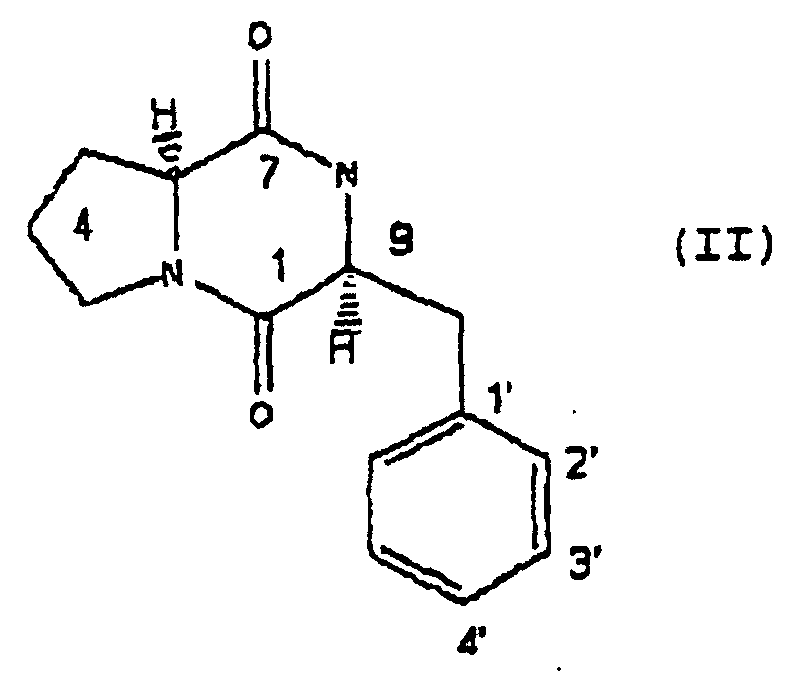
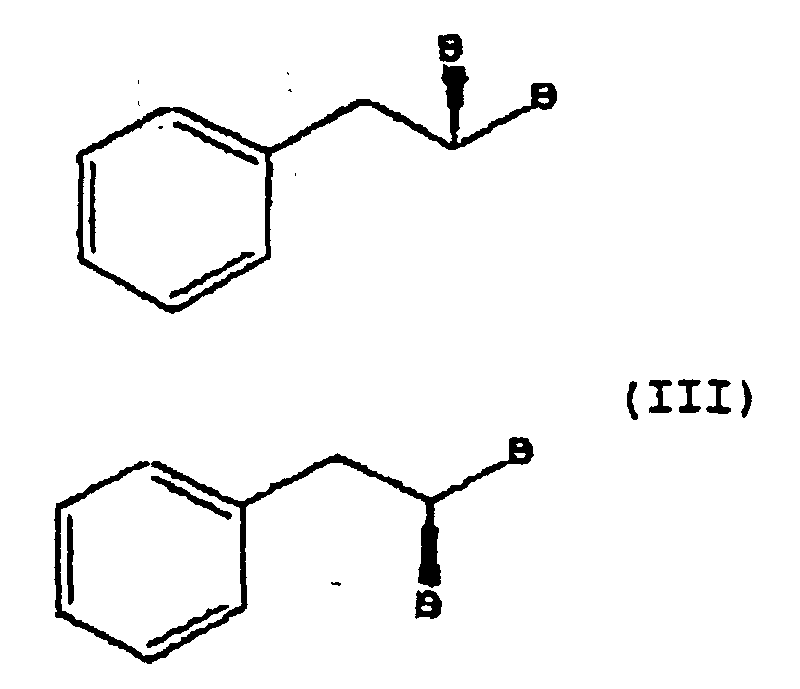
- strain MiLAB 393 Apart from producing adequate amounts of lactic acid, Lactobacillus plantarum , strain MiLAB 393, produces other antagonistic substances. Three compounds have been isolated from growth media of the inventive LAB strain, which exhibit antagonistic effects towards yeast and fungi. These compounds have been identified as cyclo-(L-phenylalanine- trans -4-hydroxy-L-proline), cyclo-(L-phenylalanine-L-proline), and 3-phenyl-lactic acid, respectively. The antimicrobial activity of 3-phenyl-lactic acid can be attributed to about 90% 3-phenyl-(D)-lactic acid and about 10% 3-phenyl-(L)-lactic acid.
- a cell-free culture supernatant obtained from a biologically pure culture of Lactobacillus plantarum , strain MiLAB 393, can be used as such as an antimicrobial agent in order to inhibit the growth of harmful microorganisms in straw or green fodder.
- the supernatant can be divided into fractions containing one or antimicrobial compounds produced.
- the inventive strain was isolated from the epiphytic flora in a grass silage experiment, in which the aerobic stability after the addition of various antifungal LAB was evaluated. More specifically, strain MiLAB 393 was isolated from one of three control silos since they exhibited the most efficient inhibition of fungal growth.
- Ten gram of silage material was suspended in 90 ml sterile peptone water (0.2% [w/v]) and mixed in a Stomacher® sample blending device. Dilutions were prepared by using sterile peptone water and were surface spread on MRS (Man, Rogosa and Sharpe) agar plates. After anaerobic incubation at 30°C for 48 hours the bacterial cultures were transferred to fresh MRS agar plates for a second incubation.
- MRS Man, Rogosa and Sharpe
- the identity of the bacterial strain MiLAB 393 was established both by its fermentation pattern and by 16S rDNA sequencing.
- An AP1 50 CHL test (BioMérieux) showed a 99.9% identity with Lactobacillus plantarum.
- chromosomal DNA was isolated by using the DneasyTM Tissue Kit (QIAGEN). PCR amplification (94°C for 30 s, 54°C for 30 s, and 72°C for 80 s, 30 cycles) and by using primers 16S.S (5'-AGAGTTTGATCCTGGCTC-3') and 16S.R (5'-CGGGAACGTATTCACCG-3') amplified approximately 1400 bp of the 16S ribosomal DNA. Sequencing of the amplifred DNA was performed by using the Thermo SequenaseTM dye terminator cycle sequencing pre-mix (Amersham) and the automated sequence analyzer AB1 PRISM 377XL (Perkin Elmer). Partial 16S rDNA sequence was used for searching in public databases and the identity of the isolated strain MiLAB 393 as Lactobacillus plantarum was confirmed.
- strain MiLAB 393 The inhibition spectrum of strain MiLAB 393 was determined by using an overlay method, in which bacterial streaks on a MRS plate were overlaid with soft agar containing fungal spores. After 48 h of anaerobic growth at 30°C (BBL®GasPak Plus TM) the bacterial streaks were overlaid with soft agar (1% agar) containing 0.05 % malt extract (Oxoid LDT, Basingstoke, Hampshire, England) and 10 4 spores/ml (10 4 cells/ml) of the fungus or yeast to be tested. After 48 h of aerobic incubation at 30°C the inhibition zone was measured.
- the grade of inhibition was determined by relating the inhibited growth area per inoculation streak to the total area of the Petri dish. The inhibition was graded as follows: -, no visible inhibition; (+), indicates a weak inhibition in the soft agar above the streak; +, inhibition area per bacterial streak 0.1-3.0 %; ++, inhibition area per bacterial streak 3.0-8.0 %; or +++, inhibition area per bacterial streak >8.0 %.
- Lactobacillus plantarum strain MiLAB 393, was inoculated to a concentration of 10 5 in 2000 ml of MRS broth as a still culture at 30°C for 48 h.
- a cell free supernatant was prepared by means of centrifugation (7000 rpm for 15 min) and sterile filtration (45 ⁇ m, Millipore®).
- the cell free culture filtrate was used for further purification of the antimicrobial compounds. All fractions in the purification process concentrated by means of lyophilization. Then they were evaluated for any antimicrobial activity by using a microtiter plate well assay with Aspergillus furnigatus as an indicator strain.
- the isolation of antifungal compounds was performed by using C18 SPE (Isolute C18 EC, 10 g/70 ml), C18-HPLC (Discovery C18, 100x21.2 mm, 5 ⁇ Supelco) and Hypercarb-HPLC (Hypersil 100x21.2 mm, 5 ⁇ ).
- the system used was a preparative HPLC system (Gilson pump 305 and 306) connected to an UV-detector (Gilson 118); flow: 10 ml/min; detection: 210 nm; and integrator: Merck Hitachi D-7500.
- Antimicrobial compounds were isolated after three rounds of separation:
- NMR spectra were recorded on a Bruker DRX-600 spectrometer (600 MHz proton frequency) equipped with a 5 mm probe. Compounds (4-10 mg/ml) were dissolved in CD 3 OD or deuturated dimethyl sulfoxide at a temperature of 30°C. A Bruker standard pulse sequence was used. For the two diketo-piperazines 1H, COSY, HMBC and HMQC were performed and for phenyl-lactic acid only 1H and HMBC. Molecular weights were determined by mass spectroscopy by using an ESI-Ion Trap MS (Esquire-LC, Bruker Daltoniks, GmbH). The samples were dissolved in methanol, about 0.4 pg/ml.
- the osmotolerante of the inventive strain was determined by dilution plating on MRS agar plates containing 10% KCl (corresponding to a water activity a w of about 0.93 and a dry matter content of 45% (DM/kg).
- KCl a water activity a w of about 0.93 and a dry matter content of 45% (DM/kg).
- MiLAB 393 CFU colony forming units
- the pH did drop quickly, and after the first day there is a significant (p ⁇ 0.05) difference between the treatments, the bacteria of Batch A being a bit slower than those of Batch B and Batch C after 20 hours. After two days the pH had reached 4,5 with all the three treatments. After three days, there is no significant difference between the treatments.
- a microbial evaluation was performed on the high DM grass after ensilation, the yeast and fungi counts in high DM grass being determined after 12 days.
Landscapes
- Life Sciences & Earth Sciences (AREA)
- Chemical & Material Sciences (AREA)
- Health & Medical Sciences (AREA)
- Engineering & Computer Science (AREA)
- Microbiology (AREA)
- Zoology (AREA)
- General Health & Medical Sciences (AREA)
- Biotechnology (AREA)
- Bioinformatics & Cheminformatics (AREA)
- Polymers & Plastics (AREA)
- Genetics & Genomics (AREA)
- Organic Chemistry (AREA)
- Wood Science & Technology (AREA)
- Medicinal Chemistry (AREA)
- General Chemical & Material Sciences (AREA)
- Pharmacology & Pharmacy (AREA)
- Biochemistry (AREA)
- Tropical Medicine & Parasitology (AREA)
- Chemical Kinetics & Catalysis (AREA)
- Virology (AREA)
- Animal Husbandry (AREA)
- Biomedical Technology (AREA)
- Food Science & Technology (AREA)
- General Engineering & Computer Science (AREA)
- Epidemiology (AREA)
- Animal Behavior & Ethology (AREA)
- Public Health (AREA)
- Veterinary Medicine (AREA)
- Micro-Organisms Or Cultivation Processes Thereof (AREA)
- Fodder In General (AREA)
- Preparation Of Compounds By Using Micro-Organisms (AREA)
- Saccharide Compounds (AREA)
Claims (11)
- Biologische Reinkultur von Lactobacillus plantarum, Stamm MiLAB 393 LMG P-21295.
- Zusammensetzung zum Haltbarmachen von Stroh oder Grünfutter, die eine biologische Reinkultur von Lactobacillus plantarum, Stamm MiLAB 393 LMG P-21295 und einen geeigneten Träger umfasst.
- Zusammensetzung nach Anspruch 2, dadurch gekennzeichnet, dass sie ferner Enterococcus faecium und/oder Pediococcus acidilacti umfasst.
- Zusammensetzung nach Anspruch 2 oder 3, dadurch gekennzeichnet, dass sie femer ein Futter zersetzendes Enzym umfasst.
- Zusammensetzung nach einem der Ansprüche 2 bis 4, dadurch gekennzeichnet, dass Lactobacillus plantarum, Stamm MiLAB 393 LMG P-21295 10 - 90 % derselben darstellt.
- Verwendung einer Zusammensetzung nach einem der Ansprüche 2 bis 5 zum Haltbarmachen von Stroh oder Grünfutter, dadurch gekennzeichnet, dass Lactobacillus plantarum, Stamm MiLAB 393 LMG P-21295 frischem Stroh oder Grünfutter in einer Menge von 104 - 106 pro Gramm Futter zugegeben wird.
- Zellfreier Kulturüberstand oder eine Fraktion davon, der/die aus einer biologischen Reinkultur von Lactobacillus plantarum, Stamm MILAP 393 LMG P-21295 erhalten wird.
- Verwendung eines zellfreien Kulturüberstands oder einer Fraktion davon, der/die aus einer biologischen Reinkultur von Lactobacillus plantarum, Stamm MiLAB 393 LMG P-21295 erhalten wird, als antimikrobieller Wirkstoff, um die Vermehrung schädlicher Mikroorganismen in der Silage zu hemmen.
- Verwendung nach Anspruch 8, wobei der antimikrobielle WirkstoffCyclo-(L-phenylalanin-trans-4-hydroxy-L-prolin) ist.
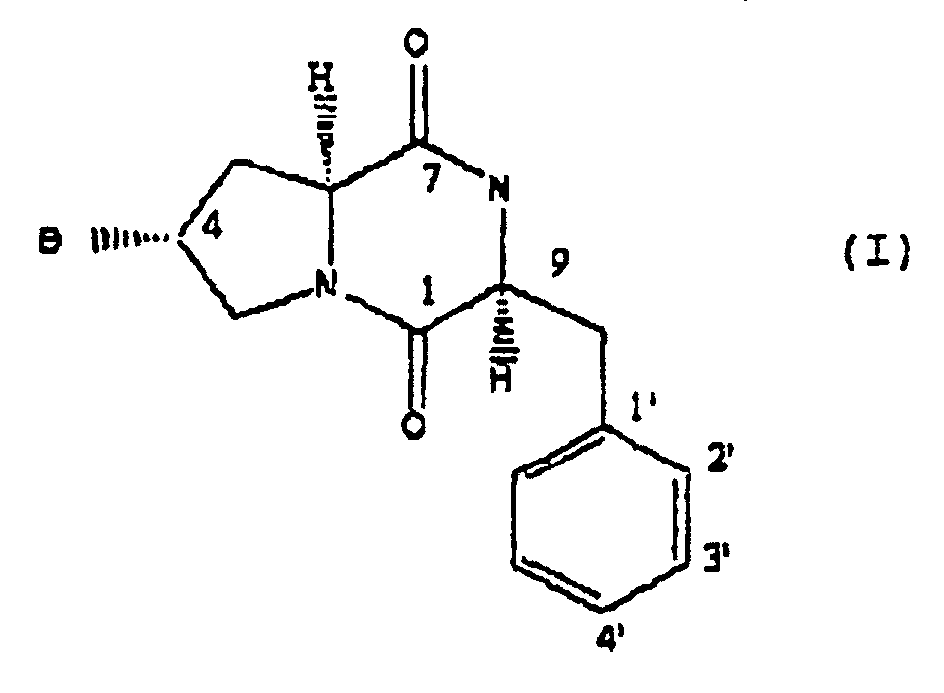
- Verwendung nach Anspruch 8, wobei der antimikrobielle WirkstoffCyclo-(L-phenylalanin-L-prolin) ist.
- Verwendung nach Anspruch 8, wobei der antimikrobielle Wirkstoff3-Phenylmilchsäure ist.
Applications Claiming Priority (2)
| Application Number | Priority Date | Filing Date | Title |
|---|---|---|---|
| SE0104311A SE0104311D0 (sv) | 2001-12-20 | 2001-12-20 | New bacterial strain |
| SE0104311 | 2002-01-08 |
Publications (2)
| Publication Number | Publication Date |
|---|---|
| EP1386543A1 EP1386543A1 (de) | 2004-02-04 |
| EP1386543B1 true EP1386543B1 (de) | 2005-08-17 |
Family
ID=20286411
Family Applications (1)
| Application Number | Title | Priority Date | Filing Date |
|---|---|---|---|
| EP02028532A Expired - Lifetime EP1386543B1 (de) | 2001-12-20 | 2002-12-20 | Neuer Bakterienstamm und seine Verwendung |
Country Status (4)
| Country | Link |
|---|---|
| EP (1) | EP1386543B1 (de) |
| AT (1) | ATE301938T1 (de) |
| DE (1) | DE60205609D1 (de) |
| SE (1) | SE0104311D0 (de) |
Families Citing this family (9)
| Publication number | Priority date | Publication date | Assignee | Title |
|---|---|---|---|---|
| ITMI20040357A1 (it) * | 2004-02-27 | 2004-05-27 | Anidral Srl | Metodo per ridurre ler aflatossine nei mangimi nelle carni nel latte e derivati e composizione atta allo scopo |
| PL214583B1 (pl) | 2010-06-16 | 2013-08-30 | Inst Biotechnologii Przemyslu Rolno Spozywczego Im Prof Waclawa Dabrowskiego | Szczep bakterii Lactobacillus plantarum S, zastosowanie szczepu bakterii Lactobacillus plantarum S oraz preparat do kiszenia pasz objetosciowych |
| KR101379518B1 (ko) * | 2011-06-29 | 2014-03-31 | 서울대학교산학협력단 | 시스-사이클로(l-페닐알라닌-l-프롤린)의 신규한 용도 |
| WO2013002439A1 (ko) * | 2011-06-29 | 2013-01-03 | 서울대학교 산학협력단 | 가노더마 속(genus ganoderma)의 진균에 대하여 특이적인 항진균 활성을 가지는 시스-사이클로(l-페닐알라닌-l-프롤린)을 포함하는 항진균용 조성물 |
| EP2592158A1 (de) * | 2011-11-14 | 2013-05-15 | University College Cork, National University of Ireland, Cork | Lactobacillus plantarum-Spezies mit antimykotischer Breitspektrumsaktivität und mit hoher Wärmebeständigkeit und Osmotoleranz |
| KR101782656B1 (ko) * | 2012-10-08 | 2017-09-27 | 서울대학교산학협력단 | 시스-사이클로(l-페닐알라닌-l-프롤린) 를 포함하는 항-인플루엔자 a 바이러스(h3n2) 조성물 및 이의 제조 방법 |
| CN103073550B (zh) * | 2013-01-30 | 2016-03-09 | 青岛农业大学 | 桑黄菌中环(l-脯氨酸-l-缬氨酸)的分离技术 |
| CN103073551B (zh) * | 2013-01-30 | 2016-03-23 | 青岛农业大学 | 桑黄菌中六氢-7-羟基-3 -(苯基甲基)吡咯并[1,2-a]吡嗪-1,4-二酮的分离技术 |
| EE05746B1 (et) * | 2013-07-30 | 2015-05-15 | OÜ Tervisliku Piima Biotehnoloogiate Arenduskeskus | Mikroorganism Lactobacillus plantarum TAK 59 NCIMB42150 ja selle kasutamine |
Family Cites Families (3)
| Publication number | Priority date | Publication date | Assignee | Title |
|---|---|---|---|---|
| US4528199A (en) * | 1983-01-26 | 1985-07-09 | University Of Georgia Research Foundation, Inc. | Silage production from fermentable forages |
| GB9411841D0 (en) * | 1994-06-14 | 1994-08-03 | Pharma Mar Sa | New antitumoral compounds from jaspis sponge |
| JP2000300284A (ja) * | 1999-04-20 | 2000-10-31 | Seibutsu Kassei Kenkyusho:Kk | 乳酸菌を用いて作られたフェニル乳酸およびその生産方法 |
-
2001
- 2001-12-20 SE SE0104311A patent/SE0104311D0/xx unknown
-
2002
- 2002-12-20 EP EP02028532A patent/EP1386543B1/de not_active Expired - Lifetime
- 2002-12-20 AT AT02028532T patent/ATE301938T1/de not_active IP Right Cessation
- 2002-12-20 DE DE60205609T patent/DE60205609D1/de not_active Expired - Lifetime
Also Published As
| Publication number | Publication date |
|---|---|
| EP1386543A1 (de) | 2004-02-04 |
| ATE301938T1 (de) | 2005-09-15 |
| DE60205609D1 (de) | 2005-09-22 |
| SE0104311D0 (sv) | 2001-12-20 |
Similar Documents
| Publication | Publication Date | Title |
|---|---|---|
| KR101757623B1 (ko) | 락토바실러스 플란타룸 kcc-10 및 이를 포함하는 조성물 | |
| US9504276B2 (en) | Method for reducing the content of pathogenic organisms present in food materials | |
| EP0576780A2 (de) | Mikroorganismus-Stamm, bakterielles Präparat dieses Stammes, Verwendung dieses Stammes und dieses Präparates, um Hefe und Schimmel zu bekämpfen | |
| CN107223017B (zh) | 用于两用青贮饲料贮存的异型发酵和同型发酵的乳酸细菌物种的改良组合物 | |
| KR102032703B1 (ko) | 락토바실러스 플란타룸 mifi-sy3 균주를 이용한 아로니아 발효액의 제조방법 | |
| KR102675187B1 (ko) | 락토바실러스 플란타룸 kcc-24 및 이를 포함하는 조성물 | |
| KR20020066079A (ko) | 가축의 생산성 향상 및 축산 분뇨의 악취 발생 감소에효과적인 신규 미생물, 이를 포함하는 복합 미생물제 및이의 제조방법 | |
| EP3027734B1 (de) | Lactobacillus plantarum stamm tak 59 ncimb42150 und dessen verwendung | |
| EP2582851B1 (de) | Neuer stamm von lactobacillus plantarum s, die verwendung vom stamm lactobacillus plantarum s sowie die herstellung von futtersilage | |
| US12419327B2 (en) | Method for preparing feed by bacteria-enzyme synergistic fermentation | |
| EP1386543A1 (de) | Neuer Bakterienstamm und seine Verwendung | |
| KR20170050527A (ko) | 신선유지를 위한 항균 및 항진균 활성을 갖는 식물성 유산균 락토바실러스 플란타륨 dsr kf15 및 이의 용도 | |
| DE60124071T2 (de) | Porphyrin enthaltende milchsäurebakterien und deren verwendung | |
| JP2886285B2 (ja) | 飼料中のカビ制御 | |
| KR101655774B1 (ko) | 락토바실러스 플란타룸 kcc-19 및 이를 포함하는 조성물 | |
| EP1726638A1 (de) | Neues milchsäurebakterium | |
| KR101451810B1 (ko) | 감마-아미노부티르산 생산능이 우수한 신규한 락토바실러스 플랜타룸 k255 균주 | |
| KR20220138495A (ko) | 락토바실러스 람노서스 kcc-51 균주 및 이를 포함하는 조성물 | |
| KR100688441B1 (ko) | 감귤박을 이용한 사료첨가제 및 그의 제조방법 | |
| KR20160063024A (ko) | 락토바실러스 플란타룸 kcc-24 및 이를 포함하는 조성물 | |
| KR20170045190A (ko) | 락토바실러스 플란타룸 kcc-24 및 이를 포함하는 조성물 | |
| KR101655778B1 (ko) | 락토바실러스 플란타룸 k46 및 이를 포함하는 조성물 | |
| EP0329164A2 (de) | Milchsäure-Bakterien-Starter für die Futterherstellung und ein diese lebensfähigen Bakterien enthaltendes Mittel | |
| Plockova et al. | Inhibition of mould growth and spore production by Lactobacillus acidophilus CH5 metabolites | |
| KR102272419B1 (ko) | 페디오코커스 펜토사세우스 kcc-45 및 이를 포함하는 조성물 |
Legal Events
| Date | Code | Title | Description |
|---|---|---|---|
| PUAI | Public reference made under article 153(3) epc to a published international application that has entered the european phase |
Free format text: ORIGINAL CODE: 0009012 |
|
| AK | Designated contracting states |
Kind code of ref document: A1 Designated state(s): AT BE BG CH CY CZ DE DK EE ES FI FR GB GR IE IT LI LU MC NL PT SE SI SK TR |
|
| AX | Request for extension of the european patent |
Extension state: AL LT LV MK RO |
|
| 17P | Request for examination filed |
Effective date: 20040607 |
|
| AKX | Designation fees paid |
Designated state(s): AT BE BG CH CY CZ DE DK EE ES FI FR GB GR IE IT LI LU MC NL PT SE SI SK TR |
|
| 17Q | First examination report despatched |
Effective date: 20040923 |
|
| GRAP | Despatch of communication of intention to grant a patent |
Free format text: ORIGINAL CODE: EPIDOSNIGR1 |
|
| GRAS | Grant fee paid |
Free format text: ORIGINAL CODE: EPIDOSNIGR3 |
|
| GRAA | (expected) grant |
Free format text: ORIGINAL CODE: 0009210 |
|
| AK | Designated contracting states |
Kind code of ref document: B1 Designated state(s): AT BE BG CH CY CZ DE DK EE ES FI FR GB GR IE IT LI LU MC NL PT SE SI SK TR |
|
| PG25 | Lapsed in a contracting state [announced via postgrant information from national office to epo] |
Ref country code: IT Free format text: LAPSE BECAUSE OF FAILURE TO SUBMIT A TRANSLATION OF THE DESCRIPTION OR TO PAY THE FEE WITHIN THE PRESCRIBED TIME-LIMIT;WARNING: LAPSES OF ITALIAN PATENTS WITH EFFECTIVE DATE BEFORE 2007 MAY HAVE OCCURRED AT ANY TIME BEFORE 2007. THE CORRECT EFFECTIVE DATE MAY BE DIFFERENT FROM THE ONE RECORDED. Effective date: 20050817 Ref country code: CH Free format text: LAPSE BECAUSE OF FAILURE TO SUBMIT A TRANSLATION OF THE DESCRIPTION OR TO PAY THE FEE WITHIN THE PRESCRIBED TIME-LIMIT Effective date: 20050817 Ref country code: TR Free format text: LAPSE BECAUSE OF FAILURE TO SUBMIT A TRANSLATION OF THE DESCRIPTION OR TO PAY THE FEE WITHIN THE PRESCRIBED TIME-LIMIT Effective date: 20050817 Ref country code: SI Free format text: LAPSE BECAUSE OF FAILURE TO SUBMIT A TRANSLATION OF THE DESCRIPTION OR TO PAY THE FEE WITHIN THE PRESCRIBED TIME-LIMIT Effective date: 20050817 Ref country code: BE Free format text: LAPSE BECAUSE OF FAILURE TO SUBMIT A TRANSLATION OF THE DESCRIPTION OR TO PAY THE FEE WITHIN THE PRESCRIBED TIME-LIMIT Effective date: 20050817 Ref country code: SK Free format text: LAPSE BECAUSE OF FAILURE TO SUBMIT A TRANSLATION OF THE DESCRIPTION OR TO PAY THE FEE WITHIN THE PRESCRIBED TIME-LIMIT Effective date: 20050817 Ref country code: FI Free format text: LAPSE BECAUSE OF FAILURE TO SUBMIT A TRANSLATION OF THE DESCRIPTION OR TO PAY THE FEE WITHIN THE PRESCRIBED TIME-LIMIT Effective date: 20050817 Ref country code: EE Free format text: LAPSE BECAUSE OF FAILURE TO SUBMIT A TRANSLATION OF THE DESCRIPTION OR TO PAY THE FEE WITHIN THE PRESCRIBED TIME-LIMIT Effective date: 20050817 Ref country code: CZ Free format text: LAPSE BECAUSE OF FAILURE TO SUBMIT A TRANSLATION OF THE DESCRIPTION OR TO PAY THE FEE WITHIN THE PRESCRIBED TIME-LIMIT Effective date: 20050817 Ref country code: NL Free format text: LAPSE BECAUSE OF FAILURE TO SUBMIT A TRANSLATION OF THE DESCRIPTION OR TO PAY THE FEE WITHIN THE PRESCRIBED TIME-LIMIT Effective date: 20050817 Ref country code: AT Free format text: LAPSE BECAUSE OF FAILURE TO SUBMIT A TRANSLATION OF THE DESCRIPTION OR TO PAY THE FEE WITHIN THE PRESCRIBED TIME-LIMIT Effective date: 20050817 Ref country code: LI Free format text: LAPSE BECAUSE OF FAILURE TO SUBMIT A TRANSLATION OF THE DESCRIPTION OR TO PAY THE FEE WITHIN THE PRESCRIBED TIME-LIMIT Effective date: 20050817 |
|
| REG | Reference to a national code |
Ref country code: GB Ref legal event code: FG4D |
|
| REG | Reference to a national code |
Ref country code: CH Ref legal event code: EP |
|
| REG | Reference to a national code |
Ref country code: IE Ref legal event code: FG4D |
|
| REF | Corresponds to: |
Ref document number: 60205609 Country of ref document: DE Date of ref document: 20050922 Kind code of ref document: P |
|
| REG | Reference to a national code |
Ref country code: SE Ref legal event code: TRGR |
|
| PG25 | Lapsed in a contracting state [announced via postgrant information from national office to epo] |
Ref country code: GR Free format text: LAPSE BECAUSE OF FAILURE TO SUBMIT A TRANSLATION OF THE DESCRIPTION OR TO PAY THE FEE WITHIN THE PRESCRIBED TIME-LIMIT Effective date: 20051117 Ref country code: DK Free format text: LAPSE BECAUSE OF FAILURE TO SUBMIT A TRANSLATION OF THE DESCRIPTION OR TO PAY THE FEE WITHIN THE PRESCRIBED TIME-LIMIT Effective date: 20051117 Ref country code: BG Free format text: LAPSE BECAUSE OF FAILURE TO SUBMIT A TRANSLATION OF THE DESCRIPTION OR TO PAY THE FEE WITHIN THE PRESCRIBED TIME-LIMIT Effective date: 20051117 |
|
| PG25 | Lapsed in a contracting state [announced via postgrant information from national office to epo] |
Ref country code: DE Free format text: LAPSE BECAUSE OF FAILURE TO SUBMIT A TRANSLATION OF THE DESCRIPTION OR TO PAY THE FEE WITHIN THE PRESCRIBED TIME-LIMIT Effective date: 20051118 |
|
| PG25 | Lapsed in a contracting state [announced via postgrant information from national office to epo] |
Ref country code: ES Free format text: LAPSE BECAUSE OF FAILURE TO SUBMIT A TRANSLATION OF THE DESCRIPTION OR TO PAY THE FEE WITHIN THE PRESCRIBED TIME-LIMIT Effective date: 20051128 |
|
| PG25 | Lapsed in a contracting state [announced via postgrant information from national office to epo] |
Ref country code: IE Free format text: LAPSE BECAUSE OF NON-PAYMENT OF DUE FEES Effective date: 20051220 Ref country code: CY Free format text: LAPSE BECAUSE OF FAILURE TO SUBMIT A TRANSLATION OF THE DESCRIPTION OR TO PAY THE FEE WITHIN THE PRESCRIBED TIME-LIMIT Effective date: 20051220 |
|
| PG25 | Lapsed in a contracting state [announced via postgrant information from national office to epo] |
Ref country code: LU Free format text: LAPSE BECAUSE OF NON-PAYMENT OF DUE FEES Effective date: 20051231 Ref country code: MC Free format text: LAPSE BECAUSE OF NON-PAYMENT OF DUE FEES Effective date: 20051231 |
|
| PG25 | Lapsed in a contracting state [announced via postgrant information from national office to epo] |
Ref country code: PT Free format text: LAPSE BECAUSE OF FAILURE TO SUBMIT A TRANSLATION OF THE DESCRIPTION OR TO PAY THE FEE WITHIN THE PRESCRIBED TIME-LIMIT Effective date: 20060117 |
|
| NLV1 | Nl: lapsed or annulled due to failure to fulfill the requirements of art. 29p and 29m of the patents act | ||
| REG | Reference to a national code |
Ref country code: CH Ref legal event code: PL |
|
| PLBE | No opposition filed within time limit |
Free format text: ORIGINAL CODE: 0009261 |
|
| STAA | Information on the status of an ep patent application or granted ep patent |
Free format text: STATUS: NO OPPOSITION FILED WITHIN TIME LIMIT |
|
| 26N | No opposition filed |
Effective date: 20060518 |
|
| PG25 | Lapsed in a contracting state [announced via postgrant information from national office to epo] |
Ref country code: FR Free format text: LAPSE BECAUSE OF FAILURE TO SUBMIT A TRANSLATION OF THE DESCRIPTION OR TO PAY THE FEE WITHIN THE PRESCRIBED TIME-LIMIT Effective date: 20060818 |
|
| REG | Reference to a national code |
Ref country code: IE Ref legal event code: MM4A |
|
| EN | Fr: translation not filed | ||
| PG25 | Lapsed in a contracting state [announced via postgrant information from national office to epo] |
Ref country code: FR Free format text: LAPSE BECAUSE OF FAILURE TO SUBMIT A TRANSLATION OF THE DESCRIPTION OR TO PAY THE FEE WITHIN THE PRESCRIBED TIME-LIMIT Effective date: 20050817 |
|
| REG | Reference to a national code |
Ref country code: GB Ref legal event code: 732E Free format text: REGISTERED BETWEEN 20100812 AND 20100818 |
|
| PGFP | Annual fee paid to national office [announced via postgrant information from national office to epo] |
Ref country code: SE Payment date: 20181211 Year of fee payment: 17 |
|
| PGFP | Annual fee paid to national office [announced via postgrant information from national office to epo] |
Ref country code: GB Payment date: 20181219 Year of fee payment: 17 |
|
| REG | Reference to a national code |
Ref country code: SE Ref legal event code: EUG |
|
| GBPC | Gb: european patent ceased through non-payment of renewal fee |
Effective date: 20191220 |
|
| PG25 | Lapsed in a contracting state [announced via postgrant information from national office to epo] |
Ref country code: GB Free format text: LAPSE BECAUSE OF NON-PAYMENT OF DUE FEES Effective date: 20191220 Ref country code: SE Free format text: LAPSE BECAUSE OF NON-PAYMENT OF DUE FEES Effective date: 20191221 |