EP1388151B1 - Verfahren zum schutz der bauteile des primärsystems eines siedewasserreaktors insbesondere vor spannungsrisskorrosion - Google Patents
Verfahren zum schutz der bauteile des primärsystems eines siedewasserreaktors insbesondere vor spannungsrisskorrosion Download PDFInfo
- Publication number
- EP1388151B1 EP1388151B1 EP02743008A EP02743008A EP1388151B1 EP 1388151 B1 EP1388151 B1 EP 1388151B1 EP 02743008 A EP02743008 A EP 02743008A EP 02743008 A EP02743008 A EP 02743008A EP 1388151 B1 EP1388151 B1 EP 1388151B1
- Authority
- EP
- European Patent Office
- Prior art keywords
- primary system
- alcohol
- boiling water
- components
- hydrogen
- Prior art date
- Legal status (The legal status is an assumption and is not a legal conclusion. Google has not performed a legal analysis and makes no representation as to the accuracy of the status listed.)
- Expired - Lifetime
Links
- 238000000034 method Methods 0.000 title claims description 14
- XLYOFNOQVPJJNP-UHFFFAOYSA-N water Substances O XLYOFNOQVPJJNP-UHFFFAOYSA-N 0.000 title claims description 14
- 238000005260 corrosion Methods 0.000 title claims description 12
- 230000007797 corrosion Effects 0.000 title claims description 12
- 238000009835 boiling Methods 0.000 title claims description 10
- 238000005336 cracking Methods 0.000 title claims description 4
- OKKJLVBELUTLKV-UHFFFAOYSA-N Methanol Chemical compound OC OKKJLVBELUTLKV-UHFFFAOYSA-N 0.000 claims description 34
- LFQSCWFLJHTTHZ-UHFFFAOYSA-N Ethanol Chemical compound CCO LFQSCWFLJHTTHZ-UHFFFAOYSA-N 0.000 claims description 20
- 239000002826 coolant Substances 0.000 claims description 11
- BDERNNFJNOPAEC-UHFFFAOYSA-N propan-1-ol Chemical compound CCCO BDERNNFJNOPAEC-UHFFFAOYSA-N 0.000 claims description 3
- 238000000429 assembly Methods 0.000 claims description 2
- 230000000712 assembly Effects 0.000 claims description 2
- 239000000446 fuel Substances 0.000 claims description 2
- BASFCYQUMIYNBI-UHFFFAOYSA-N platinum Chemical compound [Pt] BASFCYQUMIYNBI-UHFFFAOYSA-N 0.000 claims 2
- 229910052697 platinum Inorganic materials 0.000 claims 1
- 239000010970 precious metal Substances 0.000 claims 1
- 239000001257 hydrogen Substances 0.000 description 20
- 229910052739 hydrogen Inorganic materials 0.000 description 20
- UFHFLCQGNIYNRP-UHFFFAOYSA-N Hydrogen Chemical compound [H][H] UFHFLCQGNIYNRP-UHFFFAOYSA-N 0.000 description 19
- 229910000831 Steel Inorganic materials 0.000 description 8
- 239000010959 steel Substances 0.000 description 8
- QVGXLLKOCUKJST-UHFFFAOYSA-N atomic oxygen Chemical compound [O] QVGXLLKOCUKJST-UHFFFAOYSA-N 0.000 description 7
- 239000001301 oxygen Substances 0.000 description 7
- 229910052760 oxygen Inorganic materials 0.000 description 7
- 239000003638 chemical reducing agent Substances 0.000 description 4
- 229910000510 noble metal Inorganic materials 0.000 description 4
- 230000001590 oxidative effect Effects 0.000 description 4
- WSFSSNUMVMOOMR-UHFFFAOYSA-N Formaldehyde Chemical compound O=C WSFSSNUMVMOOMR-UHFFFAOYSA-N 0.000 description 3
- 150000001298 alcohols Chemical class 0.000 description 3
- 239000007788 liquid Substances 0.000 description 3
- 239000000463 material Substances 0.000 description 3
- 239000000126 substance Substances 0.000 description 3
- IKHGUXGNUITLKF-UHFFFAOYSA-N Acetaldehyde Chemical compound CC=O IKHGUXGNUITLKF-UHFFFAOYSA-N 0.000 description 2
- MHAJPDPJQMAIIY-UHFFFAOYSA-N Hydrogen peroxide Chemical compound OO MHAJPDPJQMAIIY-UHFFFAOYSA-N 0.000 description 2
- 239000013543 active substance Substances 0.000 description 2
- 229910045601 alloy Inorganic materials 0.000 description 2
- 239000000956 alloy Substances 0.000 description 2
- 238000000576 coating method Methods 0.000 description 2
- 238000007796 conventional method Methods 0.000 description 2
- 238000010586 diagram Methods 0.000 description 2
- 230000000694 effects Effects 0.000 description 2
- 150000002431 hydrogen Chemical class 0.000 description 2
- BDAGIHXWWSANSR-UHFFFAOYSA-N methanoic acid Natural products OC=O BDAGIHXWWSANSR-UHFFFAOYSA-N 0.000 description 2
- 238000003608 radiolysis reaction Methods 0.000 description 2
- 239000012808 vapor phase Substances 0.000 description 2
- OSWFIVFLDKOXQC-UHFFFAOYSA-N 4-(3-methoxyphenyl)aniline Chemical compound COC1=CC=CC(C=2C=CC(N)=CC=2)=C1 OSWFIVFLDKOXQC-UHFFFAOYSA-N 0.000 description 1
- 229910010413 TiO 2 Inorganic materials 0.000 description 1
- 238000006243 chemical reaction Methods 0.000 description 1
- 239000007795 chemical reaction product Substances 0.000 description 1
- 230000005466 cherenkov radiation Effects 0.000 description 1
- 239000011248 coating agent Substances 0.000 description 1
- 150000001875 compounds Chemical class 0.000 description 1
- 238000006056 electrooxidation reaction Methods 0.000 description 1
- 238000002474 experimental method Methods 0.000 description 1
- 235000019253 formic acid Nutrition 0.000 description 1
- 239000007789 gas Substances 0.000 description 1
- 229910001055 inconels 600 Inorganic materials 0.000 description 1
- 238000010348 incorporation Methods 0.000 description 1
- 230000005764 inhibitory process Effects 0.000 description 1
- 229910052751 metal Inorganic materials 0.000 description 1
- 239000002184 metal Substances 0.000 description 1
- 229910044991 metal oxide Inorganic materials 0.000 description 1
- 150000004706 metal oxides Chemical class 0.000 description 1
- 150000002739 metals Chemical class 0.000 description 1
- 239000007800 oxidant agent Substances 0.000 description 1
- 230000001699 photocatalysis Effects 0.000 description 1
- 230000001681 protective effect Effects 0.000 description 1
- 230000009257 reactivity Effects 0.000 description 1
- 239000013535 sea water Substances 0.000 description 1
- 239000004065 semiconductor Substances 0.000 description 1
- 239000010935 stainless steel Substances 0.000 description 1
- 229910001220 stainless steel Inorganic materials 0.000 description 1
- 238000012360 testing method Methods 0.000 description 1
Images
Classifications
-
- C—CHEMISTRY; METALLURGY
- C23—COATING METALLIC MATERIAL; COATING MATERIAL WITH METALLIC MATERIAL; CHEMICAL SURFACE TREATMENT; DIFFUSION TREATMENT OF METALLIC MATERIAL; COATING BY VACUUM EVAPORATION, BY SPUTTERING, BY ION IMPLANTATION OR BY CHEMICAL VAPOUR DEPOSITION, IN GENERAL; INHIBITING CORROSION OF METALLIC MATERIAL OR INCRUSTATION IN GENERAL
- C23F—NON-MECHANICAL REMOVAL OF METALLIC MATERIAL FROM SURFACE; INHIBITING CORROSION OF METALLIC MATERIAL OR INCRUSTATION IN GENERAL; MULTI-STEP PROCESSES FOR SURFACE TREATMENT OF METALLIC MATERIAL INVOLVING AT LEAST ONE PROCESS PROVIDED FOR IN CLASS C23 AND AT LEAST ONE PROCESS COVERED BY SUBCLASS C21D OR C22F OR CLASS C25
- C23F11/00—Inhibiting corrosion of metallic material by applying inhibitors to the surface in danger of corrosion or adding them to the corrosive agent
-
- C—CHEMISTRY; METALLURGY
- C23—COATING METALLIC MATERIAL; COATING MATERIAL WITH METALLIC MATERIAL; CHEMICAL SURFACE TREATMENT; DIFFUSION TREATMENT OF METALLIC MATERIAL; COATING BY VACUUM EVAPORATION, BY SPUTTERING, BY ION IMPLANTATION OR BY CHEMICAL VAPOUR DEPOSITION, IN GENERAL; INHIBITING CORROSION OF METALLIC MATERIAL OR INCRUSTATION IN GENERAL
- C23F—NON-MECHANICAL REMOVAL OF METALLIC MATERIAL FROM SURFACE; INHIBITING CORROSION OF METALLIC MATERIAL OR INCRUSTATION IN GENERAL; MULTI-STEP PROCESSES FOR SURFACE TREATMENT OF METALLIC MATERIAL INVOLVING AT LEAST ONE PROCESS PROVIDED FOR IN CLASS C23 AND AT LEAST ONE PROCESS COVERED BY SUBCLASS C21D OR C22F OR CLASS C25
- C23F11/00—Inhibiting corrosion of metallic material by applying inhibitors to the surface in danger of corrosion or adding them to the corrosive agent
- C23F11/08—Inhibiting corrosion of metallic material by applying inhibitors to the surface in danger of corrosion or adding them to the corrosive agent in other liquids
- C23F11/10—Inhibiting corrosion of metallic material by applying inhibitors to the surface in danger of corrosion or adding them to the corrosive agent in other liquids using organic inhibitors
- C23F11/12—Oxygen-containing compounds
- C23F11/122—Alcohols; Aldehydes; Ketones
-
- G—PHYSICS
- G21—NUCLEAR PHYSICS; NUCLEAR ENGINEERING
- G21C—NUCLEAR REACTORS
- G21C15/00—Cooling arrangements within the pressure vessel containing the core; Selection of specific coolants
- G21C15/28—Selection of specific coolants ; Additions to the reactor coolants, e.g. against moderator corrosion
-
- G—PHYSICS
- G21—NUCLEAR PHYSICS; NUCLEAR ENGINEERING
- G21C—NUCLEAR REACTORS
- G21C17/00—Monitoring; Testing ; Maintaining
- G21C17/02—Devices or arrangements for monitoring coolant or moderator
- G21C17/022—Devices or arrangements for monitoring coolant or moderator for monitoring liquid coolants or moderators
- G21C17/0225—Chemical surface treatment, e.g. corrosion
-
- G—PHYSICS
- G21—NUCLEAR PHYSICS; NUCLEAR ENGINEERING
- G21C—NUCLEAR REACTORS
- G21C19/00—Arrangements for treating, for handling, or for facilitating the handling of, fuel or other materials which are used within the reactor, e.g. within its pressure vessel
- G21C19/28—Arrangements for introducing fluent material into the reactor core; Arrangements for removing fluent material from the reactor core
-
- G—PHYSICS
- G21—NUCLEAR PHYSICS; NUCLEAR ENGINEERING
- G21C—NUCLEAR REACTORS
- G21C19/00—Arrangements for treating, for handling, or for facilitating the handling of, fuel or other materials which are used within the reactor, e.g. within its pressure vessel
- G21C19/28—Arrangements for introducing fluent material into the reactor core; Arrangements for removing fluent material from the reactor core
- G21C19/30—Arrangements for introducing fluent material into the reactor core; Arrangements for removing fluent material from the reactor core with continuous purification of circulating fluent material, e.g. by extraction of fission products deterioration or corrosion products, impurities, e.g. by cold traps
- G21C19/307—Arrangements for introducing fluent material into the reactor core; Arrangements for removing fluent material from the reactor core with continuous purification of circulating fluent material, e.g. by extraction of fission products deterioration or corrosion products, impurities, e.g. by cold traps specially adapted for liquids
-
- Y—GENERAL TAGGING OF NEW TECHNOLOGICAL DEVELOPMENTS; GENERAL TAGGING OF CROSS-SECTIONAL TECHNOLOGIES SPANNING OVER SEVERAL SECTIONS OF THE IPC; TECHNICAL SUBJECTS COVERED BY FORMER USPC CROSS-REFERENCE ART COLLECTIONS [XRACs] AND DIGESTS
- Y02—TECHNOLOGIES OR APPLICATIONS FOR MITIGATION OR ADAPTATION AGAINST CLIMATE CHANGE
- Y02E—REDUCTION OF GREENHOUSE GAS [GHG] EMISSIONS, RELATED TO ENERGY GENERATION, TRANSMISSION OR DISTRIBUTION
- Y02E30/00—Energy generation of nuclear origin
- Y02E30/30—Nuclear fission reactors
Definitions
- the invention relates to a method for protecting the components of the primary system of a boiling water reactor, in particular against stress corrosion.
- a boiling water reactor the coolant that comes into contact with the reactor core becomes primary coolant, and the components and lines exposed to the primary coolant are called a primary system.
- the primary system of a boiling water reactor contains, in addition to the reactor pressure vessel, piping systems as well as various internals and pumps.
- the components are usually made of stainless steel, for example of a CrNi steel or of a Ni-based alloy such as Inconel 600.
- the reaction products hydrogen peroxide, oxygen and hydrogen. The resulting from the excess of oxidizing oxidizing conditions promote corrosion, in particular the stress corrosion cracking of the components.
- EP 0736878 a method is known in which the oxide layer of the component surfaces in the primary system is doped with noble metal, which allows the use of smaller amounts of hydrogen.
- DE 100 30 726 A1 For example, a method is described in which the amounts of hydrogen and noble metal are to be reduced by coating the component surfaces with a film containing a photocatalytic substance.
- the photocatalytically active substances preferably TiO 2 and ZrO 2 are used - are n-type semiconductors, which are excited by the Cherenkov radiation present in the reactor, whereby they shift the corrosion potential of the component surfaces to negative values.
- the object of the invention is to propose an alternative method for protecting the components of the primary system of a boiling water reactor, which ensures efficient corrosion protection at low material and time.
- an oxidizable alcohol under the conditions present in the reactor system is preferably fed in liquid form into the primary coolant, wherein the component surfaces are blank or only coated by a self-oxide layer.
- a self-oxide layer is to be understood as meaning an oxide layer which, if appropriate, forms due to corrosion of the component material with incorporation of foreign metals or foreign metal oxides during reactor operation or during an oxidizing pretreatment. It has been found that the addition of an alcohol of the stated type as a sole measure is sufficient to lower the corrosion potential of the component surfaces to values below -230 mV, whereby elaborate coatings, in particular with photocatalytically active substances, can be dispensed with.
- an alcohol over hydrogen as a reducing agent is firstly that it can be added in liquid form or as a solution.
- a liquid settles in Apparate technical terms easier to feed into the primary coolant than a gaseous substance.
- the compounds mentioned offer advantages in handling and storage. After all, they are cheaper than hydrogen, which can also reduce system operating costs.
- the component surfaces are doped with noble metal, for example with Pt, whereby a lower concentration of alcohol in the primary coolant is required.
- a concentration of the alcohol is maintained which is between 0.1 and 300 .mu.mol / kg in the primary coolant.
- the alcohol is fed into the condensate or feedwater system.
- the metered amount is such that the said concentration is established in the falling space of the boiling water reactor.
- the dead space is that area in the reactor pressure vessel that extends downwardly from the mouth openings of the feed pipes.
- Preference is given to using methanol, ethanol and propanol. But also suitable are formic acid, formaldehyde and acetaldehyde.
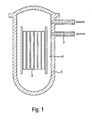
- Fig. 1 shows schematically and greatly simplified a boiling water reactor in whose pressure vessel 1 are fuel assemblies 2.
- an alcohol of the aforementioned type preferably methanol
- the reactor is in an operating condition in which the components of the reactor, that is, for example, the pressure vessel 1 and the core grid (not shown), which usually consist of CrNi steel or a Ni-based alloy, are bare or only coated with a self-oxide layer.
- the former case occurs, for example, when in the course of a revision, an oxide layer was removed from the component surfaces.
- the injected into the feed line 3 amount is such that adjusts itself in the adjoining them down the downpipe space 4, a concentration of 0.1 to 300 .mu.mol / kg of alcohol, especially of methanol.
- the optimum concentration of alcohol depends on various factors such as component material, presence of noble metal doping, etc., and must therefore be determined individually for each reactor.
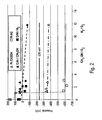
- Fig.2 applied over the molar ratio of methanol / oxygen or hydrogen / oxygen.
- Hydrogen and methanol or other alcohols have hydrogen-comparable electrochemical activities. Their reactivity towards radiolysis of water formed and strong oxidizing OH radicals is greater. Another advantage of the proposed method results from the much lower volatility of the alcohols in question. While a large part of the metered hydrogen has to be vaporized, discharged with it and catalytically oxidized as a non-condensable gas in the exhaust system of the reactor with the addition of stoichiometric amounts of oxygen, in the case of alcohols the proportion exceeding the vapor phase is lower. In addition, the discharged with the vapor phase alcohol content is almost completely condensed and thus attributable to the reactor. The cost of chemicals, devices and control measures is thus reduced compared to conventional methods.
Landscapes
- Engineering & Computer Science (AREA)
- Physics & Mathematics (AREA)
- Chemical & Material Sciences (AREA)
- Plasma & Fusion (AREA)
- General Engineering & Computer Science (AREA)
- High Energy & Nuclear Physics (AREA)
- Materials Engineering (AREA)
- Mechanical Engineering (AREA)
- Metallurgy (AREA)
- Organic Chemistry (AREA)
- Organic Low-Molecular-Weight Compounds And Preparation Thereof (AREA)
- Preventing Corrosion Or Incrustation Of Metals (AREA)
- Catalysts (AREA)
- Physical Or Chemical Processes And Apparatus (AREA)
Description
- Die Erfindung betrifft ein Verfahren zum Schutz der Bauteile des Primärsystems eines Siedewasserreaktors insbesondere vor Spannungskorrosion. In einem Siedewasserreaktor wird das Kühlmittel, das mit dem Reaktorkern in Kontakt kommt, Primärkühlmittel, und die dem Primärkühlmittel ausgesetzten Bauteile und Leitungen werden Primärsystem genannt. Das Primärsystem eines Siedewasserreaktors beinhaltet neben dem Reaktordruckgefäß Leitungssysteme sowie diverse Einbauten und Pumpen. Die Bauteile bestehen in aller Regel aus rostfreiem Stahl, beispielsweise aus einem CrNi-Stahl oder aus einer Ni-Basislegierung wie Inconel 600. Im Siedewasserreaktor entstehen durch Radiolyse des Primärkühlmittels unter anderen die Reaktionsprodukte Wasserstoffperoxyd, Sauerstoff und Wasserstoff. Die sich durch den Überschuss von Oxidationsmitteln ergebenden oxidierenden Bedingungen fördern die Korrosion, insbesondere die Spannungsrisskorrosion der Bauteile. Um hier Abhilfe zu schaffen, ist es bekannt, dem Primärkühlmittel Wasserstoff beizumengen. Dieser bindet im Primärkühlmittel enthaltene Oxidationsmittel und verschiebt das elektrochemische Potential der Bauteiloberflächen zu negativen Werten hin. Nachteilig bei dem herkömmlichen Verfahren ist, dass relativ große Mengen an Wasserstoff benötigt werden, um einen ausreichenden Korrosionsschutz zu gewährleisten. Der hohe, mit entsprechenden Kosten verbundene Wasserstoffbedarf geht nicht zuletzt auf die Tatsache zurück, dass die elektrochemische Oxidation des Wasserstoffs auf den mit einer Oxidschicht bedeckten Bauteiloberflächen einer hohen Reaktionshemmung unterliegt, was durch erhöhte Wasserstoffkonzentrationen ausgeglichen werden muss. Nachteilig ist weiterhin der apparative Aufwand für die Dosierung des gasförmigen Wasserstoffs.
- Aus
EP 0736878 ist ein Verfahren bekannt, bei dem die Oxidschicht der Bauteiloberflächen im Primärsystem mit Edelmetall dotiert wird, was den Einsatz geringerer Wasserstoffmengen ermöglicht. InDE 100 30 726 A1 ist ein Verfahren beschrieben, bei dem die Mengen an Wasserstoff und Edelmetall dadurch verringert werden sollen , dass die Bauteiloberflächen mit einem eine fotokatalytisch wirkende Substanz aufweisenden Film beschichtet werden. Die fotokatalytisch wirkenden Substanzen - bevorzugt werden TiO2 und ZrO2 eingesetzt - sind n-Halbleiter, die durch die im Reaktor vorhandene Cherenkov-Strahlung angeregt werden, wobei sie das Korrosionspotential der Bauteiloberflächen zu negativen Werten hin verschieben. - Aufgabe der Erfindung ist es, ein alternatives Verfahren zum Schutz der Bauteile des Primärsystems eines Siedewasserreaktors vorzuschlagen, das bei geringem Material- und Zeitaufwand einen effizienten Korrosionsschutz gewährleistet.
- Diese Aufgabe wird durch ein Verfahren nach Anspruch 1 gelöst. Danach wird anstelle von Wasserstoff ein unter den im Reaktorsystem vorhandenen Bedingungen oxidierbarer Alkohol vorzugsweise in flüssiger Form in das Primärkühlmittel eingespeist, wobei die Bauteiloberflächen blank oder nur von einer Eigenoxidschicht überzogen sind. Unter einer Eigenoxidschicht ist dabei eine Oxidschicht zu verstehen, die sich durch Korrosion des Bauteilmaterials gegebenenfalls unter Einlagerung von Fremdmetallen oder Fremdmetalloxiden während des Reaktorbetriebes oder während einer oxidierenden Vorbehandlung bildet. Es hat sich gezeigt, dass die Zudosierung eines Alkohols der genannten Art als alleinige Maßnahme ausreicht, das Korrosionspotential der Bauteiloberflächen auf unterhalb von -230mV liegende Werte abzusenken, wobei auf aufwändige Beschichtungen insbesondere mit fotokalytisch wirksamen Substanzen verzichtet werden kann. Der Vorteil eines Alkohols gegenüber Wasserstoff als Reduktionsmittel liegt zum einen darin, dass er in flüssiger Form bzw. als Lösung zudosiert werden kann. Eine Flüssigkeit lässt sich in apparatetechnischer Hinsicht leichter in das Primärkühlmittel einspeisen als ein gasförmiger Stoff. Des weiteren bieten die genannten Verbindungen Vorteile bei der Handhabung und Lagerung. Schließlich sind sie billiger als Wasserstoff, wodurch ebenfalls die Anlagebetriebskosten gesenkt werden können. Bei einer bevorzugten Verfahrensvariante sind die Bauteiloberflächen mit Edelmetall, beispielsweise mit Pt, dotiert, wodurch eine geringere Konzentration an Alkohol im Primärkühlmittel erforderlich ist. Vorzugsweise wird eine Konzentration des Alkohols eingehalten, die zwischen 0,1 und 300 µmol/kg im Primärkühlmittel liegt. Zweckmäßigerweise wird der Alkohol in das Kondensat- bzw. Speisewassersystem eingespeist. Die zudosierte Menge ist dabei so bemessen, dass sich die genannte Konzentration in dem Fallraum des Siedewasserreaktors einstellt. Der Fallraum ist jener Bereich im Reaktordruckbehälter, der sich von den Mündungsöffnungen der Einspeisungsrohre nach unten erstreckt. Bevorzugt werden Methanol, Ethanol und Propanol eingesetzt. Gut geeignet sind aber auch Ameisensäure, Formaldehyd und Acetaldehyd.
- Die Erfindung wird nun anhand der beigefügten Zeichnungen näher erläutert. Es zeigen:
- Fig. 1
- eine schematische Längsschnittdarstellung eines Seidewasserreaktors,
- Fig. 2
- ein Diagramm, das die Potentiale von CrNi-Stahl und Pt bei Anwesenheit von CH3OH bzw. Wasserstoff als Reduktionsmittel wiedergibt.
-
Fig. 1 zeigt schematisch und stark vereinfacht einen Siedewasserreaktor, in dessen Druckbehälter 1 sich Brennelemente 2 befinden. Als Schutz gegen Korrosion und insbesondere gegen Spannungsrisskorrosion (IGSCC) wird ein Alkohol der vorbezeichneten Art, vorzugsweise Methanol in die Speiseleitung 3 injiziert, welche sich innerhalb des Druckbehälters in Form einer ringförmigen Verteilerleitung fortsetzt. Der Reaktor befindet sich in einem Betriebszustand, bei dem die Bauteile des Reaktors, also z.B. der Druckbehälter 1 und die Kerngitter (nicht dargestellt), die üblicherweise aus CrNi-Stahl oder einer Ni-Basislegierung bestehen, blank oder nur mit einer Eigenoxidschicht überzogen sind. Der erstgenannte Fall tritt z.B. auf, wenn im Zuge einer Revision eine Oxidschicht von den Bauteiloberflächen entfernt wurde. Die in die Speiseleitung 3 injizierte Menge ist so bemessen, dass sich in dem sich an sie nach unten anschließenden Fallraum 4 eine Konzentration von 0,1 bis 300 µmol/kg Alkohol, insbesondere von Methanol einstellt. Die optimale Konzentration an Alkohol hängt von unterschiedlichen Faktoren wie Bauteilmaterial, Vorhandensein einer Edelmetalldotierung etc. ab und ist daher für den jeweiligen Reaktor individuell zu bestimmen. - Zur Überprüfung der grundsätzlichen Wirksamkeit des vorgeschlagenen Verfahrens wurden Versuche mit Pt- und CrNi-Stahl-Elektroden durchgeführt. Die Elektroden aus CrNi-Stahl wurden 500 Std. bei 280 °C und einer den Einsatzbedingungen im Reaktor entsprechenden Wasserchemie voroxidiert. Die derart vorbehandelten CrNi-Stahl- bzw. die Pt-Elektroden wurden in einem von 280 °C heißem Wasser durchströmten Autoclaven angeordnet. Die Chemie des umgewälzten Wassers wurde entsprechend den Verhältnissen in einem Siedewasserreaktor eingestellt. Der Sauerstoffgehalt wurde zwischen 0,2 und 2 ppm gehalten. Als Reduktionsmittel wurde Methanol und zum Vergleich Wasserstoff zudosiert. Die Potentialwerte der Elektroden wurden als Funktion des Methanol- bzw. Wasserstoffgehaltes ermittelt und sind in dem Diagramm gem.
Fig.2 über dem Molverhältnis Methanol/Sauerstoff bzw. Wasserstoff/Sauerstoff aufgetragen. InFig. 2 bedeutet die Angabe "CrNi" CrNi-Stahl. Es ist erkennbar, dass eine Methanoldosierung eine mit einer Wasserstoffdosierung vergleichbare Schutzwirkung ausübt. In beiden Fällen wird das Pt-Potential unter das Schutzpotential von -230 mV abgesenkt. Bei der undotierten CrNi-Stahl-Elektrode sind bei Methanol und Wasserstoff ebenfalls vergleichbare elektrochemische Aktivitäten beobachtbar. Um hier allerdings eine Absenkung unter das Schutzpotential zu erreichen, müssen wesentlich größere Molverhältnisse eingestellt werden. Es muss also mit geringerem Sauerstoffgehalt bzw. mit einem Überschuss an Reduktionsmittel gearbeitet werden. Für einen Sauerstoffgehalt von kleiner 10 ppb und einem Methanolgehalt von 2 ppm (= 62,5 µmol/kg) wurde ein Potential von -500 mV gemessen. - Wasserstoff und Methanol oder andere Alkohole wie insbesondere Ethanol oder Propanol haben zwar mit Wasserstoff vergleichbare elektrochemische Aktivitäten. Ihre Reaktivität gegenüber bei der Radiolyse von Wasser gebildeten und stark oxidierend wirkenden OH-Radikalen ist aber größer. Ein weiterer Vorteil des vorgeschlagenen Verfahrens ergibt sich aus der wesentlich geringeren Flüchtigkeit der in Rede stehenden Alkohole. Während ein Großteil des zudosierten Wasserstoffs in die Dampfphase übertritt, mit dieser ausgetragen und als nichtkondensierbares Gas in der Abgasanlage des Reaktors unter Zugabe stöchiometrischer Sauerstoffmengen katalytisch oxidiert werden muss, ist bei Alkoholen der in die Dampfphase übertretende Anteil geringer. Außerdem ist der mit der Dampfphase ausgetragene Alkoholanteil praktisch vollständig kondensier- und damit in den Reaktor zurückführbar. Der Aufwand an Chemikalien, Vorrichtungen und steuerungstechnischen Maßnahmen ist somit gegenüber herkömmlichen Verfahren verringert.
Claims (5)
- Verfahren zum Schutz der Bauteile des Primärsystems eines Siedewasserreaktors insbesondere vor Spannungsrisskorrosion, wobei das Primärsytem einen Brennelemente (2) aufnehmenden Druckbehälter (1) und eine in diesen mündende Speisewasserleitung umfasst, bei dem in das Primärkühlmittel ein unter den Bedingungen des Primärsystems oxidierbarer Alkohol so eingespeist wird, dass sich in dem sich von der Mündung der Speisewasserleitung nach unten erstreckenden innerhalb des Druckbehälters vorhandenen Fallraum (4) eine Alkoholkonzentration von 0,1 bis 300 µmol/kg einstellt, wobei die Bauteiloberflächen noch blank oder nur von einer Eigenoxidschicht überzogen sind.
- Verfahren nach Anspruch 1,
dadurch gekennzeichnet, dass der Alkohol in das Kondensat- bzw. Speisewassersystem eingespeist und mit dem Speisewasser in das Primärsystem gefördert wird. - Verfahren nach Anspruch 1 oder 2,
dadurch gekennzeichnet, dass der Alkohol ausgewählt ist aus der Gruppe Methanol, Ethanol und Propanol. - Verfahren nach einem der Ansprüche 1 bis 3,
dadurch gekennzeichnet, dass die Bauteiloberflächen mit einem Edelmetall dotiert sind. - Verfahren nach Anspruch 4,
dadurch gekennzeichnet, dass die Bauteiloberflächen mit Platin dotiert sind.
Applications Claiming Priority (3)
| Application Number | Priority Date | Filing Date | Title |
|---|---|---|---|
| DE10123690A DE10123690A1 (de) | 2001-05-15 | 2001-05-15 | Verfahren zum Schutz der Bauteile des Primärsystems eines Siedewasserreaktors insbesondere vor Spannungsrisskorrosion |
| DE10123690 | 2001-05-15 | ||
| PCT/EP2002/005274 WO2002093586A2 (de) | 2001-05-15 | 2002-05-14 | Verfahren zum schutz der bauteile des primärsystems eines siedewasserreaktors insbesondere vor spannungsrisskorrosion |
Publications (2)
| Publication Number | Publication Date |
|---|---|
| EP1388151A2 EP1388151A2 (de) | 2004-02-11 |
| EP1388151B1 true EP1388151B1 (de) | 2009-11-11 |
Family
ID=7684916
Family Applications (1)
| Application Number | Title | Priority Date | Filing Date |
|---|---|---|---|
| EP02743008A Expired - Lifetime EP1388151B1 (de) | 2001-05-15 | 2002-05-14 | Verfahren zum schutz der bauteile des primärsystems eines siedewasserreaktors insbesondere vor spannungsrisskorrosion |
Country Status (7)
| Country | Link |
|---|---|
| US (3) | US20050135542A1 (de) |
| EP (1) | EP1388151B1 (de) |
| JP (1) | JP3970182B2 (de) |
| DE (2) | DE10123690A1 (de) |
| ES (1) | ES2334647T3 (de) |
| TW (1) | TW554347B (de) |
| WO (1) | WO2002093586A2 (de) |
Families Citing this family (9)
| Publication number | Priority date | Publication date | Assignee | Title |
|---|---|---|---|---|
| DE10123690A1 (de) * | 2001-05-15 | 2002-12-05 | Framatome Anp Gmbh | Verfahren zum Schutz der Bauteile des Primärsystems eines Siedewasserreaktors insbesondere vor Spannungsrisskorrosion |
| DE102004024722B4 (de) * | 2004-05-19 | 2011-05-26 | Enbw Kraftwerke Ag Kernkraftwerk Philippsburg | Binden von radioaktivem Jod in einem Kernreaktor |
| FR2894316B1 (fr) | 2005-12-05 | 2011-04-15 | Commissariat Energie Atomique | Element de conduite de transport de gaz chauds et procede de realisation d'un tel element |
| US8774341B2 (en) * | 2007-09-28 | 2014-07-08 | Areva Inc. | Boiling water reactor nuclear power plant with alcohol injection |
| US8233581B2 (en) | 2009-03-31 | 2012-07-31 | Westinghouse Electric Company Llc | Process for adding an organic compound to coolant water in a pressurized water reactor |
| ES2768617T3 (es) * | 2013-08-14 | 2020-06-23 | Areva Gmbh | Procedimiento para la reducción de la contaminación radiactiva de la superficie de un componente usado en un reactor nuclear |
| DE102015120722B4 (de) * | 2015-11-30 | 2017-07-27 | Areva Gmbh | Kernkraftwerk und Verfahren zum Betreiben eines Kernkraftwerks |
| RU2680250C1 (ru) * | 2018-04-13 | 2019-02-19 | Акционерное общество "Государственный научный центр Российской Федерации - Физико-энергетический институт имени А.И. Лейпунского" | Активная зона ядерного реактора |
| RU2687288C1 (ru) * | 2018-08-16 | 2019-05-13 | Акционерное общество "Государственный научный центр Российской Федерации - Физико-энергетический институт имени А.И. Лейпунского" | Активная зона ядерного реактора |
Family Cites Families (32)
| Publication number | Priority date | Publication date | Assignee | Title |
|---|---|---|---|---|
| US3529928A (en) * | 1968-09-30 | 1970-09-22 | Paine Thomas O | Method of inhibiting stress corrosion cracks in titanium alloys |
| US4208453A (en) * | 1969-06-30 | 1980-06-17 | Alloy Surfaces Company, Inc. | Modified diffusion coating of the interior of a steam boiler tube |
| SU653953A1 (ru) * | 1976-07-02 | 1988-07-15 | Предприятие П/Я В-8315 | Способ защиты от коррозии дерного кип щего реактора |
| US4111830A (en) * | 1976-09-29 | 1978-09-05 | Bannister Ramon A | Method of inhibiting corrosion |
| US4421569A (en) * | 1982-05-07 | 1983-12-20 | Sharon Tube Corp. | Corrosion protection of steel pipes |
| US4559109A (en) * | 1983-03-31 | 1985-12-17 | Phillips Petroleum Company | Dehydration of alcohol with extractive distillation |
| CA1232827A (en) * | 1984-04-20 | 1988-02-16 | Yasumasa Furutani | Inhibition of deposition of radioactive substances on nuclear power plant components |
| FR2571977B1 (fr) * | 1984-10-23 | 1990-06-22 | Framatome Sa | Procede de separation de constituants d'un acide faible, notamment d'acide borique et membrane pour la mise en oeuvre dudit procede. |
| US5265137A (en) * | 1990-11-26 | 1993-11-23 | Siemens Power Corporation | Wear resistant nuclear fuel assembly components |
| US5135709A (en) * | 1991-05-13 | 1992-08-04 | General Electric Company | Method for reducing corrosion of components exposed to high-temperature water |
| US5147602A (en) * | 1991-05-20 | 1992-09-15 | General Electric Company | Corrosion resistant high chromium stainless steel alloy |
| US5164152A (en) * | 1991-08-02 | 1992-11-17 | General Electric Company | Method for reducing flow assisted corrosion of carbon steel components |
| US5600692A (en) * | 1993-10-29 | 1997-02-04 | General Electric Company | Method for improving tenacity and loading of palladium on palladium-doped metal surfaces |
| US5774516A (en) * | 1993-10-29 | 1998-06-30 | General Electric Company | Modification of oxide film electrical conductivity to maintain low corrosion potential in high-temperature water |
| US5608766A (en) * | 1993-10-29 | 1997-03-04 | General Electric Company | Co-deposition of palladium during oxide film growth in high-temperature water to mitigate stress corrosion cracking |
| US5602888A (en) * | 1993-10-29 | 1997-02-11 | General Electric Company | Radiation-induced palladium doping of metals to protect against stress corrosion cracking |
| US5448605A (en) * | 1993-10-29 | 1995-09-05 | General Electric Company | Palladium acetylacetonate solution and related method of manufacture |
| US5600691A (en) * | 1993-10-29 | 1997-02-04 | General Electric Company | Noble metal doping or coating of crack interior for stress corrosion cracking protection of metals |
| US5818893A (en) * | 1993-10-29 | 1998-10-06 | General Electric Company | In-situ palladium doping or coating of stainless steel surfaces |
| US5793830A (en) * | 1995-07-03 | 1998-08-11 | General Electric Company | Metal alloy coating for mitigation of stress corrosion cracking of metal components in high-temperature water |
| US5864596A (en) * | 1996-07-10 | 1999-01-26 | Commonwealth Edison Company | Polymer dispersants and methods of use in a nuclear steam generator |
| US6714618B1 (en) * | 1997-11-28 | 2004-03-30 | General Electric Company | Temperature-based method for controlling the amount of metal applied to metal oxide surfaces to reduce corrosion and stress corrosion cracking |
| ZA200007228B (en) * | 1998-10-13 | 2002-08-01 | Gen Electric | Application of noble metals to internal surfaces of operating boiling water reactors in the presence of zinc in reactor water. |
| JP4043647B2 (ja) * | 1999-06-23 | 2008-02-06 | 株式会社東芝 | 原子炉構造材及び原子炉構造材の腐食低減方法 |
| DE19951642A1 (de) * | 1999-10-26 | 2001-06-28 | Siemens Ag | Verfahren und Vorrichtung zum Reduzieren von kationischen Verunreinigungen und zum Dosieren von Lithium im Kühlwasser eines Leichtwasserreaktors und Kühlwassersystem eines Leichtwasserreaktors mit einer solchen Vorrichtung |
| US6627053B2 (en) * | 1999-12-14 | 2003-09-30 | Sanyo Electric Co., Ltd. | Water treatment device |
| US6473480B1 (en) * | 1999-12-30 | 2002-10-29 | General Electric Company | Method and apparatus for maintaining proper noble metal loading for a noble metal application process for water-cooled nuclear reactors |
| DE10123690A1 (de) * | 2001-05-15 | 2002-12-05 | Framatome Anp Gmbh | Verfahren zum Schutz der Bauteile des Primärsystems eines Siedewasserreaktors insbesondere vor Spannungsrisskorrosion |
| US6793883B2 (en) * | 2001-07-05 | 2004-09-21 | General Electric Company | Application of catalytic nanoparticles to high temperature water systems to reduce stress corrosion cracking |
| US6724854B1 (en) * | 2003-06-16 | 2004-04-20 | General Electric Company | Process to mitigate stress corrosion cracking of structural materials in high temperature water |
| JP4105052B2 (ja) * | 2003-07-22 | 2008-06-18 | 日立Geニュークリア・エナジー株式会社 | 原子力プラント構造材料の応力腐食割れを緩和する方法 |
| US7264770B2 (en) * | 2005-05-02 | 2007-09-04 | General Electric Company | Mitigation of stress corrosion cracking of structural materials exposed to a high temperature water |
-
2001
- 2001-05-15 DE DE10123690A patent/DE10123690A1/de not_active Withdrawn
-
2002
- 2002-05-13 TW TW091109880A patent/TW554347B/zh not_active IP Right Cessation
- 2002-05-14 JP JP2002590370A patent/JP3970182B2/ja not_active Expired - Fee Related
- 2002-05-14 EP EP02743008A patent/EP1388151B1/de not_active Expired - Lifetime
- 2002-05-14 ES ES02743008T patent/ES2334647T3/es not_active Expired - Lifetime
- 2002-05-14 DE DE50213991T patent/DE50213991D1/de not_active Expired - Lifetime
- 2002-05-14 WO PCT/EP2002/005274 patent/WO2002093586A2/de not_active Ceased
-
2003
- 2003-11-17 US US10/715,069 patent/US20050135542A1/en not_active Abandoned
-
2007
- 2007-06-21 US US11/820,966 patent/US20070263761A1/en not_active Abandoned
-
2013
- 2013-06-10 US US13/913,633 patent/US9879351B2/en not_active Expired - Fee Related
Also Published As
| Publication number | Publication date |
|---|---|
| US20130272476A1 (en) | 2013-10-17 |
| DE10123690A1 (de) | 2002-12-05 |
| JP2005504265A (ja) | 2005-02-10 |
| WO2002093586A3 (de) | 2003-02-20 |
| JP3970182B2 (ja) | 2007-09-05 |
| TW554347B (en) | 2003-09-21 |
| US9879351B2 (en) | 2018-01-30 |
| WO2002093586A2 (de) | 2002-11-21 |
| US20050135542A1 (en) | 2005-06-23 |
| US20070263761A1 (en) | 2007-11-15 |
| EP1388151A2 (de) | 2004-02-11 |
| DE50213991D1 (de) | 2009-12-24 |
| ES2334647T3 (es) | 2010-03-15 |
Similar Documents
| Publication | Publication Date | Title |
|---|---|---|
| DE69106022T2 (de) | Verlängerung der Einsatzzeit eines Siedewasserreaktors in Betrieb. | |
| DE69131366T2 (de) | Verfahren zur Verlängerung der Lebensdauer von Siedewasserreaktorkomponenten | |
| DE69523197T2 (de) | Verfahren zum Datieren oder Beschichten von Rissflächen in Metallteilen mit Edelmetallen zum Schutz von Metallen von Spannungsnisskorrosion | |
| DE69719897T2 (de) | In-situ dotierung oder beschichtung von oberflächen rostfreien stahles | |
| DE10030726B4 (de) | Verfahren zur Verminderung der Korrosion eines Reaktorbauteils | |
| DE69713227T2 (de) | Veränderung der elektrischen Leitfähigkeit einer Oxidschicht um in Hochtemperaturwasser ein niedriges Korrosionspotential zu erhalten | |
| EP1388151B1 (de) | Verfahren zum schutz der bauteile des primärsystems eines siedewasserreaktors insbesondere vor spannungsrisskorrosion | |
| DE69219829T2 (de) | Verfahren zur Nidrierung der stromunterstützten Korrosion von Kohlenstoffstahlkomponenten und enthaltende Komponenten | |
| DE69605837T2 (de) | Verfahren zur Risswachstumsverringerung | |
| EP2417606B1 (de) | Verfahren zur oberflächen-dekontamination | |
| DE2616599C3 (de) | Verwendung eines hochlegierten Stahles zum Herstelen von hochfesten, gegen Sauergaskorrosion beständigen Gegenständen | |
| DE68903341T2 (de) | Steigrohrverbinder in einer oelbohrung mit einer schicht zum schutz vor korrosion. | |
| DE69404112T2 (de) | In-situ Palladiumdotierung- oder Beschichten von rostfreien Stahloberflächen | |
| DE68911555T2 (de) | Austenitische rostfreie Stahllegierung. | |
| DE2701409A1 (de) | Verfahren zur oberflaechenbehandlung von kupfer und seinen legierungen | |
| DE102005058737A1 (de) | Kernkraftwerk, Verfahren zur Bildung einer korrosionsbeständigen Beschichtung dafür und Verfahren zum Betrieb eines Kernkraftwerks | |
| DE69614769T2 (de) | Verfahren und Vorrichtung zum Zersetzen von Reaktionsgasen durch Verbrennen | |
| DE102004064075B4 (de) | Verfahren zur Verminderung der Korrosion eines Kernreaktorstrukturmaterials | |
| DE3852095T2 (de) | Wiederaufbereitungsanlage für kernbrennstoff. | |
| EP1082728A1 (de) | Verfahren zum abbau der radioaktivität eines metallteiles | |
| DE19512873A1 (de) | Isolierter Schutzüberzug zum Mäßigen von Spannungsrißkorrosion von Metallkomponenten in Wasser hoher Temperatur | |
| DE102019209639A1 (de) | Bauteil für einen Injektor für die Kraftstoff- und/oder Wassereinspritzung von Ottomotoren, Verfahren zu dessen Herstellung sowie Injektor für die Kraftstoff- und/oder Wassereinspritzung von Ottomotoren | |
| WO2021139973A1 (de) | Eisenhaltiges metallbauteil mit einer legierten brünierschicht | |
| DE69835028T2 (de) | Temperaturbasiertes verfahren zum regeln der metallmenge aufgebracht auf metalloxidoberflächen zur verminderung der korrosion und der spannungsrisskorrosion | |
| DE19721080C1 (de) | Verfahren zum Überdecken eines Bauteiles mit einer korrosionshemmenden Fremdoxidschicht und mit einer solchen Fremdoxidschicht überdecktes Bauteil |
Legal Events
| Date | Code | Title | Description |
|---|---|---|---|
| PUAI | Public reference made under article 153(3) epc to a published international application that has entered the european phase |
Free format text: ORIGINAL CODE: 0009012 |
|
| 17P | Request for examination filed |
Effective date: 20031111 |
|
| AK | Designated contracting states |
Kind code of ref document: A2 Designated state(s): AT BE CH CY DE DK ES FI FR GB GR IE IT LI LU MC NL PT SE TR |
|
| 17Q | First examination report despatched |
Effective date: 20050128 |
|
| RAP1 | Party data changed (applicant data changed or rights of an application transferred) |
Owner name: ENBW KRAFTWERKE AG Owner name: AREVA NP GMBH |
|
| RAP1 | Party data changed (applicant data changed or rights of an application transferred) |
Owner name: ENBW KRAFTWERKE AG Owner name: AREVA NP GMBH |
|
| GRAP | Despatch of communication of intention to grant a patent |
Free format text: ORIGINAL CODE: EPIDOSNIGR1 |
|
| GRAS | Grant fee paid |
Free format text: ORIGINAL CODE: EPIDOSNIGR3 |
|
| GRAA | (expected) grant |
Free format text: ORIGINAL CODE: 0009210 |
|
| AK | Designated contracting states |
Kind code of ref document: B1 Designated state(s): CH DE ES FI LI SE |
|
| REG | Reference to a national code |
Ref country code: CH Ref legal event code: EP |
|
| REF | Corresponds to: |
Ref document number: 50213991 Country of ref document: DE Date of ref document: 20091224 Kind code of ref document: P |
|
| REG | Reference to a national code |
Ref country code: CH Ref legal event code: NV Representative=s name: E. BLUM & CO. AG PATENT- UND MARKENANWAELTE VSP |
|
| REG | Reference to a national code |
Ref country code: SE Ref legal event code: TRGR |
|
| REG | Reference to a national code |
Ref country code: ES Ref legal event code: FG2A Ref document number: 2334647 Country of ref document: ES Kind code of ref document: T3 |
|
| PLBE | No opposition filed within time limit |
Free format text: ORIGINAL CODE: 0009261 |
|
| STAA | Information on the status of an ep patent application or granted ep patent |
Free format text: STATUS: NO OPPOSITION FILED WITHIN TIME LIMIT |
|
| 26N | No opposition filed |
Effective date: 20100812 |
|
| REG | Reference to a national code |
Ref country code: DE Ref legal event code: R082 Ref document number: 50213991 Country of ref document: DE Representative=s name: MOERTEL, ALFRED, DIPL.-PHYS. DR.RER.NAT., DE |
|
| REG | Reference to a national code |
Ref country code: DE Ref legal event code: R081 Ref document number: 50213991 Country of ref document: DE Owner name: ENBW KRAFTWERKE AG KERNKRAFTWERK PHILIPPSBURG, DE Free format text: FORMER OWNER: AREVA NP GMBH, ENBW KRAFTWERKE AG KERNKRAFTWER, , DE Effective date: 20131112 Ref country code: DE Ref legal event code: R081 Ref document number: 50213991 Country of ref document: DE Owner name: AREVA GMBH, DE Free format text: FORMER OWNER: AREVA NP GMBH, ENBW KRAFTWERKE AG KERNKRAFTWER, , DE Effective date: 20131112 Ref country code: DE Ref legal event code: R082 Ref document number: 50213991 Country of ref document: DE Representative=s name: MOERTEL, ALFRED, DIPL.-PHYS. DR.RER.NAT., DE Effective date: 20131112 Ref country code: DE Ref legal event code: R082 Ref document number: 50213991 Country of ref document: DE Representative=s name: MEISSNER BOLTE & PARTNER GBR, DE Effective date: 20131112 Ref country code: DE Ref legal event code: R081 Ref document number: 50213991 Country of ref document: DE Owner name: ENBW KRAFTWERKE AG KERNKRAFTWERK PHILIPPSBURG, DE Free format text: FORMER OWNERS: AREVA NP GMBH, 91052 ERLANGEN, DE; ENBW KRAFTWERKE AG KERNKRAFTWERK PHILIPPSBURG, 76661 PHILIPPSBURG, DE Effective date: 20131112 Ref country code: DE Ref legal event code: R081 Ref document number: 50213991 Country of ref document: DE Owner name: AREVA GMBH, DE Free format text: FORMER OWNERS: AREVA NP GMBH, 91052 ERLANGEN, DE; ENBW KRAFTWERKE AG KERNKRAFTWERK PHILIPPSBURG, 76661 PHILIPPSBURG, DE Effective date: 20131112 Ref country code: DE Ref legal event code: R082 Ref document number: 50213991 Country of ref document: DE Representative=s name: MEISSNER BOLTE PATENTANWAELTE RECHTSANWAELTE P, DE Effective date: 20131112 |
|
| REG | Reference to a national code |
Ref country code: DE Ref legal event code: R082 Ref document number: 50213991 Country of ref document: DE Representative=s name: MEISSNER BOLTE & PARTNER GBR, DE Ref country code: DE Ref legal event code: R082 Ref document number: 50213991 Country of ref document: DE Representative=s name: MEISSNER BOLTE PATENTANWAELTE RECHTSANWAELTE P, DE |
|
| REG | Reference to a national code |
Ref country code: DE Ref legal event code: R082 Ref document number: 50213991 Country of ref document: DE Representative=s name: MEISSNER BOLTE PATENTANWAELTE RECHTSANWAELTE P, DE |
|
| PGFP | Annual fee paid to national office [announced via postgrant information from national office to epo] |
Ref country code: FI Payment date: 20160519 Year of fee payment: 15 Ref country code: DE Payment date: 20160525 Year of fee payment: 15 |
|
| PGFP | Annual fee paid to national office [announced via postgrant information from national office to epo] |
Ref country code: SE Payment date: 20160523 Year of fee payment: 15 |
|
| REG | Reference to a national code |
Ref country code: DE Ref legal event code: R119 Ref document number: 50213991 Country of ref document: DE |
|
| REG | Reference to a national code |
Ref country code: SE Ref legal event code: EUG |
|
| PG25 | Lapsed in a contracting state [announced via postgrant information from national office to epo] |
Ref country code: FI Free format text: LAPSE BECAUSE OF NON-PAYMENT OF DUE FEES Effective date: 20170514 |
|
| PG25 | Lapsed in a contracting state [announced via postgrant information from national office to epo] |
Ref country code: SE Free format text: LAPSE BECAUSE OF NON-PAYMENT OF DUE FEES Effective date: 20170515 |
|
| PG25 | Lapsed in a contracting state [announced via postgrant information from national office to epo] |
Ref country code: DE Free format text: LAPSE BECAUSE OF NON-PAYMENT OF DUE FEES Effective date: 20171201 |
|
| PGFP | Annual fee paid to national office [announced via postgrant information from national office to epo] |
Ref country code: ES Payment date: 20200616 Year of fee payment: 19 Ref country code: CH Payment date: 20200528 Year of fee payment: 19 |
|
| REG | Reference to a national code |
Ref country code: CH Ref legal event code: PL |
|
| PG25 | Lapsed in a contracting state [announced via postgrant information from national office to epo] |
Ref country code: CH Free format text: LAPSE BECAUSE OF NON-PAYMENT OF DUE FEES Effective date: 20210531 Ref country code: LI Free format text: LAPSE BECAUSE OF NON-PAYMENT OF DUE FEES Effective date: 20210531 |
|
| REG | Reference to a national code |
Ref country code: ES Ref legal event code: FD2A Effective date: 20220801 |
|
| PG25 | Lapsed in a contracting state [announced via postgrant information from national office to epo] |
Ref country code: ES Free format text: LAPSE BECAUSE OF NON-PAYMENT OF DUE FEES Effective date: 20210515 |