EP1396169B1 - Lokale Authentifizierung in einem Kommunikationssystem - Google Patents
Lokale Authentifizierung in einem Kommunikationssystem Download PDFInfo
- Publication number
- EP1396169B1 EP1396169B1 EP02737051A EP02737051A EP1396169B1 EP 1396169 B1 EP1396169 B1 EP 1396169B1 EP 02737051 A EP02737051 A EP 02737051A EP 02737051 A EP02737051 A EP 02737051A EP 1396169 B1 EP1396169 B1 EP 1396169B1
- Authority
- EP
- European Patent Office
- Prior art keywords
- subscriber identification
- key
- signature
- identification device
- generating
- Prior art date
- Legal status (The legal status is an assumption and is not a legal conclusion. Google has not performed a legal analysis and makes no representation as to the accuracy of the status listed.)
- Expired - Lifetime
Links
- 238000004891 communication Methods 0.000 title claims description 48
- 238000000034 method Methods 0.000 claims abstract description 35
- 230000005540 biological transmission Effects 0.000 claims description 17
- 230000004044 response Effects 0.000 claims description 8
- 230000009466 transformation Effects 0.000 claims description 4
- 230000006870 function Effects 0.000 description 20
- 238000012790 confirmation Methods 0.000 description 13
- 238000012795 verification Methods 0.000 description 12
- 238000004846 x-ray emission Methods 0.000 description 12
- 230000001413 cellular effect Effects 0.000 description 9
- 238000012545 processing Methods 0.000 description 7
- 238000010586 diagram Methods 0.000 description 4
- 230000008569 process Effects 0.000 description 3
- 238000013478 data encryption standard Methods 0.000 description 2
- 239000002245 particle Substances 0.000 description 2
- 230000001172 regenerating effect Effects 0.000 description 2
- 230000002441 reversible effect Effects 0.000 description 2
- 101150012579 ADSL gene Proteins 0.000 description 1
- 102100020775 Adenylosuccinate lyase Human genes 0.000 description 1
- 108700040193 Adenylosuccinate lyases Proteins 0.000 description 1
- 230000004075 alteration Effects 0.000 description 1
- 238000004458 analytical method Methods 0.000 description 1
- 210000004271 bone marrow stromal cell Anatomy 0.000 description 1
- 238000013461 design Methods 0.000 description 1
- 238000005516 engineering process Methods 0.000 description 1
- 230000007274 generation of a signal involved in cell-cell signaling Effects 0.000 description 1
- 230000010365 information processing Effects 0.000 description 1
- 238000003780 insertion Methods 0.000 description 1
- 230000037431 insertion Effects 0.000 description 1
- 238000007726 management method Methods 0.000 description 1
- 230000003287 optical effect Effects 0.000 description 1
- 230000035755 proliferation Effects 0.000 description 1
- 238000010926 purge Methods 0.000 description 1
- 230000008929 regeneration Effects 0.000 description 1
- 238000011069 regeneration method Methods 0.000 description 1
- 238000013468 resource allocation Methods 0.000 description 1
- 238000001228 spectrum Methods 0.000 description 1
- 238000012546 transfer Methods 0.000 description 1
- 230000001131 transforming effect Effects 0.000 description 1
Images



Classifications
-
- H—ELECTRICITY
- H04—ELECTRIC COMMUNICATION TECHNIQUE
- H04W—WIRELESS COMMUNICATION NETWORKS
- H04W12/00—Security arrangements; Authentication; Protecting privacy or anonymity
- H04W12/06—Authentication
-
- H—ELECTRICITY
- H04—ELECTRIC COMMUNICATION TECHNIQUE
- H04L—TRANSMISSION OF DIGITAL INFORMATION, e.g. TELEGRAPHIC COMMUNICATION
- H04L63/00—Network architectures or network communication protocols for network security
- H04L63/08—Network architectures or network communication protocols for network security for authentication of entities
- H04L63/0853—Network architectures or network communication protocols for network security for authentication of entities using an additional device, e.g. smartcard, SIM or a different communication terminal
-
- H—ELECTRICITY
- H04—ELECTRIC COMMUNICATION TECHNIQUE
- H04L—TRANSMISSION OF DIGITAL INFORMATION, e.g. TELEGRAPHIC COMMUNICATION
- H04L63/00—Network architectures or network communication protocols for network security
- H04L63/12—Applying verification of the received information
-
- H—ELECTRICITY
- H04—ELECTRIC COMMUNICATION TECHNIQUE
- H04L—TRANSMISSION OF DIGITAL INFORMATION, e.g. TELEGRAPHIC COMMUNICATION
- H04L9/00—Cryptographic mechanisms or cryptographic arrangements for secret or secure communications; Network security protocols
- H04L9/14—Cryptographic mechanisms or cryptographic arrangements for secret or secure communications; Network security protocols using a plurality of keys or algorithms
-
- H—ELECTRICITY
- H04—ELECTRIC COMMUNICATION TECHNIQUE
- H04L—TRANSMISSION OF DIGITAL INFORMATION, e.g. TELEGRAPHIC COMMUNICATION
- H04L9/00—Cryptographic mechanisms or cryptographic arrangements for secret or secure communications; Network security protocols
- H04L9/32—Cryptographic mechanisms or cryptographic arrangements for secret or secure communications; Network security protocols including means for verifying the identity or authority of a user of the system or for message authentication, e.g. authorization, entity authentication, data integrity or data verification, non-repudiation, key authentication or verification of credentials
-
- H—ELECTRICITY
- H04—ELECTRIC COMMUNICATION TECHNIQUE
- H04L—TRANSMISSION OF DIGITAL INFORMATION, e.g. TELEGRAPHIC COMMUNICATION
- H04L9/00—Cryptographic mechanisms or cryptographic arrangements for secret or secure communications; Network security protocols
- H04L9/32—Cryptographic mechanisms or cryptographic arrangements for secret or secure communications; Network security protocols including means for verifying the identity or authority of a user of the system or for message authentication, e.g. authorization, entity authentication, data integrity or data verification, non-repudiation, key authentication or verification of credentials
- H04L9/3234—Cryptographic mechanisms or cryptographic arrangements for secret or secure communications; Network security protocols including means for verifying the identity or authority of a user of the system or for message authentication, e.g. authorization, entity authentication, data integrity or data verification, non-repudiation, key authentication or verification of credentials involving additional secure or trusted devices, e.g. TPM, smartcard, USB or software token
-
- H—ELECTRICITY
- H04—ELECTRIC COMMUNICATION TECHNIQUE
- H04L—TRANSMISSION OF DIGITAL INFORMATION, e.g. TELEGRAPHIC COMMUNICATION
- H04L9/00—Cryptographic mechanisms or cryptographic arrangements for secret or secure communications; Network security protocols
- H04L9/32—Cryptographic mechanisms or cryptographic arrangements for secret or secure communications; Network security protocols including means for verifying the identity or authority of a user of the system or for message authentication, e.g. authorization, entity authentication, data integrity or data verification, non-repudiation, key authentication or verification of credentials
- H04L9/3247—Cryptographic mechanisms or cryptographic arrangements for secret or secure communications; Network security protocols including means for verifying the identity or authority of a user of the system or for message authentication, e.g. authorization, entity authentication, data integrity or data verification, non-repudiation, key authentication or verification of credentials involving digital signatures
-
- H—ELECTRICITY
- H04—ELECTRIC COMMUNICATION TECHNIQUE
- H04L—TRANSMISSION OF DIGITAL INFORMATION, e.g. TELEGRAPHIC COMMUNICATION
- H04L9/00—Cryptographic mechanisms or cryptographic arrangements for secret or secure communications; Network security protocols
- H04L9/32—Cryptographic mechanisms or cryptographic arrangements for secret or secure communications; Network security protocols including means for verifying the identity or authority of a user of the system or for message authentication, e.g. authorization, entity authentication, data integrity or data verification, non-repudiation, key authentication or verification of credentials
- H04L9/3271—Cryptographic mechanisms or cryptographic arrangements for secret or secure communications; Network security protocols including means for verifying the identity or authority of a user of the system or for message authentication, e.g. authorization, entity authentication, data integrity or data verification, non-repudiation, key authentication or verification of credentials using challenge-response
-
- H—ELECTRICITY
- H04—ELECTRIC COMMUNICATION TECHNIQUE
- H04W—WIRELESS COMMUNICATION NETWORKS
- H04W12/00—Security arrangements; Authentication; Protecting privacy or anonymity
- H04W12/12—Detection or prevention of fraud
- H04W12/128—Anti-malware arrangements, e.g. protection against SMS fraud or mobile malware
-
- H—ELECTRICITY
- H04—ELECTRIC COMMUNICATION TECHNIQUE
- H04L—TRANSMISSION OF DIGITAL INFORMATION, e.g. TELEGRAPHIC COMMUNICATION
- H04L2209/00—Additional information or applications relating to cryptographic mechanisms or cryptographic arrangements for secret or secure communication H04L9/00
- H04L2209/56—Financial cryptography, e.g. electronic payment or e-cash
-
- H—ELECTRICITY
- H04—ELECTRIC COMMUNICATION TECHNIQUE
- H04L—TRANSMISSION OF DIGITAL INFORMATION, e.g. TELEGRAPHIC COMMUNICATION
- H04L2209/00—Additional information or applications relating to cryptographic mechanisms or cryptographic arrangements for secret or secure communication H04L9/00
- H04L2209/80—Wireless
-
- H—ELECTRICITY
- H04—ELECTRIC COMMUNICATION TECHNIQUE
- H04W—WIRELESS COMMUNICATION NETWORKS
- H04W12/00—Security arrangements; Authentication; Protecting privacy or anonymity
- H04W12/10—Integrity
-
- H—ELECTRICITY
- H04—ELECTRIC COMMUNICATION TECHNIQUE
- H04W—WIRELESS COMMUNICATION NETWORKS
- H04W88/00—Devices specially adapted for wireless communication networks, e.g. terminals, base stations or access point devices
- H04W88/02—Terminal devices
Definitions
- the present invention relates to communication systems, and more particularly, to local authentication of a communication system subscriber.
- the field of wireless communications has many applications including, e.g., cordless telephones, paging, wireless local loops, personal digital assistants (PDAs), Internet telephony, and satellite communication systems.
- a particularly important application is cellular telephone systems for mobile subscribers.
- the term "cellular" system encompasses both cellular and personal communications services (PCS) frequencies.
- PCS personal communications services
- Various over-the-air interfaces have been developed for such cellular telephone systems including, e.g., frequency division multiple access (FDMA), time division multiple access (TDMA), and code division multiple access (CDMA).
- FDMA frequency division multiple access
- TDMA time division multiple access
- CDMA code division multiple access
- various domestic and international standards have been established including, e.g., Advanced Mobile Phone Service (AMPS), Global System for Mobile (GSM), and Interim Standard 95 (IS-95).
- AMPS Advanced Mobile Phone Service
- GSM Global System for Mobile
- IS-95 Interim Standard 95
- IS-95 and its derivatives IS-95A, IS-95B, ANSI J-STD-008 (often referred to collectively herein as IS-95), and proposed high-data-rate systems for data, etc. are promulgated by the Telecommunication Industry Association (TIA) and other well known standards bodies.
- Telecommunication Industry Association Telecommunication Industry Association
- Cellular telephone systems configured in accordance with the use of the IS-95 standard employ CDMA signal processing techniques to provide highly efficient and robust cellular telephone service.
- Exemplary cellular telephone systems configured substantially in accordance with the use of the IS-95 standard are described in U.S. Patent Nos. 5,103,459 and 4,901,307.
- cdma2000 ITU-R Radio Transmission Technology (RTT) Candidate submission (referred to herein as cdma2000), issued by the TIA.
- RTT Radio Transmission Technology
- the standard for cdma2000 is given in the draft versions of IS-2000 and has been approved by the TIA.
- the cdma2000 proposal is compatible with IS-95 systems in many ways.
- Another CDMA standard is the W-CDMA standard, as embodied in 3 rd Generation Partnership Project "3GPP" , Document Nos. 3G TS 25.211, 3G TS 25.212, 3G TS 25.213, and 3G TS 25.214.
- SIM Subscriber Identity Module
- the identification token is referred to as a Removable User Interface Module (R-UIM) and accomplishes the same purpose.
- R-UIM Removable User Interface Module
- Use of such an identification token allows a subscriber to travel without his or her personal mobile phone, which may be configured to operated on frequencies that are not used in the visited environment, and to use a locally available mobile phone without incurring costs in establishing a new account.
- identification tokens are programmed to transmit private information, such as a cryptographic key used for message encryption or an authentication key for identifying the subscriber, to the mobile phone.
- a person contemplating the theft of account information can accomplish his or her goal by programming a mobile phone to retain private information after the identification token has been removed, or to transmit the private information to another storage unit during the legitimate use of the mobile phone.
- Mobile phones that have been tampered in this manner will hereafter be referred to as "rogue shells".
- rogue shells there is a current need to preserve the security of the private information stored on an identification token while still facilitating the use of said private information to access communication services.
- a subscriber identification module comprising: a key generation element; and a signature generator configured to receive a secret key from the key generation element and information from a mobile unit and further configured to output a signature to the mobile unit. From the subscriber identification module known from this document the signature is generated using a generic cryptographic function. The signature in this instance is directed back to the mobile unit leaving private information/data vulnerable to attack if the mobile unit is a rogue casing.
- a novel method and apparatus for providing secure authentication to a subscriber roaming outside his or her home system are presented.
- a wireless communication network 10 generally includes a plurality of mobile stations (also called subscriber units or user equipment) 12a-12d, a plurality of base stations (also called base station transceivers (BTSs) or Node B) 14a-14c, a base station controller (BSC) (also called radio network controller or packet control function 16), a mobile switching center (MSC) or switch 18, a packet data serving node (PDSN) or internetworking function (IWF) 20, a public switched telephone network (PSTN) 22 (typically a telephone company), and an Internet Protocol (IP) network 24 (typically the Internet).
- BSC base station controller
- IWF internetworking function
- PSTN public switched telephone network
- IP Internet Protocol
- the wireless communication network 10 is a packet data services network.
- the mobile stations 12a-12d may be any of a number of different types of wireless communication device such as a portable phone, a cellular telephone that is connected to a laptop computer running IP-based, Web-browser applications, a cellular telephone with associated hands-free car kits, a personal data assistant (PDA) running IP-based, Web-browser applications, a wireless communication module incorporated into a portable computer, or a fixed location communication module such as might be found in a wireless local loop or meter reading system.
- PDA personal data assistant
- mobile stations may be any type of communication unit.
- the mobile stations 12a-12d may be configured to perform one or more wireless packet data protocols such as, for example, the EIA/TIA/IS-707 standard.
- the mobile stations 12a-12d generate IP packets destined for the IP network 24 and encapsulate the IP packets into frames using a point-to-point protocol (PPP).
- PPP point-to-point protocol
- the IP network 24 is coupled to the PDSN 20, the PDSN 20 is coupled to the MSC 18, the MSC 18 is coupled to the BSC 16 and the PSTN 22, and the BSC 16 is coupled to the base stations 14a-14c via wirelines configured for transmission of voice and/or data packets in accordance with any of several known protocols including, e.g., E1, T1, Asynchronous Transfer Mode (ATM), IP, Frame Relay, HDSL, ADSL, or xDSL.
- E1, T1, Asynchronous Transfer Mode (ATM) IP
- Frame Relay e.g., IP, IP, Frame Relay, HDSL, ADSL, or xDSL.
- the BSC 16 is coupled directly to the PDSN 20, and the MSC 18 is not coupled to the PDSN 20.
- the mobile stations 12a-12d communicate with the base stations 14a-14c over an RF interface defined in the 3 rd Generation Partnership Project 2 "3GPP2", "Physical Layer Standard for cdma2000 Spread Spectrum Systems," 3GPP2 Document No. C.P0002-A, TIA PN-4694, to be published as TIA/EIA/IS-2000-2-A, (Draft, edit version 30) (Nov. 19, 1999).
- the base stations 14a-14c receive and demodulate sets of reverse-link signals from various mobile stations 12a-12d engaged in telephone calls, Web browsing, or other data communications. Each reverse-link signal received by a given base station 14a-14c is processed within that base station 14a-14c. Each base station 14a-14c may communicate with a plurality of mobile stations 12a-12d by modulating and transmitting sets of forward-link signals to the mobile stations 12a-12d. For example, as shown in FIG. 1, the base station 14a communicates with first and second mobile stations 12a, 12b simultaneously, and the base station 14c communicates with third and fourth mobile stations 12c, 12d simultaneously.
- the resulting packets are forwarded to the BSC 16, which provides call resource allocation and mobility management functionality including the orchestration of soft handoffs of a call for a particular mobile station 12a-12d from one base station 14a-14c to another base station 14a-14c.
- a mobile station 12c is communicating with two base stations 14b, 14c simultaneously. Eventually, when the mobile station 12c moves far enough away from one of the base stations 14c, the call will be handed off to the other base station 14b.
- the BSC 16 will route the received data to the MSC 18, which provides additional routing services for interface with the PSTN 22. If the transmission is a packet-based transmission such as a data call destined for the IP network 24, the MSC 18 will route the data packets to the PDSN 20, which will send the packets to the IP network 24. Alternatively, the BSC 16 will route the packets directly to the PDSN 20, which sends the packets to the IP network 24.
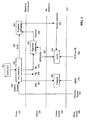
- FIG. 2 illustrates a method for authenticating a subscriber using a mobile phone in a wireless communication system.
- a subscriber travelling outside of the range of his or her Home System (HS) 200 uses a mobile unit 220 in a Visited System (VS) 210.
- the subscriber uses the mobile unit 220 by inserting a subscriber identification token.
- a subscriber identification token is configured to generate cryptographic and authentication information that allows a subscriber to access account services without the need for establishing a new account with the visited system.
- a request (note shown in figure) is sent from the mobile unit 220 to the VS 210 for service.
- VS 210 contacts HS 200 to determine service to the subscriber (not shown in figure).
- the HS 200 generates a random number 240 and an expected response (XRES) 270 based on knowledge of the private information held on the subscriber identification token.
- the random number 240 is to be used as a challenge, wherein the targeted recipient uses the random number 240 and private knowledge to generate a confirmation response that matches the expected response 270.
- the random number 240 and the XRES 270 are transmitted from the HS 200 to the VS 210. Other information is also transmitted, but is not relevant herein (not shown in figure). Communication between the HS 200 and the VS 210 is facilitated in the manner described in Fig. 1.
- the VS 210 transmits the random number 240 to the mobile unit 220 and awaits the transmission of a confirmation message 260 from the mobile unit 220.
- the confirmation message 260 and the XRES 270 are compared at a compare element 280 at the VS 210. If the confirmation message 260 and XRES 270 match, the VS 210 proceeds to provide service to the mobile unit 220.
- Mobile unit 220 sends the random number 240 to the subscriber identification token 230 that has been inserted inside the mobile unit 220 by the subscriber.
- a Secure Key 300 is stored on the subscriber identification token 230. Both the Secure Key 300 and the random number 240 are used by a key generator 250 to generate the confirmation message 260, a cryptographic Cipher Key (CK) 290, and an Integrity Key (IK) 310. The CK 290 and IK 310 are conveyed to the mobile unit 220.
- CK cryptographic Cipher Key
- IK Integrity Key
- the CK 290 can be used to encrypt communications between the mobile unit 220 and the VS 210, so that communications can be decrypted only by the intended recipient of the message.
- Techniques for using a cryptographic key to encrypt communications are described in U.S. Patent No 6490357 entitled, "Method and Apparatus for Generating Encryption Stream Ciphers," assigned to the assignee of the present invention.
- Other encryption techniques can be used without affecting the scope of the embodiments described herein.
- the IK 310 can be used to generate a message authentication code (MAC), wherein the MAC is appended to a transmission message frame in order to verify that the transmission message frame originated from a particular party and to verify that the message was not altered during transmission.
- MAC message authentication code
- Techniques for generating MACs are described in WO0111818 entitled, "Method and Apparatus for Generating a Message Authentication Code.” Other techniques for generating authentication codes may be used without affecting the scope of the embodiments described herein.
- signature as used herein represents the output of any authentication scheme that can be implemented in a communication system.
- the IK 310 can be used to generate an authentication signature 340 based on particular information that is transmitted separately or together with the transmission message.
- Techniques for generating an authentication signature are described in U.S. Patent 5,943,615, entitled, "Method and Apparatus for Providing Authentication Security in a Wireless Communication System," assigned to the assignee of the present invention.
- the authentication signature 340 is the output of a hashing element 330 that combines the IK 310 with a message 350 from the mobile unit 220.
- the authentication signature 340 and the message 350 are transmitted over the air to the VS 210.
- the cryptographic key 290 and the integrity key 310 are transmitted from the subscriber identification token 230 to the mobile unit 220, which proceeds to generate data frames for public dissemination over the air. While this technique may prevent an eavesdropper from determining the values of such keys over the air, this technique does not provide protection from attack by a rogue shell.
- a rogue shell can be programmed to accept the CK 290 and the IK 310, and to then store the keys rather than purging the presence of such keys from local memory. Another method to steal keys is to program the mobile unit 220 to transmit received keys to another location.
- the CK 290 and the IK 310 can then be used to fraudulently bill unauthorized communications to the subscriber.
- This rogue shell attack is particularly effective in systems wherein the random number generated at the Home System 200 is used in a manner that is insecure, such as the case when the same generated keys are used for an extended period of time.
- An embodiment that protects against a rogue shell attack uses the processors and memory in the subscriber identification token to generate an electronic signature that cannot be reproduced by a mobile unit without the insertion of the subscriber identification token.
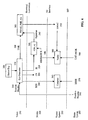
- FIG. 3 illustrates an embodiment for performing local authentication of a subscriber in a wireless communication system.
- the subscriber identification token 230 is programmed to generate an authentication response based on a key that is not passed to the mobile unit 220. Hence, if the mobile unit used by a subscriber is a rogue shell, the rogue shell cannot recreate the appropriate authentication responses.
- the mobile unit 220 Similar to the method described in FIG. 2, the mobile unit 220 generates a signature signal based upon an IK 310 that is received from the subscriber identification token 230 and a message that is to be sent to the VS 210. However, in one embodiment, the signature signal is not passed to the VS. The signature signal is passed to the subscriber identification token 230, and is used along with an additional key to generate a primary signature signal. The primary signature signal is sent out to the mobile unit 220, which in turn transmits the primary signature signal to the VS 210 for authentication purposes.
- the HS 200 generates a random number 240 and an expected response (XRES) 270 based on knowledge of the Secure Key held on the subscriber identification token 230.
- the random number 240 and the XRES 270 are transmitted to the VS 210. Communication between the HS 200 and the VS 210 is facilitated in the manner described in Fig. 1.
- the VS 210 transmits the random number 240 to the mobile unit 220 and awaits the transmission of a confirmation message 260 from the mobile unit 220.
- the confirmation message 260 and the XRES 270 are compared at a compare element 280 at the VS 210. If the confirmation message 260 and the XRES 270 match, the VS 210 proceeds to provide service to the mobile unit 220.
- Mobile unit 220 conveys the random number 240 to the subscriber identification token 230 that has been electronically coupled with the mobile unit 220 by the subscriber.
- a Secure Key 300 is stored on the subscriber identification token 230. Both the Secure Key 300 and the random number 240 are used by a key generator 250 to generate the confirmation message 260, a Cryptographic Key (CK) 290, an Integrity Key (IK) 310, and a UIM Authentication Key (UAK) 320.
- the CK 290 and IK 310 are conveyed to the mobile unit 220.
- the CK 290 is used for encrypting transmission data frames (not shown in FIG. 3).
- the IK 310 is used to generate a signature signal 340.
- the signature signal 340 is the output of a signature generator 330 that uses an encryption operation or a one-way operation, such as a hashing function, upon the IK 310 and a message 350 from the mobile unit 220.
- the signature signal 340 is transmitted to the subscriber identification token 230.
- the signature signal 340 and the UAK 320 are manipulated by a signature generator 360 to generate a primary signature signal 370.
- the primary signature signal 370 is transmitted to the mobile unit 220 and to the VS 210, where a verification element 380 authenticates the identity of the subscriber.
- the verification element 380 can accomplish the verification by regenerating the signature signal 340 and the primary signature signal 370.
- the verification element 380 can receive the signature signal 340 from the mobile unit 220 and only regenerate the primary signature signal 370.
- the regeneration of the signature signal 340 and the primary signature signal 370 at the VS 210 can be accomplished by a variety of techniques.
- the verification element 380 can receive a UAK 390 and an integrity key from the Home System 200.
- the signature signal can be generated and then be used to generate the primary signature element.
- the signature generator 360 within the subscriber identification token 230 can comprise a memory and a processor, wherein the processor can be configured to manipulate inputs using a variety of techniques. These techniques can take the form of encryption techniques, hashing functions, or any nonreversible operation. As an example, one technique that can be implemented by the subscriber identification token is the Secure Hash Algorithm (SHA), promulgated in Federal Information Processing Standard (FIPS) PUB 186, "Digital Signature Standard," May 1994. Another technique that can be performed by the subscriber identification token is the Data Encryption Standard (DES), promulgated in FIPS PUB 46, January 1977.
- SHA Secure Hash Algorithm
- DES Data Encryption Standard
- the key generator 250 can also comprise a memory and a processor. Indeed, in one embodiment, a single processor can be configured to accomplish the functions of the signature generator 360 and the key generator 250. Verification can be performed by calculating the same result from the same inputs at the verification element 380, and comparing the calculated and transmitted values.
- signal generator 330 can be configured to implement a technique referred to herein as HMAC-SHA-1.
- HMAC-SHA-1 a technique referred to herein as HMAC-SHA-1.
- a hashing function could be used within the signal generator 330 to generate a signature signal 340.
- HMACs hash-based MACs
- An HMAC is a MAC scheme that uses a cryptographic hash function, such as SHA-1, in a two-step process.
- FIG. 4 is a flow chart illustrating the implementation of the HMAC in the mobile station, which is initialized by an integrity key from the subscriber identification token, and the implementation of the HMAC in the subscriber identification token, which is initialized by a UIM Authentication Key.
- HS 200 generates a random number 240 and an expected response (XRES) 270 based on knowledge of the private information held on the subscriber identification token 230.
- the random number 240 and the XRES 270 are transmitted to the VS 210. Communication between the HS 200 and the VS 210 is facilitated in the manner described in Fig. 1.
- the VS 210 transmits the random number 240 to the mobile unit 220 and awaits the transmission of a confirmation message 260 from the mobile unit 220.
- the confirmation message 260 and the XRES 270 are compared at a compare element 280 at the VS 210. If the confirmation message 260 and the XRES 270 match, the VS 210 proceeds to provide service to the mobile unit 220.
- Mobile unit 220 conveys the random number 240 to the subscriber identification token 230 that has been electronically coupled with the mobile unit 220 by the subscriber.
- a Secure Key 300 is stored on the subscriber identification token 230. Both the Secure Key 300 and the random number 240 are used by a key generator 250 to generate the confirmation message 260, a Cryptographic Key (CK) 290, an Integrity Key (IK) 310, and a UIM Authentication Key (UAK) 320.
- the CK 290 and IK 310 are conveyed to the mobile unit 220.
- the CK 290 is used for encrypting transmission data frames (not shown in FIG. 4).
- the IK 310 is used to generate a signature signal 340 from the signature generator 330.
- the signature generator 330 is configured to produce a transformation of the message 260 through the use of SHA-1.
- the SHA-1 hashing function is initialized by the IK 310.
- the signature signal 340 which is the result of the SHA-1 hashing function transforming the message 260, is transmitted to the subscriber identification token 230.
- the signature signal 340 and the UAK 320 are manipulated by a signature generator 360 to generate a transformation of the of the signature signal 340, which is the UIM message authentication code (UMAC) 370.
- UMAC UIM message authentication code
- the signature generator 360 is also configured to implement the SHA-1 hashing function, However, the function is initialized using UAK 320, rather then IK 310.
- the UMAC 370 is transmitted to the mobile unit 220 and to the VS 210, where a verification element 380 authenticates the identity of the subscriber.
- the verification element 380 can accomplish the verification by regenerating the signature signal 340 and the UMAC 370.
- the verification element 380 can receive the signature signal 340 from the mobile unit 220 and only regenerate the UMAC 370.
- FIG. 5 is a flow chart illustrating a generalized description of the embodiment.
- a mobile unit generates a message that requires authentication.
- the mobile unit receives an integrity key (IK) of length L from a subscriber identification token.
- the mobile unit pads the integrity key IK to length b, wherein b is the block size of the hashing function of a signature generator within the mobile unit.
- the key can be zero-padded to length b.
- the key can be XORed with padding constants of length b. If the IK already has length b, then this step can be omitted.
- the padded IK is concatenated with the message that requires authentication.
- the concatenation of the padded IK and the message is then hashed at step 505 by a signature generator configured to implement a hashing function such as SHA.
- a signature generator configured to implement a hashing function such as SHA.
- the output of the XOR operation is saved within a memory element, and can be recalled for further use if the IK from the subscriber identification token remains the same during the communication session.
- UIM authentication key UAK
- the hashed message from step 505 is transmitted to the subscriber identification token.
- the subscriber identification token pads the UAK to length b, unless the UAK is already of length b.
- the padded IK can be stored in memory for reuse when a subsequent message requires authentication during the communication session.
- the padded IK and the hashed message are concatenated and inputted into a signature generator.
- the signature generator is configured to implement a hashing function, such as SHA-1 at step 513.
- the output of the signature generator is transmitted from the subscriber identification token to the mobile unit.
- the same integrity key is used to rehash the already hashed message.
- the hashed message from step 505 is sent to a second signature generator within the mobile unit. Or alternatively, the hashed message can be re-inserted into the signature generator of step 505.
- the integrity key must be altered so that each of hashing generators is initialized with a different value. For example, for each hashing step, the integrity key can be bit-wise added to either constant value c 1 or constant value c 2 , both of length b. Using this method, only one integrity key needs to be generated by the subscriber identification token.
- the more secure embodiment is the implementation wherein the second hashing step is performed using the UAK at the subscriber identification token.
- HMAC x F token UAK , F mobile IK , x , wherein F ⁇ ( ) represents a hashing function performed at a location Y, x represents the original message, UAK and IK are the keys, and a comma represents a concatenation.
- a subscriber identification token used in a CDMA system or a GSM system can be configured to generate the primary signature signal or UMAC in the manner described above, i.e., all messages generated by the mobile unit are encrypted and authenticated.
- the central processing unit in such tokens can be limited, it may be desirable to implement an alternative embodiment, wherein a weight of importance is assigned to a message frame so that only important messages are securely encrypted and authenticated. For example, a message frame containing billing information has more need for increased security than a message frame containing a voice payload. Hence, the mobile unit can assign a greater weight of importance to the billing information message frame and a lesser weight of importance to the voice message frame.
- the CPU can assess the different weights of importance attached to each signature signal and determine a primary signature signal for only the heavily weighted signature signals.
- the mobile unit can be programmed to convey only the "important" signature signals to the subscriber identification token. This method of selective primary signature signal generation increases the efficiency of the subscriber identification token by lightening the processing load of the subscriber identification token.
- the embodiments described above prevent unauthorized use of a subscriber's account by requiring a more secure transaction between the subscriber identification token and the mobile unit. Since the mobile unit cannot generate a primary signature signal without knowledge of the secret UAK, the mobile unit that is programmed to act as a rogue shell cannot misappropriate subscriber information for wrongful purposes.
- the embodiments described above also maximize the processing capability of the subscriber identification token by operating on a signature signal, rather than a message.
- a signature signal will have a shorter bit length than a message.
- less time is required for the signature generator in the subscriber identification to operate on a signature signal rather than a transmission message frame.
- the processing capability of the subscriber identification token is usually much less than the processing capability of the mobile unit. Hence the implementation of this embodiment would provide secure authentication of messages without sacrificing speed.
- a mobile unit can be configured to pass a message directly to the subscriber identification token, one with the capability to generate a primary signature signal quickly, rather than passing the message to a signature generating element within the mobile unit.
- only a limited number of messages need be passed directly to the subscriber identification token, in accordance with the degree of security needed for said messages.
- DSP digital signal processor
- ASIC application specific integrated circuit
- FPGA field programmable gate array
- a processor executing a set of firmware instructions, any conventional programmable software module and a processor, or any combination thereof can be designed to perform the functions described herein.
- the processor may advantageously be a microprocessor, but in the alternative, the processor may be any conventional processor, controller, microcontroller, or state machine.
- the software module could reside in RAM memory, flash memory, ROM memory, EPROM memory, EEPROM memory, registers, hard disk, a removable disk, a CD-ROM, or any other form of storage medium known in the art.
- An exemplary processor is coupled to the storage medium so as to read information from, and write information to, the storage medium.
- the storage medium may reside in an ASIC.
- the ASIC may reside in a telephone or other user terminal.
- the processor and the storage medium may reside in a telephone or other user terminal.
- the processor may be implemented as a combination of a DSP and a microprocessor, or as two microprocessors in conjunction with a DSP core, etc.
Landscapes
- Engineering & Computer Science (AREA)
- Computer Security & Cryptography (AREA)
- Computer Networks & Wireless Communication (AREA)
- Signal Processing (AREA)
- Computer Hardware Design (AREA)
- Computing Systems (AREA)
- General Engineering & Computer Science (AREA)
- Mobile Radio Communication Systems (AREA)
- Radar Systems Or Details Thereof (AREA)
- Facsimile Transmission Control (AREA)
- Telephonic Communication Services (AREA)
Claims (13)
- Eine Teilnehmer-Identifikationsvorrichtung (230) zum Vorsehen einer örtlichen oder lokalen Authentisierung eines Teilnehmers in einem Kommunikations- oder Nachrichtensystem, wobei Folgendes vorgesehen ist:Mittel zur Erzeugung einer Vielzahl von Schlüsseln (290, 310, 320), ansprechend auf eine empfangene Anforderung bzw. Herausforderung (challenge);Mittel zur Erzeugung eines Anfangswertes, basierend auf einem ersten Schlüssel (320) aus der Vielzahl von Schlüsseln; undzur Verbindung (concatenating) des Anfangswertes mit einem empfangenen Signal (340) zur Bildung einer Eingangssignatur, wobei das empfangene Signal (340) von einer Kommunikationseinheit (220) gesendet wird, die innerhalb eines Systems arbeitet, und zwar in kommunikativer Weise gekoppelt an die Teilnehmer-Identifikationsvorrichtung (230), und wobei das empfangene Signal (340) durch die Kommunikationseinheit (220) erzeugt wird, und zwar unter Verwendung eines zweiten Schlüssels (310) aus der Vielzahl von Schlüsseln, wobei der zweite Schlüssel (310) von der Teilnehmer-Identifikationsvorrichtung (230) zu der Kommunikationseinheit (220) übertragen bzw. kommuniziert wurde; Mittel zum Hashen bzw. Verschlüsseln der Eingangssignatur zur Bildung einer Authentisierungssignatur (370); undMittel zum Übertragen bzw. Senden der Authentisierungssignatur (370) an das Kommunikationssystem über die Kommunikationseinheit (220).
- Teilnehmer-Identifikationsvorrichtung nach Anspruch 1, wobei die Mittel zum Vermischen bzw. Hashen geeignet sind, die Eingangssignatur entsprechend dem Sicherheitsvermischungs- bzw. Hashing-Algorithmus (Secure Hashing Algorithm) SHA-1 zu vermischen.
- Teilnehmer-Identifikationsvorrichtung nach Anspruch 1, wobei die Mittel zur Erzeugung eines Anfangswertes geeignet sind den ersten Schlüssel auszustatten (pad) bzw. vorzusehen.
- Teilnehmer-Identifikationsvorrichtung nach Anspruch 3, wobei die Mittel zur Erzeugung des Anfangswertes ferner geeignet sind, um den ersten ausgestatteten Schlüssel bitweise einem konstanten Wert hinzuzuaddieren.
- Teilnehmer-Identifikationsvorrichtung nach Anspruch 1, wobei die Kommunikationseinheit (220) geeignet ist, um das empfangene Signal (340) zu erzeugen, und zwar durch Folgendes:Empfangen des zweiten Schlüssels (310) von der Teilnehmer-Identifikationsvorrichtung (230);Erzeugung eines lokalen oder örtlichen Anfangswertes, basierend auf dem zweiten Schlüssel;Verbinden (concatenating) des lokalen Anfangswertes und einer Nachricht zur Bildung eines örtlichen Eingangswertes;Vermischen (hashing) des örtlichen Eingangswertes zur Bildung des empfangenen Signals (340); undSenden des empfangenen Signals (340) zu der Teilnehmer-Identifikationsvorrichtung.
- Teilnehmer-Identifikationsvorrichtung nach Anspruch 5, wobei die Erzeugung des örtlichen Anfangswertes das Ausstatten (padding) des zweiten Schlüssels umfasst.
- Teilnehmer-Identifikationsvorrichtung nach Anspruch 6, wobei das Erzeugen des örtlichen Anfangswertes ferner Folgendes umfasst:Hinzuaddieren des ausgestatteten zweiten Schlüssels bitweise zu einem zweiten konstanten Wert.
- Teilnehmer-Identifikationsvorrichtung nach irgendeinem der vorhergehenden Ansprüche, wobei Folgendes vorgesehen ist:ein Speicher; undein Prozessor, konfiguriert zur Implementierung eines Satzes von Befehlen, gespeichert im Speicher, wobei der Prozessor Folgendes aufweist:die erwähnten Mittel zur Erzeugung einer Vielzahl von Schlüsseln;die erwähnten Mittel zur Erzeugung und zur Verbindung des Anfangswerts; unddie erwähnten Mittel zur Vermischung bzw. Hashing der Eingangssignatur.
- Teilnehmer-Identifikationsvorrichtung nach einem der Ansprüche 1 bis 7, wobei Folgendes vorgesehen ist:die Mittel zur Erzeugung einer Vielzahl von Schlüsseln weisen Folgendes auf:ein Schlüsselerzeugungselement (250), undwobei die Teilnehmer-Identifikationsvorrichtung ferner einen Signaturgenerator (360) aufweist, der die erwähnten Mittel zur Erzeugung des Anfangswertes aufweist und zur Verbindung des Anfangswertes mit einem empfangenen Signal und die erwähnten Mittel zum Verschlüsseln bzw. Hashing.
- Teilnehmer-Identifikationsvorrichtung nach Anspruch 9, wobei das Schlüsselerzeugungselement (250) Folgendes aufweist:einen Speicher; undeinen Prozessor, konfiguriert zur Ausführung eines Satzes von Befehlen, gespeichert im Speicher, wobei der Satz von Befehlen eine kryptographische Transformation und zwar an einem Eingangswert zur Erzeugung einer Vielzahl von temporären Schlüsseln ausführt.
- Teilnehmer-Identifikationsvorrichtung nach Anspruch 10, wobei die kryptographische Transformation unter Verwendung eines permanenten Schlüssels ausgeführt wird.
- Verfahren zum Vorsehen der Authentisierung eines Teilnehmers unter Verwendung einer Teilnehmer-Identifikationsvorrichtung (230), und wobei Folgendes vorgesehen ist:Erzeugung einer Vielzahl von Schlüsseln (290, 310, 320);Übertragung bzw. Sendung eines zweiten Schlüssels (310) aus der Vielzahl von Schlüsseln zu einer Kommunikationseinheit (220) innerhalb eines Kommunikationssystems, welches in kommunikativer Weise mit der Teilnehmer-Identifikationsvorrichtung (230) gekoppelt ist, und den ersten Schlüssel (320) von einer Vielzahl von Schlüsseln privat hält;Erzeugung einer Unterschrift oder Signatur (340) an der Kommunikationseinheit (220) unter Verwendung von sowohl des zweiten Schlüssels (310) übertragen zu der Kommunikationseinheit als auch einer Sendenachricht,wobei die Erzeugung implementiert wird durch Vermischen bzw. Verschlüsseln eines verbundenen Wertes, gebildet aus dem zweiten Schlüssel (310) und der Sendenachricht;Übertragung oder Senden der Signatur (340) zu der Teilnehmer-Identifikationsvorrichtung (230);Empfangen der Signatur (340) an der Teilnehmer-Identifikationsvorrichtung (230);Erzeugen in der Teilnehmer-Identifikationsvorrichtung (230) einer Authentisierungssignatur (370) aus der empfangenen Signatur (340), wobei die Erzeugung implementiert wird durch Vermischen bzw. Verschlüsseln eines verbundenen Wertes, gebildet aus dem ersten Schlüssel (320) und der Signatur (340), empfangen von der Kommunikationseinheit (220); undÜbertragung der Authentisierungssignatur (370) zu dem Kommunikationssystem.
- Verfahren nach Anspruch 12, wobei das Vermischen entsprechend SHA-1 ausgeführt wird.
Applications Claiming Priority (3)
| Application Number | Priority Date | Filing Date | Title |
|---|---|---|---|
| US863139 | 2001-05-22 | ||
| US09/863,139 US7668315B2 (en) | 2001-01-05 | 2001-05-22 | Local authentication of mobile subscribers outside their home systems |
| PCT/US2002/016103 WO2002096150A1 (en) | 2001-05-22 | 2002-05-21 | Local authentication in a communication system |
Publications (2)
| Publication Number | Publication Date |
|---|---|
| EP1396169A1 EP1396169A1 (de) | 2004-03-10 |
| EP1396169B1 true EP1396169B1 (de) | 2006-12-27 |
Family
ID=25340362
Family Applications (1)
| Application Number | Title | Priority Date | Filing Date |
|---|---|---|---|
| EP02737051A Expired - Lifetime EP1396169B1 (de) | 2001-05-22 | 2002-05-21 | Lokale Authentifizierung in einem Kommunikationssystem |
Country Status (11)
| Country | Link |
|---|---|
| US (2) | US7668315B2 (de) |
| EP (1) | EP1396169B1 (de) |
| JP (1) | JP4477304B2 (de) |
| KR (1) | KR100910329B1 (de) |
| CN (2) | CN101179854B (de) |
| AT (1) | ATE349872T1 (de) |
| BR (1) | BR0209953A (de) |
| DE (1) | DE60217106T2 (de) |
| ES (1) | ES2279868T3 (de) |
| TW (1) | TWI226179B (de) |
| WO (1) | WO2002096150A1 (de) |
Families Citing this family (57)
| Publication number | Priority date | Publication date | Assignee | Title |
|---|---|---|---|---|
| AU1145800A (en) * | 1999-11-19 | 2001-06-04 | Swisscom Mobile Ag | Adaptable chip card |
| GB0004178D0 (en) * | 2000-02-22 | 2000-04-12 | Nokia Networks Oy | Integrity check in a communication system |
| EP1209934A1 (de) * | 2000-11-27 | 2002-05-29 | Siemens Aktiengesellschaft | Verfahren und Vorrichtung zur Bekämpfung der Rogue-Shell-Bedrohung mittels lokaler Schlüsselableitung |
| US8121296B2 (en) | 2001-03-28 | 2012-02-21 | Qualcomm Incorporated | Method and apparatus for security in a data processing system |
| US9100457B2 (en) | 2001-03-28 | 2015-08-04 | Qualcomm Incorporated | Method and apparatus for transmission framing in a wireless communication system |
| US8077679B2 (en) | 2001-03-28 | 2011-12-13 | Qualcomm Incorporated | Method and apparatus for providing protocol options in a wireless communication system |
| US7352868B2 (en) | 2001-10-09 | 2008-04-01 | Philip Hawkes | Method and apparatus for security in a data processing system |
| US7649829B2 (en) | 2001-10-12 | 2010-01-19 | Qualcomm Incorporated | Method and system for reduction of decoding complexity in a communication system |
| US7873163B2 (en) * | 2001-11-05 | 2011-01-18 | Qualcomm Incorporated | Method and apparatus for message integrity in a CDMA communication system |
| US7346032B2 (en) * | 2001-12-07 | 2008-03-18 | Qualcomm Incorporated | Method and apparatus for effecting handoff between different cellular communications systems |
| US7054628B2 (en) | 2001-12-07 | 2006-05-30 | Qualcomm Incorporated | Apparatus and method of using a ciphering key in a hybrid communications network |
| US6594489B2 (en) * | 2001-12-07 | 2003-07-15 | Qualcomm Incorporated | Method and apparatus for effecting handoff between different cellular communications systems |
| AU2002351302B2 (en) * | 2001-12-07 | 2008-01-31 | Qualcomm, Incorporated | Apparatus and method of using a ciphering key in a hybrid communications network |
| US7308482B2 (en) * | 2002-02-12 | 2007-12-11 | At&T Bls Intellectual Property, Inc. | Methods and systems for communicating with service technicians in a telecommunications system |
| WO2003077581A1 (en) * | 2002-03-08 | 2003-09-18 | Sony Ericsson Mobile Communications Ab | Security protection for data communication |
| US20030221109A1 (en) * | 2002-05-24 | 2003-11-27 | Pure Edge Solutions, Inc. | Method of and apparatus for digital signatures |
| US8166311B1 (en) * | 2002-06-20 | 2012-04-24 | At&T Intellectual Property I, Lp | Methods and systems for promoting authentication of technical service communications in a telecommunications system |
| US20050235143A1 (en) * | 2002-08-20 | 2005-10-20 | Koninkljke Philips Electronics N.V. | Mobile network authentication for protection stored content |
| GB2396472A (en) * | 2002-12-18 | 2004-06-23 | Ncr Int Inc | System for cash withdrawal |
| US7599655B2 (en) | 2003-01-02 | 2009-10-06 | Qualcomm Incorporated | Method and apparatus for broadcast services in a communication system |
| US8718279B2 (en) * | 2003-07-08 | 2014-05-06 | Qualcomm Incorporated | Apparatus and method for a secure broadcast system |
| US8724803B2 (en) | 2003-09-02 | 2014-05-13 | Qualcomm Incorporated | Method and apparatus for providing authenticated challenges for broadcast-multicast communications in a communication system |
| ATE540372T1 (de) * | 2003-11-07 | 2012-01-15 | Telecom Italia Spa | Methode und system zum authentifizieren eines benutzers eines datenverarbeitungssystems |
| US7813718B2 (en) * | 2003-12-24 | 2010-10-12 | Telefonaktiebolaget Lm Ericsson (Publ) | Authentication in a communication network |
| ATE392107T1 (de) * | 2003-12-24 | 2008-04-15 | Ericsson Telefon Ab L M | Authentifizierung in einem kommunikationsnetz |
| CN100385983C (zh) * | 2005-01-30 | 2008-04-30 | 华为技术有限公司 | 一种密钥设置方法 |
| KR100652125B1 (ko) * | 2005-06-03 | 2006-12-01 | 삼성전자주식회사 | 서비스 제공자, 단말기 및 사용자 식별 모듈 간을총괄적으로 인증하여 관리할 수 있도록 하는 상호 인증방법 및 이를 이용한 시스템과 단말 장치 |
| DE102005045733A1 (de) * | 2005-09-23 | 2007-04-05 | Nec Europe Ltd. | Verfahren zum Übermitteln von Nachrichten |
| KR100791291B1 (ko) | 2006-02-10 | 2008-01-04 | 삼성전자주식회사 | 디바이스에서 drm 컨텐츠를 로밍하여 사용하는 방법 및장치 |
| KR100703805B1 (ko) * | 2006-02-15 | 2007-04-09 | 삼성전자주식회사 | 원격 도메인의 디바이스에서 drm 컨텐츠를 로밍하여사용하는 방법 및 장치 |
| US20070204167A1 (en) * | 2006-02-28 | 2007-08-30 | Aladdin Knowledge Systems Ltd. | Method for serving a plurality of applications by a security token |
| US8243027B2 (en) * | 2006-06-09 | 2012-08-14 | Apple Inc. | Touch screen liquid crystal display |
| US20080101273A1 (en) * | 2006-10-27 | 2008-05-01 | Hewlett-Packard Development Company Lp | Wireless device association |
| CA2590989C (en) * | 2007-06-05 | 2014-02-11 | Diversinet Corp. | Protocol and method for client-server mutual authentication using event-based otp |
| US9807096B2 (en) | 2014-12-18 | 2017-10-31 | Live Nation Entertainment, Inc. | Controlled token distribution to protect against malicious data and resource access |
| EP2045991A1 (de) * | 2007-10-04 | 2009-04-08 | Nokia Siemens Networks Oy | Verfahren und Vorrichtung zur Verarbeitung von Daten und Kommunikationssystem mit einer derartigen Vorrichtung |
| US9357384B2 (en) | 2009-02-09 | 2016-05-31 | International Business Machines Corporation | System and method to support identity theft protection as part of a distributed service oriented ecosystem |
| US8369523B2 (en) | 2009-11-24 | 2013-02-05 | International Business Machines Corporation | Surrogate key generation using cryptographic hashing |
| CN102196438A (zh) | 2010-03-16 | 2011-09-21 | 高通股份有限公司 | 通信终端标识号管理的方法和装置 |
| US9385862B2 (en) | 2010-06-16 | 2016-07-05 | Qualcomm Incorporated | Method and apparatus for binding subscriber authentication and device authentication in communication systems |
| US9112905B2 (en) * | 2010-10-22 | 2015-08-18 | Qualcomm Incorporated | Authentication of access terminal identities in roaming networks |
| US9668128B2 (en) | 2011-03-09 | 2017-05-30 | Qualcomm Incorporated | Method for authentication of a remote station using a secure element |
| US9210578B2 (en) * | 2012-07-12 | 2015-12-08 | Nokia Technologies Oy | Methods and apparatus for authentication |
| US9673983B2 (en) | 2012-09-14 | 2017-06-06 | Qualcomm Incorporated | Apparatus and method for protecting message data |
| US8898769B2 (en) | 2012-11-16 | 2014-11-25 | At&T Intellectual Property I, Lp | Methods for provisioning universal integrated circuit cards |
| US8959331B2 (en) | 2012-11-19 | 2015-02-17 | At&T Intellectual Property I, Lp | Systems for provisioning universal integrated circuit cards |
| JPWO2014147934A1 (ja) * | 2013-03-21 | 2017-02-16 | パナソニックIpマネジメント株式会社 | 通信装置、通信システム及び通信方法 |
| US9036820B2 (en) | 2013-09-11 | 2015-05-19 | At&T Intellectual Property I, Lp | System and methods for UICC-based secure communication |
| US9124573B2 (en) | 2013-10-04 | 2015-09-01 | At&T Intellectual Property I, Lp | Apparatus and method for managing use of secure tokens |
| US9208300B2 (en) | 2013-10-23 | 2015-12-08 | At&T Intellectual Property I, Lp | Apparatus and method for secure authentication of a communication device |
| US9240994B2 (en) | 2013-10-28 | 2016-01-19 | At&T Intellectual Property I, Lp | Apparatus and method for securely managing the accessibility to content and applications |
| US9240989B2 (en) | 2013-11-01 | 2016-01-19 | At&T Intellectual Property I, Lp | Apparatus and method for secure over the air programming of a communication device |
| US9313660B2 (en) | 2013-11-01 | 2016-04-12 | At&T Intellectual Property I, Lp | Apparatus and method for secure provisioning of a communication device |
| US9413759B2 (en) | 2013-11-27 | 2016-08-09 | At&T Intellectual Property I, Lp | Apparatus and method for secure delivery of data from a communication device |
| US9582186B2 (en) * | 2013-12-20 | 2017-02-28 | Mediatek Inc. | Signature verification between a mobile device and a computing device |
| US9713006B2 (en) | 2014-05-01 | 2017-07-18 | At&T Intellectual Property I, Lp | Apparatus and method for managing security domains for a universal integrated circuit card |
| CN110458560B (zh) | 2019-07-12 | 2021-10-12 | 创新先进技术有限公司 | 用于进行交易验证的方法及装置 |
Family Cites Families (51)
| Publication number | Priority date | Publication date | Assignee | Title |
|---|---|---|---|---|
| US4901307A (en) | 1986-10-17 | 1990-02-13 | Qualcomm, Inc. | Spread spectrum multiple access communication system using satellite or terrestrial repeaters |
| US5412730A (en) * | 1989-10-06 | 1995-05-02 | Telequip Corporation | Encrypted data transmission system employing means for randomly altering the encryption keys |
| US5103459B1 (en) | 1990-06-25 | 1999-07-06 | Qualcomm Inc | System and method for generating signal waveforms in a cdma cellular telephone system |
| US5204902A (en) * | 1991-09-13 | 1993-04-20 | At&T Bell Laboratories | Cellular telephony authentication arrangement |
| US5153919A (en) * | 1991-09-13 | 1992-10-06 | At&T Bell Laboratories | Service provision authentication protocol |
| US5371794A (en) * | 1993-11-02 | 1994-12-06 | Sun Microsystems, Inc. | Method and apparatus for privacy and authentication in wireless networks |
| US5491749A (en) * | 1993-12-30 | 1996-02-13 | International Business Machines Corporation | Method and apparatus for entity authentication and key distribution secure against off-line adversarial attacks |
| US5778072A (en) | 1995-07-07 | 1998-07-07 | Sun Microsystems, Inc. | System and method to transparently integrate private key operations from a smart card with host-based encryption services |
| US5884168A (en) | 1996-08-30 | 1999-03-16 | Ericsson, Inc. | Multiple cellular systems with limited sim card information |
| US6026293A (en) * | 1996-09-05 | 2000-02-15 | Ericsson Inc. | System for preventing electronic memory tampering |
| US5943615A (en) | 1997-01-15 | 1999-08-24 | Qualcomm, Incorpoarated | Method and apparatus for providing authentication security in a wireless communication system |
| DE19702049C1 (de) * | 1997-01-22 | 1998-05-14 | Ibm | Zertifizierung kryptografischer Schlüssel für Chipkarten |
| US6230002B1 (en) * | 1997-11-19 | 2001-05-08 | Telefonaktiebolaget L M Ericsson (Publ) | Method, and associated apparatus, for selectively permitting access by a mobile terminal to a packet data network |
| US6225888B1 (en) * | 1997-12-08 | 2001-05-01 | Nokia Telecommunications Oy | Authentication between communicating parties in a telecommunications network |
| US7328350B2 (en) * | 2001-03-29 | 2008-02-05 | Arcot Systems, Inc. | Method and apparatus for secure cryptographic key generation, certification and use |
| US6094487A (en) * | 1998-03-04 | 2000-07-25 | At&T Corporation | Apparatus and method for encryption key generation |
| US6173173B1 (en) * | 1998-07-02 | 2001-01-09 | Lucent Technologies, Inc. | Invalid mobile telephone call terminating system and method |
| GB2340344A (en) * | 1998-07-29 | 2000-02-16 | Nokia Mobile Phones Ltd | Bilateral Data Transfer Verification for Programming a Cellular Phone |
| US6918035B1 (en) * | 1998-07-31 | 2005-07-12 | Lucent Technologies Inc. | Method for two-party authentication and key agreement |
| US6560338B1 (en) * | 1998-08-28 | 2003-05-06 | Qualcomm Incorporated | Limiting delays associated with the generation of encryption stream ciphers |
| US6490357B1 (en) * | 1998-08-28 | 2002-12-03 | Qualcomm Incorporated | Method and apparatus for generating encryption stream ciphers |
| US6606313B1 (en) * | 1998-10-05 | 2003-08-12 | Telefonaktiebolaget Lm Ericsson (Publ) | Random access in a mobile telecommunications system |
| US6178506B1 (en) * | 1998-10-23 | 2001-01-23 | Qualcomm Inc. | Wireless subscription portability |
| US6609199B1 (en) * | 1998-10-26 | 2003-08-19 | Microsoft Corporation | Method and apparatus for authenticating an open system application to a portable IC device |
| US6578143B1 (en) * | 1998-12-18 | 2003-06-10 | Qualcomm Incorporated | Method for negotiating weakened keys in encryption systems |
| US6516414B1 (en) * | 1999-02-26 | 2003-02-04 | Intel Corporation | Secure communication over a link |
| AU3604500A (en) | 1999-03-18 | 2000-10-04 | Automated Medical Products Corporation | Surgical retractor blade and handle for movement with two degrees of freedom |
| DE69924236T2 (de) * | 1999-05-01 | 2006-02-02 | Samsung Electronics Co., Ltd., Suwon | System zur Verhinderung illegalen Kopien von digitale Inhalte |
| JP2003500923A (ja) * | 1999-05-21 | 2003-01-07 | インターナショナル・ビジネス・マシーンズ・コーポレーション | セキュア通信をイニシャライズし、装置を排他的にペアリングする方法、コンピュータ・プログラムおよび装置 |
| CN1175613C (zh) * | 1999-06-03 | 2004-11-10 | 叶季青 | 生成防伪认证数据的方法与装置,其认证方法与装置及系统 |
| US6839434B1 (en) * | 1999-07-28 | 2005-01-04 | Lucent Technologies Inc. | Method and apparatus for performing a key update using bidirectional validation |
| CN1249589A (zh) * | 1999-09-08 | 2000-04-05 | 北京龙安计算机技术开发有限公司 | 非公钥算法签名/验证方法 |
| DK174672B1 (da) * | 1999-11-09 | 2003-08-25 | Orange As | System til elektronisk udlevering af en personlig identifikationskode |
| EP1269783A2 (de) * | 2000-03-15 | 2003-01-02 | Nokia Corporation | Verfahren und system zum erzeugen von sicherheitsschlüsseln in einem kommunikationssystem |
| US6766453B1 (en) * | 2000-04-28 | 2004-07-20 | 3Com Corporation | Authenticated diffie-hellman key agreement protocol where the communicating parties share a secret key with a third party |
| US6950521B1 (en) * | 2000-06-13 | 2005-09-27 | Lucent Technologies Inc. | Method for repeated authentication of a user subscription identity module |
| US6816458B1 (en) * | 2000-09-13 | 2004-11-09 | Harris Corporation | System and method prioritizing message packets for transmission |
| US6876747B1 (en) * | 2000-09-29 | 2005-04-05 | Nokia Networks Oy | Method and system for security mobility between different cellular systems |
| US20020091931A1 (en) | 2001-01-05 | 2002-07-11 | Quick Roy Franklin | Local authentication in a communication system |
| ATE540372T1 (de) * | 2003-11-07 | 2012-01-15 | Telecom Italia Spa | Methode und system zum authentifizieren eines benutzers eines datenverarbeitungssystems |
| BRPI0418877B1 (pt) * | 2004-05-31 | 2020-03-17 | Telecom Italia S.P.A. | Método e sistema para habilitar um usuário a se comunicar em uma rede privada virtual através de uma rede de comunicação pública, e, rede de comunicação pública |
| JP2006025225A (ja) * | 2004-07-08 | 2006-01-26 | Matsushita Electric Ind Co Ltd | 通信システム、鍵配信制御装置および無線lan基地局装置 |
| KR20070120577A (ko) * | 2005-04-07 | 2007-12-24 | 프랑스 텔레콤 | 멀티미디어 콘텐츠로의 접속을 관리하기 위한 보안 방법 및장치 |
| GB0517592D0 (en) * | 2005-08-25 | 2005-10-05 | Vodafone Plc | Data transmission |
| US20080037775A1 (en) * | 2006-03-31 | 2008-02-14 | Avaya Technology Llc | Verifiable generation of weak symmetric keys for strong algorithms |
| US8763081B2 (en) * | 2006-04-03 | 2014-06-24 | Bridgeport Networks, Inc. | Network based authentication |
| US20070239994A1 (en) * | 2006-04-05 | 2007-10-11 | Kulkarni Vinod K | Bio-metric encryption key generator |
| US7813503B2 (en) * | 2006-09-13 | 2010-10-12 | Pitney Bowes Inc. | Method and system for generation of cryptographic keys for use in cryptographic systems |
| US20080104403A1 (en) * | 2006-09-29 | 2008-05-01 | Shay Gueron | Methods and apparatus for data authentication with multiple keys |
| KR101009871B1 (ko) * | 2007-08-09 | 2011-01-19 | 한국과학기술원 | 통신 시스템에서 인증 방법 |
| US20090191857A1 (en) * | 2008-01-30 | 2009-07-30 | Nokia Siemens Networks Oy | Universal subscriber identity module provisioning for machine-to-machine communications |
-
2001
- 2001-05-22 US US09/863,139 patent/US7668315B2/en not_active Expired - Fee Related
-
2002
- 2002-05-21 AT AT02737051T patent/ATE349872T1/de not_active IP Right Cessation
- 2002-05-21 CN CN200710162107.6A patent/CN101179854B/zh not_active Expired - Fee Related
- 2002-05-21 WO PCT/US2002/016103 patent/WO2002096150A1/en not_active Ceased
- 2002-05-21 JP JP2002592675A patent/JP4477304B2/ja not_active Expired - Fee Related
- 2002-05-21 ES ES02737051T patent/ES2279868T3/es not_active Expired - Lifetime
- 2002-05-21 KR KR1020037015252A patent/KR100910329B1/ko not_active Expired - Fee Related
- 2002-05-21 DE DE60217106T patent/DE60217106T2/de not_active Expired - Lifetime
- 2002-05-21 CN CNB028140494A patent/CN100367821C/zh not_active Expired - Fee Related
- 2002-05-21 BR BR0209953-5A patent/BR0209953A/pt not_active Application Discontinuation
- 2002-05-21 EP EP02737051A patent/EP1396169B1/de not_active Expired - Lifetime
- 2002-05-22 TW TW091110734A patent/TWI226179B/zh not_active IP Right Cessation
-
2005
- 2005-06-01 US US11/142,994 patent/US7751567B2/en not_active Expired - Fee Related
Also Published As
| Publication number | Publication date |
|---|---|
| TWI226179B (en) | 2005-01-01 |
| KR100910329B1 (ko) | 2009-07-31 |
| US7751567B2 (en) | 2010-07-06 |
| US20020091933A1 (en) | 2002-07-11 |
| US20050257255A1 (en) | 2005-11-17 |
| US7668315B2 (en) | 2010-02-23 |
| KR20040004643A (ko) | 2004-01-13 |
| CN101179854A (zh) | 2008-05-14 |
| DE60217106D1 (de) | 2007-02-08 |
| CN1528102A (zh) | 2004-09-08 |
| BR0209953A (pt) | 2004-08-24 |
| EP1396169A1 (de) | 2004-03-10 |
| DE60217106T2 (de) | 2007-08-16 |
| ATE349872T1 (de) | 2007-01-15 |
| CN101179854B (zh) | 2015-03-18 |
| CN100367821C (zh) | 2008-02-06 |
| JP4477304B2 (ja) | 2010-06-09 |
| JP2004533174A (ja) | 2004-10-28 |
| WO2002096150A1 (en) | 2002-11-28 |
| ES2279868T3 (es) | 2007-09-01 |
| HK1066373A1 (zh) | 2005-03-18 |
Similar Documents
| Publication | Publication Date | Title |
|---|---|---|
| US7668315B2 (en) | Local authentication of mobile subscribers outside their home systems | |
| EP1348274B1 (de) | Lokale Authentifizierung in einem Kommunikationssystem | |
| CN101147377B (zh) | 无线通信的安全自启动 | |
| Lo et al. | SMSSec: An end-to-end protocol for secure SMS | |
| KR100920409B1 (ko) | 만료 마커를 이용한 무선 통신의 인증 | |
| Wu et al. | The design and implementation of a smartphone payment system based on limited-used key generation scheme | |
| Blumenthal et al. | Wireless network security architecture | |
| HK1091061A (en) | Local authentication in a communication system | |
| HK1063553B (en) | Subscriber identification device, method and apparatus for providing local authentication in a communication system | |
| HK1066373B (en) | Local authentication in a communication system | |
| HK1117986A (en) | Local authentication in a communication system | |
| Carroll | Key escrow and distribution for telecommunications | |
| HK1151655A (en) | Secure bootstrapping for wireless communications | |
| MXPA06004980A (en) | Method and apparatus for authentication in wireless communications |
Legal Events
| Date | Code | Title | Description |
|---|---|---|---|
| PUAI | Public reference made under article 153(3) epc to a published international application that has entered the european phase |
Free format text: ORIGINAL CODE: 0009012 |
|
| 17P | Request for examination filed |
Effective date: 20031218 |
|
| AK | Designated contracting states |
Kind code of ref document: A1 Designated state(s): AT BE CH CY DE DK ES FI FR GB GR IE IT LI LU MC NL PT SE TR |
|
| AX | Request for extension of the european patent |
Extension state: AL LT LV MK RO SI |
|
| 17Q | First examination report despatched |
Effective date: 20040915 |
|
| GRAP | Despatch of communication of intention to grant a patent |
Free format text: ORIGINAL CODE: EPIDOSNIGR1 |
|
| RTI1 | Title (correction) |
Free format text: LOCAL AUTHENTIFICATION IN A COMMUNICATION SYSTEM |
|
| GRAS | Grant fee paid |
Free format text: ORIGINAL CODE: EPIDOSNIGR3 |
|
| GRAA | (expected) grant |
Free format text: ORIGINAL CODE: 0009210 |
|
| AK | Designated contracting states |
Kind code of ref document: B1 Designated state(s): AT BE CH CY DE DK ES FI FR GB GR IE IT LI LU MC NL PT SE TR |
|
| PG25 | Lapsed in a contracting state [announced via postgrant information from national office to epo] |
Ref country code: LI Free format text: LAPSE BECAUSE OF FAILURE TO SUBMIT A TRANSLATION OF THE DESCRIPTION OR TO PAY THE FEE WITHIN THE PRESCRIBED TIME-LIMIT Effective date: 20061227 Ref country code: AT Free format text: LAPSE BECAUSE OF FAILURE TO SUBMIT A TRANSLATION OF THE DESCRIPTION OR TO PAY THE FEE WITHIN THE PRESCRIBED TIME-LIMIT Effective date: 20061227 Ref country code: DK Free format text: LAPSE BECAUSE OF FAILURE TO SUBMIT A TRANSLATION OF THE DESCRIPTION OR TO PAY THE FEE WITHIN THE PRESCRIBED TIME-LIMIT Effective date: 20061227 Ref country code: CH Free format text: LAPSE BECAUSE OF FAILURE TO SUBMIT A TRANSLATION OF THE DESCRIPTION OR TO PAY THE FEE WITHIN THE PRESCRIBED TIME-LIMIT Effective date: 20061227 |
|
| REG | Reference to a national code |
Ref country code: GB Ref legal event code: FG4D |
|
| REG | Reference to a national code |
Ref country code: IE Ref legal event code: FG4D |
|
| REF | Corresponds to: |
Ref document number: 60217106 Country of ref document: DE Date of ref document: 20070208 Kind code of ref document: P |
|
| REG | Reference to a national code |
Ref country code: SE Ref legal event code: TRGR |
|
| PG25 | Lapsed in a contracting state [announced via postgrant information from national office to epo] |
Ref country code: PT Free format text: LAPSE BECAUSE OF FAILURE TO SUBMIT A TRANSLATION OF THE DESCRIPTION OR TO PAY THE FEE WITHIN THE PRESCRIBED TIME-LIMIT Effective date: 20070528 |
|
| REG | Reference to a national code |
Ref country code: CH Ref legal event code: PL |
|
| ET | Fr: translation filed | ||
| REG | Reference to a national code |
Ref country code: ES Ref legal event code: FG2A Ref document number: 2279868 Country of ref document: ES Kind code of ref document: T3 |
|
| PLBE | No opposition filed within time limit |
Free format text: ORIGINAL CODE: 0009261 |
|
| STAA | Information on the status of an ep patent application or granted ep patent |
Free format text: STATUS: NO OPPOSITION FILED WITHIN TIME LIMIT |
|
| 26N | No opposition filed |
Effective date: 20070928 |
|
| PG25 | Lapsed in a contracting state [announced via postgrant information from national office to epo] |
Ref country code: MC Free format text: LAPSE BECAUSE OF NON-PAYMENT OF DUE FEES Effective date: 20070531 |
|
| PG25 | Lapsed in a contracting state [announced via postgrant information from national office to epo] |
Ref country code: GR Free format text: LAPSE BECAUSE OF FAILURE TO SUBMIT A TRANSLATION OF THE DESCRIPTION OR TO PAY THE FEE WITHIN THE PRESCRIBED TIME-LIMIT Effective date: 20070328 |
|
| PG25 | Lapsed in a contracting state [announced via postgrant information from national office to epo] |
Ref country code: IE Free format text: LAPSE BECAUSE OF NON-PAYMENT OF DUE FEES Effective date: 20070521 |
|
| PG25 | Lapsed in a contracting state [announced via postgrant information from national office to epo] |
Ref country code: CY Free format text: LAPSE BECAUSE OF FAILURE TO SUBMIT A TRANSLATION OF THE DESCRIPTION OR TO PAY THE FEE WITHIN THE PRESCRIBED TIME-LIMIT Effective date: 20061227 Ref country code: LU Free format text: LAPSE BECAUSE OF NON-PAYMENT OF DUE FEES Effective date: 20070521 |
|
| PG25 | Lapsed in a contracting state [announced via postgrant information from national office to epo] |
Ref country code: TR Free format text: LAPSE BECAUSE OF FAILURE TO SUBMIT A TRANSLATION OF THE DESCRIPTION OR TO PAY THE FEE WITHIN THE PRESCRIBED TIME-LIMIT Effective date: 20061227 |
|
| REG | Reference to a national code |
Ref country code: FR Ref legal event code: PLFP Year of fee payment: 15 |
|
| REG | Reference to a national code |
Ref country code: FR Ref legal event code: PLFP Year of fee payment: 16 |
|
| REG | Reference to a national code |
Ref country code: FR Ref legal event code: PLFP Year of fee payment: 17 |
|
| PGFP | Annual fee paid to national office [announced via postgrant information from national office to epo] |
Ref country code: GB Payment date: 20180328 Year of fee payment: 17 |
|
| PGFP | Annual fee paid to national office [announced via postgrant information from national office to epo] |
Ref country code: NL Payment date: 20180430 Year of fee payment: 17 |
|
| PGFP | Annual fee paid to national office [announced via postgrant information from national office to epo] |
Ref country code: ES Payment date: 20180604 Year of fee payment: 17 Ref country code: DE Payment date: 20180507 Year of fee payment: 17 Ref country code: FI Payment date: 20180425 Year of fee payment: 17 |
|
| PGFP | Annual fee paid to national office [announced via postgrant information from national office to epo] |
Ref country code: IT Payment date: 20180522 Year of fee payment: 17 Ref country code: FR Payment date: 20180416 Year of fee payment: 17 Ref country code: BE Payment date: 20180514 Year of fee payment: 17 |
|
| PGFP | Annual fee paid to national office [announced via postgrant information from national office to epo] |
Ref country code: SE Payment date: 20180507 Year of fee payment: 17 |
|
| REG | Reference to a national code |
Ref country code: DE Ref legal event code: R119 Ref document number: 60217106 Country of ref document: DE |
|
| REG | Reference to a national code |
Ref country code: NL Ref legal event code: MM Effective date: 20190601 |
|
| GBPC | Gb: european patent ceased through non-payment of renewal fee |
Effective date: 20190521 |
|
| PG25 | Lapsed in a contracting state [announced via postgrant information from national office to epo] |
Ref country code: FI Free format text: LAPSE BECAUSE OF NON-PAYMENT OF DUE FEES Effective date: 20190521 Ref country code: SE Free format text: LAPSE BECAUSE OF NON-PAYMENT OF DUE FEES Effective date: 20190522 |
|
| REG | Reference to a national code |
Ref country code: BE Ref legal event code: MM Effective date: 20190531 |
|
| PG25 | Lapsed in a contracting state [announced via postgrant information from national office to epo] |
Ref country code: NL Free format text: LAPSE BECAUSE OF NON-PAYMENT OF DUE FEES Effective date: 20190601 Ref country code: IT Free format text: LAPSE BECAUSE OF NON-PAYMENT OF DUE FEES Effective date: 20190521 Ref country code: GB Free format text: LAPSE BECAUSE OF NON-PAYMENT OF DUE FEES Effective date: 20190521 Ref country code: DE Free format text: LAPSE BECAUSE OF NON-PAYMENT OF DUE FEES Effective date: 20191203 |
|
| REG | Reference to a national code |
Ref country code: SE Ref legal event code: EUG |
|
| PG25 | Lapsed in a contracting state [announced via postgrant information from national office to epo] |
Ref country code: BE Free format text: LAPSE BECAUSE OF NON-PAYMENT OF DUE FEES Effective date: 20190531 |
|
| PG25 | Lapsed in a contracting state [announced via postgrant information from national office to epo] |
Ref country code: FR Free format text: LAPSE BECAUSE OF NON-PAYMENT OF DUE FEES Effective date: 20190531 |
|
| REG | Reference to a national code |
Ref country code: ES Ref legal event code: FD2A Effective date: 20200928 |
|
| PG25 | Lapsed in a contracting state [announced via postgrant information from national office to epo] |
Ref country code: ES Free format text: LAPSE BECAUSE OF NON-PAYMENT OF DUE FEES Effective date: 20190522 |