EP1401222B1 - Funkkommunikationssystem, Mobilstation und Funknetzsteuerung - Google Patents
Funkkommunikationssystem, Mobilstation und Funknetzsteuerung Download PDFInfo
- Publication number
- EP1401222B1 EP1401222B1 EP03020597A EP03020597A EP1401222B1 EP 1401222 B1 EP1401222 B1 EP 1401222B1 EP 03020597 A EP03020597 A EP 03020597A EP 03020597 A EP03020597 A EP 03020597A EP 1401222 B1 EP1401222 B1 EP 1401222B1
- Authority
- EP
- European Patent Office
- Prior art keywords
- network controller
- radio network
- response signal
- control signal
- response
- Prior art date
- Legal status (The legal status is an assumption and is not a legal conclusion. Google has not performed a legal analysis and makes no representation as to the accuracy of the status listed.)
- Expired - Lifetime
Links
Images

Classifications
-
- H—ELECTRICITY
- H04—ELECTRIC COMMUNICATION TECHNIQUE
- H04W—WIRELESS COMMUNICATION NETWORKS
- H04W4/00—Services specially adapted for wireless communication networks; Facilities therefor
- H04W4/06—Selective distribution of broadcast services, e.g. multimedia broadcast multicast service [MBMS]; Services to user groups; One-way selective calling services
-
- H—ELECTRICITY
- H04—ELECTRIC COMMUNICATION TECHNIQUE
- H04W—WIRELESS COMMUNICATION NETWORKS
- H04W76/00—Connection management
- H04W76/40—Connection management for selective distribution or broadcast
-
- H—ELECTRICITY
- H04—ELECTRIC COMMUNICATION TECHNIQUE
- H04W—WIRELESS COMMUNICATION NETWORKS
- H04W28/00—Network traffic management; Network resource management
- H04W28/02—Traffic management, e.g. flow control or congestion control
-
- H—ELECTRICITY
- H04—ELECTRIC COMMUNICATION TECHNIQUE
- H04W—WIRELESS COMMUNICATION NETWORKS
- H04W72/00—Local resource management
- H04W72/30—Resource management for broadcast services
-
- H—ELECTRICITY
- H04—ELECTRIC COMMUNICATION TECHNIQUE
- H04W—WIRELESS COMMUNICATION NETWORKS
- H04W88/00—Devices specially adapted for wireless communication networks, e.g. terminals, base stations or access point devices
- H04W88/12—Access point controller devices
-
- H—ELECTRICITY
- H04—ELECTRIC COMMUNICATION TECHNIQUE
- H04W—WIRELESS COMMUNICATION NETWORKS
- H04W92/00—Interfaces specially adapted for wireless communication networks
- H04W92/04—Interfaces between hierarchically different network devices
- H04W92/12—Interfaces between hierarchically different network devices between access points and access point controllers
Definitions
- the present invention relates to a radio communication system for performing multicast communication, a mobile station and a radio network controller.
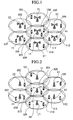
- broadcast communication whereby a plurality of base stations 11 to 17 transmit common information to unspecified mobile stations 101 to 112 in predetermined areas is known in a conventional radio communication system.
- multicast communication whereby a plurality of base stations 11 to 17 transmit common information to specific mobile stations joining in (belonging to) a specific group is known in a conventional radio communication system.
- a plurality of mobile stations forms one multicast group.
- one PICH Paging indicator channel
- each mobile station returns a response signal to the received PICH.
- US 5,530,437 discloses a method and apparatus that identify respondents to a poll transmitted in a radio communication system comprising a transmitter and a plurality of receivers.
- a subset of a plurality of portable communication units (PCUs) are each programmed with a bit pattern corresponding uniquely to each PCU and chosen such that when a group of at least two PCUs are received simultaneously, the resultant received interference bit pattern provides a non-zero probability of correctly identifying at least a portion of the group, and a substantially zero probability of erroneously identifying a PCU not in the group.
- the method further comprises the steps of transmitting thereafter from the subset of PCUs simultaneous, co-channel responses to the poll, each response comprising one of the programmed bit patterns, and determining therefrom identities of received PCUs by the interference bit patterns received at the plurality of receivers.
- a radio communication system having a radio network controller, base stations and mobile stations, to perform multicast communication.
- the radio network controller comprises a control signal transmitter configured to divide a multicast group into subgroups, to divide a control signal for the multicast group into control signals for the subgroups and to transmit the control signals for the subgroups to the base station.
- the mobile station comprises a response signal creator configured to create a response signal to the control signal for at least one subgroup, a transmission timing detector configured to detect a transmission timing of the response signal from the control signal for at least one subgroup, and a response signal transmitter configured to transmit the response signal to the base station with the transmission timing.
- the present invention also provides a mobile station supporting multicast communication.
- the mobile station comprises a response signal creator configured to create a response signal to a control signal for at least one subgroup into which a control signal for multicast group is divided, a transmission timing detector configured to detect a transmission timing of the response signal from the control signal for at least one subgroup, and a response signal transmitter configured to transmit the response signal to a base station with the transmission timing.
- the present invention also provides a radio network controller supporting multicast communication.
- the radio network controller comprises a control signal transmitter configured to divide a multicast group into subgroups, to divide a control signal for the multicast group into control signals for the subgroups, and to transmit the control signals for the subgroups to a base station.
- the radio network controller may perform a predetermined processing on a predetermined number of response signals.
- the predetermined number of response signals respond to the control signal for the multicast group, and are transmitted from mobile stations joining in the multicast group.
- the radio network controller may perform processing on the only the predetermined number of response signals. Any following response signal is unprocessed by the radio network controller.
- the following response signals are transmitted from the mobile stations joining in the multicast group.
- the predetermined number may be one.
- An embodiment of the present invention provides a radio communication system which can reduce the load on the radio network controller during multicast communication, a mobile station and a radio network controller which can be used in the above radio communication system.
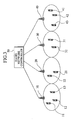
- FIG. 3 shows the entire configuration of a radio communication system according to an embodiment of the present invention.
- the radio communication system comprises four base stations 10, 20, 30 and 40 under a radio network controller 50.
- the base station 10 manages mobile stations 11 to 13, the base station 20 manages mobile stations 21 and 22, the base station 30 manages mobile stations 31 and 32, and the base station 40 manages mobile stations 41 to 43.
- the mobile stations 11, 12, 21, 41, 42 and 43 join in the same multicast group A in the embodiment.
- the radio network controller 50 divides the multicast group A into three subgroups A1 to A3 in the embodiment.
- the radio network controller 50 allocates each of six mobile stations 11, 12 , 21, 41, 42 and 43 joining in the multicast group A to one of the subgroups A1 to A3.
- the radio network controller 50 allocates the mobile station 11 and 12 to the subgroup A1, allocates the mobile station 21 and 41 to the subgroup A2, and allocates the mobile station 42 and 43 to the subgroup A3.
- FIG. 4 shows a functional block diagram of the mobile station used in the radio communication system according to the embodiment. Functions of a plurality of mobile stations 11 to 43 are basically the same, so that the function of the mobile station 11 will be explained as follows.
- the mobile station 11 is configured with a control signal receiver 11a, a response signal transmitter 11b, a response signal creator 11c and a transmission timing detector 11d.
- the control signal receiver 11a is configured to receive a control signal for the multicast group A and a control signal for the subgroup A1 which are transmitted from the base station 10.
- the response signal creator 11c is configured to create a response signal to the control signal for the multicast group A or the control signal for the subgroup A1.
- the transmission timing detector 11d is configured to detect a transmission timing of the response signal in the subgroup A1 from the received control signal for the subgroup A1.
- the transmission timing detector 11d can detect 100ms as the transmission timing of the response signal in the subgroup A1, detect 200ms as the transmission timing of the response signal in the subgroup A2, detect 300ms as the transmission timing of the response signal in the subgroup A3.
- the transmission timing detector 11d can detect a time X (for example, 19:00) as the transmission timing of the response signal in the subgroup A1, detect a time Y (for example, 19:01) as the transmission timing of the response signal in the subgroup A2, detect a time Z (for example, 19:02) as the transmission timing of the response signal in the subgroup A3.
- a time X for example, 19:00
- a time Y for example, 19:01
- a time Z for example, 19:02
- the response signal transmitter 11b is configured to transmit the created response signal to the base station 10 with the detected transmission timing.
- the response signal transmitter 11b transmits the response signal to the base station 10 100ms after receiving the control signal for the subgroup A1 (or at the time X), transmits the response signal to the base station 10 200ms after receiving the control signal for the subgroup A3 (or at the time Y), and transmits the response signal to the base station 10 300ms after receiving the control signal for the subgroup A3 (or at the time Z).
- FIG. 5 shows a functional block diagram of the radio network controller 50 used in the radio communication system according to the embodiment.
- the radio network controller 50 is configured with a response signal receiver 50a, a control signal transmitter 50b and a subgroup divider 50c.
- the subgroup divider 50c is configured to divide the multicast group A into the subgroups A1 to A3, and to divide a control signal for the multicast group A into control signals for the subgroups A1 to A3.
- the control signal transmitter 50b is configured to transmit the control signals for the subgroups A1 to A3 to the base station 10.
- control signal transmitter 50b may transmit the control signals for the subgroups A1 to A3 to the base stations 10, 20 and 40.
- the control signal transmitter 50b may transmit the control signals for the subgroups A1 to the base stations 10, transmit the control signals for the subgroups A2 to the base stations 20 and 40, and transmit the control signals for the subgroups A3 to the base stations 40.
- the response signal receiver 50a is configured to receive the response signal to the control signal for the multicast group A from the mobile stations 11 and 12 at a different time.
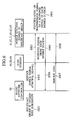
- the radio network controller 50 performs predetermined processing (for example, a service notice processing, or an authentication processing) on the mobile stations 11, 12, 21, 41, 42, 43 joining in the multicast group A in the radio communication system according to the embodiment will be described.
- predetermined processing for example, a service notice processing, or an authentication processing
- the radio network controller 50 allocates each of six mobile stations 11, 12, 21, 41, 42 and 43 joining in the multicast group A to one of the subgroups A1 to A3.
- the radio network controller 50 transmits a control signal such as a service notice signal and an authentication signal (a control signal for each of the subgroups A1 to A3) to three base stations 10, 20 and 40.
- a control signal such as a service notice signal and an authentication signal (a control signal for each of the subgroups A1 to A3)
- each of the base stations 10, 20 and 40 receives the control signal transmitted from the radio network controller 50.
- the control signals transmitted by each of the base stations 10, 20 and 40 reach the mobile stations 11, 12, 21, 41, 42 and 43 joining in the multicast group A under the base stations 10, 20 and 40.
- each of the mobile stations 11, 12, 21, 41, 42 and 43 receives the control signal from each of the base stations 10, 20 and 40, and detects transmission timing of a response signal in the subgroup A1, A2 or A3 in which each of the mobile stations 11, 12, 21, 41, 42 and 43 is joining.
- each of the mobile stations 11, 12 , 21 , 41, 42 and 43 creates the response signal to the control signal for the each of the subgroups A1 to A3 , and transmits the response signal to the base stations 10, 20 and 40 with the detected transmission timing.
- each of the base stations 10, 20 and 40 receives the response signal from each of the mobile stations 11, 12, 21, 41, 42 and 43, and transmits the received response signal to the radio network controller 50.
- the radio network controller 50 transmits a service data to the base stations 10, 20 and 40, in accordance with the response signals received from each of the mobile stations 11, 12, 21, 41, 42 and 43.
- each of the base stations 10, 20 and 40 transmits the received service data to each of the mobile stations 11, 12, 21, 41, 42 and 43.
- the radio network controller 50 can be configured to perform a predetermined processing on only a predetermined number of response signals (for example, a first response signal).
- the predetermined number of response signals are transmitted from each mobile station 11, 12, 21, 41, 42 or 43 joining in the multicast group A.
- any response signal following the predetermined number of response signals is unprocessed by the radio network controller 50.
- the following response signals are transmitted from the mobile stations 11, 12, 21, 41, 42 and 43 joining in the multicast group A.
- the radio network controller 50 can determine any number (for example, one, two and so on) as the predetermined number.
- the radio communication system can reduce the load on the radio network controller 50 caused by response signals which are transmitted from a plurality of mobile stations 11, 12, 21, 41 42 and 43, and which reach the radio network controller 50 at approximately the same time, when common information are transmitted to a plurality of mobile stations like multicast communication or broadcast communication.
- An embodiment provides a radio communication system which can reduce the load on the radio network controller during multicast communication, a mobile station and a radio network controller which can be used in the above radio communication system.
Landscapes
- Engineering & Computer Science (AREA)
- Computer Networks & Wireless Communication (AREA)
- Signal Processing (AREA)
- Multimedia (AREA)
- Mobile Radio Communication Systems (AREA)
- Small-Scale Networks (AREA)
Claims (5)
- Funkkommunikationssystem mit einem Funknetz-Controller (50), Basisstationen (10, 20, 30, 40) und Mobilstationen (11-13, 21-22, 31-32, 41-43), um Multicast-Kommunikation auszuführen, wobei
der Funknetz-Controller (50) einen Steuersignalsender (50b, 50c) umfasst, der konfiguriert ist, um eine Multicast-Gruppe in Untergruppen zu teilen, um ein Steuersignal für die Multicast-Gruppe in Steuersignale für die Untergruppen zu teilen, und, um die Steuersignale für die Untergruppen zu der Basisstation zu übertragen; und
eine Mobilstation (11-13, 21-22, 31-32, 41-43) umfassend:einen Antwortsignalerzeuger (llc), der konfiguriert ist, um ein Antwortsignal zu erzeugen zu dem Steuersignal für mindestens eine Untergruppe;einen Übertragungstimingerfasser (11d), der konfiguriert ist, um ein Übertragungstiming des Antwortsignals von dem Steuersignal für mindestens eine Untergruppe zu erfassen; undeinen Antwortsignalsender (11b), der konfiguriert ist, um das Antwortsignal zu der Basisstation mit dem Übertragungstiming zu übertragen. - Mobilstation, die Multicast-Kommunikation unterstützt, die Mobilstation umfassend:einen Antwortsignalerzeuger (llc), der konfiguriert ist, um ein Antwortsignal zu einem Steuersignal zu erzeugen für mindestens eine Untergruppe, in welche ein Steuersignal für eine Multicast-Gruppe geteilt ist;einen Übertragungstimingerfasser (11d), der konfiguriert ist, um ein Übertragungstiming des Antwortsignals von dem Steuersignal für mindestens eine Untergruppe zu erfassen; undein Antwortsignalsender (11b), der konfiguriert ist, um das Antwortsignal zu einer Basisstation zu übertragen, mit dem Übertragungstiming.
- Funknetz-Controller, der Multicast-Kommunikation unterstützt, wobei der Funknetz-Controller umfasst:einen Steuersignalsender (50b, 50c), der konfiguriert ist, um eine Multicast-Gruppe in Untergruppen zu teilen, um ein Steuersignal für die Multicast-Gruppe in Steuersignale für die Untergruppen zu teilen, und, um die Steuersignale für die Untergruppen zu einer Basisstation zu übertragen.
- Funknetz-Controller nach Anspruch 3, wobei
der Funknetz-Controller konfiguriert ist, um eine vorbestimmte Verarbeitung auszuführen auf einer vorbestimmten Anzahl von Antwortsignalen, wobei die vorbestimmte Anzahl von Antwortsignalen auf das Steuersignal für die Multicast-Gruppe antworten und von den Mobilstationen übertragen werden, die in der Multicast-Gruppe zusammengefügt sind; und
der Funknetz-Controller konfiguriert ist, um Verarbeitung, nur auf der vorbestimmten Anzahl von Antwortsignalen durchzuführen, und jedes nachfolgende Antwortsignal durch den Funknetz-Controller unverarbeitet ist, wobei die folgenden Antwortsignale von der Mobilstation übertragen werden, die in der Multicast-Gruppe zusammengefügt sind. - Funknetz-Controller nach Anspruch 4, wobei die vorbestimmte Anzahl Eins ist.
Applications Claiming Priority (2)
| Application Number | Priority Date | Filing Date | Title |
|---|---|---|---|
| JP2002274128 | 2002-09-19 | ||
| JP2002274128A JP4133156B2 (ja) | 2002-09-19 | 2002-09-19 | 移動通信システム、移動局及び無線制御装置 |
Publications (2)
| Publication Number | Publication Date |
|---|---|
| EP1401222A1 EP1401222A1 (de) | 2004-03-24 |
| EP1401222B1 true EP1401222B1 (de) | 2010-08-04 |
Family
ID=31944586
Family Applications (1)
| Application Number | Title | Priority Date | Filing Date |
|---|---|---|---|
| EP03020597A Expired - Lifetime EP1401222B1 (de) | 2002-09-19 | 2003-09-18 | Funkkommunikationssystem, Mobilstation und Funknetzsteuerung |
Country Status (6)
| Country | Link |
|---|---|
| US (1) | US20040058696A1 (de) |
| EP (1) | EP1401222B1 (de) |
| JP (1) | JP4133156B2 (de) |
| KR (1) | KR100559360B1 (de) |
| CN (1) | CN1292549C (de) |
| DE (1) | DE60333618D1 (de) |
Families Citing this family (5)
| Publication number | Priority date | Publication date | Assignee | Title |
|---|---|---|---|---|
| JP2004165712A (ja) | 2002-09-19 | 2004-06-10 | Ntt Docomo Inc | 移動通信システム、基地局、移動局及び無線制御装置 |
| US20050136910A1 (en) * | 2003-12-18 | 2005-06-23 | Qinghua Li | Multicast SDMA training polls |
| US8699508B2 (en) * | 2003-12-18 | 2014-04-15 | Intel Corporation | Response scheduling for multiple receivers |
| CN1835617B (zh) * | 2005-03-16 | 2010-12-22 | 株式会社Ntt都科摩 | 移动台、移动通信系统和移动通信方法 |
| JP4651463B2 (ja) * | 2005-06-17 | 2011-03-16 | 株式会社エヌ・ティ・ティ・ドコモ | 基地局及び基地局で使用される方法 |
Family Cites Families (5)
| Publication number | Priority date | Publication date | Assignee | Title |
|---|---|---|---|---|
| US5530437A (en) * | 1993-08-27 | 1996-06-25 | Motorola Inc. | Method and apparatus for generating a simulcast response from a plurality of portable communication units |
| US5553083B1 (en) * | 1995-01-19 | 2000-05-16 | Starburst Comm Corp | Method for quickly and reliably transmitting frames of data over communications links |
| GB2315635B (en) * | 1996-07-19 | 2000-10-11 | Ericsson Telefon Ab L M | Dynamic load limiting |
| US6738639B1 (en) * | 2000-02-28 | 2004-05-18 | Telefonaktiebolaget Lm Ericsson (Publ) | Reducing signaling traffic with multicasting in a wireless communication network |
| DE10132273A1 (de) * | 2001-07-04 | 2003-01-23 | Siemens Ag | Verfahren zum Übertragen von Multicast-Nachrichten in einem Funksystem sowie entsprechend ausgestaltetes Funksystem und entsprechend ausgestalteter Sender und Empfänger |
-
2002
- 2002-09-19 JP JP2002274128A patent/JP4133156B2/ja not_active Expired - Fee Related
-
2003
- 2003-09-17 US US10/663,785 patent/US20040058696A1/en not_active Abandoned
- 2003-09-18 KR KR1020030064893A patent/KR100559360B1/ko not_active Expired - Fee Related
- 2003-09-18 EP EP03020597A patent/EP1401222B1/de not_active Expired - Lifetime
- 2003-09-18 DE DE60333618T patent/DE60333618D1/de not_active Expired - Lifetime
- 2003-09-19 CN CNB031574092A patent/CN1292549C/zh not_active Expired - Fee Related
Also Published As
| Publication number | Publication date |
|---|---|
| CN1496028A (zh) | 2004-05-12 |
| JP2004112544A (ja) | 2004-04-08 |
| EP1401222A1 (de) | 2004-03-24 |
| KR100559360B1 (ko) | 2006-03-15 |
| KR20040025635A (ko) | 2004-03-24 |
| CN1292549C (zh) | 2006-12-27 |
| US20040058696A1 (en) | 2004-03-25 |
| DE60333618D1 (de) | 2010-09-16 |
| JP4133156B2 (ja) | 2008-08-13 |
Similar Documents
| Publication | Publication Date | Title |
|---|---|---|
| US6934298B2 (en) | Hot standby access point | |
| US5218716A (en) | Method for locating a communication unit within a multi mode communication system | |
| CN1160991C (zh) | 定位信标系统 | |
| US5329530A (en) | Radio connection system | |
| EP1187506A1 (de) | Kommunikationsystem mit flexibler Sendekonfiguration | |
| US5619530A (en) | Method and apparatus for detecting and handling collisions in a radio communication system | |
| CA2438364A1 (en) | Mobile communication system, base station, and communication control method | |
| CN103686988A (zh) | 无线基站、无线接入网、通信控制电路、存储介质和通信控制方法 | |
| US8072877B2 (en) | Arrangement in a distributed control system for increasing the availability of data and/or control commands | |
| EP1887810B1 (de) | Funkkommunikationssystem und Funknetz | |
| EP1401222A1 (de) | Funkkommunikationssystem, Mobilstation und Funknetzsteuerung | |
| CN1083654C (zh) | 改进在固定系统接收机的接收消息的方法和设备 | |
| EP1401220B1 (de) | Mobilstation | |
| US20040066767A1 (en) | Using the training sequence code to identify individual mobile stations | |
| US20040179498A1 (en) | Method for channel allocation in an ad-hoc radio communication system | |
| JPH0347018B2 (de) | ||
| JPH036932A (ja) | 移動通信における制御方式 | |
| TH22873A (th) | เครื่องสำเร็จสำหรับทำการระบุตำแหน่งของเครื่อง?รับในระบบวิทยุสื่อสาร | |
| CA2355192C (en) | Packet data communication system | |
| JPH09187066A (ja) | 無線同期方法 | |
| JPS61242157A (ja) | 無線フアクシミリ受信可否判定方法 | |
| JPH10145287A (ja) | マルチチャネル回線制御装置およびその制御チャネル妨害検出方法 | |
| JPS6294027A (ja) | 統合制御チヤネル方式 |
Legal Events
| Date | Code | Title | Description |
|---|---|---|---|
| PUAI | Public reference made under article 153(3) epc to a published international application that has entered the european phase |
Free format text: ORIGINAL CODE: 0009012 |
|
| 17P | Request for examination filed |
Effective date: 20030918 |
|
| AK | Designated contracting states |
Kind code of ref document: A1 Designated state(s): AT BE BG CH CY CZ DE DK EE ES FI FR GB GR HU IE IT LI LU MC NL PT RO SE SI SK TR |
|
| AX | Request for extension of the european patent |
Extension state: AL LT LV MK |
|
| AKX | Designation fees paid |
Designated state(s): DE GB IT |
|
| 17Q | First examination report despatched |
Effective date: 20070615 |
|
| GRAP | Despatch of communication of intention to grant a patent |
Free format text: ORIGINAL CODE: EPIDOSNIGR1 |
|
| RIC1 | Information provided on ipc code assigned before grant |
Ipc: H04W 4/06 20090101AFI20100202BHEP |
|
| GRAS | Grant fee paid |
Free format text: ORIGINAL CODE: EPIDOSNIGR3 |
|
| GRAA | (expected) grant |
Free format text: ORIGINAL CODE: 0009210 |
|
| AK | Designated contracting states |
Kind code of ref document: B1 Designated state(s): DE GB IT |
|
| REG | Reference to a national code |
Ref country code: GB Ref legal event code: FG4D |
|
| REF | Corresponds to: |
Ref document number: 60333618 Country of ref document: DE Date of ref document: 20100916 Kind code of ref document: P |
|
| PG25 | Lapsed in a contracting state [announced via postgrant information from national office to epo] |
Ref country code: IT Free format text: LAPSE BECAUSE OF NON-PAYMENT OF DUE FEES Effective date: 20100918 |
|
| PLBE | No opposition filed within time limit |
Free format text: ORIGINAL CODE: 0009261 |
|
| STAA | Information on the status of an ep patent application or granted ep patent |
Free format text: STATUS: NO OPPOSITION FILED WITHIN TIME LIMIT |
|
| 26N | No opposition filed |
Effective date: 20110506 |
|
| PGRI | Patent reinstated in contracting state [announced from national office to epo] |
Ref country code: IT Effective date: 20110616 |
|
| REG | Reference to a national code |
Ref country code: DE Ref legal event code: R097 Ref document number: 60333618 Country of ref document: DE Effective date: 20110506 |
|
| PGFP | Annual fee paid to national office [announced via postgrant information from national office to epo] |
Ref country code: IT Payment date: 20170925 Year of fee payment: 15 Ref country code: GB Payment date: 20170913 Year of fee payment: 15 Ref country code: DE Payment date: 20170912 Year of fee payment: 15 |
|
| REG | Reference to a national code |
Ref country code: DE Ref legal event code: R119 Ref document number: 60333618 Country of ref document: DE |
|
| GBPC | Gb: european patent ceased through non-payment of renewal fee |
Effective date: 20180918 |
|
| PG25 | Lapsed in a contracting state [announced via postgrant information from national office to epo] |
Ref country code: DE Free format text: LAPSE BECAUSE OF NON-PAYMENT OF DUE FEES Effective date: 20190402 Ref country code: IT Free format text: LAPSE BECAUSE OF NON-PAYMENT OF DUE FEES Effective date: 20180918 |
|
| PG25 | Lapsed in a contracting state [announced via postgrant information from national office to epo] |
Ref country code: GB Free format text: LAPSE BECAUSE OF NON-PAYMENT OF DUE FEES Effective date: 20180918 |