EP1401518B1 - Detection de delogement d'aiguille - Google Patents
Detection de delogement d'aiguille Download PDFInfo
- Publication number
- EP1401518B1 EP1401518B1 EP02737267A EP02737267A EP1401518B1 EP 1401518 B1 EP1401518 B1 EP 1401518B1 EP 02737267 A EP02737267 A EP 02737267A EP 02737267 A EP02737267 A EP 02737267A EP 1401518 B1 EP1401518 B1 EP 1401518B1
- Authority
- EP
- European Patent Office
- Prior art keywords
- sensor
- needle
- dislodgement
- blood
- absorbent pad
- Prior art date
- Legal status (The legal status is an assumption and is not a legal conclusion. Google has not performed a legal analysis and makes no representation as to the accuracy of the status listed.)
- Expired - Lifetime
Links
- 238000001514 detection method Methods 0.000 title claims description 28
- 239000008280 blood Substances 0.000 claims abstract description 108
- 210000004369 blood Anatomy 0.000 claims abstract description 108
- 238000000034 method Methods 0.000 claims abstract description 13
- 238000012544 monitoring process Methods 0.000 claims abstract description 9
- 238000001631 haemodialysis Methods 0.000 claims description 43
- 230000002745 absorbent Effects 0.000 claims description 28
- 239000002250 absorbent Substances 0.000 claims description 28
- 239000000463 material Substances 0.000 claims description 16
- 238000011282 treatment Methods 0.000 claims description 13
- 230000017531 blood circulation Effects 0.000 claims description 11
- 230000008859 change Effects 0.000 claims description 8
- 238000004891 communication Methods 0.000 claims description 7
- 230000002792 vascular Effects 0.000 claims description 6
- 230000004888 barrier function Effects 0.000 claims description 5
- 230000000322 hemodialysis Effects 0.000 description 39
- 230000035945 sensitivity Effects 0.000 description 8
- 239000012530 fluid Substances 0.000 description 5
- 230000008901 benefit Effects 0.000 description 4
- 238000002560 therapeutic procedure Methods 0.000 description 4
- 210000003462 vein Anatomy 0.000 description 4
- 238000004140 cleaning Methods 0.000 description 3
- 238000000502 dialysis Methods 0.000 description 3
- 238000001802 infusion Methods 0.000 description 3
- 229920003023 plastic Polymers 0.000 description 3
- 239000004033 plastic Substances 0.000 description 3
- 239000000758 substrate Substances 0.000 description 3
- RYGMFSIKBFXOCR-UHFFFAOYSA-N Copper Chemical compound [Cu] RYGMFSIKBFXOCR-UHFFFAOYSA-N 0.000 description 2
- 210000001367 artery Anatomy 0.000 description 2
- 208000020832 chronic kidney disease Diseases 0.000 description 2
- 229910052802 copper Inorganic materials 0.000 description 2
- 239000010949 copper Substances 0.000 description 2
- 230000008878 coupling Effects 0.000 description 2
- 238000010168 coupling process Methods 0.000 description 2
- 238000005859 coupling reaction Methods 0.000 description 2
- 208000015181 infectious disease Diseases 0.000 description 2
- 238000003780 insertion Methods 0.000 description 2
- 230000037431 insertion Effects 0.000 description 2
- 239000007788 liquid Substances 0.000 description 2
- 230000008569 process Effects 0.000 description 2
- 230000004044 response Effects 0.000 description 2
- 125000006850 spacer group Chemical group 0.000 description 2
- 239000003053 toxin Substances 0.000 description 2
- 231100000765 toxin Toxicity 0.000 description 2
- 108700012359 toxins Proteins 0.000 description 2
- 239000002699 waste material Substances 0.000 description 2
- XLYOFNOQVPJJNP-UHFFFAOYSA-N water Substances O XLYOFNOQVPJJNP-UHFFFAOYSA-N 0.000 description 2
- 208000030507 AIDS Diseases 0.000 description 1
- 230000001154 acute effect Effects 0.000 description 1
- 230000036772 blood pressure Effects 0.000 description 1
- 238000009530 blood pressure measurement Methods 0.000 description 1
- 210000001124 body fluid Anatomy 0.000 description 1
- 208000022831 chronic renal failure syndrome Diseases 0.000 description 1
- 239000004020 conductor Substances 0.000 description 1
- 239000003989 dielectric material Substances 0.000 description 1
- 238000007599 discharging Methods 0.000 description 1
- 239000007772 electrode material Substances 0.000 description 1
- 229920002457 flexible plastic Polymers 0.000 description 1
- 230000007246 mechanism Effects 0.000 description 1
- 238000013160 medical therapy Methods 0.000 description 1
- 208000005346 nocturnal enuresis Diseases 0.000 description 1
- 239000002985 plastic film Substances 0.000 description 1
- 229920006255 plastic film Polymers 0.000 description 1
- 238000012545 processing Methods 0.000 description 1
- 230000008929 regeneration Effects 0.000 description 1
- 238000011069 regeneration method Methods 0.000 description 1
- 210000004243 sweat Anatomy 0.000 description 1
- 230000009885 systemic effect Effects 0.000 description 1
- 238000012360 testing method Methods 0.000 description 1
- 238000012546 transfer Methods 0.000 description 1
- 210000000689 upper leg Anatomy 0.000 description 1
Images
Classifications
-
- A—HUMAN NECESSITIES
- A61—MEDICAL OR VETERINARY SCIENCE; HYGIENE
- A61M—DEVICES FOR INTRODUCING MEDIA INTO, OR ONTO, THE BODY; DEVICES FOR TRANSDUCING BODY MEDIA OR FOR TAKING MEDIA FROM THE BODY; DEVICES FOR PRODUCING OR ENDING SLEEP OR STUPOR
- A61M5/00—Devices for bringing media into the body in a subcutaneous, intra-vascular or intramuscular way; Accessories therefor, e.g. filling or cleaning devices, arm-rests
- A61M5/14—Infusion devices, e.g. infusing by gravity; Blood infusion; Accessories therefor
- A61M5/158—Needles for infusions; Accessories therefor, e.g. for inserting infusion needles, or for holding them on the body
-
- A—HUMAN NECESSITIES
- A61—MEDICAL OR VETERINARY SCIENCE; HYGIENE
- A61B—DIAGNOSIS; SURGERY; IDENTIFICATION
- A61B5/00—Measuring for diagnostic purposes; Identification of persons
- A61B5/15—Devices for taking samples of blood
- A61B5/150007—Details
- A61B5/150015—Source of blood
- A61B5/15003—Source of blood for venous or arterial blood
-
- A—HUMAN NECESSITIES
- A61—MEDICAL OR VETERINARY SCIENCE; HYGIENE
- A61B—DIAGNOSIS; SURGERY; IDENTIFICATION
- A61B5/00—Measuring for diagnostic purposes; Identification of persons
- A61B5/15—Devices for taking samples of blood
- A61B5/150007—Details
- A61B5/150374—Details of piercing elements or protective means for preventing accidental injuries by such piercing elements
- A61B5/150381—Design of piercing elements
- A61B5/150503—Single-ended needles
-
- A—HUMAN NECESSITIES
- A61—MEDICAL OR VETERINARY SCIENCE; HYGIENE
- A61B—DIAGNOSIS; SURGERY; IDENTIFICATION
- A61B5/00—Measuring for diagnostic purposes; Identification of persons
- A61B5/15—Devices for taking samples of blood
- A61B5/150007—Details
- A61B5/150847—Communication to or from blood sampling device
- A61B5/15087—Communication to or from blood sampling device short range, e.g. between console and disposable
-
- A—HUMAN NECESSITIES
- A61—MEDICAL OR VETERINARY SCIENCE; HYGIENE
- A61B—DIAGNOSIS; SURGERY; IDENTIFICATION
- A61B5/00—Measuring for diagnostic purposes; Identification of persons
- A61B5/15—Devices for taking samples of blood
- A61B5/150007—Details
- A61B5/150961—Means for the detection of the presence or absence of a module, a component or an abnormal condition; detection of leaks
-
- A—HUMAN NECESSITIES
- A61—MEDICAL OR VETERINARY SCIENCE; HYGIENE
- A61M—DEVICES FOR INTRODUCING MEDIA INTO, OR ONTO, THE BODY; DEVICES FOR TRANSDUCING BODY MEDIA OR FOR TAKING MEDIA FROM THE BODY; DEVICES FOR PRODUCING OR ENDING SLEEP OR STUPOR
- A61M1/00—Suction or pumping devices for medical purposes; Devices for carrying-off, for treatment of, or for carrying-over, body-liquids; Drainage systems
- A61M1/36—Other treatment of blood in a by-pass of the natural circulatory system, e.g. temperature adaptation, irradiation ; Extra-corporeal blood circuits
- A61M1/3621—Extra-corporeal blood circuits
- A61M1/3653—Interfaces between patient blood circulation and extra-corporal blood circuit
- A61M1/3656—Monitoring patency or flow at connection sites; Detecting disconnections
-
- G—PHYSICS
- G01—MEASURING; TESTING
- G01N—INVESTIGATING OR ANALYSING MATERIALS BY DETERMINING THEIR CHEMICAL OR PHYSICAL PROPERTIES
- G01N27/00—Investigating or analysing materials by the use of electric, electrochemical, or magnetic means
- G01N27/02—Investigating or analysing materials by the use of electric, electrochemical, or magnetic means by investigating impedance
- G01N27/04—Investigating or analysing materials by the use of electric, electrochemical, or magnetic means by investigating impedance by investigating resistance
- G01N27/12—Investigating or analysing materials by the use of electric, electrochemical, or magnetic means by investigating impedance by investigating resistance of a solid body in dependence upon absorption of a fluid; of a solid body in dependence upon reaction with a fluid, for detecting components in the fluid
- G01N27/121—Investigating or analysing materials by the use of electric, electrochemical, or magnetic means by investigating impedance by investigating resistance of a solid body in dependence upon absorption of a fluid; of a solid body in dependence upon reaction with a fluid, for detecting components in the fluid for determining moisture content, e.g. humidity, of the fluid
-
- G—PHYSICS
- G01—MEASURING; TESTING
- G01N—INVESTIGATING OR ANALYSING MATERIALS BY DETERMINING THEIR CHEMICAL OR PHYSICAL PROPERTIES
- G01N27/00—Investigating or analysing materials by the use of electric, electrochemical, or magnetic means
- G01N27/02—Investigating or analysing materials by the use of electric, electrochemical, or magnetic means by investigating impedance
- G01N27/22—Investigating or analysing materials by the use of electric, electrochemical, or magnetic means by investigating impedance by investigating capacitance
- G01N27/223—Investigating or analysing materials by the use of electric, electrochemical, or magnetic means by investigating impedance by investigating capacitance for determining moisture content, e.g. humidity
-
- A—HUMAN NECESSITIES
- A61—MEDICAL OR VETERINARY SCIENCE; HYGIENE
- A61B—DIAGNOSIS; SURGERY; IDENTIFICATION
- A61B5/00—Measuring for diagnostic purposes; Identification of persons
- A61B5/15—Devices for taking samples of blood
- A61B5/153—Devices specially adapted for taking samples of venous or arterial blood, e.g. with syringes
-
- A—HUMAN NECESSITIES
- A61—MEDICAL OR VETERINARY SCIENCE; HYGIENE
- A61M—DEVICES FOR INTRODUCING MEDIA INTO, OR ONTO, THE BODY; DEVICES FOR TRANSDUCING BODY MEDIA OR FOR TAKING MEDIA FROM THE BODY; DEVICES FOR PRODUCING OR ENDING SLEEP OR STUPOR
- A61M5/00—Devices for bringing media into the body in a subcutaneous, intra-vascular or intramuscular way; Accessories therefor, e.g. filling or cleaning devices, arm-rests
- A61M5/14—Infusion devices, e.g. infusing by gravity; Blood infusion; Accessories therefor
- A61M5/158—Needles for infusions; Accessories therefor, e.g. for inserting infusion needles, or for holding them on the body
- A61M2005/1588—Needles for infusions; Accessories therefor, e.g. for inserting infusion needles, or for holding them on the body having means for monitoring, controlling or visual inspection, e.g. for patency check, avoiding extravasation
-
- A—HUMAN NECESSITIES
- A61—MEDICAL OR VETERINARY SCIENCE; HYGIENE
- A61M—DEVICES FOR INTRODUCING MEDIA INTO, OR ONTO, THE BODY; DEVICES FOR TRANSDUCING BODY MEDIA OR FOR TAKING MEDIA FROM THE BODY; DEVICES FOR PRODUCING OR ENDING SLEEP OR STUPOR
- A61M2205/00—General characteristics of the apparatus
- A61M2205/13—General characteristics of the apparatus with means for the detection of operative contact with patient, e.g. lip sensor
-
- A—HUMAN NECESSITIES
- A61—MEDICAL OR VETERINARY SCIENCE; HYGIENE
- A61M—DEVICES FOR INTRODUCING MEDIA INTO, OR ONTO, THE BODY; DEVICES FOR TRANSDUCING BODY MEDIA OR FOR TAKING MEDIA FROM THE BODY; DEVICES FOR PRODUCING OR ENDING SLEEP OR STUPOR
- A61M2205/00—General characteristics of the apparatus
- A61M2205/18—General characteristics of the apparatus with alarm
-
- A—HUMAN NECESSITIES
- A61—MEDICAL OR VETERINARY SCIENCE; HYGIENE
- A61M—DEVICES FOR INTRODUCING MEDIA INTO, OR ONTO, THE BODY; DEVICES FOR TRANSDUCING BODY MEDIA OR FOR TAKING MEDIA FROM THE BODY; DEVICES FOR PRODUCING OR ENDING SLEEP OR STUPOR
- A61M5/00—Devices for bringing media into the body in a subcutaneous, intra-vascular or intramuscular way; Accessories therefor, e.g. filling or cleaning devices, arm-rests
- A61M5/14—Infusion devices, e.g. infusing by gravity; Blood infusion; Accessories therefor
- A61M5/168—Means for controlling media flow to the body or for metering media to the body, e.g. drip meters, counters ; Monitoring media flow to the body
- A61M5/16831—Monitoring, detecting, signalling or eliminating infusion flow anomalies
Definitions
- the present invention relates to the detection of needle dislodgement during medical treatments or therapies, such as hemodialysis.
- hemodialysis treatment utilizes the patient's blood to remove waste, toxins and excess water from the patient.
- the patient is connected to a hemodialysis machine, and the patient's blood is pumped through the machine. Waste, toxins and excess water are removed from the patient's blood, and the blood is infused back into the patient. Needles are inserted into the patient's vascular access, such as arteries and veins, to transfer the patient's blood to and from the hemodialysis machine.
- Hemodialysis treatments can last several hours and are generally performed in a treatment center about three to four times per week.
- dislodgement of the needle inserted into the patient's vascular access, such as veins can occur. If not detected immediately, this can produce a significant amount of blood loss to the hemodialysis patient.
- Two important criteria for detecting needle dislodgement are high sensitivity and specificity of the detection method with respect to needle dropout. This can ensure and facilitate a fast response time in order to minimize blood loss due to dislodgement.
- patients undergoing hemodialysis are visually monitored in order to detect needle dislodgement.
- the needle may not be in plain view of the patient or medical staff such that it could delay responsive actions to dislodgement, such as stopping the blood pump of the hemodialysis machine.
- devices which employ sensors are available and known for detecting a variety of different bodily fluids, these devices may not be suitably adapted to detect needle dislodgement.
- known devices employing such sensors have been utilized to detect bedwetting and diaper wetness.
- these types of wetness detection devices may not provide an adequate level of sensitivity if applied to detecting blood loss from the patient due to needle dislodgement.
- the known wetness detection devices may not be able to detect needle drop out with sufficient enough sensitivity and specificity to ensure and facilitate a proper and fast response.
- known wetness detection devices may not be configured to be controllably interfaced, or at least not properly interfaced, with, for example, a hemodialysis machine such that a responsive measure can be taken to minimize blood flow due to needle dislodgement once detected.
- a number of known wetness detectors are not reusable, or at least must be cleaned after each use, due to the fact that the sensor component contacts fluid when detecting same. This can require extensive cleaning of the sensor, particularly if it has contacted blood, in order to minimize the risk of infection prior to reuse.
- WO 99/24145 describes a fluid sensing device (11) that includes a pair of electrodes (A, B) which are placed on the surface of a patient's body (8) adjacent to a needle, (15, 19) inserted into the patient.
- the electrodes are connected to a computer and an alarm circuit and when they detect the leakage of blood due to a needle dislodgement they send a signal to the computer and the alarm circuit which deactivate a blood pump and activate an alarm.
- WO 99/29356 describes a device for monitoring fluid supply to an implanted catheter.
- the device comprises an electrode (10) placed on the skin of the patient.
- the liquid flow may be determined based on the electrical resistance between the electrode and at least one other electrical contact (P, Q).
- WO 01/68163 describes an infusion leak detection system which includes a pad (28) positioned adjacent to the infusion site of the needle.
- the pad secures a delivery device, such as an infusion set or pump, to the patient's skin.
- the present invention provides improved apparatuses and a method for detecting needle dislodgement.
- the present invention provides improved apparatuses that employ a sensor capable of detecting wetness due to blood loss from a patient resulting from needle dislodgement.
- the senor comprises a resistive sensor, a capacitive sensor or combination thereof.
- the resistive sensor comprises a loop configuration of conductive electrodes.
- the loop configuration includes at least two loops of conductive electrodes.
- the capacitive sensor includes one or more electrodes.
- the capacitive sensor is located within the sensor holder such that the sensor does not contact blood upon detection thereof.
- the senor produces a signal upon detection of blood loss.
- the apparatus further includes a control device adapted to receive the signal for monitoring and controlling blood loss due to dislodgement of the needle during hemodialysis.
- the absorbent pad provides a sterile barrier.
- the apparatus is used for detecting needle dislodgement during hemodialysis and comprises a sensor holder having a cavity; and a capacitive sensor including an electrode enclosed within the cavity of the sensor holder such that the capacitive sensor is capable of detecting wetness from blood due to needle dislodgement during hemodialysis wherein the capacitive sensor does not contact blood upon detection thereof, and the capacitive sensor detects wetness due to blood loss into a sterile pad overlying a vascular access region of a venous needle.
- the sensor holder includes a flexible material that adaptedly conforms to the vascular access region such that the capacitive sensor is capable of detecting blood loss due to needle dislodgement.
- the apparatus is used for detecting dislodgement of a needle inserted into a patient during hemodialysis and comprises a resistive sensor capable of detecting wetness due to blood wherein the resistive sensor includes at least two electrodes; and a sensor holder defining an interior fur receiving at least a portion of the needle and coupling the resistive sensor to the patient such that the resistive sensor is capable of detecting blood loss due to dislodgement of the needly the resistive sensor detects wetness due to blood loss into the sterile pad.
- the pair of electrodes each comprise a loop configuration.
- the apparatus can be used to control blood loss from a patient during hemodialysis and comprises a sensor capable of detecting wetness due to blood and a sensor holder adapted to secure the sensor to the patient.
- the sensor produces a signal indicative of wetness due to blood loss from the patient upon dislodgement of a venous needle inserted into the patient and the apparatus further comprises a controller capable of processing the signal to prevent blood flow through the venous needle such that blood loss from the patient due to dislodgement of the venous needle is minimized.
- the controller is in communication with a hemodialysis machine via an electrical communication cable or a cordless interface to minimize blood loss due to venous needle dislodgement.
- the controller is adapted to monitor one or more hemodialysis treatment parameters including wetness due to blood loss, change in blood flow, detection of the arterial air bubbles or combinations thereof.
- the controller comprises a display for monitoring each of the hemodialysis treatment parameters.
- the controller is attached to the patient.
- the apparatus may be used for controlling blood loss from a patient due to needle dislodgement.
- the sensor is secured to the patient adjacent the needle such that the sensor produces a signal indicative of wetness due to blood loss from the patient upon dislodgement of the needle.
- the signal is processed to prevent blood flow through the venous needle such that blood loss to the patient due to needle dislodgement is minimized.
- the signal is processed for communicating with a hemodialysis machine to minimize blood loss to the patient due to needle dislodgement.
- the signal is processed to shut-off a blood pump of the hemodialysis machine.
- the signal is processed to activate a venous line clamp for preventing blood flow via the venous needle.
- blood flow through the venous needle is stopped upon detecting dislodgement of the venous needle such that blood loss from the patient is minimized.
- An advantage of the present invention is to provide an improved apparatus for detecting needle dislodgement.
- a further advantage of the present invention is to provide an improved method for detecting needle dislodgement.
- an advantage of the present invention is to provide an apparatus that employs a sensor which does not contact blood upon detection thereof.
- an advantage of the present invention is to provide an improved apparatus for monitoring and/or controlling blood loss from a patient due to needle dislodgement.
- the present invention provides apparatuses and a method for detecting needle dislodgement. More specifically, the present invention provides apparatuses and methods that employ a sensor to detect needle dislodgement such that blood loss due to dislodgement can be controllably minimized.
- the apparatus can be used in a number of different therapies.
- the apparatus can be used in non-traditional hemodialysis methods. Such methods include, for example, regeneration and continuous flow therapies which may or may not include hemodialysis, for example, continuous flow peritoneal dialysis.
- the present apparatus can be utilized in methods providing dialysis for patients having chronic kidney failure or disease, it can be used for acute dialysis needs, for example, in an emergency room setting.
- the apparatus fox detecting needle dislodgement of the present invention includes a sensor that is capable of detecting wetness due to blood and a sensor holder that can be adapted to secure the sensor to a patient such that the apparatus can effectively detect dislodgement of the needle during treatment or therapy.
- a sensor that is capable of detecting wetness due to blood
- a sensor holder that can be adapted to secure the sensor to a patient such that the apparatus can effectively detect dislodgement of the needle during treatment or therapy.
- the sensor of the apparatus of the present invention can detect wetness due to blood loss from the patient resulting from the dislodged needle. The detection of blood loss is an indication that the needle has become dislodged.
- needle dislodgement can be detected.
- the apparatus of the present invention can detect needle dislodgement, particularly venous needle dislodgement, with high sensitivity and specificity.
- the apparatus of the present invention can be utilized to controllably minimize blood loss from the patient due to the dislodged needle.
- the apparatus of the present invention can include a variety of different configurations and other components in addition to the sensor and sensor holder depending on the application of the detection apparatus. It should further be appreciated that the various components of the apparatus can include a variety of different and suitably known materials such that needle dislodgement can be effectively and immediately detected to minimize blood loss from the patient due to dislodgement of the needle.
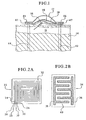
- an embodiment of the present invention includes a sensor 10 and sensor holder 12 that overlies the sensor 10 such that sensor holder 12 secures the sensor 10 to the patient 14 for detecting wetness due to blood loss from the patient 14 upon dislodgement of the needle 16.
- the sensor holder 12 includes a pad configuration such that it is sized to cover the needle 16 and access region 18 therein.
- the sensor holder 12 includes a rigid material, such as a rigid plastic material, that has a preferable dome shape.
- the sensor holder 12 can act to shield and protect the sensor 10, needle 16 and other components that it covers in addition to properly positioning and securing the sensor 10 over the access or insertion region 18 of the needle 16.
- the apparatus can include a sterile barrier 20 overlying the access region 18 between the sensor 10 and needle 16 as shown in Figure 1.
- the sterile barrier 20 or pad can include a variety of different medically sterile materials, such as gro pads, BAND-AIDS or the like. If a sch pad or typical absorbent pad is used, the sensor 10 can be positioned to contact the absorbent pad. In this position, the sensor 10 can contact blood that is absorbed by the absorbent pad due to a blood loss from the patient 14. The sensor 10 can then detect the presence of blood in the absorbent pad.
- the present invention can include a variety of different types and numbers of sensors to detect the presence of blood.
- the sensor or sensors can be utilized to detect one or more parameters that are characteristic of blood or blood loss due to needle dislodgement, such as, temperature, color, conductivity, resistance, capacitance, moisture, wetness, the like or combinations thereof.
- a resistive sensor 22 can be effectively utilized to detect the presence wetness in the absorbent pad due to blood.
- the resistive sensor 22 is capable of measuring the change in conductivity of the ssen which results from blood loss or leakage.
- the resistive sensor 22 can be configured in a variety of different and suitably known ways.
- the resistive sensor 22 includes a looped configuration of electrodes. More preferably, the conductive electrodes 24,26 are configured in the form of two loops as shown in Figure 2A.
- each conductive loop 24,26 can be individually tested for short circuiting by attaching a typical electronic testing device to the contact ends 28,30 of each of the conductive loops 24,26.
- the loop configuration may also provide a higher level of sensitivity with respect to detecting blood as compared to conventional electrode configurations, such as typical electrode pairs that are essentially straight in length extending parallel to each other.
- the conductive electrodes 24,26 of the resistive sensor 22 are generally attached to a substrate 32.
- the substrate 32 is a dielectric material, such as a plastic film or other like material.
- the conductive electrode material can be any suitably known conductive material. It should be appreciated that the conductive sensor can be excited by an AC or DC current source wherein the voltage drop between the two conductive electrode loops is used to measure the change in conductivity as a result of the pad or absorbent pad being wetted by blood.
- a capacitive sensor 34 can be used in place of or in addition to the resistive sensor 22.
- the sensor 34 can include one or more electrodes for detection purposes.
- the capacitive sensor 34 includes two electrodes 36,38 each made from a known copper material.
- the electrodes 36,38 can be arranged in any suitable fashion, preferably in an interwoven configuration as shown in Figure 2B. In this regard, a change in the capacitance between the electrodes 36,38 can be effectively measured and/or monitored for detecting the presence of blood in the absorbent pad.
- the electrodes are typically attached to a substrate 40 of a suitably known material.
- the output voltage of the sensor will be compared against a preset voltage to determine whether the absorbent pad is wet or dry.
- the rate of change of the output voltage may also be used to discriminate a blood loss event from noise, such as drift in the sensor output or wetness due to patient's sweat.
- the sensor holder 12 can be secured to the patient 14 in a variety of suitable and known ways to ensure that the sensor 10 is properly secured and positioned over the insertion region 18 of the needle.
- the sensor holder 12 can be secured to the patient 14 by a fastener, for example, having one or more straps as shown in Figure 1.
- a strap 42,44 can be used to fasten a separate end 45,46 of the pad of the sensor holder 12.
- the straps 42,44 can include any variety of different materials, such as elastic, rigid or the like depending on the application.
- the straps 42,44 can be fastened to the sensor holder 12 by any known fastening mechanisms, such as a hoop and loop fastener, a buckle fastener, a Velcro fastener or other like fasteners.
- the apparatus can also include a force transducer 47, such as a pressure or motion sensitive transducer, to measure and monitor the force upon which the sensor holder is secured to the patient 14.
- the force transducer 47 can be utilized to ensure that the applied force is suitable for the particular application.
- the force transducer 47 may be adapted to enable one to monitor, control and adjust the applied force as deemed appropriate.
- the apparatus can be configured in a variety of different and suitable known ways to properly secure the sensor to the patient and to securely hold the needle in place to prevent dislodgement.
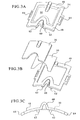
- the apparatus can include a sensor holder 48 and a sensor 50 that is contained or located within the sensor holder 48 as shown in Figures 3A to 3C.
- the sensor holder 48 is made of a suitable type of material, preferably a material that is impermeable to fluids, such as a plastic-based material. In this way, blood due to blood loss from the patient upon dislodgement of the needle does not contact the sensor. Even so, the sensor 50 is still capable of detecting the presence of blood. In this regard, the sensor 50 can be used repeatedly without having to clean it after each use, or at least minimizing the amount of cleaning that is required.
- the sensor holder 48 includes a base 52 with a cavity 54 for holding the sensor 50 inside of the sensor holder 48 as shown in Figures 3A to 3C.
- the sensor holder 48 further includes a lid or top 56 to cover the sensor 50 once inside of the cavity 54.
- the sensor is inserted into the cavity and the cavity is over-molded in a known and suitable way.
- the lid 56 can be removably attached.
- the sensor holder 48 is preferably made from a molded flexible plastic or polymeric material for protecting and securing the sensor, needle and other components of the apparatus of the present invention as previously discussed. It also has a preferable angular shape such that the sensor holder 48 effectively covers the vascular access region of the needle which can be located on any suitable part of the patient's body, such as the upper arm, lower arm, upper thigh area or the like. This also facilitates securing the sensor holder to the patient and can further enhance the comfort level of the patient during use.
- the sensor holder can be made from a variety of different and suitable materials and configured in a variety of different ways.
- the thickness of the sensor holder is such that it does not compromise the integrity of the sensor holder to protect the needle and properly bold the sensor while at the same time it does not compromise the extent to which the sensor is capable of detecting blood loss due to needle dislodgement with high sensitivity and selectivity.
- the sensor holder can be made of a plastic or other like suitable polymeric material that is both flexible and essentially impermeable to liquid or fluid, such as blood. This allows the apparatus to be rensed without having to clean the sensor. In this regard, the risk of infection due to rense can be effectively eliminated or at the very least greatly minimized.
- the sensor holder 48 has a channeled area 60 under which the needle, respective blood lines and the like are positioned.
- the sensor holder 48 can include a pair of spacers 62 that extend along at least a portion of the bottom surface of the sensor holder 48.
- the channeled area 60 and spacer 62 can act as a guide to further position the needle, blood lines, absorbent pad and the like, such that the sensor 50 is properly aligned with respect to the needle and access region. This can facilitate the detection of blood due to blood loss upon dislodgement of the needle.
- the sensor 50 can be securely positioned in close proximity to the needle without disrupting the way in which the needle is inserted into the patient.
- the senor 50 preferably includes a capacitive sensor that includes a single electrode formed in a sheet or plate configuration.
- the electrode is preferably made of copper.
- the single electrode capacitive sensor can detect the increased capacitance of blood as compared to air (i.e., no blood present) due to the coupling of field lines between the electrode and the ground of the sensor.
- the non-contact nature of this type of sensor is desirable because cleaning of the sensor after use can be effectively minimized or avoided as previously discussed.
- the capacitive sensor can detect wetness due to the presence of blood, for example, in an absorbent pad overlying the needle, with a high degree of sensitivity and specificity to needle dislodgement without contacting the absorbent pad and for that matter blood.
- the sensor is capable of detecting an increased capacitance of the blood-wetted absorbent pad which results from its large dielectric constant as compared to a dry absorbent pad. This can be done by measuring the charging and discharging times of the electrode or by measuring the change in the dielectric constant due to the presence of blood in other known and suitable ways.
- the senor holder 48 includes a pair of fastener members 64 onto which straps or other like fasteners can be attached to fasten the apparatus to the patient.
- the straps and/or fasteners can include any suitably known straps and/or fasteners as discussed above.
- the apparatus of the present invention can be effectively utilized to detect needle dislodgement by detecting the presence of wetness due to blood loss upon dislodgement of the needle from the patient.
- the apparatus can be applied in a number of different applications, such as medical therapies or treatments, particularly hemodialysis.
- hemodialysis needles are inserted into a patient's arteries and veins to connect blood flow to and from the hemodialysis machine.
- the needle dislodgement detection apparatus of the present invention can be utilized to controllably and effectively minimize blood loss from a patient due to dislodgement of the needle, such as during hemodialysis.
- the present invention provides an apparatus for controlling the blood loss from a patient due to venous needle dislodgement.
- the apparatus can include a needle dislodgement device as previously discussed.
- the apparatus includes a controller (not shown) that is in electrical contact with the sensor.
- the controller can be configured in a variety of different ways depending on the application thereof.
- the sensor Upon detection of the presence of blood due to needle dislodgement, the sensor produces a signal indicative of the degree of wetness due to blood. This signal can then be transmitted to the controller which is electrically connected to the sensor.
- the controller can process the signal in a variety of different ways such that the blood loss from the patient is minimized.
- the controller is in communication with a hemodialysis machine (not shown).
- This communication can be either hard wired (i.e., electrical communication cable), a wireless communication (i.e., wireless RF interface), a pneumatic interface or the like.
- the controller can process the signal to communicate with the hemodialysis machine to shut off or stop the blood pump associated with the hemodialysis machine and thus effectively minimize the amount of blood loss from the patient due to needle dislodgement during hemodialysis.
- the controller can communicate with the hemodialysis machine in a variety of other ways.
- the controller and hemodialysis machine can communicate to activate a venous line clamp (not shown) for preventing further blood flow via the venous needle thus minimizing blood loss to the patient.
- the venous line clamp is activated by the controller and attached to or positioned in proximity to the sensor and sensor holder such that it can clamp off the venous line in close proximity to the needle.
- the hemodialysis machine is capable of sensing an increase in pressure and can be programmed to shut-off the blood pump upon sensing pressure within the blood flow line which is above a predetermined level.
- the sensor, sensor holder and venous line clamp can act together as a stand-alone control unit.
- the venous line clamp can be controllably attached to the hemodialysis machine.
- the sensor output signal can be combined with other less sensitive blood loss detection methods, such as venous pressure measurements, systemic blood pressure, the like or combinations thereof, to improve specificity to needle dislodgement.
- the apparatus of the present invention can detect blood loss due to needle dislodgement with high sensitivity and selectivity such that responsive measures can be taken to minimize blood loss due to needle dislodgement.
- the ability to act responsively and quickly to minimize blood loss upon detection thereof is particularly important with respect to needle dislodgement during hemodialysis. If not detected and responded to immediately, the amount of blood loss can be significant.
- the present invention is capable of taking active or responsive measures, to minimize blood loss (i.e., shut-off blood pump, activate venous line clamp or the like) within about three seconds or less, preferably within about two to about three seconds upon detection of needle dislodgement.
- the controller can be utilized to monitor and/or control one or more treatment parameters during hemodialysis. These parameters can include, for example, the detection of blood due to blood loss upon needle dislodgement, the change in blood flow, the detection of air bubbles in the arterial line, detection of movement of the sensor during treatment, detection and/or monitoring of electrical continuity of the sensor or other like treatment parameters.
- the controller includes a display (not shown) for monitoring one or more of the parameters.
Landscapes
- Health & Medical Sciences (AREA)
- Life Sciences & Earth Sciences (AREA)
- General Health & Medical Sciences (AREA)
- Heart & Thoracic Surgery (AREA)
- Veterinary Medicine (AREA)
- Animal Behavior & Ethology (AREA)
- Pathology (AREA)
- Engineering & Computer Science (AREA)
- Biomedical Technology (AREA)
- Physics & Mathematics (AREA)
- Public Health (AREA)
- Hematology (AREA)
- Chemical & Material Sciences (AREA)
- Biophysics (AREA)
- Molecular Biology (AREA)
- Medical Informatics (AREA)
- Surgery (AREA)
- Vascular Medicine (AREA)
- Biochemistry (AREA)
- Immunology (AREA)
- Chemical Kinetics & Catalysis (AREA)
- Electrochemistry (AREA)
- Analytical Chemistry (AREA)
- Anesthesiology (AREA)
- General Physics & Mathematics (AREA)
- Psychology (AREA)
- Cardiology (AREA)
- External Artificial Organs (AREA)
- Infusion, Injection, And Reservoir Apparatuses (AREA)
- Measurement Of The Respiration, Hearing Ability, Form, And Blood Characteristics Of Living Organisms (AREA)
- Sewing Machines And Sewing (AREA)
- Portable Nailing Machines And Staplers (AREA)
- Electrophonic Musical Instruments (AREA)
Claims (19)
- Appareil permettant de détecter le délogement d'une aiguille (16) insérée dans un patient (14), comprenant un capteur (10, 50) capable de détecter de l'humidité due au sang suite au délogement de l'aiguille, caractérisé en ce que l'appareil comprend en outre :une compresse absorbante (20) capable d'absorber du sang perdu par le patient dû au délogement de l'aiguille ; etun support de capteur (12, 48) adapté pour fixer le capteur et la compresse absorbante adjacente à l'aiguille, de sorte que la compresse absorbante est disposée entre le capteur et l'aiguille.
- Appareil selon la revendication 1, dans lequel le capteur (10, 50) est un capteur résistif (22), un capteur capacitif (34) ou leur combinaison.
- Appareil selon la revendication 2, dans lequel le capteur (10, 50) est un capteur résistif (22) comprenant une configuration en boucle des électrodes conductrices (24, 26).
- Appareil selon la revendication 3, dans lequel la configuration en boucle comprend au moins deux boucles d'électrodes conductrices (24, 26).
- Appareil selon la revendication 2, dans lequel le capteur est un capteur capacitif (34) qui comprend une ou plusieurs électrodes (36, 38).
- Appareil selon la revendication 5, dans lequel le capteur capacitif (34) est situé à l'intérieur du support de capteur (12, 48) de sorte que le capteur (10, 50) peut être actionné pour détecter l'humidité due à la perte de sang dans la compresse absorbante.
- Appareil selon l'une quelconque des revendications 1 à 6, dans lequel le capteur (10, 50) produit un signal suite à la détection de la perte de sang.
- Appareil selon la revendication 7, comprenant en outre un dispositif de commande adapté pour recevoir le signal pour surveiller et contrôler la perte de sang due au délogement de l'aiguille (16) pendant l'hémodialyse.
- Appareil selon l'une quelconque des revendications 1 à 8, dans lequel la compresse absorbante (20) fournit une barrière stérile.
- Appareil selon l'une quelconque des revendications 1 à 9, dans lequel le support de capteur (12, 48) comprend un matériau flexible qui peut se conformer à une région d'accès vasculaire de sorte que le capteur (10, 50) est capable de détecter la perte de sang due au délogement de l'aiguille.
- Appareil selon la revendication 10, dans lequel la compresse absorbante (20) est positionnée de sorte qu'elle recouvre la région d'accès de l'aiguille (16) à l'usage afin d'établir une barrière stérile entre l'aiguille et le capteur (10, 50).
- Appareil selon la revendication 11, dans lequel le capteur (10, 50) est positionné afin d'être en contact directement avec la compresse absorbante (20) pour détecter l'humidité à l'intérieur de celle-ci.
- Appareil selon la revendication 11, dans lequel le capteur (10, 50) est situé à l'intérieur du support de capteur (12, 48) de sorte que le capteur n'est pas en contact avec la compresse absorbante (20) pour détecter l'humidité à l'intérieur de celle-ci.
- Appareil selon la revendication 8, dans lequel le dispositif de commande est couplé de manière communicante à une machine d'hémodialyse via un câble de communication électrique ou une interface sans fil pour réduire la perte de sang due au délogement de l'aiguille.
- Appareil selon la revendication 14, dans lequel le dispositif de commande est adapté pour surveiller un ou plusieurs paramètres de traitement d'hémodialyse comprenant l'humidité due à la perte de sang, le changement dans le débit de sang et la détection de bulles d'air artérielles pendant l'hémodialyse.
- Appareil selon la revendication 8, dans lequel le dispositif de commande comprend un écran pour surveiller chacun des paramètres.
- Appareil selon la revendication 1, dans lequel le support de capteur (12, 48) définit un intérieur pour recevoir la compresse absorbante (20) et au moins une partie de l'aiguille (16) de sorte que le capteur (10, 50) est capable de détecter la perte de sang due au délogement de l'aiguille.
- Procédé permettant de détecter le délogement d'une aiguille (16) comprenant les étapes consistant à :prévoir un capteur (10, 50) capable de détecter de l'humidité due à du sang ;prévoir une compresse absorbante (20) capable d'absorber la perte de sang d'un patient due au délogement de l'aiguille ;prévoir un support de capteur (12, 48) pour fixer le capteur et la compresse absorbante adjacente à l'aiguille ; etfixer le capteur et la compresse absorbante sur le patient en utilisant le support de capteur de sorte que la compresse absorbante se trouve entre le capteur et l'aiguille.
- Procédé selon la revendication 18, dans lequel le capteur est un capteur résistif (22), un capteur capacitif (34) ou leur combinaison.
Priority Applications (1)
| Application Number | Priority Date | Filing Date | Title |
|---|---|---|---|
| DE60209488.7T DE60209488T3 (de) | 2001-06-22 | 2002-05-30 | Detektion einer Verlagerung der Nadel |
Applications Claiming Priority (3)
| Application Number | Priority Date | Filing Date | Title |
|---|---|---|---|
| US888154 | 2001-06-22 | ||
| US09/888,154 US7147615B2 (en) | 2001-06-22 | 2001-06-22 | Needle dislodgement detection |
| PCT/US2002/017019 WO2003000315A1 (fr) | 2001-06-22 | 2002-05-30 | Detection de delogement d'aiguille |
Publications (3)
| Publication Number | Publication Date |
|---|---|
| EP1401518A1 EP1401518A1 (fr) | 2004-03-31 |
| EP1401518B1 true EP1401518B1 (fr) | 2006-03-01 |
| EP1401518B2 EP1401518B2 (fr) | 2014-08-13 |
Family
ID=25392623
Family Applications (1)
| Application Number | Title | Priority Date | Filing Date |
|---|---|---|---|
| EP02737267.1A Expired - Lifetime EP1401518B2 (fr) | 2001-06-22 | 2002-05-30 | Detection de delogement d'aiguille |
Country Status (7)
| Country | Link |
|---|---|
| US (1) | US7147615B2 (fr) |
| EP (1) | EP1401518B2 (fr) |
| JP (2) | JP4368676B2 (fr) |
| AT (1) | ATE318627T1 (fr) |
| DE (1) | DE60209488T3 (fr) |
| MX (1) | MXPA04000121A (fr) |
| WO (1) | WO2003000315A1 (fr) |
Cited By (8)
| Publication number | Priority date | Publication date | Assignee | Title |
|---|---|---|---|---|
| US8114043B2 (en) | 2008-07-25 | 2012-02-14 | Baxter International Inc. | Electromagnetic induction access disconnect sensor |
| US8152751B2 (en) | 2007-02-09 | 2012-04-10 | Baxter International Inc. | Acoustic access disconnection systems and methods |
| US8376978B2 (en) | 2007-02-09 | 2013-02-19 | Baxter International Inc. | Optical access disconnection systems and methods |
| US8529490B2 (en) | 2002-04-10 | 2013-09-10 | Baxter International Inc. | Systems and methods for dialysis access disconnection |
| US8708946B2 (en) | 2002-04-10 | 2014-04-29 | Baxter International Inc. | Access disconnection systems using conductive contacts |
| US8920356B2 (en) | 2002-04-10 | 2014-12-30 | Baxter International Inc. | Conductive polymer materials and applications thereof including monitoring and providing effective therapy |
| US9138536B2 (en) | 2008-04-01 | 2015-09-22 | Gambro Lundia Ab | Apparatus and a method for monitoring a vascular access |
| US10155082B2 (en) | 2002-04-10 | 2018-12-18 | Baxter International Inc. | Enhanced signal detection for access disconnection systems |
Families Citing this family (83)
| Publication number | Priority date | Publication date | Assignee | Title |
|---|---|---|---|---|
| US6979306B2 (en) * | 2003-08-13 | 2005-12-27 | Moll Family Trust | Method and device for monitoring loss of body fluid and dislodgment of medical instrument from body |
| US8029454B2 (en) | 2003-11-05 | 2011-10-04 | Baxter International Inc. | High convection home hemodialysis/hemofiltration and sorbent system |
| GB0408492D0 (en) * | 2004-04-16 | 2004-05-19 | Univ Strathclyde | Performance measurement of wound dressings |
| SE0401632D0 (sv) * | 2004-06-24 | 2004-06-24 | Innovation Team Ab | Medel och sätt att detektera blodläckage från sår |
| JP4301512B2 (ja) * | 2004-10-15 | 2009-07-22 | 日機装株式会社 | 穿刺部の監視装置 |
| US20060130591A1 (en) * | 2004-12-21 | 2006-06-22 | Perkins, Corban Enterprises | Venous needle dislodgement sensor |
| WO2006067217A2 (fr) * | 2004-12-22 | 2006-06-29 | Novo Nordisk A/S | Systeme de detection et procede permettant de detecter des problemes et element de montage de dispositifs medicaux pouvant etre montes sur la peau |
| DK200500774A (da) * | 2005-05-27 | 2006-09-27 | Danish Care Technology | Method for detecting a leak in an extracorporeal blood system |
| JP4301518B2 (ja) * | 2005-07-14 | 2009-07-22 | 日機装株式会社 | 穿刺部の監視装置 |
| JP4640642B2 (ja) * | 2005-10-12 | 2011-03-02 | ニプロ株式会社 | 抜針検知装置 |
| US20120010572A1 (en) * | 2005-10-24 | 2012-01-12 | Tionne Bennett | Intravenous Catheter Protective Cover |
| USD1089641S1 (en) | 2005-10-24 | 2025-08-19 | Tionne A. Bennett | Intravenous catheter cover |
| US7641612B1 (en) * | 2006-01-17 | 2010-01-05 | Mccall Kenneth Shawn | Blood loss detection for hemodialysis system |
| HRP20170188T1 (hr) * | 2006-01-31 | 2017-04-07 | Ares Trading S.A. | Naprava za injekciju s kapacitivnim senzorom blizine |
| US7605710B2 (en) | 2006-08-18 | 2009-10-20 | Fresenius Medical Care Holdings, Inc. | Wetness sensor |
| US10463778B2 (en) | 2007-02-09 | 2019-11-05 | Baxter International Inc. | Blood treatment machine having electrical heartbeat analysis |
| SE531750C2 (sv) * | 2007-04-04 | 2009-07-28 | Redsense Medical Malta Ltd | Anordning för detektering av blodläckage |
| WO2008139464A1 (fr) * | 2007-05-10 | 2008-11-20 | Nilimedix Ltd | Mécanisme d'auto-fermeture pour dispositif de perfusion |
| US8573228B2 (en) * | 2007-09-20 | 2013-11-05 | Medtronic, Inc. | Needle to port trajectory indicator |
| US7755488B2 (en) * | 2007-09-21 | 2010-07-13 | Baxter International Inc. | Access disconnection detection system |
| US8221320B2 (en) | 2007-09-21 | 2012-07-17 | Baxter International Inc. | Access disconnect detection system |
| US8187184B2 (en) * | 2007-09-21 | 2012-05-29 | Baxter International, Inc. | Access disconnect system with optical and other sensors |
| US9011334B2 (en) * | 2007-09-27 | 2015-04-21 | Baxter International Inc. | Access disconnect detection |
| US8360977B2 (en) * | 2007-09-27 | 2013-01-29 | Baxter International Inc. | Continuity circuits for detecting access disconnection |
| DE102008013090A1 (de) | 2008-03-07 | 2009-09-10 | Fresenius Medical Care Deutschland Gmbh | Vorrichtung und Verfahren zur Überwachung eines Zugangs zu einem Patienten, insbesondere eines Gefäßzugangs bei einer extrakorporalen Blutbehandlung |
| EP2303356B1 (fr) | 2008-06-26 | 2016-03-23 | Gambro Lundia AB | Procédés et dispositifs permettant de surveiller l'intégrité d'une connexion fluidique |
| US20100100026A1 (en) * | 2008-10-16 | 2010-04-22 | Fresenius Medical Care Holdings, Inc. | Wetness sensor utilizing passive resonant circuits |
| DE102009008885A1 (de) * | 2009-02-14 | 2010-08-26 | Fresenius Medical Care Deutschland Gmbh | Vorrichtung zum Detektieren von Feuchtigkeit für eine Vorrichtung zur Überwachung eines Zugangs zu einem Patienten, insbesondere zur Überwachung des Gefäßzugangs bei einer extrakkorporalen Blutbehandlung |
| EP2427841B1 (fr) | 2009-05-05 | 2019-08-14 | CareFusion 303, Inc. | Dispositif de contrôle d'un site de perfusion basé sur un modèle |
| EP2434950A1 (fr) | 2009-05-29 | 2012-04-04 | Gambro Lundia AB | Attache de raccordement électrique pour détecteurs médicaux |
| EP3178387A1 (fr) | 2009-06-26 | 2017-06-14 | Gambro Lundia AB | Dispositifs, produit-programme informatique et procédé d'extraction de données |
| GB0912009D0 (en) | 2009-07-10 | 2009-08-19 | Univ Strathclyde | Sensor |
| US8753515B2 (en) | 2009-12-05 | 2014-06-17 | Home Dialysis Plus, Ltd. | Dialysis system with ultrafiltration control |
| EP2519277B1 (fr) | 2009-12-28 | 2017-09-27 | Gambro Lundia AB | Appareil et procédé de prédiction d'une chute symptomatique rapide de la pression artérielle |
| US8808218B2 (en) * | 2010-01-29 | 2014-08-19 | Baxter International Inc. | Needle placement detection and security device and method |
| US8444585B2 (en) * | 2010-01-29 | 2013-05-21 | Baxter International Inc. | Catheter needle retention and placement monitoring system and method |
| DE102010012545A1 (de) * | 2010-03-23 | 2011-09-29 | Fresenius Medical Care Deutschland Gmbh | Vorrichtung zum Detektieren von Feuchtigkeit zur Verwendung mit einer Vorrichtung zur Überwachung eines Zugangs zu einem Patienten, insbesondere zur Überwachung des Gefäßzugangs bei einer extrakorporalen Blutbehandlung |
| US8501009B2 (en) | 2010-06-07 | 2013-08-06 | State Of Oregon Acting By And Through The State Board Of Higher Education On Behalf Of Oregon State University | Fluid purification system |
| DE102010024654A1 (de) * | 2010-06-22 | 2011-12-22 | Fresenius Medical Care Deutschland Gmbh | Vorrichtung zum Detektieren von Feuchtigkeit zur Verwendung mit einer Vorrichtung zur Überwachung eines Zugangs zu einem Patienten, insbesondere zur Überwachung des Gefäßzugangs bei einer extrakorporalen Blutbehandlung |
| CN103429283B (zh) * | 2010-08-13 | 2015-11-25 | 日本协能电子股份有限公司 | 漏液传感系统 |
| DE102010049723A1 (de) * | 2010-10-26 | 2012-04-26 | Bernhard Ehni | Sicherungseinrichtung zur Kontrolle eines in eine Blutbahn eingeführten Injektionskörpers |
| EP2696918A2 (fr) | 2011-04-11 | 2014-02-19 | Novo Nordisk A/S | Dispositif d'injection incorporant une surveillance de dose |
| CA2851245C (fr) | 2011-10-07 | 2019-11-26 | Home Dialysis Plus, Ltd. | Purification de fluide d'echange de chaleur pour un systeme de dialyse |
| DE102012013473B4 (de) * | 2012-07-09 | 2018-02-22 | Fresenius Medical Care Deutschland Gmbh | Vorrichtung zur Erkennung von Feuchtigkeit für eine Vorrichtung zur Überwachung eines Zugangs zu einem Patienten |
| DE102012013474A1 (de) * | 2012-07-09 | 2014-01-09 | Fresenius Medical Care Deutschland Gmbh | Vorrichtung zur Erkennung von Feuchtigkeit für eine Vorrichtung zur Überwachung eines Zugangs zu einem Patienten |
| DE102012013471A1 (de) * | 2012-07-09 | 2014-01-09 | Fresenius Medical Care Deutschland Gmbh | Feuchtigkeitssensor zur Überwachung eines Zugangs zu einem Patienten und Verfahren zur Herstellung des Feuchtigkeitssensors |
| WO2014036531A1 (fr) * | 2012-08-30 | 2014-03-06 | Accumed Radial Systems, Llc. | Capteur d'hémostase et procédé associé |
| DE102012017205A1 (de) * | 2012-08-31 | 2014-03-27 | Fresenius Medical Care Deutschland Gmbh | Verfahren und Vorrichtung zum Prüfen von auf die Haut eines Patienten aufzubringenden Sensoren zum Erkennen von Flüssigkeit oder Feuchtigkeit |
| EP2705863A1 (fr) * | 2012-09-11 | 2014-03-12 | Sanofi-Aventis Deutschland GmbH | Dispositif d'administration de médicament avec mécanisme de détection d'alignement d'aiguille |
| WO2014147028A1 (fr) | 2013-03-20 | 2014-09-25 | Gambro Lundia Ab | Surveillance d'un arrêt cardiaque chez un patient raccordé à un appareil de traitement sanguin extracorporel |
| US9867953B2 (en) | 2013-06-21 | 2018-01-16 | Tandem Diabetes Care, Inc. | System and method for infusion set dislodgement detection |
| CN103394140B (zh) * | 2013-08-08 | 2015-07-08 | 孔祥林 | 动静脉通路防护器 |
| FR3013215B1 (fr) * | 2013-11-20 | 2015-12-25 | Achi Fathia El | Dispositif de detection d'une perte sanguine lors d'une hemodialyse |
| JP5791132B1 (ja) * | 2014-04-07 | 2015-10-07 | 学校法人北里研究所 | 検知装置、検知システム、検知方法およびプログラム |
| JP6657186B2 (ja) | 2014-04-29 | 2020-03-04 | アウトセット・メディカル・インコーポレイテッドOutset Medical, Inc. | 透析システムおよび方法 |
| DE102014009388A1 (de) | 2014-06-25 | 2016-01-14 | Fresenius Medical Care Deutschland Gmbh | Vorrichtung zur Überwachung eines Gefäßzugangs für eine extrakorporale Blutbehandlungsvorrichtung und Verfahren zur Überwachung eines Gefäßzugangs |
| DE102014010906A1 (de) | 2014-07-23 | 2016-01-28 | Fresenius Medical Care Deutschland Gmbh | Dialysegerät |
| GB201419857D0 (en) * | 2014-11-07 | 2014-12-24 | Highland Health Board | Device |
| WO2016119211A1 (fr) * | 2015-01-30 | 2016-08-04 | National Taipei University Of Technology | Patch de capteur, système, et procédé de détection de fuite de fluide |
| US10398857B2 (en) | 2015-07-18 | 2019-09-03 | Toltec Ventures, LLC | Patient line dislodgement detection device and method |
| JP6207028B2 (ja) * | 2015-07-30 | 2017-10-04 | 学校法人北里研究所 | 検知装置、検知システム、検知方法およびプログラム |
| US10195367B2 (en) | 2015-10-19 | 2019-02-05 | Fresenius Medical Care Holdings, Inc. | Medical wetness sensing devices and related systems and methods |
| CA2946763A1 (fr) * | 2015-10-28 | 2017-04-28 | Stanley Michael Karl Valnicek | Suture chirurgicale adaptee pour ameliorer la visibilite |
| US10413654B2 (en) | 2015-12-22 | 2019-09-17 | Baxter International Inc. | Access disconnection system and method using signal metrics |
| US20170312456A1 (en) * | 2016-04-27 | 2017-11-02 | David Bruce PHILLIPS | Skin Desensitizing Device |
| WO2018035520A1 (fr) | 2016-08-19 | 2018-02-22 | Outset Medical, Inc. | Système et procédés de dialyse péritonéale |
| EP3512580B1 (fr) * | 2016-09-16 | 2023-06-07 | Redsense Medical AB | Dispositif de surveillance de raccords de tuyaux et de fuite de fluide corporel |
| US10441705B2 (en) * | 2017-04-05 | 2019-10-15 | Fresenius Medical Care Holdings, Inc. | Medical wetness sensing devices and related systems and methods |
| GB201717570D0 (en) * | 2017-10-25 | 2017-12-06 | Global Leak Tech Ltd | Leak detector |
| US11281878B2 (en) | 2018-02-20 | 2022-03-22 | Fresenius Medical Care Holdings, Inc. | Wetness detection with biometric sensor device for use in blood treatment |
| US11511037B2 (en) | 2018-06-08 | 2022-11-29 | Analog Devices, Inc. | Systems and methods for measuring needle depth |
| ES3028957T3 (en) | 2018-08-23 | 2025-06-20 | Outset Medical Inc | Dialysis system and methods |
| US11464908B2 (en) | 2019-02-18 | 2022-10-11 | Tandem Diabetes Care, Inc. | Methods and apparatus for monitoring infusion sites for ambulatory infusion pumps |
| CN113795286A (zh) | 2019-04-30 | 2021-12-14 | 开端医疗公司 | 透析系统和方法 |
| TR202015476A1 (tr) * | 2020-09-29 | 2022-04-21 | Koc Ueniversitesi | Damaryolu di̇slokasyonlarinin tespi̇ti̇ ve i̇lgi̇li̇ ki̇şi̇ye bi̇ldi̇ri̇mi̇ i̇çi̇n bi̇r ci̇haz |
| US11464902B1 (en) | 2021-02-18 | 2022-10-11 | Fresenius Kabi Deutschland Gmbh | Wearable medicament delivery device with compressible reservoir and method of use thereof |
| US11872369B1 (en) | 2021-02-18 | 2024-01-16 | Fresenius Kabi Deutschland Gmbh | Wearable medicament delivery device with leakage and skin contact sensing and method of use thereof |
| US11311666B1 (en) | 2021-02-18 | 2022-04-26 | Fresenius Kabi Deutschland Gmbh | Modular wearable medicament delivery device and method of use thereof |
| JP2022163502A (ja) * | 2021-04-14 | 2022-10-26 | 橋本電子工業株式会社 | 穿刺針の抜け検知装置 |
| US12465675B2 (en) | 2021-07-28 | 2025-11-11 | Transonic Systems Inc. | Method and apparatus for identifying disruption of a fluid connection between an extracorporeal circuit and a patient circulatory system |
| US20230337922A1 (en) * | 2022-04-26 | 2023-10-26 | H. Lee Moffitt Cancer Center And Research Institute, Inc. | Device, System, and Method for Intraoperative Quantification of Blood Loss |
| EP4727615A1 (fr) * | 2023-05-10 | 2026-04-22 | Diarmonid | Dispositif de détection d'une perte sanguine |
| CN120132103A (zh) * | 2025-04-03 | 2025-06-13 | 中国人民解放军陆军军医大学第一附属医院 | 血液透析针监测装置及针动监测方法 |
Family Cites Families (167)
| Publication number | Priority date | Publication date | Assignee | Title |
|---|---|---|---|---|
| US2127538A (en) * | 1936-09-26 | 1938-08-23 | Harry W Seiger | Signaling device |
| US3245068A (en) † | 1963-08-02 | 1966-04-05 | Thomas V Fullen | Calibrated body fluid detection device |
| US3682162A (en) | 1968-12-13 | 1972-08-08 | Wellcome Found | Combined electrode and hypodermic syringe needle |
| US3814249A (en) | 1970-05-25 | 1974-06-04 | Eaton Medical Electronics Inc | Dialysis apparatus |
| US3946731A (en) | 1971-01-20 | 1976-03-30 | Lichtenstein Eric Stefan | Apparatus for extracorporeal treatment of blood |
| US3731685A (en) | 1971-04-01 | 1973-05-08 | W Eidus | Moisture indicating strip for diapers and surgical dressings |
| US3782377A (en) † | 1971-09-07 | 1974-01-01 | Illinois Tool Works | Sterile plastic shield |
| US3759261A (en) | 1972-03-09 | 1973-09-18 | R Wang | Yer diapers disposable diapers and disposable diapers with water proof la |
| US3809078A (en) | 1972-07-20 | 1974-05-07 | A Mozes | Detector device for detecting unintentional urination |
| US3832993A (en) | 1972-09-13 | 1974-09-03 | W Clipp | Blood detecting device |
| US3778570A (en) | 1972-10-05 | 1973-12-11 | J Shuman | Enuresis bed pad |
| US3810140A (en) | 1972-10-30 | 1974-05-07 | W Finley | Apparatus for the programmed treatment of bed wetting |
| US3832067A (en) | 1972-11-24 | 1974-08-27 | Kopf D Syst | Colorimeter for detecting blood leaks in an artificial kidney machine |
| US3882861A (en) | 1973-09-24 | 1975-05-13 | Vital Assists | Auxiliary control for a blood pump |
| US3900026A (en) † | 1973-11-19 | 1975-08-19 | William H Wagner | Device for holding and protecting intravenous injection needles |
| US3900396A (en) | 1974-03-22 | 1975-08-19 | Baxter Laboratories Inc | Blood leak detector |
| US4055496A (en) | 1974-04-19 | 1977-10-25 | National Medical Care, Inc. | Dialysis apparatus |
| US4026800A (en) | 1974-04-19 | 1977-05-31 | National Medical Care, Inc. | Dialysis apparatus |
| US4022211A (en) | 1974-08-14 | 1977-05-10 | Kimberly-Clark Corporation | Wetness indicator for absorbent pads |
| US4087185A (en) | 1975-06-19 | 1978-05-02 | Baxter Travenol Laboratories, Inc. | Blood leak detector |
| JPS5911864B2 (ja) | 1975-07-14 | 1984-03-19 | 武田薬品工業株式会社 | 漏血検知装置 |
| US4017190A (en) | 1975-07-18 | 1977-04-12 | Halbert Fischel | Blood leak detector comparing intensities of high absorption band and low absorption band of a single beam of light passing through a sample |
| US4193068A (en) | 1976-03-16 | 1980-03-11 | Ziccardi John J | Hemorrhage alarms |
| DE2636290A1 (de) | 1976-08-12 | 1978-02-16 | Fresenius Chem Pharm Ind | Vorrichtung zur steuerung und ueberwachung des blutflusses bei der blutdialyse, -perfusion und -diafiltration unter benutzung nur einer anschlusstelle an den blutkreislauf des patienten (single-needle-technik) |
| US4085047A (en) | 1976-09-16 | 1978-04-18 | Thompson Lester E | Blood leak detector |
| US4366051A (en) | 1976-11-19 | 1982-12-28 | Halbert Fischel | Hemodialysis system |
| US4192311A (en) | 1977-12-05 | 1980-03-11 | Felfoldi James J | Disposable diaper with wetness indicator |
| CS200909B1 (en) | 1977-12-23 | 1980-10-31 | Petr Slovak | Haemodlialysation device |
| US4162490A (en) | 1978-01-26 | 1979-07-24 | Fu Chien Hung | Toilet training device |
| US4191950A (en) | 1978-02-09 | 1980-03-04 | Levin Anne F | Anti-bed-wetting device |
| US4166961A (en) | 1978-03-22 | 1979-09-04 | Hoechst Aktiengesellschaft | Method and apparatus for detecting a blood leak in a hemodialysis system |
| DE2838414C2 (de) | 1978-09-02 | 1984-10-31 | Fresenius AG, 6380 Bad Homburg | Vorrichtung zur Hämodialyse und zum Entziehen von Ultrafiltrat |
| US4231370A (en) | 1979-06-18 | 1980-11-04 | The Procter & Gamble Company | Disposable diaper type garment having wetness indicator |
| DE2948768A1 (de) | 1979-12-04 | 1981-06-11 | geb. Ehrmuth Heide 8100 Garmisch-Partenkirchen Brehm | Vorwarngeraet gegen bettnaessen |
| US4327731A (en) | 1980-07-07 | 1982-05-04 | Powell Nelson B | Moisture indicator |
| DE3045514A1 (de) | 1980-12-03 | 1982-07-01 | Udo 8832 Weißenburg Petscher | Windeln |
| DE3223086A1 (de) | 1981-01-22 | 1983-07-28 | Nippon Acchakutanshi Seizo K.K., Osaka | Vorrichtung zur herstellung elektrischer kabelbaeume |
| US4539559A (en) | 1982-03-29 | 1985-09-03 | Hugh Kelly | Portable, disposable warning device for detecting urine-wet undergarments |
| US4484573A (en) | 1982-07-22 | 1984-11-27 | Naewae Electric Co., Ltd. | Alarm device for use in a baby's diaper |
| EP0328162B1 (fr) | 1983-04-11 | 1993-02-10 | Ivac Corporation | Appareil de détection de faute pour système de perfusion parentérale et procédé de détection de défauts au cours du fonctionnement d'un système |
| US4534756A (en) | 1983-04-11 | 1985-08-13 | Ivac Corporation | Fault detection apparatus and method for parenteral infusion system |
| EP0328163B1 (fr) | 1983-04-11 | 1991-12-18 | Ivac Corporation | Appareil de détection de faute pour système de perfusion parentérale et procédé de détection de défauts au cours du fonctionnement d'un tel système |
| US4501583A (en) | 1983-06-15 | 1985-02-26 | Extracorporeal, Inc. | Hemodialysis access monitors |
| FR2548907B1 (fr) * | 1983-07-13 | 1985-11-08 | Rhone Poulenc Sa | Procede de plasmapherese et appareillage utilisable notamment pour ce procede |
| GB2145859A (en) | 1983-08-30 | 1985-04-03 | Kek How Ng | Lift urine/wetting alarm system |
| US4583546A (en) | 1983-11-18 | 1986-04-22 | Garde Patria P | Blood loss monitor |
| DE3440584A1 (de) | 1984-11-07 | 1986-05-07 | Dieter 7519 Eppingen Glatzel | Vorrichtung zum registrieren von feuchtigkeit |
| CH676060A5 (fr) | 1985-02-12 | 1990-11-30 | Svaetopluk Radakovic | |
| US4739492A (en) | 1985-02-21 | 1988-04-19 | Cochran Michael J | Dialysis machine which verifies operating parameters |
| CA1273822A (fr) | 1985-06-03 | 1990-09-11 | Katsutoshi Rokuta | Dispositif pour mesurer le degre d'humidite des couches |
| US4648869A (en) | 1985-12-04 | 1987-03-10 | American Hospital Supply Corporation | Automatic infiltration detection system and method |
| US4710163A (en) | 1986-06-06 | 1987-12-01 | Ivac Corporation | Detection of fluid flow faults in the parenteral administration of fluids |
| CA1300866C (fr) | 1986-11-17 | 1992-05-19 | Tadao Shimomura | Article absorbant pour liquides physiologiques |
| DE3640900A1 (de) | 1986-11-29 | 1988-06-09 | Stegat Harry | Vorrichtung zur erzeugung eines warnsignals bei unkontrolliertem harnaustritt |
| US4931051A (en) | 1987-02-06 | 1990-06-05 | Edge Enterprises, Inc. | Wetness indicator |
| GB8706116D0 (en) * | 1987-03-14 | 1987-04-15 | Smith & Nephew Ass | Adhesive dressings |
| US4796014A (en) | 1987-03-24 | 1989-01-03 | Chia Jack T | Device for detecting urine in diapers |
| US4862146A (en) | 1987-03-27 | 1989-08-29 | Raychem Corporation | Detection apparatus |
| GB8717235D0 (en) | 1987-07-21 | 1987-08-26 | Darling Products Ltd J E | Moisture leak alarm |
| US4976698A (en) | 1987-10-23 | 1990-12-11 | Stokley Manuel H | Intravenous catheter and tubing stabilization device |
| US4846792A (en) | 1988-03-08 | 1989-07-11 | Baxter International Inc. | Automatic infiltration detection system and method |
| US4979940A (en) | 1988-03-08 | 1990-12-25 | Baxter International Inc. | Infusion system, methodology, and algorithm for identifying patient-induced pressure artifacts |
| DE3823859A1 (de) | 1988-07-14 | 1990-01-18 | Bernd Kellerberg | Geraet zur pruefung des durchfeuchtungsgrades von windeln |
| US5036859A (en) * | 1988-07-26 | 1991-08-06 | Travis International, Inc. | Moisture detector and indicator |
| DE3836712A1 (de) | 1988-10-28 | 1990-05-03 | Volker Dipl Chem Genrich | Grossflaechige und hochflexible sensormatte |
| US4898587A (en) | 1988-11-15 | 1990-02-06 | Mera Csaba L | Intravenous line stabilizing device |
| JPH0511872Y2 (fr) * | 1988-11-30 | 1993-03-25 | ||
| US4977906A (en) | 1989-03-07 | 1990-12-18 | Scipio William J Di | Diurnal rehabilitation for incontinence trainer |
| DE3911812C2 (de) | 1989-04-11 | 1996-09-19 | Siemens Ag | Schneller Feuchtesensor auf Polymerbasis |
| US5084026A (en) | 1989-07-14 | 1992-01-28 | Shapiro Robert A | Intravenous apparatus holder |
| US5088990A (en) | 1989-08-30 | 1992-02-18 | Hivale Ronald S | I.V. alert system |
| DE4000961A1 (de) | 1990-01-16 | 1991-07-18 | Adam Becker | Vorrichtung zur verhuetung von windeldermatitis |
| US5139482A (en) | 1990-01-18 | 1992-08-18 | Simeon Paula S | Fluid infusion line monitor |
| US4981467A (en) | 1990-02-27 | 1991-01-01 | Baxter International Inc. | Apparatus and method for the detection of air in fluid delivery systems |
| DE4018953A1 (de) | 1990-05-04 | 1992-01-23 | Augustin Hans Ulrich | Wegwerfeinlage fuer ein krankenbett oder fuer kinderbekleidung mit feuchtigkeitsmessfuehler und verfahren zur herstellung |
| DE4014572A1 (de) | 1990-05-07 | 1991-11-14 | Alexander Staeblein | Blutungssensor |
| FR2669217A1 (fr) | 1990-11-26 | 1992-05-22 | Tekung Lee | Couche jetable comportant une alarme de detection de l'humidite. |
| US5121630A (en) | 1990-12-21 | 1992-06-16 | Calvin Noel M | Material monitoring device |
| US5486286A (en) | 1991-04-19 | 1996-01-23 | Althin Medical, Inc. | Apparatus for performing a self-test of kidney dialysis membrane |
| US5247434A (en) | 1991-04-19 | 1993-09-21 | Althin Medical, Inc. | Method and apparatus for kidney dialysis |
| US5137033A (en) | 1991-07-15 | 1992-08-11 | Norton John L | Patient monitoring device |
| FR2680678A1 (fr) | 1991-09-02 | 1993-03-05 | Ly Joel | Avertisseur de couches-culottes. |
| US5314410A (en) | 1992-02-10 | 1994-05-24 | Marks Ronald L | Entry indicator device for arterial or intravenous needle |
| US5252374A (en) | 1992-02-18 | 1993-10-12 | Paper-Pak Products, Inc. | Underpad for incontinent patients |
| US5341127A (en) | 1992-03-23 | 1994-08-23 | Smith Robert J | Self-contained bed wetting alarm |
| US5291181A (en) | 1992-03-30 | 1994-03-01 | Deponte Dominic A | Wet bed alarm and temperature monitoring system |
| US5197958A (en) | 1992-04-01 | 1993-03-30 | Howell Wesley A | Wetness indicating diaper |
| US5266928A (en) | 1992-05-29 | 1993-11-30 | Johnson Lonnie G | Wet diaper detector |
| US5838240A (en) | 1992-05-29 | 1998-11-17 | Johnson Research & Development Company, Inc. | Wet diaper detector |
| US5469145A (en) | 1992-05-29 | 1995-11-21 | Johnson; Lonnie | Wet diaper detector |
| DE69330000D1 (de) | 1992-07-22 | 2001-04-12 | Health Sense Int Inc | System zur erfassung elektrisch leitender flüssigkeiten |
| US5790036A (en) | 1992-07-22 | 1998-08-04 | Health Sense International, Inc. | Sensor material for use in detection of electrically conductive fluids |
| US5264830A (en) | 1992-09-18 | 1993-11-23 | Little Acorn Ventures, Inc. | Apparatus for sensing wet diaper |
| IT1255495B (it) | 1992-09-18 | 1995-11-09 | Francesco Bellifemine | Dispositivo per la sorveglianza di un impianto di fleboclisi |
| US5354289A (en) | 1993-07-23 | 1994-10-11 | Principle Business Enterprises Inc. | Absorbent product including super absorbent material and a fluid absorption capacity monitor |
| DE4239937C2 (de) | 1992-11-27 | 1995-08-24 | Fresenius Ag | Verfahren zur Feststellung der Funktionsfähigkeit einer Teileinrichtung eines Hämodialysegerätes und Vorrichtung zur Durchführung dieses Verfahrens |
| US5910252A (en) | 1993-02-12 | 1999-06-08 | Cobe Laboratories, Inc. | Technique for extracorporeal treatment of blood |
| DE69427716T2 (de) | 1993-03-10 | 2002-06-13 | Nichiban Co. Ltd., Tokio/Tokyo | Klebeverband zur Blutstillung |
| US5468236A (en) | 1993-06-09 | 1995-11-21 | Kimberly-Clark Corporation | Disposable absorbent product incorporating chemically reactive substance |
| US5589070A (en) | 1993-07-16 | 1996-12-31 | Cobe Laboratories, Inc. | Method and apparatus for cleaning a dialysate circuit downstream of a dialyzer |
| US5802814A (en) | 1993-08-20 | 1998-09-08 | Nissho Corporation | Method of wrapping a bundle of fiber |
| US5435010A (en) | 1993-10-18 | 1995-07-25 | May; Robert E. | Moisture sensitive article of clothing and method of manufacturing the same |
| US5392032A (en) | 1993-11-23 | 1995-02-21 | Little Acorn Ventures | Apparatus for sensing wet diaper including circuit breaker |
| US5947910A (en) * | 1994-01-14 | 1999-09-07 | E-Z-Em, Inc. | Extravasation detection technique |
| US5395358A (en) | 1994-01-21 | 1995-03-07 | Lu; Chin B. | Wetting indicator for a diaper |
| DE4415896A1 (de) † | 1994-05-05 | 1995-11-09 | Boehringer Mannheim Gmbh | Analysesystem zur Überwachung der Konzentration eines Analyten im Blut eines Patienten |
| US5702377A (en) | 1994-09-01 | 1997-12-30 | Kimberly-Clark Worldwide, Inc. | Wet liner for child toilet training aid |
| US5568128A (en) | 1994-11-14 | 1996-10-22 | Nair; Rajesh M. | Self learning diaper wetness detector and toilet trainer |
| IT1271099B (it) | 1994-11-25 | 1997-05-26 | Francesco Bellifemine | Dispositivo per la sorveglianza ed il controllo di un impianto di fleboclisi migliorato |
| US5649914A (en) | 1994-12-22 | 1997-07-22 | Kimberly-Clark Corporation | Toilet training aid |
| US5681298A (en) | 1994-12-22 | 1997-10-28 | Kimberly-Clark Worldwide, Inc. | Toilet training aid creating a temperature change |
| US5591344A (en) | 1995-02-13 | 1997-01-07 | Aksys, Ltd. | Hot water disinfection of dialysis machines, including the extracorporeal circuit thereof |
| NL9500338A (nl) | 1995-02-22 | 1996-10-01 | Wilhelmus Theodorus Franciscus | Samenstel voor het detecteren en signaleren van vocht. |
| US5579765A (en) * | 1995-05-30 | 1996-12-03 | Cox; Danny L. | Monitor to detect bleeding |
| US5542932A (en) | 1995-07-20 | 1996-08-06 | Daugherty; Charles W. | Bloodless flashback vent |
| US5779657A (en) † | 1995-07-21 | 1998-07-14 | Daneshvar; Yousef | Nonstretchable wound cover and protector |
| FR2737124B1 (fr) † | 1995-07-24 | 1997-11-14 | Hospal Ind | Dispositif de detection du retrait accidentel d'un tube enfonce dans une cavite ou un conduit corporel d'un patient |
| US5790035A (en) | 1995-08-02 | 1998-08-04 | Ho; Geng Kaung | Reusable temperature and wetness alarm device for the diaper |
| SE508374C2 (sv) | 1995-09-12 | 1998-09-28 | Gambro Med Tech Ab | Förfarande och anordning för detektering av tillståndet hos en blodkärlsaccess |
| US5570082A (en) | 1995-10-13 | 1996-10-29 | Mahgerefteh; Nasser | Remote wetness sensor for diapers |
| JP3310842B2 (ja) | 1995-11-29 | 2002-08-05 | ユニ・チャーム株式会社 | 使い捨ておむつ |
| US5959535A (en) | 1995-12-20 | 1999-09-28 | Remsburg; Ralph | Electrogalvanic-powered diaper wetness sensor |
| US6200250B1 (en) | 1996-05-07 | 2001-03-13 | Knox Security Engineering Corporation | Diapers with moisture detection and process and apparatus for making them |
| US5760694A (en) | 1996-05-07 | 1998-06-02 | Knox Security Engineering Corporation | Moisture detecting devices such as for diapers and diapers having such devices |
| JP3533285B2 (ja) | 1996-05-16 | 2004-05-31 | ユニ・チャーム株式会社 | 使い捨ておむつ |
| JP3343191B2 (ja) | 1996-07-02 | 2002-11-11 | ユニ・チャーム株式会社 | 使い捨てトレーニングパンツ |
| US5845644A (en) | 1996-08-26 | 1998-12-08 | Hughes; Charles B. | Bladder and bowel training system |
| US5796345A (en) | 1997-01-13 | 1998-08-18 | Leventis; Nicholas | Apparatus for detecting moisture in garments |
| JPH10211278A (ja) | 1997-01-30 | 1998-08-11 | Nippon Kanko Kk | 点滴漏れ検知警報装置 |
| US5817076A (en) | 1997-02-25 | 1998-10-06 | Fard; Safieh Bahramian | Toilet training diapers |
| EP0980513A4 (fr) | 1997-02-27 | 2002-06-19 | Bristol Myers Squibb Co | Systeme de detection de fuite pour dispositif de traitement de liquides |
| US5903222A (en) | 1997-04-03 | 1999-05-11 | Zaggie, Inc. | Wet garment detector |
| US5862804A (en) | 1997-07-08 | 1999-01-26 | Andco Tek, Inc. | Leak point wetness sensor for urological investigation |
| US5868723A (en) | 1997-07-15 | 1999-02-09 | Al-Sabah; Sabah Naser | Moisture sensing and audio indicating apparatus for garments and associated methods |
| DE19734002C1 (de) | 1997-08-06 | 1998-09-17 | Fresenius Medical Care De Gmbh | Verfahren zur Überwachung eines Gefäßzuganges während einer Dialysebehandlung und Vorrichtung zur Dialysebehandlung mit einer Einrichtung zur Überwachung eines Gefäßzuganges |
| US5941248A (en) | 1997-08-20 | 1999-08-24 | Wheeler; Alton D. | Monitoring of patient bedding zones |
| DE19739099C1 (de) | 1997-09-06 | 1999-01-28 | Fresenius Medical Care De Gmbh | Verfahren zur Überwachung eines Gefäßzuganges während einer extrakorporalen Blutbehandlung und Vorrichtung zur extrakorporalen Blutbehandlung mit einer Einrichtung zur Überwachung eines Gefäßzuganges |
| US6075178A (en) | 1997-09-29 | 2000-06-13 | Kimberly-Clark Worldwide, Inc. | Absorbent article with wetness indicator |
| JP3340061B2 (ja) | 1997-09-29 | 2002-10-28 | ユニ・チャーム株式会社 | 使い捨てトレニングパンツ |
| US5904671A (en) | 1997-10-03 | 1999-05-18 | Navot; Nir | Tampon wetness detection system |
| WO1999024145A1 (fr) * | 1997-11-07 | 1999-05-20 | Aksys, Ltd. | Dispositif d'alerte signalant une separation du circuit de sang pour circuits extracorporels |
| US6149636A (en) | 1998-06-29 | 2000-11-21 | The Procter & Gamble Company | Disposable article having proactive sensors |
| US5908411A (en) | 1997-11-20 | 1999-06-01 | Nippon Koudoshi Kougyou Co., Ltd. | Moisture annunciator |
| EP1032442B1 (fr) | 1997-11-26 | 2004-03-03 | E-Z-Em, Inc. | Detection d'epanchement |
| CH692570A5 (de) | 1997-12-05 | 2002-08-15 | Peter F Meier | Vorrichtung zur Überwachung einer Kathetereinrichtung. |
| US5947943A (en) | 1998-02-02 | 1999-09-07 | Lee; Frances Meiling | Diaper visual indicator |
| US5900817A (en) | 1998-02-17 | 1999-05-04 | Olmassakian; Vahe | Child monitoring system |
| GB9803299D0 (en) | 1998-02-18 | 1998-04-08 | Gallagher George | Improved method and apparatus for monitoring intravenous drips |
| JPH11299889A (ja) | 1998-02-20 | 1999-11-02 | Matsumoto Seisakusho:Kk | 点滴用警報装置及び尿溜用警報装置 |
| US6015386A (en) † | 1998-05-07 | 2000-01-18 | Bpm Devices, Inc. | System including an implantable device and methods of use for determining blood pressure and other blood parameters of a living being |
| AU4324299A (en) | 1998-05-28 | 1999-12-13 | Safieh Bahramian Fard | Wetness awareness training device |
| US6160198A (en) | 1998-06-29 | 2000-12-12 | The Procter & Gamble Company | Disposable article having a discontinuous responsive system |
| US6093869A (en) | 1998-06-29 | 2000-07-25 | The Procter & Gamble Company | Disposable article having a responsive system including a feedback control loop |
| US6332874B1 (en) * | 1998-08-28 | 2001-12-25 | C.R. Bard, Inc. | Coupling and stabilization system for proximal end of catheter |
| US6063042A (en) | 1998-09-28 | 2000-05-16 | Navot; Nir | Method for diagnosis of menorrhagia menstrual cycle disorders and their causes |
| FR2785526B1 (fr) | 1998-11-06 | 2001-03-30 | Plasto Sa | Dispositif de securite pour colostomie |
| DE19901078C1 (de) | 1999-01-14 | 2000-02-17 | Polaschegg Hans Dietrich | Verfahren und Vorrichtung zur Erkennung von Stenosen bei der extrakorporalen Blutbehandlung |
| US6166639A (en) | 1999-03-12 | 2000-12-26 | Advanced Marketing Systems Corporation | Personal emergency response system |
| US6113577A (en) | 1999-04-23 | 2000-09-05 | Canox International, Ltd. | Intravascular access device positioning system |
| US6292102B1 (en) | 1999-07-22 | 2001-09-18 | Bed-Check Corporation | Apparatus for detecting enuresis in a patient |
| US6408204B1 (en) * | 1999-07-28 | 2002-06-18 | Medrad, Inc. | Apparatuses and methods for extravasation detection |
| DE19947826B4 (de) | 1999-10-05 | 2006-06-08 | Disetronic Licensing Ag | Vorrichtung zur dosierten Verabreichung eines injizierbaren Produkts |
| DE19953068A1 (de) | 1999-11-03 | 2001-06-13 | Lutz Wagner | Verfahren und Einrichtung zur Überwachung der Lage von Kanülen am Körper von Lebewesen |
| US6461329B1 (en) | 2000-03-13 | 2002-10-08 | Medtronic Minimed, Inc. | Infusion site leak detection system and method of using the same |
| US6445304B1 (en) * | 2000-08-11 | 2002-09-03 | John J. Bandeian, Jr. | Medical alarm system |
| US6425878B1 (en) * | 2001-02-28 | 2002-07-30 | L.G.Med Ltd. | Method and device for detecting extravasation |
| US20030128125A1 (en) * | 2002-01-04 | 2003-07-10 | Burbank Jeffrey H. | Method and apparatus for machine error detection by combining multiple sensor inputs |
-
2001
- 2001-06-22 US US09/888,154 patent/US7147615B2/en not_active Expired - Lifetime
-
2002
- 2002-05-30 EP EP02737267.1A patent/EP1401518B2/fr not_active Expired - Lifetime
- 2002-05-30 WO PCT/US2002/017019 patent/WO2003000315A1/fr not_active Ceased
- 2002-05-30 MX MXPA04000121A patent/MXPA04000121A/es active IP Right Grant
- 2002-05-30 DE DE60209488.7T patent/DE60209488T3/de not_active Expired - Lifetime
- 2002-05-30 JP JP2003506956A patent/JP4368676B2/ja not_active Expired - Fee Related
- 2002-05-30 AT AT02737267T patent/ATE318627T1/de not_active IP Right Cessation
-
2009
- 2009-04-01 JP JP2009089616A patent/JP2009183727A/ja active Pending
Cited By (16)
| Publication number | Priority date | Publication date | Assignee | Title |
|---|---|---|---|---|
| US8708946B2 (en) | 2002-04-10 | 2014-04-29 | Baxter International Inc. | Access disconnection systems using conductive contacts |
| US10155082B2 (en) | 2002-04-10 | 2018-12-18 | Baxter International Inc. | Enhanced signal detection for access disconnection systems |
| US8920356B2 (en) | 2002-04-10 | 2014-12-30 | Baxter International Inc. | Conductive polymer materials and applications thereof including monitoring and providing effective therapy |
| US8529490B2 (en) | 2002-04-10 | 2013-09-10 | Baxter International Inc. | Systems and methods for dialysis access disconnection |
| US8801646B2 (en) | 2002-04-10 | 2014-08-12 | Baxter International Inc. | Access disconnection systems with arterial and venous line conductive pathway |
| US8603020B2 (en) | 2007-02-09 | 2013-12-10 | Baxter International Inc. | Ultrasound access disconnection systems and methods |
| US8795217B2 (en) | 2007-02-09 | 2014-08-05 | Baxter International Inc. | Acoustic access disconnection systems and methods |
| US8920355B2 (en) | 2007-02-09 | 2014-12-30 | Baxter International Inc. | Acoustic access disconnection systems and methods |
| US8376978B2 (en) | 2007-02-09 | 2013-02-19 | Baxter International Inc. | Optical access disconnection systems and methods |
| US9089654B2 (en) | 2007-02-09 | 2015-07-28 | Baxter International Inc. | Acoustic access disconnection systems and methods |
| US9138528B2 (en) | 2007-02-09 | 2015-09-22 | Baxter International Inc. | Acoustic access disconnection systems and methods |
| US9352078B2 (en) | 2007-02-09 | 2016-05-31 | Baxter International Inc. | Electrical heartbeat access disconnection systems |
| US8152751B2 (en) | 2007-02-09 | 2012-04-10 | Baxter International Inc. | Acoustic access disconnection systems and methods |
| US9138536B2 (en) | 2008-04-01 | 2015-09-22 | Gambro Lundia Ab | Apparatus and a method for monitoring a vascular access |
| US8632486B2 (en) | 2008-07-25 | 2014-01-21 | Baxter International Inc. | Electromagnetic induction access disconnect systems |
| US8114043B2 (en) | 2008-07-25 | 2012-02-14 | Baxter International Inc. | Electromagnetic induction access disconnect sensor |
Also Published As
| Publication number | Publication date |
|---|---|
| WO2003000315A1 (fr) | 2003-01-03 |
| EP1401518B2 (fr) | 2014-08-13 |
| JP4368676B2 (ja) | 2009-11-18 |
| JP2009183727A (ja) | 2009-08-20 |
| DE60209488D1 (de) | 2006-04-27 |
| ATE318627T1 (de) | 2006-03-15 |
| EP1401518A1 (fr) | 2004-03-31 |
| US7147615B2 (en) | 2006-12-12 |
| DE60209488T3 (de) | 2014-11-20 |
| US20020198483A1 (en) | 2002-12-26 |
| DE60209488T2 (de) | 2006-10-26 |
| MXPA04000121A (es) | 2004-06-03 |
| JP2005516637A (ja) | 2005-06-09 |
Similar Documents
| Publication | Publication Date | Title |
|---|---|---|
| EP1401518B1 (fr) | Detection de delogement d'aiguille | |
| US6979306B2 (en) | Method and device for monitoring loss of body fluid and dislodgment of medical instrument from body | |
| EP1492584B1 (fr) | Systemes pour detecter des deconnexions d'acces de patients | |
| EP1494737B1 (fr) | Systemes et procedes de detection de deconnexion d'acces | |
| TWI499437B (zh) | 用於監視對病人的進接的裝置之水分檢測設備,特別是用於監視體外血治療中之血管進接的裝置 | |
| CN101959485A (zh) | 监测进入患者的通路、特别是在体外血液处治期间的血管通路的装置和方法 | |
| EP2526979A1 (fr) | Perfectionement d'un système de détection de signal de déconnection d'accès. | |
| KR20010032477A (ko) | 혈관외유출 감지 | |
| HK1165253B (en) | Apparatus for detecting moisture for an apparatus for monitoring the access to a patient, in particular for monitoring the vascular access during extracorporeal blood treatment |
Legal Events
| Date | Code | Title | Description |
|---|---|---|---|
| PUAI | Public reference made under article 153(3) epc to a published international application that has entered the european phase |
Free format text: ORIGINAL CODE: 0009012 |
|
| AK | Designated contracting states |
Kind code of ref document: A1 Designated state(s): AT BE CH CY DE DK ES FI FR GB GR IE IT LI LU MC NL PT SE TR |
|
| AX | Request for extension of the european patent |
Extension state: AL LT LV MK RO SI |
|
| 17P | Request for examination filed |
Effective date: 20040122 |
|
| 17Q | First examination report despatched |
Effective date: 20050210 |
|
| GRAP | Despatch of communication of intention to grant a patent |
Free format text: ORIGINAL CODE: EPIDOSNIGR1 |
|
| GRAS | Grant fee paid |
Free format text: ORIGINAL CODE: EPIDOSNIGR3 |
|
| GRAA | (expected) grant |
Free format text: ORIGINAL CODE: 0009210 |
|
| AK | Designated contracting states |
Kind code of ref document: B1 Designated state(s): AT BE CH CY DE DK ES FI FR GB GR IE IT LI LU MC NL PT SE TR |
|
| PG25 | Lapsed in a contracting state [announced via postgrant information from national office to epo] |
Ref country code: IT Free format text: LAPSE BECAUSE OF FAILURE TO SUBMIT A TRANSLATION OF THE DESCRIPTION OR TO PAY THE FEE WITHIN THE PRESCRIBED TIME-LIMIT;WARNING: LAPSES OF ITALIAN PATENTS WITH EFFECTIVE DATE BEFORE 2007 MAY HAVE OCCURRED AT ANY TIME BEFORE 2007. THE CORRECT EFFECTIVE DATE MAY BE DIFFERENT FROM THE ONE RECORDED. Effective date: 20060301 Ref country code: BE Free format text: LAPSE BECAUSE OF FAILURE TO SUBMIT A TRANSLATION OF THE DESCRIPTION OR TO PAY THE FEE WITHIN THE PRESCRIBED TIME-LIMIT Effective date: 20060301 Ref country code: NL Free format text: LAPSE BECAUSE OF FAILURE TO SUBMIT A TRANSLATION OF THE DESCRIPTION OR TO PAY THE FEE WITHIN THE PRESCRIBED TIME-LIMIT Effective date: 20060301 Ref country code: LI Free format text: LAPSE BECAUSE OF FAILURE TO SUBMIT A TRANSLATION OF THE DESCRIPTION OR TO PAY THE FEE WITHIN THE PRESCRIBED TIME-LIMIT Effective date: 20060301 Ref country code: AT Free format text: LAPSE BECAUSE OF FAILURE TO SUBMIT A TRANSLATION OF THE DESCRIPTION OR TO PAY THE FEE WITHIN THE PRESCRIBED TIME-LIMIT Effective date: 20060301 Ref country code: CH Free format text: LAPSE BECAUSE OF FAILURE TO SUBMIT A TRANSLATION OF THE DESCRIPTION OR TO PAY THE FEE WITHIN THE PRESCRIBED TIME-LIMIT Effective date: 20060301 Ref country code: FI Free format text: LAPSE BECAUSE OF FAILURE TO SUBMIT A TRANSLATION OF THE DESCRIPTION OR TO PAY THE FEE WITHIN THE PRESCRIBED TIME-LIMIT Effective date: 20060301 |
|
| REG | Reference to a national code |
Ref country code: GB Ref legal event code: FG4D |
|
| REG | Reference to a national code |
Ref country code: CH Ref legal event code: EP |
|
| REG | Reference to a national code |
Ref country code: IE Ref legal event code: FG4D |
|
| REF | Corresponds to: |
Ref document number: 60209488 Country of ref document: DE Date of ref document: 20060427 Kind code of ref document: P |
|
| PG25 | Lapsed in a contracting state [announced via postgrant information from national office to epo] |
Ref country code: IE Free format text: LAPSE BECAUSE OF NON-PAYMENT OF DUE FEES Effective date: 20060530 |
|
| PG25 | Lapsed in a contracting state [announced via postgrant information from national office to epo] |
Ref country code: MC Free format text: LAPSE BECAUSE OF NON-PAYMENT OF DUE FEES Effective date: 20060531 |
|
| PG25 | Lapsed in a contracting state [announced via postgrant information from national office to epo] |
Ref country code: DK Free format text: LAPSE BECAUSE OF FAILURE TO SUBMIT A TRANSLATION OF THE DESCRIPTION OR TO PAY THE FEE WITHIN THE PRESCRIBED TIME-LIMIT Effective date: 20060601 |
|
| PG25 | Lapsed in a contracting state [announced via postgrant information from national office to epo] |
Ref country code: ES Free format text: LAPSE BECAUSE OF FAILURE TO SUBMIT A TRANSLATION OF THE DESCRIPTION OR TO PAY THE FEE WITHIN THE PRESCRIBED TIME-LIMIT Effective date: 20060612 |
|
| REG | Reference to a national code |
Ref country code: SE Ref legal event code: TRGR |
|
| PG25 | Lapsed in a contracting state [announced via postgrant information from national office to epo] |
Ref country code: PT Free format text: LAPSE BECAUSE OF FAILURE TO SUBMIT A TRANSLATION OF THE DESCRIPTION OR TO PAY THE FEE WITHIN THE PRESCRIBED TIME-LIMIT Effective date: 20060801 |
|
| ET | Fr: translation filed | ||
| NLV1 | Nl: lapsed or annulled due to failure to fulfill the requirements of art. 29p and 29m of the patents act | ||
| REG | Reference to a national code |
Ref country code: CH Ref legal event code: PL |
|
| PLBI | Opposition filed |
Free format text: ORIGINAL CODE: 0009260 |
|
| PLBI | Opposition filed |
Free format text: ORIGINAL CODE: 0009260 |
|
| 26 | Opposition filed |
Opponent name: GAMBRO LUNDIA AB Effective date: 20061124 |
|
| PLAX | Notice of opposition and request to file observation + time limit sent |
Free format text: ORIGINAL CODE: EPIDOSNOBS2 |
|
| 26 | Opposition filed |
Opponent name: GAMBRO LUNDIA AB Effective date: 20061124 Opponent name: FRESENIUS MEDICAL CARE DEUTSCHLAND GMBH Effective date: 20061129 |
|
| PLAF | Information modified related to communication of a notice of opposition and request to file observations + time limit |
Free format text: ORIGINAL CODE: EPIDOSCOBS2 |
|
| PLAF | Information modified related to communication of a notice of opposition and request to file observations + time limit |
Free format text: ORIGINAL CODE: EPIDOSCOBS2 |
|
| PLBB | Reply of patent proprietor to notice(s) of opposition received |
Free format text: ORIGINAL CODE: EPIDOSNOBS3 |
|
| PLAB | Opposition data, opponent's data or that of the opponent's representative modified |
Free format text: ORIGINAL CODE: 0009299OPPO |
|
| R26 | Opposition filed (corrected) |
Opponent name: FRESENIUS MEDICAL CARE DEUTSCHLAND GMBH Effective date: 20061129 Opponent name: GAMBRO LUNDIA AB Effective date: 20061124 |
|
| PLAB | Opposition data, opponent's data or that of the opponent's representative modified |
Free format text: ORIGINAL CODE: 0009299OPPO |
|
| R26 | Opposition filed (corrected) |
Opponent name: GAMBRO LUNDIA AB Effective date: 20061124 Opponent name: FRESENIUS MEDICAL CARE DEUTSCHLAND GMBH Effective date: 20061129 |
|
| PG25 | Lapsed in a contracting state [announced via postgrant information from national office to epo] |
Ref country code: GR Free format text: LAPSE BECAUSE OF FAILURE TO SUBMIT A TRANSLATION OF THE DESCRIPTION OR TO PAY THE FEE WITHIN THE PRESCRIBED TIME-LIMIT Effective date: 20060602 |
|
| PG25 | Lapsed in a contracting state [announced via postgrant information from national office to epo] |
Ref country code: TR Free format text: LAPSE BECAUSE OF FAILURE TO SUBMIT A TRANSLATION OF THE DESCRIPTION OR TO PAY THE FEE WITHIN THE PRESCRIBED TIME-LIMIT Effective date: 20060301 Ref country code: LU Free format text: LAPSE BECAUSE OF NON-PAYMENT OF DUE FEES Effective date: 20060530 |
|
| PLAB | Opposition data, opponent's data or that of the opponent's representative modified |
Free format text: ORIGINAL CODE: 0009299OPPO |
|
| R26 | Opposition filed (corrected) |
Opponent name: FRESENIUS MEDICAL CARE DEUTSCHLAND GMBH Effective date: 20061129 Opponent name: GAMBRO LUNDIA AB Effective date: 20061124 |
|
| PG25 | Lapsed in a contracting state [announced via postgrant information from national office to epo] |
Ref country code: CY Free format text: LAPSE BECAUSE OF FAILURE TO SUBMIT A TRANSLATION OF THE DESCRIPTION OR TO PAY THE FEE WITHIN THE PRESCRIBED TIME-LIMIT Effective date: 20060301 |
|
| APAH | Appeal reference modified |
Free format text: ORIGINAL CODE: EPIDOSCREFNO |
|
| APBM | Appeal reference recorded |
Free format text: ORIGINAL CODE: EPIDOSNREFNO |
|
| APBP | Date of receipt of notice of appeal recorded |
Free format text: ORIGINAL CODE: EPIDOSNNOA2O |
|
| APBM | Appeal reference recorded |
Free format text: ORIGINAL CODE: EPIDOSNREFNO |
|
| APBP | Date of receipt of notice of appeal recorded |
Free format text: ORIGINAL CODE: EPIDOSNNOA2O |
|
| APAW | Appeal reference deleted |
Free format text: ORIGINAL CODE: EPIDOSDREFNO |
|
| APBQ | Date of receipt of statement of grounds of appeal recorded |
Free format text: ORIGINAL CODE: EPIDOSNNOA3O |
|
| APBQ | Date of receipt of statement of grounds of appeal recorded |
Free format text: ORIGINAL CODE: EPIDOSNNOA3O |
|
| PLAB | Opposition data, opponent's data or that of the opponent's representative modified |
Free format text: ORIGINAL CODE: 0009299OPPO |
|
| R26 | Opposition filed (corrected) |
Opponent name: GAMBRO LUNDIA AB Effective date: 20061124 Opponent name: FRESENIUS MEDICAL CARE DEUTSCHLAND GMBH Effective date: 20061129 |
|
| APBY | Invitation to file observations in appeal sent |
Free format text: ORIGINAL CODE: EPIDOSNOBA2O |
|
| APCA | Receipt of observations in appeal recorded |
Free format text: ORIGINAL CODE: EPIDOSNOBA4O |
|
| PGFP | Annual fee paid to national office [announced via postgrant information from national office to epo] |
Ref country code: SE Payment date: 20130530 Year of fee payment: 12 |
|
| APBU | Appeal procedure closed |
Free format text: ORIGINAL CODE: EPIDOSNNOA9O |
|
| PUAH | Patent maintained in amended form |
Free format text: ORIGINAL CODE: 0009272 |
|
| STAA | Information on the status of an ep patent application or granted ep patent |
Free format text: STATUS: PATENT MAINTAINED AS AMENDED |
|
| 27A | Patent maintained in amended form |
Effective date: 20140813 |
|
| AK | Designated contracting states |
Kind code of ref document: B2 Designated state(s): AT BE CH CY DE DK ES FI FR GB GR IE IT LI LU MC NL PT SE TR |
|
| REG | Reference to a national code |
Ref country code: DE Ref legal event code: R102 Ref document number: 60209488 Country of ref document: DE |
|
| REG | Reference to a national code |
Ref country code: DE Ref legal event code: R102 Ref document number: 60209488 Country of ref document: DE Effective date: 20140813 |
|
| PG25 | Lapsed in a contracting state [announced via postgrant information from national office to epo] |
Ref country code: SE Free format text: LAPSE BECAUSE OF NON-PAYMENT OF DUE FEES Effective date: 20140531 |
|
| REG | Reference to a national code |
Ref country code: SE Ref legal event code: EUG |
|
| REG | Reference to a national code |
Ref country code: FR Ref legal event code: PLFP Year of fee payment: 15 |
|
| REG | Reference to a national code |
Ref country code: FR Ref legal event code: PLFP Year of fee payment: 16 |
|
| REG | Reference to a national code |
Ref country code: FR Ref legal event code: PLFP Year of fee payment: 17 |
|
| PGFP | Annual fee paid to national office [announced via postgrant information from national office to epo] |
Ref country code: DE Payment date: 20210407 Year of fee payment: 20 Ref country code: FR Payment date: 20210408 Year of fee payment: 20 |
|
| PGFP | Annual fee paid to national office [announced via postgrant information from national office to epo] |
Ref country code: GB Payment date: 20210423 Year of fee payment: 20 |
|
| REG | Reference to a national code |
Ref country code: DE Ref legal event code: R071 Ref document number: 60209488 Country of ref document: DE |
|
| REG | Reference to a national code |
Ref country code: GB Ref legal event code: PE20 Expiry date: 20220529 |
|
| PG25 | Lapsed in a contracting state [announced via postgrant information from national office to epo] |
Ref country code: GB Free format text: LAPSE BECAUSE OF EXPIRATION OF PROTECTION Effective date: 20220529 |