EP1401962B1 - Procede permettant d'ameliorer l'hydrophilicite de composes marqueurs fluorescents - Google Patents
Procede permettant d'ameliorer l'hydrophilicite de composes marqueurs fluorescents Download PDFInfo
- Publication number
- EP1401962B1 EP1401962B1 EP02755031A EP02755031A EP1401962B1 EP 1401962 B1 EP1401962 B1 EP 1401962B1 EP 02755031 A EP02755031 A EP 02755031A EP 02755031 A EP02755031 A EP 02755031A EP 1401962 B1 EP1401962 B1 EP 1401962B1
- Authority
- EP
- European Patent Office
- Prior art keywords
- fluorescent label
- carboxylic acid
- fluorescent
- compound
- biologically active
- Prior art date
- Legal status (The legal status is an assumption and is not a legal conclusion. Google has not performed a legal analysis and makes no representation as to the accuracy of the status listed.)
- Expired - Lifetime
Links
- 150000001875 compounds Chemical class 0.000 title claims abstract description 53
- 239000007850 fluorescent dye Substances 0.000 title claims abstract description 41
- 238000000034 method Methods 0.000 title claims description 26
- 239000000975 dye Substances 0.000 claims description 38
- 125000005647 linker group Chemical group 0.000 claims description 33
- -1 acyl azide Chemical class 0.000 claims description 29
- 238000010521 absorption reaction Methods 0.000 claims description 23
- 108091034117 Oligonucleotide Proteins 0.000 claims description 16
- 150000001732 carboxylic acid derivatives Chemical class 0.000 claims description 15
- 108090000765 processed proteins & peptides Proteins 0.000 claims description 15
- 239000012491 analyte Substances 0.000 claims description 14
- 238000003556 assay Methods 0.000 claims description 14
- 235000018102 proteins Nutrition 0.000 claims description 11
- 102000004169 proteins and genes Human genes 0.000 claims description 11
- 108090000623 proteins and genes Proteins 0.000 claims description 11
- 150000001768 cations Chemical class 0.000 claims description 10
- 125000005842 heteroatom Chemical group 0.000 claims description 9
- 229920001184 polypeptide Polymers 0.000 claims description 9
- 102000004196 processed proteins & peptides Human genes 0.000 claims description 9
- 239000003446 ligand Substances 0.000 claims description 8
- 150000002148 esters Chemical class 0.000 claims description 7
- WHUUTDBJXJRKMK-UHFFFAOYSA-N Glutamic acid Natural products OC(=O)C(N)CCC(O)=O WHUUTDBJXJRKMK-UHFFFAOYSA-N 0.000 claims description 6
- OAKJQQAXSVQMHS-UHFFFAOYSA-N Hydrazine Chemical compound NN OAKJQQAXSVQMHS-UHFFFAOYSA-N 0.000 claims description 6
- 150000001244 carboxylic acid anhydrides Chemical class 0.000 claims description 6
- 229940079593 drug Drugs 0.000 claims description 6
- 239000003814 drug Substances 0.000 claims description 6
- 239000012634 fragment Substances 0.000 claims description 6
- 235000013922 glutamic acid Nutrition 0.000 claims description 6
- 239000004220 glutamic acid Substances 0.000 claims description 6
- 102000039446 nucleic acids Human genes 0.000 claims description 6
- 108020004707 nucleic acids Proteins 0.000 claims description 6
- 150000007523 nucleic acids Chemical class 0.000 claims description 6
- 239000002773 nucleotide Substances 0.000 claims description 6
- 125000003729 nucleotide group Chemical group 0.000 claims description 6
- 229920000642 polymer Polymers 0.000 claims description 6
- 230000002380 cytological effect Effects 0.000 claims description 5
- 150000001412 amines Chemical class 0.000 claims description 4
- 125000002887 hydroxy group Chemical group [H]O* 0.000 claims description 4
- 150000002540 isothiocyanates Chemical class 0.000 claims description 4
- 150000003242 quaternary ammonium salts Chemical class 0.000 claims description 4
- 238000007447 staining method Methods 0.000 claims description 4
- 150000003461 sulfonyl halides Chemical class 0.000 claims description 4
- JYEUMXHLPRZUAT-UHFFFAOYSA-N 1,2,3-triazine Chemical compound C1=CN=NN=C1 JYEUMXHLPRZUAT-UHFFFAOYSA-N 0.000 claims description 3
- PEEHTFAAVSWFBL-UHFFFAOYSA-N Maleimide Chemical compound O=C1NC(=O)C=C1 PEEHTFAAVSWFBL-UHFFFAOYSA-N 0.000 claims description 3
- 125000002947 alkylene group Chemical group 0.000 claims description 3
- 125000000732 arylene group Chemical group 0.000 claims description 3
- 239000013060 biological fluid Substances 0.000 claims description 3
- 150000001720 carbohydrates Chemical class 0.000 claims description 3
- 125000004122 cyclic group Chemical group 0.000 claims description 3
- 150000004676 glycans Chemical class 0.000 claims description 3
- 239000012948 isocyanate Substances 0.000 claims description 3
- 150000002513 isocyanates Chemical class 0.000 claims description 3
- 229920000570 polyether Polymers 0.000 claims description 3
- 108091033319 polynucleotide Proteins 0.000 claims description 3
- 102000040430 polynucleotide Human genes 0.000 claims description 3
- 239000002157 polynucleotide Substances 0.000 claims description 3
- 229920001282 polysaccharide Polymers 0.000 claims description 3
- 239000005017 polysaccharide Substances 0.000 claims description 3
- 150000003460 sulfonic acids Chemical class 0.000 claims description 3
- 239000000725 suspension Substances 0.000 claims description 3
- 125000002485 formyl group Chemical class [H]C(*)=O 0.000 claims 1
- ZMXDDKWLCZADIW-UHFFFAOYSA-N N,N-Dimethylformamide Chemical compound CN(C)C=O ZMXDDKWLCZADIW-UHFFFAOYSA-N 0.000 description 29
- 238000002372 labelling Methods 0.000 description 22
- WEVYAHXRMPXWCK-UHFFFAOYSA-N Acetonitrile Chemical compound CC#N WEVYAHXRMPXWCK-UHFFFAOYSA-N 0.000 description 21
- ZMANZCXQSJIPKH-UHFFFAOYSA-N Triethylamine Chemical compound CCN(CC)CC ZMANZCXQSJIPKH-UHFFFAOYSA-N 0.000 description 21
- 239000000047 product Substances 0.000 description 17
- 239000011159 matrix material Substances 0.000 description 14
- 239000011541 reaction mixture Substances 0.000 description 14
- 239000007864 aqueous solution Substances 0.000 description 13
- 239000003153 chemical reaction reagent Substances 0.000 description 13
- 238000001840 matrix-assisted laser desorption--ionisation time-of-flight mass spectrometry Methods 0.000 description 13
- YMWUJEATGCHHMB-UHFFFAOYSA-N Dichloromethane Chemical compound ClCCl YMWUJEATGCHHMB-UHFFFAOYSA-N 0.000 description 12
- XLYOFNOQVPJJNP-UHFFFAOYSA-N water Substances O XLYOFNOQVPJJNP-UHFFFAOYSA-N 0.000 description 12
- RTZKZFJDLAIYFH-UHFFFAOYSA-N Diethyl ether Chemical compound CCOCC RTZKZFJDLAIYFH-UHFFFAOYSA-N 0.000 description 9
- 230000002209 hydrophobic effect Effects 0.000 description 9
- 239000000203 mixture Substances 0.000 description 9
- 125000006850 spacer group Chemical group 0.000 description 9
- XOAAWQZATWQOTB-UHFFFAOYSA-N Taurine Natural products NCCS(O)(=O)=O XOAAWQZATWQOTB-UHFFFAOYSA-N 0.000 description 8
- 239000007858 starting material Substances 0.000 description 8
- 229940125782 compound 2 Drugs 0.000 description 7
- 230000008878 coupling Effects 0.000 description 7
- 238000010168 coupling process Methods 0.000 description 7
- 238000005859 coupling reaction Methods 0.000 description 7
- 229960003080 taurine Drugs 0.000 description 7
- OKKJLVBELUTLKV-UHFFFAOYSA-N Methanol Chemical compound OC OKKJLVBELUTLKV-UHFFFAOYSA-N 0.000 description 6
- UIIMBOGNXHQVGW-UHFFFAOYSA-M Sodium bicarbonate Chemical compound [Na+].OC([O-])=O UIIMBOGNXHQVGW-UHFFFAOYSA-M 0.000 description 6
- 125000003118 aryl group Chemical group 0.000 description 6
- 230000008859 change Effects 0.000 description 6
- 238000003018 immunoassay Methods 0.000 description 6
- 239000000243 solution Substances 0.000 description 6
- 238000009739 binding Methods 0.000 description 5
- 125000002843 carboxylic acid group Chemical group 0.000 description 5
- 229940125904 compound 1 Drugs 0.000 description 5
- 239000003480 eluent Substances 0.000 description 5
- 125000000524 functional group Chemical group 0.000 description 5
- 239000003068 molecular probe Substances 0.000 description 5
- 239000002904 solvent Substances 0.000 description 5
- AOSZTAHDEDLTLQ-AZKQZHLXSA-N (1S,2S,4R,8S,9S,11S,12R,13S,19S)-6-[(3-chlorophenyl)methyl]-12,19-difluoro-11-hydroxy-8-(2-hydroxyacetyl)-9,13-dimethyl-6-azapentacyclo[10.8.0.02,9.04,8.013,18]icosa-14,17-dien-16-one Chemical compound C([C@@H]1C[C@H]2[C@H]3[C@]([C@]4(C=CC(=O)C=C4[C@@H](F)C3)C)(F)[C@@H](O)C[C@@]2([C@@]1(C1)C(=O)CO)C)N1CC1=CC=CC(Cl)=C1 AOSZTAHDEDLTLQ-AZKQZHLXSA-N 0.000 description 4
- ONBQEOIKXPHGMB-VBSBHUPXSA-N 1-[2-[(2s,3r,4s,5r)-3,4-dihydroxy-5-(hydroxymethyl)oxolan-2-yl]oxy-4,6-dihydroxyphenyl]-3-(4-hydroxyphenyl)propan-1-one Chemical compound O[C@@H]1[C@H](O)[C@@H](CO)O[C@H]1OC1=CC(O)=CC(O)=C1C(=O)CCC1=CC=C(O)C=C1 ONBQEOIKXPHGMB-VBSBHUPXSA-N 0.000 description 4
- 229940126657 Compound 17 Drugs 0.000 description 4
- XBDQKXXYIPTUBI-UHFFFAOYSA-N Propionic acid Substances CCC(O)=O XBDQKXXYIPTUBI-UHFFFAOYSA-N 0.000 description 4
- PXIPVTKHYLBLMZ-UHFFFAOYSA-N Sodium azide Chemical compound [Na+].[N-]=[N+]=[N-] PXIPVTKHYLBLMZ-UHFFFAOYSA-N 0.000 description 4
- WREOTYWODABZMH-DTZQCDIJSA-N [[(2r,3s,4r,5r)-3,4-dihydroxy-5-[2-oxo-4-(2-phenylethoxyamino)pyrimidin-1-yl]oxolan-2-yl]methoxy-hydroxyphosphoryl] phosphono hydrogen phosphate Chemical compound O[C@@H]1[C@H](O)[C@@H](COP(O)(=O)OP(O)(=O)OP(O)(O)=O)O[C@H]1N(C=C\1)C(=O)NC/1=N\OCCC1=CC=CC=C1 WREOTYWODABZMH-DTZQCDIJSA-N 0.000 description 4
- 239000008346 aqueous phase Substances 0.000 description 4
- 230000027455 binding Effects 0.000 description 4
- 238000006243 chemical reaction Methods 0.000 description 4
- 229940125758 compound 15 Drugs 0.000 description 4
- 229940126142 compound 16 Drugs 0.000 description 4
- 230000021615 conjugation Effects 0.000 description 4
- LOKCTEFSRHRXRJ-UHFFFAOYSA-I dipotassium trisodium dihydrogen phosphate hydrogen phosphate dichloride Chemical compound P(=O)(O)(O)[O-].[K+].P(=O)(O)([O-])[O-].[Na+].[Na+].[Cl-].[K+].[Cl-].[Na+] LOKCTEFSRHRXRJ-UHFFFAOYSA-I 0.000 description 4
- 238000001215 fluorescent labelling Methods 0.000 description 4
- 230000003993 interaction Effects 0.000 description 4
- 239000012071 phase Substances 0.000 description 4
- 239000002953 phosphate buffered saline Substances 0.000 description 4
- 125000002924 primary amino group Chemical class [H]N([H])* 0.000 description 4
- 238000000746 purification Methods 0.000 description 4
- 230000002829 reductive effect Effects 0.000 description 4
- VZGDMQKNWNREIO-UHFFFAOYSA-N tetrachloromethane Chemical compound ClC(Cl)(Cl)Cl VZGDMQKNWNREIO-UHFFFAOYSA-N 0.000 description 4
- HZDCTRJVURFFQX-NSHDSACASA-N 5-o-tert-butyl 1-o-(2,5-dioxopyrrolidin-1-yl) (2s)-2-[(2-methylpropan-2-yl)oxycarbonylamino]pentanedioate Chemical compound CC(C)(C)OC(=O)CC[C@H](NC(=O)OC(C)(C)C)C(=O)ON1C(=O)CCC1=O HZDCTRJVURFFQX-NSHDSACASA-N 0.000 description 3
- 0 C*CCNC(CCC(C(ON(C(CC1)=O)C1=O)=O)NC1=CC=CC=CC=CC=C/C=C1)=O Chemical compound C*CCNC(CCC(C(ON(C(CC1)=O)C1=O)=O)NC1=CC=CC=CC=CC=C/C=C1)=O 0.000 description 3
- PEDCQBHIVMGVHV-UHFFFAOYSA-N Glycerine Chemical compound OCC(O)CO PEDCQBHIVMGVHV-UHFFFAOYSA-N 0.000 description 3
- ISWSIDIOOBJBQZ-UHFFFAOYSA-N Phenol Chemical compound OC1=CC=CC=C1 ISWSIDIOOBJBQZ-UHFFFAOYSA-N 0.000 description 3
- JLCPHMBAVCMARE-UHFFFAOYSA-N [3-[[3-[[3-[[3-[[3-[[3-[[3-[[3-[[3-[[3-[[3-[[5-(2-amino-6-oxo-1H-purin-9-yl)-3-[[3-[[3-[[3-[[3-[[3-[[5-(2-amino-6-oxo-1H-purin-9-yl)-3-[[5-(2-amino-6-oxo-1H-purin-9-yl)-3-hydroxyoxolan-2-yl]methoxy-hydroxyphosphoryl]oxyoxolan-2-yl]methoxy-hydroxyphosphoryl]oxy-5-(5-methyl-2,4-dioxopyrimidin-1-yl)oxolan-2-yl]methoxy-hydroxyphosphoryl]oxy-5-(6-aminopurin-9-yl)oxolan-2-yl]methoxy-hydroxyphosphoryl]oxy-5-(6-aminopurin-9-yl)oxolan-2-yl]methoxy-hydroxyphosphoryl]oxy-5-(6-aminopurin-9-yl)oxolan-2-yl]methoxy-hydroxyphosphoryl]oxy-5-(6-aminopurin-9-yl)oxolan-2-yl]methoxy-hydroxyphosphoryl]oxyoxolan-2-yl]methoxy-hydroxyphosphoryl]oxy-5-(5-methyl-2,4-dioxopyrimidin-1-yl)oxolan-2-yl]methoxy-hydroxyphosphoryl]oxy-5-(4-amino-2-oxopyrimidin-1-yl)oxolan-2-yl]methoxy-hydroxyphosphoryl]oxy-5-(5-methyl-2,4-dioxopyrimidin-1-yl)oxolan-2-yl]methoxy-hydroxyphosphoryl]oxy-5-(5-methyl-2,4-dioxopyrimidin-1-yl)oxolan-2-yl]methoxy-hydroxyphosphoryl]oxy-5-(6-aminopurin-9-yl)oxolan-2-yl]methoxy-hydroxyphosphoryl]oxy-5-(6-aminopurin-9-yl)oxolan-2-yl]methoxy-hydroxyphosphoryl]oxy-5-(4-amino-2-oxopyrimidin-1-yl)oxolan-2-yl]methoxy-hydroxyphosphoryl]oxy-5-(4-amino-2-oxopyrimidin-1-yl)oxolan-2-yl]methoxy-hydroxyphosphoryl]oxy-5-(4-amino-2-oxopyrimidin-1-yl)oxolan-2-yl]methoxy-hydroxyphosphoryl]oxy-5-(6-aminopurin-9-yl)oxolan-2-yl]methoxy-hydroxyphosphoryl]oxy-5-(4-amino-2-oxopyrimidin-1-yl)oxolan-2-yl]methyl [5-(6-aminopurin-9-yl)-2-(hydroxymethyl)oxolan-3-yl] hydrogen phosphate Polymers Cc1cn(C2CC(OP(O)(=O)OCC3OC(CC3OP(O)(=O)OCC3OC(CC3O)n3cnc4c3nc(N)[nH]c4=O)n3cnc4c3nc(N)[nH]c4=O)C(COP(O)(=O)OC3CC(OC3COP(O)(=O)OC3CC(OC3COP(O)(=O)OC3CC(OC3COP(O)(=O)OC3CC(OC3COP(O)(=O)OC3CC(OC3COP(O)(=O)OC3CC(OC3COP(O)(=O)OC3CC(OC3COP(O)(=O)OC3CC(OC3COP(O)(=O)OC3CC(OC3COP(O)(=O)OC3CC(OC3COP(O)(=O)OC3CC(OC3COP(O)(=O)OC3CC(OC3COP(O)(=O)OC3CC(OC3COP(O)(=O)OC3CC(OC3COP(O)(=O)OC3CC(OC3COP(O)(=O)OC3CC(OC3COP(O)(=O)OC3CC(OC3CO)n3cnc4c(N)ncnc34)n3ccc(N)nc3=O)n3cnc4c(N)ncnc34)n3ccc(N)nc3=O)n3ccc(N)nc3=O)n3ccc(N)nc3=O)n3cnc4c(N)ncnc34)n3cnc4c(N)ncnc34)n3cc(C)c(=O)[nH]c3=O)n3cc(C)c(=O)[nH]c3=O)n3ccc(N)nc3=O)n3cc(C)c(=O)[nH]c3=O)n3cnc4c3nc(N)[nH]c4=O)n3cnc4c(N)ncnc34)n3cnc4c(N)ncnc34)n3cnc4c(N)ncnc34)n3cnc4c(N)ncnc34)O2)c(=O)[nH]c1=O JLCPHMBAVCMARE-UHFFFAOYSA-N 0.000 description 3
- 239000000427 antigen Substances 0.000 description 3
- 102000036639 antigens Human genes 0.000 description 3
- 108091007433 antigens Proteins 0.000 description 3
- 230000015572 biosynthetic process Effects 0.000 description 3
- 125000002091 cationic group Chemical group 0.000 description 3
- 229960004132 diethyl ether Drugs 0.000 description 3
- RAXXELZNTBOGNW-UHFFFAOYSA-N imidazole Natural products C1=CNC=N1 RAXXELZNTBOGNW-UHFFFAOYSA-N 0.000 description 3
- 229910052751 metal Inorganic materials 0.000 description 3
- 239000002184 metal Substances 0.000 description 3
- 238000012544 monitoring process Methods 0.000 description 3
- 229910000030 sodium bicarbonate Inorganic materials 0.000 description 3
- 239000000126 substance Substances 0.000 description 3
- 238000003786 synthesis reaction Methods 0.000 description 3
- GHYOCDFICYLMRF-UTIIJYGPSA-N (2S,3R)-N-[(2S)-3-(cyclopenten-1-yl)-1-[(2R)-2-methyloxiran-2-yl]-1-oxopropan-2-yl]-3-hydroxy-3-(4-methoxyphenyl)-2-[[(2S)-2-[(2-morpholin-4-ylacetyl)amino]propanoyl]amino]propanamide Chemical compound C1(=CCCC1)C[C@@H](C(=O)[C@@]1(OC1)C)NC([C@H]([C@@H](C1=CC=C(C=C1)OC)O)NC([C@H](C)NC(CN1CCOCC1)=O)=O)=O GHYOCDFICYLMRF-UTIIJYGPSA-N 0.000 description 2
- QFLWZFQWSBQYPS-AWRAUJHKSA-N (3S)-3-[[(2S)-2-[[(2S)-2-[5-[(3aS,6aR)-2-oxo-1,3,3a,4,6,6a-hexahydrothieno[3,4-d]imidazol-4-yl]pentanoylamino]-3-methylbutanoyl]amino]-3-(4-hydroxyphenyl)propanoyl]amino]-4-[1-bis(4-chlorophenoxy)phosphorylbutylamino]-4-oxobutanoic acid Chemical compound CCCC(NC(=O)[C@H](CC(O)=O)NC(=O)[C@H](Cc1ccc(O)cc1)NC(=O)[C@@H](NC(=O)CCCCC1SC[C@@H]2NC(=O)N[C@H]12)C(C)C)P(=O)(Oc1ccc(Cl)cc1)Oc1ccc(Cl)cc1 QFLWZFQWSBQYPS-AWRAUJHKSA-N 0.000 description 2
- VKIGAWAEXPTIOL-UHFFFAOYSA-N 2-hydroxyhexanenitrile Chemical compound CCCCC(O)C#N VKIGAWAEXPTIOL-UHFFFAOYSA-N 0.000 description 2
- CSCPPACGZOOCGX-UHFFFAOYSA-N Acetone Chemical compound CC(C)=O CSCPPACGZOOCGX-UHFFFAOYSA-N 0.000 description 2
- QGZKDVFQNNGYKY-UHFFFAOYSA-O Ammonium Chemical compound [NH4+] QGZKDVFQNNGYKY-UHFFFAOYSA-O 0.000 description 2
- QOSSAOTZNIDXMA-UHFFFAOYSA-N Dicylcohexylcarbodiimide Chemical compound C1CCCCC1N=C=NC1CCCCC1 QOSSAOTZNIDXMA-UHFFFAOYSA-N 0.000 description 2
- LFQSCWFLJHTTHZ-UHFFFAOYSA-N Ethanol Chemical compound CCO LFQSCWFLJHTTHZ-UHFFFAOYSA-N 0.000 description 2
- 101001024703 Homo sapiens Nck-associated protein 5 Proteins 0.000 description 2
- NQTADLQHYWFPDB-UHFFFAOYSA-N N-Hydroxysuccinimide Chemical compound ON1C(=O)CCC1=O NQTADLQHYWFPDB-UHFFFAOYSA-N 0.000 description 2
- 102100036946 Nck-associated protein 5 Human genes 0.000 description 2
- DTQVDTLACAAQTR-UHFFFAOYSA-N Trifluoroacetic acid Chemical compound OC(=O)C(F)(F)F DTQVDTLACAAQTR-UHFFFAOYSA-N 0.000 description 2
- 238000000862 absorption spectrum Methods 0.000 description 2
- 239000008351 acetate buffer Substances 0.000 description 2
- 150000001299 aldehydes Chemical class 0.000 description 2
- 229910052783 alkali metal Inorganic materials 0.000 description 2
- 235000001014 amino acid Nutrition 0.000 description 2
- 150000001413 amino acids Chemical class 0.000 description 2
- 125000003277 amino group Chemical group 0.000 description 2
- 150000008064 anhydrides Chemical class 0.000 description 2
- 235000014633 carbohydrates Nutrition 0.000 description 2
- 229950005499 carbon tetrachloride Drugs 0.000 description 2
- 239000002800 charge carrier Substances 0.000 description 2
- 238000004440 column chromatography Methods 0.000 description 2
- 230000002860 competitive effect Effects 0.000 description 2
- 229940125797 compound 12 Drugs 0.000 description 2
- 229940126214 compound 3 Drugs 0.000 description 2
- 230000007423 decrease Effects 0.000 description 2
- WKHJZIRDAONVML-UHFFFAOYSA-N dichloromethane;tetrachloromethane Chemical compound ClCCl.ClC(Cl)(Cl)Cl WKHJZIRDAONVML-UHFFFAOYSA-N 0.000 description 2
- 239000000706 filtrate Substances 0.000 description 2
- 238000002523 gelfiltration Methods 0.000 description 2
- 125000001072 heteroaryl group Chemical group 0.000 description 2
- 230000036963 noncompetitive effect Effects 0.000 description 2
- 230000037361 pathway Effects 0.000 description 2
- 125000002467 phosphate group Chemical group [H]OP(=O)(O[H])O[*] 0.000 description 2
- 238000001556 precipitation Methods 0.000 description 2
- 238000006862 quantum yield reaction Methods 0.000 description 2
- 238000000926 separation method Methods 0.000 description 2
- 125000001424 substituent group Chemical group 0.000 description 2
- 125000000542 sulfonic acid group Chemical group 0.000 description 2
- SZUVGFMDDVSKSI-WIFOCOSTSA-N (1s,2s,3s,5r)-1-(carboxymethyl)-3,5-bis[(4-phenoxyphenyl)methyl-propylcarbamoyl]cyclopentane-1,2-dicarboxylic acid Chemical compound O=C([C@@H]1[C@@H]([C@](CC(O)=O)([C@H](C(=O)N(CCC)CC=2C=CC(OC=3C=CC=CC=3)=CC=2)C1)C(O)=O)C(O)=O)N(CCC)CC(C=C1)=CC=C1OC1=CC=CC=C1 SZUVGFMDDVSKSI-WIFOCOSTSA-N 0.000 description 1
- PVGATNRYUYNBHO-UHFFFAOYSA-N (2,5-dioxopyrrolidin-1-yl) 4-(2,5-dioxopyrrol-1-yl)butanoate Chemical compound O=C1CCC(=O)N1OC(=O)CCCN1C(=O)C=CC1=O PVGATNRYUYNBHO-UHFFFAOYSA-N 0.000 description 1
- QGKMIGUHVLGJBR-UHFFFAOYSA-M (4z)-1-(3-methylbutyl)-4-[[1-(3-methylbutyl)quinolin-1-ium-4-yl]methylidene]quinoline;iodide Chemical compound [I-].C12=CC=CC=C2N(CCC(C)C)C=CC1=CC1=CC=[N+](CCC(C)C)C2=CC=CC=C12 QGKMIGUHVLGJBR-UHFFFAOYSA-M 0.000 description 1
- SCYULBFZEHDVBN-UHFFFAOYSA-N 1,1-Dichloroethane Chemical compound CC(Cl)Cl SCYULBFZEHDVBN-UHFFFAOYSA-N 0.000 description 1
- ADFXKUOMJKEIND-UHFFFAOYSA-N 1,3-dicyclohexylurea Chemical compound C1CCCCC1NC(=O)NC1CCCCC1 ADFXKUOMJKEIND-UHFFFAOYSA-N 0.000 description 1
- UNILWMWFPHPYOR-KXEYIPSPSA-M 1-[6-[2-[3-[3-[3-[2-[2-[3-[[2-[2-[[(2r)-1-[[2-[[(2r)-1-[3-[2-[2-[3-[[2-(2-amino-2-oxoethoxy)acetyl]amino]propoxy]ethoxy]ethoxy]propylamino]-3-hydroxy-1-oxopropan-2-yl]amino]-2-oxoethyl]amino]-3-[(2r)-2,3-di(hexadecanoyloxy)propyl]sulfanyl-1-oxopropan-2-yl Chemical compound O=C1C(SCCC(=O)NCCCOCCOCCOCCCNC(=O)COCC(=O)N[C@@H](CSC[C@@H](COC(=O)CCCCCCCCCCCCCCC)OC(=O)CCCCCCCCCCCCCCC)C(=O)NCC(=O)N[C@H](CO)C(=O)NCCCOCCOCCOCCCNC(=O)COCC(N)=O)CC(=O)N1CCNC(=O)CCCCCN\1C2=CC=C(S([O-])(=O)=O)C=C2CC/1=C/C=C/C=C/C1=[N+](CC)C2=CC=C(S([O-])(=O)=O)C=C2C1 UNILWMWFPHPYOR-KXEYIPSPSA-M 0.000 description 1
- 150000003923 2,5-pyrrolediones Chemical class 0.000 description 1
- OALHHIHQOFIMEF-UHFFFAOYSA-N 3',6'-dihydroxy-2',4',5',7'-tetraiodo-3h-spiro[2-benzofuran-1,9'-xanthene]-3-one Chemical compound O1C(=O)C2=CC=CC=C2C21C1=CC(I)=C(O)C(I)=C1OC1=C(I)C(O)=C(I)C=C21 OALHHIHQOFIMEF-UHFFFAOYSA-N 0.000 description 1
- LNPMZQXEPNWCMG-UHFFFAOYSA-N 4-(2-aminoethyl)aniline Chemical compound NCCC1=CC=C(N)C=C1 LNPMZQXEPNWCMG-UHFFFAOYSA-N 0.000 description 1
- LSNNMFCWUKXFEE-UHFFFAOYSA-M Bisulfite Chemical compound OS([O-])=O LSNNMFCWUKXFEE-UHFFFAOYSA-M 0.000 description 1
- BVKZGUZCCUSVTD-UHFFFAOYSA-L Carbonate Chemical compound [O-]C([O-])=O BVKZGUZCCUSVTD-UHFFFAOYSA-L 0.000 description 1
- PIICEJLVQHRZGT-UHFFFAOYSA-N Ethylenediamine Chemical compound NCCN PIICEJLVQHRZGT-UHFFFAOYSA-N 0.000 description 1
- 238000005684 Liebig rearrangement reaction Methods 0.000 description 1
- KDXKERNSBIXSRK-UHFFFAOYSA-N Lysine Natural products NCCCCC(N)C(O)=O KDXKERNSBIXSRK-UHFFFAOYSA-N 0.000 description 1
- 239000004472 Lysine Substances 0.000 description 1
- 102000015636 Oligopeptides Human genes 0.000 description 1
- 108010038807 Oligopeptides Proteins 0.000 description 1
- VYPSYNLAJGMNEJ-UHFFFAOYSA-N Silicium dioxide Chemical compound O=[Si]=O VYPSYNLAJGMNEJ-UHFFFAOYSA-N 0.000 description 1
- PBCJIPOGFJYBJE-UHFFFAOYSA-N acetonitrile;hydrate Chemical compound O.CC#N PBCJIPOGFJYBJE-UHFFFAOYSA-N 0.000 description 1
- 239000002253 acid Substances 0.000 description 1
- 230000004913 activation Effects 0.000 description 1
- 150000001298 alcohols Chemical class 0.000 description 1
- 150000001370 alpha-amino acid derivatives Chemical class 0.000 description 1
- 235000008206 alpha-amino acids Nutrition 0.000 description 1
- 239000002585 base Substances 0.000 description 1
- 230000008901 benefit Effects 0.000 description 1
- 230000001588 bifunctional effect Effects 0.000 description 1
- 239000012472 biological sample Substances 0.000 description 1
- 239000000872 buffer Substances 0.000 description 1
- 150000001733 carboxylic acid esters Chemical class 0.000 description 1
- 150000001735 carboxylic acids Chemical class 0.000 description 1
- 238000012875 competitive assay Methods 0.000 description 1
- 230000000536 complexating effect Effects 0.000 description 1
- 229940125773 compound 10 Drugs 0.000 description 1
- 229940126543 compound 14 Drugs 0.000 description 1
- 229940125898 compound 5 Drugs 0.000 description 1
- 239000012043 crude product Substances 0.000 description 1
- 238000001514 detection method Methods 0.000 description 1
- OKZIUSOJQLYFSE-UHFFFAOYSA-N difluoroboron Chemical compound F[B]F OKZIUSOJQLYFSE-UHFFFAOYSA-N 0.000 description 1
- 201000010099 disease Diseases 0.000 description 1
- 208000037265 diseases, disorders, signs and symptoms Diseases 0.000 description 1
- 238000010828 elution Methods 0.000 description 1
- 238000001704 evaporation Methods 0.000 description 1
- 230000008020 evaporation Effects 0.000 description 1
- 238000000695 excitation spectrum Methods 0.000 description 1
- GNBHRKFJIUUOQI-UHFFFAOYSA-N fluorescein Chemical compound O1C(=O)C2=CC=CC=C2C21C1=CC=C(O)C=C1OC1=CC(O)=CC=C21 GNBHRKFJIUUOQI-UHFFFAOYSA-N 0.000 description 1
- 238000002875 fluorescence polarization Methods 0.000 description 1
- 150000002306 glutamic acid derivatives Chemical class 0.000 description 1
- 125000000291 glutamic acid group Chemical group N[C@@H](CCC(O)=O)C(=O)* 0.000 description 1
- NAQMVNRVTILPCV-UHFFFAOYSA-N hexane-1,6-diamine Chemical compound NCCCCCCN NAQMVNRVTILPCV-UHFFFAOYSA-N 0.000 description 1
- 238000009396 hybridization Methods 0.000 description 1
- 150000002429 hydrazines Chemical class 0.000 description 1
- 230000000984 immunochemical effect Effects 0.000 description 1
- ZLVXBBHTMQJRSX-VMGNSXQWSA-N jdtic Chemical compound C1([C@]2(C)CCN(C[C@@H]2C)C[C@H](C(C)C)NC(=O)[C@@H]2NCC3=CC(O)=CC=C3C2)=CC=CC(O)=C1 ZLVXBBHTMQJRSX-VMGNSXQWSA-N 0.000 description 1
- 230000000670 limiting effect Effects 0.000 description 1
- 125000000962 organic group Chemical group 0.000 description 1
- 230000004962 physiological condition Effects 0.000 description 1
- 238000001525 receptor binding assay Methods 0.000 description 1
- 238000004007 reversed phase HPLC Methods 0.000 description 1
- 238000004238 reversed phase thin layer chromatography Methods 0.000 description 1
- PYWVYCXTNDRMGF-UHFFFAOYSA-N rhodamine B Chemical compound [Cl-].C=12C=CC(=[N+](CC)CC)C=C2OC2=CC(N(CC)CC)=CC=C2C=1C1=CC=CC=C1C(O)=O PYWVYCXTNDRMGF-UHFFFAOYSA-N 0.000 description 1
- 150000003303 ruthenium Chemical class 0.000 description 1
- 239000000523 sample Substances 0.000 description 1
- 229920006395 saturated elastomer Polymers 0.000 description 1
- 239000000741 silica gel Substances 0.000 description 1
- 229910002027 silica gel Inorganic materials 0.000 description 1
- 239000007787 solid Substances 0.000 description 1
- 230000009870 specific binding Effects 0.000 description 1
- 238000010186 staining Methods 0.000 description 1
- 239000003270 steroid hormone Substances 0.000 description 1
- 238000006467 substitution reaction Methods 0.000 description 1
- ZWZVWGITAAIFPS-UHFFFAOYSA-N thiophosgene Chemical compound ClC(Cl)=S ZWZVWGITAAIFPS-UHFFFAOYSA-N 0.000 description 1
- 150000003918 triazines Chemical class 0.000 description 1
- 125000000391 vinyl group Chemical group [H]C([*])=C([H])[H] 0.000 description 1
Images


Classifications
-
- C—CHEMISTRY; METALLURGY
- C09—DYES; PAINTS; POLISHES; NATURAL RESINS; ADHESIVES; COMPOSITIONS NOT OTHERWISE PROVIDED FOR; APPLICATIONS OF MATERIALS NOT OTHERWISE PROVIDED FOR
- C09B—ORGANIC DYES OR CLOSELY-RELATED COMPOUNDS FOR PRODUCING DYES, e.g. PIGMENTS; MORDANTS; LAKES
- C09B57/00—Other synthetic dyes of known constitution
- C09B57/10—Metal complexes of organic compounds not being dyes in uncomplexed form
Definitions
- the present invention relates to fluorescent label compounds and to the use of these compounds in aqueous solutions. More precisely, the present invention relates to a method for increasing hydrophilicity of these fluorescent label compounds.
- Fluorescent label molecules are often used for studying of biological samples with immunochemical, cytological and histological techniques. These applications take place in aqueous solutions and one of the key requirements for the label molecule is a sufficient hydrophilicity and solubility to aqueous solutions [Hemmilä I.A., Applications of Fluorescence in Immunoassays, (ed. Winefordner J.D.) John Wiley & Sons, New York 1991].
- the hydrophobic interactions between a fluorophore and a target molecule often leads to decrease in photophysical performance of the fluorophore. In some cases a hydrophobic label can also result in unwanted precipitation of the labelled conjugate.
- Hydrophilicity of the fluorescent label and also solubility of the fluorescent label in aqueous solutions can be increased by appropriate substitution of the fluorophore with a hydrophilic water-solubilizing group.
- hydrophilic water-solubilizing groups include ammonium or alkali metal salts of sulfonic or carboxylic acids, quaternary ammonium salts, amino and hydroxyl groups.
- sulfonic acid groups have been used in Rhodamine and Cyanine dyes for improving their solubility in aqueous solutions.
- Derivatives of such dyes that can be used for labelling of biomolecules are also commercially available.
- Commercially available fluorescent labelling reagents that are soluble in aqueous solutions include Cy dyes (Amersham Pharmacia Biotech) and Alexa Dyes (Molecular Probes).
- Fluorescent labelling reagents are usually attached to biomolecules via covalent linkage. For this attachment (labelling) the fluorescent labelling reagents have a functional group that can be reacted with another functional group in a biomolecule.
- reactive groups include for example reactive carboxylic acid esters and anhydrides, isothiocyanates, maleimides, haloacetamides, triazines, amines, sulfonyl halides, hydrazines and alcohols.
- Reactive groups that are commonly used for labelling purposes can be found for example in: Haugland R.P., Handbook of Fluorescent Probes and Research Chemicals, 6 th ed, Molecular Probes, Eugene, OR, 1996.
- dipyrrometheneboron difluoride dyes have many desirable properties: High quantum efficiency, sharp absorption and emission bands and high absorption coefficient. These dyes have been first described by Treibs and Kreuzer, Liebigs Ann. Chem . 718 (1968) 208 and by Wories H.J. et al., Recl. Trav. Chim. Pays-Bas 104 (1985) 288. Since then dipyrrometheneboron difluoride dyes have found various applications.
- the basic chromophore (I) of the dipyrrometheneboron difluoride dye has absorption and emission maxima around 500 nm.
- the absorption and emission wavelengths of the dipyrrometheneboron difluoride dyes can usually be altered by changing the substituents of the chromophore. Lengthening of the ⁇ -electron conjugation leads to the shift of the emission and absorption bands to longer wavelengths. Lengthening of the ⁇ -electron conjugation affects also photostability, solubility and fluorescence quantum yield.
- US 5,274,113, US 5,451,663 and WO 93/09185 describe dipyrrometheneboron difluoride labelling reagents that have absorption maxima between 525 nm and 650 nm. This shift in absorption and emission wavelengths has been achieved by adding an unsaturated organic group into the chromophore.
- aryl substituted dipyrrometheneboron difluoride dyes that have absorption maxima between 620 and 660 nm and fluorescence emission between 630 and 680 nm.
- US 5,433,896 describes dipyrrometheneboron difluoride dyes that contain fused aryl substituents. These dibenzopyrromethene boron difluoride dyes have absorption and emission maxima between 600 nm and 740 nm. The molar absorption coefficient of these dyes was most often above 100 000 cm -1 M -1 .
- Wories H.J. et al., Recl. Trav. Chim. Pays-Bas 104 (1985) 28 describe a method for introducing sulfonic acid groups to dipyrrometheneboron difluoride dyes. They report mono- and disulfonated dipyrrometheneboron difluoride dyes that have absorption maxima at 495 nm and 491 nm, and emission maxima at 515 and 510 nm.
- the dipyrrometheneboron difluoride dyes have found various applications as fluorescent labels.
- the synthesis and versatility of these dyes has been reported in publications and patents referred to above.
- Most of these dyes however suffer from intrinsic hydrophobicity that limits their use for fluorescent labelling of biomolecules. That is the case especially with dipyrrometheneboron difluoride dyes that contain aryl substituents.
- Immunoassays have been used extensively in clinical diagnostics for determination of certain diseases or physiological condition. Immunoassays can be categorised to two different types of assays, competitive and non-competitive assays.
- the labelled antigen secondary biospecific reagent
- the concentration of analyte can be determined from the proportion of the labelled antigen bound to the antibody or from the proportion of the free fraction of the labelled antigen.
- non-competitive method immunometric method
- the analyte is bound to an excess amount of binding antibody (primary biospecific reagent).
- An excess of labelled antibody (secondary biospecific reagent) binds to another site of the analyte.
- the amount of analyte can be determined on basis of the fraction of the labelled antibody bound to the analyte.
- the assay methods can also be divided to heterogeneous and to homogeneous (separation free) methods. Separation of the bound and free fractions is necessary in heterogeneous assays but not in homogeneous assays (Miyai K., Principles and Practice of Immunoassay , (ed. Price C.P.
- linker In chemistry, the term linker is usually used for a moiety that links two molecules to each other.
- spacer on its turn is used for a linker moiety to point out the space that the linking moiety forms between the two target molecules.
- linker and spacer reagents contain two different functional groups that can be specifically reacted with target molecules. These bifunctional linkers and spacers can be either homobifunctional (both functional groups are similar to each other) or heterobifunctional (functional groups are different).
- linkers include amino acids, oligopeptides and diaminoalkanes.
- a wide variety of different linkers and spacers are commercially available (for example Pierce Chemical Company, Rockford, Illinois, U.S.A.).
- Spacers have been frequently used in labelling of small hapten molecules, for example in labelling of steroid hormones.
- a spacer is used to prevent the label to interfere with the bioaffinity reaction.
- Tiefenauer L.X. and Andres R.Y., J. Steroid Biochem. 35 (1990) 633 describe the effect of spacer length of a biotin labelled estradiol in an enzyme linked immunosorbent assay (ELISA). Biotin-estradiol conjugates without a spacer were not recognised by the antibody while conjugates with 6-amidohexanoic acid spacer between the estradiol and biotin were properly bound by the antibody.
- ELISA enzyme linked immunosorbent assay
- Lefevre C. et al. Bioconjugate Chem. 7 (1996) 482 describe the use of a 6-aminohexanoic acid spacer between a fluorophore and a reactive group.
- the fluorophores that were used by Lefevre C. et al. were Sulforhodamine 101 and Lissamine rhodamine B. With both fluorophores the fluorescence yield of the corresponding protein conjugates were improved in respect to the fluorophore-protein conjugates without the spacer.
- Randolph J.B. and Waggoner A.S., Nucleic Acids Res . 25 (1997) 2923 describe the effect of linker length and label hydrophilicity in labelling of oligonucleotides with Cy3 TM dye (a disulfonated label) and the monosulfonated form of the same dye.
- Randolph and Waggoner describe the labelling of amino-modified nucleotides (C2dT and C6dT) where the linker unit was either diaminoethane or diaminohexane. According to Randolph and Waggoner the best results were obtained by using the long linker (diaminohexane) and the disulfonated, more hydrophilic label (Cy3).
- US 5,958,783 describe metal complexes with a charged linker. According to US 5,958,783 the metal complexes, preferably ruthenium complexes, contain a charged linker moiety between the metal complexing ligand and the reactive group. According to US 5,958,783 the charged linker should preferably contain 2 to 4 charge carriers. US 5,958,783 also describes a glutamic acid residue as a part of the linker where one of the two carboxylic acid groups of glutamic acid is denoted as a charge carrier.
- US 4,489,165 describe chromogenic tracers that contain a spacer radical between a chromogen and a ligand.
- US 4,489,165 describe spacers that are derived from aminoacids, especially from lysine.
- the preferred chromogen according to US 4,489,165 is Fluorescein.
- US 5,512,486 describe labelling of phosphate group using imidazole as a reactive group. US 5,512,486 also describes a dipyrrometheneboron difluoride dye as a label for labelling of phosphate groups.
- this invention concerns fluorescent label compounds of formula or wherein Z is a reactive group that can be used for covalent coupling of the fluorescent label compound to other molecules.
- the fluorophore is a dipyrrometheneboron difluoride dye and Y is a water-solubilizing moiety, or Y is -CH 2 CH 2 SO 3 - X + where X + is a cation.
- the invention also concerns fluorescent conjugates comprising a biologically active molecule labelled with said fluorescent label compounds (Va and Vb) as defined above.
- the invention further concerns a bioanalytical assay method for determining an analyte from a biological fluid or suspension, said assay comprising at least one biologically active molecule, wherein at least one of said biologically active molecules is labelled with said fluorescent label compound (Va and Vb) as defined above.
- the invention additionally concerns a cytological or histological staining method comprising at least one biologically active molecule wherein at least one of said biologically active molecules is labelled with said fluorescent label compound Va and Vb) as defined above.
- the invention does as well concern a method for increasing hydrophilicity of a fluorescent compound by reacting said fluorescent compound with a hydrophilic glutamic acid linker compound that has the structure where Y is a water-solubilizing moiety -CH 2 CH 2 SO 3 - X + where X + is a cation.
- This invention introduces highly hydrophilic linker compounds that can be used for increasing hydrophilicity of otherwise hydrophobic fluorophores. These hydrophilic linker compounds are highly useful especially when the fluorophore is coupled to a biologically active molecule, such as a hapten, biologically active ligand, drug, peptide, oligonucleotide, nucleotide, nucleic acid, polypeptide, protein, antibody, or a fragment of an antibody.
- This invention introduces a simple method that can be used for increasing the hydrophilicity of the fluorophores and also for increasing the solubility of these compounds to aqueous solutions.
- the method according to the present invention offers also means for reducing unspecific binding that originates from the hydrophobic nature of a fluorophore.
- Another advantage of the present invention is that the use of this method introduces a spacer arm between the fluorophore and the biomolecule, which reduces fluorophore-biomolecule interactions and can also improve the biospecific recognition reaction.
- This invention provides excellent tools for monitoring bioaffinity reactions in aqueous solutions because the new labelling reagents according to the present invention show improved solubility in aqueous solutions and retain their fluorescence properties in labelled biomolecules.
- Hydrophilicity and solubility of a fluorescent label to aqueous solutions is often essential in terms of reducing unspecific binding and retaining photophysical properties of a label in labelled biomolecules.
- a method for increasing the hydrophilicity of fluorescent compounds that is an object of the present invention, can be used to increase hydrophilicity and water-solubility of otherwise hydrophobic fluorophores. This method is based on the use of derivatives of glutamic acid.
- Glutamic acid (II) is an ⁇ -amino acid that contains an amino group and two carboxylic acid groups:
- the two carboxylic acid groups can be differentiated and selectively reacted with other molecules to provide highly hydrophilic linker compounds with the following structures (IIIa and IIIb): where Y is a water-solubilizing moiety.
- the water-solubilizing moiety can be for example a carbohydrate, ammonium or alkalimetal salt of sulfonic acid or quaternary ammonium salt.
- These hydrophilic linker compounds are ideally suited for increasing hydrophilicity of fluorescent compounds.
- the linker compounds can be attached to amino reactive fluorophores, for example to succinimidyl ester derivatives of fluorophores to yield the following structures (IVa and IVb): and where Y is a water-solubilizing moiety.
- the carboxylic acid group in the linker compound can be further modified to yield reactive group Z that can be used for covalent coupling of the fluorescent label compound to other molecules.
- reactive derivatives have the following structures (Va and Vb): and where Z is a reactive group that can be used for covalent coupling of the fluorescent label compound to other molecules and Y is a water-solubilizing moiety.
- the reactive group Z is preferably a carboxylic acid, a carboxylic acid reactive ester or a carboxylic acid anhydride.
- the reactive group Z is a -CONH-L-A, wherein L is a linking moiety which is preferably a C 1 -C 20 straight or branched alkylene, arylene, alkarylene, aralkylene group or a combination of these and may also contain heteroatoms, substituted heteroatoms or heteroatoms containing sidechains, or cyclic residues and may also comprise or be composed of residues of polymers, preferably residues of polymers such as polypeptides, polysaccharides, polynucleotides, polyethers or other, and wherein A is a reactive group that can be used for covalent coupling of the fluorescent label to other molecules and which preferably is a carboxylic acid, a carboxylic acid reactive ester, a carboxylic acid anhydride, a maleimide, a sulfonyl halide, a hydrazine, an amine, a hydroxy, an acyl azide, an isocyanate, an alde
- the reactive group Z can also be -COO-L-A, wherein L is a linking moiety which is preferably a C 1 -C 20 straight or branched alkylene, arylene, alkarylene, aralkylene group or a combination of these and may also contain heteroatoms, substituted heteroatoms or heteroatoms containing sidechains, or cyclic residues and may also comprise or be composed of residues of polymers, preferably residues of polymers such as polypeptides, polysaccharides, polynucleotides, polyethers or other, and wherein A is a reactive group that can be used for covalent coupling of the fluorescent label to other molecules and which preferably is a carboxylic acid, a carboxylic acid reactive ester, a carboxylic acid anhydride, a maleimide, a sulfonyl halide, a hydrazine, an amine, a hydroxy, an acyl azide, an isocyanate, an aldeh
- preferred linker compounds are derivatives of quaternary ammonium salts, sulfonic acids or carbohydrates.
- Especially preferred linker compounds are those where the water-solubilizing moiety Y is a -CH 2 CH 2 SO 3 - X + where X + is a cation.
- These linker compounds have the following structures (VIa and VIb): and where X + is a cation.
- glutamic acid - taurine linker compounds are ideally suited for increasing hydrophilicity of fluorescent compounds.
- the glutamic acid - taurine linker compounds can be attached to amino reactive fluorophores, for example to succinimidyl ester derivatives of fluorophores to yield the following structures (VIIa and VIIb): and where X + is a cation.
- the carboxylic acid group in the glutamic acid-taurine linker compounds can be further modified to yield reactive group Z that can be used for covalent coupling of the fluorescent label compound to other molecules.
- These reactive derivatives have the following structures (VIIIa and VIIIb): and where Z is a reactive group that can be used for covalent coupling of the fluorescent label compound to other molecules and X + is a cation.
- the reactive group Z is preferably a carboxylic acid reactive ester or an anhydride.
- the reactive group Z is a succinimidyl ester, having the following structures (IXa and IXb): and where X+ is a cation.
- Dipyrrometheneboron difluoride dyes are generally hydrophobic in nature and not soluble in water.
- the hydrophilic linkers according to present invention are ideally suited for increasing the hydrophilicity of the dipyrrometheneboron difluoride dyes.
- the Glu-Tau linkers are especially useful for increasing the hydrophilicity of dipyrrometheneboron difluoride dyes that contain bulky hydrophobic substituents like aryl substituents. These aryl substituted dipyrrometheneboron difluoride dyes have generally absorption maxima above 525 nm.
- the Glu-Tau linkers can be easily attached to amino reactive derivatives of these dyes.
- the resulting dipyrrometheneboron difluoride-Glu-Tau derivatives are highly soluble in aqueous solutions.
- the carboxylic acid residue in the dipyrrometheneboron difluoride-Glu-Tau derivatives can then be further modified to yield reactive derivatives of dipyrrometheneboron difluoride-Glu-Tau carboxylic acid.
- These new hydrophilic dipyrrometheneboron difluoride-Glu-Tau labelling reagents can be used for labelling biomolecules that contain amino groups providing fluorescent conjugates with improved properties in aqueous solutions.
- the conjugated fluorophores show only minimal changes in their photohysical properties in comparison to the nonconjugated dipyrrometheneboron difluoride dyes.
- the fluorescent conjugates according to the present invention are composed of a fluorophore-hydrophilic linker unit and a biologically active molecule, such as a hapten, biologically active ligand, drug, peptide, oligonucleotide, nucleotide, nucleic acid, polypeptide, protein, antibody, or a fragment of an antibody.
- a biologically active molecule such as a hapten, biologically active ligand, drug, peptide, oligonucleotide, nucleotide, nucleic acid, polypeptide, protein, antibody, or a fragment of an antibody.
- the fluorescent conjugates that are composed of a dipyrrometheneboron difluoride-Glu-Tau unit and a biologically active molecule, such as a hapten, biologically active ligand, drug, peptide, oligonucleotide, nucleotide, nucleic acid, polypeptide, protein, antibody, or a fragment of an antibody, are especially preferred.
- a biologically active molecule such as a hapten, biologically active ligand, drug, peptide, oligonucleotide, nucleotide, nucleic acid, polypeptide, protein, antibody, or a fragment of an antibody.
- the fluorescent conjugates according to present invention are especially suitable to be used in a bioanalytical assay method for determining an analyte from a biological fluid or suspension, where the said analyte is a biologically active molecule such as a hapten, biologically active ligand, drug, peptide, oligonucleotide, nucleotide, nucleic acid, polypeptide, protein, antibody, or a fragment of an antibody.
- the fluorescent conjugates according to present invention are also suitable to be used for staining of cells and tissues using cytological or histological staining methods.
- a glutamic acid derivative, BOC-Glu(OtBu)-OSu (Nova Biochem, 500 mg, 1.25 mmol) was dissolved in anhydrous N,N-dimethylformamide (5 ml).
- Taurine (782 mg, 6.25 mmol) was dissolved in a solution of triethylamine (1.20 ml, 8.75 mmol) and water (10 ml).
- the taurine solution was added to the solution of BOC-Glu(OtBu)-OSu and the reaction mixture was stirred at room temperature for 30 min. Ethanol was added and the precipitated taurine was filtrated and the filtrate was evaporated to dryness. The residue was dissolved in trifluoroacetic acid (2 ml) and stirred at room temperature for 2 h.
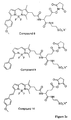
- Glu-Tau-derivative of 4,4-difluoro-5-(2-thienyl)-1,3-dimethyl-4-bora-3a,4a-diaza- s- indacene-2-propionic acid (compound 3) (0.074 mmol) was dissolved in anhydrous N,N-dimethylformamide (2 ml). N,N'-dicyclohexylcarbodiimide (46 mg, 0.22 mmol) and N-hydroxysuccinimide (26 mg, 0.22 mmol) were added and the mixture was stirred at room temperature for 48 h. The precipitated N,N'-dicyclohexylurea was filtrated and the filtrate was evaporated to dryness. The product, compound 4, was further dried in a vacuum desiccator and used without further purification.
- Glu-Tau-succinimide derivative of 4,4-difluoro-5-(2-pyrrolyl)-1,3-dimethyl-4-bora-3a,4a-diaza- s -indacene-2-propionic acid, compound 6, was prepared with the same method as described in examples 2 and 3 using 4,4-difluoro-(2-pyrrolyl)-1,3-dimethyl-4-bora-3a,4a-diaza- s -indacene-2-propionic acid succinimidyl ester, compound 5, as a starting compound.
- the Glu-Tau-succinimide derivative of 4,4-difluoro-5-phenyl-1,3-dimethyl-4-bora-3a,4a-diaza- s -indacene-2-propionic acid, compound 7, was prepared with the same method as described in examples 2 and 3 using 4,4-difluoro-5-phenyl-1,3-dimethyl-4-bora-3a,4a-diaza-s-indacene-2-propionic acid succinimidyl ester as a starting compound.
- the Glu-Tau-succinimide derivative of 4,4-difluoro-5-(4-methoxyphenyl)-1,3-dimethyl-4-bora-3a,4a-diaza- s -indacene-2-propionic acid, compound 8, was prepared with the same method as described in examples 2 and 3 using 4,4-difluoro-5(4-methoxyphenyl)-1,3-dimethyl-4-bora-3a,4a-diaza- s -indacene-2-propionic acid succinimidyl ester as a starting compound.
- the Glu-Tau-succinimide derivative of 4,4-difluoro-5-styryl-1,3-dimethyl-4-bora-3a,4a-diaza- s -indacene-2-propionic acid, compound 9, was prepared with the same method as described in examples 2 and 3 using 4,4-difluoro-5-styryl-1,3-dimethyl-4-bora-3a,4a-diaza- s -indacene-2-propionic acid succinimidyl ester as a starting compound.
- the Glu-Tau-succinimide derivative of 4,4-difluoro-5-(4-methoxystyryl)-1,3-dimethyl-4-bora-3a,4a-diaza- s -indacene-2-propionic acid, compound 10 was prepared with the same method as described in examples 2 and 3 using 4,4-difluoro-5-(4-methoxystyryl)-1,3-dimethyl-4-bora-3a,4a-diaza-s-indacene-2-propionic acid succinimidyl ester as a starting compound.
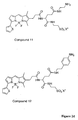
- Glu-Tau-succinimide derivative of 4,4-difluoro-5-(2-thienyl)-1,3-dimethyl-4-bora-3a,4a-diaza- s -indacene-2-propionic acid (compound 4) (0.062 mmol) was dissolved in anhydrous N,N-dimethylformamide (3 ml). Triethylamine (26 ⁇ l, 0.185 mmol) and ethylenediamine (42 ⁇ l, 0.62 mmol) were added and the mixture was stirred at room temperature for 30 min. The reaction mixture was evaporated to dryness and the product was precipitated from dichloromethane-carbontetrachloride. The product, compound 11, was further dried in a vacuum desiccator and used without further purification.
- Glu-Tau-succinimide derivative of 4,4-difluoro-5-(2-thienyl)-1,3-dimethyl-4-bora-3a,4a-diaza- s -indacene-2-propionic acid (compound 4) (0.074 mmol) was dissolved in anhydrous N,N-dimethylformamide (3 ml). Triethylamine (31 ⁇ l, 0.22 mmol) and 4-(2-aminoethyl)aniline (15 mg, 0.11 mmol) were added and the mixture was stirred at room temperature for 3 h. The reaction mixture was evaporated to dryness and the product was precipitated from dichloromethane/carbontetrachloride. The product, compound 12, was further dried in a vacuum desiccator and used without further purification.
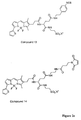
- Glu-Tau-arylamino derivative of 4,4-difluoro-5-(2-thienyl)-1,3-dimethyl-4-bora-3a,4a-diaza- s -indacene-2-propionic acid (compound 12) (0.048 mmol) was dissolved in mixture of acetone (9 ml) and NaHCO 3 (9 ml, aq, saturated). Thiophosgene (183 ⁇ l, 2.4 mmol) was added and the mixture was stirred at room temperature for 1.5 h. The reaction mixture was diluted with water (50 ml) and dichloromethane (50 ml). The aqueous phase was washed twice with dichloromethane (40 ml).
- the product containing aqueous phase was extracted with phenol (2*20 ml).
- the product containing phenol phase was washed with water (40 ml) and diluted with diethylether (200 ml).
- the phenol/diethylether phase was extracted with water (4*30 ml) and the combined aqueous phase was washed twice with diethylether (30 ml).
- the product containing aqueous phase was evaporated to dryness and the product was precipitated from dichloromethane-carbontetrachloride.
- the product, compound 13, was further dried and stored in a vacuum desiccator.
- Glu-Tau-amino derivative of 4,4-difluoro-5-(2-thienyl)-1,3-dimethyl-4-bora-3a,4a-diaza- s -indacene-2-propionic acid (compound 11) (0.015 mmol) was dissolved in anhydrous N,N-dimethylformaraide (3 ml). Triethylamine (2.1 ⁇ l, 0.015 mmol) and N-succinimidyl 4-maleimidobutyrate (3.2 mg, 0.020 mmol) were added and the mixture was stirred at room temperature for 2 h. The reaction mixture was evaporated to dryness and the product was precipitated from dichloromethane/carbontetrachloride. The product, compound 14, was further dried and stored in a vacuum desiccator.
- reaction mixture was rapidly purified using reversed phase column chromatography (Isolute RP-18e) using acetonitrile:water (1:1) as eluent.
- the products were purified with NAP-5 gel filtration column (Amersham Pharmacia Biotech, Uppsala, Sweden) using phosphate buffered saline (50/150, 10 mM NaN 3 , pH 7.4) as eluent.
- the fast moving coloured fractions were collected.
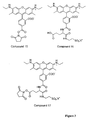
- mouse IgG anti-AFP labelled with 5-carboxyrhodamine 6G succinimidyl ester compound 15
- the absorption spectrum of mouse IgG anti-AFP labelled with Glu-Tau-succinimide derivative of 5-carboxyrhodamine 6G, compound 17, showed only normal absorption band at 530 nm.
- the absence of additional absorption band indicates higher hydrophilicity of the label and also increased distance between the fluorophore and the protein.
- Labelling with compounds 2 and 5 resulted in almost complete precipitation of the labelled proteins while labelling with compounds 4 and 6 proceeded without any problems.
- the labelling degrees of these protein conjugates (compound 4 and 6) were determined spectrophotometrically. Labelling degrees of 2.1 (compound 4) and 2.3 (compound 6) fluorophores per protein were obtained.
- Solvents were A: 2 % acetonitrile in triethylammonium acetate buffer (50 mM, pH 7) and B: 70 % acetonitrile in triethylammonium acetate buffer (50 mM, pH 7).
- the gradient started from 5 % of solvent B and the amount of solvent B linearly raised to 40 % in 25 minutes.
- Both dye-oligonucleotide conjugates labelled with compound 2 or with compound 4) eluted between 18 to 22 minutes while the unlabelled oligonucleotide eluted at a timepoint of 10 minutes.
- the unbound labelling reagent was removed from the column by increasing the amount of solvent B to 100 %.
- the concentrations of the labelled oligonucleotides were determined spectrophotometrically. A labelling yield of 25 % (compound 2) and 20 % (compound 4) was obtained. The labelled oligonucleotides were diluted to equimolar concentrations and the fluorescence yields were determined. As a result the fluorescence yield of oligonucleotide labelled with compound 4 was found to be one order of magnitude higher than the oligonucleotide labelled with compound 2. The higher fluorescence yield of the oligonucleotide labelled with compound 4 can be explained by increased hydrophilicity of the label compound and increased distance between the label and the oligonucleotide.
Landscapes
- Chemical & Material Sciences (AREA)
- Organic Chemistry (AREA)
- Plural Heterocyclic Compounds (AREA)
- Measuring Or Testing Involving Enzymes Or Micro-Organisms (AREA)
- Pyrane Compounds (AREA)
- Peptides Or Proteins (AREA)
- Luminescent Compositions (AREA)
- Investigating Materials By The Use Of Optical Means Adapted For Particular Applications (AREA)
Claims (11)
- Composé marqueur fluorescent de formule :

 Z représente un groupe réactif choisi dans le groupe constitué parcaractérisé en ce que le fluorophore est un colorant difluorure de dipyrrométhènebore et- un acide carboxylique ;- un ester d'acide carboxylique réactif ;- un anhydride carboxylique ; et- -CONH-L-A or -COO-L-A, oùL représente une fraction de liaison qui est de préférence un groupe alkylène en C1 à C20 linéaire ou ramifié, arylène, alkarylène, aralkylène ou une combinaison de ceux-ci et qui peut également contenir des hétéroatomes, des hétéroatomes substitués ou des chaînes latérales contenant des hétéroatomes, ou des groupes cycliques et qui peut également comprendre des ou être composé de résidus de polymères, de préférence de résidus de polymères tels que les polypeptides, les polysaccharides, les polynucléotides, les polyéthers ou d'autres et oùA représente un groupe réactif choisi dans le groupe constitué par un acide carboxylique, un ester d'acide carboxylique réactif, un anhydride carboxylique, un maléimide, un halogénure de sulfonyle, une hydrazine, une amine, un hydroxy, un azide d'acyle, un isocyanate, un aldéhyde, un halogénoacétamide, une triazine et un isothiocyanate
Y est un dérivé d'un sel d'ammonium quaternaire, un dérivé d'acide sulfonique ou un dérivé d'un glucide. - Composé marqueur fluorescent selon la revendication 1, caractérisé en ce que ladite fraction Y hydrosolubilisante est -CH2CH2SO3 -X+ où X+ représente un cation.
- Composé marqueur fluorescent selon la revendication 1 ou 2, caractérisé en ce qu'il présente un maximum d'absorption supérieur à 525 nm.
- Composé marqueur fluorescent de formule :


- Composé marqueur fluorescent selon la revendication 4, caractérisé en ce que Z est un ester succinimidyle.
- Conjugué fluorescent comprenant une molécule bioactive marquée avec un marqueur fluorescent, caractérisé en ce que le marqueur fluorescent est un composé marqueur fluorescent selon l'une quelconque des revendications 1 à 5.
- Conjugué fluorescent selon la revendication 6, caractérisé en ce que ladite molécule biologiquement active est un haptène, un ligand biologiquement actif, un médicament, un peptide, un oligonucléotide, un nucléotide, un acide nucléique, un polypeptide, une protéine, un anticorps ou un fragment d'un anticorps.
- Procédé de dosage bioanalytique pour déterminer un analyte dans un fluide biologique ou une suspension comprenant au moins une molécule biologiquement active, caractérisé en ce qu'au moins une desdites molécules biologiquement actives est marquée avec le composé marqueur fluorescent selon l'une quelconque des revendications 1 à 5.
- Procédé selon la revendication 8, caractérisé en ce que ledit analyte est une molécule biologiquement active telle qu'un haptène, un ligand biologiquement actif, un médicament, un peptide, un oligonucléotide, un nucléotide, un acide nucléique, un polypeptide, une protéine, un anticorps ou un fragment d'un anticorps.
- Procédé de coloration cytologique ou histologique comprenant au moins une molécule biologiquement active, caractérisé en ce qu'au moins une desdites molécules biologiquement actives est marquée avec le composé marqueur fluorescent selon l'une quelconque des revendications 1 à 5.
- Procédé pour augmenter l'hydrophilie d'un composé fluorescent, dans lequel ledit composé fluorescent est mis à réagir avec un composé de liaison acide glutamique hydrophile ayant la structure

Applications Claiming Priority (5)
| Application Number | Priority Date | Filing Date | Title |
|---|---|---|---|
| US30183101P | 2001-07-02 | 2001-07-02 | |
| FI20011438 | 2001-07-02 | ||
| FI20011438A FI20011438A0 (fi) | 2001-07-02 | 2001-07-02 | Menetelmä fluoresoivien merkkiaineiden hydrofiilisuuden lisäämiseksi |
| US301831P | 2001-07-02 | ||
| PCT/FI2002/000581 WO2003004569A1 (fr) | 2001-07-02 | 2002-07-01 | Procede permettant d'ameliorer l'hydrophilicite de composes marqueurs fluorescents |
Publications (2)
| Publication Number | Publication Date |
|---|---|
| EP1401962A1 EP1401962A1 (fr) | 2004-03-31 |
| EP1401962B1 true EP1401962B1 (fr) | 2006-09-13 |
Family
ID=26161194
Family Applications (1)
| Application Number | Title | Priority Date | Filing Date |
|---|---|---|---|
| EP02755031A Expired - Lifetime EP1401962B1 (fr) | 2001-07-02 | 2002-07-01 | Procede permettant d'ameliorer l'hydrophilicite de composes marqueurs fluorescents |
Country Status (6)
| Country | Link |
|---|---|
| US (1) | US7198958B2 (fr) |
| EP (1) | EP1401962B1 (fr) |
| JP (1) | JP4382474B2 (fr) |
| AT (1) | ATE339475T1 (fr) |
| DE (1) | DE60214709T2 (fr) |
| WO (1) | WO2003004569A1 (fr) |
Families Citing this family (11)
| Publication number | Priority date | Publication date | Assignee | Title |
|---|---|---|---|---|
| US7582260B2 (en) * | 2002-07-18 | 2009-09-01 | Montana State University | Zwitterionic dyes for labeling in proteomic and other biological analyses |
| EP1781675B1 (fr) * | 2004-08-13 | 2014-03-26 | Epoch Biosciences, Inc. | Phosphonates fluorescents et conjugues |
| ITBO20040697A1 (it) * | 2004-11-11 | 2005-02-11 | Consiglio Nazionale Ricerche | Sonde oligonucleotidiche |
| US7897787B2 (en) * | 2005-09-13 | 2011-03-01 | The University Of Tokyo | Maleimide derivative |
| US8178360B2 (en) * | 2006-05-18 | 2012-05-15 | Illumina Cambridge Limited | Dye compounds and the use of their labelled conjugates |
| US20100278745A1 (en) * | 2006-12-21 | 2010-11-04 | Norbert Lange | Compounds for fluorescence imaging |
| US7495214B2 (en) | 2007-03-21 | 2009-02-24 | Xerox Corporation | Systems and methods for material authentication |
| US7715733B2 (en) | 2007-03-21 | 2010-05-11 | Xerox Corporation | System and method for authenticating a fuser lubricant in an image forming apparatus |
| US7706700B2 (en) | 2007-03-21 | 2010-04-27 | Xerox Corporation | System and method for authenticating an electrostatographic material in an image forming apparatus |
| CA2720991A1 (fr) * | 2007-04-10 | 2009-01-08 | Montana State University | Nouvelles molecules de marquage optique en proteomique et autres analyses biologiques |
| CN118324758B (zh) * | 2024-04-10 | 2025-09-30 | 中国科学院宁波材料技术与工程研究所 | 基于嵌膜共轭寡聚电解质的可见光吸收细胞膜染料及其制备方法和应用 |
Family Cites Families (8)
| Publication number | Priority date | Publication date | Assignee | Title |
|---|---|---|---|---|
| US4489165A (en) * | 1983-01-24 | 1984-12-18 | Becton Dickinson And Company | Chromogenic tracers for use in an assay |
| US4774339A (en) | 1987-08-10 | 1988-09-27 | Molecular Probes, Inc. | Chemically reactive dipyrrometheneboron difluoride dyes |
| US5274113A (en) * | 1991-11-01 | 1993-12-28 | Molecular Probes, Inc. | Long wavelength chemically reactive dipyrrometheneboron difluoride dyes and conjugates |
| US5512486A (en) | 1993-05-10 | 1996-04-30 | Northeastern University | Single step signal group-imidazole labeling of organic phosphate groups under aqueous conditions |
| FI961349A7 (fi) | 1994-07-25 | 1996-03-25 | Roche Diagnostics Gmbh | Metallikompleksit, joissa on varautunut linkkeri |
| US5869689A (en) | 1995-10-17 | 1999-02-09 | Molecular Probes, Inc | Stains for acidic organelles |
| WO1997039326A2 (fr) | 1996-04-18 | 1997-10-23 | Ariad Pharmaceuticals, Inc. | Dosage in vitro a polarisation de fluorescence |
| FI981272A7 (fi) | 1998-06-04 | 1999-12-05 | Erkki Juhani Soini | Homogeeninen biospesifinen määritysmenetelmä |
-
2002
- 2002-07-01 JP JP2003510732A patent/JP4382474B2/ja not_active Expired - Lifetime
- 2002-07-01 AT AT02755031T patent/ATE339475T1/de not_active IP Right Cessation
- 2002-07-01 DE DE60214709T patent/DE60214709T2/de not_active Expired - Lifetime
- 2002-07-01 US US10/482,057 patent/US7198958B2/en not_active Expired - Lifetime
- 2002-07-01 WO PCT/FI2002/000581 patent/WO2003004569A1/fr not_active Ceased
- 2002-07-01 EP EP02755031A patent/EP1401962B1/fr not_active Expired - Lifetime
Also Published As
| Publication number | Publication date |
|---|---|
| JP2004533533A (ja) | 2004-11-04 |
| JP4382474B2 (ja) | 2009-12-16 |
| EP1401962A1 (fr) | 2004-03-31 |
| ATE339475T1 (de) | 2006-10-15 |
| WO2003004569A1 (fr) | 2003-01-16 |
| DE60214709T2 (de) | 2007-09-13 |
| US7198958B2 (en) | 2007-04-03 |
| DE60214709D1 (de) | 2006-10-26 |
| US20040147728A1 (en) | 2004-07-29 |
Similar Documents
| Publication | Publication Date | Title |
|---|---|---|
| US5877310A (en) | Glycoconjugated fluorescent labeling reagents | |
| US6048982A (en) | Cyanine dyes as labeling reagents for detection of biological and other materials by luminescence methods | |
| US6582930B1 (en) | Porphyrin compounds, their conjugates and assay methods based on the use of said conjugates | |
| EP1078023B1 (fr) | Composes luminescents | |
| EP1491591B1 (fr) | Marqueurs fluorescents de type cyanine contenant un groupe liant sulfamide | |
| US6225050B1 (en) | Cyanine dyes as labeling reagents for detection of biological and other materials by luminescence methods | |
| US5846737A (en) | Conjugates of sulforhodamine fluorophores with enhanced fluorescence | |
| US6989275B2 (en) | Cyanine dyes as labeling reagents for detection of biological and other materials by luminescence methods | |
| GB2302094A (en) | Reactive derivatives of sulforhodamine 101 with enhanced hydrolytic stability | |
| EP1401962B1 (fr) | Procede permettant d'ameliorer l'hydrophilicite de composes marqueurs fluorescents | |
| CS273617B2 (en) | Method of resorufine's derivatives production | |
| US6277984B1 (en) | Monomethine cyanines rigidized by a two-carbon chain | |
| US20030224421A1 (en) | New oxazine dyes and their use as fluorescent markers | |
| AU719182B2 (en) | Rigidized monomethine cyanine dyes | |
| EP4219518A2 (fr) | Bioconjugués de composés hétérocycliques | |
| CA2336904A1 (fr) | Nouveaux chelates fluorescents aux lanthanides | |
| US4894348A (en) | Fluorescein-conjugated proteins with enhanced fluorescence | |
| US6538129B1 (en) | Luminescent compounds | |
| EP2180006B1 (fr) | Composé larqué et procédé de détection l'utilisant | |
| US7351829B2 (en) | Compounds on the basis of 2- and 4-chromenylidene-merocyanines respectively, and their use | |
| US6335450B1 (en) | Efficient cyclic-bridged cyanine dyes | |
| US20030235846A1 (en) | Luminescent compounds | |
| JP2002518413A (ja) | 新規な化合物 | |
| US20140200333A1 (en) | Dendron reporter molecules |
Legal Events
| Date | Code | Title | Description |
|---|---|---|---|
| PUAI | Public reference made under article 153(3) epc to a published international application that has entered the european phase |
Free format text: ORIGINAL CODE: 0009012 |
|
| 17P | Request for examination filed |
Effective date: 20031210 |
|
| AK | Designated contracting states |
Kind code of ref document: A1 Designated state(s): AT BE BG CH CY CZ DE DK EE ES FI FR GB GR IE IT LI LU MC NL PT SE SK TR |
|
| AX | Request for extension of the european patent |
Extension state: AL LT LV MK RO SI |
|
| GRAP | Despatch of communication of intention to grant a patent |
Free format text: ORIGINAL CODE: EPIDOSNIGR1 |
|
| GRAS | Grant fee paid |
Free format text: ORIGINAL CODE: EPIDOSNIGR3 |
|
| GRAA | (expected) grant |
Free format text: ORIGINAL CODE: 0009210 |
|
| AK | Designated contracting states |
Kind code of ref document: B1 Designated state(s): AT BE BG CH CY CZ DE DK EE ES FI FR GB GR IE IT LI LU MC NL PT SE SK TR |
|
| PG25 | Lapsed in a contracting state [announced via postgrant information from national office to epo] |
Ref country code: CH Free format text: LAPSE BECAUSE OF FAILURE TO SUBMIT A TRANSLATION OF THE DESCRIPTION OR TO PAY THE FEE WITHIN THE PRESCRIBED TIME-LIMIT Effective date: 20060913 Ref country code: IT Free format text: LAPSE BECAUSE OF FAILURE TO SUBMIT A TRANSLATION OF THE DESCRIPTION OR TO PAY THE FEE WITHIN THE PRESCRIBED TIME-LIMIT;WARNING: LAPSES OF ITALIAN PATENTS WITH EFFECTIVE DATE BEFORE 2007 MAY HAVE OCCURRED AT ANY TIME BEFORE 2007. THE CORRECT EFFECTIVE DATE MAY BE DIFFERENT FROM THE ONE RECORDED. Effective date: 20060913 Ref country code: SK Free format text: LAPSE BECAUSE OF FAILURE TO SUBMIT A TRANSLATION OF THE DESCRIPTION OR TO PAY THE FEE WITHIN THE PRESCRIBED TIME-LIMIT Effective date: 20060913 Ref country code: NL Free format text: LAPSE BECAUSE OF FAILURE TO SUBMIT A TRANSLATION OF THE DESCRIPTION OR TO PAY THE FEE WITHIN THE PRESCRIBED TIME-LIMIT Effective date: 20060913 Ref country code: CZ Free format text: LAPSE BECAUSE OF FAILURE TO SUBMIT A TRANSLATION OF THE DESCRIPTION OR TO PAY THE FEE WITHIN THE PRESCRIBED TIME-LIMIT Effective date: 20060913 Ref country code: BE Free format text: LAPSE BECAUSE OF FAILURE TO SUBMIT A TRANSLATION OF THE DESCRIPTION OR TO PAY THE FEE WITHIN THE PRESCRIBED TIME-LIMIT Effective date: 20060913 Ref country code: AT Free format text: LAPSE BECAUSE OF FAILURE TO SUBMIT A TRANSLATION OF THE DESCRIPTION OR TO PAY THE FEE WITHIN THE PRESCRIBED TIME-LIMIT Effective date: 20060913 Ref country code: LI Free format text: LAPSE BECAUSE OF FAILURE TO SUBMIT A TRANSLATION OF THE DESCRIPTION OR TO PAY THE FEE WITHIN THE PRESCRIBED TIME-LIMIT Effective date: 20060913 Ref country code: FI Free format text: LAPSE BECAUSE OF FAILURE TO SUBMIT A TRANSLATION OF THE DESCRIPTION OR TO PAY THE FEE WITHIN THE PRESCRIBED TIME-LIMIT Effective date: 20060913 |
|
| REG | Reference to a national code |
Ref country code: GB Ref legal event code: FG4D |
|
| REG | Reference to a national code |
Ref country code: CH Ref legal event code: EP |
|
| REG | Reference to a national code |
Ref country code: IE Ref legal event code: FG4D |
|
| REF | Corresponds to: |
Ref document number: 60214709 Country of ref document: DE Date of ref document: 20061026 Kind code of ref document: P |
|
| PG25 | Lapsed in a contracting state [announced via postgrant information from national office to epo] |
Ref country code: SE Free format text: LAPSE BECAUSE OF FAILURE TO SUBMIT A TRANSLATION OF THE DESCRIPTION OR TO PAY THE FEE WITHIN THE PRESCRIBED TIME-LIMIT Effective date: 20061213 Ref country code: DK Free format text: LAPSE BECAUSE OF FAILURE TO SUBMIT A TRANSLATION OF THE DESCRIPTION OR TO PAY THE FEE WITHIN THE PRESCRIBED TIME-LIMIT Effective date: 20061213 Ref country code: BG Free format text: LAPSE BECAUSE OF FAILURE TO SUBMIT A TRANSLATION OF THE DESCRIPTION OR TO PAY THE FEE WITHIN THE PRESCRIBED TIME-LIMIT Effective date: 20061213 |
|
| PG25 | Lapsed in a contracting state [announced via postgrant information from national office to epo] |
Ref country code: ES Free format text: LAPSE BECAUSE OF FAILURE TO SUBMIT A TRANSLATION OF THE DESCRIPTION OR TO PAY THE FEE WITHIN THE PRESCRIBED TIME-LIMIT Effective date: 20061224 |
|
| PG25 | Lapsed in a contracting state [announced via postgrant information from national office to epo] |
Ref country code: PT Free format text: LAPSE BECAUSE OF FAILURE TO SUBMIT A TRANSLATION OF THE DESCRIPTION OR TO PAY THE FEE WITHIN THE PRESCRIBED TIME-LIMIT Effective date: 20070226 |
|
| NLV1 | Nl: lapsed or annulled due to failure to fulfill the requirements of art. 29p and 29m of the patents act | ||
| REG | Reference to a national code |
Ref country code: CH Ref legal event code: PL |
|
| ET | Fr: translation filed | ||
| PLBE | No opposition filed within time limit |
Free format text: ORIGINAL CODE: 0009261 |
|
| STAA | Information on the status of an ep patent application or granted ep patent |
Free format text: STATUS: NO OPPOSITION FILED WITHIN TIME LIMIT |
|
| 26N | No opposition filed |
Effective date: 20070614 |
|
| PG25 | Lapsed in a contracting state [announced via postgrant information from national office to epo] |
Ref country code: GR Free format text: LAPSE BECAUSE OF FAILURE TO SUBMIT A TRANSLATION OF THE DESCRIPTION OR TO PAY THE FEE WITHIN THE PRESCRIBED TIME-LIMIT Effective date: 20061214 Ref country code: MC Free format text: LAPSE BECAUSE OF NON-PAYMENT OF DUE FEES Effective date: 20070731 |
|
| PG25 | Lapsed in a contracting state [announced via postgrant information from national office to epo] |
Ref country code: EE Free format text: LAPSE BECAUSE OF FAILURE TO SUBMIT A TRANSLATION OF THE DESCRIPTION OR TO PAY THE FEE WITHIN THE PRESCRIBED TIME-LIMIT Effective date: 20060913 |
|
| PG25 | Lapsed in a contracting state [announced via postgrant information from national office to epo] |
Ref country code: IE Free format text: LAPSE BECAUSE OF NON-PAYMENT OF DUE FEES Effective date: 20070702 |
|
| PG25 | Lapsed in a contracting state [announced via postgrant information from national office to epo] |
Ref country code: LU Free format text: LAPSE BECAUSE OF NON-PAYMENT OF DUE FEES Effective date: 20070701 Ref country code: CY Free format text: LAPSE BECAUSE OF FAILURE TO SUBMIT A TRANSLATION OF THE DESCRIPTION OR TO PAY THE FEE WITHIN THE PRESCRIBED TIME-LIMIT Effective date: 20060913 |
|
| PG25 | Lapsed in a contracting state [announced via postgrant information from national office to epo] |
Ref country code: TR Free format text: LAPSE BECAUSE OF FAILURE TO SUBMIT A TRANSLATION OF THE DESCRIPTION OR TO PAY THE FEE WITHIN THE PRESCRIBED TIME-LIMIT Effective date: 20060913 |
|
| REG | Reference to a national code |
Ref country code: FR Ref legal event code: PLFP Year of fee payment: 14 |
|
| REG | Reference to a national code |
Ref country code: FR Ref legal event code: PLFP Year of fee payment: 15 |
|
| REG | Reference to a national code |
Ref country code: FR Ref legal event code: PLFP Year of fee payment: 16 |
|
| REG | Reference to a national code |
Ref country code: FR Ref legal event code: PLFP Year of fee payment: 17 |
|
| PGFP | Annual fee paid to national office [announced via postgrant information from national office to epo] |
Ref country code: FR Payment date: 20210716 Year of fee payment: 20 |
|
| PGFP | Annual fee paid to national office [announced via postgrant information from national office to epo] |
Ref country code: DE Payment date: 20210723 Year of fee payment: 20 Ref country code: GB Payment date: 20210722 Year of fee payment: 20 |
|
| REG | Reference to a national code |
Ref country code: DE Ref legal event code: R071 Ref document number: 60214709 Country of ref document: DE |
|
| REG | Reference to a national code |
Ref country code: GB Ref legal event code: PE20 Expiry date: 20220630 |
|
| PG25 | Lapsed in a contracting state [announced via postgrant information from national office to epo] |
Ref country code: GB Free format text: LAPSE BECAUSE OF EXPIRATION OF PROTECTION Effective date: 20220630 |