EP1403765B1 - Verfahren und Rechnersystem zur Ereignisbehandlung - Google Patents
Verfahren und Rechnersystem zur Ereignisbehandlung Download PDFInfo
- Publication number
- EP1403765B1 EP1403765B1 EP02021436A EP02021436A EP1403765B1 EP 1403765 B1 EP1403765 B1 EP 1403765B1 EP 02021436 A EP02021436 A EP 02021436A EP 02021436 A EP02021436 A EP 02021436A EP 1403765 B1 EP1403765 B1 EP 1403765B1
- Authority
- EP
- European Patent Office
- Prior art keywords
- event
- action
- handler
- application
- phase
- Prior art date
- Legal status (The legal status is an assumption and is not a legal conclusion. Google has not performed a legal analysis and makes no representation as to the accuracy of the status listed.)
- Expired - Lifetime
Links
Images



Classifications
-
- G—PHYSICS
- G06—COMPUTING OR CALCULATING; COUNTING
- G06F—ELECTRIC DIGITAL DATA PROCESSING
- G06F9/00—Arrangements for program control, e.g. control units
- G06F9/06—Arrangements for program control, e.g. control units using stored programs, i.e. using an internal store of processing equipment to receive or retain programs
- G06F9/46—Multiprogramming arrangements
- G06F9/54—Interprogram communication
- G06F9/542—Event management; Broadcasting; Multicasting; Notifications
-
- G—PHYSICS
- G06—COMPUTING OR CALCULATING; COUNTING
- G06F—ELECTRIC DIGITAL DATA PROCESSING
- G06F2209/00—Indexing scheme relating to G06F9/00
- G06F2209/54—Indexing scheme relating to G06F9/54
- G06F2209/543—Local
Definitions
- the present invention generally relates to electronic data processing, and more particularly, relates to method, computer program product and system for event handling.
- model view controller In the generally accepted model view controller (MVC) design pattern used for developing software applications, the model represents the core of such an application.
- the model can have multiple views, where each view displays information about the model to a user.
- a controller of the model receives events, for example, from a user through a user interface to manipulate the model.
- the model and the controller typically include application code.
- the model updates all of its views.
- So called data binding is used for decoupling controller and view with regards to data flow.
- a table view can be defined to display data of a corresponding table that is stored in the model or controller. The table is used as data source for the table view (data binding).
- the table view can be replaced by a further view, such as a link list, that binds against the same table.
- the further view displays the table data without changing anything in the controller or the model.
- the table view raises an event e.g., "onClick”
- the event is processed by the controller.
- the controller includes an event handler that expects a specific signature (e.g., a specific list of parameters), such as "onClick(tableViewCell)".
- a specific signature e.g., a specific list of parameters
- the signature of the event is likely to change.
- a different parameter is passed to controller (e.g., "onClick(LinkListItem)").
- the controller without further modification is not able to process the event that is raised by the link list view of the event handler.
- the prior art MVC design pattern allows one to replace a view without further modification of the controller with respect to data binding but not with respect to event handling.
- WO 93/00632 discloses a method and a system for monitoring and changing the operation of a computer system, comprising am event report generator in each executable program whose execution should be monitored; an event processing machine for processing events which are reported by an event report generator depending on a flexible rule base included in the event processing machine.
- the flexible rule base associates a certain event with a predetermined action, for determining the action associated with the reported event.
- the system comprises a further equipment controlled by the event processing machine and adapted to perform an action determined by the event processing machine.
- US 5 926 177 discloses a Model-View-Controller, wherein a ViewProxy is connected to the controller for receiving view management instructions, and connected to the Model for receiving model change notifications responsive to changes in the appearance of data to be displayed. Multiple Views are connected to the ViewProxy for receiving model change notifications. The ViewProxy determines to which Views the model change notifications are to be sent, and sends model change information to only those Views affected by said model changes.
- a windowing system displays only active Views, and switches between Views by making at least one View active and selected other Views inactive.
- a computer system for event handling according to claim 1 includes:
- system event handler does not need to implement application logic for event handling but simply invokes the corresponding application event handler. This allows an application developer to replace views in the extended MVC design pattern without modifying the corresponding controller or model.
- FIG. 1 illustrates a simplified diagram of an extended MVC design pattern according to one embodiment of the present invention.
- An illustrative computer system 900 stores a model 301 together with a view 303 of the model 301 and a corresponding controller 302.
- the model 301 and the controller can include application code 200 that defines an application.
- the view 303 presents data of the model 301 and/or controller 302 to the user.
- the model 301 can have multiple views which can be seen by the user as different presentations of the application (model 301/controller 302).
- the user 10 uses the controller 302 to manipulate the model 301, which updates its views (e.g., view 303) after having been manipulated.
- the spirit of the present invention can also be implemented to enable interaction with other user interfaces, such as voice driven user interfaces.
- voice driven user interfaces the view can include UI elements defined by specific sounds or words, which can be useful for users that are blind or have other handicaps.
- the computer system 900 has a system event handler 100-1 to receive and process a system event that results, for example, from the user interaction.
- the system event handler 100-1 can be implemented as a method of a specific controller class. For example, if the user 10 selects a specific user interface (UI) element, such as an OK button, displayed on one of the views of the model 301 and if the selected UI element raises a system event (e.g., "onClick"), the system event handler 100-1 receives the system event.
- UI elements are links, menu items, toolbars or leaves of a tree.
- Further examples of system events are scroll events or help request events. Not every system event triggers an application event. For example, system events that are raised by scrolling a table can be handled by the system event handler 100-1 without an application.
- the system event handler 100-1 analyzes the system event to determine if the system event triggers an application event.
- application events are "CheckAvailibility", “CheckValidBusinessPartner” or "SaveOrder”.
- the system event handler 100-1 provides the analysis result to a framework in the computer system 900.
- the framework invokes a corresponding application event handler 100-2 by raising the application event that corresponds to the system event.
- the application event handler 100-2 is a method that is implemented in the controller 302. In other embodiments, the application event handler 100-2 can be located in any controller.
- the application event handler 100-2 calls the application code 200 that corresponds to the application event and that is implemented by the model 301 (as shown in the example of FIG. 1 ) or the controller 302.
- system event e.g., "onClick”
- corresponding application event e.g., "SaveOrder”
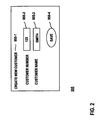
- FIG. 2 illustrates an example of a visualization of a view (e.g., view 303) that is used in the extended MVC design pattern.
- GUI 955 the view 303 is presented to the user 10 as a graphical user interface (GUI) 955 of an application.
- the user is a sales person of a specific sales organization SO1.
- the user 10 uses the GUI 955 to create new customers in a customer relationship management (CRM) system of the sales organization SO1.
- GUI 955 includes four UI elements.
- a title 955-1 (CREATE NEW CUSTOMER) for displaying the title of the application, a first input field 955-2 (CUSTOMER NUMBER) for entering a customer number, a second input field 955-3 (CUSTOMER NAME) for entering a customer name and a SAVE button 955-4 for saving the values of the input fields to the application (e.g., in a corresponding portion of a database).
- CUSTOMER NUMBER “123”
- CUSTOMER NAME "SMITH”
- FIG. 3 illustrates details of a mapping implementation for decoupling system events and application events by using mapping tables 150, 160 for event binding according to one embodiment of the present invention.
- An action e.g. , ACTION A, ACTION B
- An action relates to an application event.
- a system event e.g., "onClick", onSelect”
- a UI element e.g., the SAVE button 955-4
- the view 303 has an associated event-action table 150.
- the event-action table 150 includes a SYSTEM EVENT column to list system events that can be raised by specific UI elements of the view 303, such as the SAVE button (e.g., "onClick_Button_SAVE").
- the ACTION NAME column assigns an action name (e.g., "save", "bbb") to each system event that is supposed to trigger an application event.
- the event-action table 150 can include further columns to reflect the signature (parameters) of an action. For example, action A for saving a new customer can have parameters, such as the customer number, the customer name and the sales organization serving the new customer.
- the view 303 also defines the mapping of system event parameters to parameters of the corresponding action. Each system event is unique in the event-action table 150 with regards to the view 303.
- a row of the event-action table 150 that has an action name assigned to a system event is mapped to a corresponding row in an action table 160 of the controller.
- an equivalent data structure such as a structured document (e.g., an XML document) can be used.
- the assignments are illustrated by arrows pointing from rows of the event-action table 150 to the action table 160.
- the ACTION NAME column of the action table 160 includes the action names (e.g., "save", "bbbb") of the actions that are defined by the controller 302.
- the mapping of the tables 150, 160 is implemented by the action name. Alternatively, other information can be used for the mapping.
- the mapping can also be defined dynamically through program code that is evaluated at runtime.
- the ACTION column of the action table 160 includes a reference to an action (e.g., A, B) having attributes, such as "enabled” to indicate if the action is enabled, "text” to define a text of the action to be displayed by the view, and "function” to reference an event handling function (e.g., F1, F2) that is implemented in a corresponding application event handler.
- the references are illustrated by arrows from the rows of the action table and the corresponding action and further to the event handling functions in the corresponding application event handlers.
- the action also includes the signature of the corresponding event handling function.
- the action can be instantiated from a corresponding action class of the controller 302.
- Each action A, B that is defined in the controller 302 has a corresponding application event handler 100-2, 100-3, respectively, that implements the corresponding event handling function F1, F2.
- Binding system events to actions allows one to replace the view 303 by another view of the model without a need to modify the controller 302 and still have a working eventing model. This is achieved by the controller 302 defining the actions that can be used by the views of the model 301 and the view mapping its system events to these actions, thereby automatically using the right signatures of the actions. Too ensure unambiguous mapping rules, the name of an action is unique within the scope of a controller.
- the mapping functions of the event-action table 150 and the action table 160 can be implemented by alternative means, such as structured documents (e.g., XML documents) or equivalent data structures with appropriate pointers.
- FIG. 4 illustrates a computer program product (CPP) 100 including the system event handler 100-1 and the application event handler 100-2 according to one embodiment of the present invention.
- CCP computer program product
- CPP 100 is running on the computer system 900.
- Computer system 900 has at least one processor and a memory.
- CPP 100 can be loaded into the memory.
- CPP 100 includes instructions for the processor. When the processor executes the instructions it causes the computer system 900 to execute steps of a method according to an embodiment of the present invention.
- CPP 100 also includes a phase handler 100-9 to chronologically control a plurality of phases of the computer system 900.
- the plurality of phases includes a request handling phase, a system event handling phase, a data validation and transport phase and an application event handling phase.
- the phase handler 100-9 can be a part of the framework.
- the phase handler 100-9 receives the request in the request handling phase.
- the request can also originate from a further computer system that communicates with the computer system over a network, such as a local area network (LAN), a wide area network (WAN) or the Internet.
- the view 303 can be presented to the user on an output device (e.g., a monitor) of the client computer.
- the phase handler 100-9 then extracts the system event SE from the request REQ.
- the phase handler 100-9 then starts the system event handling phase and sends the system event SE to the system event handler 100-1.
- the system event handler 100-1 performs an analysis to determine if the system event SE triggers an application event AE. For example, the system event handler 100-1 determines if the system event SE is assigned to a corresponding action and, if so, determines which action (e.g., action A) it is.
- the system event handler 100-1 can also determine if the action A is enabled (e.g., by verifying a corresponding enabled attribute from the declaration of the action A in the controller 302).
- the system event handler 100-1 then returns the result 110 of the analysis to the phase handler 100-9.
- the result 110 includes the representation of the action A.
- the result can include the value of the enabled attribute.
- the phase handler 100-9 can respond to the request REQ with a corresponding message. Otherwise, once the phase handler 100-9 receives the valid representation of the action A it starts the data validation and transport phase.
- the phase handler can call validation services of the framework to convert non-typed data (e.g., raw string representation of data) of the original request REQ into typed data and to validate the typed data according to predefined validation rules.
- the predefined validation rules can be stored in a memory portion of the computer system 900, for example, in the form of a data dictionary or a rule data base.
- data of the view 303 can be transported to the model 301 or the controller 302 dependent on predefined data binding rules.
- the phase handler 100-9 can respond to the original request REQ by, for example, posting an error message or providing to the user a possibility to correct a corresponding user input. Referring back to the example of FIG. 2 , if the user enters a customer number 999 and the range of customer numbers for the sales organization SO1 is limited from 001 to 300, then a validation service checking the validity of the customer number can generate an error message and the phase handler 100-9 can allow the user to re-enter the customer number in GUI 955.
- the phase handler 100-9 starts the application event handling phase.
- the application event AE is constructed from data of:
- the application event AE includes typed data instead of the originally non-typed data of the system event SE and, in general, has a different signature.
- the application event handler 100-2 is identified through the action A of the application event AE.
- the application event handler 100-2 then calls (CALLS) application code 200by processing the event handling function F1 (cf. FIG.2 ) that is implemented in the application event handler 100-2.
- the application code 200 can be implemented within the model 301 as it is the case in the example of FIG. 4 .
- the application code can also be implemented within the controller 302.
- the application event handler 100-2 calls the application code of the controller 302 instead of the model 301.
- FIG. 5 illustrates a method 400 that can be used with one embodiment of the present invention to implement event handling in the extended MVC design pattern.
- Some of the pseudo code examples used in the following description use an XML-like notation. However, corresponding code can be implemented in any appropriate programming language, such as Java or C++.
- Method 400 includes the steps receiving request 410 and extracting system event 420, which are performed during the request handling phase. It further includes the steps performing analysis of system event 430 and returning action 440, which are performed during the system event handling phase. It further includes the steps validating and transferring data 450 and raising application event 460, which are performed during the data validation and transport phase. It further includes the step processing application event 470, which is performed during the application event handling phase.
- the computer system 900 receives the request REQ that can, for example, result from a user interaction or that can be raised by a further computer system.
- the phase handler 100-9 is a component of the framework that listens to requests.
- a typical request includes non-typed data about a system event SE, its parameters and application data.
- the request REQ can include the following data in a string format:
- the phase handler 100-9 extracts the system event "onClick_Button_SAVE" from the request by using conventions defined by a communication protocol, such as the hypertext transfer protocol (HTTP) and sends the system event to the system event handler 100-1.
- HTTP hypertext transfer protocol
- the system event handler 100-1 determines if the system event "onClick_Button_SAVE" has a valid representation of an action. For example, the system event handler 100-1 accesses the event-action table 150 and finds the action name "save" assigned to the system event "onClick_Button_SAVE". Further, it retrieves from the view 303 the information about which parameter of the system event is mapped to a corresponding parameter of the action. Information about the action's signature can be retrieved from the controller 102. The system event handler 100-1 learns from the controller 302 about the signature of action A that belongs to action name "save". For example, action A requires the parameters SALESORG, CUSTNR and CUSTNAME.
- Coding section 1 provides a simplified declaration example of action A in the controller 302 with regards to the example of FIG. 2 .
- the enabled attribute can be set by an application developer at design time when building the application.
- the declaration of an action can also include further attributes, such as sound attributes, that can be used as additional guidance for handicapped users for navigating in the GUI.
- standard actions can be created and stored in a public or private repository.
- an application programmer can easily reuse an action and bind this action to any UI element in any view.
- the usage of a standard action can be expressed, for example, by using a specific repository attribute.
- Coding section 2 shows a simplified example of an implementation of the system event handler 100-1.
- the view 303 can define the parameter mapping in the event-action table 150 or an equivalent mapping data structure.
- the action parameter CUSTNR is mapped to the view input field CUSTOMER NUMBER and the action parameter CUSTNAME is mapped to the view input field CUSTOMER NAME.
- the parameter SALES ORGANIZATION can be stored in the view 303 as a constant value SO1 because the view 303 is only for sales people of SO1. In this case the mapping simply assigns the constant value SO1 to the action parameter SALESORG.
- the system event handler has identified representation (action name "save") of the valid action A for the system event "onClick_Button_SAVE", which is returned to the phase handler to trigger a corresponding application event.
- event.name equals "onClick_Button_SAVE"
- action.parameters is a collection of the parameters of the action A ("save"), named CUSTNR, CUSTNAME, and SALESORG.
- CUSTNR parameters of the action A
- CUSTNAME parameters of the action A
- SALESORG parameters of the action A
- the parameter value is mapped by the view 303 to the values entered in the view input fields CUSTOMER NUMBER, CUSTOMER NAME and to the constant value "SO1", respectively.
- a UI element of a view can be generated at runtime.
- an action can be dynamically assigned to the UI element.
- Coding section 3 gives an example of a function OnOutputProcessing that can be used to assign an action "set_options” to a button “OPTIONS” that is generated at runtime.
- system event handler 100-1 can learn from the controller 302 whether the identified action has an enabled attribute and read the value (e.g., "true” or "false") of this attribute.
- the system event handler returns the identified valid action A with its signature and the parameter mapping information to the phase handler 100-9 as part of the result 110 of the analysis.
- the result 110 can include the value of the enabled attribute of the action A.
- the start of the data validation and transport phase can further depend on the value of the enabled attribute. If the action A is disabled, the phase handler 100-9 can send a corresponding response to the user. Otherwise, the data validation and transport phase is started.
- the validation services can then validate the typed values against predefined validation rules. For example, a validation rule can indicate that users of the sales organization SO1 are only allowed to create customer numbers in the range from 001 to 300. If this condition is not fulfilled, the phase handler can send a corresponding response (e.g., error message) to the user.
- the typed values are validated (e.g., no errors occurred during the validation)
- the data are transferred from the view 303 to the corresponding data sources (e.g., a database table) of the model 301 or the controller 302.
- the phase handler 100-9 uses the information about the action A, its signature, attributes and the typed values to construct the application event that invokes the application event handler 100-2 that corresponds to the action A.
- the information e.g., a method attribute
- the application event handler 100-2 executes the event handling function F1 that is referenced in the application event.
- the event handling function F1 implements application specific code that, when executed, calls the application code 200 (e.g., of the model 301) in response to the application event.
- the application event handler 100-2 includes application specific coding that would already be included at the system event handler level in prior art systems.
- the application specific coding that corresponds to event handling function F1 includes instructions to access an application database (DataBase) and to store a record for the new customer in the application database.
- DataBase application database
Landscapes
- Engineering & Computer Science (AREA)
- Software Systems (AREA)
- Theoretical Computer Science (AREA)
- Multimedia (AREA)
- Physics & Mathematics (AREA)
- General Engineering & Computer Science (AREA)
- General Physics & Mathematics (AREA)
- User Interface Of Digital Computer (AREA)
- Debugging And Monitoring (AREA)
- Hardware Redundancy (AREA)
- Stored Programmes (AREA)
Claims (14)
- Computersystem (900) zur Ereignisabwicklung, umfassend:ein Modell (301), eine Ansicht (303) und eine Steuerung bzw. Regelung (302),wobei die Ansicht (303) das Modell (301) präsentiert und ein Systemereignis bewirkt und wobei die Steuerung bzw. Regelung (302) das Modell (301) in Reaktion auf das Systemereignis manipuliert;dadurch gekennzeichnet, dass das Computersystem (900) des Weiteren umfasst:einen Systemereignisabwickler (100-1) zum Durchführen einer Analyse, wenn ein von dem Systemereignisabwickler (100-1) empfangenes Systemereignis ein Anwendungsereignis auslöst;einen Anwendungsereignisabwickler (100-2) zum Abrufen eines Anwendungscodes (200), wenn das Anwendungsereignis ausgelöst ist, wobei die Steuerung bzw. Regelung (302) den Anwendungsereignisabwickler (100-2) entsprechend der Handlung implementiert; undwobei der Systemereignisabwickler (100-1) beim Durchführen der Analyse bestimmt, ob das Systemereignis eine valide bzw. gültige Darstellung einer Handlung entsprechend dem Anwendungsereignis aufweist, wobei die Handlung durch die Steuerung bzw. Regelung (302) festgelegt ist, und die Darstellung der Handlung an ein Framework des Computersystems (900) ausgibt; und in Reaktion auf ein Empfangen der Darstellung der Handlung das Framework den Anwendungsereignisabwickler (100-2) aufruft.
- Computersystem (900) nach Anspruch 1, wobei der Systemereignisabwickler (100-1) beim Durchführen der Analyse des Weiteren bestimmt, ob die Handlung freigegeben bzw. aktiviert ist.
- Computersystem (900) nach Anspruch 1 oder 2, wobei der Anwendungsereignisabwickler (100-2) eine Ereignisabwicklungsfunktion zum Abrufen des Anwendungscodes (200) implementiert.
- Computersystem nach Anspruch 1, wobei das Framework umfasst:einen Phasenabwickler (100-9) zum Steuern bzw. Regeln einer Mehrzahl von Phasen des Computersystems (900), wobei die Mehrzahl von Phasen eine Anforderungsabwicklungsphase, eine Systemereignisabwicklungsphase, eine Datenvalidierungs- und Transportphase und eine Anwendungsereignisabwicklungsphase umfasst.
- Computersystem nach Anspruch 4, wobei der Phasenabwickler (100-9) eine Anforderung in der Anforderungsabwicklungsphase empfängt und nach einem Extrahieren des Systemereignisses aus der Anforderung mit der Systemereignisabwicklungsphase beginnt.
- Computersystem nach Anspruch 5, wobei der Phasenabwickler (100-9) die valide bzw. gültige Darstellung der Handlung empfängt und mit der Datenvalidierungs- und Transportphase beginnt.
- Computersystem nach Anspruch 6, wobei der Phasenabwickler (100-9) Validierungsdienste während der Datenvalidierungs- und Transportphase abruft, um nichtstandardisierte bzw. nichttypisierte Werte der Anforderung in standardisierte bzw. typisierte Werte umzuwandeln und um die standardisierten bzw. typisierten Werte zu validieren.
- Computersystem nach Anspruch 6, wobei der Phasenabwickler (100-9) mit der Anwendungsereignisabwicklungsphase nach erfolgreicher Beendigung der Datenvalidierungs- und Transportphase durch Bewirken des Anwendungsereignisses entsprechend der Handlung beginnt.
- Computersystem (900) nach Anspruch 1, wobei
die Ansicht (303) das Systemereignis derjenigen Handlung zuweist, die von der Steuerung bzw. Regelung (302) bereitgestellt ist; und
die Steuerung bzw. Regelung (302) den Anwendungscode (200) durch eine Ereignisabwicklungsfunktion, die der Handlung zugewiesen ist, abruft. - Verfahren (400) zur Ereignisabwicklung in einem Computersystem, umfassend ein Modell (301), eine Ansicht (303) und eine Steuerung bzw. Regelung (302), wobei die Ansicht (303) das Modell (301) präsentiert und ein Systemereignis bewirkt und wobei die Steuerung bzw. Regelung (302) das Modell (301) in Reaktion auf das Systemereignis manipuliert;
wobei das Verfahren dadurch gekennzeichnet ist, dass es die nachfolgenden Schritte umfasst:Durchführen (430) einer Analyse eines Systemereignisses durch einen Systemereignisabwickler (100-1) zum Bestimmen, ob das Systemereignis ein Anwendungsereignis auslöst;Bewirken (460) des Anwendungsereignisses in Reaktion auf die Analyse des Systemereignisses; undVerarbeiten (470) des Anwendungsereignisses durch einen Anwendungsereignisabwickler (100-2) zum Abrufen eines Anwendungscodes (200), wobei die Steuerung bzw. Regelung (302) den Anwendungsereignisabwickler (100-2) entsprechend der Handlung implementiert;wobei der Systemereignisabwickler (100-1) beim Durchführen der Analyse bestimmt, ob das Systemereignis eine valide bzw. gültige Darstellung einer Handlung entsprechend dem Anwendungsereignis aufweist, wobei die Handlung durch die Steuerung bzw. Regelung (302) festgelegt ist, und die Darstellung der Handlung an ein Framework in dem Computersystem (900) ausgibt,wobei in Reaktion auf ein Empfangen der Darstellung der Handlung das Framework den Anwendungsereignisabwickler (100-2) aufruft. - Verfahren (400) nach Anspruch 10, umfassend die weiteren Schritte:Empfangen (410) einer Anforderung durch einen Phasenabwickler (100-3), der in dem Framework umfasst ist; undExtrahieren (420) des Systemereignisses aus der Anforderung.
- Verfahren (400) nach Anspruch 11, umfassend den weiteren Schritt:von dem Systemereignisabwickler (100-1) an den Phasenabwickler (100-9) erfolgendes Ausgeben (440) der validen bzw. gültigen Darstellung einer Handlung, die dem Systemereignis zugewiesen ist.
- Verfahren (400) nach Anspruch 11 oder 12, wobei der Phasenabwickler (100-9) das Anwendungsereignis bewirkt (460), wenn die Handlung freigegeben bzw. aktiviert ist.
- Computerprogrammerzeugnis (100), umfassend Anweisungen, die dann, wenn sie in einen Speicher eines Computersystems (900) geladen sind, wenigstens einen Prozessor des Computersystems (900) zum Ausführen der Schritte nach einem der Ansprüche 10 bis 13 veranlassen.
Priority Applications (5)
| Application Number | Priority Date | Filing Date | Title |
|---|---|---|---|
| DE60230512T DE60230512D1 (de) | 2002-09-25 | 2002-09-25 | Verfahren und Rechnersystem zur Ereignisbehandlung |
| AT02021436T ATE418760T1 (de) | 2002-09-25 | 2002-09-25 | Verfahren und rechnersystem zur ereignisbehandlung |
| EP02021436A EP1403765B1 (de) | 2002-09-25 | 2002-09-25 | Verfahren und Rechnersystem zur Ereignisbehandlung |
| PCT/EP2003/010440 WO2004029803A2 (en) | 2002-09-25 | 2003-09-18 | Method and computer system for event handling |
| AU2003271623A AU2003271623A1 (en) | 2002-09-25 | 2003-09-18 | Method and computer system for event handling |
Applications Claiming Priority (1)
| Application Number | Priority Date | Filing Date | Title |
|---|---|---|---|
| EP02021436A EP1403765B1 (de) | 2002-09-25 | 2002-09-25 | Verfahren und Rechnersystem zur Ereignisbehandlung |
Publications (2)
| Publication Number | Publication Date |
|---|---|
| EP1403765A1 EP1403765A1 (de) | 2004-03-31 |
| EP1403765B1 true EP1403765B1 (de) | 2008-12-24 |
Family
ID=31970306
Family Applications (1)
| Application Number | Title | Priority Date | Filing Date |
|---|---|---|---|
| EP02021436A Expired - Lifetime EP1403765B1 (de) | 2002-09-25 | 2002-09-25 | Verfahren und Rechnersystem zur Ereignisbehandlung |
Country Status (5)
| Country | Link |
|---|---|
| EP (1) | EP1403765B1 (de) |
| AT (1) | ATE418760T1 (de) |
| AU (1) | AU2003271623A1 (de) |
| DE (1) | DE60230512D1 (de) |
| WO (1) | WO2004029803A2 (de) |
Families Citing this family (3)
| Publication number | Priority date | Publication date | Assignee | Title |
|---|---|---|---|---|
| US7730495B2 (en) * | 2005-09-12 | 2010-06-01 | Microsoft Corporation | Declaratively defined control actions |
| JP2017536596A (ja) * | 2014-09-12 | 2017-12-07 | コンヴィーダ ワイヤレス, エルエルシー | サービス指向アーキテクチャ(soa)に基づくスケーラブル課金システム |
| US10970139B2 (en) | 2018-03-28 | 2021-04-06 | Google Llc | Controlling the triggering of function calls from content items |
Family Cites Families (4)
| Publication number | Priority date | Publication date | Assignee | Title |
|---|---|---|---|---|
| SE470031B (sv) | 1991-06-20 | 1993-10-25 | Icl Systems Ab | System och metod för övervakning och förändring av driften av ett datorsystem |
| EP0759591B1 (de) * | 1995-08-18 | 2003-01-08 | International Business Machines Corporation | Ereignisverwaltungsdienst |
| US5754173A (en) * | 1996-02-28 | 1998-05-19 | Sun Microsystems, Inc. | Method and system for creating user interface independent programs with a user interface provider |
| US5926177A (en) | 1997-10-17 | 1999-07-20 | International Business Machines Corporation | Providing multiple views in a model-view-controller architecture |
-
2002
- 2002-09-25 AT AT02021436T patent/ATE418760T1/de not_active IP Right Cessation
- 2002-09-25 EP EP02021436A patent/EP1403765B1/de not_active Expired - Lifetime
- 2002-09-25 DE DE60230512T patent/DE60230512D1/de not_active Expired - Lifetime
-
2003
- 2003-09-18 AU AU2003271623A patent/AU2003271623A1/en not_active Abandoned
- 2003-09-18 WO PCT/EP2003/010440 patent/WO2004029803A2/en not_active Ceased
Also Published As
| Publication number | Publication date |
|---|---|
| WO2004029803A3 (en) | 2005-04-14 |
| DE60230512D1 (de) | 2009-02-05 |
| EP1403765A1 (de) | 2004-03-31 |
| ATE418760T1 (de) | 2009-01-15 |
| WO2004029803A2 (en) | 2004-04-08 |
| AU2003271623A1 (en) | 2004-04-19 |
Similar Documents
| Publication | Publication Date | Title |
|---|---|---|
| US7461382B2 (en) | Event handling with action instances for event-driven software application | |
| JP4842305B2 (ja) | ワールドワイドウェブアプリケーション用の非セーブデータを暗示的にコミットするための計算システム及び方法 | |
| US8146097B2 (en) | Method, apparatus, and system for implementing view caching in a framework to support web-based applications | |
| US6901595B2 (en) | Method, apparatus, and system for implementing a framework to support a web-based application | |
| US7962551B2 (en) | Method, apparatus, and system for immediate posting of changes in a client server environment | |
| US7533386B2 (en) | Computing system and method to perform run-time extension for world wide web application | |
| US7203948B2 (en) | Method, apparatus, and system for implementing caching of view custom options in a framework to support web-based applications | |
| US20020120679A1 (en) | Methods and apparatus for communicating changes between a user interface and an executing application using property paths | |
| US20080126958A1 (en) | Adding graphical user interface to display | |
| US20070016639A1 (en) | Method, apparatus, and system for managing status of requests in a client server environment | |
| WO2003036500A1 (en) | System and method for application flow integration in a portal framework | |
| US7849412B2 (en) | System and method for generating a web control in a Windows development environment | |
| US8046343B2 (en) | Computing system and method for automatic completion of pick field | |
| US7853933B2 (en) | Computing system and method to perform compile-time extension for world wide web application | |
| US7870492B2 (en) | Method, apparatus, and system for managing commands in a client server environment | |
| US7788340B2 (en) | System and method for event based interportlet communications | |
| US20070073702A1 (en) | Systems and methods for mapping text | |
| EP1403765B1 (de) | Verfahren und Rechnersystem zur Ereignisbehandlung | |
| US7885996B2 (en) | Method, apparatus, and system for implementing notifications in a framework to support web-based applications | |
| JP2004334464A (ja) | ユーザインタフェース対応プログラム生成装置、およびユーザインタフェース対応プログラム生成方法、並びにコンピュータ・プログラム |
Legal Events
| Date | Code | Title | Description |
|---|---|---|---|
| PUAI | Public reference made under article 153(3) epc to a published international application that has entered the european phase |
Free format text: ORIGINAL CODE: 0009012 |
|
| AK | Designated contracting states |
Kind code of ref document: A1 Designated state(s): AT BE BG CH CY CZ DE DK EE ES FI FR GB GR IE IT LI LU MC NL PT SE SK TR |
|
| AX | Request for extension of the european patent |
Extension state: AL LT LV MK RO SI |
|
| 17P | Request for examination filed |
Effective date: 20040930 |
|
| AKX | Designation fees paid |
Designated state(s): AT BE BG CH CY CZ DE DK EE ES FI FR GB GR IE IT LI LU MC NL PT SE SK TR |
|
| 17Q | First examination report despatched |
Effective date: 20050128 |
|
| RAP1 | Party data changed (applicant data changed or rights of an application transferred) |
Owner name: SAP AG |
|
| GRAP | Despatch of communication of intention to grant a patent |
Free format text: ORIGINAL CODE: EPIDOSNIGR1 |
|
| GRAS | Grant fee paid |
Free format text: ORIGINAL CODE: EPIDOSNIGR3 |
|
| GRAA | (expected) grant |
Free format text: ORIGINAL CODE: 0009210 |
|
| AK | Designated contracting states |
Kind code of ref document: B1 Designated state(s): AT BE BG CH CY CZ DE DK EE ES FI FR GB GR IE IT LI LU MC NL PT SE SK TR |
|
| REG | Reference to a national code |
Ref country code: GB Ref legal event code: FG4D |
|
| REG | Reference to a national code |
Ref country code: CH Ref legal event code: EP |
|
| REG | Reference to a national code |
Ref country code: IE Ref legal event code: FG4D |
|
| REF | Corresponds to: |
Ref document number: 60230512 Country of ref document: DE Date of ref document: 20090205 Kind code of ref document: P |
|
| PG25 | Lapsed in a contracting state [announced via postgrant information from national office to epo] |
Ref country code: FI Free format text: LAPSE BECAUSE OF FAILURE TO SUBMIT A TRANSLATION OF THE DESCRIPTION OR TO PAY THE FEE WITHIN THE PRESCRIBED TIME-LIMIT Effective date: 20081224 Ref country code: NL Free format text: LAPSE BECAUSE OF FAILURE TO SUBMIT A TRANSLATION OF THE DESCRIPTION OR TO PAY THE FEE WITHIN THE PRESCRIBED TIME-LIMIT Effective date: 20081224 |
|
| NLV1 | Nl: lapsed or annulled due to failure to fulfill the requirements of art. 29p and 29m of the patents act | ||
| PG25 | Lapsed in a contracting state [announced via postgrant information from national office to epo] |
Ref country code: ES Free format text: LAPSE BECAUSE OF FAILURE TO SUBMIT A TRANSLATION OF THE DESCRIPTION OR TO PAY THE FEE WITHIN THE PRESCRIBED TIME-LIMIT Effective date: 20090404 Ref country code: BG Free format text: LAPSE BECAUSE OF FAILURE TO SUBMIT A TRANSLATION OF THE DESCRIPTION OR TO PAY THE FEE WITHIN THE PRESCRIBED TIME-LIMIT Effective date: 20090324 Ref country code: BE Free format text: LAPSE BECAUSE OF FAILURE TO SUBMIT A TRANSLATION OF THE DESCRIPTION OR TO PAY THE FEE WITHIN THE PRESCRIBED TIME-LIMIT Effective date: 20081224 Ref country code: EE Free format text: LAPSE BECAUSE OF FAILURE TO SUBMIT A TRANSLATION OF THE DESCRIPTION OR TO PAY THE FEE WITHIN THE PRESCRIBED TIME-LIMIT Effective date: 20081224 |
|
| PG25 | Lapsed in a contracting state [announced via postgrant information from national office to epo] |
Ref country code: AT Free format text: LAPSE BECAUSE OF FAILURE TO SUBMIT A TRANSLATION OF THE DESCRIPTION OR TO PAY THE FEE WITHIN THE PRESCRIBED TIME-LIMIT Effective date: 20081224 Ref country code: SE Free format text: LAPSE BECAUSE OF FAILURE TO SUBMIT A TRANSLATION OF THE DESCRIPTION OR TO PAY THE FEE WITHIN THE PRESCRIBED TIME-LIMIT Effective date: 20090324 Ref country code: PT Free format text: LAPSE BECAUSE OF FAILURE TO SUBMIT A TRANSLATION OF THE DESCRIPTION OR TO PAY THE FEE WITHIN THE PRESCRIBED TIME-LIMIT Effective date: 20090525 Ref country code: CZ Free format text: LAPSE BECAUSE OF FAILURE TO SUBMIT A TRANSLATION OF THE DESCRIPTION OR TO PAY THE FEE WITHIN THE PRESCRIBED TIME-LIMIT Effective date: 20081224 |
|
| PG25 | Lapsed in a contracting state [announced via postgrant information from national office to epo] |
Ref country code: SK Free format text: LAPSE BECAUSE OF FAILURE TO SUBMIT A TRANSLATION OF THE DESCRIPTION OR TO PAY THE FEE WITHIN THE PRESCRIBED TIME-LIMIT Effective date: 20081224 |
|
| PG25 | Lapsed in a contracting state [announced via postgrant information from national office to epo] |
Ref country code: DK Free format text: LAPSE BECAUSE OF FAILURE TO SUBMIT A TRANSLATION OF THE DESCRIPTION OR TO PAY THE FEE WITHIN THE PRESCRIBED TIME-LIMIT Effective date: 20081224 |
|
| PLBE | No opposition filed within time limit |
Free format text: ORIGINAL CODE: 0009261 |
|
| STAA | Information on the status of an ep patent application or granted ep patent |
Free format text: STATUS: NO OPPOSITION FILED WITHIN TIME LIMIT |
|
| 26N | No opposition filed |
Effective date: 20090925 |
|
| PG25 | Lapsed in a contracting state [announced via postgrant information from national office to epo] |
Ref country code: MC Free format text: LAPSE BECAUSE OF NON-PAYMENT OF DUE FEES Effective date: 20090930 |
|
| REG | Reference to a national code |
Ref country code: CH Ref legal event code: PL |
|
| PG25 | Lapsed in a contracting state [announced via postgrant information from national office to epo] |
Ref country code: IE Free format text: LAPSE BECAUSE OF NON-PAYMENT OF DUE FEES Effective date: 20090925 |
|
| PG25 | Lapsed in a contracting state [announced via postgrant information from national office to epo] |
Ref country code: LI Free format text: LAPSE BECAUSE OF NON-PAYMENT OF DUE FEES Effective date: 20090930 Ref country code: CH Free format text: LAPSE BECAUSE OF NON-PAYMENT OF DUE FEES Effective date: 20090930 Ref country code: GR Free format text: LAPSE BECAUSE OF FAILURE TO SUBMIT A TRANSLATION OF THE DESCRIPTION OR TO PAY THE FEE WITHIN THE PRESCRIBED TIME-LIMIT Effective date: 20090325 |
|
| PG25 | Lapsed in a contracting state [announced via postgrant information from national office to epo] |
Ref country code: IT Free format text: LAPSE BECAUSE OF FAILURE TO SUBMIT A TRANSLATION OF THE DESCRIPTION OR TO PAY THE FEE WITHIN THE PRESCRIBED TIME-LIMIT Effective date: 20081224 |
|
| PG25 | Lapsed in a contracting state [announced via postgrant information from national office to epo] |
Ref country code: LU Free format text: LAPSE BECAUSE OF NON-PAYMENT OF DUE FEES Effective date: 20090925 |
|
| PG25 | Lapsed in a contracting state [announced via postgrant information from national office to epo] |
Ref country code: TR Free format text: LAPSE BECAUSE OF FAILURE TO SUBMIT A TRANSLATION OF THE DESCRIPTION OR TO PAY THE FEE WITHIN THE PRESCRIBED TIME-LIMIT Effective date: 20081224 |
|
| PG25 | Lapsed in a contracting state [announced via postgrant information from national office to epo] |
Ref country code: CY Free format text: LAPSE BECAUSE OF FAILURE TO SUBMIT A TRANSLATION OF THE DESCRIPTION OR TO PAY THE FEE WITHIN THE PRESCRIBED TIME-LIMIT Effective date: 20081224 |
|
| PGFP | Annual fee paid to national office [announced via postgrant information from national office to epo] |
Ref country code: DE Payment date: 20130820 Year of fee payment: 12 |
|
| PGFP | Annual fee paid to national office [announced via postgrant information from national office to epo] |
Ref country code: GB Payment date: 20130823 Year of fee payment: 12 |
|
| PGFP | Annual fee paid to national office [announced via postgrant information from national office to epo] |
Ref country code: FR Payment date: 20130920 Year of fee payment: 12 |
|
| REG | Reference to a national code |
Ref country code: DE Ref legal event code: R082 Ref document number: 60230512 Country of ref document: DE Representative=s name: MUELLER-BORE & PARTNER PATENTANWAELTE PARTG MB, DE |
|
| REG | Reference to a national code |
Ref country code: DE Ref legal event code: R082 Ref document number: 60230512 Country of ref document: DE Representative=s name: MUELLER-BORE & PARTNER PATENTANWAELTE PARTG MB, DE Effective date: 20140904 Ref country code: DE Ref legal event code: R081 Ref document number: 60230512 Country of ref document: DE Owner name: SAP SE, DE Free format text: FORMER OWNER: SAP AKTIENGESELLSCHAFT, 69190 WALLDORF, DE Effective date: 20140904 |
|
| REG | Reference to a national code |
Ref country code: DE Ref legal event code: R119 Ref document number: 60230512 Country of ref document: DE |
|
| GBPC | Gb: european patent ceased through non-payment of renewal fee |
Effective date: 20140925 |
|
| REG | Reference to a national code |
Ref country code: FR Ref legal event code: ST Effective date: 20150529 |
|
| PG25 | Lapsed in a contracting state [announced via postgrant information from national office to epo] |
Ref country code: DE Free format text: LAPSE BECAUSE OF NON-PAYMENT OF DUE FEES Effective date: 20150401 Ref country code: GB Free format text: LAPSE BECAUSE OF NON-PAYMENT OF DUE FEES Effective date: 20140925 |
|
| PG25 | Lapsed in a contracting state [announced via postgrant information from national office to epo] |
Ref country code: FR Free format text: LAPSE BECAUSE OF NON-PAYMENT OF DUE FEES Effective date: 20140930 |