EP1403825A2 - Méthode à double mesure pour indiquer le contenu d'une missive - Google Patents
Méthode à double mesure pour indiquer le contenu d'une missive Download PDFInfo
- Publication number
- EP1403825A2 EP1403825A2 EP03021666A EP03021666A EP1403825A2 EP 1403825 A2 EP1403825 A2 EP 1403825A2 EP 03021666 A EP03021666 A EP 03021666A EP 03021666 A EP03021666 A EP 03021666A EP 1403825 A2 EP1403825 A2 EP 1403825A2
- Authority
- EP
- European Patent Office
- Prior art keywords
- goods
- further including
- tag
- recipient
- Prior art date
- Legal status (The legal status is an assumption and is not a legal conclusion. Google has not performed a legal analysis and makes no representation as to the accuracy of the status listed.)
- Granted
Links
Images



Classifications
-
- G—PHYSICS
- G07—CHECKING-DEVICES
- G07B—TICKET-ISSUING APPARATUS; FARE-REGISTERING APPARATUS; FRANKING APPARATUS
- G07B17/00—Franking apparatus
- G07B17/00459—Details relating to mailpieces in a franking system
- G07B17/00508—Printing or attaching on mailpieces
-
- G—PHYSICS
- G07—CHECKING-DEVICES
- G07B—TICKET-ISSUING APPARATUS; FARE-REGISTERING APPARATUS; FRANKING APPARATUS
- G07B17/00—Franking apparatus
- G07B17/00459—Details relating to mailpieces in a franking system
- G07B17/00508—Printing or attaching on mailpieces
- G07B2017/00612—Attaching item on mailpiece
- G07B2017/00629—Circuit, e.g. transponder
Definitions
- the invention relates generally to the field of mailing systems and, more particularly, to systems for indicating the contents of mail.
- USPS United States Postal Service
- Mailers may pay the USPS for its service by purchasing a stamp, i.e., a printed adhesive label or tape, issued by the postal service at specified prices, that is affixed to all letters, parcels or other mail matter to show prepayment of postage.
- a stamp i.e., a printed adhesive label or tape
- Another means of payment accepted by the USPS is mail that is metered by a postage meter. Postage meters are approved by the USPS and licensed to the meter user by the meter manufacturer.
- a postage meter is an electromechanical device that maintains, through “electronic registers” or “postal security devices,” an account of all postage printed, and the remaining balance of prepaid postage; and prints postage postmarks (indicia) or provides postage postmarks (indicia) information to a printer, that are printed and accepted by the USPS as evidence of the prepayment of postage.
- the USPS currently handles large volumes of normal mail, i.e., first class mail, second class mail, third class mail, etc.
- the USPS also handles large quantities of special service mail, i.e., priority mail, certified mail, registered mail, etc.
- special service mail i.e., priority mail, certified mail, registered mail, etc.
- This invention overcomes the disadvantages of the prior art by utilizing a method that enables the USPS to be aware of the contents of mail and the identity of the party who licensed the postal meter that paid for the mailing.
- the foregoing is accomplished by placing human-readable postal meter indicia on the mail that contains information that uniquely identifies the mail and the licensee of the meter in addition to incorporating a radio frequency identification tag on the mail that identifies the contents of the mail and the information that uniquely identifies the mail. Additional security will be obtained by knowing the identity of the mailer and the contents of the mailing.
- the radio frequency tags may be remotely read, enabling the USPS to be aware of the contents of the mail permitting different content mail to be handled differently.
- An additional advantage of this invention is that the USPS may be able to determine when individuals are purchasing goods from one shipper that are combined with other goods that were purchased from a different shipper to produce illegal goods.
- the USPS may accomplish the foregoing by keeping track of the categories of goods that are sent to individuals or groups of individuals and determining if a suspicious pattern is present that requires further investigation. For instance, a pattern of purchasing certain types of goods or of goods that have dual usage may indicate that an investigation is in order.
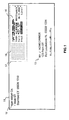
- the reference character 11 represents mail, i.e., a mail piece or a package that has a sender address field 12, a recipient address field 13, a postal indicia 14, and a radio frequency identification tag 15 that contains specified information.
- Postal indicia 14 may be a permit indicia, information-based indicia, printed indicia, penalty indicia, etc.
- Radio frequency identification (RFID) tag 15 may be the 4x6 RFID Smart Label Philips manufactured by RAFEC USA of 999 Oakmont Plaza Drive, Suite 200, Westmont, Illinois 60559.
- tag 15 The information contained in tag 15 is the sender address field 12, recipient address field 13, type of special service to be performed by the carrier, i.e., priority mail, certified mail, registered mail, express mail, etc., and the category of the goods contained in mail 11.
- the expected recipient's delivery time may also be written into tag 15.
- Indicia 14 and tag 15 may be placed on a label 17 that is adhered to mail 11.
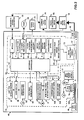
- Fig. 2 is a block diagram of a dual meter 49 that contains electronic postage meter 50, a radio frequency identification reader/writer 51, tape feed module 48 and a tape attach module 49.
- Postage meter 50 may be the B700 Post Perfect postage meter manufactured by Pitney Bowes Inc. of Stamford, Connecticut, USA.
- Metering controller 52 functions as a meter controller for postage meter 50 and a controller for radio frequency identification reader/writer 51. Controller 52 is coupled to last tag buffer 57, comparator 58, current read tag buffer 59, radio frequency identification read non-volatile memory buffer 60, radio frequency identification encode/decode routines 61, radio frequency identification read, erase and record routine 2, current carrier contents list non-volatile memory 139, and issued tag data registers non-volatile memory 140. Comparator 58 is coupled to last tag identification buffer 57 and current tag read buffer 59. Buffer 59 is coupled to radio frequency identification read module 76, and radio frequency identification encode/decode routines 61 is coupled to radio frequency identification read, erase and record routine 2. Routines 2 are also coupled to radio frequency identification read/erase/record module 77.
- Electronic meter 50 includes meter routines 53, modem 54, indicia image routines 55, clock calendar non-volatile memory registers and battery 56, I/O routines 7, I/O ports keyboard and display 8, buffer memory 9 and compose and print indicia image and data fields 65.
- Controller 52 is coupled to modem 54, I/O routines 7, meter routines 53, I/O port keyboard and display 8.
- Compose and print indicia 65 is coupled to meter indicia print module 73.
- Meter 50 begins to function when a user 70 sets the postage dollar amount by weighing mail 11 on scale 71 and enters the type of service and category of the goods contained in mail 11 into I/O ports, keyboard and display 8 of meter 50. The weight and amount of postage for mail 11 is displayed by display 8. Controller 52 will compose an image of indicia 11 (Fig. 1) using the fixed graphic indicia images from indicia images ROM 55 and compose and print indicia images and data field 65. The above image will be stored in buffer memory 59. Buffer memory 9 will provide the above image to meter controller 52.
- Meter routines 53 will handle the accounting functions of meter 50. Routines 53 are not being described, because one skilled in the art is aware of their operation and function. Clock calendar non-volatile memory registers and battery 56 will transmit the date and time to controller 52.
- Modem 54 may communicate with meter data upload data center 72 during a refill of postage meter 50 by exchanging funds.
- User 70 of dual meter 49 communicates with I/O ports keyboard display 8.
- Postal scale 71 is coupled to I/O ports keyboard display 58 and is used to determine the weight of mail 11.
- Content categorization of goods of content data center 78 is coupled to mail entry office 18.
- Office 18 receives mail that has been processed by dual meter 49. Mail flows from office 18 to destination delivery office 85 (currently the USPS has approximately 35,000 mail entry and destination offices).
- Meter data upload data center 72 is coupled to content categorization of content data center 78, and data center 78 is coupled to mail entry office 18.
- I/O routines 7 will control the interfacing of various components so that content categorization of goods will be sent to data center 78 soon after the contents of mail piece 11 are written in tag 15.
- the images and data fields of indicia 14 will be transmitted from compose and print indicia 65 to meter indicia print module 73.
- Radio frequency identification tag read/writer 51 will begin to function when controller 52 enters the last tag identification value in buffer 57 and current tag read buffer 59 receives the information that module 76 read from the tag 15 portion of label 17 (Fig. 1). Comparator 58 will compare the last tag identification value stored in buffer 57 with the value read by module 76. If comparator 58 determines that the above values are the same, then tag 15 is being used a second time for adjustment purposes, i.e., corrected information is going to be recorded into tag 15.
- Radio frequency identification read buffer 60 is a nonvolatile memory that is used to store the information that is read from tag 15 in case of a power failure, and radio frequency identification encode/decode routines 61 are used to decode the information read from tag 15 and encode data that is going to be recorded in tag 15. Radio frequency identification read, erase and record routine 2 are used to read, erase and record information into tag 15.
- Nonvolatile memory 139 contains the current categories of goods databases that identify the contents of goods that may be placed in mail 11. The databases were downloaded from data center 78 via data center 72, and a database for a particular pistol will be described in the description of Fig. 6. Issued tag data registers nonvolatile memory 140 stores the information recorded in tag 15, which is uploaded to data center 78 via data center 72.
- Tape and feed module 48 contains a stack of labels 105 that include tag 15.
- Label 17 is transported past radio frequency identification read module 76.
- Module 76 is positioned in a manner that it will be able to read the information recorded in tags 15 so that module 76 will be able to determine whether or not information has been previously recorded into tag 15.
- label 17 will be transported to module 77 where information will be read, erased and recorded on tag 15.
- label 17 will be transported to paper tape attach module 49.
- label 17 After information is recorded or re-recorded on tag 15, label 17 will be positioned adjacent module 73 so that indicia 14 may be printed on label 17.
- Module 49 will affix label 17 to mail 11 (Fig. 1).
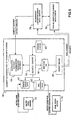
- Fig. 3 is a drawing showing how mail is received and processed in the mail entry office of a carrier.
- Letter mail that is deposited in tray 19 by major mailer 20 contains a bar code 21 on the outside of tray 19.
- Bar code 21 indicates the destination of tray 19.
- Tray 19 is delivered to bulk mail center 22 of office 18.
- Optical character/bar code reader 23 reads the information contained in bar code 21, and radio frequency identification reader 24 reads the information contained in tag 15 (Fig. 1).
- Tray 19 may contain special service mail with tags 15 or mail in certain specified categories that are identified in tags 15 or normal mail.
- Optical reader/radio frequency identification reader and sorter 43 will place mail that does not contain a tag 15 in a tray 44 that has optical/RFID tag 45 that is going to the same destination office as tray 44. Tray 44 will pass through outbound exit 28 of entry office 18 as the delivery process of tray 44 proceeds. Outbound exit 28 contains optical readers and bar code readers 29 that read the optical portion of tag 45, and radio frequency identification readers deflectors 30 that read the RFID portion of tag 45 and any tag 15 that may be present. If mail containing a tag 15 is detected in tray 44, that mail is sent back to the input of sorter 43 to re-tray the mail. Optical reader/radio frequency identification reader and sorter 43 will input mail that contains a tag 15 in radio frequency identification read and route sort by contents 25.
- Radio frequency identification (RFID) read and route sorter 25 may use the model SL EV900 reader manufactured by Philips Semiconductors of 1109 McKay Drive, San Jose, California 95131. Sorter 25 will read tag 15 and place the same content mail in a tray 26 that has an optical/RFID tag 27 on the outside of tray 26. Optical/RFID tag 27 indicates the destination office of tray 26 and the content type of the mail in tray 26. Only mail that has a tag 15 affixed thereto that indicates mail of specified contents, i.e., film, guns, drugs, chemicals, food, biological materials, etc., and a destination office is contained in tray 26. Depending on the contents of the mail in tray 26, tray 26 may be a specialized tray or container.
- tray 26 may be insulated, refrigerated, lead-lined, pressurized, lined to hold caustic materials, etc., to safely carry the mail contained in tray 26.
- Tray 26 contains mail with tags 15 affixed thereto that will pass through outbound exit 28 of mail entry office 18 as the delivery process of tray 26 proceeds.
- Outbound exit 28 contains optical readers 29 that read the visual part of tag 27, and radio frequency identification readers 30 that read the RFID portion of tags 27 and tags 15. If mail containing a tag 15 that does not have the same contents specified in tag 27 and does not go to the destination indicated by tag 27, that mail is sent back to the input of sorter 43 so that it may be re-trayed or rerouted.
- Collection letter mail may be metered letter mail that is produced at a mailer site 35 that is able to place postal indicia 14 and tag 15 on mail 11 with dual meter 49. Collection mail may also be mail that is received from a household 31. Collection letter mail is sent to advanced facer canceller (hereinafter "AFCS") 36. AFCS 36 contains a radio frequency identification outsort reader 37 that reads tags 15.
- AFCS advanced facer canceller
- AFCS 36 faces the letter mail, and then AFCS 36 electronically identifies and separates prebarcoded mail, handwritten addresses, and machine-imprinted address pieces for faster processing through automation.
- Letter mail that AFCS 36 determines is optical character readable is sent to OCR read and sort 38.
- Read and sort 38 reads the entire address on the mail; sprays a bar code on the mail if needed; and then sorts the mail.
- the mail is then placed in tray 39 that has a bar code 40 on the outside of tray 39. Bar code 40 indicates the destination of tray 39 and other information about the contents of tray 39. Only mail that does not have a tag 15 affixed thereto should be contained in tray 39. Tray 39 will pass through outbound exit 28 of entry office 18 as the delivery process of tray 39 proceeds.
- Outbound exit 28 contains optical readers 29 that read bar code 40, and radio frequency identification readers 30 that read any tag 15 that may be present. If mail containing a tag 15 not for the destination office is detected in tray 39, that mail is sent back to the input of sorter 38 so that it may be placed in a tray that is going to the correct destination office. Letter mail that AFCS 36 determines is not optical character readable is sent to manual look up scan and merge 41 where the mail is manually processed. Radio frequency identification reader 37 reads tags 15 and sends the mail containing a tag 15 to RFID / sorter 25.
- Mail that is produced at household 31 and other mail may be brought directly to the carrier at lobby counter 42.
- the mailer will pay the carrier the necessary amount to deliver the mail in accordance with the delivery service requested and the contents of mail 11.
- Dual meter 49 will print postal indicia 14 and radio frequency identification tag 15 on label 17.
- Mail containing a label 17 with a tag 15 will be sent to RFID read and route sort by contents 25.
- Special service mail will be sent to the input of RFID/sorter 25.
- Fig. 4 is a drawing showing how mail is processed from mail entry office 18 of a carrier to a recipient and how data is captured and distributed.
- Mail 11 that is produced by dual meter 49 enters mail entry office 18 where it is sorted by RFID read outsort 37.
- the contents data obtained from reading tag 15 is transmitted to content categorization data center 78.
- RFID read and route source by contents sorts and routes mail to postal RFID based special container distribution process 86 where mail containing certain materials or goods that require special treatment, i.e., radioactive materials; chemical compounds; poisons; carcinogenic materials; caustic chemicals; drugs; biological materials; viruses; vaccines; DNA; blood samples; food; plants; photosensitive materials; thermo-sensitive materials; etc., will be placed in special mail containers or trays.
- the special mail containers or trays may be pressurized, refrigerated, lead-lined, etc. Mail that does not require the use of special trays or containers will be placed in normal trays.
- Meter 49 transmits information regarding the data in label 17, i.e., the data contained in indicia 14 and tag 15 (Fig. 1) to meter data center 72.
- Data center 72 informs content categorization data center 78 of the identity of meter 49, of the goods placed in mail 11, and the identity of the recipient of mail 49 as well as the activity of dual meter 11.
- Data center 78 will be more fully described in the description of Fig. 5.
- Government law enforcement data center 79 is coupled to data center 78.
- Data center 79 transmits the current categories of goods databases that identify the contents of goods that may be placed in mail 11. An example of a particular identification table for a colt government model 45 caliber pistol is described in Fig. 6.
- Data center 79 also informs data center 78 of the items in the identification tables in which it wants data center 78 to monitor.
- Postal inspection service data center 80 is coupled to data centers 78 and 79.
- Data center 78 prepares reports that indicate the items which data center 79 wants to monitor. The reports indicate the monitored item, the licensee of dual meter 49, the sender's name and address, the recipient's name and address, and the date of mailing. An entry in the report will be made for each monitored item that is being sent to a particular recipient.
- Data centers 79 and 80 may inform postal destination office 85 of the mail 11 that they want held in hold bin 83. Data centers 79 and 80 may investigate and/or arrest people who are receiving or sending items that may be used for illegal purposes.
- Mail sorter 82 sorts the mail to allow mail 11 if it does not contain illegal items to be delivered to mail box 84.
- Fig. 5 is a drawing of content categorization of goods data center 78.
- Data center 78 includes master mail content combinations reference database 90, which is coupled to data center 79, search engine 93 which is coupled to data base 90, yellow flag database 95 which is coupled to search engine 93, red flag database 94 which is coupled to search engine 93, indicia usage database 91 which is coupled to search engine 93 and meter upload data center 72, mail content database 92 which is coupled to database 91, search engine 93 and mail entry office 18, and report engine 96 which is coupled to red flag database 94, data center 79 and data center 80.
- master mail content combinations reference database 90 which is coupled to data center 79
- search engine 93 which is coupled to data base 90
- yellow flag database 95 which is coupled to search engine 93
- red flag database 94 which is coupled to search engine 93
- indicia usage database 91 which is coupled to search engine 93 and meter upload data center 72
- mail content database 92 which is coupled to database 91, search
- Master mail content combinations reference database 90 contains a description of all of the goods and components that make up the goods that the government wants to monitor. For instance, for each good that the government is monitoring, the government will prepare a database similar to the database described in Fig. 6, i.e., a Colt 45 parts list. Thus, there may be tables for all illegal and harmful goods.
- Data center 79 uploads to database 90 the information the government wants to monitor.
- Indicia usage database 91 receives the identity of dual meter 49, the contents of the goods placed in mail 11, and the identity of the recipient of mail 11 as well as the activity of dual meter 49 from data center 72.
- Mail content database 92 receives the information read from tag 15 (Fig. 1) from mail entry office 18.
- search engine 93 When search engine 93 is activated, search engine 93 reads databases 91 and 92 for mail 11 and examines database 90 for matches, i.e., the content of mail 11 includes items the government is monitoring. If search engine 93 finds an item or component of a good that the government is monitoring and the government does not think it is hazardous or illegal unless it is combined with other items, that item and the relevant information obtained from mail 11 will be placed in yellow flag database 95. Yellow flag database 95 is reread by search engine 93 for each mail 11 to look for new hazardous or illegal combinations. If search engine 93 finds a good or an item or component of a good that the government is monitoring and the government thinks it is hazardous or illegal or suspicious, then that item and the relevant information obtained from mail 11 will be placed in red flag database 94. Red flag database 94 sends the information in database 94 to reports engine 96. Reports engine 96 sends reports to data centers 79 and 80. The aforementioned reports may contain information regarding who sent, and who received, any hazardous, illegal, or suspicious items
- Fig. 6 is a database of the component parts of a 45 caliber Colt Government Model Pistol.
- Database 990 contains a parts list, part numbers and description of all of the items that are needed to make a 45 caliber Colt Government Model Pistol.
- the government may be interested in monitoring the obtaining or selling of specific items or combinations of specific items contained in database 990. For instance, if mail 11 (Fig. 1) contained item 34, a receiver, the government may want that fact entered into red flag database 94 (Fig. 5) so that data centers 79 and 80 may receive the information and determine if an investigation is warranted. If mail 11 contained item 6, an ejector, and item 18, a magazine assembly, or if one of the above items was previously sent to the same recipient, the government may want the foregoing information entered into red flag database 94 (Fig. 5). If mail 11 contained only item 6, an ejector, or only item 18, a magazine assembly, the government may want the above information entered into yellow flag database 95 (Fig. 5).
- database 990 may be constructed for all types of goods, chemicals, biologicals, etc., that the government wishes to monitor.
Landscapes
- Engineering & Computer Science (AREA)
- Computer Security & Cryptography (AREA)
- Physics & Mathematics (AREA)
- General Physics & Mathematics (AREA)
- Management, Administration, Business Operations System, And Electronic Commerce (AREA)
- Information Transfer Between Computers (AREA)
- Sorting Of Articles (AREA)
Applications Claiming Priority (2)
| Application Number | Priority Date | Filing Date | Title |
|---|---|---|---|
| US10/256,434 US6701217B1 (en) | 2002-09-27 | 2002-09-27 | Dual metering method for indicating the contents of mail |
| US256434 | 2002-09-27 |
Publications (3)
| Publication Number | Publication Date |
|---|---|
| EP1403825A2 true EP1403825A2 (fr) | 2004-03-31 |
| EP1403825A3 EP1403825A3 (fr) | 2005-01-19 |
| EP1403825B1 EP1403825B1 (fr) | 2010-04-14 |
Family
ID=31715381
Family Applications (1)
| Application Number | Title | Priority Date | Filing Date |
|---|---|---|---|
| EP03021666A Expired - Lifetime EP1403825B1 (fr) | 2002-09-27 | 2003-09-26 | Méthode à double mesure pour indiquer le contenu d'une missive |
Country Status (4)
| Country | Link |
|---|---|
| US (2) | US6701217B1 (fr) |
| EP (1) | EP1403825B1 (fr) |
| CA (1) | CA2442507C (fr) |
| DE (1) | DE60332076D1 (fr) |
Families Citing this family (8)
| Publication number | Priority date | Publication date | Assignee | Title |
|---|---|---|---|---|
| WO2002069224A1 (fr) | 2001-02-21 | 2002-09-06 | United States Postal Service | Systemes et procedes d'utilisation d'une etiquette de localisation dans un systeme de remise d'articles |
| US8294552B2 (en) * | 2001-07-10 | 2012-10-23 | Xatra Fund Mx, Llc | Facial scan biometrics on a payment device |
| CN101305379B (zh) * | 2003-04-04 | 2011-09-21 | 美国邮政服务公司 | 利用通用编码系统来追踪邮件的系统及方法 |
| ES2552030T3 (es) * | 2003-07-02 | 2015-11-25 | United States Postal Service | Sistema y método para el seguimiento del envío de artículos utilizando etiquetas RFID |
| WO2005057331A2 (fr) * | 2003-11-25 | 2005-06-23 | United States Postal Service | Methodes et systemes pour tracer des articles de distribution |
| EP2369542A3 (fr) * | 2005-10-07 | 2011-11-16 | Deutsche Post AG | Système et procédé de livraison des produits, élément d'expédition et comptoir de sortie pour des produits |
| US9082099B1 (en) * | 2014-07-18 | 2015-07-14 | Dmitriy Kolchin | System and method for context-sensitive delivery notification |
| CN106021469A (zh) * | 2016-05-17 | 2016-10-12 | 上海鸿研物流技术有限公司 | 可循环物流器具的非法交割检测方法 |
Family Cites Families (26)
| Publication number | Priority date | Publication date | Assignee | Title |
|---|---|---|---|---|
| US5043908A (en) | 1989-10-03 | 1991-08-27 | Pitney Bowes Inc. | Mail delivery system with arrival monitoring |
| AU662901B2 (en) * | 1991-05-07 | 1995-09-21 | Nippondenso Co. Ltd. | Electronic tag |
| US5497140A (en) * | 1992-08-12 | 1996-03-05 | Micron Technology, Inc. | Electrically powered postage stamp or mailing or shipping label operative with radio frequency (RF) communication |
| US5627517A (en) * | 1995-11-01 | 1997-05-06 | Xerox Corporation | Decentralized tracking and routing system wherein packages are associated with active tags |
| US5734169A (en) * | 1996-04-04 | 1998-03-31 | Saidian; David | Radioactive waste storage and disposal receptacle |
| US6529446B1 (en) * | 1996-12-20 | 2003-03-04 | Telaric L.L.C. | Interactive medication container |
| US5978781A (en) | 1997-05-08 | 1999-11-02 | Pitney Bowes Inc. | Digital printing, metering, and recording of other post services on the face of a mail piece |
| US5971587A (en) * | 1997-08-01 | 1999-10-26 | Kato; Kiroku | Package and mail delivery system |
| US6249227B1 (en) | 1998-01-05 | 2001-06-19 | Intermec Ip Corp. | RFID integrated in electronic assets |
| US6188996B1 (en) | 1998-05-22 | 2001-02-13 | Pitney Bowes Inc. | System for metering permit mail |
| US6130613A (en) * | 1998-06-09 | 2000-10-10 | Motorola, Inc. | Radio frequency indentification stamp and radio frequency indentification mailing label |
| US6208910B1 (en) | 1999-04-23 | 2001-03-27 | Pitney Bowes Inc. | System and method for determining the location of a mail piece |
| US6211781B1 (en) | 1999-05-24 | 2001-04-03 | United States Postal Service | Method and apparatus for tracking and locating a moveable article |
| US6275745B1 (en) * | 1999-08-11 | 2001-08-14 | Pitney Bowes Inc. | System and method for verifying the delivery of a mailing and the material contained within the mailing |
| US6260029B1 (en) * | 1999-08-11 | 2001-07-10 | Pitney Bowes Inc. | Postage meter that provides on a mailpiece evidence of postage paid together with cryptographically secured, third party certified, non-shipping information about the sender of the mailpiece |
| US6259367B1 (en) * | 1999-09-28 | 2001-07-10 | Elliot S. Klein | Lost and found system and method |
| US6259369B1 (en) * | 1999-09-30 | 2001-07-10 | Moore North America, Inc. | Low cost long distance RFID reading |
| US7664651B1 (en) * | 1999-10-06 | 2010-02-16 | Stamps.Com Inc. | Apparatus, systems and methods for online, multi-carrier, multi-service parcel shipping management |
| US6611732B2 (en) * | 1999-12-22 | 2003-08-26 | Leading Information Technology Institute, Inc. | Distribution system |
| US6892890B2 (en) * | 2001-01-16 | 2005-05-17 | Abb Automation, Inc. | Dynamic sortation of items in a containerization system |
| US20030084679A1 (en) * | 2001-07-23 | 2003-05-08 | Charlton Kim E | Shipping containers and methods for the transportation of materials at stable temperatures |
| US6765490B2 (en) * | 2001-10-23 | 2004-07-20 | Steven W. Lopez | System and methods for detecting harmful agents within contents of mail |
| US20030103881A1 (en) * | 2001-10-30 | 2003-06-05 | Lane Charles A. | System and method for processing and viewing mail |
| WO2003057533A1 (fr) * | 2001-12-28 | 2003-07-17 | Brackmann Rogers F | Systeme prive d'expedition de marchandises par caisses-palettes |
| US20040065598A1 (en) * | 2002-06-17 | 2004-04-08 | Ross David Justin | Address disambiguation for mail-piece routing |
| US7233907B2 (en) * | 2002-08-07 | 2007-06-19 | United Parcel Service Of America, Inc. | Parcel or service delivery with partially scheduled time windows |
-
2002
- 2002-09-27 US US10/256,434 patent/US6701217B1/en not_active Expired - Fee Related
-
2003
- 2003-09-25 CA CA002442507A patent/CA2442507C/fr not_active Expired - Fee Related
- 2003-09-26 EP EP03021666A patent/EP1403825B1/fr not_active Expired - Lifetime
- 2003-09-26 DE DE60332076T patent/DE60332076D1/de not_active Expired - Lifetime
-
2004
- 2004-01-12 US US10/755,691 patent/US7949540B2/en not_active Expired - Fee Related
Also Published As
| Publication number | Publication date |
|---|---|
| CA2442507C (fr) | 2008-03-18 |
| DE60332076D1 (de) | 2010-05-27 |
| US20040143558A1 (en) | 2004-07-22 |
| EP1403825B1 (fr) | 2010-04-14 |
| US6701217B1 (en) | 2004-03-02 |
| US7949540B2 (en) | 2011-05-24 |
| CA2442507A1 (fr) | 2004-03-27 |
| EP1403825A3 (fr) | 2005-01-19 |
Similar Documents
| Publication | Publication Date | Title |
|---|---|---|
| US6064995A (en) | Metering incoming mail to detect fraudulent indicia | |
| US6911910B2 (en) | Method for detecting and redirecting misdirected mail | |
| US6112193A (en) | Reading encrypted data on a mail piece to cancel the mail piece | |
| RU2309012C2 (ru) | Способ и устройство для обработки почтовых отправлений | |
| US6108643A (en) | System for metering permit mail that has an encrypted message affixed to a mail piece | |
| US6738689B2 (en) | Method for detecting and redirecting major mailer's special service mail | |
| JPS62219096A (ja) | 郵便処理方法および装置 | |
| US20140032439A1 (en) | Pc postage™ service indicia design for shipping label | |
| USRE40443E1 (en) | System and method for accounting for postage for mail | |
| US6006211A (en) | Metering incoming deliverable mail to identify delivery delays | |
| EP1431926B1 (fr) | Procédé pour obtenir des remboursements d'un compteur qui produit des marques d'affranchissement duales | |
| US7346590B2 (en) | Method to account for domestic and international mail fees | |
| US20050131843A1 (en) | Method for the prepayment of customs duties | |
| US7756796B2 (en) | Utilizing a unique tracking identifier for sorting mail | |
| CA2442507C (fr) | Methode d'affranchissement double pour indiquer le contenu du courrier | |
| US8005762B2 (en) | Automated handling of computer-based postage system printing errors | |
| EP1431929B1 (fr) | Procédé et système pour marquer des envois postaux | |
| US7389274B2 (en) | Integrated payment for international business reply mail | |
| US20050067486A1 (en) | Method for postage evidencing for the payment of terminal dues using radio frequency identification tags | |
| US20050131842A1 (en) | Method for indicating the prepayment of customs duties | |
| EP1515279A1 (fr) | Procédé pour le traitement et la délivrance des envois recommandés | |
| US9165411B2 (en) | Method and system for embedding mailer specified mailing instructions on a mail piece to automate mail processing | |
| EP1544802A2 (fr) | Procédé pour prépaiement des droits de douane | |
| US20050071289A1 (en) | Method for postage evidencing for the payment of terminal dues | |
| EP1519324A2 (fr) | Méthode attestant l'affranchissement du courrier pour le paiement des frais terminaux |
Legal Events
| Date | Code | Title | Description |
|---|---|---|---|
| PUAI | Public reference made under article 153(3) epc to a published international application that has entered the european phase |
Free format text: ORIGINAL CODE: 0009012 |
|
| AK | Designated contracting states |
Kind code of ref document: A2 Designated state(s): AT BE BG CH CY CZ DE DK EE ES FI FR GB GR HU IE IT LI LU MC NL PT RO SE SI SK TR |
|
| AX | Request for extension of the european patent |
Extension state: AL LT LV MK |
|
| PUAL | Search report despatched |
Free format text: ORIGINAL CODE: 0009013 |
|
| AK | Designated contracting states |
Kind code of ref document: A3 Designated state(s): AT BE BG CH CY CZ DE DK EE ES FI FR GB GR HU IE IT LI LU MC NL PT RO SE SI SK TR |
|
| AX | Request for extension of the european patent |
Extension state: AL LT LV MK |
|
| 17P | Request for examination filed |
Effective date: 20050706 |
|
| AKX | Designation fees paid |
Designated state(s): DE FR GB |
|
| 17Q | First examination report despatched |
Effective date: 20050826 |
|
| GRAP | Despatch of communication of intention to grant a patent |
Free format text: ORIGINAL CODE: EPIDOSNIGR1 |
|
| GRAS | Grant fee paid |
Free format text: ORIGINAL CODE: EPIDOSNIGR3 |
|
| GRAA | (expected) grant |
Free format text: ORIGINAL CODE: 0009210 |
|
| AK | Designated contracting states |
Kind code of ref document: B1 Designated state(s): DE FR GB |
|
| REG | Reference to a national code |
Ref country code: GB Ref legal event code: FG4D |
|
| REF | Corresponds to: |
Ref document number: 60332076 Country of ref document: DE Date of ref document: 20100527 Kind code of ref document: P |
|
| PGFP | Annual fee paid to national office [announced via postgrant information from national office to epo] |
Ref country code: GB Payment date: 20100927 Year of fee payment: 8 |
|
| PLBE | No opposition filed within time limit |
Free format text: ORIGINAL CODE: 0009261 |
|
| STAA | Information on the status of an ep patent application or granted ep patent |
Free format text: STATUS: NO OPPOSITION FILED WITHIN TIME LIMIT |
|
| PGFP | Annual fee paid to national office [announced via postgrant information from national office to epo] |
Ref country code: DE Payment date: 20100929 Year of fee payment: 8 |
|
| 26N | No opposition filed |
Effective date: 20110117 |
|
| GBPC | Gb: european patent ceased through non-payment of renewal fee |
Effective date: 20110926 |
|
| PG25 | Lapsed in a contracting state [announced via postgrant information from national office to epo] |
Ref country code: GB Free format text: LAPSE BECAUSE OF NON-PAYMENT OF DUE FEES Effective date: 20110926 |
|
| PG25 | Lapsed in a contracting state [announced via postgrant information from national office to epo] |
Ref country code: DE Free format text: LAPSE BECAUSE OF NON-PAYMENT OF DUE FEES Effective date: 20130403 |
|
| REG | Reference to a national code |
Ref country code: DE Ref legal event code: R119 Ref document number: 60332076 Country of ref document: DE Effective date: 20130403 |
|
| REG | Reference to a national code |
Ref country code: FR Ref legal event code: PLFP Year of fee payment: 14 |
|
| PGFP | Annual fee paid to national office [announced via postgrant information from national office to epo] |
Ref country code: FR Payment date: 20160926 Year of fee payment: 14 |
|
| REG | Reference to a national code |
Ref country code: FR Ref legal event code: ST Effective date: 20180531 |
|
| PG25 | Lapsed in a contracting state [announced via postgrant information from national office to epo] |
Ref country code: FR Free format text: LAPSE BECAUSE OF NON-PAYMENT OF DUE FEES Effective date: 20171002 |