EP1404264B1 - Insert utilisé dans le traitement de la sécheresse oculaire - Google Patents
Insert utilisé dans le traitement de la sécheresse oculaire Download PDFInfo
- Publication number
- EP1404264B1 EP1404264B1 EP02764682.7A EP02764682A EP1404264B1 EP 1404264 B1 EP1404264 B1 EP 1404264B1 EP 02764682 A EP02764682 A EP 02764682A EP 1404264 B1 EP1404264 B1 EP 1404264B1
- Authority
- EP
- European Patent Office
- Prior art keywords
- insert
- egf
- peptides
- protein
- peptide
- Prior art date
- Legal status (The legal status is an assumption and is not a legal conclusion. Google has not performed a legal analysis and makes no representation as to the accuracy of the status listed.)
- Expired - Lifetime
Links
Images

Classifications
-
- A—HUMAN NECESSITIES
- A61—MEDICAL OR VETERINARY SCIENCE; HYGIENE
- A61F—FILTERS IMPLANTABLE INTO BLOOD VESSELS; PROSTHESES; DEVICES PROVIDING PATENCY TO, OR PREVENTING COLLAPSING OF, TUBULAR STRUCTURES OF THE BODY, e.g. STENTS; ORTHOPAEDIC, NURSING OR CONTRACEPTIVE DEVICES; FOMENTATION; TREATMENT OR PROTECTION OF EYES OR EARS; BANDAGES, DRESSINGS OR ABSORBENT PADS; FIRST-AID KITS
- A61F9/00—Methods or devices for treatment of the eyes; Devices for putting in contact-lenses; Devices to correct squinting; Apparatus to guide the blind; Protective devices for the eyes, carried on the body or in the hand
- A61F9/0008—Introducing ophthalmic products into the ocular cavity or retaining products therein
- A61F9/0017—Introducing ophthalmic products into the ocular cavity or retaining products therein implantable in, or in contact with, the eye, e.g. ocular inserts
-
- A—HUMAN NECESSITIES
- A61—MEDICAL OR VETERINARY SCIENCE; HYGIENE
- A61P—SPECIFIC THERAPEUTIC ACTIVITY OF CHEMICAL COMPOUNDS OR MEDICINAL PREPARATIONS
- A61P27/00—Drugs for disorders of the senses
- A61P27/02—Ophthalmic agents
Definitions
- the invention relates to the use of an insert for administration of EGF to the eye for the treatment of the so-called "dry eye syndrome".
- EGF epidermal growth factor
- KCS keratoconjunctivitis sicca
- Dry eye disease typically causes eye irritation, as well as being caused by foreign bodies in the eye, such as eye pain, eye burning and the like.
- the clinical symptoms of KCS are a result of the pathologically altered corneal epithelial surface of KCS patients. It is known that the corneal epithelium of KCS patients shows a number of differences compared to the epithelium of healthy persons, namely (1) the normal epithelial turnover is altered; (2) the thickness of the epithelial layer is not uniform; (3) the surface of the epithelium is irregular; (4) Intercellular compounds, such as hemidesmosomes, are not sufficiently abundant in quantity and quality.
- an insert comprising a releasable active ingredient, namely Epidermal Growth Factor (EGF), which is said to serve to improve wound healing.
- the insert here comprises a rapidly dissolving matrix and microparticles provided in the matrix, which may be constructed either as hydrogels containing the active ingredient, or as matrix materials or as materials comprising a membrane in which, for example, a liquid with the active ingredient is contained.
- EGF is an effective treatment for eyes.
- Pharmaceuticals have been developed according to the invention, the EGF level in the eye and release even more crucial EGF and calcium with a preferably linear kinetics over a period of several hours. This is necessary to stimulate the epithelial cells of the cornea to synthesize hemidesmosomes and other intercellular adhesion molecules and to facilitate these cell-cell connections.
- EGF appears quite important to the corneal epithelium in conjunction with the aforementioned physiological functions.
- EGF is responsible for the maintenance of the corneal epithelium and is produced in the lacrimal gland and in the basal cells of the corneal epithelium.
- the EGF receptor is located in the epithelium of the cornea, the lens and the endothelium of the cornea. The receptors have a high affinity for EGF and are saturable.
- EGF has therefore been proposed for the treatment of injured eyes.
- EGF has therefore been proposed for the treatment of injured eyes.
- EGF has not been considered as a drug for the treatment of dry eye syndrome EGF administered as an eye drops.
- Serum preparations containing a variety of cytokines other than EGF alone have since been tested in dry eye syndrome therapy.
- EGF concentration in the tear fluid was reduced Using a sandwich-type ultrasensitive immunofluorometric ELISA assay (R & D Systems, Minneapolis, USA).
- sandwich-type ultrasensitive immunofluorometric ELISA assay R & D Systems, Minneapolis, USA.
- immunoreactive EGF is first bound to a polyclonal anti-EGF antibody which is attached to the solid phase and then quantified using a monoclonal anti-human EGF antibody.
- the lowest detectable amount of EGF in this assay is 0.2 pg / ml for undiluted samples and 40 pg / ml for diluted samples.
- corneal epithelial cells were considered for molecular biology studies on the individual production or synthesis of EGF by measuring the EGF mRNA.
- a small piece of tissue 0.8 mm in diameter was removed at a distance of about 2 mm from the limbus. The piece was transferred immediately after collection into an Eppendorf tube, along with 300 ⁇ l of RNAzol (WAK Chemie, Heidelberg, Germany).
- the quantitative analysis of the EGF was carried out according to a known technique in which mRNA for epidermal growth factor is amplified with PCR (Polymerase Chain Reaction) and then analyzed.
- Table 2 shows the results of EGF mRNA levels analyzed in the corneal epithelial cells of normal and Dry Eye patients.
- EGF is a useful drug for use in the treatment of dry eye patients by inducing the synthesis of cell-to-cell adhesion molecules
- another major aspect of the invention is the development of a drug delivery system that permits it To provide EGF-deficient patients with this type of growth factor.
- EGF EGF-producing cells
- EGF in the context of this invention is intended to mean preferably human EGF, but it may also mean EGF from other animals or substances that bind to the EGF receptor, or chemical modifications of such substances as, for example, PEGylated substances.
- Human EGF is a 6.045 kD polypeptide chain of 53 amino acids with three disulfide bonds within the chain. Since then, EGF has only been proposed as a therapeutic agent for influencing wound healing, and in particular after corneal and refractive surgery.
- Ophthalmics which can be used to deliver EGF locally to the eye, are drops, ointments, gels, or solid inserts.
- Such preparations include the active component EGF in the Range from 0.000'0001 to about 20 wt .-%, preferably from about 0.000'1 to about 1 wt .-% and particularly preferably from 0.01 to 0.5 wt% or in such an amount that the EGF level in the tear fluid is raised to the physiological level.
- the dose of the active component may depend on various factors, such as the mode of administration, need, age or personal condition.
- the administration by means of eye drops allows two different principal ways: The dissolution of EGF in water or the application as a suspension in z. B. oily carriers.
- additives that can be used to make drops.
- pharmaceutically acceptable carriers and additives include a carrier, isotonic agents, buffer solutions, chelating agents, solvents and thickening agents.
- examples of such carriers and additives can also WO 91/15206 or the pharmaceutical literature.
- the active component is dissolved in a sterile, aqueous, isotonic solution which is buffered to the desired pH, if necessary.
- An opthalmic agent comprising EGF usually contains a carrier. Another aspect of the present disclosure is therefore directed to an ophthalmic composition comprising EGF and a carrier.
- the disclosure further relates to an ophthalmic composition
- an ophthalmic composition comprising EGF, a carrier and a solvent.
- Possible carriers are, in particular, gelatin, tragacanth, methylcellulose and / or polyvinylpyrrolidone, agar or alginic acid or salts thereof, for example sodium alginate, gum arabic, polyvinylpyrrolidone, polyethylene glycol.
- aqueous solutions of EGF or z. aqueous solutions of EGF or z.
- Suitable lipophilic solvents or carriers are fatty oils, such as sesame oil or synthetic fatty acid esters, e.g.
- ethyl oleate or triglycerides or aqueous injection suspensions containing the viscosity-increasing substances such as sodium carboxymethyl cellulose, sorbitol and / or dextran and, if desired, and stabilizers.
- Carriers used in connection with the present invention are e.g. Example, water or mixtures of water and water-miscible solvents, such as C 1 - to C 7 alcohols, vegetable oils or mineral oils containing between 0.5 and 5 wt .-% hydroxyethyl cellulose, ethyl oleate, carboxymethyl cellulose, Polyvinylpyrrolidone or non-toxic, water-soluble polymers for ophthalmic use, such as.
- water or mixtures of water and water-miscible solvents such as C 1 - to C 7 alcohols, vegetable oils or mineral oils containing between 0.5 and 5 wt .-% hydroxyethyl cellulose, ethyl oleate, carboxymethyl cellulose, Polyvinylpyrrolidone or non-toxic, water-soluble polymers for ophthalmic use, such as.
- Cellulose derivatives such as methylcellulose, carboxymethylcellulose alkali metal salts, hydroxymethylcellulose, hydroxyethylcellulose, methylhydroxypropylcellulose, hydroxypropycellulose, chitosan, scleroglucan, acrylate or methacrylate such as the salts of polyacrylic acid or ethacrylates, polyacrylamides, natural products such as gelatin, alginate, pectin, Tragacanth, karaya gum, xanthan gum, carrageenan, agar and gum arabic, starch derivatives such as starch acetate, hydroxypropyl starch and also other synthetic products such as poloxamer, e.g.
- polyvinyl alcohol polyvinylpyrrolidone
- polyvinyl methyl ether polyethylene oxide
- preferably crosslinked polyacrylic acid such as neutral Carbopol, or mixtures of these polymers.
- Preferred carrier is water.
- Cellulose derivatives are, for example, methyl cellulose, alkali metal salts of carboxymethyl cellulose, hydroxymethyl cellulose, hydroxyethyl cellulose, methyl hydroxypropyl cellulose and hydroxypropyl cellulose, neutral Carbopol or mixtures thereof.
- the concentration of the carriers is, for example, between 0.1 and 100,000 times the concentration of the active component.
- Solubilizers and similar excipients may also be used in an ophthalmic agent of the present invention and are, for example, tyloxapol, fatty acid glycerol polyethylene glycol ester, fatty acid polyethylene glycol ester, fatty acid polyethylene glycol ester, polyethylene glycol, polyglycerol ester, polysorbate 20, polysorbate 80, or mixtures of these components.
- a particular example of a particularly preferred solvent is a reaction product of castor oil and ethylene oxide, e.g.
- the commercially available product Cremophor EL® or Cremophor RH 40® Reaction products of castor oil and ethylene oxide have proven to be particularly good solvents, which are well tolerated by the eye.
- Another preferred solvent is tyloxapol.
- concentrations used depend in particular on the concentration of the active component. The amount added is typically sufficient to dissolve the active component. For example, the concentration of the solvent may be between 0.1 to 5,000 times the concentration of the active component.
- Electrolytes that are of interest in the formulation include substances that allow the pH to be adjusted during storage or use of the formulation, as well as electrolytes that affect the protein structure and therefore the stability of EGF.
- buffer solutions are acetate, ascorbate, borate, bicarbonate / carbonate, citrate, gluconate, lactate, phosphate, propionate and TRIS buffer.
- Tromethamine and borate buffers are the preferred ones Buffer solutions.
- the amount of buffer solution added may correspond to the amount necessary to adjust and maintain a physiologically tolerable pH range.
- the pH range is typically in the range of 5 to 9, preferably 6 to 8.5 and more preferably 6.5 to 8.2.
- Electrolytes may also affect osmotic pressure and protein conformation. Such electrolytes are z.
- ionic components for example, alkali metal salts or alkaline earth halides, such as CaCl 2 , KBr, KCl, LiCl, NaI, NaBr or NaCl, Na 2 SO 4 or boric acid.
- Nonionic tonicity enhancing agents include, for example, urea, glycerol, sorbitol, mannitol, propylene glycol or dextrose.
- the tonicity enhancing agents are added in sufficient amount to impart to an ophthalmic preparation ready for use an osmolality of about 50 to 1000 mOsmol, preferably 100 to 400 mOsmol, more preferably 200 to 400 mOsmol and most preferably 250 to 350 mOsmol.
- preservatives examples include quaternary ammonium salts such as sepazonium chloride, ethyltrimethylammonium bromide (zetrimide), cetylpyridinium chloride, benzoxonium chloride, benzethonium chloride, domiphenbromide (Bradosol®) or benzalkonium chloride, alkyl mercury salts of thiosalicylic acid, such as Thiomersal, phenylmercuric nitrate, phenylmercuric acetate or phenylmercuric borate, parabens such as methylparaben or propylparaben, alcohols such as chlorobutanol, benzyl alcohol or phenylethanol, guanidine derivatives such as chlorohexadine, or polyhexamethylene biguanide, sodium perkabonate, Germal® or sorbic acid.
- quaternary ammonium salts such as sepazonium chloride, e
- Preferred preservatives are quaternary ammonium salts, alkyl mercury salts and parabens. Where indicated, a sufficient amount of preservative may be added to the ophthalmics to ensure protection against secondary contamination during use caused by bacteria and fungi.
- the ophthalmics may further contain other non-toxic excipients such as humectants or fillers such as polyethylene glycols or derivatives thereof (such as MethylPEG or PEGamine) having a molecular weight of 200 to 10,000 or more.
- humectants such as polyethylene glycols or derivatives thereof (such as MethylPEG or PEGamine) having a molecular weight of 200 to 10,000 or more.
- Other excipients that may be used, if desired, are listed below, but this list is not intended to limit the possible excipients.
- complexing agents such as disodium EDTA or EDTA, antioxidants such as ascorbic acid, acetylcysteine, cysteine, sodium hydrogen sulfide, butyl hydroxyanisole, butylated hydroxytoluene or alpha-tocopherol acetate, stabilizers such as for example, thiourea, thiosorbitol, sodium dioctyl sulfosuccinate or monothioglycerol or other excipients such as lauric acid sorbitol ester, triethanolamine oleate or palmitic acid ester.
- Preferred carriers are complexing agents such as disodium EDTA. The amount and type of carriers added depends on the particular requirements and is generally in the range of from about 0.0001 to about 90% by weight.
- the invention relates to inserts for use in the eye.
- EGF can be delivered to the eye via small devices placed in the lacrimal sac of the eye. Such systems release EGF over a period of between one hour and two weeks. A particularly preferred period for release is four hours to one week.
- the shape of such inserts is adapted to the anatomy and physiology of the eye.
- the geometry of the insert may, for example, be cylindrical, round or oval, or any other suitable shape to be inserted into the lacrimal sac of the eye.
- the insert may also have the shape of a contact lens, in which case it is placed on the cornea of the eye.
- the preferred shape of the insert is round or oval with a first diameter of r 1 between 0.1 mm and 20 mm, and a second diameter r 2 between 0.1 mm and 20 and a thickness d between 5 ⁇ m and 5 mm.
- a further important characteristic is that all inserts can release calcium ions along with the EGF, as it has been found that calcium is necessary for improving cell-cell contact in the corneal epithelium.
- EGF can be released from thin films consisting of, for example, polymer films in which EGF is embedded. EGF may be dissolved or suspended in the matrix. Such films have the advantage that they are easy to produce on a large scale and can be cut out as individual inserts or punched out of a larger film in any desired geometry.
- EGF monolayer films consist of a single matrix material or mixture of materials in which EGF is embedded.
- An easy way to visualize such matrices for local EGF release is to disperse the protein in a solution or in a molten matrix material. Evaporation of the solvent or cooling of the melt gives an EGF-enriched matrix.
- An example of such preparation are hydrogels.
- EGF can z. B. in a 1% (w / w) aqueous alginate solution. After casting into molds with a defined surface area becomes the hydrogel is dried to form a solid film from which the inserts are obtained by cutting or punching pieces of desired geometry. The film thickness can be varied by increasing the alginate content or by reducing the mold surface.
- the inserts may not be erodible or erodible. In the latter case, there is no need to remove the insert after use.
- Materials which can be used for the preparation of non-erodible inserts are, for example, polyacrylates or ethylene-vinyl acetate copolymers. Such matrices can be loaded with water-soluble substances besides EGF, which act as porogens, thus allowing control of the release of EGF. In the case of non-erodible matrix material, the release of EGF is diffusion-controlled and may be affected by the type and amount of porogens. Porogenic materials are z. As water-soluble polymers such as polyethylene glycol, various polysaccharides or proteins such as collagen or gelatin. Other low molecular weight water-soluble substances can serve the same purpose.
- Materials which are used for the production of erodible systems are, for example, water-soluble polymers, the matrices in solid or semi-solid form which dissolve in the liquid environment of the eye or which soften or melt at body temperature.
- examples of such polymers are alginate or cellulose derivatives, such as methyl cellulose.
- a preferred material that can be used for the preparation of decomposable inserts is alginate, which consists of ⁇ -L-guluronic acid and ⁇ -D-mannuronic acid.
- the monomer ratio can be used to control properties such as mechanical stability and drug release rate. Due to the presence of carboxylic acid groups, alginates are charged and can be crosslinked by the addition of cations. Cations can be calcium or magnesium.
- erodible polymers are degradable polymers that undergo hydrolysis in an aqueous environment and disintegrate into water-soluble monomers and oligomers.
- Substances that decompose via thermal changes that soften or melt are, for example, fats such as triglycerines or phospholipids.
- Such laminates consist of at least two layers that are different from each other either in the matrix material of which they are made and / or their individual EGF loading.
- An example of such a laminate is a construction consisting of a high EGF content central layer covered on both sides by film layers having a low EGF content.
- a sandwich-like structure with alternating sequences of EGF-loaded and EGF-free layers is another example of such a laminate.
- the laminates can z.
- polymer solutions are prepared from polyelectrolytes which are oppositely charged. The charge interactions lead to a precipitation of the polymer chains. Embedded EGF is therefore immobilized in the resulting polymer matrices.
- at least one of the polyelectrolytes must be a degradable polymer or a third component that is water-soluble or biodegradable is added to the mixture.
- polyelectrolyte combinations are sodium alginate / chitosan, sodium alginate / gelatin and arabic gum / gelatin.
- Reservoir systems by which the delivery of EGF can be controlled by an insert.
- Reservoir systems exist z. B. from a liquid or semi-solid EGF dispersion, which is enclosed by a membrane which controls the EGF release rate.
- a membrane which controls the EGF release rate.
- Another example of an EGF reservoir is solid, water-soluble mixtures, which can be achieved, for example, by freeze-drying and which dissolve into a liquid or semi-solid system after inserting the insert.
- the release rate controlling membranes can in turn decomposable polymers such.
- Non-degradable microporous polymers can be used as diffusion barriers to control the release of EGF from the reservoir.
- Films, laminates, and reservoir systems can also be used in conjunction with additional supports that control the release of EGF.
- Particles less than 100 ⁇ m in size such as microspheres, nanoparticles, or liposomes, may be loaded with EGF to control the rate of release. When such particles are directly targeted, they are usually lost fairly quickly.
- an insert such as a film, a laminate or a reservoir-like device, it is possible to overcome this problem overcome.
- such systems are simply dispersed in the matrix solution or in the melt of the material used to make the insert.
- In situ gelling systems are liquid preparations prior to use and therefore can be easily applied by a patient. When introduced into the lacrimal sac, its viscosity increases or solidifies, forming an EGF-rich depot. Examples of such systems are poloxamer solutions which gel with increasing temperature during use. Another example is polyelectrolytes that change their charge due to pH changes, such as polyacrylates, and therefore precipitate in an aqueous environment.
- EGF may also be released by microchips that perform the release of the drug from small reservoirs that are opened according to a preprogrammed time structure. For example, the release over programmable read-only memory (EPROM) on the same microchip ( U.S. Patent 5,797,898 ). It is also possible to couple such a release system to a biosensor which measures the local EGF level and thus keeps it constant through an adjustable release rate.
- EPROM programmable read-only memory
- osmotic pumps can be used.
- osmotic pumps have an EGF reservoir that contains an osmotically active substance besides the EGF dose and that is enclosed by a semi-permeable membrane. After such a system is placed in the eye, water enters through the semi-permeable membrane and begins to dissolve or dilute EGF and the osmotically active substance. The increase in osmotic pressure forces EGF out of the reservoir. EGF leaves the system through the membrane, which for example is microporous or contains small openings.
- EGF EGF, Biomol, Hamburg, Germany
- the dried EGF-loaded alginate film is removed from the teflon mold and immersed in a 5% (w / w) aqueous calcium chloride solution for 60 seconds.
- the film is again dried in a laminar air film workbench for 24 hours.
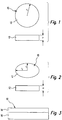
- EGF is inserted into the matrix material 12.
- FIG. 3 shows an insert 10, for example, the shape according to the Figures 1 and 2 consisting of two different layers 14, 16, wherein the upper layer 14 is EGF-free and the lower layer 16 is charged with EGF.
- FIG. 4 describes a similar structure, in which case the EGF-charged layer 16 is enclosed by two EGF-free layers 14. In this way, the release of EGF to the eye in the lacrimal sac can be better controlled after inserting the insert 10 therein.
- An expanded structure shows, for example FIG. 5 in which EGF-free layers 14 and EGF-charged layers 16 alternate, with three EGF-charged layers 16 being embedded between the EGF-free layers 14.
- FIG. 6 now shows a reservoir system as described above, wherein a reservoir 18 is enclosed with an EGF-containing solution by a membrane 20 which controls and controls the delivery of EGF to the eye.
- EGF-containing solution by a membrane 20 which controls and controls the delivery of EGF to the eye.
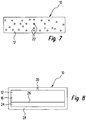
- EGF-charged particles 22 are dispersed in a matrix 12 and the matrix 12 controls the release of the EGF ( FIG. 7 ).
- FIG. 8 a further embodiment of an insert 10, in which the insert 10 is designed as an osmotic pump, wherein the insert 10 comprises an EGF-loaded matrix 12 and an osmotically active substance 24 and the EGF-loaded matrix 12 of the osmotically active substance 24 by a impermeable membrane 26 is separated.
- the EGF-charged matrix 12 and the osmotically active substance 24 are jointly enclosed by a semi-permeable membrane 28.
- water penetrates through the semi-permeable membrane 28 and begins to dilute the EGF and the osmotically active substance 24. Due to this increased osmotic pressure is EGF is forced out of the reservoir 18 through an opening 30 in the semi-permeable membrane 28 and thus enters the lacrimal sac and thus the eye.
Landscapes
- Health & Medical Sciences (AREA)
- Life Sciences & Earth Sciences (AREA)
- Ophthalmology & Optometry (AREA)
- Engineering & Computer Science (AREA)
- Veterinary Medicine (AREA)
- Public Health (AREA)
- General Health & Medical Sciences (AREA)
- Animal Behavior & Ethology (AREA)
- Vascular Medicine (AREA)
- Heart & Thoracic Surgery (AREA)
- Biomedical Technology (AREA)
- Chemical Kinetics & Catalysis (AREA)
- Pharmacology & Pharmacy (AREA)
- Organic Chemistry (AREA)
- Nuclear Medicine, Radiotherapy & Molecular Imaging (AREA)
- Medicinal Chemistry (AREA)
- General Chemical & Material Sciences (AREA)
- Chemical & Material Sciences (AREA)
- Bioinformatics & Cheminformatics (AREA)
- Medicinal Preparation (AREA)
- Medicines That Contain Protein Lipid Enzymes And Other Medicines (AREA)
- Pharmaceuticals Containing Other Organic And Inorganic Compounds (AREA)
- Prostheses (AREA)
Claims (13)
- Insert destiné au traitement de la sécheresse oculaire, dans lequel l'insert peut être inséré dans le sac lacrymal ou placé sur la cornée, et dans lequel des protéines et/ou des peptides sont incorporé(e)s sous une forme libérable au niveau de l'oeil, dans lequel les protéines et/ou les peptides sont des facteurs de croissance, en particulier le facteur de croissance épidermique (EGF) et/ou des cytokines, caractérisé en ce que l'insert est composé d'une ou de plusieurs couches ayant des teneurs différentes en protéines et/ou en peptides et/ou de matériaux matriciels, dans lequel en particulier des couches chargées de protéines et/ou de peptides et/ou des couches exemptes de protéines et/ou peptides sont fournies.
- Insert destiné au traitement de la sécheresse oculaire, dans lequel l'insert peut être inséré dans le sac lacrymal ou placé sur la cornée, et dans lequel des protéines et/ou des peptides sont incorporé(e)s sous une forme libérable au niveau de l'oeil, dans lequel les protéines et/ou les peptides sont des facteurs de croissance, en particulier le facteur de croissance épidermique (EGF) et/ou des cytokines, caractérisé en ce que l'insert comprend un réservoir qui contient des protéines et/ou des peptides, et dans lequel le réservoir est entouré d'une membrane, et dans lequel en particulier, outre les protéines et/ou peptides, des ions calcium pouvant être libérés sont inclus, et dans lequel l'insert comprend une micropuce qui commande la libération des protéines et/ou des peptides à partir de réservoirs.
- Insert destiné au traitement de la sécheresse oculaire, dans lequel l'insert peut être inséré dans le sac lacrymal ou placé sur la cornée, et dans lequel des protéines et/ou des peptides sont incorporé(e)s sous une forme libérable au niveau de l'oeil, dans lequel les protéines et/ou les peptides sont des facteurs de croissance, en particulier le facteur de croissance épidermique (EGF) et/ou des cytokines, caractérisé en ce que l'insert comprend un système de gel in situ qui contient des protéines et/ou des peptides, qui est liquide avant administration et gélifié au niveau du lieu d'utilisation par le pH ou un changement de température, dans lequel le système de gel in situ, à l'état solidifié, forme en particulier un dépôt contenant des protéines et/ou des peptides et dans lequel en particulier, en plus des protéines et/ou des peptides, des ions calcium libérables sont inclus.
- Insert selon l'une des revendications 1 à 3, dans lequel l'insert comprend une matrice chargée de protéines et/ou de peptides, dans lequel en particulier les protéines et/ou les peptides de la matrice sont dissoutes/dissous ou en suspension.
- Insert selon l'une des revendications 1 à 4, dans lequel les protéines et/ou peptides sont présent(e)s dans la matrice sous une forme stable et peuvent être délivrés à travers celle-ci sous une forme stable.
- Insert selon la revendication 4 ou 5, dans lequel la matrice comprend des ions calcium libérables.
- Insert selon l'une des revendications 1 à 6, dans lequel les protéines et/ou les peptides et/ou les ions calcium peuvent être libérés dans une fonction linéaire.
- Insert selon l'une quelconque des revendications 1 à 7, dans lequel les protéines et/ou les peptides sont liés à des particules.
- Insert selon l'une des revendications 1 à 8, dans lequel la libération des protéines et/ou des peptides survient au moyen d'une pompe osmotique.
- Insert selon l'une des revendications 1 à 9, dans lequel l'insert a une forme cylindrique, ronde ou ovale avec un diamètre r1 = 0,1 à 20 mm et r2 = 0,1 à 20 mm et une épaisseur D de 1 µm à 5 mm.
- Insert selon la revendication 10, dans lequel r1 = 0,5 à 18 mm et r2 = 0,5 à 10 mm et D = 10 µm à 1 mm.
- Insert selon l'une quelconque des revendications 1 à 11, dans lequel l'insert est érodable.
- Fabrication d'un insert selon l'une des revendications 1 à 12, dans lequel un gel hydrosoluble est préparé, en particulier un gel d'alginate qui est mélangé à une solution de protéines et/ou de peptides, en particulier une solution de facteur de croissance, et en particulier une solution d'EGF, et forme un film chargé de protéines et/ou de peptides qui va être séché, après quoi les inserts sont matricés ou découpés dans le film.
Applications Claiming Priority (3)
| Application Number | Priority Date | Filing Date | Title |
|---|---|---|---|
| DE10133870A DE10133870A1 (de) | 2001-07-12 | 2001-07-12 | Ophthalmisches Mittel, Verwendung von EGF zur Behandlung von Dry Eye-Syndrom und Insert zur Verabreichung von EGF am Auge |
| DE10133870 | 2001-07-12 | ||
| PCT/EP2002/007805 WO2003005941A2 (fr) | 2001-07-12 | 2002-07-12 | Insert utilise dans le traitement de la secheresse oculaire |
Publications (2)
| Publication Number | Publication Date |
|---|---|
| EP1404264A2 EP1404264A2 (fr) | 2004-04-07 |
| EP1404264B1 true EP1404264B1 (fr) | 2019-01-23 |
Family
ID=7691513
Family Applications (1)
| Application Number | Title | Priority Date | Filing Date |
|---|---|---|---|
| EP02764682.7A Expired - Lifetime EP1404264B1 (fr) | 2001-07-12 | 2002-07-12 | Insert utilisé dans le traitement de la sécheresse oculaire |
Country Status (7)
| Country | Link |
|---|---|
| US (2) | US20040176749A1 (fr) |
| EP (1) | EP1404264B1 (fr) |
| JP (1) | JP2004538056A (fr) |
| CN (1) | CN100345528C (fr) |
| CA (1) | CA2453384A1 (fr) |
| DE (1) | DE10133870A1 (fr) |
| WO (1) | WO2003005941A2 (fr) |
Families Citing this family (23)
| Publication number | Priority date | Publication date | Assignee | Title |
|---|---|---|---|---|
| EP1658109B1 (fr) * | 2003-08-26 | 2014-01-22 | Vista Scientific LLC | Dispositif d'administration oculaire de produit pharmaceutique |
| US20050275799A1 (en) * | 2004-03-10 | 2005-12-15 | Marmo J C | Contact lenses, package systems, and method for promoting a healthy epithelium of an eye |
| US7922702B2 (en) * | 2004-07-02 | 2011-04-12 | Qlt Inc. | Treatment medium delivery device and methods for delivery of such treatment mediums to the eye using such a delivery device |
| WO2006031658A2 (fr) * | 2004-09-10 | 2006-03-23 | Allergan, Inc. | Inserts therapeutiques pour canal lacrymal et methodes connexes |
| US20090043269A1 (en) * | 2005-01-20 | 2009-02-12 | Skou Mikkel J R | Apparatus for dispension of liquid |
| AU2005338015C1 (en) * | 2005-10-31 | 2010-11-18 | Life Spring Biotech Co., Ltd. | Scleral buckle band and method for making it |
| SG170816A1 (en) | 2006-03-31 | 2011-05-30 | Qlt Plug Delivery Inc | Drug delivery methods, structures, and compositions for nasolacrimal system |
| CN107468415A (zh) * | 2006-08-21 | 2017-12-15 | 眼泪科学公司 | 用于治疗腺体功能障碍的方法和器械 |
| US20080132451A1 (en) * | 2006-12-01 | 2008-06-05 | Alcon Manufacturing Ltd. | Modulation of polysialylated neural adhesion molecules (psa-ncam) as a regulator of ocular disease |
| UY30883A1 (es) | 2007-01-31 | 2008-05-31 | Alcon Res | Tapones punctales y metodos de liberacion de agentes terapeuticos |
| FR2917416B1 (fr) * | 2007-06-13 | 2012-08-10 | Essilor Int | Procede de traitement de la surface d'un substrat a base de polymere soufre destine a etre recouvert par un revetement |
| WO2010146438A1 (fr) * | 2009-06-16 | 2010-12-23 | Plasmedica Technologies Limited | Dispositif de cicatrisation de plaie |
| MX2013001116A (es) * | 2010-07-29 | 2013-06-05 | Santen Pharma Co Ltd | Cuerpo para soporte de farmaco, y metodo para producir el mismo. |
| WO2012026531A1 (fr) * | 2010-08-25 | 2012-03-01 | 独立行政法人農業生物資源研究所 | Hydrogel séché, film de vitrigel séché, et procédés pour produire les mêmes |
| WO2012063925A1 (fr) * | 2010-11-12 | 2012-05-18 | 独立行政法人農業生物資源研究所 | Chambre de culture cellulaire, son procédé de production, modèle de tissu utilisant la chambre de culture cellulaire et son procédé de production |
| US8771782B2 (en) | 2010-12-13 | 2014-07-08 | Enbio Limited | Implantable medical devices |
| US9102105B2 (en) | 2011-09-13 | 2015-08-11 | Vista Scientific Llc | Method for forming an ocular drug delivery device |
| US10010502B2 (en) | 2015-05-19 | 2018-07-03 | Amorphex Therapeutics Llc | Device that delivers a sustained low-dose of a myopia-suppressing drug, while preserving pupillary function and accommodation |
| WO2017136334A1 (fr) | 2016-02-01 | 2017-08-10 | Theradep Technologies Inc. | Systèmes et procédés d'administration d'agents thérapeutiques |
| US12233017B2 (en) | 2016-10-14 | 2025-02-25 | Olympic Ophthalmics, Inc. | Quiet handheld devices and methods for treatment of disorders |
| CN107224348B (zh) * | 2017-06-01 | 2020-05-05 | 佛山勃林格医疗器械有限公司 | 一种眼表缓释给药装置及其制造方法 |
| US11690998B2 (en) | 2017-10-31 | 2023-07-04 | Theradep Technologies, Inc. | Methods of treating bacterial infections |
| US11147736B2 (en) | 2018-02-26 | 2021-10-19 | Olympic Ophthalmics, Inc. | Therapeutic handheld devices for disorders |
Citations (3)
| Publication number | Priority date | Publication date | Assignee | Title |
|---|---|---|---|---|
| EP0251680A2 (fr) * | 1986-06-25 | 1988-01-07 | Iolab, Inc | Système bioérodable pour la libération contrôlée d'un médicament |
| WO1994005257A1 (fr) * | 1992-09-08 | 1994-03-17 | Allergan, Inc. | Liberation prolongee de medicaments ophtalmiques a partir d'un vehicule de diffusion de medicaments polymeres solubles |
| US5989579A (en) * | 1986-10-02 | 1999-11-23 | Escalon Medical Corp. | Ocular insert with anchoring protrusions |
Family Cites Families (20)
| Publication number | Priority date | Publication date | Assignee | Title |
|---|---|---|---|---|
| US3986510A (en) * | 1971-09-09 | 1976-10-19 | Alza Corporation | Bioerodible ocular device |
| US5137728A (en) * | 1988-03-01 | 1992-08-11 | Bausch & Lomb Incorporated | Ophthalmic article |
| US4923700A (en) * | 1988-06-03 | 1990-05-08 | Kaufman Herbert E | Artificial tear suspension |
| US5036046A (en) * | 1988-10-12 | 1991-07-30 | Eye Research Institute Of Retina Foundation, Inc. | Method for enhancing healing of corneal endothelial wounds |
| US5660851A (en) * | 1989-12-26 | 1997-08-26 | Yissum Research Development Company Of The Hebrew Univ. Of Jerusalem | Ocular inserts |
| WO1992004041A1 (fr) * | 1990-08-31 | 1992-03-19 | Santen Pharmaceutical Co., Ltd. | Remede pour traiter les atteintes a la cornee |
| US5378475A (en) * | 1991-02-21 | 1995-01-03 | University Of Kentucky Research Foundation | Sustained release drug delivery devices |
| US5290572A (en) * | 1992-08-06 | 1994-03-01 | Deo Corporation | Opthalmic composition for treating dry eye |
| US5443505A (en) * | 1993-11-15 | 1995-08-22 | Oculex Pharmaceuticals, Inc. | Biocompatible ocular implants |
| US5518732A (en) * | 1995-02-14 | 1996-05-21 | Chiron Vision, Inc. | Bio-erodible ophthalmic shield |
| AR004214A1 (es) * | 1995-10-12 | 1998-11-04 | Otsuka Pharma Co Ltd | Una preparación de gotas oftálmicas para la cura de enfermedades oftálmicas |
| JP3093661B2 (ja) * | 1995-10-12 | 2000-10-03 | 大塚製薬株式会社 | 眼疾患治療剤 |
| US6299895B1 (en) * | 1997-03-24 | 2001-10-09 | Neurotech S.A. | Device and method for treating ophthalmic diseases |
| US5904144A (en) * | 1996-03-22 | 1999-05-18 | Cytotherapeutics, Inc. | Method for treating ophthalmic diseases |
| US5797898A (en) * | 1996-07-02 | 1998-08-25 | Massachusetts Institute Of Technology | Microchip drug delivery devices |
| US7070590B1 (en) * | 1996-07-02 | 2006-07-04 | Massachusetts Institute Of Technology | Microchip drug delivery devices |
| JPH10158188A (ja) * | 1996-11-29 | 1998-06-16 | Senju Pharmaceut Co Ltd | 角膜治療用組成物 |
| US6448054B1 (en) * | 1999-04-08 | 2002-09-10 | The General Hospital Corporation | Purposeful movement of human migratory cells away from an agent source |
| DE60144142D1 (de) * | 2000-03-02 | 2011-04-14 | Microchips Inc | Mikromechanische geräte und verfahren zur speicherung und zur selektiven exposition von chemikalien |
| WO2002055058A2 (fr) * | 2001-01-09 | 2002-07-18 | Microchips, Inc. | Dispositifs flexibles a micropuces a usage ophtalmique ou autre |
-
2001
- 2001-07-12 DE DE10133870A patent/DE10133870A1/de not_active Withdrawn
-
2002
- 2002-07-12 US US10/483,047 patent/US20040176749A1/en not_active Abandoned
- 2002-07-12 WO PCT/EP2002/007805 patent/WO2003005941A2/fr not_active Ceased
- 2002-07-12 JP JP2003511751A patent/JP2004538056A/ja active Pending
- 2002-07-12 CA CA002453384A patent/CA2453384A1/fr not_active Abandoned
- 2002-07-12 CN CNB028139941A patent/CN100345528C/zh not_active Expired - Lifetime
- 2002-07-12 EP EP02764682.7A patent/EP1404264B1/fr not_active Expired - Lifetime
-
2008
- 2008-10-14 US US12/285,707 patent/US20090041828A1/en not_active Abandoned
Patent Citations (3)
| Publication number | Priority date | Publication date | Assignee | Title |
|---|---|---|---|---|
| EP0251680A2 (fr) * | 1986-06-25 | 1988-01-07 | Iolab, Inc | Système bioérodable pour la libération contrôlée d'un médicament |
| US5989579A (en) * | 1986-10-02 | 1999-11-23 | Escalon Medical Corp. | Ocular insert with anchoring protrusions |
| WO1994005257A1 (fr) * | 1992-09-08 | 1994-03-17 | Allergan, Inc. | Liberation prolongee de medicaments ophtalmiques a partir d'un vehicule de diffusion de medicaments polymeres solubles |
Also Published As
| Publication number | Publication date |
|---|---|
| CN1527689A (zh) | 2004-09-08 |
| HK1068778A1 (en) | 2005-05-06 |
| CN100345528C (zh) | 2007-10-31 |
| US20090041828A1 (en) | 2009-02-12 |
| CA2453384A1 (fr) | 2003-01-23 |
| JP2004538056A (ja) | 2004-12-24 |
| US20040176749A1 (en) | 2004-09-09 |
| EP1404264A2 (fr) | 2004-04-07 |
| DE10133870A1 (de) | 2003-02-06 |
| WO2003005941A3 (fr) | 2003-09-18 |
| WO2003005941A2 (fr) | 2003-01-23 |
Similar Documents
| Publication | Publication Date | Title |
|---|---|---|
| EP1404264B1 (fr) | Insert utilisé dans le traitement de la sécheresse oculaire | |
| DE69227187T2 (de) | Arzneistoffabgabesysteme mit verzögerter freisetzung | |
| DE69634009T2 (de) | Implantierbare vorrichtung zur kontrollierten abgabe von arzneimitteln unmittelbar an einen inneren teil des körpers | |
| DE69828993T2 (de) | Kontrollierte abgabe von pharmazeutika in der vorderen augenkammer | |
| DE69117509T2 (de) | Umkehrbar gelierte zusammensetzungen und verfahren zur verwendung | |
| DE69630325T2 (de) | Nervenschutzende für Auge von Säugern unter Anwendung von Kaliumkanalblockern | |
| DE69713032T2 (de) | Verwendung von SCF für Behandlung der Cornea | |
| DE60318446T2 (de) | Nichtpolymere lipophile pharmazeutische implantat-zusammensetzungen für die intraokulare anwendung | |
| DE69324709T2 (de) | Verfahren zur bereitung von gewickelten transplantaten und transplantat | |
| EP1455803B2 (fr) | Utilisation du panthenol et/ou d'acide pantothénique ou d'acide hyaluronique et/ou de hyaluronate pour la manufacture d'une composition pharmaceutique pour une utilisation ophtalmologique | |
| DE69129696T2 (de) | Polymeres arzneimittelabgabesystem | |
| DE69731525T2 (de) | Hyaluronsäure enthaltende flüssigkeit zur lagerung von hornhaut | |
| Edelhauser et al. | The effect of phenylephrine on the cornea | |
| DE69602412T2 (de) | Ophthalmische Zubereitung zur Behandlung oder Prävention von trockenem Auge und Krankheiten, die dadurch verursacht werden, enthaltend 12-Sulfodehydroabietsäure | |
| DE69533723T2 (de) | Verwendung von chloridekanalblockern zur senkung des intraokulären druckes | |
| EP1948131B3 (fr) | Composition pharmaceutique exempte de dexpanthenol, d'ions de calcium et de phosphate, utilisation de chelateurs du calcium et d'un regulateur de viscosite acceptable sur le plan ophtalmique | |
| DE10161149A1 (de) | Heparin-haltiges Ophthalmikum | |
| DE60002719T2 (de) | Ophthalmische zusammensetzungen in form wässriger gele | |
| DE60205913T2 (de) | Ophthalmische zubereitung mit n-acetylcystein zur behandlung trockener augen | |
| DE60008151T2 (de) | 5-ht2 agonisten als mittel zur kontrolle des augeninnendrucks und zur behandlung von glaukom | |
| CN114306226A (zh) | 一种复方纳米滴眼液及其制备方法 | |
| Saettone et al. | Polymer effects on ocular bioavailability. II. The influence of benzalkonium chloride on the mydriatic response of tropicamide in different polymeric vehicles | |
| DE3688503T2 (de) | Erhöhung des ausfliessens wässriger körperfluessigkeit. | |
| DE69016404T2 (de) | Ophthalmisches Behandlungssystem. | |
| Medem | Langzeitverlauf postoperativer Viskoelastikumseingaben (Healon®) in die Vorderkammer als Hypotoniemanagement nach Trabekulektomie |
Legal Events
| Date | Code | Title | Description |
|---|---|---|---|
| PUAI | Public reference made under article 153(3) epc to a published international application that has entered the european phase |
Free format text: ORIGINAL CODE: 0009012 |
|
| 17P | Request for examination filed |
Effective date: 20031216 |
|
| AK | Designated contracting states |
Kind code of ref document: A2 Designated state(s): AT BE BG CH CY CZ DE DK EE ES FI FR GB GR IE IT LI LU MC NL PT |
|
| AX | Request for extension of the european patent |
Extension state: AL LT LV MK RO SI |
|
| RBV | Designated contracting states (corrected) |
Designated state(s): AT BE BG CH CY CZ DE DK EE ES FI FR GB GR IE IT LI LU MC NL PT SE SK TR |
|
| RIN1 | Information on inventor provided before grant (corrected) |
Inventor name: KOELWEL, CHRISTOPH Inventor name: GOEPFERICH, ACHIM,LEHRSTUHL PHARMAZEUT. TECHNOL. Inventor name: LOHMANN, CHRIS P.,KLINIKUM DER UNIV. REGENSBURG |
|
| 17Q | First examination report despatched |
Effective date: 20071025 |
|
| RAP1 | Party data changed (applicant data changed or rights of an application transferred) |
Owner name: PHARMA STULLN GMBH |
|
| STAA | Information on the status of an ep patent application or granted ep patent |
Free format text: STATUS: EXAMINATION IS IN PROGRESS |
|
| GRAP | Despatch of communication of intention to grant a patent |
Free format text: ORIGINAL CODE: EPIDOSNIGR1 |
|
| STAA | Information on the status of an ep patent application or granted ep patent |
Free format text: STATUS: GRANT OF PATENT IS INTENDED |
|
| INTG | Intention to grant announced |
Effective date: 20180801 |
|
| RIN1 | Information on inventor provided before grant (corrected) |
Inventor name: LOHMANN, CHRIS P. Inventor name: GOEPFERICH, ACHIM, LEHRSTUHL PHARMAZEUT. TECHNOL. Inventor name: KOELWEL, CHRISTOPH |
|
| GRAS | Grant fee paid |
Free format text: ORIGINAL CODE: EPIDOSNIGR3 |
|
| GRAA | (expected) grant |
Free format text: ORIGINAL CODE: 0009210 |
|
| STAA | Information on the status of an ep patent application or granted ep patent |
Free format text: STATUS: THE PATENT HAS BEEN GRANTED |
|
| AK | Designated contracting states |
Kind code of ref document: B1 Designated state(s): AT BE BG CH CY CZ DE DK EE ES FI FR GB GR IE IT LI LU MC NL PT SE SK TR |
|
| REG | Reference to a national code |
Ref country code: GB Ref legal event code: FG4D Free format text: NOT ENGLISH |
|
| REG | Reference to a national code |
Ref country code: CH Ref legal event code: EP |
|
| RIC2 | Information provided on ipc code assigned after grant |
Ipc: A61F 9/00 20060101AFI20030128BHEP |
|
| REG | Reference to a national code |
Ref country code: AT Ref legal event code: REF Ref document number: 1090877 Country of ref document: AT Kind code of ref document: T Effective date: 20190215 |
|
| REG | Reference to a national code |
Ref country code: IE Ref legal event code: FG4D Free format text: LANGUAGE OF EP DOCUMENT: GERMAN |
|
| REG | Reference to a national code |
Ref country code: DE Ref legal event code: R096 Ref document number: 50216323 Country of ref document: DE |
|
| REG | Reference to a national code |
Ref country code: NL Ref legal event code: MP Effective date: 20190123 |
|
| PG25 | Lapsed in a contracting state [announced via postgrant information from national office to epo] |
Ref country code: NL Free format text: LAPSE BECAUSE OF FAILURE TO SUBMIT A TRANSLATION OF THE DESCRIPTION OR TO PAY THE FEE WITHIN THE PRESCRIBED TIME-LIMIT Effective date: 20190123 |
|
| PG25 | Lapsed in a contracting state [announced via postgrant information from national office to epo] |
Ref country code: FI Free format text: LAPSE BECAUSE OF FAILURE TO SUBMIT A TRANSLATION OF THE DESCRIPTION OR TO PAY THE FEE WITHIN THE PRESCRIBED TIME-LIMIT Effective date: 20190123 Ref country code: ES Free format text: LAPSE BECAUSE OF FAILURE TO SUBMIT A TRANSLATION OF THE DESCRIPTION OR TO PAY THE FEE WITHIN THE PRESCRIBED TIME-LIMIT Effective date: 20190123 Ref country code: PT Free format text: LAPSE BECAUSE OF FAILURE TO SUBMIT A TRANSLATION OF THE DESCRIPTION OR TO PAY THE FEE WITHIN THE PRESCRIBED TIME-LIMIT Effective date: 20190523 Ref country code: SE Free format text: LAPSE BECAUSE OF FAILURE TO SUBMIT A TRANSLATION OF THE DESCRIPTION OR TO PAY THE FEE WITHIN THE PRESCRIBED TIME-LIMIT Effective date: 20190123 |
|
| PG25 | Lapsed in a contracting state [announced via postgrant information from national office to epo] |
Ref country code: BG Free format text: LAPSE BECAUSE OF FAILURE TO SUBMIT A TRANSLATION OF THE DESCRIPTION OR TO PAY THE FEE WITHIN THE PRESCRIBED TIME-LIMIT Effective date: 20190423 Ref country code: GR Free format text: LAPSE BECAUSE OF FAILURE TO SUBMIT A TRANSLATION OF THE DESCRIPTION OR TO PAY THE FEE WITHIN THE PRESCRIBED TIME-LIMIT Effective date: 20190424 |
|
| REG | Reference to a national code |
Ref country code: DE Ref legal event code: R097 Ref document number: 50216323 Country of ref document: DE |
|
| PG25 | Lapsed in a contracting state [announced via postgrant information from national office to epo] |
Ref country code: DK Free format text: LAPSE BECAUSE OF FAILURE TO SUBMIT A TRANSLATION OF THE DESCRIPTION OR TO PAY THE FEE WITHIN THE PRESCRIBED TIME-LIMIT Effective date: 20190123 Ref country code: SK Free format text: LAPSE BECAUSE OF FAILURE TO SUBMIT A TRANSLATION OF THE DESCRIPTION OR TO PAY THE FEE WITHIN THE PRESCRIBED TIME-LIMIT Effective date: 20190123 Ref country code: CZ Free format text: LAPSE BECAUSE OF FAILURE TO SUBMIT A TRANSLATION OF THE DESCRIPTION OR TO PAY THE FEE WITHIN THE PRESCRIBED TIME-LIMIT Effective date: 20190123 Ref country code: IT Free format text: LAPSE BECAUSE OF FAILURE TO SUBMIT A TRANSLATION OF THE DESCRIPTION OR TO PAY THE FEE WITHIN THE PRESCRIBED TIME-LIMIT Effective date: 20190123 Ref country code: EE Free format text: LAPSE BECAUSE OF FAILURE TO SUBMIT A TRANSLATION OF THE DESCRIPTION OR TO PAY THE FEE WITHIN THE PRESCRIBED TIME-LIMIT Effective date: 20190123 |
|
| PLBE | No opposition filed within time limit |
Free format text: ORIGINAL CODE: 0009261 |
|
| STAA | Information on the status of an ep patent application or granted ep patent |
Free format text: STATUS: NO OPPOSITION FILED WITHIN TIME LIMIT |
|
| 26N | No opposition filed |
Effective date: 20191024 |
|
| PG25 | Lapsed in a contracting state [announced via postgrant information from national office to epo] |
Ref country code: MC Free format text: LAPSE BECAUSE OF FAILURE TO SUBMIT A TRANSLATION OF THE DESCRIPTION OR TO PAY THE FEE WITHIN THE PRESCRIBED TIME-LIMIT Effective date: 20190123 |
|
| REG | Reference to a national code |
Ref country code: CH Ref legal event code: PL |
|
| PG25 | Lapsed in a contracting state [announced via postgrant information from national office to epo] |
Ref country code: TR Free format text: LAPSE BECAUSE OF FAILURE TO SUBMIT A TRANSLATION OF THE DESCRIPTION OR TO PAY THE FEE WITHIN THE PRESCRIBED TIME-LIMIT Effective date: 20190123 |
|
| REG | Reference to a national code |
Ref country code: BE Ref legal event code: MM Effective date: 20190731 |
|
| PG25 | Lapsed in a contracting state [announced via postgrant information from national office to epo] |
Ref country code: CH Free format text: LAPSE BECAUSE OF NON-PAYMENT OF DUE FEES Effective date: 20190731 Ref country code: LI Free format text: LAPSE BECAUSE OF NON-PAYMENT OF DUE FEES Effective date: 20190731 Ref country code: LU Free format text: LAPSE BECAUSE OF NON-PAYMENT OF DUE FEES Effective date: 20190712 Ref country code: BE Free format text: LAPSE BECAUSE OF NON-PAYMENT OF DUE FEES Effective date: 20190731 |
|
| PG25 | Lapsed in a contracting state [announced via postgrant information from national office to epo] |
Ref country code: IE Free format text: LAPSE BECAUSE OF NON-PAYMENT OF DUE FEES Effective date: 20190712 |
|
| REG | Reference to a national code |
Ref country code: AT Ref legal event code: MM01 Ref document number: 1090877 Country of ref document: AT Kind code of ref document: T Effective date: 20190712 |
|
| PG25 | Lapsed in a contracting state [announced via postgrant information from national office to epo] |
Ref country code: AT Free format text: LAPSE BECAUSE OF NON-PAYMENT OF DUE FEES Effective date: 20190712 |
|
| PG25 | Lapsed in a contracting state [announced via postgrant information from national office to epo] |
Ref country code: CY Free format text: LAPSE BECAUSE OF FAILURE TO SUBMIT A TRANSLATION OF THE DESCRIPTION OR TO PAY THE FEE WITHIN THE PRESCRIBED TIME-LIMIT Effective date: 20190123 |
|
| PGFP | Annual fee paid to national office [announced via postgrant information from national office to epo] |
Ref country code: GB Payment date: 20210629 Year of fee payment: 20 |
|
| PGFP | Annual fee paid to national office [announced via postgrant information from national office to epo] |
Ref country code: FR Payment date: 20210722 Year of fee payment: 20 |
|
| PGFP | Annual fee paid to national office [announced via postgrant information from national office to epo] |
Ref country code: DE Payment date: 20210914 Year of fee payment: 20 |
|
| REG | Reference to a national code |
Ref country code: DE Ref legal event code: R071 Ref document number: 50216323 Country of ref document: DE |
|
| REG | Reference to a national code |
Ref country code: GB Ref legal event code: PE20 Expiry date: 20220711 |
|
| PG25 | Lapsed in a contracting state [announced via postgrant information from national office to epo] |
Ref country code: GB Free format text: LAPSE BECAUSE OF EXPIRATION OF PROTECTION Effective date: 20220711 |