EP1404319B1 - Neue metalloporphyrine und ihre verwendung als radiosensibilisatoren für die strahlentherapie - Google Patents
Neue metalloporphyrine und ihre verwendung als radiosensibilisatoren für die strahlentherapie Download PDFInfo
- Publication number
- EP1404319B1 EP1404319B1 EP02737384A EP02737384A EP1404319B1 EP 1404319 B1 EP1404319 B1 EP 1404319B1 EP 02737384 A EP02737384 A EP 02737384A EP 02737384 A EP02737384 A EP 02737384A EP 1404319 B1 EP1404319 B1 EP 1404319B1
- Authority
- EP
- European Patent Office
- Prior art keywords
- carborane
- isotope
- ortho
- meta
- para
- Prior art date
- Legal status (The legal status is an assumption and is not a legal conclusion. Google has not performed a legal analysis and makes no representation as to the accuracy of the status listed.)
- Expired - Lifetime
Links
- 238000001959 radiotherapy Methods 0.000 title description 14
- 206010028980 Neoplasm Diseases 0.000 claims abstract description 146
- 201000011510 cancer Diseases 0.000 claims abstract description 28
- 238000011282 treatment Methods 0.000 claims abstract description 27
- 238000000034 method Methods 0.000 claims abstract description 18
- 238000003384 imaging method Methods 0.000 claims abstract description 17
- GDTBXPJZTBHREO-UHFFFAOYSA-N bromine Substances BrBr GDTBXPJZTBHREO-UHFFFAOYSA-N 0.000 claims description 44
- 229910052794 bromium Inorganic materials 0.000 claims description 44
- 239000002534 radiation-sensitizing agent Substances 0.000 claims description 42
- 150000001875 compounds Chemical class 0.000 claims description 40
- 229910052736 halogen Inorganic materials 0.000 claims description 40
- 150000002367 halogens Chemical group 0.000 claims description 40
- WKBOTKDWSSQWDR-UHFFFAOYSA-N Bromine atom Chemical compound [Br] WKBOTKDWSSQWDR-UHFFFAOYSA-N 0.000 claims description 34
- ZCYVEMRRCGMTRW-UHFFFAOYSA-N 7553-56-2 Chemical compound [I] ZCYVEMRRCGMTRW-UHFFFAOYSA-N 0.000 claims description 32
- 229910052740 iodine Inorganic materials 0.000 claims description 32
- 239000011630 iodine Substances 0.000 claims description 32
- 125000000217 alkyl group Chemical group 0.000 claims description 28
- 229910052739 hydrogen Inorganic materials 0.000 claims description 26
- 239000001257 hydrogen Substances 0.000 claims description 26
- 125000000449 nitro group Chemical group [O-][N+](*)=O 0.000 claims description 24
- ZAMOUSCENKQFHK-UHFFFAOYSA-N Chlorine atom Chemical compound [Cl] ZAMOUSCENKQFHK-UHFFFAOYSA-N 0.000 claims description 21
- 229910052801 chlorine Inorganic materials 0.000 claims description 21
- 239000000460 chlorine Substances 0.000 claims description 21
- 239000010949 copper Substances 0.000 claims description 21
- 229910052731 fluorine Inorganic materials 0.000 claims description 21
- 239000011737 fluorine Substances 0.000 claims description 21
- YCKRFDGAMUMZLT-UHFFFAOYSA-N Fluorine atom Chemical compound [F] YCKRFDGAMUMZLT-UHFFFAOYSA-N 0.000 claims description 20
- PXHVJJICTQNCMI-UHFFFAOYSA-N Nickel Chemical compound [Ni] PXHVJJICTQNCMI-UHFFFAOYSA-N 0.000 claims description 20
- 239000000203 mixture Substances 0.000 claims description 20
- BASFCYQUMIYNBI-UHFFFAOYSA-N platinum Chemical compound [Pt] BASFCYQUMIYNBI-UHFFFAOYSA-N 0.000 claims description 19
- 238000002603 single-photon emission computed tomography Methods 0.000 claims description 19
- YNHJECZULSZAQK-UHFFFAOYSA-N tetraphenylporphyrin Chemical compound C1=CC(C(=C2C=CC(N2)=C(C=2C=CC=CC=2)C=2C=CC(N=2)=C(C=2C=CC=CC=2)C2=CC=C3N2)C=2C=CC=CC=2)=NC1=C3C1=CC=CC=C1 YNHJECZULSZAQK-UHFFFAOYSA-N 0.000 claims description 19
- 229910052751 metal Inorganic materials 0.000 claims description 17
- 239000002184 metal Substances 0.000 claims description 17
- 230000005298 paramagnetic effect Effects 0.000 claims description 16
- 238000003325 tomography Methods 0.000 claims description 15
- 239000011651 chromium Substances 0.000 claims description 13
- 229910052802 copper Inorganic materials 0.000 claims description 13
- 239000011572 manganese Substances 0.000 claims description 13
- 125000001246 bromo group Chemical group Br* 0.000 claims description 12
- RYGMFSIKBFXOCR-UHFFFAOYSA-N Copper Chemical compound [Cu] RYGMFSIKBFXOCR-UHFFFAOYSA-N 0.000 claims description 11
- 230000002902 bimodal effect Effects 0.000 claims description 11
- PNDPGZBMCMUPRI-UHFFFAOYSA-N iodine Chemical compound II PNDPGZBMCMUPRI-UHFFFAOYSA-N 0.000 claims description 11
- UFHFLCQGNIYNRP-UHFFFAOYSA-N Hydrogen Chemical compound [H][H] UFHFLCQGNIYNRP-UHFFFAOYSA-N 0.000 claims description 10
- 150000002431 hydrogen Chemical class 0.000 claims description 10
- 229910052688 Gadolinium Inorganic materials 0.000 claims description 8
- 239000003814 drug Substances 0.000 claims description 8
- 229910052759 nickel Inorganic materials 0.000 claims description 8
- 239000011877 solvent mixture Substances 0.000 claims description 8
- XEEYBQQBJWHFJM-UHFFFAOYSA-N Iron Chemical compound [Fe] XEEYBQQBJWHFJM-UHFFFAOYSA-N 0.000 claims description 7
- 229910052804 chromium Inorganic materials 0.000 claims description 7
- UIWYJDYFSGRHKR-UHFFFAOYSA-N gadolinium atom Chemical compound [Gd] UIWYJDYFSGRHKR-UHFFFAOYSA-N 0.000 claims description 7
- 229910052732 germanium Inorganic materials 0.000 claims description 7
- 229910052738 indium Inorganic materials 0.000 claims description 7
- 229910052748 manganese Inorganic materials 0.000 claims description 7
- 238000004519 manufacturing process Methods 0.000 claims description 7
- 229910052697 platinum Inorganic materials 0.000 claims description 7
- 229910052707 ruthenium Inorganic materials 0.000 claims description 7
- 229910052713 technetium Inorganic materials 0.000 claims description 7
- 229910052718 tin Inorganic materials 0.000 claims description 7
- 229910052727 yttrium Inorganic materials 0.000 claims description 7
- WFDIJRYMOXRFFG-UHFFFAOYSA-N Acetic anhydride Chemical compound CC(=O)OC(C)=O WFDIJRYMOXRFFG-UHFFFAOYSA-N 0.000 claims description 6
- VYZAMTAEIAYCRO-UHFFFAOYSA-N Chromium Chemical compound [Cr] VYZAMTAEIAYCRO-UHFFFAOYSA-N 0.000 claims description 6
- PWHULOQIROXLJO-UHFFFAOYSA-N Manganese Chemical compound [Mn] PWHULOQIROXLJO-UHFFFAOYSA-N 0.000 claims description 6
- KJTLSVCANCCWHF-UHFFFAOYSA-N Ruthenium Chemical compound [Ru] KJTLSVCANCCWHF-UHFFFAOYSA-N 0.000 claims description 6
- ATJFFYVFTNAWJD-UHFFFAOYSA-N Tin Chemical compound [Sn] ATJFFYVFTNAWJD-UHFFFAOYSA-N 0.000 claims description 6
- 229910017052 cobalt Inorganic materials 0.000 claims description 6
- 239000010941 cobalt Substances 0.000 claims description 6
- GUTLYIVDDKVIGB-UHFFFAOYSA-N cobalt atom Chemical compound [Co] GUTLYIVDDKVIGB-UHFFFAOYSA-N 0.000 claims description 6
- GNPVGFCGXDBREM-UHFFFAOYSA-N germanium atom Chemical compound [Ge] GNPVGFCGXDBREM-UHFFFAOYSA-N 0.000 claims description 6
- 125000004435 hydrogen atom Chemical group [H]* 0.000 claims description 6
- APFVFJFRJDLVQX-UHFFFAOYSA-N indium atom Chemical compound [In] APFVFJFRJDLVQX-UHFFFAOYSA-N 0.000 claims description 6
- GKLVYJBZJHMRIY-UHFFFAOYSA-N technetium atom Chemical compound [Tc] GKLVYJBZJHMRIY-UHFFFAOYSA-N 0.000 claims description 6
- JBQYATWDVHIOAR-UHFFFAOYSA-N tellanylidenegermanium Chemical compound [Te]=[Ge] JBQYATWDVHIOAR-UHFFFAOYSA-N 0.000 claims description 6
- LEONUFNNVUYDNQ-UHFFFAOYSA-N vanadium atom Chemical compound [V] LEONUFNNVUYDNQ-UHFFFAOYSA-N 0.000 claims description 6
- VWQVUPCCIRVNHF-UHFFFAOYSA-N yttrium atom Chemical compound [Y] VWQVUPCCIRVNHF-UHFFFAOYSA-N 0.000 claims description 6
- 230000008569 process Effects 0.000 claims description 5
- GRYLNZFGIOXLOG-UHFFFAOYSA-N Nitric acid Chemical compound O[N+]([O-])=O GRYLNZFGIOXLOG-UHFFFAOYSA-N 0.000 claims description 2
- 229910017604 nitric acid Inorganic materials 0.000 claims description 2
- OKTJSMMVPCPJKN-UHFFFAOYSA-N Carbon Chemical compound [C] OKTJSMMVPCPJKN-UHFFFAOYSA-N 0.000 claims 1
- ZOXJGFHDIHLPTG-UHFFFAOYSA-N Boron Chemical compound [B] ZOXJGFHDIHLPTG-UHFFFAOYSA-N 0.000 abstract description 62
- 229910052796 boron Inorganic materials 0.000 abstract description 62
- 150000004032 porphyrins Chemical class 0.000 abstract description 49
- 238000002428 photodynamic therapy Methods 0.000 abstract description 10
- 238000002560 therapeutic procedure Methods 0.000 abstract description 7
- 230000001613 neoplastic effect Effects 0.000 abstract description 6
- 238000011275 oncology therapy Methods 0.000 abstract description 4
- 239000004480 active ingredient Substances 0.000 abstract description 2
- 210000001519 tissue Anatomy 0.000 description 43
- 241000699670 Mus sp. Species 0.000 description 28
- 210000004369 blood Anatomy 0.000 description 20
- 239000008280 blood Substances 0.000 description 20
- 241000700159 Rattus Species 0.000 description 12
- 210000004027 cell Anatomy 0.000 description 12
- 210000004556 brain Anatomy 0.000 description 9
- 239000007924 injection Substances 0.000 description 9
- 238000002347 injection Methods 0.000 description 9
- 210000002414 leg Anatomy 0.000 description 9
- 230000009467 reduction Effects 0.000 description 9
- 206010021143 Hypoxia Diseases 0.000 description 8
- 230000001146 hypoxic effect Effects 0.000 description 8
- -1 porphyrins Chemical class 0.000 description 8
- 230000005855 radiation Effects 0.000 description 8
- 238000001727 in vivo Methods 0.000 description 7
- 210000004185 liver Anatomy 0.000 description 7
- 238000011725 BALB/c mouse Methods 0.000 description 6
- ZOXJGFHDIHLPTG-BJUDXGSMSA-N Boron-10 Chemical compound [10B] ZOXJGFHDIHLPTG-BJUDXGSMSA-N 0.000 description 6
- 208000003174 Brain Neoplasms Diseases 0.000 description 6
- HEDRZPFGACZZDS-UHFFFAOYSA-N Chloroform Chemical compound ClC(Cl)Cl HEDRZPFGACZZDS-UHFFFAOYSA-N 0.000 description 6
- 238000007920 subcutaneous administration Methods 0.000 description 6
- VZGDMQKNWNREIO-UHFFFAOYSA-N tetrachloromethane Chemical compound ClC(Cl)(Cl)Cl VZGDMQKNWNREIO-UHFFFAOYSA-N 0.000 description 6
- 241001465754 Metazoa Species 0.000 description 5
- 230000008901 benefit Effects 0.000 description 5
- 230000037396 body weight Effects 0.000 description 5
- 210000000038 chest Anatomy 0.000 description 5
- 230000006378 damage Effects 0.000 description 5
- 229940079593 drug Drugs 0.000 description 5
- 230000000694 effects Effects 0.000 description 5
- 239000012634 fragment Substances 0.000 description 5
- 208000002409 gliosarcoma Diseases 0.000 description 5
- 210000003128 head Anatomy 0.000 description 5
- 210000004881 tumor cell Anatomy 0.000 description 5
- NFIVJOSXJDORSP-QMMMGPOBSA-N (2s)-2-amino-3-(4-boronophenyl)propanoic acid Chemical compound OC(=O)[C@@H](N)CC1=CC=C(B(O)O)C=C1 NFIVJOSXJDORSP-QMMMGPOBSA-N 0.000 description 4
- MYMOFIZGZYHOMD-UHFFFAOYSA-N Dioxygen Chemical compound O=O MYMOFIZGZYHOMD-UHFFFAOYSA-N 0.000 description 4
- 238000006243 chemical reaction Methods 0.000 description 4
- 231100000252 nontoxic Toxicity 0.000 description 4
- 239000012044 organic layer Substances 0.000 description 4
- 150000004033 porphyrin derivatives Chemical class 0.000 description 4
- 238000012360 testing method Methods 0.000 description 4
- 231100000419 toxicity Toxicity 0.000 description 4
- 230000001988 toxicity Effects 0.000 description 4
- DNIAPMSPPWPWGF-UHFFFAOYSA-N Propylene glycol Chemical compound CC(O)CO DNIAPMSPPWPWGF-UHFFFAOYSA-N 0.000 description 3
- 230000015572 biosynthetic process Effects 0.000 description 3
- 201000008275 breast carcinoma Diseases 0.000 description 3
- 230000007423 decrease Effects 0.000 description 3
- 210000005069 ears Anatomy 0.000 description 3
- 125000006575 electron-withdrawing group Chemical group 0.000 description 3
- 150000003278 haem Chemical class 0.000 description 3
- 238000001802 infusion Methods 0.000 description 3
- 230000001404 mediated effect Effects 0.000 description 3
- 210000003205 muscle Anatomy 0.000 description 3
- 239000002245 particle Substances 0.000 description 3
- 230000002285 radioactive effect Effects 0.000 description 3
- 239000002904 solvent Substances 0.000 description 3
- 239000007858 starting material Substances 0.000 description 3
- 239000000126 substance Substances 0.000 description 3
- 238000003786 synthesis reaction Methods 0.000 description 3
- 231100000331 toxic Toxicity 0.000 description 3
- 230000002588 toxic effect Effects 0.000 description 3
- 210000005166 vasculature Anatomy 0.000 description 3
- UJKPHYRXOLRVJJ-MLSVHJFASA-N CC(O)C1=C(C)/C2=C/C3=N/C(=C\C4=C(CCC(O)=O)C(C)=C(N4)/C=C4\N=C(\C=C\1/N\2)C(C)=C4C(C)O)/C(CCC(O)=O)=C3C Chemical class CC(O)C1=C(C)/C2=C/C3=N/C(=C\C4=C(CCC(O)=O)C(C)=C(N4)/C=C4\N=C(\C=C\1/N\2)C(C)=C4C(C)O)/C(CCC(O)=O)=C3C UJKPHYRXOLRVJJ-MLSVHJFASA-N 0.000 description 2
- JRNVZBWKYDBUCA-UHFFFAOYSA-N N-chlorosuccinimide Chemical compound ClN1C(=O)CCC1=O JRNVZBWKYDBUCA-UHFFFAOYSA-N 0.000 description 2
- 238000011887 Necropsy Methods 0.000 description 2
- 206010067482 No adverse event Diseases 0.000 description 2
- JUJWROOIHBZHMG-UHFFFAOYSA-N Pyridine Chemical compound C1=CC=NC=C1 JUJWROOIHBZHMG-UHFFFAOYSA-N 0.000 description 2
- 125000004429 atom Chemical group 0.000 description 2
- 150000001639 boron compounds Chemical class 0.000 description 2
- 230000031709 bromination Effects 0.000 description 2
- 238000005893 bromination reaction Methods 0.000 description 2
- 210000003169 central nervous system Anatomy 0.000 description 2
- 239000003795 chemical substances by application Substances 0.000 description 2
- 238000002512 chemotherapy Methods 0.000 description 2
- 238000002591 computed tomography Methods 0.000 description 2
- 230000003247 decreasing effect Effects 0.000 description 2
- 125000001153 fluoro group Chemical group F* 0.000 description 2
- 238000007912 intraperitoneal administration Methods 0.000 description 2
- 239000007928 intraperitoneal injection Substances 0.000 description 2
- 238000002372 labelling Methods 0.000 description 2
- 210000004072 lung Anatomy 0.000 description 2
- 150000002678 macrocyclic compounds Chemical class 0.000 description 2
- 210000002540 macrophage Anatomy 0.000 description 2
- 238000002595 magnetic resonance imaging Methods 0.000 description 2
- 229910021645 metal ion Inorganic materials 0.000 description 2
- 230000003000 nontoxic effect Effects 0.000 description 2
- 230000003287 optical effect Effects 0.000 description 2
- 210000000056 organ Anatomy 0.000 description 2
- 230000035515 penetration Effects 0.000 description 2
- 238000003359 percent control normalization Methods 0.000 description 2
- 238000002600 positron emission tomography Methods 0.000 description 2
- 239000002243 precursor Substances 0.000 description 2
- 238000011002 quantification Methods 0.000 description 2
- 239000011541 reaction mixture Substances 0.000 description 2
- HRZFUMHJMZEROT-UHFFFAOYSA-L sodium disulfite Chemical compound [Na+].[Na+].[O-]S(=O)S([O-])(=O)=O HRZFUMHJMZEROT-UHFFFAOYSA-L 0.000 description 2
- 229940001584 sodium metabisulfite Drugs 0.000 description 2
- 235000010262 sodium metabisulphite Nutrition 0.000 description 2
- 239000000243 solution Substances 0.000 description 2
- 210000000952 spleen Anatomy 0.000 description 2
- 238000006467 substitution reaction Methods 0.000 description 2
- 238000012546 transfer Methods 0.000 description 2
- 238000005406 washing Methods 0.000 description 2
- XLYOFNOQVPJJNP-UHFFFAOYSA-N water Substances O XLYOFNOQVPJJNP-UHFFFAOYSA-N 0.000 description 2
- KAESVJOAVNADME-UHFFFAOYSA-N 1H-pyrrole Natural products C=1C=CNC=1 KAESVJOAVNADME-UHFFFAOYSA-N 0.000 description 1
- BMJOPWQYDZAFDZ-UHFFFAOYSA-N 3,4-difluoro-1h-pyrrole Chemical compound FC1=CNC=C1F BMJOPWQYDZAFDZ-UHFFFAOYSA-N 0.000 description 1
- XVMSFILGAMDHEY-UHFFFAOYSA-N 6-(4-aminophenyl)sulfonylpyridin-3-amine Chemical compound C1=CC(N)=CC=C1S(=O)(=O)C1=CC=C(N)C=N1 XVMSFILGAMDHEY-UHFFFAOYSA-N 0.000 description 1
- 206010006187 Breast cancer Diseases 0.000 description 1
- 201000009030 Carcinoma Diseases 0.000 description 1
- 235000013175 Crataegus laevigata Nutrition 0.000 description 1
- 102000001554 Hemoglobins Human genes 0.000 description 1
- 108010054147 Hemoglobins Proteins 0.000 description 1
- WHXSMMKQMYFTQS-UHFFFAOYSA-N Lithium Chemical compound [Li] WHXSMMKQMYFTQS-UHFFFAOYSA-N 0.000 description 1
- 241000124008 Mammalia Species 0.000 description 1
- 241000699666 Mus <mouse, genus> Species 0.000 description 1
- 208000012868 Overgrowth Diseases 0.000 description 1
- 208000019155 Radiation injury Diseases 0.000 description 1
- 206010039491 Sarcoma Diseases 0.000 description 1
- 206010040943 Skin Ulcer Diseases 0.000 description 1
- 206010040844 Skin exfoliation Diseases 0.000 description 1
- PMZURENOXWZQFD-UHFFFAOYSA-L Sodium Sulfate Chemical compound [Na+].[Na+].[O-]S([O-])(=O)=O PMZURENOXWZQFD-UHFFFAOYSA-L 0.000 description 1
- FAPWRFPIFSIZLT-UHFFFAOYSA-M Sodium chloride Chemical compound [Na+].[Cl-] FAPWRFPIFSIZLT-UHFFFAOYSA-M 0.000 description 1
- JQRLYSGCPHSLJI-UHFFFAOYSA-N [Fe].N1C(C=C2N=C(C=C3NC(=C4)C=C3)C=C2)=CC=C1C=C1C=CC4=N1 Chemical compound [Fe].N1C(C=C2N=C(C=C3NC(=C4)C=C3)C=C2)=CC=C1C=C1C=CC4=N1 JQRLYSGCPHSLJI-UHFFFAOYSA-N 0.000 description 1
- CGVOZEZETYOERU-UHFFFAOYSA-N [N+](=O)([O-])C1=C(C=2C=C3C(=C(C(=CC=4C(=C(C(=CC5=C(C(=C(N5)C=C1N=2)[N+](=O)[O-])[N+](=O)[O-])N=4)[N+](=O)[O-])[N+](=O)[O-])N3)[N+](=O)[O-])[N+](=O)[O-])[N+](=O)[O-] Chemical class [N+](=O)([O-])C1=C(C=2C=C3C(=C(C(=CC=4C(=C(C(=CC5=C(C(=C(N5)C=C1N=2)[N+](=O)[O-])[N+](=O)[O-])N=4)[N+](=O)[O-])[N+](=O)[O-])N3)[N+](=O)[O-])[N+](=O)[O-])[N+](=O)[O-] CGVOZEZETYOERU-UHFFFAOYSA-N 0.000 description 1
- 238000002835 absorbance Methods 0.000 description 1
- 238000010521 absorption reaction Methods 0.000 description 1
- 238000004847 absorption spectroscopy Methods 0.000 description 1
- 230000035508 accumulation Effects 0.000 description 1
- 238000009825 accumulation Methods 0.000 description 1
- 125000002015 acyclic group Chemical group 0.000 description 1
- 125000003118 aryl group Chemical group 0.000 description 1
- 231100000693 bioaccumulation Toxicity 0.000 description 1
- 230000008499 blood brain barrier function Effects 0.000 description 1
- 210000001218 blood-brain barrier Anatomy 0.000 description 1
- 210000001185 bone marrow Anatomy 0.000 description 1
- 210000005013 brain tissue Anatomy 0.000 description 1
- 238000004364 calculation method Methods 0.000 description 1
- 230000005779 cell damage Effects 0.000 description 1
- 208000037887 cell injury Diseases 0.000 description 1
- 210000000170 cell membrane Anatomy 0.000 description 1
- 239000006285 cell suspension Substances 0.000 description 1
- 210000004720 cerebrum Anatomy 0.000 description 1
- 239000002738 chelating agent Substances 0.000 description 1
- 239000013043 chemical agent Substances 0.000 description 1
- 239000003153 chemical reaction reagent Substances 0.000 description 1
- 231100000045 chemical toxicity Toxicity 0.000 description 1
- 229930002875 chlorophyll Natural products 0.000 description 1
- 235000019804 chlorophyll Nutrition 0.000 description 1
- ATNHDLDRLWWWCB-AENOIHSZSA-M chlorophyll a Chemical compound C1([C@@H](C(=O)OC)C(=O)C2=C3C)=C2N2C3=CC(C(CC)=C3C)=[N+]4C3=CC3=C(C=C)C(C)=C5N3[Mg-2]42[N+]2=C1[C@@H](CCC(=O)OC\C=C(/C)CCC[C@H](C)CCC[C@H](C)CCCC(C)C)[C@H](C)C2=C5 ATNHDLDRLWWWCB-AENOIHSZSA-M 0.000 description 1
- 239000012141 concentrate Substances 0.000 description 1
- RKTYLMNFRDHKIL-UHFFFAOYSA-N copper;5,10,15,20-tetraphenylporphyrin-22,24-diide Chemical compound [Cu+2].C1=CC(C(=C2C=CC([N-]2)=C(C=2C=CC=CC=2)C=2C=CC(N=2)=C(C=2C=CC=CC=2)C2=CC=C3[N-]2)C=2C=CC=CC=2)=NC1=C3C1=CC=CC=C1 RKTYLMNFRDHKIL-UHFFFAOYSA-N 0.000 description 1
- 239000007857 degradation product Substances 0.000 description 1
- 229940124447 delivery agent Drugs 0.000 description 1
- 230000035618 desquamation Effects 0.000 description 1
- 238000003745 diagnosis Methods 0.000 description 1
- GUJOJGAPFQRJSV-UHFFFAOYSA-N dialuminum;dioxosilane;oxygen(2-);hydrate Chemical compound O.[O-2].[O-2].[O-2].[Al+3].[Al+3].O=[Si]=O.O=[Si]=O.O=[Si]=O.O=[Si]=O GUJOJGAPFQRJSV-UHFFFAOYSA-N 0.000 description 1
- 230000003292 diminished effect Effects 0.000 description 1
- 239000003937 drug carrier Substances 0.000 description 1
- 230000002497 edematous effect Effects 0.000 description 1
- 210000002889 endothelial cell Anatomy 0.000 description 1
- 239000003623 enhancer Substances 0.000 description 1
- 230000029142 excretion Effects 0.000 description 1
- 238000002474 experimental method Methods 0.000 description 1
- 238000010265 fast atom bombardment Methods 0.000 description 1
- 230000002349 favourable effect Effects 0.000 description 1
- 238000001914 filtration Methods 0.000 description 1
- 239000012467 final product Substances 0.000 description 1
- 238000003682 fluorination reaction Methods 0.000 description 1
- 125000005843 halogen group Chemical group 0.000 description 1
- 238000002513 implantation Methods 0.000 description 1
- 230000006872 improvement Effects 0.000 description 1
- 230000008595 infiltration Effects 0.000 description 1
- 238000001764 infiltration Methods 0.000 description 1
- 230000003993 interaction Effects 0.000 description 1
- 238000001990 intravenous administration Methods 0.000 description 1
- 230000002083 iodinating effect Effects 0.000 description 1
- 230000005865 ionizing radiation Effects 0.000 description 1
- 150000002500 ions Chemical class 0.000 description 1
- 229910052742 iron Inorganic materials 0.000 description 1
- 230000000155 isotopic effect Effects 0.000 description 1
- 210000003734 kidney Anatomy 0.000 description 1
- 210000004561 lacrimal apparatus Anatomy 0.000 description 1
- 239000010410 layer Substances 0.000 description 1
- 230000003902 lesion Effects 0.000 description 1
- 239000002502 liposome Substances 0.000 description 1
- 229910052744 lithium Inorganic materials 0.000 description 1
- 231100000053 low toxicity Toxicity 0.000 description 1
- 210000001165 lymph node Anatomy 0.000 description 1
- LGAILEFNHXWAJP-BMEPFDOTSA-N macrocycle Chemical group N([C@H]1[C@@H](C)CC)C(=O)C(N=2)=CSC=2CNC(=O)C(=C(O2)C)N=C2[C@H]([C@@H](C)CC)NC(=O)C2=CSC1=N2 LGAILEFNHXWAJP-BMEPFDOTSA-N 0.000 description 1
- 230000014759 maintenance of location Effects 0.000 description 1
- 238000001819 mass spectrum Methods 0.000 description 1
- 230000007246 mechanism Effects 0.000 description 1
- 230000004060 metabolic process Effects 0.000 description 1
- 150000002739 metals Chemical class 0.000 description 1
- 206010061289 metastatic neoplasm Diseases 0.000 description 1
- 125000001434 methanylylidene group Chemical group [H]C#[*] 0.000 description 1
- 230000000394 mitotic effect Effects 0.000 description 1
- 230000004048 modification Effects 0.000 description 1
- 238000012986 modification Methods 0.000 description 1
- 229910052901 montmorillonite Inorganic materials 0.000 description 1
- 210000003739 neck Anatomy 0.000 description 1
- 231100000956 nontoxicity Toxicity 0.000 description 1
- 210000003681 parotid gland Anatomy 0.000 description 1
- 229960001412 pentobarbital Drugs 0.000 description 1
- WEXRUCMBJFQVBZ-UHFFFAOYSA-N pentobarbital Chemical compound CCCC(C)C1(CC)C(=O)NC(=O)NC1=O WEXRUCMBJFQVBZ-UHFFFAOYSA-N 0.000 description 1
- 230000000144 pharmacologic effect Effects 0.000 description 1
- 125000001997 phenyl group Chemical group [H]C1=C([H])C([H])=C(*)C([H])=C1[H] 0.000 description 1
- 230000002186 photoactivation Effects 0.000 description 1
- 230000002165 photosensitisation Effects 0.000 description 1
- 239000003504 photosensitizing agent Substances 0.000 description 1
- 235000010482 polyoxyethylene sorbitan monooleate Nutrition 0.000 description 1
- 229920000053 polysorbate 80 Polymers 0.000 description 1
- 230000002980 postoperative effect Effects 0.000 description 1
- 238000012746 preparative thin layer chromatography Methods 0.000 description 1
- 239000000047 product Substances 0.000 description 1
- UMJSCPRVCHMLSP-UHFFFAOYSA-N pyridine Natural products COC1=CC=CN=C1 UMJSCPRVCHMLSP-UHFFFAOYSA-N 0.000 description 1
- 125000000168 pyrrolyl group Chemical group 0.000 description 1
- 230000000637 radiosensitizating effect Effects 0.000 description 1
- 238000011160 research Methods 0.000 description 1
- 230000000717 retained effect Effects 0.000 description 1
- 238000007363 ring formation reaction Methods 0.000 description 1
- 230000037380 skin damage Effects 0.000 description 1
- 238000001228 spectrum Methods 0.000 description 1
- 238000010183 spectrum analysis Methods 0.000 description 1
- 210000000278 spinal cord Anatomy 0.000 description 1
- 238000003756 stirring Methods 0.000 description 1
- 210000001913 submandibular gland Anatomy 0.000 description 1
- 125000001424 substituent group Chemical group 0.000 description 1
- 239000000725 suspension Substances 0.000 description 1
- 230000002194 synthesizing effect Effects 0.000 description 1
- 238000011287 therapeutic dose Methods 0.000 description 1
- 230000001225 therapeutic effect Effects 0.000 description 1
- 230000000451 tissue damage Effects 0.000 description 1
- 231100000827 tissue damage Toxicity 0.000 description 1
- 230000002110 toxicologic effect Effects 0.000 description 1
- 231100000723 toxicological property Toxicity 0.000 description 1
- 238000011277 treatment modality Methods 0.000 description 1
- 230000036326 tumor accumulation Effects 0.000 description 1
- 210000000689 upper leg Anatomy 0.000 description 1
- 210000003932 urinary bladder Anatomy 0.000 description 1
- 229910052720 vanadium Inorganic materials 0.000 description 1
- 230000002792 vascular Effects 0.000 description 1
- 210000005167 vascular cell Anatomy 0.000 description 1
- 229910052725 zinc Inorganic materials 0.000 description 1
- 239000011701 zinc Substances 0.000 description 1
Images


Classifications
-
- A—HUMAN NECESSITIES
- A61—MEDICAL OR VETERINARY SCIENCE; HYGIENE
- A61K—PREPARATIONS FOR MEDICAL, DENTAL OR TOILETRY PURPOSES
- A61K51/00—Preparations containing radioactive substances for use in therapy or testing in vivo
- A61K51/02—Preparations containing radioactive substances for use in therapy or testing in vivo characterised by the carrier, i.e. characterised by the agent or material covalently linked or complexing the radioactive nucleus
- A61K51/04—Organic compounds
- A61K51/0474—Organic compounds complexes or complex-forming compounds, i.e. wherein a radioactive metal (e.g. 111In3+) is complexed or chelated by, e.g. a N2S2, N3S, NS3, N4 chelating group
- A61K51/0485—Porphyrins, texaphyrins wherein the nitrogen atoms forming the central ring system complex the radioactive metal
-
- A—HUMAN NECESSITIES
- A61—MEDICAL OR VETERINARY SCIENCE; HYGIENE
- A61K—PREPARATIONS FOR MEDICAL, DENTAL OR TOILETRY PURPOSES
- A61K31/00—Medicinal preparations containing organic active ingredients
- A61K31/33—Heterocyclic compounds
- A61K31/395—Heterocyclic compounds having nitrogen as a ring hetero atom, e.g. guanethidine or rifamycins
- A61K31/40—Heterocyclic compounds having nitrogen as a ring hetero atom, e.g. guanethidine or rifamycins having five-membered rings with one nitrogen as the only ring hetero atom, e.g. sulpiride, succinimide, tolmetin, buflomedil
- A61K31/409—Heterocyclic compounds having nitrogen as a ring hetero atom, e.g. guanethidine or rifamycins having five-membered rings with one nitrogen as the only ring hetero atom, e.g. sulpiride, succinimide, tolmetin, buflomedil having four such rings, e.g. porphine derivatives, bilirubin, biliverdine
-
- A—HUMAN NECESSITIES
- A61—MEDICAL OR VETERINARY SCIENCE; HYGIENE
- A61K—PREPARATIONS FOR MEDICAL, DENTAL OR TOILETRY PURPOSES
- A61K41/00—Medicinal preparations obtained by treating materials with wave energy or particle radiation ; Therapies using these preparations
- A61K41/0038—Radiosensitizing, i.e. administration of pharmaceutical agents that enhance the effect of radiotherapy
-
- A—HUMAN NECESSITIES
- A61—MEDICAL OR VETERINARY SCIENCE; HYGIENE
- A61K—PREPARATIONS FOR MEDICAL, DENTAL OR TOILETRY PURPOSES
- A61K41/00—Medicinal preparations obtained by treating materials with wave energy or particle radiation ; Therapies using these preparations
- A61K41/009—Neutron capture therapy, e.g. using uranium or non-boron material
- A61K41/0095—Boron neutron capture therapy, i.e. BNCT, e.g. using boronated porphyrins
-
- A—HUMAN NECESSITIES
- A61—MEDICAL OR VETERINARY SCIENCE; HYGIENE
- A61P—SPECIFIC THERAPEUTIC ACTIVITY OF CHEMICAL COMPOUNDS OR MEDICINAL PREPARATIONS
- A61P35/00—Antineoplastic agents
-
- C—CHEMISTRY; METALLURGY
- C07—ORGANIC CHEMISTRY
- C07D—HETEROCYCLIC COMPOUNDS
- C07D487/00—Heterocyclic compounds containing nitrogen atoms as the only ring hetero atoms in the condensed system, not provided for by groups C07D451/00 - C07D477/00
- C07D487/22—Heterocyclic compounds containing nitrogen atoms as the only ring hetero atoms in the condensed system, not provided for by groups C07D451/00 - C07D477/00 in which the condensed system contains four or more hetero rings
Definitions
- the present invention relates to radiosensitizers and methods for treating malignant tumors, in particular brain tumors and tumors of the head and neck, using such radiosensitizers.
- Radiosensitizers are substances that make a cancer cell more susceptible to the effects of radiation therapy, thereby boosting the effect of the radiation dose.
- cancers When cancers are treated using radiotherapy, the presence of hypoxic cells in the tumor is the greatest problem. Hypoxic tumor cells are resistant to radiation and existing chemotherapy techniques. In contrast to cancerous tumors, normal tissues do not have any hypoxic cells. Accordingly, radiotherapy for treating cancer is more effective when the radiosensitivity of the hypoxic cells in the tumor is enhanced by introducing a radiosensitizer. Attempts have been made to increase the radiosensitivity of hypoxic cells using different compounds, such as porphyrins, as radiosensitizers but the results have been mixed.
- Porphyrins in general belong to a class of colored, aromatic tetrapyrrole compounds, some of which are found naturally in plants and animals, e.g., chlorophyll and heme, respectively. Porphyrins are known to have a high affinity to neoplastic tissues of mammals, including man. Because of their affinity for neoplastic tissues, in general, porphyrins with boron-containing substituents can be useful in the treatment of primary and metastatic tumors of the central nervous system by boron neutron capture therapy (BNCT).
- BNCT boron neutron capture therapy
- Porphyrins and other tetrapyrroles with relatively long singlet lifetimes have already been used to treat malignant tumors with photodynamic therapy (PDT), but such use has had limited clinical applicability because of the poor penetration of the visible light required to activate the administered enhancer so as to render it toxic to living tissues, i.e., the targeted tumor.
- PDT photodynamic therapy
- Porphyrins have the added advantage of being useful in vivo as chelating agents for certain paramagnetic metal ions to achieve higher contrast in magnetic resonance imaging (MRI). They can also be chelated with radioactive metal ions for tumor imaging in single-photon-emission computed tomography (SPECT) or position emission tomography (PET). In principle, porphyrins can also be used for high-specific-activity radioisotope therapy when the carrier molecule can be targeted with suffcient biospecificity to the intended lesion so as to avoid normal tissue radiotoxicity, which is most often encountered, when present at all, in the bladder, bone marrow, liver, and lung -the likely sites of undesired bioaccumulation of unbound carrier or its degradation products.
- MRI magnetic resonance imaging
- SPECT single-photon-emission computed tomography
- PET position emission tomography
- porphyrins can also be used for high-specific-activity radioisotope therapy when the carrier molecule can be targeted with suffcient
- Boron neutron-capture therapy is a bimodal cancer treatment based on the selective accumulation of a 10 B carrier in tumors, and subsequent irradiation with thermalized neutrons.
- the production of microscopically localized high linear-energy-transfer (LET) radiation from capture of thermalized neutrons by 10 B in the 10 B(n, ⁇ ) 7 Li reaction is responsible for the high efficacy and sparing of normal tissues.
- the stable nuclide 10 B absorbs a thermalized neutron to create two mutually recoiling ionizing high-energy charged particles, 7 Li and 4 He, with microscopic ranges of 5 ⁇ m and 9 ⁇ m, respectively.
- boron compound highly enriched ( ⁇ 95 atom %) in boron-10 When BNCT is used to treat patients with malignant tumors, the patient is given a boron compound highly enriched ( ⁇ 95 atom %) in boron-10.
- the boronated compound is chosen based on its ability to concentrate preferentially in the tumor within the radiation volume.
- the patient's head is irradiated in the general area of the brain tumor with an incident beam or field of epithermal (0.5 eV-10 keV) neutrons. These neutrons become progressively thermalized (average energy approximately 0.04 eV) as they penetrate deeper into the head.
- the neutrons As the neutrons become thermalized, they can more readily be captured by the boron-10 concentrated in the tumor cells and/or tumor supporting tissues, since the capture cross section is inversely proportional to the neutron velocity.
- a minuscule proportion of the boron-10 nuclei in and around a tumor undergoes a nuclear reaction immediately after capturing a neutron, which is why such a large concentration of boron-10 is required in and/or around a targeted cell or tissue for BNCT to be clinically effective.
- the present invention when implemented clinically alone or in combination with existing or other new therapies, will meet this 'high-concentration without undue toxicity' requirement better than previously known compounds.
- This nuclear reaction produces the high LET alpha ( 4 He) and lithium ( 7 Li) particles.
- the tumor in which the boron-10 is concentrated is irradiated by these short range particles which, on average, travel a distance comparable to, or slightly less than, the diameter of a typical tumor cell. Therefore, a very localized, specific reaction takes place whereby the tumor receives a large radiation dose compared with that received by surrounding non-neoplastic tissues, with relatively low boron-10 concentrations.
- BNCT malignant brain tumors
- normal tissues i.e., blood and normal brain tissues
- BPA p-boronophenylalanine
- tumor boron concentrations should be greater than 30 ⁇ g B/g and tumor:blood and tumor:brain boron ratios should be greater than 5:1 (Fairchild and Bond, Int. J. Radiat. Oncol. Biol. Phys ., 11, 831-840, 1985, Miura, et al., Int. J. Cancer, 68, 114-119, 1996).
- the patient is injected with a photosensitizing porphyrin drug.
- the drug localizes preferentially in the tumor within the irradiation volume.
- the patient's tissues in the zone of macroscopic tumor is then irradiated with a beam of red laser light.
- the vascular cells of the irradiated tumor and some of the tumor cells are rendered incapable of mitotic activity or may be rendered nonviable outright if the light penetrates the tissue sufficiently.
- the biochemical mechanism of cell damage in PDT is believed to be mediated largely by singlet oxygen. Singlet oxygen is produced by transfer of energy from the light-excited porphyrin molecule to an oxygen molecule.
- the resultant singlet oxygen is highly reactive chemically and is believed to react with and disable cell membranes. Macroscopically, there appears to be some direct damage to tumor cells, extensive damage to the endothelial cells of the tumor vasculature, and infiltration of the tumor by macrophages. The macrophages remove detritus of dead cells from the PDT-treated zones of tissue, and in the process, are believed to damage living cells also.
- the porphyrins In PDT, the porphyrins must be selectively retained by tumors, especially within the irradiation volume.
- the porphyrin drugs should be non-toxic or minimally toxic when administered in therapeutically useful doses.
- porphyrin drugs with absorbance peaks at long wavelengths to allow increased tissue penetration and, thereby, allow photoablation of some or all of the vasculature and/or parenchyma of deeper-seated tumors.
- porphyrins While it is well known in medical arts that porphyrins have been used in cancer therapy, there are several criteria that must be met for a porphyrin-mediated human cancer radiation treatment to be optimized.
- the porphyrin drug should deliver a therapeutically effective concentration of boron to the tumor while being minimally toxic to normal vital tissues and organs at a radiotherapeutically effective pharmacological whole-body dose of porphyrin.
- the porphyrin should have selective affinity for the tumor with respect to its affinity to surrounding normal tissues within the irradiation volume, and should be capable of achieving tumor-to-normal-tissue boron concentration ratios greater than 5:1.
- BNCT treatment planning can be more quickly, accurately, and safely accomplished.
- neutron irradiation could be planned so that concurrent boron concentrations are at a maximum at the growing margin of the tumor rather than in the tumor as a whole.
- BNCT could be implemented by one relatively short exposure or a series of short exposures of mainly epithermal neutrons, appropriately timed to take advantage of optimal boron concentrations identified by SPECT or MRI in tumor, surrounding tissues, and blood in vivo.
- BNCT effectiveness in vivo is probably not diminished even when a neutron exposure is as short as 300 milliseconds.
- porphyrins of the current invention are synthetic tetraphenylporphyrin (TPP) derivatives that are symmetrically substituted at the methine positions and most are also substituted at the pyrrole positions of the macrocycle.
- TPP tetraphenylporphyrin
- U.S. Patent No. 5,877,165 issued to Miura et al. is focused on boronated porphyrins containing multiple carborane cages which selectivity accumulate in neoplastic tissue and which can be used in cancer therapies such as boron neutron capture and photodynamic therapy.
- hypoxic cell radiation sensitizing agents have been developed, most have proven clinically ineffective. Accordingly, there is a need for effective hypoxic cell radiation sensitizing agents.
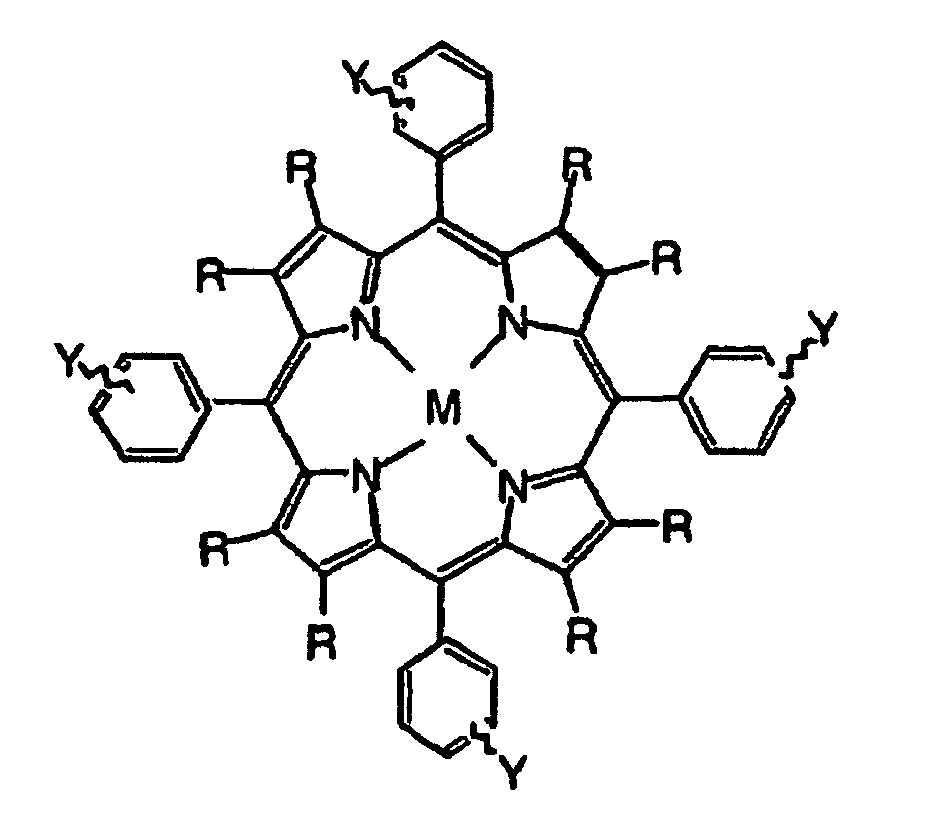
- the present invention relates to a radiation sensitizing agent (also known as a radiosensitizer) that includes a porphyrin compound of the formula wherein M is a single-photon-emission tomography (SPECT) imageable radiometal and/or a paramagnetic metal, at least one R is a halogen (fluorine, chlorine, bromine or iodine), a halogen isotope or a nitro group, and Y is selected from the group consisting of ortho, meta, or para O(CH 2 ) n C 2 HB 9 H 10 or O(CH 2 ) n C 2 HB 10 H 10 wherein, 0 ⁇ n ⁇ 20 and C 2 HB 9 H 10 is nido ortho, meta- or para-carborane and C 2 HB 10 H 10 is ortho-carborane, meta-carborane or para-carborane.
- SPECT single-photon-emission tomography
- M can be selected from the group consisting of vanadium (V), manganese (Mn), iron (Fe), ruthenium (Ru), technetium (Tc), chromium (Cr), platinum (Pt), cobalt (Co), nickel (Ni), copper (Cu), zinc (Zn), germanium (Ge), indium (In), tin (Sn), yttrium (Y) and gadolinium (Gd).
- the most preferred metals are Cu and Ni.
- from one to eight of the R is a halogen, most preferably bromine, a bromine isotope, iodine or an iodine isotope.
- At least one R is a halogen and from one to seven of the R is hydrogen.
- Y is preferably OCH 2 C 2 HB 9 H 10 , wherein C 2 HB 9 H 10 is nido-ortho-carborane or OCH 2 C 2 HB 10 H 10 , wherein C 2 HB 10 H 10 is ortho-carborane.
- the R groups are selected from the group consisting of fluorine, chlorine, bromine, iodine and a nitro group.
- the R groups are selected from the group consisting of fluorine, chlorine, bromine, iodine, a nitro group and hydrogen, wherein at least one R group is halogen.
- the compound of the formula is an active ingredient of the radiation sensitizing agent.
- the radiation sensitizing agents include porphyrin compounds which have the formula wherein M is a single-photon-emission tomography (SPECT) imageable radiometal and/or a paramagnetic metal, the R groups are selected from either the group consisting of fluorine, a fluorine isotope, chlorine, a chlorine isotope, bromine, a bromine isotope, iodine, an iodine isotope and a nitro group or the group consisting of fluorine, a fluorine isotope, chlorine, a chlorine isotope, bromine, a bromine isotope, iodine, an iodine isotope, a nitro group and hydrogen, wherein at least one R group is halogen, and Y is selected from the group consisting of ortho, meta, or para O(CH 2 ) n C 2 HB 9 H 10 or O(CH 2 ) n C 2 HB 10
- SPECT single-
- M is selected from the group consisting of V, Mn, Fe, Ru, Tc, Cr, Pt, Co, Ni, Cu, Zn, Ge, In, Sn, Y and Gd.
- Y is preferably OCH 2 C 2 HB 9 H 10 , wherein C 2 HB 9 H 10 is nido-ortho-carborane or OCH 2 C 2 HB 10 H 10 , wherein C 2 HB 10 H 10 is ortho-carborane.
- R groups can be present as any of the following
- the present invention also includes a method of tumor imaging and a method of bimodal cancer treatment that includes the administration to a subject of a composition that contains one or more of the radiation sensitizing agents described above.
- the composition is essentially the radiation sensitizing agent.
- the present invention also provides the radiosensitizer composition according to the invention and described herein, for use in medicine.
- the use is for tumor imaging and/or for a method of treating cancer.
- the cancer treatment may particularly be bimodal cancer treatment.
- the present invention also provides the use of compounds of the invention as described herein in the manufacture of a composition for tumor imaging.
- the present invention provides the use of compounds of the invention as described herein in the manufacture of a composition for cancer treatment.
- the cancer treatment may be bimodal treatment.
- the composition may well be a pharmaceutical or a medicament.
- porphyrins used in the radiation sensitizing agents of the present invention have electron-withdrawing groups at the periphery of the macrocycle the reduction potentials are more positive than those with hydrogen or alkyl groups.
- electrochemical properties are believed to be desirable for radiosensitizers in photon radiotherapy (R.A. Miller et al., Int. J. Radiat. Oncol. Biol Phys., 45, 981-989, 1999). Coupled with their biodistribution and toxcicological properties, porphyrins of the present invention are believed to have potential as effective radiosensitizers.
- the present invention relates to radiation sensitizing agents which include halogenated (i.e., fluorinated, chlorinated, brominated and iodinated) and nitrated tetraphenylporphyrins and their use as imageable tumor-targeting agents for ionizing and/or non-ionizing radiation therapy.
- halogenated tetraphenylporphyrins are synthesized from carborane-containing tetraphenylporphyrins.
- halogenated tetraphenylporphyrins of the present invention are octahalogen analogs of the carborane-containing tetraphenylporphyrins and are prepared by synthesizing the carborane-containing tetraphenylporphyrins with a halogen in a solvent mixture such as chloroform and carbon tetrachloride.
- CuTCPH and CuTCP two carborane-containing tetraphenylporphyrins, have been found to deliver high concentrations of boron to various tumors in animals.
- CuTCPH-mediated BNCT can control a considerable percentage of animal tumors with little normal tissue damage.
- CuTCPH is brominated to form CuTCPBr, an octa-bromo analog, which has biodistribution and toxicological properties similar to those of CuTCP in mice bearing EMT-6 mammary carcinomas.
- Such brominated porphyrins are easier to reduce than their bromine-free precursors.
- texaphyrin the low reduction potential of a larger macrocycle, texaphyrin, is responsible for its high in-vivo efficacy as a tumor-selective radiosensitizer during photon-based radiotherapy of tumors.
- CuTCPBr has a major practical advantage over the texaphyrins for BNCT because its tumor:normal brain and tumor:blood concentration ratios are 100:1 vs. 10:1 for the texaphyrins.
- Figure 1 shows the synthesis of CuTCPBr from CuTCPH using a bromination procedure that includes dissolving CuTCPH in a 1:1 solvent mixture of chloroform and carbon tetrachloride. While the mixture is stirred, bromine in the same solvent mixture is added. Pyridine in a solvent mixture is then added and constantly stirred at room temperature. The excess bromine is then quenched with an aqueous sodium metabisulfite solution. The reaction mixture is formed by extracting the organic layer and washing with water. The organic layer is then dried and the solvents removed.
- CuTCPC1 is formed using N-chlorosuccinimide as the chlorinated agent and CuTCP1 is formed using a similar iodinating reagent.
- Hepta- and octa-nitro porphyrins can be synthesized using nitric acid and acetic anhydride in the presence of K10 montmorillonite.
- the beta-substituted fluoroporphyrins cannot be synthesized by fluorination of beta-free porphyrins, but must be synthesized using 3,4 difluoropyrrole as a starting material for the porphyrin cyclization.
- halogenated tetraphenylporphyrins of the present invention can also be synthesized using isotopes of the different halogens.
- CuTCPBr and the hepta- and octonitro tetraphenylporphyrins have a range of reduction potentials that encompasses those of the texaphyrins.
- the examples that follow show the effectiveness of the biodistribution properties of these compounds in tests conducted using mice bearing EMT-6 carcinomas.
- Photoactivation can be somewhat amplified by tuning the X-ray energy to that above the K-edge of either the metal or the halogen.
- the K-edge is determined by the interaction of the K-shell electron with the nucleus of the atom and it is unique for each element.
- Each element has its own unique K-shell binding energy.
- 64 Cu, 18 F and 76 Br are isotopes available for quantitative positron-emission tomography (PET).
- PET quantitative positron-emission tomography
- the 64 Cu and 76 Br can be attached to the tetraphenylporphyrins at a late stage in the synthesis.
- porphyrin compounds of the present invention that have been tested in vivo are non-toxic at potentially therapeutic doses.
- Implementation of BNCT and/or PDT in animals and patients so dosed could selectively destroy tumor tissue without disruption of normal tissue function when irradiated with epithermal neutrons or laser light.
- the tumor destruction could occur without the serious side effects that may be observed in conventional tumor therapy, such as radiotherapy or chemotherapy.
- a systemically injected or infused dose of about 100-400 mg halogenated tetraphenylporphyrin compound per kg body weight in a pharmaceutically acceptable carrier is administered to a patient.
- a pharmaceutically acceptable carrier could include liposomes and/or commercially available solvents, such as Cremophore EL, propylene glycol, Tween 80
- the compound is administered in one or more doses, the last dose being given between about one hour and one week prior to the epithermal neutron irradiation.
- any of the presently invented compounds would also permit a series of such irradiations in a so-called "fractionated irradiation schedule.”
- a schedule is deemed to be advantageous in sparing damage to normal tissues in conventional photon radiation therapy.
- the quantity of the halogenated tetraphenylporphyrin used in any particular treatment depends on, among other factors, the boron concentration delivered to the tumor and the toxicity of the compound at doses that are therapeutically useful.
- the timing of the neutron exposure depends upon the concentration of the boron in blood, which decreases more rapidly with time than does the tumor boron concentration.
- the timing of the administration of the halogenated tetraphenylporphyrin depends on various considerations. Important considerations are the pharmacokinetic behavior of the compound, (e.g., the rate of absorption of the compound into the tumor and into the tumor vasculature) and the rate of excretion from and/or metabolism of the compound in the various tissues that absorb the compound in the patient.
- porphyrins accumulate robustly in many kinds of tumors as well as in a few non-tumorous tissues. In human cancer therapy, this property has been used only for photodynamic therapy (PDT) to date.
- PDT photodynamic therapy
- pre-clinical research is active in developing carboranyl derivatives of porphyrins for boron neutron-capture therapy (BNCT).
- a brominated carboranylporphyrins is synthesized to provde an imageable nuclide in a porphyrin that can also be used to image a tumor non-invasively. Since the ratio of the imageable nuclide to the boron is invariant if the administered boronated compound is substantially chemically stable in vivo, quantification of the imaged nuclide, voxel by voxel, provides real-time quantification of the boron, voxel by voxel. This greatly enhances the treatment planning for clinical porphyrin-based BNCT and therefore adds to the potential advantage of the high tumor boron concentrations already demonstrated by some carboranyl porphyrins.
- a metalloporphyrins is copper octabromotetracarboranylphenylporphyrin.
- SPECT single-photon emission computed tomography
- iodine is substituted for bromine and PET and SPECT can be used with 124 I and 131 I respectively.
- non-radioactive natural abundance iodine can be used with spiral computed tomography (CT) to localize and quantify tumor boron rapidly by employing the iodine component of CuTCP1 as a radiographic contrast-enhancing element.
- CT spiral computed tomography
- the reduction potential of the porphyrin macrocycle becomes more positive (i.e., more easily reduced) with the addition of electron-withdrawing groups such as bromine.
- the first reduction potential E 1/2 for copper tetraphenylporphyrin (CuTPP) is -1.2 V, whereas that for copper octabromotetraphenylporphvrin (CuOBP) is -0.59 V.
- the meta-substituted carboranylmethoxy group on the phenyl moiety of copper tetracarboranylmethoxyphenylporphyrin (CuTCPH) is not expected to affect the reduction potential. Accordingly, the E 1/2 for the octabromo derivative of CuTCPH (i.e., CuTCPBr) is estimated to be approximately -0.59 V.
- the radiation-enhancement properties of gadolinium texaphyrins are attributed to their relatively large reduction potentials, -0.04 V. However, reduction potentials that are optimal for radiotherapy have not yet been determined.
- the eight bromo groups in CuTCPBr provide moderately strong electron-withdrawing groups to the tetraphenylporphyrin structure. If more positive reduction potentials are required for greater efficacy in the control of neoplastic tissues, groups with greater electron-withdrawing properties such as fluoro or nitro groups can be used in place of the bromo substituents.
- carboranylporphyrins of the present invention provide low toxicity and high tumor accumulation of the described porphyrins.
- carboranylporphyrins of the present invention can be used in a variety of cancer treatment modalities and they are imageable by a number of different methods.
- CuTCPBr was synthesized from CuTCPH by a bromination procedure.
- CuTCPH 200 mg, 0.146 mmol
- a 1:1 solvent mixture of chloroform and carbon tetrachloride 70 mL
- bromine 240 ⁇ L, 4.6 mmol
- Pyridine 0.6 mL
- a solvent mixture 15 mL
- the next morning the excess bromine was quenched with an aqueous 20% sodium metabisulfite solution (40 mL).
- the reaction mixture was worked up by extracting the organic layer and washing 3 times with water. The organic layer was then dried over anhydrous sodium sulfate and the solvents removed in vacuo.
- the desired product was purified by preparative thin layer chromatography. The yield was 176 mg (0.088 mmol) which is about 60%.
- the compound was characterized by optical absorption spectroscopy and fast-atom bombardment mass spectral analysis.
- the NMR was difficult to interpret because of the presence of copper, a paramagnetic metal.
- the optical spectrum showed a pattern consistent with octabromination of the starting porphyrin.
- the Soret band shifted from 415 to 440 nm and the visible band shifted from 540 to 580 nm.
- a mass spectrum showed a parent ion peak that matched the molecular weight of the compound at 1996.
- mice bearing subcutaneously implanted EMT-6 mammary carcinomas on the dorsal thorax were given a total dose of 186 ⁇ g CuTCPBr/g body weight in 6 intraperitoneal (ip) injections over a period of 2 days.
- ip intraperitoneal
- mice Four days after the last injection mice were euthanized and the average boron concentrations ( ⁇ g/g wet tissue) were measured for different types of tissue. The results are shown in Table 1.
- mice bearing subcutaneous EMT-6 leg tumors were given 156 ⁇ g CuTCPBr/gbw in a volume of 0.01 mL/gbw/injection over a period of 2 days. Boron concentrations ( ⁇ g/g) in various tissues from the BALB/c mice was then tested and the results are shown in Table 2.
- TABLE 2 Days after last injection No. mice Tumor Blood Cerebrum Ears Liver 2 6 24 ⁇ 11 0.2 ⁇ 0.1 0 ⁇ 0.1 1 ⁇ 1 271 ⁇ 40 5 5 13 ⁇ 6 0.1 ⁇ 0.1 0.6 ⁇ 1 0.6 ⁇ 0.7 308 ⁇ 40
- the tumor boron concentrations in the leg are significantly lower than those found in the dorsal thorax. There is a larger vascular system surrounding the dorsal thorax compared with the leg, which may be a factor. However, in the case of CuTCPH, the boron concentration was 30% higher in leg tumors compared to back tumors. Normalizing to the slightly higher dose of the first study, the tumor boron concentration should be about 29 and 15 ⁇ g/g at 2d and 5d, respectively, which are still low. Studies are underway to repeat these experiments.
- the results for CuTCPBr in Table 4 show that the tumor boron concentrations were high and the tumor to blood and tumor to brain boron concentration ratios were also high.
- the tumor to blood boron concentration ratio after two days was approximately 8:1 and after four days it increased to 232:1.
- the tumor to brain boron concentration ratio after two days was approximately 197:1 and after four days it increased to 225:1.
- the biodistribution properties for CuTCPBr are similar to other lipophilic tetracarboranyl tetraphenylporphyrins studied previously, particularly the results for CuTCPH which were reported in Rad. Res. 155, 603-610, 2001 and are listed in columns four and five of Table 4.
- the CuTCPH results were based on two groups of seven (7) BALB/c mice which were given 180 ⁇ g/gbw CuTCPH in six intraperitoneal injections over 2 days. The first group of mice was euthanized two days after the last injection and the second group four days after the last injection. The boron concentrations in different tissues were then measured.
- This example used the experimental rat 9L gliosarcoma model and the protocol used to administer porphyrins by intravenous infusion that were reported in J. NeuroOncol, 52, 111-117, 2001.
- Six (6) male Fischer 344 rats bearing subcutaneous 9L gliosarcomas were infused intravenously with CuTCPBr at a total dose of 220 ⁇ g/gbw over 48 hours. Tumor and blood were sampled from each at zero, one, two and three days after the end of infusion and the boron concentrations measured. The results are shown in Table 5.
- Table 5 shows tumor and blood boron concentrations and their ratio as a function of time. Similar to other lipophilic tetraphenylporphyrins that have been tested, the tumor boron decreases slowly with time, as the blood boron decreases rapidly, so that tumor to blood boron ratios increase considerably over time with tumor boron levels remaining at therapeutic levels.
- the biodistribution of CuTCPBr was compared to CuTCPH.
- a group of six (6) male Fischer 344 rats bearing subcutaneous 9L gliosarcomas were infused intravenously with CuTCPBr at a total dose of 220 ⁇ g/gbw over 48 hours.
- a second group of four (4) male Fischer 344 rats bearing subcutaneous 9L gliosarcomas were infused intravenously with CuTCPH at a total dose of 195 ⁇ g/gbw. over 48 hours. Boron concentrations in tissues from both groups of rats were taken three days after the end of infusion.
- the results for the CuTCPBr group of rats are listed in column 2 of Table 6 and the results for the CuTCPH group of rats are listed in column 4 of Table 6.
- the boron concentrations in tissues from rats given CuTCPBr were normalized so that they would be equivalent to the boron concentrations of rats given CuTCPH. This was done by multiplying the boron concentrations in the CuTCPBr group of rats by the CuTCPBr to CuTCPH boron dose ratio of 1.3.
- the normalized boron concentrations for the CuTCPBr group of rats are listed in column 3 of Table 6.
- Table 6 shows both the actual boron concentration values for both CuTCPH and CuTCPBr and normalized values for CuTCPBr at an equal boron dose to CuTCPH. Biodistribution values are similar for the two compounds at equal boron doses. Toxicity does not appear to be a major problem with either compound.
- mice Female BALB/c mice (20-25 g) (20-25 g) were used in radiotherapy studies to compare tumor control effects in mice bearing EMT-6 mammary tumors.
- the EMT-6 leg tumors were formed by mincing freshly removed tumor tissue from mice into fragments no larger than 0.5 mm. The fragments were mixed in a saline solution and implanted subcutaneously (sc) in the legs of mice using an 18-gauge trocar. Tumor fragments were used because in this particular location tumors initiated by cell suspensions tend to spread in a thin subcutaneous layer and invade the subjacent muscle. Using tumor fragments, the tumors are palpable, but thinner on the leg than on the dorsal thorax. In late stage, fragment-initiated tumors can invade muscle tissue but not as frequently as do suspension-initiated tumors.
- mice were stratified by tumor volume into six (6) matched experimental groups, which included five groups of twelve (12) mice each and a control group of thirty-three (33). Two groups were treated with ⁇ 400 ⁇ g/g body weight CuTCPBr and given two doses of 100 kVp x-irradiation x-rays, two groups were treated with only two doses of 100 kVp x-irradiation, one group received CuTCPBr and were euthanized the day of irradiation. The function of the group which was immediately euthanized was to determine the boron concentration in tissues at the time of irradiation. It was not a control group upon which the effectiveness of treatment was compared. The control group of thirty-three mice was not treated at all. The results are shown in Figure 2.
- mice were anesthetized with sodium pentobarbital ( ⁇ 60 ⁇ g/gbw i.p.). Each mouse was anesthetized and positioned behind a 1-cm thick lead shield with the tumor-bearing leg extended across a 2-cm aperture in the lead shield in a manner similar to that used in thermal beam irradiation. Tumors were irradiated at a dose rate of 2.10 Gy/min using a Philips RT-100 source at 100 kVp/8mA with 0.4 mm copper filtration and a focus-to-skin distance of 10 cm. Dose rates of 25 Gy and 35 Gy were administered by varying the length of time that the mice were irradiated, e.g., to achieve 25 Gy, the mice were irradiated for 11.9 minutes at 2.10 Gy/min.
- Tumor volumes ranged from approximately 20 - 170 mm 3 in each of the five groups of treated mice. Tumor dimensions were measured 2-3 times per week and mice were euthanized either when calculated tumor volumes (x 2 y/2, where x is the shorter surface dimension) exceeded 500 mm 3 or when skin ulceration was observed. Mice were weighed when the tumors were measured, except during the first week, when they were weighed daily. Skin damage was considered severe when there was evidence of moist desquamation.
- % tumor control is defined as the number of mice whose tumors were "cured” divided by the total number of mice in a particular dose group. The % tumor control was found to be dose-related, with 25 Gy of single-dose x-rays delivering a 25.0% control rate and 35 Gy a 33.3% control rate.
Landscapes
- Health & Medical Sciences (AREA)
- Chemical & Material Sciences (AREA)
- Life Sciences & Earth Sciences (AREA)
- Medicinal Chemistry (AREA)
- Pharmacology & Pharmacy (AREA)
- Animal Behavior & Ethology (AREA)
- General Health & Medical Sciences (AREA)
- Public Health (AREA)
- Veterinary Medicine (AREA)
- Organic Chemistry (AREA)
- Epidemiology (AREA)
- Chemical Kinetics & Catalysis (AREA)
- Gastroenterology & Hepatology (AREA)
- General Chemical & Material Sciences (AREA)
- Nuclear Medicine, Radiotherapy & Molecular Imaging (AREA)
- Proteomics, Peptides & Aminoacids (AREA)
- Physics & Mathematics (AREA)
- Optics & Photonics (AREA)
- Medicines Containing Antibodies Or Antigens For Use As Internal Diagnostic Agents (AREA)
- Pharmaceuticals Containing Other Organic And Inorganic Compounds (AREA)
- Medicines That Contain Protein Lipid Enzymes And Other Medicines (AREA)
- Nitrogen Condensed Heterocyclic Rings (AREA)
- Radiation-Therapy Devices (AREA)
- Preparation Of Compounds By Using Micro-Organisms (AREA)
Claims (41)
- Radiosensibilisator, welcher eine Verbindung mit folgender Formel aufweist:

- Radiosensibilisator nach Anspruch 1, wobei zwei oder mehr R-Gruppen ausgewählt sind aus der Gruppe bestehend aus Brom, einem Bromisotop, Iod, einem Iodisotop, Chlor, einem Chlorisotop, Fluor, einem Fluorisotop, einer Nitrogruppe und Wasserstoff.
- Radiosensibilisator nach Anspruch 1, wobei M ausgewählt ist aus der Gruppe bestehend aus Vanadium (V), Mangan (Mn), Eisen (Fe) Ruthenium (Ru), Technetium (Tc), Chrom (Cr), Platin (Pt), Kobalt (Co), Nickel (Ni), Kupfer (Cu), Zink (Zn), Germanium (Ge), Indium (In), Zinn (Sn), Yttrium (Y) und Gadolinium (Gd).
- Radiosensibilisator nach Anspruch 3, wobei zwei oder mehr R-Gruppen ausgewählt sind aus der Gruppe bestehend aus Brom, einem Bromisotop, Iod, einem Iodisotop, Chlor, einem Chlorisotop, Fluor, einem Fluorisotop, einer Nitrogruppe und Wasserstoff.
- Radiosensibilisator nach Anspruch 1, wobei ein bis sieben der R-Gruppen Wasserstoff sind.
- Radiosensibilisator nach Anspruch 3, wobei ein bis sieben der R-Gruppen Wasserstoff sind.
- Radiosensibilisator nach Anspruch 1, wobei Y OCH2C2HB9H10 ist, und wobei C2HB9H10 Nido-Ortho-Carboran ist.
- Radiosensibilisator nach Anspruch 1, wobei Y OCH2C2HB10H10 ist, und wobei C2HB10H10 Ortho-Carboran ist.
- Radiosensibilisator nach Anspruch 4, wobei Y OCH2C2HB9H10 ist.
- Radiosensibilisator nach Anspruch 4, wobei Y OCH2C2HB10H10 ist.
- Radiosensibilisator, welcher eine Verbindung mit folgender Formel aufweist:
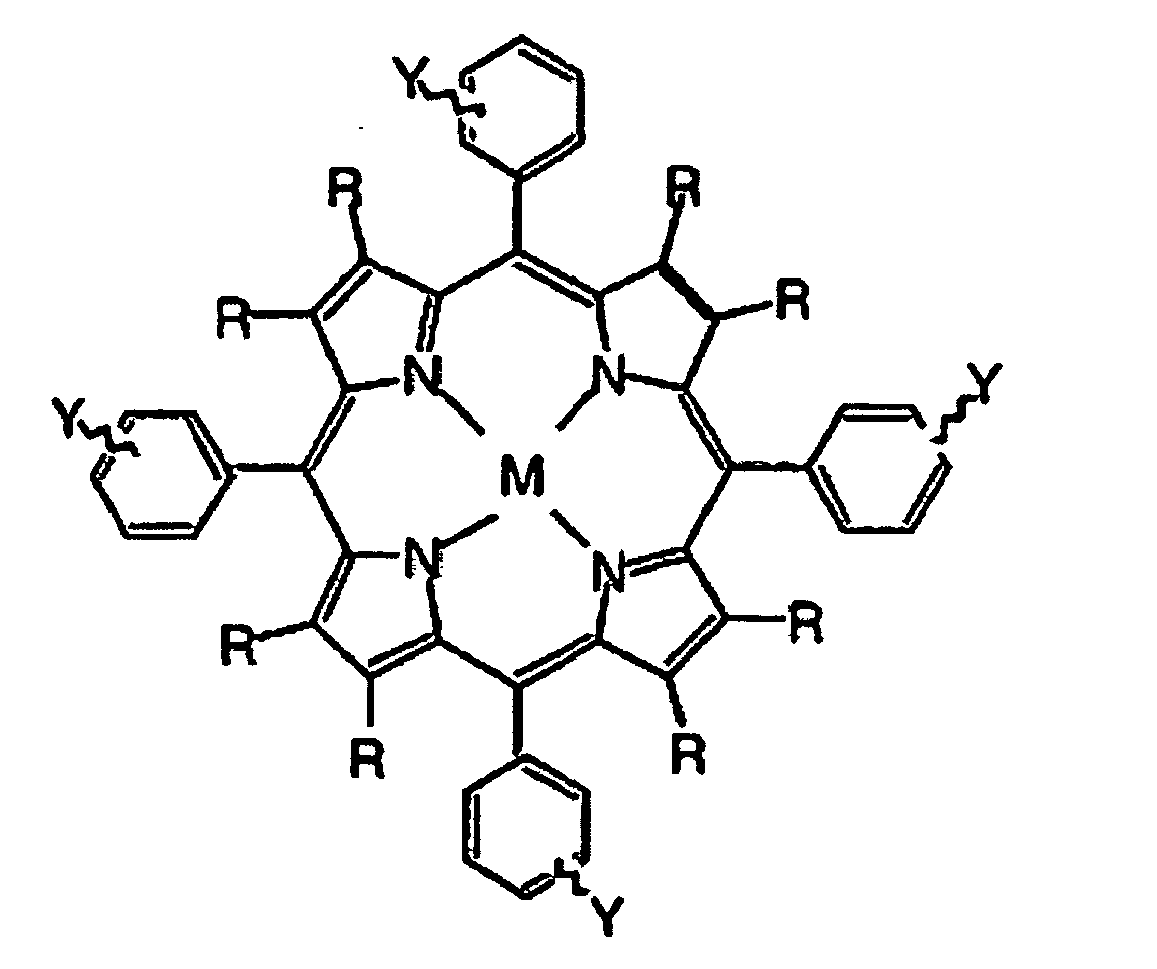
- Radiosensibilisator nach Anspruch 11, wobei Y OCH2C2HB9H10 ist, und wobei C2HB9H10 Nido-Ortho-Carboran ist.
- Radiosensibilisator nach Anspruch 11, wobei Y OCH2C2BB10H10 ist, und wobei C2HB10H10 Ortho-Carboran ist.
- Radiosensibilisator nach Anspruch 11, wobei zumindest ein R Brom oder ein Bromisotop ist oder zumindest ein R Brom und zumindest ein R ein Bromisotop ist, und Y OCH2C2HB9H10 oder OCH2C2HB10H10 ist.
- Radiosensibilisator nach Anspruch 11, wobei zumindest ein R Brom oder ein Bromisotop ist oder zumindest ein R Brom und zumindest ein R ein Bromisotop ist, wobei optional zumindest ein R Wasserstoff ist und Y OCH2C2HB9H10 oder OCH2C2HB10H10 ist.
- Radiosensibilisator, welcher eine Verbindung mit folgender Formel aufweist:

- Verbindung nach Anspruch 16, wobei Y OCH2C2HB9H10 ist, und wobei C2HB9H10 Nido-Ortho-Carboran ist.
- Verbindung nach Anspruch 16, wobei Y OCH2C2HB10H10 ist, und wobei C2HB10H10 Ortho-Carboran ist.
- Verbindung nach Anspruch 11, wobei zumindest ein R Iod oder ein Iodisotop ist oder zumindest ein R Iod ist und zumindest ein R ein Iodisotop ist, und Y OCH2C2HB9H10 oder OCH2C2HB10H10 ist.
- Verbindung nach Anspruch 11, wobei zumindest ein R Iod oder ein Iodisotop ist oder zumindest ein R Iod ist und zumindest ein R ein Iodisotop ist, wobei optional zumindest ein R Wasserstoff ist, und Y OCH2C2HB9H10 oder OCH2C2HB10H10 ist.
- Zusammensetzung, welche einen Radiosensibilisator aufweist, welcher eine Verbindung mit folgender Formel aufweist:

- Zusammensetzung nach Anspruch 21, wobei zwei oder mehr R-Gruppen ausgewählt sind aus der Gruppe bestehend aus Brom, einem Bromisotop, Iod, einem Iodisotop, Chlor, einem Chlorisotop, Fluor, einem Fluorisotop, einer Nitrogruppe und Wasserstoff, zur Verwendung bei der Tumordarstellung.
- Zusammensetzung nach Anspruch 21, wobei M ausgewählt ist aus der Gruppe bestehend aus Vanadium (V), Mangan (Mn), Eisen (Fe) Ruthenium (Ru), Technetium (Tc), Chrom (Cr), Platin (Pt), Kobalt (Co), Nickel (Ni), Kupfer (Cu), Zink (Zn), Germanium (Ge), Indium (In), Zinn (Sn), Yttrium (Y) und Gadolinium (Gd), zur Verwendung bei der Tumordarstellung.
- Zusammensetzung nach Anspruch 23, wobei zwei oder mehr R-Gruppen ausgewählt sind aus der Gruppe bestehend aus Brom, einem Bromisotop, Iod, einem Iodisotop, Chlor, einem Chlorisotop, Fluor, einem Fluorisotop, einer Nitrogruppe und Wasserstoff, zur Verwendung bei der Tumordarstellung.
- Zusammensetzung nach Anspruch 21, wobei ein bis sieben der R-Gruppen Wasserstoff sind, zur Verwendung bei der Tumordarstellung.
- Zusammensetzung nach Anspruch 23, wobei ein bis sieben der R-Gruppen Wasserstoff sind, zur Verwendung bei der Tumordarstellung.
- Zusammensetzung nach Anspruch 21, wobei die Zusammensetzung im Wesentlichen die Verbindung ist, zur Verwendung bei der Tumordarstellung.
- Radiosensibilisator, welcher eine Zusammensetzung aufweist, welche eine Verbindung mit folgender Formel aufweist:

- Radiosensibilisator nach Anspruch 28, wobei zwei oder mehr R-Gruppen ausgewählt sind aus der Gruppe bestehend aus Brom, einem Bromisotop, Iod, einem Iodisotop, Chlor, einem Chlorisotop, Fluor, einem Fluorisotop, einer Nitrogruppe und Wasserstoff, zur Verwendung bei bimodaler Krebsbehandlung.
- Radiosensibilisator nach Anspruch 28, wobei M ausgewählt ist aus der Gruppe bestehend aus Vanadium (V), Mangan (Mn), Eisen (Fe) Ruthenium (Ru), Technetium (Tc), Chrom (Cr), Platin (Pt), Kobalt (Co), Nickel (Ni), Kupfer (Cu), Zink (Zn), Germanium (Ge), Indium (In), Zinn (Sn), Yttrium (Y) und Gadolinium (Gd), zur Verwendung bei bimodaler Krebsbehandlung.
- Radiosensibilisator nach Anspruch 30, wobei zwei oder mehr R-Gruppen ausgewählt sind aus der Gruppe bestehend aus Brom, einem Bromisotop, Iod, einem Iodisotop, Chlor, einem Chlorisotop, Fluor, einem Fluorisotop, einer Nitrogruppe, einer Kombination daraus oder einer Kombination daraus, welche Wasserstoff beinhalted, zur Verwendung bei bimodaler Krebsbehandlung.
- Radiosensibilisator nach Anspruch 28, wobei ein bis sieben der R-Gruppen Wasserstoff sind, zur Verwendung bei bimodaler Krebsbehandlung.
- Radiosensibilisator nach Anspruch 30, wobei ein bis sieben der R-Gruppen Wasserstoff sind, zur Verwendung bei bimodaler Krebsbehandlung.
- Radiosensibilisator nach Anspruch 28, wobei die Zusammensetzung im Wesentlichen die Verbindung ist, zur Verwendung bei bimodaler Krebsbehandlung.
- Radiosensibilisator, welcher eine Verbindung mit folgender Formel aufweist:
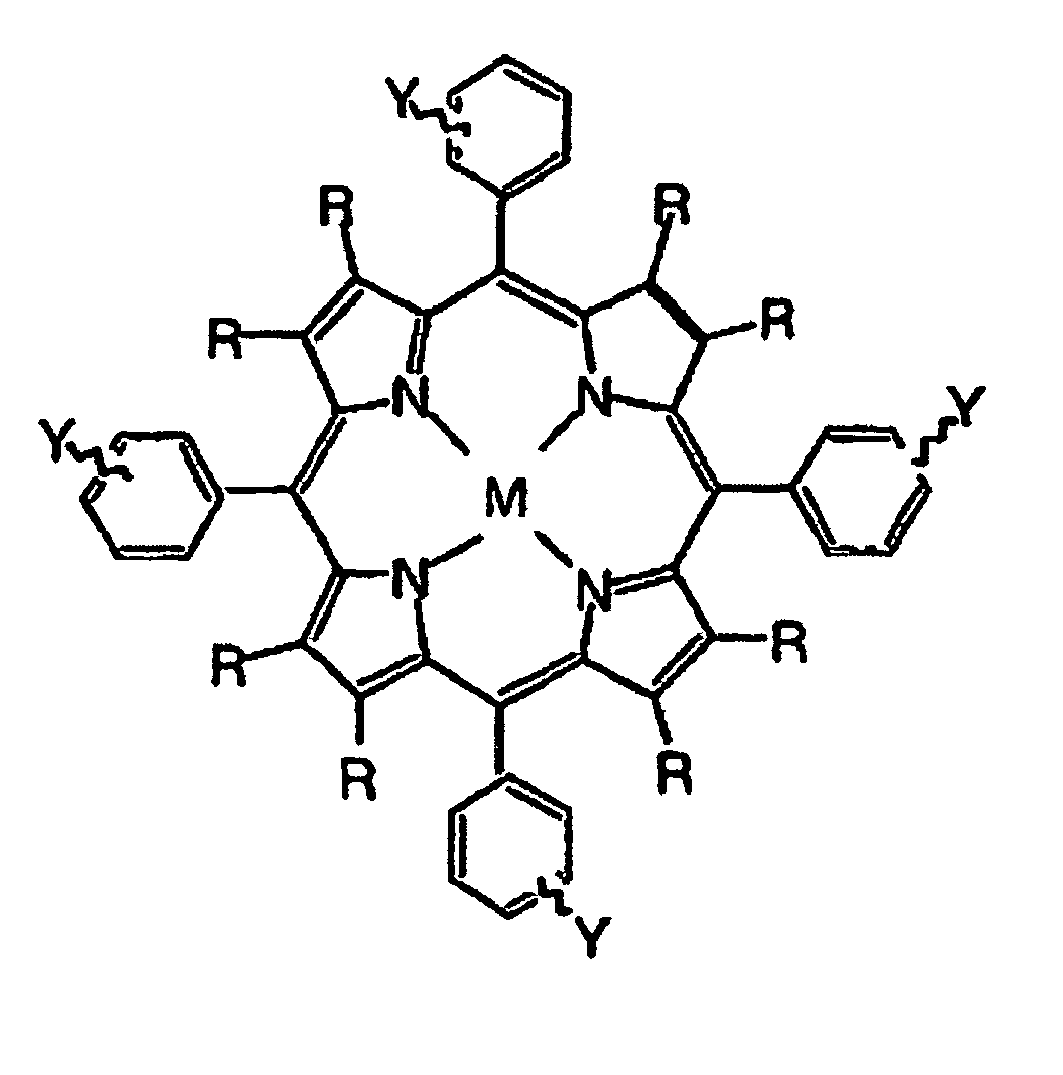
- Radiosensibilisator, welcher eine Verbindung mit folgender Formel aufweist:

- Radiosensibilisator, welcher eine Verbindung mit folgender Formel aufweist:

- Verwendung einer Verbindung mit folgender Formel:
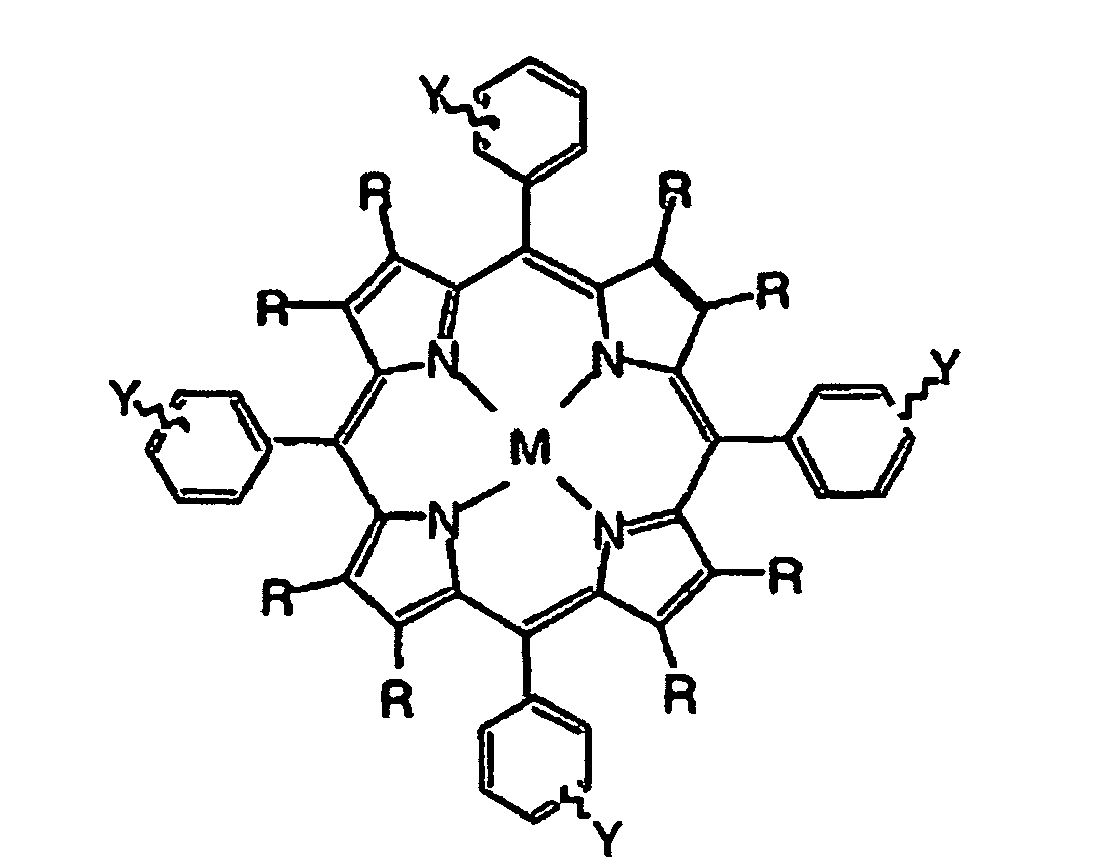
- Verwendung einer Verbindung mit folgender Formel:

- Verfahren zur Herstellung einer Verbindung mit folgender Formel:
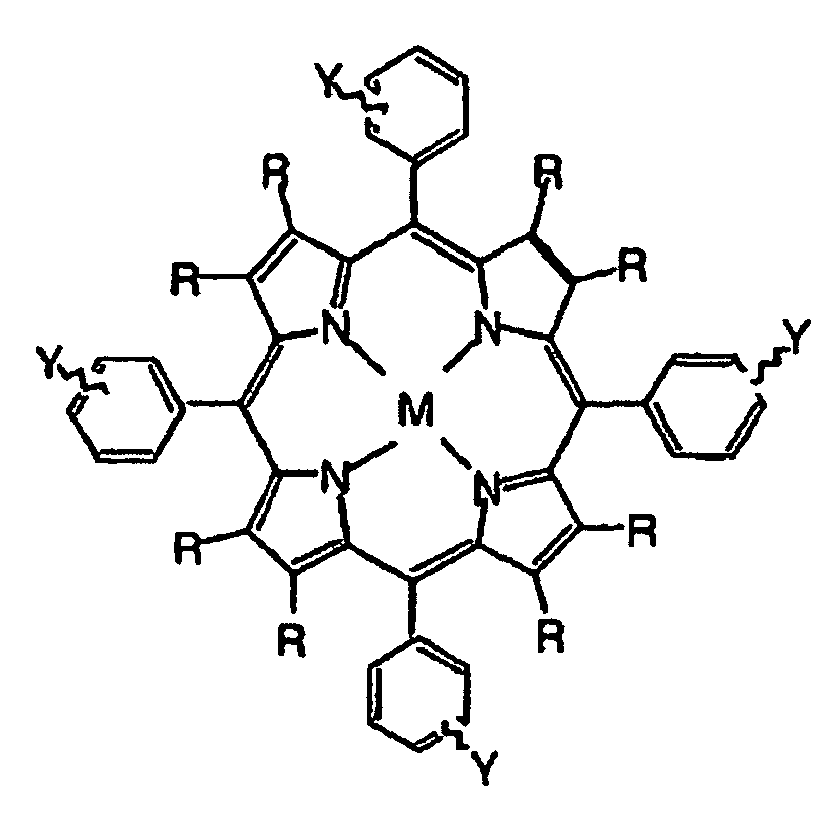
- Verfahren zur Herstellung einer Verbindung mit folgender Formel:
Applications Claiming Priority (5)
| Application Number | Priority Date | Filing Date | Title |
|---|---|---|---|
| US874203 | 2001-06-06 | ||
| US09/874,203 US6566517B2 (en) | 2001-06-06 | 2001-06-06 | Metalloporphyrins and their uses as imageable tumor-targeting agents for radiation therapy |
| US10/117,010 US6759403B2 (en) | 2001-06-06 | 2002-04-05 | Metalloporphyrins and their uses as radiosensitizers for radiation therapy |
| US117010 | 2002-04-05 | ||
| PCT/US2002/017715 WO2002098417A1 (en) | 2001-06-06 | 2002-06-05 | Novel metalloporphyrins and their uses as radiosensitizers for radiation therapy |
Publications (3)
| Publication Number | Publication Date |
|---|---|
| EP1404319A1 EP1404319A1 (de) | 2004-04-07 |
| EP1404319A4 EP1404319A4 (de) | 2005-03-23 |
| EP1404319B1 true EP1404319B1 (de) | 2006-03-22 |
Family
ID=26814828
Family Applications (1)
| Application Number | Title | Priority Date | Filing Date |
|---|---|---|---|
| EP02737384A Expired - Lifetime EP1404319B1 (de) | 2001-06-06 | 2002-06-05 | Neue metalloporphyrine und ihre verwendung als radiosensibilisatoren für die strahlentherapie |
Country Status (13)
| Country | Link |
|---|---|
| EP (1) | EP1404319B1 (de) |
| JP (1) | JP4247110B2 (de) |
| CN (1) | CN1279907C (de) |
| AT (1) | ATE320808T1 (de) |
| AU (1) | AU2002310314B2 (de) |
| CA (1) | CA2449316A1 (de) |
| DE (1) | DE60210074T2 (de) |
| DK (1) | DK1404319T3 (de) |
| ES (1) | ES2257554T3 (de) |
| GB (1) | GB2393123B (de) |
| PT (1) | PT1404319E (de) |
| RU (1) | RU2310447C2 (de) |
| WO (1) | WO2002098417A1 (de) |
Families Citing this family (22)
| Publication number | Priority date | Publication date | Assignee | Title |
|---|---|---|---|---|
| ATE437657T1 (de) * | 2004-03-02 | 2009-08-15 | Cellectar Inc | Phospholipid-analoga für die behandlung von krebs |
| US6989443B2 (en) * | 2004-06-28 | 2006-01-24 | Brookhaven Science Associates, Llc | Carboranylporphyrins and uses thereof |
| GB0415663D0 (en) | 2004-07-13 | 2004-08-18 | Psimei Pharmaceuticals Plc | Compound |
| GB0427589D0 (en) * | 2004-12-16 | 2005-01-19 | Psimei Pharmaceuticals Plc | Process for the preparation of a substituted porphyrin |
| EP1704870A1 (de) | 2005-03-25 | 2006-09-27 | Nipro Corporation | Verwendung von Eisenverbindungen als Radiosensitizer |
| US8287839B2 (en) | 2006-12-04 | 2012-10-16 | Brookhaven Science Associates, Llc | Carboranylporphyrins and uses thereof |
| RU2402554C2 (ru) * | 2008-07-17 | 2010-10-27 | Российская Федерация, от имени которой выступает государственный заказчик-Федеральное агентство по науке и инновациям | Карборанильные производные фторированных порфиринов и их металлокомплексы, проявляющие свойства фотосенсибилизатора, и способ их получения |
| WO2011034183A1 (ja) * | 2009-09-17 | 2011-03-24 | 国立大学法人九州大学 | ポルフィリン化合物 |
| EP2526103B1 (de) * | 2010-01-22 | 2016-05-04 | Council of Scientific & Industrial Research | Verfahren zur herstellung neuer porphyrinderivate und deren verwendung als pdt-wirkstoffe und fluoreszenzsonden |
| EP2785339A4 (de) * | 2011-12-02 | 2015-11-25 | Univ Colorado Regents | Neurologische behandlungen mit metalloporphyrin |
| US9345769B2 (en) * | 2012-04-15 | 2016-05-24 | Sherri Ann McFARLAND | Metal-based thiophene photodynamic compounds and their use |
| GB201212409D0 (en) | 2012-07-12 | 2012-08-22 | Morex Dev Partners Llp | Cancer treatment |
| BR112015023568B8 (pt) | 2013-03-15 | 2024-01-02 | Ann Mcfarland Sherri | Composto à base de metal como composto fotodinâmico |
| RU2551539C2 (ru) * | 2013-08-01 | 2015-05-27 | Федеральное Государственное Бюджетное Учреждение Науки Институт Биохимической Физики Им. Н.М. Эмануэля Российской Академии Наук (Ибхф Ран) | Способ получения борированных порфиринов |
| RU2533267C1 (ru) * | 2013-10-07 | 2014-11-20 | Государственное бюджетное образовательное учреждение высшего профессионального образования "Тихоокеанский государственный медицинский университет" Министерства здравоохранения Российской Федерации (ГБОУ ВПО ТГМУ Минздрава России) | Способ фотон-захватной терапии опухолей |
| JP6731730B2 (ja) * | 2015-01-07 | 2020-07-29 | 東京都公立大学法人 | 抗酸化機能を有するエピジェネティクコントロールキャリアによる慢性閉塞性肺疾患(copd)治療 |
| RU2615770C1 (ru) * | 2015-12-21 | 2017-04-11 | Общество с ограниченной ответственностью "Пермская химическая компания" | Борированные производные фторированных бактериохлоринов и их металлокомплексов, обладающие противоопухолевой активностью |
| CN109748914B (zh) * | 2018-12-29 | 2021-05-25 | 上海珂臻医药科技有限公司 | 吡啶并嘧啶类化合物及其应用 |
| RU2702294C1 (ru) * | 2019-01-18 | 2019-10-07 | Федеральное государственное бюджетное научное учреждение "Томский национальный исследовательский медицинский центр Российской академии наук ("Томский НИМЦ") | Способ радионуклидной диагностики операбельного рака молочной железы с гиперэкспрессией Her2/neu |
| CN111053902A (zh) * | 2019-12-26 | 2020-04-24 | 深圳市纳诺艾医疗科技有限公司 | 一种携带共振原子的放疗或化疗药物及其应用 |
| CN112442095B (zh) * | 2020-12-01 | 2022-07-22 | 上海科黛生物科技有限公司 | 一种维生素b12的精制方法及所得产品的应用 |
| CN113061260B (zh) * | 2021-03-19 | 2022-04-29 | 暨南大学 | 一种稀土金属卟啉框架材料及其制备方法与应用方法 |
Family Cites Families (3)
| Publication number | Priority date | Publication date | Assignee | Title |
|---|---|---|---|---|
| US587716A (en) * | 1897-08-10 | Hattie edith evans | ||
| US4959356A (en) * | 1989-05-26 | 1990-09-25 | The United States Of America As Represented By The United States Department Of Energy | Porphyrins for boron neutron capture therapy |
| US5149801A (en) * | 1990-11-21 | 1992-09-22 | The Regents Of The University Of California | Boronated porphyrin compounds |
-
2002
- 2002-06-05 EP EP02737384A patent/EP1404319B1/de not_active Expired - Lifetime
- 2002-06-05 RU RU2003138076/04A patent/RU2310447C2/ru not_active IP Right Cessation
- 2002-06-05 WO PCT/US2002/017715 patent/WO2002098417A1/en not_active Ceased
- 2002-06-05 CA CA002449316A patent/CA2449316A1/en not_active Abandoned
- 2002-06-05 AU AU2002310314A patent/AU2002310314B2/en not_active Ceased
- 2002-06-05 JP JP2003501456A patent/JP4247110B2/ja not_active Expired - Fee Related
- 2002-06-05 PT PT02737384T patent/PT1404319E/pt unknown
- 2002-06-05 AT AT02737384T patent/ATE320808T1/de active
- 2002-06-05 CN CNB028136705A patent/CN1279907C/zh not_active Expired - Fee Related
- 2002-06-05 GB GB0400163A patent/GB2393123B/en not_active Expired - Fee Related
- 2002-06-05 DK DK02737384T patent/DK1404319T3/da active
- 2002-06-05 DE DE60210074T patent/DE60210074T2/de not_active Expired - Lifetime
- 2002-06-05 ES ES02737384T patent/ES2257554T3/es not_active Expired - Lifetime
Also Published As
| Publication number | Publication date |
|---|---|
| ES2257554T3 (es) | 2006-08-01 |
| CN1279907C (zh) | 2006-10-18 |
| DK1404319T3 (da) | 2006-07-31 |
| EP1404319A4 (de) | 2005-03-23 |
| CN1620289A (zh) | 2005-05-25 |
| DE60210074D1 (de) | 2006-05-11 |
| PT1404319E (pt) | 2006-08-31 |
| GB0400163D0 (en) | 2004-02-11 |
| CA2449316A1 (en) | 2002-12-12 |
| DE60210074T2 (de) | 2006-10-19 |
| AU2002310314B2 (en) | 2006-07-27 |
| GB2393123B (en) | 2005-01-12 |
| JP4247110B2 (ja) | 2009-04-02 |
| ATE320808T1 (de) | 2006-04-15 |
| EP1404319A1 (de) | 2004-04-07 |
| WO2002098417A1 (en) | 2002-12-12 |
| HK1078472A1 (en) | 2006-03-17 |
| JP2005504012A (ja) | 2005-02-10 |
| GB2393123A (en) | 2004-03-24 |
| RU2310447C2 (ru) | 2007-11-20 |
| RU2003138076A (ru) | 2005-05-27 |
Similar Documents
| Publication | Publication Date | Title |
|---|---|---|
| US6759403B2 (en) | Metalloporphyrins and their uses as radiosensitizers for radiation therapy | |
| EP1404319B1 (de) | Neue metalloporphyrine und ihre verwendung als radiosensibilisatoren für die strahlentherapie | |
| AU2002310314A1 (en) | Novel metalloporphyrins and their uses as radiosensitizers for radiation therapy | |
| US8673265B2 (en) | Carbonylporphyrins and uses thereof | |
| WO2008069974A1 (en) | Radiation enhancement agents for x-ray radiation therapy and boron neutron-capture therapy | |
| WO2006088476A2 (en) | Carboranylporphyrins and uses thereof | |
| IL180365A (en) | Carboranylporphyrins and uses thereof in imaging and in the treatment of cancer | |
| HK1078472B (en) | Novel metalloporphyrins and their uses as radiosensitizers for radiation therapy | |
| HK1133552B (en) | Carboranylporphyrins and uses thereof | |
| Wu et al. | Carboranylporphyrins and uses thereof |
Legal Events
| Date | Code | Title | Description |
|---|---|---|---|
| PUAI | Public reference made under article 153(3) epc to a published international application that has entered the european phase |
Free format text: ORIGINAL CODE: 0009012 |
|
| 17P | Request for examination filed |
Effective date: 20040106 |
|
| AK | Designated contracting states |
Kind code of ref document: A1 Designated state(s): AT BE CH CY DE DK ES FI FR GB GR IE IT LI LU MC NL PT SE TR |
|
| AX | Request for extension of the european patent |
Extension state: AL LT LV MK RO SI |
|
| RIC1 | Information provided on ipc code assigned before grant |
Ipc: 7A 61K 41/00 B Ipc: 7A 61K 51/04 B Ipc: 7A 61K 31/409 A Ipc: 7C 07D 487/22 B Ipc: 7C 07F 5/02 B |
|
| A4 | Supplementary search report drawn up and despatched |
Effective date: 20050207 |
|
| GRAP | Despatch of communication of intention to grant a patent |
Free format text: ORIGINAL CODE: EPIDOSNIGR1 |
|
| RBV | Designated contracting states (corrected) |
Designated state(s): AT BE CH CY DE DK ES FI FR GR IE IT LI LU MC NL PT SE TR |
|
| GRAS | Grant fee paid |
Free format text: ORIGINAL CODE: EPIDOSNIGR3 |
|
| GRAA | (expected) grant |
Free format text: ORIGINAL CODE: 0009210 |
|
| AK | Designated contracting states |
Kind code of ref document: B1 Designated state(s): AT BE CH CY DE DK ES FI FR GR IE IT LI LU MC NL PT SE TR |
|
| REG | Reference to a national code |
Ref country code: CH Ref legal event code: EP |
|
| REG | Reference to a national code |
Ref country code: IE Ref legal event code: FG4D |
|
| REF | Corresponds to: |
Ref document number: 60210074 Country of ref document: DE Date of ref document: 20060511 Kind code of ref document: P |
|
| REG | Reference to a national code |
Ref country code: CH Ref legal event code: NV Representative=s name: KIRKER & CIE SA |
|
| REG | Reference to a national code |
Ref country code: SE Ref legal event code: TRGR |
|
| REG | Reference to a national code |
Ref country code: GR Ref legal event code: EP Ref document number: 20060401771 Country of ref document: GR |
|
| REG | Reference to a national code |
Ref country code: DK Ref legal event code: T3 |
|
| REG | Reference to a national code |
Ref country code: ES Ref legal event code: FG2A Ref document number: 2257554 Country of ref document: ES Kind code of ref document: T3 |
|
| REG | Reference to a national code |
Ref country code: PT Ref legal event code: SC4A Effective date: 20060622 |
|
| ET | Fr: translation filed | ||
| PLBE | No opposition filed within time limit |
Free format text: ORIGINAL CODE: 0009261 |
|
| STAA | Information on the status of an ep patent application or granted ep patent |
Free format text: STATUS: NO OPPOSITION FILED WITHIN TIME LIMIT |
|
| 26N | No opposition filed |
Effective date: 20061227 |
|
| PGFP | Annual fee paid to national office [announced via postgrant information from national office to epo] |
Ref country code: CY Payment date: 20100512 Year of fee payment: 9 |
|
| PGFP | Annual fee paid to national office [announced via postgrant information from national office to epo] |
Ref country code: MC Payment date: 20110629 Year of fee payment: 10 |
|
| PGFP | Annual fee paid to national office [announced via postgrant information from national office to epo] |
Ref country code: LU Payment date: 20110704 Year of fee payment: 10 |
|
| PGFP | Annual fee paid to national office [announced via postgrant information from national office to epo] |
Ref country code: IT Payment date: 20110625 Year of fee payment: 10 |
|
| PGFP | Annual fee paid to national office [announced via postgrant information from national office to epo] |
Ref country code: DK Payment date: 20120612 Year of fee payment: 11 Ref country code: NL Payment date: 20120614 Year of fee payment: 11 Ref country code: TR Payment date: 20120605 Year of fee payment: 11 Ref country code: IE Payment date: 20120612 Year of fee payment: 11 Ref country code: CH Payment date: 20120612 Year of fee payment: 11 |
|
| PGFP | Annual fee paid to national office [announced via postgrant information from national office to epo] |
Ref country code: SE Payment date: 20120612 Year of fee payment: 11 Ref country code: FI Payment date: 20120612 Year of fee payment: 11 Ref country code: GR Payment date: 20120619 Year of fee payment: 11 |
|
| PGFP | Annual fee paid to national office [announced via postgrant information from national office to epo] |
Ref country code: BE Payment date: 20120620 Year of fee payment: 11 |
|
| PGFP | Annual fee paid to national office [announced via postgrant information from national office to epo] |
Ref country code: ES Payment date: 20120726 Year of fee payment: 11 |
|
| PG25 | Lapsed in a contracting state [announced via postgrant information from national office to epo] |
Ref country code: MC Free format text: LAPSE BECAUSE OF NON-PAYMENT OF DUE FEES Effective date: 20120630 Ref country code: CY Free format text: LAPSE BECAUSE OF NON-PAYMENT OF DUE FEES Effective date: 20120605 |
|
| PGFP | Annual fee paid to national office [announced via postgrant information from national office to epo] |
Ref country code: PT Payment date: 20120605 Year of fee payment: 11 |
|
| PG25 | Lapsed in a contracting state [announced via postgrant information from national office to epo] |
Ref country code: IT Free format text: LAPSE BECAUSE OF NON-PAYMENT OF DUE FEES Effective date: 20120605 |
|
| PGFP | Annual fee paid to national office [announced via postgrant information from national office to epo] |
Ref country code: AT Payment date: 20120612 Year of fee payment: 11 |
|
| REG | Reference to a national code |
Ref country code: PT Ref legal event code: MM4A Free format text: LAPSE DUE TO NON-PAYMENT OF FEES Effective date: 20131205 |
|
| BERE | Be: lapsed |
Owner name: *BROOKHAVEN SCIENCE ASSOCIATES Effective date: 20130630 |
|
| REG | Reference to a national code |
Ref country code: NL Ref legal event code: V1 Effective date: 20140101 |
|
| PG25 | Lapsed in a contracting state [announced via postgrant information from national office to epo] |
Ref country code: SE Free format text: LAPSE BECAUSE OF NON-PAYMENT OF DUE FEES Effective date: 20130606 Ref country code: PT Free format text: LAPSE BECAUSE OF NON-PAYMENT OF DUE FEES Effective date: 20131205 |
|
| REG | Reference to a national code |
Ref country code: CH Ref legal event code: PL |
|
| REG | Reference to a national code |
Ref country code: SE Ref legal event code: EUG |
|
| REG | Reference to a national code |
Ref country code: DK Ref legal event code: EBP Effective date: 20130630 |
|
| REG | Reference to a national code |
Ref country code: AT Ref legal event code: MM01 Ref document number: 320808 Country of ref document: AT Kind code of ref document: T Effective date: 20130605 |
|
| REG | Reference to a national code |
Ref country code: GR Ref legal event code: ML Ref document number: 20060401771 Country of ref document: GR Effective date: 20140103 |
|
| PG25 | Lapsed in a contracting state [announced via postgrant information from national office to epo] |
Ref country code: FI Free format text: LAPSE BECAUSE OF NON-PAYMENT OF DUE FEES Effective date: 20130605 |
|
| REG | Reference to a national code |
Ref country code: IE Ref legal event code: MM4A |
|
| PG25 | Lapsed in a contracting state [announced via postgrant information from national office to epo] |
Ref country code: BE Free format text: LAPSE BECAUSE OF NON-PAYMENT OF DUE FEES Effective date: 20130630 |
|
| PG25 | Lapsed in a contracting state [announced via postgrant information from national office to epo] |
Ref country code: IE Free format text: LAPSE BECAUSE OF NON-PAYMENT OF DUE FEES Effective date: 20130605 Ref country code: CH Free format text: LAPSE BECAUSE OF NON-PAYMENT OF DUE FEES Effective date: 20130630 Ref country code: NL Free format text: LAPSE BECAUSE OF NON-PAYMENT OF DUE FEES Effective date: 20140101 Ref country code: LI Free format text: LAPSE BECAUSE OF NON-PAYMENT OF DUE FEES Effective date: 20130630 |
|
| PG25 | Lapsed in a contracting state [announced via postgrant information from national office to epo] |
Ref country code: LU Free format text: LAPSE BECAUSE OF NON-PAYMENT OF DUE FEES Effective date: 20120605 Ref country code: GR Free format text: LAPSE BECAUSE OF NON-PAYMENT OF DUE FEES Effective date: 20140103 Ref country code: AT Free format text: LAPSE BECAUSE OF NON-PAYMENT OF DUE FEES Effective date: 20130605 |
|
| PG25 | Lapsed in a contracting state [announced via postgrant information from national office to epo] |
Ref country code: DK Free format text: LAPSE BECAUSE OF NON-PAYMENT OF DUE FEES Effective date: 20130630 |
|
| REG | Reference to a national code |
Ref country code: FR Ref legal event code: PLFP Year of fee payment: 14 |
|
| REG | Reference to a national code |
Ref country code: ES Ref legal event code: FD2A Effective date: 20150709 |
|
| PG25 | Lapsed in a contracting state [announced via postgrant information from national office to epo] |
Ref country code: ES Free format text: LAPSE BECAUSE OF NON-PAYMENT OF DUE FEES Effective date: 20130606 |
|
| PG25 | Lapsed in a contracting state [announced via postgrant information from national office to epo] |
Ref country code: TR Free format text: LAPSE BECAUSE OF NON-PAYMENT OF DUE FEES Effective date: 20130605 |
|
| REG | Reference to a national code |
Ref country code: FR Ref legal event code: PLFP Year of fee payment: 15 |
|
| PGFP | Annual fee paid to national office [announced via postgrant information from national office to epo] |
Ref country code: DE Payment date: 20160614 Year of fee payment: 15 |
|
| PGFP | Annual fee paid to national office [announced via postgrant information from national office to epo] |
Ref country code: FR Payment date: 20160613 Year of fee payment: 15 |
|
| REG | Reference to a national code |
Ref country code: DE Ref legal event code: R119 Ref document number: 60210074 Country of ref document: DE |
|
| REG | Reference to a national code |
Ref country code: FR Ref legal event code: ST Effective date: 20180228 |
|
| PG25 | Lapsed in a contracting state [announced via postgrant information from national office to epo] |
Ref country code: DE Free format text: LAPSE BECAUSE OF NON-PAYMENT OF DUE FEES Effective date: 20180103 |
|
| PG25 | Lapsed in a contracting state [announced via postgrant information from national office to epo] |
Ref country code: FR Free format text: LAPSE BECAUSE OF NON-PAYMENT OF DUE FEES Effective date: 20170630 |