EP1404743B1 - Composition rapidement polymerisable/durcissable a base d'episulfure, procede de polymerisation/durcissement et articles optiques obtenus a l'aide de ladite composition - Google Patents
Composition rapidement polymerisable/durcissable a base d'episulfure, procede de polymerisation/durcissement et articles optiques obtenus a l'aide de ladite composition Download PDFInfo
- Publication number
- EP1404743B1 EP1404743B1 EP02751086A EP02751086A EP1404743B1 EP 1404743 B1 EP1404743 B1 EP 1404743B1 EP 02751086 A EP02751086 A EP 02751086A EP 02751086 A EP02751086 A EP 02751086A EP 1404743 B1 EP1404743 B1 EP 1404743B1
- Authority
- EP
- European Patent Office
- Prior art keywords
- thio
- cyanate
- composition according
- polymerizable
- diiso
- Prior art date
- Legal status (The legal status is an assumption and is not a legal conclusion. Google has not performed a legal analysis and makes no representation as to the accuracy of the status listed.)
- Expired - Lifetime
Links
- 239000000203 mixture Substances 0.000 title claims abstract description 85
- 150000003553 thiiranes Chemical class 0.000 title claims abstract description 38
- 238000000034 method Methods 0.000 title claims abstract description 11
- 238000006116 polymerization reaction Methods 0.000 title claims description 21
- 230000003287 optical effect Effects 0.000 title claims description 19
- 229920005989 resin Polymers 0.000 claims abstract description 26
- 239000011347 resin Substances 0.000 claims abstract description 26
- 238000012719 thermal polymerization Methods 0.000 claims abstract description 6
- 239000000178 monomer Substances 0.000 claims description 44
- WQJONRMBVKFKOB-UHFFFAOYSA-N cyanatosulfanyl cyanate Chemical compound N#COSOC#N WQJONRMBVKFKOB-UHFFFAOYSA-N 0.000 claims description 41
- -1 episulfide compound Chemical group 0.000 claims description 38
- 150000001875 compounds Chemical class 0.000 claims description 27
- 239000003054 catalyst Substances 0.000 claims description 15
- 150000003839 salts Chemical class 0.000 claims description 15
- 229910052760 oxygen Inorganic materials 0.000 claims description 13
- 229920006295 polythiol Polymers 0.000 claims description 13
- 229910052717 sulfur Inorganic materials 0.000 claims description 13
- 229920000582 polyisocyanurate Polymers 0.000 claims description 11
- 239000011495 polyisocyanurate Substances 0.000 claims description 11
- 150000003512 tertiary amines Chemical class 0.000 claims description 10
- 150000003983 crown ethers Chemical class 0.000 claims description 9
- 238000010438 heat treatment Methods 0.000 claims description 9
- 125000004435 hydrogen atom Chemical group [H]* 0.000 claims description 9
- ZNNZYHKDIALBAK-UHFFFAOYSA-M potassium thiocyanate Chemical group [K+].[S-]C#N ZNNZYHKDIALBAK-UHFFFAOYSA-M 0.000 claims description 9
- 150000001450 anions Chemical class 0.000 claims description 7
- 150000001768 cations Chemical class 0.000 claims description 7
- 150000002430 hydrocarbons Chemical group 0.000 claims description 7
- 125000001997 phenyl group Chemical group [H]C1=C([H])C([H])=C(*)C([H])=C1[H] 0.000 claims description 7
- 125000004432 carbon atom Chemical group C* 0.000 claims description 6
- 229910052751 metal Inorganic materials 0.000 claims description 6
- 239000002184 metal Substances 0.000 claims description 6
- 239000002253 acid Substances 0.000 claims description 5
- QGZKDVFQNNGYKY-UHFFFAOYSA-O ammonium group Chemical group [NH4+] QGZKDVFQNNGYKY-UHFFFAOYSA-O 0.000 claims description 5
- 150000002739 metals Chemical class 0.000 claims description 5
- 125000006527 (C1-C5) alkyl group Chemical group 0.000 claims description 4
- GSCCALZHGUWNJW-UHFFFAOYSA-N N-Cyclohexyl-N-methylcyclohexanamine Chemical compound C1CCCCC1N(C)C1CCCCC1 GSCCALZHGUWNJW-UHFFFAOYSA-N 0.000 claims description 4
- UFWIBTONFRDIAS-UHFFFAOYSA-N Naphthalene Chemical compound C1=CC=CC2=CC=CC=C21 UFWIBTONFRDIAS-UHFFFAOYSA-N 0.000 claims description 4
- 150000007960 acetonitrile Chemical class 0.000 claims description 4
- LYCAIKOWRPUZTN-UHFFFAOYSA-N ethylene glycol Natural products OCCO LYCAIKOWRPUZTN-UHFFFAOYSA-N 0.000 claims description 4
- HJOVHMDZYOCNQW-UHFFFAOYSA-N isophorone Chemical compound CC1=CC(=O)CC(C)(C)C1 HJOVHMDZYOCNQW-UHFFFAOYSA-N 0.000 claims description 4
- POILWHVDKZOXJZ-ARJAWSKDSA-M (z)-4-oxopent-2-en-2-olate Chemical compound C\C([O-])=C\C(C)=O POILWHVDKZOXJZ-ARJAWSKDSA-M 0.000 claims description 3
- SVYKKECYCPFKGB-UHFFFAOYSA-N N,N-dimethylcyclohexylamine Chemical group CN(C)C1CCCCC1 SVYKKECYCPFKGB-UHFFFAOYSA-N 0.000 claims description 3
- 229910052784 alkaline earth metal Inorganic materials 0.000 claims description 3
- 150000001342 alkaline earth metals Chemical class 0.000 claims description 3
- 125000000524 functional group Chemical group 0.000 claims description 3
- 150000003457 sulfones Chemical class 0.000 claims description 3
- UPMLOUAZCHDJJD-UHFFFAOYSA-N 4,4'-Diphenylmethane Diisocyanate Chemical compound C1=CC(N=C=O)=CC=C1CC1=CC=C(N=C=O)C=C1 UPMLOUAZCHDJJD-UHFFFAOYSA-N 0.000 claims description 2
- XDTMQSROBMDMFD-UHFFFAOYSA-N Cyclohexane Chemical compound C1CCCCC1 XDTMQSROBMDMFD-UHFFFAOYSA-N 0.000 claims description 2
- IYXGSMUGOJNHAZ-UHFFFAOYSA-N Ethyl malonate Chemical compound CCOC(=O)CC(=O)OCC IYXGSMUGOJNHAZ-UHFFFAOYSA-N 0.000 claims description 2
- ZMZDMBWJUHKJPS-UHFFFAOYSA-M Thiocyanate anion Chemical compound [S-]C#N ZMZDMBWJUHKJPS-UHFFFAOYSA-M 0.000 claims description 2
- 125000001797 benzyl group Chemical group [H]C1=C([H])C([H])=C(C([H])=C1[H])C([H])([H])* 0.000 claims description 2
- 150000007942 carboxylates Chemical class 0.000 claims description 2
- XXKOQQBKBHUATC-UHFFFAOYSA-N cyclohexylmethylcyclohexane Chemical compound C1CCCCC1CC1CCCCC1 XXKOQQBKBHUATC-UHFFFAOYSA-N 0.000 claims description 2
- 125000005594 diketone group Chemical group 0.000 claims description 2
- ZIUSEGSNTOUIPT-UHFFFAOYSA-N ethyl 2-cyanoacetate Chemical compound CCOC(=O)CC#N ZIUSEGSNTOUIPT-UHFFFAOYSA-N 0.000 claims description 2
- XYIBRDXRRQCHLP-UHFFFAOYSA-N ethyl acetoacetate Chemical compound CCOC(=O)CC(C)=O XYIBRDXRRQCHLP-UHFFFAOYSA-N 0.000 claims description 2
- 229940093476 ethylene glycol Drugs 0.000 claims description 2
- 229910052736 halogen Inorganic materials 0.000 claims description 2
- 150000002367 halogens Chemical class 0.000 claims description 2
- 125000004836 hexamethylene group Chemical group [H]C([H])([*:2])C([H])([H])C([H])([H])C([H])([H])C([H])([H])C([H])([H])[*:1] 0.000 claims description 2
- ZMZDMBWJUHKJPS-UHFFFAOYSA-N hydrogen thiocyanate Natural products SC#N ZMZDMBWJUHKJPS-UHFFFAOYSA-N 0.000 claims description 2
- 150000002828 nitro derivatives Chemical class 0.000 claims description 2
- 125000000962 organic group Chemical group 0.000 claims description 2
- 125000000843 phenylene group Chemical group C1(=C(C=CC=C1)*)* 0.000 claims description 2
- 239000002685 polymerization catalyst Substances 0.000 claims description 2
- 230000000379 polymerizing effect Effects 0.000 claims description 2
- 125000000547 substituted alkyl group Chemical group 0.000 claims description 2
- 150000003462 sulfoxides Chemical class 0.000 claims description 2
- 125000005628 tolylene group Chemical group 0.000 claims description 2
- 230000007704 transition Effects 0.000 claims description 2
- 125000006839 xylylene group Chemical group 0.000 claims description 2
- 230000002708 enhancing effect Effects 0.000 claims 1
- 239000007789 gas Substances 0.000 claims 1
- 230000009257 reactivity Effects 0.000 claims 1
- 125000002496 methyl group Chemical group [H]C([H])([H])* 0.000 description 11
- ATUOYWHBWRKTHZ-UHFFFAOYSA-N Propane Chemical compound CCC ATUOYWHBWRKTHZ-UHFFFAOYSA-N 0.000 description 8
- VNWKTOKETHGBQD-UHFFFAOYSA-N methane Chemical compound C VNWKTOKETHGBQD-UHFFFAOYSA-N 0.000 description 8
- OFBQJSOFQDEBGM-UHFFFAOYSA-N n-pentane Natural products CCCCC OFBQJSOFQDEBGM-UHFFFAOYSA-N 0.000 description 7
- 239000000243 solution Substances 0.000 description 7
- WEVYAHXRMPXWCK-UHFFFAOYSA-N Acetonitrile Chemical compound CC#N WEVYAHXRMPXWCK-UHFFFAOYSA-N 0.000 description 6
- 239000003795 chemical substances by application Substances 0.000 description 6
- VLKZOEOYAKHREP-UHFFFAOYSA-N n-Hexane Chemical compound CCCCCC VLKZOEOYAKHREP-UHFFFAOYSA-N 0.000 description 6
- JRKRMWWBDZSDMT-UHFFFAOYSA-N 2-[(thiiran-2-ylmethyldisulfanyl)methyl]thiirane Chemical compound C1SC1CSSCC1CS1 JRKRMWWBDZSDMT-UHFFFAOYSA-N 0.000 description 5
- 125000000113 cyclohexyl group Chemical group [H]C1([H])C([H])([H])C([H])([H])C([H])(*)C([H])([H])C1([H])[H] 0.000 description 5
- 230000007547 defect Effects 0.000 description 5
- 238000009472 formulation Methods 0.000 description 5
- 239000000463 material Substances 0.000 description 5
- 239000001294 propane Substances 0.000 description 5
- CEUQYYYUSUCFKP-UHFFFAOYSA-N 2,3-bis(2-sulfanylethylsulfanyl)propane-1-thiol Chemical compound SCCSCC(CS)SCCS CEUQYYYUSUCFKP-UHFFFAOYSA-N 0.000 description 4
- 230000005540 biological transmission Effects 0.000 description 4
- 125000001495 ethyl group Chemical group [H]C([H])([H])C([H])([H])* 0.000 description 4
- 125000001436 propyl group Chemical group [H]C([*])([H])C([H])([H])C([H])([H])[H] 0.000 description 4
- 239000002904 solvent Substances 0.000 description 4
- 150000003573 thiols Chemical class 0.000 description 4
- DGVVWUTYPXICAM-UHFFFAOYSA-N β‐Mercaptoethanol Chemical compound OCCS DGVVWUTYPXICAM-UHFFFAOYSA-N 0.000 description 4
- 125000004169 (C1-C6) alkyl group Chemical group 0.000 description 3
- VSSFYDMUTATOHG-UHFFFAOYSA-N 2-(2-sulfanylethylsulfanyl)-3-[3-sulfanyl-2-(2-sulfanylethylsulfanyl)propyl]sulfanylpropane-1-thiol Chemical compound SCCSC(CS)CSCC(CS)SCCS VSSFYDMUTATOHG-UHFFFAOYSA-N 0.000 description 3
- MLGITEWCALEOOJ-UHFFFAOYSA-N 2-(thiiran-2-ylmethylsulfanylmethyl)thiirane Chemical compound C1SC1CSCC1CS1 MLGITEWCALEOOJ-UHFFFAOYSA-N 0.000 description 3
- CSCPPACGZOOCGX-UHFFFAOYSA-N Acetone Chemical compound CC(C)=O CSCPPACGZOOCGX-UHFFFAOYSA-N 0.000 description 3
- LFQSCWFLJHTTHZ-UHFFFAOYSA-N Ethanol Chemical compound CCO LFQSCWFLJHTTHZ-UHFFFAOYSA-N 0.000 description 3
- OKKJLVBELUTLKV-UHFFFAOYSA-N Methanol Chemical compound OC OKKJLVBELUTLKV-UHFFFAOYSA-N 0.000 description 3
- 239000007983 Tris buffer Substances 0.000 description 3
- 125000000217 alkyl group Chemical group 0.000 description 3
- 239000001273 butane Substances 0.000 description 3
- 239000000975 dye Substances 0.000 description 3
- IJDNQMDRQITEOD-UHFFFAOYSA-N n-butane Chemical compound CCCC IJDNQMDRQITEOD-UHFFFAOYSA-N 0.000 description 3
- 125000000446 sulfanediyl group Chemical group *S* 0.000 description 3
- XEZNGIUYQVAUSS-UHFFFAOYSA-N 18-crown-6 Chemical compound C1COCCOCCOCCOCCOCCO1 XEZNGIUYQVAUSS-UHFFFAOYSA-N 0.000 description 2
- OTMSDBZUPAUEDD-UHFFFAOYSA-N Ethane Chemical compound CC OTMSDBZUPAUEDD-UHFFFAOYSA-N 0.000 description 2
- 229910019142 PO4 Inorganic materials 0.000 description 2
- UCKMPCXJQFINFW-UHFFFAOYSA-N Sulphide Chemical compound [S-2] UCKMPCXJQFINFW-UHFFFAOYSA-N 0.000 description 2
- 239000006096 absorbing agent Substances 0.000 description 2
- 150000001555 benzenes Chemical class 0.000 description 2
- 125000000484 butyl group Chemical group [H]C([*])([H])C([H])([H])C([H])([H])C([H])([H])[H] 0.000 description 2
- 238000006243 chemical reaction Methods 0.000 description 2
- 238000000576 coating method Methods 0.000 description 2
- 230000000052 comparative effect Effects 0.000 description 2
- 150000001934 cyclohexanes Chemical class 0.000 description 2
- ZUOUZKKEUPVFJK-UHFFFAOYSA-N diphenyl Chemical compound C1=CC=CC=C1C1=CC=CC=C1 ZUOUZKKEUPVFJK-UHFFFAOYSA-N 0.000 description 2
- 125000005842 heteroatom Chemical group 0.000 description 2
- 238000004519 manufacturing process Methods 0.000 description 2
- 150000001457 metallic cations Chemical class 0.000 description 2
- INBDPOJZYZJUDA-UHFFFAOYSA-N methanedithiol Chemical compound SCS INBDPOJZYZJUDA-UHFFFAOYSA-N 0.000 description 2
- 125000001570 methylene group Chemical group [H]C([H])([*:1])[*:2] 0.000 description 2
- 238000000465 moulding Methods 0.000 description 2
- 150000002894 organic compounds Chemical class 0.000 description 2
- 239000002304 perfume Substances 0.000 description 2
- 235000021317 phosphate Nutrition 0.000 description 2
- 150000003013 phosphoric acid derivatives Chemical class 0.000 description 2
- 229920003023 plastic Polymers 0.000 description 2
- 230000002028 premature Effects 0.000 description 2
- 239000000758 substrate Substances 0.000 description 2
- 238000001029 thermal curing Methods 0.000 description 2
- 229910052723 transition metal Inorganic materials 0.000 description 2
- 150000003624 transition metals Chemical class 0.000 description 2
- FKTHNVSLHLHISI-UHFFFAOYSA-N 1,2-bis(isocyanatomethyl)benzene Chemical compound O=C=NCC1=CC=CC=C1CN=C=O FKTHNVSLHLHISI-UHFFFAOYSA-N 0.000 description 1
- VYMPLPIFKRHAAC-UHFFFAOYSA-N 1,2-ethanedithiol Chemical compound SCCS VYMPLPIFKRHAAC-UHFFFAOYSA-N 0.000 description 1
- YGKHJWTVMIMEPQ-UHFFFAOYSA-N 1,2-propanedithiol Chemical compound CC(S)CS YGKHJWTVMIMEPQ-UHFFFAOYSA-N 0.000 description 1
- RYHBNJHYFVUHQT-UHFFFAOYSA-N 1,4-Dioxane Chemical compound C1COCCO1 RYHBNJHYFVUHQT-UHFFFAOYSA-N 0.000 description 1
- VFTFKUDGYRBSAL-UHFFFAOYSA-N 15-crown-5 Chemical compound C1COCCOCCOCCOCCO1 VFTFKUDGYRBSAL-UHFFFAOYSA-N 0.000 description 1
- WXDDGAZCUPULGL-UHFFFAOYSA-N 2,3-bis(sulfanylmethylsulfanyl)propylsulfanylmethanethiol Chemical compound SCSCC(SCS)CSCS WXDDGAZCUPULGL-UHFFFAOYSA-N 0.000 description 1
- SDMYZIQYGCCLHR-UHFFFAOYSA-N 2,5-bis(thiiran-2-ylmethylsulfanylmethyl)-1,4-dithiane Chemical compound C1SC1CSCC(SC1)CSC1CSCC1CS1 SDMYZIQYGCCLHR-UHFFFAOYSA-N 0.000 description 1
- QTEWPHJCEXIMRJ-UHFFFAOYSA-N 2-[2,3-bis(2-sulfanylethylsulfanyl)propylsulfanyl]ethanethiol Chemical compound SCCSCC(SCCS)CSCCS QTEWPHJCEXIMRJ-UHFFFAOYSA-N 0.000 description 1
- SLQDZZGEPQYECP-UHFFFAOYSA-N 2-[2-(thiiran-2-ylmethylsulfanyl)ethylsulfanylmethyl]thiirane Chemical compound C1SC1CSCCSCC1CS1 SLQDZZGEPQYECP-UHFFFAOYSA-N 0.000 description 1
- SITYOOWCYAYOKL-UHFFFAOYSA-N 2-[4,6-bis(2,4-dimethylphenyl)-1,3,5-triazin-2-yl]-5-(3-dodecoxy-2-hydroxypropoxy)phenol Chemical compound OC1=CC(OCC(O)COCCCCCCCCCCCC)=CC=C1C1=NC(C=2C(=CC(C)=CC=2)C)=NC(C=2C(=CC(C)=CC=2)C)=N1 SITYOOWCYAYOKL-UHFFFAOYSA-N 0.000 description 1
- TXOKWWCWTMUGBR-UHFFFAOYSA-N 3-(2-sulfanylpropylsulfanyl)propane-1,2-dithiol Chemical compound CC(S)CSCC(S)CS TXOKWWCWTMUGBR-UHFFFAOYSA-N 0.000 description 1
- XSJCFDBHQSQSKC-UHFFFAOYSA-N 3-(3-sulfanylpropylsulfanyl)propane-1,2-dithiol Chemical compound SCCCSCC(S)CS XSJCFDBHQSQSKC-UHFFFAOYSA-N 0.000 description 1
- QTHAWAOMRQVJLA-UHFFFAOYSA-N 3-(4-sulfanylbutylsulfanyl)propane-1,2-dithiol Chemical compound SCCCCSCC(S)CS QTHAWAOMRQVJLA-UHFFFAOYSA-N 0.000 description 1
- NKXLJPHXJVERDW-UHFFFAOYSA-N 3-(5-sulfanylpentylsulfanyl)propane-1,2-dithiol Chemical compound SCCCCCSCC(S)CS NKXLJPHXJVERDW-UHFFFAOYSA-N 0.000 description 1
- DUYICINCNBSZMH-UHFFFAOYSA-N 3-[2,3-bis(3-sulfanylpropylsulfanyl)propylsulfanyl]propane-1-thiol Chemical compound SCCCSCC(SCCCS)CSCCCS DUYICINCNBSZMH-UHFFFAOYSA-N 0.000 description 1
- OAYBAJBLEJKYLA-UHFFFAOYSA-N 4-[2,3-bis(4-sulfanylbutylsulfanyl)propylsulfanyl]butane-1-thiol Chemical compound SCCCCSCC(SCCCCS)CSCCCCS OAYBAJBLEJKYLA-UHFFFAOYSA-N 0.000 description 1
- YZHRITPMSJSYSS-UHFFFAOYSA-N 4-[3-sulfanyl-2-(4-sulfanylbutylsulfanyl)propyl]sulfanylbutane-1-thiol Chemical compound SCCCCSCC(CS)SCCCCS YZHRITPMSJSYSS-UHFFFAOYSA-N 0.000 description 1
- VSWUTQPPMFJUOU-UHFFFAOYSA-N 5-[3-sulfanyl-2-(5-sulfanylpentylsulfanyl)propyl]sulfanylpentane-1-thiol Chemical compound SCCCCCSCC(CS)SCCCCCS VSWUTQPPMFJUOU-UHFFFAOYSA-N 0.000 description 1
- LYUPJRZGZIKZQQ-UHFFFAOYSA-N 6-[2,3-bis(6-sulfanylhexylsulfanyl)propylsulfanyl]hexane-1-thiol Chemical compound SCCCCCCSCC(SCCCCCCS)CSCCCCCCS LYUPJRZGZIKZQQ-UHFFFAOYSA-N 0.000 description 1
- KAHXREMCCGIEIA-UHFFFAOYSA-N 7-(sulfanylmethyl)tetradecane-1,14-dithiol Chemical compound SCCCCCCCC(CS)CCCCCCS KAHXREMCCGIEIA-UHFFFAOYSA-N 0.000 description 1
- QTBSBXVTEAMEQO-UHFFFAOYSA-M Acetate Chemical compound CC([O-])=O QTBSBXVTEAMEQO-UHFFFAOYSA-M 0.000 description 1
- 239000004215 Carbon black (E152) Substances 0.000 description 1
- XBPCUCUWBYBCDP-UHFFFAOYSA-N Dicyclohexylamine Chemical compound C1CCCCC1NC1CCCCC1 XBPCUCUWBYBCDP-UHFFFAOYSA-N 0.000 description 1
- 239000004593 Epoxy Substances 0.000 description 1
- BDAGIHXWWSANSR-UHFFFAOYSA-M Formate Chemical compound [O-]C=O BDAGIHXWWSANSR-UHFFFAOYSA-M 0.000 description 1
- WYURNTSHIVDZCO-UHFFFAOYSA-N Tetrahydrofuran Chemical compound C1CCOC1 WYURNTSHIVDZCO-UHFFFAOYSA-N 0.000 description 1
- PQGAHNJECSVDEI-UHFFFAOYSA-N [CH2]CCCCC Chemical compound [CH2]CCCCC PQGAHNJECSVDEI-UHFFFAOYSA-N 0.000 description 1
- NIXOWILDQLNWCW-UHFFFAOYSA-N acrylic acid group Chemical group C(C=C)(=O)O NIXOWILDQLNWCW-UHFFFAOYSA-N 0.000 description 1
- 239000000654 additive Substances 0.000 description 1
- 125000001931 aliphatic group Chemical group 0.000 description 1
- 239000003963 antioxidant agent Substances 0.000 description 1
- 125000003118 aryl group Chemical group 0.000 description 1
- WPYMKLBDIGXBTP-UHFFFAOYSA-N benzoic acid Chemical compound OC(=O)C1=CC=CC=C1 WPYMKLBDIGXBTP-UHFFFAOYSA-N 0.000 description 1
- 239000004305 biphenyl Substances 0.000 description 1
- 235000010290 biphenyl Nutrition 0.000 description 1
- 230000005587 bubbling Effects 0.000 description 1
- 230000003197 catalytic effect Effects 0.000 description 1
- 239000002537 cosmetic Substances 0.000 description 1
- 238000001723 curing Methods 0.000 description 1
- 125000004122 cyclic group Chemical group 0.000 description 1
- 125000000582 cycloheptyl group Chemical group [H]C1([H])C([H])([H])C([H])([H])C([H])([H])C([H])(*)C([H])([H])C1([H])[H] 0.000 description 1
- 125000001511 cyclopentyl group Chemical group [H]C1([H])C([H])([H])C([H])([H])C([H])(*)C1([H])[H] 0.000 description 1
- 230000003247 decreasing effect Effects 0.000 description 1
- QVQGTNFYPJQJNM-UHFFFAOYSA-N dicyclohexylmethanamine Chemical compound C1CCCCC1C(N)C1CCCCC1 QVQGTNFYPJQJNM-UHFFFAOYSA-N 0.000 description 1
- 235000014113 dietary fatty acids Nutrition 0.000 description 1
- 125000005442 diisocyanate group Chemical group 0.000 description 1
- 238000007598 dipping method Methods 0.000 description 1
- 238000004090 dissolution Methods 0.000 description 1
- 125000000816 ethylene group Chemical group [H]C([H])([*:1])C([H])([H])[*:2] 0.000 description 1
- 229930195729 fatty acid Chemical class 0.000 description 1
- 239000000194 fatty acid Chemical class 0.000 description 1
- 150000004665 fatty acids Chemical class 0.000 description 1
- 239000011521 glass Substances 0.000 description 1
- 229930195733 hydrocarbon Natural products 0.000 description 1
- 125000002887 hydroxy group Chemical group [H]O* 0.000 description 1
- 238000007654 immersion Methods 0.000 description 1
- 230000001939 inductive effect Effects 0.000 description 1
- 239000003112 inhibitor Substances 0.000 description 1
- 239000012948 isocyanate Substances 0.000 description 1
- 150000002513 isocyanates Chemical class 0.000 description 1
- 150000002540 isothiocyanates Chemical class 0.000 description 1
- YIMHRDBSVCPJOV-UHFFFAOYSA-N n'-(2-ethoxyphenyl)-n-(2-ethylphenyl)oxamide Chemical compound CCOC1=CC=CC=C1NC(=O)C(=O)NC1=CC=CC=C1CC YIMHRDBSVCPJOV-UHFFFAOYSA-N 0.000 description 1
- 239000013307 optical fiber Substances 0.000 description 1
- NFHFRUOZVGFOOS-UHFFFAOYSA-N palladium;triphenylphosphane Chemical compound [Pd].C1=CC=CC=C1P(C=1C=CC=CC=1)C1=CC=CC=C1.C1=CC=CC=C1P(C=1C=CC=CC=1)C1=CC=CC=C1.C1=CC=CC=C1P(C=1C=CC=CC=1)C1=CC=CC=C1.C1=CC=CC=C1P(C=1C=CC=CC=1)C1=CC=CC=C1 NFHFRUOZVGFOOS-UHFFFAOYSA-N 0.000 description 1
- WXZMFSXDPGVJKK-UHFFFAOYSA-N pentaerythritol Chemical compound OCC(CO)(CO)CO WXZMFSXDPGVJKK-UHFFFAOYSA-N 0.000 description 1
- AQSJGOWTSHOLKH-UHFFFAOYSA-N phosphite(3-) Chemical class [O-]P([O-])[O-] AQSJGOWTSHOLKH-UHFFFAOYSA-N 0.000 description 1
- 239000004033 plastic Substances 0.000 description 1
- 239000003495 polar organic solvent Substances 0.000 description 1
- 229920001228 polyisocyanate Polymers 0.000 description 1
- 239000005056 polyisocyanate Substances 0.000 description 1
- 229920001296 polysiloxane Polymers 0.000 description 1
- 150000003140 primary amides Chemical class 0.000 description 1
- 230000001737 promoting effect Effects 0.000 description 1
- NCNISYUOWMIOPI-UHFFFAOYSA-N propane-1,1-dithiol Chemical compound CCC(S)S NCNISYUOWMIOPI-UHFFFAOYSA-N 0.000 description 1
- ZJLMKPKYJBQJNH-UHFFFAOYSA-N propane-1,3-dithiol Chemical compound SCCCS ZJLMKPKYJBQJNH-UHFFFAOYSA-N 0.000 description 1
- HMPSOEYFMTWOFC-UHFFFAOYSA-N propane-2,2-dithiol Chemical compound CC(C)(S)S HMPSOEYFMTWOFC-UHFFFAOYSA-N 0.000 description 1
- 150000003334 secondary amides Chemical class 0.000 description 1
- DUYAAUVXQSMXQP-UHFFFAOYSA-M thioacetate Chemical compound CC([S-])=O DUYAAUVXQSMXQP-UHFFFAOYSA-M 0.000 description 1
- 125000004014 thioethyl group Chemical group [H]SC([H])([H])C([H])([H])* 0.000 description 1
- 125000004055 thiomethyl group Chemical group [H]SC([H])([H])* 0.000 description 1
- BDZBKCUKTQZUTL-UHFFFAOYSA-N triethyl phosphite Chemical compound CCOP(OCC)OCC BDZBKCUKTQZUTL-UHFFFAOYSA-N 0.000 description 1
Classifications
-
- C—CHEMISTRY; METALLURGY
- C08—ORGANIC MACROMOLECULAR COMPOUNDS; THEIR PREPARATION OR CHEMICAL WORKING-UP; COMPOSITIONS BASED THEREON
- C08G—MACROMOLECULAR COMPOUNDS OBTAINED OTHERWISE THAN BY REACTIONS ONLY INVOLVING UNSATURATED CARBON-TO-CARBON BONDS
- C08G75/00—Macromolecular compounds obtained by reactions forming a linkage containing sulfur with or without nitrogen, oxygen, or carbon in the main chain of the macromolecule
- C08G75/02—Polythioethers
- C08G75/04—Polythioethers from mercapto compounds or metallic derivatives thereof
-
- C—CHEMISTRY; METALLURGY
- C07—ORGANIC CHEMISTRY
- C07C—ACYCLIC OR CARBOCYCLIC COMPOUNDS
- C07C13/00—Cyclic hydrocarbons containing rings other than, or in addition to, six-membered aromatic rings
- C07C13/28—Polycyclic hydrocarbons or acyclic hydrocarbon derivatives thereof
- C07C13/32—Polycyclic hydrocarbons or acyclic hydrocarbon derivatives thereof with condensed rings
- C07C13/39—Polycyclic hydrocarbons or acyclic hydrocarbon derivatives thereof with condensed rings with a bicyclo ring system containing seven carbon atoms
- C07C13/40—Polycyclic hydrocarbons or acyclic hydrocarbon derivatives thereof with condensed rings with a bicyclo ring system containing seven carbon atoms with a bicycloheptane ring structure
-
- G—PHYSICS
- G02—OPTICS
- G02B—OPTICAL ELEMENTS, SYSTEMS OR APPARATUS
- G02B1/00—Optical elements characterised by the material of which they are made; Optical coatings for optical elements
- G02B1/04—Optical elements characterised by the material of which they are made; Optical coatings for optical elements made of organic materials, e.g. plastics
Definitions
- the present invention relates to room temperature or thermally polymerizable/curable episulfide based compositions for making polymerized/cured episulfide based resins, and in particular episulfide based compositions which can be fastly polymerized/cured, as well as to a room temperature or thermal polymerization process for making such episulfide based resins.
- the polymerizable compositions and the polymerization process of the invention are particularly useful for making optical articles such as lenses, prisms, optical fibers, filters or for making different types of substrates, such as information recording substrates.
- the polymerizable compositions and the polymerization process of the invention are also specifically suited for making various coatings and in particular coatings for optical applications.
- Plastic materials are widely used in the optical field and particularly in the ophthalmic field for their lightness, high impact resistance and tintable capability by immersion in a bath containing an organic dye.
- a class of such materials is comprised of episulfide based resins.
- a preferred catalyst is KSCN.
- the aim of the present invention is to provide polymerizable compositions for making episulfide based resins which are thermally polymerizable or polymerizable at room temperature in a short time, typically in less than 6 hours.
- the invention also concerns a polymerization process, in particular a room temperature or thermal polymerization process, for making episulfide based resins which necessitates shorter cure time than the prior art processes.
- the invention further concerns optical articles such as lenses made of the episulfide base resins resulting from the polymerization of the polymerizable compositions.
- thermally or room temperature polymerizable compositions for making episulfide base resins comprising :
- the preferred metallic cation of the salts of the catalyst system according to the invention are Li + , Na + , K + , Rb + , Mg 2+ , Ca 2+ and Al 3+ .
- the particularly preferred metallic cations are Li + , Na + and K + due to their absence of colour and good solubility in the composition. Transition metals are less preferred because the salts thereof lead to coloured compositions and therefore coloured polymerized resins.
- the preferred NR + 4 groups are those in which R is a C 1 -C 8 alkyl radical and more preferably, a methyl, ethyl, propyl, butyl or hexyl radical.
- Y - is an anion such as the corresponding acid YH which fulfils the conditions 0.5 ⁇ pKa ⁇ 10 and more preferably 0.5 ⁇ pKa ⁇ 8.
- the anion Y - is selected from the group consisting of thiocyanate, carboxylate, thiocarboxylate, acetylacetonate, diketone, acetoacetic ester, malonic ester, cyanoacetic ester, ketonitrile and anions of formula RS- wherein R is a substituted or non substituted alkyl group or phenyl group.
- the alkyl group is a C 1 -C 6 alkyl group, such as methyl, ethyl and propyl.
- the preferred anions Y - are SCN - , acetylacetonate, acetate, thioacetate, formate and benzoate.
- the most preferred salt is KSCN.
- the salt will be present in amounts ranging, based on the total weight of the polymerizable monomers present in the composition, from 0.001 to 2,5%, preferably 0.001 to 1%.
- the tertiary amines of the catalyst system according to the invention are represented by the formula : (R) 3 N (I) in which the R groups represent, independently from each other, an alkyl radical, generally a C 1 -C 6 alkyl radical such as methyl, ethyl and propyl, preferably methyl, a cycloalkyl radical, generally a C 5 -C 10 cycloalkyl radical such as cyclopentyl, cyclohexyl and cycloheptyl, preferably cyclohexyl, or mixtures thereof.
- an alkyl radical generally a C 1 -C 6 alkyl radical such as methyl, ethyl and propyl, preferably methyl
- a cycloalkyl radical generally a C 5 -C 10 cycloalkyl radical such as cyclopentyl, cyclohexyl and cycloheptyl, preferably cyclohexyl, or mixtures thereof
- N, N-dimethylcyclohexylamine and N,N-dicyclohexylmethylamine there may be cited N, N-dimethylcyclohexylamine and N,N-dicyclohexylmethylamine.
- the tertiary amine will be present in amounts ranging, based on the total weight of the polymerizable monomers present in the composition, from 0.5 to 5%, preferably from 0.05 to 2%.
- the catalyst system according to the present invention further includes at least one electro-donor compound.
- the electro-donor compounds are preferably selected from the group consisting of acetonitrile compounds, amide compounds, sulfones, sulfoxides, trialkylphosphites, triarylphosphites, nitro compounds, ethyleneglycol ethers, crown ethers and kryptates.
- acetonitrile compounds are : in which R is an alkyl group, preferably a C 1 -C 6 alkyl group such as methyl, ethyl, propyl, butyl.
- the amide compounds may be primary, secondary or tertiary amide compounds.
- the triakylphosphites and triarylphosphites may be represented by formula : in which R, R', R'' are either an alkyl group, preferably a C 1 -C 6 alkyl group or an aryl group such as a phenyl group. Preferred are trialkylphosphites, for example (C 2 H 5 O) 3 P.
- Electro-donor compounds are preferably selected from crown ethers and kryptates.
- cyclic molecules are usually chosen to exhibit a good compromise between the heteroatom or metal size and the "cage" size, i.e. between the number of heteroatoms and the size of the cycle.
- the preferred crownethers and kryptates may be represented by the following formulae : and wherein X 1 represents O, S or NH, x 1 is an integer from 3 to 6, preferably from 3 to 4,
- X 2 , X 3 and X 4 represent O or S, n 2 , n 3 , n 4 , y 2 , y 3 , y 4 are 2 or 3, and x 2 , x 3 , x 4 are 2 or 3.
- the electro-donor compounds are present, based on the total weight of the polymerizable monomers in amounts ranging from 0 to 5% by weight, preferably 0 to 1% by weight.
- Preferred electro-donor compounds are crown-ethers, kryptates, trialkyl phosphites and aceto nitrile compounds, and most preferably crown-ethers such as 18-crown-6, 18-crown-7, 15-crown-5 and 15-crown-6.
- the polymerizable compositions of the present invention may comprise a solvent for promoting the dissolution of the salt catalyst within the monomer.
- Any polar organic solvent can be used such as acetonitrile, tetrahydrofurane or dioxane.
- a reactive solvent containing a hydroxyl function is preferred.
- Suitable solvents are methanol, ethanol, acetone, acetonitrile, 3-methyl-2-butene-lol and 2-mercaptoethanol.
- the amount of solvent is generally kept below 10% by weight, based on the total weight of the polymerizable monomers present, and is preferably about 5% by weight or less, to avoid haze and bubbling.
- the polymerizable episulfide monomers of the invention have at least one episulfide functionality and preferably two or more episulfide functionalities per molecule.
- the most preferred episulfide monomers contain solely two episulfide functionalities and no other reactive functionality.
- the polymerizable monomers having at least one episulfide functionality are compounds having one or more episulfide structures represented by the following formula (IV) in one molecule : in which R 1 represents a hydrocarbon group having 1 to 10 carbon atoms, R 2 , R 3 and R 4 each represents an hydrogen atom or a hydrocarbon group having 1 to 10 carbon atoms, X represents S or O with the provisio that in the molecule the average number of S represented by X is about 50% of the total number of S and O constituting the three membered ring.
- formula (IV) in one molecule : in which R 1 represents a hydrocarbon group having 1 to 10 carbon atoms, R 2 , R 3 and R 4 each represents an hydrogen atom or a hydrocarbon group having 1 to 10 carbon atoms, X represents S or O with the provisio that in the molecule the average number of S represented by X is about 50% of the total number of S and O constituting the three membered ring.
- a preferred class of polymerizable episulfide monomer is represented by compound of formula (V) : in which R 5 , R 6 , R 7 , R 8 , R 9 and R 10 each represents an hydrogen atom or a hydrocarbon group having 1 to 10 carbon atoms, X represents S or O with the proviso that, in the molecule, the average number of S represented by X is about 50% or more of the total number of S and O constituting the three member rings, m represents an integer from 0 to 6 and n represents an integer from 0 to 4.
- R 1 in formula (IV) represents a methylene group or ethylene group and R 2 , R 3 and R 4 in formula (IV) and R 5 , R 6 , R 7 , R 8 , R 9 and R 10 in formula (V) each preferably represents a hydrogen atom or a methyl group. It is more preferably that R 1 represents a methylene group and R 2 , R 3 , R 4 , R 5 , R 6 ; R 7 , R 8 , R 9 and R 10 each represents a hydrogen atom.
- the average number of S in each of formula (IV) and formula (V) is 50% or more preferably 90% or more, more preferably 95% or more and more preferably substantially 100% of the total number of S and O constituting the three member rings.
- Examples of these compounds include linear organic compounds such as bis( ⁇ -epithiopropylthio)methane, 1,2-bis( ⁇ -epithiopropylthio)-ethane, 1,3-bis( ⁇ -epithiopropylthio)propane, 1,2-bis( ⁇ -epithiopropylthio)-propane, 1-( ⁇ -epithiopropylthio)butane, 1,3-bis( ⁇ -epithiopropylthio)butane, 1-( ⁇ -epithiopropylthio)-3-( ⁇ -epithiopropylthiomethyl)butane, 1,5-bis( ⁇ -epithiopropylthio)pentane, 1-( ⁇ -epithiopropylthio)-4-( ⁇ -epithiopropylthiomethyl)pentane, 1,6-bis( ⁇ -epithiopropylthio)hexane,
- episulfide compounds are bis( ⁇ -epithiopropyl)sulfide of formula: and bis( ⁇ -epithiopropyl)disulfide of formula :
- the polymerizable composition of the invention may further include up to 30% by weight, preferably up to 15%, based on the total weight of polymerizable monomers, of one ore more polythiol monomers having two or more, preferably two to four thiol functions.
- the polythiol monomers can be represented by formula (VIII) : R'(SH) n' (VIII) in which n' is an integer from 2 to 6, preferably 2 to 4, and R' is an organic group of valency equal to n'.
- Useful polythiol monomers are those disclosed in EP-A-394.495 and US patent n°4.775.733 and the polythiols corresponding to the following formulas : and C 2 H 5 C(CH 2 COOCH 2 CH 2 SH) 3
- polythiol monomers there may be cited aliphatic polythiols such as pentaerythritol tctrakis mercaptoproprionate.
- Preferred polythiol monomers are 1,2-bis(2'-mercaptoethylthio)-3-mercaptopropane and 2-(2-sulfanylethylthio)-3-[3-sulfanyl-2-(2-sulfanylethylthio)propylthio] propane-1-thiol.
- polythiol monomer in the composition of the invention reduces haze and striation and improves smooth polymerization.
- composition of the invention may also include up to 30% by weight, preferably no more than 15%, based on the total weight of polymerizable monomers present in the composition, of one or more polyiso(thio)cyanate, preferably polyisocyanate monomers having two ore more iso(thio)cyanate functions per molecule, preferably two or three iso(thio)cyanate functions.
- the preferred polyiso(thio)cyanate monomers are those having the formulae : and wherein :
- tolylene diiso(thio)cyanate phenylene diiso(thio)cyanate, ethylphenylene diiso(thio)cyanate, isopropyl phenylene diiso(thio)cyanate, dimethylphenylene diiso(thio)cyanate, diethylphenylene diiso(thio)cyanate, diisopropylphenylene diiso(thio)cyanate, trimethylbenzyl triiso(thio)cyanate, xylylene diiso(thio)cyanate, benzyl triiso(thio)cyanate, 4,4'-diphenyl methane diiso(thio)cyanate, naphtalene diiso(thio)cyanate, isophorone diiso(thio)cyanate, bis(iso(thio)cyanate methyl)cyclohexane, hexamethylene diiso(thio)cyanate, 4,4'-diphenyl methane
- the addition of the polyiso(thio)cyanate monomer reduces gel time and improves the mechanical performance of the obtained resin.
- the weight ratio polyiso(thio)cyanate/polythiol is preferably equal to or less than 1.
- the polymerizable compositions according to the invention may also include additives which are conventionally employed in polymerizable compositions intended for moulding optical articles, in particular ophthalmic lenses, in conventional proportions, namely inhibitors, dyes, UV absorbers, perfumes, doedorants, antioxidants, antiyellowing agents and release agents.
- the perfumes allow the odour of the compositions to be masked, in particular during surfacing or outering operations.
- UV absorbers such as those commercialized under the tradenames UV 5411 ® , UV 9 ® , Tinuvin 400 ® and Tinuvin 312 ® may be used in amounts generally up to 0.4% by weight of the total polymerizable monomers weight.
- compositions of the invention preferably comprise a release agent in an amount up to 0.1% by weight of the total polymerizable monomers weight.
- release agents there may be cited mono and dialkyl phosphates, silicones, fluorinated hydrocarbon, fatty acids and ammoniumm salts.
- the preferred release agents are mono and dialkyl phosphates and mixtures thereof.
- Such release agents are disclosed inter alia in documents US-A-4.662.376 , US-A-4.975.328 and EP-271.839 .
- composition of the present invention can be easily polymerized/cured by mixing the polymerizable monomers with the catalyst system at ambient temperature or by heating.
- polymerization/curing is effected by moderate heating and most preferably using a two-step heating process comprising a first step in which the mixture is heated up to gelification at a first temperature of 50°C or less, preferably at a temperature of 20°C to 50°C, and thereafter in a second step is heated at a temperature higher than the first temperature, typically up to 90°C to obtain a hard resin.
- the second temperature ranges from 60 to 90°C.
- Polymerization process usually lasts for 6 hours or less, typically 3 hours or less. In the case of the two steps heating process, first step typically lasts for 15 minutes to 1 hour and second step lasts for about 2 hours.
- Polymerizable compositions are prepared by mixing at room temperature the components indicated in Table I below.
- the compositions are poured into the mold cavity of typical two-part glass mould for making optical lenses of optical power -2.00 and -4.25.
- the compositions are then cured in an oven as indicated in Table I. Properties of the resulting lenses are also given in Table I.
- the catalyst system of the invention is very effective to give a fast gel.
- the use of either a tertiary amine or KSCN solution alone does not give a good fast gel, even with increased catalyst concentration.
- Optical lenses are made as in the previous examples.
- Formulation, cure cycle and lens performances are given in the table below.
- Polythio prepolymer **** 10.0 Dicyclohexylamine 0.60 KSCN solution* 0.10% Cure cycle 20 C 20 min (gel) 80 C 2 hr (post cure) State after cure cycle
- Abbe number ⁇ D 33 ****Polythioprepolymer is a polythiol prepolymer made by mixing and polymerising 2-(2-sulfanylethylthio)-3-[3-sulfanyl-2-(2-sulfanylethylthio)propylthio]
Landscapes
- Chemical & Material Sciences (AREA)
- Organic Chemistry (AREA)
- Physics & Mathematics (AREA)
- General Physics & Mathematics (AREA)
- Optics & Photonics (AREA)
- Health & Medical Sciences (AREA)
- Chemical Kinetics & Catalysis (AREA)
- Medicinal Chemistry (AREA)
- Polymers & Plastics (AREA)
- Polymers With Sulfur, Phosphorus Or Metals In The Main Chain (AREA)
- Addition Polymer Or Copolymer, Post-Treatments, Or Chemical Modifications (AREA)
Claims (32)
- Composition polymérisable pour la fabrication de résines à base d'épisulfures comprenant :A) au moins un composé épisulfure porteur d'au moins un groupe épisulfure et d'au moins un groupe fonctionnel capable de polymériser avec les groupes épisulfure, etB) une quantité efficace d'un système catalyseur de polymérisation comprenant :dans laquelle les groupes R représentent indépendamment les uns des autres un radical alkyle, un radical cycloalkyle ou des mélanges de ceux-ci.- au moins un sel de formule :
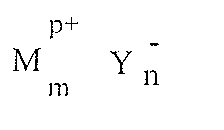
Mp+ est un cation choisi dans le groupe constitué des métaux alcalins, des métaux alcalino-terreux, de métaux de transition et des groupes ammonium de formule NR+ 4 dans laquelle R représente un radical alkyle,
Y- est un anion tel que l'acide YH correspondant a un pKa qui satisfait à la condition 0,5 ≤ pKa ≤ 14, sous réserve que lorsque Mp+ représente un groupe ammonium, le système catalyseur comprend en outre un composé électrodonneur,
P est la valence du cation,
n = mxp, et- au moins une amine tertiaire de formule :
(R)3N
- Composition polymérisable selon la revendication 1, dans laquelle l'acide associé YH a un pKa qui satisfait à la condition 0,5 ≤ pKa ≤ 8.
- Composition polymérisable selon la revendication 1, dans laquelle Y-est choisi dans le groupe constitué du thiocyanate, du carboxylate, du thiocarboxylate, de RS- - R étant un groupe alkyle ou un groupe phényle substitué ou non substitué -, de l'acétylacétonate, de la dicétone, de l'ester acétoacétique, de l'ester malonique, de l'ester cyanoacétique et du cétonitrile.
- Composition polymérisable selon la revendication 1, dans laquelle le cation Mp+ est choisi dans le groupe constitué de Li+, Na+, K+, Rb+, Mg2+, Ca2+, Ba2+ et Al3+.
- Composition polymérisable selon la revendication 1, dans laquelle le sel est KSCN.
- Composition polymérisable selon la revendication 1, dans laquelle le sel est présent à raison de 0,001 à 2,5 %, sur la base du poids total des monomères polymérisables présents dans la composition.
- Composition polymérisable selon la revendication 6, dans laquelle le sel est présent à raison de 0,001 à 1 %, sur la base du poids total des monomères polymérisables présents dans la composition.
- Composition polymérisable selon l'une quelconque des revendications 1 à 7, dans laquelle l'amine tertiaire est choisie parmi la N,N-diméthylcyclohexylamine, la N,N-dicyclohexylméthylamine, et leurs mélanges.
- Composition polymérisable selon l'une quelconque des revendications 1 à 8, dans laquelle l'amine tertiaire est présente dans la composition à raison de 0,05 à 5 %, sur la base du poids total des monomères polymérisables présents dans la composition.
- Composition polymérisable selon l'une quelconque des revendications 1 à 9, dans laquelle l'amine tertiaire est présente à raison de 0,05 à 2%.
- Composition polymérisable selon l'une quelconque des revendications 1 à 10, comprenant en outre un composé électrodonneur favorisant la réactivité de la réaction de polymérisation.
- Composition selon la revendication 11, dans laquelle le composé électrodonneur est choisi dans le groupe constitué des composés acétonitrile, des composés amide, des sulfones et des sulfoxydes, des trialkylphosphites, des composés nitro, des éthers d'éthylèneglycol, des éthers-couronnes et des kryptates.
- Composition selon la revendication 12, dans laquelle les éthers-couronnes et les kryptates sont choisis parmi les composés de formules :


X2, X3 et X4 représentent O ou S, n2, n3, n4, y2, y3, y4, valent 2 ou 3 et x2, x3, et x4 valent 2 ou 3. - Composition selon la revendication 12 ou 13, dans laquelle le composé électrodonneur représente jusqu'à 5 % en poids du poids total des monomères polymérisables présents dans la composition.
- Composition selon l'une quelconque des revendications 1 à 14, dans laquelle le monomère d'épisulfure comprend une ou plusieurs structures épisulfure de formule :

- Composition selon l'une quelconque des revendications 1 à 14, dans laquelle le monomère d'épisulfure est un composé de formule :

- Composition selon la revendication 16, dans laquelle X est S.
- Composition selon l'une quelconque des revendications 1 à 17, dans laquelle les monomères polymérisables comprennent uniquement des monomères d'épisulfures.
- Composition selon l'une quelconque des revendications 1 à 17, comprenant en outre un ou plusieurs polythiol(s) de formule :
R'(SH)n'
dans laquelle n' est un nombre entier de 2 à 6 et R' représente un groupe organique de valence \égale à n'. - Composition selon la revendication 19, dans laquelle le polythiol représente 0 à 30 % en poids du poids total des monomères polymérisables présents dans la composition.
- Composition selon l'une quelconque des revendications 1 à 17 et 19 ou 20, comprenant en outre un ou plusieurs monomère(s) polyiso(thio)cyanate.
- Composition selon la revendication 21, dans laquelle les monomères polyiso(thio)cyanate sont choisis parmi des composés de formules :
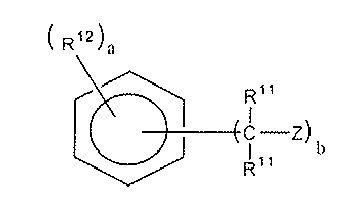


R11 représente indépendamment H ou un groupe alkyle en C1 à C5,
R12 représente H, un halogène ou un groupe alkyle en C1 à C5,
Z représente -N=C=O ou -N=C=S ;
a est un nombre entier compris de 1 à 4, b est un nombre entier compris de 2 à 4 et a + b ≤ 6 ; et
x est un nombre entier de 1 à 10. - Composition selon la revendication 22, dans laquelle les monomères de polyiso(thio)cyanate sont choisis dans le groupe constitué par le diiso(thio)cyanate de tolylène, le diiso(thio)cyanate de phénylène, le diiso(thio)cyanate d'éthylphénylène, le diiso(thio)cyanate d'isopropylphénylène, le diiso(thio)cyanale de diméthylphénylène, le diiso(thio)cyanate de diéthylphénylène, le diiso(thio)cyanate de diisopropylphénylène, le triiso(thio)cyanate de triméthylbenzyle, le diiso(thio)cyanate de xylylène, le triiso(thio)cyanate de benzyle, le diiso(thio)cyanate de 4,4'-diphénylméthane, le diiso(thio)cyanate de naphtalène, le diiso(thio)cyanate d'isophorone, le cyclohexane de bis(iso(thio)cyanate méthyle), le diiso(thio)cyanate d'hexaméthylène et le diiso(thio)cyanate de dicyclohexylméthane, et leurs mélanges.
- Composition selon la revendication 21, dans laquelle le monomère de polyiso(thio)cyanate ou le mélange de ceux-ci représente 0 à 30 % en poids du poids total des monomères polymérisables présents dans la composition.
- Article moulé, résultant d'une polymérisation à la température ambiante et/ou d'une polymérisation thermique d'une composition selon l'une quelconque des revendications 1 à 24.
- Article moulé selon la revendication 25, qui est une lentille ophtalmique.
- Procédé de fabrication d'un article modulé de résine à base d'épisulfures comprenant:- la préparation d'une composition telle que définie selon l'une quelconque des revendications 1 à 24 ;- le remplissage d'un moule à l'aide de la composition préparée ;- le durcissement de la composition à la température ambiante ou par chauffage ; et- le démoulage de l'article moulé.
- Procédé selon la revendication 27, dans lequel l'étape de durcissement est réalisée par :- chauffage du moule rempli à une première température de 50°C ou moins, jusqu'à obtention d'un gel ; et- chauffage ultérieur à une seconde température, supérieure à la première température, jusqu'à obtention d'une résine dure.
- Procédé selon la revendication 28, dans lequel la première température est comprise entre 20°C et 50°C.
- Procédé selon la revendication 28, dans lequel la seconde température est comprise entre 60°C et 90°C.
- Procédé selon la revendication 28, dans lequel le chauffage à la première température dure entre 15 minutes et 1 heure environ, et le chauffage à la seconde température dure 2 heures environ,
- Procédé selon l'une quelconque des revendications 27 à 31, dans lequel l'article moulé est un article optique.
Applications Claiming Priority (3)
| Application Number | Priority Date | Filing Date | Title |
|---|---|---|---|
| US09/895,446 US6891017B2 (en) | 2001-06-29 | 2001-06-29 | Fast polymerizable/curable episulfide based composition, polymerization/curing process and optical articles resulting therefrom |
| US895446 | 2001-06-29 | ||
| PCT/EP2002/007164 WO2003002632A1 (fr) | 2001-06-29 | 2002-06-28 | Composition rapidement polymerisable/durcissable a base d'episulfure, procede de polymerisation/durcissement et articles optiques obtenus a l'aide de ladite composition |
Publications (2)
| Publication Number | Publication Date |
|---|---|
| EP1404743A1 EP1404743A1 (fr) | 2004-04-07 |
| EP1404743B1 true EP1404743B1 (fr) | 2009-11-25 |
Family
ID=25404519
Family Applications (1)
| Application Number | Title | Priority Date | Filing Date |
|---|---|---|---|
| EP02751086A Expired - Lifetime EP1404743B1 (fr) | 2001-06-29 | 2002-06-28 | Composition rapidement polymerisable/durcissable a base d'episulfure, procede de polymerisation/durcissement et articles optiques obtenus a l'aide de ladite composition |
Country Status (7)
| Country | Link |
|---|---|
| US (1) | US6891017B2 (fr) |
| EP (1) | EP1404743B1 (fr) |
| JP (1) | JP4268516B2 (fr) |
| KR (1) | KR100901154B1 (fr) |
| AT (1) | ATE449808T1 (fr) |
| DE (1) | DE60234518D1 (fr) |
| WO (1) | WO2003002632A1 (fr) |
Families Citing this family (11)
| Publication number | Priority date | Publication date | Assignee | Title |
|---|---|---|---|---|
| EP1650275B1 (fr) * | 2003-07-24 | 2013-06-26 | Mitsubishi Gas Chemical Company, Inc. | Composition de revetement, film de revetement fabrique au moyen de cette composition, et article optique |
| WO2007096425A2 (fr) * | 2006-02-24 | 2007-08-30 | Essilor International (Compagnie Generale D'optique) | Procédé servant à fabriquer une lentille optique polarisée en poly(thio)uréthane |
| TWI633126B (zh) * | 2013-10-15 | 2018-08-21 | 三菱瓦斯化學股份有限公司 | Composition for optical materials and optical materials using the same |
| TWI619707B (zh) | 2013-12-11 | 2018-04-01 | Mitsubishi Gas Chemical Co | Novel thiol compound and composition for optical material using the same |
| TWI699389B (zh) | 2014-07-18 | 2020-07-21 | 日商三菱瓦斯化學股份有限公司 | 聚硫醇組成物及其製造方法 |
| WO2016194952A1 (fr) * | 2015-06-02 | 2016-12-08 | デクセリアルズ株式会社 | Composition adhésive |
| EP3916470B1 (fr) * | 2020-01-27 | 2023-12-27 | Mitsui Chemicals, Inc. | Composition polymérisable pour matériau optique, composition de prépolymère polymérisable pour matériau optique, objet durci, et procédé de fabrication de matériau optique |
| CN116891563A (zh) | 2020-01-27 | 2023-10-17 | 三井化学株式会社 | 光学材料用聚合性组合物、光学材料用聚合性预聚物组合物、固化物及光学材料的制造方法 |
| WO2021182526A1 (fr) * | 2020-03-10 | 2021-09-16 | 三井化学株式会社 | Composition polymérisable pour matériau optique, composition polymérisable de prépolymère pour matériau optique, objet durci et procédé de production de matériau optique |
| EP4253019A1 (fr) | 2022-03-31 | 2023-10-04 | Essilor International | Catalyse tardive des polymérisations rapides à température ambiante |
| WO2025258697A1 (fr) * | 2024-06-14 | 2025-12-18 | ホヤ レンズ タイランド リミテッド | Procédé de production d'un substrat de résine |
Family Cites Families (7)
| Publication number | Priority date | Publication date | Assignee | Title |
|---|---|---|---|---|
| US5807975A (en) | 1995-08-16 | 1998-09-15 | Mitsubishi Gas Chemical Company,Inc. | Alkyl sulfide type episulfide compound |
| US5945504A (en) | 1996-01-17 | 1999-08-31 | Mitsubishi Gas Chemical Company, Inc. | Episulfide compound |
| US6130307A (en) * | 1998-02-10 | 2000-10-10 | Mitsubishi Gas Chemical Co., Inc. | Composition for a resin |
| US6204311B1 (en) | 1998-03-13 | 2001-03-20 | Mitsui Chemicals, Inc. | Polymerizable composition |
| JP2002528613A (ja) | 1998-10-29 | 2002-09-03 | エシロール アテルナジオナール カンパニー ジェネラーレ デ オプティック | 塩触媒を含有するイオウ含有樹脂製造用重合性組成物およびイオウ含有樹脂成形品の製造方法 |
| US5973098A (en) * | 1998-10-29 | 1999-10-26 | Essilor International - Compagnie Generale D'optique | Polymerizable compositions for making thio containing resins including a thiocyanate salt catalyst and process for making thio containing resin articles |
| DE69940250D1 (de) | 1998-12-01 | 2009-02-26 | Mitsubishi Gas Chemical Co | Verfahren zur Herstellung von Harzen mit hohem Brechungsindex |
-
2001
- 2001-06-29 US US09/895,446 patent/US6891017B2/en not_active Expired - Fee Related
-
2002
- 2002-06-28 DE DE60234518T patent/DE60234518D1/de not_active Expired - Lifetime
- 2002-06-28 EP EP02751086A patent/EP1404743B1/fr not_active Expired - Lifetime
- 2002-06-28 AT AT02751086T patent/ATE449808T1/de not_active IP Right Cessation
- 2002-06-28 KR KR1020037017145A patent/KR100901154B1/ko not_active Expired - Fee Related
- 2002-06-28 WO PCT/EP2002/007164 patent/WO2003002632A1/fr not_active Ceased
- 2002-06-28 JP JP2003509010A patent/JP4268516B2/ja not_active Expired - Fee Related
Also Published As
| Publication number | Publication date |
|---|---|
| JP2004530780A (ja) | 2004-10-07 |
| US6891017B2 (en) | 2005-05-10 |
| ATE449808T1 (de) | 2009-12-15 |
| EP1404743A1 (fr) | 2004-04-07 |
| KR100901154B1 (ko) | 2009-06-04 |
| KR20040020064A (ko) | 2004-03-06 |
| JP4268516B2 (ja) | 2009-05-27 |
| US20030100641A1 (en) | 2003-05-29 |
| WO2003002632A1 (fr) | 2003-01-09 |
| DE60234518D1 (de) | 2010-01-07 |
Similar Documents
| Publication | Publication Date | Title |
|---|---|---|
| EP1124873B1 (fr) | Compositions polymerisables pour produire des resines a groupement thio contenant un catalyseur au sel, ainsi que procede pour fabriquer des articles en resines a groupement thio | |
| EP3539998B1 (fr) | Procédé de fabrication d'une résine pour matériau optique à base d'uréthane, composition de résine associée et matériau optique ainsi fabriqué | |
| KR101349273B1 (ko) | 티오에폭시계 광학재료의 제조방법과 그 중합성 조성물 | |
| KR20240095474A (ko) | 광학 부재용 중합성 조성물, 경화물, 및 안경 렌즈 | |
| KR20120101304A (ko) | 고리개환을 통해 사슬연장된 폴리티올화합물과 그 제조 방법 및 이를 이용한 우레탄계 광학재료용 수지 조성물 | |
| CN1322337C (zh) | 生产塑料镜片的方法和塑料镜片 | |
| US6891017B2 (en) | Fast polymerizable/curable episulfide based composition, polymerization/curing process and optical articles resulting therefrom | |
| KR20130081257A (ko) | 티오에폭시계 광학재료용 중합성 조성물과 티오에폭시계 광학재료의 제조방법 | |
| CN106458876A (zh) | 新的硫醇化合物和包含其的聚合性组合物 | |
| JPH11258402A (ja) | 高屈折率樹脂用組成物及び該組成物を硬化させてなるプラスチックレンズ及びその製造方法 | |
| KR20200033426A (ko) | 에피설파이드계 고굴절 광학재료용 경화속도 조절제와 이를 이용한 광학재료용 조성물 및 광학재료의 제조방법 | |
| KR102553438B1 (ko) | 에피설파이드계 고굴절 광학재료용 조성물과 광학재료의 제조방법 | |
| KR102669070B1 (ko) | 신규한 에피설파이드 화합물, 이를 포함하는 에피설파이드계 광학재료용 조성물과 광학재료의 제조방법 | |
| WO2021172771A1 (fr) | Composition pour matériau optique à base d'épisulfure hautement réfractif, doté d'une résistance améliorée à la lumière, et procédé de préparation de matériau optique | |
| KR20210130547A (ko) | 광학재료용 에폭시 화합물의 제조방법 및 이를 이용한 광학재료용 에피설파이드 화합물과 고굴절 광학재료의 제조방법 | |
| US6844415B1 (en) | Polymerizable compositions for making thio containing resins including a salt catalyst and process for making thio containing | |
| KR20200033423A (ko) | 에피설파이드계 고굴절 광학재료용 조성물 및 광학재료의 제조방법 | |
| KR20200021781A (ko) | 에피설파이드계 고굴절 광학재료용 안정제와 이를 이용한 광학재료용 조성물 및 광학재료의 제조방법 | |
| KR20200033424A (ko) | 에피설파이드계 고굴절 광학재료용 안정제와 이를 이용한 광학재료용 조성물 및 광학재료의 제조방법 | |
| KR20210106823A (ko) | 에피설파이드계 광학재료의 내광성 및 열안정성 개선을 위한 조성물과 이를 이용한 광학재료용 조성물 및 광학재료의 제조방법 | |
| KR20140029251A (ko) | 티오에폭시계 광학재료의 제조방법 | |
| KR20210097356A (ko) | 중합 경화속도가 조절된 에피설파이드계 고굴절 광학재료용 조성물과 이를 이용한 광학재료의 제조방법 | |
| KR20200021784A (ko) | 에피설파이드계 고굴절 광학재료용 안정제와 이를 이용한 광학재료용 조성물 및 광학재료의 제조방법 | |
| KR20210105224A (ko) | 에피설파이드계 광학재료의 내광성 및 열안정성 개선을 위한 조성물과 이를 이용한 광학재료용 조성물 및 광학재료의 제조방법 | |
| KR20200025517A (ko) | 에피설파이드계 고굴절 광학재료용 안정제와 이를 이용한 광학재료용 조성물 및 광학재료의 제조방법 |
Legal Events
| Date | Code | Title | Description |
|---|---|---|---|
| PUAI | Public reference made under article 153(3) epc to a published international application that has entered the european phase |
Free format text: ORIGINAL CODE: 0009012 |
|
| 17P | Request for examination filed |
Effective date: 20040129 |
|
| AK | Designated contracting states |
Kind code of ref document: A1 Designated state(s): AT BE CH CY DE DK ES FI FR GB GR IE IT LI LU MC NL PT SE TR |
|
| RIN1 | Information on inventor provided before grant (corrected) |
Inventor name: TURSHANI, YASSIN, YUSEF Inventor name: ADILEH, FADI, O. Inventor name: JIANG, PEIQI |
|
| 17Q | First examination report despatched |
Effective date: 20040415 |
|
| 17Q | First examination report despatched |
Effective date: 20040415 |
|
| GRAP | Despatch of communication of intention to grant a patent |
Free format text: ORIGINAL CODE: EPIDOSNIGR1 |
|
| GRAS | Grant fee paid |
Free format text: ORIGINAL CODE: EPIDOSNIGR3 |
|
| GRAA | (expected) grant |
Free format text: ORIGINAL CODE: 0009210 |
|
| AK | Designated contracting states |
Kind code of ref document: B1 Designated state(s): AT BE CH CY DE DK ES FI FR GB GR IE IT LI LU MC NL PT SE TR |
|
| REG | Reference to a national code |
Ref country code: GB Ref legal event code: FG4D |
|
| REG | Reference to a national code |
Ref country code: CH Ref legal event code: EP |
|
| REG | Reference to a national code |
Ref country code: IE Ref legal event code: FG4D |
|
| REF | Corresponds to: |
Ref document number: 60234518 Country of ref document: DE Date of ref document: 20100107 Kind code of ref document: P |
|
| REG | Reference to a national code |
Ref country code: NL Ref legal event code: VDEP Effective date: 20091125 |
|
| PG25 | Lapsed in a contracting state [announced via postgrant information from national office to epo] |
Ref country code: FI Free format text: LAPSE BECAUSE OF FAILURE TO SUBMIT A TRANSLATION OF THE DESCRIPTION OR TO PAY THE FEE WITHIN THE PRESCRIBED TIME-LIMIT Effective date: 20091125 Ref country code: SE Free format text: LAPSE BECAUSE OF FAILURE TO SUBMIT A TRANSLATION OF THE DESCRIPTION OR TO PAY THE FEE WITHIN THE PRESCRIBED TIME-LIMIT Effective date: 20091125 Ref country code: PT Free format text: LAPSE BECAUSE OF FAILURE TO SUBMIT A TRANSLATION OF THE DESCRIPTION OR TO PAY THE FEE WITHIN THE PRESCRIBED TIME-LIMIT Effective date: 20100325 |
|
| PG25 | Lapsed in a contracting state [announced via postgrant information from national office to epo] |
Ref country code: CY Free format text: LAPSE BECAUSE OF FAILURE TO SUBMIT A TRANSLATION OF THE DESCRIPTION OR TO PAY THE FEE WITHIN THE PRESCRIBED TIME-LIMIT Effective date: 20091125 |
|
| PG25 | Lapsed in a contracting state [announced via postgrant information from national office to epo] |
Ref country code: AT Free format text: LAPSE BECAUSE OF FAILURE TO SUBMIT A TRANSLATION OF THE DESCRIPTION OR TO PAY THE FEE WITHIN THE PRESCRIBED TIME-LIMIT Effective date: 20091125 Ref country code: BE Free format text: LAPSE BECAUSE OF FAILURE TO SUBMIT A TRANSLATION OF THE DESCRIPTION OR TO PAY THE FEE WITHIN THE PRESCRIBED TIME-LIMIT Effective date: 20091125 |
|
| PG25 | Lapsed in a contracting state [announced via postgrant information from national office to epo] |
Ref country code: NL Free format text: LAPSE BECAUSE OF FAILURE TO SUBMIT A TRANSLATION OF THE DESCRIPTION OR TO PAY THE FEE WITHIN THE PRESCRIBED TIME-LIMIT Effective date: 20091125 Ref country code: ES Free format text: LAPSE BECAUSE OF FAILURE TO SUBMIT A TRANSLATION OF THE DESCRIPTION OR TO PAY THE FEE WITHIN THE PRESCRIBED TIME-LIMIT Effective date: 20100308 Ref country code: DK Free format text: LAPSE BECAUSE OF FAILURE TO SUBMIT A TRANSLATION OF THE DESCRIPTION OR TO PAY THE FEE WITHIN THE PRESCRIBED TIME-LIMIT Effective date: 20091125 |
|
| PLBE | No opposition filed within time limit |
Free format text: ORIGINAL CODE: 0009261 |
|
| STAA | Information on the status of an ep patent application or granted ep patent |
Free format text: STATUS: NO OPPOSITION FILED WITHIN TIME LIMIT |
|
| PG25 | Lapsed in a contracting state [announced via postgrant information from national office to epo] |
Ref country code: GR Free format text: LAPSE BECAUSE OF FAILURE TO SUBMIT A TRANSLATION OF THE DESCRIPTION OR TO PAY THE FEE WITHIN THE PRESCRIBED TIME-LIMIT Effective date: 20100226 |
|
| 26N | No opposition filed |
Effective date: 20100826 |
|
| PG25 | Lapsed in a contracting state [announced via postgrant information from national office to epo] |
Ref country code: MC Free format text: LAPSE BECAUSE OF NON-PAYMENT OF DUE FEES Effective date: 20100630 |
|
| REG | Reference to a national code |
Ref country code: CH Ref legal event code: PL |
|
| PG25 | Lapsed in a contracting state [announced via postgrant information from national office to epo] |
Ref country code: IT Free format text: LAPSE BECAUSE OF FAILURE TO SUBMIT A TRANSLATION OF THE DESCRIPTION OR TO PAY THE FEE WITHIN THE PRESCRIBED TIME-LIMIT Effective date: 20091125 |
|
| PG25 | Lapsed in a contracting state [announced via postgrant information from national office to epo] |
Ref country code: CH Free format text: LAPSE BECAUSE OF NON-PAYMENT OF DUE FEES Effective date: 20100630 Ref country code: IE Free format text: LAPSE BECAUSE OF NON-PAYMENT OF DUE FEES Effective date: 20100628 Ref country code: LI Free format text: LAPSE BECAUSE OF NON-PAYMENT OF DUE FEES Effective date: 20100630 |
|
| PGFP | Annual fee paid to national office [announced via postgrant information from national office to epo] |
Ref country code: GB Payment date: 20110601 Year of fee payment: 10 |
|
| PGFP | Annual fee paid to national office [announced via postgrant information from national office to epo] |
Ref country code: FR Payment date: 20110720 Year of fee payment: 10 |
|
| PGFP | Annual fee paid to national office [announced via postgrant information from national office to epo] |
Ref country code: DE Payment date: 20110830 Year of fee payment: 10 |
|
| PG25 | Lapsed in a contracting state [announced via postgrant information from national office to epo] |
Ref country code: LU Free format text: LAPSE BECAUSE OF NON-PAYMENT OF DUE FEES Effective date: 20100628 |
|
| PG25 | Lapsed in a contracting state [announced via postgrant information from national office to epo] |
Ref country code: TR Free format text: LAPSE BECAUSE OF FAILURE TO SUBMIT A TRANSLATION OF THE DESCRIPTION OR TO PAY THE FEE WITHIN THE PRESCRIBED TIME-LIMIT Effective date: 20091125 |
|
| GBPC | Gb: european patent ceased through non-payment of renewal fee |
Effective date: 20120628 |
|
| REG | Reference to a national code |
Ref country code: FR Ref legal event code: ST Effective date: 20130228 |
|
| REG | Reference to a national code |
Ref country code: DE Ref legal event code: R119 Ref document number: 60234518 Country of ref document: DE Effective date: 20130101 |
|
| PG25 | Lapsed in a contracting state [announced via postgrant information from national office to epo] |
Ref country code: FR Free format text: LAPSE BECAUSE OF NON-PAYMENT OF DUE FEES Effective date: 20120702 Ref country code: DE Free format text: LAPSE BECAUSE OF NON-PAYMENT OF DUE FEES Effective date: 20130101 Ref country code: GB Free format text: LAPSE BECAUSE OF NON-PAYMENT OF DUE FEES Effective date: 20120628 |