EP1406200A2 - Verfahren und Vorrichtung zur Interpretation von DNS-mikroanordnungs-mustern - Google Patents
Verfahren und Vorrichtung zur Interpretation von DNS-mikroanordnungs-mustern Download PDFInfo
- Publication number
- EP1406200A2 EP1406200A2 EP20030028720 EP03028720A EP1406200A2 EP 1406200 A2 EP1406200 A2 EP 1406200A2 EP 20030028720 EP20030028720 EP 20030028720 EP 03028720 A EP03028720 A EP 03028720A EP 1406200 A2 EP1406200 A2 EP 1406200A2
- Authority
- EP
- European Patent Office
- Prior art keywords
- output pattern
- biological sample
- noise
- microarray
- signals associated
- Prior art date
- Legal status (The legal status is an assumption and is not a legal conclusion. Google has not performed a legal analysis and makes no representation as to the accuracy of the status listed.)
- Withdrawn
Links
- 238000000034 method Methods 0.000 title claims abstract description 86
- 238000000018 DNA microarray Methods 0.000 title description 33
- 238000002493 microarray Methods 0.000 claims abstract description 35
- 239000012472 biological sample Substances 0.000 claims abstract description 34
- 238000012545 processing Methods 0.000 claims abstract description 19
- 238000005305 interferometry Methods 0.000 claims abstract description 17
- 239000000470 constituent Substances 0.000 claims abstract 15
- 230000003595 spectral effect Effects 0.000 claims description 10
- 238000003491 array Methods 0.000 claims description 9
- 238000001514 detection method Methods 0.000 claims description 9
- 230000003321 amplification Effects 0.000 claims description 4
- 238000003199 nucleic acid amplification method Methods 0.000 claims description 4
- 230000006872 improvement Effects 0.000 claims description 2
- 108091093037 Peptide nucleic acid Proteins 0.000 claims 4
- 230000001939 inductive effect Effects 0.000 claims 3
- 238000003498 protein array Methods 0.000 claims 2
- 230000006698 induction Effects 0.000 claims 1
- 238000003672 processing method Methods 0.000 claims 1
- 230000035772 mutation Effects 0.000 description 102
- 230000006870 function Effects 0.000 description 46
- 201000010099 disease Diseases 0.000 description 40
- 208000037265 diseases, disorders, signs and symptoms Diseases 0.000 description 40
- 239000000523 sample Substances 0.000 description 30
- 108020004414 DNA Proteins 0.000 description 29
- 238000009396 hybridization Methods 0.000 description 28
- 108091034117 Oligonucleotide Proteins 0.000 description 27
- 238000004458 analytical method Methods 0.000 description 20
- 230000003993 interaction Effects 0.000 description 15
- 239000012634 fragment Substances 0.000 description 13
- 206010038743 Restlessness Diseases 0.000 description 12
- 239000006185 dispersion Substances 0.000 description 12
- JLCPHMBAVCMARE-UHFFFAOYSA-N [3-[[3-[[3-[[3-[[3-[[3-[[3-[[3-[[3-[[3-[[3-[[5-(2-amino-6-oxo-1H-purin-9-yl)-3-[[3-[[3-[[3-[[3-[[3-[[5-(2-amino-6-oxo-1H-purin-9-yl)-3-[[5-(2-amino-6-oxo-1H-purin-9-yl)-3-hydroxyoxolan-2-yl]methoxy-hydroxyphosphoryl]oxyoxolan-2-yl]methoxy-hydroxyphosphoryl]oxy-5-(5-methyl-2,4-dioxopyrimidin-1-yl)oxolan-2-yl]methoxy-hydroxyphosphoryl]oxy-5-(6-aminopurin-9-yl)oxolan-2-yl]methoxy-hydroxyphosphoryl]oxy-5-(6-aminopurin-9-yl)oxolan-2-yl]methoxy-hydroxyphosphoryl]oxy-5-(6-aminopurin-9-yl)oxolan-2-yl]methoxy-hydroxyphosphoryl]oxy-5-(6-aminopurin-9-yl)oxolan-2-yl]methoxy-hydroxyphosphoryl]oxyoxolan-2-yl]methoxy-hydroxyphosphoryl]oxy-5-(5-methyl-2,4-dioxopyrimidin-1-yl)oxolan-2-yl]methoxy-hydroxyphosphoryl]oxy-5-(4-amino-2-oxopyrimidin-1-yl)oxolan-2-yl]methoxy-hydroxyphosphoryl]oxy-5-(5-methyl-2,4-dioxopyrimidin-1-yl)oxolan-2-yl]methoxy-hydroxyphosphoryl]oxy-5-(5-methyl-2,4-dioxopyrimidin-1-yl)oxolan-2-yl]methoxy-hydroxyphosphoryl]oxy-5-(6-aminopurin-9-yl)oxolan-2-yl]methoxy-hydroxyphosphoryl]oxy-5-(6-aminopurin-9-yl)oxolan-2-yl]methoxy-hydroxyphosphoryl]oxy-5-(4-amino-2-oxopyrimidin-1-yl)oxolan-2-yl]methoxy-hydroxyphosphoryl]oxy-5-(4-amino-2-oxopyrimidin-1-yl)oxolan-2-yl]methoxy-hydroxyphosphoryl]oxy-5-(4-amino-2-oxopyrimidin-1-yl)oxolan-2-yl]methoxy-hydroxyphosphoryl]oxy-5-(6-aminopurin-9-yl)oxolan-2-yl]methoxy-hydroxyphosphoryl]oxy-5-(4-amino-2-oxopyrimidin-1-yl)oxolan-2-yl]methyl [5-(6-aminopurin-9-yl)-2-(hydroxymethyl)oxolan-3-yl] hydrogen phosphate Polymers Cc1cn(C2CC(OP(O)(=O)OCC3OC(CC3OP(O)(=O)OCC3OC(CC3O)n3cnc4c3nc(N)[nH]c4=O)n3cnc4c3nc(N)[nH]c4=O)C(COP(O)(=O)OC3CC(OC3COP(O)(=O)OC3CC(OC3COP(O)(=O)OC3CC(OC3COP(O)(=O)OC3CC(OC3COP(O)(=O)OC3CC(OC3COP(O)(=O)OC3CC(OC3COP(O)(=O)OC3CC(OC3COP(O)(=O)OC3CC(OC3COP(O)(=O)OC3CC(OC3COP(O)(=O)OC3CC(OC3COP(O)(=O)OC3CC(OC3COP(O)(=O)OC3CC(OC3COP(O)(=O)OC3CC(OC3COP(O)(=O)OC3CC(OC3COP(O)(=O)OC3CC(OC3COP(O)(=O)OC3CC(OC3COP(O)(=O)OC3CC(OC3CO)n3cnc4c(N)ncnc34)n3ccc(N)nc3=O)n3cnc4c(N)ncnc34)n3ccc(N)nc3=O)n3ccc(N)nc3=O)n3ccc(N)nc3=O)n3cnc4c(N)ncnc34)n3cnc4c(N)ncnc34)n3cc(C)c(=O)[nH]c3=O)n3cc(C)c(=O)[nH]c3=O)n3ccc(N)nc3=O)n3cc(C)c(=O)[nH]c3=O)n3cnc4c3nc(N)[nH]c4=O)n3cnc4c(N)ncnc34)n3cnc4c(N)ncnc34)n3cnc4c(N)ncnc34)n3cnc4c(N)ncnc34)O2)c(=O)[nH]c1=O JLCPHMBAVCMARE-UHFFFAOYSA-N 0.000 description 11
- 230000008569 process Effects 0.000 description 11
- 206010033799 Paralysis Diseases 0.000 description 10
- 230000014509 gene expression Effects 0.000 description 10
- 230000000875 corresponding effect Effects 0.000 description 9
- 230000027455 binding Effects 0.000 description 8
- 238000009739 binding Methods 0.000 description 8
- 230000008878 coupling Effects 0.000 description 8
- 238000010168 coupling process Methods 0.000 description 8
- 238000005859 coupling reaction Methods 0.000 description 8
- 108090000623 proteins and genes Proteins 0.000 description 8
- 206010028980 Neoplasm Diseases 0.000 description 6
- 201000011510 cancer Diseases 0.000 description 6
- 230000015556 catabolic process Effects 0.000 description 6
- 238000006731 degradation reaction Methods 0.000 description 6
- 230000000694 effects Effects 0.000 description 6
- 230000000877 morphologic effect Effects 0.000 description 6
- 230000036961 partial effect Effects 0.000 description 6
- 230000008901 benefit Effects 0.000 description 5
- 238000003745 diagnosis Methods 0.000 description 5
- 238000001914 filtration Methods 0.000 description 5
- 238000006243 chemical reaction Methods 0.000 description 4
- 238000007796 conventional method Methods 0.000 description 4
- 238000005183 dynamical system Methods 0.000 description 4
- 238000010195 expression analysis Methods 0.000 description 4
- 239000011159 matrix material Substances 0.000 description 4
- 230000037361 pathway Effects 0.000 description 4
- 238000004422 calculation algorithm Methods 0.000 description 3
- 230000000295 complement effect Effects 0.000 description 3
- 238000012790 confirmation Methods 0.000 description 3
- 230000010354 integration Effects 0.000 description 3
- 230000009745 pathological pathway Effects 0.000 description 3
- 208000030507 AIDS Diseases 0.000 description 2
- 108091028043 Nucleic acid sequence Proteins 0.000 description 2
- 239000013614 RNA sample Substances 0.000 description 2
- 239000008186 active pharmaceutical agent Substances 0.000 description 2
- 238000013528 artificial neural network Methods 0.000 description 2
- 238000004364 calculation method Methods 0.000 description 2
- 230000003247 decreasing effect Effects 0.000 description 2
- 238000003384 imaging method Methods 0.000 description 2
- 230000033001 locomotion Effects 0.000 description 2
- 238000004519 manufacturing process Methods 0.000 description 2
- 238000013507 mapping Methods 0.000 description 2
- 238000013178 mathematical model Methods 0.000 description 2
- 230000004048 modification Effects 0.000 description 2
- 238000012986 modification Methods 0.000 description 2
- 230000005693 optoelectronics Effects 0.000 description 2
- 230000004044 response Effects 0.000 description 2
- 230000002441 reversible effect Effects 0.000 description 2
- 230000002269 spontaneous effect Effects 0.000 description 2
- 239000000126 substance Substances 0.000 description 2
- 230000007704 transition Effects 0.000 description 2
- 238000013519 translation Methods 0.000 description 2
- 230000003612 virological effect Effects 0.000 description 2
- 102000053602 DNA Human genes 0.000 description 1
- 208000034826 Genetic Predisposition to Disease Diseases 0.000 description 1
- 238000012408 PCR amplification Methods 0.000 description 1
- 108020004682 Single-Stranded DNA Proteins 0.000 description 1
- 230000009471 action Effects 0.000 description 1
- 238000006555 catalytic reaction Methods 0.000 description 1
- 230000000739 chaotic effect Effects 0.000 description 1
- 239000003153 chemical reaction reagent Substances 0.000 description 1
- 230000001143 conditioned effect Effects 0.000 description 1
- 238000010276 construction Methods 0.000 description 1
- 230000002596 correlated effect Effects 0.000 description 1
- 238000007405 data analysis Methods 0.000 description 1
- 238000000354 decomposition reaction Methods 0.000 description 1
- 238000013461 design Methods 0.000 description 1
- 238000012850 discrimination method Methods 0.000 description 1
- 238000003708 edge detection Methods 0.000 description 1
- 230000007613 environmental effect Effects 0.000 description 1
- 238000000605 extraction Methods 0.000 description 1
- 239000007850 fluorescent dye Substances 0.000 description 1
- 238000001215 fluorescent labelling Methods 0.000 description 1
- 238000005286 illumination Methods 0.000 description 1
- 230000003116 impacting effect Effects 0.000 description 1
- 230000002452 interceptive effect Effects 0.000 description 1
- 239000003550 marker Substances 0.000 description 1
- 238000005259 measurement Methods 0.000 description 1
- 230000007246 mechanism Effects 0.000 description 1
- 238000012544 monitoring process Methods 0.000 description 1
- 238000010606 normalization Methods 0.000 description 1
- 230000003287 optical effect Effects 0.000 description 1
- 230000010355 oscillation Effects 0.000 description 1
- 239000013610 patient sample Substances 0.000 description 1
- 230000000737 periodic effect Effects 0.000 description 1
- 230000010363 phase shift Effects 0.000 description 1
- 238000000053 physical method Methods 0.000 description 1
- 230000006916 protein interaction Effects 0.000 description 1
- 102000004169 proteins and genes Human genes 0.000 description 1
- 238000013138 pruning Methods 0.000 description 1
- 230000005855 radiation Effects 0.000 description 1
- 239000000700 radioactive tracer Substances 0.000 description 1
- 238000005295 random walk Methods 0.000 description 1
- 230000006798 recombination Effects 0.000 description 1
- 238000005215 recombination Methods 0.000 description 1
- 230000009467 reduction Effects 0.000 description 1
- 230000002829 reductive effect Effects 0.000 description 1
- 230000035945 sensitivity Effects 0.000 description 1
- 238000012163 sequencing technique Methods 0.000 description 1
- 238000001228 spectrum Methods 0.000 description 1
- 239000000758 substrate Substances 0.000 description 1
- 230000002123 temporal effect Effects 0.000 description 1
- 238000002560 therapeutic procedure Methods 0.000 description 1
- 230000009466 transformation Effects 0.000 description 1
- 238000000844 transformation Methods 0.000 description 1
- 238000012795 verification Methods 0.000 description 1
Images



Classifications
-
- G—PHYSICS
- G16—INFORMATION AND COMMUNICATION TECHNOLOGY [ICT] SPECIALLY ADAPTED FOR SPECIFIC APPLICATION FIELDS
- G16B—BIOINFORMATICS, i.e. INFORMATION AND COMMUNICATION TECHNOLOGY [ICT] SPECIALLY ADAPTED FOR GENETIC OR PROTEIN-RELATED DATA PROCESSING IN COMPUTATIONAL MOLECULAR BIOLOGY
- G16B25/00—ICT specially adapted for hybridisation; ICT specially adapted for gene or protein expression
-
- G—PHYSICS
- G16—INFORMATION AND COMMUNICATION TECHNOLOGY [ICT] SPECIALLY ADAPTED FOR SPECIFIC APPLICATION FIELDS
- G16B—BIOINFORMATICS, i.e. INFORMATION AND COMMUNICATION TECHNOLOGY [ICT] SPECIALLY ADAPTED FOR GENETIC OR PROTEIN-RELATED DATA PROCESSING IN COMPUTATIONAL MOLECULAR BIOLOGY
- G16B25/00—ICT specially adapted for hybridisation; ICT specially adapted for gene or protein expression
- G16B25/10—Gene or protein expression profiling; Expression-ratio estimation or normalisation
-
- G—PHYSICS
- G16—INFORMATION AND COMMUNICATION TECHNOLOGY [ICT] SPECIALLY ADAPTED FOR SPECIFIC APPLICATION FIELDS
- G16B—BIOINFORMATICS, i.e. INFORMATION AND COMMUNICATION TECHNOLOGY [ICT] SPECIALLY ADAPTED FOR GENETIC OR PROTEIN-RELATED DATA PROCESSING IN COMPUTATIONAL MOLECULAR BIOLOGY
- G16B40/00—ICT specially adapted for biostatistics; ICT specially adapted for bioinformatics-related machine learning or data mining, e.g. knowledge discovery or pattern finding
- G16B40/10—Signal processing, e.g. from mass spectrometry [MS] or from PCR
-
- G—PHYSICS
- G16—INFORMATION AND COMMUNICATION TECHNOLOGY [ICT] SPECIALLY ADAPTED FOR SPECIFIC APPLICATION FIELDS
- G16B—BIOINFORMATICS, i.e. INFORMATION AND COMMUNICATION TECHNOLOGY [ICT] SPECIALLY ADAPTED FOR GENETIC OR PROTEIN-RELATED DATA PROCESSING IN COMPUTATIONAL MOLECULAR BIOLOGY
- G16B40/00—ICT specially adapted for biostatistics; ICT specially adapted for bioinformatics-related machine learning or data mining, e.g. knowledge discovery or pattern finding
-
- Y—GENERAL TAGGING OF NEW TECHNOLOGICAL DEVELOPMENTS; GENERAL TAGGING OF CROSS-SECTIONAL TECHNOLOGIES SPANNING OVER SEVERAL SECTIONS OF THE IPC; TECHNICAL SUBJECTS COVERED BY FORMER USPC CROSS-REFERENCE ART COLLECTIONS [XRACs] AND DIGESTS
- Y10—TECHNICAL SUBJECTS COVERED BY FORMER USPC
- Y10T—TECHNICAL SUBJECTS COVERED BY FORMER US CLASSIFICATION
- Y10T436/00—Chemistry: analytical and immunological testing
- Y10T436/24—Nuclear magnetic resonance, electron spin resonance or other spin effects or mass spectrometry
Definitions
- the invention generally relates to techniques for analyzing biological samples, such as DNA or RNA samples, and in particular to techniques for analyzing the output of a hybridized biochip to which the sample has been applied.
- RNA samples or other biological samples may determine, for example, whether the patient has any particular disease such as cancer or AIDS, or has a genetic predisposition toward the disease.
- a DNA microarray includes a rectangular array of single stranded DNA fragments. Each element within the array includes millions of copies of identical single stranded strips of DNA containing specific sequences of bases. A different fragment of DNA may be provided at each different element of the array. In other words, location (1,1) contains a different single stranded fragment of DNA than location (1,2) which also differs from location (1,3) etc.
- a DNA sample to be analyzed is first fragmented into individual single stranded sequences with each sequence being tagged with a fluorescent molecule. The fragments are applied to the microarray where each fragment bonds only with matching DNA fragments already embedded on the microarray. Fragments which do not match any of the elements of the microarray simply do not bond at any of the sites of the microarray and are discarded. Thus, only those microarray locations containing fragments that match fragments within the DNA sample will receive the fluorescent molecules.
- a fluorescent light source is then applied to the microarray to generate a fluorescent image identifying which elements of the microarray bonded with fragments of the DNA sample and which did not. The image is then analyzed to determine which specific DNA fragments were contained within the original sample and to determine therefrom whether particular diseases, mutations or other conditions are present within the DNA sample.
- a particular element of the microarray may be provided with fragments of DNA representative of a particular type of cancer. If that element of the array fluoresces under fluorescent illumination, then the DNA of the sample contains the DNA sequence representative of that particular type of cancer. Hence, a conclusion can be drawn that the patient providing the sample either already has that particular type of cancer or is perhaps predisposed towards that cancer. As can be appreciated, by providing a wide variety of known DNA fragments on the microarray, the resulting fluorescent image can be analyzed to identify a wide range of conditions.
- FIG. 1 illustrates various conventional techniques for analyzing the flourescent pattern.
- Some prior art systems utilize two or more of the techniques. It should be noted though that many combinations of the techniques are not provided in the prior art.
- the fluorescent pattern is quantized to yield a dot spectrogram at step 10. Any of four different techniques are employed to identify oligonucleotides represented by the dot spectrogram and to then identify mutations based upon the oligonucleotides. More specifically, the dot spectrogram may be analyzed using a trained neural network recognizer 12, a statistical decision theory recognizer 14, a fuzzy/expectation method (EM) clustering algorithm 16 or a rule-based inferencing/truth table search 18.
- EM fuzzy/expectation method
- the results are interpreted to yield mutations of interest at step 20. Then the mutations are again processed using either a trained neural network recognizer 22, a statistical decision theory recognizer 24, a fuzzy/EM clustering algorithm 26 or a rule-based inferencing/truth table search 28. The results are combined at step 30 to yield a diagnosis.
- disease confirmation is performed at step 32 by "reduction”, in other words the disease is confirmed by probabilistic inferencing.
- the method of the co-pending application operates as follows.
- the method identifies mutations, if any, present in a biological sample from a set of known mutations by analyzing a dot spectrogram representative of quantized hybridization activity of oligonucleotides in the biological sample to identify the mutations.
- a resonance pattern is generated which is representative of resonances between a stimulus pattern associated with the set of known mutations and the dot spectrogram.
- the resonance pattern is interpreted to yield a set of confirmed mutations by comparing resonances found therein with predetermined resonances expected for the selected set of mutations.
- the resonance pattern is generated by iteratively processing the dot spectrogram by performing a convergent reverberation to yield a resonance pattern representative of resonances between a predetermined set of selected Quantum Expressor Functions and the dot spectrogram until a predetermined degree of convergence is achieved between the resonances found in the resonance pattern and resonances expected for the set of mutations.
- the resonance pattern is then analyzed to a yield a set of confirmed mutations by mapping the confirmed mutations to known diseases associated with the pre-selected set of known mutations to identify diseases, if any, indicated by the DNA sample.
- a diagnostic confirmation is then made by taking the identified diseases and solving in reverse for the associated Quantum Expressor Functions and then comparing those Quantum Expressor Functions with ones expected for the mutations associated with the identified disease to verify correspondence. If no correspondence is found, a new sub-set of known mutations are selected and the steps are repeated to determine whether any of the new set of mutations are present in the sample.
- mutation signatures may be identified within a dot spectrogram even in circumstances involving low signal to noise ratios or, in some cases, negative signal to noise ratios.
- the reliability of dot spectrogram analysis is thereby greatly enhanced. With an increase in reliability, costs associated with performing the analysis are decreased, in part, because there is less of a requirement for skilled technicians. Other advantages of the invention arise as well.
- repeatability is affected by spatio-temporal degradation of hybridization in DNA microarrays implementing both passive and active hybridization.
- sources affecting repeatability of analysis results include:
- aspects of the present invention are directed, in part, to providing enhanced repeatability of biological sample analysis despite these factors.
- a method for identifying mutations, if any, present in a biological sample.
- the method operates to analyze a biochip output pattern generated using the sample to identify the mutations in the sample.
- the output pattern is tessellated.
- a stimulus pattern associated with the set of known mutations is generated.
- a resonance pattern is then generated which is representative of resonances between the stimulus pattern and the tessellated output patterns.
- the resonance pattern is interpreted to yield a set of confirmed mutations by comparing resonances found therein with predetermined resonances expected for the selected set of mutations.
- the output pattern is a dot spectrogram representative of quantized hybridization activity of oligonucleotides in a DNA sample.
- the stimulus pattern is generated based upon Quantum Expressor Functions.
- the dot spectrogram is tessellated to match morphological characteristics of the Quantum Expressor Functions and local parametrics are extracted.
- the tessellated dot spectrogram and the stimulus pattern are transformed to a metrically transitive random field via phase shifting.
- the resonance pattern is generated by iteratively processing the tessellated dot spectrogram by performing a convergent reverberation to yield a resonance pattern representative of resonances between the Quantum Expressor Functions and the tessellated dot spectrogram until a predetermined degree of convergence is achieved between the resonances found in the resonance pattern and resonances expected for the set of mutations.
- the convergent reverberation includes the step of performing a convergent reverberant dynamics resonance analysis of the tessellated dot spectrogram using the resonance stimulus pattern to identify mutations represented by the tessellated dot spectrogram.
- the convergent reverberation also includes the step of performing a convergent reverberant dynamics resonance analysis of the mutations using the resonance stimulus pattern to identify diagnostic conditions represented by the mutations.
- the convergent reverberant dynamics resonance analyses are performed by determining resonance dynamics relaxation values based upon the tessellated dot spectrogram and the resonance stimulus; filtering the dynamics relaxation values using ensemble boundary and complete spatial randomness (CSR) filters to yield a second set of values; applying bulk property estimators to the dynamics relaxation values to yield a third set of values; evaluating the second and third sets of values to determine a degree of resonance convergence; and then determining from the degree of resonance convergence whether a paralysis of dynamics has occurred and, if so, repeating the aforementioned steps.
- CSR complete spatial randomness
- mutation signatures may be identified within a dot spectrogram with a high degree of repeatability.
- the reliability of dot spectrogram analysis is thereby greatly enhanced. With an increase in reliability, costs associated with performing the analysis are decreased, in part, because there is less of a requirement for skilled technicians. Other advantages of the invention arise as well.
- a method for preconditioning a dot spectrogram representative of quantized hybridization activity of oligonucleotides in a DNA samples.
- the method comprises the steps of tessellating the dot spectrogram to match characteristics of a predetermined stimulus pattern yielding a tessellated image; extracting local parametrics from the tessellated image; determining whether a degree of amplitude wandering representative of the local parametrics is within a predetermined allowable generator function limit; and if not, renormalizing the tessellated image to further match spectral properties of the stimulus pattern and repeating the steps.
- a method for performing a convergent reverberant dynamics resonance analysis of a dot spectrogram representative of quantized hybridization activity of oligonucleotides in a DNA sample to identify mutations represented thereby.
- the method comprising the steps of determining resonance dynamics relaxation values based upon the preconditioned dot spectrogram and the resonance stimulus; filtering the dynamics relaxation values using ensemble boundary and CSR filters to yield a second set of values; applying bulk property estimators to the dynamics relaxation values to yield a third set of values; evaluating the second and third sets of values to determine whether a predetermined degree of resonance convergence has been achieved; and determining whether a paralysis of dynamics has occurred and, if so, repeating the steps.
- principles of the invention are applicable to the analysis of various arrayed biomolecular, ionic, bioelectronic, biochemical, optoelectronic, radio frequency (RF) and electronic microdevices.
- Principles of the invention are particularly applicable to mutation expression analysis at ultra-low concentrations using ultra-high density passive and/or active hybridization DNA-based microarrays.
- Techniques implemented in accordance with the invention are generally independent of the physical method employed to accumulate initial amplitude information from the bio-chip array, such as fluorescence labeling, charge clustering, phase shift integration and tracer imaging.
- principles of the invention are applicable to optical, optoelectronic, and electronic readout of hybridization amplitude patterns.
- principles of the invention are applicable to molecular expression analysis at all levels of abstraction: namely DNA expression analysis, RNA expression analysis, protein interactions and protein - DNA interactions for medical diagnosis at the molecular level.
- the exemplary method of the co-pending application exploits, among other features: (a) a novel representation, interpretation and mathematical model for the immobilized oligonucleotide hybridization patterns, represented via a dot spectrogram; (b) a new "active" biomolecular target detection and discrimination method based on quantum resonance interferometry, and (c) a new spatial hashing function that yields accurate diagnostic assessment.
- the exemplary method of the co-pending application exploits a fundamentally different computational paradigm for mutation expression detection in pre-enhanced dot spectrogram realizations.
- the method is an innovative modification to dynamically arrayed quantum stochastic resonance (QSR) for discrete system analysis.
- QSR quantum stochastic resonance
- the arraying strategy is a function of the expression pathway of interest.
- the method depends on the molecular diagnostic spectrum being addressed.
- Banks of coupled quantum resonators are algorithmically designed to significantly enhance signal-to-noise (SNR) performance and fuse multiple synthetic renormalized dot spectrogram realizations to better detect prespecified biomolecular expression patterns.
- SNR signal-to-noise
- SR stochastic resonance
- AESR array enhanced SR
- Stochastic resonance is a phenomenon wherein the response to a sensor, modeled in terms of a bistable nonlinear dynamical system, is enhanced by applying a random noise element and a periodic sinusoidal forcing function.
- SR occurs when the SNR passes through a maximum as the noise level is increased.
- the exemplary method of the co-pending application involves the coupling of transformed and preconditioned discrete microarray outputs to a mathematical model for a quantum-mechanical dynamical system with specific properties.
- the coupled system When driven in a particular manner, the coupled system exhibits a nonlinear response that corresponds to detection of phenomena of interest.
- the method exploits modulation of observables from a "base" (canonical continuous dynamical system), so that a selected set of spectral properties match a similar selected spectral properties of a discrete spatial tessellation substructure from an amplitude spectrogram derived from bioelectronic observables.
- the method further exploits the concept of convolving a discrete spatial system (derived from base mutants of interest) with a continuous asymmetric temporal system to derive a spatiotemporal input to further convolve with another discrete spatial projection (of an inherently partially stabilized spatiotemporal system).
- a set of mutations of interest are selected.
- the mutations may be mutations relevant to cancer, AIDS, or other diseases or conditions.
- preconditioner transforms are generated based upon the selected set of mutations.
- the preconditioner transforms are provided to convert mutation nucleotide sequences into expected amplitude patterns in the prespecified microarray representation, given a particular biochip layout.
- Quantum Expressor Functions are generated based upon the Hamiltonian of a pre-selected basis system.
- the Quantum Expressor Functions are designed to couple the Hamiltonian for the selected basis system to a predetermined DNA microarray configuration to permit a resonance interaction involving the output of the DNA microarray.
- Resonance stimulus is generated, at step 106, using the Quantum Expressor functions.
- any number of output patterns from the DNA microarray may be processed using the Quantum Expressor Functions to identify whether any of the mutations of the pre-selected set of mutations are found therein.
- Quantum Expressor Functions are pre-generated for a large set of mutations and for a large set of DNA microarray patterns such that, for each new DNA microarray output pattern from each new patient sample, the presence of any of the mutations can be quickly identified using the predetermined set of Quantum Expressor Functions.
- the aforementioned steps need be repeated only to update the Quantum Expressor Functions to accommodate new and different DNA microarray patterns or to if new mutations of interest need to be considered.
- an output pattern (referred to herein as a Dot Spectrogram) is generated using a DNA microarray for which Quantum Expressor Functions have already been generated.
- the dot spectrogram is preconditioned to yield a dot spectrogram tesselation (DST) to permit exploitation of a resonance between the dot spectrogram and the Quantum Expressor Functions.
- DST dot spectrogram tesselation
- the actual resonant interaction which involves convergent reverberations, is performed at step 110 until a pre-determined degree of convergence is achieved. Once convergence is achieved, a resulting resonance pattern is processed at step 112 to identify any mutations represented thereby.
- step 112 is rendered trivial by virtue of the aforementioned resonant interaction which is based upon Quantum Expressor Function already correlated with the pre-selected mutations. Hence, no complicated analysis is required to interpret the resonance pattern to identify the mutations.
- step 114 the mutations are mapped to corresponding diseases and conditions to thereby identify any diseases or conditions that the patient providing the sample being analyzed is afflicted with. Again, this is a fairly trivial step.
- diagnostic confirmation is preformed to verify that the diseases or conditions are present in the sample. This is achieved by starting with the found diseases or conditions and then performing the steps of the method in reverse.
- the present invention is directed, in part, to improving the repeatability of the method of the co-pending application by tessellating the dot spectrogram so as to match morphological characteristics of the Quantum Expressor Functions and by using extracted local parametrics as part of a resonance convergence check during the resonance interaction. These additional steps have the advantage of establishing uncertainty bounds which permit method repeatability to be enhanced and quantified.
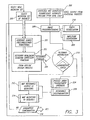
- FIG. 3 illustrates enhancements to the technique of FIG. 2 provided by the present invention along with steps of the technique of FIG. 2.
- the repeated steps of FIG. 2 appearing in FIG. 3 may be the same as those of FIG. 2 and will not be redescribed.
- Like reference numerals, incremented by one hundred, are employed to represent the repeated steps.
- a set of mutations of interest are selected and at step 301 preconditioner transforms are generated based upon the selected set of mutations.
- Quantum Expressor Functions are generated based upon the Hamiltonian of a pre-selected basis system.
- Phase shifted resonance stimulus is generated, at step 304, using the Quantum Expressor functions.
- Grouping stimulus is also generated, at step 305.
- Steps 300 - 305 are preferably performed off-line to set up the Quantum Expressor Functions and the corresponding resonance stimulus and grouping stimulus and need not be repeated other than to update the Quantum Expressor Functions to accommodate new and different DNA microarray patterns or if new mutations of interest need to be considered.
- a dot spectrogram is generated using a DNA microarray for which Quantum Expressor Functions have already been generated.
- the dot spectrogram is tessellated to match morphological characteristics of the Quantum Expressor Functions yielding a dot spectrogram tesselation (DST).
- DST dot spectrogram tesselation
- local parametrics of the tessellated image are extracted.
- an amount of amplitude wandering is determined and compared with pre-determined allowable generator function limits. If, at step 310, the amplitude wandering is not within the allowable generator function limits, then execution proceeds to step 312 where the tessellated dot spectrogram to match spectral characteristics of the Quantum Expressor Functions.
- Steps 308 and 310 are repeated until the amplitude wandering is found to be within the pre-determined limits at which point execution proceeds to block 314 wherein a resonance interaction is performed between the tessellated, renormalized dot spectrogram and the phase shifted resonance stimulus generated at step 304 and the group stimulus generated at step 305 to identify any mutations represented by the dot spectrogram.
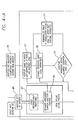
- the actual resonant interaction which involves convergent reverberations, includes the following sub-steps also shown in FIG. 4.
- a resonance dynamics iteration is initiated which includes the use of ensemble boundary and CSR operators (step 318 ) and the use of bulk property estimators (step 320).
- the ensemble boundary filters, CSR filters and bulk property estimators are applied to the tessellated, re-normalized dot spectrogram in combination with the resonance and group stimulus.
- the resulting filtered dot spectrogram is then evaluated to determine a degree of resonance convergence to one or more of the set of predetermined mutations, at step 322.
- step 324 The degree of convergence is evaluated, at step 324, against a Lindbald condition and, if the Lindbald condition is not met, the system is deemed to be subject to paralysis of dynamics and execution proceeds to step 326 wherein possible hixel death is compensated for by increasing a time scale for the iteration initiated at step 316 and then repeating the iteration.
- the mutation death check is a conditional check. If this check shows that a resonance is not possible for a specific mutation resonance centered (MRC)-hixel then the iteration is terminated and block 314 is exited. But failure of resonance dynamics is not sufficient to conclude that a specific mutation is absent. Indeed, if the "hixel death" check fails, that implies that resonance could be still obtained in a downstream iteration.
- MRC mutation resonance centered
- a resonance dynamics iteration is initiated which includes the use of ensemble boundary and CSR operators (step 328) and the use of bulk property estimators (step 330) .
- the resulting filtered dot spectrogram is then evaluated to determine a degree of resonance convergence, at step 332.
- step 334 The degree of convergence is evaluated, at step 334, against a Lindbald condition and, if the Lindbald condition is not met, the system is deemed to be subject to paralysis of dynamics and execution proceeds to step 336 wherein a time scale for the iteration initiated at step 326 is increased before the iteration is repeated. If the Lindbald condition is met, then diseases corresponding to the mutations found using step 314 have been reliably identified.
- step 335 Processing in accordance with step 335 depends on the biochip.
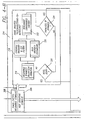
- the flowchart of FIG. 4 illustrates a general form of the method requiring processing during step 335. In other implementations, this step is trivial or can be eliminated entirely.
- the overall method is implemented at two levels of abstraction, depending on how well the disease genomics is understood. Detection of a specific mutation is necessary and sufficient to conclude expression of a specific gene. But the expressed gene may not be the one to conclusively identify the disease. Then another level of abstraction is invoked wherein the method is applied inferentially by expanding the gene expression circuit or gene expression tree to determine if there is evidence that all expressed genes eventually lead to one that conclusively identifies the disease. So step 335 operates on the results of step 314 , such that all identified mutations are used as an input to determine if the complete expression pathway for leading up to the point that a disease can be concluded.
- clustering properties are evaluated at step 340 to selectively eliminate oligonucleotides representing possible diagnoses based on morphological filtering of subthreshold resonances and any subsequent recentering (i.e. the inverse of dispersion).
- Steps 314 - 335 produce a cluster of sub-threshold resonances.
- Step 340 is a reverification such that all induced resonances are present in the target sample and not a manifestation of multiple rescalings and synthetic SNR enhancements.
- a hashing projector is applied at step 342 to order the mutations.
- a diagnostic decision is then rendered at step 344 by examining the order of the mutations and comparing the mutations with a table identifying corresponding diseases.
- the output of block 314 represents all hixels that identify complementary oligonucleotide bindings in the biological sample being analyzed and this represent “mutations”.
- the output of block 335 comprises a set of expressed genes that are associated with a particular pathogenic pathway and thus represent a preliminary "diagnosis”. Further analysis of the pathogenic pathway provides a set of possible diseases, if any. This decomposition is motivated by scaling the computation to answer three questions:
- the diagnosis is output. If the diagnosis is negative then, at step 346, a determination is made as to whether there are any alternative mutations, not within the initial set of mutations selected at step 300, that could be present within the sample. This determination is made by examining a table listing all possible mutations. If there are alternative mutations, then the process is repeated from step 300. If not, then a signal is simply output indicating that no mutations were found in the sample.
- the mutation set of interest generated at step 300 is selected by identifying oligonucleotides representative of the ⁇ Z ⁇ mutations of interest.
- length
- an oligonucleotide table is generated which contains the oligonucleotide sequences associated with each mutation of interest identified by row and column location (i,j).
- the oligonucleotide table is provided for subsequent use at step 312 to map locations within the dot spectrogram wherein resonance occurs at step 310 to oligonucleotides such that mutations present in a sample being analyzed are easily identified.
- a mutation table is generated which contains the diseases associated with each mutation of interest.
- the mutation table is provided for subsequent use at step 314 to map mutations identified at step 312 to specific diseases or other medical conditions such that the diseases can be easily identified.
- the DNA microarray is an N by M DNA chip array wherein an element of the array is referred to herein as an "oxel ": o(i,j) .
- PEBC pre-hybridization microarray
- ⁇ ( i, j ) ⁇ k .4 k -1 + ⁇ k -1 .4 k -2 +...+ ⁇ 1 .4 1 + ⁇ 0 .4 0
- [ ⁇ ] [A
- An element of the dot spectrogram is referred to herein as a hixel : h(i,j) .
- a spin boson basis system is selected for use with this type of array.
- Other basis system may be appropriate for either the same or other microarray configurations..
- the QEF is generated at step 302 based upon the spin Boson basis system by first calculating the Hamiltonian for the system, calculating harmonic amplitudes
- OF order function
- the QEF's generated at step 302 are converted to a phase-space representation. Also, if the output of the hybridization chip is not in phase space then it is converted as well. The conversion is performed using phase embedding operator, r, described in the co-pending application. Results associated with combinatorial Hopf Algebra are used to contain amplitude dispersion due to loss of hybridization. A special case of quantum random walk, Gelfand-Naimark Segal (GNS) construction is used to disperse group stimulus. Note that coproduct construct of the Hopf algebra plays the role of "sharing out” possible explanations of a fact. The GNS dispersion of QEF is implemented using an approximation: where H denotes the hamiltonian for the coupling spin boson system.
- a dot spectrogram is generated at step 306 for a sample from an N by M DNA chip array wherein an element of the array is an "oxel ": o(i,j) .
- o(i,j) A 6- ⁇ manufacturing process accuracy in microarray design is assumed.
- Each array cell amplitude is given by ⁇ (i,j) for i: 1 to N, and j: 1 to M.
- the complimentary strand, derived from unknown sample is denoted by ⁇ ( i , j ).
- the post-hybridization microarray is treated mathematically using the machinery of equations with aftereffect.
- Each hixel given by ⁇ (i,j) is represented as a cluster of dynamical systems of potentially [CB] correctly bound, [UB] unbound, [PB] partially bound and [IB] incorrectly bound.
- [CB] ⁇ (i,j) + [UB] ⁇ (i,j) + [PB] ⁇ (i,j) + [IB] ⁇ (i,j) T ⁇ (i,j) within 0.0001%.
- the dot spectrogram ⁇ (i,j) is then tessellated to determine idealized ensemble boundaries for forcing downstream resonant action.
- high pass or band pass spatial filtering is implemented to enhance SNR in DS matrix.
- Alternate methods apply a combination of Laplacian or other edge detection filters apply to enhance signal from arrays cells with a higher hybridization concentration from those of the adjacent cells.
- These SNR enhancement methods however work only with positive or zero-SNR. Since SNR in general is negative in our case (ultra-low target DNA concentrations), these methods in effect amplify noise or further blur the hixel boundaries.
- Tesselation is performed by performing gradient refocusing and rescaling as described in the co-pending application.
- a Dirichlet tessellation operator or a Delaunay triangulation operator are applied to tessellate the dot spectrogram.
- the tessellated image is treated as a metrically transitive random field. All properties associated with a singular (deterministic), homogeneous (i.e., stationary) field are subsumed.
- the parametric of most interest is the integrated density of states, given by where whence where n is the number of eigenvalues to the system (random field approximation).
- Palm generators exploits the notion of generator functions to capture stochastic variability in hybridization binding efficacy.
- the exemplary method described herein draws upon results in stochastic integral geometry and geometric probability theory.
- Step 310 provides a measure for each mutation-recognizer centered (MRC-) hixel that is invariant to local degradation. The measure is expressed via the form where Z denotes the set of mutations of interest. In other words, we determine the function f(z) under the condition that m(z) should be invariant with respect to all dispersions ⁇ .
- this measure is the only one which is invariant under a group of motions in a plane.
- oligonucleotide density per oxel ⁇ m ( i , j ) oligonucleotide density per oxel ⁇ m ( i , j )
- PCR amplification protocol PCR amplification protocol
- fluorescence binding efficiency ⁇ m
- imaging performance ⁇ m
- ⁇ 1 and ⁇ 2 represent normalized hybridization dispersion limits (typically preset to 0.1 and 0.7 respectively to assume losses between 10% - 70% hybridization.
- Preconditioned dot spectrogram is represented by ( i , j ). where function 1/(1+exp( ⁇ (%)) was used to express the underlying known and stationary point process.
- a 0 The differential operator for the metrically transitive field for convoling the uncertainty parameters.
- Renormalization at step 312 is performed on the tessellated image to further match spectral properties of the stimulus pattern
- the re-normalization of the dot spectrogram is achieved by resealing the dot spectrogram in the interval [- ⁇ , + ⁇ ]. The entire calculation proceeds in the phase space which is why we transformed the system to the metrically transitive random field.
- Resonance dynamics relaxation values are calculated at step 316 as follows.
- a closed-form convolutionless evolution equation is given by: where where both depend upon the normalized DS (i.e., initial state) at time ⁇ - post-hybridization but pre-conditioned state. And ( t , ⁇ ) is the unitary evoluter for the hamiltonian specifying the after affect basis system dynamics.
- the dynamics relaxation values are then filtered at step 318 using ensemble boundary and CSR filters (higher order Poisson kernel) as follows: where P r (
- ) 1 - r 2 1 - 2 r Cos + r 2 where r ⁇ 0.
- step 320 The bulk property estimators of step 320 are applied to the dynamics relaxation values as follows: where t is the discretization step.
- the resonance convergence is determined at step 322 as follows:
- the system oscillates if no convergence is reached. If increasing the timescale x-times ( ⁇ 5) does not meet the condition, then the mutation is deemed to be absent.
- This process can be analytically be represented as: where c 1 , c 2 and c 3 are thresholding constants that are used to detect subthreshold resonances. Also, c 1 >> c 2 >> c 3 >> l/[amplitude resolution].
- ⁇ 1 and ⁇ 2 refer to the inner and outer integration timescales. In an implementation they refer to the iteration conter at which the integration loop is terminated, exceeded or exited. Typically termination counter is set to one thousand steps with timescale of the order of ten nanoseconds for inner step and microsecond for outer step. So effective device convergence time is within onen hundred milliseconds for the entire computation.
- the detection of oscillation occurs when the spectral radius for the convergence criteria oscillates between limits [ ⁇ 1 , ⁇ 2 ] and does not tend towards 0.This may be verified by tracking the spectral radius zero crossing with respect to the lower bound ⁇ 1 . If the zero crossing frequency exceeds a present number (e.g., 10) in this implementation, the dynamics is deemed paralyzed. If a paralysis of dynamics has occurred, a "mutation death" is evaluated as follows.
- the check for MRC hixel death relates to the verification of a suprathreshold resonance, where the resonance is defined as the integrand of partial resonances over the entire DST structure, i.e, ⁇ ⁇ 1 , ⁇ 2 ⁇ predefined upper limit. Typically set to 100 for outer iteration and 1000 for inner iterations.
- step 314 the final output of step 314 is all hixels that identify complementary oligonucleotide bindings in the biological sample which are represented computationally by the set ⁇ h k (i,j) ⁇ where ⁇ h k (i,j) ⁇ is the corresponding oligonucleotide sequence [ ⁇ 0 ⁇ 1 ... ⁇ k ] for the kth surviving hixel.
- step 335 is a set of expressed genes that are associated with a particular pathogenic pathway which is represented computationally by the set ⁇ (i,j) ⁇ where ⁇ (i,j) ⁇ : [ ⁇ 0 ⁇ 1 ... ⁇ k ] for the l-th element of the pathway capturing the k-th disease.
- the clustering operation is essentially a pruning operation based on morphological filtering of subthreshold resonances and subsequent recentering(i.e. the inverse of dispersion).
- the clustering computation is based on transversal ordering (is based on transversal numbers) of the oligonucleotide sequencing underlying the resonance-centers for all subthreshold resonances.
- Transversal number of a hypergraph, H is defined as the minimum number of vertices in a transversal. It is given by:
- the sub-steps involved in clustering are:
- a hashing projector is then applied at step 342 to the output of the clustering check.
- the hashing projector produces an enumeration of the leading k oligonucleotides with the highest transveral numbers. So a set of mutations or the corresponding expressed genes are created that have the highest sorted transversal numbers. Typically, all members that are seperated by a distance of, at most two, are chosen.
- a diagnostic decision is rendered at step 344 based upon the output of the hashing projector.
- the diagnostic decision is achieved using a simple table lookup that is indexed by the results of hashing projection computation using the aforementioned tables.
- Alternative possible mutations are evaluated at step 346 . If alternatives are available, the alternative set of mutations of interest are loaded and the process is repeated beginning at step 300. Hence, if the original set of mutations from which the original set of QIF's were generated during the off-line process of steps 301 and 302, did not include the alternative mutations, then the off-line process is repeated with the new set of mutations to generate new QIF's.
- the technique described with respect to FIG. 4 is particularly powerful in that it provides an enumerative solution which generally covers all possible diagnostic candidates as opposed to only one or two, given the best genomic understanding or mapping between expressed genes and diseases.
- Each method step also represents a hardware or software component for performing the corresponding step. These components are also referred to herein as a "means for" performing the step. It should be appreciated that not all components of a complete implementation of a practical system are necessarily illustrated or described in detail. Rather, only those components necessary for a thorough understanding of the invention have been illustrated and described in detail. Actual implementations may contain more components or, depending upon the implementation, may contain fewer components.
Landscapes
- Health & Medical Sciences (AREA)
- Life Sciences & Earth Sciences (AREA)
- Physics & Mathematics (AREA)
- Engineering & Computer Science (AREA)
- Spectroscopy & Molecular Physics (AREA)
- Medical Informatics (AREA)
- Bioinformatics & Cheminformatics (AREA)
- Molecular Biology (AREA)
- Genetics & Genomics (AREA)
- Biophysics (AREA)
- Theoretical Computer Science (AREA)
- General Health & Medical Sciences (AREA)
- Evolutionary Biology (AREA)
- Biotechnology (AREA)
- Bioinformatics & Computational Biology (AREA)
- Databases & Information Systems (AREA)
- Public Health (AREA)
- Software Systems (AREA)
- Signal Processing (AREA)
- Evolutionary Computation (AREA)
- Epidemiology (AREA)
- Artificial Intelligence (AREA)
- Data Mining & Analysis (AREA)
- Computer Vision & Pattern Recognition (AREA)
- Bioethics (AREA)
- Measuring Or Testing Involving Enzymes Or Micro-Organisms (AREA)
- Apparatus Associated With Microorganisms And Enzymes (AREA)
Applications Claiming Priority (3)
| Application Number | Priority Date | Filing Date | Title |
|---|---|---|---|
| US253792 | 1999-02-22 | ||
| US09/253,792 US6142681A (en) | 1999-02-22 | 1999-02-22 | Method and apparatus for interpreting hybridized bioelectronic DNA microarray patterns using self-scaling convergent reverberant dynamics |
| EP00911861A EP1157347B1 (de) | 1999-02-22 | 2000-02-17 | Verfahren und vorrichtung zur interpretation von dns-mikroanordnungs-mustern |
Related Parent Applications (1)
| Application Number | Title | Priority Date | Filing Date |
|---|---|---|---|
| EP00911861A Division EP1157347B1 (de) | 1999-02-22 | 2000-02-17 | Verfahren und vorrichtung zur interpretation von dns-mikroanordnungs-mustern |
Publications (2)
| Publication Number | Publication Date |
|---|---|
| EP1406200A2 true EP1406200A2 (de) | 2004-04-07 |
| EP1406200A3 EP1406200A3 (de) | 2006-08-02 |
Family
ID=22961723
Family Applications (2)
| Application Number | Title | Priority Date | Filing Date |
|---|---|---|---|
| EP00911861A Expired - Lifetime EP1157347B1 (de) | 1999-02-22 | 2000-02-17 | Verfahren und vorrichtung zur interpretation von dns-mikroanordnungs-mustern |
| EP03028720A Withdrawn EP1406200A3 (de) | 1999-02-22 | 2000-02-17 | Verfahren und Vorrichtung zur Interpretation von DNS-mikroanordnungs-mustern |
Family Applications Before (1)
| Application Number | Title | Priority Date | Filing Date |
|---|---|---|---|
| EP00911861A Expired - Lifetime EP1157347B1 (de) | 1999-02-22 | 2000-02-17 | Verfahren und vorrichtung zur interpretation von dns-mikroanordnungs-mustern |
Country Status (6)
| Country | Link |
|---|---|
| US (3) | US6142681A (de) |
| EP (2) | EP1157347B1 (de) |
| AT (1) | ATE280416T1 (de) |
| AU (1) | AU3368600A (de) |
| DE (1) | DE60015092T2 (de) |
| WO (1) | WO2000051056A2 (de) |
Families Citing this family (62)
| Publication number | Priority date | Publication date | Assignee | Title |
|---|---|---|---|---|
| US7469237B2 (en) * | 1996-05-02 | 2008-12-23 | Cooper David L | Method and apparatus for fractal computation |
| US6697497B1 (en) * | 1998-12-22 | 2004-02-24 | Novell, Inc. | Boundary identification and characterization through density differencing |
| US20040111219A1 (en) * | 1999-02-22 | 2004-06-10 | Sandeep Gulati | Active interferometric signal analysis in software |
| US6245511B1 (en) * | 1999-02-22 | 2001-06-12 | Vialogy Corp | Method and apparatus for exponentially convergent therapy effectiveness monitoring using DNA microarray based viral load measurements |
| US6142681A (en) * | 1999-02-22 | 2000-11-07 | Vialogy Corporation | Method and apparatus for interpreting hybridized bioelectronic DNA microarray patterns using self-scaling convergent reverberant dynamics |
| US6136541A (en) * | 1999-02-22 | 2000-10-24 | Vialogy Corporation | Method and apparatus for analyzing hybridized biochip patterns using resonance interactions employing quantum expressor functions |
| US7676384B2 (en) * | 2000-01-18 | 2010-03-09 | Medigenesis, Inc. | System and method for the automated presentation of system data to, and interaction with, a computer maintained database |
| CN1137999C (zh) | 2000-07-04 | 2004-02-11 | 清华大学 | 集成式微阵列装置 |
| DE60034562T2 (de) * | 2000-08-25 | 2008-01-17 | Stmicroelectronics S.R.L., Agrate Brianza | Ein System zur automatischen Bildanalyse von DNA Mikroarrays |
| US6498863B1 (en) | 2000-09-20 | 2002-12-24 | Media Cybernetics Inc. | Method, system, and product for analyzing a digitized image of an array to create an image of a grid overlay |
| US6484104B2 (en) * | 2001-02-15 | 2002-11-19 | Klaus Abraham-Fuchs | Network for evaluating data obtained in a biochip measurement device |
| US20030093225A1 (en) * | 2001-11-13 | 2003-05-15 | Fathallah-Shaykh Hassan M. | Method for reducing noise in analytical assays |
| EP1485712A2 (de) * | 2002-02-26 | 2004-12-15 | Pharmacia Corporation | Sequenznachweissystem-rechner |
| US6995558B2 (en) * | 2002-03-29 | 2006-02-07 | Wavbank, Inc. | System and method for characterizing a sample by low-frequency spectra |
| US6724188B2 (en) * | 2002-03-29 | 2004-04-20 | Wavbank, Inc. | Apparatus and method for measuring molecular electromagnetic signals with a squid device and stochastic resonance to measure low-threshold signals |
| JP2005523460A (ja) * | 2002-04-19 | 2005-08-04 | ワブバンク インコーポレイテッド | 低周波数スペクトル成分に基づくサンプル検出の方法、装置、並びに、そのシステム |
| EP1502098B1 (de) * | 2002-05-03 | 2008-09-17 | ViaLogy, LLC | Verfahren zur charakterisierung der ausgangssignale eines microarrays |
| EP1532568A2 (de) * | 2002-07-09 | 2005-05-25 | Vialogy Corporation | Aktive interferometrische signalanalyse in software |
| EP1556507A2 (de) * | 2002-10-09 | 2005-07-27 | Hôpitaux Universitaires de Genève | Analytischer chip zum nachweis von 16s-rrns von klinisch relevanten bacterien und darauf basierendes analytisches verfahren |
| EP2112229A3 (de) | 2002-11-25 | 2009-12-02 | Sequenom, Inc. | Verfahren zum Identifizieren des Brustkrebsrisikos und zugehörige Behandlungen |
| US7958074B2 (en) * | 2002-12-23 | 2011-06-07 | International Business Machines Corporation | Method and structure for domain-independent modular reasoning and relation representation for entity-relation based information structures |
| US7702647B2 (en) | 2002-12-23 | 2010-04-20 | International Business Machines Corporation | Method and structure for unstructured domain-independent object-oriented information middleware |
| US7428322B2 (en) * | 2004-04-20 | 2008-09-23 | Bio-Rad Laboratories, Inc. | Imaging method and apparatus |
| CN100363935C (zh) * | 2004-07-09 | 2008-01-23 | 天津大学 | 频率自跟踪变尺度随机共振故障诊断系统 |
| US20080199480A1 (en) * | 2004-07-22 | 2008-08-21 | Sequenom, Inc. | Methods for Identifying Risk of Type II Diabetes and Treatments Thereof |
| JP5624708B2 (ja) * | 2004-07-27 | 2014-11-12 | ネイティヴィス、インコーポレイテッド | 化学的又は生化学的信号を発生するためのシステム及び方法 |
| EP1792263A2 (de) * | 2004-09-02 | 2007-06-06 | Vialogy Corporation | Erkennung von interessensereignissen unter verwendung von quantenresonanzinterferometrie |
| CN101401101B (zh) * | 2006-03-10 | 2014-06-04 | 皇家飞利浦电子股份有限公司 | 用于通过谱分析鉴定dna模式的方法和系统 |
| EP3260556B1 (de) | 2006-05-31 | 2019-07-31 | Sequenom, Inc. | Verfahren zur nukleinsäureextraktion aus einer probe |
| US8153369B2 (en) | 2006-06-05 | 2012-04-10 | Cancer Care Ontario | Assessment of risk for colorectal cancer |
| US8009889B2 (en) * | 2006-06-27 | 2011-08-30 | Affymetrix, Inc. | Feature intensity reconstruction of biological probe array |
| US7567876B2 (en) * | 2006-08-07 | 2009-07-28 | Vialogy Llc | Quantum resonance interferometry for detecting signals |
| US7902345B2 (en) | 2006-12-05 | 2011-03-08 | Sequenom, Inc. | Detection and quantification of biomolecules using mass spectrometry |
| US20080183314A1 (en) * | 2007-01-30 | 2008-07-31 | Klouzal Theodore J | Quantum interaction control system |
| EP2118298B1 (de) | 2007-02-08 | 2013-01-09 | Sequenom, Inc. | Tests auf nukleinsäurebasis für rhd-typisierung |
| AU2008222563A1 (en) | 2007-03-05 | 2008-09-12 | Cancer Care Ontario | Assessment of risk for colorectal cancer |
| EP2140031A4 (de) | 2007-03-26 | 2011-04-20 | Sequenom Inc | Restriktionsendonukleaseverstärkte polymorphe sequenzerfassung |
| WO2009032781A2 (en) | 2007-08-29 | 2009-03-12 | Sequenom, Inc. | Methods and compositions for universal size-specific polymerase chain reaction |
| WO2009114543A2 (en) | 2008-03-11 | 2009-09-17 | Sequenom, Inc. | Nucleic acid-based tests for prenatal gender determination |
| WO2009120808A2 (en) | 2008-03-26 | 2009-10-01 | Sequenom, Inc. | Restriction endonuclease enhanced polymorphic sequence detection |
| US8962247B2 (en) | 2008-09-16 | 2015-02-24 | Sequenom, Inc. | Processes and compositions for methylation-based enrichment of fetal nucleic acid from a maternal sample useful for non invasive prenatal diagnoses |
| US8476013B2 (en) | 2008-09-16 | 2013-07-02 | Sequenom, Inc. | Processes and compositions for methylation-based acid enrichment of fetal nucleic acid from a maternal sample useful for non-invasive prenatal diagnoses |
| US8771948B2 (en) | 2009-04-03 | 2014-07-08 | Sequenom, Inc. | Nucleic acid preparation compositions and methods |
| DK2516680T3 (en) | 2009-12-22 | 2016-05-02 | Sequenom Inc | Method and kits to identify aneuploidy |
| US20110196243A1 (en) * | 2010-02-05 | 2011-08-11 | Riheng Wu | Non-contact detection of physiological data using stochastic resonance |
| US8612156B2 (en) * | 2010-03-05 | 2013-12-17 | Vialogy Llc | Active noise injection computations for improved predictability in oil and gas reservoir discovery and characterization |
| US8649980B2 (en) | 2010-03-05 | 2014-02-11 | Vialogy Llc | Active noise injection computations for improved predictability in oil and gas reservoir characterization and microseismic event analysis |
| CA2792052A1 (en) * | 2010-03-05 | 2011-09-09 | Vialogy Llc | Active noise injection computations for improved predictability in oil and gas reservoir discovery and characterization |
| WO2012149339A2 (en) | 2011-04-29 | 2012-11-01 | Sequenom, Inc. | Quantification of a minority nucleic acid species |
| EP4155401A1 (de) | 2012-03-02 | 2023-03-29 | Sequenom, Inc. | Verfahren und prozesse zur nichtinvasiven beurteilung genetischer variationen |
| US10504613B2 (en) | 2012-12-20 | 2019-12-10 | Sequenom, Inc. | Methods and processes for non-invasive assessment of genetic variations |
| US9920361B2 (en) | 2012-05-21 | 2018-03-20 | Sequenom, Inc. | Methods and compositions for analyzing nucleic acid |
| US20140093873A1 (en) | 2012-07-13 | 2014-04-03 | Sequenom, Inc. | Processes and compositions for methylation-based enrichment of fetal nucleic acid from a maternal sample useful for non-invasive prenatal diagnoses |
| US9896728B2 (en) | 2013-01-29 | 2018-02-20 | Arcticrx Ltd. | Method for determining a therapeutic approach for the treatment of age-related macular degeneration (AMD) |
| EP3597774A1 (de) | 2013-03-13 | 2020-01-22 | Sequenom, Inc. | Primer zur analyse der dna-methylierung |
| BR112015023659A2 (pt) | 2013-03-15 | 2017-07-18 | Nativis Inc | controlador e bobinas flexíveis para terapia de administração tal como para terapia contra o câncer |
| DE102013213362A1 (de) * | 2013-07-08 | 2015-01-08 | Fraunhofer-Gesellschaft zur Förderung der angewandten Forschung e.V. | Verfahren zur Identifizierung und Quantifizierung von emittierenden Teilchen in Systemen |
| CN103424350B (zh) * | 2013-08-08 | 2015-04-22 | 江苏大学 | 一种低数量级诱变细胞的高通量分析系统与计数方法 |
| WO2015138774A1 (en) | 2014-03-13 | 2015-09-17 | Sequenom, Inc. | Methods and processes for non-invasive assessment of genetic variations |
| WO2018222747A1 (en) | 2017-05-30 | 2018-12-06 | Interchange Laboratories, Inc. | Method and apparatus for entraining signals |
| CN108875685B (zh) * | 2018-07-02 | 2021-06-11 | 西北工业大学 | 一种自适应匹配随机共振的水下auv检测方法 |
| WO2023069866A1 (en) | 2021-10-21 | 2023-04-27 | Interchange Laboratories, Inc. | Method and apparatus for entraining signals |
Family Cites Families (49)
| Publication number | Priority date | Publication date | Assignee | Title |
|---|---|---|---|---|
| US3786341A (en) * | 1972-10-26 | 1974-01-15 | Varian Associates | Magnetic resonance spectrometer employing stochastic resonance by a pseudorandom binary sequence and time-share modulation |
| US4686695A (en) * | 1979-02-05 | 1987-08-11 | Board Of Trustees Of The Leland Stanford Junior University | Scanned x-ray selective imaging system |
| US4526865A (en) | 1981-10-01 | 1985-07-02 | Amb Systems Corp. | Microorganism identification technique |
| US5236826A (en) * | 1985-12-10 | 1993-08-17 | Murex Corporation | Immunoassay for the detection or quantitation of an analyte |
| US5383457A (en) | 1987-04-20 | 1995-01-24 | National Fertility Institute | Method and apparatus for processing images |
| JP2627337B2 (ja) * | 1989-04-19 | 1997-07-02 | 三洋電機株式会社 | デジタル信号の再生回路 |
| US5925525A (en) | 1989-06-07 | 1999-07-20 | Affymetrix, Inc. | Method of identifying nucleotide differences |
| US5143854A (en) | 1989-06-07 | 1992-09-01 | Affymax Technologies N.V. | Large scale photolithographic solid phase synthesis of polypeptides and receptor binding screening thereof |
| US5012193A (en) | 1989-11-01 | 1991-04-30 | Schlumberger Technology Corp. | Method and apparatus for filtering data signals produced by exploration of earth formations |
| DE69013137T2 (de) | 1990-01-18 | 1995-03-02 | Hewlett Packard Co | Verfahren zur Unterscheidung von Mischungen chemischer Verbindungen. |
| US5784162A (en) * | 1993-08-18 | 1998-07-21 | Applied Spectral Imaging Ltd. | Spectral bio-imaging methods for biological research, medical diagnostics and therapy |
| GB9208000D0 (en) | 1992-04-10 | 1992-05-27 | Univ London | Quantitative viral assay |
| US5442593A (en) * | 1993-04-16 | 1995-08-15 | The Charles Stark Draper Laboratory, Inc. | Apparatus and method of nulling discrete frequency noise signals |
| US5858659A (en) | 1995-11-29 | 1999-01-12 | Affymetrix, Inc. | Polymorphism detection |
| US6309823B1 (en) | 1993-10-26 | 2001-10-30 | Affymetrix, Inc. | Arrays of nucleic acid probes for analyzing biotransformation genes and methods of using the same |
| US5631734A (en) | 1994-02-10 | 1997-05-20 | Affymetrix, Inc. | Method and apparatus for detection of fluorescently labeled materials |
| US6090555A (en) | 1997-12-11 | 2000-07-18 | Affymetrix, Inc. | Scanned image alignment systems and methods |
| US5578832A (en) | 1994-09-02 | 1996-11-26 | Affymetrix, Inc. | Method and apparatus for imaging a sample on a device |
| US5853979A (en) | 1995-06-30 | 1998-12-29 | Visible Genetics Inc. | Method and system for DNA sequence determination and mutation detection with reference to a standard |
| US5795716A (en) | 1994-10-21 | 1998-08-18 | Chee; Mark S. | Computer-aided visualization and analysis system for sequence evaluation |
| US5968740A (en) | 1995-07-24 | 1999-10-19 | Affymetrix, Inc. | Method of Identifying a Base in a Nucleic Acid |
| US5733729A (en) | 1995-09-14 | 1998-03-31 | Affymetrix, Inc. | Computer-aided probability base calling for arrays of nucleic acid probes on chips |
| US6361937B1 (en) | 1996-03-19 | 2002-03-26 | Affymetrix, Incorporated | Computer-aided nucleic acid sequencing |
| US6192322B1 (en) | 1996-04-19 | 2001-02-20 | Raytheon Company | Moving object and transient event detection using rotation strip aperture image measurements |
| US6391550B1 (en) | 1996-09-19 | 2002-05-21 | Affymetrix, Inc. | Identification of molecular sequence signatures and methods involving the same |
| WO1998037417A1 (en) * | 1997-02-20 | 1998-08-27 | The Regents Of The University Of California | Plasmon resonant particles, methods and apparatus |
| GB9707996D0 (en) * | 1997-04-21 | 1997-06-11 | Univ Cambridge Tech | Screening |
| US6368799B1 (en) | 1997-06-13 | 2002-04-09 | Affymetrix, Inc. | Method to detect gene polymorphisms and monitor allelic expression employing a probe array |
| US6484183B1 (en) | 1997-07-25 | 2002-11-19 | Affymetrix, Inc. | Method and system for providing a polymorphism database |
| US6420108B2 (en) | 1998-02-09 | 2002-07-16 | Affymetrix, Inc. | Computer-aided display for comparative gene expression |
| ATE280246T1 (de) | 1997-08-15 | 2004-11-15 | Affymetrix Inc | Polymorphismuserkennung mit hilfe cluster-analyse |
| US6294327B1 (en) | 1997-09-08 | 2001-09-25 | Affymetrix, Inc. | Apparatus and method for detecting samples labeled with material having strong light scattering properties, using reflection mode light and diffuse scattering |
| US6013449A (en) | 1997-11-26 | 2000-01-11 | The United States Of America As Represented By The Department Of Health And Human Services | Probe-based analysis of heterozygous mutations using two-color labelling |
| US6242246B1 (en) | 1997-12-15 | 2001-06-05 | Somalogic, Inc. | Nucleic acid ligand diagnostic Biochip |
| CA2319762A1 (en) | 1998-02-02 | 1999-08-05 | Trustees Of The Stevens Institute Of Technology | Methods and apparatus for detecting lesion-induced resonances in deoxyribonucleic acid via millimeter or submillimeter wave spectroscopy |
| JP4374139B2 (ja) | 1998-02-25 | 2009-12-02 | ザ ユナイテッド ステイツ オブ アメリカ リプレゼンティッド バイ ザ シークレタリー デパートメント オブ ヘルス アンド ヒューマン サービシーズ | 迅速な分子プロファイリングのための腫瘍組織マイクロアレイ |
| US6019896A (en) | 1998-03-06 | 2000-02-01 | Molecular Dynamics, Inc. | Method for using a quality metric to assess the quality of biochemical separations |
| US6218122B1 (en) | 1998-06-19 | 2001-04-17 | Rosetta Inpharmatics, Inc. | Methods of monitoring disease states and therapies using gene expression profiles |
| GB9815933D0 (en) | 1998-07-23 | 1998-09-23 | Secr Defence | Detection method |
| US6271042B1 (en) | 1998-08-26 | 2001-08-07 | Alpha Innotech Corporation | Biochip detection system |
| US6185561B1 (en) | 1998-09-17 | 2001-02-06 | Affymetrix, Inc. | Method and apparatus for providing and expression data mining database |
| US6263287B1 (en) | 1998-11-12 | 2001-07-17 | Scios Inc. | Systems for the analysis of gene expression data |
| US6351712B1 (en) | 1998-12-28 | 2002-02-26 | Rosetta Inpharmatics, Inc. | Statistical combining of cell expression profiles |
| US6251601B1 (en) | 1999-02-02 | 2001-06-26 | Vysis, Inc. | Simultaneous measurement of gene expression and genomic abnormalities using nucleic acid microarrays |
| US6142681A (en) * | 1999-02-22 | 2000-11-07 | Vialogy Corporation | Method and apparatus for interpreting hybridized bioelectronic DNA microarray patterns using self-scaling convergent reverberant dynamics |
| US6136541A (en) * | 1999-02-22 | 2000-10-24 | Vialogy Corporation | Method and apparatus for analyzing hybridized biochip patterns using resonance interactions employing quantum expressor functions |
| US6245511B1 (en) * | 1999-02-22 | 2001-06-12 | Vialogy Corp | Method and apparatus for exponentially convergent therapy effectiveness monitoring using DNA microarray based viral load measurements |
| US6171793B1 (en) | 1999-04-19 | 2001-01-09 | Affymetrix, Inc. | Method for scanning gene probe array to produce data having dynamic range that exceeds that of scanner |
| US6490533B2 (en) | 2001-04-26 | 2002-12-03 | Affymetrix, Inc. | System, method, and product for dynamic noise reduction in scanning of biological materials |
-
1999
- 1999-02-22 US US09/253,792 patent/US6142681A/en not_active Expired - Lifetime
-
2000
- 2000-02-17 WO PCT/US2000/004150 patent/WO2000051056A2/en not_active Ceased
- 2000-02-17 EP EP00911861A patent/EP1157347B1/de not_active Expired - Lifetime
- 2000-02-17 US US09/913,131 patent/US6780589B1/en not_active Expired - Fee Related
- 2000-02-17 AU AU33686/00A patent/AU3368600A/en not_active Abandoned
- 2000-02-17 AT AT00911861T patent/ATE280416T1/de not_active IP Right Cessation
- 2000-02-17 DE DE60015092T patent/DE60015092T2/de not_active Expired - Lifetime
- 2000-02-17 EP EP03028720A patent/EP1406200A3/de not_active Withdrawn
-
2003
- 2003-10-01 US US10/677,402 patent/US6920397B2/en not_active Expired - Fee Related
Non-Patent Citations (4)
| Title |
|---|
| CHEN Y ET AL: "Ratio-Based Decisions and the Quantitative Analysis of cDNA Microarray Images" JOURNAL OF BIOMEDICAL OPTICS, SPIE, BELLINGHAM, WA, US, vol. 2, no. 4, October 1997 (1997-10), pages 364-374, XP002303971 ISSN: 1083-3668 * |
| GAMMAITONI L ET AL: "Stochastic resonance" REVIEWS OF MODERN PHYSICS APS THROUGH AIP USA, vol. 70, no. 1, January 1998 (1998-01), pages 223-287, XP002385060 ISSN: 0034-6861 * |
| KINROT O ET AL: "Measuring coherence while observing noise" PHYSICAL REVIEW LETTERS USA, vol. 75, no. 21, 20 November 1995 (1995-11-20), pages 3822-3825, XP002385061 ISSN: 0031-9007 * |
| PIETU G ET AL: "NOVEL GENE TRANSCRIPTS PREFERENTIALLY EXPRESSED IN HUMAN MUSCLES REVEALED BY QUANTITATIVE HYBRIDIZATION OF A HIGH DENSITY CDNA ARRAY" GENOME RESEARCH, COLD SPRING HARBOR LABORATORY PRESS, WOODBURY, NY, US, vol. 6, no. 6, 1 June 1996 (1996-06-01), pages 492-503, XP000597086 ISSN: 1088-9051 * |
Also Published As
| Publication number | Publication date |
|---|---|
| US6920397B2 (en) | 2005-07-19 |
| ATE280416T1 (de) | 2004-11-15 |
| EP1157347A2 (de) | 2001-11-28 |
| WO2000051056A2 (en) | 2000-08-31 |
| EP1406200A3 (de) | 2006-08-02 |
| EP1157347B1 (de) | 2004-10-20 |
| WO2000051056A3 (en) | 2000-12-07 |
| AU3368600A (en) | 2000-09-14 |
| DE60015092D1 (de) | 2004-11-25 |
| US6780589B1 (en) | 2004-08-24 |
| US6142681A (en) | 2000-11-07 |
| DE60015092T2 (de) | 2005-10-13 |
| US20040063136A1 (en) | 2004-04-01 |
Similar Documents
| Publication | Publication Date | Title |
|---|---|---|
| EP1157347B1 (de) | Verfahren und vorrichtung zur interpretation von dns-mikroanordnungs-mustern | |
| US6136541A (en) | Method and apparatus for analyzing hybridized biochip patterns using resonance interactions employing quantum expressor functions | |
| US12119088B2 (en) | Deep neural network-based sequencing | |
| US11436429B2 (en) | Artificial intelligence-based sequencing | |
| WO2020191391A2 (en) | Artificial intelligence-based sequencing | |
| NL2023316B1 (en) | Artificial intelligence-based sequencing | |
| NL2023311B9 (en) | Artificial intelligence-based generation of sequencing metadata | |
| NL2023310B1 (en) | Training data generation for artificial intelligence-based sequencing | |
| US20250037039A1 (en) | Molecular data storage using cost-free molecular libraries | |
| Zheng et al. | DNA-based molecular communication: A Markov approach to channel modeling and detection | |
| EP1271131A2 (de) | Verfahren und Vorrichtung zur Identifizierung einer uneinheitlichen Verteilung eines Messsignals | |
| Atamna et al. | SPI-GCN: A simple permutation-invariant graph convolutional network | |
| US20020147546A1 (en) | Fast microarray expression data analysis method for network exploration | |
| CN1705953B (zh) | 软件中的有源干涉信号分析 | |
| Kim et al. | A new semi-supervised subspace clustering algorithm on fitting mixture models |
Legal Events
| Date | Code | Title | Description |
|---|---|---|---|
| PUAI | Public reference made under article 153(3) epc to a published international application that has entered the european phase |
Free format text: ORIGINAL CODE: 0009012 |
|
| AC | Divisional application: reference to earlier application |
Ref document number: 1157347 Country of ref document: EP Kind code of ref document: P |
|
| AK | Designated contracting states |
Kind code of ref document: A2 Designated state(s): AT BE CH CY DE DK ES FI FR GB GR IE IT LI LU MC NL PT SE |
|
| PUAL | Search report despatched |
Free format text: ORIGINAL CODE: 0009013 |
|
| AK | Designated contracting states |
Kind code of ref document: A3 Designated state(s): AT BE CH CY DE DK ES FI FR GB GR IE IT LI LU MC NL PT SE |
|
| 17P | Request for examination filed |
Effective date: 20070124 |
|
| AKX | Designation fees paid |
Designated state(s): AT BE CH CY DE DK ES FI FR GB GR IE IT LI LU MC NL PT SE |
|
| 17Q | First examination report despatched |
Effective date: 20080411 |
|
| STAA | Information on the status of an ep patent application or granted ep patent |
Free format text: STATUS: THE APPLICATION IS DEEMED TO BE WITHDRAWN |
|
| 18D | Application deemed to be withdrawn |
Effective date: 20080822 |