EP1410548B1 - Frankierungssicherheitseinrichtung mit kryptographischen schlüsseln mit variabler schlüssellänge - Google Patents
Frankierungssicherheitseinrichtung mit kryptographischen schlüsseln mit variabler schlüssellänge Download PDFInfo
- Publication number
- EP1410548B1 EP1410548B1 EP01993080A EP01993080A EP1410548B1 EP 1410548 B1 EP1410548 B1 EP 1410548B1 EP 01993080 A EP01993080 A EP 01993080A EP 01993080 A EP01993080 A EP 01993080A EP 1410548 B1 EP1410548 B1 EP 1410548B1
- Authority
- EP
- European Patent Office
- Prior art keywords
- key
- postage
- cryptographic key
- security device
- user
- Prior art date
- Legal status (The legal status is an assumption and is not a legal conclusion. Google has not performed a legal analysis and makes no representation as to the accuracy of the status listed.)
- Revoked
Links
Images



Classifications
-
- G—PHYSICS
- G07—CHECKING-DEVICES
- G07B—TICKET-ISSUING APPARATUS; FARE-REGISTERING APPARATUS; FRANKING APPARATUS
- G07B17/00—Franking apparatus
- G07B17/00733—Cryptography or similar special procedures in a franking system
-
- G—PHYSICS
- G06—COMPUTING OR CALCULATING; COUNTING
- G06Q—INFORMATION AND COMMUNICATION TECHNOLOGY [ICT] SPECIALLY ADAPTED FOR ADMINISTRATIVE, COMMERCIAL, FINANCIAL, MANAGERIAL OR SUPERVISORY PURPOSES; SYSTEMS OR METHODS SPECIALLY ADAPTED FOR ADMINISTRATIVE, COMMERCIAL, FINANCIAL, MANAGERIAL OR SUPERVISORY PURPOSES, NOT OTHERWISE PROVIDED FOR
- G06Q20/00—Payment architectures, schemes or protocols
- G06Q20/38—Payment protocols; Details thereof
- G06Q20/382—Payment protocols; Details thereof insuring higher security of transaction
-
- H—ELECTRICITY
- H04—ELECTRIC COMMUNICATION TECHNIQUE
- H04L—TRANSMISSION OF DIGITAL INFORMATION, e.g. TELEGRAPHIC COMMUNICATION
- H04L63/00—Network architectures or network communication protocols for network security
- H04L63/04—Network architectures or network communication protocols for network security for providing a confidential data exchange among entities communicating through data packet networks
- H04L63/0428—Network architectures or network communication protocols for network security for providing a confidential data exchange among entities communicating through data packet networks wherein the data content is protected, e.g. by encrypting or encapsulating the payload
- H04L63/0442—Network architectures or network communication protocols for network security for providing a confidential data exchange among entities communicating through data packet networks wherein the data content is protected, e.g. by encrypting or encapsulating the payload wherein the sending and receiving network entities apply asymmetric encryption, i.e. different keys for encryption and decryption
-
- H—ELECTRICITY
- H04—ELECTRIC COMMUNICATION TECHNIQUE
- H04L—TRANSMISSION OF DIGITAL INFORMATION, e.g. TELEGRAPHIC COMMUNICATION
- H04L63/00—Network architectures or network communication protocols for network security
- H04L63/12—Applying verification of the received information
-
- G—PHYSICS
- G07—CHECKING-DEVICES
- G07B—TICKET-ISSUING APPARATUS; FARE-REGISTERING APPARATUS; FRANKING APPARATUS
- G07B17/00—Franking apparatus
- G07B17/00733—Cryptography or similar special procedures in a franking system
- G07B2017/0079—Time-dependency
- G07B2017/00806—Limited validity time
-
- G—PHYSICS
- G07—CHECKING-DEVICES
- G07B—TICKET-ISSUING APPARATUS; FARE-REGISTERING APPARATUS; FRANKING APPARATUS
- G07B17/00—Franking apparatus
- G07B17/00733—Cryptography or similar special procedures in a franking system
- G07B2017/00822—Cryptography or similar special procedures in a franking system including unique details
- G07B2017/0083—Postal data, e.g. postage, address, sender, machine ID, vendor
-
- G—PHYSICS
- G07—CHECKING-DEVICES
- G07B—TICKET-ISSUING APPARATUS; FARE-REGISTERING APPARATUS; FRANKING APPARATUS
- G07B17/00—Franking apparatus
- G07B17/00733—Cryptography or similar special procedures in a franking system
- G07B2017/00846—Key management
- G07B2017/00854—Key generation
-
- G—PHYSICS
- G07—CHECKING-DEVICES
- G07B—TICKET-ISSUING APPARATUS; FARE-REGISTERING APPARATUS; FRANKING APPARATUS
- G07B17/00—Franking apparatus
- G07B17/00733—Cryptography or similar special procedures in a franking system
- G07B2017/00846—Key management
- G07B2017/00862—Key storage, e.g. escrowing by trusted third party
-
- G—PHYSICS
- G07—CHECKING-DEVICES
- G07B—TICKET-ISSUING APPARATUS; FARE-REGISTERING APPARATUS; FRANKING APPARATUS
- G07B17/00—Franking apparatus
- G07B17/00733—Cryptography or similar special procedures in a franking system
- G07B2017/00959—Cryptographic modules, e.g. a PC encryption board
- G07B2017/00967—PSD [Postal Security Device] as defined by the USPS [US Postal Service]
Definitions
- the present invention is related generally to a security device having cryptographic keys with a variable key length for encryption applications, and, more particularly, to a postage security device, which is capable of using cryptographic keys with a variable key length to provide an adequate level of security as time progresses.
- US-A-5,805,701 describes a postage security device, including a cryptographic key for generating a digital token with a level of security, wherein the digital token is generated as proof of postage payment requested by a user who provides mailing parameters to the postage security device and wherein the digital token is generated based on the provided mailing parameters in order to allow the user to produce an indicia on a mailpiece based on the digital token.
- the postage security device is responsive to a command for a key change for providing a further cryptographic key to replace the cryptographic key.
- U. S. Patent Number 6,044,350 discloses a certificate meter with selectable indemnification provisions, wherein the certificate meter has a memory to store a plurality of private encryption keys with different key lengths. These private encryption keys are used to digitally sign a message. With advances in computing, cryptographic keys will most likely be compromised.
- One way to make the signed message more secure is to use a private key that is extremely large. The larger the private key that is used, the more time-consuming and complex are the computations required to compromise the private key.
- the size of the key increases, the amount of processing time required to generate and verify a digitally signed message also significantly increases. The potentially large increase in processing time is not acceptable, because it decreases the overall efficiency of the certificate meter system.
- a certificate meter is used for message verification to ensure that the message is genuine, signed by the sender and has not been altered.
- the message is converted into a digitally signed message, which is also known as a digital signature.
- the message is first converted into a digest by a one-way hash function.
- the digest is encrypted with the sender's private key into a digital signature.
- the digital signature is sent to the message recipient, along with a public key certificate and a copy of the original message.
- the recipient verifies the authenticity of the public key certificate by using the certificate authority's public key, and subsequently verifies that the message sent has not been modified using the sender's public key obtained from the public key certificate.
- the recipient decrypts the received digital signature using the sender's public key.
- the recipient also generates a digest of the message sent using the same one-way hash function and compares this digest with the decrypted digital signature for an exact match.
- the message sender can select the level of security and the amount of indemnification desired for the message to be sent. If the level of security and amount of indemnification desired is low, then a short private key should be sufficient for digitally signing the sender's message. Otherwise, a private key with a greater length should be used.
- the certificate meter as disclosed in U.S. Patent Number 6,044,350 , has a memory to store three different cryptographic keys, each with a different key length. Only one key is selected to digitally sign a message, depending on the level of security and the amount of indemnification desired by the sender.
- a similar encryption process can be used for security purposes.
- the user sends a group of standard mailing parameters, such as the user's full address and amount of postage requested, to the data center.
- the data center uses a postage security device (PSD) to issue a digital signature/token based on the provided standard mailing parameters and sends the digital signature to the user's postage meter or printer, so that the user's postage meter or printer can print an indicia on the mail piece as proof of postage payment.
- the PSD uses a cryptographic key to encrypt the standard mailing parameters, possibly along with other security parameters that the data center provides, into the digital signature/token.
- the cryptographic keys that are used to generate the digital signature/token could be compromised and need to be changed.
- a fixed cryptographic key is provided for digital signature/token generation.
- the PSD must be re-keyed or then be removed from service in order to have a new cryptographic key installed.
- the PSD is replaced by another PSD having a different cryptographic key. This will interrupt the workflow of a postage metering system.
- a PSD including a cryptographic key, for generating a digital token with a level of security as proof of postage payment requested by a user who provides mailing parameters to the postage security device, and wherein the digital token is generated based on the provided mailing parameters, in order to allow the user to produce an indicia on a mailpiece based on the digital token.
- the postage security device comprises: a receiver capable of receiving a command indicating that the current cryptographic key be replaced; and a mechanism, in response to the command, for acquiring the new cryptographic key to replace the current cryptographic key, wherein the replaced cryptographic key has a first key length and the new cryptographic key has a second key length, which is equal to or greater than the first key length, so as to provide a higher level of security than the level of security associated with the replaced cryptographic key.
- a cryptographic method for providing a level of security by a PSD in a postage metering system wherein the PSD is used to generate a digital token using a cryptographic key, wherein the digital token is generated based on mailing parameters provided by a user who makes a request to the PSD for proof of postage payment for a mailpiece, and wherein the digital token allows the user to produce an indicia on the mailpiece as proof of postage payment.
- the cryptographic method provides an increased level of security as time progresses.
- the method comprises the steps of: sending a command to the PSD at a given time indicating that the current cryptographic key be replaced; and acquiring or generating a new cryptographic key to replace the current cryptographic key, wherein the replaced cryptographic key has a first key length and the new cryptographic key has a second key length, which is equal to or greater than the first key length, so as to provide a higher level of security than the level of security associated with the replaced cryptographic key.
- a postage metering system to allow a user to produce an indicia on a mailpiece as proof of postage payment.
- the postage metering system includes: a printing device for printing the indicia; and a PSD operatively connected to a printing device to provide the printing device a token so that the indicia can be produced based on the token, wherein the PSD generates a token based on a plurality of mailing parameters provided by the user, and a cryptographic key having a first key length to provide a level of security, and wherein the cryptographic key can be replaced with a new cryptographic key, having a second key length, which is equal to or greater than the first key length, so as to provide a higher level of security than the level of security associated with the replaced cryptographic key.
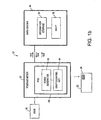
- FIGs 1 a and 1b are block diagrams showing a postage metering system.
- the postage metering system 10 includes a personal computer (PC) 30 connected to a data center 50, which has a vault 52 and an information storage 54.
- the postage metering system 10 also includes a postage security device (PSD) 60 for handling mail-related security matters.
- PSD 60 can be a part of the data center 50 but designated to a user 20, or an independent device issued to the user 20 to be connected to the PC 30.
- the user 20 wishes to send a mailpiece 22. the user 20 makes a request to the data center 50 for proof of postage payment for the mail piece 22.
- the user 20 sends along standard mailing parameters 102, such as the user's identification number, full address, and the amount of postage, to the data center50.
- the data center 50 uses data stored in the information storage 54 to validate the user and checks the vault 52 for the account balance.
- the data center 50 then sends mail-related information 104, including the standard mailing parameters 102 provided by the user 20 and possibly other information such as the date and time, to the PSD 60.
- the PSD 60 uses a cryptographic key 64 to encrypt the mail-related information 104 received from the data center 50 and to generate a digital signature or token 106 using a token generation software 62.
- the token 106 is sent to the PC 30.
- the PC 30 Based on the token 106, the PC 30 prints an indicia 24 on the mailpiece 22 as proof of postage payment.
- the data center 50 may also send the token to the U. S. Postal Service (USPS), which is not shown) for fraud prevention purposes. It is not currently required to send the token to the USPS.
- USPS U. S. Postal Service
- FIG 1b is another embodiment of the postage metering system of the present invention.
- a postage meter 30' is used, instead of the PC 30, to print the indicia 24 on the mail piece 22.
- the PSD 60 can be an independent device connected externally to the postage meter 30', or it can be included within the postage meter 30' as shown. Similar to the postage metering system 10 as shown in Figure 1a , the PSD 60 generates the token 106 using the token generation software 64 with the cryptographic key 62. The token 106 can be sent to the data center 50 upon next communication with the data center 50 for optional reporting of the token to the USPS. At the same time, the postage meter 30' prints the indicia 24 on the mailpiece 22 based on the token 106.
- the cryptographic key 62 which is used to generate the token 106, is not known to the user 20 or any other persons who would like to print an indicia.
- the cryptographic key 62 which is used to generate the token 106
- the cryptographic key 62 is not known to the user 20 or any other persons who would like to print an indicia.
- cryptographic keys are likely to be compromised, given enough time to attack the problem.
- one way to keep the cryptographic key secure is to use a key that is extremely large. The larger the cryptographic key that is used, the more time-consuming and complex are the computations required to compromise the cryptographic key.
- the amount of processing time required to generate a token with a key having an extremely great key length and to verify the authenticity of an indicia based on that token would be burdensome to the processing equipment and drastically decrease the efficiency of the postage metering system 10.
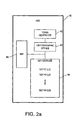
- the present system provides a PSD, as shown in Figures 2a and 2b .
- the PSD 60 also has a storing area 66 for keeping a plurality of stored cryptographic keys(K 1 , K 2 ,....K n ) in addition to the cryptographic key 64 which is active when the PSD 60 is issued to the user (see Figure 3a ).
- the active cryptographic key 64 has a key length which is reasonably great, so as to prevent the cryptographic key 64 to be compromised, while the processing time required to generate a token and to verify the authenticity of the indicia based on the token remains acceptable.
- the appropriate key length L 0 of the active cryptographic key 64, at the time being, is about 1024.
- the key lengths (L 1 , L 2 .,. L n ) of the stored cryptographic keys (K 1 , K 2 .... K n ), respectively, are all different, with L 0 ⁇ L 1 ⁇ L 2 ⁇ ... ⁇ L n .
- the key length of such a replacement key is valid when a key change is due to an expired crypto-period, or due to issuance of a PSD to a new customer, requiring a key change as mandated by the U.S.P.S. Information-Based Indicia Program (IBIP). However, under no circumstance is the length L m+1 smaller than the length L m .
- IBIP U.S.P.S. Information-Based Indicia Program
- the currently active cryptographic key 64 is likely to be compromised.
- the stored cryptographic keys (K 1 K 2 , ...., K n ) available in the PSD 60 a new cryptographic key can be retrieved from the storing area 66 in order to replace the active cryptographic key 64 after the active cryptographic key 64 has been used for a certain period of time. With such change, the active cryptographic key 64 becomes invalid, and the replacement cryptographic key becomes the new active key. It is preferred that when it is time to replace the cryptographic key 64, the stored cryptographic key K 1 will be used first, and when it is time to replace the active cryptographic key K 1 , the stored cryptographic key K 2 will be used, and so on.
- the key lengths of unused keys stored in the storing area 66 are equal to or greater than the key length of the active key currently used by the PSD 60 to generate tokens.
- the key lengths of the stored keys (K 1 K 2 , ...., K n ) are chosen with the assumption that by the time the cryptographic key K 1 becomes active, its key length L 1 will not be burdensome to the postage metering system, because the computing power has increased and the computing technology has advanced correspondingly.
- the active cryptographic key in the PSD 60 becomes longer and longer, appropriately reflecting the advances in computing.
- the change of the cryptographic key in the PSD 60 can take place when the data center issues a command to the PSD, as shown in Figures 4a and 4b , or it can take place after a set time for the active key has expired, as shown in Figure 4c .
- an initiator mechanism 66 is used to start the process of invalidating the active cryptographic key K m , having a key length L m , retrieving the stored cryptographic key K m+1 , having a key length L m+1 , from the storage area 66 and making the retrieved cryptographic K m+1 active, as shown in Figures 3a and 3b .
- the initiator mechanism 66 is adapted to receive a command from the data center 50 to change the cryptographic key, or it is adapted to start the key changing process when the expiration date of the active cryptographic key is reached. In the latter case, each cryptographic key in the PSD 60 is associated with an expiration date when the keys (64, K 1 K 2 , ...., K n ) are loaded in the manufacturing process.
- FIG 2b shows a different embodiment of the PSD 60' from the PSD 60 shown in Figure 3a .
- the PSD 60' has a key generation software 66' for generating a new cryptographic key with a given key length.
- the key length for the new key can be stored in the PSD 60' and retrieved by the initiator mechanism 68, or it can be provided by the data center 50 when the data center 50 sends a command to make a key change.
- FIG 3a is a flow chart showing the process by which the security features are implemented in the PSD 60 ( Figure 2a ) at a manufacturing facility.
- the PSD 60 is initialized at step 110.
- initialization is performed by hooking a PSD up to a computer where the PSD is "personalized". This involves the loading, from the computer to the_PSD, of device parameters such as maximum register values, PSD serial number, and other device specific information that allows the PSD to operate independently.
- the cryptographic key 64 for immediate use is loaded into the PSD 60 at step 112, and the stored cryptographic keys (K 1 , K 2 , ...., K n ) are loaded into the key storage area 66 at step 114.
- the PSD 60 is locked to prevent tempering at step 116 before it is issued to the user at step 118.
- the process by which the security features of the PSD 60', as shown in Figure 2b , are implemented is shown in Figure 3b .
- the key generation software 66' and related parameters are loaded into the PSD 60' at step 114' so that the cryptographic keys (K 1 K 2 , ...., K n ) can be generated in the future.
- the loading at step 112 of Figure 3a is not needed.
- FIGs 4a through 4c are flow charts showing the procedure to substitute a new key for the currently active key.
- a command is given by the data center 50 to the PSD 60 at step 120.
- the PSD 60 checks the key storage area 66 (see Figure 2a ) to determine whether any unused stored keys are still available at step 122. If no stored key is available, then an error is reported to the data center 50 at step 124. If an unused stored key is available for replacing the active key currently used for encryption, then the PSD 60 invalidates the active key at step 126 and retrieves a new key from the key storage area 66 at step 128. Finally, the newly retrieved key is made active at step 130.
- new keys are not stored but are generated by a key generation software 66'.
- a command message including a new key length, is provided to the PSD 60' at step 120', as shown in Figure 4b .
- the PSD 60' checks the given new key length to make sure that the new key length is equal to or greater than the key length of the active key at step 122'. If the new key length is valid, then the PSD 66' invalidates the active key at step 126 and generates a new key based on the given new key length at step 128'. At step 130', the newly generated key is made active.
- the replacement of the active cryptographic key occurs when the preset time for the active key has expired. At that time, a signal indicating the expiration of the active key is provided in step 120", as shown in Figure 4c .
- the remaining steps for the key replacement are the same as shown in Figure 4a or Figure 4b .
- the present invention has been disclosed in accordance with the preferred embodiments as described in conjunction with Figure 1 through Figure 4c . It will be understood by those skilled in the art that various changes can be made without departing from the scope of this invention, as taught in the foregoing description.
- the key length that is used to generate a new key can be stored in the PSD, provided by the data center or computed from an algorithm based on the key length of the currently active key.
- the key generation algorithm can be changed to take advantage of the advances of computing as time progresses.
- the PSD can be adapted to receive a new key generation algorithm or software from the data center.
Landscapes
- Engineering & Computer Science (AREA)
- Computer Security & Cryptography (AREA)
- Business, Economics & Management (AREA)
- Computer Networks & Wireless Communication (AREA)
- Theoretical Computer Science (AREA)
- Computer Hardware Design (AREA)
- Computing Systems (AREA)
- General Engineering & Computer Science (AREA)
- Physics & Mathematics (AREA)
- Signal Processing (AREA)
- General Physics & Mathematics (AREA)
- Accounting & Taxation (AREA)
- Finance (AREA)
- Strategic Management (AREA)
- General Business, Economics & Management (AREA)
- Devices For Checking Fares Or Tickets At Control Points (AREA)
- Management, Administration, Business Operations System, And Electronic Commerce (AREA)
Claims (19)
- Portosicherheitsgerät (60), einschließlich eines Kryptographieschlüssels (64) zum Erzeugen eines Digital-Tokens (Digitalzeichens) (106) mit einem Sicherheitslevel, wobei das Digital-Token (106) als Beweis einer Portozahlung erzeugt wird, der von einem Benutzer (20) angefordert wird, der Versandparameter für das Portosicherheitsgerät (60) bereitstellt und wobei das Digital-Token (106) basierend auf den bereitgestellten Versandparametern erzeugt wird, um es dem Benutzer zu erlauben, einen Freimachungsvermerk (24) auf einem Versandstück (22) basierend auf dem Digital-Token (106) zu erzeugen, wobei das Portosicherheitsgerät (60) umfasst:eine erste Vorrichtung (66), die auf einen Befehl für eine Schlüsseländerung reagiert, zum Bereitstellen eines neuen Kryptographieschlüssels, um den Kryptographieschlüssel zu ersetzen; undeine zweite Vorrichtung (62), die operativ mit der ersten Vorrichtung verbunden ist, zum Erzeugen eines weiteren Digital-Tokens basierend auf den bereitgestellten Versandparametern und dem neuen Kryptographieschlüssel, wobei der Kryptographieschlüssel eine erste Schlüssellänge aufweist und der neue Kryptographieschlüssel eine zweite Schlüssellänge aufweist, die zumindest gleich zu der ersten Schlüssellänge ist, um so den Sicherheitslevel zu verbessern, der mit dem Portosicherheitsgerät verknüpft ist.
- Portosicherheitsgerät nach Anspruch 1, wobei die erste Vorrichtung (66) eine Vorrichtung zum Erzeugen des neuen Kryptographieschlüssels innerhalb des Portosicherheitsgerätes umfasst.
- Portosicherheitsgerät nach Anspruch 1, wobei die erste Vorrichtung (66) eine Vorrichtung zum Erfassen des neuen Kryptographieschlüssels aus einer Quelle (50) umfasst, die unterschiedlich zu dem Portosicherheitsgerät ist.
- Portosicherheitsgerät nach Anspruch 1, wobei die erste Vorrichtung (66) einen Speicher zum Speichern einer Vielzahl von Ersatz-Kryptographieschlüsseln umfasst, um es dem neuen Kryptographieschlüssel zu erlauben, aus den Ersatz-Kryptographieschlüsseln ausgewählt zu werden.
- Kryptographieverfahren zum Bereitstellen eines Sicherheitslevels durch ein Portosicherheitsgerät (60), das ein Digital-Token (106) unter Verwendung eines Kryptographieschlüssels (64) erzeugt, wobei das Digital-Token basierend auf Versandparametern erzeugt wird, die von einem Benutzer (20) bereitgestellt werden, der eine Anfrage an das Portosicherheitsgerät (60) zum Beweis einer Portozahlung durchführt, und wobei das Digital-Token (106) es dem Benutzer (20) erlaubt, einen Freimachungsvermerk (24) auf einem Versandstück (22) als Beweis einer Portozahlung zu erzeugen, wobei das Verfahren die Schritte umfasst:Senden (120) eines Signals an das Portosicherheitsgerät (60), das eine Schlüsseländerung anfordert; undBereitstellen (130) eines neuen Kryptographieschlüssels in Reaktion auf das Signal, um auf Anforderung weitere Digital-Tokens (106) zu erzeugen, wobei der ersetzte Kryptographieschlüssel eine erste Schlüssellänge aufweist und der neue Kryptographieschlüssel eine zweite Schlüssellänge aufweist, die zumindest gleich zu der ersten Länge ist, um so die Sicherheit des Portosicherheitsgerätes (60) zu verbessern.
- Verfahren nach Anspruch 5, wobei der neue Kryptographieschlüssel durch das Portosicherheitsgerät (60) erzeugt wird.
- Verfahren nach Anspruch 5, wobei der neue Kryptographieschlüssel in dem Portosicherheitsgerät (60) vorgespeichert ist.
- Verfahren nach Anspruch 7, weiter mit dem Schritt eines Speicherns einer Vielzahl von unterschiedlichen Kryptographieschlüsseln (K1, K2 ... Kn) in einem Speichergerät (66), um es dem neuen Kryptographieschlüssel zu erlauben, aus unterschiedlichen, gespeicherten Kryptographieschlüsseln ausgewählt zu werden.
- Verfahren nach einem der Ansprüche 5 bis 8, wobei das Signal die zweite Schlüssellänge für den neuen Kryptographieschlüssel einschließt.
- Verfahren nach einem der Ansprüche 5 bis 9, wobei der Benutzer Versandparameter an ein Datenzentrum (50) bereitstellt, das operativ mit dem Portosicherheitsgerät (60) verbunden ist und wobei das Signal einen Befehl von einem Befehl von dem Datenzentrum (50) anzeigt.
- Verfahren nach einem der Ansprüche 5 bis 10, wobei dem Kryptographieschlüssel eine Einstellzeit gegeben wird, um als ein aktiver Schlüssel des Portosicherheitsgerätes (60) verwendet zu werden, und wobei das Signal anzeigt, dass die Einstellzeit für den Kryptographieschlüssel abgelaufen ist und der neue Kryptographieschlüssel als der aktive Schlüssel verwendet werden sollte.
- Frankiermaschinensystem (10), um es einem Benutzer (20) zu erlauben, einen Freimachungsvermerk (24) auf einem Versandstück (22) als Beweis einer Portozahlung zu erzeugen, wobei das System umfasst:ein Datenzentrum (50) zum Empfangen von Versandparametern von dem Benutzer und zum Bereitstellen von Daten, die die Versandparameter anzeigen;ein Portosicherheitsgerät (60), das operativ mit dem Datenzentrum (50) verbunden ist, zum Empfangen der Daten und zum Bereitstellen eines Tokens (106) basierend auf den Versandparametern und eines Kryptographieschlüssels; undeine Vorrichtung (30), die operativ mit dem Portosicherheitsgerät (60) verbunden ist, zum Drucken des Freimachungsvermerks basierend auf dem Token, wobei das Portosicherheitsgerät (60) in der Lage ist, den Kryptographieschlüssel durch einen neuen Kryptographieschlüssel in Reaktion auf ein Signal zu ersetzen, das eine Schlüsseländerung anfordert, wobei der neue Kryptographieschlüssel eine zweite Länge aufweist, die zumindest gleich zu der ersten Schlüssellänge ist, um so den Sicherheitslevel des Frankiermaschinensystems zu verbessern.
- Frankiermaschinensystem nach Anspruch 12, wobei die Druckvorrichtung (30) einen Computer umfasst.
- Frankiermaschinensystem nach Anspruch 12 oder 13, wobei das Signal durch das Datenzentrum (50) bereitgestellt wird.
- Frankiermaschinensystem nach Anspruch 12, 13 oder 14, wobei dem Kryptographieschlüssel eine Einstellzeit gegeben wird, um ein aktiver Schlüssel für das Portosicherheitsgerät (60) zu sein und wobei das Signal anzeigt, dass die Einstellzeit für den Kryptographieschlüssel abgelaufen ist und der neue Kryptographieschlüssel als der aktive Schlüssel verwendet werden sollte.
- Frankiermaschinensystem nach einem der Ansprüche 12 bis 15, wobei der neue Kryptographieschlüssel von dem Portosicherheitsgerät (60) erzeugt wird.
- Frankiermaschinensystem nach einem der Ansprüche 12 bis 16, weiter mit einer Speichervorrichtung (66), die operativ mit dem Portosicherheitsgerät (60) verbunden ist, zum Speichern einer Vielzahl von Ersatzschlüsseln (K1, K2 ... Kn), wobei der neue Kryptographieschlüssel aus den Ersatzschlüsseln durch das Portosicherheitsgerät (60) ausgewählt wird.
- Frankiermaschinensystem nach einem der Ansprüche 12 bis 17, wobei das Datenzentrum (50) einen Informationsspeicher zum Speichern von Information einschließt, die mit dem Benutzer (20) verknüpft ist und wobei das Datenzentrum (50) vor einem Bereitstellen der Daten die gespeicherte Information in dem Informationsspeicher verwendet, um den Benutzer (20) zu validieren, wenn das Datenzentrum Versandparameter von dem Benutzer (20) empfängt.
- Frankiermaschinensystem nach Anspruch 18, wobei das Datenzentrum (50) weiter einen Tresor (52) einschließt, um ein Konto beizubehalten, das mit dem Benutzer (20) verknüpft ist und wobei die Daten weiter den Tresor (52) nach einem Kontostand vor einem Bereitstellen der Daten überprüfen.
Applications Claiming Priority (3)
| Application Number | Priority Date | Filing Date | Title |
|---|---|---|---|
| US09/704,860 US6868407B1 (en) | 2000-11-02 | 2000-11-02 | Postage security device having cryptographic keys with a variable key length |
| US704860 | 2000-11-02 | ||
| PCT/US2001/045765 WO2002037736A2 (en) | 2000-11-02 | 2001-11-01 | Postage security device having cryptographic keys with a variable key length |
Publications (3)
| Publication Number | Publication Date |
|---|---|
| EP1410548A2 EP1410548A2 (de) | 2004-04-21 |
| EP1410548A4 EP1410548A4 (de) | 2007-04-04 |
| EP1410548B1 true EP1410548B1 (de) | 2009-07-08 |
Family
ID=24831138
Family Applications (1)
| Application Number | Title | Priority Date | Filing Date |
|---|---|---|---|
| EP01993080A Revoked EP1410548B1 (de) | 2000-11-02 | 2001-11-01 | Frankierungssicherheitseinrichtung mit kryptographischen schlüsseln mit variabler schlüssellänge |
Country Status (6)
| Country | Link |
|---|---|
| US (1) | US6868407B1 (de) |
| EP (1) | EP1410548B1 (de) |
| AU (1) | AU2002218011A1 (de) |
| CA (1) | CA2441407A1 (de) |
| DE (1) | DE60139214D1 (de) |
| WO (1) | WO2002037736A2 (de) |
Families Citing this family (19)
| Publication number | Priority date | Publication date | Assignee | Title |
|---|---|---|---|---|
| US20030187666A1 (en) * | 2002-03-26 | 2003-10-02 | Neopost Inc. | Techniques for dispensing postage using a communications network |
| DE10131254A1 (de) * | 2001-07-01 | 2003-01-23 | Deutsche Post Ag | Verfahren zum Überprüfen der Gültigkeit von digitalen Freimachungsvermerken |
| US7283526B2 (en) * | 2001-07-19 | 2007-10-16 | International Business Machines Corporation | Method and system for providing a symmetric key for more efficient session identification |
| US8200988B2 (en) * | 2001-08-03 | 2012-06-12 | Intel Corporation | Firmware security key upgrade algorithm |
| JP4447908B2 (ja) * | 2001-08-24 | 2010-04-07 | トムソン ライセンシング | 新しい装置を導入するローカルデジタルネットワーク及び方法と、そのネットワークにおけるデータ放送及び受信方法 |
| US7069253B2 (en) | 2002-09-26 | 2006-06-27 | Neopost Inc. | Techniques for tracking mailpieces and accounting for postage payment |
| DE102004045574A1 (de) * | 2004-09-17 | 2006-03-30 | Francotyp-Postalia Ag & Co. Kg | Verfahren zum Austausch von Kryptograhiedaten |
| JP2006222476A (ja) * | 2005-02-08 | 2006-08-24 | Murata Mach Ltd | 電子メール端末装置 |
| EP1742475A1 (de) * | 2005-07-07 | 2007-01-10 | Nagravision S.A. | Verfahren und Vorrichtung zu verschlüsselten Daten mit bedingtem Zugriff |
| US8438115B2 (en) * | 2005-09-23 | 2013-05-07 | Pitney Bowes Inc. | Method of securing postage data records in a postage printing device |
| DE102007052458A1 (de) * | 2007-11-02 | 2009-05-07 | Francotyp-Postalia Gmbh | Frankierverfahren und Postversandsystem mit zentraler Portoerhebung |
| US8422686B2 (en) * | 2008-06-19 | 2013-04-16 | International Business Machines Corporation | Automated validation and execution of cryptographic key and certificate deployment and distribution |
| US8055936B2 (en) * | 2008-12-31 | 2011-11-08 | Pitney Bowes Inc. | System and method for data recovery in a disabled integrated circuit |
| US8060453B2 (en) * | 2008-12-31 | 2011-11-15 | Pitney Bowes Inc. | System and method for funds recovery from an integrated postal security device |
| US20110154050A1 (en) * | 2009-12-22 | 2011-06-23 | Pitney Bowes Inc. | System and method for selectively providing cryptographic capabilities based on location |
| US9397834B2 (en) | 2010-10-05 | 2016-07-19 | Hewlett-Packard Development Company, L.P. | Scrambling an address and encrypting write data for storing in a storage device |
| CN103154967A (zh) * | 2010-10-05 | 2013-06-12 | 惠普发展公司,有限责任合伙企业 | 修改元素的长度以形成加密密钥 |
| US8788545B2 (en) * | 2010-12-08 | 2014-07-22 | International Business Machines Corporation | Calculating state of cryptographic objects and generating search filter for querying cryptographic objects |
| US8804158B2 (en) | 2011-05-26 | 2014-08-12 | Hewlett-Packard Development Company, L.P. | Token generation from a printer |
Family Cites Families (17)
| Publication number | Priority date | Publication date | Assignee | Title |
|---|---|---|---|---|
| US5144664A (en) | 1990-11-16 | 1992-09-01 | General Instrument Corporation | Apparatus and method for upgrading terminals to maintain a secure communication network |
| US5179591A (en) | 1991-10-16 | 1993-01-12 | Motorola, Inc. | Method for algorithm independent cryptographic key management |
| GB2274229A (en) | 1992-12-19 | 1994-07-13 | Ibm | Cryptography system. |
| US5878136A (en) | 1993-10-08 | 1999-03-02 | Pitney Bowes Inc. | Encryption key control system for mail processing system having data center verification |
| NZ306846A (en) * | 1995-06-05 | 2000-01-28 | Certco Llc | Digital signing method using partial signatures |
| US5761306A (en) * | 1996-02-22 | 1998-06-02 | Visa International Service Association | Key replacement in a public key cryptosystem |
| US6247921B1 (en) * | 1996-05-23 | 2001-06-19 | American Standard International Inc. | Apparatus for generating a spark |
| US5805701A (en) | 1996-11-01 | 1998-09-08 | Pitney Bowes Inc. | Enhanced encryption control system for a mail processing system having data center verification |
| US6041317A (en) * | 1996-11-19 | 2000-03-21 | Ascom Hasler Mailing Systems, Inc. | Postal security device incorporating periodic and automatic self implementation of public/private key pair |
| US6005945A (en) * | 1997-03-20 | 1999-12-21 | Psi Systems, Inc. | System and method for dispensing postage based on telephonic or web milli-transactions |
| US6546377B1 (en) * | 1997-06-13 | 2003-04-08 | Pitney Bowes Inc. | Virtual postage meter with multiple origins of deposit |
| US6466921B1 (en) * | 1997-06-13 | 2002-10-15 | Pitney Bowes Inc. | Virtual postage meter with secure digital signature device |
| JP4117912B2 (ja) * | 1997-06-13 | 2008-07-16 | ピットニイ ボウズ インコーポレイテッド | 安全なデジタル署名デバイスを有する仮想郵便料金メーター |
| US6058384A (en) * | 1997-12-23 | 2000-05-02 | Pitney Bowes Inc. | Method for removing funds from a postal security device |
| US6424954B1 (en) * | 1998-02-17 | 2002-07-23 | Neopost Inc. | Postage metering system |
| US6044350A (en) | 1998-12-24 | 2000-03-28 | Pitney Bowes Inc. | Certificate meter with selectable indemnification provisions |
| GB9906293D0 (en) * | 1999-03-18 | 1999-05-12 | Post Office | Improvements relating to postal services |
-
2000
- 2000-11-02 US US09/704,860 patent/US6868407B1/en not_active Expired - Fee Related
-
2001
- 2001-11-01 DE DE60139214T patent/DE60139214D1/de not_active Expired - Lifetime
- 2001-11-01 EP EP01993080A patent/EP1410548B1/de not_active Revoked
- 2001-11-01 WO PCT/US2001/045765 patent/WO2002037736A2/en not_active Ceased
- 2001-11-01 AU AU2002218011A patent/AU2002218011A1/en not_active Abandoned
- 2001-11-01 CA CA002441407A patent/CA2441407A1/en not_active Abandoned
Also Published As
| Publication number | Publication date |
|---|---|
| CA2441407A1 (en) | 2002-05-10 |
| US6868407B1 (en) | 2005-03-15 |
| EP1410548A4 (de) | 2007-04-04 |
| AU2002218011A1 (en) | 2002-05-15 |
| WO2002037736A2 (en) | 2002-05-10 |
| EP1410548A2 (de) | 2004-04-21 |
| WO2002037736A3 (en) | 2003-01-30 |
| DE60139214D1 (de) | 2009-08-20 |
Similar Documents
| Publication | Publication Date | Title |
|---|---|---|
| US6868407B1 (en) | Postage security device having cryptographic keys with a variable key length | |
| JP3020958B2 (ja) | 文書の真正さを確認する装置 | |
| US6889214B1 (en) | Virtual security device | |
| US7539648B1 (en) | Secure user certification for electronic commerce employing value metering system | |
| US6044350A (en) | Certificate meter with selectable indemnification provisions | |
| EP0647925B1 (de) | Postgebührensystem mit nachprüfbarer Unversehrtheit | |
| EP1247258B2 (de) | Auf software basierter stempelgeber | |
| CA1259704A (en) | System for detecting unaccounted for printing in a value printing system | |
| US6041317A (en) | Postal security device incorporating periodic and automatic self implementation of public/private key pair | |
| US6567913B1 (en) | Selective security level certificate meter | |
| US6073125A (en) | Token key distribution system controlled acceptance mail payment and evidencing system | |
| EP1402446A2 (de) | Verfahren und systeme zur erzeugung und validierung von werttragenden dokumenten | |
| US5805701A (en) | Enhanced encryption control system for a mail processing system having data center verification | |
| US6188997B1 (en) | Postage metering system having currency synchronization | |
| US6898581B1 (en) | Secure user certification for electronic commerce employing value metering system | |
| EP1107506B1 (de) | Verfahren und Vorrichtung zur Erzeugung von Nachrichten welche eine prüfbare Behauptung enthalten dass eine Veränderliche sich innerhalb bestimmter Grenzwerte befindet | |
| US6938023B1 (en) | Method of limiting key usage in a postage metering system that produces cryptographically secured indicium | |
| US8438115B2 (en) | Method of securing postage data records in a postage printing device | |
| US6813614B2 (en) | Method for re-keying postage metering devices | |
| WO2000055817A1 (en) | Improvements relating to postal services | |
| WO2001020464A1 (en) | Payment system and method |
Legal Events
| Date | Code | Title | Description |
|---|---|---|---|
| PUAI | Public reference made under article 153(3) epc to a published international application that has entered the european phase |
Free format text: ORIGINAL CODE: 0009012 |
|
| 17P | Request for examination filed |
Effective date: 20030916 |
|
| AK | Designated contracting states |
Kind code of ref document: A2 Designated state(s): DE FR GB |
|
| A4 | Supplementary search report drawn up and despatched |
Effective date: 20070307 |
|
| RIC1 | Information provided on ipc code assigned before grant |
Ipc: H04L 1/00 20060101AFI20020513BHEP Ipc: G07B 17/00 20060101ALI20070301BHEP |
|
| 17Q | First examination report despatched |
Effective date: 20070620 |
|
| GRAP | Despatch of communication of intention to grant a patent |
Free format text: ORIGINAL CODE: EPIDOSNIGR1 |
|
| GRAS | Grant fee paid |
Free format text: ORIGINAL CODE: EPIDOSNIGR3 |
|
| GRAA | (expected) grant |
Free format text: ORIGINAL CODE: 0009210 |
|
| AK | Designated contracting states |
Kind code of ref document: B1 Designated state(s): DE FR GB |
|
| REG | Reference to a national code |
Ref country code: GB Ref legal event code: FG4D |
|
| REF | Corresponds to: |
Ref document number: 60139214 Country of ref document: DE Date of ref document: 20090820 Kind code of ref document: P |
|
| PLBI | Opposition filed |
Free format text: ORIGINAL CODE: 0009260 |
|
| PLAX | Notice of opposition and request to file observation + time limit sent |
Free format text: ORIGINAL CODE: EPIDOSNOBS2 |
|
| 26 | Opposition filed |
Opponent name: FRANCOTYP-POSTALIA GMBH Effective date: 20100408 |
|
| PLAF | Information modified related to communication of a notice of opposition and request to file observations + time limit |
Free format text: ORIGINAL CODE: EPIDOSCOBS2 |
|
| PLBB | Reply of patent proprietor to notice(s) of opposition received |
Free format text: ORIGINAL CODE: EPIDOSNOBS3 |
|
| PGFP | Annual fee paid to national office [announced via postgrant information from national office to epo] |
Ref country code: DE Payment date: 20101126 Year of fee payment: 10 |
|
| PGFP | Annual fee paid to national office [announced via postgrant information from national office to epo] |
Ref country code: GB Payment date: 20101124 Year of fee payment: 10 |
|
| RDAF | Communication despatched that patent is revoked |
Free format text: ORIGINAL CODE: EPIDOSNREV1 |
|
| PGFP | Annual fee paid to national office [announced via postgrant information from national office to epo] |
Ref country code: FR Payment date: 20111128 Year of fee payment: 11 |
|
| GBPC | Gb: european patent ceased through non-payment of renewal fee |
Effective date: 20121101 |
|
| REG | Reference to a national code |
Ref country code: FR Ref legal event code: ST Effective date: 20130731 |
|
| REG | Reference to a national code |
Ref country code: DE Ref legal event code: R119 Ref document number: 60139214 Country of ref document: DE Effective date: 20130601 |
|
| PG25 | Lapsed in a contracting state [announced via postgrant information from national office to epo] |
Ref country code: DE Free format text: LAPSE BECAUSE OF NON-PAYMENT OF DUE FEES Effective date: 20130601 |
|
| PG25 | Lapsed in a contracting state [announced via postgrant information from national office to epo] |
Ref country code: GB Free format text: LAPSE BECAUSE OF NON-PAYMENT OF DUE FEES Effective date: 20121101 Ref country code: FR Free format text: LAPSE BECAUSE OF NON-PAYMENT OF DUE FEES Effective date: 20121130 |
|
| RDAG | Patent revoked |
Free format text: ORIGINAL CODE: 0009271 |
|
| STAA | Information on the status of an ep patent application or granted ep patent |
Free format text: STATUS: PATENT REVOKED |
|
| PG25 | Lapsed in a contracting state [announced via postgrant information from national office to epo] |
Ref country code: DE Free format text: LAPSE BECAUSE OF REVOCATION BY EPO Effective date: 20120308 |
|
| 27W | Patent revoked |
Effective date: 20111103 |