EP1414086A2 - Wiederaufladbares galvanisches Element mit mindestens einer Lithium interkalierenden Elektrode - Google Patents
Wiederaufladbares galvanisches Element mit mindestens einer Lithium interkalierenden Elektrode Download PDFInfo
- Publication number
- EP1414086A2 EP1414086A2 EP03022467A EP03022467A EP1414086A2 EP 1414086 A2 EP1414086 A2 EP 1414086A2 EP 03022467 A EP03022467 A EP 03022467A EP 03022467 A EP03022467 A EP 03022467A EP 1414086 A2 EP1414086 A2 EP 1414086A2
- Authority
- EP
- European Patent Office
- Prior art keywords
- cell
- ptc
- rechargeable galvanic
- lithium
- ptc element
- Prior art date
- Legal status (The legal status is an assumption and is not a legal conclusion. Google has not performed a legal analysis and makes no representation as to the accuracy of the status listed.)
- Granted
Links
- WHXSMMKQMYFTQS-UHFFFAOYSA-N Lithium Chemical compound [Li] WHXSMMKQMYFTQS-UHFFFAOYSA-N 0.000 title claims abstract description 20
- 229910052744 lithium Inorganic materials 0.000 title claims abstract description 20
- 238000009830 intercalation Methods 0.000 title claims abstract description 4
- 230000002687 intercalation Effects 0.000 title 1
- 238000007789 sealing Methods 0.000 claims abstract description 8
- 229910052751 metal Inorganic materials 0.000 claims abstract description 6
- 239000002184 metal Substances 0.000 claims abstract description 6
- 239000000853 adhesive Substances 0.000 claims abstract description 5
- 230000001070 adhesive effect Effects 0.000 claims abstract description 5
- 239000005486 organic electrolyte Substances 0.000 claims abstract description 4
- 239000002131 composite material Substances 0.000 claims abstract description 3
- 239000011888 foil Substances 0.000 claims abstract description 3
- 239000004033 plastic Substances 0.000 claims abstract description 3
- 229920003023 plastic Polymers 0.000 claims abstract description 3
- 239000006223 plastic coating Substances 0.000 claims abstract description 3
- 229920000642 polymer Polymers 0.000 description 5
- OKTJSMMVPCPJKN-UHFFFAOYSA-N Carbon Chemical compound [C] OKTJSMMVPCPJKN-UHFFFAOYSA-N 0.000 description 4
- 229910012851 LiCoO 2 Inorganic materials 0.000 description 4
- 229910002804 graphite Inorganic materials 0.000 description 4
- 239000010439 graphite Substances 0.000 description 4
- 238000000034 method Methods 0.000 description 4
- 239000002245 particle Substances 0.000 description 3
- 238000004804 winding Methods 0.000 description 3
- 238000007599 discharging Methods 0.000 description 2
- 239000003792 electrolyte Substances 0.000 description 2
- PXHVJJICTQNCMI-UHFFFAOYSA-N nickel Substances [Ni] PXHVJJICTQNCMI-UHFFFAOYSA-N 0.000 description 2
- -1 polyethylene Polymers 0.000 description 2
- 239000004698 Polyethylene Substances 0.000 description 1
- 239000004642 Polyimide Substances 0.000 description 1
- 239000004743 Polypropylene Substances 0.000 description 1
- 230000004913 activation Effects 0.000 description 1
- 239000002390 adhesive tape Substances 0.000 description 1
- 229910052782 aluminium Inorganic materials 0.000 description 1
- XAGFODPZIPBFFR-UHFFFAOYSA-N aluminium Chemical compound [Al] XAGFODPZIPBFFR-UHFFFAOYSA-N 0.000 description 1
- QVGXLLKOCUKJST-UHFFFAOYSA-N atomic oxygen Chemical compound [O] QVGXLLKOCUKJST-UHFFFAOYSA-N 0.000 description 1
- 230000009172 bursting Effects 0.000 description 1
- 239000004020 conductor Substances 0.000 description 1
- 230000006378 damage Effects 0.000 description 1
- 239000003822 epoxy resin Substances 0.000 description 1
- 239000010408 film Substances 0.000 description 1
- 239000007789 gas Substances 0.000 description 1
- 238000010438 heat treatment Methods 0.000 description 1
- 230000002427 irreversible effect Effects 0.000 description 1
- 239000000155 melt Substances 0.000 description 1
- 239000012528 membrane Substances 0.000 description 1
- 230000007935 neutral effect Effects 0.000 description 1
- 238000012946 outsourcing Methods 0.000 description 1
- 238000013021 overheating Methods 0.000 description 1
- 239000001301 oxygen Substances 0.000 description 1
- 229910052760 oxygen Inorganic materials 0.000 description 1
- 229920001690 polydopamine Polymers 0.000 description 1
- 229920000647 polyepoxide Polymers 0.000 description 1
- 229920000573 polyethylene Polymers 0.000 description 1
- 229920001721 polyimide Polymers 0.000 description 1
- 229920001155 polypropylene Polymers 0.000 description 1
- 239000004814 polyurethane Substances 0.000 description 1
- 229920002635 polyurethane Polymers 0.000 description 1
- 230000002441 reversible effect Effects 0.000 description 1
- 238000005476 soldering Methods 0.000 description 1
- 238000003466 welding Methods 0.000 description 1
Images

Classifications
-
- H—ELECTRICITY
- H01—ELECTRIC ELEMENTS
- H01M—PROCESSES OR MEANS, e.g. BATTERIES, FOR THE DIRECT CONVERSION OF CHEMICAL ENERGY INTO ELECTRICAL ENERGY
- H01M50/00—Constructional details or processes of manufacture of the non-active parts of electrochemical cells other than fuel cells, e.g. hybrid cells
- H01M50/50—Current conducting connections for cells or batteries
- H01M50/572—Means for preventing undesired use or discharge
-
- H—ELECTRICITY
- H01—ELECTRIC ELEMENTS
- H01M—PROCESSES OR MEANS, e.g. BATTERIES, FOR THE DIRECT CONVERSION OF CHEMICAL ENERGY INTO ELECTRICAL ENERGY
- H01M10/00—Secondary cells; Manufacture thereof
- H01M10/04—Construction or manufacture in general
- H01M10/0436—Small-sized flat cells or batteries for portable equipment
-
- H—ELECTRICITY
- H01—ELECTRIC ELEMENTS
- H01M—PROCESSES OR MEANS, e.g. BATTERIES, FOR THE DIRECT CONVERSION OF CHEMICAL ENERGY INTO ELECTRICAL ENERGY
- H01M10/00—Secondary cells; Manufacture thereof
- H01M10/05—Accumulators with non-aqueous electrolyte
- H01M10/052—Li-accumulators
-
- H—ELECTRICITY
- H01—ELECTRIC ELEMENTS
- H01M—PROCESSES OR MEANS, e.g. BATTERIES, FOR THE DIRECT CONVERSION OF CHEMICAL ENERGY INTO ELECTRICAL ENERGY
- H01M10/00—Secondary cells; Manufacture thereof
- H01M10/42—Methods or arrangements for servicing or maintenance of secondary cells or secondary half-cells
- H01M10/425—Structural combination with electronic components, e.g. electronic circuits integrated to the outside of the casing
- H01M10/4257—Smart batteries, e.g. electronic circuits inside the housing of the cells or batteries
-
- H—ELECTRICITY
- H01—ELECTRIC ELEMENTS
- H01M—PROCESSES OR MEANS, e.g. BATTERIES, FOR THE DIRECT CONVERSION OF CHEMICAL ENERGY INTO ELECTRICAL ENERGY
- H01M10/00—Secondary cells; Manufacture thereof
- H01M10/42—Methods or arrangements for servicing or maintenance of secondary cells or secondary half-cells
- H01M10/48—Accumulators combined with arrangements for measuring, testing or indicating the condition of cells, e.g. the level or density of the electrolyte
-
- H—ELECTRICITY
- H01—ELECTRIC ELEMENTS
- H01M—PROCESSES OR MEANS, e.g. BATTERIES, FOR THE DIRECT CONVERSION OF CHEMICAL ENERGY INTO ELECTRICAL ENERGY
- H01M50/00—Constructional details or processes of manufacture of the non-active parts of electrochemical cells other than fuel cells, e.g. hybrid cells
- H01M50/10—Primary casings; Jackets or wrappings
- H01M50/102—Primary casings; Jackets or wrappings characterised by their shape or physical structure
- H01M50/105—Pouches or flexible bags
-
- H—ELECTRICITY
- H01—ELECTRIC ELEMENTS
- H01M—PROCESSES OR MEANS, e.g. BATTERIES, FOR THE DIRECT CONVERSION OF CHEMICAL ENERGY INTO ELECTRICAL ENERGY
- H01M50/00—Constructional details or processes of manufacture of the non-active parts of electrochemical cells other than fuel cells, e.g. hybrid cells
- H01M50/10—Primary casings; Jackets or wrappings
- H01M50/116—Primary casings; Jackets or wrappings characterised by the material
- H01M50/117—Inorganic material
- H01M50/119—Metals
-
- H—ELECTRICITY
- H01—ELECTRIC ELEMENTS
- H01M—PROCESSES OR MEANS, e.g. BATTERIES, FOR THE DIRECT CONVERSION OF CHEMICAL ENERGY INTO ELECTRICAL ENERGY
- H01M50/00—Constructional details or processes of manufacture of the non-active parts of electrochemical cells other than fuel cells, e.g. hybrid cells
- H01M50/10—Primary casings; Jackets or wrappings
- H01M50/116—Primary casings; Jackets or wrappings characterised by the material
- H01M50/124—Primary casings; Jackets or wrappings characterised by the material having a layered structure
-
- H—ELECTRICITY
- H01—ELECTRIC ELEMENTS
- H01M—PROCESSES OR MEANS, e.g. BATTERIES, FOR THE DIRECT CONVERSION OF CHEMICAL ENERGY INTO ELECTRICAL ENERGY
- H01M50/00—Constructional details or processes of manufacture of the non-active parts of electrochemical cells other than fuel cells, e.g. hybrid cells
- H01M50/10—Primary casings; Jackets or wrappings
- H01M50/172—Arrangements of electric connectors penetrating the casing
- H01M50/174—Arrangements of electric connectors penetrating the casing adapted for the shape of the cells
- H01M50/178—Arrangements of electric connectors penetrating the casing adapted for the shape of the cells for pouch or flexible bag cells
-
- H—ELECTRICITY
- H01—ELECTRIC ELEMENTS
- H01M—PROCESSES OR MEANS, e.g. BATTERIES, FOR THE DIRECT CONVERSION OF CHEMICAL ENERGY INTO ELECTRICAL ENERGY
- H01M2200/00—Safety devices for primary or secondary batteries
- H01M2200/10—Temperature sensitive devices
- H01M2200/106—PTC
-
- Y—GENERAL TAGGING OF NEW TECHNOLOGICAL DEVELOPMENTS; GENERAL TAGGING OF CROSS-SECTIONAL TECHNOLOGIES SPANNING OVER SEVERAL SECTIONS OF THE IPC; TECHNICAL SUBJECTS COVERED BY FORMER USPC CROSS-REFERENCE ART COLLECTIONS [XRACs] AND DIGESTS
- Y02—TECHNOLOGIES OR APPLICATIONS FOR MITIGATION OR ADAPTATION AGAINST CLIMATE CHANGE
- Y02E—REDUCTION OF GREENHOUSE GAS [GHG] EMISSIONS, RELATED TO ENERGY GENERATION, TRANSMISSION OR DISTRIBUTION
- Y02E60/00—Enabling technologies; Technologies with a potential or indirect contribution to GHG emissions mitigation
- Y02E60/10—Energy storage using batteries
-
- Y—GENERAL TAGGING OF NEW TECHNOLOGICAL DEVELOPMENTS; GENERAL TAGGING OF CROSS-SECTIONAL TECHNOLOGIES SPANNING OVER SEVERAL SECTIONS OF THE IPC; TECHNICAL SUBJECTS COVERED BY FORMER USPC CROSS-REFERENCE ART COLLECTIONS [XRACs] AND DIGESTS
- Y02—TECHNOLOGIES OR APPLICATIONS FOR MITIGATION OR ADAPTATION AGAINST CLIMATE CHANGE
- Y02P—CLIMATE CHANGE MITIGATION TECHNOLOGIES IN THE PRODUCTION OR PROCESSING OF GOODS
- Y02P70/00—Climate change mitigation technologies in the production process for final industrial or consumer products
- Y02P70/50—Manufacturing or production processes characterised by the final manufactured product
Definitions
- the invention relates to a rechargeable galvanic element with at least one lithium intercalating electrode according to the preamble of claim 1.
- it has a tightly closed, thin, flexible housing composed of two metal or metal / plastic composite foils connected to one another by an adhesive or sealing layer on.
- Rechargeable lithium cells in thin flexible housings are increasingly being used in portable high-tech devices such as PDAs, organizers or cell phones due to their high energy density and the resulting low weight. Due to their high energy density and the flammable organic electrolyte, special safety precautions must be taken with this cell type, so that a hazard to the user if the cell is handled improperly can be excluded.
- rechargeable lithium cells have an external electronic safety circuit that monitors the charging and discharging process and protects the cell against improper handling such as external short-circuit.
- external electronics e.g. underwriter laboratories.
- Such a "bare" cell must be able to withstand an external short circuit or overcharge up to 12 volts just as securely as a cell with external safety electronics.
- shutdown separator is usually used in the cell, which melts when the cell overheats, loses its porosity and thus stops the further discharge of the cell.
- shutdown separator is usually used in the cell, which melts when the cell overheats, loses its porosity and thus stops the further discharge of the cell.
- the electrodes are dimensioned in such a way that the graphite can absorb all of the lithium that has been removed.
- lithium winding cells in a hard case e.g. aluminum cup
- a hard case e.g. aluminum cup
- PTC element Platinum Temperature Coefficient Device
- the invention has for its object to provide a galvanic element mentioned at the outset with overcharge protection, in particular the overall height and the volume of the galvanic element can hardly be enlarged and overheating of the cell with subsequent destruction is reliably avoided under all operating conditions.
- the PTC element can be introduced into existing free spaces within the cell, this additional security element does not cause a loss in energy density.
- the PTC element is integrated in an electrically conductive manner, for example by welding or soldering between the electrodes and the external contacts, in the arrester or in the electrical connection.
- the PTC element comes to rest within the soft pack or in its sealing edge. If aggressive electrolytes are used, the PTC element is provided with a plastic coating which is resistant to organic electrolytes, for example by means of polyimide adhesive tapes, polyethylene or polypropylene sealing films, epoxy resin or polyurethane.
- the PTC element advantageously consists of a polymer in which conductive particles are well distributed. It is highly conductive at low temperatures, since then the conductive particles are in electrically conductive contact with one another. From a temperature specific for each PTC, the polymer swells and the conductive particles lose their contact, so that the resistance of the PTC element suddenly increases sharply.
- a typical PTC element is, for example, the so-called polyswitch (designation for PTC elements from Raychem Corporation, Menlo Park, CA, USA.), Published by Raychem Corporation in the "Current Protection Data Book for Polyswitch Resettable Fuses" (02/1997) are described).
- the PTC element is fitted inside the cell or in the soft pack, which may contain a large number of electrodes stacked on top of one another, since this is the only way that the heat released during overcharge activates the PTC element in good time. Attaching the PTC element outside the cell to the soft pack housing does not lead to timely activation of the PTC element, in contrast to the good heat-conducting hard case for round cells, and is therefore not a reliable protection against overloading. This is due, on the one hand, to the generally poorly heat-conducting soft pack housing and, on the other hand, to the gassing of the cell that occurs when charging with charging voltages of well over 4.2 volts, which additionally reduces the thermal contact to the PTC element.
- a PTC element 3 is electrically integrated into one of the conductors 2, for example made of nickel foil, which serve as electrical contacts, of the thin galvanic element 1. In particular, it is welded in and positioned so that it is arranged in the region of the sealing edge 4 of the cell.
- the cell with PTC (FIG. 2) has an externally measured maximum temperature of 75 ° C after 41 minutes, at the same time the voltage U jumps from 5.5 volts to the 12 volt limit, and the current I drops from 1.5 A to approx .200 mA from. After approx. 1 hour, the temperature stabilizes at 55 ° C and the current at 300 mA.
- the PTC was neutral or low-resistance for up to 40 minutes. After 41 minutes, the temperature in the softpack at this point in time caused the PTC to suddenly become high-resistance, thereby limiting the current to approx. 200 mA. As the PTC cools down, its conductivity increases again, and with it the current. After approx. 1 hour the system has stabilized and found its operating point at 55 ° C and 300 mA.
Landscapes
- Chemical & Material Sciences (AREA)
- Chemical Kinetics & Catalysis (AREA)
- Electrochemistry (AREA)
- General Chemical & Material Sciences (AREA)
- Engineering & Computer Science (AREA)
- Manufacturing & Machinery (AREA)
- Inorganic Chemistry (AREA)
- Microelectronics & Electronic Packaging (AREA)
- Connection Of Batteries Or Terminals (AREA)
- Secondary Cells (AREA)
- Sealing Battery Cases Or Jackets (AREA)
- Battery Electrode And Active Subsutance (AREA)
Abstract
Description
- Gegenstand der Erfindung ist ein wiederaufladbares galvanisches Element mit mindestens einer Lithium interkalierenden Elektrode nach dem Oberbegriff des Anspruchs 1. Insbesondere weist es ein dicht verschlossenes dünnes flexibles Gehäuse aus zwei durch eine Klebe- oder Siegelschicht miteinander verbundenen Metall- oder Metall/Kunststoff-Verbund-Folien auf.
- Wiederaufladbare Lithium-Zellen in dünnen flexiblen Gehäusen, auch als Softpack bezeichnet, werden aufgrund ihrer hohen Energiedichte und dem daraus resultierenden niedrigen Gewicht zunehmend in portablen Hightech-Geräten wie PDA's, Organizern oder Mobiltelefonen eingesetzt. Wegen ihrer hohen Energiedichte und des brennbaren organischen Elektrolyten, müssen bei diesem Zelltyp jedoch besondere Sicherheitsvorkehrungen getroffen werden, damit eine Gefährdung des Benutzers bei unsachgemäßer Behandlung der Zelle ausgeschlossen werden kann.
- Daher besitzen wiederaufladbare Lithium-Zellen eine äußere elektronische Sicherheitsschaltung, die den Lade- und Entladevorgang überwacht und die Zelle vor unsachgemäßer Behandlung wie beispielsweise externem Kurzschluss schützt. In vielen Fällen reicht jedoch die Absicherung der Zelle über eine externe Elektronik nicht aus. Deshalb werden zunehmend Sicherheitsprüfungen an Lithium-Zellen ohne Elektronik vorgenommen (z.B. Underwriter Laboratories). Dabei muss eine solche "nackte" Zelle einen externen Kurzschluss oder eine Überladung auf bis zu 12 Volt genauso sicher bestehen wie eine Zelle mit einer äußeren Sicherheitselektronik.
- Eine weitere Anforderung an eine "nackte" Lithium-Zelle im Softpack ist, dass sie bei einem externen Kurzschluss nicht überhitzt, sich öffnet oder gar verbrennt. Hierzu wird meist ein sogenannter "Shutdown"-Separator in der Zelle eingesetzt, der bei der Überhitzung der Zelle schmilzt, seine Porosität verliert und so die weitere Entladung der Zelle stoppt. Dieser Mechanismus ist jedoch irreversibel und setzt unter Umständen zu spät ein.
- Insbesondere die Überladung ist bei wiederaufladbaren Lithium-Zellen extrem kritisch. Hierbei spielt sich beispielsweise bei einer üblichen Lithium-Polymer- oder Wickelzelle bestehend aus einer graphithaltigen Anode und einer lithiumcobalt-(LiCoO2)-haltigen Kathode folgendes Szenarium ab:
- Ca. 50% des Lithiums wird aus dem LiCoO2 ausgelagert und in die Graphitschichten der Anode interkaliert. Dabei sind die Elektroden so dimensioniert, dass der Graphit das gesamte ausgelagerte Lithium aufnehmen kann.
- Aus dem LiCoO2 wird weiteres Lithium ausgelagert. Da die Graphitschichten bereits befüllt sind, wird nun auf der Anode oberflächlich metallisches Lithium abgeschieden.
- Jetzt zersetzen sich bereits Bestandteile des Elektrolyten und führen zur starken Aufgasung der Zelle. Zudem wird die LiCoO2 - Struktur durch die weitere Auslagerung des Lithiums immer instabiler, bis sie unter Freisetzung von reaktivem Sauerstoff zusammenbricht. Dieser Prozess führt zur starken Erwärmung der Zelle, bis diese schließlich explosionsartig verbrennt.
- Deshalb wird bei Lithium-Wickelzellen im Hardcase (z.B. Aluminium-Becher) oft mit einem extern angebrachten PTC-Element (Positive Temperature Coefficient Device) die Überladesicherheit gewährleistet. Voraussetzung hierfür ist, dass die bei der Überladung in der Zelle entstehende Wärme durch ein thermisch gut leitendes Hardcase zum PTC geführt wird.
- Aus den Dokumenten US 5876 868 und EP 818838 A2 ist es bekannt, ein PTC-Element im eine Berstmembran enthaltenden Verschlussdeckel von Lithium-Rundzellen anzuordnen.
- Dem Dokument US 3546024 ist es zu entnehmen, einen Temperaturschalter in eine wiederaufladbare Ni/Cd-Zelle einzubauen, wobei der Temperaturschalter in einem Freiraum innerhalb des Elektrodenwickels angebracht ist.
- Der Erfindung liegt die Aufgabe zugrunde, ein eingangs genanntes galvanisches Element mit einem Überladeschutz zu schaffen, wobei insbesondere die Bauhöhe und das Volumen des galvanischen Elements kaum vergrößert werden und unter allen Betriebsbedingungen zuverlässig eine Überhitzung der Zelle mit nachfolgender Zerstörung vermieden wird.
- Diese Aufgabe wird bei einem galvanischen Element der eingangs genannten Art durch die Merkmale des Anspruchs 1 gelöst. In den Unteransprüchen sind vorteilhafte Ausgestaltungen der Erfindung angegeben. Der Wortlaut der Ansprüche wird durch ausdrückliche Bezugnahme zum Inhalt der Beschreibung gemacht.
- Durch den Einbau eines PTC-Elements in eine Lithium-Polymerzelle im Softpack kann eine gegen Überladung und gegen externen Kurzschluss sichere Zelle hergestellt werden.
- Da das PTC-Element in vorhandene Freiräume innerhalb der Zelle eingebracht werden kann, bedingt dieses zusätzliche Sicherheitselement keinen Verlust an Energiedichte. Das PTC-Element wird elektrisch leitend, beispielsweise durch Schweißen oder Löten zwischen den Elektroden und den äußeren Kontakten, im Ableiter bzw. im elektrischen Anschluß integriert. Dabei kommt das PTC-Element innerhalb des Softpacks oder in dessen Siegelrand zu liegen. Bei Einsatz von aggressiven Elektrolyten wird das PTC-Element mit einem gegen organische Elektrolyte resistenten Kunststoffüberzug versehen, beispielsweise durch Polyimidklebebänder, Polyethylen oder Polypropylen-Siegelfolien, Epoxidharz oder Polyurethan.
- Das PTC-Element besteht vorteilhaft aus einem Polymer, in dem leitfähige Partikel gut verteilt vorliegen. Es ist bei tiefen Temperaturen gut leitfähig, da dann die leitfähigen Partikel in elektrisch leitfähigem Kontakt miteinander stehen. Ab einer für jeden PTC spezifischen Temperatur quillt das Polymer auf, und die leitfähigen Partikel verlieren ihren Kontakt, so dass der Widerstand des PTC-Elements schlagartig stark ansteigt. Ein typisches PTC-Element ist beispielsweise der sogenannte Polyswitch (Bezeichnung für PTC-Elemente der Raychem Corporation, Menlo Park, CA, USA., die im Datenbuch "Current Protection Data Book for Polyswitch Resettable Fuses" (02/1997) herausgegeben von Raychem Corporation beschrieben sind).
- Wird ein solches PTC-Element in einer Lithium-Polymerzelle mit einem der Ableiter in Reihe geschaltet, so ist bei niedrigen Temperaturen die elektrische Performance beim Be- und Entladen der Zelle voll gegeben. Wird die Zelle jedoch stark überladen oder extern kurzgeschlossen, so führt die hierbei im Softpack entstehende Wärme zum sprunghaften Anstieg des elektrischen Widerstandes, so dass der Überladevorgang unterbrochen wird.
- Von besonderer Bedeutung ist, dass das PTC-Element innerhalb der Zelle bzw. im Softpack, der gegebenenfalls eine Vielzahl von aufeinandergestapelten Elektroden enthält, angebracht ist, da nur so die freiwerdende Wärme bei der Überladung das PTC-Element rechtzeitig aktiviert. Ein Anbringen des PTC-Elements außerhalb der Zelle am Softpackgehäuse führt, im Gegensatz zum gut wärmeleitenden Hardcase bei Rundzellen nicht zum rechtzeitigen Ansprechen des PTC-Elements und ist somit kein sicherer Überladeschutz. Dies liegt einerseits am grundsätzlich schlechter wärmeleitenden Softpackgehäuse und andererseits an der bei Überladung mit Ladespannungen von weit über 4,2 Volt auftretenden Gasung der Zelle, die den thermischen Kontakt zum PTC-Element zusätzlich vermindert.
- Bei Verwendung eines erfindungsgemäßen PTC-Elements ist eine Überladesicherheit bis 32 Volt gewährleistet, und die geforderte Sicherheit bei externem Kurzschluss wird ebenfalls erreicht. Im Gegensatz zu den üblicherweise eingesetzten "Shutdown"-Separatoren ist dieser Prozess reversibel, so dass die Zelle nach einem solchen externen Kurzschluss weiterhin voll funktionsfähig ist.
- Im folgenden ist die Erfindung anhand der Figuren 1 bis 3 weiter erläutert.
- Figur 1
- zeigt schematisch den grundsätzlichen Aufbau einer erfindungsgemäßen Zelle mit integriertem PTC.
- Figur 2
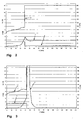
- zeigt das Verhalten einer erfindungsgemäßen Zelle bei Überladung und
- Figur 3
- zeigt das Verhalten einer Vergleichszelle ohne das PTC-Element.
- Gemäß Figur 1 ist in einen der beispielsweise aus Nickel-Folie bestehenden Ableiter 2, welche als elektrische Kontakte dienen, des dünnen galvanischen Elements 1 ein PTC-Element 3 elektrisch integriert. Insbesondere ist es eingeschweißt und so positioniert, dass es im Bereich des Siegelrandes 4 der Zelle angeordnet ist.
- Wie Figur 2 und 3 zeigen, steigt die Temperatur T der Zellen und Spannung U bis etwa 40 Minuten langsam an. Der Strom I bleibt hierbei mit 2C (1,5 A) konstant.
- Bei der in Figur 3 dargestellten Zelle ohne PTC steigt die Temperatur T nach 43 Minuten exponentiell an, und die Zelle verbrennt.
- Die Zelle mit PTC (Figur 2) hat nach 41 Minuten ein außen gemessenes Temperaturmaximum von 75 °C, gleichzeitig steigt die Spannung U sprunghaft von 5,5 Volt auf die 12 Volt Begrenzung, und der Strom I fällt von 1,5 A auf ca. 200 mA ab. Nach ca. 1 Stunde stabilisiert sich die Temperatur auf 55 °C und der Strom auf 300 mA.
- Folgender Mechanismus hat zu diesem Verhalten geführt:
Bis 40 Minuten verhielt sich der PTC neutral bzw. niederohmig. Nach 41 Minuten hat die zu diesem Zeitpunkt im Softpack bestehende Temperatur dazu geführt, dass der PTC schlagartig hochohmig und der Strom dadurch auf ca. 200 mA begrenzt wurde. Durch die Abkühlung des PTC steigt dessen Leitfähigkeit wieder an und somit auch der Strom. Nach ca. 1 Stunde hat sich das System stabilisiert und seinen Arbeitspunkt bei 55 °C und 300 mA gefunden.
Claims (4)
- Wiederaufladbares galvanisches Element (1) mit mindestens einer Lithium interkalierenden Elektrode und einem dicht verschlossenen dünnen flexiblen Gehäuse aus zwei durch eine Klebe- oder Siegelschicht miteinander verbundenen Metall- oder Metall/Kunststoff-Verbund-Folien, dadurch gekennzeichnet, dass innerhalb des Elements (1) in einen der elektrischen Anschlüsse (2) ein PTC-Element (3) in Reihe geschaltet ist.
- Wiederaufladbares galvanisches Element nach Anspruch 1, dadurch gekennzeichnet, dass das PTC-Element (3) im Außenbereich, insbesondere am Rand (4), des Elements (1) im Bereich der Klebe- oder Siegelschicht eingebettet ist.
- Wiederaufladbares galvanisches Element nach Anspruch 1 oder 2, dadurch gekennzeichnet, dass das PTC-Element (3) mit einem gegen organische Elektrolyte resistenten Kunststoffüberzug versehen ist.
- Wiederaufladbares galvanisches Element nach einem der vorhergehenden Ansprüche, dadurch gekennzeichnet, dass es mehrere aufeinander gestapelte Elektroden enthält.
Applications Claiming Priority (2)
| Application Number | Priority Date | Filing Date | Title |
|---|---|---|---|
| DE10250857A DE10250857A1 (de) | 2002-10-25 | 2002-10-25 | Wiederaufladbares galvanisches Element mit mindestens einer lithiuminterkalierenden Elektrode |
| DE10250857 | 2002-10-25 |
Publications (4)
| Publication Number | Publication Date |
|---|---|
| EP1414086A2 true EP1414086A2 (de) | 2004-04-28 |
| EP1414086A3 EP1414086A3 (de) | 2005-11-02 |
| EP1414086B1 EP1414086B1 (de) | 2008-09-24 |
| EP1414086B8 EP1414086B8 (de) | 2013-10-02 |
Family
ID=32049637
Family Applications (1)
| Application Number | Title | Priority Date | Filing Date |
|---|---|---|---|
| EP03022467.9A Expired - Lifetime EP1414086B8 (de) | 2002-10-25 | 2003-10-08 | Wiederaufladbares galvanisches Element mit mindestens einer Lithium interkalierenden Elektrode |
Country Status (7)
| Country | Link |
|---|---|
| US (1) | US20040110061A1 (de) |
| EP (1) | EP1414086B8 (de) |
| JP (1) | JP2004146382A (de) |
| KR (1) | KR20040036550A (de) |
| CN (1) | CN1523688A (de) |
| AT (1) | ATE409359T1 (de) |
| DE (2) | DE10250857A1 (de) |
Families Citing this family (27)
| Publication number | Priority date | Publication date | Assignee | Title |
|---|---|---|---|---|
| WO2005043650A2 (en) * | 2003-10-28 | 2005-05-12 | Johnson Controls Technology Company | Battery system with improved heat dissipation |
| DE10361360A1 (de) * | 2003-12-18 | 2005-07-14 | Varta Microbattery Gmbh | Galvanisches Element |
| WO2005101547A1 (en) | 2004-04-13 | 2005-10-27 | Lg Chem, Ltd. | Electrochemical cell comprising electrode lead with protector element |
| KR100808380B1 (ko) * | 2004-10-14 | 2008-02-29 | 주식회사 엘지화학 | 전지단자에 안전소자가 구비된 이차전지 |
| KR100709882B1 (ko) * | 2005-11-29 | 2007-04-20 | 삼성에스디아이 주식회사 | 리튬 이차전지 및 그 제조방법 |
| KR100900412B1 (ko) * | 2006-08-14 | 2009-06-01 | 주식회사 엘지화학 | 향상된 안전성과 콤팩트한 구조의 이차전지 |
| DE102007033427A1 (de) * | 2007-07-18 | 2009-01-22 | Robert Bosch Gmbh | Anordnung mit einem Gehäuse |
| DE102008043946A1 (de) * | 2008-11-20 | 2010-05-27 | Robert Bosch Gmbh | Sicherungseinrichtung für eine Akkumulatorzelle |
| US9153835B2 (en) | 2009-02-09 | 2015-10-06 | Varta Microbattery Gmbh | Button cells and method for producing same |
| DE102009060800A1 (de) | 2009-06-18 | 2011-06-09 | Varta Microbattery Gmbh | Knopfzelle mit Wickelelektrode und Verfahren zu ihrer Herstellung |
| KR101101914B1 (ko) * | 2009-12-18 | 2012-01-02 | 이은용 | 점토 받침틀 |
| KR20130112704A (ko) * | 2010-05-06 | 2013-10-14 | 타이코 일렉트로닉스 저팬 지.케이. | Ptc 디바이스 및 그것을 갖는 2차 전지 |
| CN101887960B (zh) | 2010-07-13 | 2015-07-29 | 清华大学 | 锂离子电池极耳及具有该极耳的锂离子电池 |
| DE102010033577A1 (de) | 2010-08-03 | 2012-02-09 | Varta Microbattery Gmbh | Knopfzelle mit Wickelelektrode mit thermischer Sicherung |
| DE102011002659A1 (de) | 2011-01-13 | 2012-07-19 | Sb Limotive Company Ltd. | Batteriezelle mit Mittel zur Ausbildung eines Kurzschlusses umfassend ein Kaltleiterelement |
| US9065085B2 (en) | 2011-04-19 | 2015-06-23 | Samsung Sdi Co., Ltd. | Battery pack |
| US20140212701A1 (en) * | 2013-01-29 | 2014-07-31 | Samsung Sdi Co., Ltd. | Battery cell |
| DE102013205062A1 (de) | 2013-03-22 | 2014-09-25 | Robert Bosch Gmbh | Batteriezelle mit einem auf leitfähigem Material basierenden Gehäuse und Verfahren zum sicheren Entladen einer Batteriezelle |
| DE102013218933A1 (de) * | 2013-09-20 | 2015-03-26 | Robert Bosch Gmbh | Lithium-Ionen-Akkumulator mit verringerter Gefährdung durch Abblasen |
| EP2988356A1 (de) * | 2014-08-18 | 2016-02-24 | Manz AG | Verfahren und Vorrichtung zur Herstellung eines galvanischen Elements sowie galvanisches Element |
| CN106159118B (zh) * | 2015-04-02 | 2019-05-21 | 曙鹏科技(深圳)有限公司 | 一种软包装锂离子电池及其制造方法 |
| DE202015004285U1 (de) | 2015-06-12 | 2016-09-16 | Varta Microbattery Gmbh | Knopfzelle |
| CN205406665U (zh) * | 2016-01-20 | 2016-07-27 | 瑞侃电子(上海)有限公司 | 电池芯内部用保护装置 |
| KR102917756B1 (ko) | 2019-12-16 | 2026-01-26 | 다이슨 테크놀러지 리미티드 | 내부 팽윤 완화 및 외부 냉각 기능이 있는 배터리 셀 |
| CN113889718A (zh) * | 2020-07-02 | 2022-01-04 | 本田技研工业株式会社 | 电池 |
| JP7670495B2 (ja) * | 2021-02-01 | 2025-04-30 | 本田技研工業株式会社 | 電池 |
| KR102723746B1 (ko) * | 2021-09-13 | 2024-10-31 | 주식회사 엘지에너지솔루션 | 전극 리드와 리드필름 사이에 안전 소자를 구비한 파우치형 전지 셀 |
Family Cites Families (7)
| Publication number | Priority date | Publication date | Assignee | Title |
|---|---|---|---|---|
| US3546024A (en) * | 1967-07-28 | 1970-12-08 | Varta Ag | Chargeable cell |
| TW396651B (en) * | 1997-03-19 | 2000-07-01 | Asahi Chemical Ind | Non-aqueous thin battery |
| US5876868A (en) * | 1997-04-25 | 1999-03-02 | Hohsen Corp. | Battery sealing structure |
| EP1033766B1 (de) * | 1998-09-11 | 2009-01-07 | Panasonic Corporation | Batteriepaket |
| CN1196215C (zh) * | 1999-05-14 | 2005-04-06 | 三菱电机株式会社 | 板状电池和电子仪器 |
| KR100369069B1 (ko) * | 1999-09-08 | 2003-01-24 | 삼성에스디아이 주식회사 | 안전장치가 구비된 파우치를 외장재로 하는 리튬 이차 전지 |
| JP3643792B2 (ja) * | 2001-06-29 | 2005-04-27 | 三洋電機株式会社 | パック電池とその製造方法 |
-
2002
- 2002-10-25 DE DE10250857A patent/DE10250857A1/de not_active Withdrawn
-
2003
- 2003-10-08 DE DE50310537T patent/DE50310537D1/de not_active Expired - Lifetime
- 2003-10-08 AT AT03022467T patent/ATE409359T1/de not_active IP Right Cessation
- 2003-10-08 EP EP03022467.9A patent/EP1414086B8/de not_active Expired - Lifetime
- 2003-10-08 KR KR1020030069776A patent/KR20040036550A/ko not_active Withdrawn
- 2003-10-09 US US10/682,181 patent/US20040110061A1/en not_active Abandoned
- 2003-10-24 CN CNA2003101043398A patent/CN1523688A/zh active Pending
- 2003-10-24 JP JP2003364860A patent/JP2004146382A/ja active Pending
Also Published As
| Publication number | Publication date |
|---|---|
| DE10250857A1 (de) | 2004-05-13 |
| ATE409359T1 (de) | 2008-10-15 |
| DE50310537D1 (de) | 2008-11-06 |
| EP1414086B1 (de) | 2008-09-24 |
| US20040110061A1 (en) | 2004-06-10 |
| EP1414086A3 (de) | 2005-11-02 |
| CN1523688A (zh) | 2004-08-25 |
| EP1414086B8 (de) | 2013-10-02 |
| JP2004146382A (ja) | 2004-05-20 |
| KR20040036550A (ko) | 2004-04-30 |
Similar Documents
| Publication | Publication Date | Title |
|---|---|---|
| EP1414086B1 (de) | Wiederaufladbares galvanisches Element mit mindestens einer Lithium interkalierenden Elektrode | |
| US9887410B2 (en) | Flexible fusible link, systems, and methods | |
| DE69908803T2 (de) | Verbundelektrode mit ptc polymer | |
| DE69905836T2 (de) | Batterie mit nichtwässerigem Elektrolyt | |
| EP0871232B1 (de) | Wiederaufladbare Lithium-Ionen-Zelle | |
| KR101935059B1 (ko) | 전기화학 전지용 집전 단자 | |
| DE102012213100B4 (de) | Batterie mit Thermoschalter und pneumatisch betätigbarem Schalter und Verfahren zum sicheren Betreiben der Batterie | |
| DE102011002659A1 (de) | Batteriezelle mit Mittel zur Ausbildung eines Kurzschlusses umfassend ein Kaltleiterelement | |
| DE102010038308A1 (de) | Lithium-Zellen und -Batterien mit verbesserter Stabilität und Sicherheit, Verfahren zu ihrer Herstellung und Anwendung in mobilen und stationären elektrischen Energiespeichern | |
| CN1176023A (zh) | 非水系电池 | |
| EP2297803A1 (de) | Galvanische zelle mit irreversibler sicherung | |
| KR20180119106A (ko) | 전도성 폴리머를 이용한 전극리드를 포함하는 파우치형 이차전지 | |
| EP4391134A2 (de) | Batterie mit optimierter temperierbarkeit | |
| US5747188A (en) | Battery with improved safety during mechanical abuse | |
| EP2774193A1 (de) | Energiespeicherzelle und energiespeichervorrichtung mit mehreren solchen energiespeicherzellen | |
| DE102007020905B4 (de) | Galvanisches Element mit Sicherungsmittel | |
| KR20180130892A (ko) | 외력특성을 갖는 리드날개를 포함하는 파우치형 이차전지 | |
| DE102008059958B4 (de) | Einzelzelle und Batterie mit einer Mehrzahl elektrisch seriell und/oder parallel miteinander verbundener Einzelzellen | |
| WO2005060024A2 (de) | Galvanisches element | |
| WO2014146862A1 (de) | Batteriezelle für eine batterie sowie verfahren zur herstellung einer batteriezelle | |
| DE102011089700A1 (de) | Batterie mit pneumo-elektrischem Schalter | |
| WO2022218946A2 (de) | Batteriezelle mit einer elektrischen sicherung | |
| EP2863454A1 (de) | Elektrochemischer Energiespeicher mit spannungsabhängiger Zwischenschicht | |
| DE102016206578A1 (de) | Gehäuse für einen elektrochemischen Energiespeicher |
Legal Events
| Date | Code | Title | Description |
|---|---|---|---|
| PUAI | Public reference made under article 153(3) epc to a published international application that has entered the european phase |
Free format text: ORIGINAL CODE: 0009012 |
|
| AK | Designated contracting states |
Kind code of ref document: A2 Designated state(s): AT BE BG CH CY CZ DE DK EE ES FI FR GB GR HU IE IT LI LU MC NL PT RO SE SI SK TR |
|
| AX | Request for extension of the european patent |
Extension state: AL LT LV MK |
|
| PUAL | Search report despatched |
Free format text: ORIGINAL CODE: 0009013 |
|
| AK | Designated contracting states |
Kind code of ref document: A3 Designated state(s): AT BE BG CH CY CZ DE DK EE ES FI FR GB GR HU IE IT LI LU MC NL PT RO SE SI SK TR |
|
| AX | Request for extension of the european patent |
Extension state: AL LT LV MK |
|
| 17P | Request for examination filed |
Effective date: 20060420 |
|
| AKX | Designation fees paid |
Designated state(s): AT BE BG CH CY CZ DE DK EE ES FI FR GB GR HU IE IT LI LU MC NL PT RO SE SI SK TR |
|
| 17Q | First examination report despatched |
Effective date: 20071108 |
|
| GRAP | Despatch of communication of intention to grant a patent |
Free format text: ORIGINAL CODE: EPIDOSNIGR1 |
|
| GRAS | Grant fee paid |
Free format text: ORIGINAL CODE: EPIDOSNIGR3 |
|
| GRAA | (expected) grant |
Free format text: ORIGINAL CODE: 0009210 |
|
| AK | Designated contracting states |
Kind code of ref document: B1 Designated state(s): AT BE BG CH CY CZ DE DK EE ES FI FR GB GR HU IE IT LI LU MC NL PT RO SE SI SK TR |
|
| REG | Reference to a national code |
Ref country code: GB Ref legal event code: FG4D Free format text: NOT ENGLISH |
|
| REG | Reference to a national code |
Ref country code: CH Ref legal event code: EP |
|
| REG | Reference to a national code |
Ref country code: IE Ref legal event code: FG4D Free format text: LANGUAGE OF EP DOCUMENT: GERMAN |
|
| REF | Corresponds to: |
Ref document number: 50310537 Country of ref document: DE Date of ref document: 20081106 Kind code of ref document: P |
|
| PG25 | Lapsed in a contracting state [announced via postgrant information from national office to epo] |
Ref country code: SI Free format text: LAPSE BECAUSE OF FAILURE TO SUBMIT A TRANSLATION OF THE DESCRIPTION OR TO PAY THE FEE WITHIN THE PRESCRIBED TIME-LIMIT Effective date: 20080924 Ref country code: FI Free format text: LAPSE BECAUSE OF FAILURE TO SUBMIT A TRANSLATION OF THE DESCRIPTION OR TO PAY THE FEE WITHIN THE PRESCRIBED TIME-LIMIT Effective date: 20080924 |
|
| NLV1 | Nl: lapsed or annulled due to failure to fulfill the requirements of art. 29p and 29m of the patents act | ||
| REG | Reference to a national code |
Ref country code: IE Ref legal event code: FD4D |
|
| BERE | Be: lapsed |
Owner name: VARTA MICROBATTERY G.M.B.H. Effective date: 20081031 |
|
| PG25 | Lapsed in a contracting state [announced via postgrant information from national office to epo] |
Ref country code: ES Free format text: LAPSE BECAUSE OF FAILURE TO SUBMIT A TRANSLATION OF THE DESCRIPTION OR TO PAY THE FEE WITHIN THE PRESCRIBED TIME-LIMIT Effective date: 20090104 Ref country code: BG Free format text: LAPSE BECAUSE OF FAILURE TO SUBMIT A TRANSLATION OF THE DESCRIPTION OR TO PAY THE FEE WITHIN THE PRESCRIBED TIME-LIMIT Effective date: 20081224 |
|
| PG25 | Lapsed in a contracting state [announced via postgrant information from national office to epo] |
Ref country code: PT Free format text: LAPSE BECAUSE OF FAILURE TO SUBMIT A TRANSLATION OF THE DESCRIPTION OR TO PAY THE FEE WITHIN THE PRESCRIBED TIME-LIMIT Effective date: 20090224 Ref country code: MC Free format text: LAPSE BECAUSE OF NON-PAYMENT OF DUE FEES Effective date: 20081031 Ref country code: CZ Free format text: LAPSE BECAUSE OF FAILURE TO SUBMIT A TRANSLATION OF THE DESCRIPTION OR TO PAY THE FEE WITHIN THE PRESCRIBED TIME-LIMIT Effective date: 20080924 Ref country code: RO Free format text: LAPSE BECAUSE OF FAILURE TO SUBMIT A TRANSLATION OF THE DESCRIPTION OR TO PAY THE FEE WITHIN THE PRESCRIBED TIME-LIMIT Effective date: 20080924 Ref country code: SK Free format text: LAPSE BECAUSE OF FAILURE TO SUBMIT A TRANSLATION OF THE DESCRIPTION OR TO PAY THE FEE WITHIN THE PRESCRIBED TIME-LIMIT Effective date: 20080924 Ref country code: NL Free format text: LAPSE BECAUSE OF FAILURE TO SUBMIT A TRANSLATION OF THE DESCRIPTION OR TO PAY THE FEE WITHIN THE PRESCRIBED TIME-LIMIT Effective date: 20080924 |
|
| REG | Reference to a national code |
Ref country code: CH Ref legal event code: PL |
|
| PG25 | Lapsed in a contracting state [announced via postgrant information from national office to epo] |
Ref country code: IE Free format text: LAPSE BECAUSE OF FAILURE TO SUBMIT A TRANSLATION OF THE DESCRIPTION OR TO PAY THE FEE WITHIN THE PRESCRIBED TIME-LIMIT Effective date: 20080924 Ref country code: EE Free format text: LAPSE BECAUSE OF FAILURE TO SUBMIT A TRANSLATION OF THE DESCRIPTION OR TO PAY THE FEE WITHIN THE PRESCRIBED TIME-LIMIT Effective date: 20080924 Ref country code: DK Free format text: LAPSE BECAUSE OF FAILURE TO SUBMIT A TRANSLATION OF THE DESCRIPTION OR TO PAY THE FEE WITHIN THE PRESCRIBED TIME-LIMIT Effective date: 20080924 |
|
| PLBE | No opposition filed within time limit |
Free format text: ORIGINAL CODE: 0009261 |
|
| GBPC | Gb: european patent ceased through non-payment of renewal fee |
Effective date: 20081224 |
|
| PG25 | Lapsed in a contracting state [announced via postgrant information from national office to epo] |
Ref country code: IT Free format text: LAPSE BECAUSE OF FAILURE TO SUBMIT A TRANSLATION OF THE DESCRIPTION OR TO PAY THE FEE WITHIN THE PRESCRIBED TIME-LIMIT Effective date: 20080924 |
|
| 26N | No opposition filed |
Effective date: 20090625 |
|
| PG25 | Lapsed in a contracting state [announced via postgrant information from national office to epo] |
Ref country code: BE Free format text: LAPSE BECAUSE OF NON-PAYMENT OF DUE FEES Effective date: 20081031 |
|
| PG25 | Lapsed in a contracting state [announced via postgrant information from national office to epo] |
Ref country code: LI Free format text: LAPSE BECAUSE OF NON-PAYMENT OF DUE FEES Effective date: 20081031 Ref country code: CH Free format text: LAPSE BECAUSE OF NON-PAYMENT OF DUE FEES Effective date: 20081031 |
|
| PG25 | Lapsed in a contracting state [announced via postgrant information from national office to epo] |
Ref country code: GB Free format text: LAPSE BECAUSE OF NON-PAYMENT OF DUE FEES Effective date: 20081224 |
|
| PG25 | Lapsed in a contracting state [announced via postgrant information from national office to epo] |
Ref country code: SE Free format text: LAPSE BECAUSE OF FAILURE TO SUBMIT A TRANSLATION OF THE DESCRIPTION OR TO PAY THE FEE WITHIN THE PRESCRIBED TIME-LIMIT Effective date: 20081224 Ref country code: AT Free format text: LAPSE BECAUSE OF NON-PAYMENT OF DUE FEES Effective date: 20081008 |
|
| PG25 | Lapsed in a contracting state [announced via postgrant information from national office to epo] |
Ref country code: HU Free format text: LAPSE BECAUSE OF FAILURE TO SUBMIT A TRANSLATION OF THE DESCRIPTION OR TO PAY THE FEE WITHIN THE PRESCRIBED TIME-LIMIT Effective date: 20090325 Ref country code: CY Free format text: LAPSE BECAUSE OF FAILURE TO SUBMIT A TRANSLATION OF THE DESCRIPTION OR TO PAY THE FEE WITHIN THE PRESCRIBED TIME-LIMIT Effective date: 20080924 Ref country code: LU Free format text: LAPSE BECAUSE OF NON-PAYMENT OF DUE FEES Effective date: 20081008 |
|
| PG25 | Lapsed in a contracting state [announced via postgrant information from national office to epo] |
Ref country code: TR Free format text: LAPSE BECAUSE OF FAILURE TO SUBMIT A TRANSLATION OF THE DESCRIPTION OR TO PAY THE FEE WITHIN THE PRESCRIBED TIME-LIMIT Effective date: 20080924 |
|
| PG25 | Lapsed in a contracting state [announced via postgrant information from national office to epo] |
Ref country code: GR Free format text: LAPSE BECAUSE OF FAILURE TO SUBMIT A TRANSLATION OF THE DESCRIPTION OR TO PAY THE FEE WITHIN THE PRESCRIBED TIME-LIMIT Effective date: 20081225 |
|
| REG | Reference to a national code |
Ref country code: DE Ref legal event code: R081 Ref document number: 50310537 Country of ref document: DE Owner name: VARTA MICROBATTERY GMBH, DE Free format text: FORMER OWNER: VARTA MICROBATTERY GMBH, 30419 HANNOVER, DE Effective date: 20110216 Ref country code: DE Ref legal event code: R081 Ref document number: 50310537 Country of ref document: DE Owner name: VOLKSWAGEN VARTA MICROBATTERY FORSCHUNGSGESELL, DE Free format text: FORMER OWNER: VARTA MICROBATTERY GMBH, 30419 HANNOVER, DE Effective date: 20110216 Ref country code: DE Ref legal event code: R081 Ref document number: 50310537 Country of ref document: DE Owner name: VW-VM FORSCHUNGSGESELLSCHAFT MBH & CO. KG, DE Free format text: FORMER OWNER: VARTA MICROBATTERY GMBH, 30419 HANNOVER, DE Effective date: 20110216 |
|
| REG | Reference to a national code |
Ref country code: FR Ref legal event code: TQ Owner name: VOLKSWAGEN VARTA MICROBATTERY FORSCHUNGSGESELL, DE Effective date: 20120131 Ref country code: FR Ref legal event code: TQ Owner name: VARTA MICROBATTERY GMBH Effective date: 20120131 |
|
| REG | Reference to a national code |
Ref country code: DE Ref legal event code: R082 Ref document number: 50310537 Country of ref document: DE Representative=s name: PATENTANWAELTE RUFF, WILHELM, BEIER, DAUSTER &, DE |
|
| REG | Reference to a national code |
Ref country code: DE Ref legal event code: R081 Ref document number: 50310537 Country of ref document: DE Owner name: VOLKSWAGEN VARTA MICROBATTERY FORSCHUNGSGESELL, DE Free format text: FORMER OWNER: VARTA MICROBATTERY GMBH, VOLKSWAGEN VARTA MICROBATTERY F, , DE Effective date: 20120306 Ref country code: DE Ref legal event code: R081 Ref document number: 50310537 Country of ref document: DE Owner name: VARTA MICROBATTERY GMBH, DE Free format text: FORMER OWNERS: VARTA MICROBATTERY GMBH, 30419 HANNOVER, DE; VOLKSWAGEN VARTA MICROBATTERY FORSCHUNGSGESELLSCHAFT MBH & CO. KG, 73479 ELLWANGEN, DE Effective date: 20120306 Ref country code: DE Ref legal event code: R081 Ref document number: 50310537 Country of ref document: DE Owner name: VOLKSWAGEN VARTA MICROBATTERY FORSCHUNGSGESELL, DE Free format text: FORMER OWNERS: VARTA MICROBATTERY GMBH, 30419 HANNOVER, DE; VOLKSWAGEN VARTA MICROBATTERY FORSCHUNGSGESELLSCHAFT MBH & CO. KG, 73479 ELLWANGEN, DE Effective date: 20120306 Ref country code: DE Ref legal event code: R082 Ref document number: 50310537 Country of ref document: DE Representative=s name: PATENTANWALTSKANZLEI CARTAGENA PARTNERSCHAFTSG, DE Effective date: 20120306 Ref country code: DE Ref legal event code: R081 Ref document number: 50310537 Country of ref document: DE Owner name: VW-VM FORSCHUNGSGESELLSCHAFT MBH & CO. KG, DE Free format text: FORMER OWNERS: VARTA MICROBATTERY GMBH, 30419 HANNOVER, DE; VOLKSWAGEN VARTA MICROBATTERY FORSCHUNGSGESELLSCHAFT MBH & CO. KG, 73479 ELLWANGEN, DE Effective date: 20120306 Ref country code: DE Ref legal event code: R081 Ref document number: 50310537 Country of ref document: DE Owner name: VARTA MICROBATTERY GMBH, DE Free format text: FORMER OWNER: VARTA MICROBATTERY GMBH, VOLKSWAGEN VARTA MICROBATTERY F, , DE Effective date: 20120306 Ref country code: DE Ref legal event code: R082 Ref document number: 50310537 Country of ref document: DE Representative=s name: PATENTANWAELTE RUFF, WILHELM, BEIER, DAUSTER &, DE Effective date: 20120306 |
|
| PLAA | Information modified related to event that no opposition was filed |
Free format text: ORIGINAL CODE: 0009299DELT |
|
| PLBE | No opposition filed within time limit |
Free format text: ORIGINAL CODE: 0009261 |
|
| STAA | Information on the status of an ep patent application or granted ep patent |
Free format text: STATUS: NO OPPOSITION FILED WITHIN TIME LIMIT |
|
| R26N | No opposition filed (corrected) |
Effective date: 20090625 |
|
| RIN2 | Information on inventor provided after grant (corrected) |
Inventor name: HAUG, PETER, DR. Inventor name: WOEHRLE, THOMAS, DR. Inventor name: HALD, RAINER Inventor name: ILIC, DEJAN, DR. Inventor name: BIRKE, PETER, DR. |
|
| REG | Reference to a national code |
Ref country code: FR Ref legal event code: PLFP Year of fee payment: 13 |
|
| REG | Reference to a national code |
Ref country code: DE Ref legal event code: R082 Ref document number: 50310537 Country of ref document: DE Representative=s name: OSTERTAG & PARTNER, PATENTANWAELTE MBB, DE Ref country code: DE Ref legal event code: R082 Ref document number: 50310537 Country of ref document: DE Representative=s name: PATENTANWALTSKANZLEI CARTAGENA PARTNERSCHAFTSG, DE |
|
| REG | Reference to a national code |
Ref country code: DE Ref legal event code: R081 Ref document number: 50310537 Country of ref document: DE Owner name: VW KRAFTWERK GMBH, DE Free format text: FORMER OWNERS: VARTA MICROBATTERY GMBH, 73479 ELLWANGEN, DE; VOLKSWAGEN VARTA MICROBATTERY FORSCHUNGSGESELLSCHAFT MBH & CO. KG, 73479 ELLWANGEN, DE Ref country code: DE Ref legal event code: R082 Ref document number: 50310537 Country of ref document: DE Representative=s name: PATENTANWALTSKANZLEI CARTAGENA PARTNERSCHAFTSG, DE Ref country code: DE Ref legal event code: R081 Ref document number: 50310537 Country of ref document: DE Owner name: VARTA MICROBATTERY GMBH, DE Free format text: FORMER OWNERS: VARTA MICROBATTERY GMBH, 73479 ELLWANGEN, DE; VOLKSWAGEN VARTA MICROBATTERY FORSCHUNGSGESELLSCHAFT MBH & CO. KG, 73479 ELLWANGEN, DE Ref country code: DE Ref legal event code: R081 Ref document number: 50310537 Country of ref document: DE Owner name: VW-VM FORSCHUNGSGESELLSCHAFT MBH & CO. KG, DE Free format text: FORMER OWNERS: VARTA MICROBATTERY GMBH, 73479 ELLWANGEN, DE; VOLKSWAGEN VARTA MICROBATTERY FORSCHUNGSGESELLSCHAFT MBH & CO. KG, 73479 ELLWANGEN, DE |
|
| REG | Reference to a national code |
Ref country code: FR Ref legal event code: PLFP Year of fee payment: 14 |
|
| REG | Reference to a national code |
Ref country code: FR Ref legal event code: CD Owner name: VW-VM FORSCHUNGSGESELLSCHAFT MBH & CO. KG, DE Effective date: 20161011 Ref country code: FR Ref legal event code: CD Owner name: VARTA MICROBATTERY GMBH Effective date: 20161011 |
|
| REG | Reference to a national code |
Ref country code: FR Ref legal event code: PLFP Year of fee payment: 15 |
|
| REG | Reference to a national code |
Ref country code: FR Ref legal event code: PLFP Year of fee payment: 16 |
|
| REG | Reference to a national code |
Ref country code: DE Ref legal event code: R082 Ref document number: 50310537 Country of ref document: DE Representative=s name: PATENTANWALTSKANZLEI CARTAGENA PARTNERSCHAFTSG, DE Ref country code: DE Ref legal event code: R081 Ref document number: 50310537 Country of ref document: DE Owner name: VARTA MICROBATTERY GMBH, DE Free format text: FORMER OWNERS: VARTA MICROBATTERY GMBH, 73479 ELLWANGEN, DE; VW-VM FORSCHUNGSGESELLSCHAFT MBH & CO. KG, 73479 ELLWANGEN, DE Ref country code: DE Ref legal event code: R081 Ref document number: 50310537 Country of ref document: DE Owner name: VW KRAFTWERK GMBH, DE Free format text: FORMER OWNERS: VARTA MICROBATTERY GMBH, 73479 ELLWANGEN, DE; VW-VM FORSCHUNGSGESELLSCHAFT MBH & CO. KG, 73479 ELLWANGEN, DE |
|
| REG | Reference to a national code |
Ref country code: DE Ref legal event code: R079 Ref document number: 50310537 Country of ref document: DE Free format text: PREVIOUS MAIN CLASS: H01M0002340000 Ipc: H01M0050572000 |
|
| PGFP | Annual fee paid to national office [announced via postgrant information from national office to epo] |
Ref country code: DE Payment date: 20201021 Year of fee payment: 18 Ref country code: FR Payment date: 20201020 Year of fee payment: 18 |
|
| REG | Reference to a national code |
Ref country code: DE Ref legal event code: R082 Ref document number: 50310537 Country of ref document: DE Representative=s name: OSTERTAG & PARTNER, PATENTANWAELTE MBB, DE |
|
| REG | Reference to a national code |
Ref country code: DE Ref legal event code: R119 Ref document number: 50310537 Country of ref document: DE |
|
| PG25 | Lapsed in a contracting state [announced via postgrant information from national office to epo] |
Ref country code: DE Free format text: LAPSE BECAUSE OF NON-PAYMENT OF DUE FEES Effective date: 20220503 |
|
| PG25 | Lapsed in a contracting state [announced via postgrant information from national office to epo] |
Ref country code: FR Free format text: LAPSE BECAUSE OF NON-PAYMENT OF DUE FEES Effective date: 20211031 |