EP1415500B1 - Bandbreiteneffiziente quality-of-service-trennung von aal2-verkehr - Google Patents
Bandbreiteneffiziente quality-of-service-trennung von aal2-verkehr Download PDFInfo
- Publication number
- EP1415500B1 EP1415500B1 EP02736380A EP02736380A EP1415500B1 EP 1415500 B1 EP1415500 B1 EP 1415500B1 EP 02736380 A EP02736380 A EP 02736380A EP 02736380 A EP02736380 A EP 02736380A EP 1415500 B1 EP1415500 B1 EP 1415500B1
- Authority
- EP
- European Patent Office
- Prior art keywords
- aal2
- cells
- atm
- type
- path group
- Prior art date
- Legal status (The legal status is an assumption and is not a legal conclusion. Google has not performed a legal analysis and makes no representation as to the accuracy of the status listed.)
- Expired - Lifetime
Links
- 238000000926 separation method Methods 0.000 title abstract description 7
- 238000000034 method Methods 0.000 claims description 17
- 230000011664 signaling Effects 0.000 claims description 10
- 230000005540 biological transmission Effects 0.000 claims description 8
- 238000012423 maintenance Methods 0.000 claims description 7
- 238000012546 transfer Methods 0.000 claims description 7
- 230000006978 adaptation Effects 0.000 description 3
- 238000007493 shaping process Methods 0.000 description 2
- 101000679857 Homo sapiens Tumor necrosis factor receptor superfamily member 3 Proteins 0.000 description 1
- 102100022156 Tumor necrosis factor receptor superfamily member 3 Human genes 0.000 description 1
- 230000004308 accommodation Effects 0.000 description 1
- 238000013459 approach Methods 0.000 description 1
- 238000010420 art technique Methods 0.000 description 1
- 230000000903 blocking effect Effects 0.000 description 1
- 230000008859 change Effects 0.000 description 1
- 238000004891 communication Methods 0.000 description 1
- 239000000470 constituent Substances 0.000 description 1
- 230000004069 differentiation Effects 0.000 description 1
- 230000000694 effects Effects 0.000 description 1
- 238000005516 engineering process Methods 0.000 description 1
- 238000013507 mapping Methods 0.000 description 1
- 238000010295 mobile communication Methods 0.000 description 1
- 238000012986 modification Methods 0.000 description 1
- 230000004048 modification Effects 0.000 description 1
- RPOCQUTXCSLYFJ-UHFFFAOYSA-N n-(4-ethylphenyl)-2-(2-methyl-3,5-dioxothiomorpholin-4-yl)acetamide Chemical compound C1=CC(CC)=CC=C1NC(=O)CN1C(=O)C(C)SCC1=O RPOCQUTXCSLYFJ-UHFFFAOYSA-N 0.000 description 1
- 230000035945 sensitivity Effects 0.000 description 1
- 238000011144 upstream manufacturing Methods 0.000 description 1
Images



Classifications
-
- H—ELECTRICITY
- H04—ELECTRIC COMMUNICATION TECHNIQUE
- H04Q—SELECTING
- H04Q11/00—Selecting arrangements for multiplex systems
- H04Q11/04—Selecting arrangements for multiplex systems for time-division multiplexing
- H04Q11/0428—Integrated services digital network, i.e. systems for transmission of different types of digitised signals, e.g. speech, data, telecentral, television signals
- H04Q11/0478—Provisions for broadband connections
-
- H—ELECTRICITY
- H04—ELECTRIC COMMUNICATION TECHNIQUE
- H04L—TRANSMISSION OF DIGITAL INFORMATION, e.g. TELEGRAPHIC COMMUNICATION
- H04L12/00—Data switching networks
- H04L12/54—Store-and-forward switching systems
- H04L12/56—Packet switching systems
- H04L12/5601—Transfer mode dependent, e.g. ATM
- H04L2012/5629—Admission control
- H04L2012/5631—Resource management and allocation
- H04L2012/5632—Bandwidth allocation
-
- H—ELECTRICITY
- H04—ELECTRIC COMMUNICATION TECHNIQUE
- H04L—TRANSMISSION OF DIGITAL INFORMATION, e.g. TELEGRAPHIC COMMUNICATION
- H04L12/00—Data switching networks
- H04L12/54—Store-and-forward switching systems
- H04L12/56—Packet switching systems
- H04L12/5601—Transfer mode dependent, e.g. ATM
- H04L2012/5638—Services, e.g. multimedia, GOS, QOS
- H04L2012/5646—Cell characteristics, e.g. loss, delay, jitter, sequence integrity
- H04L2012/5651—Priority, marking, classes
-
- H—ELECTRICITY
- H04—ELECTRIC COMMUNICATION TECHNIQUE
- H04L—TRANSMISSION OF DIGITAL INFORMATION, e.g. TELEGRAPHIC COMMUNICATION
- H04L12/00—Data switching networks
- H04L12/54—Store-and-forward switching systems
- H04L12/56—Packet switching systems
- H04L12/5601—Transfer mode dependent, e.g. ATM
- H04L2012/5638—Services, e.g. multimedia, GOS, QOS
- H04L2012/5646—Cell characteristics, e.g. loss, delay, jitter, sequence integrity
- H04L2012/5652—Cell construction, e.g. including header, packetisation, depacketisation, assembly, reassembly
- H04L2012/5653—Cell construction, e.g. including header, packetisation, depacketisation, assembly, reassembly using the ATM adaptation layer [AAL]
- H04L2012/5656—Cell construction, e.g. including header, packetisation, depacketisation, assembly, reassembly using the ATM adaptation layer [AAL] using the AAL2
Definitions
- the present invention pertains to wireless telecommunications, and particularly to transmission of AAL2 cells having differing Quality of Service (QoS) requirements.
- QoS Quality of Service
- ATM A synchronous T ransfer M ode
- ATM is a packet-oriented transfer mode which uses asynchronous time division multiplexing techniques. Packets are called cells and have a fixed size.
- An ATM cell consists of 53 octets, five of which form a header and forty eight of which constitute a "payload" or information portion of the cell.
- the header of the ATM cell includes two quantities which are used to identify a connection in an ATM network over which the cell is to travel, particularly the VPI (Virtual Path Identifier) and VCI (Virtual Channel Identifier).
- VPI Virtual Path Identifier
- VCI Virtual Channel Identifier
- a plurality of nodes are typically situated, such as switching nodes having ports which are connected together by physical transmission paths or links.
- the switching nodes each typically have several functional parts, a primary of which is a switch core.
- the switch core essentially functions like a cross-connect between ports of the switch. Paths internal to the switch core are selectively controlled so that particular ports of the switch are connected together to allow a cell ultimately to travel from an ingress side of the switch to an egress side of the switch.
- AAL2 is a standard defined by ITU recommendation 1.363.2.
- An AAL2 packet comprises a three octet packet header, as well as a packet payload.
- the AAL2 packet header includes an eight bit channel identifier (CID), a six bit length indicator (LI), a five bit User-to-User indicator (ULTI), and five bits of header error control (HEC).
- CID channel identifier
- LI six bit length indicator
- ULTI User-to-User indicator
- HEC header error control
- the AAL2 packet payload which carries user data, can vary from one to forty-five octets.
- Plural AAL2 packets can be inserted into a standard ATM cell.
- ATM Adaptation Layer Type 2 i.e., AAL2
- VCC Virtual Channel Connection
- ATM cells of differing priority In order to cater to these differing sensitivities, ATM cells of differing priority must be handled. Such ATM cell handling can include specific traffic management per ATM-VCC with weighted fair queuing, early packet discard, available bit rate (ABR) accommodation, and shaping of outgoing traffic according to a traffic contract, for example. Handling of ATM traffic management is specified in the ITU 1.371 Recommendation or in ATM-FORUM Traffic Management Specification 4.0.
- the Universal Mobile Telecommunications (UMTS) Terrestrial Radio Access Network is a third generation radio access network which, in some respects, builds upon the radio access technology known as Global system for Mobile communications (GSM) developed in Europe.
- GSM Global system for Mobile communications
- the UTRAN covers a geographical area which is divided into cell areas, with each cell area being served by a base station.
- a cell is a geographical area where radio coverage is provided by the radio base station equipment at a base station site.
- Each cell is identified by a unique identity, which is broadcast in the cell.
- the base stations communicate over the air interface (e.g., radio frequencies) with the user equipment units (UEs) within range of the base stations.
- UEs user equipment units
- UTRAN is essentially a wideband code division multiple access (W-CDMA) system.
- W-CDMA wideband code division multiple access
- AAL2 In the UTRAN network, several types of control and user data connections use AAL2. These differing types of connections have differing quality of service (QoS) requirements, such as differing maximum delay tolerance, for example.
- QoS quality of service
- standardized AAL2 does not provide any means for quality of service differentiation between connections on the same AAL2 path. This means that, when connections of different types share an AAL2 path, that shared path has to be dimensioned according to the quality of service requirements of the connection type having the most stringent such requirement (e.g., most stringent QoS).
- the AAL2 connections are typically divided into two quality of service (QoS) categories, and an AAL2 path is established to serve each of the AAL2 connection categories.
- QoS quality of service
- Even the less delay-sensitive connections e.g., data traffic connections
- have strict maximum delay tolerance although such tolerance is higher than for the delay-sensitive traffic (e.g., speech traffic).
- one AAL2 path can, depending on the eight bit size of the connection identifier (CID), support a maximum of 248 AAL2 connections (some CID values are reserved for other purposes).
- CID connection identifier
- AAL2 connections with differing QoS categories are separated the different services on different AAL2 paths (ATM VCCs) with reserved bandwidth on each.AAL2 path.
- the ITU-T AAL2 standards include basic signaling methods to support such separation of AAL2 connections on different AAL2 path types and to set up these AAL2 paths on ATM VCCs with different ATM traffic contracts.
- AAL2 cells carrying conversational (e.g., speech) traffic may be assigned to AAL2 paths with a first QoS class;
- AAL2 cells carrying non-conversational (e.g. data) traffic may be assigned to AAL2 paths with a second QoS class (lower than the first QoS class).
- AAL2 paths of both QoS classes are carried by the same ATM physical link.
- the Saito proposal does not take into consideration that other types of ATM VCCs, for example AAL5 connections carrying signaling , or operation and maintenance traffic could be included on the VP. Moreover, Saito does not address how differing QoS requirements for differing AAL2 connections should be handled.
- the present invention concerns an AAL2 path group which comprises plural AAL2 paths with the same or different QoS classes.
- Bandwidth on the ATM layer is reserved for the AAL2 path group rather than to the individual AAL2 path exclusively.
- An admission decision regarding an AAL2 connection seeking to use an AAL2 path belonging to the AAL2 path group is based on available bandwidth of the AAL2 path group rather than available bandwidth of the individual AAL2 path.
- ATM VCCs which comprise the AAL2 path group are transported on a virtual path (VP) together with ATM VCCs of a different type (e.g., a second type which differs from a first type of ATM VCCs which comprise the AAL2 path group).
- VP virtual path
- the present invention also concerns an Asynchronous Transfer Mode (ATM) network which implement the AAL2 path group of the invention, as well as a node of such network.
- the Asynchronous Transfer Mode (ATM) network which implements the AAL2 path group comprises a first network node; a second network node; and, an ATM virtual path (VP) connecting the first network node and the second network node.
- One of the network nodes comprises a plurality of AAL2 queues; a path group scheduler; non-path group ATM virtual circuits (VCs); and, a VP scheduler which applies ATM cells of the path group and the non-path group ATM virtual circuits (VCs) to the ATM virtual path (VP) for transmission to the second network node.
- Each of the plurality of AAL2 queues contains ATM cells from at least one AAL2 path.
- the path group scheduler selects ATM cells from the plurality of AAL2 queues to form the AAL2 path group.
- the non-path group ATM virtual circuits include ATM cells of a second type (e.g. AAL5) other than the ATM cells of a first type which comprise the AAL2 path group.
- the AAL2 path group also features quality of service (QoS) separation, e.g., differing treatment for differing AAL2 connections within the AAL2 path group based on the QoS requirements for the differing AAL2 connections.
- QoS quality of service
- ATM cells of the first type comprising the AAL2 path group are transmitted over the same virtual path (VP) as ATM cells of a second, non-AAL2 type.
- the first type of ATM cells and second type of ATM cells can be delineated in various different ways.
- the first type of ATM cells comprises AAL2 traffic cells and the second type of ATM cells comprises cells dedicated to for example signaling, operation and maintenance, or synchronization.
- the ATM cells of the second type thus can be cells which require a guaranteed bandwidth.
- the VP only comprises ATM cells of the first type.
- the first type of ATM cells can comprise cells from AAL2 paths with different QoS classes.
- the first type of ATM cells can comprise AAL2 cells having an unspecified bit rate (LTBR) and the second type of ATM cells can comprise AAL2 cells have a bit rate type other than UBR.
- LTBR unspecified bit rate
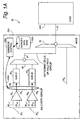
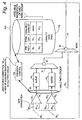
- Node 22A also comprises an AAL2 multiplexer for each plurality of incoming AAL2 connections (e.g., AAL2 multiplexer 32 1 for plurality 30 1 and AAL2 multiplexer 32 2 for plurality 30 2 ); an AAL2 path 35 output which is output from each AAL2 multiplexer; a plurality of AAL2 queues represented by AAL2 queues 40 1 and 40 2 ; AAL2 path group scheduler 42; and VP scheduler 52.
- AAL2 multiplexer 32 1 for plurality 30 1 and AAL2 multiplexer 32 2 for plurality 30 2 e.g., AAL2 multiplexer 32 1 for plurality 30 1 and AAL2 multiplexer 32 2 for plurality 30 2
- AAL2 path 35 output which is output from each AAL2 multiplexer
- AAL2 queues 40 1 and 40 2 e.g., AAL2 path group scheduler 42; and VP scheduler 52.
- AAL2 path group scheduler 42 selects cells from queues 40 1 and 40 2 in accordance with a predetermined selection strategy or logic.
- the AAL2 paths which feed the queues 40 1 , 40 2 from which AAL2 path group scheduler 42 selects ATM cells comprise an AAL2 path group 60, and thus AAL2 cells output by AAL2 path group scheduler 42 on line 61 comprise cells of the AAL2 path group 60.
- the VP scheduler 52 applies ATM cells of the AAL2 path group 60 as well as cells from one or more non-path group VCs (e.g., ATM VC 30 d ) to the ATM virtual path (VP) 24 for transmission to the second network node 22B.
- VCs e.g., ATM VC 30 d
- Each of the plurality of AAL2 queues 40 1 , 40 2 contains ATM AAL2 cells from at least one AAL2 path.
- the AAL2 path group scheduler 42 selects ATM AAL2 cells from the plurality of AAL2 queues 40 1 , 40 2 , with the AAL2 cells discharged by AAL2 path group scheduler 42 on line 61 constituting cells of the AAL2 path group.
- the bandwidth of an individual AAL2 path comprising the AAL2 path group 60 is contributed to a total bandwidth of the AAL2 path group rather than to the individual AAL2 path exclusively.
- the CID of an AAL2 cell stream is employed to identify a user traffic connection.
- an admission decision regarding a user seeking to establish a connection which employs a certain one of the AAL2 paths belonging to the AAL2 path group is based on available bandwidth of the entire AAL2 path group 60, rather than available bandwidth of that certain AAL2 path individually. That admission decision is made by an admission control function, which has access to the capacities and capabilities of the network including the collective (e.g., total) bandwidth of the AAL2 path group (e.g., the total bandwidth of the AAL2 paths comprising the AAL2 path group).
- admission controller 100A is configured to realize that the AAL2 paths 35 1 and 35 2 comprise the AAL2 path group 60 of the present invention, and thus any admission decision, such as a decision whether to admit a new connection over one of the AAL2 paths 35 1 and 35 2 , is assessed with respect to the total available bandwidth of the AAL2 path group 60 rather than to the available bandwidth of any particular AAL2 path. Thus, it is not necessary for the capacity database to store a bandwidth for each individual AAL2 path.
- node 22A may be a radio network control (RNC) node such as is employed in the radio access network of the Universal Mobile Telecommunications (UMTS) Terrestrial Radio Access Network (UTRAN), as admission control functions are generally performed by RNC nodes in UTRAN.
- RNC radio network control
- node 22B can be any other node connected to a RNC, such as a base station (BS) node (e.g., Node B), for example.
- BS base station
- the admission control function is shown as an admission controller 100B which is located in node 22B.
- node 22A with the structure (e.g., AAL2 path group scheduler 42) which forms the AAL2 path group sending cells does not have an admission control function in the same node. Rather, as illustrated by arrow 104B, admission control regarding the AAL2 path group comprised of AAL2 paths 35 1 and 35 2 is performed by admission controller 100B situated in node 22B.
- the node 22A of the embodiment of Fig. 1B can be, for example, a base station (BS) node of a UTRAN, as alluded to in the preceding paragraph.
- BS base station
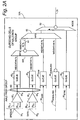
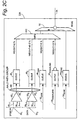
- FIG. 2A - Fig. 2C show with more specificity some examples of such differing types of ATM cells.
- Fig. 2A shows VC 30 0AM which carries cells utilized for operation and maintenance purposes (e.g., operator commands, maintenance statistics, alarms, etc.). Cells received on VC 30o AM are applied to queue 40 0AM , with an output of queue 40 0AM being applied to intermediate scheduler 62.
- Fig. 1 shows VC 30 0AM which carries cells utilized for operation and maintenance purposes (e.g., operator commands, maintenance statistics, alarms, etc.).
- Cells received on VC 30o AM are applied to queue 40 0AM , with an output of queue 40 0AM being applied to intermediate scheduler 62.
- Fig. 1 shows VC 30 0AM which carries cells utilized for operation and maintenance purposes (e.g., operator commands, maintenance statistics, alarms, etc.). Cells received on VC 30o AM are applied to queue 40 0AM , with an output of queue 40 0
- FIG. 2A shows an VC 30 SIGNALING which carries cells utilized for signaling purposes (e.g., for setting up and tearing down connections, including admission control signaling). Cells received on VC 30 SIGNALING are applied to queue 40 SIGNALING with an output of queue 40 SIGNALING also being applied to intermediate scheduler 62.
- Fig. 2A shows an VC 30 SYNC which carries cells utilized for synchronization purposes. Cells received on VC 30 SYNC are applied to queue 40 SYNC with an output of queue 40 SYNC being applied to VP scheduler 52.
- the output of intermediate scheduler 62 is applied to a first input of VP scheduler 52; synchronization cells stored in queue 40 SYNC are applied to a second input of VP scheduler 52.
- the VP scheduler 52 of the Fig. 2A embodiment is a strict priority input scheduler which schedules application of outgoing cells onto virtual path 24 in accordance with the direction of the arrow (e.g., with synchronization cells in queue 40 SYNC always having a highest priority).
- connections/queues per traffic type there can be a number of connections/queues per traffic type. Common to all illustrated embodiments, however, is the fact that more delay sensitive traffic (e.g., conversational or speech traffic) and less delay sensitive traffic (e.g., non-conversational or data traffic) are separated into different queues to prevent head of line blocking.
- delay sensitive traffic e.g., conversational or speech traffic
- delay sensitive traffic e.g., non-conversational or data traffic
- ATM cells of the first type comprising the AAL2 path group 60 are transmitted over a same virtual path (VP) (e.g., virtual path 24) with ATM cells of a second type.
- VP virtual path
- the first type of ATM cells and second type of ATM cells can be delineated in various different ways.
- the first type of ATM cells which are carried over the paths comprising the AAL2 path group are AAL2 traffic cells while the second type of ATM cells comprises cells dedicated to at least one of signaling, operation and maintenance, and synchronization.
- the embodiments of Fig. 2A - Fig. 2C typify such mode, since cells from VC 30 oAM , VC 30 SIGNALING , and VC 30 SYNC are all eligible for scheduling by VP scheduler 52, along with the cells carried by AAL2 path group, for application on virtual path (VP) 24.
- the ATM cells of the second type thus can be cells which require a guaranteed bandwidth.
- the first type of ATM cells can comprise AAL2 cells and the second type of ATM cells can comprise non-AAL2 cells (e.g., ATM cells that have another adaptation layer type).
- the first type of ATM cells can comprise cells from AAL2 paths with differing QoS classes.
- the first type of ATM cells which comprise the AAL2 path group can be AAL2 cells having an unspecified bit rate (UBR) and the second type of ATM cells can comprise AAL2 cells have a bit rate type other than UBR.
- UBR unspecified bit rate
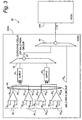
- Fig. 4 shows, in the context of the embodiment of Fig. 1A , admission of a new connection to the AAL2 path group in an illustrative scenario.
- the capacity database 102 shows, for each AAL2 path, a total capacity and an available capacity.
- AAL2 path 35 1 has a total capacity TC 1 but no available capacity
- AAL2 path 35 2 has a total capacity TC 2 and an available capacity AC 2 .
- a new connection 30 1-1 is sought over AAL2 path 35 1 .
- the AAL2 path group also features quality of service (QoS) separation, e.g., differing treatment for differing AAL2 connections within the AAL2 path group based on the QoS requirements for the differing AAL2 connections.
- QoS quality of service
- AAL2 connections having differing QoS requirements can be queued separately upstream of the AAL2 path group scheduler 42.
- the AAL2 path group scheduler 42 can provide a preference or weighting in view of the QoS parameters for the respective AAL2 connections.
- the AAL2 path group scheduler 42A and AAL2 path group scheduler 42C can weight the AAL2 VCs having speech traffic payload more heavily than the AAL2 VCs having data traffic payloads.
- the AAL2 path group scheduler 42B by its strict priority nature assigns a higher priority to the AAL2 VCs having speech traffic payload than the AAL2 VCs having data traffic payloads.
- the present invention assigns bandwidth to its AAL2 path group instead of each individual AAL2 path, thereby affording efficient bandwidth utilization. Allocation of bandwidth resources for AAL2 connections is thus made against the pooled resources of multiple AAL2 paths rather than against a fixed resource per path.
- the AAL2 paths themselves are treated as having UBR (unspecifiedbit rate), but the AAL2 path group is considered as a whole to have CBR (constant bit rate).
- ATM layer transmission scheduling is also performed in such a way that all AAL2 paths are scheduled together as a single stream of ATM cells.
- the present invention advantageously accommodates both UBR and non-UBR VCs (assigned to something other than AAL2) when performing AAL2 connection admission control against the bandwidth of the virtual path (VP).
- the invention does not require that only AAL2 path VCs be setup within a virtual path.
- prior art techniques which perform connection admission control for AAL2 against the virtual path bandwidth must dedicate the entire virtual path to AAL2.
- the present invention only requires one virtual path between two nodes, which is economically desirable when transport is leased from an ATM transport network provider. Leasing one virtual path of, e.g., 2 Mbit/s is much cheeper than leasing two virtual paths with 1 Mbit/s each. Further, the present invention provides a better multiplexing gain on the ATM level when all cells are multiplexed on the same virtual path.
- different services can be separated on different virtual paths, although such variation may not yield efficient bandwidth utilization when using public VP networks, with course granularity of the possible rates.
- the present invention is particularly applicable to AAL2 nodes, but advantageously does not have any impact on intermediate, pure ATM nodes, provided that such intermediate ATM nodes must have virtual path switches (e.g., cross-connects).
- virtual path switches e.g., cross-connects
- radio network control (RNC) nodes and base station (BS) nodes While embodiments of the present invention have already been said to be applicable to nodes such as radio network control (RNC) nodes and base station (BS) nodes, the invention is not limited to such nodes.
- RNC radio network control
- BS base station
- the present invention can also be utilized with other nodes such as media gateways.
Landscapes
- Engineering & Computer Science (AREA)
- Computer Networks & Wireless Communication (AREA)
- Data Exchanges In Wide-Area Networks (AREA)
Claims (34)
- Verfahren zur Verwaltung von Verkehr für den Transport auf einem virtuellen Asynchrontransfermodus-Weg, ATM-VP, wobei das Verfahren gekennzeichnet ist durch:Bilden einer AAL2-Weggruppe, die mehrere AAL2-Wege umfasst;Zulassen von Verbindungen auf der Grundlage verfügbarer Bandbreite der AAL2-Weggruppe anstatt verfügbarer Bandbreite eines individuellen AAL2-Wegs;Aufnehmen von ATM-Zellen eines zweiten Typs für den Transport auf dem virtuellen Weg, wobei die Zellen des zweiten Typs sich von einem ersten Typ von ATM-Zellen unterscheiden, wobei der erste Typ von ATM-Zellen Zellen sind, die die AAL2-Weggruppe umfassen.
- Verfahren nach Anspruch 1, wobei der erste Typ von ATM-Zellen AAL2-Verkehrszellen umfasst und der zweite Typ von ATM-Zellen Zellen umfasst, die zumindest einem zugeordnet sind, nämlich Signalisierung, Betrieb und Wartung und/oder Synchronisation.
- Verfahren nach Anspruch 1, wobei der zweite Typ von ATM-Zellen Zellen umfasst, die eine garantierte Bandbreite erfordern.
- Verfahren nach Anspruch 1, wobei der erste Typ von ATM-Zellen AAL2-Zellen umfasst und der zweite Typ von ATM-Zellen Nicht-AAL2-Zellen umfasst.
- Verfahren nach Anspruch 1, wobei der erste Typ von ATM-Zellen AAL2-Zellen von AAL2-Wegen mit unterschiedlichen QoS-Klassen umfasst.
- Verfahren nach Anspruch 5, wobei der erste Typ von ATM-Zellen AAL2-Zellen mit einer nicht spezifizierten Bitrate, UBR, umfasst und der zweite Typ von ATM-Zellen AAL2-Zellen mit einem anderen Bitratentyp als die UBR umfasst.
- Verfahren nach Anspruch 1, wobei ein gegebener der AAL2-Wege AAL2-Zellen mit einer gleichen Dienstgüteanforderung transportiert.
- Verfahren nach Anspruch 1, ferner umfassend: Zuteilen von verzögerungsempfindlicherem Verkehr an einen anderen AAL2-Weg als weniger verzögerungsempfindlichen Verkehr.
- Verfahren nach Anspruch 1, ferner umfassend: Erbringen unterschiedlicher Behandlung für unterschiedliche AAL2-Verbindungen innerhalb der AAL2-Weggruppe auf der Grundlage der QoS-Anforderungen für unterschiedliche AAL2-Verbindungen.
- Verfahren nach Anspruch 1, ferner umfassend: Bereitstellen einer größeren Wichtung oder Priorität für verzögerungsempfindlichere AAL2-Verbindungen.
- Knoten (22) eines Asynchrontransfermodus-Netzwerks, gekennzeichnet durch:eine Vielzahl von AAL2-Wegen (35), die zusammen eine AAL2-Weg-Gruppe (60) bilden; undeine Zulassungssteuereinrichtung (100), die entsprechend eingerichtet ist, um eine Verbindung mit einem der AAL2-Wege der AAL2-Weggruppe auf der Grundlage verfügbarer Bandbreite der AAL2-Weggruppe anstelle verfügbarer Bandbreite eines einzelnen AAL2-Wegs zuzulassen.
- Vorrichtung nach Anspruch 11, ferner umfassend:einen Weggruppen-Scheduler (42), der entsprechend eingerichtet ist, um ATM-AAL2-Zellen von der Vielzahl von AAL2-Wegen auszuwählen;eine virtuelle Nicht-Weggruppen-ATM-Schaltung, die entsprechend eingerichtet ist, um ATM-Zellen eines zweiten Typs aufzunehmen, wobei die Zellen des zweiten Typs sich von ATM-Zellen eines ersten Typs unterscheiden, wobei die ATM-Zellen des ersten Typs die AAL2-Weggruppe umfassen;einen Scheduler (52), der entsprechend eingerichtet ist, um ATM-Zellen der virtuellen Weggruppen- und Nicht-Weggruppen-ATM-Leitung an einen virtuellen ATM-Weg zur Übertragung weg von dem Knoten zu übergeben.
- Vorrichtung nach Anspruch 12, wobei der erste Typ von ATM-Zellen AAL2-Verkehrszellen umfasst und der zweite Typ von ATM-Zellen Zellen umfasst, die zumindest für eines reserviert sind, nämlich Signalisierung, Betrieb und Wartung und/oder Synchronisation.
- Vorrichtung nach Anspruch 12, wobei der zweite Typ von ATM-Zellen Zellen umfasst, die eine garantierte Bandbreite erfordern.
- Vorrichtung nach Anspruch 12, wobei der erste Typ von ATM-Zellen AAL2-Zellen umfasst und der zweite Typ von ATM-Zellen Nicht-AAL2-Zellen umfasst.
- Vorrichtung nach Anspruch 12, wobei der erste Typ von ATM-Zellen AAL2-Zellen von AAL2-Wegen mit unterschiedlichen QoS-Klassen umfasst.
- Vorrichtung nach Anspruch 16, wobei der erste Typ von ATM-Zellen AAL2-Zellen mit einer nicht spezifizierten Bitrate umfasst und der zweite Typ von ATM-Zellen AAL2-Zellen mit einem anderen Bitratentyp als die UBR umfasst.
- Vorrichtung nach Anspruch 12, wobei ein gegebener der AAL2-Wege AAL2-Zellen mit einer gleichen Dienstgüteanforderung transportiert.
- Vorrichtung nach Anspruch 11, ferner umfassend: Zuteilen von verzögerungsempfindlicherem Verkehr an einen anderen AAL2-Weg als weniger verzögerungsempfindlichen Verkehr.
- Vorrichtung nach Anspruch 12, wobei der Weggruppen-Scheduler ein Scheduler für gewichtetes faires Einreihen in die Warteschlange ist.
- Vorrichtung nach Anspruch 12, wobei der Weggruppen-Scheduler ein Scheduler mit strenger Priorität ist.
- Vorrichtung nach Anspruch 11, ferner umfassend: Mittel zur Erbringung unterschiedlicher Behandlung für unterschiedliche AAL2-Verbindungen innerhalb der AAL2-Weggruppe auf der Grundlage der QoS-Anforderungen für die unterschiedlichen AAL2-Verbindungen.
- Vorrichtung nach Anspruch 22, ferner umfassend: Mittel zur Bereitstellung einer größeren Wichtung oder Priorität für mehr verzögerungsempfmdliche AAL2-Verbindungen.
- Asynchrontransfermodus-Netzwerk (20), umfassend einen ersten Netzwerkknoten (22A) und einen zweiten Netzwerkknoten (22B) mit einem virtuellen ATM-Weg, der den ersten Netzwerkknoten und den zweiten Netzwerkknoten verbindet;
dadurch gekennzeichnet, dass der erste Netzwerkknoten umfasst:eine Vielzahl von AAL2-Wegen (35), die zusammen eine AAL2-Weggruppe (60) bilden, wobei eine Verbindung für einen der AAL2-Wege der AAL2-Weggruppe auf der Grundlage verfügbarer Bandbreite der AAL2-Weggruppe anstatt verfügbarer Bandbreite eines individuellen AAL2-Wegs zugelassen ist;einen Weggruppen-Scheduler (42), der entsprechend eingerichtet ist, um ATM-AAL2-Zellen aus der Vielzahl von AAL2-Wegen auszuwählen;eine virtuelle Nicht-Weggruppen-ATM-Leitung, die dafür eingerichtet ist, ATM-Zellen eines zweiten Typs zu transportieren, wobei die ATM-Zellen des zweiten Typs sich von ATM-Zellen eines ersten Typs unterscheiden, wobei die ATM-Zellen des ersten Typs die AAL2-Weggruppe umfassen;einen Scheduler (52), der entsprechend eingerichtet ist, um ATM-Zellen der virtuellen Weggruppen- und Nicht-Weggruppen-ATM-Leitung an den virtuellen ATM-Weg zur Übertragung an den zweiten Netzwerkknoten zu übergeben. - Vorrichtung nach Anspruch 24, ferner umfassend: eine Verbindungszulassungssteuereinheit (100), die entsprechend eingerichtet ist, um Verbindungen auf der Grundlage verfügbarer Bandbreite der AAL2-Weggruppe anstatt verfügbarer Bandbreite eines einzelnen AAL2-Wegs zuzulassen.
- Vorrichtung nach Anspruch 25, wobei die Verbindungszulassungskontrolleinheit sich in dem ersten Netzwerkknoten (22A) befindet.
- Vorrichtung nach Anspruch 25, wobei die Verbindungszulassungskontrolleinheit sich in dem zweiten Netzwerkknoten (22B) befindet.
- Vorrichtung nach Anspruch 24, wobei der zweite Typ von ATM-Zellen Zellen umfasst, die eine garantierte Bandbreite erfordern.
- Vorrichtung nach Anspruch 24, wobei der erste Typ von ATM-Zellen AAL2-Zellen umfasst und der zweite Typ von ATM-Zellen Nicht-AAL2-Zellen umfasst.
- Vorrichtung nach Anspruch 24, wobei der erste Typ von ATM-Zellen AAL2-Zellen aus AAL2-Wegen mit unterschiedlichen QoS-Klassen umfasst.
- Vorrichtung nach Anspruch 24, wobei ein gegebener der AAL2-Wege AAL2-Zellen mit einer gleichen Dienstgüteanforderung transportiert.
- Vorrichtung nach Anspruch 24, ferner umfassend: Zuteilen von verzögerungsempfindlicherem Verkehr an einen anderen AAL2-Weg als weniger verzögerungsempfindlichen Verkehr.
- Vorrichtung nach Anspruch 24, ferner umfassend: Mittel zur Erbringung unterschiedlicher Behandlung für unterschiedliche AAL2-Verbindungen innerhalb der AAL2-Weggruppe auf der Grundlage der QoS-Anforderungen für die unterschiedlichen AAL2-Verbindungen.
- Vorrichtung nach Anspruch 33, ferner umfassend: Mittel zur Bereitstellung einer größeren Wichtung oder Priorität für verzögerungsempfindlichere AAL2-Verbindungen.
Applications Claiming Priority (3)
| Application Number | Priority Date | Filing Date | Title |
|---|---|---|---|
| US870945 | 2001-06-01 | ||
| US09/870,945 US7230948B2 (en) | 2001-06-01 | 2001-06-01 | Bandwidth efficient Quality of Service separation of AAL2 traffic |
| PCT/SE2002/001052 WO2002098165A1 (en) | 2001-06-01 | 2002-06-03 | Bandwidth efficient quality of service separation of aal2 traffic |
Publications (2)
| Publication Number | Publication Date |
|---|---|
| EP1415500A1 EP1415500A1 (de) | 2004-05-06 |
| EP1415500B1 true EP1415500B1 (de) | 2009-12-02 |
Family
ID=25356383
Family Applications (1)
| Application Number | Title | Priority Date | Filing Date |
|---|---|---|---|
| EP02736380A Expired - Lifetime EP1415500B1 (de) | 2001-06-01 | 2002-06-03 | Bandbreiteneffiziente quality-of-service-trennung von aal2-verkehr |
Country Status (6)
| Country | Link |
|---|---|
| US (1) | US7230948B2 (de) |
| EP (1) | EP1415500B1 (de) |
| CN (1) | CN1241452C (de) |
| AT (1) | ATE450982T1 (de) |
| DE (1) | DE60234608D1 (de) |
| WO (1) | WO2002098165A1 (de) |
Families Citing this family (16)
| Publication number | Priority date | Publication date | Assignee | Title |
|---|---|---|---|---|
| AU2002326995A1 (en) * | 2001-09-19 | 2003-04-01 | Bay Microsystems, Inc. | Vertical instruction and data processing in a network processor architecture |
| US7382792B2 (en) * | 2001-11-23 | 2008-06-03 | International Business Machines Corporation | Queue scheduling mechanism in a data packet transmission system |
| US7385993B2 (en) * | 2001-12-21 | 2008-06-10 | International Business Machines Corporation | Queue scheduling mechanism in a data packet transmission system |
| US20030147349A1 (en) * | 2002-02-01 | 2003-08-07 | Burns Daniel J. | Communications systems and methods utilizing a device that performs per-service queuing |
| US6885638B2 (en) * | 2002-06-13 | 2005-04-26 | Motorola, Inc. | Method and apparatus for enhancing the quality of service of a wireless communication |
| DE50213019D1 (de) * | 2002-09-11 | 2008-12-24 | Nokia Siemens Networks Gmbh | Verfahren zum modifizieren von verbindungen in einem auf datenkomprimierung basierenden kommunikationssystem |
| CN1235369C (zh) * | 2002-09-17 | 2006-01-04 | 华为技术有限公司 | 一种实现光同步数字传送网多业务优化中路由分配的方法 |
| US8045539B2 (en) * | 2002-10-25 | 2011-10-25 | Alcatel Lucent | Virtual group connection scheme for ATM architecture in an access node |
| US7283535B2 (en) * | 2002-10-28 | 2007-10-16 | Telefonaktiebolaget Lm Ericsson (Publ) | Concentrator for user AAL2 traffic carried on UBR virtual channels |
| US7403992B2 (en) | 2003-07-10 | 2008-07-22 | Nokia Corporation | Adaptive connection cache for communication networks |
| DE10357522A1 (de) * | 2003-12-08 | 2005-07-07 | Marconi Communications Gmbh | Datenübertragungsverfahren und -netzwerk |
| DE602004003895T2 (de) * | 2004-01-30 | 2007-09-06 | Mitsubishi Denki K.K. | Verfahren und Vorrichtung zur dynamischen Ressourcenzuweisung in einem drahtlosen Netz |
| FI20041672A0 (fi) | 2004-12-27 | 2004-12-27 | Nokia Corp | Yhteyden varaus yhteysrajapinnassa |
| CN100375446C (zh) * | 2005-04-15 | 2008-03-12 | 中兴通讯股份有限公司 | 一种异步传输模式适配层2业务通道的可用性管理方法 |
| US7860101B2 (en) * | 2005-06-28 | 2010-12-28 | Nokia Corporation | End-to end connections in a switched network |
| US8315574B2 (en) * | 2007-04-13 | 2012-11-20 | Broadcom Corporation | Management of variable-rate communication links |
Family Cites Families (22)
| Publication number | Priority date | Publication date | Assignee | Title |
|---|---|---|---|---|
| JPH0744542B2 (ja) * | 1993-01-11 | 1995-05-15 | 日本電気株式会社 | 非同期転送モードにおける仮想パスの帯域割当方式 |
| DE69533131T2 (de) | 1994-04-28 | 2005-06-16 | British Telecommunications P.L.C. | Dienstleistungssystem für kommunikationsnetzwerke |
| US6314103B1 (en) * | 1994-05-05 | 2001-11-06 | Sprint Communications Company, L.P. | System and method for allocating bandwidth for a call |
| US5442625A (en) | 1994-05-13 | 1995-08-15 | At&T Ipm Corp | Code division multiple access system providing variable data rate access to a user |
| US5583869A (en) | 1994-09-30 | 1996-12-10 | Motorola, Inc. | Method for dynamically allocating wireless communication resources |
| US5625877A (en) | 1995-03-15 | 1997-04-29 | International Business Machines Corporation | Wireless variable bandwidth air-link system |
| EP0890273B1 (de) | 1996-03-29 | 2004-03-17 | BRITISH TELECOMMUNICATIONS public limited company | Gebührensysteme für kommunikationsdienste |
| US5745480A (en) | 1996-04-03 | 1998-04-28 | Adicom Wireless, Inc. | Multi-rate wireless communications system |
| US6097722A (en) * | 1996-12-13 | 2000-08-01 | Nortel Networks Corporation | Bandwidth management processes and systems for asynchronous transfer mode networks using variable virtual paths |
| CA2274844A1 (en) | 1996-12-16 | 1998-06-25 | Motorola, Inc. | Apparatus and method for translating qos parameters for per-service category aggregation |
| WO1999000971A1 (en) | 1997-06-30 | 1999-01-07 | Motorola Inc. | Method of making a communication interconnection |
| US6169738B1 (en) | 1997-11-06 | 2001-01-02 | Lucent Technologies Inc. | Method for call admission in packet voice system using statistical multiplexing and dynamic voice encoding |
| US6483838B1 (en) * | 1997-12-19 | 2002-11-19 | Telefonaktiegolaget Lm Ericsson (Publ) | Combined header parameter table for ATM node |
| US6804246B1 (en) * | 1997-12-19 | 2004-10-12 | Telefonaktiebolaget Lm Ericsson (Publ) | Asynchronous transfer mode system handling differing AAL protocols |
| US6259699B1 (en) * | 1997-12-30 | 2001-07-10 | Nexabit Networks, Llc | System architecture for and method of processing packets and/or cells in a common switch |
| US6574222B1 (en) * | 1998-02-20 | 2003-06-03 | Sprint Communications Company, L.P. | System and method for allocating bandwidth for a call |
| JP3065026B2 (ja) * | 1998-06-02 | 2000-07-12 | 日本電気株式会社 | Aal2パケット交換装置 |
| JP3601994B2 (ja) * | 1998-09-17 | 2004-12-15 | 沖電気工業株式会社 | Atmセル多重装置及びatmセル多重方法 |
| US6725038B1 (en) * | 1999-01-26 | 2004-04-20 | Nokia Corporation | Method and apparatus for speeding up AAL2 connection setup during handover in advanced cellular networks |
| US6996109B2 (en) | 1999-12-27 | 2006-02-07 | Lg Electronics Inc. | ATM cell transmitting/receiving device of ATM switching system |
| US6834053B1 (en) * | 2000-10-27 | 2004-12-21 | Nortel Networks Limited | Distributed traffic scheduler |
| US6760335B1 (en) * | 2001-01-09 | 2004-07-06 | Telefonaktiebolaget Lm Ericsson (Publ) | Dynamic AAL2 path configuration in ATM system |
-
2001
- 2001-06-01 US US09/870,945 patent/US7230948B2/en not_active Expired - Fee Related
-
2002
- 2002-06-03 DE DE60234608T patent/DE60234608D1/de not_active Expired - Fee Related
- 2002-06-03 WO PCT/SE2002/001052 patent/WO2002098165A1/en not_active Ceased
- 2002-06-03 EP EP02736380A patent/EP1415500B1/de not_active Expired - Lifetime
- 2002-06-03 AT AT02736380T patent/ATE450982T1/de not_active IP Right Cessation
- 2002-06-03 CN CNB028110927A patent/CN1241452C/zh not_active Expired - Fee Related
Also Published As
| Publication number | Publication date |
|---|---|
| US20020181470A1 (en) | 2002-12-05 |
| ATE450982T1 (de) | 2009-12-15 |
| DE60234608D1 (de) | 2010-01-14 |
| WO2002098165A1 (en) | 2002-12-05 |
| EP1415500A1 (de) | 2004-05-06 |
| US7230948B2 (en) | 2007-06-12 |
| CN1241452C (zh) | 2006-02-08 |
| CN1513276A (zh) | 2004-07-14 |
Similar Documents
| Publication | Publication Date | Title |
|---|---|---|
| EP1415500B1 (de) | Bandbreiteneffiziente quality-of-service-trennung von aal2-verkehr | |
| US6574223B1 (en) | Adaption layer switching | |
| EP1322080B1 (de) | System und Verfahren zur Bindung von Dienstqualitätsebenen zwischen MPLS- und ATM-Verbindungen in einem Netzelement | |
| US6643293B1 (en) | Virtual connection shaping with hierarchial arbitration | |
| EP0577959A1 (de) | Mobilfunksysteme | |
| WO1994023517A1 (en) | Method and apparatus for managing the statistical multiplexing of data in digital communication networks | |
| US6192049B1 (en) | Jitterless and lossless switching fabric with network routing | |
| Subbiah et al. | ATM adaptation layer 2 (AAL2) for low bit rate speech and data: Issues and challenges | |
| WO2000007406A2 (en) | Knowledge-based connection admission method and apparatus for providing efficient multiplexing of data and speech over aal2 | |
| US7327740B2 (en) | Facilitating reliable connection admission control for telecommunications system using AAL2 signaling | |
| Isnard et al. | Handling traffic classes at AAL2/ATM layer over the logical interfaces of the UMTS terrestrial radio access network | |
| US6298059B1 (en) | Multiple quality of service asynchronous transfer mode-frame relay interworking function and method | |
| Makke et al. | Performance of the AAL2 Protocol within the UTRAN | |
| EP1832045B1 (de) | Verbindungsreservierung in einer kommunikationsschnittstelle | |
| Subbiah et al. | Low-bit-rate voice and telephony over ATM in cellular/mobile networks | |
| Saito | Bandwidth management for AAL2 traffic | |
| US7283535B2 (en) | Concentrator for user AAL2 traffic carried on UBR virtual channels | |
| EP1065907B1 (de) | Verfahren zur Erzeugung von ATM Zellen für Anwendungen mit niedriger Bitrate | |
| Saito | Effectiveness of UBR VC approach in AAL2 networks and Its application to IMT-2000 | |
| KR100221331B1 (ko) | 에이에이엘 계층의 분할 및 재결합 부계층에서의 연결 리스트를 이용한 잔여 대역폭의 효율적 이용방법 | |
| KR100221333B1 (ko) | 에이에이엘 계층의 분할 및 재결합 부계층에서의 잔여 대역폭의 효율적 이용방법 | |
| Kozaki et al. | PVC reservation on shared buffer type ATM switch for data communication | |
| KR19980053024A (ko) | 비동기 전송모드 통신망에서의 연결별 프레임을 사용하는 실시간 연결을 위한 수락 제어방법 | |
| KR20040054120A (ko) | 비동기 전송 모드 기반 이동 통신 시스템에서의 스위치가상 연결 제어 방법 | |
| KR20020084517A (ko) | 비동기 전송 모드 적응 계층 2 프로토콜을 이용한 목적지그룹핑에 의한 자원할당 방법 |
Legal Events
| Date | Code | Title | Description |
|---|---|---|---|
| PUAI | Public reference made under article 153(3) epc to a published international application that has entered the european phase |
Free format text: ORIGINAL CODE: 0009012 |
|
| 17P | Request for examination filed |
Effective date: 20040102 |
|
| AK | Designated contracting states |
Kind code of ref document: A1 Designated state(s): AT BE CH CY DE DK ES FI FR GB GR IE IT LI LU MC NL PT SE TR |
|
| AX | Request for extension of the european patent |
Extension state: AL LT LV MK RO SI |
|
| GRAP | Despatch of communication of intention to grant a patent |
Free format text: ORIGINAL CODE: EPIDOSNIGR1 |
|
| GRAS | Grant fee paid |
Free format text: ORIGINAL CODE: EPIDOSNIGR3 |
|
| GRAA | (expected) grant |
Free format text: ORIGINAL CODE: 0009210 |
|
| AK | Designated contracting states |
Kind code of ref document: B1 Designated state(s): AT BE CH CY DE DK ES FI FR GB GR IE IT LI LU MC NL PT SE TR |
|
| REG | Reference to a national code |
Ref country code: GB Ref legal event code: FG4D |
|
| REG | Reference to a national code |
Ref country code: CH Ref legal event code: EP |
|
| REG | Reference to a national code |
Ref country code: IE Ref legal event code: FG4D |
|
| REF | Corresponds to: |
Ref document number: 60234608 Country of ref document: DE Date of ref document: 20100114 Kind code of ref document: P |
|
| REG | Reference to a national code |
Ref country code: NL Ref legal event code: VDEP Effective date: 20091202 |
|
| PG25 | Lapsed in a contracting state [announced via postgrant information from national office to epo] |
Ref country code: FI Free format text: LAPSE BECAUSE OF FAILURE TO SUBMIT A TRANSLATION OF THE DESCRIPTION OR TO PAY THE FEE WITHIN THE PRESCRIBED TIME-LIMIT Effective date: 20091202 Ref country code: SE Free format text: LAPSE BECAUSE OF FAILURE TO SUBMIT A TRANSLATION OF THE DESCRIPTION OR TO PAY THE FEE WITHIN THE PRESCRIBED TIME-LIMIT Effective date: 20091202 |
|
| PG25 | Lapsed in a contracting state [announced via postgrant information from national office to epo] |
Ref country code: CY Free format text: LAPSE BECAUSE OF FAILURE TO SUBMIT A TRANSLATION OF THE DESCRIPTION OR TO PAY THE FEE WITHIN THE PRESCRIBED TIME-LIMIT Effective date: 20091202 |
|
| PG25 | Lapsed in a contracting state [announced via postgrant information from national office to epo] |
Ref country code: AT Free format text: LAPSE BECAUSE OF FAILURE TO SUBMIT A TRANSLATION OF THE DESCRIPTION OR TO PAY THE FEE WITHIN THE PRESCRIBED TIME-LIMIT Effective date: 20091202 |
|
| PG25 | Lapsed in a contracting state [announced via postgrant information from national office to epo] |
Ref country code: ES Free format text: LAPSE BECAUSE OF FAILURE TO SUBMIT A TRANSLATION OF THE DESCRIPTION OR TO PAY THE FEE WITHIN THE PRESCRIBED TIME-LIMIT Effective date: 20100313 Ref country code: NL Free format text: LAPSE BECAUSE OF FAILURE TO SUBMIT A TRANSLATION OF THE DESCRIPTION OR TO PAY THE FEE WITHIN THE PRESCRIBED TIME-LIMIT Effective date: 20091202 Ref country code: PT Free format text: LAPSE BECAUSE OF FAILURE TO SUBMIT A TRANSLATION OF THE DESCRIPTION OR TO PAY THE FEE WITHIN THE PRESCRIBED TIME-LIMIT Effective date: 20100402 |
|
| PG25 | Lapsed in a contracting state [announced via postgrant information from national office to epo] |
Ref country code: BE Free format text: LAPSE BECAUSE OF FAILURE TO SUBMIT A TRANSLATION OF THE DESCRIPTION OR TO PAY THE FEE WITHIN THE PRESCRIBED TIME-LIMIT Effective date: 20091202 |
|
| PLBE | No opposition filed within time limit |
Free format text: ORIGINAL CODE: 0009261 |
|
| STAA | Information on the status of an ep patent application or granted ep patent |
Free format text: STATUS: NO OPPOSITION FILED WITHIN TIME LIMIT |
|
| PG25 | Lapsed in a contracting state [announced via postgrant information from national office to epo] |
Ref country code: GR Free format text: LAPSE BECAUSE OF FAILURE TO SUBMIT A TRANSLATION OF THE DESCRIPTION OR TO PAY THE FEE WITHIN THE PRESCRIBED TIME-LIMIT Effective date: 20100303 |
|
| 26N | No opposition filed |
Effective date: 20100903 |
|
| PG25 | Lapsed in a contracting state [announced via postgrant information from national office to epo] |
Ref country code: MC Free format text: LAPSE BECAUSE OF NON-PAYMENT OF DUE FEES Effective date: 20100630 Ref country code: DK Free format text: LAPSE BECAUSE OF FAILURE TO SUBMIT A TRANSLATION OF THE DESCRIPTION OR TO PAY THE FEE WITHIN THE PRESCRIBED TIME-LIMIT Effective date: 20091202 |
|
| REG | Reference to a national code |
Ref country code: CH Ref legal event code: PL |
|
| REG | Reference to a national code |
Ref country code: FR Ref legal event code: ST Effective date: 20110228 |
|
| PG25 | Lapsed in a contracting state [announced via postgrant information from national office to epo] |
Ref country code: IT Free format text: LAPSE BECAUSE OF FAILURE TO SUBMIT A TRANSLATION OF THE DESCRIPTION OR TO PAY THE FEE WITHIN THE PRESCRIBED TIME-LIMIT Effective date: 20091202 |
|
| PG25 | Lapsed in a contracting state [announced via postgrant information from national office to epo] |
Ref country code: DE Free format text: LAPSE BECAUSE OF NON-PAYMENT OF DUE FEES Effective date: 20110101 Ref country code: LI Free format text: LAPSE BECAUSE OF NON-PAYMENT OF DUE FEES Effective date: 20100630 Ref country code: CH Free format text: LAPSE BECAUSE OF NON-PAYMENT OF DUE FEES Effective date: 20100630 Ref country code: IE Free format text: LAPSE BECAUSE OF NON-PAYMENT OF DUE FEES Effective date: 20100603 |
|
| PG25 | Lapsed in a contracting state [announced via postgrant information from national office to epo] |
Ref country code: FR Free format text: LAPSE BECAUSE OF NON-PAYMENT OF DUE FEES Effective date: 20100630 |
|
| PG25 | Lapsed in a contracting state [announced via postgrant information from national office to epo] |
Ref country code: LU Free format text: LAPSE BECAUSE OF NON-PAYMENT OF DUE FEES Effective date: 20100603 |
|
| PG25 | Lapsed in a contracting state [announced via postgrant information from national office to epo] |
Ref country code: TR Free format text: LAPSE BECAUSE OF FAILURE TO SUBMIT A TRANSLATION OF THE DESCRIPTION OR TO PAY THE FEE WITHIN THE PRESCRIBED TIME-LIMIT Effective date: 20091202 |
|
| PGFP | Annual fee paid to national office [announced via postgrant information from national office to epo] |
Ref country code: GB Payment date: 20150629 Year of fee payment: 14 |
|
| GBPC | Gb: european patent ceased through non-payment of renewal fee |
Effective date: 20160603 |
|
| PG25 | Lapsed in a contracting state [announced via postgrant information from national office to epo] |
Ref country code: GB Free format text: LAPSE BECAUSE OF NON-PAYMENT OF DUE FEES Effective date: 20160603 |