EP1416062A2 - Forgeage quasi-isothermique de superalliages à base de nickel - Google Patents
Forgeage quasi-isothermique de superalliages à base de nickel Download PDFInfo
- Publication number
- EP1416062A2 EP1416062A2 EP03256853A EP03256853A EP1416062A2 EP 1416062 A2 EP1416062 A2 EP 1416062A2 EP 03256853 A EP03256853 A EP 03256853A EP 03256853 A EP03256853 A EP 03256853A EP 1416062 A2 EP1416062 A2 EP 1416062A2
- Authority
- EP
- European Patent Office
- Prior art keywords
- forging
- percent
- blank
- dies
- providing
- Prior art date
- Legal status (The legal status is an assumption and is not a legal conclusion. Google has not performed a legal analysis and makes no representation as to the accuracy of the status listed.)
- Granted
Links
Images
Classifications
-
- C—CHEMISTRY; METALLURGY
- C22—METALLURGY; FERROUS OR NON-FERROUS ALLOYS; TREATMENT OF ALLOYS OR NON-FERROUS METALS
- C22F—CHANGING THE PHYSICAL STRUCTURE OF NON-FERROUS METALS AND NON-FERROUS ALLOYS
- C22F1/00—Changing the physical structure of non-ferrous metals or alloys by heat treatment or by hot or cold working
- C22F1/10—Changing the physical structure of non-ferrous metals or alloys by heat treatment or by hot or cold working of nickel or cobalt or alloys based thereon
-
- B—PERFORMING OPERATIONS; TRANSPORTING
- B21—MECHANICAL METAL-WORKING WITHOUT ESSENTIALLY REMOVING MATERIAL; PUNCHING METAL
- B21J—FORGING; HAMMERING; PRESSING METAL; RIVETING; FORGE FURNACES
- B21J1/00—Preparing metal stock or similar ancillary operations prior, during or post forging, e.g. heating or cooling
- B21J1/06—Heating or cooling methods or arrangements specially adapted for performing forging or pressing operations
-
- B—PERFORMING OPERATIONS; TRANSPORTING
- B21—MECHANICAL METAL-WORKING WITHOUT ESSENTIALLY REMOVING MATERIAL; PUNCHING METAL
- B21J—FORGING; HAMMERING; PRESSING METAL; RIVETING; FORGE FURNACES
- B21J5/00—Methods for forging, hammering, or pressing; Special equipment or accessories therefor
Definitions
- This invention relates to the forging of nickel-base superalloys and, more particularly, to such forging conducted in air.
- Nickel-base superalloys are used in the portions of aircraft gas turbine engines which have the most demanding performance requirements and are subjected to the most adverse environmental conditions.
- Cast nickel-base superalloys are employed, for example, as turbine blades and turbine vanes.
- Wrought nickel-base superalloys are employed, for example, as rotor disks and shafts.
- the present invention is concerned with the wrought nickel-base superalloys.
- the wrought nickel-base superalloys are initially supplied as cast-and-consolidated billets, which are cast from molten metal, or as consolidated-powder billets, which are consolidated from powders.
- the consolidated-powder billets are preferred as the starting material for many applications because they have a uniform, well-controlled initial structure and a fine grain size.
- the billet is reduced in size in a series of steps by metal working procedures such as forging or extrusion, and is thereafter machined.
- the billet is placed between two forging dies in a forging press. The forging dies are forced together by the forging press to reduce the thickness of the billet.
- the selection of the forging conditions depends upon several factors, including the properties and metallurgical characteristics of the nickel-base superalloy and the properties of the forging dies.
- the forging dies must be sufficiently strong to deform the material being forged, and the forged superalloy must exhibit the required properties at the completion of the forging and heat treat operations.
- nickel-base superalloys such as ReneTM 95 are isothermally forged at a temperature at or above about 1900°F-2000°F using TZM molybdenum dies.
- This combination of the superalloy being forged and the die material allows the forging to be performed, and the superalloy has the required properties at the completion of the forging and heat treatment.
- this combination of temperature, the superalloy being forged, and the die material requires that the forging procedure be conducted in vacuum or in an inert-gas atmosphere. The requirement of a vacuum or an inert-gas atmosphere greatly increases the complexity and cost of the forging process.
- the present invention fulfills this need, and further provides related advantages.
- the present invention provides a method for forging nickel-base superalloys such as ReneTM 95.
- the method allows the forging procedure to be performed in air, resulting in a substantial cost saving.
- the forging is also relatively rapid, reducing the cost.
- the final microstructure has the desired grain structure, and in most cases no supersolvus final annealing is required so that there is no concern with critical grain growth (CGG).
- a method for forging a superalloy comprises the steps of providing a forging blank of a forging nickel-base superalloy, and providing a forging press having forging dies made of a die nickel-base superalloy.
- the forging blank is heated to a forging-blank starting temperature of from about 1850°F to about 1950°F (most preferably about 1900°F), and the forging dies are heated to a forging-die starting temperature of from about 1500°F to about 1750°F (most preferably about 1700°F).
- the forging blank is placed into the forging press and between the forging dies, and forged at the forging-blank starting temperature using the forging dies at the forging-die starting temperature, to produce a forging such as a precursor of a component of a gas turbine engine.
- a forging such as a precursor of a component of a gas turbine engine.
- components include rotor disks and shafts.
- the heating steps and the forging step are all preferably performed in air.
- the forging is preferably performed at a relatively high strain rate of at least, and preferably greater than, about 0.02 per second.
- the forging blank is preferably made of ReneTM 95 alloy, having a nominal composition, in weight percent, of about 8 percent cobalt, about 14 percent chromium, about 3.3 percent molybdenum, about 3.5 percent tungsten, about 3.5 percent aluminum, about 2.5 percent titanium, about 3.5 percent niobium, about 0.05 percent zirconium, about 0.07 percent carbon, about 0.01 percent boron, balance nickel and minor elements.
- the forging blank may be provided as consolidated powder or as cast-and-wrought material.
- the forging dies may be made of any operable cast die nickel-base alloy such as a nickel-base superalloy, but preferably have a nominal composition, in weight percent, of from about 5 to about 7 percent aluminum, from about 8 to about 15 percent molybdenum, from about 5 to about 15 percent tungsten, up to about 140 parts per million magnesium (preferably about 140 parts per million magnesium), no rare earths, balance nickel and impurities.
- a nickel-base superalloy but preferably have a nominal composition, in weight percent, of from about 5 to about 7 percent aluminum, from about 8 to about 15 percent molybdenum, from about 5 to about 15 percent tungsten, up to about 140 parts per million magnesium (preferably about 140 parts per million magnesium), no rare earths, balance nickel and impurities.
- the forging nickel-base superalloy is forged by the present approach into a forging that has essentially the same fine-grained, uniform microstructure as an isothermal forging, without any critical grain growth.
- the forging is accomplished rapidly, with the forging dies at a significantly lower temperature than the forging blank.
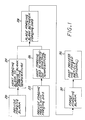
- Figure 1 depicts a preferred approach for practicing the invention.
- a forging blank is provided, step 20.
- the forging blank is made of a forging nickel-base alloy and preferably a forging nickel-base superalloy.
- an alloy is nickel-base when it has more nickel than any other element, and is further a nickel-base superalloy when it is strengthened by the precipitation of gamma prime or related phases. Any operable forging nickel-base alloy may be used.
- a nickel-base superalloy of particular interest as the forging blank is ReneTM 95 alloy, having a nominal composition, in weight percent, of about 8 percent cobalt, about 14 percent chromium, about 3.3 percent molybdenum, about 3.5 percent tungsten, about 3.5 percent aluminum, about 2.5 percent titanium, about 3.5 percent niobium, about 0.05 percent zirconium, about 0.07 percent carbon, about 0.01 percent boron, balance nickel and minor elements.
- the nickel-base superalloys may be furnished in any operable form, such as cast-and-wrought or consolidated-powder billets.
- Consolidated-powder billets are preferred. These billets are made by consolidating powders of the selected superalloy by extrusion or other operable process. Consolidated-powder billets have the advantage over cast-and-wrought billets in having a finer, more uniform microstructure and are therefore preferred for achieving good chemical uniformity, achieving good homogeneity of the forging, and minimizing sites for crack initiation.
- the forging blank has a size and shape selected so that, after forging, the forging is of the desired size and shape. Procedures are known in the art for selecting the size and shape of the starting forging blank so as to yield the required finished size and shape.
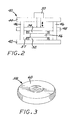
- a forging press and forging dies are provided, step 22. Any operable forging press may be used, and Figure 2 schematically depicts a basic forging press 40.
- the forging press 40 has a stationary lower platen 42, a stationary upper plate 44, and stationary columns 46 that support the upper plate 44 from the lower platen 42.
- a movable upper platen 48 slides on the columns 46, and is driven upwardly and downwardly by a drive motor 50 on the upper plate 44.
- a lower forging die 52 is stationary and sits on the lower platen 42.
- An upper forging die 54 is movable and is affixed to the upper platen 48 so that it rides upwardly and downwardly with the upper platen 48.
- the forging blank 56 is positioned between the upper forging die 54 and the lower forging die 52.
- a heater 57 here illustrated as an induction heating coil, is positioned around the forging dies 52 and 54 to aid in maintaining the forging dies within the desired forging-die temperature range during the forging stroke, if desired. Temperature variations of the dies 52 and 54 are permitted during the forging stroke, but in general the forging dies 52 and 54 remain within the specified forging-die temperature range.
- the forging blank 56 is positioned between the upper forging die 54 and the lower forging die 52 and is compressively deformed at a nominal strain rate by the movement of the upper forging die 54 in the downward direction.
- the upper forging die 54 and the lower forging die 52 may be flat plates, or they may be patterned so that the final forging has that pattern impressed thereon.
- Figure 3 is an exemplary forging 58 with a patterned face 60 produced using patterned forging dies.
- the forging dies 52 and 54 are made of a die nickel-base superalloy, wherein the die nickel-base superalloy has a creep strength of not less than a flow stress of the forging nickel-base superalloy at their respective temperatures and nominal strain rates during the forging operation. Any operable nickel-base superalloy may be used as the die nickel-base superalloy.
- the forging dies 52 and 54 are preferably made with a nominal composition, in weight percent, of from about 5 to about 7 percent aluminum, from about 8 to about 15 percent molybdenum, from about 5 to about 15 percent tungsten, up to about 140 parts per million magnesium (preferably about 140 parts per million magnesium), no rare earths, balance nickel and impurities
- the forging blank 56 is heated to a forging-blank starting temperature of from about 1850°F to about 1950°F, preferably about 1900°F, step 24.
- the forging-blank starting temperature may not be less than about 1850°F, because of the excessively high flow stress of the forging blank at lower temperatures.
- the forging-blank starting temperature may not be greater than about 1950°F, because the desired finished microstructure of the forging is not achieved.
- the heating step 24 is preferably performed in air in an oven.
- the forging dies 52 and 54 are heated to a forging-die starting temperature of from about 1500°F to about 1750°F, preferably about 1700°F, step 26.
- the forging-die starting temperature may not be less than about 1500°F, because the contact of the forging dies 52 and 54 to the forging blank 56 in the subsequent step will cause the forging blank 56 to crack at its surface.
- the forging-die starting temperature may not be greater than about 1750°F, because at higher temperatures the material of the forging dies loses its strength so that it is no longer operable to accomplish the forging.
- the heating step 26 is preferably performed in air by induction heating of the forging dies 52 and 54 in place in the forging press 40.
- the forging blank is placed between the forging dies 52 and 54 in the manner illustrated in Figure 2, step 28.
- the forging blank is forged using the forging dies 52 and 54, step 30.
- the forging step 30 is preferably performed in air.
- the forging nominal strain rate is preferably greater than about 0.02 per second.
- the forging nominal strain rate is desirably this high to achieve the preferred grain structure.
- the "nominal" strain rate is that determined from the gross rate of movement of the upper platen 48, normalized to the height of the forging blank 56 measured parallel to the direction of movement of the upper platen 48. Locally within the forging, the actual strain rate may be higher or lower.
- the forging blank is at the forging-blank starting temperature and the forging dies 52 and 54 are at the forging-die starting temperature.
- the forging blank tends to cool slightly and the forging dies tend to heat slightly at their contact locations, and both the forging blank and the forging dies tend to cool elsewhere as they lose heat to the surrounding ambient air.
- the temperature change during the forging step 30 is not large, because the forging is performed rapidly.
- the forging dies 52 and 54 are optionally but desirably heated by the heater 57 to ensure that they are within the forging-die starting temperature range during the entire forging step 30.
- the forging step 30 is not isothermal, in that the forging blank 56 is in one temperature range, and the dies 52 and 54 are in another temperature range. It is also typically not at a constant strain rate.
- the forging press is operated at as high a rate of movement of the upper platen 48 as possible, without increasing the load on the forging dies 52 and 54 above their permitted creep level that would result in permanent deformation of the forging dies.
- the heating steps 24 and 26 and the forging step 30 are preferably performed in air.
- the forging in air greatly reduces the cost of the forging operation as compared with forging in vacuum or in an inert atmosphere, as required in prior processes for forging the nickel-base superalloys.
- the careful selection of the die materials and temperature range, and the temperature range of the forging during the forging operation ensures that the desired structure is obtained in the forging, and that the forging may be performed in air without damaging either the forging dies 52 and 54, or the forging blank 56, due to excessive oxidation.
- the forging 58 is removed from the forging press 40.
- the forging 58 may be used in the as-forged state, or it may be post processed, step 32.
- the forging of Rene TM 95 alloy is not annealed at a temperature above the gamma-prime solvus temperature. Instead, the forging may be annealed at an annealing temperature below the gamma-prime solvus temperature, such as about 2030°F in the case of the ReneTM 95 alloy.
- Other types of post-processing 32 include, for example, cleaning, other types of heat treating, additional metalworking, machining, and the like.
Landscapes
- Engineering & Computer Science (AREA)
- Mechanical Engineering (AREA)
- Chemical & Material Sciences (AREA)
- Physics & Mathematics (AREA)
- Thermal Sciences (AREA)
- Crystallography & Structural Chemistry (AREA)
- Materials Engineering (AREA)
- Metallurgy (AREA)
- Organic Chemistry (AREA)
- Forging (AREA)
Applications Claiming Priority (2)
| Application Number | Priority Date | Filing Date | Title |
|---|---|---|---|
| US10/286,579 US6932877B2 (en) | 2002-10-31 | 2002-10-31 | Quasi-isothermal forging of a nickel-base superalloy |
| US286579 | 2002-10-31 |
Publications (3)
| Publication Number | Publication Date |
|---|---|
| EP1416062A2 true EP1416062A2 (fr) | 2004-05-06 |
| EP1416062A3 EP1416062A3 (fr) | 2004-05-19 |
| EP1416062B1 EP1416062B1 (fr) | 2010-04-28 |
Family
ID=32093589
Family Applications (1)
| Application Number | Title | Priority Date | Filing Date |
|---|---|---|---|
| EP03256853A Expired - Lifetime EP1416062B1 (fr) | 2002-10-31 | 2003-10-30 | Forgeage quasi-isothermique de superalliages à base de nickel |
Country Status (6)
| Country | Link |
|---|---|
| US (1) | US6932877B2 (fr) |
| EP (1) | EP1416062B1 (fr) |
| CN (1) | CN1319665C (fr) |
| DE (1) | DE60332310D1 (fr) |
| IL (1) | IL158567A0 (fr) |
| RU (1) | RU2328357C2 (fr) |
Cited By (2)
| Publication number | Priority date | Publication date | Assignee | Title |
|---|---|---|---|---|
| CN101941039A (zh) * | 2010-09-15 | 2011-01-12 | 中南大学 | 一种高强铝合金等温变向自由锻方法及装置 |
| CN102825097A (zh) * | 2012-09-07 | 2012-12-19 | 白银有色集团股份有限公司 | 合金HMn60-3-1-0.75大规格棒材的生产方法 |
Families Citing this family (42)
| Publication number | Priority date | Publication date | Assignee | Title |
|---|---|---|---|---|
| US6908519B2 (en) * | 2002-07-19 | 2005-06-21 | General Electric Company | Isothermal forging of nickel-base superalloys in air |
| US6932877B2 (en) * | 2002-10-31 | 2005-08-23 | General Electric Company | Quasi-isothermal forging of a nickel-base superalloy |
| US20040221929A1 (en) | 2003-05-09 | 2004-11-11 | Hebda John J. | Processing of titanium-aluminum-vanadium alloys and products made thereby |
| US7837812B2 (en) | 2004-05-21 | 2010-11-23 | Ati Properties, Inc. | Metastable beta-titanium alloys and methods of processing the same by direct aging |
| RU2342215C2 (ru) * | 2006-09-25 | 2008-12-27 | ОАО "Русполимет" | Способ изготовления раскатных кольцевых заготовок из высоколегированных никелевых сплавов |
| CN100467156C (zh) * | 2007-03-05 | 2009-03-11 | 贵州安大航空锻造有限责任公司 | Gh4169合金盘形锻件在空气中的近等温锻造方法 |
| WO2008106858A1 (fr) * | 2007-03-05 | 2008-09-12 | Guizhou Anda Aviation Forging Co., Ltd. | Procédé de forgeage quasi-isothermique, à l'air, d'une pièce forgée en forme de disque de superalliages à base de nickel |
| CN100500881C (zh) * | 2007-03-05 | 2009-06-17 | 贵州安大航空锻造有限责任公司 | Gh4169合金近等温锻造用细晶环坯的制坯方法 |
| RU2340702C1 (ru) * | 2007-03-21 | 2008-12-10 | Федеральное государственное унитарное предприятие "Всероссийский научно-исследовательский институт авиационных материалов" (ФГУП "ВИАМ") | Способ получения изделия из жаропрочного никелевого сплава |
| CN101332484B (zh) * | 2007-06-25 | 2010-05-19 | 宝山钢铁股份有限公司 | 一种高温合金的模锻方法 |
| RU2389822C1 (ru) * | 2009-04-29 | 2010-05-20 | Российская Федерация, от имени которой выступает государственный заказчик - Министерство промышленности и торговли Российской Федерации (Минпромторг России) | Способ изготовления штамповок дисков из слитков высокоградиентной кристаллизации из никелевых сплавов |
| US10053758B2 (en) | 2010-01-22 | 2018-08-21 | Ati Properties Llc | Production of high strength titanium |
| US9255316B2 (en) | 2010-07-19 | 2016-02-09 | Ati Properties, Inc. | Processing of α+β titanium alloys |
| US8499605B2 (en) | 2010-07-28 | 2013-08-06 | Ati Properties, Inc. | Hot stretch straightening of high strength α/β processed titanium |
| US8613818B2 (en) | 2010-09-15 | 2013-12-24 | Ati Properties, Inc. | Processing routes for titanium and titanium alloys |
| US9206497B2 (en) | 2010-09-15 | 2015-12-08 | Ati Properties, Inc. | Methods for processing titanium alloys |
| US10513755B2 (en) | 2010-09-23 | 2019-12-24 | Ati Properties Llc | High strength alpha/beta titanium alloy fasteners and fastener stock |
| US8652400B2 (en) | 2011-06-01 | 2014-02-18 | Ati Properties, Inc. | Thermo-mechanical processing of nickel-base alloys |
| US9050647B2 (en) | 2013-03-15 | 2015-06-09 | Ati Properties, Inc. | Split-pass open-die forging for hard-to-forge, strain-path sensitive titanium-base and nickel-base alloys |
| CN102909378A (zh) * | 2012-10-30 | 2013-02-06 | 南通金巨霸机械有限公司 | 粉末热煅工艺 |
| US9869003B2 (en) | 2013-02-26 | 2018-01-16 | Ati Properties Llc | Methods for processing alloys |
| US9192981B2 (en) | 2013-03-11 | 2015-11-24 | Ati Properties, Inc. | Thermomechanical processing of high strength non-magnetic corrosion resistant material |
| CN103128256B (zh) * | 2013-03-14 | 2015-05-20 | 哈尔滨工业大学 | Gh4133镍基高温合金半固态坯料的制备方法 |
| US9777361B2 (en) | 2013-03-15 | 2017-10-03 | Ati Properties Llc | Thermomechanical processing of alpha-beta titanium alloys |
| CN108500184A (zh) * | 2013-07-10 | 2018-09-07 | 奥科宁克有限公司 | 用于制作锻造产品和其他加工产品的方法 |
| CN103465027B (zh) * | 2013-09-26 | 2016-03-30 | 贵州航宇科技发展股份有限公司 | 一种gh4169合金细晶盘坯制造方法 |
| US11111552B2 (en) | 2013-11-12 | 2021-09-07 | Ati Properties Llc | Methods for processing metal alloys |
| FR3020291B1 (fr) * | 2014-04-29 | 2017-04-21 | Saint Jean Ind | Procede de fabrication de pieces metalliques ou en composite a matrice metallique issues de fabrication additive suivie d'une operation de forgeage desdites pieces |
| US10094003B2 (en) | 2015-01-12 | 2018-10-09 | Ati Properties Llc | Titanium alloy |
| CN104741494B (zh) * | 2015-04-02 | 2016-10-05 | 新奥科技发展有限公司 | 一种含Cu镍基合金的锻造方法及含Cu镍基合金 |
| US10502252B2 (en) | 2015-11-23 | 2019-12-10 | Ati Properties Llc | Processing of alpha-beta titanium alloys |
| CN108472711A (zh) * | 2016-01-14 | 2018-08-31 | 奥科宁克公司 | 用于产生增材制造产品的方法 |
| WO2017123995A1 (fr) * | 2016-01-14 | 2017-07-20 | Arconic Inc. | Procédés de fabrication de produits forgés et autres produits façonnés |
| CN106077385B (zh) * | 2016-08-03 | 2022-10-11 | 第一拖拉机股份有限公司 | 一种可拆卸电辐射式锻模加热装置及尺寸确定方法 |
| WO2018092204A1 (fr) * | 2016-11-16 | 2018-05-24 | 三菱日立パワーシステムズ株式会社 | Procédé de fabrication d'un matériau haute température en alliage de nickel |
| RU2653386C1 (ru) * | 2017-08-16 | 2018-05-08 | Федеральное государственное унитарное предприятие "Всероссийский научно-исследовательский институт авиационных материалов" (ФГУП "ВИАМ") | Способ изготовления штамповок дисков из прессованных заготовок высоколегированных жаропрочных никелевых сплавов |
| EP3689492B1 (fr) * | 2017-09-29 | 2022-11-16 | Hitachi Metals, Ltd. | Procédé de fabrication de matériau de forgeage à chaud |
| CN111148583B (zh) * | 2017-09-29 | 2022-04-01 | 日立金属株式会社 | 热锻材的制造方法 |
| JP7452172B2 (ja) * | 2019-03-29 | 2024-03-19 | 株式会社プロテリアル | 熱間鍛造材の製造方法 |
| CN110434275B (zh) * | 2019-08-30 | 2021-06-08 | 中国航发动力股份有限公司 | 一种gh4586高温合金锻造方法 |
| FR3134527B1 (fr) * | 2022-04-13 | 2024-03-15 | Safran | PROCEDE DE FABRICATION D’UNE PIECE EN ALLIAGE BASE NICKEL DU TYPE γ/γ’ AVEC OUTILLAGE DE FORGEAGE A CHAUD |
| US12344918B2 (en) | 2023-07-12 | 2025-07-01 | Ati Properties Llc | Titanium alloys |
Family Cites Families (14)
| Publication number | Priority date | Publication date | Assignee | Title |
|---|---|---|---|---|
| US3519503A (en) | 1967-12-22 | 1970-07-07 | United Aircraft Corp | Fabrication method for the high temperature alloys |
| US3660177A (en) * | 1970-05-18 | 1972-05-02 | United Aircraft Corp | Processing of nickel-base alloys for improved fatigue properties |
| US3802938A (en) * | 1973-03-12 | 1974-04-09 | Trw Inc | Method of fabricating nickel base superalloys having improved stress rupture properties |
| US4740354A (en) * | 1985-04-17 | 1988-04-26 | Hitachi, Metals Ltd. | Nickel-base alloys for high-temperature forging dies usable in atmosphere |
| SU1620194A1 (ru) * | 1986-09-22 | 1991-01-15 | Всесоюзный Проектно-Технологический Институт Энергетического Машиностроения | Способ радиальной ковки заготовок турбинных лопаток из жаропрочных сталей и сплавов |
| US5693159A (en) * | 1991-04-15 | 1997-12-02 | United Technologies Corporation | Superalloy forging process |
| US5120373A (en) * | 1991-04-15 | 1992-06-09 | United Technologies Corporation | Superalloy forging process |
| US5547523A (en) * | 1995-01-03 | 1996-08-20 | General Electric Company | Retained strain forging of ni-base superalloys |
| US6059904A (en) * | 1995-04-27 | 2000-05-09 | General Electric Company | Isothermal and high retained strain forging of Ni-base superalloys |
| US5649280A (en) * | 1996-01-02 | 1997-07-15 | General Electric Company | Method for controlling grain size in Ni-base superalloys |
| US6068714A (en) * | 1996-01-18 | 2000-05-30 | Turbomeca | Process for making a heat resistant nickel-base polycrystalline superalloy forged part |
| US5759305A (en) * | 1996-02-07 | 1998-06-02 | General Electric Company | Grain size control in nickel base superalloys |
| FR2745588B1 (fr) * | 1996-02-29 | 1998-04-30 | Snecma | Procede de traitement thermique d'un superalliage a base de nickel |
| US6932877B2 (en) * | 2002-10-31 | 2005-08-23 | General Electric Company | Quasi-isothermal forging of a nickel-base superalloy |
-
2002
- 2002-10-31 US US10/286,579 patent/US6932877B2/en not_active Expired - Fee Related
-
2003
- 2003-10-23 IL IL15856703A patent/IL158567A0/xx not_active IP Right Cessation
- 2003-10-30 DE DE60332310T patent/DE60332310D1/de not_active Expired - Lifetime
- 2003-10-30 EP EP03256853A patent/EP1416062B1/fr not_active Expired - Lifetime
- 2003-10-30 RU RU2003131957/02A patent/RU2328357C2/ru not_active IP Right Cessation
- 2003-10-31 CN CNB2003101036924A patent/CN1319665C/zh not_active Expired - Fee Related
Cited By (2)
| Publication number | Priority date | Publication date | Assignee | Title |
|---|---|---|---|---|
| CN101941039A (zh) * | 2010-09-15 | 2011-01-12 | 中南大学 | 一种高强铝合金等温变向自由锻方法及装置 |
| CN102825097A (zh) * | 2012-09-07 | 2012-12-19 | 白银有色集团股份有限公司 | 合金HMn60-3-1-0.75大规格棒材的生产方法 |
Also Published As
| Publication number | Publication date |
|---|---|
| RU2003131957A (ru) | 2005-04-10 |
| US6932877B2 (en) | 2005-08-23 |
| IL158567A0 (en) | 2004-05-12 |
| CN1500577A (zh) | 2004-06-02 |
| RU2328357C2 (ru) | 2008-07-10 |
| EP1416062A3 (fr) | 2004-05-19 |
| EP1416062B1 (fr) | 2010-04-28 |
| DE60332310D1 (de) | 2010-06-10 |
| US20040084118A1 (en) | 2004-05-06 |
| CN1319665C (zh) | 2007-06-06 |
Similar Documents
| Publication | Publication Date | Title |
|---|---|---|
| EP1416062B1 (fr) | Forgeage quasi-isothermique de superalliages à base de nickel | |
| EP1382706B1 (fr) | Forgeage isothermique à l'air de superalliages à base de nickel | |
| US8679269B2 (en) | Method of controlling grain size in forged precipitation-strengthened alloys and components formed thereby | |
| EP0248757B1 (fr) | Articles en superalliage à base de nickel et procédé de production | |
| US5547523A (en) | Retained strain forging of ni-base superalloys | |
| EP0533918B1 (fr) | Procede de forgeage de superalliages et composition connexe | |
| EP0787815B1 (fr) | Contrôle de la dimension de grain de superalliages à base de nickel | |
| US5584947A (en) | Method for forming a nickel-base superalloy having improved resistance to abnormal grain growth | |
| EP1422307A1 (fr) | Procédé pour fabriquer un article en alliage de titane du type alpha-bêta par forgeage | |
| EP2019150A1 (fr) | Procédé de contrôle et d'affinage de taille de grain final dans des superalliages à base de nickel traité thermiquement | |
| US5529643A (en) | Method for minimizing nonuniform nucleation and supersolvus grain growth in a nickel-base superalloy | |
| US5571345A (en) | Thermomechanical processing method for achieving coarse grains in a superalloy article | |
| EP2407565A1 (fr) | Procédé pour améliorer les propriétés mécaniques d'un composant | |
| GB2151951A (en) | Forging process for superalloys | |
| WO2010023210A1 (fr) | Procédé de fabrication d'une pièce en superalliage à base de nickel et pièce ainsi fabriquée | |
| US5584948A (en) | Method for reducing thermally induced porosity in a polycrystalline nickel-base superalloy article | |
| CN85102029A (zh) | 镍基高温合金可锻性改进 | |
| EP1524325B1 (fr) | Procédé pour diminuer les tensions résiduelles des pièces en superalliage à base de nickel après un recuit de mise en solution | |
| RU2371512C1 (ru) | Способ получения изделия из жаропрочного никелевого сплава | |
| US3775101A (en) | Method of forming articles of manufacture from superalloy powders | |
| US3987658A (en) | Graphite forging die | |
| RU2661524C1 (ru) | Способ получения изделий из жаропрочных никелевых сплавов | |
| RU2843525C1 (ru) | Способ изготовления осесимметричных штамповок из высоколегированных жаропрочных никелевых сплавов | |
| Valitov et al. | Production of large-scale microcrystalline forgings for roll forming of axially symmetric Alloy 718 components | |
| Ambielli | Industrial Process Design for Manufacturing Inconel 718 Extremely Large Forged Rings |
Legal Events
| Date | Code | Title | Description |
|---|---|---|---|
| PUAI | Public reference made under article 153(3) epc to a published international application that has entered the european phase |
Free format text: ORIGINAL CODE: 0009012 |
|
| PUAL | Search report despatched |
Free format text: ORIGINAL CODE: 0009013 |
|
| AK | Designated contracting states |
Kind code of ref document: A2 Designated state(s): AT BE BG CH CY CZ DE DK EE ES FI FR GB GR HU IE IT LI LU MC NL PT RO SE SI SK TR |
|
| AX | Request for extension of the european patent |
Extension state: AL LT LV MK |
|
| AK | Designated contracting states |
Kind code of ref document: A3 Designated state(s): AT BE BG CH CY CZ DE DK EE ES FI FR GB GR HU IE IT LI LU MC NL PT RO SE SI SK TR |
|
| AX | Request for extension of the european patent |
Extension state: AL LT LV MK |
|
| 17P | Request for examination filed |
Effective date: 20041119 |
|
| AKX | Designation fees paid |
Designated state(s): DE FR GB |
|
| 17Q | First examination report despatched |
Effective date: 20080311 |
|
| GRAP | Despatch of communication of intention to grant a patent |
Free format text: ORIGINAL CODE: EPIDOSNIGR1 |
|
| RIN1 | Information on inventor provided before grant (corrected) |
Inventor name: MECHLEY, MIKE EUGENE Inventor name: DYER, TERRENCE OWEN Inventor name: RAYMOND, EDWARD LEE Inventor name: VISALLI, FRANCIS MARIO Inventor name: SRIVATSA, SHESH KRISHNA Inventor name: MENZIES, RICHARD GORDON Inventor name: HALTER, RICHARD FRDERICK Inventor name: LINK, BARBARA ANN |
|
| GRAS | Grant fee paid |
Free format text: ORIGINAL CODE: EPIDOSNIGR3 |
|
| RIN1 | Information on inventor provided before grant (corrected) |
Inventor name: VISALLI, FRANCIS MARIO Inventor name: RAYMOND, EDWARD LEE Inventor name: MECHLEY, MIKE EUGENE Inventor name: LINK, BARBARA ANN Inventor name: DYER, TERRENCE OWEN Inventor name: SRIVATSA, SHESH KRISHNA Inventor name: MENZIES, RICHARD GORDON Inventor name: HALTER, RICHARD FREDERICK |
|
| GRAA | (expected) grant |
Free format text: ORIGINAL CODE: 0009210 |
|
| AK | Designated contracting states |
Kind code of ref document: B1 Designated state(s): DE FR GB |
|
| REG | Reference to a national code |
Ref country code: GB Ref legal event code: FG4D |
|
| REF | Corresponds to: |
Ref document number: 60332310 Country of ref document: DE Date of ref document: 20100610 Kind code of ref document: P |
|
| PLBE | No opposition filed within time limit |
Free format text: ORIGINAL CODE: 0009261 |
|
| STAA | Information on the status of an ep patent application or granted ep patent |
Free format text: STATUS: NO OPPOSITION FILED WITHIN TIME LIMIT |
|
| 26N | No opposition filed |
Effective date: 20110131 |
|
| REG | Reference to a national code |
Ref country code: FR Ref legal event code: PLFP Year of fee payment: 13 |
|
| REG | Reference to a national code |
Ref country code: FR Ref legal event code: PLFP Year of fee payment: 14 |
|
| PGFP | Annual fee paid to national office [announced via postgrant information from national office to epo] |
Ref country code: FR Payment date: 20161025 Year of fee payment: 14 Ref country code: GB Payment date: 20161027 Year of fee payment: 14 Ref country code: DE Payment date: 20161027 Year of fee payment: 14 |
|
| REG | Reference to a national code |
Ref country code: DE Ref legal event code: R119 Ref document number: 60332310 Country of ref document: DE |
|
| GBPC | Gb: european patent ceased through non-payment of renewal fee |
Effective date: 20171030 |
|
| REG | Reference to a national code |
Ref country code: FR Ref legal event code: ST Effective date: 20180629 |
|
| PG25 | Lapsed in a contracting state [announced via postgrant information from national office to epo] |
Ref country code: DE Free format text: LAPSE BECAUSE OF NON-PAYMENT OF DUE FEES Effective date: 20180501 Ref country code: GB Free format text: LAPSE BECAUSE OF NON-PAYMENT OF DUE FEES Effective date: 20171030 |
|
| PG25 | Lapsed in a contracting state [announced via postgrant information from national office to epo] |
Ref country code: FR Free format text: LAPSE BECAUSE OF NON-PAYMENT OF DUE FEES Effective date: 20171031 |