EP1421080B1 - Thienyloxy-pyrimidines substituees par n-heterocyclyle s'utilisant comme herbicides - Google Patents
Thienyloxy-pyrimidines substituees par n-heterocyclyle s'utilisant comme herbicides Download PDFInfo
- Publication number
- EP1421080B1 EP1421080B1 EP02764808A EP02764808A EP1421080B1 EP 1421080 B1 EP1421080 B1 EP 1421080B1 EP 02764808 A EP02764808 A EP 02764808A EP 02764808 A EP02764808 A EP 02764808A EP 1421080 B1 EP1421080 B1 EP 1421080B1
- Authority
- EP
- European Patent Office
- Prior art keywords
- alkyl
- formula
- yloxy
- alkoxy
- methyl
- Prior art date
- Legal status (The legal status is an assumption and is not a legal conclusion. Google has not performed a legal analysis and makes no representation as to the accuracy of the status listed.)
- Expired - Lifetime
Links
- 0 CC(*1)(C1*=C(C)*)c(*c1N)*(C)c(Oc2c[n]c(I(N)I)c2NC(*)I)c1IC Chemical compound CC(*1)(C1*=C(C)*)c(*c1N)*(C)c(Oc2c[n]c(I(N)I)c2NC(*)I)c1IC 0.000 description 5
- DGFPRPKLDNEAMS-UHFFFAOYSA-N Cc1cnc(-[n]2nc(C(F)(F)F)cc2)nc1Oc1c[s]c(C(F)(F)F)c1 Chemical compound Cc1cnc(-[n]2nc(C(F)(F)F)cc2)nc1Oc1c[s]c(C(F)(F)F)c1 DGFPRPKLDNEAMS-UHFFFAOYSA-N 0.000 description 1
Classifications
-
- C—CHEMISTRY; METALLURGY
- C07—ORGANIC CHEMISTRY
- C07D—HETEROCYCLIC COMPOUNDS
- C07D231/00—Heterocyclic compounds containing 1,2-diazole or hydrogenated 1,2-diazole rings
- C07D231/02—Heterocyclic compounds containing 1,2-diazole or hydrogenated 1,2-diazole rings not condensed with other rings
- C07D231/10—Heterocyclic compounds containing 1,2-diazole or hydrogenated 1,2-diazole rings not condensed with other rings having two or three double bonds between ring members or between ring members and non-ring members
- C07D231/12—Heterocyclic compounds containing 1,2-diazole or hydrogenated 1,2-diazole rings not condensed with other rings having two or three double bonds between ring members or between ring members and non-ring members with only hydrogen atoms, hydrocarbon or substituted hydrocarbon radicals, directly attached to ring carbon atoms
-
- A—HUMAN NECESSITIES
- A01—AGRICULTURE; FORESTRY; ANIMAL HUSBANDRY; HUNTING; TRAPPING; FISHING
- A01N—PRESERVATION OF BODIES OF HUMANS OR ANIMALS OR PLANTS OR PARTS THEREOF; BIOCIDES, e.g. AS DISINFECTANTS, AS PESTICIDES OR AS HERBICIDES; PEST REPELLANTS OR ATTRACTANTS; PLANT GROWTH REGULATORS
- A01N43/00—Biocides, pest repellants or attractants, or plant growth regulators containing heterocyclic compounds
- A01N43/48—Biocides, pest repellants or attractants, or plant growth regulators containing heterocyclic compounds having rings with two nitrogen atoms as the only ring hetero atoms
- A01N43/54—1,3-Diazines; Hydrogenated 1,3-diazines
-
- A—HUMAN NECESSITIES
- A01—AGRICULTURE; FORESTRY; ANIMAL HUSBANDRY; HUNTING; TRAPPING; FISHING
- A01N—PRESERVATION OF BODIES OF HUMANS OR ANIMALS OR PLANTS OR PARTS THEREOF; BIOCIDES, e.g. AS DISINFECTANTS, AS PESTICIDES OR AS HERBICIDES; PEST REPELLANTS OR ATTRACTANTS; PLANT GROWTH REGULATORS
- A01N43/00—Biocides, pest repellants or attractants, or plant growth regulators containing heterocyclic compounds
- A01N43/48—Biocides, pest repellants or attractants, or plant growth regulators containing heterocyclic compounds having rings with two nitrogen atoms as the only ring hetero atoms
- A01N43/56—1,2-Diazoles; Hydrogenated 1,2-diazoles
-
- A—HUMAN NECESSITIES
- A01—AGRICULTURE; FORESTRY; ANIMAL HUSBANDRY; HUNTING; TRAPPING; FISHING
- A01N—PRESERVATION OF BODIES OF HUMANS OR ANIMALS OR PLANTS OR PARTS THEREOF; BIOCIDES, e.g. AS DISINFECTANTS, AS PESTICIDES OR AS HERBICIDES; PEST REPELLANTS OR ATTRACTANTS; PLANT GROWTH REGULATORS
- A01N43/00—Biocides, pest repellants or attractants, or plant growth regulators containing heterocyclic compounds
- A01N43/64—Biocides, pest repellants or attractants, or plant growth regulators containing heterocyclic compounds having rings with three nitrogen atoms as the only ring hetero atoms
- A01N43/647—Triazoles; Hydrogenated triazoles
-
- A—HUMAN NECESSITIES
- A01—AGRICULTURE; FORESTRY; ANIMAL HUSBANDRY; HUNTING; TRAPPING; FISHING
- A01N—PRESERVATION OF BODIES OF HUMANS OR ANIMALS OR PLANTS OR PARTS THEREOF; BIOCIDES, e.g. AS DISINFECTANTS, AS PESTICIDES OR AS HERBICIDES; PEST REPELLANTS OR ATTRACTANTS; PLANT GROWTH REGULATORS
- A01N43/00—Biocides, pest repellants or attractants, or plant growth regulators containing heterocyclic compounds
- A01N43/64—Biocides, pest repellants or attractants, or plant growth regulators containing heterocyclic compounds having rings with three nitrogen atoms as the only ring hetero atoms
- A01N43/647—Triazoles; Hydrogenated triazoles
- A01N43/653—1,2,4-Triazoles; Hydrogenated 1,2,4-triazoles
-
- A—HUMAN NECESSITIES
- A01—AGRICULTURE; FORESTRY; ANIMAL HUSBANDRY; HUNTING; TRAPPING; FISHING
- A01N—PRESERVATION OF BODIES OF HUMANS OR ANIMALS OR PLANTS OR PARTS THEREOF; BIOCIDES, e.g. AS DISINFECTANTS, AS PESTICIDES OR AS HERBICIDES; PEST REPELLANTS OR ATTRACTANTS; PLANT GROWTH REGULATORS
- A01N43/00—Biocides, pest repellants or attractants, or plant growth regulators containing heterocyclic compounds
- A01N43/713—Biocides, pest repellants or attractants, or plant growth regulators containing heterocyclic compounds having rings with four or more nitrogen atoms as the only ring hetero atoms
-
- C—CHEMISTRY; METALLURGY
- C07—ORGANIC CHEMISTRY
- C07D—HETEROCYCLIC COMPOUNDS
- C07D233/00—Heterocyclic compounds containing 1,3-diazole or hydrogenated 1,3-diazole rings, not condensed with other rings
- C07D233/54—Heterocyclic compounds containing 1,3-diazole or hydrogenated 1,3-diazole rings, not condensed with other rings having two double bonds between ring members or between ring members and non-ring members
- C07D233/56—Heterocyclic compounds containing 1,3-diazole or hydrogenated 1,3-diazole rings, not condensed with other rings having two double bonds between ring members or between ring members and non-ring members with only hydrogen atoms or radicals containing only hydrogen and carbon atoms, attached to ring carbon atoms
-
- C—CHEMISTRY; METALLURGY
- C07—ORGANIC CHEMISTRY
- C07D—HETEROCYCLIC COMPOUNDS
- C07D249/00—Heterocyclic compounds containing five-membered rings having three nitrogen atoms as the only ring hetero atoms
- C07D249/02—Heterocyclic compounds containing five-membered rings having three nitrogen atoms as the only ring hetero atoms not condensed with other rings
- C07D249/08—1,2,4-Triazoles; Hydrogenated 1,2,4-triazoles
-
- C—CHEMISTRY; METALLURGY
- C07—ORGANIC CHEMISTRY
- C07D—HETEROCYCLIC COMPOUNDS
- C07D409/00—Heterocyclic compounds containing two or more hetero rings, at least one ring having sulfur atoms as the only ring hetero atoms
- C07D409/02—Heterocyclic compounds containing two or more hetero rings, at least one ring having sulfur atoms as the only ring hetero atoms containing two hetero rings
- C07D409/12—Heterocyclic compounds containing two or more hetero rings, at least one ring having sulfur atoms as the only ring hetero atoms containing two hetero rings linked by a chain containing hetero atoms as chain links
-
- C—CHEMISTRY; METALLURGY
- C07—ORGANIC CHEMISTRY
- C07D—HETEROCYCLIC COMPOUNDS
- C07D409/00—Heterocyclic compounds containing two or more hetero rings, at least one ring having sulfur atoms as the only ring hetero atoms
- C07D409/14—Heterocyclic compounds containing two or more hetero rings, at least one ring having sulfur atoms as the only ring hetero atoms containing three or more hetero rings
Definitions
- the invention relates to intermediates and methods for the preparation of compounds of the formula I, agents which contain them, as well as the use of these derivatives or the these derivatives containing harmful plants control.
- WO 98/40379 describes heteroaryl-azole herbicides.
- Out WO 99/24427 are herbicidally acting furanyl and thienyloxyazines known.
- N-heterocyclyl-substituted thienyloxy-pyrimidines have become of formula I and their herbicidal activity found.
- herbicidal agents were found which contain the compounds I contain and have a very good herbicidal activity. Furthermore have been methods of preparation of these means and methods for Control of undesired plant growth with the compounds I found.
- the compounds of the formula I can, depending on the substitution pattern contain one or more chiral centers and are then as Enantiomeric or diastereomeric mixtures.
- Subject of the invention are both the pure enantiomers or diastereomers as well as their mixtures.
- the compounds of formula I may also be in the form of their agricultural usable salts, it being in the nature of the Salt usually does not arrive. In general, they come Salts of those cations or the acid addition salts of those Acids, their cations, or anions, the herbicidal activity of the compounds I do not adversely affect.
- alkali metals preferably lithium, sodium and potassium
- the alkaline earth metals preferably calcium and magnesium
- the transition metals preferably manganese, copper, zinc and iron, and ammonium
- Anions of: useful acid addition salts are primarily chloride, bromide, fluoride, hydrogen sulfate, sulfate, dihydrogen phosphate, hydrogen phosphate, nitrate, bicarbonate, carbonate, hexafluorosilicate, hexafluorophosphate, benzoate and the anions of C 1 -C 4 alkanoic acids, preferably formate, acetate , Propionate and butyrate.
- the organic moieties mentioned for the substituents R 1 -R 9 are collective terms for individual listings of the individual group members. All hydrocarbon chains, ie all alkyl, haloalkyl, alkoxy, haloalkoxy, alkylthio, haloalkylthio, alkylsulfinyl, haloalkylsulfinyl Alkylsulfonyl, haloalkylsulfonyl, alkenyloxy, alkynyloxy, alkylamino and dialkylamino moieties may be straight-chain or branched. Unless otherwise stated, halogenated substituents preferably carry one to five, in particular one to three, identical or different halogen atoms. The meaning halogen is in each case fluorine, chlorine, bromine or iodine.
- variables of Compounds of formula I have the following meanings, these being for looking alone as well as in combination with each other particular embodiments of the compounds of formula I represent:
- N-heterocyclyl-substituted thienyloxy-pyrimidines of the formula I in which one of the variables X or Z or two of the variables W and Z or X and Y N.
- N-heterocyclyl-substituted Thienyloxy-pyrimidines of the formula I in which the variables W and Z, or W and X, or W and Y denote N.
- N particularly preferred are the N-heterocyclyl-substituted Thienyloxy-pyrimidines of the formula I in which one of the variables W, X, Y, Z, particularly preferably W or Z, N mean.
- N-heterocyclyl-substituted thienyloxypyrimidines of the formula I in which the variables W, Y and Z are N or CH and X is CR 3 .
- N-heterocyclyl-substituted thienyloxypyrimidines of the formula I in which the variables W are CH, YN or CH, ZN or CH and X is CR 3 .
- N-heterocyclyl-substituted thienyloxypyrimidines of the formula I in which the variables YN and W, X, Z are CR 3 .
- N-heterocyclyl-substituted thienyloxypyrimidines of the formula I in which the thienyl radical in the 3-position via the oxygen atom is linked to the pyrimidine skeleton and substituted by R 4 and R 5 in the 4 or 5-position.
- N-heterocyclyl-substituted thienyloxy-pyrimidines of the formula I in which the thienyl radical in the 2-position via the oxygen atom is linked to the pyrimidine skeleton and substituted by R 4 and R 5 in the 4 or 5-position.
- N-heterocyclyl-substituted thienyloxypyrimidines of the formula I in which the thienyl radical in the 3-position via the oxygen atom is linked to the pyrimidine skeleton and substituted by R 4 in the 5-position.
- N-heterocyclyl-substituted thienyloxypyrimidines of the formula I in which the thienyl radical in the 2-position via the oxygen atom is linked to the pyrimidine skeleton and is substituted by R 4 in the 5-position.
- N-heterocyclyl-substituted thienyl oxy-pyrimidines of the formula I in which the thienyl radical in the 3-position via the oxygen atom is linked to the pyrimidine skeleton and the variables Y or ZN, and W and X are CR 3 .
- the compounds of the formula Ic in particular the compounds Ic.1 to Ic.121, which differ from the corresponding compounds Ia.1 to Ia.121 in that the thienyl radical in the 2-position via the oxygen atom with the Pyrimidingerüst is linked.
- the compounds of the formula Id in particular the compounds Id.1 to Id.121, which differ from the corresponding compounds Ia.1 to Ia.121 in that R 4 is chlorine and the thienyl radical in the 2-position the oxygen atom is linked to the pyrimidine skeleton.
- the compounds of the formula Ie in particular the compounds Ie.1 to Ie.121, which differ from the corresponding compounds Ia.1 to Ia.121 in that R 4 is in the 5-position and R 5 in 4 Position chlorine are.
- the compounds of the formula Ig in particular the compounds Ig.1 to Ig.121, which differ from the corresponding compounds Ia.1 to Ia.121 in that R 4 is in the 5-position and R 5 is in the 4- Position are chlorine and the thienyl radical in the 2-position via the oxygen atom is linked to the Pyrimidingerüst
- the compounds of the formula Ih in particular the compounds Ih.1 to Ih.121, which differ from the corresponding compounds Ia.1 to Ia.121 in that X is C-NO 2 .
- the compounds of the formula Ii in particular the compounds Ii.1 to Ii.121, which differ from the corresponding compounds Ia.1 to Ia.121 in that X is C-Cl.
- the compounds of the formula Ik in particular the compounds Ik.1 to Ik.121, which differ from the corresponding compounds Ia.1 to Ia.121 in that X is NO 2 and R 4 is chlorine.
- the compounds of the formula Im in particular the compounds Im.1 to Im.121, which differ from the corresponding compounds Ia.1 to Ia.121 in that X is C-NO 2 and the thienyl radical is in 2 Position is linked via the oxygen atom with the Pyrimidingerüst.
- the compounds of the formula In in particular the compounds In.1 to In.121, which differ from the corresponding compounds Ia.1 to Ia.121 in that X is C-Cl and the thienyl radical in the 2-position is linked via the oxygen atom with the Pyrimidingerüst.
- the compounds of the formula Io in particular the compounds Io.1 to Io.121, which differ from the corresponding compounds Ia.1 to Ia.121 in that X is C-NO 2 , R 4 is chlorine and the thienyl radical in the 2-position via the oxygen atom is linked to the pyrimidine skeleton.
- the compounds of the formula Ip in particular the compounds Ip.1 to Ip.121, which differ from the corresponding compounds Ia.1 to Ia.121 in that X is C-Cl, R 4 is chlorine and the thienyl radical in the 2-position via the oxygen atom is linked to the pyrimidine skeleton.
- the compounds of the formula Is in particular the compounds Is.1 to Is.165, which differ from the corresponding compounds Iq.1 to Iq.165 in that the thienyl radical in the 2-position via the oxygen atom with the pyrimidine skeleton is linked.
- the compounds of the formula I in particular the compounds It.1 to It.165, which differ from the corresponding compounds Iq.1 to Iq.165 in that R 4 is chlorine and the thienyl radical in the 2-position the oxygen atom is linked to the pyrimidine skeleton.
- N-heterocyclyl-substituted thienyloxy-pyrimidines of the formula I are available in different ways, for example according to the following procedure.
- Dihaloheterocycles of the formula VIII are obtained, for example, starting from dicarbonyl heterocycles which are reacted with a chlorinating agent.
- Dichloroheterocycles of the formula VIII can also be purchased.
- Suitable chlorinating agents are, for example, phosphorus oxychloride, in substance or in the presence of a solvent or sulforyl chloride.
- Bases generally are organic bases, e.g. tertiary amines such as trimethylamine, triethylamine, diisopropylethylamine, N, N-dimethylaniline and N-methylpiperidine, pyridine, substituted pyridines such as collidine, lutidine and 4-dimethylaminopyridine as well bicyclic amines into consideration. Particularly preferred is N, N-dimethylaniline.
- tertiary amines such as trimethylamine, triethylamine, diisopropylethylamine, N, N-dimethylaniline and N-methylpiperidine
- pyridine substituted pyridines such as collidine, lutidine and 4-dimethylaminopyridine as well bicyclic amines into consideration.
- Particularly preferred is N, N-dimethylaniline.
- the bases are generally used in catalytic amounts, but they can also equimolar, in excess or optionally be used as a solvent.
- the educts are generally in equimolar amounts with each other implemented. It may be advantageous to use the chlorinating agent in an excess relative to IX.
- This reaction is usually carried out at temperatures of 0 ° C. to 80 ° C in an inert organic solvent [cf. WHERE 98/40379].
- Suitable solvents are ethers, such as diethyl ether, diisopropyl ether, tert-butyl methyl ether, dioxane, anisole and tetrahydrofuran. Preference is given to tetrahydrofuran. It is also possible to use mixtures of the solvents mentioned.
- the educts are generally in equimolar amounts with each other implemented.
- the mercaptan can also be generated in situ by reaction of the corresponding alcoholate with methylthiol in methanol at room temperature [Recl. Trav. Chim. Pays-Bas 1942, 61, 291].
- Pyrimidines of the formula VII can also be prepared in the following way: Commercially available tricarbonyl compounds of formula X are reacted with chlorinating reagents, such as phosphorus oxychloride, sulforyl chloride or benzenephosphonic dichloride in the presence of an organic base, such as triethylamine or N, N-dimethylaminopyridine, to give the corresponding trichloropyrimidine [cf. DE 196 51 310, MM Robinson, J. Am. Chem. Soc. 1058, 80, 5481].
- the trichloro compound of the formula XI is used one equivalent of sodium or potassium mercaptan in an inert organic solvents, e.g. Tetrahydrofuran or dioxane at temperatures between 0 ° C and 80 ° C to the corresponding thioether of formula XII.
- the mercaptan can also be as above described be generated in situ.
- the thioether of formula XII is then reacted with one equivalent of the corresponding nucleophile R 2 ⁇ of formula XIII.
- R 2 alkoxy, alkenyloxy, alkynyloxy, haloalkoxy, alkoxyalkyl, alkylamino, dialkylamino, alkylthio, haloalkylthio
- the corresponding alcohols, amines, thiols are optionally under the influence of a base, such as an alkali or alkaline earth metal carbonate or a corresponding hydroxide, in one inert organic solvents such as tetrahydrofuran, acetonitrile or N, N-dimethylformamide reacted at temperatures between 0 ° C and 130 ° C to give pyrimidines of the formula VII [J. March, Advanced organic chemistry 1992, 641 f.].
- R 2 alkyl
- organometallic compounds such as Grignard or organo-lithium compounds are used.
- This reaction is usually carried out at temperatures of 0 ° C. to 130 ° C in an inert organic solvent in the presence a base [cf. WO 98/40379].
- Suitable solvents are, for example, ethers, such as diethyl ether, Diisopropyl ether, tert-butyl methyl ether, dioxane, anisole and tetrahydrofuran, nitriles such as acetonitrile and propionitrile,
- Dimethylformamide or dimethyl sulfoxide Preferred is dimethylformamide.
- the bases used are generally inorganic compounds such as alkali metal and alkaline earth metal hydroxides such as lithium hydroxide, Sodium hydroxide, potassium hydroxide and calcium hydroxide, alkali metal and alkaline earth metal hydrides such as lithium hydride, sodium hydride, Potassium hydride and calcium hydride, alkali metal and alkaline earth metal carbonates such as lithium carbonate, potassium carbonate and Calcium carbonate and alkali metal bicarbonates such as sodium bicarbonate into consideration. Preference is given to alkali metal and Alkaline earth metal carbonates, e.g. Potassium carbonate.
- the bases are generally in equimolar amounts or in the Excess used.
- a base such as e.g. DABCO (1,4-diazabicyclo [2.22] octane) (see J. A. Lin, E.W. McLean, J.L. Kelley, J. Chem. Soc., Chem. Comm. 1994, 8, 913-914.
- the educts are generally in equimolar amounts with each other implemented.
- This reaction is usually carried out at temperatures of 0 ° C. to 60 ° C in an inert organic solvent [cf. J March, Advanced Organic Chemistry, 1992, 1201-1203.].
- L 1 is a nucleophilically displaceable leaving group, for example alkylsulfonyl, preferably methylsulfonyl.
- Suitable oxidizing agents are metachloroperbenzoic acid, hydrogen peroxide, Sodium periodate or Oxon®. Preference is meta chloroperbenzoic acid.
- Suitable solvents are halogenated hydrocarbons such as Methylene chloride, chloroform and chlorobenzene, alcohols such as methanol, Ethanol, n-propanol, isopropanol, n-butanol and tert-butanol.
- the educts are generally in equimolar amounts with each other implemented. It may be advantageous to use the oxidizing agent in a surplus related to VI.
- This reaction is usually carried out at temperatures of 0 ° C. to 130 ° C, preferably 25 ° C to 40 ° C, in an inert organic Solvent in the presence of a base [cf. WO 98/40379]
- Suitable solvents are ethers, such as diethyl ether, diisopropyl ether, tert-butyl methyl ether, dioxane, anisole and tetrahydrofuran, Nitriles such as acetonitrile and propionitrile, alcohols such as methanol, Ethanol, n-propanol, isopropanol, n-butanol and tert-butanol, and dimethylsulfoxide and dimethylformamide, especially preferably dimethylformamide.
- ethers such as diethyl ether, diisopropyl ether, tert-butyl methyl ether, dioxane, anisole and tetrahydrofuran
- Nitriles such as acetonitrile and propionitrile
- alcohols such as methanol, Ethanol, n-propanol, isopropanol, n-butanol and tert-butan
- the bases used are generally inorganic compounds such as alkali metal and alkaline earth metal hydroxides such as lithium hydroxide, Sodium hydroxide, potassium hydroxide and calcium hydroxide, Alkali metal and alkaline earth metal hydrides such as lithium hydride, Sodium hydride, potassium hydride and calcium hydride, Alkali metal and alkaline earth metal carbonates such as lithium carbonate, Potassium carbonate and calcium carbonate as well
- Alkalimetallhydrogencarbonate such as sodium bicarbonate, into consideration. Particularly preferred are alkali metal and alkaline earth metal carbonates.
- the bases are generally used in equimolar amounts.
- the educts are generally in equimolar amounts with each other implemented.
- the workup can be done in a conventional manner.
- the Reaction mixture is e.g. with dilute mineral acid, such as 5% hydrochloric acid or sulfuric acid, acidified, with an organic Solvent, e.g. Methylene chloride, ethyl acetate extracted.
- the organic extract can be mixed with 5-10% alkali carbonate solution, e.g. Sodium carbonate, potassium carbonate solution extracted become.
- the aqueous phase is acidified and the sucks precipitate and / or with methylene chloride or ethyl acetate, dried and concentrated.
- L 2 represents a leaving group such as halogen, for example chlorine, bromine or iodine, C 1 -C 4 -alkylsulfonyl, C 1 -C 4 -haloalkylsulfonyloxy or trialkylammonium, preference is given to chlorine, C 1 -C 4 -alkylsulfonyl, for example methylsulfonyl, or C 1 -C 4 -haloalkylsulfonyloxy, such as trifluoromethylsulfonyloxy.
- halogen for example chlorine, bromine or iodine
- C 1 -C 4 -alkylsulfonyl for example methylsulfonyl
- C 1 -C 4 -haloalkylsulfonyloxy such as trifluoromethylsulfonyloxy.
- This reaction is usually carried out in the presence of a base Conditions as described earlier in the implementation of VII to VI were.
- this reaction can also be carried out palladium-catalyzed. Then, the reaction is usually carried out at temperatures of 25 ° C to 130 ° C in an inert organic solvent in the presence a base [cf. J.F. Hartwig et al., J. Am. Chem. Soc. 1998, 120, 827-828; S.L. Buchwald et al., J. Organomet. Chem. 1999, 576, 125-146].
- Suitable catalysts are e.g. Palladium ligand complexes, in where the palladium is in the oxidation state 0, metallic Palladium, optionally applied to a support and preferably palladium (II) salts.
- Palladium (II) salts and metallic palladium are preferred performed in the presence of complex ligands.
- Suitable palladium (0) complex ligands include tetrakis (triphenylphosphine) palladium, palladium (diphenylphosphinoferrocene) dichloride ⁇ [PdCl 2 (dppf)], or tris (dibenzylideneacetone) dipalladium Pd 2 (dba) 3 .
- Palladium (II) salts are, for example, palladium acetate and palladium chloride. Preference is given in the presence of complex ligands such as triphenylphosphane worked.
- the preparation of the complex palladium salts can be known per se Way starting from commercially available palladium salts such as palladium dichloride or palladium diacetate and the corresponding Phosphanes, e.g. Triphenylphosphane or 1,2-bis (diphenylphosphino) ethane take place. Much of the Complexed palladium salts are also commercially available.
- Palladium salts are [(R) (+) 2,2'-bis (diphenylphosphino) -1,1'-binaphthyl] palladium (II) chloride, Bis (triphenylphosphine) palladium (II) acetate and especially bis (triphenylphosphine) palladium (II) chloride.
- the palladium catalyst is usually in a concentration from 0.05 to 5 mol%, preferably 1-3 mol%, used.
- Suitable solvents are aromatic hydrocarbons such as Toluene, o-, m- and p-xylene, ethers such as diethyl ether, diisopropyl ether, tert-butyl methyl ether, dioxane, anisole and tetrahydrofuran, as well as dimethylformamide.
- aromatic hydrocarbons such as Toluene, o-, m- and p-xylene
- ethers such as diethyl ether, diisopropyl ether, tert-butyl methyl ether, dioxane, anisole and tetrahydrofuran, as well as dimethylformamide.
- Bases are generally inorganic compounds such as Alkali metal and alkaline earth metal hydroxides such as lithium hydroxide, Sodium hydroxide, potassium hydroxide and calcium hydroxide, alkali metal and alkaline earth metal oxides such as lithium oxide, sodium oxide, Calcium oxide and magnesium oxide, alkali metal and alkaline earth metal hydrides such as lithium hydride, sodium hydride, potassium hydride and Calcium hydride, alkali metal and alkaline earth metal carbonates such as Lithium carbonate, potassium carbonate and calcium carbonate and alkali metal bicarbonates such as sodium bicarbonate and alkali metal and alkaline earth metal alcoholates such as sodium methoxide, Sodium ethoxide, potassium ethoxide, potassium tert-butoxide and Dimethoxymagnesium.
- Alkali metal and alkaline earth metal hydroxides such as lithium hydroxide, Sodium hydroxide, potassium hydroxide and calcium hydroxide
- alkali metal and alkaline earth metal oxides such as
- the bases are generally used in catalytic amounts, but they can also equimolar, in excess or optionally be used as a solvent.
- the educts are generally in equimolar amounts with each other implemented. It may be advantageous for the yield, V in to use a surplus related to IV.
- the workup can in a conventional manner to the product respectively.
- Pyrrole derivatives can be prepared by placing in a Paal-Knorr synthesis the corresponding primary amine with a Dicarbonyl compound is reacted. About ⁇ -halocarbonyl compounds the reaction with ⁇ -ketoesters and primary amines leads to 3-alkoxycarbonyl or 3-acyl-substituted pyrroles (Hantzsch synthesis). Pyrimidyl-substituted pyrroles are obtained by the reaction of aliphatic or aromatic amines with dimethoxytetrahydrofuran or 1,4-dichloro-1,4-dimethoxybutane.
- Imidazoles are obtained by reacting isocyanates with imines under basic conditions or by the reaction of 2-bromoketones with amidine or guanidine derivatives under the influence of a Base.
- the corresponding amidine or guanidine derivatives are disclosed in Analogous to methods known from the literature from XIV.
- Pyrazoles can be synthesized by adding the primary amine first transferred to the diazonium compound. After hydrogenation to obtain the corresponding Pyrimidinhydrazin derivative, which with 1,3-dicarbonyl compounds, enol esters or 1-alkynyl ketones in a cyclocondensation leads to the desired pyrazole.
- 1,2,3-Triazoles can be obtained by the reaction of azides with alkynes or CH-acidic compounds in the presence of an alcoholate become.
- the condensation of azides with Acyl-Wittig reagents offers a possibility of a regiospecific synthesis of 1,5-disubstituted 1,2,3-triazoles.
- 1,2,4-triazoles are obtained by reaction of pyrimidine hydrazine derivatives with diacylamines in the presence of weak acids or by the reaction of N, N'-diacylhydrazine with aminopyridine derivatives under the influence of phosphorus pentoxide.
- Tetrazoles can be synthesized by [3 + 2] cycloaddition of azides with nitriles or an activated amide.
- the reaction of aryl thioisocyanates with azides or nitrosation of pyrimidylammonium hydrazones are alternative methods for synthesis of substituted tetrazoles.
- halogen for example chlorine, bromine or iodine
- C 1 -C 4 alkylsulfonyl C 1 C 4
- Tables 5 and 6 show, in addition to the above compound, further N-heterocyclyl-substituted pyrimidines of the formula I which were prepared in an analogous manner or can be prepared. No. R 1 R 2 R 3 W Y Z Mp.
- N-heterocyclyl-substituted thienyloxy-pyrimidines of the formula I and their agriculturally useful salts are suitable - Both as isomer mixtures and in the form of pure isomers - as herbicides.
- the compounds of formula I containing herbicidal agents combat plant growth on non-crop areas very good, especially at high application rates. In crops like wheat, Rice, corn, soybeans and cotton act against weeds and grass weeds, without appreciably damaging the crops. This effect occurs especially at low application rates on.
- the compounds of the formula I can also be used in crops, by breeding including genetic engineering methods are tolerant to the action of herbicides.
- the compounds of the formula I or the them containing herbicidal agents may, for example, in the form of direct sprayable aqueous solutions, powders, suspensions, too high-percentage aqueous, oily or other suspensions or Dispersions, emulsions, oil dispersions, pastes, dusts, Spreading agents or granules by spraying, misting, dusting, Scattering or pouring are applied.
- the Application forms depend on the intended use; she In any case, should as possible the finest distribution of Ensure active ingredients according to the invention.
- the herbicidal compositions contain a herbicidally effective amount of at least a compound of formula I or an agricultural useful salt of I and for the formulation of pesticides usual aids.
- Suitable inert auxiliaries are essentially: Mineral oil fractions of medium to high boiling point such as kerosene and diesel oil, coal tar oils and vegetable oils or of animal origin, aliphatic, cyclic and aromatic Hydrocarbons, e.g. Paraffins, tetrahydronaphthalene, alkylated naphthalenes and their derivatives, alkylated benzenes and their derivatives, alcohols such as methanol, ethanol, propanol, butanol and cyclohexanol, ketones such as cyclohexanone, strongly polar solvents, e.g. Amines such as N-methylpyrrolidone and water.
- Mineral oil fractions of medium to high boiling point such as kerosene and diesel oil, coal tar oils and vegetable oils or of animal origin, aliphatic, cyclic and aromatic Hydrocarbons, e.g. Paraffins, tetrahydronaphthalene, alkylated naphthal
- Aqueous application forms can be prepared from emulsion concentrates, suspensions, Pastes, wettable powders or water dispersible Granules are prepared by the addition of water.
- pastes or oil dispersions may Substrates as such or dissolved in an oil or solvent, by means of wetting, adhesion, dispersing or emulsifying agents in water be homogenized. But it can also be made of effective substance, Wetting, adhesion, dispersing or emulsifying agents and possibly Solvent or oil concentrates are produced, which are suitable for dilution with water.
- surfactants come the alkali, Alkaline earth, ammonium salts of aromatic sulfonic acids, e.g. Lignin-, Phenol, naphthalene and dibutylnaphthalenesulfonic acid, and of fatty acids, alkyl and alkylaryl sulfonates, alkyl, Lauryl ether and fatty alcohol sulfates, and salts sulfated Hexa-, hepta- and octadecanols as well as fatty alcohol glycol ethers, Condensation products of sulfonated naphthalene and its Derivatives with formaldehyde, condensation products of naphthalene or the naphthalenesulfonic acids with phenol and formaldehyde, Polyoxyethylenoctylphenolether, ethoxylated isooctyl, octyl or Nonylphenol,
- Powders, litter and dusts can be mixed or mixed Grinding the active substances with a solid Carrier be produced.
- Granules e.g. Coated, impregnated and homogeneous granules can be prepared by binding the active compounds to solid carriers become.
- Solid carriers are mineral earths such as silicic acids, Silica gels, silicates, talc, kaolin, limestone, lime, Chalk, bolus, loess, clay, dolomite, diatomaceous earth, calcium and Magnesium sulfate, magnesium oxide, ground plastics, fertilizers, such as ammonium sulfate, ammonium phosphate, ammonium nitrate, ureas and herbal products such as cereal flour, tree bark, Wood and nutshell flour, cellulose powder or other solid Carriers.
- mineral earths such as silicic acids, Silica gels, silicates, talc, kaolin, limestone, lime, Chalk, bolus, loess, clay, dolomite, diatomaceous earth, calcium and Magnesium sulfate, magnesium oxide, ground plastic
- the concentrations of the compounds of formula I in the Ready-to-use preparations can be varied within a wide range become.
- the formulations contain from about 0.001 to 98% by weight, preferably from 0.01 to 95% by weight, at least one active substance.
- the active ingredients are in a purity of 90% to 100%, preferably 95% to 100% (according to NMR spectrum) used.
- the application of the compounds of formula I or herbicides Means may be pre-emergence or postemergence. Are the active substances less compatible for certain crops, so application techniques can be applied in which the herbicidal agents are sprayed with the help of sprayers be that the leaves of the delicate crops if possible, are not taken while the active ingredients on the leaves underneath growing unwanted plants or the uncovered floor area is reached (post-directed, lay-by).
- the application rates of compound of the formula I amount, depending on the control target, Season, target plants and growth stage 0.001 to 3.0, preferably 0.01 to 1.0 kg / ha of active substance (A.s.).
- N-heterocyclyl-substituted thienyloxy-pyrimidines of the formula I can be mixed with numerous representatives of other herbicidal or growth-regulating active ingredient groups and applied together.
- the culture vessels used were plastic flower pots with loamy sand about 3.0% humus as a substrate.
- the seeds of the test plants were sown separately by species.
- test plants became depending on the growth form first grown to a stature height of 3 to 15 cm and only then with the water suspended or emulsified Treated drugs.
- the test plants were either sown directly and reared in the same containers or they were first dressed as seedlings separately and some Transplanted into the test vessels the day before treatment.
- the application rate for postemergence treatment was 0.25 or 0.125 kg / ha a.S. (active substance).
- the plants were species-specific at temperatures of 10 to 25 ° C and 20 to 35 ° C held. The trial period extended over 2 to 4 weeks. During this time the plants became cared for and their response to each treatment was evaluated.
- the rating was based on a scale from 0 to 100. 100 means no uptake of plants or complete destruction of at least the above-ground parts and 0 no damage or more normal Course of growth.
- the plants used in the greenhouse experiments were composed of the following species: Latin name German name English name Amaranthus retroflexus foxtail pig weed Chenopodium album White goosefoot lambsquaters Galium aparine Klettenabkraut catchweed Pharitis purpurea Morning Glory tallmorningglory Polygonum persicaria lady's thumb ladysthumb
Landscapes
- Chemical & Material Sciences (AREA)
- Organic Chemistry (AREA)
- Life Sciences & Earth Sciences (AREA)
- Agronomy & Crop Science (AREA)
- Pest Control & Pesticides (AREA)
- Plant Pathology (AREA)
- Health & Medical Sciences (AREA)
- Engineering & Computer Science (AREA)
- Dentistry (AREA)
- General Health & Medical Sciences (AREA)
- Wood Science & Technology (AREA)
- Zoology (AREA)
- Environmental Sciences (AREA)
- Agricultural Chemicals And Associated Chemicals (AREA)
- Plural Heterocyclic Compounds (AREA)
Abstract
Claims (12)
- Thiényloxypyrimidines N-hétérocyclylsubstituées de formule Idans laquelle les variables ont les significations suivantes. :

- W, X, Y, Z
- désignent, indépendamment l'une de l'autre, N ou CR3, au moins une des variables désignant CR3 ;
- R1
- désigne l'hydrogène, un halogène, un radical cyano, alkyle C1-C6, halogénoalkyle C1-C6, alcoxy C1-C6 ou halogénoalcoxy C1-C6 ;
- R2
- désigne l'hydrogène, un halogène, un radical cyano, alkyle C1-C6, alcényle C2-C6, alcynyle C2-C6, halogénoalkyle C1-C6, halogénoalcényle C2-C6, halogénoalcynyle C2-C6, alcoxy C1-C6, alcényloxy C3-C6, alcynyloxy C3-C6, halogénoalcoxy C1-C6, C1-C6-alcoxy-C1-C4-alkyle, alkylamino C1-C6, di-(C1-C4-alkyl)amino, alkylthio C1-C6, halogénoalkylthio C1-C6, alkylsulfinyle C1-C6, halogénoalkylsulfinyle C1-C6, alkylsulfonyle C1-C6, halogénoalkylsulfonyle C1-C6, COOR7 ou CONR8R9 ;
- R3
- désigne l'hydrogène, un halogène, un radical cyano, nitro, alkyle C1-C6, halogénoalkyle C1-C6, alcoxy C1-C6, halogénoalcoxy C1-C6, alkylthio C1-C6, halogénoalkylthio C1-C6, alkylsulfonyle C1-C6 ou COOR7 ;
- R4, R5, R6
- désignent l'hydrogène, un halogène, un radical cyano, alkyle C1-C6, halogénoalkyle C1-C6, alcoxy C1-C6, halogénoalcoxy C1-C6, alkylthio C1-C6, halogénoalkylthio C1-C6, alkylsulfonyle C1-C6 ou halogénoalkylsulfonyle C1-C6 ;
- R7
- désigne l'hydrogène, un radical alkyle C1-C4, alcényle C3-C4, alcynyle C3-C4 ou halogénoalkyle C1-C4 ;
- R8
- désigné l'hydrogène, un radical alkyle C1-C4, alcényle C3-C4, alcynyle C3-C4 ou alcoxy C1-C4 ;
- R9
- désigne l'hydrogène, un radical alkyle C1-C4, alcényle C3-C4 ou alcynyle C3-C4 ;
- Thiényloxypyrimidines N-hétérocycylsubstituées de formule I selon la revendication 1, dans laquelle les variables
- W, X, Y, Z
- désignent indépendamment l'une de l'autre N ou CR3, une des variables désignant N au maximum.
- Thiényloxypyrimidines N-hétérocyclylsubstituées de formule I selon l'une des revendications 1 ou 2, dans laquelle
- R1
- désigne l'hydrogène, un halogène, un radical cyano, alkyle C1-C6, halogénoalkyle C1-C6 ou alcoxy C1-C6;
- R2
- désigne l'hydrogène, un halogène, un radical cyano, alkyle C1-C6, halogénoalkyle C1-C6, alcoxy C1-C6, halogénoalcoxy C1-C6, alkylthio C1-C6 ou halogénoalkylthio C1-C6.
- Thiényloxypyrimidines N-hétérocyclylsubstituées de formule I selon l'une des revendications 1 à 3; dans laquelle
- R3
- désigne l'hydrogène, un halogène, un radical cyano, alkyle C1-C6, halogénoalkyle C1-C6 ou alcoxy C1-C6.
- Thiényloxypyrimidines N-hétérocyclylsubstituées de formule I selon l'une des revendications 1 à 4, dans laquelle
- R4, R5, R6
- désignent l'hydrogène, un halogène, un radical cyano, alkyle C1-C6, halogénoalkyle C1-C6 ou halogénoalcoxy C1-C6.
- Procédé de préparation de thiényloxypyrimidines N-hétérocyclylsubstituées de formule I selon la revendication 1, caractérisé en ce que l'on fait réagir des pyrimidines de formule IIdans laquelle W, X, Y, Z, R1 et R2 ont les significations spécifiées dans la revendication 1 et L1 désigne un groupe partant échangeable de manière nucléophile,

avec un dérivé de thiophène de formule IIIdans laquelle R4, R5 et R6 ont les significations spécifiées dans la revendication 1.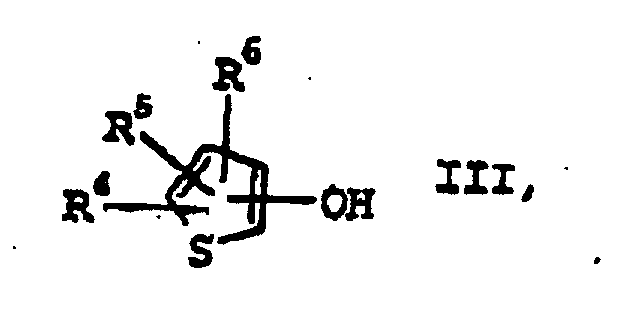
- Procédé de préparation de thiényloxypyrimidines N-hétérocycylsubstituées de formule I selon la revendication 1, caractérisé en ce que l'on fait réagir des dérivés de thiényloxypyrimidines de formule IVdans laquelle R1, R2, R4, R5 et R6 ont les significations spécifiées dans la revendication 1 et L2 désigne un groupe partant échangeable de manière nucléophile,
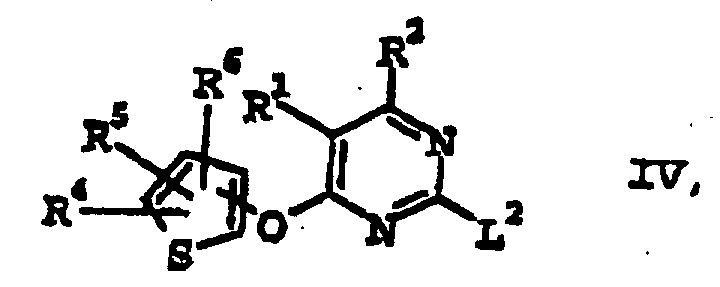
avec un hétérocycle azoté de formule Vdans laquelle W, X, Y et Z ont les significations spécifiées dans la revendication 1.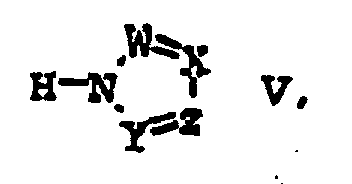
- Dérivés de thiényloxypyrimidine de formule IVdans laquelle R1, R2, R4, R5 et R6 ont les significations spécifiées dans la revendication 1 et L2 désigne un groupe partant échangeable de manière nucléophile.
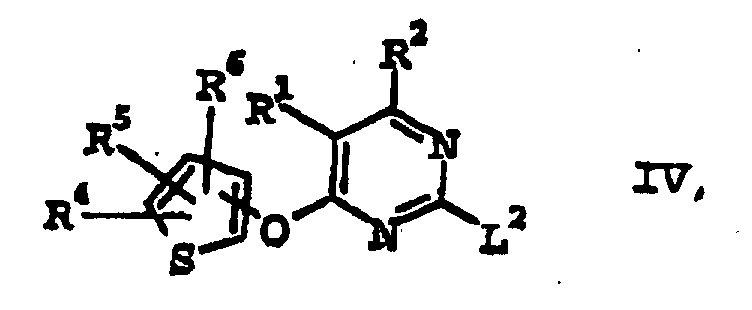
- Produit contenant une quantité active du point de vue herbicide d'au moins une thiényloxypyrimidine N-hétérocycylsubstituée de formule I ou d'un sel à usage agricole de I selon les revendications 1 à 5 et des adjuvants courants pour la formulation de produits phytoprotecteurs.
- Procédé de préparation de produits selon la revendication 9, caractérisé en ce que l'on mélange une quantité active du point de vue herbicide d'au moins un dérivé de thiényloxypyrimidine N-hétérocyclylsubstituée de formule I selon les revendications 1 à 5 ou d'un sel à usage agricole de I et des adjuvants courants pour la formulation de produits phytoprotecteurs.
- Procédé de lutte contre la croissance de plantes indésirées, caractérisé en ce qu'on fait agir une quantité active du point de vue herbicide d'au moins un dérivé de thiényloxypyrimidine N-hétérocyclylsubstituée de formule I selon les revendications 1 à 5 ou d'un sel à usage agricole de I sur des plantes, leur biotope et/ou des graines.
- Utilisation des dérivés de thiényloxypyrimidine N-hétérocyclylsubstituées de formule I selon les revendications 1 à 5 et de leurs sels à usage agricole comme herbicides.
Applications Claiming Priority (3)
| Application Number | Priority Date | Filing Date | Title |
|---|---|---|---|
| DE10139404 | 2001-08-17 | ||
| DE10139404 | 2001-08-17 | ||
| PCT/EP2002/008451 WO2003016308A1 (fr) | 2001-08-17 | 2002-07-30 | Thienyloxy-pyrimidines substituees par n-heterocyclyle s'utilisant comme herbicides |
Publications (2)
| Publication Number | Publication Date |
|---|---|
| EP1421080A1 EP1421080A1 (fr) | 2004-05-26 |
| EP1421080B1 true EP1421080B1 (fr) | 2005-02-09 |
Family
ID=7695077
Family Applications (1)
| Application Number | Title | Priority Date | Filing Date |
|---|---|---|---|
| EP02764808A Expired - Lifetime EP1421080B1 (fr) | 2001-08-17 | 2002-07-30 | Thienyloxy-pyrimidines substituees par n-heterocyclyle s'utilisant comme herbicides |
Country Status (8)
| Country | Link |
|---|---|
| US (1) | US20040198758A1 (fr) |
| EP (1) | EP1421080B1 (fr) |
| JP (1) | JP2005503387A (fr) |
| AR (1) | AR035275A1 (fr) |
| AT (1) | ATE288913T1 (fr) |
| CA (1) | CA2456932A1 (fr) |
| DE (1) | DE50202239D1 (fr) |
| WO (1) | WO2003016308A1 (fr) |
Families Citing this family (35)
| Publication number | Priority date | Publication date | Assignee | Title |
|---|---|---|---|---|
| DE10234875A1 (de) * | 2002-07-25 | 2004-02-05 | Bayer Cropscience Gmbh | 4-Trifluormethylpyrazolyl substituierte Pyridine und Pyrimidine |
| DE10234876A1 (de) | 2002-07-25 | 2004-02-05 | Bayer Cropscience Gmbh | 4-Trifluormethylpyrazolyl substituierte Pyridine und Pyrimidine |
| DE102005014906A1 (de) * | 2005-04-02 | 2006-10-05 | Bayer Cropscience Gmbh | Substituierte N-[Pyrimidin-2-yl-methyl]carboxamide und ihre Verwendung als Herbizide und Pflanzenwachstumsregulatoren |
| JP2010505957A (ja) * | 2006-10-10 | 2010-02-25 | アムゲン インコーポレイティッド | 糖尿病に対して使用されるn−アリールピラゾール化合物 |
| US8097712B2 (en) | 2007-11-07 | 2012-01-17 | Beelogics Inc. | Compositions for conferring tolerance to viral disease in social insects, and the use thereof |
| GB0808664D0 (en) * | 2008-05-13 | 2008-06-18 | Syngenta Ltd | Chemical compounds |
| US8962584B2 (en) | 2009-10-14 | 2015-02-24 | Yissum Research Development Company Of The Hebrew University Of Jerusalem, Ltd. | Compositions for controlling Varroa mites in bees |
| PE20130649A1 (es) | 2010-03-08 | 2013-07-13 | Monsanto Technology Llc | Moleculas polinucleotidicas para regulacion genetica en plantas |
| WO2013040116A1 (fr) | 2011-09-13 | 2013-03-21 | Monsanto Technology Llc | Procédés et compositions de lutte contre les mauvaises herbes |
| US10806146B2 (en) | 2011-09-13 | 2020-10-20 | Monsanto Technology Llc | Methods and compositions for weed control |
| CN103957697B (zh) | 2011-09-13 | 2017-10-24 | 孟山都技术公司 | 用于杂草控制的方法和组合物 |
| US10760086B2 (en) | 2011-09-13 | 2020-09-01 | Monsanto Technology Llc | Methods and compositions for weed control |
| CN103930549B (zh) | 2011-09-13 | 2020-09-18 | 孟山都技术公司 | 用于杂草控制的方法和组合物 |
| EP3434779A1 (fr) | 2011-09-13 | 2019-01-30 | Monsanto Technology LLC | Procédés et compositions de lutte contre les mauvaises herbes |
| US10829828B2 (en) | 2011-09-13 | 2020-11-10 | Monsanto Technology Llc | Methods and compositions for weed control |
| EP2755466A4 (fr) | 2011-09-13 | 2015-04-15 | Monsanto Technology Llc | Procédés et compositions de lutte contre les mauvaises herbes |
| MX343072B (es) | 2011-09-13 | 2016-10-21 | Monsanto Technology Llc | Metodos y composiciones para controlar malezas. |
| US10240162B2 (en) | 2012-05-24 | 2019-03-26 | A.B. Seeds Ltd. | Compositions and methods for silencing gene expression |
| UA118841C2 (uk) | 2013-01-01 | 2019-03-25 | Ей.Бі. СІДС ЛТД. | Спосіб формування рослини, яка має підвищену стійкість до комахи-шкідника |
| US10683505B2 (en) | 2013-01-01 | 2020-06-16 | Monsanto Technology Llc | Methods of introducing dsRNA to plant seeds for modulating gene expression |
| WO2014164761A1 (fr) | 2013-03-13 | 2014-10-09 | Monsanto Technology Llc | Procédés et compositions utilisables pour lutter contre les mauvaises herbes |
| EP2967082A4 (fr) | 2013-03-13 | 2016-11-02 | Monsanto Technology Llc | Procédés et compositions utilisables en vue de la lutte contre les mauvaises herbes |
| US10568328B2 (en) | 2013-03-15 | 2020-02-25 | Monsanto Technology Llc | Methods and compositions for weed control |
| US9850496B2 (en) | 2013-07-19 | 2017-12-26 | Monsanto Technology Llc | Compositions and methods for controlling Leptinotarsa |
| JP6668236B2 (ja) | 2013-07-19 | 2020-03-18 | モンサント テクノロジー エルエルシー | Leptinotarsa防除用組成物及びその方法 |
| MX390055B (es) | 2013-11-04 | 2025-03-20 | Monsanto Technology Llc | Composiciones y metodos para controlar infestaciones de plagas y parasitos de los artropodos. |
| UA119253C2 (uk) | 2013-12-10 | 2019-05-27 | Біолоджикс, Інк. | Спосіб боротьби із вірусом у кліща varroa та у бджіл |
| CN105979770B (zh) | 2014-01-15 | 2019-07-05 | 孟山都技术公司 | 用于使用epsps多核苷酸的杂草控制的方法和组合物 |
| BR112016022711A2 (pt) | 2014-04-01 | 2017-10-31 | Monsanto Technology Llc | composições e métodos para controle de pragas de inseto |
| WO2015200223A1 (fr) | 2014-06-23 | 2015-12-30 | Monsanto Technology Llc | Compositions et méthodes de régulation de l'expression génétique par interférence par arn |
| US11807857B2 (en) | 2014-06-25 | 2023-11-07 | Monsanto Technology Llc | Methods and compositions for delivering nucleic acids to plant cells and regulating gene expression |
| AU2015296700B2 (en) | 2014-07-29 | 2021-10-21 | Monsanto Technology Llc | Compositions and methods for controlling insect pests |
| US10968449B2 (en) | 2015-01-22 | 2021-04-06 | Monsanto Technology Llc | Compositions and methods for controlling Leptinotarsa |
| US10883103B2 (en) | 2015-06-02 | 2021-01-05 | Monsanto Technology Llc | Compositions and methods for delivery of a polynucleotide into a plant |
| EP3302030A4 (fr) | 2015-06-03 | 2019-04-24 | Monsanto Technology LLC | Procédés et compositions pour l'introduction d'acides nucléiques dans des plantes |
Family Cites Families (7)
| Publication number | Priority date | Publication date | Assignee | Title |
|---|---|---|---|---|
| US5747423A (en) * | 1996-07-15 | 1998-05-05 | American Cyanamid Company | Herbicidal 6-thienyl and 4-thienyl pyrimidines |
| AU725548B2 (en) * | 1997-03-11 | 2000-10-12 | E.I. Du Pont De Nemours And Company | Heteroaryl azole herbicides |
| JPH11199564A (ja) * | 1997-09-12 | 1999-07-27 | American Cyanamid Co | 除草性2−アジニル−6−アリールオキシピリ(ミ)ジン |
| US6121202A (en) * | 1997-11-07 | 2000-09-19 | American Cyanamid Company | Thienyloxypyridines and-pyrimidines useful as herbicidal agents |
| JP2001522848A (ja) * | 1997-11-07 | 2001-11-20 | アメリカン・サイアナミド・カンパニー | 除草性フラニル−およびチエニルオキシアジン |
| AU5020400A (en) * | 1999-05-20 | 2000-12-12 | E.I. Du Pont De Nemours And Company | Heteroaryloxypyrimidine insecticides and acaricides |
| ATE289751T1 (de) * | 2000-06-23 | 2005-03-15 | Basf Ag | Erhöhung der wirkung von herbiziden, die die carotenoid-synthese hemmen |
-
2002
- 2002-07-07 US US10/486,398 patent/US20040198758A1/en not_active Abandoned
- 2002-07-30 WO PCT/EP2002/008451 patent/WO2003016308A1/fr not_active Ceased
- 2002-07-30 DE DE50202239T patent/DE50202239D1/de not_active Expired - Lifetime
- 2002-07-30 JP JP2003521231A patent/JP2005503387A/ja active Pending
- 2002-07-30 CA CA002456932A patent/CA2456932A1/fr not_active Abandoned
- 2002-07-30 EP EP02764808A patent/EP1421080B1/fr not_active Expired - Lifetime
- 2002-07-30 AT AT02764808T patent/ATE288913T1/de not_active IP Right Cessation
- 2002-08-16 AR ARP020103108A patent/AR035275A1/es not_active Application Discontinuation
Also Published As
| Publication number | Publication date |
|---|---|
| EP1421080A1 (fr) | 2004-05-26 |
| AR035275A1 (es) | 2004-05-05 |
| JP2005503387A (ja) | 2005-02-03 |
| CA2456932A1 (fr) | 2003-02-27 |
| WO2003016308A1 (fr) | 2003-02-27 |
| US20040198758A1 (en) | 2004-10-07 |
| DE50202239D1 (en) | 2005-03-17 |
| ATE288913T1 (de) | 2005-02-15 |
Similar Documents
| Publication | Publication Date | Title |
|---|---|---|
| EP1427725B1 (fr) | Thienyloxy-pyridines substituees par pyrazolyle | |
| EP1427719B1 (fr) | Thienyloxy-pyridine substituee en position 4 par un alkyle, utilisee comme herbicide | |
| US20040198758A1 (en) | N-heterocyclyl substituted thienyloxy-pyrimidines used as herbicides | |
| EP1501361B1 (fr) | Isoxazolines 5-methyloxymethyliques a substitution 3-heteroaryle utilisees comme herbicides | |
| EP0931070B1 (fr) | Derives d'hetaroylcyclohexandione a action herbicide | |
| JP4546729B2 (ja) | β−アミノ−α−シアノアクリル酸エステルおよび除草剤としてのその使用 | |
| WO2003029243A2 (fr) | 2-aryloxy-6-pyrazolyl-pyridines | |
| SK286069B6 (sk) | 3-heterocyklyl-substituované benzoylderiváty, spôsob ich prípravy, kompozície s ich obsahom a ich použitie | |
| DE19638484A1 (de) | Hetaroylderivate | |
| EP0802904B1 (fr) | 2-phenylpyridines substituees utilisees comme herbicides | |
| EP1135388A2 (fr) | Benzoylpyrazoles 3-(heterocyclyl) substitues | |
| EP1240163B1 (fr) | 3-(4,5-dihydroisoxazol-5-yl)benzoylpyrazoles | |
| EP1417170A1 (fr) | Derives du benzoylcyclohexenone | |
| WO2000068228A1 (fr) | 4-(3',4'-heterocyclyl benzoyl) pyrazoles en tant qu'herbicides | |
| EP0802905B1 (fr) | 2-phenylpyridines substituees utilisees comme herbicides | |
| EP1200429B1 (fr) | Derives de 1-cycloalkylpyrazolyl-benzoyle | |
| EP1286991B1 (fr) | Benzoylpyrazoles substitues en 3-(4,5-dihydroisoxazol-3-yle) et a anellation cyclopropyle | |
| WO2000034272A2 (fr) | Derives de 3-(heterocyclyl)-benzoylpyrazole | |
| EP0998472A1 (fr) | 2-(benzaryl)pyridines substituees | |
| DE19936520A1 (de) | 3-(Heterocyclyl)-benzoylpyrazolyl-Derivate | |
| EP1181297A1 (fr) | Derives de cyclohexenondioxothiochromanoyle |
Legal Events
| Date | Code | Title | Description |
|---|---|---|---|
| PUAI | Public reference made under article 153(3) epc to a published international application that has entered the european phase |
Free format text: ORIGINAL CODE: 0009012 |
|
| 17P | Request for examination filed |
Effective date: 20040317 |
|
| AK | Designated contracting states |
Kind code of ref document: A1 Designated state(s): AT BE BG CH CY CZ DE DK EE ES FI FR GB GR IE IT LI LU MC NL PT SE SK TR |
|
| AX | Request for extension of the european patent |
Extension state: AL LT LV MK RO SI |
|
| GRAP | Despatch of communication of intention to grant a patent |
Free format text: ORIGINAL CODE: EPIDOSNIGR1 |
|
| RIN1 | Information on inventor provided before grant (corrected) |
Inventor name: LANDES, ANDREAS Inventor name: WITSCHEL, MATTHIAS Inventor name: ZAGAR, CYRILL Inventor name: MISSLITZ, ULF Inventor name: KORDES, MARKUS Inventor name: BAUMANN, ERNST Inventor name: HOFMANN, MICHAEL Inventor name: VON DEYN, WOLFGANG Inventor name: PARRA RAPADO, LILIANA |
|
| RIN1 | Information on inventor provided before grant (corrected) |
Inventor name: LANDES, ANDREAS Inventor name: WITSCHEL, MATTHIAS Inventor name: ZAGAR, CYRILL Inventor name: MISSLITZ, ULF Inventor name: KORDES, MARKUS Inventor name: BAUMANN, ERNST Inventor name: HOFMANN, MICHAEL Inventor name: VON DEYN, WOLFGANG Inventor name: PARRA RAPADO, LILIANA |
|
| GRAS | Grant fee paid |
Free format text: ORIGINAL CODE: EPIDOSNIGR3 |
|
| GRAA | (expected) grant |
Free format text: ORIGINAL CODE: 0009210 |
|
| AK | Designated contracting states |
Kind code of ref document: B1 Designated state(s): AT BE BG CH CY CZ DE DK EE ES FI FR GB GR IE IT LI LU MC NL PT SE SK TR |
|
| PG25 | Lapsed in a contracting state [announced via postgrant information from national office to epo] |
Ref country code: TR Free format text: LAPSE BECAUSE OF FAILURE TO SUBMIT A TRANSLATION OF THE DESCRIPTION OR TO PAY THE FEE WITHIN THE PRESCRIBED TIME-LIMIT Effective date: 20050209 Ref country code: SK Free format text: LAPSE BECAUSE OF FAILURE TO SUBMIT A TRANSLATION OF THE DESCRIPTION OR TO PAY THE FEE WITHIN THE PRESCRIBED TIME-LIMIT Effective date: 20050209 Ref country code: NL Free format text: LAPSE BECAUSE OF FAILURE TO SUBMIT A TRANSLATION OF THE DESCRIPTION OR TO PAY THE FEE WITHIN THE PRESCRIBED TIME-LIMIT Effective date: 20050209 Ref country code: IT Free format text: LAPSE BECAUSE OF FAILURE TO SUBMIT A TRANSLATION OF THE DESCRIPTION OR TO PAY THE FEE WITHIN THE PRESCRIBED TIME-LIMIT;WARNING: LAPSES OF ITALIAN PATENTS WITH EFFECTIVE DATE BEFORE 2007 MAY HAVE OCCURRED AT ANY TIME BEFORE 2007. THE CORRECT EFFECTIVE DATE MAY BE DIFFERENT FROM THE ONE RECORDED. Effective date: 20050209 Ref country code: IE Free format text: LAPSE BECAUSE OF FAILURE TO SUBMIT A TRANSLATION OF THE DESCRIPTION OR TO PAY THE FEE WITHIN THE PRESCRIBED TIME-LIMIT Effective date: 20050209 Ref country code: FI Free format text: LAPSE BECAUSE OF FAILURE TO SUBMIT A TRANSLATION OF THE DESCRIPTION OR TO PAY THE FEE WITHIN THE PRESCRIBED TIME-LIMIT Effective date: 20050209 Ref country code: EE Free format text: LAPSE BECAUSE OF FAILURE TO SUBMIT A TRANSLATION OF THE DESCRIPTION OR TO PAY THE FEE WITHIN THE PRESCRIBED TIME-LIMIT Effective date: 20050209 Ref country code: CZ Free format text: LAPSE BECAUSE OF FAILURE TO SUBMIT A TRANSLATION OF THE DESCRIPTION OR TO PAY THE FEE WITHIN THE PRESCRIBED TIME-LIMIT Effective date: 20050209 Ref country code: BG Free format text: LAPSE BECAUSE OF FAILURE TO SUBMIT A TRANSLATION OF THE DESCRIPTION OR TO PAY THE FEE WITHIN THE PRESCRIBED TIME-LIMIT Effective date: 20050209 |
|
| REG | Reference to a national code |
Ref country code: GB Ref legal event code: FG4D Free format text: NOT ENGLISH |
|
| REG | Reference to a national code |
Ref country code: CH Ref legal event code: EP |
|
| REG | Reference to a national code |
Ref country code: IE Ref legal event code: FG4D Free format text: GERMAN |
|
| REF | Corresponds to: |
Ref document number: 50202239 Country of ref document: DE Date of ref document: 20050317 Kind code of ref document: P |
|
| GBT | Gb: translation of ep patent filed (gb section 77(6)(a)/1977) |
Effective date: 20050405 |
|
| PG25 | Lapsed in a contracting state [announced via postgrant information from national office to epo] |
Ref country code: SE Free format text: LAPSE BECAUSE OF FAILURE TO SUBMIT A TRANSLATION OF THE DESCRIPTION OR TO PAY THE FEE WITHIN THE PRESCRIBED TIME-LIMIT Effective date: 20050509 Ref country code: GR Free format text: LAPSE BECAUSE OF FAILURE TO SUBMIT A TRANSLATION OF THE DESCRIPTION OR TO PAY THE FEE WITHIN THE PRESCRIBED TIME-LIMIT Effective date: 20050509 Ref country code: DK Free format text: LAPSE BECAUSE OF FAILURE TO SUBMIT A TRANSLATION OF THE DESCRIPTION OR TO PAY THE FEE WITHIN THE PRESCRIBED TIME-LIMIT Effective date: 20050509 |
|
| PG25 | Lapsed in a contracting state [announced via postgrant information from national office to epo] |
Ref country code: ES Free format text: LAPSE BECAUSE OF FAILURE TO SUBMIT A TRANSLATION OF THE DESCRIPTION OR TO PAY THE FEE WITHIN THE PRESCRIBED TIME-LIMIT Effective date: 20050520 |
|
| PGFP | Annual fee paid to national office [announced via postgrant information from national office to epo] |
Ref country code: FR Payment date: 20050708 Year of fee payment: 4 |
|
| PGFP | Annual fee paid to national office [announced via postgrant information from national office to epo] |
Ref country code: DE Payment date: 20050728 Year of fee payment: 4 |
|
| PG25 | Lapsed in a contracting state [announced via postgrant information from national office to epo] |
Ref country code: LU Free format text: LAPSE BECAUSE OF NON-PAYMENT OF DUE FEES Effective date: 20050730 Ref country code: CY Free format text: LAPSE BECAUSE OF FAILURE TO SUBMIT A TRANSLATION OF THE DESCRIPTION OR TO PAY THE FEE WITHIN THE PRESCRIBED TIME-LIMIT Effective date: 20050730 Ref country code: AT Free format text: LAPSE BECAUSE OF NON-PAYMENT OF DUE FEES Effective date: 20050730 |
|
| PG25 | Lapsed in a contracting state [announced via postgrant information from national office to epo] |
Ref country code: MC Free format text: LAPSE BECAUSE OF NON-PAYMENT OF DUE FEES Effective date: 20050731 Ref country code: BE Free format text: LAPSE BECAUSE OF NON-PAYMENT OF DUE FEES Effective date: 20050731 |
|
| NLV1 | Nl: lapsed or annulled due to failure to fulfill the requirements of art. 29p and 29m of the patents act | ||
| REG | Reference to a national code |
Ref country code: IE Ref legal event code: FD4D |
|
| PLBE | No opposition filed within time limit |
Free format text: ORIGINAL CODE: 0009261 |
|
| STAA | Information on the status of an ep patent application or granted ep patent |
Free format text: STATUS: NO OPPOSITION FILED WITHIN TIME LIMIT |
|
| ET | Fr: translation filed | ||
| 26N | No opposition filed |
Effective date: 20051110 |
|
| PG25 | Lapsed in a contracting state [announced via postgrant information from national office to epo] |
Ref country code: GB Free format text: LAPSE BECAUSE OF NON-PAYMENT OF DUE FEES Effective date: 20060730 |
|
| PG25 | Lapsed in a contracting state [announced via postgrant information from national office to epo] |
Ref country code: LI Free format text: LAPSE BECAUSE OF NON-PAYMENT OF DUE FEES Effective date: 20060731 Ref country code: CH Free format text: LAPSE BECAUSE OF NON-PAYMENT OF DUE FEES Effective date: 20060731 |
|
| PG25 | Lapsed in a contracting state [announced via postgrant information from national office to epo] |
Ref country code: DE Free format text: LAPSE BECAUSE OF THE APPLICANT RENOUNCES Effective date: 20060812 |
|
| REG | Reference to a national code |
Ref country code: CH Ref legal event code: PL |
|
| GBPC | Gb: european patent ceased through non-payment of renewal fee |
Effective date: 20060730 |
|
| REG | Reference to a national code |
Ref country code: FR Ref legal event code: ST Effective date: 20070330 |
|
| BERE | Be: lapsed |
Owner name: BASF A.G. Effective date: 20050731 |
|
| PG25 | Lapsed in a contracting state [announced via postgrant information from national office to epo] |
Ref country code: PT Free format text: LAPSE BECAUSE OF NON-PAYMENT OF DUE FEES Effective date: 20050709 |
|
| PG25 | Lapsed in a contracting state [announced via postgrant information from national office to epo] |
Ref country code: FR Free format text: LAPSE BECAUSE OF NON-PAYMENT OF DUE FEES Effective date: 20060731 |