EP1430933A2 - Kosmetische und pharmazeutische Zusammensetzungen enthaltend Steroidsulfatase-Inhibitoren und deren Verwendung zur Verminderung von Haarausfall - Google Patents
Kosmetische und pharmazeutische Zusammensetzungen enthaltend Steroidsulfatase-Inhibitoren und deren Verwendung zur Verminderung von Haarausfall Download PDFInfo
- Publication number
- EP1430933A2 EP1430933A2 EP03028617A EP03028617A EP1430933A2 EP 1430933 A2 EP1430933 A2 EP 1430933A2 EP 03028617 A EP03028617 A EP 03028617A EP 03028617 A EP03028617 A EP 03028617A EP 1430933 A2 EP1430933 A2 EP 1430933A2
- Authority
- EP
- European Patent Office
- Prior art keywords
- acid
- use according
- derivatives
- esters
- sodium
- Prior art date
- Legal status (The legal status is an assumption and is not a legal conclusion. Google has not performed a legal analysis and makes no representation as to the accuracy of the status listed.)
- Withdrawn
Links
Classifications
-
- A—HUMAN NECESSITIES
- A61—MEDICAL OR VETERINARY SCIENCE; HYGIENE
- A61K—PREPARATIONS FOR MEDICAL, DENTAL OR TOILETRY PURPOSES
- A61K31/00—Medicinal preparations containing organic active ingredients
- A61K31/185—Acids; Anhydrides, halides or salts thereof, e.g. sulfur acids, imidic, hydrazonic or hydroximic acids
- A61K31/19—Carboxylic acids, e.g. valproic acid
- A61K31/195—Carboxylic acids, e.g. valproic acid having an amino group
-
- A—HUMAN NECESSITIES
- A61—MEDICAL OR VETERINARY SCIENCE; HYGIENE
- A61K—PREPARATIONS FOR MEDICAL, DENTAL OR TOILETRY PURPOSES
- A61K31/00—Medicinal preparations containing organic active ingredients
- A61K31/045—Hydroxy compounds, e.g. alcohols; Salts thereof, e.g. alcoholates
- A61K31/05—Phenols
-
- A—HUMAN NECESSITIES
- A61—MEDICAL OR VETERINARY SCIENCE; HYGIENE
- A61K—PREPARATIONS FOR MEDICAL, DENTAL OR TOILETRY PURPOSES
- A61K31/00—Medicinal preparations containing organic active ingredients
- A61K31/185—Acids; Anhydrides, halides or salts thereof, e.g. sulfur acids, imidic, hydrazonic or hydroximic acids
-
- A—HUMAN NECESSITIES
- A61—MEDICAL OR VETERINARY SCIENCE; HYGIENE
- A61K—PREPARATIONS FOR MEDICAL, DENTAL OR TOILETRY PURPOSES
- A61K31/00—Medicinal preparations containing organic active ingredients
- A61K31/185—Acids; Anhydrides, halides or salts thereof, e.g. sulfur acids, imidic, hydrazonic or hydroximic acids
- A61K31/19—Carboxylic acids, e.g. valproic acid
-
- A—HUMAN NECESSITIES
- A61—MEDICAL OR VETERINARY SCIENCE; HYGIENE
- A61K—PREPARATIONS FOR MEDICAL, DENTAL OR TOILETRY PURPOSES
- A61K31/00—Medicinal preparations containing organic active ingredients
- A61K31/185—Acids; Anhydrides, halides or salts thereof, e.g. sulfur acids, imidic, hydrazonic or hydroximic acids
- A61K31/19—Carboxylic acids, e.g. valproic acid
- A61K31/191—Carboxylic acids, e.g. valproic acid having two or more hydroxy groups, e.g. gluconic acid
-
- A—HUMAN NECESSITIES
- A61—MEDICAL OR VETERINARY SCIENCE; HYGIENE
- A61K—PREPARATIONS FOR MEDICAL, DENTAL OR TOILETRY PURPOSES
- A61K31/00—Medicinal preparations containing organic active ingredients
- A61K31/185—Acids; Anhydrides, halides or salts thereof, e.g. sulfur acids, imidic, hydrazonic or hydroximic acids
- A61K31/19—Carboxylic acids, e.g. valproic acid
- A61K31/195—Carboxylic acids, e.g. valproic acid having an amino group
- A61K31/197—Carboxylic acids, e.g. valproic acid having an amino group the amino and the carboxyl groups being attached to the same acyclic carbon chain, e.g. gamma-aminobutyric acid [GABA], beta-alanine, epsilon-aminocaproic acid or pantothenic acid
- A61K31/198—Alpha-amino acids, e.g. alanine or edetic acid [EDTA]
-
- A—HUMAN NECESSITIES
- A61—MEDICAL OR VETERINARY SCIENCE; HYGIENE
- A61K—PREPARATIONS FOR MEDICAL, DENTAL OR TOILETRY PURPOSES
- A61K31/00—Medicinal preparations containing organic active ingredients
- A61K31/66—Phosphorus compounds
- A61K31/661—Phosphorus acids or esters thereof not having P—C bonds, e.g. fosfosal, dichlorvos, malathion or mevinphos
- A61K31/6615—Compounds having two or more esterified phosphorus acid groups, e.g. inositol triphosphate, phytic acid
-
- A—HUMAN NECESSITIES
- A61—MEDICAL OR VETERINARY SCIENCE; HYGIENE
- A61K—PREPARATIONS FOR MEDICAL, DENTAL OR TOILETRY PURPOSES
- A61K31/00—Medicinal preparations containing organic active ingredients
- A61K31/695—Silicon compounds
-
- A—HUMAN NECESSITIES
- A61—MEDICAL OR VETERINARY SCIENCE; HYGIENE
- A61K—PREPARATIONS FOR MEDICAL, DENTAL OR TOILETRY PURPOSES
- A61K31/00—Medicinal preparations containing organic active ingredients
- A61K31/70—Carbohydrates; Sugars; Derivatives thereof
- A61K31/7004—Monosaccharides having only carbon, hydrogen and oxygen atoms
-
- A—HUMAN NECESSITIES
- A61—MEDICAL OR VETERINARY SCIENCE; HYGIENE
- A61K—PREPARATIONS FOR MEDICAL, DENTAL OR TOILETRY PURPOSES
- A61K8/00—Cosmetics or similar toiletry preparations
- A61K8/18—Cosmetics or similar toiletry preparations characterised by the composition
- A61K8/19—Cosmetics or similar toiletry preparations characterised by the composition containing inorganic ingredients
- A61K8/26—Aluminium; Compounds thereof
-
- A—HUMAN NECESSITIES
- A61—MEDICAL OR VETERINARY SCIENCE; HYGIENE
- A61K—PREPARATIONS FOR MEDICAL, DENTAL OR TOILETRY PURPOSES
- A61K8/00—Cosmetics or similar toiletry preparations
- A61K8/18—Cosmetics or similar toiletry preparations characterised by the composition
- A61K8/30—Cosmetics or similar toiletry preparations characterised by the composition containing organic compounds
- A61K8/33—Cosmetics or similar toiletry preparations characterised by the composition containing organic compounds containing oxygen
- A61K8/34—Alcohols
- A61K8/345—Alcohols containing more than one hydroxy group
-
- A—HUMAN NECESSITIES
- A61—MEDICAL OR VETERINARY SCIENCE; HYGIENE
- A61K—PREPARATIONS FOR MEDICAL, DENTAL OR TOILETRY PURPOSES
- A61K8/00—Cosmetics or similar toiletry preparations
- A61K8/18—Cosmetics or similar toiletry preparations characterised by the composition
- A61K8/30—Cosmetics or similar toiletry preparations characterised by the composition containing organic compounds
- A61K8/33—Cosmetics or similar toiletry preparations characterised by the composition containing organic compounds containing oxygen
- A61K8/36—Carboxylic acids; Salts or anhydrides thereof
-
- A—HUMAN NECESSITIES
- A61—MEDICAL OR VETERINARY SCIENCE; HYGIENE
- A61K—PREPARATIONS FOR MEDICAL, DENTAL OR TOILETRY PURPOSES
- A61K8/00—Cosmetics or similar toiletry preparations
- A61K8/18—Cosmetics or similar toiletry preparations characterised by the composition
- A61K8/30—Cosmetics or similar toiletry preparations characterised by the composition containing organic compounds
- A61K8/33—Cosmetics or similar toiletry preparations characterised by the composition containing organic compounds containing oxygen
- A61K8/36—Carboxylic acids; Salts or anhydrides thereof
- A61K8/365—Hydroxycarboxylic acids; Ketocarboxylic acids
-
- A—HUMAN NECESSITIES
- A61—MEDICAL OR VETERINARY SCIENCE; HYGIENE
- A61K—PREPARATIONS FOR MEDICAL, DENTAL OR TOILETRY PURPOSES
- A61K8/00—Cosmetics or similar toiletry preparations
- A61K8/18—Cosmetics or similar toiletry preparations characterised by the composition
- A61K8/30—Cosmetics or similar toiletry preparations characterised by the composition containing organic compounds
- A61K8/33—Cosmetics or similar toiletry preparations characterised by the composition containing organic compounds containing oxygen
- A61K8/39—Derivatives containing from 2 to 10 oxyalkylene groups
-
- A—HUMAN NECESSITIES
- A61—MEDICAL OR VETERINARY SCIENCE; HYGIENE
- A61K—PREPARATIONS FOR MEDICAL, DENTAL OR TOILETRY PURPOSES
- A61K8/00—Cosmetics or similar toiletry preparations
- A61K8/18—Cosmetics or similar toiletry preparations characterised by the composition
- A61K8/30—Cosmetics or similar toiletry preparations characterised by the composition containing organic compounds
- A61K8/40—Cosmetics or similar toiletry preparations characterised by the composition containing organic compounds containing nitrogen
- A61K8/44—Aminocarboxylic acids or derivatives thereof, e.g. aminocarboxylic acids containing sulfur; Salts; Esters or N-acylated derivatives thereof
-
- A—HUMAN NECESSITIES
- A61—MEDICAL OR VETERINARY SCIENCE; HYGIENE
- A61K—PREPARATIONS FOR MEDICAL, DENTAL OR TOILETRY PURPOSES
- A61K8/00—Cosmetics or similar toiletry preparations
- A61K8/18—Cosmetics or similar toiletry preparations characterised by the composition
- A61K8/30—Cosmetics or similar toiletry preparations characterised by the composition containing organic compounds
- A61K8/60—Sugars; Derivatives thereof
- A61K8/602—Glycosides, e.g. rutin
-
- A—HUMAN NECESSITIES
- A61—MEDICAL OR VETERINARY SCIENCE; HYGIENE
- A61K—PREPARATIONS FOR MEDICAL, DENTAL OR TOILETRY PURPOSES
- A61K8/00—Cosmetics or similar toiletry preparations
- A61K8/18—Cosmetics or similar toiletry preparations characterised by the composition
- A61K8/30—Cosmetics or similar toiletry preparations characterised by the composition containing organic compounds
- A61K8/60—Sugars; Derivatives thereof
- A61K8/608—Derivatives containing from 2 to 10 oxyalkylene groups
-
- A—HUMAN NECESSITIES
- A61—MEDICAL OR VETERINARY SCIENCE; HYGIENE
- A61K—PREPARATIONS FOR MEDICAL, DENTAL OR TOILETRY PURPOSES
- A61K8/00—Cosmetics or similar toiletry preparations
- A61K8/18—Cosmetics or similar toiletry preparations characterised by the composition
- A61K8/96—Cosmetics or similar toiletry preparations characterised by the composition containing materials, or derivatives thereof of undetermined constitution
- A61K8/97—Cosmetics or similar toiletry preparations characterised by the composition containing materials, or derivatives thereof of undetermined constitution from algae, fungi, lichens or plants; from derivatives thereof
- A61K8/9755—Gymnosperms [Coniferophyta]
- A61K8/9767—Pinaceae [Pine family], e.g. pine or cedar
-
- A—HUMAN NECESSITIES
- A61—MEDICAL OR VETERINARY SCIENCE; HYGIENE
- A61K—PREPARATIONS FOR MEDICAL, DENTAL OR TOILETRY PURPOSES
- A61K8/00—Cosmetics or similar toiletry preparations
- A61K8/18—Cosmetics or similar toiletry preparations characterised by the composition
- A61K8/96—Cosmetics or similar toiletry preparations characterised by the composition containing materials, or derivatives thereof of undetermined constitution
- A61K8/97—Cosmetics or similar toiletry preparations characterised by the composition containing materials, or derivatives thereof of undetermined constitution from algae, fungi, lichens or plants; from derivatives thereof
- A61K8/9771—Ginkgophyta, e.g. Ginkgoaceae [Ginkgo family]
-
- A—HUMAN NECESSITIES
- A61—MEDICAL OR VETERINARY SCIENCE; HYGIENE
- A61K—PREPARATIONS FOR MEDICAL, DENTAL OR TOILETRY PURPOSES
- A61K8/00—Cosmetics or similar toiletry preparations
- A61K8/18—Cosmetics or similar toiletry preparations characterised by the composition
- A61K8/96—Cosmetics or similar toiletry preparations characterised by the composition containing materials, or derivatives thereof of undetermined constitution
- A61K8/97—Cosmetics or similar toiletry preparations characterised by the composition containing materials, or derivatives thereof of undetermined constitution from algae, fungi, lichens or plants; from derivatives thereof
- A61K8/9783—Angiosperms [Magnoliophyta]
- A61K8/9789—Magnoliopsida [dicotyledons]
-
- A—HUMAN NECESSITIES
- A61—MEDICAL OR VETERINARY SCIENCE; HYGIENE
- A61K—PREPARATIONS FOR MEDICAL, DENTAL OR TOILETRY PURPOSES
- A61K8/00—Cosmetics or similar toiletry preparations
- A61K8/18—Cosmetics or similar toiletry preparations characterised by the composition
- A61K8/96—Cosmetics or similar toiletry preparations characterised by the composition containing materials, or derivatives thereof of undetermined constitution
- A61K8/97—Cosmetics or similar toiletry preparations characterised by the composition containing materials, or derivatives thereof of undetermined constitution from algae, fungi, lichens or plants; from derivatives thereof
- A61K8/9783—Angiosperms [Magnoliophyta]
- A61K8/9794—Liliopsida [monocotyledons]
-
- A—HUMAN NECESSITIES
- A61—MEDICAL OR VETERINARY SCIENCE; HYGIENE
- A61P—SPECIFIC THERAPEUTIC ACTIVITY OF CHEMICAL COMPOUNDS OR MEDICINAL PREPARATIONS
- A61P17/00—Drugs for dermatological disorders
- A61P17/14—Drugs for dermatological disorders for baldness or alopecia
-
- A—HUMAN NECESSITIES
- A61—MEDICAL OR VETERINARY SCIENCE; HYGIENE
- A61Q—SPECIFIC USE OF COSMETICS OR SIMILAR TOILETRY PREPARATIONS
- A61Q7/00—Preparations for affecting hair growth
-
- A—HUMAN NECESSITIES
- A61—MEDICAL OR VETERINARY SCIENCE; HYGIENE
- A61K—PREPARATIONS FOR MEDICAL, DENTAL OR TOILETRY PURPOSES
- A61K2800/00—Properties of cosmetic compositions or active ingredients thereof or formulation aids used therein and process related aspects
- A61K2800/74—Biological properties of particular ingredients
- A61K2800/78—Enzyme modulators, e.g. Enzyme agonists
- A61K2800/782—Enzyme inhibitors; Enzyme antagonists
Definitions
- the invention relates to the use of selected Steroid sulfatase inhibiting substances in cosmetic or pharmaceutical compositions for reducing hair loss.
- 5- ⁇ -reductase like Finasterid®
- the object of the present invention is therefore to add alternative substances make hair loss, especially androgenetic hair loss can reduce.
- the present invention relates to the use of at least one steroid sulfatase-inhibiting substance, selected from functional C 2 -C 12 carboxylic acids and their physiologically tolerable metal salts, derivatives of C 3 -C 9 polyols, phenol derivatives, plant extracts, fragrances, flavonoids, aluminum chlorohydrate , 2-phenylethanol, etidronic acid, 7-acetyl-1,1,3,4,4,6-hexamethyltetralin, tropolone derivatives, esters of sulfuric acid with alkoxylated C 8 -C 18 fatty alcohols and their physiologically compatible metal salts, esters of phosphoric acid and Triphosphoric acid with mono- to hexavalent hydroxy compounds, silicic acid esters, mycosporin-like amino acids (MAA) isolable from marine organisms, and quaternary silicone compounds in a cosmetic or pharmaceutical composition to reduce hair loss.
- steroid sulfatase-inhibiting substance selected from functional
- aluminum chlorohydrates are preferred.
- concentrations of 0.2 to 3% by weight, preferably 0.5 to 3% by weight and particularly preferably 1.0 to 2.0% by weight are sufficient. each based on the entire cosmetic or pharmaceutical composition.
- aluminum chlorohydrate is used in amounts of 0.1 to 10% by weight, preferably 0.5 to 5.0 and particularly preferably 1.0 to 2.0% by weight, in each case based on the total cosmetic composition.
- 2-phenylethanol is used in amounts of 0.1 to 10% by weight, preferably 0.5 to 5.0 and particularly preferably 1.0 to 2.0% by weight, in each case based on the total cosmetic composition
- etidronic acid is used in amounts of 0.01 to 5.0% by weight, preferably 0.05 to 2.0 and particularly preferably 0.1 to 1.0% by weight, in each case based on the entire cosmetic or pharmaceutical composition , used.
- 7-acetyl-1,1,3,4,4,6-hexamethyltetralin is used in amounts of 0.001 to 1.0% by weight, preferably 0.005 to 0.5 and particularly preferably 0.01 to 0.2% by weight. -%, each based on the entire cosmetic or pharmaceutical composition, used.
- the plant extracts used according to the invention are selected from the extracts of lemon balm, green tea (Camellia sinensis), mate (Ilex paraguayensis), Japanese tea (Camellia japanensis), from the fruits (berries) of the fan palm or saw palmetto (Saw Palmetto , Serenoa repens), from Gingko biloba, Yuzu oil, from citrus fruit seeds, from the fruits (berries) of Phyllanthus emblica and from the leaves of the olive tree (Olea europaea).
- the extracts from green tea (Camellia sinensis), yuzu oil and from citrus fruit seeds are particularly preferred; citrus fruit seed extracts are very particularly preferred.
- the citrus fruit seeds come from all types of citrus, preferably from Citrus sinensis, C. paradisi, C. aurantium, C. aurantifolia, C. reticulata, C. grandis, C. limonia and C. medica, particularly preferably from C. aurantium, C. sinensis, C. paradisi, C. limonia and C. reticulata.
- Citrus fruit seed extracts are particularly preferably used according to the invention, which are obtainable by pressure digestion of about 12-72 hours, preferably about 48 hours, in glycerol at temperatures of about 50-150 ° C. and then centrifuging and filtering.
- they are according to the invention used plant extracts selected from the extracts from seaweed, Apple seeds, pine bark (Pinus Pinaster), grapes, red wine, rosemary, hyssop (Hyssop), clove and willow-herb (Epilobium angustifolium, Willowherb).
- the plant extracts are used in amounts of 0.001 to 20% by weight, preferably 0.005 to 10 and particularly preferably 0.01 to 5% by weight Active substance, based in each case on the entire cosmetic or pharmaceutical composition used.
- fragrances selected from the raw material Protectate HR, a Fragrance mixture available from Symrise, formerly Haarmann and Reimer.
- Protectate HR is used according to the invention as a steroid sulfatase inhibitor in amounts of 0.001 to 5% by weight, preferably 0.01 to 2% by weight and particularly preferably 0.1 up to 1% by weight, based in each case on the entire cosmetic composition, used.
- flavonoids are also explicitly disclosed as steroid sulfatase inhibitors suitable and preferred according to the invention.
- the flavonoids preferred according to the invention include the glycosides of flavones, flavanones, 3-hydroxyflavones (flavonols), aurones and isoflavones.
- flavonoids are selected from ⁇ -glucosylrutin, ⁇ -glucosylmyricetin, ⁇ -glucosylisoquercetin, ⁇ -glucosylquercetin, naringin (aurantiin, naringenin-7-rhamnoglucoside), hesperidin (3 ', 5,7-trihydroxy-4'-methoxy) -rhamnoglucoside, Hesperitin-7-O-rhamnoglucoside), Neohesperidin, Rutin (3,3 ', 4', 5,7-Pentahydroxyflavon-3-rhamnoglucosid, Quercetin-3-rhamnoglucosid), Troxerutin (3,5-Dihydroxy-3 ', 4', 7-tris (2-hydroxyethoxy) flavon-3- (6-O- (6-deoxy- ⁇ -L-mannopyranosyl) - ⁇ -D-glucopyranoside)), monoxerutin
- the biflavonoids composed of two flavonoid units, which, for. B. occur in Gingko species.
- Other preferred flavonoids are the chalcones, especially phlorizin and neohesperidin dihydrochalkon.
- the flavonoids are used in amounts of 0.001 to 1% by weight, preferably 0.005 to 0.5% by weight and particularly preferably 0.01 to 0.4% by weight, in each case based on the flavonoid active substance in the entire cosmetic composition , used.
- the steroid sulfatase inhibitors used according to the invention are selected from isoflavonoids, which includes the isoflavones and the isoflavone glycosides.
- isoflavones are understood to mean substances which are hydrogenation, oxidation or substitution products of 3-phenyl-4H-1-benzopyran, where hydrogenation may be present in the 2,3-position of the carbon skeleton, oxidation under Formation of a carbonyl group may be in the 4-position, and substitution is to be understood as the replacement of one or more hydrogen atoms by hydroxyl or methoxy groups.
- the isoflavones according to the invention include, for example, daidzein, genistein, prunetin, biochanin, Orobol, Santal, pratensein, irigenin, glycitein, biochanin A and formononetin. Daidzein, genistein, glycitein and formononetin are preferred as isoflavones.
- the isoflavones are in the isoflavone glycosides used according to the invention via at least one hydroxy group with at least one sugar glycosidic connected.
- Mono- or oligosaccharides, in particular D-glucose come as sugars.
- Preferred examples of the Isoflavone glycosides used according to the invention are daidzin and genistin.
- the isoflavones and / or their Glycosides as components of a plant Mixture of substances, in particular a vegetable extract, in the Preparations are included.
- vegetable substance mixtures can be found in the person skilled in the art, for example, by pressing or Extract from plants such as soy, red clover or chickpeas.
- the preparations according to the invention are particularly preferred Isoflavones or isoflavone glycosides in the form of extracts derived from soy used, for example, under the product name Soy Protein Isolate SPI (Protein Technology International, St. Louis) or Soy Phytochemicals Concentrate SPC (Archer Daniels Midland, Decatur) are commercially available.
- the isoflavonoids are used in amounts of 0.001 to 1% by weight, preferably 0.005 to 0.5% by weight and particularly preferably 0.01 to 0.4% by weight, each based on the isoflavonoid active substance in the entire cosmetic Composition used.
- the steroid sulfatase inhibitors used according to the invention are selected from 6,7-disubstituted 2,2-dialkylchromanes or -chromenes of the general formulas (I) or (II), where R 1 and R 2 independently represent an OH group, a methoxy group or a CF 3 CH 2 O group and R 3 and R 4 independently represent a C 1 -C 4 alkyl group.
- R 1 and R 2 are independently selected from an OH group, a methoxy group and a CF 3 CH 2 O group.
- R 1 and R 2 are independently selected from an OH group and a methoxy group.
- R 1 represents an OH group and R 2 represents a methoxy group.
- R 3 and R 4 independently of one another represent a C 1 -C 4 alkyl group.
- a C 1 -C 4 alkyl group here is a methyl, ethyl, n-propyl, isopropyl, n-butyl
- R 3 and R 4 are independently selected from a methyl, ethyl, n-propyl, isopropyl and an n-butyl group.
- R 3 and R 4 are particularly preferably independently of one another a methyl or ethyl group. It is extraordinarily preferred that R 3 and R 4 are identical.
- the 6,7-disubstituted 2,2-dialkylchromanes are preferably used according to the invention.
- An extremely preferred used according to the invention Active ingredient is 2,2-dimethyl-6-hydroxy-7-methoxy-chroman with the systematic Name 3,4-dihydro-7-methoxy-2,2-dimethyl-2H-1-benzopyran-6-ol and the INCl name Dimethylmethoxy Chromanol.
- the substance is under that Trade names Lipochroman-6 from Lipotec S.A. available.
- formulas (I) or (II) are used in amounts of 0.001-5% by weight, preferably 0.005-2% by weight and particularly preferably 0.01-1% by weight, in each case based on the entire cosmetic or pharmaceutical composition, used.
- the functional C 2 -C 12 carboxylic acids used in this invention are selected from C 2 -C 12 hydroxycarboxylic acids, C 3 -C 12 ketocarboxylic acids, C 2 -C 5 amino acids and their NC 2 -C 12 - Acyl derivatives and the physiologically acceptable metal salts of these acids.
- the physiologically compatible metal salts are selected from the alkali metal, magnesium, calcium, aluminum, zinc and manganese salts. The sodium, potassium, magnesium, aluminum, zinc and manganese salts are preferred.
- the functional C 2 -C 12 carboxylic acids and their physiologically tolerable metal salts are obtained in amounts of 0.001 to 10% by weight, preferably 0.005 to 5% by weight and particularly preferably 0.01 to 2% by weight on the entire cosmetic or pharmaceutical composition.
- C 2 -C 12 -Hydroxycarboxylic acids and their physiologically compatible metal salts preferably used according to the invention are selected from the alpha-monohydroxy-C 3 -C 12 -carboxylic acids and their salts, for example lactic acid, aluminum lactate, zinc lactate, alpha-hydroxycapric acid, alpha-hydroxycaprylic acid and alpha-hydroxylauric acid, and the polyhydroxy-C 3 -C 8 carboxylic acids, for example D-gluconic acid, aluminum gluconate, zinc gluconate, manganese gluconate, D-glucoheptonic acid and magnesium glucoheptonate.
- alpha-monohydroxy-C 3 -C 12 -carboxylic acids and their salts for example lactic acid, aluminum lactate, zinc lactate, alpha-hydroxycapric acid, alpha-hydroxycaprylic acid and alpha-hydroxylauric acid
- polyhydroxy-C 3 -C 8 carboxylic acids for example D-gluconic acid, aluminum
- C 3 -C 12 ketocarboxylic acids preferably used according to the invention are, for example, pyruvic acid, acetoacetic acid and levulinic acid (4-oxopentanoic acid).
- Levulinic acid is particularly preferred.
- C 2 -C 5 amino acids preferably used according to the invention, their NC 2 -C 12 acyl derivatives and the physiologically tolerable metal salts of the compounds mentioned are, for example, glycine, aluminum glycinate, alanine, glutamic acid, pyroglutamic acid, zinc pyroglutamate, sodium octanoylglutamate, sodium decanoylglutoylamamutamate, sodium sodium, sodium glutamate, sodium and sodium stearoyl glutamate.
- Aluminum glycinate, zinc pyroglutamate and sodium lauroyl glutamate are particularly preferred.
- C 3 -C 9 polyols preferably used according to the invention are selected from ascorbic acid, monoalkyl-C 3 -C 9 polyol ethers, ethers and esters of optionally alkylated glucose and the tetraesters of pentaerythritol with C 2 -C 4 - containing a substituted steroid radical. carboxylic acids.
- Monoalkyl C 3 -C 9 polyol ethers which are preferably used are, for example, monoalkyl glycerol ethers, particularly preferably hexylglycerol ether, 2-ethylhexylglycerol ether, 2-ethyloctylglycerol ether and 2-ethyldecylglycerol ether.
- a preferred glucose ether is ascorbyl glucoside.
- Preferred glucose esters are the esters of hydroxy-substituted bi- or tricarboxylic acids with alkylated glucose of the general formula (III) in which X is a hydrogen atom or a -CH 2 COOR group, Y is a hydrogen atom or -OH group on the condition that Y is a hydrogen atom when X is -CH 2 COOR, R, R 1 and R 2 independently of one another represent a hydrogen atom, an alkali metal or alkaline earth metal cation, an ammonium group, the cation of an ammonium organic base or a radical Z, where Z is one with a C 6 -C 18 alkanol or with technical mixtures of C 6 -C 18 alkanols etherified glucose or oligoglucose residue, with the condition that at least one of the groups R, R 1 or R 2 is a Z radical.
- X is a hydrogen atom or a -CH 2 COOR group
- Y is a hydrogen
- Such connections are e.g. B. described in EP 258 814 B1.
- Compounds of the formula (III) which are particularly preferably used are disodium cocoalkyl polyglucoside citrate (disodium cocopolyglucose citrate, available as a commercial product Eucarol® AGE EC from Cesalpinia Chemicals) and sodium cocoalkyl polyglucoside tartrate (sodium cocopolyglucose tartrate, as a commercial product Eucarol® AGE ET from ETC. Chemicals available).
- Preferred tetraesters of pentaerythritol with C 2 -C 4 carboxylic acids containing a substituted steroid radical are derived from acetic acid which has a substituted steroid radical on the C2 atom, propionic acid which has a substituted steroid radical on the C3 atom and butyric acid which is substituted on the C4- Atom has a substituted steroid residue.
- the substituted steroid residues preferably have a hydroxyl group in the 4-position and a C 1 -C 4 -alkyl group in the 3- and / or 5-position.
- C 1 -C 4 alkyl groups are selected from methyl, ethyl, n-propyl, isopropyl, n-butyl, sec-butyl and tert-butyl groups.
- a particularly preferred compound of this type is pentaerythritol tetrakis [3 (3,5-di-tert-butyl-4-hydroxyphenyl) propionate], available as a commercial product Tinogard® TT DD from Ciba.
- the derivatives of C 3 -C 9 polyols are obtained in amounts of 0.01 to 15% by weight, preferably 0.05 to 10% by weight and particularly preferably 0.1 to 3% by weight on the entire cosmetic or pharmaceutical composition.
- Phenol derivatives preferably used according to the invention are selected from Phenoxyethanol, salicylic acid, rosemic acid, caffeic acid, tocopherols and Tocopheryl esters, in particular ⁇ -tocopherol, tocopheryl acetate, Tocopheryl nicotinate, tocopheryl phosphate and tocopheryl succinate, benzotriazolyl-substituted 4-phenolsulfonic acids and their salts and polyphenols.
- aromatic compounds are included among polyphenols understand the at least two phenolic hydroxy groups in the molecule contain.
- polyphenols include the three dihydroxybenzenes pyrocatechol, resorcinol and Hydroquinone, phloroglucin, pyrogallol and hexahydroxybenzene.
- free and etherified polyphenols occur, for example, in flower dyes (Anthocyanidins, flavones), in tannins (catechins, tannins), as lichens or Fern ingredients (usnic acid, acyl polyphenols), in lignins and as Gallic acid derivatives.
- Preferred polyphenols are flavones, catechins, Usnic acid, and as tannins the derivatives of gallic acid, digallic acid and Digalloylgallic.
- Monomers are particularly preferred polyphenols Catechins, i.e. the derivatives of flavan-3-ols, and leukoanthocyanidins, that is called the derivatives of leukoanthocyanidins, which are preferably in the 5,7,3 ', 4', 5 'position carry phenolic hydroxyl groups, preferably epicatechin and epigallocatechin, and the resulting tannins from self-condensation.
- Such Tanning agents are preferred not in isolated pure substance, but as extracts Plant parts rich in tannin used, e.g. B. extracts of catechu, quebracho, Pine bark and oak bark as well as other tree bark, leaves of green tea (camellia sinensis) and mate.
- the tannins are also particularly preferred.
- a particularly preferred polyphenol-rich cosmetic active ingredient is the commercial product Sepivinol R, an extract from red wine, available from Seppic.
- the polyphenols are used in amounts of 0.001 to 10% by weight, preferably 0.005 to 5% by weight and particularly preferably 0.08 to 3% by weight, based in each case on the entire cosmetic or pharmaceutical composition.
- the preferred benzotriazolyl-substituted 4-phenolsulfonic acids and their salts contain the benzotriazolyl radical in the 3-position.
- Those compounds which additionally have a C 1 -C 4 -alkyl group in the 5-position are particularly preferably used.
- the C 1 -C 4 alkyl groups are selected from methyl, ethyl, n-propyl, isopropyl, n-butyl, sec-butyl and tert-butyl groups.
- Salts of 4-phenolsulfonic acids suitable according to the invention are all with physiologically compatible cations, for example sodium, potassium and ammonium.
- the 3-benzotriazolyl-5-secbutyl-4-phenolsulfonic acid sodium salt is used with particular preference, available as commercial products Tinogard TM HS (pure substance) or Cibafast TM H (compound with buteth-3 and tributyl citrate) from Ciba.
- Phenoxyethanol, tocopheryl acetate and rosemic acid are also particularly preferred.
- the phenol derivatives are used in amounts of 0.001 to 10% by weight, preferably 0.005 to 5% by weight and particularly preferably 0.08 to 3% by weight, in each case based on the entire cosmetic or pharmaceutical composition.
- a tropolone derivative used with particular preference according to the invention is Hinokitiol.
- the tropolone derivatives in amounts of 0.0001 up to 5% by weight, preferably 0.0005 to 3% by weight and particularly preferably 0.005 to 0.5% by weight, based in each case on the total cosmetic or pharmaceutical Composition used.
- Esters of sulfuric acid preferably used according to the invention with alkoxylated C 8 -C 18 fatty alcohols and their physiologically compatible metal salts are obtainable from coconut alcohol and have a degree of ethoxylation n of 1 to 20, preferably 1 to 15 and particularly preferably 2 to 10.
- the zinc salts are particularly preferred this sulfuric acid ester.
- the present invention furthermore relates to cosmetic preparations, in particular hair treatment compositions, for reducing hair loss, which contain at least one ester of sulfuric acid with alkoxylated C 8 -C 18 fatty alcohols and / or their physiologically tolerable metal salts with a degree of alkoxylation n of 1-30.
- esters of sulfuric acid with alkoxylated C 8 -C 18 fatty alcohols and / or their physiologically compatible metal salts in amounts of 0.01 to 10% by weight, preferably 0.03 to 5% by weight and particularly preferably 0, 05 to 1 wt .-%, based in each case on the entire cosmetic or pharmaceutical composition.
- Esters of phosphoric acid and triphosphoric acid with mono- to hexavalent hydroxy compounds which are preferably used according to the invention are selected from the phosphates and triphosphates of alkoxylated C 8 -C 20 -alkanols, inositols and N-glycosides.
- a particularly preferred example of this is PPG-5-ceteth-10 phosphate.
- a particularly suitable inositol phosphate according to the invention is myo- inositol hexaphosphate (phytic acid).
- a particularly suitable N-glycoside triphosphate according to the invention is adenosine triphosphate (ATP).
- ATP adenosine triphosphate
- silicic acid esters are used as steroid sulfatase inhibitors, the silicic acid esters being selected from compounds of the formulas (IV), (V), (VI), (VII) and (VIII), and and and and where all R are independently selected from the group containing a hydrogen atom, the straight-chain or branched, saturated or unsaturated, substituted or unsubstituted C 1-6 hydrocarbon radicals and the 2-phenoxyethyl radical, at least one R being different from a hydrogen atom must be, and m values from the range 1 to 20 and n values from the range 2 to 100 and x values from the range 2 to 20, and mixtures thereof.
- Oligosilicic acid esters of lower alcohols are commercially available, with methanol, ethanol, n-propanol, iso-propanol, n-butanol, iso-butanol and tert-butanol usually being used for the esterification. It is possible to use silica ester mixtures in which some of the radicals R are selected from the group consisting of methyl, ethyl, n-propyl, iso-propyl, n-butyl, iso-butyl and tert-butyl. The incorporation of the 2-phenoxyethyl residue is achieved by transesterification of the silicic acid esters of lower alcohols with 2-phenoxyethanol.
- the degrees of oligomerization "n" of the silicic acid esters used according to the invention are between 2 and 20.
- n takes values between 2 and 15, preferably between 2 and 12 and in particular between 3 and 10, with particular preference for the values 4, 5, 6, 7 and 8, on.
- the silicic acid esters are used in amounts of 0.001 to 5% by weight, preferably 0.005 to 3% by weight and particularly preferably 0.01 to 2% by weight, in each case based on the entire cosmetic or pharmaceutical composition.
- the silicic acid esters are particularly preferably used in essentially water-free compositions which contain at most 5% by weight, preferably at most 1% by weight, of water.
- mycosporin-like amino acids which are obtainable from marine organisms, are used as steroid sulfatase inhibitors.
- MAA mycosporin-like amino acids
- An overview of MAA is provided, for example, by D. Karentz et al., Marine Biology 108, 157-166, 1991.
- Mycosporin is the generic name for water-soluble, UV-absorbing metabolites of, for example, fungi, algae and cyanobacteria, the molecules of which contain a cyclohexenone chromophore that is conjugated to the amino group of an amino acid or an amino alcohol.
- the mycosporin-like amino acids contained in marine organisms are iminocarbonyl derivatives of the mycosporin cyclohexenone chromophore.
- the MAAs are used in amounts of 0.001 to 1% by weight, preferably 0.01 to 0.5% by weight and particularly preferably 0.02 to 0.5% by weight, in each case based on the entire cosmetic composition, used.
- MAAs are sensitive to hydrolysis, therefore, like the silicic acid esters used according to the invention, they are preferably used in anhydrous compositions.
- Quaternary silicone compounds used with preference in accordance with the invention are selected from amodimethicones, trimethylsilylamodimethicones and quaternium-80, for example the commercially available products Abil®-Quat 3474, Abil®-Quat 3270 and Abil®-Quat 3272 ((coconut amidopropoxy) propylacetate-ammonium-modified diquaternary polynomial , INCl name: Quaternium-80; manufacturer: Th.
- the quaternary silicone compounds are used in amounts of 0.1 to 10% by weight, preferably 0.5 to 5% by weight and particularly preferably 1.0 to 5% by weight, in each case based on the proportion of the commercial product in the entire cosmetic composition.
- the cosmetic preparations can be used, for example, for the production of Hair shampoos, hair rinses, hair lotions, hair treatments or fluids, setting agents or lotions, which in turn are mild as additional auxiliaries and additives
- Surfactants oil bodies, emulsifiers, superfatting agents, pearlescent waxes, stabilizers, Consistency enhancers, thickeners, silicone compounds, biogenic agents, Deodorants, anti-dandruff agents, film formers, preservatives, hydrotropes, Solubilizers, UV light protection factors, antioxidants, insect repellents, Self-tanners, perfume oils, dyes and the like can contain
- Suitable mild, i.e. particularly skin-friendly surfactants are fatty alcohol polyglycol ether sulfates, monoglyceride sulfates, mono- and / or Dialkyl sulfosuccinates, fatty acid isethionates, fatty acid sarcosinates, Fatty acid taurides, fatty acid glutamates, ether carboxylic acids, alkyl oligoglucosides, Fatty acid glucamides, alkylamido betaines and / or protein fatty acid condensates, the latter preferably based on wheat proteins.
- Guerbet alcohols based on fatty alcohols having 6 to 18, preferably 8 to 10 carbon atoms, esters of linear C 6 -C 22 fatty acids with linear C 6 -C 22 fatty alcohols, esters of branched C 6 -C 13 carboxylic acids are, for example, oil bodies with linear C 6 -C 22 fatty alcohols, esters of linear C 6 -C 22 fatty acids with branched alcohols, in particular 2-ethylhexanol, esters of hydroxycarboxylic acids with linear or branched C 6 -C 22 fatty alcohols, in particular dioctyl malates, esters of linear and / or branched fatty acids with polyhydric alcohols (such as propylene glycol, dimer diol or trimer triol) and / or Guerbet alcohols, triglycerides based on C 6 -C 10 fatty acids, liquid mono- / di- / triglyceride mixtures based on C 6 -
- the adducts of ethylene oxide and / or of propylene oxide with fatty alcohols, fatty acids, alkylphenols, glycerol mono- and diesters as well as sorbitan mono- and diesters of fatty acids or with castor oil are known, commercially available products. These are mixtures of homologues, whose average degree of alkoxylation corresponds to the ratio of the amounts of ethylene oxide and / or propylene oxide and substrate with which the addition reaction is carried out.
- C 12/18 fatty acid monoesters and diesters of adducts of ethylene oxide with glycerol are known from DE-PS 2024051 as refatting agents for cosmetic preparations.
- C 8/18 alkyl mono- and oligoglycosides their preparation and their use are known from the prior art. They are produced in particular by reacting glucose or oligosaccharides with primary alcohols with 8 to 18 carbon atoms.
- glycoside residue both monoglycosides in which a cyclic sugar residue is glycosidically bonded to the fatty alcohol and oligomeric glycosides with a degree of oligomerization of up to preferably about 8 are suitable.
- the degree of oligomerization is a statistical mean value which is based on a homolog distribution customary for such technical products.
- Zwitterionic surfactants can also be used as emulsifiers.
- Zwitterionic surfactants are surface-active compounds that contain at least one quaternary ammonium group and at least one carboxylate and one sulfonate group in the molecule.
- Particularly suitable zwitterionic surfactants are the so-called betaines such as the N-alkyl-N, N-dimethylammonium glycinate, for example coconut alkyldimethylammonium glycinate, N-acylamino-propyl-N, N-dimethylammonium glycinate, for example coconut acylaminopropyldimethylammonium glycinate, and 2-alkyl-3-carboxylate -3-hydroxyethylimidazolines each having 8 to 18 carbon atoms in the alkyl or acyl group and the cocoacylaminoethylhydroxyethylcarboxymethylglycinate.
- betaines such as the N-alkyl-N, N-dimethylammonium glycinate, for example coconut alkyldimethylammonium glycinate, N-acylamino-propyl-N, N-dimethylammonium glycinate,
- fatty acid amide derivative known under the CTFA name Cocamidopropyl Betaine is particularly preferred.
- Suitable emulsifiers are ampholytic surfactants.
- Ampholytic surfactants are surface-active compounds which, in addition to a C 8/18 alkyl or acyl group, contain at least one free amino group and at least one COOH or SO 3 H group in the molecule and are capable of forming internal salts.
- ampholytic surfactants are N-alkylglycine, N-alkylpropionic acid, N-alkylaminobutyric acid, N-alkyliminodipropionic acid, N-hydroxyethyl-N-alkylamidopropylglycine, N-alkyltaurine, N-alkylsarcosine, 2-alkylaminopropionic acid and alkylaminoacetic acid each with about 8 to 18 carbon atoms in the alkyl group.
- Particularly preferred ampholytic surfactants are N-cocoalkylaminopropionate, cocoacylaminoethylaminopropionate and C 12/18 acylsarcosine.
- quaternary emulsifiers are also suitable, those of the ester quat type, preferably methyl-quaternized difatty acid triethanolamine ester salts, being particularly preferred.
- Substances such as lanolin and lecithin can be used as superfatting agents as well as polyethoxylated or acylated lanolin and lecithin derivatives, polyol fatty acid esters, Monoglycerides and fatty acid alkanolamides are used the latter also serving as foam stabilizers.
- Pearlescent waxes are: alkylene glycol esters, specifically Ethylene glycol distearate; Fatty acid alkanolamides, especially coconut fatty acid diethanolamide; Partial glycerides, especially stearic acid monoglyceride; Esters of polyvalent, if necessary Hydroxy-substituted carboxylic acids with fatty alcohols with 6 to 22 Carbon atoms, especially long chain esters of tartaric acid; Fatty substances like for example fatty alcohols, fatty ketones, fatty aldehydes, fatty ethers and Fatty carbonates which have a total of at least 24 carbon atoms, especially lauron and distearyl ether; Fatty acids such as stearic acid, Hydroxystearic acid or behenic acid, ring opening products of olefin epoxides with 12 to 22 carbon atoms with fatty alcohols with 12 to 22 Carbon atoms and / or polyols with 2 to 15 carbon atoms and 2 to
- consistency agents are primarily fatty alcohols or hydroxy fatty alcohols with 12 to 22 and preferably 16 to 18 carbon atoms and in addition partial glycerides, fatty acids or hydroxy fatty acids.
- a combination of these substances with alkyl oligoglucosides and / or fatty acid N-methylglucamides of the same chain length and / or polyglycerol poly-12-hydroxystearates is preferred.
- Suitable thickeners are, for example, polysaccharides, in particular xanthan gum, guar guar, agar agar, alginates and tyloses, carboxymethyl cellulose and hydroxyethyl cellulose, and also higher molecular weight polyethylene glycol monoesters and diesters of fatty acids, polyacrylates (e.g.
- surfactants such as ethoxylated fatty acid glycerides, esters of fatty acids with polyols such as pentaerythritol or trimethylolpropane, fatty alcohol ethoxylates with restricted homolog distribution or alkyl oligoglucosaltides
- electrolytes such as ammonium chloride and electrolytes.
- Suitable silicone compounds are, for example, dimethylpolysiloxanes, methylphenylpolysiloxanes, cyclic silicones and amino, fatty acid, alcohol, polyether, epoxy, fluorine, glycoside and / or alkyl-modified silicone compounds which can be both liquid and resinous at room temperature.
- suitable volatile silicones can also be found by Todd et al. in Cosm.Toil. 91 , 27 (1976).
- Typical examples of fats are glycerides; beeswax, carnauba wax, candelilla wax, montan wax, paraffin wax or microwaxes may be used as waxes, optionally in combination with hydrophilic waxes, for example cetylstearyl alcohol or partial glycerides.
- Metal salts of fatty acids such as magnesium, aluminum and / or zinc stearate or ricinoleate can be used as stabilizers.
- biogenic active ingredients are tocopherol, tocopherol acetate, Tocopherol palmitate, ascorbic acid, deoxyribonucleic acid, retinol, bisabolol, Allantoin, phytantriol, panthenol, AHA acids, amino acids, ceramides, Pseudoceramides, essential oils, plant extracts and vitamin complexes too understand.
- Antiperspirants such as aluminum chlorohydrates are suitable as deodorant active ingredients. These are colorless, hygroscopic crystals that easily dissolve in the air and arise when aqueous aluminum chloride solutions are evaporated.
- Aluminum chlorohydrate is used in the manufacture of antiperspirant and deodorant preparations and is likely to act by partially occluding the sweat glands through protein and / or polysaccharide precipitation [cf. J.Soc.Cosm.Chem. 24, 281 (1973)].
- an aluminum chlorohydrate that corresponds to the formula [Al 2 (OH) 5 Cl] * 2.5 H 2 O and whose use is particularly preferred is commercially available under the brand Locron® from Hoechst AG, Frankfurt / FRG.
- ester probably releases the free acid, which lowers the pH on the skin to such an extent that the enzymes are inhibited.
- Other substances which are suitable esterase inhibitors are dicarboxylic acids and their esters, such as glutaric acid, monoethyl glutarate, adipic acid, adipic acid, Adipinklaremono ethyl ester, malonic acid and diethyl malonate, hydroxycarboxylic acids and their esters such as citric acid, malic acid, tartaric acid or tartaric acid diethyl ester.
- Antibacterial agents that influence the bacterial flora and kill sweat-killing bacteria or inhibit their growth can also be contained in the stick preparations.
- Examples include chitosan, phenoxyethanol and chlorhexidine gluconate.
- 5-Chloro-2- (2,4-dichlorophen-oxy) phenol which is sold under the Irgasan® brand by Ciba-Geigy, Basel / CH, has also proven to be particularly effective.
- Climbazole, octopirox and zinc pyrethione can be used as antidandruff agents.
- Common film formers are, for example, chitosan, microcrystalline chitosan, quaternized chitosan, polyvinylpyrrolidone, vinylpyrrolidone-vinyl acetate copolymers, polymers of the acrylic acid series, quaternary cellulose derivatives, collagen, hyaluronic acid or its salts and similar compounds.
- Montmorillonites, clay minerals, pemulene and alkyl-modified carbopol types can serve as swelling agents for aqueous phases. Further suitable polymers or swelling agents can be found in the overview by R. Lochhead in Cosm.Toil. 108 , 95 (1993).
- UV-A filters such as 1- (4'-tert-butylphenyl) -3- (4'-methoxyphenyl) propane-1,3-dione, 4-tert. -Butyl-4'-methoxydibenzoyl-methane (Parsol 1789), or 1-phenyl-3- (4'-isopropylphenyl) propane-1,3-dione.
- the UV-A and UV-B filters can of course also be used in mixtures.
- insoluble light-protection pigments namely finely dispersed metal oxides or salts, such as, for example, titanium dioxide, zinc oxide, iron oxide, aluminum oxide, cerium oxide, zirconium oxide, silicates (talc), barium sulfate and zinc stearate are also suitable for this purpose.
- the particles should have an average diameter of less than 100 nm, preferably between 5 and 50 nm and in particular between 15 and 30 nm. They can have a spherical shape, but it is also possible to use particles which have an ellipsoidal shape or a shape which differs in some other way from the spherical shape.
- UV light protection filters can be found in the overview by P.Finkel in S ⁇ FW-Journal 122, 543 (1996).
- secondary light stabilizers of the antioxidant type can also be used, which interrupt the photochemical reaction chain which is triggered when UV radiation penetrates the skin.
- Typical examples are amino acids (e.g. glycine, histidine, tyrosine, tryptophan) and their derivatives, imidazoles (e.g. urocanic acid) and their derivatives, peptides such as D, L-carnosine, D-carnosine, L-carnosine and their derivatives (e.g.
- Carotenoids e.g. ⁇ -carotene, ⁇ -carotene, lycopene
- chlorogenic acid and their derivatives e.g. dihydroliponic acid
- aurothioglucose propylthiouracil and other thiols
- thioredoxin glutathione, cysteine, Cystine, cystamine and their glycosyl, N-acetyl, methyl, ethyl, propyl, amyl, butyl and lauryl, palmitoyl, oleyl, ⁇ -linoleyl, cholesteryl and glyceryl esters) and their salts, dilauryl thiodipropionate , Distearyl thiodipropionate, thiodipropionic acid and their derivatives (esters, ethers, peptides, lipids, nucleotides, nucleosides and salts) as well as sulfoximine compounds (e.g.
- buthioninsulfoximines homocysteine sulfoximine, butioninsulfones, penta-, hexa-, heptathioninsulfoximine) in very small quantities tolerable dosages (e.g. pmol to ⁇ mol / kg)
- metal chelators e.g. ⁇ -hydroxy fatty acids, palmitic acid, phytic acid, lactoferrin
- ⁇ -hydroxy acids e.g. citric acid, lactic acid, malic acid
- humic acid bile acid, bile extracts, Bilirubin, biliverdin, EDTA, EGTA and their derivatives, unsaturated fatty acids and their derivatives (e.g.
- ⁇ -linolenic acid linoleic acid, oleic acid
- folic acid and their derivatives ubiquinone and ubiquinol and their derivatives
- vitamin C and derivatives e.g. ascorbyl palmitate, Mg Ascorbyl phosphate, ascorbyl acetate
- tocopherols and derivatives e.g.
- vitamin E acetate
- vitamin A and derivatives vitamin A palmitate
- Suitable preservatives are, for example, phenoxyethanol, formaldehyde solution, Para-bene, pentanediol or sorbic acid as well as those in Appendix 6, part A and B of the Cosmetics Ordinance listed further substance classes.
- Insect repellents come in N, N-diethyl-m-touluamide, or 1,2-pentanediol Insect repellent 3535 in question, dihydroxyacetone is suitable as a self-tanner.
- Natural fragrances are extracts from flowers (lily, lavender, Roses, jasmine, neroli, ylang-ylang), stems and leaves (geranium, patchouli, Petitgrain), fruits (anise, coriander, caraway, juniper), fruit peel (Bergamot, lemon, oranges), roots (mace, angelica, celery, cardamom, Costus, Iris, Calmus), woods (pine, sandal, guaiac, cedar, rosewood), Herbs and grasses (tarragon, lemongrass, sage, thyme), needles and Twigs (spruce, fir, pine, mountain pine), resins and balsams (galbanum, Elemi, benzoin, myrrh, olibanum, opoponax).
- fragrance compounds are products of the ester, ether, Aldehydes, ketones, alcohols and hydrocarbons. Fragrance compounds from Type of esters are e.g.
- ethers include, for example, benzyl ethyl ether, the aldehydes e.g.
- the linear Alkanals with 8 to 18 carbon atoms citral, citronellal, Citronellyloxyacetaldehyde, Cyclamenaldehyde, Hydroxycitronellal, Lilial and Bourgeonal, to the ketones e.g. the Jonone, ⁇ -Iso-methylionon and Methyl cedryl ketone, to the alcohols anethole, citronellol, eugenol, isoeugenol, Gera-niol, linalool, phenylethyl alcohol and terpineol, to the hydrocarbons belong mainly to the terpenes and balms.
- the ketones e.g. the Jonone, ⁇ -Iso-methylionon and Methyl cedryl ketone
- the alcohols anethole citronellol
- eugenol isoeugenol
- Gera-niol linalool
- fragrance oils of lower volatility which are mostly used as aroma components, are suitable as perfume oils, e.g. Sage oil, chamomile oil, clove oil, lemon balm oil, mint oil, cinnamon leaf oil, Linden blossom oil, juniper berry oil, vetiver oil, oliban oil, galbanum oil, Labolanum oil and Lavandin oil.
- Suitable dyes are those which are suitable and approved for cosmetic purposes Substances are used, such as those in the publication "Cosmetic Dyes” of the Dye Commission of the German Research Foundation, Verlag Chemie, Weinheim, 1984, p.81-106 compiled are. These dyes are usually used in concentrations of 0.001 up to 0.1 wt .-%, based on the total mixture used.
- the total proportion of auxiliaries and additives can be 1 to 50, preferably 5 to 40 Wt .-% - based on the means - amount.
- the preparation of the funds can be done by usual cold or hot processes take place; preferably one works according to the Phase inversion temperature method.
- Another object of the invention are pharmaceutical preparations for Treatment and / or prophylaxis of androgen-dependent disorders of the Containing hair follicles, in particular of androgenetic hair loss at least one of the steroid sulfatase inhibitors according to the invention.
- 5- ⁇ -reductase in the preparations according to the invention
- inhibitors such as finasteride.
- the pharmaceutical preparations can be applied topically in particular the endangered and / or affected skin areas, especially on the scalp and / or the hair itself.
- the pharmaceutical preparations can be the pharmaceutical Preparations preferably contain a physiologically compatible carrier.
- This comprises one or more adjuvants, as are usually found in such Preparations are used, such as.
- the pharmaceutical Preparations in various forms such as creams or Ointments, but also medical shampoos or hair lotions are also available anhydrous form such as an oil or a balm or in Form of an oil-in-water or water-in-oil emulsion, for example a Cream or milk can be in the form of suspensions, solutions, powders or paving.
- anhydrous form such as an oil or a balm or in Form of an oil-in-water or water-in-oil emulsion, for example a Cream or milk can be in the form of suspensions, solutions, powders or paving.
- the Carrier a vegetable or animal oil, a mineral oil or a synthetic oil or mixtures of such oils.
- Another object of the present invention is a method of reducing hair loss, particularly androgenetic hair loss, by means of inhibition of steroid sulfatase, which is characterized in that a cosmetic or pharmaceutical composition comprising at least one steroid sulfatase inhibitory substance selected from functional C 2 - C 12 carboxylic acids and their physiologically compatible metal salts, derivatives of C 3 -C 9 polyols, phenol derivatives, plant extracts, flavonoids, 6,7-disubstituted 2,2-dialkylchromanes or -chromenes, aluminum chlorohydrate, 2-phenylethanol, etidronic acid, 7- Acetyl-1,1,3,4,4,6-hexamethyltetralin, tropolone derivatives, esters of sulfuric acid with alkoxylated C 8 -C 18 fatty alcohols and their physiologically compatible metal salts, esters of phosphoric acid and triphosphoric acid with mono- to hexavalent hydroxy compounds, silicic acid
- aryl sulfatase (EC 3.1.6.1) from Aerobacter aerogenes was used as the model enzyme to test the inhibitory action of the inhibitors used according to the invention.
- the tests were carried out with the sulfatase enzyme assay Product No. S-1629 performed by Sigma as specified in the Sigma Quality Control Test Procedure datasheet. Ascorbic acid and ATP served as reference inhibitors.
- the unit U of enzyme activity was defined so that 1 U sulfatase hydrolyzed 1.0 ⁇ mol pNPS per minute at pH 7.1 and 37 ° C.
- the test procedure is also disclosed by HR Fowler and DH Rammler, Biochemistry 3 , 230, 1964.
- the linear increase in absorption (A) per unit of time (t) is a measure of the activity of the enzyme ( ⁇ A / ⁇ t).
- the activity of the enzyme in the absence of an inhibitor, ( ⁇ A 1 / ⁇ t 1 ) was set to 100% as a reference.
- the activities in the presence of an inhibitor ( ⁇ A 2 / ⁇ t 2 ) were determined under analogous conditions.
- the inhibitory effect of the inhibitor or the reduction in enzyme activity was then calculated according to the formula 100% - ( ⁇ A 2 / ⁇ t 2 ) / ( ⁇ A 1 / ⁇ t 1 )%.
- Aluminum chlorohydrate (ACH) as an inhibitor in the aryl sulfatase enzyme test ACH solution
- Locron® L (v / v ) inhibitory effect 0% 0% 0.01%
- Various active ingredients as an inhibitor in the aryl sulfatase enzyme test raw material Concentration with an inhibitory effect of 50% [% By weight of raw material tel quel in aqueous solution] Ederline AAPP1-H 1.0 Ederline AAPP1-L 0.4 Emblica 0,025 Eurol BT 0.05 Lipochroman-6 0.1 Herbalia® Olive 0.04 Pantrofina PC 0.4 Rosemary extract 8% NC 0.005 Sepivinol 0.0025
Landscapes
- Health & Medical Sciences (AREA)
- Life Sciences & Earth Sciences (AREA)
- Veterinary Medicine (AREA)
- Public Health (AREA)
- General Health & Medical Sciences (AREA)
- Animal Behavior & Ethology (AREA)
- Epidemiology (AREA)
- Birds (AREA)
- Chemical & Material Sciences (AREA)
- Medicinal Chemistry (AREA)
- Pharmacology & Pharmacy (AREA)
- Engineering & Computer Science (AREA)
- Mycology (AREA)
- Biotechnology (AREA)
- Microbiology (AREA)
- Botany (AREA)
- Emergency Medicine (AREA)
- Dermatology (AREA)
- Natural Medicines & Medicinal Plants (AREA)
- General Chemical & Material Sciences (AREA)
- Nuclear Medicine, Radiotherapy & Molecular Imaging (AREA)
- Bioinformatics & Cheminformatics (AREA)
- Chemical Kinetics & Catalysis (AREA)
- Organic Chemistry (AREA)
- Inorganic Chemistry (AREA)
- Molecular Biology (AREA)
- Cosmetics (AREA)
- Pharmaceuticals Containing Other Organic And Inorganic Compounds (AREA)
- Medicines That Contain Protein Lipid Enzymes And Other Medicines (AREA)
Abstract
Description
Erfindungsgemäß wird Aluminiumchlorohydrat in Mengen von 0,1 bis 10 Gew.-%, bevorzugt 0,5 bis 5,0 und besonders bevorzugt 1,0 bis 2,0 Gew.-%, jeweils bezogen auf die gesamte kosmetische Zusammensetzung, eingesetzt.
Erfindungsgemäß wird 7-Acetyl-1,1,3,4,4,6-hexamethyltetralin in Mengen von 0,001 bis 1,0 Gew.-%, bevorzugt 0,005 bis 0,5 und besonders bevorzugt 0,01 bis 0,2 Gew.-%, jeweils bezogen auf die gesamte kosmetische oder pharmazeutische Zusammensetzung, eingesetzt.
Erfindungsgemäß besonders bevorzugt verwendet werden Citrusfruchtsamen-Extrakte, die durch einen Druckaufschluss von etwa 12 - 72 Stunden, bevorzugt etwa 48 Stunden Dauer in Glycerin bei Temperaturen von etwa 50 - 150°C und anschließendem Zentrifugieren und Filtrieren erhältlich sind.
Die erfindungsgemäß bevorzugten Flavonoide umfassen die Glycoside der Flavone, der Flavanone, der 3-Hydroxyflavone (Flavonole), der Aurone und der Isoflavone. Besonders bevorzugte Flavonoide sind ausgewählt aus α-Glucosylrutin, α-Glucosylmyricetin, α-Glucosylisoquercetin, α-Glucosylquercetin, Naringin (Aurantiin, Naringenin-7-rhamnoglucosid), Hesperidin (3',5,7-Trihydroxy-4'-methoxyflavanon-7-rhamnoglucosid, Hesperitin-7-O-rhamnoglucosid), Neohesperidin, Rutin (3,3',4',5,7-Pentahydroxyflavon-3-rhamnoglucosid, Quercetin-3-rhamnoglucosid), Troxerutin (3,5-Dihydroxy-3',4',7-tris(2-hydroxyethoxy)-flavon-3-(6-O-(6-deoxy-α-L-mannopyranosyl)-β-D-glucopyranosid)), Monoxerutin (3,3',4',5-Tetrahydroxy-7-(2-hydroxyethoxy)-flavon-3-(6-O-(6-deoxy-α-Lmannopyranosyl)-β-D-glucopyranosid)), Diosmin (3',4',7-Trihydroxy-5-methoxyflavanon-7-rhamnoglucosid), Apigenin-7-glycosid und Eriodictin.
Ebenfalls bevorzugt sind die aus zwei Flavonoideinheiten aufgebauten Biflavonoide, die z. B. in Gingko-Arten vorkommen. Weitere bevorzugte Flavonoide sind die Chalkone, vor allem Phlorizin und Neohesperidindihydrochalkon.
Erfindungsgemäß werden die Flavonoide in Mengen von 0,001 bis 1 Gew.-%, bevorzugt 0,005 bis 0,5 Gew.-% und besonders bevorzugt 0,01 bis 0,4 Gew.-%, jeweils bezogen auf die Flavonoidaktivsubstanz in der gesamten kosmetischen Zusammensetzung, eingesetzt.
Unter Isoflavonen sind im Sinne der vorliegenden Erfindung Stoffe zu verstehen, die Hydrierungs-, Oxidations- oder Substitutionsprodukte des 3-Phenyl-4H-1-benzopyrans darstellen, wobei eine Hydrierung in der 2,3-Stellung des Kohlenstoffgerüsts vorliegen kann, eine Oxidation unter Ausbildung einer Carbonylgruppe in der 4-Stellung vorliegen kann, und unter Substitution der Ersatz eines oder mehrerer Wasserstoffatome durch Hydroxy- oder Methoxy-Gruppen zu verstehen ist. Zu den erfindungsgemäßen Isoflavonen zählen beispielsweise Daidzein, Genistein, Prunetin, Biochanin, Orobol, Santal, Pratensein, Irigenin, Glycitein, Biochanin A und Formononetin. Als Isoflavone bevorzugt sind Daidzein, Genistein, Glycitein und Formononetin.

Die physiologisch verträglichen Metallsalze sind ausgewählt aus den Alkalimetall-, Magnesium-, Calcium-, Aluminium-, Zink- und Mangan-Salzen. Bevorzugt sind die Natrium-, Kalium-, Magnesium-, Aluminium-, Zink- und Mangan-Salze.
Erfindungsgemäß werden die funktionellen C2-C12-Carbonsäuren und ihre physiologisch verträglichen Metallsalze in Mengen von 0,001 bis 10 Gew.-%, bevorzugt 0,005 bis 5 Gew.-% und besonders bevorzugt 0,01 bis 2 Gew.-%, jeweils bezogen auf die gesamte kosmetische oder pharmazeutische Zusammensetzung, eingesetzt.

Erfindungsgemäß werden die Derivate von C3-C9-Polyolen in Mengen von 0,01 bis 15 Gew.-%, bevorzugt 0,05 bis 10 Gew.-% und besonders bevorzugt 0,1 bis 3 Gew.-%, jeweils bezogen auf die gesamte kosmetische oder pharmazeutische Zusammensetzung, eingesetzt.
Erfindungsgemäß werden die Polyphenole in Mengen von 0,001 bis 10 Gew.-%, bevorzugt 0,005 bis 5 Gew.-% und besonders bevorzugt 0,08 bis 3 Gew.-%, jeweils bezogen auf die gesamte kosmetische oder pharmazeutische Zusammensetzung, eingesetzt.
Erfindungsgemäß werden die Phenolderivate in Mengen von 0,001 bis 10 Gew.-%, bevorzugt 0,005 bis 5 Gew.-% und besonders bevorzugt 0,08 bis 3 Gew.-%, jeweils bezogen auf die gesamte kosmetische oder pharmazeutische Zusammensetzung, eingesetzt.
Ein erfindungsgemäß besonders geeignetes Inositolphosphat ist myo -Inosithexaphosphat (Phytinsäure).
Ein erfindungsgemäß besonders geeignetes N-Glykosid-Triphosphat ist Adenosintriphosphat (ATP).
Erfindungsgemäß werden die Ester der Phosphorsäure und der Triphosphorsäure mit ein- bis sechswertigen Hydroxyverbindungen in Mengen von 0,01 bis 10 Gew.-%, bevorzugt 0,05 bis 5 Gew.-% und besonders bevorzugt 0,25 bis 2 Gew.-%, jeweils bezogen auf die gesamte kosmetische oder pharmazeutische Zusammensetzung, eingesetzt.


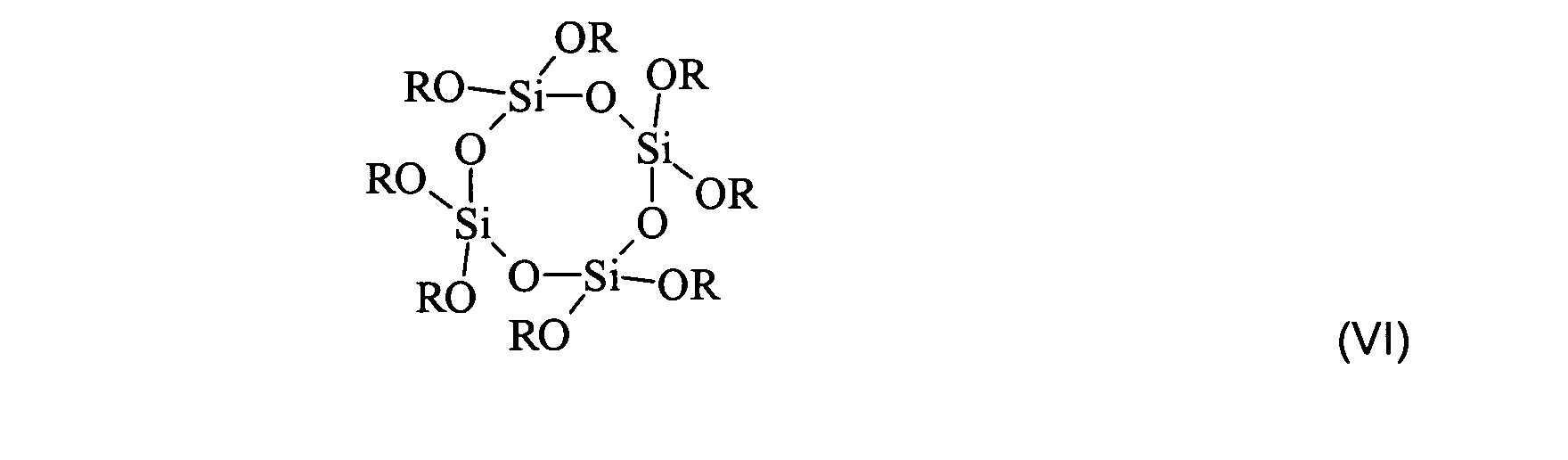


Oligokieselsäureester niederer Alkohole sind kommerziell erhältlich, wobei üblicherweise Methanol, Ethanol, n-Propanol, iso-Propanol, n-Butanol, iso-Butanol und tert.-Butanol zur Veresterung eingesetzt wurden. Möglich ist die Verwendung von Kieselsäureestermischungen, in denen ein Teil der Reste R ausgewählt ist aus der Gruppe Methyl, Ethyl, n-Propyl, iso-Propyl, n-Butyl, iso-Butyl und tert.-Butyl. Den Einbau des 2-Phenoxyethyl-Restes erzielt man durch Umesterung der Kieselsäureester niederer Alkohole mit 2-Phenoxyethanol.
Die Oligomerisierungsgrade "n" der erfindungsgemäß verwendeten Kieselsäureester liegen zwischen 2 und 20. In bevorzugt verwendeten Verbindungen nimmt n Werte zwischen 2 und 15, vorzugsweise zwischen 2 und 12 und insbesondere zwischen 3 und 10 unter besonderer Bevorzugung der Werte 4, 5, 6, 7 und 8, an.
Erfindungsgemäß werden die Kieselsäureester in Mengen von 0,001 bis 5 Gew.-%, bevorzugt 0,005 bis 3 Gew.-% und besonders bevorzugt 0,01 bis 2 Gew.-%, jeweils bezogen auf die gesamte kosmetische oder pharmazeutische Zusammensetzung, eingesetzt.
Besonders bevorzugt werden die Kieselsäureester in im wesentlichen wasserfreien Zusammensetzungen eingesetzt, die maximal 5 Gew.-%, bevorzugt maximal 1 Gew.-% Wasser enthalten.
Erfindungsgemäß werden die MAAs in Mengen von 0,001 bis 1 Gew.-%, bevorzugt 0,01 bis 0,5 Gew.-% und besonders bevorzugt 0,02 bis 0,5 Gew.-%, jeweils bezogen auf die gesamte kosmetische Zusammensetzung, eingesetzt.
MAA sind hydrolyseempfindlich, daher werden sie, ähnlich wie die erfindungsgemäß verwendeten Kieselsäureester, bevorzugt in wasserfreien Zusammensetzungen eingesetzt.
Erfindungsgemäß werden die quaternären Siliconverbindungen in Mengen von 0,1 bis 10 Gew.-%, bevorzugt 0,5 bis 5 Gew.-% und besonders bevorzugt 1,0 bis 5 Gew.-%, jeweils bezogen auf den Anteil des Handelsproduktes an der gesamten kosmetischen Zusammensetzung, eingesetzt.
Carbopole® von Goodrich oder Synthalene® von Sigma), Polyacrylamide, Polyvinylalkohol und Polyvinylpyrrolidon, Tenside wie beispielsweise ethoxylierte Fettsäureglyceride, Ester von Fettsäuren mit Polyolen wie beispielsweise Pentaerythrit oder Trimethylolpropan, Fettalkoholethoxylate mit eingeengter Homologen-verteilung oder Alkyloligoglucoside sowie Elektrolyte wie Kochsalz und Ammoniumchlorid.
Typische Beispiele für Fette sind Glyceride, als Wachse kommen u.a. Bienenwachs, Carnaubawachs, Candelillawachs, Montanwachs, Paraffinwachs oder Mikrowachse gegebenenfalls in Kombination mit hydrophilen Wachsen, z.B. Cetylstearylalkohol oder Partialglyceriden in Frage. Als Stabilisatoren können Metallsalze von Fettsäuren, wie z.B. Magnesium-, Aluminium- und/oder Zinkstearat bzw. -ricinoleat eingesetzt werden.
- 3-Benzylidencampher bzw. 3-Benzylidennorcampher und dessen Derivate, z.B. 3-(4-Methylben-zyliden)campher wie in der EP-B1 0693471 beschrieben;
- 4-Aminobenzoesäurederivate, vorzugsweise 4-(Dimethylamino)benzoesäure-2-ethylhexylester, 4-(Dimethylamino)benzoesäure-2-octylester und 4-(Dimethylamino)benzoesäureamylester;
- Ester der Zimtsäure, vorzugsweise 4-Methoxyzimtsäure-2-ethylhexylester, 4-Methoxyzimtsäure-propylester, 4-Methoxyzimtsäureisoamylester 2-Cyano-3,3-phenylzimtsäure-2-ethylhexylester (Oc-tocrylene);
- Ester der Salicylsäure, vorzugsweise Salicylsäure-2-ethylhexylester, Salicylsäure-4-isopropylben-zylester, Salicylsäurehomomenthylester;
- Derivate des Benzophenons, vorzugsweise 2-Hydroxy-4-methoxybenzophenon, 2-Hydroxy-4-meth-oxy-4'-methylbenzophenon, 2,2'-Dihydroxy-4-methoxybenzophenon;
- Ester der Benzalmalonsäure, vorzugsweise 4-Methoxybenzmalonsäuredi-2-ethylhexylester;
- Triazinderivate, wie z.B. 2,4,6-Trianilino-(p-carbo-2'-ethyl-1'-hexyloxy)-1,3,5-triazin und Octyl Tria-zon, wie in der EP-A1 0818450 beschrieben;
- Propan-1,3-dione, wie z.B. 1-(4-tert.Butylphenyl)-3-(4'methoxyphenyl)propan-1,3-dion;
- Ketotricyclo(5.2.1.0)decan-Derivate, wie in der EP-B1 0694521 beschrieben.
- 2-Phenylbenzimidazol-5-sulfonsäure und deren Alkali-, Erdalkali-, Ammonium-, Alkylammonium-, Alkanolammonium- und Glucammoniumsalze;
- Sulfonsäurederivate von Benzophenonen, vorzugsweise 2-Hydroxy-4-methoxybenzophenon-5-sul-fonsäure und ihre Salze;
- Sulfonsäurederivate des 3-Benzylidencamphers, wie z.B. 4-(2-Oxo-3-bornylidenmethyl)benzolsul-fonsäure und 2-Methyl-5-(2-oxo-3-bornyliden)sulfonsäure und deren Salze.
Neben den beiden vorgenannten Gruppen primärer Lichtschutzstoffe können auch sekundäre Licht-schutzmittel vom Typ der Antioxidantien eingesetzt werden, die die photochemische Reaktionskette unterbrechen, welche ausgelöst wird, wenn UV-Strahlung in die Haut eindringt. Typische Beispiele hierfür sind Aminosäuren (z.B. Glycin, Histidin, Tyrosin, Tryptophan) und deren Derivate, Imidazole (z.B. Urocaninsäure) und deren Derivate, Peptide wie D,L-Carnosin, D-Carnosin, L-Carnosin und deren Derivate (z.B. Anserin), Carotinoide, Carotine (z.B. α-Carotin, β-Carotin, Lycopin) und deren Derivate, Chlorogensäure und deren Derivate, Liponsäure und deren Derivate (z.B. Dihydroliponsäure), Auro-thioglucose, Propylthiouracil und andere Thiole (z.B. Thioredoxin, Glutathion, Cystein, Cystin, Cystamin und deren Glycosyl-, N-Acetyl-, Methyl-, Ethyl-, Propyl-, Amyl-, Butylund Lauryl-, Palmitoyl-, Oleyl-, γ-Linoleyl-, Cholesteryl- und Glycerylester ) sowie deren Salze, Dilaurylthiodipropionat, Distearyl-thiodipropionat, Thiodipropionsäure und deren Derivate (Ester, Ether, Peptide, Lipide, Nukleotide, Nuk-leoside und Salze) sowie Sulfoximinverbindungen (z.B. Buthioninsulfoximine, Homocysteinsulfoximin, Butioninsulfone, Penta-, Hexa-, Heptathioninsulfoximin) in sehr geringen verträglichen Dosierungen (z.B. pmol bis µmol/kg), ferner (Metall)-Chelatoren (z.B. α-Hydroxyfettsäuren, Palmitinsäure, Phy-tinsäure, Lactoferrin), α-Hydroxysäuren (z.B. Citronensäure, Milchsäure, Apfelsäure), Huminsäure, Gallensäure, Gallenextrakte, Bilirubin, Biliverdin, EDTA, EGTA und deren Derivate, ungesättigte Fett-säuren und deren Derivate (z.B. γ-Linolensäure, Linolsäure, Ölsäure), Folsäure und deren Derivate, Ubichinon und Ubichinol und deren Derivate, Vitamin C und Derivate (z.B. Ascorbylpalmitat, Mg-Ascorbylphosphat, Ascorbylacetat), Tocopherole und Derivate (z.B. Vitamin-Eacetat), Vitamin A und Derivate (Vitamin-A-palmitat) sowie Koniferylbenzoat des Benzoeharzes, Rutinsäure und deren Deri-vate, α-Glycosylrutin, Ferulasäure, Furfurylidenglucitol, Carnosin, Butylhydroxytoluol, Butylhydroxy-anisol, Nordihydroguajakharzsäure, Nordihydroguajaretsäure, Trihydroxybutyrophenon, Harnsäure und deren Derivate, Mannose und deren Derivate, Superoxid-Dismutase, Zink und dessen Derivate (z.B. ZnO, ZnSO4) Selen und dessen Derivate (z.B. Selen-Methionin), Stilbene und deren Derivate (z.B. Stilbenoxid, trans-Stilbenoxid) und die erfindungsgemäß geeigneten Derivate (Salze, Ester, Ether, Zucker, Nukleotide, Nukleoside, Peptide und Lipide) dieser genannten Wirkstoffe.
- Glycerin;
- Alkylenglycole, wie beispielsweise Ethylenglycol, Diethylenglycol, Propylenglycol, Butylenglycol, Hexylenglycol sowie Polyethylenglycole mit einem durchschnittlichen Molekulargewicht von 100 bis 1.000 Dalton;
- technische Oligoglyceringemische mit einem Eigenkondensationsgrad von 1,5 bis 10 wie etwa technische Diglyceringemische mit einem Diglyceringehalt von 40 bis 50 Gew.-%;
- Methyolverbindungen, wie insbesondere Trimethylolethan, Trimethylolpropan, Trimethylolbutan, Pentaerythrit und Dipentaerythrit;
- Niedrigalkylglucoside, insbesondere solche mit 1 bis 8 Kohlenstoffen im Alkylrest, wie beispiels-weise Methyl- und Butylglucosid;
- Zuckeralkohole mit 5 bis 12 Kohlenstoffatomen, wie beispielsweise Sorbit oder Mannit,
- Zucker mit 5 bis 12 Kohlenstoffatomen, wie beispielsweise Glucose oder Saccharose;
- Aminozucker, wie beispielsweise Glucamin.
| 1.1 | 1.2 | 1.3 | 1.4 | 1.5 | 1.6 | 1.7 | 1.8 | |
| MONOMULS® 60-35 C | 1,24 | 1,24 | 1,24 | 1,24 | 1,24 | 1,24 | 1,24 | 1,24 |
| EUMULGIN® B 1 | 2,76 | 2,76 | 2,76 | 2,76 | 2,76 | 2,76 | 2,76 | 2,76 |
| CETIOL® S | 9,0 | 9,0 | 9,0 | 9,0 | 9,0 | 9,0 | 9,0 | 9,0 |
| CETIOL® OE | 9,0 | 9,0 | 9,0 | 9,0 | 9,0 | 9,0 | 9,0 | 9,0 |
| DOW CORNING DC 345® | 2,0 | 2,0 | 2,0 | 2,0 | 2,0 | 2,0 | 2,0 | 2,0 |
| 2,5-DIHYDRO-5-METHOXY-2-FURANON | 2,0 | 2,0 | 2,0 | 2,0 | 2,0 | 2,0 | 2,0 | 2,0 |
| GLUADIN® WQ | 2,85 | 2,85 | 2,85 | 2,85 | 2,85 | 2,85 | 2,85 | 2,85 |
| PLANTACARE® 2000 UP | 1,00 | 1,00 | 1,00 | 1,00 | 1,00 | 1,00 | 1,00 | 1,00 |
| EMBLICA™ | 1,0 | - | - | - | - | - | - | - |
| OLEANOLINE™ DPG | - | 1,0 | - | - | - | - | - | - |
| ASCORBINSÄURE | - | - | 0,2 | - | - | - | - | - |
| POLYPLANT® ME | - | - | - | 0,7 | - | - | - | - |
| GRÜNER TEE EXTRAKT | - | - | - | - | 0,015 | - | - | - |
| YUZU-ÖL | - | - | - | - | - | 0,05 | - | - |
| KAFFEESÄURE | 0,02 | |||||||
| PHENYLETHYLALKOHOL | - | - | - | - | - | - | - | 1,0 |
| WASSER DEST. | AD 100 | AD 100 | AD 100 | AD 100 | AD 100 | AD 100 | AD 100 | AD 100 |
| Viskosität mPas < 100 |
| 2.1 | 2.2 | 2.3 | 2.4 | 2.5 | 2.6 | 2.7 | 2.8 | 2.9 | |
| DEHYQUART® F 75 | 0,7 | 0,7 | 0,7 | 0,7 | 0,7 | 0,7 | 0,7 | 0,7 | 0,7 |
| DEHYMULS® PGPH | 1,0 | 1,0 | 1,0 | 1,0 | 1,0 | 1,0 | 1,0 | 1,0 | 1,0 |
| LANETTE® O | 3,0 | 3,0 | 3,0 | 3,0 | 3,0 | 3,0 | 3,0 | 3,0 | 3,0 |
| EUTANOL® G | 0,2 | 0,2 | 0,2 | 0,2 | 0,2 | 0,2 | 0,2 | 0,2 | 0,2 |
| CETIOL® J 600 | 0,1 | 0,1 | 0,1 | 0,1 | 0,1 | 0,1 | 0,1 | 0,1 | 0,1 |
| PLANTACARE® 1200 UP | 2,5 | 2,5 | 2,5 | 2,5 | 2,5 | 2,5 | 2,5 | 2,5 | 2,5 |
| 4-HYDROXY-2,5-DIMETHYL-3(2H)-FURANON | 1,0 | 1,0 | 1,0 | 1,0 | 1,0 | 1,0 | 1,0 | 1,0 | 1,0 |
| GLUADIN® W 40 | 2,0 | 2,0 | 2,0 | 2,0 | 2,0 | 2,0 | 2,0 | 2,0 | 2,0 |
| PANTHENOL (50%) | 0,7 | 0,7 | 0,7 | 0,7 | 0,7 | 0,7 | 0,7 | 0,7 | 0,7 |
| ALPHA-HYDROXYLAURINSÄURE | 0,1 | - | - | - | - | - | - | - | - |
| LÄVULINSÄURE | - | 0,5 | - | - | - | - | - | - | - |
| ZINKLACTAT | - | - | 0,1 | - | - | - | - | - | - |
| ZINKGLUCONAT | - | - | - | 0,1 | - | - | - | - | - |
| ZINKPYRROLIDON-CARBONSÄURE | - | - | - | - | 0,05 | - | - | - | - |
| ZINKCOCOYLETHERSULFAT | - | - | - | - | - | 0,2 | - | - | - |
| ASCORBYLGLUCOSID | - | - | - | - | - | - | 1,0 | - | - |
| 2-ETHYLHEXYLGLYCERINETHER | - | - | - | - | - | - | - | 1,5 | - |
| CITRUS LIQUID EXTRACT | - | - | - | - | - | - | - | - | 0,2 |
| WASSER DEST. | AD 100 | AD 100 | AD 100 | AD 100 | AD 100 | AD 100 | AD 100 | AD 100 | AD 100 |
| PH - Wert 4 | |||||||||
| Viskosität (mPas) / Brookfield, RVF 23° C, Spindel 5, 10 Upm 6800 |
| 3.1 | 3.2 | 3.3 | 3.4 | 3.5 | 3.6 | 3.7 | |
| SEPIGEL® 305 | 3,0 | 3,0 | 3,0 | 3,0 | 3,0 | 3,0 | 3,0 |
| COMPERLAN® KD | 2,0 | 2,0 | 2,0 | 2,0 | 2,0 | 2,0 | 2,0 |
| DIHYDRO-3-HYDROXY-4,4-DIMETHYL-2(3H)-FURANON | 3,0 | 3,0 | 3,0 | 3,0 | 3,0 | 3,0 | 3,0 |
| PLANTACARE® 1200 UP | 0,5 | 0,5 | 0,5 | 0,5 | 0,5 | 0,5 | 0,5 |
| CETIOL® J 600 | 0,5 | 0,5 | 0,5 | 0,5 | 0,5 | 0,5 | 0,5 |
| COPHEROL® 1250 | 0,2 | 0,2 | 0,2 | 0,2 | 0,2 | 0,2 | 0,2 |
| GLUADIN® ALMOND | 3,0 | 3,0 | 3,0 | 3,0 | 3,0 | 3,0 | 3,0 |
| GLUADIN® WQ | 0,8 | 0,8 | 0,8 | 0,8 | 0,8 | 0,8 | 0,8 |
| ETHANOL | 10,0 | 10,0 | 10,0 | 10,0 | 10,0 | 10,0 | 10,0 |
| EUCAROL® AGE-EC | 1,0 | - | - | - | - | - | - |
| EUCAROL® AGE-ET | - | 0,2 | - | - | - | - | - |
| Aus MARINEN ORGANISMEN ISOLIERBARE MYCOSPORINÄHNLICHE AMINOSÄUREN (MAA) | - | - | 0,05 | - | - | - | - |
| ETIDRONSÄURE | - | - | - | 0,1 | - | - | - |
| ABIL® QUAT 3474 | - | - | - | - | 1,3 | - | - |
| FLAVONOID COMPLEX SC | - | - | - | - | - | 0,5 | - |
| ARP 100 | - | - | - | - | - | - | 1,0 |
| WASSER | AD 100 | AD 100 | AD 100 | AD 100 | AD 100 | AD 100 | AD 100 |
| PH - Wert 7 | |||||||
| Viskosität (mPas)/ Brookfield RVF, 23°C, Spindel 4, 10 6700 Upm |
| 4.1 | 4.2 | 4.3 | 4.4 | 4.5 | 4.6 | 4.7 | 4.8 | 4.9 | |
| DEHYQUART® C 4046 | 4,0 | 4,0 | 4,0 | 4,0 | 4,0 | 4,0 | 4,0 | 4,0 | 4,0 |
| CETIOL® SN | 1,0 | 1,0 | 1,0 | 1,0 | 1,0 | 1,0 | 1,0 | 1,0 | 1,0 |
| GLUADIN® ALMOND | 2,1 | 2,1 | 2,1 | 2,1 | 2,1 | 2,1 | 2,1 | 2,1 | 2,1 |
| DIHYDRO-3-HYDROXY-4,4-DIMETHYL-2(3H)-FURANON | 1,5 | 1,5 | 1,5 | 1,5 | 1,5 | 1,5 | 1,5 | 1,5 | 1,5 |
| PROTECTATE HR | 0,1 | - | - | - | - | - | - | - | - |
| EDERLINE AAPP1-L | - | 0,5 | - | - | - | - | - | - | - |
| EMBLICA | - | - | 0,1 | - | - | - | - | - | - |
| EUROL BT | - | - | - | 0,1 | - | - | - | - | - |
| LIPOCHROMAN-6 | - | - | - | - | 0,05 | - | - | - | - |
| HERBALIA® OLIVE, 12 GEW.-%, WÄSSRIGE LSG. | - | - | - | - | - | 0,2 | - | - | - |
| PANTROFINA PC | - | - | - | - | - | - | 1,0 | - | - |
| ROSMARINEXTRAKT 8%NC | - | - | - | - | - | - | - | 1,5 | - |
| SEPIVINOL R | - | - | - | - | - | - | - | - | 0,2 |
| WASSER DEST. | AD 100 | AD 100 | AD 100 | AD 100 | AD 100 | AD 100 | AD 100 | AD 100 | AD 100 |
| pH - Wert 3,5 | |||||||||
| Viskosität (mPas)/ Brookfield RVF, 23°C, Spindel 4, 10 Upm 4000 |
| 5.1 | 5.2 | 5.3 | 5.4 | 5.5 | 5.6 | 5.7 | 5.8 | |
| DEHYQUART® L 80 | 0,9 | 0,9 | 0,9 | 0,9 | 0,9 | 0,9 | 0,9 | 0,9 |
| LANETTE® O | 3,5 | 3,5 | 3,5 | 3,5 | 3,5 | 3,5 | 3,5 | 3,5 |
| MONOMULS® 60-35 C | 1,0 | 1,0 | 1,0 | 1,0 | 1,0 | 1,0 | 1,0 | 1,0 |
| EUMULGIN® B 2 | 0,8 | 0,8 | 0,8 | 0,8 | 0,8 | 0,8 | 0,8 | 0,8 |
| COSMEDIA® GUAR C 261 | 0,3 | 0,3 | 0,3 | 0,3 | 0,3 | 0,3 | 0,3 | 0,3 |
| TETRAHYDRO-5-OXO-2-FURAN-CARBONSÄURE, NA-SALZ | 2,0 | 2,0 | 2,0 | 2,0 | 2,0 | 2,0 | 2,0 | 2,0 |
| EMBLICA™ | 1,0 | - | - | - | - | - | - | - |
| OLEANOLINE™ DPG | - | 1,0 | - | - | - | - | - | - |
| ASCORBINSÄURE | - | - | 0,2 | - | - | - | - | - |
| POLYPLANT® ME | - | - | - | 0,7 | - | - | - | - |
| GRÜNER TEE EXTRAKT | - | - | - | - | 0,015 | - | - | - |
| YUZU-ÖL | - | - | - | - | - | 0,05 | - | - |
| KAFFEESÄURE | 0,02 | |||||||
| PHENYLETHYL-ALKOHOL | - | - | - | - | - | - | - | 1,0 |
| WASSER DEST. | ad 100 | Ad 100 | ad 100 | ad 100 | ad 100 | ad 100 | ad 100 | Ad 100 |
| pH ― Wert 3,5 |
| 6.1 | 6.2 | 6.3 | 6.4 | 6.5 | |
| DEHYQUART® F 75 | 3,0 | 3,0 | 3,0 | 3,0 | 3,0 |
| LANETTE® O | 4,0 | 4,0 | 4,0 | 4,0 | 4,0 |
| CUTINA® GMS ( | 1,0 | 1,0 | 1,0 | 1,0 | 1,0 |
| EUMULGIN® B 2 | 1,5 | 1,5 | 1,5 | 1,5 | 1,5 |
| 4-HYDROXY-2,5-DIMETHYL3(2H)-FURANON | 2,0 | 2,0 | 2,0 | 2,0 | 2,0 |
| NUTRILAN® KERATIN W | 5,0 | 5,0 | 5,0 | 5,0 | 5,0 |
| PANTHENOL | 0.8 | 0.8 | 0.8 | 0.8 | 0.8 |
| ALOE VERA GEL | 2,0 | 2,0 | 2,0 | 2,0 | 2,0 |
| Ederline AAPP1-L | 0,01 | - | - | - | - |
| Eurol BT | - | 2,0 | - | - | - |
| Sepivinol R | - | - | 0,4 | - | - |
| Rosmarinextrakt 8% NC | 0,7 | - | |||
| Lipochroman-6 | - | - | - | - | 0,015 |
| Wasser | ad 100 | ad 100 | ad 100 | ad 100 | ad 100 |
| pH ― Wert 3 - 4 |
| 7.1 | 7.2 | 7.3 | 7.4 | 7.5 | 7.6 | 7.7 | |
| DEHYQUART® L 80 | 2,5 | 2,5 | 2,5 | 2,5 | 2,5 | 2,5 | 2,5 |
| CUTINA® GMS | 0,5 | 0,5 | 0,5 | 0,5 | 0,5 | 0,5 | 0,5 |
| LANETTE® O | 4,0 | 4,0 | 4,0 | 4,0 | 4,0 | 4,0 | 4,0 |
| HYDAGEN® HSP | 0,5 | 0,5 | 0,5 | 0,5 | 0,5 | 0,5 | 0,5 |
| DIHYDRO-3-HYDROXY-4,4-DIMETHYL-2(3H)-FURANON | 3,0 | 3,0 | 3,0 | 3,0 | 3,0 | 3,0 | 3,0 |
| LAMESOFT® PO 65 | 2,5 | 2,5 | 2,5 | 2,5 | 2,5 | 2,5 | 2,5 |
| EUCAROL® AGE-EC | 1,0 | - | - | - | - | - | - |
| EUCAROL® AGE-ET | - | 0,2 | - | - | - | - | - |
| A US MARINEN ORGANISMEN ISOLIERBARE MYCOSPORINÄHNLICHE AMINOSÄUREN (MAA) | - | - | 0,05 | - | - | - | - |
| ETIDRONSÄURE | - | - | - | 0,1 | - | - | - |
| ABIL® QUAT 3474 | - | - | - | - | 1,3 | - | - |
| FLAVONOID COMPLEX SC | - | - | - | - | - | 0,5 | - |
| ARP 100 | - | - | - | - | - | - | 1,0 |
| WASSER | AD 100 | AD 100 | AD 100 | AD 100 | AD 100 | AD 100 | AD 100 |
| PH - Wert 3,5 | |||||||
| Viskosität (mPas), Brook.RVF, 23° C, Spindel 4, 10 4400 | |||||||
| Upm |
| 8.1 | 8.2 | 8.3 | 8.4 | 8.5 | 8.6 | 8.7 | 8.8 | |
| HYDAGEN® HCMF | 0,4 | 0,4 | 0,4 | 0,4 | 0,4 | 0,4 | 0,4 | 0,4 |
| GLYKOLSÄURE | 0,2 | 0,2 | 0,2 | 0,2 | 0,2 | 0,2 | 0,2 | 0,2 |
| GLYCERIN 86% | 55,0 | 55,0 | 55,0 | 55,0 | 55,0 | 55,0 | 55,0 | 55,0 |
| TYLOSE® H 100.000 YP | 0,4 | 0,4 | 0,4 | 0,4 | 0,4 | 0,4 | 0,4 | 0,4 |
| R-(-)-2-HYDROXY-3,3-DIMETHYL-γ-BUTYROLACTON | 3,0 | 3,0 | 3,0 | 3,0 | 3,0 | 3,0 | 3,0 | 3,0 |
| GLUADIN® R | 4,0 | 4,0 | 4,0 | 4,0 | 4,0 | 4,0 | 4,0 | 4,0 |
| PANTHENOL 50% | 1,0 | 1,0 | 1,0 | 1,0 | 1,0 | 1,0 | 1,0 | 1,0 |
| ETHANOL | 10,0 | 10,0 | 10,0 | 10,0 | 10,0 | 10,0 | 10,0 | 10,0 |
| ALUMINIUMCHLORO HYDRAT | - | - | 1,0 | - | - | - | - | - |
| WILLOWHERB EXTRACT | 1,0 | - | - | - | - | - | - | - |
| MEERESALGENEXTR AKT | - | 0,6 | - | - | - | - | - | - |
| SEPIVINOL R | - | - | - | 1,0 | - | - | - | - |
| LIPOCHROMAN-6 | - | - | - | - | 1,2 | - | - | - |
| PANTROFINA PC | - | - | - | - | - | 1,7 | - | - |
| ROSMARINSÄURE | - | - | - | - | - | - | 0,01 | - |
| EDERLINE AAPP1-H | - | - | - | - | - | - | - | 1,0 |
| WASSER | AD 100 | AD 100 | AD 100 | AD 100 | AD 100 | AD 100 | AD 100 | AD 100 |
| PH ― Wert 4,5 |
| 9.1 | 9.2 | 9.3 | 9.4 | 9.5 | 9.6 | 9.7 | 9.8 | 9.9 | |
| DEHYQUART® L 80 | 2,0 | 2,0 | 2,0 | 2,0 | 2,0 | 2,0 | 2,0 | 2,0 | 2,0 |
| LAMESOFT® PO 65 | 2,0 | 2,0 | 2,0 | 2,0 | 2,0 | 2,0 | 2,0 | 2,0 | 2,0 |
| TETRAHYDRO-5-OXO-2-FURANCARBONSÄURE,K-SALZ | 2,0 | 2,0 | 2,0 | 2,0 | 2,0 | 2,0 | 2,0 | 2,0 | 2,0 |
| FIXOLIDE® NP | 0,01 | - | - | - | - | - | - | - | - |
| NATRIUMLAUROYLGLUTAMAT | - | 2,0 | - | - | - | - | - | - | - |
| SALICYLSÄURE | - | - | 0,4 | - | - | - | - | - | - |
| CRODAFOS® SG | 0,7 | - | - | - | - | - | |||
| MATE-TEE-EXTRAKT (DRAGOCO) | - | - | - | - | 0,01 5 | - | - | - | - |
| TINOGARD™ TT DD | - | - | - | - | - | 0,1 | - | - | 0,1 |
| PHENOXYETHANOL | - | - | - | - | - | - | 0,5 | - | 0,5 |
| PHENOXYETHANOLKIESEL-SÄUREESTER | - | - | - | - | - | - | - | 0,05 | 0,05 |
| WASSER | AD 100 | AD 100 | AD 100 | AD 100 | AD 100 | AD 100 | AD 100 | AD 100 | AD 100 |
| 10.1 | 10.2 | 10.3 | 10.4 | 10.5 | 10.6 | |
| HYDAGEN® HCMF | 1,0 | 1,0 | 1,0 | 1,0 | 1,0 | 1,0 |
| GLYKOLSÄURE | 0,4 | 0,4 | 0,4 | 0,4 | 0,4 | 0,4 |
| 2,5-DIHYDRO-5-METHOXY-2-FURANON | 0,5 | 0,5 | 0,5 | 0,5 | 0,5 | 0,5 |
| PLANTACARE® 1200 U P | 0,2 | 0,2 | 0,2 | 0,2 | 0,2 | 0,2 |
| GLUADIN® WQ | 1,0 | 1,0 | 1,0 | 1,0 | 1,0 | 1,0 |
| ETHANOL | 40,0 | 40,0 | 40,0 | 40,0 | 40,0 | 40,0 |
| EUROL BT | 1,0 | - | - | - | - | - |
| PANTROFINA PC | - | 0,2 | - | - | - | - |
| LIPOCHROMAN-6 | - | - | 0,05 | - | - | - |
| SEPIVINOL R | - | - | - | 0,1 | - | - |
| EDERLINE AAPP1-H | - | - | - | - | 0,5 | - |
| EDERLINE AAPP1-L | - | - | - | - | - | 1,0 |
| WASSER | AD 100 | AD 100 | AD 100 | AD 100 | AD 100 | AD 100 |
| pH Wert 4,0 |
| 11.1 | 11.2 | 11.3 | 11.4 | 11.5 | 11.6 | 11.7 | |
| HYDAGEN® HCMF | 0,4 | 0,4 | 0,4 | 0,4 | 0,4 | 0,4 | 0,4 |
| GLYKOLSÄURE | 0,2 | 0,2 | 0,2 | 0,2 | 0,2 | 0,2 | 0,2 |
| DEHYQUART® A | 1,0 | 1,0 | 1,0 | 1,0 | 1,0 | 1,0 | 1,0 |
| GLUADIN® W 40 | 2,0 | 2,0 | 2,0 | 2,0 | 2,0 | 2,0 | 2,0 |
| EDERLINE AAPP1-H | 1,0 | - | - | - | - | - | - |
| HERBALIA® OLIVE, 12 GEW.-%, WÄSSRIGE LSG. | - | 0,2 | - | - | - | - | - |
| LIPOCHROMAN-6 | - | - | 0,7 | - | - | - | - |
| EDERLINE AAPP1-L | - | - | - | 0,015 | - | - | - |
| SEPIVINOL R | - | - | - | - | 0,05 | - | - |
| PANTROFINA PC | 0,02 | ||||||
| EUROL BT | - | - | - | - | - | - | 1,0 |
| WASSER DEST. | AD 100 | AD 100 | AD 100 | AD 100 | AD 100 | AD 100 | AD 100 |
| 12.1 | 12.2 | 12.3 | 12.4 | 12.5 | 12.6 | 12.7 | 12.8 | 12.9 | |
| TEXAPON® N 70 | 12, 0 | 12, 0 | 12, 0 | 12, 0 | 12, 0 | 12, 0 | 12, 0 | 12, 0 | 12, 0 |
| DEHYTON® PK 45 | 2,5 | 2,5 | 2,5 | 2,5 | 2,5 | 2,5 | 2,5 | 2,5 | 2,5 |
| PLANTACARE® 818 UP | 3,0 | 3,0 | 3,0 | 3,0 | 3,0 | 3,0 | 3,0 | 3,0 | 3,0 |
| LAMESOFT® PO 65 | 3,0 | 3,0 | 3,0 | 3,0 | 3,0 | 3,0 | 3,0 | 3,0 | 3,0 |
| COSMEDIA® GUAR C 261 N | 0,3 | 0,3 | 0,3 | 0,3 | 0,3 | 0,3 | 0,3 | 0,3 | 0,3 |
| EUPERLAN® PK 1200 | 5,0 | 5,0 | 5,0 | 5,0 | 5,0 | 5,0 | 5,0 | 5,0 | 5,0 |
| NATRIUMCHLORID | 1,2 | 1,2 | 1,2 | 1,2 | 1,2 | 1,2 | 1,2 | 1,2 | 1,2 |
| D,L-4-HYDROXYMETHYL-γ-BUTYROLACTON | 0,3 | 0,3 | 0,3 | 0,3 | 0,3 | 0,3 | 0,3 | 0,3 | 0,3 |
| EUXYL® K 400 | 0,1 | 0,1 | 0,1 | 0,1 | 0,1 | 0,1 | 0,1 | 0,1 | 0,1 |
| ALPHA-HYDROXY-LAURINSÄURE | 0,1 | - | - | - | - | - | - | - | - |
| LÄVULINSÄURE | - | 0,5 | - | - | - | - | - | - | - |
| ZINKLACTAT | - | - | 0,1 | - | - | - | - | - | - |
| ZINKGLUCONAT | - | - | - | 0,1 | - | - | - | - | - |
| ZINKPYRROLIDON-CARBONSÄURE | - | - | - | - | 0,05 | - | - | - | - |
| ZINKCOCOYLETHER-SULFAT | - | - | - | - | - | 0,2 | - | - | - |
| ASCORBYLGLUCOSID | - | - | - | - | - | - | 1,0 | - | - |
| 2-ETHYLHEXYL-GLYCERINETHER | - | - | - | - | - | - | - | 1,5 | - |
| CITRUS LIQUID EXTRACT | - | - | - | - | - | - | - | - | 0,2 |
| WASSER DEST. | AD 100 | AD 100 | AD 100 | AD 100 | AD 100 | AD 100 | AD 100 | AD 100 | AD 100 |
| PH ― Wert 5,5 | |||||||||
| Viskosität (mPas), Brookfield RFT, 23°C, Sp.4, 10 Upm 6300 |
| 13.1 | 13.2 | 13.3 | 13.4 | 13.5 | 13.6 | 13.7 | 13.8 | |
| TEXAPON® N 70 | 10,0 | 10,0 | 10,0 | 10,0 | 10,0 | 10,0 | 10,0 | 10,0 |
| PLANTACARE® 818 UP | 4,0 | 4,0 | 4,0 | 4,0 | 4,0 | 4,0 | 4,0 | 4,0 |
| DEHYTON® K | 5,0 | 5,0 | 5,0 | 5,0 | 5,0 | 5,0 | 5,0 | 5,0 |
| LAMESOFT® PO 65 | 1,5 | 1,5 | 1,5 | 1,5 | 1,5 | 1,5 | 1,5 | 1,5 |
| EUPERLAN® PK 3000 AM | 3,2 | 3,2 | 3,2 | 3,2 | 3,2 | 3,2 | 3,2 | 3,2 |
| DIHYDRO-3-HYDROXY-4,4-DIMETHYL-2(3H)-FURANON | 1,5 | 1,5 | 1,5 | 1,5 | 1,5 | 1,5 | 1,5 | 1,5 |
| POLYMER JR® 400 | 0,3 | 0,3 | 0,3 | 0,3 | 0,3 | 0,3 | 0,3 | 0,3 |
| NATRIUMCHLORID | 1,5 | 1,5 | 1,5 | 1,5 | 1,5 | 1,5 | 1,5 | 1,5 |
| EMBLICA™ | 1,0 | - | - | - | - | - | - | - |
| OLEANOLINE™ DPG | - | 1,0 | - | - | - | - | - | - |
| ASCORBINSÄURE | - | - | 0,2 | - | - | - | - | - |
| POLYPLANT® ME | - | - | - | 0,7 | - | - | - | - |
| GRÜNER TEE EXTRAKT | - | - | - | - | 0,015 | - | - | - |
| YUZU-ÖL | - | - | - | - | - | 0,05 | - | - |
| KAFFEESÄURE | 0,02 | |||||||
| PHENYLETHYLALKOHOL | - | - | - | - | - | - | - | 1,0 |
| WASSER DEST. | AD 100 | AD 100 | AD 100 | AD 100 | AD 100 | AD 100 | AD 100 | AD 100 |
| PH - Wert 5,5 | ||||||||
| Viskosität (mPas), Brookfield RVF, 23°C, Spindel 4, 10 8500 | ||||||||
| Upm |
| 14.1 | 14.2 | 14.3 | 14.4 | 14.5 | 14.6 | 14.7 | 14.8 | 14.9 | |
| POLYMER® JR 400 | 0,4 | 0,4 | 0,4 | 0,4 | 0,4 | 0,4 | 0,4 | 0,4 | 0,4 |
| TEXAPON® K 14 S SPECIAL 70% | 11,0 | 11,0 | 11,0 | 11,0 | 11,0 | 11,0 | 11,0 | 11,0 | 11,0 |
| DEHYTON® PK 45 | 5,0 | 5,0 | 5,0 | 5,0 | 5,0 | 5,0 | 5,0 | 5,0 | 5,0 |
| PLANTACARE® 818 UP | 5,0 | 5,0 | 5,0 | 5,0 | 5,0 | 5,0 | 5,0 | 5,0 | 5,0 |
| LAMESOFT® PO 65 | 5,0 | 5,0 | 5,0 | 5,0 | 5,0 | 5,0 | 5,0 | 5,0 | 5,0 |
| EUXYL® K 400 | 0,1 | 0,1 | 0,1 | 0,1 | 0,1 | 0,1 | 0,1 | 0,1 | 0,1 |
| NATRIUMCHLORID | 1,8 | 1,8 | 1,8 | 1,8 | 1,8 | 1,8 | 1,8 | 1,8 | 1,8 |
| FIXOLIDE® NP | 0,01 | - | - | - | - | - | - | - | - |
| NATRIUMLAUROYLGLUTA MAT | - | 2,0 | - | - | - | - | - | - | - |
| SALICYLSÄURE | - | - | 0,4 | - | - | - | - | - | - |
| CRODAFOS® SG | 0,7 | - | - | - | - | - | |||
| MATE-TEE-EXTRAKT | - | - | - | - | 0,01 5 | - | - | - | - |
| TINOGARD™ TT DD | - | - | - | - | - | 0,1 | - | - | 0,1 |
| PHENOXYETHANOL | - | - | - | - | - | - | 0,5 | - | 0,5 |
| PHENOXYETHANOLKIESE LSÄUREESTER | - | - | - | - | - | - | - | 0,05 | 0,05 |
| WASSER | AD 100 | AD 100 | AD 100 | AD 100 | AD 100 | AD 100 | AD 100 | AD 100 | AD 100 |
| PH - Wert 5,5 | |||||||||
| Viskosität (mPas), Brookfield RVF, 23°C, Spindel 4, 10 3900 | |||||||||
| Upm |
| 15.1 | 15.2 | 15.3 | 15.4 | 15.5 | 15.5 | |
| TEXAPON® NSO | 29,0 | 29,0 | 29,0 | 29,0 | 29,0 | 29,0 |
| PLANTACARE® 818 UP | 5,0 | 5,0 | 5,0 | 5,0 | 5,0 | 5,0 |
| TEXAPON® SB 3 KC | 3,8 | 3,8 | 3,8 | 3,8 | 3,8 | 3,8 |
| HYDAGEN® HSP | 0,5 | 0,5 | 0,5 | 0,5 | 0,5 | 0,5 |
| EUPERLAN® PK 3000 AM | 3,0 | 3,0 | 3,0 | 3,0 | 3,0 | 3,0 |
| NATRIUMCHLORID | 2,0 | 2,0 | 2,0 | 2,0 | 2,0 | 2,0 |
| ALUMINIUMCHLOROHYDRAT | 0,6 | |||||
| EDERLINE AAPP1-L | 0,01 | - | - | - | - | |
| EUROL BT | - | - | 2,0 | - | - | - |
| SEPIVINOL R | - | - | - | 0,4 | - | - |
| ROSMARINEXTRAKT 8% NC | 0,7 | - | ||||
| LIPOCHROMAN-6 | - | - | - | - | - | 0,015 |
| WASSER | AD 100 | AD 100 | AD 100 | AD 100 | AD 100 | AD 100 |
| PH - Wert 5,5 | ||||||
| Viskosität (mPas), Brook.RVF, 23° C, Spindel 4, 10 4100 | ||||||
| Upm |
| Liste der eingesetzten Rohstoffe | ||
| DC® 245 | Cyclopentasiloxan | Dow Corning |
| Citrus Liquid Extract | Citrusfruchtsamenextrakt in Glycerin im Verhältnis 1:1 | Centroflora, Brazil |
| Crodafos® SG | PPG-5-Ceteth-10 Phosphate | Croda Oleochemicals |
| Sensiva® SC 50 | 2-Ethylhexylglycerinether | Schülke & Mayr |
| Polyplant® ME | Melissenextrakt | Polygon |
| Grüner Tee Extrakt | Pulverförmig | Dragoco |
| Mate / Mate-Tee-Extrakt | Pulverförmig | Dragoco |
| Yuzu-Öl | Takasago | |
| Eucarol® AGE-EC | Disodium Cocopolyglucose Citrate | Cesalpinia Chemicals |
| Eucarol® AGE-ET | Sodium Alkylpolyglucose Tartrate | Cesalpinia Chemicals |
| Flavonoid Complex SC | Water, Butylene Glycol, Gingko Biloba Leaf Extract, Phenoxyethanol, Methyl Paraben, Ethyl Paraben, Propyl Paraben, Butyl Paraben, Isobutyl Paraben, ca. 2 % Flavonoid-Gehalt | Cosmetochem |
| ARP 100 | Extrakt aus den Beeren von Saw Palmetto | Greentech/Rahn |
| Abil® Quat 3474 | Quaternium-80 | Th. Goldschmidt |
| Fixolide® NP | 7-Acetyl-1,1,3,4,4,6-hexamethyltetralin | Givaudan |
| Emblica™ | Extrakt aus den Beeren von Phyllanthus emblica, | Merck KgaA |
| Oleanoline™ DPG | Extrakt aus Olivenbaumblättern in Dipropylenglycol | Impag Seporga |
| Cibafast™ H | Sodium Benzotriazolyl Butylphenol Sulfonate, Buteth-3, Tributyl Citrate | Ciba |
| Tinogard™ TT DD | Tetradibutyl Pentaerithrityl Hydroxyhydrocinnamate | Ciba |
| Eurol BT | Olive Leaf Extract, Water | B & T Srl, Milan |
| Lipochroman-6 | Dimethylmethoxy Chromanol | Merck KGaA |
| Oleanoline | Extrakt aus Olivenbaumblättern in Dipropylenglycol | Cognis |
| Herbalia® Olive | Olea Europea (Olive) Leaf Extract (and) Maltodextrin (and) Srlica | Cognis |
| Pantrofina OC | Extrakt aus Pinienrinde (Pinus Pinaster) | Res Pharma Srl, Milan |
| Protectate HR | Riechstoffgemisch | Symrise (vormals Haarmann & Reimer) |
| Sepivinol R | Rotwein-Extrakt | Seppic |
| Weidenröschen-Extrakt | Willowherb Extract | Symrise (Dragoco) |
| Rosmarinextrakt 8% NC | Rosmarinextrakt wasserlöslich Pulver mit Standardmenge an 5% Rosmarinsäure, 3% Apigenin-7-glycosid | Dr. Marcus |
| MONOMULS® 60-35 C | Hydrierte Palm Glyceride | Cognis |
| EUMULGIN® B 1 | Polyoxyethylen-12-Cetylstearylalkohol | Cognis |
| CETIOL® S | Kohlenwasserstoff | Cognis |
| CETIOL® OE | Di-n-octyl Ether | Cognis |
| Dow Corning DC 345®, | Dow Corning | |
| GLUADIN® WQ | Kationisiertes Weizenproteinhydrolysat (ca. 31%) | Cognis |
| DEHYQUART® F 75 | Mischung aus Esterquat und Fettalkohol | Cognis |
| DEHYMULS® PGPH | Polyglycerinpoly-12-hydroxystearat | Cognis |
| LANETTE® O | Cetylstearylalkohol | Cognis |
| EUTANOL® G | 2-Octyldodecanol (Guerbet-Alkohol) | Cognis |
| CETIOL® J 600 | Flüssiger Wachsester | Cognis |
| PLANTACARE® 1200 UP | C 12 - C 16 Fettalkoholglycosid (ca. 50%) | Cognis |
| Sepigel® 305 | Polyacrylamide (and) C13-14 Isoparaffin (and) Laureth-7 | Seppic |
| COMPERLAN® KD | Kokosfettsäurediethanol-amid | Cognis |
| Dihydro-3-hydroxy-4,4-dimethyl-2(3H)-furanon | Aldrich | |
| PLANTACARE® 1200 UP | C 12 - C 16 Fettalkoholglycosid (ca. 50%) | Cognis |
| COPHEROL® 1250 | RRR-(α)-Tocopherylacetat | Cognis |
| DEHYQUART® C 4046 | Cetearyl Alcohol (and) Dipalmitoylethyl Hydroxyethylmonium Methosulfate (and) Ceteareth20 | Cognis |
| Dehyquart® L 80 | Mischung aus Esterquat und Propyleneglykol (ca. 75%) Dicocoylethyl Hydroxyethylmonium Methosulfate (and) Propylene Glycol | Cognis |
| EUMULGIN® B 2 | Polyoxyethylen-20-Cetylstearylalkohol | Cognis |
| COSMEDIA® GUAR C 261 | Guarhydroxypropyl-trimethyl-ammonium Chlorid | Cognis |
| NUTRILAN® KERATIN W | Partialhydrolysat aus Keratin (ca. 20%) | Cognis |
| CUTINA® GMS | Glycerinmonostearat | Cognis |
| HYDAGEN® HSP | Trimethylolpropane-Hydroxymethylstearate-Ether | Cognis |
| HYDAGEN® HCMF | Chitosan Pulver | Cognis |
| DEHYQUART® L 80 | Dicocoylethyl Hydroxyethylmonium Methosulfate (and) Propylene Glycol (ca. 75%) | Cognis |
| GLYKOLSÄURE | MERCK | |
| TYLOSE® H 100.000 YP | HOECHST | |
| R-(-)-2-HYDROXY-3,3-DIMETHYL-γ-BUTYROLACTON | ALDRICH | |
| GLUADIN® R | Partialhydrolysat aus Reis (ca. 27%) | Cognis |
| CETIOL® SN | Ester einer verzweigten Fettsäure mit gesättigten Fettalkoholen C 16 - C 18, Cetearyl Isononanoate | Cognis |
| CUTINA® MD | Gemisch aus Mono- und Diglyceriden der Palmitin- und Stearinsäure | Cognis |
| EUMULGIN® B 1 | Polyoxyethylen-12-Cetylstearylalkohol | Cognis |
| CETIOL® V | Ölsäuredecylester | Cognis |
| D,L-4-Hydroxymethyl-γ-butyrolacton | Merck | |
| DEHYTON® PK 45 | Fettsäure-amid- Derivat mit Betain-struktur (ca. 45%) | Cognis |
| EUPERLAN® PK 1200 | Coco-Glucoside (and) Glycol Distearate (and) Glycerin | Cognis |
| EUPERLAN® PK 3000 AM | Glycol Distearate (and) Laureth 4 (and) Cocamidopropyl Betaine | Cognis |
| D,L-4-Hydroxymethyl-γ-butyrolacton | Merck | |
| Euxyl® K 400 | 1,2-Dibromcyanobutan und 2-Phenoxyethanol | Schülke & Mayr |
| TEXAPON® N 70 | Natriumlaurylethersulfat mit 2 Mol EO (ca. 70%) | Cognis |
| DEHYTON® K | Fettsäure-amid- Derivat mit Betain-struktur (ca. 30%) | Cognis |
| Dihydro-3-hydroxy-4,4-dimethyl-2(3H)-furanon | Aldrich | |
| Polymer JR® 400 | Polyquaternium 10 | Amerchol |
| TEXAPON® K 14 S Special 70% | Natriumlaurylmyristylethersulfat (ca. 70%) | Cognis |
| PLANTACARE® 818 UP | C 8 - C 16 Fettalkohol-glycosid (ca. 50%) | Cognis |
| DEHYQUART® A | Cetyltrimethylammonium-chlorid (ca. 25%) | Cognis |
| GLUADIN® W 40 | Partialhydrolysat aus Weizen (ca. 40%) | Cognis |
| TEXAPON® SB 3 KC | Sulfobernsteinsäurehalb-ester auf Basis eines Alkylpolyglycolethers, Di-Na-Salz (ca. 40%) | Cognis |
Die Reaktionslösungen von 1000 µl, die auf eine Reaktionstemperatur von 37°C temperiert wurden, enthielten 187 mM Tris/HCl (pH 7,1), 8 mM pNPS und eine Startkonzentration von 0,05 U/ml Arylsulfatase. Die Einheit U der Enzymaktivität wurde so definiert, dass 1 U Sulfatase 1,0 µmol pNPS pro Minute bei pH 7,1 und 37°C hydrolysiert.
Die Testdurchführung ist auch offenbart bei H.R. Fowler und D. H. Rammler, Biochemistry 3, 230, 1964.
Die Reaktion wurde durch Zugabe des Enzyms gestartet und der Anstieg der Absorption bei λ = 420 nm über 5 Minuten verfolgt. Der lineare Anstieg der Absorption (A) pro Zeiteinheit (t) ist hierbei ein Maß für die Aktivität des Enzyms (ΔA/Δt). Die Aktivität des Enzyms in Abwesenheit eines Inhibitors, (ΔA1/Δt1 ), wurde als Referenz gleich 100% gesetzt. Unter analogen Bedingungen wurden die Aktivitäten in Gegenwart eines Inhibitors (ΔA2/Δt2) bestimmt. Die Hemmwirkung des Inhibitors bzw. die Minderung der Enzymaktivität wurde dann berechnet gemäß der Formel 100% - (ΔA2/Δt2 )/( ΔA1/Δt1 )%.
| Aluminiumchlorohydrat (ACH) als Inhibitor im Arylsulfatase-Enzymtest | |
| ACH-Lösung Locron® L (v/v) | Hemmwirkung |
| 0% | 0% |
| 0,01 % | Keine Hemmung meßbar |
| 0,1 % | 6 % |
| 0,5 % | 27 % |
| 1 % | 52 % |
| Verschiedene Wirkstoffe als Inhibitor im Arylsulfatase-Enzymtest | |
| Rohstoff | Konzentration mit einer inhibierenden Wirkung von 50 % [Gew.-% Rohstoff tel quel in wässriger Lösung] |
| Ederline AAPP1-H | 1,0 |
| Ederline AAPP1-L | 0,4 |
| Emblica | 0,025 |
| Eurol BT | 0,05 |
| Lipochroman-6 | 0,1 |
| Herbalia® Olive | 0,04 |
| Pantrofina PC | 0,4 |
| Rosmarinextrakt 8%NC | 0,005 |
| Sepivinol | 0,0025 |
Claims (29)
- Verwendung von mindestens einer Steroidsulfatase-inhibierenden Substanz, ausgewählt aus funktionellen C2-C12-Carbonsäuren und deren physiologisch verträglichen Metallsalzen, Derivaten von C3-C9-Polyolen, Phenolderivaten, Pflanzenextrakten, Riechstoffen, Flavonoiden, Isoflavonoiden, 6,7-disubstituierten 2,2-Dialkylchromanen oder -chromenen, Aluminiumchlorohydrat, 2-Phenylethanol, Etidronsäure, 7-Acetyl-1,1,3,4,4,6-hexamethyltetralin, Tropolonderivaten, Estern der Schwefelsäure mit alkoxylierten C8-C18-Fettalkoholen und deren physiologisch verträglichen Metallsalzen, Estern der Phosphorsäure und der Triphosphorsäure mit ein- bis sechswertigen Hydroxyverbindungen, Kieselsäureestern, aus marinen Organismen isolierbaren mycosporin-ähnlichen Aminosäuren (MAA) sowie quaternären Siliconverbindungen in einer kosmetischen oder pharmazeutischen-Zusammensetzung zur Verminderung von Haarausfall.
- Verwendung gemäß Anspruch 1, dadurch gekennzeichnet, dass die funktionellen C2-C12-Carbonsäuren ausgewählt sind aus C2-C12-Hydroxycarbonsäuren, C3-C12-Ketocarbonsäuren, C2-C5-Aminosäuren und deren N-C2-C12-Acylderivaten sowie den physiologisch verträglichen Metallsalzen dieser Säuren.
- Verwendung gemäß einem der vorhergehenden Ansprüche, dadurch gekennzeichnet, dass die physiologisch verträglichen Metallsalze ausgewählt sind aus den Alkalimetall-, Magnesium-, Calcium-, Aluminium-, Zink- und Mangan-Salzen.
- Verwendung gemäß einem der vorhergehenden Ansprüche, dadurch gekennzeichnet, dass die C2-C12-Hydroxycarbonsäuren und ihre physiologisch verträglichen Metallsalze ausgewählt sind aus alpha-Hydroxylaurinsäure, alpha-Hydroxycaprinsäure, alpha-Hydroxycaprylsäure, Zinklactat, Aluminiumlactat, Aluminiumgluconat, Zinkgluconat, Mangangluconat und Magnesiumglucoheptonat.
- Verwendung gemäß Anspruch 2, dadurch gekennzeichnet, dass die C3-C12-Ketocarbonsäuren ausgewählt sind aus Lävulinsäure.
- Verwendung gemäß Anspruch 2, dadurch gekennzeichnet, dass die C2-C5-Aminosäuren, deren N-C2-C12-Acylderivate sowie deren physiologisch verträgliche Metallsalze ausgewählt sind aus Aluminiumglycinat, Zinkpyroglutamat, Natriumoctanoylglutamat, Natriumdecanoylglutamat, Natriumlauroylglutamat, Natriummyristoylglutamat, Natriumcetoylglutamat und Natriumstearoylglutamat.
- Verwendung gemäß Anspruch 1, dadurch gekennzeichnet, dass die Derivate von C3-C9-Polyolen ausgewählt sind aus Ascorbinsäure, Monoalkyl-C3-C9-Polyolethern, Ethern und Estern von gewünschtenfalls alkylierter Glucose sowie den Tetraestern von Pentaerythrit mit einen substituierten Arylrest enthaltenden C2-C4-Carbonsäuren.
- Verwendung gemäß Anspruch 7, dadurch gekennzeichnet, dass die Monoalkyl-C3-C9-Polyolether ausgewählt sind aus Hexylglycerinether, 2-Ethylhexylglycerinether, 2-Ethyloctylglycerinether und 2-Ethyldecylglycerinether.
- Verwendung gemäß Anspruch 7, dadurch gekennzeichnet, dass die Ether und Ester von gewünschtenfalls alkylierter Glucose ausgewählt sind aus Ascorbylglucosid, Dinatrium-Kokosalkylpolyglucosidcitrat (Disodium Cocopolyglucose Citrate) und Natrium-Kokosalkylpolyglucosidtartrat (Sodium Cocopolyglucose Tartrate).
- Verwendung gemäß Anspruch 7, dadurch gekennzeichnet, dass die Tetraester von Pentaerythrit mit einen substituierten Arylrest enthaltenden C2-C4-Carbonsäuren ausgewählt sind aus Pentaerythrittetrakis[3(3,5-di-tert.-butyl-4-hydroxyphenyl)propionat].
- Verwendung gemäß Anspruch 1, dadurch gekennzeichnet, dass die Phenolderivate ausgewählt sind aus Phenoxyethanol, Salicylsäure, Rosmarinsäure, Kaffeesäure, Tocopherolen, Tocopherylestern, Benzotriazolyl-substituierten 4-Phenolsulfonsäuren und deren Salzen sowie Polyphenolen.
- Verwendung gemäß Anspruch 11, dadurch gekennzeichnet, dass die Polyphenole ausgewählt sind aus Brenzcatechin, Resorcin, Hydrochinon, Phloroglucin, Pyrogallol, Hexahydroxybenzol, Anthocyanidinen, Flavonen, Gerbstoffen (Catechinen, Tanninen), Usninsäure, Acylpolyphenolen, den Derivaten der Gallussäure, den Derivaten der Digallussäure und der Digalloylgallussäure sowie den Polyphenolen aus Trauben und aus Rotwein.
- Verwendung gemäß Anspruch 1, dadurch gekennzeichnet, dass die Pflanzenextrakte ausgewählt sind aus den Extrakten von Melisse, Grünem Tee (Camellia sinensis), Mate (Ilex paraguayensis), Japanischem Tee (Camellia japanensis), aus den Früchten (Beeren) der Fächerpalme oder Sägepalme (Saw Palmetto, Serenoa repens), aus Gingko biloba, Yuzu-Öl, aus Citrusfruchtsamen, aus den Früchten (Beeren) von Phyllanthus emblica, aus den Blättern des Olivenbaumes (Olea europaea) sowie aus Extrakten von Meeresalgen, Apfelkernen, Pinienrinde (Pinus Pinaster), Trauben, Rotwein, Rosmarin, Hyssop (Ysop), Gewürznelke und Weidenröschen (Epilobium angustifolium, Willowherb).
- Verwendung gemäß Anspruch 1, dadurch gekennzeichnet, dass die Riechstoffe ausgewählt sind aus dem Rohstoff Protectate HR.
- Verwendung gemäß Anspruch 1, dadurch gekennzeichnet, dass die Flavonoide ausgewählt sind aus Apigenin-7-glucosid, α-Glucosylrutin, α-Glucosylmyricetin, α-Glucosylisoquercetin, α-Glucosylquercetin, Naringin, Hesperidin, Neohesperidin, Rutin, Troxerutin, Monoxerutin, Diosmin, Eriodictin, Phlorizin und Neohesperidindihydrochalkon.
- Verwendung gemäß Anspruch 1, dadurch gekennzeichnet, dass die Isoflavonoide ausgewählt sind aus Genistein, Daidzein, Glycitein, Formononetin, Genistin und Daidzin.
- Verwendung gemäß Anspruch 1, dadurch gekennzeichnet, dass die 6,7-disubstituierten 2,2-Dialkylchromane oder -chromene ausgewählt sind aus 3,4-Dihydro-7-methoxy-2,2-dimethyl-2H-1 -benzopyran-6-ol.
- Verwendung gemäß Anspruch 1, dadurch gekennzeichnet, dass die Steroidsulfatase-inhibierende Substanz ausgewählt ist aus Aluminiumchlorohydrat.
- Verwendung gemäß Anspruch 1, dadurch gekennzeichnet, dass die Tropolonderivate ausgewählt sind aus Hinokitiol.
- Verwendung gemäß Anspruch 1, dadurch gekennzeichnet, dass die Ester der Schwefelsäure mit alkoxylierten C8-C18-Fettalkoholen und deren physiologisch verträgliche Metallsalze ausgewählt sind aus Zinkcocoylethersulfat mit einem Ethoxylierungsgrad n von 1 - 20.
- Kosmetische oder pharmazeutische Zusammensetzung zur Verminderung von Haarausfall, dadurch gekennzeichnet, dass mindestens ein Ester der Schwefelsäure mit alkoxylierten C8-C18-Fettalkoholen und deren physiologisch verträgliche Metallsalze mit einem Alkoxylierungsgrad n von 1 - 30 enthalten ist.
- Kosmetische oder pharmazeutische Zusammensetzung gemäß Anspruch 21, dadurch gekennzeichnet, dass Zinkcocoylethersulfat mit einem Ethoxylierungsgrad n von 1 bis 20 enthalten ist.
- Verwendung gemäß Anspruch 1, dadurch gekennzeichnet, dass die Ester der Phosphorsäure und der Triphosphorsäure von ein- bis sechswertigen Hydroxyverbindungen ausgewählt sind aus den Phosphaten und Triphosphaten von alkoxylierten C8-C20-Alkanolen, Inositolen und N-Glykosiden.
- Verwendung gemäß Anspruch 23, dadurch gekennzeichnet, dass die Phosphate von alkoxylierten C8-C20-Alkanolen ausgewählt sind aus den Phosphaten von linearen C8-C20-Alkanolen mit n Ethylenoxid- und m Propylenoxid-Einheiten mit n = 2 - 20 und m = 2 - 10.
- Verwendung gemäß Anspruch 23, dadurch gekennzeichnet, dass die Phosphate und Triphosphate von Inositolen und N-Glykosiden ausgewählt sind aus Phytinsäure und Adenosintriphosphat.
- Verwendung gemäß Anspruch 1, dadurch gekennzeichnet, dass die Kieselsäureester ausgewählt sind aus Verbindungen der Formeln IV, V, VI, VII und VIII.und
 und
und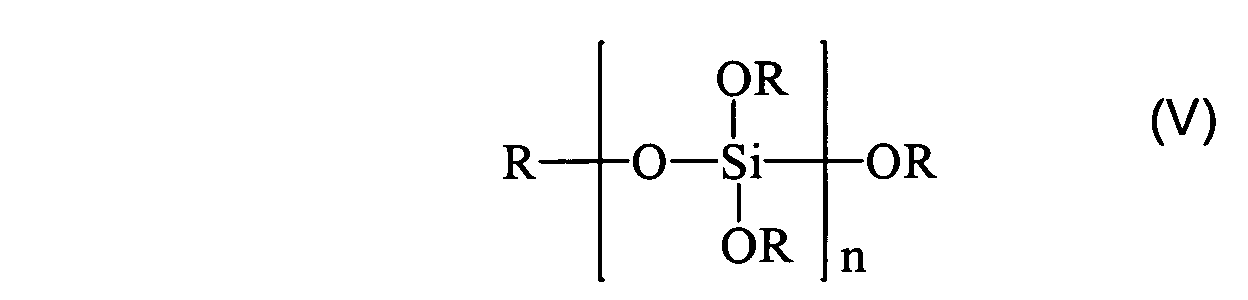 und
und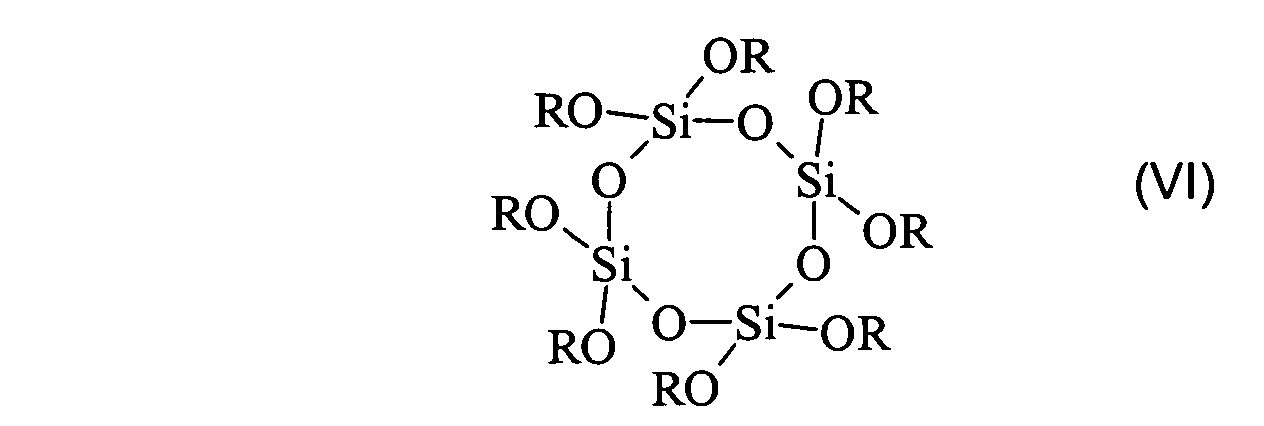 und
und wobei alle R unabhängig voneinander ausgewählt sind aus der Gruppe, die ein Wasserstoffatom, die geradkettigen oder verzweigten, gesättigten oder ungesättigten, substituierten oder unsubstituierten C1-6-Kohlenwasserstoffreste und den 2-Phenoxyethyl-Rest enthält, wobei mindestens ein R verschieden von einem Wasserstoffatom sein muss, und m Werte aus dem Bereich 1 bis 20 und n Werte aus dem Bereich 2 bis 100 und x Werte aus dem Bereich 2 bis 20 annimmt, sowie Mischungen hiervon.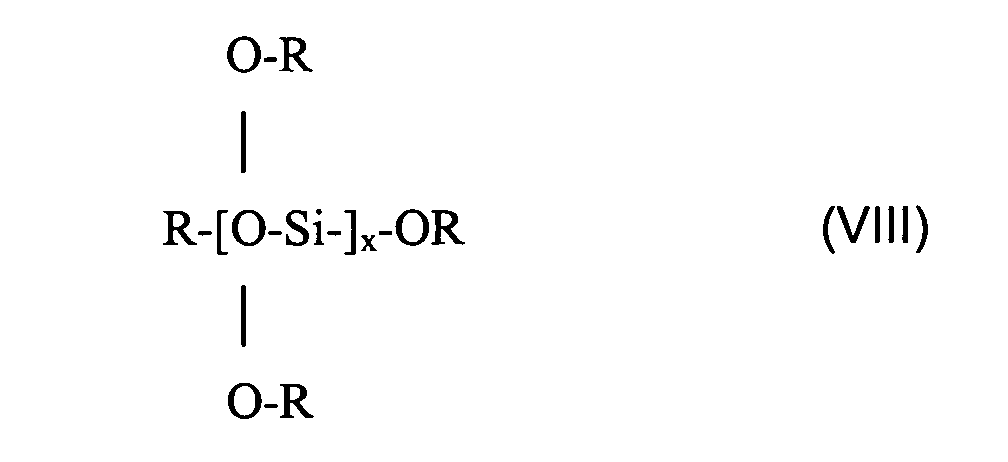
- Verwendung gemäß Anspruch 1, dadurch gekennzeichnet, dass die quaternären Siliconverbindungen ausgewählt sind aus Amodimethiconen, Trimethylsilylamodimethiconen und Quaternium-80.
- Pharmazeutische Zubereitung zur Behandlung und/oder Prophylaxe von androgen-abhängigen Störungen des Haarfollikels, insbesondere von androgenetisch bedingtem Haarausfall, enthaltend Steroidsulfatase-Inhibitoren gemäß Anspruch 1.
- Verfahren zur Verminderung von Haarausfall mittels Inhibierung von Steroidsulfatase, dadurch gekennzeichnet, dass eine kosmetische oder pharmazeutische Zusammensetzung, enthaltend mindestens eine Steroidsulfatase-inhibierende Substanz, ausgewählt aus funktionellen C2-C12-Carbonsäuren und deren physiologisch verträglichen Metallsalzen, Derivaten von C3-C9-Polyolen, Phenolderivaten, Pflanzenextrakten, Riechstoffen, 6,7-disubstituierten 2,2-Dialkylchromanen oder -chromenen, Flavonoiden, Isoflavonoiden, Aluminiumchlorohydrat, 2-Phenylethanol, Etidronsäure, 7-Acetyl-1,1,3,4,4,6-hexamethyltetralin, Tropolonderivaten, Estern der Schwefelsäure mit alkoxylierten C8-C18-Fettalkoholen und deren physiologisch verträglichen Metallsalzen, Estern der Phosphorsäure und der Triphosphorsäure mit ein- bis sechswertigen Hydroxyverbindungen, Kieselsäureestern, aus marinen Organismen isolierbaren mycosporin-ähnlichen Aminosäuren (MAA) sowie quaternären Siliconverbindungen, auf die Haut, insbesondere auf die Kopfhaut, aufgetragen wird.
Applications Claiming Priority (2)
| Application Number | Priority Date | Filing Date | Title |
|---|---|---|---|
| DE10260955A DE10260955A1 (de) | 2002-12-20 | 2002-12-20 | Verwendung von Steroidsulfatase-Inhibitoren zur Verminderung von Haarausfall |
| DE10260955 | 2002-12-20 |
Publications (2)
| Publication Number | Publication Date |
|---|---|
| EP1430933A2 true EP1430933A2 (de) | 2004-06-23 |
| EP1430933A3 EP1430933A3 (de) | 2004-09-29 |
Family
ID=32336595
Family Applications (1)
| Application Number | Title | Priority Date | Filing Date |
|---|---|---|---|
| EP03028617A Withdrawn EP1430933A3 (de) | 2002-12-20 | 2003-12-11 | Kosmetische und pharmazeutische Zusammensetzungen enthaltend Steroidsulfatase-Inhibitoren und deren Verwendung zur Verminderung von Haarausfall |
Country Status (2)
| Country | Link |
|---|---|
| EP (1) | EP1430933A3 (de) |
| DE (1) | DE10260955A1 (de) |
Cited By (20)
| Publication number | Priority date | Publication date | Assignee | Title |
|---|---|---|---|---|
| WO2005025532A1 (en) * | 2003-09-12 | 2005-03-24 | Merck Patent Gmbh | Enriched aqueous components of emblica officinalis |
| EP1738803A1 (de) * | 2005-03-16 | 2007-01-03 | Henkel Kommanditgesellschaft auf Aktien | Inhibitoren von Staphylococcus hominis in Deodorantien und Antitranspirantien |
| WO2007000214A1 (de) * | 2005-06-28 | 2007-01-04 | Henkel Kommanditgesellschaft Auf Aktien | Mittel zur behandlung des haares oder der haut, das einen extrakt aus pflanzen enthält, die der familie der oleaceae angehören |
| CN101283957A (zh) * | 2007-04-26 | 2008-10-15 | 林蕙君 | 强化毛发生长组合物及强化毛发生长方法 |
| EP2113242A1 (de) * | 2008-05-02 | 2009-11-04 | Pangaea Laboratories Limited | Antioxidationsmittel für kosmetische, medizinische und pharmazeutische Zubereitungen |
| JP2012092138A (ja) * | 2011-12-27 | 2012-05-17 | Maruzen Pharmaceut Co Ltd | 皮膚化粧料及び頭髪化粧料 |
| JP2012121913A (ja) * | 2012-03-05 | 2012-06-28 | Maruzen Pharmaceut Co Ltd | 皮膚化粧料及び頭髪化粧料 |
| FR2973234A1 (fr) * | 2011-03-31 | 2012-10-05 | Oreal | Utilisation cosmetique d'inhibiteur d'arginase, comme agent pour freiner la chute des cheveux, des sourcils et/ou des cils |
| US9242123B2 (en) | 2013-05-16 | 2016-01-26 | The Procter & Gamble Company | Hair thickening compositions and methods of use |
| US9402792B2 (en) | 2013-05-16 | 2016-08-02 | The Procter & Gamble Company | Hair thickening compositions and methods of use |
| USRE46228E1 (en) | 2007-06-15 | 2016-12-06 | Lipotec, S.A. | Pigmentation-regulating compounds |
| US9610233B2 (en) | 2013-05-16 | 2017-04-04 | The Proctor & Gamble Company | Hair thickening compositions and methods of use |
| KR101725461B1 (ko) * | 2015-12-29 | 2017-04-10 | 연세대학교 산학협력단 | 디오스민을 유효성분으로 포함하는 탈모 예방 또는 치료용, 또는 발모 또는 육모 촉진용 조성물 |
| IT201700031017A1 (it) * | 2017-03-21 | 2018-09-21 | Bioenx S R L | Composizioni utili per il trattamento dell'alopecia androgenica comprendenti acido etidronico |
| US10123966B2 (en) | 2013-05-16 | 2018-11-13 | The Procter And Gamble Company | Hair thickening compositions and methods of use |
| EP3300731A4 (de) * | 2015-12-02 | 2019-06-19 | Kinjirushi Co., Ltd. | Haarreparierender/wachstumsstimulierender wirkstoff |
| KR20190087081A (ko) * | 2018-01-16 | 2019-07-24 | 인제대학교 산학협력단 | 유자씨 오일을 함유하는 탈모 예방 또는 발모 촉진용 조성물 |
| EP3403673A4 (de) * | 2016-01-12 | 2019-12-11 | National University Corporation Tokyo Medical and Dental University | Zusammensetzung zur prävention oder zur linderung des haarausfalls und der haarergrauung und verwendung davon |
| US10568900B1 (en) | 2013-03-15 | 2020-02-25 | Suzanne Janine Paxton-Pierson | Androgen effectors |
| FR3156650A1 (fr) * | 2023-12-18 | 2025-06-20 | L'oreal | Composition cosmétique comprenant un composé apte à inhiber l’enzyme FIH-1 et un composé apte à inhiber l’enzyme PHD2 pour le traitement de la chute5 des cheveux |
Citations (1)
| Publication number | Priority date | Publication date | Assignee | Title |
|---|---|---|---|---|
| US5550158A (en) * | 1986-12-23 | 1996-08-27 | Tristrata, Inc. | Method of treating wrinkles using glucoheptonic acid |
Family Cites Families (29)
| Publication number | Priority date | Publication date | Assignee | Title |
|---|---|---|---|---|
| DE2438534A1 (de) * | 1974-08-10 | 1976-02-19 | Valentin Dr Med Koehler | Kopfhautpflegemittel und dessen verwendung |
| US4380549A (en) * | 1975-07-23 | 1983-04-19 | Scott Eugene J Van | Topical treatment of dry skin |
| DE2619100A1 (de) * | 1976-05-03 | 1977-11-10 | Koehler Valentin | Verwendung von glucuronsaeure oder glucuronsaeure-gamma-lacton als hemmstoff fuer beta-glucuronidase |
| JPS615007A (ja) * | 1984-06-18 | 1986-01-10 | Lion Corp | 細胞賦活剤 |
| JPS61249913A (ja) * | 1985-04-26 | 1986-11-07 | Abe Yukagaku Kenkyusho:Kk | 整髪料 |
| GB8600822D0 (en) * | 1986-01-15 | 1986-02-19 | Unilever Plc | Treatment of skin disorders |
| AU618517B2 (en) * | 1986-12-23 | 1992-01-02 | Eugene J. Van Scott | Additives enhancing topical actions of therapeutic agents |
| FR2663542B1 (fr) * | 1990-06-26 | 1992-09-18 | Jouveinal Sa | Procede de traitement d'une surface alopecique chez l'homme et lotion pour sa mise en óoeuvre et pour traiter l'epiderme. |
| ATE177629T1 (de) * | 1991-04-10 | 1999-04-15 | Yu Ruey J | Verwendung von 2-hydroxycarbonsäure oder deren derivaten enthaltende zusammensetzung zur linderung von wechseln nagelveränderungen |
| FR2680103B1 (fr) * | 1991-08-07 | 1993-10-29 | Oreal | Utilisation en cosmetique ou en pharmacie d'alkylpolyglycosides et/ou de derives o-acyles du glucose pour le traitement de la chute des cheveux. |
| RU2113216C1 (ru) * | 1992-09-14 | 1998-06-20 | П.Смит Уолтер | Косметический состав (варианты) |
| JPH0818956B2 (ja) * | 1993-06-14 | 1996-02-28 | 花王株式会社 | 養毛・育毛料 |
| JP3665360B2 (ja) * | 1994-05-02 | 2005-06-29 | ポーラ化成工業株式会社 | 活性酸素消去剤及びこれを含む組成物 |
| US5567831A (en) * | 1995-08-16 | 1996-10-22 | Duguesne University Of The Holy Ghost | Non-steroidal sulfatase inhibitor compounds and their method of use |
| FR2757058B1 (fr) * | 1996-12-12 | 1999-01-15 | Chabrier Pierre Marie | Compositions cosmetiques et/ou dermatologiques contenant du p-chlorophenoxyacetate de dimethylaminoethyle pour prevenir et reparer les alterations dermo-epidermiques et des phaneres |
| JPH1143433A (ja) * | 1997-07-29 | 1999-02-16 | Masashi Fujii | グルコノデルタラクトンまたはグルコン酸を含む性ホルモン過多症用皮膚外用剤 |
| GB9807779D0 (en) * | 1998-04-09 | 1998-06-10 | Ciba Geigy Ag | Organic compounds |
| EP1038520A1 (de) * | 1999-03-16 | 2000-09-27 | Pierre-Marie Chabrier | Kosmetika mit Meclofenoxate |
| JP2000327537A (ja) * | 1999-05-18 | 2000-11-28 | Noevir Co Ltd | 養毛剤及び毛髪用化粧料 |
| DE19954937A1 (de) * | 1999-09-02 | 2001-03-08 | Manfred Welz | Mittel zur Stimulierung des Kopfhaarwuchses |
| CO5261573A1 (es) * | 1999-11-19 | 2003-03-31 | Novartis Ag | Derivados de benzoxa y bezotiazol, compuesto y composicion farmaceutica que los contiene y proceso para la preparacion de la mencionada composicion |
| DE10021310A1 (de) * | 2000-05-02 | 2001-11-15 | Friedrich Schardt | Haarwasser |
| US20020119174A1 (en) * | 2000-07-26 | 2002-08-29 | Gardlik John Michael | Compositions useful for regulating hair growth containing metal complexes of oxidized carbohydrates |
| US20020035070A1 (en) * | 2000-07-26 | 2002-03-21 | The Procter & Gamble Company | Method of regulating hair growth using metal complexes of oxidized carbohydrates |
| JP2002332240A (ja) * | 2001-05-09 | 2002-11-22 | Milbon Co Ltd | 育毛剤組成物 |
| DE10126449A1 (de) * | 2001-05-31 | 2002-12-05 | Cognis Deutschland Gmbh | Haarpflegemittel mit natürlichen Ölen |
| WO2001099376A2 (de) * | 2001-06-01 | 2001-12-27 | Henkel Kommanditgesellschaft Auf Aktien | Arylsulfatase-inhibitoren in deodorantien und antitranspirantien |
| ITMI20011732A1 (it) * | 2001-08-07 | 2003-02-07 | Indena Spa | Composizioni farmaceutiche e/o cosmetiche orali per il trattamento e la prevenzione di disturbi del cuoio capelluto |
| EP1348421A3 (de) * | 2002-03-25 | 2004-01-02 | L'oreal | Verfahren zur Verdichtung und Formung von menschlichen Keratinfasern unter Verwendung eines bestimmten Katalysatorsystems |
-
2002
- 2002-12-20 DE DE10260955A patent/DE10260955A1/de not_active Ceased
-
2003
- 2003-12-11 EP EP03028617A patent/EP1430933A3/de not_active Withdrawn
Patent Citations (3)
| Publication number | Priority date | Publication date | Assignee | Title |
|---|---|---|---|---|
| US5550158A (en) * | 1986-12-23 | 1996-08-27 | Tristrata, Inc. | Method of treating wrinkles using glucoheptonic acid |
| US5554654A (en) * | 1986-12-23 | 1996-09-10 | Tristrata Inc | Method for enhancing the therapeutic effect of an anti-acne agent |
| US5561157A (en) * | 1986-12-23 | 1996-10-01 | Tristrata Inc | Method for enhancing the therapeutic effect of a composition comprising hydroquinone and comprising same |
Cited By (30)
| Publication number | Priority date | Publication date | Assignee | Title |
|---|---|---|---|---|
| WO2005025532A1 (en) * | 2003-09-12 | 2005-03-24 | Merck Patent Gmbh | Enriched aqueous components of emblica officinalis |
| EP1738803A1 (de) * | 2005-03-16 | 2007-01-03 | Henkel Kommanditgesellschaft auf Aktien | Inhibitoren von Staphylococcus hominis in Deodorantien und Antitranspirantien |
| WO2007000214A1 (de) * | 2005-06-28 | 2007-01-04 | Henkel Kommanditgesellschaft Auf Aktien | Mittel zur behandlung des haares oder der haut, das einen extrakt aus pflanzen enthält, die der familie der oleaceae angehören |
| CN101283957A (zh) * | 2007-04-26 | 2008-10-15 | 林蕙君 | 强化毛发生长组合物及强化毛发生长方法 |
| CN101283957B (zh) * | 2007-04-26 | 2011-03-30 | 林蕙君 | 强化毛发生长组合物及强化毛发生长方法 |
| CN102172344B (zh) * | 2007-04-26 | 2014-04-23 | 林蕙君 | 强化毛发生长组合物及强化毛发生长方法 |
| USRE46228E1 (en) | 2007-06-15 | 2016-12-06 | Lipotec, S.A. | Pigmentation-regulating compounds |
| EP2113242A1 (de) * | 2008-05-02 | 2009-11-04 | Pangaea Laboratories Limited | Antioxidationsmittel für kosmetische, medizinische und pharmazeutische Zubereitungen |
| US8221746B2 (en) | 2008-05-02 | 2012-07-17 | Elliot James Isaacs | Antioxidant for use in cosmetic, medicated and pharmaceutical preparations |
| FR2973234A1 (fr) * | 2011-03-31 | 2012-10-05 | Oreal | Utilisation cosmetique d'inhibiteur d'arginase, comme agent pour freiner la chute des cheveux, des sourcils et/ou des cils |
| JP2012092138A (ja) * | 2011-12-27 | 2012-05-17 | Maruzen Pharmaceut Co Ltd | 皮膚化粧料及び頭髪化粧料 |
| JP2012121913A (ja) * | 2012-03-05 | 2012-06-28 | Maruzen Pharmaceut Co Ltd | 皮膚化粧料及び頭髪化粧料 |
| US10568900B1 (en) | 2013-03-15 | 2020-02-25 | Suzanne Janine Paxton-Pierson | Androgen effectors |
| US9610233B2 (en) | 2013-05-16 | 2017-04-04 | The Proctor & Gamble Company | Hair thickening compositions and methods of use |
| US10123966B2 (en) | 2013-05-16 | 2018-11-13 | The Procter And Gamble Company | Hair thickening compositions and methods of use |
| US9649271B2 (en) | 2013-05-16 | 2017-05-16 | The Procter & Gamble Company | Hair thickening compositions and methods of use |
| US9242123B2 (en) | 2013-05-16 | 2016-01-26 | The Procter & Gamble Company | Hair thickening compositions and methods of use |
| US9402792B2 (en) | 2013-05-16 | 2016-08-02 | The Procter & Gamble Company | Hair thickening compositions and methods of use |
| US11033473B2 (en) | 2015-12-02 | 2021-06-15 | Kinjirushi Co., Ltd. | Hair restoration/growth stimulating agent |
| EP3300731A4 (de) * | 2015-12-02 | 2019-06-19 | Kinjirushi Co., Ltd. | Haarreparierender/wachstumsstimulierender wirkstoff |
| CN108472307A (zh) * | 2015-12-29 | 2018-08-31 | 延世大学校产学协力团 | 包含香叶木甙作为有效成分的用于预防或治疗脱发或用于促进生发或育发的组合物 |
| WO2017116092A1 (ko) * | 2015-12-29 | 2017-07-06 | 연세대학교 산학협력단 | 디오스민을 유효성분으로 포함하는 탈모 예방 또는 치료용, 또는 발모 또는 육모 촉진용 조성물 |
| KR101725461B1 (ko) * | 2015-12-29 | 2017-04-10 | 연세대학교 산학협력단 | 디오스민을 유효성분으로 포함하는 탈모 예방 또는 치료용, 또는 발모 또는 육모 촉진용 조성물 |
| EP3403673A4 (de) * | 2016-01-12 | 2019-12-11 | National University Corporation Tokyo Medical and Dental University | Zusammensetzung zur prävention oder zur linderung des haarausfalls und der haarergrauung und verwendung davon |
| US10702544B2 (en) | 2016-01-12 | 2020-07-07 | National University Corporation Tokyo Medical And Dental University | Composition for ameliorating loss of hair and graying of hair, and use thereof |
| US11298372B2 (en) | 2016-01-12 | 2022-04-12 | National University Corporation Tokyo Medical And Dental University | Composition for ameliorating loss of hair and graying of hair, and use thereof |
| WO2018172417A1 (en) | 2017-03-21 | 2018-09-27 | Bioenx S.R.L. | Useful compositions for the treatment of androgenic alopecia comprising ethidronic acid |
| IT201700031017A1 (it) * | 2017-03-21 | 2018-09-21 | Bioenx S R L | Composizioni utili per il trattamento dell'alopecia androgenica comprendenti acido etidronico |
| KR20190087081A (ko) * | 2018-01-16 | 2019-07-24 | 인제대학교 산학협력단 | 유자씨 오일을 함유하는 탈모 예방 또는 발모 촉진용 조성물 |
| FR3156650A1 (fr) * | 2023-12-18 | 2025-06-20 | L'oreal | Composition cosmétique comprenant un composé apte à inhiber l’enzyme FIH-1 et un composé apte à inhiber l’enzyme PHD2 pour le traitement de la chute5 des cheveux |
Also Published As
| Publication number | Publication date |
|---|---|
| EP1430933A3 (de) | 2004-09-29 |
| DE10260955A1 (de) | 2004-07-08 |
Similar Documents
| Publication | Publication Date | Title |
|---|---|---|
| EP1430933A2 (de) | Kosmetische und pharmazeutische Zusammensetzungen enthaltend Steroidsulfatase-Inhibitoren und deren Verwendung zur Verminderung von Haarausfall | |
| JP5406708B2 (ja) | 糖脂肪酸エステルとWaltheriaindicaまたはPisumsativumの植物抽出物との組合せを含む皮膚美白のための化粧品組成物 | |
| KR101437135B1 (ko) | 디소듐 페닐 디벤즈이미다졸 테트라설포네이트의 형광을 소광시키기 위한 트록세루틴의 사용방법 | |
| JP6405099B2 (ja) | 化粧品組成物 | |
| KR101262388B1 (ko) | 카스타니아 사티바의 잎 추출물을 포함하는 미용 조성물 | |
| JP2023552597A (ja) | 抗微生物剤および(バイオ)-アルカンジオールを含む、皮膚保護用組成物 | |
| US20030223982A1 (en) | Use of DNA repair enzymes as MMP 1 inhibitors | |
| JP2014205667A (ja) | スキン/ヘアライトニング組成物 | |
| JP2004517836A (ja) | 植物アルガニア・スピノーザの葉抽出物を含有する化粧品および/または皮膚薬調製物 | |
| JP2015048354A (ja) | 皮膚及び/又は毛髪ライトニングの混合物 | |
| JP2021501745A (ja) | 安息香酸またはフロン酸誘導体を含有する組成物ならびにエマルションおよび泡安定性のための前記誘導体の使用 | |
| KR102949381B1 (ko) | (바이오)-알칸디올을 포함하는 조성물 | |
| JP2023552594A (ja) | Uv-フィルターおよび1つまたは複数の(バイオ)-アルカンジオールを含む組成物 | |
| JP2007517824A (ja) | ガガイモ科植物の抽出物の使用 | |
| EP2633887B1 (de) | Neuartige Wirkstoffkombination zur effizienten Anti-Faltenwirkung | |
| DE19720339A1 (de) | Wirkstoffe und Zubereitungen für die Hautaufhellung und zur Verhinderung der Hautbräunung | |
| DE102013223789A1 (de) | Verwendung kosmetischer Zusammensetzungen für die Inaktivierung und/oder Eliminierung von Hautmilben | |
| DE19740879A1 (de) | Desodorierende Zubereitungen auf der Basis von Flavonderivaten und/oder Flavanonderivaten, insbesondere von Flavonoiden | |
| EP1718270A1 (de) | Verwendung von (2-hydroxyphenyl)-alkoholen sowie diese verbindungen enthaltende kosmetische oder therapeutische formulierungen | |
| DE19742025A1 (de) | Verwendung von Flavonen und Flavonoiden zur Hautaufhellung oder zur Verhinderung der durch oxidative Proteinaggregation hervorgerufenen Altersflecken | |
| JP2011068574A (ja) | 皮膚外用剤 | |
| KR102085469B1 (ko) | Uv 선스크린 인자들 및 카르노신들을 갖는 에멀전들 | |
| DE102013223793A1 (de) | Verwendung kosmetischer Zusammensetzungen für die Inaktivierung und/oder Eliminierung von Hautmilben | |
| EP0998898A1 (de) | Verwendung von Alkylglucosiden zur Stabilisierung von Flavonen, Flavanonen bzw. Flavonoiden, synergistische Gemische aus Flavonen, Flavanonen bzw. Flavonoiden und Alkylglucosiden sowie kosmetische und dermatologische Zubereitungen mit einem Gehalt an solchen Gemischen | |
| DE10340684A1 (de) | Neue Verwendungen von Vitamin B6 in kosmetischen oder pharmazeutischen Zusammensetzungen |
Legal Events
| Date | Code | Title | Description |
|---|---|---|---|
| PUAI | Public reference made under article 153(3) epc to a published international application that has entered the european phase |
Free format text: ORIGINAL CODE: 0009012 |
|
| 17P | Request for examination filed |
Effective date: 20031211 |
|
| AK | Designated contracting states |
Kind code of ref document: A2 Designated state(s): AT BE BG CH CY CZ DE DK EE ES FI FR GB GR HU IE IT LI LU MC NL PT RO SE SI SK TR |
|
| AX | Request for extension of the european patent |
Extension state: AL LT LV MK |
|
| PUAL | Search report despatched |
Free format text: ORIGINAL CODE: 0009013 |
|
| AK | Designated contracting states |
Kind code of ref document: A3 Designated state(s): AT BE BG CH CY CZ DE DK EE ES FI FR GB GR HU IE IT LI LU MC NL PT RO SE SI SK TR |
|
| AX | Request for extension of the european patent |
Extension state: AL LT LV MK |
|
| AKX | Designation fees paid |
Designated state(s): AT BE BG CH CY CZ DE DK EE ES FI FR GB GR HU IE IT LI LU MC NL PT RO SE SI SK TR |
|
| 17Q | First examination report despatched |
Effective date: 20050701 |
|
| STAA | Information on the status of an ep patent application or granted ep patent |
Free format text: STATUS: THE APPLICATION IS DEEMED TO BE WITHDRAWN |
|
| 18D | Application deemed to be withdrawn |
Effective date: 20060906 |