EP1431294A1 - Acat-inhibitor mit selektivität für gefässwände - Google Patents
Acat-inhibitor mit selektivität für gefässwände Download PDFInfo
- Publication number
- EP1431294A1 EP1431294A1 EP02760658A EP02760658A EP1431294A1 EP 1431294 A1 EP1431294 A1 EP 1431294A1 EP 02760658 A EP02760658 A EP 02760658A EP 02760658 A EP02760658 A EP 02760658A EP 1431294 A1 EP1431294 A1 EP 1431294A1
- Authority
- EP
- European Patent Office
- Prior art keywords
- compound
- cholesterol
- acat
- group
- ethyl
- Prior art date
- Legal status (The legal status is an assumption and is not a legal conclusion. Google has not performed a legal analysis and makes no representation as to the accuracy of the status listed.)
- Withdrawn
Links
- 0 CC(C)c1cc(O)cc(C(C)C)c1CCCC(CN1CCN(CCSc2nc3cccc(C(F)(F)F)c3[o]2)CC1)=* Chemical compound CC(C)c1cc(O)cc(C(C)C)c1CCCC(CN1CCN(CCSc2nc3cccc(C(F)(F)F)c3[o]2)CC1)=* 0.000 description 4
- OBYQUKSPQWCAJS-UHFFFAOYSA-N CC(C)c1cc(OC)cc(C(C)C)c1NC(CN1CCN(CCSc2nc(cccc3)c3[o]2)CC1)=O Chemical compound CC(C)c1cc(OC)cc(C(C)C)c1NC(CN1CCN(CCSc2nc(cccc3)c3[o]2)CC1)=O OBYQUKSPQWCAJS-UHFFFAOYSA-N 0.000 description 1
- FTXHFANUUMHNHM-UHFFFAOYSA-N Cc1nc(SC)c(CCCC(CN2CCN(CCSc3nc(nccc4)c4[o]3)CC2)=O)c(SC)c1 Chemical compound Cc1nc(SC)c(CCCC(CN2CCN(CCSc3nc(nccc4)c4[o]3)CC2)=O)c(SC)c1 FTXHFANUUMHNHM-UHFFFAOYSA-N 0.000 description 1
Images

Classifications
-
- C—CHEMISTRY; METALLURGY
- C07—ORGANIC CHEMISTRY
- C07D—HETEROCYCLIC COMPOUNDS
- C07D263/00—Heterocyclic compounds containing 1,3-oxazole or hydrogenated 1,3-oxazole rings
- C07D263/52—Heterocyclic compounds containing 1,3-oxazole or hydrogenated 1,3-oxazole rings condensed with carbocyclic rings or ring systems
- C07D263/54—Benzoxazoles; Hydrogenated benzoxazoles
- C07D263/58—Benzoxazoles; Hydrogenated benzoxazoles with hetero atoms or with carbon atoms having three bonds to hetero atoms with at the most one bond to halogen, e.g. ester or nitrile radicals, directly attached in position 2
-
- A—HUMAN NECESSITIES
- A61—MEDICAL OR VETERINARY SCIENCE; HYGIENE
- A61K—PREPARATIONS FOR MEDICAL, DENTAL OR TOILETRY PURPOSES
- A61K31/00—Medicinal preparations containing organic active ingredients
- A61K31/33—Heterocyclic compounds
- A61K31/395—Heterocyclic compounds having nitrogen as a ring hetero atom, e.g. guanethidine or rifamycins
- A61K31/495—Heterocyclic compounds having nitrogen as a ring hetero atom, e.g. guanethidine or rifamycins having six-membered rings with two or more nitrogen atoms as the only ring heteroatoms, e.g. piperazine or tetrazines
- A61K31/496—Non-condensed piperazines containing further heterocyclic rings, e.g. rifampin, thiothixene or sparfloxacin
-
- A—HUMAN NECESSITIES
- A61—MEDICAL OR VETERINARY SCIENCE; HYGIENE
- A61P—SPECIFIC THERAPEUTIC ACTIVITY OF CHEMICAL COMPOUNDS OR MEDICINAL PREPARATIONS
- A61P3/00—Drugs for disorders of the metabolism
- A61P3/06—Antihyperlipidemics
-
- A—HUMAN NECESSITIES
- A61—MEDICAL OR VETERINARY SCIENCE; HYGIENE
- A61P—SPECIFIC THERAPEUTIC ACTIVITY OF CHEMICAL COMPOUNDS OR MEDICINAL PREPARATIONS
- A61P43/00—Drugs for specific purposes, not provided for in groups A61P1/00-A61P41/00
-
- A—HUMAN NECESSITIES
- A61—MEDICAL OR VETERINARY SCIENCE; HYGIENE
- A61P—SPECIFIC THERAPEUTIC ACTIVITY OF CHEMICAL COMPOUNDS OR MEDICINAL PREPARATIONS
- A61P9/00—Drugs for disorders of the cardiovascular system
- A61P9/10—Drugs for disorders of the cardiovascular system for treating ischaemic or atherosclerotic diseases, e.g. antianginal drugs, coronary vasodilators, drugs for myocardial infarction, retinopathy, cerebrovascula insufficiency, renal arteriosclerosis
Definitions
- the present invention relates to a novel compound which is useful as a drug; particularly as an acyl coenzyme A cholesterol acyltransferase (ACAT) inhibitor; more particularly as an agent for prevention, treatment and improvement of hyperlipemia and various arteriosclerotic diseases; and, still more particularly, as an agent for prevention, treatment and improvement of coronary arteriosclerotic diseases as the arteriosclerosis. It also relates to a process for producing the same, to a pharmaceutical composition using the same and to an intermediate thereof.
- ACAT acyl coenzyme A cholesterol acyltransferase
- Acyl coenzyme A cholesterol acyltransferase (ACAT) is an enzyme which catalyzes the synthesis of cholesterol ester from cholesterol and plays an important role for metabolism and absorption in digestive organs of cholesterol. It is believed that inhibition of ACAT conducting an esterification of free cholesterol in epithelial cells of small intestine inhibits absorption of cholesterol from intestinal tract while, in liver, inhibition of production of cholesterol ester due to an ACAT inhibition suppresses secretion of very low density lipoprotein (VLDL) from liver into blood and that, as a result thereof, they bring about a lowering action for cholesterol in blood.
- VLDL very low density lipoprotein
- ACAT inhibitors up to now act on ACAT of small intestine and liver as such expecting a lowering action of cholesterol in blood as a hypolipidemic agent.
- U. S. Patent No. 4,716,175, 2,2-dimethyl-N-(2,4,6-trimethoxyphenyl)dodecanamide and, in the European Patent No. 372, 445, N'-(2,4-difluorophenyl)-N-[5-(4,5-diphenyl-1H-imidazol-2-ylthio)pentyl]-N-heptyl-urea, etc. are mentioned as ACAT inhibitors.
- N-butyl-N'-[2-[3-(5-ethyl-4-phenylimidazol-1-yl)propoxy]-6-methylphenyl]urea which is a compound having substituents at 4 and 5-positions of imidazole.
- arteriosclerosis is a characteristic lesion which is a thickening of inner coat of blood vessel and accumulation of lipid and, according to the recent studies, it has been believed that involution of the arteriosclerotic focus per se is expected by suppression of the formation of foam cells derived from macrophage which plays a central role for the formation of arteriosclerotic focus.
- foam cells derived from macrophage storing cholesterol ester as lipid droplet inside the cell
- foam cells derived from macrophage storing cholesterol ester as lipid droplet inside the cell
- ACAT activity is elevated in vascular wall of atherosclerotic lesions and that cholesterol ester is accumulated in vascular wall [Giries, P. J., et al., Exp. Mol. Pathos ., 44, 329-339 (1986)].
- Inhibition of esterification of cholesterol by an ACAT inhibitors produces free cholesterol in cells and that is eliminated by a high density lipoprotein (HDL) and carried to liver (reverse transfer by HDL) to be metabolized whereby suppression of accumulation of cholesterol ester in the lesion sites is expected [Lee, L, et al., Biochim. Biophys. Acta , 2001, 15, 1530 (1) : 111-22]. It is believed that, as a result, a direct anti-arteriosclerotic action is achieved. With regard toACAT, it has been reported there are two types - one existing in small intestine and another existing in vascular wall [Kinunen, P.
- the present inventors have believed that a pharmaceutical agent which selectively inhibit the ACAT which is a type of existing in vascular wall are able to be drugs for prevention, treatment and improvement of arteriosclerosis, etc. having less side effects than the inhibitors which are non-specific to organs.
- a pharmaceutical agent which selectively inhibit the ACAT which is a type of existing in vascular wall are able to be drugs for prevention, treatment and improvement of arteriosclerosis, etc. having less side effects than the inhibitors which are non-specific to organs.
- ACAT inhibitors the present inventors have found that a compound represented by the following formula (A) or a salt or a solvate thereof is a compound having water solubility and an excellent ACAT inhibitory action (refer to the Japanese PatentApplication No. 11/500,471 and WO 98/54153).
- Japanese Patent Application No. 11/500,471 Japanese Patent Application No. 11/500,471
- Japanese Patent Application No. 11/500,471 there is no disclosure for the compounds where, although an ACAT inhibitory activity is good, good oral absorption property is available and a sufficient drug concentration can be retained in an in vivo test such as an animal test using appropriate arteriosclerotic models.
- Japanese Patent Application No. 11/500, 471 Japanese Patent Application No. 11/500, 471
- Japanese Patent Application No. 11/500, 471 Japanese Patent Application No. 11/500, 471
- creation of compounds which retain an ACAT inhibitory activity and a macrophage selectivity to some extent and show an excellent oral absorption, etc. satisfies the conditions for the drugs whereby further development has been demanded.
- the present invention provides a novel compound which retains anACAT inhibitory activity and amacrophage selectivity to some extent as an actual drug andhas excellent oral absorption and retention of drug concentration in an in vivo test, a process for producing the same, a pharmaceutical composition using the same and an intermediate therefor.
- the present invention relates to 2-[4-[2-(7-trifuoromethylbenzoxazol-2-ylthio)ethyl]piperazin-1-yl]-N-(2,6-diisopropyl-4-hydroxyphenyl)acetamide represented by the following formula, a salt thereof or a solvate thereof and to a process for producing the same.
- the present invention further relates to a pharmaceutical composition
- a pharmaceutical composition comprising the compound represented by the above formula, a salt thereof or a solvate thereof and a pharmaceutically acceptable carrier.
- the present invention still further relates to a compound represented by the following formula, i.e. 2-halo-N-(2,6-diisopropyl-4-hydroxyphenyl)acetamide which is an intermediate for producing the compound representedby the above formula or a salt thereof.
- X is a halogen atom
- the present inventors have already provided compounds having excellent ACAT inhibitory activity and selectivity (Japanese Patent Application No. 11/500,471).
- Japanese Patent Application No. 11/500,471 Japanese Patent Application No. 11/500,471
- an ACAT inhibitory activity has been investigated inmore detail for the following five compounds showing an excellent ACAT inhibitory activity.
- the compound of Example 24 has the strongest ACAT inhibitory activity, particularly IC 50 in J774 cells is as high as 9 nM but its macrophage selectivity (IC 50 (HepG2)/IC 50 (J774)) is as low as about 7-fold and it is not sufficient as a candidate compound for an aimed drug.
- the compound of Example 25 and the compound of Example 75 show such a significant action that macrophage selectivity (IC 50 (HepG2)/IC 50 (J774)) is not less than 96-fold but they are not so particularly excellent in the inhibiting intensity to J774 cells as compared with other compounds whereby they are not also sufficient as candidate compounds for aimed drugs.
- macrophage selectivity IC 50 (HepG2)/IC 50 (J774)
- Example 78 and Example 85 may be listed as the compounds in which both of' macrophage selectivity (IC 50 (HepG2) /IC 50 (J774)) and inhibitory intensity in J774 cells are satisfactory in a well balanced manner as candidate compounds for actual drugs.
- Example 85 which has excellent cellular ACAT inhibitory activity and macrophage selectivity.
- the present inventors have investigated various derivatives using the compound as a lead compound.
- 11/500, 471 and represented by the following formula is a compound where a hydroxyl group is introduced into 4-position of a phenyl group bonding to an amide group of 2-[4-[2-(benzoxazol-2-ylthio)ethyl]piperazin-1-yl]-N-(2, 6-diisopropylphenyl) acetamide which is a compoundmentioned in Example 1 and represented by the following formula and, with regard to those compounds, their ACAT inhibitory activity and oral absorption test under a fed condition using rats (dose: 30 mg/kg) were conducted. The result is shown in the following Table 3 and Table 4.
- Cmax of the compound of Example 72 was 470 ng/mL and AUC was 1095 ng.hr/mL and, as compared with the original compound of Example 1, it was found that there was an improving effect in oral absorption to an extent of about 4.3-fold in terms of Cmax value (refer to Table 4). Although there was no significant change in an ACAT inhibitory activity by introduction of a hydroxyl group (refer to Table 3), any of those compounds is not able to be said an excellent ACAT inhibiting agent in view of the absolute value.
- a comparative compound represented by the following formula where a hydroxyl group is introduced into 3-position of a phenyl group bonding to the amide group of the compound of Example 85 in order to investigate the introduction of a hydroxyl group into the compound of Example 85 having excellent ACAT inhibitory activity and selectivity, a cellular ACAT inhibitory intensity IC 50 was 460 nM (J774) whereupon the ACAT inhibitory activity greatly lowered.
- the value in the compound of Example 85 which is a lead compound in the Japanese Patent Application No. 11/500,471 is 19 nM and, therefore, there was a lowering of as big as about 24-fold.
- the compound of the present invention was further subjected to an arteriosclerotic model animal test.
- the arteriosclerotic model animal test was carried out according to a method by Robert, et al. [refer to Robert, J. N., et al., Atherosclerosis , 137, 77-85 (1998)] in which the area where lipid was accumulated in bulbar artery in lipid-loaded model using F1B hamsters and an effect of the drug for suppression of lipid accumulation was investigated.
- Robert, et al. Refer to Robert, J. N., et al., Atherosclerosis , 137, 77-85 (1998)
- the compound of Example 24 showing the strongest ACAT inhibitory activity in the Japanese Patent Application No.
- CE cholesterol ester
- FC free cholesterol
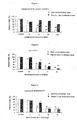
- Fig. 1 is the result of the compound of the present invention
- Fig. 2 is the result of CI-1011
- Fig. 3 is the result of the compound of Example 24 of the Japanese Patent Application No. 11/500,471.
- Each ordinate in Fig. 1 to Fig. 3 shows a relative ratio (%) to the control while each abscissa shows dose (mg/kg) in which white column and black column show area of accumulated lipid and total cholesterol in plasma, respectively.
- Asterisk(s) (* or **) in Fig. 1 to Fig. 3 show(s) that a statistically significant difference is noted (*: p ⁇ 0.05; **: p ⁇ 0.01; Dunnett's test).
- Fig. 4 is the result of the compound of the present invention
- Fig. 5 is the result of CI-1011
- Fig. 6 is the result of the compound of Example 24 of the Japanese Patent Application No. 11/500,471.
- each abscissa shows dose (mg/kg) in which each open circle ( ⁇ ) shows a ratio of aortic lipid accumulation, each rhombus ( ⁇ ) shows a relative ratio of total cholesterol in plasma to the control, each black square ( ⁇ ) shows a relative ratio of the ratio of cholesterol ester/free cholesterol in liver to the control, each black triangle ( ⁇ ) shows a relative ratio of the ratio of cholesterol ester/free cholesterol in small intestine to the control and each cross (x) shows a relative ratio of the ratio of cholesterol ester/free cholesterol in adrenal gland to the control.
- Relative Ratio (%) (Administered (CE/FC))/(Control (CE/FC)) ⁇ 100
- the compound of the present invention was effective in suppression of lipid accumulation (white columns in Fig. 1 to Fig. 3 and white circles in Fig. 4 to Fig. 6) without a significant decrease of plasma cholesterol (black columns in Fig. 1 to Fig. 3 and rhombus in Fig. 4 to Fig. 6) when the dose was 3 mg/kg or more.
- the compound of the present invention was found to directly and selectively inhibit the ACAT in vascular wall independently of variations in plasma lipid and to achieve suppression of accumulation of lipid on vascular wall.
- the result of the in vivo test was also found to reflect the cell selectivity in the previous in vitro test or, in other words, a selective action of an ACAT inhibitor on the tissues of vascular wall is able to be found by investigating the lipid constitution in each tissue or the ratio of cholesterol ester (CE)/free cholesterol (FC).
- the compound of the present invention is characterized as an ACAT inhibitor of a new type having a direct and selective action to vascular wall.
- the present invention provides a compound having an excellent ACAT inhibitory activity and the fact that a selective ACAT inhibitory action is available is particularly useful as a therapeutic agent for arteriosclerosis as a pharmaceutical composition having less side effects making the applicable range as a drug broad.
- Examples of the acid addition salt of the compound of the present invention are inorganic acid salts such as hydrochloride, sulfate, nitrate and phosphate and organic acid salts such as methanesulfonate, maleate, fumarate and citrate.
- inorganic acid salts such as hydrochloride, sulfate, nitrate and phosphate
- organic acid salts such as methanesulfonate, maleate, fumarate and citrate.
- a solvate there is no particular limitation so far as that a solvent used for manufacture, purification, etc. such as water or alcohol is added and that there is no bad affection to the ACAT inhibitory action, etc.
- a hydrate is preferred as a solvate.
- the compound of the present invention maybe produced by various known processes and there is no particular limitation therefor.
- it may be produced by a process described in the Japanese Patent Application No. 11/500,471.
- it may be produced, for example, by the following process. (In the formulae, R is a protecting group and X is a leaving group.)
- protecting group for the nitrogen atom in the compound (II) various kinds of protecting groups which have been used for peptide synthesis, etc. maybe used.
- the preferred protecting group are benzyloxycarbonyl group, 2,2,2-trichloroethyloxycarbonyl group, 2-trimethylsilylethyloxoycarbonyl group and an alkoxycarbonyl group such as tert-butoxycarbonyl group.
- the compound (III) is prepared.
- a sulfonylation reaction such as mesylation or tosylation
- common methods may be utilized and a method using an agent for preparing sulfonate such as methanesulfonyl chloride, methanesulfonic acid anhydride, methanesulfonyl fluoride, benzenesulfonyl chloride or p-toluenesulfonyl chloride is preferred.
- This reaction is carried out in a solvent in the presence of a base.
- the solvent are tetrahydrofuran (THF), methylene chloride and chloroform.
- THF tetrahydrofuran
- the base an organic base such as pyridine, triethylamine, N,N-diisopropylethylamine, N-methylmorpholine and N,N-dimethylaniline may be used.
- Reaction of the compound (III) with the compound (IV) is carried out in a solvent in the presence of a base.
- the solvent acetone, acetonitrile, dimethylsulfoxide, N,N-dimethylformamide, etc. are listed and, among them, N,N-dimethylformamide is preferred.
- the base it is possible to use inorganic bases including alkaline metal hydroxide such as lithium hydroxide, sodium hydroxide and potassium hydroxide; alkaline metal carbonate such as sodium carbonate and potassium carbonate; metal hydrogen carbonate such as sodium hydrogen carbonate and potassium hydrogen carbonate; and also organic bases including pyridine, triethylamine and N,N-diisopropylethylamine. Potassium carbonate is particularly preferred.
- the reaction it is able to be finished at 20 to 150°C for 0.1 to 20 hour(s) or, preferably, at 60 to 90°C for 1 to 5 hour(s).
- Reaction for deprotection of the compound (V) may be carried out according to known methods depending upon the protecting group.
- Reaction of the resulting compound (VI) with a compound (VII) may be carried out according to the above-mentioned step (1) and it is preferred that the compound (VI) is transformed an acid addition salt and then the present reaction is carried out.
- the acid it is particularly preferred to use an organic acid such as acetic acid, trifluoroacetic acid or p-toluenesulfonic acid.
- halogen in the leaving group in the compound (VII) a halogen atom such as chlorine atom or bromine atom may be listed.
- the compound of the present invention has an ACAT inhibitory action and/or a intracellular cholesterol transport inhibitory action and is useful in a medical field as a therapeutic agent for hyperlipemia or a therapeutic agent for arteriosclerosis.
- the compound of the present invention is expected to improve the absorption per os and is preferred as an effective ingredient of drugs since it shows an action of a selective inhibition of ACAT which is a type of being present in vascular wall, has less side effect as compared with non-selective ACAT inhibitors and shows a water solubility.
- the pharmaceutical composition of the present invention contains the compound of the present invention, an acid addition salt thereof or a solvate thereof as an effective ingredient and comprises the effective ingredient either solely or with other pharmaceutically acceptable carriers such as excipient, binder and diluent.
- the pharmaceutical composition of the present invention has an pharmaceutical efficacy as an ACAT inhibitor, an intracellular cholesterol transport inhibitor, a decreasing agent for blood cholesterol or a suppressor for foaming of macrophage.
- the pharmaceutical composition of the present invention is useful as a pharmaceutical composition for treatment and prevention of diseases such as hyperlipemia, arteriosclerosis, neck and brain arteriosclerosis, brain vascular disorder, ischemic heart disease, coronary arteriosclerosis, nephrosclerosis, arteriosclerotic nephrosclerosis, arteriolosclerotic nephrosclerosis, malignant nephrosclerosis, ischemic intestine disease, acute mesenteric vascular obstruction, chronic intestinal tract angina, ischemic colitis, aortic aneurysm and obstructive arteriosclerosis (ASO).
- diseases such as hyperlipemia, arteriosclerosis, neck and brain arteriosclerosis, brain vascular disorder, ischemic heart disease, coronary arteriosclerosis, nephrosclerosis, arteriosclerotic nephrosclerosis, arteriolosclerotic nephrosclerosis, malignant nephrosclerosis, ischemic intestine disease, acute mesenteric vascular obstruction, chronic intestinal tract an
- the pharmaceutical composition of the present invention is able to be made into preparations such as tablets, capsules, granules, powder, injections, suppositories, etc. using various kinds of pharmaceutically acceptable carriers.
- Such preparations may be manufactured by known methods.
- the compound of the present invention is formulated by an appropriate combination of a diluent such as starch, mannitol and lactose; a binder such as sodium carboxymethyl cellulose and hydroxypropyl cellulose; a disintegrating agent such as crystalline cellulose and calcium carboxymethyl cellulose; a lubricant such as talc and magnesium stearate; a fluidity improving agent such as light anhydrous silicic acid; etc.
- a diluent such as starch, mannitol and lactose
- a binder such as sodium carboxymethyl cellulose and hydroxypropyl cellulose
- a disintegrating agent such as crystalline cellulose and calcium carboxymethyl cellulose
- a lubricant such as talc and magnesium stearate
- a fluidity improving agent such as light anhydrous silicic acid
- the pharmaceutical composition of the present invention is administered either orally or parenterally.
- the dose of the pharmaceutical composition of the present invention varies depending upon body weight, age, sex, symptom, etc. of a patient, it is preferably administered usually 1 to 1000 mg or, preferably, 5 to 200 mg per day for an adult by dividing into one to three times.
- the ACAT inhibitory action, etc. of the compound of the present invention has been tested by a method mentioned in the following examples.
- J774 cells or HepG2 cells were sown on a 24-well plate and incubation was carried out at 37°C for 24 hours in a 5% CO 2 incubator using a Dulbecco's modified Eagle's medium for J774 cells and an Eagle's minimum essential medium for HepG2 cells (where both media contained 10% of fetal bovine serum). After exchanging to 0.5 mL each of a culture solution containing 10 ⁇ g/mL of 25-hydroxycholesterol and a sample to be tested, incubation was carried out for 18 hours more. The medium was taken out, washed with PBS twice, extracted with 1.5 mL of hexane-isopropanol (3:2) and concentrated to dryness.
- the extract was dissolved in isopropanol containing 0.2 mL of 10% Triton X-100 and then total cholesterol (TC) and free cholesterol (FC) were determined by a Cholesterol E Test Wako (Wako Pure Chemical) and a Free Cholesterol E Test Wako (Wako Pure Chemical), respectively.
- the residue of the cell after extraction was solubilized with 0.25 mL of 2N NaOH at 37°C for 30 minutes and protein was determined by a BCA Protein Assay Reagent (Pierce). From the differencebetween TC and FC, amount of cholesterolester per protein was calculated and, from the comparative calculation with the control, IC 50 value was determined.
- liver, small intestine and adrenal body were excised and washed with a physiological saline solution and lipid concentration in the tissues was measured.
- 10 mL of chloroform : methanol (2:1) as an extracting solution for lipid in the tissue were placed in the liver and the small intestine, homogenized at 3,000 rpm using a Polytron Homogenizer PT 3100 and allowed to stand at 4°C for one night.
- the extract was centrifuged at 1,500 rpm for 15 minutes, 0.2 mL of the supernatant liquid was evaporated to dryness using a vacuum pump, the residue was dissolved in 50 ⁇ L of isopropanol and each lipid was subjected to the same kits whereupon TC and FC were quantified.
- TC and FC were quantified.
- the adrenal body it was finely cut using scissors and 0.5 mL of chloroform : methanol (2:1) was added thereto followed by being allowed to stand at 4°C for one night.
- the relative ratio to TC in the control group was used as an indicator while, with regard to the tissue, difference between TC and FC was defined as CE (cholesterol ester) and the lipid-constituting ratio, CE/FC, in each organ was determined whereupon their relative ratio to each control was calculated and used as an indicator.
- the control group was defined as 100% and the calculation using the following formula was carried out so as to use a plasma TC lowering action by ACAT inhibitory action to liver and small intestine of the group to which the drug was administered as an indicator and also to use the variation of CE/FC ratio by an ACAT inhibitory action to each organ as an indicator.
- a 18-G injection needle was inserted into apex and perfused with a physiological saline solution (120 mmHg) for about 5minutes. It was further perfused with a 10% neutral formalin buffer (120 mmHg) for about 5 minutes.
- Bulbar and thoracic artery was excised and fixed in a 10% formalin buffer. After being fixed, lesser curvature of artery and a part of greater curvature were opened and stained with Oil Red O. That was opened and adhered on a rubber plate and area of the part stained with Oil Red O and area of the surface of lumen were measured by an Olympus Image Analyzer.
- the ratio of area stained with Oil Red O to area of lumen surface was determined and defined as artery lipid accumulation rate.
- artery lipid accumulation suppressing rate the ratio of artery lipid accumulation rate of the drug-administered group to artery lipid accumulation rate of the control group was determined and that was used as an indicator for artery accumulation suppressing rate by an ACAT suppressing action.
- Artery lipid accumulation rate (%) [(Area of the part stained with Oil Red O)/(area of lumen surface)] ⁇ 100
- Artery lipid accumulation suppressing rate (%) [(Artery lipid accumulation rate in each group)/(Artery lipid accumulation rate in control group)] ⁇ 100
- Triethylamine (17.14 g, 0.169 mol) and 4-dimethylaminopyridine (1.59 g, 13.0 mmol) were added to a solution of tert-butyl 4-(2-hydroxyethyl)-1-piperazinecarboxylate (30.00 g, 0.130 mol) in THF (200 mL) and a solution of methanesulfonyl chloride (17.91 g, 0.156 mol) in THF (100 mL) was dropped thereinto with ice-cooling followed by stirring for 30 minutes. The reaction solution was filtered and the filtrate was concentrated in vacuo .
- the reaction solution was concentrated in vacuo and the resulting residue was extracted with water and chloroform.
- the organic layer was washed with a saturated aqueous saline solution, dried over anhydrous sodium sulfate and dried in vacuo.
- the present invention provides a novel compound which retains anACAT inhibitoryactivityandamacrophage selectivity to some extent as an actual drug and has excellent oral absorption property, a process for producing the same, a pharmaceutical composition using the same and an intermediate therefor.
- the compound of the present invention has an excellent oral absorption, is able to retain a high concentration in blood and has a very good advantageous effects as an ACAT inhibitory agent in view of vascular selectivity and it is a substance having a very good selectivity as an effective ingredient of drugs.
Landscapes
- Health & Medical Sciences (AREA)
- Chemical & Material Sciences (AREA)
- Organic Chemistry (AREA)
- Engineering & Computer Science (AREA)
- Bioinformatics & Cheminformatics (AREA)
- Veterinary Medicine (AREA)
- Public Health (AREA)
- General Health & Medical Sciences (AREA)
- Animal Behavior & Ethology (AREA)
- Life Sciences & Earth Sciences (AREA)
- Pharmacology & Pharmacy (AREA)
- Medicinal Chemistry (AREA)
- Nuclear Medicine, Radiotherapy & Molecular Imaging (AREA)
- General Chemical & Material Sciences (AREA)
- Chemical Kinetics & Catalysis (AREA)
- Heart & Thoracic Surgery (AREA)
- Cardiology (AREA)
- Vascular Medicine (AREA)
- Urology & Nephrology (AREA)
- Diabetes (AREA)
- Hematology (AREA)
- Obesity (AREA)
- Epidemiology (AREA)
- Pharmaceuticals Containing Other Organic And Inorganic Compounds (AREA)
Applications Claiming Priority (3)
| Application Number | Priority Date | Filing Date | Title |
|---|---|---|---|
| JP2001251099 | 2001-08-22 | ||
| JP2001251099 | 2001-08-22 | ||
| PCT/JP2002/008343 WO2003018564A1 (en) | 2001-08-22 | 2002-08-19 | Vascular wall-selective acat inhibitor |
Publications (2)
| Publication Number | Publication Date |
|---|---|
| EP1431294A1 true EP1431294A1 (de) | 2004-06-23 |
| EP1431294A4 EP1431294A4 (de) | 2004-09-15 |
Family
ID=19079803
Family Applications (1)
| Application Number | Title | Priority Date | Filing Date |
|---|---|---|---|
| EP02760658A Withdrawn EP1431294A4 (de) | 2001-08-22 | 2002-08-19 | Acat-inhibitor mit selektivität für gefässwände |
Country Status (3)
| Country | Link |
|---|---|
| EP (1) | EP1431294A4 (de) |
| JP (1) | JP4242765B2 (de) |
| WO (1) | WO2003018564A1 (de) |
Cited By (2)
| Publication number | Priority date | Publication date | Assignee | Title |
|---|---|---|---|---|
| WO2009030747A1 (en) * | 2007-09-06 | 2009-03-12 | Galderma Research & Development | Derivatives of n-phenylacetamide, inhibitors of the enzyme soat-1, and pharmaceutical and cosmetic compositions containing them |
| WO2009030750A1 (en) * | 2007-09-06 | 2009-03-12 | Galderma Research & Development | Derivatives of n-phenylacetamide as inhibitors of the enzyme soat1 for pharmaceutical and cosmetic use |
Families Citing this family (2)
| Publication number | Priority date | Publication date | Assignee | Title |
|---|---|---|---|---|
| US7163944B2 (en) * | 2004-01-26 | 2007-01-16 | Kowa Co., Ltd. | Cyclic diamine compound and pharmaceutical containing the same |
| WO2017022707A1 (ja) * | 2015-08-04 | 2017-02-09 | 株式会社青山製作所 | 塗膜剥離用ボルト |
Family Cites Families (2)
| Publication number | Priority date | Publication date | Assignee | Title |
|---|---|---|---|---|
| JP4191269B2 (ja) * | 1996-05-17 | 2008-12-03 | 興和株式会社 | 新規なアニリド化合物及びこれを含有する医薬 |
| HUP0002294A3 (en) * | 1997-05-26 | 2001-10-29 | Kowa Co | Cyclic diamine compounds and medicines containing the same |
-
2002
- 2002-08-19 JP JP2003523227A patent/JP4242765B2/ja not_active Expired - Fee Related
- 2002-08-19 EP EP02760658A patent/EP1431294A4/de not_active Withdrawn
- 2002-08-19 WO PCT/JP2002/008343 patent/WO2003018564A1/ja not_active Ceased
Non-Patent Citations (2)
| Title |
|---|
| No further relevant documents disclosed * |
| See also references of WO03018564A1 * |
Cited By (6)
| Publication number | Priority date | Publication date | Assignee | Title |
|---|---|---|---|---|
| WO2009030747A1 (en) * | 2007-09-06 | 2009-03-12 | Galderma Research & Development | Derivatives of n-phenylacetamide, inhibitors of the enzyme soat-1, and pharmaceutical and cosmetic compositions containing them |
| WO2009030750A1 (en) * | 2007-09-06 | 2009-03-12 | Galderma Research & Development | Derivatives of n-phenylacetamide as inhibitors of the enzyme soat1 for pharmaceutical and cosmetic use |
| FR2920769A1 (fr) * | 2007-09-06 | 2009-03-13 | Galderma Res & Dev | Nouveaux derives de n-phenyl acetamide, inhibiteurs de l'enzyme soat-1, compositions pharmaceutiques et cosmetiques les contenant |
| FR2920774A1 (fr) * | 2007-09-06 | 2009-03-13 | Galderma Res & Dev | Nouveaux derives de n-phenul acatamide, inhibiteurs de l'enzyme soat-1, compositions pharmaceutiques et cosmetiques les contentant |
| JP2010538045A (ja) * | 2007-09-06 | 2010-12-09 | ガルデルマ・リサーチ・アンド・デヴェロップメント | N−フェニルアセトアミドの誘導体、酵素soat−1の阻害薬、ならびにこれらを含む薬剤組成物および化粧品組成物 |
| US8513307B2 (en) | 2007-09-06 | 2013-08-20 | Galderma Research & Development | N-phenylacetamide inhibitors of the enzyme SOAT-1 and pharmaceutical/cosmetic compositions comprised thereof |
Also Published As
| Publication number | Publication date |
|---|---|
| WO2003018564A1 (en) | 2003-03-06 |
| JPWO2003018564A1 (ja) | 2004-12-09 |
| EP1431294A4 (de) | 2004-09-15 |
| JP4242765B2 (ja) | 2009-03-25 |
Similar Documents
| Publication | Publication Date | Title |
|---|---|---|
| KR100587546B1 (ko) | 프로테아제 억제제인 아미노구아니딘 및 알콕시구아니딘 | |
| JP4250675B2 (ja) | N−(ピリジン−2−イル)−スルホンアミド誘導体 | |
| JP4871257B2 (ja) | 2−フェニルプロピオン酸誘導体およびそれらを含有する医薬組成物 | |
| EP3074381B1 (de) | Neue dgat2 inhibitoren | |
| JP3614865B2 (ja) | 新規な環状ジアミン化合物及びこれを含有する医薬 | |
| HK1256310A1 (zh) | N-磺酰基吡咯衍生物 | |
| AU2014240003B2 (en) | Coumarin derivatives and methods of use in treating hyperproliferative diseases | |
| JP2015510890A (ja) | 上皮成長因子受容体キナーゼ阻害剤の塩 | |
| JP2009505962A (ja) | 肥満を治療するためのビフェニルアミノ酸誘導体の製造および使用 | |
| BRPI0711310A2 (pt) | inibidores de p38 map cinase | |
| JP6467059B2 (ja) | 新規fynキナーゼ阻害剤 | |
| US20210094909A1 (en) | 3-(benzylamino)-4-(cyclohexylamino)-n-(2-(piperazin-1-yl)ethyl)benzenesulfonamide derivatives and related ferrostatin-1 analogues as cell death inhibitors for treating e.g. stroke | |
| EP3348548A1 (de) | Stickoxidfreisetzendes prodrug-molekül | |
| JP2004067635A (ja) | Dgat阻害剤 | |
| EP2064177B1 (de) | Proteasehemmer | |
| CN111093658A (zh) | 用于治疗皮肤疾病的稠合杂芳环-苯胺化合物 | |
| US20130005742A1 (en) | Substituted Diphenylpyrazine Derivatives | |
| JP4242765B2 (ja) | 血管壁選択的なacat阻害剤 | |
| CN105801464A (zh) | 吡咯酰胺类化合物及其制备方法与用途 | |
| CA2298824A1 (en) | Macrophage scavenger receptor antagonists for use in the treatment of cardiovascular diseases | |
| AU2014237569B2 (en) | Inhibitors of the enzyme UDP-glucose: N-acyl-sphingosine glucosyltransferase | |
| JP2011016742A (ja) | 環状アミノ化合物又はその塩 | |
| WO1998042680A1 (en) | Novel anilide compounds and drugs containing the same | |
| JP2005537258A (ja) | 新規アントラセン誘導体及び医薬品としてのその使用 | |
| EP1966169A2 (de) | Zusammensetzungen und methoden für die inhibierung von phospholipase a2 |
Legal Events
| Date | Code | Title | Description |
|---|---|---|---|
| PUAI | Public reference made under article 153(3) epc to a published international application that has entered the european phase |
Free format text: ORIGINAL CODE: 0009012 |
|
| 17P | Request for examination filed |
Effective date: 20040318 |
|
| AK | Designated contracting states |
Kind code of ref document: A1 Designated state(s): AT BE BG CH CY CZ DE DK EE ES FI FR GB GR IE IT LI LU MC NL PT SE SK TR |
|
| AX | Request for extension of the european patent |
Extension state: AL LT LV MK RO SI |
|
| A4 | Supplementary search report drawn up and despatched |
Effective date: 20040802 |
|
| STAA | Information on the status of an ep patent application or granted ep patent |
Free format text: STATUS: THE APPLICATION HAS BEEN WITHDRAWN |
|
| 18W | Application withdrawn |
Effective date: 20080711 |