EP1432176A2 - Verkehrsbeschreibungen für Pollingabfragen von regelmässigen Quellen - Google Patents
Verkehrsbeschreibungen für Pollingabfragen von regelmässigen Quellen Download PDFInfo
- Publication number
- EP1432176A2 EP1432176A2 EP03257900A EP03257900A EP1432176A2 EP 1432176 A2 EP1432176 A2 EP 1432176A2 EP 03257900 A EP03257900 A EP 03257900A EP 03257900 A EP03257900 A EP 03257900A EP 1432176 A2 EP1432176 A2 EP 1432176A2
- Authority
- EP
- European Patent Office
- Prior art keywords
- field
- station
- temporal
- task
- traffic
- Prior art date
- Legal status (The legal status is an assumption and is not a legal conclusion. Google has not performed a legal analysis and makes no representation as to the accuracy of the status listed.)
- Withdrawn
Links
- 230000000737 periodic effect Effects 0.000 title abstract description 14
- 230000002123 temporal effect Effects 0.000 claims abstract description 76
- 238000000034 method Methods 0.000 claims abstract description 33
- 230000005540 biological transmission Effects 0.000 claims description 33
- 230000004044 response Effects 0.000 claims description 3
- 230000008569 process Effects 0.000 abstract description 3
- 239000002131 composite material Substances 0.000 description 12
- 238000010586 diagram Methods 0.000 description 8
- 230000009471 action Effects 0.000 description 2
- 230000006870 function Effects 0.000 description 2
- 230000007246 mechanism Effects 0.000 description 2
- 230000003190 augmentative effect Effects 0.000 description 1
- 238000012544 monitoring process Methods 0.000 description 1
Images




Classifications
-
- H—ELECTRICITY
- H04—ELECTRIC COMMUNICATION TECHNIQUE
- H04W—WIRELESS COMMUNICATION NETWORKS
- H04W74/00—Wireless channel access
- H04W74/04—Scheduled access
- H04W74/06—Scheduled access using polling
-
- H—ELECTRICITY
- H04—ELECTRIC COMMUNICATION TECHNIQUE
- H04L—TRANSMISSION OF DIGITAL INFORMATION, e.g. TELEGRAPHIC COMMUNICATION
- H04L12/00—Data switching networks
- H04L12/28—Data switching networks characterised by path configuration, e.g. LAN [Local Area Networks] or WAN [Wide Area Networks]
- H04L12/40—Bus networks
- H04L12/403—Bus networks with centralised control, e.g. polling
-
- H—ELECTRICITY
- H04—ELECTRIC COMMUNICATION TECHNIQUE
- H04L—TRANSMISSION OF DIGITAL INFORMATION, e.g. TELEGRAPHIC COMMUNICATION
- H04L12/00—Data switching networks
- H04L12/54—Store-and-forward switching systems
- H04L12/56—Packet switching systems
- H04L12/5601—Transfer mode dependent, e.g. ATM
- H04L12/5602—Bandwidth control in ATM Networks, e.g. leaky bucket
-
- H—ELECTRICITY
- H04—ELECTRIC COMMUNICATION TECHNIQUE
- H04W—WIRELESS COMMUNICATION NETWORKS
- H04W84/00—Network topologies
- H04W84/02—Hierarchically pre-organised networks, e.g. paging networks, cellular networks, WLAN [Wireless Local Area Network] or WLL [Wireless Local Loop]
- H04W84/10—Small scale networks; Flat hierarchical networks
- H04W84/12—WLAN [Wireless Local Area Networks]
Definitions
- the present invention relates to telecommunications in general, and, more particularly, to local area networks.
- Figure 1 depicts a schematic diagram of wireless local-area network 100 in the prior art, which comprises: access point 101, stations 102-1 through 102- N , wherein N is a positive integer, and hosts 103-1 through 103- N , interconnected as shown.
- Each station 102- i wherein i is a positive integer in the set ⁇ 1, ... N ⁇ , enables host 103- i (a device such as a notebook computer, personal digital assistant [PDA], tablet PC, etc. ) to communicate wirelessly with other hosts in local-area network 100 via access point 101.
- PDA personal digital assistant
- Access point 101 and stations 102-1 through 102- N transmit blocks of data called frames.
- a frame typically comprises a data portion, referred to as a data payload, and a control portion, referred to as a header.
- Frames transmitted from a station 102- i to access point 101 are referred to as uplink frames, and frames transmitted from access point 101 to a station 102- i are referred to as downlink frames.
- a series of frames transmitted from a station 102- i to access point 101 is referred to as an uplink traffic stream, and a series of frames transmitted from access point 101 to a station 102- i is referred to as a downlink traffic stream.
- Access point 101 and stations 102-1 through 102- N transmit frames over a shared-communications channel such that if two or more stations (or an access point and a station) transmit frames simultaneously, then one or more of the frames can become corrupted (resulting in a collision ). Consequently, local-area networks typically employ protocols for ensuring that a station or access point can gain exclusive access to the shared-communications channel for an interval of time in order to transmit one or more frames.
- Such protocols can be classified into two types: contention-based protocols, and contention-free protocols.
- contention-based protocols stations 102-1 through 102- N and access point 101 compete to gain exclusive access to the shared-communications channel, just as, for example, several children might fight to grab a telephone to make a call.
- a coordinator In a contention-free protocol, in contrast, a coordinator (e.g., access point 101, etc. ) grants access to the shared-communications channel to one station at a time.
- An analogy for contention-free protocols is a parent (i.e. , the coordinator) granting each of several children a limited amount of time on the telephone to talk, one at a time.
- One technique in which a coordinator can grant access to the shared-communications channel is polling.
- stations submit a polling request (also referred to as a reservation request ) to the coordinator, and the coordinator grants stations exclusive access to the shared-communications channel sequentially in accordance with a polling schedule.
- a polling schedule has a temporal period (e.g., 5 seconds, etc. ) and continually loops back to the beginning of the schedule after its completion. Since stations transmit only in response to a poll from the coordinator, polling-based protocols can provide contention-free access to the shared-communications channel.
- the present invention enables a station that transmits periodic traffic (e.g., a station that transmits a frame every 25 milliseconds, etc. ) to inform a coordinator of the particular characteristics of the periodic traffic.
- a station that transmits periodic traffic (e.g., a station that transmits a frame every 25 milliseconds, etc. ) to inform a coordinator of the particular characteristics of the periodic traffic.
- a station that transmits periodic traffic (e.g., a station that transmits a frame every 25 milliseconds, etc. ) to inform a coordinator of the particular characteristics of the periodic traffic.
- a station that transmits periodic traffic (e.g., a station that transmits a frame every 25 milliseconds, etc. ) to inform a coordinator of the particular characteristics of the periodic traffic.
- a station that transmits periodic traffic (e.g., a station that transmits a frame every 25 milliseconds, etc. ) to inform a coordinator of the particular characteristics of the periodic traffic.
- a coordinator When a coordinator receives a polling request, the coordinator processes the associated traffic specification and, via appropriate decoding logic, determines whether the requesting station generates periodic traffic, and if so, the temporal period and temporal offset of the traffic stream. The coordinator then establishes a polling schedule so that the station is polled as soon as possible after generating a frame, thereby minimizing the delay between (i) the station generating a frame, and (ii) the station transmitting the frame (and thus the destination receiving the frame). This is especially advantageous in real-time communications such as voice calls and instant messaging.
- the illustrative embodiment comprises: populating a first field of a traffic specification with a function of one of a temporal period and a temporal offset, wherein the temporal period and the temporal offset are for a plurality of expected future transmissions; populating a second field of the traffic specification with the value of the first field; and transmitting a polling request with the traffic specification.
- Figure 1 depicts a schematic diagram of an exemplary wireless local-area network 100 in the prior art.
- Figure 2 depicts a schematic diagram of a portion of local-area network 200 in accordance with the illustrative embodiment of the present invention.
- Figure 3 depicts a block diagram of the salient components of access point 201, as shown in Figure 2, in accordance with the illustrative embodiment of the present invention.
- Figure 4 depicts a block diagram of the salient components of station 202- i , as shown in Figure 2, in accordance with the illustrative embodiment of the present invention.
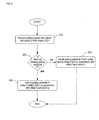
- Figure 5 depicts an event loop of the salient tasks performed by a station 202- i that transmits periodic traffic, in accordance with the illustrative embodiment of the present invention.
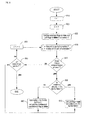
- Figure 6 depicts a flowchart of the salient tasks performed by access point 201 in establishing a polling schedule, in accordance with the illustrative embodiment of the present invention.
- Figure 7 depicts a flowchart of the salient tasks performed by access point 201 in establishing a downlink transmission schedule, in accordance with the illustrative embodiment of the present invention.
- Figure 8 depicts a flowchart of the salient tasks performed by access point 201 in combining a polling schedule and a transmission schedule into a composite schedule, in accordance with the illustrative embodiment of the present invention.
- Figure 9 depicts an event loop for access point 201 for processing a composite schedule, in accordance with the illustrative embodiment of the present invention.
- FIG. 2 depicts a schematic diagram of local-area network 200 in accordance with the illustrative embodiment of the present invention.
- Local-area network 200 comprises access point 201, stations 202-1 through 202- N , wherein i is a positive integer in the set ⁇ 1, .. N ⁇ , and hosts 203-1 through 203- N , interconnected as shown.
- station 202- i enables host 203- i to communicate wirelessly with other hosts in local-area network 200 via access point 201.
- Host 203- i is a device ( e.g. , a computer, a personal digital assistant, a printer, etc. ) that is capable of generating and transmitting data to station 202- i .
- Host 203-i is also capable of receiving, processing, and using the data received from station 202- i . It will be clear to those skilled in the art how to make and use host 203- i .
- Station 202-i is capable of receiving data from host 203- i and of transmitting that data over a shared-communications channel to access point 201.
- Station 202- i is also capable of receiving frames from the shared communications channel and of sending that data to host 203- i .
- the salient details of station 202- i are described below and with respect to Figures 4 and 5.
- Access point 201 receives frames from stations 202-1 through 202- N in accordance with a polling schedule and transmits frames to 202-1 through 202- N in accordance with a transmission schedule.
- the salient details of access point 201 are described below and with respect to Figures 3 and 6 through 10.
- FIG. 3 depicts a block diagram of the salient components of access point 201 in accordance with the illustrative embodiment of the present invention.
- Access point 201 comprises receiver 301, processor 302, memory 303, and transmitter 304, interconnected as shown.
- Receiver 301 is a circuit that is capable of receiving frames from shared communications channel 203, in well-known fashion, and of forwarding them to processor 302. It will be clear to those skilled in the art how to make and use receiver 301.
- Processor 302 is a general-purpose processor that is capable of executing instructions stored in memory 303, of reading data from and writing data into memory 303, and of executing the tasks described below and with respect to Figures. 6 through 10.
- processor 302 is a special-purpose processor (e.g. , a network processor, etc. ). In either case, it will be clear to those skilled in the art, after reading this disclosure, how to make and use processor 302.
- Memory 303 is capable of storing programs and data used by processor 302, as is well-known in the art, and might be any combination of random-access memory (RAM), flash memory, disk drive, etc. It will be clear to those skilled in the art, after reading this specification, how to make and use memory 303.
- Transmitter 304 is a circuit that is capable of receiving frames from processor 302, in well-known fashion, and of transmitting them on shared communications channel 203. It will be clear to those skilled in the art how to make and use transmitter 304.
- FIG. 4 depicts a block diagram of the salient components of station 202- i , in accordance with the illustrative embodiment of the present invention.
- Station 202- i comprises receiver 401, processor 402, memory 403, and transmitter 404, interconnected as shown.
- Receiver 401 is a circuit that is capable of receiving frames from shared communications channel 203, in well-known fashion, and of forwarding them to processor 402. It will be clear to those skilled in the art how to make and use receiver 401.
- Processor 402 is a general-purpose processor that is capable of executing instructions stored in memory 403, of reading data from and writing data into memory 403, and of executing the tasks described below and with respect to Figure 6.
- processor 402 is a special-purpose processor (e.g. , a network processor, etc. ). In either case, it will be clear to those skilled in the art, after reading this disclosure, how to make and use processor 402.
- Memory 403 is capable of storing programs and data used by processor 402, as is well-known in the art, and might be any combination of random-access memory (RAM), flash memory, disk drive, etc , It will be clear to those skilled in the art, after reading this specification, how to make and use memory 403.
- RAM random-access memory
- flash memory disk drive
- Transmitter 404 is a circuit that is capable of receiving frames from processor 402, in well-known fashion, and of transmitting them on shared communications channel 203. It will be clear to those skilled in the art how to make and use transmitter 404.
- access point 201 and stations 202-1 through 202- N support at least one IEEE 802.11 protocol.
- access point 201 and stations 202-1 through 202- N might support other protocols in lieu of, or in addition to, one or more IEEE 802.11 protocols.
- local-area network 200 might comprise an alternative shared-communications channel (for example, wired instead of wireless). In all such cases, it will be clear to those skilled in the art after reading this specification how to make and use access point 201 and stations 202-1 through 202- N .
- station 202-i transmits a polling request that specifies (i) the temporal period of expected future transmissions (e.g. , 100 milliseconds, 3 seconds, etc. ), and (ii) a temporal offset with respect to a particular reference (e.g. , access point 201's IEEE 802.11 beacon, etc. )
- the polling request thus informs access point 201 of the period of station 202- i 's future traffic stream, and the phase of the traffic stream with respect to the reference.
- station 202- i transmits a polling request to access point 201 in combination with a traffic specification (TSPEC) that characterizes, via a plurality of fields, traffic generated by station 202- i .
- TSPEC traffic specification
- an IEEE 802.11e-compliant station 202- i might encode one or both of the temporal period and temporal offset in the traffic specification via one or more TSPEC fields. In one such encoding, station 202- i populates both the TSPEC Minimum Service Interval and Maximum Service Interval fields with the temporal period.
- access point 201 upon receipt of a polling request in which the associated traffic specification has a Minimum Service Interval field and a Maximum Service Interval field with the same value, recognizes that station 202- i generates periodic traffic with a temporal period equal to this value.
- a method by which access point 201 ascertains the temporal offset when a polling request specifies only the temporal period is disclosed in copending U.S. patent application "Exploratory Polling For Periodic Traffic Sources," [Attorney Docket: 630-039us].
- station 202- i populates the Maximum Service Interval field with the temporal period, and the Minimum Service Interval field with the sum of the temporal period and the temporal offset.
- access point 201 upon receipt of a polling request in which the associated traffic specification has a Minimum Service Interval field value that is greater than the Maximum Service Interval field value, deduces that station 202- i generates periodic traffic with a temporal period equal to the Maximum Service Interval field value, and a temporal offset equal to the difference between the Minimum Service Interval and Maximum Service Interval field values.
- station 202- i can encode one or both of the temporal period and temporal offset as arbitrary functions of one or more traffic specification fields, and at task 610, described below, access point 201 can retrieve the temporal period and temporal offset from the traffic specification via the appropriate decoding logic.
- station 202- i queues, in well-known fashion, one or more frames in accordance with the temporal period and temporal offset specified at task 510.
- station 202- i receives a poll from access point 201 in well-known fashion.
- station 202- i transmits the frame(s) queued at task 520 in accordance with the appropriate protocol (e.g. , an IEEE 802.11 protocol, etc. ). After task 540 has been completed, execution continues back at task 520.
- the appropriate protocol e.g. , an IEEE 802.11 protocol, etc.
- Figure 6 depicts a flowchart of the salient tasks performed by access point 201 in establishing a polling schedule, in accordance with the illustrative embodiment of the present invention.
- access point 201 receives a polling request from station 202- i that specifies a temporal offset ⁇ and period ⁇ , where i is a positive integer less than or equal to N .
- i is a positive integer less than or equal to N .
- access point 201 might obtain ⁇ and ⁇ from a traffic specification associated with the polling request in some embodiments.
- access point 201 checks whether a polling schedule P already exists.
- P is a schedule for polls to all stations in local-area network 200; i.e., P can be thought of as the union of a plurality of polling schedules ⁇ P 1 , P 2 , ... , P N ⁇ , where P i is a polling schedule for station 202- i . If polling schedule P already exists, execution proceeds to task 640, otherwise execution proceeds to task 630.
- access point 201 creates a new polling schedule P with one or more polls sent to station 202- i in accordance with temporal offset ⁇ and period ⁇ . Polling schedule P repeats continually, and thus in some embodiments it is particularly convenient to set the duration of schedule P to a value divisible by period ⁇ .
- access point 201 adds one or more polls of station 202- i to polling schedule P in accordance with temporal offset ⁇ and period ⁇ .
- task 640 comprises, if necessary, adjusting the temporal period of schedule P accordingly. For example, if a poll that occurs every 6 seconds is to be added to a polling schedule that has a temporal period of 4, then the new polling schedule should have a temporal period of 12, comprising (i) three successive instances of the previous polling schedule, and (ii) two instances of the added poll.
- the temporal period of the new polling schedule P should be increased, if necessary, to a value Q 'such that for all stations 202- n ⁇ S , Q ' is divisible by ⁇ n , where ⁇ n is the temporal period of station 202- n . (In other words, Q' is the least common multiple of the temporal periods of every station in polling schedule P .)
- the above method of constructing a polling schedule might result in simultaneous polls of two or more stations.
- the illustrative embodiment employs polling events in the polling schedule, where each polling event specifies a list of one or more stations to be polled.
- a description of how the illustrative embodiment processes the lists associated with polling events is disclosed below and with respect to Figure 7 and Figure 8.
- FIG. 7 depicts a flowchart of the salient tasks performed by access point 201 in establishing a transmission schedule, in accordance with the illustrative embodiment of the present invention.
- access point 201 monitors the arrival times of downlink frames received by access point 201 and transmitted from access point 201 to station 202- i .
- the monitoring of task 710 occurs during a time interval ⁇ that is sufficiently long to serve as an "observation period" for characterizing downlink traffic to station 202- i . It will be clear to those skilled in the art how to choose a suitable value for ⁇ .
- access point 201 determines, in well-known fashion, whether downlink frames for station 202- i arrive in accordance with a regular temporal period, based on the observation period of task 710. If the determination is affirmative, execution proceeds to task 730, otherwise, the method of Figure 7 terminates.
- access point 201 determines the temporal period ⁇ and temporal offset ⁇ of downlink frames for station 202- i , where offset ⁇ is relative to the 802.11 beacon transmitted by access point 201. It is well-known in the art how to determine the period and offset (i.e. , "phase") of a periodic traffic stream.
- access point 201 checks whether a transmission schedule T already exists. If none exists, execution proceeds to task 750, otherwise execution continues at task 760.
- a new transmission schedule T is created with downlink frames for station 202- s transmitted in accordance with temporal offset ⁇ and temporal period ⁇ .
- existing transmission schedule T is augmented with the transmission of downlink frames to station 202- i in accordance with temporal offset ⁇ and temporal period ⁇ .
- a downlink transmission to station 202- i occurs at the same time as another downlink transmission already in schedule T . Consequently, the illustrative embodiment maintains a list of one or more stations at each "transmission event" that indicates to which station(s) downlink frames should be transmitted.
- polling schedule P downlink frames are transmitted sequentially to the stations in the list, beginning at the time specified in transmission schedule T .
- the illustrative embodiment employs a mechanism disclosed below in the description of Figure 9 for ensuring "fairness" with respect to the order in which downlink frames are transmitted to stations in a list.
- any collisions between the new transmission schedule T and polling schedule P are overcome by suitably adjusting ( i.e., via a slight time shift) the appropriate newly-added transmission of schedule T .
- one or more tasks or methods might be performed in lieu of task 770 for avoiding collisions between schedules P and T .
- the illustrative embodiment employs (i) the method of Figure 8, disclosed below, for combining polling schedule P and transmission schedule T into a composite schedule, and (ii) the event loop mechanism of Figure 9, disclosed below, for rotating between simultaneous polls and transmissions in round-robin fashion, in lieu of task 770.
- Figure 8 depicts a flowchart of the salient tasks performed by access point 201 in combining a polling schedule and a transmission schedule into a composite schedule, in accordance with the illustrative embodiment of the present invention.
- index variable i is initialized to 1.
- variable C which is used to store the composite schedule, is initialized to transmission schedule T .
- an associated transmission flag is set to true, and an associated poll flag is set to false.
- the transmission and poll flags are stored in composite schedule C ; however, it will be clear to those skilled in the art that in some other embodiments these flags might be stored in a separate data structure.
- variable t is set to the time of the i th poll of polling schedule P
- variable s is set to the station polled in the i th poll of polling schedule P .
- access point 201 checks whether composite schedule C has a transmission at time t (obtained from transmission schedule T at task 820). If so, execution proceeds to task 850, otherwise execution continues at task 880.
- access point 201 checks whether station s is already in the list of stations at time t in composite schedule C . If so, execution proceeds to task 870, otherwise, execution proceeds to task 860.
- station s is added to the list of stations at time t in composite schedule C .
- the associated poll flag for station s at time t is set to true, and the associated transmission flag is set to false.
- access point 201 checks whether the poll at time t is the last poll in polling schedule P . If so, execution continues at task 890, otherwise the method of Figure 8 terminates.
- index variable i is incremented by 1.
- Figure 9 depicts an infinite event loop for access point 201 for processing composite schedule C , in accordance with the illustrative embodiment of the present invention.
- execution begins at task 910.
- variable E is set to the next event in composite schedule C . If the event loop has just been started, the next event is the first event of schedule C .
- variable L is set to the list of stations associated with event E.
- index variable i is initialized to 1.
- access point 201 checks whether the transmission and poll flags for the i th station in list L ( i.e., L [ i ]) are both true , indicating that a combined transmission/poll is the appropriate action. If so, execution proceeds to task 950, otherwise execution continues at task 960.
- access point 201 transmits a downlink frame with a "piggybacked" poll to station L [ i ] in well-known fashion. After the completion of task 950, execution proceeds to task 985.
- access point 201 checks whether the transmission and poll flags for L [ i ] are true and false, respectively, indicating that a downlink transmission is the appropriate action. If so, execution proceeds to task 970, otherwise execution continues at task 980.
- access point 201 transmits a downlink frame to station L [ i ] in well-known fashion. After the completion of task 970, execution proceeds to task 985.
- access point 201 transmits a poll to station L [ i ] in well-known fashion. After the completion of task 980, execution proceeds to task 985.
- access point 201 checks whether variable i is equal to the size of list L , indicating that all stations in the list have been processed in accordance with tasks 940 through 980. If so, execution proceeds to task 990, otherwise execution proceeds to task 995.
- list L is rotated one position so that the first station in the list becomes the last, the second station in the list becomes the first, the third station becomes the second, etc. This establishes a new order for list L in preparation for processing event E in the next iteration of schedule C .
- execution continues back at task 910 for the next invocation of the event loop.
- index variable i is incremented by 1.
Landscapes
- Engineering & Computer Science (AREA)
- Computer Networks & Wireless Communication (AREA)
- Signal Processing (AREA)
- Mobile Radio Communication Systems (AREA)
- Small-Scale Networks (AREA)
Applications Claiming Priority (4)
| Application Number | Priority Date | Filing Date | Title |
|---|---|---|---|
| US43360402P | 2002-12-16 | 2002-12-16 | |
| US433604P | 2002-12-16 | ||
| US10/674,206 US7693085B2 (en) | 2002-12-16 | 2003-09-29 | Traffic specifications for polling requests of periodic sources |
| US674206 | 2003-09-29 |
Publications (2)
| Publication Number | Publication Date |
|---|---|
| EP1432176A2 true EP1432176A2 (de) | 2004-06-23 |
| EP1432176A3 EP1432176A3 (de) | 2005-12-21 |
Family
ID=32397262
Family Applications (1)
| Application Number | Title | Priority Date | Filing Date |
|---|---|---|---|
| EP03257900A Withdrawn EP1432176A3 (de) | 2002-12-16 | 2003-12-16 | Verkehrsbeschreibungen für Pollingabfragen von regelmässigen Quellen |
Country Status (4)
| Country | Link |
|---|---|
| US (1) | US7693085B2 (de) |
| EP (1) | EP1432176A3 (de) |
| KR (1) | KR100614133B1 (de) |
| CA (1) | CA2452742C (de) |
Families Citing this family (6)
| Publication number | Priority date | Publication date | Assignee | Title |
|---|---|---|---|---|
| WO2004036838A2 (en) * | 2002-10-17 | 2004-04-29 | Koninklijke Philips Electronics N.V. | A scheduler system and method thereof |
| US7693117B2 (en) * | 2002-12-16 | 2010-04-06 | Avaya Inc. | Power-saving mechanism for periodic traffic streams in wireless local-area networks |
| KR101235993B1 (ko) * | 2005-05-12 | 2013-02-21 | 삼성전자주식회사 | 무선 랜 메쉬 통신 시스템에서 스케쥴링 방법 및 장치 |
| US8681699B2 (en) * | 2011-05-10 | 2014-03-25 | General Electric Company | Contention media access control for telecommunications |
| US9426736B2 (en) | 2012-02-02 | 2016-08-23 | Lg Electronics Inc. | Method and apparatus for accessing channels in wireless LAN system |
| US10191870B2 (en) * | 2016-10-05 | 2019-01-29 | Baker Hughes, A Ge Company, Llc | Data polling using a chain sleep technique |
Family Cites Families (6)
| Publication number | Priority date | Publication date | Assignee | Title |
|---|---|---|---|---|
| US5949776A (en) * | 1990-01-18 | 1999-09-07 | Norand Corporation | Hierarchical communication system using premises, peripheral and vehicular local area networking |
| US5737330A (en) * | 1996-01-11 | 1998-04-07 | Meteor Communications Corporation | System and method for the efficient control of a radio communications network |
| US6058106A (en) * | 1997-10-20 | 2000-05-02 | Motorola, Inc. | Network protocol method, access point device and peripheral devices for providing for an efficient centrally coordinated peer-to-peer wireless communications network |
| US7016372B2 (en) * | 2001-02-28 | 2006-03-21 | Telefonaktiebolaget Lm Ericsson (Publ) | Dynamic bandwidth allocation in AD hoc wireless piconets |
| AU2002339751A1 (en) * | 2001-11-09 | 2003-05-19 | Matsushita Electric Industrial Co., Ltd. | Methods for ensuring medium access in a wireless network |
| US7356010B2 (en) * | 2002-12-02 | 2008-04-08 | Ntt Docomo Inc. | Point coordinator control passing scheme using a scheduling information parameter set for an IEEE 802.11 wireless local area network |
-
2003
- 2003-09-29 US US10/674,206 patent/US7693085B2/en active Active
- 2003-12-09 CA CA002452742A patent/CA2452742C/en not_active Expired - Fee Related
- 2003-12-15 KR KR1020030091577A patent/KR100614133B1/ko not_active Expired - Fee Related
- 2003-12-16 EP EP03257900A patent/EP1432176A3/de not_active Withdrawn
Non-Patent Citations (1)
| Title |
|---|
| M. CHEIKHROUHOU; J. LABETOULLE: "An Efficient Polling Layer for SNMP", IEEE |
Also Published As
| Publication number | Publication date |
|---|---|
| EP1432176A3 (de) | 2005-12-21 |
| US20040114534A1 (en) | 2004-06-17 |
| KR20040055611A (ko) | 2004-06-26 |
| US7693085B2 (en) | 2010-04-06 |
| KR100614133B1 (ko) | 2006-08-22 |
| CA2452742C (en) | 2010-02-02 |
| CA2452742A1 (en) | 2004-06-16 |
Similar Documents
| Publication | Publication Date | Title |
|---|---|---|
| US7154876B2 (en) | Exploratory polling for periodic traffic sources | |
| EP1432177B1 (de) | Pollingzeitplanung für periodische Verkehrsquellen | |
| US7058074B2 (en) | Unified channel access for supporting quality of service (QoS) in a local area network | |
| CA2464046C (en) | Optimally serving stations on wlans using contention/reservation protocol 802.11e | |
| JP4480563B2 (ja) | 無線LAN基地局装置のQoS制御方法 | |
| CN103081552B (zh) | 用于上行链路mu mimo调度的方法和设备 | |
| US20040071154A1 (en) | Achieving high priority and bandwidth efficiency in a shared communications medium | |
| US20050025131A1 (en) | Medium access control in wireless local area network | |
| WO2023011421A1 (zh) | 通信方法及装置 | |
| US20040085993A1 (en) | Shared-medium contention algorithm exhibiting fairness | |
| KR101184094B1 (ko) | 무선랜 시스템에서의 스케줄링 방법 | |
| US7693085B2 (en) | Traffic specifications for polling requests of periodic sources | |
| Choi et al. | Joint optimization of message transmissions with adaptive selection of CCH interval in VANETs | |
| CN100521581C (zh) | 保证服务质量的多址接入方法 | |
| KR101169993B1 (ko) | Csma/ca 경쟁기반 매체접근 제어 장치 및 방법 | |
| US20060274713A1 (en) | Methods of channel access in a meshed network | |
| Er-Rahmadi et al. | Wait-to-pick-as-available (W2PAA): A new MAC protocol for uplink multi-users transmissions in WLAN | |
| US20040085992A1 (en) | Shared-medium contention algorithm exhibiting fairness | |
| JP4027654B2 (ja) | ローカルエリアネットワークにおけるサービスの質を支持するための統一チャネルアクセス | |
| USRE43383E1 (en) | Method for sharing hybrid resources in a wireless independent network, a station for the method, and a data format for the method and the station | |
| WO2024188113A1 (zh) | 通信方法及装置 | |
| Btissam et al. | Wait-to-Pick-As-Available (W2PAA): a New MAC Protocol for Uplink Multi-Users Transmissions in WLAN |
Legal Events
| Date | Code | Title | Description |
|---|---|---|---|
| PUAI | Public reference made under article 153(3) epc to a published international application that has entered the european phase |
Free format text: ORIGINAL CODE: 0009012 |
|
| 17P | Request for examination filed |
Effective date: 20031231 |
|
| AK | Designated contracting states |
Kind code of ref document: A2 Designated state(s): AT BE BG CH CY CZ DE DK EE ES FI FR GB GR HU IE IT LI LU MC NL PT RO SE SI SK TR |
|
| AX | Request for extension of the european patent |
Extension state: AL LT LV MK |
|
| PUAL | Search report despatched |
Free format text: ORIGINAL CODE: 0009013 |
|
| AK | Designated contracting states |
Kind code of ref document: A3 Designated state(s): AT BE BG CH CY CZ DE DK EE ES FI FR GB GR HU IE IT LI LU MC NL PT RO SE SI SK TR |
|
| AX | Request for extension of the european patent |
Extension state: AL LT LV MK |
|
| AKX | Designation fees paid |
Designated state(s): DE FR GB IE IT |
|
| RBV | Designated contracting states (corrected) |
Designated state(s): DE FR GB |
|
| 17Q | First examination report despatched |
Effective date: 20081210 |
|
| RIC1 | Information provided on ipc code assigned before grant |
Ipc: H04W 84/12 20090101ALI20090617BHEP Ipc: H04W 74/06 20090101ALI20090617BHEP Ipc: H04W 48/16 20090101ALI20090617BHEP Ipc: H04W 48/08 20090101ALI20090617BHEP Ipc: H04W 28/18 20090101AFI20090617BHEP |
|
| STAA | Information on the status of an ep patent application or granted ep patent |
Free format text: STATUS: THE APPLICATION IS DEEMED TO BE WITHDRAWN |
|
| 18D | Application deemed to be withdrawn |
Effective date: 20150228 |