EP1434456A2 - Funkressourcenverwaltung basierend auf Interferenz zwischen mehreren Funkbetreibern - Google Patents
Funkressourcenverwaltung basierend auf Interferenz zwischen mehreren Funkbetreibern Download PDFInfo
- Publication number
- EP1434456A2 EP1434456A2 EP03029788A EP03029788A EP1434456A2 EP 1434456 A2 EP1434456 A2 EP 1434456A2 EP 03029788 A EP03029788 A EP 03029788A EP 03029788 A EP03029788 A EP 03029788A EP 1434456 A2 EP1434456 A2 EP 1434456A2
- Authority
- EP
- European Patent Office
- Prior art keywords
- radio
- resource management
- base station
- link
- event
- Prior art date
- Legal status (The legal status is an assumption and is not a legal conclusion. Google has not performed a legal analysis and makes no representation as to the accuracy of the status listed.)
- Granted
Links
Images









Classifications
-
- H—ELECTRICITY
- H04—ELECTRIC COMMUNICATION TECHNIQUE
- H04W—WIRELESS COMMUNICATION NETWORKS
- H04W28/00—Network traffic management; Network resource management
- H04W28/16—Central resource management; Negotiation of resources or communication parameters, e.g. negotiating bandwidth or QoS [Quality of Service]
-
- H—ELECTRICITY
- H04—ELECTRIC COMMUNICATION TECHNIQUE
- H04W—WIRELESS COMMUNICATION NETWORKS
- H04W16/00—Network planning, e.g. coverage or traffic planning tools; Network deployment, e.g. resource partitioning or cells structures
- H04W16/14—Spectrum sharing arrangements between different networks
-
- H—ELECTRICITY
- H04—ELECTRIC COMMUNICATION TECHNIQUE
- H04W—WIRELESS COMMUNICATION NETWORKS
- H04W24/00—Supervisory, monitoring or testing arrangements
- H04W24/10—Scheduling measurement reports ; Arrangements for measurement reports
-
- H—ELECTRICITY
- H04—ELECTRIC COMMUNICATION TECHNIQUE
- H04W—WIRELESS COMMUNICATION NETWORKS
- H04W52/00—Power management, e.g. Transmission Power Control [TPC] or power classes
- H04W52/04—Transmission power control [TPC]
- H04W52/18—TPC being performed according to specific parameters
-
- H—ELECTRICITY
- H04—ELECTRIC COMMUNICATION TECHNIQUE
- H04W—WIRELESS COMMUNICATION NETWORKS
- H04W52/00—Power management, e.g. Transmission Power Control [TPC] or power classes
- H04W52/04—Transmission power control [TPC]
- H04W52/18—TPC being performed according to specific parameters
- H04W52/24—TPC being performed according to specific parameters using SIR [Signal to Interference Ratio] or other wireless path parameters
- H04W52/241—TPC being performed according to specific parameters using SIR [Signal to Interference Ratio] or other wireless path parameters taking into account channel quality metrics, e.g. SIR, SNR, CIR or Eb/lo
-
- H—ELECTRICITY
- H04—ELECTRIC COMMUNICATION TECHNIQUE
- H04W—WIRELESS COMMUNICATION NETWORKS
- H04W68/00—User notification, e.g. alerting and paging, for incoming communication, change of service or the like
- H04W68/005—Transmission of information for alerting of incoming communication
-
- H—ELECTRICITY
- H04—ELECTRIC COMMUNICATION TECHNIQUE
- H04W—WIRELESS COMMUNICATION NETWORKS
- H04W36/00—Hand-off or reselection arrangements
- H04W36/14—Reselecting a network or an air interface
- H04W36/142—Reselecting a network or an air interface over the same radio air interface technology
-
- H—ELECTRICITY
- H04—ELECTRIC COMMUNICATION TECHNIQUE
- H04W—WIRELESS COMMUNICATION NETWORKS
- H04W36/00—Hand-off or reselection arrangements
- H04W36/16—Performing reselection for specific purposes
- H04W36/22—Performing reselection for specific purposes for handling the traffic
Definitions
- the present invention relates to a radio-resource management system and a method thereof, a management apparatus, a base station and a terminal to be employed for it, and a program thereof, and more particularly to a technique of managing a radio resource extending over networks of a plurality of radio operators in a wireless network such as public mobile communication by a cellular technique, and a wireless LAN.
- each radio operator installed radio base stations independently, and the radio resource such as a frequency channel that the radio base station and a radio terminal utilize, transmitted power of a radio link, and a transfer rate was managed independently operator by operator.
- the radio resource such as a frequency channel that the radio base station and a radio terminal utilize, transmitted power of a radio link, and a transfer rate was managed independently operator by operator.
- an exclusive right to the use of a frequency band is normally given to each operator as license, whereby no radio interference occurs between the operators, and the management of the radio resource is in a good state because it is independently managed enterprise by enterprise.
- the radio-resource management to be made by the radio operator becomes easy in the degree to which the interference from the other radio operator does not need to be considered.
- an autonomous radio-resource management technique by the radio base station in the wireless LAN there is a method of dynamically switching over an operational frequency channel of the wireless LAN responding to noise and interference (see patent document 3).
- a technique of cooperatively managing the radio resource by the terminal and the radio base station there is a method in which the radio base station stores statistic information of the link quality for respective radio terminals, and comes up with the other radio base stations that become a candidate for a migration destination in the order of priority (see patent document 4).
- each radio operator is to alter the frequency channel of the radio base station, the transmitted power, the position of the radio base station, etc. so as to avoid the interference based on limited information that it can utilize; however optimal radio-resource allocation is not always made in the entire system having the plural operators brought together because information is limited.
- the objective of the present invention is to provide a radio-resource management system and a method thereof, a server, a base station and a terminal to be employed for it, and a program thereof that enable the radio resource, which is held in common, to be optimally operated, by managing a wireless network quality of a plurality of the radio operators in an integrated manner to alter the frequency channel of the radio base station, the transmitted power, the terminal to be accommodated, and so forth responding to a necessity.
- the radio-resource management method in accordance with the present invention is characterized in including a control step of, based on radio-link quality information to be notified from at least one of a plurality of radio base stations and radio terminals belonging to respective different operators, taking alteration control of a frequency that said radio base station utilizes.
- Another radio-resource management method in accordance with the present invention is characterized in including a control step of, based on radio-link quality information to be notified from at least one of a plurality of radio base stations and radio terminals belonging to respective different operators, taking transmitted-power control for said radio base station.
- Yet another radio-resource management method in accordance with the present invention is characterized in including a control step of, based on radio-link quality information to be notified from at least one of a plurality of radio base stations and radio terminals belonging to respective different operators, taking distribution control of a load that is a radio terminal to be accommodated in said radio base station.
- An additional radio-resource management method in accordance with the present invention is characterized in including a control step of, based on radio-link quality information to be notified from at least one of a plurality of radio base stations and radio terminals belonging to respective different operators, detecting an interference state between the enterprises to take fault-notification control according to this detected result.
- the radio-resource management apparatus in accordance with the present invention is characterized in including control means for, based on radio-link quality information to be notified from at least one of a plurality of radio base stations and radio terminals belonging to respective different operators, taking alteration control of a frequency that said radio base station utilizes.
- Another radio-resource management apparatus in accordance with the present invention is characterized in including control means for, based on radio-link quality information to be notified from at least one of a plurality of radio base stations and radio terminals belonging to respective different operators, taking transmitted-power control for said radio base station.
- Yet another radio-resource management apparatus in accordance with the present invention is characterized in including control means for, based on radio-link quality information to be notified from at least one of a plurality of radio base stations and radio terminals belonging to respective different operators, taking distribution control of a load that is a radio terminal to be accommodated in said radio base station.
- An additional radio-resource management apparatus in accordance with the present invention is characterized in including control means for, based on radio-link quality information to be notified from at least one of a plurality of radio base stations and radio terminals belonging to respective different operators, detecting an interference state between the enterprises to take fault-notification control according to this detected result.
- the radio base station in accordance with the present invention which is a radio base station in a wireless network system including a radio-resource management apparatus for managing a radio resource, and radio base stations belonging to a plurality of respective different radio operators, is characterized in including the means for: measuring a quality of a radio link to notify radio-link quality information that is this measured result to said radio-resource management apparatus; and in reply to alteration-control notification of a frequency based on said measured result from said radio-resource management apparatus, taking alteration control of a service frequency.
- Another radio base station in accordance with the present invention which is a radio base station in a wireless network system including a radio-resource management apparatus for managing a radio resource, and radio base stations belonging to a plurality of respective different radio operators, is characterized in including the means for: measuring a quality of a radio link to notify radio-link quality information that is this measured result to said radio-resource management apparatus; and in reply to transmitted-power control based on said measured result from said radio-resource management apparatus, taking alteration control of transmitted power.
- the radio terminal in accordance with the present invention which is a radio terminal in a wireless network system including a radio-resource management apparatus for managing a radio resource, and radio base stations belonging to a plurality of respective different radio operators, is characterized in including the means for: measuring a quality of a radio link to notify radio-link quality information that is this measured result to said radio-resource management apparatus; and in reply to alteration-control notification of a frequency based on said measured result from said radio-resource management apparatus, taking alteration control of a service frequency.
- Another radio terminal in accordance with the present invention which is a radio terminal in a wireless network system including a radio-resource management apparatus for managing a radio resource, and radio base stations belonging to a plurality of respective different radio operators, is characterized in including the means for: measuring a quality of a radio link to notify radio-link quality information that is this measured result to said radio-resource management apparatus; and in reply to transmitted-power control based on said measured result from said radio-resource management apparatus, taking alteration control of transmitted power.
- Yet another radio terminal in accordance with the present invention which is a radio terminal in a wireless network system including a radio-resource management apparatus for managing a radio resource, and radio base stations belonging to a plurality of respective different radio operators, is characterized in including: means for measuring a quality of a radio link to notify radio-link quality information that is this measured result to said radio-resource management apparatus; and base-station alteration control means for, in reply to distribution control of a connected radio terminal based on said measured result from said radio-resource management apparatus, taking alteration control of a connected base station.
- the program in accordance with the present invention which is a program for causing a computer to execute a control operation of a radio-resource management apparatus in a wireless network system, is characterized in including a frequency control step of, based on radio-link quality information to be notified from at least one of radio base stations and radio terminals belonging to respective different operators, taking alteration control of a frequency that said radio base station utilizes.
- Another program in accordance with the present invention which is a program for causing a computer to execute a control operation of a radio-resource management apparatus in a wireless network system, is characterized in including a transmitted-power control step of, based on radio-link quality information to be notified from at least one of radio base stations and radio terminals belonging to respective different operators, taking transmitted-power control for said radio base station.
- Yet another program in accordance with the present invention which is a program for causing a computer to execute a control operation of a radio-resource management apparatus in a wireless network system, is characterized in including a load-distribution control step of, based on radio-link quality information to be notified from at least one of radio base stations and radio terminals belonging to respective different operators, taking load-distribution control of a load that is a radio terminal to be connected to said radio base station.
- An additional program in accordance with the present invention which is a program for causing a computer to execute a control operation of a radio-resource management apparatus in a wireless network system, is characterized in including a step of, based on radio-link quality information to be notified from at least one of radio base stations and radio terminals belonging to respective different operators, making notification of occurrence of a fault and the interference quantity, the transmitted-power quantity that the radio base station should attenuate, and the frequency that the radio base station should alter to a network management server of the radio operator that is an interference source in the event that radio interference having a pre-specified value or more from the other radio operator was detected within a network of a certain radio operator.
- a further additional program in accordance with the present invention which is a program for causing a computer to execute a control operation of a radio base station in a wireless network system including a radio-resource management apparatus for managing a radio resource, and radio base stations belonging to a plurality of respective different radio operators, is characterized in including the steps of: measuring a quality of a radio link to notify radio-link quality information that is this measured result to said radio-resource management apparatus; and in reply to alteration-control notification of a frequency based on said measured result from said radio-resource management apparatus, taking alteration control of a service frequency.
- Another program in accordance with the present invention which is a program for causing a computer to execute a control operation of a radio base station in a wireless network system including a radio-resource management apparatus for managing a radio resource, and radio base stations belonging to a plurality of respective different radio operators, is characterized in including the steps of: measuring a quality of a radio link to notify radio-link quality information that is this measured result to said radio-resource management apparatus; and in reply to transmitted-power control based on said measured result from said radio-resource management apparatus, taking alteration control of transmitted power.
- Another program in accordance with the present invention which is a program for causing a computer to execute a control operation of a radio terminal in a wireless network system including a radio-resource management apparatus for managing a radio resource, and radio base stations belonging to a plurality of respective different radio operators, is characterized in including the steps of: measuring a quality of a radio link to notify radio-link quality information that is this measured result to said radio-resource management apparatus; and in reply to alteration-control notification of a frequency based on said measured result from said radio-resource management apparatus, taking alteration control of a service frequency.
- Another program in accordance with the present invention which is a program for causing a computer to execute a control operation of a radio terminal in a wireless network system including a radio-resource management apparatus for managing a radio resource, and radio base stations belonging to a plurality of respective different radio operators, is characterized in including the steps of: measuring a quality of a radio link to notify radio-link quality information that is this measured result to said radio-resource management apparatus; and in reply to transmitted-power control based on said measured result from said radio-resource management apparatus, taking alteration control of transmitted power.
- Another program in accordance with the present invention which is a program for causing a computer to execute a control operation of a radio terminal in a wireless network system including a radio-resource management apparatus for managing a radio resource, and radio base stations belonging to a plurality of respective different radio operators, is characterized in including the steps of: measuring a quality of a radio link to notify radio-link quality information that is this measured result to said radio-resource management apparatus; and in reply to distribution control of a connected radio terminal based on said measured result from said radio-resource management apparatus, taking alteration control of a connected base station.
- the radio-resource management system in accordance with the present invention is characterized in including: means for collecting a link quality, a link availability ratio, and a link communication speed of a radio link from at least one of radio base stations and radio terminals belonging to a plurality of respective different operators; and price decision means for deciding a price at which a communication service via a network of each of said plurality of said operators is offered to an external network responding to these collected results to notify it to said external network.
- radio-resource management system which is a radio-resource management system including a radio-resource management server that a radio-resource manager possesses, and radio facilities of a radio communication operator that made a management contract with this radio-resource manager, is characterized in that said radio-resource management server includes: fault process means for supervising a communication status of said radio communication operator to perform a fault process for said radio resource in reply to occurrence of a fault; and fee charging means for charging a management service fee of said radio resource to said radio communication operator.
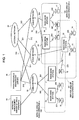
- Fig. 1 a configuration of the radio-resource management system in a first embodiment of the present invention.
- a service area 100 of a radio operator A, a service area 101 of a radio operator B, and a service area 102 of a radio operator C exist in a partially-overlapped state, and a radio-resource management server 40 manages the radio resource in a unified manner that these three operators hold in common.
- a radio-resource management server 40 manages the radio resource in a unified manner that these three operators hold in common.
- each of the operators mutually makes a contract for roaming with the other so that respective radio terminals can freely roam among these service areas 100 to 102 for continuing communication, and this roaming allows each of the service areas to interpolate the other.
- each operator may employ the configuration having a network management server for an operator within the network (In Fig. 1, a network management server 60 of the radio operator A is shown as one example).
- Radio base stations 20 and 21 are connected to a cable network 30 of the radio operator A via cable links 300 and 301 respectively, and further connected to a radio-resource management server 40 and an external network 50 via cable links 310 and 320 respectively.
- the radio terminal 12 is connectable to both of the radio base station 22 of the radio operator B and the radio base station 21 of the radio operator A; however, herein it is connected to the radio base station 22 of the radio operator B.
- the radio base station 22 is connected to a cable network 31 of the radio operator B via a cable link 302, and further connected to the radio-resource management server 40 and the external network 50 via cable links 311 and 312 respectively.
- the radio terminals 15 and 16 are connectable to both of the radio base station 22 of the radio operator B and the radio base stations 23 and 24 of the radio operator C; however, herein they are connected to the radio base stations 23 and 24 of the radio operator C respectively.
- the radio base stations 23 and 24 are connected to a cable network 32 of the radio operator C via cable links 303 and 304 respectively, and further connected to the radio-resource management server 40 and the external network 50 via cable links 312 and 322 respectively.
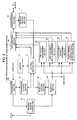
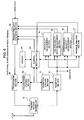
- Fig. 2 is a schematic functional block diagram of the radio base station, wherein down-direction user data (packet data), for which a transmission process is performed by a transmission section 69, is transmitted to the radio terminal via a transmit-receive shared unit 61 and an antenna.
- a radio wave received from the antenna is supplied to a reception section 62 through the transmit-receive shared unit 61, and up-direction user data and various kinds of control information including a pilot signal, etc. are derived.
- the quality and the availability ratio of the radio link are measured by a link-quality measurement section 64 and a link availability-ratio measurement section 65 respectively based on these kinds of the user data and the control information.
- a neighboring radio base station that becomes an object of notification to the radio-resource management server is decided to measure information relating to the above decided neighboring radio base station in an interference-quantity measurement section 66.
- an interference-quantity measurement section 66 As one example of how to decide this, there is a method of deciding it based on the level of the radio wave received from the neighboring radio base station to be later described.
- the various kinds of the measured information transmitted from the radio terminal are detected in a radio terminal measured-result detection section 67, and this detected result and the results measured by the link-quality measurement section 64, the link availability-ratio measurement section 65, and the interference-quantity measurement section 66 are synthesized in a data synthesis section 68, and notified as radio-link measured information 600 to the radio-resource management server via a communication section 73. Also, various messages to be obtained from the radio-resource management server via the communication section 73 are analyzed in a message analysis section 74, and this analyzed result is supplied to a control section 71 that is a CPU.
- the control section 71 controls a reception control section 63 and a transmission control section 70 according to this analyzed result, and performs the process such as frequency-alteration control and transmitted-power control to be later described.
- a memory 72 can be a memory for work of the CPU, and can be a memory having an operational control program filed.
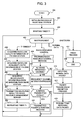
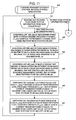
- Fig. 3 is illustrated an operational flowchart of the radio base station in a first embodiment of the present invention.
- the radio base station performs an initialize process after a boot, acquires information such as the frequency channel, the transmitted power, an address of its own station, and an address of the radio-resource management server, and performs various configurations (step 401).
- the radio base station starts a timer T1 (step 402), and comes into a wait state of an event (step 403).
- This timer T1 is for designating a period at which the measured result of the radio link is notified from the radio base station to the radio-resource management server, and its period is a variable value that can be set radio base station by radio base station.
- the radio base station After the radio base station acquired radio-link quality information of its own station (step 404), radio-link availability-ratio information (step 405), and interference information from the neighboring radio base station that became an object of notification to the radio-resource management server (step 406) whenever a time-out of T1 occurs, it transmits the measured result to the radio-resource management server (step 407), and then returns to a wait state of an event after restarting the timer T1.
- the radio base station receives a radio-resource control message from the radio-resource management server (step 409), it performs a frequency-channel alteration process (step 411) if the control content is a frequency-channel alteration request (step 410), and alters the transmitted power to a designated value (step 413) if it is a transmitted-power alteration request (step 412).
- a transfer process of data is independent from these control messages, and a packet transfer process is performed between the cable link and the radio link, and between the radio link and the cable link (steps 414 to 416).
- the process is finished after the finish process was performed (steps 417 and 418).
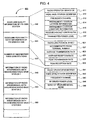
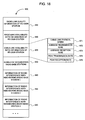
- Fig. 4 is an illustrated content of radio-link measured information 600 to be transmitted from the radio base station to the radio-resource management server in the first embodiment of the present invention.
- the radio-link measured information 600 is configured of radio-link quality information of its own station 610, radio-link availability-ratio information of its own station 620, a number of a neighboring radio base station 630, and information 640, 650, 660, ... of radio interference with neighboring radio base stations 1, 2, 3, ... .
- These kinds of the radio-link quality information, the radio-link availability-ratio information, and the radio interference information can be referred to as radio-link quality information in a mass. That is, this radio-link availability ratio also can be referred to as quality information because there rises congestion, and communication quality deteriorates when the radio-link availability ratio becomes large, and also, needless to say, the interference information falls into a category of the quality information.
- a radio operator identifier 611 In the radio-link quality information of its own station 610 are included a radio operator identifier 611, a radio base-station identifier 612, a frequency channel 613, installment-location latitude information 614, installment-location longitude information 615, a received-packet error ratio 616, and a transmitted-power level 617.
- SSID Service Set ID
- MAC Media Access Control
- the attitude/longitude information of the installment location is used only in the event that the radio base station has these kinds of information.
- a Global Positioning System (GPS), a PHS technique, etc. are considered as means for acquiring this attitude/longitude information.
- GPS Global Positioning System
- PHS PHS technique
- the received-packet error ratio 616 indicates a rate at which a CRC (Cyclic Redundancy Check) error occurred as against the packets received from the radio terminals under the base station during the measurement period, and as to the transmitted-power level, a power level at which the radio base station is transmitting the power toward the radio terminal is represented in a unit of dBm.
- CRC Cyclic Redundancy Check
- the radio-link availability-ratio information of its own station 620 are included a physical speed of a radio link 621, an accommodated radio terminal number 622, an average transmission rate 623, an average reception rate 624, a peak transmission rate 625, and a peak reception rate 626.
- the accommodated radio terminal number 622 indicates the number of the radio terminals connected under the above radio base station.
- the average transmission rate 623 and the average reception rate 624 are average bit rates obtained by dividing the bit number transmitted/received during the measurement period via the radio link by the measurement period, respectively.
- the peak transmission rate 625 and the peak reception rate 626 indicate the maximum bit numbers transmitted/received for any one second during the measurement period respectively.
- a number of a neighboring radio base station 630 indicates the number of the radio base stations to be included in the radio-link measured information 600, out of the other radio base stations that can be detected in the above radio base stations. That is, the other base stations, from which the level of the radio wave received in the above radio base station is equal to or more than a predetermined threshold, are taken as "other radio base stations that can be detected in the above radio base station", and "the number to be included in the radio-link measured information 600" out of the number of these other base stations is a number of the radio base stations from which the received level is equal to or more than a second threshold obtained by setting the threshold of the level received in the above radio base station to be yet higher.
- the radio base station may not always notify all the detected information of the other radio base stations to the radio-resource management server.
- the information 640 of radio interference with the neighboring radio base station 1 are included a radio operator identifier 641, a radio base-station identifier 642, a frequency channel 643, a received-power level 644, and a ratio of a received signal: noise 645. What this means is the same as the description concerning the radio-link quality information of its own station 610.
- the interference quantity from the other radio base stations is found from the total of the received-power levels from the other stations in the frequency channel identical to that of its own station.
- Fig. 5 is a schematic functional block diagram of the radio terminal, wherein a down-direction signal received from the antenna is supplied to a reception section 76 via a transmit-receive shared unit 75, and user data and various control signals are derived. These user data and various control signals are input into a link-quality measurement section 78, a link availability-ratio measurement section 79, an interference-quantity measurement section 80, and a message analysis section 81 respectively.
- the quality of the radio link is measured in the link-quality measurement section 78, the availability ratio of the radio link in the link availability-ratio measurement section 79, and the interference quantity in the interference-quantity measurement section 80, respectively.
- various messages from the radio-resource management server are analyzed in the message analysis section 81. As the case may be, the above messages are transmitted via the radio base station.
- a control section 83 that is a CPU takes various kinds of control for a reception control section 77 and a transmission control section 86, i.e. frequency-alteration control, transmitted-power control, base-station alteration control, etc. in according to the analyzed result of this message.
- the foregoing various kinds of measured information are synthesized with up-direction user data by a transmitted-data synthesis section 82, and is supplied to a transmission section 85.
- the synthesized information for which the transmission process is performed by this transmission section 85 is transmitted in the up direction via the transmit-receive shared unit 75.
- a memory 84 also can be a memory for work of the CPU 83, and can be a memory having a control program of the above radio terminal filed.
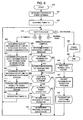
- Fig. 6 is a flowchart illustrating an operation of the radio terminal in the first embodiment of the present invention.
- the radio terminal performs an initialize process after a boot, sets the frequency channel and the transmitted power for connecting to the neighboring radio base station, and acquires an address of its own station and an address of the radio-resource management server, etc. for performing various configurations (step 421).
- the radio terminal starts a timer T2 (step 422), and comes into a wait state of an event (step 423).
- a value of this timer T2 decides the period at which the measured result of the radio link is notified from the radio terminal to the radio-resource management server.
- the radio terminal After the radio terminal acquired the quality information of the radio link to the radio base station during communication (step 424), the availability-ratio information of the radio link to the radio base station during communication (step 425), and the quality information (interference information) of the link to the neighboring radio base station (step 426) whenever a time-out of T2 occurs, it transmits the measured result to the radio-resource management server (step 427), and then returns to a wait state of an event after restarting the timer T2 (step 428).
- the radio terminal received the radio-resource control message from the radio-resource management server (step 429), it alters the transmitted power to a designated value (step 431) if the control contents is a transmitted-power alteration request (step 430), and it makes handover to the designated radio base station (step 435) if the control contents is a radio base-station alteration request (step 432).
- the radio-resource control message requires a roaming that extends over the radio operators (step 433), it performs a radio operators alteration process such as authentication responding to a necessity (step 434).
- the transmission/reception process is performed for the packet (steps 436 to 438), and in the event that the shutdown process was initiated, the process is finished after the finish process was performed (steps 439 and 440).
- Fig. 7 is a view illustrating contents of radio-link measured information 700 to be transmitted from the radio terminal to the radio-resource management server in the first embodiment of the present invention.
- the radio-link measured information 700 is configured of quality information of a radio link to a radio base station during communication 710, availability-ratio information of a radio link to a radio base station during communication 720, a number of a neighboring base station 730, and quality information 740, 750, 760, ... of radio interference with neighboring radio base stations 1, 2, 3, ... .
- the quality information of a radio link to a radio base station during communication 710 is configured of a radio operator identifier 711, a radio base-station identifier 712, a frequency channel 713, a received-power level 714, a ratio of a received-signal: noise 715, a received-packet error ratio 716, and a transmitted-power level 717.
- a radio operator identifier 711 a radio operator identifier 711
- a radio base-station identifier 712 a frequency channel 713
- a received-power level 714 a ratio of a received-signal: noise 715
- a received-packet error ratio 716 a transmitted-power level 717.
- an average transmission rate 721 an average reception rate 722, a peak transmission rate 723, and a peak reception rate 724.
- a radio operator identifier 741 a radio base-station identifier 742, a frequency channel 743, a received-power level 744, and a ratio of a received-signal: noise 745.
- a radio operator identifier 741 a radio operator identifier 741
- a radio base-station identifier 742 a frequency channel 743
- a received-power level 744 a received-power level 744
- a ratio of a received-signal: noise 745 a ratio of a received-signal: noise 745.
- the radio-link measured information 700 shown in Fig. 7 to be transmitted from the radio terminal to the radio-resource management server and the radio-link measured information 600 shown in Fig. 4 to be transmitted from the radio base station to the radio-resource management server have the partially duplicated part such as the numbers of the neighboring radio base station 630 and 730, and the frequency channels 613 and 713.
- radio-link availability-ratio information of a radio link to a radio base station during communication 720 collected from each radio terminal radio base station by radio base station its value is due to be equal to the radio-link availability-ratio information of its own station 620 that the radio base station measured.
- information of radio interference with a neighboring radio base station 640 to 660 that the radio base station measured also can be estimated to a certain extent from information of interference with a neighboring radio base station 740 to 760 that the radio terminal measured.
- the radio terminals are uniformly distributed in the adjacent area of the radio base station to average the levels received from the neighboring radio base stations that a plurality of the radio terminals measured, it is possible to estimate the interference quantity from the neighboring radio base station that the radio base station to which the radio terminal belongs receives.
- the reason why the radio-link measured information to be collected is caused to have redundancy as mentioned above is to realize the operation in a system wherein are mixed the conventional radio base station and radio terminal that have neither radio-link measurement function, nor function of notification to the radio-resource management server as described in this embodiment.
- the radio-resource management server can estimate the radio-link quality and the availability ratio by radio base station, and the degree of the interference with the other radio base station from the radio-link measured information 700 collected by the above radio terminal group.
- the frequency alteration process, the transmitted-power control process, and the load-distribution control process can be executed in the radio-resource management server, based on the radio-link measured information collected mainly from the radio base station.
- a communication protocol is optional for transmitting the radio-link measured information 600 and 700 from the radio base station or the radio terminal to the radio-resource management server.
- a protocol suitable for transmitting such network management information there is an SNMP (Simple Network Management Protocol, RFC 2570-2576).
- the transmission of the measured information 700 from the radio terminal to the radio-resource management server may be performed via the radio base station or may be performed without going through it. In the event of transmitting the measured information 700 via the radio base station, by getting the measured information 700 together in the radio base station from the radio terminals that are subordinates thereof to transmit it to the radio-resource management server, efficiency can be realized.
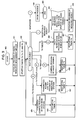
- Fig. 8 is a schematic functional block diagram of the radio-resource management server.
- a control section 87 is a CPU that takes control of each section according to a program filed in a ROM 90 of a memory 88.
- the memory 88 has a RAM 89 that is a memory for work for the CPU 87, and the foregoing ROM 90.
- a frequency-alteration control section 91 has a function of taking alteration control of the frequency channel for radio base station, and a transmitted-power control section 92 has a function of taking control of the transmitted power for radio base station.
- an intra-base-station load-distribution control section 93 has a function of taking distribution control of the intra-base-station load, and a radio-link fault-occurrence notification control section 94 controls notification of the fault occurrence to the radio base station.
- a communication section 95 has a function of making communication with the radio base station and the radio terminal. Each section thereof is connected to a bus 96 in common.
- Fig. 9 is illustrated an operational flowchart of the radio-resource management server in the first embodiment of the present invention.
- the radio-resource management server performed an initialize process (step 451), and after it started four timers of T3, T4, T5, and T6 (step 452), it comes into a wait state of an event (step 453).
- T3 designates the period at which the alteration control process (step 454) is performed of the frequency channel of the radio base station.
- T4 designates the period at which the transmitted-power control process (step 456) is performed for the radio base station.
- T5 designates the period of control (step 458) for the radio terminal.
- T6 designates the period at which the fault-notification process (step 460) is performed at the moment that excessive interference was detected from the radio base station.
- step 462 a process for retaining the measured result is performed, and in the event that the shutdown was initiated, a finish process (step 464) is performed.
- Fig. 10 is illustrated an operational flowchart at the moment that the radio-resource management server performs the frequency-alteration control of the radio base station in the first embodiment of the present invention.
- the radio-resource management server reads out information of the radio base station retained at the moment that the radio-link measured information was received in the order filed from a head radio base station by radio base station (step 471).
- the radio-resource management server lists the neighboring radio base stations utilizing a frequency channel (F_cur) identical to that of its own station 613 from the read-out information, and acquires a radio base-station list (NB_list) that is composed of these neighboring radio base stations (step 472).
- F_cur frequency channel
- NB_list radio base-station list
- a total (I_cur) is calculated of the received-power levels 644 of the radio base-station group belonging to this radio base-station list (NB_list) (step 473).
- the total of this received-power levels is equivalent to the interference quantity.
- the total of the received-power levels for each of all frequency channels that its own station can utilize is found from the read-out information to assume it to be an interference quantity of its channel.
- a total (I_tar) of received-power levels from the neighboring radio base stations is acquired in a frequency channel (F_min) of which the interference quantity is few (step 474).
- the radio-resource management server transmitted the radio-resource control message to the selected radio base station, and instructed it to make the frequency-channel alteration from F_cur to F_min (step 476), it deletes information on the radio base station of which the frequency channel was altered from the memory (step 477).
- the process is finished (step 478).
- the following technique also can be considered.
- the means is adapted so as to make an alteration to the frequency other than this frequency that is currently utilized.
- the interference not only from the system of the identical radio operator but also from that of the different radio operator is included in the interference quantity (the total of the received-power levels) from the neighboring radio base stations.
- the value of the timer T3 is set to be significantly long, or that the timer T3 is adapted to be started to the time when the system is hardly utilized because the radio terminals under the radio base station become all incapacitated temporarily.
- computation of I_cur and I_tar was performed in a radio base-station frequency control process 454 of Fig. 9; however the above computation may be performed in a measured-result retention process 463 at the moment of retaining the measured result.
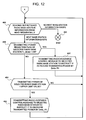
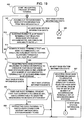
- Fig. 11 and Fig. 12 is illustrated an operational flowchart at the moment that the radio-resource management server performs the transmitted-power control of the radio base station in the first embodiment of the present invention. Also in this case, the radio-resource management server sequentially reads out the radio base-station information from a head radio base station by radio base station (step 481).
- the radio-resource management server acquires a radio base-station list (NB_list) having the neighboring radio base-station group utilizing a frequency channel (F_cur) identical to the frequency channel that the selected radio base station (its own station) utilizes listed (step 483), acquires a list (NB_list1) indicating the radio base-station group belonging to the radio operator identical to the radio operator to which the selected radio base station belongs, out of the radio base stations to be included in this radio base-station list (NB_list) (step 484), and also, acquires a list (NB_list2) indicating the radio base-station group that belongs to the radio operator different from the radio operator to which the selected radio base station belongs, and yet is controllable by the radio-resource management server (step 485).
- NB_list radio base-station list having the neighboring radio base-station group utilizing a frequency channel (F_cur) identical to the frequency channel that the selected radio base station (its own station) utilizes listed
- NB_list1 indicating the radio base-station group belonging
- the reason why the radio base station is limited to the radio base-station group that is controllable by the radio-resource management server is that it is necessary to use only the result measured by the radio base station that is controllable by the above server because the measured result of the radio link was transmitted to the above server from all radio base stations including the radio base station that is uncontrollable by the above server, and these measured results were all retained within the above server.
- the radio-resource management server switches on a transmitted-power reduction flag FL_down for the base station, of which the received level exceeded a threshold IC_pc1, and of which the current transmitted power is equal to or more than the lower limit value out of the radio base stations to be included in this radio base-station list (NB_list1) for taking control as as to reduce the interference quantity (step 486). Also, it similarly switches on the transmitted-power reduction flag FL_down for the base station, of which the received level exceeded a threshold Ic_pc2, and of which the current transmitted power is equal to or more than the lower limit value, out of the radio base stations to be included in the list (NB_list2) (step 487).
- the process proceeds to an actual transmitted-power control process (Fig. 12).
- the retained radio base-station information is sequentially read out from a head base station by base station (step 488), and if the transmitted-power reduction flag FL_down of the selected radio base station is on (step 489), the radio-resource control message is transmitted to the selected radio base station to instruct it to reduce the transmitted power by Delta_P1 (step 490).
- the radio-resource control message is transmitted to the selected radio base station to instruct it to increase the transmitted power by Delta_P2 (step 492). In such a manner, raising the transmitted power as highly as possible so long as no interference occurs allows a covered range of the network of the radio operator to be spread.
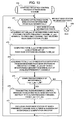
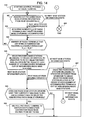
- Fig. 14 is illustrated a flowchart of an operation in which the radio-resource management server gives the radio terminal an instruction of the handover, and makes load distribution between the radio base stations in the first embodiment of the present invention.
- the radio-resource management server sequentially reads out the retained radio base-station information from a head base station by base station (step 501), and acquires a number N_m of the radio terminals that a selected radio base station BS1 accommodates (step 502).
- This accommodated radio terminal number N_m is the accommodated radio terminal number 622 in the radio-link measured information 600 shown in Fig. 4.
- the radio-resource management server selects the radio base stations, which belong to the operator identical to the operator to which the selected radio base station belongs, in the order of the less number of the accommodated terminals out of the neighboring radio base stations while it makes a reference to the retained information (step 504).
- a radio base station BS2 which is a radio base station of the identical operator, and of which the accommodated terminal number is few, exists in the neighborhood.
- this investigation can be made. And, if such a radio terminal exists, this radio terminal is instructed to switch over the connection-destination radio base station from BS1 to BS2 (step 506).
- the process is similarly performed (step 507).
- the load distribution can be made from the network side in the event that the load (the connected radio terminal number) is greatly biased between the identical operator and the different operator.
- Fig. 15 is illustrated an operational flowchart at the moment that the radio-resource management server notifies the occurrence of the fault in the radio link to a network management server in the first embodiment of the present invention.
- the radio-resource management server sequentially reads out the retained radio base-station information from a head radio base station by radio base station (step 521), and acquires a list (NB_list) of the neighboring radio base stations utilizing a frequency channel (F_cur) identical to the frequency channel that the selected radio base station (its own station) utilizes (step 522).
- NB_list a list of the neighboring radio base stations utilizing a frequency channel (F_cur) identical to the frequency channel that the selected radio base station (its own station) utilizes
- the radio-resource management server acquires a list (NB_list1) of the radio base stations belonging to the radio operator identical to the radio operator to which the selected radio base station belongs, out of the radio base stations to be included in this list (NB_list) (step 523), and acquires a list (NB_list2) of the radio base-stations that belong to the radio operator different from the radio operator to which the selected radio base station belongs, and are controllable by the radio-resource management server, out of the radio base stations to be included in this list (NB_list) (step 524).
- the meaning of these NB_list1 and NB_list2 is similar to the explanation of Fig. 13.
- the radio-resource management server switches on a fault-notification flag FL_notify for the base station, of which the received level exceeded a threshold Ic_fl1, and of which a fault-notification-done flag FL_notify_done is off, out of the radio base stations to be included in the list (NB_list1) (step 525). Also, it sets the fault-notification flag FL_notify to be on for the base station, of which the received level exceeded a threshold Ic_fl2, and of which a fault-notification-done flag FL_notify_done is off, out of the radio base stations to be included in the list (NB_list2) (step 526).
- the reason why the threshold of the interference quantity (received level) is sorted out between the identical radio operator and the radio operator other than it is that it is necessary to suppress the quantity of the interference with the other radio operator at a lower level than that within the identical radio operator.
- the radio-resource management server After the radio-resource management server marked the base stations for which the fault notification had to be made in a general way, it sequentially reads out the radio base station information (step 527), transmits a radio-resource management message to the network management server of the radio operator to which the radio base station for which the fault-notification flag FL_notify was set to be on (step 528) belongs, and notifies to it.
- the fault-notification-done flag FL_notify_done is set to be off for the radio base station for which the notification was made (step 530) so that the fault notification is not made repeatedly.
- This fault-notification-done flag may be manually set to be off when the fault was cancelled, or may be automatically set to be off by confirming that the fault was cancelled, and stability was kept.
- Fig. 16 is illustrated an operational flowchart of the radio terminal in a second embodiment of the present invention.
- the value of the timer is switched over in two stages responding to the link quality at the moment that the radio terminal notifies the link quality to the radio-resource management server.
- the value of the timer T2 is set at T_fast of which the period is short in advance (step 441), and the value of the timer T2 is switched over to T_slow of which the period is long at the moment that an average level value Pa received from the radio base station during communication exceeded a fast-measured threshold Pa_th, and was stabilized in a good quality state (step 443).
- the period of the timer T2 is shorten once again for restarting it (step 444).
- the similar control may be applied for the radio base station. In such a manner, prolonging the notification period during the time that the quality is in good state allows the quantity of the notification traffic for control to be reduced, and the congestion of the network to be alleviated.
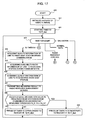
- Fig. 17 is illustrated an operational flowchart of the radio terminal in a third embodiment of the present invention.
- the value of the timer at the moment that the radio terminal notifies the link quality to the radio-resource management server is switched over in two stages; however a criterion for switching over is decided by a distribution value of the received level.
- a received-level distribution value Pd from the radio base station during communication falls below a fast-measured threshold Pd_th (step 445)
- fluctuation in the quality is regarded to be mild
- the measurement period T2 is set to be long (step 443).
- the distribution value Pd exceeded Pd_th the measurement period T2 is set to be short once again (step 444).
- the similar control may be applied for the radio base station.
- setting the notification period to be long during the time that the quality is in good state allows the quantity of the notification traffic for control to be reduced, and the congestion of the network to be alleviated.
- Fig. 18 contents of radio-link measured information 601 to be transmitted from the radio base station to the radio-resource management server in a fourth embodiment of the present invention.
- a difference between it and the radio-link measured information 600 in the first embodiment is to include cable-link availability-ratio information of its own station 670.
- the cable-link availability-ratio information of its own station 670 is configured of a cable-link physical speed 671, an average transmission rate 672, an average reception rate 673, a peak transmission rate 674, and a peak reception rate 675.
- the average transmission rate 672 and the average reception rate 673 are average bit rates obtained by dividing the bit numbers that the radio base station transmitted/received via the cable link connected hereto during the measurement period by the measurement period respectively.
- the peak transmission rate 674 and the peak reception rate 675 represent the maximum bit numbers transmitted/received via the cable link for any one second during the measurement period respectively.
- Fig. 19 is illustrated an operational flowchart of the intra-radio-base-station load distribution in the fourth embodiment of the present invention.
- the radio-resource management server gives an instruction of the handover to the radio terminal, thereby allowing the load distribution to be realized.
- Fig. 20 is illustrated a configuration view of the radio-resource management system in a fifth embodiment of the present invention.
- the radio operators A, B, and C install radio-resource management servers 41, 42, and 43 respectively.
- the radio-link measured information that the radio terminal or the radio base station transmitted were aggregated in the radio-resource management servers 41, 42, and 43 of the radio operators respectively, they are transferred to the radio-resource management server 40 in a mass.
- FIG. 21 A schematic functional block diagram of the radio-resource management server 40 of this third-party organ is illustrated in Fig. 21, and the identical parts to Fig. 8 are indicated with the identical numerals.
- a communication service price decision section 97 was added to the block of Fig. 8 in Fig. 21, and the other configuration is identical to that of Fig. 8.
- This communication service price decision section 97 has a function of, responding to the quality etc. of each of the radio links of a plurality of the radio operators, taking decision control of a price at which the communication service is offered to the external network, and the details of its operation are shown in Fig. 22 and Fig. 23.
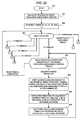
- Fig. 22 is illustrated an operational flowchart of the radio-resource management server, in particular, the communication service price decision section 97 in a sixth embodiment of the present invention.
- the identical parts to Fig. 9 are indicated with the identical numerals in Fig. 22.
- the radio-resource management server decides the price at which the communication service via the network of each radio operator is offered to the external network, and notifies this price to the above external network (steps 802 to 805).
- each quality (Qwi) of all radio links belonging to a radio operators i there are each quality (Qwi) of all radio links belonging to a radio operators i, each speed (Swi) of the radio links, and each availability ratio ( ⁇ wi) of the radio links, and the values obtained by adding these respective qualities (Qwi), speeds (Swi), and availability ratios ( ⁇ wi) for summing up are employed (step 803).
- each quality (Qwi) of the radio links can be calculated from the received-packet error ratio (616 of Fig. 4), each speed (Swi) of the radio links from the radio-link physical speed (621 of Fig. 4), and each availability ratio ( ⁇ wi) of the radio links from the average transmission rate (623 of Fig. 4), the average reception rate (624 of Fig. 4), and the radio-link physical speed (621 of Fig. 4), respectively.
- a predetermined price decision function f (Qwi, Swi, ⁇ wi) is employed to calculate a current price Vi for the external network of the radio operator i.
- the calculated current price Vi is notified to the external network from the radio-resource management server (step 805), and in addition hereto, is notified to each radio operator and each radio terminal as well. In such a manner, altering the price of the circuit responding to the speed, the quality, and the availability ratio of the radio link group allows the optimal network of the radio operator to be always offered to the external network.
- the above-mentioned price decision and notification process are executed by taking the time-out of the timer T7 as a trigger after initializing the radio-resource management server.
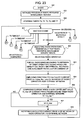
- Fig. 23 is illustrated an operational flowchart of the radio-resource management server, in particular, the communication service price decision section 97 in a seventh embodiment of the present invention.
- the identical parts to Fig. 22 are indicated with the identical numerals in Fig. 23.
- this seventh embodiment in addition to the operation of the sixth embodiment shown in Fig. 22 is added an operation for causing the external network to receive the guarantee that the current price of the circuit of the radio operator i does not exceed a predetermined upper limit value Vi_max in compensation for a radio-resource management fee that was paid to an entity operating the radio-resource management server from the external network.
- the third-party organ operating the radio-resource management server decides the operational fee for operating it so that the price at which the communication service via the network of each radio operator is offered to the external network becomes equal to or less than the upper limit value predetermined between the third-party organ and the external network, and collects its charge from the operator of the external network. And, in the event that the price of the communication service does not reach the above upper limit value, the third-party organ is to offer the communication service to the external-network operator at a then price (current price).
- the process of restraining the current value Vi to Vi_max is performed in the radio-resource management server (step 807) in the event that the computed current price Vi exceeded the above upper limit value Vi_max (step 806).
- the other process is similar to that of the sixth embodiment of Fig. 22.
- a technique of a business model employing the foregoing radio-resource management system as an eighth embodiment of the present invention will be explained below while a reference is made to the accompanied drawings.
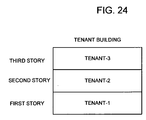
- the radio communication operator operates the radio communication system such as a LAN in a three-storied tenant building as shown in Fig. 24.
- a tenant-1 to a tenant-3 utilize the floors of this tenant building respectively, and an owner of the tenant building manages the radio resource of the radio communication system that the tenant-1 to the tenant-3 operate, thereby allowing the radio communication quality to be guaranteed and an additive value of the building itself to be enhanced.
- FIG. 25 An operational sequence of the embodiment of.the business model in this example is illustrated in Fig. 25.
- the owner of this building makes a management contract on the radio resource within the building with an owner of the radio-resource management server (step S1), and entrusts him/her with a radio-resource management business employing the radio-resource management server.
- the tenant for example, the tenant-1 who desires to operate the radio communication service makes a radio-resource utilization contract with the owner of the building (step S2).
- the tenant utilizes radio facilities such as the radio base station
- he/she registers radio-facility information relating to the radio facilities to the radio-resource management server via the owner of the building and the owner of the radio-resource management server (steps S3 and S4), and actually installs the radio facilities (for example, the radio base station) (step S5).
- the radio-resource management server acquires the radio-link measured information 600 (see Fig. 4) and 700 (see Fig. 7) from the registered radio facilities and the radio terminals, and supervises the communication status of the radio communication operator. That is, it supervises the occurrence of the fault such as the occurrence of high-load status and the occurrence of the interference day after day (steps S6-1 to S6-4). And, when the radio-resource management server detects a high-load communication status (step S7), it presents, for example, a fault-avoidance countermeasure such as extending the radio facilities, and altering the installment-location of the radio facilities, etc. via the owner of the radio-resource management server and the owner of the building to the tenant having the radio facilities where the high-load communication status is occurring (steps S8 to S10).
- a fault-avoidance countermeasure such as extending the radio facilities, and altering the installment-location of the radio facilities, etc. via the owner of the radio-resource management server and the owner of the building to the tenant having
- the tenant-2 utilizes the similar radio facilities, similarly to the explanation made in the event of the former tenant-1, he/she makes the radio-resource utilization contract (step S11). And, the radio-facility information relating to the radio facilities of the tenant-2 is registered to the radio-resource management server (step S12), and the radio facilities are installed actually (steps S13 and S14).
- the radio-resource management server acquires the radio-link measured information 600 and 700 from the registered radio facilities of the tenant-2 and the radio terminals, and similarly supervises its communication status day after day (steps S15-1 and S15-2).
- the radio-resource management server outputs an instruction of the alteration of the frequency, the alteration of the transmitted power, etc. to the radio facilities causing the interference to occur in order to cancel the interference '(step S18), and presents an interference avoidance countermeasure.
- the radio-resource management server makes a report of its effect to its owner (step S20).
- step S21 including a fee for the above service to the owner of the building who is a person enjoying this service (step S21), and that the owner of the building pays the radio-resource management service fee to the owner of the radio-resource management server (step 25), and the owner of the building charges the radio-resource utilization fee to the tenant who made the radio resource contract (steps S23 and S24).
- Fig. 26 is a view illustrating an outline of a functional block diagram of the radio-resource management server to be employed for the business model technique shown in Fig. 25, and the identical parts to Fig. 8 are indicated with the identical numerals.
- a fault process section 98 has a frequency-alteration control section 91, a transmitted-power control section 92, and a base-station load-distribution control section 93, and each of these stations 91 to 93, which has an identical function to each of the sections 91 to 93 shown in Fig. 8 respectively, receives the radio-link measured information 600 and 700 from the radio facilities to supervise the communication status of the radio link, and to detect the fault occurrence (the interference and the high load), and performs an avoidance-countermeasure process of it.
- a database 100 In a database 100 are registered information relating to a person enjoying the service who made the radio-resource management contract, information relating to the radio facilities, information relating to the service level (class), and information relating to its service fee, etc.
- a service fee charging section 99 charges the service fee to the owner of the building (in the event of bypassing the owner of the building, directly to the tenant of the building) based on information registered in this database 100.
- the other configuration and the function are identical to that of Fig. 8, and its explanation is omitted.
- the effect exists that, by managing the wireless network quality of a plurality of the radio operators in a integrated manner to alter the frequency channel of the radio base station, the transmitted power, the terminal to be accommodated, and so forth responding to a necessity, it becomes possible to optimally operate the radio resource that is held in common.
- terminals and base stations belonging to service areas 100 to 102 of plural radio operators periodically measure a radio-link quality and an availability ratio of a radio link to notify them to a radio-resource management server 40,
- the server 40 alters a frequency of the base station, and a transmitted-power quantity of the base station and the terminal based on these measured results to improve the radio-link quality, and reduces interference with a neighboring radio system.
- an instruction of handover is given to the terminal from the server 40 to realize a load distribution within the radio operator, and between the radio operators.
- the server 40 When the server 40 detects excessive radio interference between the radio operators, it notifies occurrence of a fault, an interference quantity, a quantity of the transmitted power that the base station should attenuate, and the frequency that the base station should alter to the above radio operator that becomes an interference source.
Landscapes
- Engineering & Computer Science (AREA)
- Computer Networks & Wireless Communication (AREA)
- Signal Processing (AREA)
- Quality & Reliability (AREA)
- Mobile Radio Communication Systems (AREA)
- Near-Field Transmission Systems (AREA)
- Burglar Alarm Systems (AREA)
- Small-Scale Networks (AREA)
Applications Claiming Priority (2)
| Application Number | Priority Date | Filing Date | Title |
|---|---|---|---|
| JP2002371876 | 2002-12-24 | ||
| JP2002371876A JP2004207839A (ja) | 2002-12-24 | 2002-12-24 | 無線リソース管理システムとその方法及びそれに用いる管理装置、基地局及び端末 |
Publications (3)
| Publication Number | Publication Date |
|---|---|
| EP1434456A2 true EP1434456A2 (de) | 2004-06-30 |
| EP1434456A3 EP1434456A3 (de) | 2004-11-24 |
| EP1434456B1 EP1434456B1 (de) | 2008-02-13 |
Family
ID=32463505
Family Applications (1)
| Application Number | Title | Priority Date | Filing Date |
|---|---|---|---|
| EP03029788A Expired - Lifetime EP1434456B1 (de) | 2002-12-24 | 2003-12-23 | Funkressourcenverwaltung basierend auf Interferenz zwischen mehreren Funkbetreibern |
Country Status (6)
| Country | Link |
|---|---|
| US (6) | US7826796B2 (de) |
| EP (1) | EP1434456B1 (de) |
| JP (1) | JP2004207839A (de) |
| CN (1) | CN100336409C (de) |
| AT (1) | ATE386410T1 (de) |
| DE (1) | DE60319058T2 (de) |
Cited By (11)
| Publication number | Priority date | Publication date | Assignee | Title |
|---|---|---|---|---|
| WO2006036089A1 (en) * | 2004-09-28 | 2006-04-06 | Telefonaktiebolaget Lm Ericsson (Publ) | A radio access network database for knowledge of radio channel and service environment network |
| WO2008088254A1 (en) * | 2007-01-15 | 2008-07-24 | Telefonaktiebolaget Lm Ericsson (Publ) | Dynamic frequency band allocation between radio communication networks |
| CN101141755B (zh) * | 2006-09-05 | 2010-05-12 | 华为技术有限公司 | 无线区域网络系统中的干扰通知方法及其实现系统 |
| RU2431943C2 (ru) * | 2007-01-15 | 2011-10-20 | Телефонактиеболагет Лм Эрикссон (Пабл) | Динамическое назначение полосы частот между сетями радиосвязи |
| US8203983B2 (en) * | 2007-03-15 | 2012-06-19 | Lantiq Deutschland Gmbh | Multi-domain network with centralized management |
| CN101374018B (zh) * | 2007-08-23 | 2012-11-28 | 中兴通讯股份有限公司 | Ofdm系统的物理资源块自适应分配方法 |
| WO2013030045A1 (en) * | 2011-08-30 | 2013-03-07 | Alcatel Lucent | Method and system for troubleshooting in in-house networks |
| WO2014040617A1 (en) * | 2012-09-12 | 2014-03-20 | Nokia Siemens Networks Oy | Load balancing in communication systems |
| EP2472937A4 (de) * | 2009-09-25 | 2015-09-16 | Sony Corp | Managementserver, kommunikationssystem, kommunikationsendgerät und relaisvorrichtung |
| WO2019069013A1 (fr) * | 2017-10-05 | 2019-04-11 | Orange | Procédé de mutation d'un terminal mobile entre stations d'accès dans un contexte multi-opérateurs |
| US10602396B2 (en) | 2016-10-18 | 2020-03-24 | Nokia Solutions And Networks Oy | Detection and mitigation of signalling anomalies in wireless network |
Families Citing this family (133)
| Publication number | Priority date | Publication date | Assignee | Title |
|---|---|---|---|---|
| US7539170B2 (en) * | 2003-12-29 | 2009-05-26 | Research In Motion Limited | Optimized data reconnect |
| CN100426906C (zh) * | 2004-06-12 | 2008-10-15 | 中兴通讯股份有限公司 | 移动通信系统中等效信道容量建模的方法 |
| US20060014562A1 (en) * | 2004-07-15 | 2006-01-19 | Pavel Syrtsov | Integrated management of a wireless network |
| US7610225B2 (en) * | 2004-08-13 | 2009-10-27 | Qualcomm Incorporated | Methods and apparatus for performing resource tracking and accounting at a mobile node |
| JP4440739B2 (ja) * | 2004-09-06 | 2010-03-24 | 株式会社エヌ・ティ・ティ・ドコモ | 周波数共用型送信機 |
| TWI258276B (en) * | 2004-11-25 | 2006-07-11 | Inst Information Industry | Dynamic channel allocation for wireless access points and wireless networks |
| KR100693045B1 (ko) | 2004-12-20 | 2007-03-12 | 삼성전자주식회사 | 광대역 무선 통신망의 큐오에스 모니터링 시스템 및 그 방법 |
| JP4656387B2 (ja) * | 2004-12-28 | 2011-03-23 | 日本電気株式会社 | 移動無線通信システム、及び移動無線通信システムにおける監視制御方法 |
| CN101860886B (zh) * | 2005-02-18 | 2013-05-08 | 富士通株式会社 | 无线通信系统、干扰控制方法以及基站 |
| EP2547162B1 (de) | 2005-02-18 | 2015-10-28 | Fujitsu Limited | Interferenzreduktionsverfahren in der Basisstation |
| JP2006246334A (ja) * | 2005-03-07 | 2006-09-14 | Sanyo Electric Co Ltd | 送信電力制御方法ならびにそれを利用した制御装置および基地局システム |
| JP4696600B2 (ja) * | 2005-03-08 | 2011-06-08 | 日本電気株式会社 | 無線アクセスネットワークシステム |
| US20060203743A1 (en) * | 2005-03-10 | 2006-09-14 | Quinn Liam B | Apparatus and methods for dynamically configurable wireless network |
| US7616956B2 (en) * | 2005-03-15 | 2009-11-10 | Interdigital Technology Corporation | Measurement request report extensions for media independent handover |
| CN100401826C (zh) * | 2005-03-31 | 2008-07-09 | 华为技术有限公司 | 传输链路的故障检测方法 |
| US7668530B2 (en) | 2005-04-01 | 2010-02-23 | Adaptix, Inc. | Systems and methods for coordinating the coverage and capacity of a wireless base station |
| JP4561457B2 (ja) * | 2005-04-22 | 2010-10-13 | 沖電気工業株式会社 | 負荷分散処理システム、無線アクセス装置及び無線ネットワーク |
| JP2006352660A (ja) * | 2005-06-17 | 2006-12-28 | Nec Infrontia Corp | 無線lanシステム、その通信状態検出方法及びその通信状態検出プログラム |
| JP2007028234A (ja) * | 2005-07-15 | 2007-02-01 | Iwatsu Electric Co Ltd | 無線lanシステム |
| US7653357B2 (en) * | 2005-08-22 | 2010-01-26 | Toshiba America Research, Inc. | Access point interference control and selection methods |
| CN101292552B (zh) * | 2005-10-14 | 2011-03-23 | 艾利森电话股份有限公司 | 多址接入通信网络中的方法和装置 |
| JP4830451B2 (ja) * | 2005-11-02 | 2011-12-07 | 日本電気株式会社 | 無線回線制御システム、集中制御装置及びそれらに用いる無線回線制御方法並びにそのプログラム |
| JP4047887B2 (ja) | 2005-11-11 | 2008-02-13 | Necインフロンティア株式会社 | 無線lanシステムの通信制御方法および中継装置 |
| JP2007135143A (ja) * | 2005-11-14 | 2007-05-31 | Nec Corp | 網内通信状況提供サービスシステム |
| CN1976509B (zh) * | 2005-11-28 | 2011-07-06 | 华为技术有限公司 | 一种终端切换方法及系统 |
| US8094631B2 (en) * | 2005-12-09 | 2012-01-10 | Marvell World Trade Ltd. | Coexistence system and method for wireless network devices |
| CN100423608C (zh) * | 2006-01-26 | 2008-10-01 | 中国移动通信集团公司 | 移动终端的参数预配置方法及预配置参数的检验方法 |
| JP4685646B2 (ja) | 2006-01-30 | 2011-05-18 | 株式会社東芝 | 基地局装置及び無線通信システム及び周波数割当方法 |
| CN101064952B (zh) * | 2006-04-29 | 2012-08-08 | 株式会社Ntt都科摩 | 异构无线网络中的分布式无线资源管理系统和方法 |
| JP4843031B2 (ja) * | 2006-05-10 | 2011-12-21 | 株式会社日立製作所 | システム間ハンドオフを起動する無線基地局および無線通信システム |
| JP4758294B2 (ja) * | 2006-07-10 | 2011-08-24 | 株式会社日立製作所 | エリア品質情報取得システム |
| CN101110617B (zh) * | 2006-07-19 | 2011-11-02 | 中国电信股份有限公司 | 确定干扰信号功率的方法、cdma基站设备及对底噪值进行更新的方法 |
| JP4800143B2 (ja) * | 2006-08-07 | 2011-10-26 | 株式会社エヌ・ティ・ティ・ドコモ | 無線通信制御装置、無線通信制御システムおよび無線通信制御方法 |
| EP2058957A4 (de) | 2006-08-29 | 2012-07-18 | Fujitsu Ltd | Kommunikationsvorrichtung, endgerät und funkkanalqualitäts-steuerverfahren |
| JP4986641B2 (ja) * | 2007-01-29 | 2012-07-25 | 京セラ株式会社 | 無線通信端末の表示方法 |
| WO2008129659A1 (ja) * | 2007-04-16 | 2008-10-30 | Fujitsu Limited | 情報配信装置 |
| JP4579266B2 (ja) * | 2007-04-26 | 2010-11-10 | 京セラ株式会社 | 移動通信システム、基地局装置およびその制御方法 |
| US8068513B2 (en) * | 2007-05-07 | 2011-11-29 | Nokia Siemens Networks Gmbh & Co. Kg | Determining load measure for network element |
| JP4905245B2 (ja) * | 2007-05-09 | 2012-03-28 | 日本電気株式会社 | 管理装置、無線アクセスネットワーク及びそれらに用いる設備共有方法並びにそのプログラム |
| KR101546549B1 (ko) * | 2007-08-09 | 2015-08-21 | 노오텔 네트웍스 리미티드 | 무선 네트워크 내의 기지국 이웃들의 자동 발견 및 관리 |
| US8537774B2 (en) * | 2007-08-16 | 2013-09-17 | Apple Inc. | Capacity optimisation in a cellular wireless network |
| US8892112B2 (en) | 2011-07-21 | 2014-11-18 | At&T Mobility Ii Llc | Selection of a radio access bearer resource based on radio access bearer resource historical information |
| JP5338678B2 (ja) | 2007-12-03 | 2013-11-13 | 日本電気株式会社 | 無線通信システム、通信制御方法、無線局、及び記録媒体 |
| WO2009072286A1 (ja) * | 2007-12-05 | 2009-06-11 | Panasonic Corporation | 通信システム、リソース管理装置、無線基地局並びに無線通信端末 |
| WO2009081457A1 (ja) * | 2007-12-20 | 2009-07-02 | Fujitsu Limited | 無線通信システムにおけるアップリンク電力制御方法および同システムにおける上位装置 |
| CN101911775A (zh) * | 2008-01-07 | 2010-12-08 | 精工电子有限公司 | 无线通信系统、连接目的地变更方法及管理装置 |
| JP5020154B2 (ja) * | 2008-01-11 | 2012-09-05 | パナソニック株式会社 | Csgセル無線通信基地局装置、無線通信制御方法および無線通信システム |
| US8504091B2 (en) * | 2008-02-01 | 2013-08-06 | Qualcomm Incorporated | Interference mitigation for control channels in a wireless communication network |
| US8599705B2 (en) | 2008-02-01 | 2013-12-03 | Qualcomm Incorporated | Interference management based on enhanced pilot measurement reports |
| JP5278892B2 (ja) * | 2008-02-28 | 2013-09-04 | 独立行政法人情報通信研究機構 | コグニティブ無線通信ネットワークシステムおよびコグニティブ通信方法 |
| JP5278893B2 (ja) * | 2008-02-28 | 2013-09-04 | 独立行政法人情報通信研究機構 | コグニティブ無線通信ネットワークシステムおよびコグニティブ通信方法 |
| FR2928516A1 (fr) * | 2008-03-05 | 2009-09-11 | France Telecom | Gestion de ressource de transmission en fonction de la mobilite des terminaux. |
| JP4698695B2 (ja) * | 2008-03-24 | 2011-06-08 | 株式会社エヌ・ティ・ティ・ドコモ | ハンドオーバ制御方法、セル再選択方法及び移動局 |
| JP5059673B2 (ja) | 2008-03-31 | 2012-10-24 | 株式会社エヌ・ティ・ティ・ドコモ | 移動通信システム及び無線リソース割り当て方法 |
| US8711786B2 (en) | 2008-05-13 | 2014-04-29 | Qualcomm Incorporated | Autonomous downlink code selection for femto cells |
| US8718696B2 (en) | 2008-05-13 | 2014-05-06 | Qualcomm Incorporated | Transmit power selection for user equipment communicating with femto cells |
| US8737317B2 (en) * | 2008-05-13 | 2014-05-27 | Qualcomm Incorporated | Autonomous carrier selection for femtocells |
| US8725083B2 (en) | 2008-05-13 | 2014-05-13 | Qualcomm Incorporated | Self calibration of downlink transmit power |
| WO2010064831A2 (en) * | 2008-12-01 | 2010-06-10 | Samsung Electronics Co., Ltd. | Method and system for optimizing measurement reporting mechanism in a layered protocol wireless network |
| JP5164115B2 (ja) * | 2008-12-24 | 2013-03-13 | Kddi株式会社 | 無線品質を一定時間間隔で計測する無線端末、プログラム及び方法 |
| US8326319B2 (en) | 2009-01-23 | 2012-12-04 | At&T Mobility Ii Llc | Compensation of propagation delays of wireless signals |
| WO2011037215A1 (ja) * | 2009-09-24 | 2011-03-31 | 日本電気株式会社 | 基地局、端末局、無線システム、無線制御方法、および記憶媒体 |
| JP5521638B2 (ja) | 2009-09-25 | 2014-06-18 | ソニー株式会社 | 通信システム、中継装置、管理サーバ、および通信端末 |
| US9196157B2 (en) | 2010-02-25 | 2015-11-24 | AT&T Mobolity II LLC | Transportation analytics employing timed fingerprint location information |
| US9053513B2 (en) | 2010-02-25 | 2015-06-09 | At&T Mobility Ii Llc | Fraud analysis for a location aware transaction |
| US8254959B2 (en) | 2010-02-25 | 2012-08-28 | At&T Mobility Ii Llc | Timed fingerprint locating for idle-state user equipment in wireless networks |
| US9008684B2 (en) | 2010-02-25 | 2015-04-14 | At&T Mobility Ii Llc | Sharing timed fingerprint location information |
| US8224349B2 (en) | 2010-02-25 | 2012-07-17 | At&T Mobility Ii Llc | Timed fingerprint locating in wireless networks |
| EP2557831A4 (de) | 2010-04-06 | 2016-06-15 | Kyocera Corp | Drahtloses kommunikationssystem, drahtlose basisstation und kommunikationssteuerverfahren |
| US8711721B2 (en) | 2010-07-15 | 2014-04-29 | Rivada Networks Llc | Methods and systems for dynamic spectrum arbitrage |
| KR101859589B1 (ko) | 2010-08-16 | 2018-06-28 | 삼성전자 주식회사 | 무선 통신 시스템에서 단말기 내에 복수 개의 이종 통신 모듈이 있을 경우 간섭을 회피하는 방법 및 장치 |
| US9332510B2 (en) * | 2010-08-17 | 2016-05-03 | Qualcomm Incorporated | Apparatus and method for controlling inter-cell interference between femtocells and macrocells |
| US8447328B2 (en) | 2010-08-27 | 2013-05-21 | At&T Mobility Ii Llc | Location estimation of a mobile device in a UMTS network |
| US9497714B2 (en) | 2010-09-24 | 2016-11-15 | Qualcomm Incorporated | Power control for a network of access points |
| US9301265B2 (en) | 2010-09-24 | 2016-03-29 | Qualcomm Incorporated | Access point transmit power control |
| US9451480B2 (en) | 2010-09-28 | 2016-09-20 | Qualcomm Incorporated | Methods and apparatus for power management in a wireless communication system |
| US9009629B2 (en) | 2010-12-01 | 2015-04-14 | At&T Mobility Ii Llc | Motion-based user interface feature subsets |
| US8509806B2 (en) | 2010-12-14 | 2013-08-13 | At&T Intellectual Property I, L.P. | Classifying the position of a wireless device |
| CN102547664B (zh) * | 2010-12-20 | 2015-04-01 | 工业和信息化部电信传输研究所 | 用于无线通信终端参数预配置的系统及使用该系统的方法 |
| JP5582041B2 (ja) * | 2011-01-12 | 2014-09-03 | 独立行政法人情報通信研究機構 | 無線通信ネットワーク間の通信共存システム |
| WO2012108153A1 (ja) * | 2011-02-10 | 2012-08-16 | パナソニック株式会社 | サーバ装置、小型基地局装置及び干渉制御方法 |
| JP5938896B2 (ja) * | 2011-02-14 | 2016-06-22 | ソニー株式会社 | 情報処理方法、情報処理装置および通信システム |
| US8725079B2 (en) * | 2011-06-07 | 2014-05-13 | Telefonaktiebolaget L M Ericsson (Publ) | System and method for determining the severity of interference in different areas of a cellular radio network and coordinating radio resource management features in response |
| US8612410B2 (en) | 2011-06-30 | 2013-12-17 | At&T Mobility Ii Llc | Dynamic content selection through timed fingerprint location data |
| US9462497B2 (en) | 2011-07-01 | 2016-10-04 | At&T Mobility Ii Llc | Subscriber data analysis and graphical rendering |
| US8761799B2 (en) | 2011-07-21 | 2014-06-24 | At&T Mobility Ii Llc | Location analytics employing timed fingerprint location information |
| US8897802B2 (en) | 2011-07-21 | 2014-11-25 | At&T Mobility Ii Llc | Selection of a radio access technology resource based on radio access technology resource historical information |
| US9519043B2 (en) | 2011-07-21 | 2016-12-13 | At&T Mobility Ii Llc | Estimating network based locating error in wireless networks |
| JP5791104B2 (ja) * | 2011-08-19 | 2015-10-07 | 国立研究開発法人情報通信研究機構 | データベース、通信制御方法 |
| US8666390B2 (en) * | 2011-08-29 | 2014-03-04 | At&T Mobility Ii Llc | Ticketing mobile call failures based on geolocated event data |
| US8923134B2 (en) | 2011-08-29 | 2014-12-30 | At&T Mobility Ii Llc | Prioritizing network failure tickets using mobile location data |
| CN103891334B (zh) * | 2011-09-08 | 2018-03-20 | 意大利电信股份公司 | 运营商间频谱共享控制、运营商间干扰协调方法,以及无线通信系统中的无线电资源调度 |
| US8762048B2 (en) | 2011-10-28 | 2014-06-24 | At&T Mobility Ii Llc | Automatic travel time and routing determinations in a wireless network |
| US8909247B2 (en) | 2011-11-08 | 2014-12-09 | At&T Mobility Ii Llc | Location based sharing of a network access credential |
| CN103108341B (zh) * | 2011-11-09 | 2016-03-02 | 中国移动通信集团四川有限公司 | 基于测量报告数据构建网络上行干扰矩阵的方法及装置 |
| US8970432B2 (en) | 2011-11-28 | 2015-03-03 | At&T Mobility Ii Llc | Femtocell calibration for timing based locating systems |
| US9026133B2 (en) | 2011-11-28 | 2015-05-05 | At&T Mobility Ii Llc | Handset agent calibration for timing based locating systems |
| US9820158B2 (en) * | 2012-03-07 | 2017-11-14 | Qualcomm Incorporated | Multi-radio interference mitigation via frequency selectivity |
| US9433003B2 (en) | 2012-03-07 | 2016-08-30 | Qualcomm Incorporated | Multi-radio coexistence via timing controls for radios using the same radio access technology |
| US8925104B2 (en) | 2012-04-13 | 2014-12-30 | At&T Mobility Ii Llc | Event driven permissive sharing of information |
| US8929827B2 (en) | 2012-06-04 | 2015-01-06 | At&T Mobility Ii Llc | Adaptive calibration of measurements for a wireless radio network |
| US9094929B2 (en) | 2012-06-12 | 2015-07-28 | At&T Mobility Ii Llc | Event tagging for mobile networks |
| US9046592B2 (en) | 2012-06-13 | 2015-06-02 | At&T Mobility Ii Llc | Timed fingerprint locating at user equipment |
| US9326263B2 (en) | 2012-06-13 | 2016-04-26 | At&T Mobility Ii Llc | Site location determination using crowd sourced propagation delay and location data |
| US8938258B2 (en) | 2012-06-14 | 2015-01-20 | At&T Mobility Ii Llc | Reference based location information for a wireless network |
| US8897805B2 (en) | 2012-06-15 | 2014-11-25 | At&T Intellectual Property I, L.P. | Geographic redundancy determination for time based location information in a wireless radio network |
| US9408174B2 (en) | 2012-06-19 | 2016-08-02 | At&T Mobility Ii Llc | Facilitation of timed fingerprint mobile device locating |
| US8892054B2 (en) | 2012-07-17 | 2014-11-18 | At&T Mobility Ii Llc | Facilitation of delay error correction in timing-based location systems |
| US9351223B2 (en) | 2012-07-25 | 2016-05-24 | At&T Mobility Ii Llc | Assignment of hierarchical cell structures employing geolocation techniques |
| JP5781101B2 (ja) * | 2013-02-06 | 2015-09-16 | 株式会社東芝 | 制御装置、代表基地局、無線通信システム及び基地局制御方法 |
| JP6280204B2 (ja) * | 2013-03-12 | 2018-02-14 | リバダ ネットワークス エルエルシーRivada Networks Llc | 動的スペクトル仲裁のための方法およびシステム |
| WO2014160228A1 (en) * | 2013-03-14 | 2014-10-02 | Rivada Networks, Llc | Methods and systems for dynamic spectrum arbitrage |
| US9578605B2 (en) | 2013-09-27 | 2017-02-21 | Parallel Wireless, Inc. | Adjusting transmit power across a network |
| US9374723B2 (en) | 2013-11-19 | 2016-06-21 | Komatsu Ltd. | Communication management system and communication management method |
| US9839040B2 (en) * | 2013-11-26 | 2017-12-05 | Echostar Technologies L.L.C. | Mitigating wireless interference |
| JP6001016B2 (ja) * | 2014-07-04 | 2016-10-05 | ダンレックス株式会社 | 視線誘導装置 |
| US20160021173A1 (en) * | 2014-07-16 | 2016-01-21 | TUPL, Inc. | Resource management in a big data environment |
| CN104113844B (zh) * | 2014-07-24 | 2018-06-26 | 电信科学技术研究院 | 一种频谱分配方法和信息上报方法、装置 |
| US9775017B2 (en) | 2014-09-26 | 2017-09-26 | Parallel Wireless, Inc. | Enabling high-power UE transmission |
| KR102319300B1 (ko) * | 2014-09-30 | 2021-11-01 | 콘비다 와이어리스, 엘엘씨 | 동적 정책 제어 |
| US10743276B2 (en) * | 2014-11-07 | 2020-08-11 | Parallel Wireless, Inc. | Signal quality database |
| US9351111B1 (en) | 2015-03-06 | 2016-05-24 | At&T Mobility Ii Llc | Access to mobile location related information |
| US10063406B2 (en) | 2015-07-15 | 2018-08-28 | TUPL, Inc. | Automatic customer complaint resolution |
| US11271796B2 (en) | 2016-07-15 | 2022-03-08 | Tupl Inc. | Automatic customer complaint resolution |
| JP6805916B2 (ja) * | 2017-03-15 | 2020-12-23 | 富士通株式会社 | 無線通信制御システム、無線通信制御装置及び無線通信制御方法 |
| WO2018220746A1 (ja) * | 2017-05-31 | 2018-12-06 | 富士通株式会社 | 無線リソース管理方法、管理装置、及び無線通信システム |
| JP6394750B2 (ja) * | 2017-06-26 | 2018-09-26 | 株式会社バッファロー | 通信システム |
| US10516972B1 (en) | 2018-06-01 | 2019-12-24 | At&T Intellectual Property I, L.P. | Employing an alternate identifier for subscription access to mobile location information |
| US12207200B2 (en) * | 2019-06-28 | 2025-01-21 | Ntt Docomo, Inc. | Terminal and radio communication method |
| JP7444242B2 (ja) | 2020-03-31 | 2024-03-06 | 日本電気株式会社 | ノード装置、制御方法、及びプログラム |
| WO2021200321A1 (ja) * | 2020-03-31 | 2021-10-07 | 日本電気株式会社 | 移動体通信システム、及び制御方法 |
| JP7775035B2 (ja) * | 2021-11-17 | 2025-11-25 | キヤノン株式会社 | 通信装置、管理装置、制御方法、及びプログラム |
| CN116437425A (zh) * | 2022-01-04 | 2023-07-14 | 上海华为技术有限公司 | 通信方法和装置 |
Family Cites Families (35)
| Publication number | Priority date | Publication date | Assignee | Title |
|---|---|---|---|---|
| US16499A (en) * | 1857-01-27 | Axle-box | ||
| US44306A (en) * | 1864-09-20 | Farm-gate | ||
| US3921A (en) * | 1845-02-24 | Method oe preventing tee explosion | ||
| US5359A (en) * | 1847-11-06 | Combination lock and key | ||
| FR2662879B1 (fr) * | 1990-05-30 | 1994-03-25 | Alcatel Cit | Procede de maintenance centralisee, pour un reseau de telephone sans fil. |
| US5396645A (en) * | 1992-04-09 | 1995-03-07 | Comcast Pcs Communications, Inc. | System and method for determining whether to assign a macrocell or microcell communication frequency to a mobile communication terminal |
| US5513380A (en) * | 1992-09-23 | 1996-04-30 | Siemens Aktiengesellschaft | Mobile speed dependent handover techniques in hierarchical mobile radio networks |
| US5649303A (en) * | 1994-09-02 | 1997-07-15 | Motorola, Inc. | Method and apparatus for reducing interference among communication systems |
| GB2295295B (en) | 1994-11-19 | 1999-04-21 | Motorola Ltd | Method of reducing interference in a communication system |
| JP2785789B2 (ja) * | 1996-02-09 | 1998-08-13 | 日本電気株式会社 | ディジタル移動通信システム |
| EP0890273B1 (de) * | 1996-03-29 | 2004-03-17 | BRITISH TELECOMMUNICATIONS public limited company | Gebührensysteme für kommunikationsdienste |
| US5822698A (en) * | 1996-08-08 | 1998-10-13 | Northern Telecom Limited | Microcell frequency planning |
| US5794157A (en) | 1996-08-28 | 1998-08-11 | Telefonaktiebolaget Lm Ericsson | Method and system for autonomously allocating transmit power levels for communication between a cellular terminal and a telephone base station |
| US5797157A (en) * | 1996-10-24 | 1998-08-25 | Gregg; James R. | Battery powered balanced floor buffer |
| FI973837A7 (fi) * | 1997-09-29 | 1999-03-30 | Nokia Telecommunications Oy | Tiedonsiirtoresurssien allokointi |
| US6895245B2 (en) | 1998-03-06 | 2005-05-17 | Telefonaktiebolaget Lm Ericssion(Publ) | Telecommunications interexchange measurement transfer |
| DE19810626A1 (de) | 1998-03-12 | 1999-09-16 | Cit Alcatel | IN-Dienst zur zentralen Netzbetreiberzuordnung von Störungsmeldungen in einem Multi-Operator-Umfeld |
| JP3109504B2 (ja) | 1998-03-27 | 2000-11-20 | 日本電気株式会社 | セルラシステムおよびセルラシステムの隣接周波数干渉回避方法と移動局 |
| JP3116895B2 (ja) * | 1998-03-30 | 2000-12-11 | 日本電気株式会社 | Is−95基地局装置とw−cdma基地局装置および移動通信システムならびに周波数共用方法 |
| EP1162813A3 (de) | 1998-09-25 | 2002-04-10 | Soma Networks, Inc. | System und Verfahren zur Verhandlung von Telekommunikationsbetriebsmitteln |
| AU1759199A (en) | 1998-12-07 | 2000-06-26 | Nokia Networks Oy | Cell load control method and system |
| ES2229559T3 (es) * | 1998-12-18 | 2005-04-16 | Nokia Corporation | Metodo para el control de la carga de trafico en una red de telecomunicaciones. |
| JP2000316183A (ja) * | 1999-04-30 | 2000-11-14 | Ntt Docomo Inc | 移動通信システムおよび移動通信システムにおけるチャネル割当て方法 |
| JP2001103531A (ja) | 1999-09-30 | 2001-04-13 | Nec Corp | 無線lan基地局選択装置 |
| JP3381786B2 (ja) * | 1999-11-10 | 2003-03-04 | 日本電気株式会社 | 干渉検出機能付き携帯電話無線機 |
| SE515986C2 (sv) * | 1999-12-10 | 2001-11-05 | Ericsson Telefon Ab L M | Förfarande i ett telekommunikationssystem |
| JP2001238251A (ja) * | 2000-02-23 | 2001-08-31 | Nec Corp | セルラシステムの隣接キャリア周波数干渉回避方法、移動局、及び基地局制御装置 |
| FI109163B (fi) | 2000-02-24 | 2002-05-31 | Nokia Corp | Menetelmä ja laitteisto liikkuvuuden tukemiseksi tietoliikennejärjestelmässä |
| US6522881B1 (en) | 2000-03-08 | 2003-02-18 | Lucent Technologies Inc. | Method and apparatus for selecting an access point in a wireless network |
| US6473624B1 (en) * | 2000-03-21 | 2002-10-29 | Telefonaktiebolaget Lm Ericsson (Publ) | Determining a reference power level for diversity handover base stations |
| JP2001320751A (ja) * | 2000-05-11 | 2001-11-16 | Nec Corp | 移動体通信システムとその動作方法 |
| JP2002009664A (ja) | 2000-06-23 | 2002-01-11 | Matsushita Electric Ind Co Ltd | 直接拡散スペクトル拡散方式無線装置における通信制御方法 |
| JP3552038B2 (ja) * | 2000-12-25 | 2004-08-11 | 日本電気株式会社 | 送信電力制御方法、受信方法、移動通信システム及び移動端末 |
| US7177293B2 (en) * | 2002-04-30 | 2007-02-13 | Intel Corporation | Terminal assisted scheduling for time coordinated CDMA |
| US7142861B2 (en) * | 2003-12-12 | 2006-11-28 | Telefonaktiebolaget Lm Ericsson (Publ) | Mobile communications in a hierarchical cell structure |
-
2002
- 2002-12-24 JP JP2002371876A patent/JP2004207839A/ja active Pending
-
2003
- 2003-12-16 US US10/735,826 patent/US7826796B2/en active Active
- 2003-12-23 EP EP03029788A patent/EP1434456B1/de not_active Expired - Lifetime
- 2003-12-23 DE DE60319058T patent/DE60319058T2/de not_active Expired - Lifetime
- 2003-12-23 AT AT03029788T patent/ATE386410T1/de not_active IP Right Cessation
- 2003-12-24 CN CNB2003101230905A patent/CN100336409C/zh not_active Expired - Lifetime
-
2010
- 2010-09-15 US US12/882,495 patent/US8315631B2/en not_active Expired - Fee Related
- 2010-09-15 US US12/882,517 patent/US8103220B2/en not_active Expired - Fee Related
-
2012
- 2012-10-10 US US13/648,953 patent/US8699961B2/en not_active Expired - Lifetime
-
2013
- 2013-12-11 US US14/103,022 patent/US20140128123A1/en not_active Abandoned
-
2015
- 2015-09-21 US US14/860,208 patent/US20160014640A1/en not_active Abandoned
Cited By (19)
| Publication number | Priority date | Publication date | Assignee | Title |
|---|---|---|---|---|
| WO2006036089A1 (en) * | 2004-09-28 | 2006-04-06 | Telefonaktiebolaget Lm Ericsson (Publ) | A radio access network database for knowledge of radio channel and service environment network |
| CN101141755B (zh) * | 2006-09-05 | 2010-05-12 | 华为技术有限公司 | 无线区域网络系统中的干扰通知方法及其实现系统 |
| US8706130B2 (en) | 2007-01-15 | 2014-04-22 | Telefonaktiebolaget L M Ericssn (pub) | Dynamic frequency band allocation between radio communication networks |
| WO2008088254A1 (en) * | 2007-01-15 | 2008-07-24 | Telefonaktiebolaget Lm Ericsson (Publ) | Dynamic frequency band allocation between radio communication networks |
| RU2431943C2 (ru) * | 2007-01-15 | 2011-10-20 | Телефонактиеболагет Лм Эрикссон (Пабл) | Динамическое назначение полосы частот между сетями радиосвязи |
| TWI468065B (zh) * | 2007-01-15 | 2015-01-01 | Ericsson Telefon Ab L M | 無線電通信網路中之動態頻帶配置 |
| US8203983B2 (en) * | 2007-03-15 | 2012-06-19 | Lantiq Deutschland Gmbh | Multi-domain network with centralized management |
| CN101374018B (zh) * | 2007-08-23 | 2012-11-28 | 中兴通讯股份有限公司 | Ofdm系统的物理资源块自适应分配方法 |
| US9843416B2 (en) | 2009-09-25 | 2017-12-12 | Sony Corporation | Management server, communication system, communication terminal, and relay device |
| EP2472937A4 (de) * | 2009-09-25 | 2015-09-16 | Sony Corp | Managementserver, kommunikationssystem, kommunikationsendgerät und relaisvorrichtung |
| EP3407638A1 (de) * | 2009-09-25 | 2018-11-28 | Sony Corporation | Managementserver, kommunikationssystem, kommunikationsendgerät und relaisvorrichtung |
| EP2584735A1 (de) * | 2011-08-30 | 2013-04-24 | Alcatel Lucent | Verfahren und System zur Störungsbehebung bei hausinternen Netzwerken |
| WO2013030045A1 (en) * | 2011-08-30 | 2013-03-07 | Alcatel Lucent | Method and system for troubleshooting in in-house networks |
| US9967142B2 (en) | 2011-08-30 | 2018-05-08 | Alcatel Lucent | Method and system for troubleshooting in in-house networks |
| WO2014040617A1 (en) * | 2012-09-12 | 2014-03-20 | Nokia Siemens Networks Oy | Load balancing in communication systems |
| US10602396B2 (en) | 2016-10-18 | 2020-03-24 | Nokia Solutions And Networks Oy | Detection and mitigation of signalling anomalies in wireless network |
| WO2019069013A1 (fr) * | 2017-10-05 | 2019-04-11 | Orange | Procédé de mutation d'un terminal mobile entre stations d'accès dans un contexte multi-opérateurs |
| FR3072241A1 (fr) * | 2017-10-05 | 2019-04-12 | Orange | Procede de mutation d'un terminal mobile entre stations d'acces dans un contexte multi-operateurs |
| US11350332B2 (en) | 2017-10-05 | 2022-05-31 | Orange | Method for transferring a mobile terminal between access stations in a multi-operator context |
Also Published As
| Publication number | Publication date |
|---|---|
| US7826796B2 (en) | 2010-11-02 |
| US20130102321A1 (en) | 2013-04-25 |
| US20140128123A1 (en) | 2014-05-08 |
| US20040127191A1 (en) | 2004-07-01 |
| EP1434456B1 (de) | 2008-02-13 |
| DE60319058D1 (de) | 2008-03-27 |
| CN1510947A (zh) | 2004-07-07 |
| CN100336409C (zh) | 2007-09-05 |
| JP2004207839A (ja) | 2004-07-22 |
| US20110021238A1 (en) | 2011-01-27 |
| DE60319058T2 (de) | 2009-02-26 |
| US8699961B2 (en) | 2014-04-15 |
| US8315631B2 (en) | 2012-11-20 |
| EP1434456A3 (de) | 2004-11-24 |
| US20160014640A1 (en) | 2016-01-14 |
| US20110014941A1 (en) | 2011-01-20 |
| ATE386410T1 (de) | 2008-03-15 |
| US8103220B2 (en) | 2012-01-24 |
Similar Documents
| Publication | Publication Date | Title |
|---|---|---|
| US7826796B2 (en) | Radio-resource management system and method thereof, and management apparatus, base station and terminal to be employed for it | |
| CN100380995C (zh) | 无线电资源管理方法及其管理设备、基站以及终端 | |
| US8311007B2 (en) | Radio resource management | |
| KR101389827B1 (ko) | 무선 네트워크 자원 적응 | |
| KR100779920B1 (ko) | 무선 근거리 네트워크에서 무선 자원 관리 | |
| JP6027185B2 (ja) | 共通制御チャネルに割り当てられたタイムスロットをユーザトラフィックのために再使用することができる方法およびシステム | |
| CN104106284B (zh) | Ran共享中的全部或部分资源访问 | |
| JP5291182B2 (ja) | 遠隔通信ネットワークを動的に構成するための方法及びシステム | |
| US20080039089A1 (en) | System and Method for Providing Dynamically Configurable Wireless Communication Network | |
| JP2001251658A (ja) | ハンドオーバ制御方法及びシステム | |
| CN102812772A (zh) | 用于在未授权频谱上建立和维护对等(p2p)通信的方法和装置 | |
| JP2006191592A (ja) | 共用無線チャネル上の負荷分散 | |
| US20070097906A1 (en) | Wireless line control system, centralized control apparatus, wireless line control method used therein and program therefor | |
| US20220400392A1 (en) | Optimizing utilization and performance of one or more unlicensed bands in a network | |
| JP4638507B2 (ja) | 電気通信ネットワーク、電気通信ネットワークおよび対応する管理エンティティを設定する方法 | |
| JP3996096B2 (ja) | 無線lan通信システム | |
| CN114554551B (zh) | 基于prb利用率的基站负载均衡方法、装置及设备 | |
| JP2015002388A (ja) | 複数の無線ベアラにアクセスする方法及び装置 | |
| JP7637420B2 (ja) | 基地局、通信システムおよび通信方法 | |
| Alyfantis et al. | Non-cooperative dynamic spectrum access for cdma networks |
Legal Events
| Date | Code | Title | Description |
|---|---|---|---|
| PUAI | Public reference made under article 153(3) epc to a published international application that has entered the european phase |
Free format text: ORIGINAL CODE: 0009012 |
|
| AK | Designated contracting states |
Kind code of ref document: A2 Designated state(s): AT BE BG CH CY CZ DE DK EE ES FI FR GB GR HU IE IT LI LU MC NL PT RO SE SI SK TR |
|
| AX | Request for extension of the european patent |
Extension state: AL LT LV MK |
|
| PUAL | Search report despatched |
Free format text: ORIGINAL CODE: 0009013 |
|
| AK | Designated contracting states |
Kind code of ref document: A3 Designated state(s): AT BE BG CH CY CZ DE DK EE ES FI FR GB GR HU IE IT LI LU MC NL PT RO SE SI SK TR |
|
| AX | Request for extension of the european patent |
Extension state: AL LT LV MK |
|
| RIC1 | Information provided on ipc code assigned before grant |
Ipc: 7H 04B 7/005 B Ipc: 7H 04Q 7/38 A Ipc: 7H 04M 15/00 B Ipc: 7H 04Q 7/34 B |
|
| 17P | Request for examination filed |
Effective date: 20050520 |
|
| 17Q | First examination report despatched |
Effective date: 20050627 |
|
| AKX | Designation fees paid |
Designated state(s): AT BE BG CH CY CZ DE DK EE ES FI FR GB GR HU IE IT LI LU MC NL PT RO SE SI SK TR |
|
| GRAP | Despatch of communication of intention to grant a patent |
Free format text: ORIGINAL CODE: EPIDOSNIGR1 |
|
| GRAS | Grant fee paid |
Free format text: ORIGINAL CODE: EPIDOSNIGR3 |
|
| GRAA | (expected) grant |
Free format text: ORIGINAL CODE: 0009210 |
|
| AK | Designated contracting states |
Kind code of ref document: B1 Designated state(s): AT BE BG CH CY CZ DE DK EE ES FI FR GB GR HU IE IT LI LU MC NL PT RO SE SI SK TR |
|
| REG | Reference to a national code |
Ref country code: GB Ref legal event code: FG4D |
|
| REG | Reference to a national code |
Ref country code: CH Ref legal event code: EP |
|
| REG | Reference to a national code |
Ref country code: IE Ref legal event code: FG4D |
|
| REF | Corresponds to: |
Ref document number: 60319058 Country of ref document: DE Date of ref document: 20080327 Kind code of ref document: P |
|
| PG25 | Lapsed in a contracting state [announced via postgrant information from national office to epo] |
Ref country code: ES Free format text: LAPSE BECAUSE OF FAILURE TO SUBMIT A TRANSLATION OF THE DESCRIPTION OR TO PAY THE FEE WITHIN THE PRESCRIBED TIME-LIMIT Effective date: 20080524 Ref country code: FI Free format text: LAPSE BECAUSE OF FAILURE TO SUBMIT A TRANSLATION OF THE DESCRIPTION OR TO PAY THE FEE WITHIN THE PRESCRIBED TIME-LIMIT Effective date: 20080213 |
|
| NLV1 | Nl: lapsed or annulled due to failure to fulfill the requirements of art. 29p and 29m of the patents act | ||
| PG25 | Lapsed in a contracting state [announced via postgrant information from national office to epo] |
Ref country code: AT Free format text: LAPSE BECAUSE OF FAILURE TO SUBMIT A TRANSLATION OF THE DESCRIPTION OR TO PAY THE FEE WITHIN THE PRESCRIBED TIME-LIMIT Effective date: 20080213 |
|
| ET | Fr: translation filed | ||
| PG25 | Lapsed in a contracting state [announced via postgrant information from national office to epo] |
Ref country code: SI Free format text: LAPSE BECAUSE OF FAILURE TO SUBMIT A TRANSLATION OF THE DESCRIPTION OR TO PAY THE FEE WITHIN THE PRESCRIBED TIME-LIMIT Effective date: 20080213 Ref country code: BE Free format text: LAPSE BECAUSE OF FAILURE TO SUBMIT A TRANSLATION OF THE DESCRIPTION OR TO PAY THE FEE WITHIN THE PRESCRIBED TIME-LIMIT Effective date: 20080213 |
|
| PG25 | Lapsed in a contracting state [announced via postgrant information from national office to epo] |
Ref country code: SK Free format text: LAPSE BECAUSE OF FAILURE TO SUBMIT A TRANSLATION OF THE DESCRIPTION OR TO PAY THE FEE WITHIN THE PRESCRIBED TIME-LIMIT Effective date: 20080213 Ref country code: CZ Free format text: LAPSE BECAUSE OF FAILURE TO SUBMIT A TRANSLATION OF THE DESCRIPTION OR TO PAY THE FEE WITHIN THE PRESCRIBED TIME-LIMIT Effective date: 20080213 Ref country code: DK Free format text: LAPSE BECAUSE OF FAILURE TO SUBMIT A TRANSLATION OF THE DESCRIPTION OR TO PAY THE FEE WITHIN THE PRESCRIBED TIME-LIMIT Effective date: 20080213 Ref country code: PT Free format text: LAPSE BECAUSE OF FAILURE TO SUBMIT A TRANSLATION OF THE DESCRIPTION OR TO PAY THE FEE WITHIN THE PRESCRIBED TIME-LIMIT Effective date: 20080714 Ref country code: NL Free format text: LAPSE BECAUSE OF FAILURE TO SUBMIT A TRANSLATION OF THE DESCRIPTION OR TO PAY THE FEE WITHIN THE PRESCRIBED TIME-LIMIT Effective date: 20080213 Ref country code: SE Free format text: LAPSE BECAUSE OF FAILURE TO SUBMIT A TRANSLATION OF THE DESCRIPTION OR TO PAY THE FEE WITHIN THE PRESCRIBED TIME-LIMIT Effective date: 20080513 |
|
| PG25 | Lapsed in a contracting state [announced via postgrant information from national office to epo] |
Ref country code: RO Free format text: LAPSE BECAUSE OF FAILURE TO SUBMIT A TRANSLATION OF THE DESCRIPTION OR TO PAY THE FEE WITHIN THE PRESCRIBED TIME-LIMIT Effective date: 20080213 |
|
| PLBE | No opposition filed within time limit |
Free format text: ORIGINAL CODE: 0009261 |
|
| STAA | Information on the status of an ep patent application or granted ep patent |
Free format text: STATUS: NO OPPOSITION FILED WITHIN TIME LIMIT |
|
| 26N | No opposition filed |
Effective date: 20081114 |
|
| PG25 | Lapsed in a contracting state [announced via postgrant information from national office to epo] |
Ref country code: EE Free format text: LAPSE BECAUSE OF FAILURE TO SUBMIT A TRANSLATION OF THE DESCRIPTION OR TO PAY THE FEE WITHIN THE PRESCRIBED TIME-LIMIT Effective date: 20080213 Ref country code: BG Free format text: LAPSE BECAUSE OF FAILURE TO SUBMIT A TRANSLATION OF THE DESCRIPTION OR TO PAY THE FEE WITHIN THE PRESCRIBED TIME-LIMIT Effective date: 20080513 |
|
| PG25 | Lapsed in a contracting state [announced via postgrant information from national office to epo] |
Ref country code: MC Free format text: LAPSE BECAUSE OF NON-PAYMENT OF DUE FEES Effective date: 20081231 Ref country code: CY Free format text: LAPSE BECAUSE OF FAILURE TO SUBMIT A TRANSLATION OF THE DESCRIPTION OR TO PAY THE FEE WITHIN THE PRESCRIBED TIME-LIMIT Effective date: 20080213 |
|
| REG | Reference to a national code |
Ref country code: CH Ref legal event code: PL |
|
| PG25 | Lapsed in a contracting state [announced via postgrant information from national office to epo] |
Ref country code: IE Free format text: LAPSE BECAUSE OF NON-PAYMENT OF DUE FEES Effective date: 20081223 Ref country code: CH Free format text: LAPSE BECAUSE OF NON-PAYMENT OF DUE FEES Effective date: 20081231 Ref country code: LI Free format text: LAPSE BECAUSE OF NON-PAYMENT OF DUE FEES Effective date: 20081231 |
|
| PGFP | Annual fee paid to national office [announced via postgrant information from national office to epo] |
Ref country code: IT Payment date: 20091219 Year of fee payment: 7 |
|
| PG25 | Lapsed in a contracting state [announced via postgrant information from national office to epo] |
Ref country code: HU Free format text: LAPSE BECAUSE OF FAILURE TO SUBMIT A TRANSLATION OF THE DESCRIPTION OR TO PAY THE FEE WITHIN THE PRESCRIBED TIME-LIMIT Effective date: 20080814 Ref country code: LU Free format text: LAPSE BECAUSE OF NON-PAYMENT OF DUE FEES Effective date: 20081223 |
|
| PG25 | Lapsed in a contracting state [announced via postgrant information from national office to epo] |
Ref country code: TR Free format text: LAPSE BECAUSE OF FAILURE TO SUBMIT A TRANSLATION OF THE DESCRIPTION OR TO PAY THE FEE WITHIN THE PRESCRIBED TIME-LIMIT Effective date: 20080213 |
|
| PG25 | Lapsed in a contracting state [announced via postgrant information from national office to epo] |
Ref country code: GR Free format text: LAPSE BECAUSE OF FAILURE TO SUBMIT A TRANSLATION OF THE DESCRIPTION OR TO PAY THE FEE WITHIN THE PRESCRIBED TIME-LIMIT Effective date: 20080514 |
|
| PG25 | Lapsed in a contracting state [announced via postgrant information from national office to epo] |
Ref country code: IT Free format text: LAPSE BECAUSE OF NON-PAYMENT OF DUE FEES Effective date: 20101223 |
|
| REG | Reference to a national code |
Ref country code: FR Ref legal event code: PLFP Year of fee payment: 13 |
|
| REG | Reference to a national code |
Ref country code: FR Ref legal event code: PLFP Year of fee payment: 14 |
|
| REG | Reference to a national code |
Ref country code: FR Ref legal event code: PLFP Year of fee payment: 15 |
|
| PGFP | Annual fee paid to national office [announced via postgrant information from national office to epo] |
Ref country code: GB Payment date: 20221222 Year of fee payment: 20 Ref country code: FR Payment date: 20221222 Year of fee payment: 20 Ref country code: DE Payment date: 20221213 Year of fee payment: 20 |
|
| REG | Reference to a national code |
Ref country code: DE Ref legal event code: R071 Ref document number: 60319058 Country of ref document: DE |
|
| REG | Reference to a national code |
Ref country code: GB Ref legal event code: PE20 Expiry date: 20231222 |
|
| PG25 | Lapsed in a contracting state [announced via postgrant information from national office to epo] |
Ref country code: GB Free format text: LAPSE BECAUSE OF EXPIRATION OF PROTECTION Effective date: 20231222 |
|
| PG25 | Lapsed in a contracting state [announced via postgrant information from national office to epo] |
Ref country code: GB Free format text: LAPSE BECAUSE OF EXPIRATION OF PROTECTION Effective date: 20231222 |