EP1435365B1 - Utilisation de catalyseurs contenant des groupes d'amine tertiaire et d'amide pour améliorer les propriétés physiques des mousses de polyuréthane - Google Patents
Utilisation de catalyseurs contenant des groupes d'amine tertiaire et d'amide pour améliorer les propriétés physiques des mousses de polyuréthane Download PDFInfo
- Publication number
- EP1435365B1 EP1435365B1 EP03029981A EP03029981A EP1435365B1 EP 1435365 B1 EP1435365 B1 EP 1435365B1 EP 03029981 A EP03029981 A EP 03029981A EP 03029981 A EP03029981 A EP 03029981A EP 1435365 B1 EP1435365 B1 EP 1435365B1
- Authority
- EP
- European Patent Office
- Prior art keywords
- acid
- group
- catalyst
- oil fatty
- catalyst composition
- Prior art date
- Legal status (The legal status is an assumption and is not a legal conclusion. Google has not performed a legal analysis and makes no representation as to the accuracy of the status listed.)
- Expired - Lifetime
Links
- 239000003054 catalyst Substances 0.000 title claims abstract description 166
- 229920005830 Polyurethane Foam Polymers 0.000 title claims abstract description 33
- 239000011496 polyurethane foam Substances 0.000 title claims abstract description 33
- 150000001408 amides Chemical class 0.000 title claims abstract description 31
- 125000001302 tertiary amino group Chemical group 0.000 title claims abstract description 8
- 230000000704 physical effect Effects 0.000 title claims description 14
- 239000000203 mixture Substances 0.000 claims abstract description 66
- 229920005862 polyol Polymers 0.000 claims abstract description 45
- 150000003077 polyols Chemical class 0.000 claims abstract description 43
- 238000007664 blowing Methods 0.000 claims abstract description 37
- 238000000034 method Methods 0.000 claims abstract description 30
- XLYOFNOQVPJJNP-UHFFFAOYSA-N water Substances O XLYOFNOQVPJJNP-UHFFFAOYSA-N 0.000 claims abstract description 19
- 229920001228 polyisocyanate Polymers 0.000 claims abstract description 12
- 239000005056 polyisocyanate Substances 0.000 claims abstract description 12
- 239000004604 Blowing Agent Substances 0.000 claims abstract description 9
- 239000003381 stabilizer Substances 0.000 claims abstract description 5
- 239000006260 foam Substances 0.000 claims description 60
- IMNIMPAHZVJRPE-UHFFFAOYSA-N triethylenediamine Chemical compound C1CN2CCN1CC2 IMNIMPAHZVJRPE-UHFFFAOYSA-N 0.000 claims description 45
- 239000012973 diazabicyclooctane Substances 0.000 claims description 41
- 125000000217 alkyl group Chemical group 0.000 claims description 24
- -1 tertiary amine amide Chemical class 0.000 claims description 20
- 239000001257 hydrogen Substances 0.000 claims description 17
- 229910052739 hydrogen Inorganic materials 0.000 claims description 17
- IUNMPGNGSSIWFP-UHFFFAOYSA-N dimethylaminopropylamine Chemical compound CN(C)CCCN IUNMPGNGSSIWFP-UHFFFAOYSA-N 0.000 claims description 14
- 150000004665 fatty acids Chemical class 0.000 claims description 14
- 229920000642 polymer Polymers 0.000 claims description 14
- 239000003784 tall oil Substances 0.000 claims description 13
- QTBSBXVTEAMEQO-UHFFFAOYSA-N Acetic acid Chemical compound CC(O)=O QTBSBXVTEAMEQO-UHFFFAOYSA-N 0.000 claims description 12
- 239000002253 acid Substances 0.000 claims description 11
- 239000003240 coconut oil Substances 0.000 claims description 11
- 235000019864 coconut oil Nutrition 0.000 claims description 11
- 235000014113 dietary fatty acids Nutrition 0.000 claims description 10
- 229930195729 fatty acid Natural products 0.000 claims description 10
- 239000000194 fatty acid Substances 0.000 claims description 10
- UFHFLCQGNIYNRP-UHFFFAOYSA-N Hydrogen Chemical compound [H][H] UFHFLCQGNIYNRP-UHFFFAOYSA-N 0.000 claims description 8
- 125000002947 alkylene group Chemical group 0.000 claims description 8
- BDAGIHXWWSANSR-UHFFFAOYSA-N methanoic acid Natural products OC=O BDAGIHXWWSANSR-UHFFFAOYSA-N 0.000 claims description 8
- 239000004971 Cross linker Substances 0.000 claims description 7
- 125000003118 aryl group Chemical group 0.000 claims description 6
- POULHZVOKOAJMA-UHFFFAOYSA-N dodecanoic acid Chemical compound CCCCCCCCCCCC(O)=O POULHZVOKOAJMA-UHFFFAOYSA-N 0.000 claims description 6
- XSQUKJJJFZCRTK-UHFFFAOYSA-N Urea Chemical compound NC(N)=O XSQUKJJJFZCRTK-UHFFFAOYSA-N 0.000 claims description 5
- 125000003342 alkenyl group Chemical group 0.000 claims description 5
- 150000001732 carboxylic acid derivatives Chemical class 0.000 claims description 5
- UKMSUNONTOPOIO-UHFFFAOYSA-N docosanoic acid Chemical compound CCCCCCCCCCCCCCCCCCCCCC(O)=O UKMSUNONTOPOIO-UHFFFAOYSA-N 0.000 claims description 5
- 239000010685 fatty oil Substances 0.000 claims description 5
- IPCSVZSSVZVIGE-UHFFFAOYSA-N hexadecanoic acid Chemical compound CCCCCCCCCCCCCCCC(O)=O IPCSVZSSVZVIGE-UHFFFAOYSA-N 0.000 claims description 5
- WWZKQHOCKIZLMA-UHFFFAOYSA-N octanoic acid Chemical compound CCCCCCCC(O)=O WWZKQHOCKIZLMA-UHFFFAOYSA-N 0.000 claims description 5
- 239000004094 surface-active agent Substances 0.000 claims description 5
- OSWFIVFLDKOXQC-UHFFFAOYSA-N 4-(3-methoxyphenyl)aniline Chemical compound COC1=CC=CC(C=2C=CC(N)=CC=2)=C1 OSWFIVFLDKOXQC-UHFFFAOYSA-N 0.000 claims description 4
- 239000004202 carbamide Substances 0.000 claims description 4
- 235000019253 formic acid Nutrition 0.000 claims description 4
- 150000002431 hydrogen Chemical group 0.000 claims description 4
- 125000004435 hydrogen atom Chemical group [H]* 0.000 claims description 4
- 229920000768 polyamine Polymers 0.000 claims description 4
- 229920001296 polysiloxane Polymers 0.000 claims description 4
- OBETXYAYXDNJHR-SSDOTTSWSA-M (2r)-2-ethylhexanoate Chemical compound CCCC[C@@H](CC)C([O-])=O OBETXYAYXDNJHR-SSDOTTSWSA-M 0.000 claims description 3
- AQZABFSNDJQNDC-UHFFFAOYSA-N 2-[2,2-bis(dimethylamino)ethoxy]-1-n,1-n,1-n',1-n'-tetramethylethane-1,1-diamine Chemical compound CN(C)C(N(C)C)COCC(N(C)C)N(C)C AQZABFSNDJQNDC-UHFFFAOYSA-N 0.000 claims description 3
- NCUPDIHWMQEDPR-UHFFFAOYSA-N 2-[2-[2-(dimethylamino)ethoxy]ethyl-methylamino]ethanol Chemical compound CN(C)CCOCCN(C)CCO NCUPDIHWMQEDPR-UHFFFAOYSA-N 0.000 claims description 3
- OBETXYAYXDNJHR-UHFFFAOYSA-N alpha-ethylcaproic acid Natural products CCCCC(CC)C(O)=O OBETXYAYXDNJHR-UHFFFAOYSA-N 0.000 claims description 3
- 230000006872 improvement Effects 0.000 claims description 3
- NFDXQGNDWIPXQL-UHFFFAOYSA-N 1-cyclooctyldiazocane Chemical compound C1CCCCCCC1N1NCCCCCC1 NFDXQGNDWIPXQL-UHFFFAOYSA-N 0.000 claims description 2
- JYXGIOKAKDAARW-UHFFFAOYSA-N N-(2-hydroxyethyl)iminodiacetic acid Chemical compound OCCN(CC(O)=O)CC(O)=O JYXGIOKAKDAARW-UHFFFAOYSA-N 0.000 claims description 2
- 125000002496 methyl group Chemical group [H]C([H])([H])* 0.000 claims description 2
- DILRJUIACXKSQE-UHFFFAOYSA-N n',n'-dimethylethane-1,2-diamine Chemical compound CN(C)CCN DILRJUIACXKSQE-UHFFFAOYSA-N 0.000 claims description 2
- UKODFQOELJFMII-UHFFFAOYSA-N pentamethyldiethylenetriamine Chemical compound CN(C)CCN(C)CCN(C)C UKODFQOELJFMII-UHFFFAOYSA-N 0.000 claims description 2
- 125000002924 primary amino group Chemical group [H]N([H])* 0.000 claims description 2
- 150000003235 pyrrolidines Chemical class 0.000 claims description 2
- ADRDEXBBJTUCND-UHFFFAOYSA-N pyrrolizidine Chemical class C1CCN2CCCC21 ADRDEXBBJTUCND-UHFFFAOYSA-N 0.000 claims description 2
- SBYHFKPVCBCYGV-UHFFFAOYSA-N quinuclidine Chemical compound C1CC2CCN1CC2 SBYHFKPVCBCYGV-UHFFFAOYSA-N 0.000 claims description 2
- 150000008584 quinuclidines Chemical class 0.000 claims description 2
- QVMSRXZTBVHCGR-UHFFFAOYSA-N 10-phenyloctadecanoic acid Chemical compound OC(=O)CCCCCCCCC(CCCCCCCC)C1=CC=CC=C1 QVMSRXZTBVHCGR-UHFFFAOYSA-N 0.000 claims 4
- AOHAPDDBNAPPIN-UHFFFAOYSA-N 3-Methoxy-4,5-methylenedioxybenzoic acid Chemical compound COC1=CC(C(O)=O)=CC2=C1OCO2 AOHAPDDBNAPPIN-UHFFFAOYSA-N 0.000 claims 4
- OONMHAYXJOFQJF-UHFFFAOYSA-N 9-phenyloctadecanoic acid Chemical compound CCCCCCCCCC(CCCCCCCC(O)=O)C1=CC=CC=C1 OONMHAYXJOFQJF-UHFFFAOYSA-N 0.000 claims 4
- ONLMUMPTRGEPCH-UHFFFAOYSA-N Hentriacontanoic acid Chemical compound CCCCCCCCCCCCCCCCCCCCCCCCCCCCCCC(O)=O ONLMUMPTRGEPCH-UHFFFAOYSA-N 0.000 claims 4
- LRKATBAZQAWAGV-UHFFFAOYSA-N Hexatriacontylic acid Chemical compound CCCCCCCCCCCCCCCCCCCCCCCCCCCCCCCCCCCC(O)=O LRKATBAZQAWAGV-UHFFFAOYSA-N 0.000 claims 4
- OYHQOLUKZRVURQ-HZJYTTRNSA-N Linoleic acid Chemical compound CCCCC\C=C/C\C=C/CCCCCCCC(O)=O OYHQOLUKZRVURQ-HZJYTTRNSA-N 0.000 claims 4
- HQRWEDFDJHDPJC-UHFFFAOYSA-N Psyllic acid Chemical compound CCCCCCCCCCCCCCCCCCCCCCCCCCCCCCCCC(O)=O HQRWEDFDJHDPJC-UHFFFAOYSA-N 0.000 claims 4
- GHVNFZFCNZKVNT-UHFFFAOYSA-N decanoic acid Chemical compound CCCCCCCCCC(O)=O GHVNFZFCNZKVNT-UHFFFAOYSA-N 0.000 claims 4
- ICAIHSUWWZJGHD-UHFFFAOYSA-N dotriacontanoic acid Chemical compound CCCCCCCCCCCCCCCCCCCCCCCCCCCCCCCC(O)=O ICAIHSUWWZJGHD-UHFFFAOYSA-N 0.000 claims 4
- FARYTWBWLZAXNK-WAYWQWQTSA-N ethyl (z)-3-(methylamino)but-2-enoate Chemical compound CCOC(=O)\C=C(\C)NC FARYTWBWLZAXNK-WAYWQWQTSA-N 0.000 claims 4
- CKDDRHZIAZRDBW-UHFFFAOYSA-N henicosanoic acid Chemical compound CCCCCCCCCCCCCCCCCCCCC(O)=O CKDDRHZIAZRDBW-UHFFFAOYSA-N 0.000 claims 4
- VXZBFBRLRNDJCS-UHFFFAOYSA-N heptacosanoic acid Chemical compound CCCCCCCCCCCCCCCCCCCCCCCCCCC(O)=O VXZBFBRLRNDJCS-UHFFFAOYSA-N 0.000 claims 4
- KEMQGTRYUADPNZ-UHFFFAOYSA-N heptadecanoic acid Chemical compound CCCCCCCCCCCCCCCCC(O)=O KEMQGTRYUADPNZ-UHFFFAOYSA-N 0.000 claims 4
- MNWFXJYAOYHMED-UHFFFAOYSA-N heptanoic acid Chemical compound CCCCCCC(O)=O MNWFXJYAOYHMED-UHFFFAOYSA-N 0.000 claims 4
- XMHIUKTWLZUKEX-UHFFFAOYSA-N hexacosanoic acid Chemical compound CCCCCCCCCCCCCCCCCCCCCCCCCC(O)=O XMHIUKTWLZUKEX-UHFFFAOYSA-N 0.000 claims 4
- FUZZWVXGSFPDMH-UHFFFAOYSA-N hexanoic acid Chemical compound CCCCCC(O)=O FUZZWVXGSFPDMH-UHFFFAOYSA-N 0.000 claims 4
- VKOBVWXKNCXXDE-UHFFFAOYSA-N icosanoic acid Chemical compound CCCCCCCCCCCCCCCCCCCC(O)=O VKOBVWXKNCXXDE-UHFFFAOYSA-N 0.000 claims 4
- YAQXGBBDJYBXKL-UHFFFAOYSA-N iron(2+);1,10-phenanthroline;dicyanide Chemical compound [Fe+2].N#[C-].N#[C-].C1=CN=C2C3=NC=CC=C3C=CC2=C1.C1=CN=C2C3=NC=CC=C3C=CC2=C1 YAQXGBBDJYBXKL-UHFFFAOYSA-N 0.000 claims 4
- IHEJEKZAKSNRLY-UHFFFAOYSA-N nonacosanoic acid Chemical compound CCCCCCCCCCCCCCCCCCCCCCCCCCCCC(O)=O IHEJEKZAKSNRLY-UHFFFAOYSA-N 0.000 claims 4
- ISYWECDDZWTKFF-UHFFFAOYSA-N nonadecanoic acid Chemical compound CCCCCCCCCCCCCCCCCCC(O)=O ISYWECDDZWTKFF-UHFFFAOYSA-N 0.000 claims 4
- FBUKVWPVBMHYJY-UHFFFAOYSA-N nonanoic acid Chemical compound CCCCCCCCC(O)=O FBUKVWPVBMHYJY-UHFFFAOYSA-N 0.000 claims 4
- UTOPWMOLSKOLTQ-UHFFFAOYSA-N octacosanoic acid Chemical compound CCCCCCCCCCCCCCCCCCCCCCCCCCCC(O)=O UTOPWMOLSKOLTQ-UHFFFAOYSA-N 0.000 claims 4
- QIQXTHQIDYTFRH-UHFFFAOYSA-N octadecanoic acid Chemical compound CCCCCCCCCCCCCCCCCC(O)=O QIQXTHQIDYTFRH-UHFFFAOYSA-N 0.000 claims 4
- 150000002888 oleic acid derivatives Chemical class 0.000 claims 4
- MWMPEAHGUXCSMY-UHFFFAOYSA-N pentacosanoic acid Chemical compound CCCCCCCCCCCCCCCCCCCCCCCCC(O)=O MWMPEAHGUXCSMY-UHFFFAOYSA-N 0.000 claims 4
- WBHHMMIMDMUBKC-XLNAKTSKSA-N ricinelaidic acid Chemical compound CCCCCC[C@@H](O)C\C=C\CCCCCCCC(O)=O WBHHMMIMDMUBKC-XLNAKTSKSA-N 0.000 claims 4
- CWXZMNMLGZGDSW-UHFFFAOYSA-N tetracontanoic acid Chemical compound CCCCCCCCCCCCCCCCCCCCCCCCCCCCCCCCCCCCCCCC(O)=O CWXZMNMLGZGDSW-UHFFFAOYSA-N 0.000 claims 4
- VHOCUJPBKOZGJD-UHFFFAOYSA-N triacontanoic acid Chemical compound CCCCCCCCCCCCCCCCCCCCCCCCCCCCCC(O)=O VHOCUJPBKOZGJD-UHFFFAOYSA-N 0.000 claims 4
- XEZVDURJDFGERA-UHFFFAOYSA-N tricosanoic acid Chemical compound CCCCCCCCCCCCCCCCCCCCCCC(O)=O XEZVDURJDFGERA-UHFFFAOYSA-N 0.000 claims 4
- SZHOJFHSIKHZHA-UHFFFAOYSA-N tridecanoic acid Chemical compound CCCCCCCCCCCCC(O)=O SZHOJFHSIKHZHA-UHFFFAOYSA-N 0.000 claims 4
- ZDPHROOEEOARMN-UHFFFAOYSA-N undecanoic acid Chemical compound CCCCCCCCCCC(O)=O ZDPHROOEEOARMN-UHFFFAOYSA-N 0.000 claims 4
- DTOSIQBPPRVQHS-UHFFFAOYSA-N α-Linolenic acid Chemical compound CCC=CCC=CCC=CCCCCCCCC(O)=O DTOSIQBPPRVQHS-UHFFFAOYSA-N 0.000 claims 4
- CQGLYACIZMXCQF-UHFFFAOYSA-N 2-(1-methylpyrrolidin-3-yl)ethanamine Chemical compound CN1CCC(CCN)C1 CQGLYACIZMXCQF-UHFFFAOYSA-N 0.000 claims 1
- 150000002170 ethers Chemical class 0.000 claims 1
- 238000006243 chemical reaction Methods 0.000 description 25
- 229920002635 polyurethane Polymers 0.000 description 18
- 239000004814 polyurethane Substances 0.000 description 18
- 239000012948 isocyanate Substances 0.000 description 14
- 238000009472 formulation Methods 0.000 description 13
- 239000000047 product Substances 0.000 description 13
- 150000002513 isocyanates Chemical class 0.000 description 12
- 239000007788 liquid Substances 0.000 description 11
- 150000003512 tertiary amines Chemical class 0.000 description 10
- 229940105325 3-dimethylaminopropylamine Drugs 0.000 description 9
- CURLTUGMZLYLDI-UHFFFAOYSA-N Carbon dioxide Chemical compound O=C=O CURLTUGMZLYLDI-UHFFFAOYSA-N 0.000 description 9
- LYCAIKOWRPUZTN-UHFFFAOYSA-N Ethylene glycol Chemical compound OCCO LYCAIKOWRPUZTN-UHFFFAOYSA-N 0.000 description 9
- 150000001412 amines Chemical class 0.000 description 8
- 239000000126 substance Substances 0.000 description 8
- 230000008901 benefit Effects 0.000 description 7
- 239000001569 carbon dioxide Substances 0.000 description 7
- 229910002092 carbon dioxide Inorganic materials 0.000 description 7
- ZHNUHDYFZUAESO-UHFFFAOYSA-N formamide Substances NC=O ZHNUHDYFZUAESO-UHFFFAOYSA-N 0.000 description 7
- 238000004519 manufacturing process Methods 0.000 description 7
- 238000003756 stirring Methods 0.000 description 7
- DNIAPMSPPWPWGF-UHFFFAOYSA-N Propylene glycol Chemical compound CC(O)CO DNIAPMSPPWPWGF-UHFFFAOYSA-N 0.000 description 6
- 239000004809 Teflon Substances 0.000 description 6
- 229920006362 Teflon® Polymers 0.000 description 6
- 230000015572 biosynthetic process Effects 0.000 description 6
- SZXQTJUDPRGNJN-UHFFFAOYSA-N dipropylene glycol Chemical compound OCCCOCCCO SZXQTJUDPRGNJN-UHFFFAOYSA-N 0.000 description 6
- 229940116335 lauramide Drugs 0.000 description 6
- WFBDWTZOYPUBQZ-UHFFFAOYSA-N n-[3-(dimethylamino)propyl]formamide Chemical compound CN(C)CCCNC=O WFBDWTZOYPUBQZ-UHFFFAOYSA-N 0.000 description 6
- 229920000570 polyether Polymers 0.000 description 6
- 238000010992 reflux Methods 0.000 description 6
- 238000003786 synthesis reaction Methods 0.000 description 6
- UPMLOUAZCHDJJD-UHFFFAOYSA-N 4,4'-Diphenylmethane Diisocyanate Chemical compound C1=CC(N=C=O)=CC=C1CC1=CC=C(N=C=O)C=C1 UPMLOUAZCHDJJD-UHFFFAOYSA-N 0.000 description 5
- 101100327917 Caenorhabditis elegans chup-1 gene Proteins 0.000 description 5
- RTZKZFJDLAIYFH-UHFFFAOYSA-N Diethyl ether Chemical compound CCOCC RTZKZFJDLAIYFH-UHFFFAOYSA-N 0.000 description 5
- 239000002585 base Substances 0.000 description 5
- 235000013877 carbamide Nutrition 0.000 description 5
- 239000006071 cream Substances 0.000 description 5
- 230000000694 effects Effects 0.000 description 5
- 239000011541 reaction mixture Substances 0.000 description 5
- 239000004721 Polyphenylene oxide Substances 0.000 description 4
- 235000011054 acetic acid Nutrition 0.000 description 4
- 230000009471 action Effects 0.000 description 4
- 239000003426 co-catalyst Substances 0.000 description 4
- 150000001875 compounds Chemical class 0.000 description 4
- 150000002009 diols Chemical class 0.000 description 4
- 125000002887 hydroxy group Chemical group [H]O* 0.000 description 4
- OHLICMMXIJECIN-UHFFFAOYSA-N n-[3-(dimethylamino)propyl]acetamide Chemical compound CN(C)CCCNC(C)=O OHLICMMXIJECIN-UHFFFAOYSA-N 0.000 description 4
- 229920005906 polyester polyol Polymers 0.000 description 4
- 125000000391 vinyl group Chemical group [H]C([*])=C([H])[H] 0.000 description 4
- 229920002554 vinyl polymer Polymers 0.000 description 4
- JOYRKODLDBILNP-UHFFFAOYSA-N Ethyl urethane Chemical compound CCOC(N)=O JOYRKODLDBILNP-UHFFFAOYSA-N 0.000 description 3
- PEDCQBHIVMGVHV-UHFFFAOYSA-N Glycerine Chemical compound OCC(O)CO PEDCQBHIVMGVHV-UHFFFAOYSA-N 0.000 description 3
- 229920002396 Polyurea Polymers 0.000 description 3
- YXFVVABEGXRONW-UHFFFAOYSA-N Toluene Chemical compound CC1=CC=CC=C1 YXFVVABEGXRONW-UHFFFAOYSA-N 0.000 description 3
- 150000007513 acids Chemical class 0.000 description 3
- 238000007906 compression Methods 0.000 description 3
- 230000006835 compression Effects 0.000 description 3
- 229920001577 copolymer Polymers 0.000 description 3
- MTHSVFCYNBDYFN-UHFFFAOYSA-N diethylene glycol Chemical compound OCCOCCO MTHSVFCYNBDYFN-UHFFFAOYSA-N 0.000 description 3
- 239000011159 matrix material Substances 0.000 description 3
- TWMFGCHRALXDAR-UHFFFAOYSA-N n-[3-(dimethylamino)propyl]dodecanamide Chemical compound CCCCCCCCCCCC(=O)NCCCN(C)C TWMFGCHRALXDAR-UHFFFAOYSA-N 0.000 description 3
- 230000008569 process Effects 0.000 description 3
- 150000004072 triols Chemical class 0.000 description 3
- PUPZLCDOIYMWBV-UHFFFAOYSA-N (+/-)-1,3-Butanediol Chemical compound CC(O)CCO PUPZLCDOIYMWBV-UHFFFAOYSA-N 0.000 description 2
- DLFVBJFMPXGRIB-UHFFFAOYSA-N Acetamide Chemical compound CC(N)=O DLFVBJFMPXGRIB-UHFFFAOYSA-N 0.000 description 2
- RGHNJXZEOKUKBD-SQOUGZDYSA-N D-gluconic acid Chemical compound OC[C@@H](O)[C@@H](O)[C@H](O)[C@@H](O)C(O)=O RGHNJXZEOKUKBD-SQOUGZDYSA-N 0.000 description 2
- OFBQJSOFQDEBGM-UHFFFAOYSA-N Pentane Chemical compound CCCCC OFBQJSOFQDEBGM-UHFFFAOYSA-N 0.000 description 2
- PPBRXRYQALVLMV-UHFFFAOYSA-N Styrene Chemical compound C=CC1=CC=CC=C1 PPBRXRYQALVLMV-UHFFFAOYSA-N 0.000 description 2
- 239000000654 additive Substances 0.000 description 2
- 239000002318 adhesion promoter Substances 0.000 description 2
- WNLRTRBMVRJNCN-UHFFFAOYSA-N adipic acid Chemical compound OC(=O)CCCCC(O)=O WNLRTRBMVRJNCN-UHFFFAOYSA-N 0.000 description 2
- CDQSJQSWAWPGKG-UHFFFAOYSA-N butane-1,1-diol Chemical compound CCCC(O)O CDQSJQSWAWPGKG-UHFFFAOYSA-N 0.000 description 2
- WERYXYBDKMZEQL-UHFFFAOYSA-N butane-1,4-diol Chemical compound OCCCCO WERYXYBDKMZEQL-UHFFFAOYSA-N 0.000 description 2
- 150000001735 carboxylic acids Chemical class 0.000 description 2
- 230000003197 catalytic effect Effects 0.000 description 2
- 125000004663 dialkyl amino group Chemical group 0.000 description 2
- 238000004821 distillation Methods 0.000 description 2
- 239000003063 flame retardant Substances 0.000 description 2
- 239000000178 monomer Substances 0.000 description 2
- 229920001281 polyalkylene Polymers 0.000 description 2
- 238000006116 polymerization reaction Methods 0.000 description 2
- 229940080818 propionamide Drugs 0.000 description 2
- 150000003839 salts Chemical class 0.000 description 2
- 150000003672 ureas Chemical class 0.000 description 2
- FCQPNTOQFPJCMF-UHFFFAOYSA-N 1,3-bis[3-(dimethylamino)propyl]urea Chemical compound CN(C)CCCNC(=O)NCCCN(C)C FCQPNTOQFPJCMF-UHFFFAOYSA-N 0.000 description 1
- IIVBUJGYWCCLNG-UHFFFAOYSA-N 3-(dimethylamino)propylurea Chemical compound CN(C)CCCNC(N)=O IIVBUJGYWCCLNG-UHFFFAOYSA-N 0.000 description 1
- NLHHRLWOUZZQLW-UHFFFAOYSA-N Acrylonitrile Chemical compound C=CC#N NLHHRLWOUZZQLW-UHFFFAOYSA-N 0.000 description 1
- 101000575029 Bacillus subtilis (strain 168) 50S ribosomal protein L11 Proteins 0.000 description 1
- 102100035793 CD83 antigen Human genes 0.000 description 1
- LHSCDAORUQFGRV-UHFFFAOYSA-N CNN(C(=O)NCCC)NC Chemical compound CNN(C(=O)NCCC)NC LHSCDAORUQFGRV-UHFFFAOYSA-N 0.000 description 1
- GEESEXDRPQZOCJ-UHFFFAOYSA-N CNN(C(CNCCC)=O)NC Chemical compound CNN(C(CNCCC)=O)NC GEESEXDRPQZOCJ-UHFFFAOYSA-N 0.000 description 1
- 239000004970 Chain extender Substances 0.000 description 1
- RGHNJXZEOKUKBD-UHFFFAOYSA-N D-gluconic acid Natural products OCC(O)C(O)C(O)C(O)C(O)=O RGHNJXZEOKUKBD-UHFFFAOYSA-N 0.000 description 1
- LFQSCWFLJHTTHZ-UHFFFAOYSA-N Ethanol Chemical compound CCO LFQSCWFLJHTTHZ-UHFFFAOYSA-N 0.000 description 1
- 101000946856 Homo sapiens CD83 antigen Proteins 0.000 description 1
- OAKJQQAXSVQMHS-UHFFFAOYSA-N Hydrazine Chemical class NN OAKJQQAXSVQMHS-UHFFFAOYSA-N 0.000 description 1
- 239000005639 Lauric acid Substances 0.000 description 1
- OFOBLEOULBTSOW-UHFFFAOYSA-N Malonic acid Chemical compound OC(=O)CC(O)=O OFOBLEOULBTSOW-UHFFFAOYSA-N 0.000 description 1
- 239000004594 Masterbatch (MB) Substances 0.000 description 1
- CBENFWSGALASAD-UHFFFAOYSA-N Ozone Chemical compound [O-][O+]=O CBENFWSGALASAD-UHFFFAOYSA-N 0.000 description 1
- 241001425800 Pipa Species 0.000 description 1
- 229920003171 Poly (ethylene oxide) Polymers 0.000 description 1
- XUIMIQQOPSSXEZ-UHFFFAOYSA-N Silicon Chemical compound [Si] XUIMIQQOPSSXEZ-UHFFFAOYSA-N 0.000 description 1
- XSTXAVWGXDQKEL-UHFFFAOYSA-N Trichloroethylene Chemical compound ClC=C(Cl)Cl XSTXAVWGXDQKEL-UHFFFAOYSA-N 0.000 description 1
- GSEJCLTVZPLZKY-UHFFFAOYSA-N Triethanolamine Chemical compound OCCN(CCO)CCO GSEJCLTVZPLZKY-UHFFFAOYSA-N 0.000 description 1
- ZJCCRDAZUWHFQH-UHFFFAOYSA-N Trimethylolpropane Chemical compound CCC(CO)(CO)CO ZJCCRDAZUWHFQH-UHFFFAOYSA-N 0.000 description 1
- HCHKCACWOHOZIP-UHFFFAOYSA-N Zinc Chemical compound [Zn] HCHKCACWOHOZIP-UHFFFAOYSA-N 0.000 description 1
- 150000001243 acetic acids Chemical class 0.000 description 1
- 230000000996 additive effect Effects 0.000 description 1
- 239000001361 adipic acid Substances 0.000 description 1
- 235000011037 adipic acid Nutrition 0.000 description 1
- 230000002411 adverse Effects 0.000 description 1
- 125000001931 aliphatic group Chemical group 0.000 description 1
- 150000003973 alkyl amines Chemical group 0.000 description 1
- 229910052782 aluminium Inorganic materials 0.000 description 1
- XAGFODPZIPBFFR-UHFFFAOYSA-N aluminium Chemical compound [Al] XAGFODPZIPBFFR-UHFFFAOYSA-N 0.000 description 1
- 125000003368 amide group Chemical group 0.000 description 1
- 229940053200 antiepileptics fatty acid derivative Drugs 0.000 description 1
- 229910052787 antimony Inorganic materials 0.000 description 1
- WATWJIUSRGPENY-UHFFFAOYSA-N antimony atom Chemical compound [Sb] WATWJIUSRGPENY-UHFFFAOYSA-N 0.000 description 1
- ZKHNOHWHSQEUFZ-UHFFFAOYSA-N boron;1h-imidazole Chemical compound [B].C1=CNC=N1 ZKHNOHWHSQEUFZ-UHFFFAOYSA-N 0.000 description 1
- 235000019437 butane-1,3-diol Nutrition 0.000 description 1
- 125000002915 carbonyl group Chemical group [*:2]C([*:1])=O 0.000 description 1
- 125000003178 carboxy group Chemical group [H]OC(*)=O 0.000 description 1
- 150000007942 carboxylates Chemical class 0.000 description 1
- 238000006555 catalytic reaction Methods 0.000 description 1
- 230000001413 cellular effect Effects 0.000 description 1
- 230000008859 change Effects 0.000 description 1
- 239000007795 chemical reaction product Substances 0.000 description 1
- 239000003795 chemical substances by application Substances 0.000 description 1
- KYKAJFCTULSVSH-UHFFFAOYSA-N chloro(fluoro)methane Chemical compound F[C]Cl KYKAJFCTULSVSH-UHFFFAOYSA-N 0.000 description 1
- 238000004587 chromatography analysis Methods 0.000 description 1
- 239000003086 colorant Substances 0.000 description 1
- 239000002131 composite material Substances 0.000 description 1
- 125000004985 dialkyl amino alkyl group Chemical group 0.000 description 1
- 150000004985 diamines Chemical class 0.000 description 1
- ZBCBWPMODOFKDW-UHFFFAOYSA-N diethanolamine Chemical compound OCCNCCO ZBCBWPMODOFKDW-UHFFFAOYSA-N 0.000 description 1
- 238000009792 diffusion process Methods 0.000 description 1
- GPLRAVKSCUXZTP-UHFFFAOYSA-N diglycerol Chemical compound OCC(O)COCC(O)CO GPLRAVKSCUXZTP-UHFFFAOYSA-N 0.000 description 1
- 125000005442 diisocyanate group Chemical group 0.000 description 1
- LVTYICIALWPMFW-UHFFFAOYSA-N diisopropanolamine Chemical compound CC(O)CNCC(C)O LVTYICIALWPMFW-UHFFFAOYSA-N 0.000 description 1
- 229940043276 diisopropanolamine Drugs 0.000 description 1
- 230000003467 diminishing effect Effects 0.000 description 1
- 238000002845 discoloration Methods 0.000 description 1
- 239000006185 dispersion Substances 0.000 description 1
- 238000010494 dissociation reaction Methods 0.000 description 1
- 230000005593 dissociations Effects 0.000 description 1
- 125000004185 ester group Chemical group 0.000 description 1
- 150000002193 fatty amides Chemical class 0.000 description 1
- 238000011049 filling Methods 0.000 description 1
- 239000000174 gluconic acid Substances 0.000 description 1
- 235000012208 gluconic acid Nutrition 0.000 description 1
- 125000000623 heterocyclic group Chemical group 0.000 description 1
- 125000004836 hexamethylene group Chemical group [H]C([H])([*:2])C([H])([H])C([H])([H])C([H])([H])C([H])([H])C([H])([H])[*:1] 0.000 description 1
- XXMIOPMDWAUFGU-UHFFFAOYSA-N hexane-1,6-diol Chemical compound OCCCCCCO XXMIOPMDWAUFGU-UHFFFAOYSA-N 0.000 description 1
- 239000008240 homogeneous mixture Substances 0.000 description 1
- XPXMKIXDFWLRAA-UHFFFAOYSA-N hydrazinide Chemical compound [NH-]N XPXMKIXDFWLRAA-UHFFFAOYSA-N 0.000 description 1
- BHEPBYXIRTUNPN-UHFFFAOYSA-N hydridophosphorus(.) (triplet) Chemical compound [PH] BHEPBYXIRTUNPN-UHFFFAOYSA-N 0.000 description 1
- 238000011065 in-situ storage Methods 0.000 description 1
- 238000009413 insulation Methods 0.000 description 1
- IQPQWNKOIGAROB-UHFFFAOYSA-N isocyanate group Chemical group [N-]=C=O IQPQWNKOIGAROB-UHFFFAOYSA-N 0.000 description 1
- ZFSLODLOARCGLH-UHFFFAOYSA-N isocyanuric acid Chemical compound OC1=NC(O)=NC(O)=N1 ZFSLODLOARCGLH-UHFFFAOYSA-N 0.000 description 1
- 150000002596 lactones Chemical class 0.000 description 1
- 238000003475 lamination Methods 0.000 description 1
- 150000002605 large molecules Chemical class 0.000 description 1
- 239000000463 material Substances 0.000 description 1
- 239000008204 material by function Substances 0.000 description 1
- 238000002156 mixing Methods 0.000 description 1
- 239000013518 molded foam Substances 0.000 description 1
- 125000004573 morpholin-4-yl group Chemical group N1(CCOCC1)* 0.000 description 1
- 238000000465 moulding Methods 0.000 description 1
- SLCVBVWXLSEKPL-UHFFFAOYSA-N neopentyl glycol Chemical compound OCC(C)(C)CO SLCVBVWXLSEKPL-UHFFFAOYSA-N 0.000 description 1
- ZQPPMHVWECSIRJ-KTKRTIGZSA-N oleic acid group Chemical group C(CCCCCCC\C=C/CCCCCCCC)(=O)O ZQPPMHVWECSIRJ-KTKRTIGZSA-N 0.000 description 1
- WXZMFSXDPGVJKK-UHFFFAOYSA-N pentaerythritol Chemical compound OCC(CO)(CO)CO WXZMFSXDPGVJKK-UHFFFAOYSA-N 0.000 description 1
- 125000000843 phenylene group Chemical group C1(=C(C=CC=C1)*)* 0.000 description 1
- 229920000233 poly(alkylene oxides) Polymers 0.000 description 1
- 229920000728 polyester Polymers 0.000 description 1
- 230000000379 polymerizing effect Effects 0.000 description 1
- 229920001451 polypropylene glycol Polymers 0.000 description 1
- 230000002028 premature Effects 0.000 description 1
- 229910052710 silicon Inorganic materials 0.000 description 1
- 239000010703 silicon Substances 0.000 description 1
- 239000007787 solid Substances 0.000 description 1
- 230000006641 stabilisation Effects 0.000 description 1
- 238000011105 stabilization Methods 0.000 description 1
- 238000003860 storage Methods 0.000 description 1
- 239000005437 stratosphere Substances 0.000 description 1
- 238000006467 substitution reaction Methods 0.000 description 1
- 230000009897 systematic effect Effects 0.000 description 1
- 239000012970 tertiary amine catalyst Substances 0.000 description 1
- 230000001988 toxicity Effects 0.000 description 1
- 231100000419 toxicity Toxicity 0.000 description 1
- 229910052723 transition metal Inorganic materials 0.000 description 1
- 150000003624 transition metals Chemical class 0.000 description 1
- 229910052725 zinc Inorganic materials 0.000 description 1
- 239000011701 zinc Substances 0.000 description 1
- PAPBSGBWRJIAAV-UHFFFAOYSA-N ε-Caprolactone Chemical compound O=C1CCCCCO1 PAPBSGBWRJIAAV-UHFFFAOYSA-N 0.000 description 1
Classifications
-
- C—CHEMISTRY; METALLURGY
- C08—ORGANIC MACROMOLECULAR COMPOUNDS; THEIR PREPARATION OR CHEMICAL WORKING-UP; COMPOSITIONS BASED THEREON
- C08G—MACROMOLECULAR COMPOUNDS OBTAINED OTHERWISE THAN BY REACTIONS ONLY INVOLVING UNSATURATED CARBON-TO-CARBON BONDS
- C08G18/00—Polymeric products of isocyanates or isothiocyanates
- C08G18/06—Polymeric products of isocyanates or isothiocyanates with compounds having active hydrogen
- C08G18/28—Polymeric products of isocyanates or isothiocyanates with compounds having active hydrogen characterised by the compounds used containing active hydrogen
- C08G18/40—High-molecular-weight compounds
- C08G18/4009—Two or more macromolecular compounds not provided for in one single group of groups C08G18/42 - C08G18/64
- C08G18/4072—Mixtures of compounds of group C08G18/63 with other macromolecular compounds
-
- C—CHEMISTRY; METALLURGY
- C08—ORGANIC MACROMOLECULAR COMPOUNDS; THEIR PREPARATION OR CHEMICAL WORKING-UP; COMPOSITIONS BASED THEREON
- C08G—MACROMOLECULAR COMPOUNDS OBTAINED OTHERWISE THAN BY REACTIONS ONLY INVOLVING UNSATURATED CARBON-TO-CARBON BONDS
- C08G18/00—Polymeric products of isocyanates or isothiocyanates
- C08G18/06—Polymeric products of isocyanates or isothiocyanates with compounds having active hydrogen
- C08G18/08—Processes
- C08G18/16—Catalysts
- C08G18/18—Catalysts containing secondary or tertiary amines or salts thereof
- C08G18/1841—Catalysts containing secondary or tertiary amines or salts thereof having carbonyl groups which may be linked to one or more nitrogen or oxygen atoms
-
- C—CHEMISTRY; METALLURGY
- C08—ORGANIC MACROMOLECULAR COMPOUNDS; THEIR PREPARATION OR CHEMICAL WORKING-UP; COMPOSITIONS BASED THEREON
- C08G—MACROMOLECULAR COMPOUNDS OBTAINED OTHERWISE THAN BY REACTIONS ONLY INVOLVING UNSATURATED CARBON-TO-CARBON BONDS
- C08G18/00—Polymeric products of isocyanates or isothiocyanates
- C08G18/06—Polymeric products of isocyanates or isothiocyanates with compounds having active hydrogen
- C08G18/28—Polymeric products of isocyanates or isothiocyanates with compounds having active hydrogen characterised by the compounds used containing active hydrogen
- C08G18/65—Low-molecular-weight compounds having active hydrogen with high-molecular-weight compounds having active hydrogen
- C08G18/6552—Compounds of group C08G18/63
- C08G18/6558—Compounds of group C08G18/63 with compounds of group C08G18/32 or polyamines of C08G18/38
- C08G18/6564—Compounds of group C08G18/63 with compounds of group C08G18/32 or polyamines of C08G18/38 with compounds of group C08G18/3203
-
- C—CHEMISTRY; METALLURGY
- C08—ORGANIC MACROMOLECULAR COMPOUNDS; THEIR PREPARATION OR CHEMICAL WORKING-UP; COMPOSITIONS BASED THEREON
- C08G—MACROMOLECULAR COMPOUNDS OBTAINED OTHERWISE THAN BY REACTIONS ONLY INVOLVING UNSATURATED CARBON-TO-CARBON BONDS
- C08G2110/00—Foam properties
- C08G2110/0008—Foam properties flexible
-
- C—CHEMISTRY; METALLURGY
- C08—ORGANIC MACROMOLECULAR COMPOUNDS; THEIR PREPARATION OR CHEMICAL WORKING-UP; COMPOSITIONS BASED THEREON
- C08G—MACROMOLECULAR COMPOUNDS OBTAINED OTHERWISE THAN BY REACTIONS ONLY INVOLVING UNSATURATED CARBON-TO-CARBON BONDS
- C08G2110/00—Foam properties
- C08G2110/0083—Foam properties prepared using water as the sole blowing agent
Definitions
- the present invention relates to the use of tertiary amino alkyl amides as catalysts for producing polyurethane foams.
- the present invention relates to tertiary amino alkyl amide catalysts for producing polyurethane foams.
- Polyurethane foams are widely known and used in automotive, housing and other industries. Such foams are produced by reaction of a polyisocyanate with a polyol in the presence of various additives.
- One such additive is a chlorofluoro-carbon (CFC) blowing agent that vaporizes as a result of the reaction exotherm causing the polymerizing mass to form a foam.
- CFC chlorofluoro-carbon
- the ability of the tertiary amine catalyst to selectively promote either blowing or gelling is an important consideration in selecting a catalyst for the production of a particular polyurethane foam. if a cataiyst promotes the blowing reaction to a too high degree, much of the CO 2 will be evolved before sufficient reaction of isocyanate with polyol has occurred, and the CO 2 will bubble out of the formulation, resulting in collapse of the foam. A foam of poor quality will be produced. In contrast, if a catalyst too strongly promotes the gelling reaction, a substantial portion of the CO 2 will be evolved after a significant degree of polymerization has occurred. Again, a poor quality foam will be produced, this time characterized by high density, broken or poorly defined cells, and other undesirable features.
- Tertiary amine catalysts generally are malodorous and offensive and many have high volatility due to their low molecular weight. Release of the tertiary amine during the foam processing may present significant safety and toxicity problems, and release of residual amine from customer products is generally undesirable.
- Amine catalysts which contain amide functionality derived from carboxylic acids with long chain alkyl groups (C 6 or higher) and fatty acids have an increased molecular weight and hydrogen bonding ability and reduced volatility and odor when compared with related structures which lack this functionality. Furthermore, catalysts which contain amide functionality chemically bond into the polyurethane polymer during the reaction and are not released from the finished product. Catalyst structures that embody this concept are typically of low to moderate activity and promote both the blowing (water-isocyanate) and the gelling (polyol-isocyanate) reactions to varying extents.
- U.S. 4,242,467 discloses the use of morpholino and piperazino substituted ureas as catalysts for producing polyurethane foams.
- U.S. 4,644,017 discloses the use of certain diffusion stable amino alkyl ureas having tertiary amino groups in the production of a polyisocyanate addition product that does not discolor or change the constitution of surrounding materials. Specifically taught are Catalyst A and Catalyst D which are reaction products of dimethylamino-propylamine and urea.
- U.S. 4,007,140 discloses the use of N, N'-bis(3-dimethylaminopropyl)urea as a low odor catalyst for the production of polyurethanes.
- the use of N-(3-dimethylaminopropyl)-formamide is also described as a catalyst to make polyurethane foams.
- U.S. 4,012,445 discloses the use of beta-amino carbonyl compounds as catalysts for the production of polyurethane foams.
- the beta-amino part is present as a dialkylamino or a N-morpholino or a N, N'-piperazino heterocyclic nucleus and the carbonyl part is present as an amido or ester group.
- U.S. 4,735,970 discloses a process for the production of cellular polyurethanes using special amine-CO 2 adducts and homogeneous mixtures of these adducts.
- the use of N-(3-dimethylaminopropyl)-formamide is also described as a catalyst to make polyurethane foams.
- U.S. 5,200,434 discloses the use of amide derivatives of alkylene oxide polyethers and their uses in polyurethane foam formulation.
- U.S. 5,302,303 , 5,374,486 , and 5,124,367 disclose the use of fatty amido amines as a component necessary for the stabilization of isocyanate compositions containing flame-retardants.
- the shelf-life stability of isocyanate-reactive compositions is often adversely affected by the addition of flame-retardants, especially those based on phosphorous, zinc, antimony, and aluminum.
- the use of fatty amino amides improves the storage stability of these isocyanate mixtures.
- the present invention relates to a method for preparing a polyurethane foam which comprises reacting an organic polyisocyanate and a polyol in the presence of water as a blowing agent, a cell stabilizer, a gelling catalyst, a blowing catalyst, and a tertiary amine amide catalyst composition.
- the catalyst composition is represented by the formula I: wherein A represents CH or N; R 1 represents hydrogen or n is an integer from 1 to 3; R 2 and R 3 each represent hydrogen or a C 1 -C 6 linear or branched alkyl group; R 4 and R 5 each represent a C 1 -C 6 linear or branched alkyl group when A represents N, or together R 4 and R 5 represent a C 2 -C 5 alkylene group when A represents N; or together R 4 and R 5 may be a C 2 -C 5 alkylene group containing NR 7 when A represents CH or N, where R 7 is selected from the group consisting of hydrogen, a C 1 -C 4 linear or branched alkyl group, and and; R 6 represents a C 5 -C 35 linear or branched alkyl, alkenyl, or aryl group.
- the present invention provides a reactive catalyst composition for making a water-blown flexible polyurethane foam.
- the catalyst composition may contain reactive N-H groups from an amide functionality that can react with isocyanates causing the immobilization of the catalyst into the polyurethane polymer yielding polyurethane foams that have no amine emissions.
- these catalysts in conjunction with gelling or blowing co-catalysts improves physical properties and enhances processibility of the foam.
- these amide catalysts in conjunction with blowing co-catalysts improve the airflow of the foam. Improved airflow means improved porosity and openness of the foam which is an indication of improved dimensional stability of the foam.
- these amide catalysts in conjunction with blowing co-catalysts also improve, i.e., reduce, the force-to-crush of the foam. Reduced force-to-crush means the foam is more easily compressed which is an important advantage for minimizing foam shrinkage during processing.
- these amide catalysts in conjunction with gelling co-catalysts improve the load bearing properties of the foam. That such high molecular weight compounds have good catalytic activity in the production of a polyurethane is surprising, since the prior art suggests that they will react at the time of mixing and be incorporated into the polymer matrix early in the polyurethane process thus limiting their mobility.
- Another embodiment of the invention provides the reactive catalysts of the present invention as blocked with different acids to yield delay action catalysts.
- Such acid-blocked catalysts are expected to yield, in addition to the inherent benefits of the present composition, a delay action, which can be of advantage in flexible molded and rigid polyurethane foams.
- the present invention provides a method for making polyurethane foams using a reactive catalyst composition that comprises a tertiary amino alkyl amide.
- the amide is derived from a carboxylic acid of the type R 6 -CO 2 H, where R 6 is a C 5 -C 35 linear or branched alkyl, alkenyl, or aryl group.
- the reactive catalyst compositions are typically used in the presence of a mono- and/or bis-(tertiary amino alkyl) urea gelling catalyst and a blowing catalyst.
- the catalysts may contain reactive N-H groups from an amide functionality which enables the catalyst to react with, and be immobilized into, the polyurethane matrix producing polyurethane foams which have no amine odor or emissions.
- the reactive catalyst composition of the present invention may be represented by three parts: the tertiary amine portion, the amide portion, and the long chain alkyl portion (R 6 ).
- the tertiary amine portion provides catalysis for producing polyurethane foams.
- the amide portion provides functionality which enables the catalyst to react into the polyurethane matrix such that the resulting polyurethane foams have no amine odor or emissions.
- the long chain alkyl portion enables the catalysts to improve its performance by improving the physical properties such as tear and tensile strength,% break elongation and compression sets.
- Example 7 shows that conventional dialkyl amino amides, where the amide portion is derived from a simple carboxylic acid, such as formic acid or acetic acid, do not perform as well as their long chain alkyl chain or fatty acid counterparts.
- Amino amide catalysts such as N-(3-dimethylaminopropyl)-formamide or N-(3-dimethylaminopropyl)-acetamide, do not perform by themselves according to the current industry standards (DABCO ® BLV catalyst).
- DABCO ® BLV catalyst the current industry standards
- N-(3-dimethylaminopropyl)-2-ethylhexamide or N-(3-dimethylaminopropyl)-lauramide would be expected to perform like N-(3-dimethylaminopropyl)-formamide and N-(3-dimethylaminopropyl)-acetamide with the additional limitation of having higher molecular weights that typically results in high usage levels.
- Example 10 combinations of N-(3-dimethylaminopropyl)-cocoamide (DMAPA-cocoamide) and a gelling catalyst (DABCO ® NE1060 catalyst) were used together with a blowing catalyst (TEXACAT ® ZF-10 catalyst).
- the physical properties of the resulting foams were measured and compared with the current industry standards (DABCO ® NE1060 catalyst). The results show that when the DABCO ® NE1060 catalyst was progressively and partially replaced by DMAPA-cocoamide, the physical properties of the resulting foams consistently approached the industry standard.
- the higher activity of the present catalyst compositions can explain their modest usage level, the reason for this enhanced activity is not obvious and not clearly understood.
- the benefit is not limited to a kinetic rate matching but also to a systematic improvement of foam physical properties when a conventional non-fugitive gelling catalyst is systematically replaced by the new catalyst composition.
- the catalyst compositions according to the present invention catalyze the reaction between an isocyanate functionality and an active hydrogen-containing compound, i.e., an alcohol, a polyol, an amine, or water.
- the catalyst compositions also catalyze the urethane (gelling) reaction of polyol hydroxyl groups with isocyanate to make polyurethanes and the blowing reaction of water with isocyanate to release carbon dioxide for making foamed polyurethanes.
- the flexible polyurethane foam products are prepared using any suitable organic polyisocyanates known in the art including, for example, hexamethylene discarnate, phenylene discarnate, toluene discamate (TDI) and 4, 4'-diphenylmethane discarnate (MDI). Especially suitable are the 2, 4- and 2, 6-TDI's individually or together as their commercially available mixtures.
- Other suitable isocyanates are mixtures of diisocyanates known commercially as "crude MDI", marketed as PAPI by Dow Chemicals, which contains about 60% of 4, 4'-diphenylmethane discarnate along with other isomeric and analogous higher polyisocyanates.
- prepolymers of these polyisocyanates comprising a partially prereacted mixture of a polyisocyanate and a polyether or polyester polyol.
- suitable polyols as a component of the polyurethane composition are the polyalkylene ether and polyester polyols.
- the polyalkylene ether polyols include the poly(alkylene oxide) polymers such as poly(ethylene oxide) and poly(propylene oxide) polymers and copolymers with terminal hydroxyl groups derived from polyhydric compounds, including diols and triols; for example, ethylene glycol, propylene glycol, 1,3-butane diol, 1,4-butane diol, 1,6-hexane diol, neopentyl glycol, diethylene glycol, dipropylene glycol, pentaerythritol, glycerol, diglycerol, trimethylol propane and similar low molecular weight polyols.
- a single high molecular weight polyether polyol may be used.
- a mixture of high molecular weight polyether polyols such as mixtures of di- and tri-functional materials and/or different molecular weight or different chemical composition materials may be used.
- Useful polyester polyols include those produced by reacting a dicarboxylic acid with an excess of a diol, for example, adipic acid with ethylene glycol or butanediol, or reaction of a lactone with an excess of a diol such as caprolactone with propylene glycol.
- the master batches, or premix compositions frequently contain a polymer polyol.
- Polymer polyols are used in polyurethane foams to increase the foam's resistance to deformation, i.e., to increase the load-bearing properties of the foam.
- the first type described as a graft polyol, consists of a triol in which vinyl monomers are graft copolymerized. Styrene and acrylonitrile are the usual monomers of choice.
- the second type is a polyol containing a polyurea dispersion formed by the reaction of a diamine and TDI. Since TDI is used in excess, some of the TDI may react with both the polyol and polyurea.
- This second type of polymer polyol has a variant called PIPA polyol, which is formed by the in-situ polymerization of TDI and alkanolamine in the polyol.
- polymer polyols may comprise 20-80% of the polyol portion of the master batch.
- chain extenders such as ethylene glycol and butane diol
- cross-linkers such as diethanolamine, diisopropanolamine triethanolamine and tripropanolamine
- blowing agents such as water, CFCs, HCFCs, HFCs, pentane, and the like
- cell stabilizers such as silicone surfactants.
- a general polyurethane flexible foam formulation containing a gelling and a blowing catalyst according to the invention would comprise the following components in parts by weight (pbw): Polyol 20-100 Polymer Polyol 80-0 Silicone Surfactant 1-2.5 Blowing agent 2-4.5 Crosslinker 0.5-2 Catalyst 0.25-2 Isocyanate Index 70-115
- the catalyst composition comprises a tertiary amino alkyl amide composition represented by the formula I: wherein A represents CH or N; R 1 represents hydrogen or n is an integer from 1 to 3; R 2 and R 3 each represent hydrogen or a C 1 -C 6 linear or branched alkyl group; R 4 and R 5 each represent a C 1 -C 6 linear or branched alkyl group when A represents N, or together R 4 and R 5 represent a C 2 -C 5 alkylene group when A represents N; or together R 4 and R 5 may be a C 2 -C 5 alkylene group containing NR 7 when A represents CH or N, where R 7 is selected from the group consisting of hydrogen, a C 1 -C 4 linear or branched alkyl group, and and; R 6 represents a C 5 -C 35 linear or branched alkyl, alkenyl, or aryl group.
- A represents CH or N
- R 1 represents hydrogen or n is an integer from 1 to 3
- R 1 , R 2 , and R 3 each represent hydrogen and R 4 and R 5 each represent a methyl group when A represents N.
- R 4 and R 5 together may represent -CH 2 CH 2 N(CH 3 )CH 2 - when A represents CH.
- n represents 2 or 3.
- dialkylamino amides derived from higher alkyl and fatty acids are: the N-(3-dimethylaminopropyl)-amides, the N-(2-dimethylaminoethyl)-amides, the N-methyl-3-aminoethyl pyrrolidine amides, the 4, 10-diaza-4, 10, 1 0-trimethyl-7-oxa-undecaamine amides, and any dimethylamino- or dialkylamino-alkyl, or alkylsubstituted amides derived from 2-ethylhexanoic, coconut oil fatty, tall oil fatty, caproic, heptylic, caprylic, pelargonic, capric, hendecanoic, lauric, tridecanoic, myristic, pentadecanoic, palmitic, margaric, stearic, oleic, linoleic, linolenic,
- the preferred amides are N-(3-dimethylaminopropyl)-amides.
- the preferred acids are selected from the group consisting of 2-ethylhexanoic, coconut oil fatty, and tall oil fatty acids.
- the amides are prepared by reacting a carboxylic acid and the corresponding tertiary alkyl amine in the appropriate molar ratios at elevated temperatures of from 80°C to 300°C, preferably 100°C to 200°C, with water being driven off.
- the amides can be further purified by distillation or chromatography as known in the art.
- the amides can be used in conjunction with a gelling catalyst, such as a tertiary amine or a suitable transition metal catalyst, and/or a blowing catalyst depending upon the processing advantages desired.
- a gelling catalyst such as a tertiary amine or a suitable transition metal catalyst, and/or a blowing catalyst depending upon the processing advantages desired.
- tertiary amine gelling catalysts include, but are not restricted to, diazabicyclooctane (triethylenediamine), supplied commercially as DABCO® 33LV catalyst by Air Products and Chemicals Inc., quinuclidine and substituted quinuclidines, substituted pyrrolidines and pyrrolizidines.
- diazabicyclooctane triethylenediamine
- DABCO® 33LV catalyst Air Products and Chemicals Inc.
- quinuclidine and substituted quinuclidines substituted pyrrolidines and pyrrolizidines.
- tertiary amine blowing catalysts include, but are not restricted to, bis-dimethylaminoethyl ether, commercially supplied as DABCO® BL11 catalyst by Air Products and Chemicals, Inc., pentamethyl-diethylenetriamine and related compositions, higher permethylated polyamines, 2-[N-(dimethylaminoethoxyethyl)-N-methylamino]ethanol and related structures, alkoxylated polyamines, imidazole-boron compositions and amino propyl-bis(aminoethyl)ether compositions.
- the reactive catalysts of the present invention can be blocked with different acids to yield delay action catalysts.
- Such acid-blocked catalysts are expected to yield, in addition to the inherent benefits of the present composition, a delay action, which can be of advantage in flexible molded and rigid polyurethane foams.
- the acid-blocked catalysts can simply be obtained by reacting the catalyst composition with carboxylic acids such as formic acid, acetic acids, 2-ethylhexanoic acid, gluconic acid, N-(2-hydroxyethyl)-iminodiacetic acid, and the like as is well known in the art.
- Acid-blocked catalysts of the present invention can find their main applications in molded flexible and rigid foams where delaying the onset of the reaction is desired. This delay causes the viscosity to increase slowly allowing the proper filling of a mold while maintaining the overall molding time as short as possible to maintain maximum productivity.
- a catalytically effective amount of the catalyst composition comprising the amide and a tertiary amine gelling or blowing catalyst may be used in the polyurethane formulation. More specifically suitable amounts of the catalyst composition may range from about 0.01 to 10 parts by wt per 100 parts polyol (pphp) in the polyurethane formulation, preferably 0.05 to 2 pphp.
- the catalyst composition may be used in combination with, or also comprise, other tertiary amines, organotin or carboxylate urethane catalysts well known in the urethane art.
- Rigid polyurethane foams can be distinguished from flexible polyurethane foams by the presence of higher isocyanurate levels in the rigid foam.
- Flexible foams typically use polymer polyol as part of the overall polyol content in the foam composition, along with conventional triols of 4000-5000 weight average molecular weight (Mw) and hydroxyl number (OH#) of 28-35.
- rigid polyurethane foam compositions use 500-1000 Mw polyol with 3-8 hydroxyl functionalities and OH# of 160-700.
- Rigid foams can also be distinguished from the flexible foams by the isocyanate (NCO) index of the foam composition.
- Rigid foam compositions typically use a 100-300 NCO index whereas flexible foam compositions typically require a 70-115 NCO index.
- a general polyurethane rigid insulating foam formulation containing the catalyst composition according to the invention would comprise the following components in parts by weight (pbw): Polyol 100 Silicone Surfactant 1-3 Blowing agent 0-50 Water 0-8 Catalyst 0.5-15 Isocyanate Index 80-300
- the NCO index is typically 100-300; for making open cell foam the NCO index is typically 100-120 and the foam is usually all water blown.
- a typical semiflexible foam formulation containing the catalyst composition according to the invention comprise the following components in parts by weight (pbw): SPECFLEX NC 630 Polyol 80.0 SPECFLEX NC 710 Copolymer 20.0 Cross-linker 1.5 Water 2.2 Catalyst 0.5-10 Black Colorant 0.3 Adhesion Promoter 2.0 Cell Opener 1.0 Polymeric MDI, Index 105
- the two main components are the base polyol and copolymer polyol (CPP).
- the base polyol is utilized at levels between 70-100%.
- the molecular weight of base polyols range from 4500 to 6000 for triols and 2000 to 4000 for diols.
- Ethylene-oxide-capped polyether polyols have replaced most polyester polyols as the base polyol.
- the primary hydroxyl content is usually grater than 75% and the capping range is typically 10-20%.
- the other major component is CPP, which are used at levels of 0 to 20%.
- the base polyol and CPP are blended with low molecular weight cross linkers to build hardness and promote faster demolding. The level of cross linker varies depending on the hardness requirement of the finished part.
- Water levels are chosen to give free rise densities from 3 to 6 pounds.
- Cell openers are also utilized in semiflexible foams to reduce the internal foam pressure during the cure cycle and thus reduce pressure-relief voids and "parting lines”.
- Adhesion promoters can be added, depending upon the quality of the vinyl skin, to improve the adhesion between the polyurethane foam and the vinyl skin.
- the use of the catalyst composition of the present invention can reduce the discoloration of the vinyl skin typically observed with conventional amine catalysts because the N-H group of the amide functionality can react with the isocyanate to form a covalent bond with the polyurethane polymer.
- DMAPA 3-dimethylaminopropylamine
- Excess acetic acid 210 g was slowly added to the reaction mixture while the temperature was monitored with a thermocouple. At the end of the addition, the liquid was heated to reflux for five hours and the progress of the reaction was monitored by GC. Excess acetic acid was removed by distillation to give 118 g of N,N-dimethylaminopropylamino-acetamide as a pale yellow liquid.
- DMAPA coconut oil fatty acid (100 g) was slowly added to the reaction mixture while the temperature was monitored with a thermocouple and at the end of the addition, the liquid was heated to reflux. Water was periodically removed as the reaction proceeded. Once finished, the excess DMAPA was removed under reduced pressure to give 147 g of amide product as a pale yellow liquid that slowly solidified when sitting on the bench.
- polyurethane foams were prepared in a conventional manner.
- the polyurethane formulation in parts by weight was: COMPONENT PARTS ARCOL E848 1 50.00 ARCOL E851 2 50.00 WATER 2.34 DABCO ® DC 5043 3 0.75 DEOA-LF 4 1.76 DABCO 33-LV ®5 0.25 DABCO ® BL-11 6 0.10 TDI 30.25 Index 100 1-2 : commercially available polyols; 3 : commercial silicon surfactant supplied by Air Products and Chemicals, Inc.; 4 : Cross-linker; 5 : DABCO 33-LV ® catalyst is a commercially available catalyst supplied by Air Products and Chemicals, Inc.
- DABCO ® BL-11 catalyst is a commercially available catalyst supplied by Air Products and Chemicals,Inc. (70% solution of bis-dimethylaminoethylether in dipropylene glycol).
- the catalyst was added to 158 g of the above premix in a 32 oz (951 ml) paper cup and the formulation was mixed for 10 sec at 6,000 RPM using an overhead stirrer fitted with a 2 in (5.1 cm) diameter stirring paddle.
- the 32 oz (951 ml) cup was dropped through a hole in the bottom of a 128 oz (3804 ml) paper cup on a stand. The hole was sized to catch the lip of the 32 oz (951 ml) cup.
- the total volume of the foam container was 160 oz (4755 ml). Foams approximated this volume at the end of the foam forming process. Maximum foam height was recorded.
- the catalyst is a 75% dipropylene glycol solution of N-(3-dimethylaminopropyl)-urea (87%) and N,N'-bis-(3-dimethylamino)-urea (13%); 2 : TEXACAT ® ZF-10 catalyst is a commercially available catalysts based on 2-[N-(dimethylaminoethoxyethyl)-N-methylamino]ethanol.
- DMAPA-formamide was tested using a similar procedure and the data can be summarized in the table below: Gelling Catalyst DABCO 33-LV ® Blowing Catalyst DABCO ® BL-11 Gelling Catalyst DABCO ® NE1060 Blowing Catalyst TEXACAT ® ZF-10 DMAPA-formamide Cream Cup 1 String Gel Full Rise 0.25 0.1 7.6 17.6 60.5 123.8 0.56 0.16 7.4 14.8 56.6 106.5 0.16 0.39 8.8 31.9 89.3 180+ 0.16 0.50 12.5 31.3 88.8 180+ 0.16 1.00 10.3 32.3 79.5 172.3 0.16 1.25 9.5 31.4 73.9 Collapse
- DMAPA-2-ethyl-hexamide and DMAPA-lauramide were compared with industry standards as described in the previous example.
- the data obtained can be summarized in the following tables: Gelling Catalyst DABCO 33-LV ® Blowing Catalyst DABCO ® BL-11 Gelling Catalyst DABCO ® NE1060 Blowing Catalyst TEXACAT ® ZF-10 DMAPA-2-ethyl hexamide Cream Cup 1 String Gel Full Rise 0.25 0.1 7.6 17.6 60.5 123.8 0.56 0.16 7.4 14.8 56.6 106.5 0.16 0.50 8.8 20.5 64.6 177.2 0.16 0.62 7.7 17.9 60.6 131.8 0.16 0.75 7.7 18.4 59.9 127.3 0.16 0.87 7.5 17.7 60.7 129.0 0.16 1.00 7.6 16.2 62.0 126.7
- DMAPA-lauramide can also give stable foams with a rate of rise curves almost identical to industry standards.
- the data also shows that DMAPA-lauramide cannot perform by itself as the sole amine catalysts but it requires the presence of a blowing catalyst, such as TEXACAT ® ZF-1 0 catalyst.
- DMAPA-cocoamide is used together with DABCO ® NE1060 and the TEXACAT ® ZF-10 blowing catalyst.
- the rate of rise of these foams was compared with industry standards as described in the previous examples.
- Some of the data obtained is summarized below: Gelling Catalyst DABCO 33-LV ® Blowing Catalyst DABCO ® BL-11 Gelling Catalyst DABCO ® NE1060 Blowing Catalyst ZF-10 DMAPA-cocoamide Cream Cup 1 String Gel Full Rise 0.25 0.1 7.6 17.6 60.5 123.8 0.56 0.16 7.4 14.8 56.6 106.5 0.14 0.16 0.62 7.4 15.0 61.3 113.2 0.28 0.16 0.42 7.7 16.1 59.7 124.4 0.42 0.16 0.21 7.4 14.5 59.2 110.4
Landscapes
- Chemical & Material Sciences (AREA)
- Health & Medical Sciences (AREA)
- Chemical Kinetics & Catalysis (AREA)
- Medicinal Chemistry (AREA)
- Polymers & Plastics (AREA)
- Organic Chemistry (AREA)
- Polyurethanes Or Polyureas (AREA)
Claims (23)
- Procédé de préparation d'une mousse de polyuréthane comprenant la réaction d'un polyisocyanate organique et d'un polyol en présence d'eau utilisée en tant qu'agent d'expansion, un stabilisateur de cellules, un catalyseur de gélification, un catalyseur d'expansion et une composition catalytique à base d'amide d'amine tertiaire représentée par la formule I :
 R1 représente un hydrogène ou
 n est un entier de 1 à 3 ;R2 et R3 représentent chacun un hydrogène ou un groupe alkyle en C1 à C6 linéaire ou ramifié ;R4 et R5 représentent chacun un groupe alkyle en C1 à C6 linéaire ou ramifié quand A représente N, ou R4 et R5 représentent ensemble un groupe alkylène en C2 à C5 quand A représente N ; ou R4 et R5 ensemble peuvent être un groupe alkylène en C2 à C5 contenant NR7 quand A représente CH ou N, où R7 est choisi dans le groupe constitué par un hydrogène, un groupe alkyle en C1 à C4 linéaire ou ramifié et
 et ; R6 représente un groupe aryle, alcényle ou alkyle en C5 à C35 linéaire ou ramifié.
 - Procédé selon la revendication 1, dans lequel R1, R2 et R3 représentent chacun un hydrogène.
- Procédé selon la revendication 1, dans lequel R4 et R5 représentent chacun un groupe méthyle quand A représente N.
- Procédé selon la revendication 1, dans lequel R4 et R5 représentent ensemble -CH2CH2N(CH3)CH2- quand A représente CH.
- Procédé selon la revendication 1, dans lequel n représente 2 ou 3.
- Procédé selon la revendication 1, dans lequel la composition catalytique à base d'amide d'amine tertiaire est un N-(3-diméthylaminopropyl)-amide dérivé d'un acide choisi dans le groupe constitué par l'acide 2-éthylhexanoïque, des acides gras d'huile de coco, des acides gras d'huile de tall, l'acide caproïque, l'acide heptylique, l'acide caprylique, l'acide pélargonique, l'acide caprique, l'acide hendécanoïque, l'acide laurique, l'acide tridécanoïque, l'acide myristique, l'acide pentadécanoïque, l'acide palmitique, l'acide margarique, l'acide stéarique, l'acide oléique, l'acide linoléique, l'acide linolénique, l'acide ricinoléique, l'acide nonadécanoïque, l'acide arachidique, l'acide henéicosanoïque, l'acide béhénique, l'acide tricosanoïque, l'acide lignocérique, l'acide pentacosanoïque, l'acide cérotique, l'acide heptacosanoïque, l'acide montanique, l'acide nonacosanoïque, l'acide mélissique, l'acide hentriacontanoïque, l'acide dotriacontanoïque, l'acide tritriacontanoïque, l'acide tétracontanoïque, l'acide hexatriacontanoïque, l'acide 9-phénylstéarique et l'acide 10-phénylstéarique.
- Procédé selon la revendication 6, dans lequel l'acide est choisi dans le groupe constitué par l'acide 2-éthylhexanoïque, des acides gras d'huile de coco et des acides gras d'huile de tall.
- Procédé selon la revendication 1, dans lequel la composition catalytique à base d'amide d'amine tertiaire est un N-(2-diméthylaminoéthyl)-amide dérivé d'un acide choisi dans le groupe constitué par l'acide 2-éthylhexanoïque, des acides gras d'huile de coco, des acides gras d'huile de tall, l'acide caproïque, l'acide heptylique, l'acide caprylique, l'acide pélargonique, l'acide caprique, l'acide hendécanoïque, l'acide laurique, l'acide tridécanoïque, l'acide myristique, l'acide pentadécanoïque, l'acide palmitique, l'acide margarique, l'acide stéarique, l'acide oléique, l'acide linoléique, l'acide linolénique, l'acide ricinoléique, l'acide nonadécanoïque, l'acide arachidique, l'acide henéicosanoïque, l'acide béhénique, l'acide tricosanoïque, l'acide lignocérique, l'acide pentacosanoïque, l'acide cérotique, l'acide heptacosanoïque, l'acide montanique, l'acide nonacosanoïque, l'acide mélissique, l'acide hentriacontanoïque, l'acide dotriacontanoïque, l'acide tritriacontanoïque, l'acide tétracontanoïque, l'acide hexatriacontanoïque, l'acide 9-phénylstéarique et l'acide 10-phénylstéarique.
- Procédé selon la revendication 8, dans lequel l'acide est choisi dans le groupe constitué par l'acide 2-éthylhexanoïque, des acides gras d'huile de coco et des acides gras d'huile de tall.
- Procédé selon la revendication 1, dans lequel la composition catalytique à base d'amide d'amine tertiaire est un amide de N-méthyl-3-aminoéthyl pyrrolidine dérivé d'un acide choisi dans le groupe constitué par l'acide 2-éthylhexanoïque, des acides gras d'huile de coco, des acides gras d'huile de tall, l'acide caproïque, l'acide heptylique, l'acide caprylique, l'acide pélargonique, l'acide caprique, l'acide hendécanoïque, l'acide laurique, l'acide tridécanoïque, l'acide myristique, l'acide pentadécanoïque, l'acide palmitique, l'acide margarique, l'acide stéarique, l'acide oléique, l'acide linoléique, l'acide linolénique, l'acide ricinoléique, l'acide nonadécanoïque, l'acide arachidique, l'acide henéicosanoïque, l'acide béhénique, l'acide tricosanoïque, l'acide lignocérique, l'acide pentacosanoïque, l'acide cérotique, l'acide heptacosanoïque, l'acide montanique, l'acide nonacosanoïque, l'acide mélissique, l'acide hentriacontanoïque, l'acide dotriacontanoïque, l'acide tritriacontanoïque, l'acide tétracontanoïque, l'acide hexatriacontanoïque, l'acide 9-phénylstéarique et l'acide 10-phénylstéarique.
- Procédé selon la revendication 10, dans lequel l'acide est choisi dans le groupe constitué par l'acide 2-éthylhexanoïque, des acides gras d'huile de coco et des acides gras d'huile de tall.
- Procédé selon la revendication 1, dans lequel la composition catalytique à base d'amide d'amine tertiaire est un amide de 4,10-diaza-4,10,10-triméthyl-7-oxa-undécaamine dérivé d'un acide choisi dans le groupe constitué par l'acide 2-éthyl-hexanoïque, des acides gras d'huile de coco, des acides gras d'huile de tall, l'acide caproïque, l'acide heptylique, l'acide caprylique, l'acide pélargonique, l'acide caprique, l'acide hendécanoïque, l'acide laurique, l'acide tridécanoïque, l'acide myristique, l'acide pentadécanoïque, l'acide palmitique, l'acide margarique, l'acide stéarique, l'acide oléique, l'acide linoléique, l'acide linolénique, l'acide ricinoléique, l'acide nonadécanoïque, l'acide arachidique, l'acide henéicosanoïque, l'acide béhénique, l'acide tricosanoïque, l'acide lignocérique, l'acide pentacosanoïque, l'acide cérotique, l'acide heptacosanoïque, l'acide montanique, l'acide nonacosanoïque, l'acide mélissique, l'acide hentriacontanoïque, l'acide dotriacontanoïque, l'acide tritriacontanoïque, l'acide tétracontanoïque, l'acide hexatriacontanoïque, l'acide 9-phénylstéarique et l'acide 10-phénylstéarique.
- Procédé selon la revendication 12, dans lequel l'acide est choisi dans le groupe constitué par l'acide 2-éthylhexanoïque, des acides gras d'huile de coco et des acides gras d'huile de tall.
- Procédé selon la revendication 1, dans lequel la composition catalytique d'amide d'amine tertiaire est le N-(3-diméthylaminopropyl)-2-éthyl-hexamide.
- Procédé selon la revendication 1, dans lequel la composition catalytique d'amide d'amine tertiaire est le N-(3-diméthylaminopropyl)-cocoamide.
- Procédé selon la revendication 1, dans lequel la composition catalytique d'amide d'amine tertiaire est l'amide de N-(3-diméthylaminopropyl) d'huile de tall.
- Procédé selon la revendication 1, dans lequel le catalyseur de gélification est une urée de mono et/ou bis-(amine tertiaire d'alkyl) choisie dans le groupe constitué par la diazabicyclooctane (triéthylènediamine), la quinuclidine, les quinuclidines substituées, les pyrrolidines substituées et les pyrrolizidines substituées.
- Procédé selon la revendication 1, dans lequel le catalyseur d'expansion est choisi dans le groupe constitué par l'éther de bis-diméthylaminoéthyl, le pentaméthyl-diéthylènetriamine, les polyamines hautement perméthylées, le 2-[N-(diméthyl-aminoéthoxyéthyl)-N-méthylamino]éthanol, les polyamines alcoxylées, les imidazoles de bore et des éthers de aminopropyl-bis(aminoéthyl).
- Procédé selon la revendication 1, comprenant la réaction des composants suivants en partie en poids (pep) :
Polyol 20-100 Polyol polymère 80-0 Tensioactif à base de silicone 1-2,5 Agent d'expansion 2-4,5 Agent de réticulation 0,5-2 Catalyseur 0,25-2 Indice d'isocyanate 70-115 - Dans un procédé de préparation d'une mousse de polyuréthane comprenant la réaction d'un polyisocyanate organique et d'un polyol en présence d'eau utilisée en tant qu'agent d'expansion, un stabilisateur de cellules, un catalyseur de gélification, un catalyseur d'expansion et une composition catalytique, l'amélioration du contrôle et des propriétés physiques générales de la mousse qui comprend l'utilisation d'une composition catalytique de type amide d'amine tertiaire d'alkyle représentée par la formule I :
 R1 représente un hydrogène ou
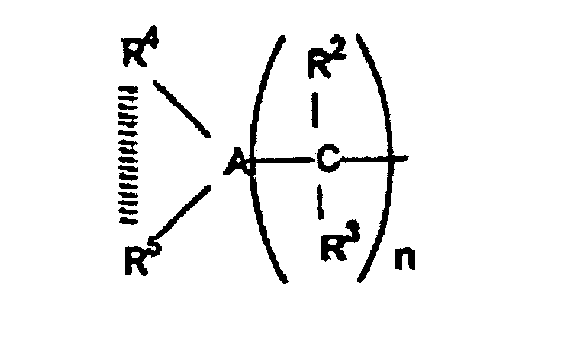 n est un entier de 1 à 3 ;R2 et R3 représentent chacun un hydrogène ou un groupe alkyle en C1 à C6 linéaire ou ramifié ;R4 et R5 représentent chacun un groupe alkyle en C1 à C6 linéaire ou ramifié quand A représente N, ou R4 et R5 représentent ensemble un groupe alkylène en C2 à C5 quand A représente N ; ou R4 et R5 ensemble peuvent être un groupe alkylène en C2 à C5 contenant NR7 quand A représente CH ou N, où R7 est choisi dans le groupe constitué par un hydrogène, un groupe alkyle en C1 à C4 linéaire ou ramifié et
 et ; R6 représente un groupe aryle, alcényle ou alkyle en C5 à C35 linéaire ou ramifié.
 - Procédé selon la revendication 1, dans lequel la composition catalytique à base d'amide d'amine tertiaire est bloquée par un acide.
- Procédé selon la revendication 21, laquelle est bloquée par un acide qui est un acide carboxylique.
- Procédé selon la revendication 22, dans lequel l'acide carboxylique est l'acide formique, l'acide acétique, l'acide 2-éthyl-hexanoïque ou l'acide N-(2-hydroxyéthyl)-imino diacétique.
Applications Claiming Priority (8)
| Application Number | Priority Date | Filing Date | Title |
|---|---|---|---|
| US336555 | 2003-01-03 | ||
| US10/336,371 US6762211B1 (en) | 2003-01-03 | 2003-01-03 | Tertiary amino alkyl amide polyurethane catalysts derived from long chain alkyl and fatty carboxylic acids |
| US336371 | 2003-01-03 | ||
| US10/336,555 US6737446B1 (en) | 2003-01-03 | 2003-01-03 | Tertiary amino alkyl amide catalysts for improving the physical properties of polyurethane foams |
| US338184 | 2003-01-06 | ||
| US10/338,184 US6759447B1 (en) | 2003-01-06 | 2003-01-06 | Physical properties of polyurethane foams using tertiary amino alkyl amide catalysts |
| US724887 | 2003-12-02 | ||
| US10/724,887 US6835757B2 (en) | 2003-01-03 | 2003-12-02 | Tertiary amino alkyl amide catalysts for improving the physical properties of polyurethane foams |
Publications (3)
| Publication Number | Publication Date |
|---|---|
| EP1435365A2 EP1435365A2 (fr) | 2004-07-07 |
| EP1435365A3 EP1435365A3 (fr) | 2005-11-23 |
| EP1435365B1 true EP1435365B1 (fr) | 2007-06-13 |
Family
ID=32512541
Family Applications (1)
| Application Number | Title | Priority Date | Filing Date |
|---|---|---|---|
| EP03029981A Expired - Lifetime EP1435365B1 (fr) | 2003-01-03 | 2003-12-30 | Utilisation de catalyseurs contenant des groupes d'amine tertiaire et d'amide pour améliorer les propriétés physiques des mousses de polyuréthane |
Country Status (3)
| Country | Link |
|---|---|
| EP (1) | EP1435365B1 (fr) |
| AT (1) | ATE364645T1 (fr) |
| DE (1) | DE60314363T2 (fr) |
Cited By (1)
| Publication number | Priority date | Publication date | Assignee | Title |
|---|---|---|---|---|
| KR100860041B1 (ko) | 2006-03-27 | 2008-09-25 | 에어 프로덕츠 앤드 케미칼스, 인코오포레이티드 | 폴리우레탄 발포체의 열화를 최소화하는 가교제 |
Families Citing this family (2)
| Publication number | Priority date | Publication date | Assignee | Title |
|---|---|---|---|---|
| US20080269365A1 (en) * | 2007-04-25 | 2008-10-30 | Gary Dale Andrew | Additives for Improving Surface Cure and Dimensional Stability of Polyurethane Foams |
| DE102013201829A1 (de) | 2013-02-05 | 2014-08-07 | Evonik Industries Ag | Amine, geeignet zur Verwendung bei der Herstellung von Polyurethanen |
Family Cites Families (5)
| Publication number | Priority date | Publication date | Assignee | Title |
|---|---|---|---|---|
| DE3607964A1 (de) * | 1986-03-11 | 1987-09-17 | Bayer Ag | Verfahren zur herstellung eines zelligen polyurethans |
| DE4223597A1 (de) * | 1992-07-17 | 1994-01-20 | Bayer Ag | Lagerstabile, Formtrennmittel enthaltende Polyolgemische |
| DE4339702A1 (de) * | 1993-11-22 | 1995-05-24 | Bayer Ag | Verfahren zur Herstellung von harten Polyurethanschaumstoffen |
| US6232356B1 (en) * | 1997-05-05 | 2001-05-15 | Air Products And Chemicals, Inc. | Reactive catalyst compositions for improving water blown polyurethane foam performance |
| US6458860B1 (en) * | 2001-06-01 | 2002-10-01 | Huntsman Petrochemical Corporation | Advances in urethane foam catalysis |
-
2003
- 2003-12-30 EP EP03029981A patent/EP1435365B1/fr not_active Expired - Lifetime
- 2003-12-30 DE DE60314363T patent/DE60314363T2/de not_active Expired - Fee Related
- 2003-12-30 AT AT03029981T patent/ATE364645T1/de not_active IP Right Cessation
Cited By (1)
| Publication number | Priority date | Publication date | Assignee | Title |
|---|---|---|---|---|
| KR100860041B1 (ko) | 2006-03-27 | 2008-09-25 | 에어 프로덕츠 앤드 케미칼스, 인코오포레이티드 | 폴리우레탄 발포체의 열화를 최소화하는 가교제 |
Also Published As
| Publication number | Publication date |
|---|---|
| EP1435365A2 (fr) | 2004-07-07 |
| ATE364645T1 (de) | 2007-07-15 |
| DE60314363D1 (de) | 2007-07-26 |
| EP1435365A3 (fr) | 2005-11-23 |
| DE60314363T2 (de) | 2007-11-15 |
Similar Documents
| Publication | Publication Date | Title |
|---|---|---|
| US6201033B1 (en) | Reactive catalyst compositions for improving water blown polyurethane foam performance | |
| US6835757B2 (en) | Tertiary amino alkyl amide catalysts for improving the physical properties of polyurethane foams | |
| EP1435364A2 (fr) | Catalyseurs de polyuréthane contenant des groupes d'amine tertiaire et d'amide à partir d'acides grasses ou d'acide contenant des longues chaines d'alkyle. | |
| US6759447B1 (en) | Physical properties of polyurethane foams using tertiary amino alkyl amide catalysts | |
| EP1714989B1 (fr) | Mousses de polyuréthane, fabriquées à partir de compositions de catalyseurs favorisant la formation de dioxyde de carbone et comportant des groupes hydroxyles primaires et une chaîne principale ethylène diamine. | |
| US7026512B2 (en) | Tertiary alkanolamines containing surface active alkyl groups | |
| EP1457507B1 (fr) | Catalyseurs de polyuréthane contenant des groupes d'alcanolamine tertiaire à partir d'acides grasses et d'acide contenant des longues chaines d'alkyle | |
| US6762211B1 (en) | Tertiary amino alkyl amide polyurethane catalysts derived from long chain alkyl and fatty carboxylic acids | |
| EP1435365B1 (fr) | Utilisation de catalyseurs contenant des groupes d'amine tertiaire et d'amide pour améliorer les propriétés physiques des mousses de polyuréthane | |
| US6747069B1 (en) | Tertiary alkanolamine polyurethane catalysts derived from long chain alkyl and fatty carboxylic acids | |
| JP4004463B2 (ja) | 第3級アミノアルキルアミド触媒を使用してポリウレタンフォームの物理的特性を改善するための方法 | |
| EP1435363B1 (fr) | Utilisation de catalyseurs contenant des groupes d'amines tertiaires et amide pour améliorer les propriétés physiques des mousses de polyuréthane | |
| JP4004464B2 (ja) | 第3級アミノアルキルアミド触媒を使用してポリウレタンフォームの物理的特性を改善する方法 | |
| KR100523420B1 (ko) | 장쇄 알킬 및 지방 카르복실산으로부터 유도된 3차 아미노알킬 아미드 폴리우레탄 촉매 | |
| EP1457480B1 (fr) | Alcanolamines tertiaires comportant des groupements alkyls tensio-actifs | |
| MXPA98003525A (en) | Compositions of aminometil pyrrolidine urea parala polyurette production | |
| MXPA98003520A (es) | Composiciones de catalizador reactivo para mejorar el desempeño de espuma de poliuretano soplada con agua | |
| KR20150029464A (ko) | 3급 아민 촉매를 포함한 폴리우레탄 수지 제조용 촉매 조성물 |
Legal Events
| Date | Code | Title | Description |
|---|---|---|---|
| PUAI | Public reference made under article 153(3) epc to a published international application that has entered the european phase |
Free format text: ORIGINAL CODE: 0009012 |
|
| AK | Designated contracting states |
Kind code of ref document: A2 Designated state(s): AT BE BG CH CY CZ DE DK EE ES FI FR GB GR HU IE IT LI LU MC NL PT RO SE SI SK TR |
|
| AX | Request for extension of the european patent |
Extension state: AL LT LV MK |
|
| PUAL | Search report despatched |
Free format text: ORIGINAL CODE: 0009013 |
|
| AK | Designated contracting states |
Kind code of ref document: A3 Designated state(s): AT BE BG CH CY CZ DE DK EE ES FI FR GB GR HU IE IT LI LU MC NL PT RO SE SI SK TR |
|
| AX | Request for extension of the european patent |
Extension state: AL LT LV MK |
|
| 17P | Request for examination filed |
Effective date: 20051213 |
|
| AKX | Designation fees paid |
Designated state(s): AT BE BG CH CY CZ DE DK EE ES FI FR GB GR HU IE IT LI LU MC NL PT RO SE SI SK TR |
|
| GRAP | Despatch of communication of intention to grant a patent |
Free format text: ORIGINAL CODE: EPIDOSNIGR1 |
|
| GRAS | Grant fee paid |
Free format text: ORIGINAL CODE: EPIDOSNIGR3 |
|
| GRAA | (expected) grant |
Free format text: ORIGINAL CODE: 0009210 |
|
| AK | Designated contracting states |
Kind code of ref document: B1 Designated state(s): AT BE BG CH CY CZ DE DK EE ES FI FR GB GR HU IE IT LI LU MC NL PT RO SE SI SK TR |
|
| PG25 | Lapsed in a contracting state [announced via postgrant information from national office to epo] |
Ref country code: LI Free format text: LAPSE BECAUSE OF FAILURE TO SUBMIT A TRANSLATION OF THE DESCRIPTION OR TO PAY THE FEE WITHIN THE PRESCRIBED TIME-LIMIT Effective date: 20070613 Ref country code: CH Free format text: LAPSE BECAUSE OF FAILURE TO SUBMIT A TRANSLATION OF THE DESCRIPTION OR TO PAY THE FEE WITHIN THE PRESCRIBED TIME-LIMIT Effective date: 20070613 |
|
| REG | Reference to a national code |
Ref country code: GB Ref legal event code: FG4D |
|
| REG | Reference to a national code |
Ref country code: CH Ref legal event code: EP |
|
| REG | Reference to a national code |
Ref country code: IE Ref legal event code: FG4D |
|
| REF | Corresponds to: |
Ref document number: 60314363 Country of ref document: DE Date of ref document: 20070726 Kind code of ref document: P |
|
| PG25 | Lapsed in a contracting state [announced via postgrant information from national office to epo] |
Ref country code: SE Free format text: LAPSE BECAUSE OF FAILURE TO SUBMIT A TRANSLATION OF THE DESCRIPTION OR TO PAY THE FEE WITHIN THE PRESCRIBED TIME-LIMIT Effective date: 20070913 |
|
| ET | Fr: translation filed | ||
| PG25 | Lapsed in a contracting state [announced via postgrant information from national office to epo] |
Ref country code: AT Free format text: LAPSE BECAUSE OF FAILURE TO SUBMIT A TRANSLATION OF THE DESCRIPTION OR TO PAY THE FEE WITHIN THE PRESCRIBED TIME-LIMIT Effective date: 20070613 |
|
| NLV1 | Nl: lapsed or annulled due to failure to fulfill the requirements of art. 29p and 29m of the patents act | ||
| REG | Reference to a national code |
Ref country code: CH Ref legal event code: PL |
|
| PG25 | Lapsed in a contracting state [announced via postgrant information from national office to epo] |
Ref country code: BE Free format text: LAPSE BECAUSE OF FAILURE TO SUBMIT A TRANSLATION OF THE DESCRIPTION OR TO PAY THE FEE WITHIN THE PRESCRIBED TIME-LIMIT Effective date: 20070613 |
|
| PG25 | Lapsed in a contracting state [announced via postgrant information from national office to epo] |
Ref country code: SI Free format text: LAPSE BECAUSE OF FAILURE TO SUBMIT A TRANSLATION OF THE DESCRIPTION OR TO PAY THE FEE WITHIN THE PRESCRIBED TIME-LIMIT Effective date: 20070613 Ref country code: CZ Free format text: LAPSE BECAUSE OF FAILURE TO SUBMIT A TRANSLATION OF THE DESCRIPTION OR TO PAY THE FEE WITHIN THE PRESCRIBED TIME-LIMIT Effective date: 20070613 Ref country code: PT Free format text: LAPSE BECAUSE OF FAILURE TO SUBMIT A TRANSLATION OF THE DESCRIPTION OR TO PAY THE FEE WITHIN THE PRESCRIBED TIME-LIMIT Effective date: 20071113 Ref country code: NL Free format text: LAPSE BECAUSE OF FAILURE TO SUBMIT A TRANSLATION OF THE DESCRIPTION OR TO PAY THE FEE WITHIN THE PRESCRIBED TIME-LIMIT Effective date: 20070613 Ref country code: BG Free format text: LAPSE BECAUSE OF FAILURE TO SUBMIT A TRANSLATION OF THE DESCRIPTION OR TO PAY THE FEE WITHIN THE PRESCRIBED TIME-LIMIT Effective date: 20070913 Ref country code: ES Free format text: LAPSE BECAUSE OF FAILURE TO SUBMIT A TRANSLATION OF THE DESCRIPTION OR TO PAY THE FEE WITHIN THE PRESCRIBED TIME-LIMIT Effective date: 20070924 |
|
| PLBI | Opposition filed |
Free format text: ORIGINAL CODE: 0009260 |
|
| PG25 | Lapsed in a contracting state [announced via postgrant information from national office to epo] |
Ref country code: SK Free format text: LAPSE BECAUSE OF FAILURE TO SUBMIT A TRANSLATION OF THE DESCRIPTION OR TO PAY THE FEE WITHIN THE PRESCRIBED TIME-LIMIT Effective date: 20070613 |
|
| 26 | Opposition filed |
Opponent name: BASF SE Effective date: 20080216 |
|
| PLAX | Notice of opposition and request to file observation + time limit sent |
Free format text: ORIGINAL CODE: EPIDOSNOBS2 |
|
| PG25 | Lapsed in a contracting state [announced via postgrant information from national office to epo] |
Ref country code: GR Free format text: LAPSE BECAUSE OF FAILURE TO SUBMIT A TRANSLATION OF THE DESCRIPTION OR TO PAY THE FEE WITHIN THE PRESCRIBED TIME-LIMIT Effective date: 20070914 Ref country code: DK Free format text: LAPSE BECAUSE OF FAILURE TO SUBMIT A TRANSLATION OF THE DESCRIPTION OR TO PAY THE FEE WITHIN THE PRESCRIBED TIME-LIMIT Effective date: 20070613 |
|
| PG25 | Lapsed in a contracting state [announced via postgrant information from national office to epo] |
Ref country code: RO Free format text: LAPSE BECAUSE OF FAILURE TO SUBMIT A TRANSLATION OF THE DESCRIPTION OR TO PAY THE FEE WITHIN THE PRESCRIBED TIME-LIMIT Effective date: 20070613 |
|
| PG25 | Lapsed in a contracting state [announced via postgrant information from national office to epo] |
Ref country code: MC Free format text: LAPSE BECAUSE OF NON-PAYMENT OF DUE FEES Effective date: 20071231 |
|
| PLAF | Information modified related to communication of a notice of opposition and request to file observations + time limit |
Free format text: ORIGINAL CODE: EPIDOSCOBS2 |
|
| PG25 | Lapsed in a contracting state [announced via postgrant information from national office to epo] |
Ref country code: IE Free format text: LAPSE BECAUSE OF NON-PAYMENT OF DUE FEES Effective date: 20071231 |
|
| PG25 | Lapsed in a contracting state [announced via postgrant information from national office to epo] |
Ref country code: EE Free format text: LAPSE BECAUSE OF FAILURE TO SUBMIT A TRANSLATION OF THE DESCRIPTION OR TO PAY THE FEE WITHIN THE PRESCRIBED TIME-LIMIT Effective date: 20070613 |
|
| PG25 | Lapsed in a contracting state [announced via postgrant information from national office to epo] |
Ref country code: FI Free format text: LAPSE BECAUSE OF FAILURE TO SUBMIT A TRANSLATION OF THE DESCRIPTION OR TO PAY THE FEE WITHIN THE PRESCRIBED TIME-LIMIT Effective date: 20070613 |
|
| PGFP | Annual fee paid to national office [announced via postgrant information from national office to epo] |
Ref country code: IT Payment date: 20081218 Year of fee payment: 6 |
|
| PGFP | Annual fee paid to national office [announced via postgrant information from national office to epo] |
Ref country code: FR Payment date: 20081205 Year of fee payment: 6 |
|
| PGFP | Annual fee paid to national office [announced via postgrant information from national office to epo] |
Ref country code: DE Payment date: 20081230 Year of fee payment: 6 |
|
| PGFP | Annual fee paid to national office [announced via postgrant information from national office to epo] |
Ref country code: GB Payment date: 20081110 Year of fee payment: 6 |
|
| PG25 | Lapsed in a contracting state [announced via postgrant information from national office to epo] |
Ref country code: CY Free format text: LAPSE BECAUSE OF FAILURE TO SUBMIT A TRANSLATION OF THE DESCRIPTION OR TO PAY THE FEE WITHIN THE PRESCRIBED TIME-LIMIT Effective date: 20070613 |
|
| PG25 | Lapsed in a contracting state [announced via postgrant information from national office to epo] |
Ref country code: LU Free format text: LAPSE BECAUSE OF NON-PAYMENT OF DUE FEES Effective date: 20071230 |
|
| PG25 | Lapsed in a contracting state [announced via postgrant information from national office to epo] |
Ref country code: TR Free format text: LAPSE BECAUSE OF FAILURE TO SUBMIT A TRANSLATION OF THE DESCRIPTION OR TO PAY THE FEE WITHIN THE PRESCRIBED TIME-LIMIT Effective date: 20070613 Ref country code: HU Free format text: LAPSE BECAUSE OF FAILURE TO SUBMIT A TRANSLATION OF THE DESCRIPTION OR TO PAY THE FEE WITHIN THE PRESCRIBED TIME-LIMIT Effective date: 20071214 |
|
| GBPC | Gb: european patent ceased through non-payment of renewal fee |
Effective date: 20091230 |
|
| REG | Reference to a national code |
Ref country code: FR Ref legal event code: ST Effective date: 20100831 |
|
| PLAY | Examination report in opposition despatched + time limit |
Free format text: ORIGINAL CODE: EPIDOSNORE2 |
|
| PG25 | Lapsed in a contracting state [announced via postgrant information from national office to epo] |
Ref country code: FR Free format text: LAPSE BECAUSE OF NON-PAYMENT OF DUE FEES Effective date: 20091231 |
|
| PG25 | Lapsed in a contracting state [announced via postgrant information from national office to epo] |
Ref country code: DE Free format text: LAPSE BECAUSE OF NON-PAYMENT OF DUE FEES Effective date: 20100701 |
|
| PG25 | Lapsed in a contracting state [announced via postgrant information from national office to epo] |
Ref country code: GB Free format text: LAPSE BECAUSE OF NON-PAYMENT OF DUE FEES Effective date: 20091230 |
|
| PLBC | Reply to examination report in opposition received |
Free format text: ORIGINAL CODE: EPIDOSNORE3 |
|
| PG25 | Lapsed in a contracting state [announced via postgrant information from national office to epo] |
Ref country code: IT Free format text: LAPSE BECAUSE OF NON-PAYMENT OF DUE FEES Effective date: 20091230 |
|
| PLBD | Termination of opposition procedure: decision despatched |
Free format text: ORIGINAL CODE: EPIDOSNOPC1 |
|
| PLAU | Termination of opposition procedure: information related to despatch of decision deleted |
Free format text: ORIGINAL CODE: EPIDOSDOPC1 |
|
| PLBD | Termination of opposition procedure: decision despatched |
Free format text: ORIGINAL CODE: EPIDOSNOPC1 |
|
| PLBM | Termination of opposition procedure: date of legal effect published |
Free format text: ORIGINAL CODE: 0009276 |
|
| STAA | Information on the status of an ep patent application or granted ep patent |
Free format text: STATUS: OPPOSITION PROCEDURE CLOSED |
|
| 27C | Opposition proceedings terminated |
Effective date: 20110917 |