EP1435557A2 - Accès restreint à des ressources matérielles par des logiciels - Google Patents
Accès restreint à des ressources matérielles par des logiciels Download PDFInfo
- Publication number
- EP1435557A2 EP1435557A2 EP03257862A EP03257862A EP1435557A2 EP 1435557 A2 EP1435557 A2 EP 1435557A2 EP 03257862 A EP03257862 A EP 03257862A EP 03257862 A EP03257862 A EP 03257862A EP 1435557 A2 EP1435557 A2 EP 1435557A2
- Authority
- EP
- European Patent Office
- Prior art keywords
- key
- hardware
- authentication module
- access
- application
- Prior art date
- Legal status (The legal status is an assumption and is not a legal conclusion. Google has not performed a legal analysis and makes no representation as to the accuracy of the status listed.)
- Withdrawn
Links
Images


Classifications
-
- A—HUMAN NECESSITIES
- A63—SPORTS; GAMES; AMUSEMENTS
- A63F—CARD, BOARD, OR ROULETTE GAMES; INDOOR GAMES USING SMALL MOVING PLAYING BODIES; VIDEO GAMES; GAMES NOT OTHERWISE PROVIDED FOR
- A63F13/00—Video games, i.e. games using an electronically generated display having two or more dimensions
- A63F13/70—Game security or game management aspects
- A63F13/73—Authorising game programs or game devices, e.g. checking authenticity
-
- A63F13/10—
-
- A—HUMAN NECESSITIES
- A63—SPORTS; GAMES; AMUSEMENTS
- A63F—CARD, BOARD, OR ROULETTE GAMES; INDOOR GAMES USING SMALL MOVING PLAYING BODIES; VIDEO GAMES; GAMES NOT OTHERWISE PROVIDED FOR
- A63F13/00—Video games, i.e. games using an electronically generated display having two or more dimensions
- A63F13/45—Controlling the progress of the video game
-
- G—PHYSICS
- G06—COMPUTING OR CALCULATING; COUNTING
- G06F—ELECTRIC DIGITAL DATA PROCESSING
- G06F21/00—Security arrangements for protecting computers, components thereof, programs or data against unauthorised activity
- G06F21/10—Protecting distributed programs or content, e.g. vending or licensing of copyrighted material ; Digital rights management [DRM]
- G06F21/109—Protecting distributed programs or content, e.g. vending or licensing of copyrighted material ; Digital rights management [DRM] by using specially-adapted hardware at the client
-
- G—PHYSICS
- G06—COMPUTING OR CALCULATING; COUNTING
- G06F—ELECTRIC DIGITAL DATA PROCESSING
- G06F21/00—Security arrangements for protecting computers, components thereof, programs or data against unauthorised activity
- G06F21/10—Protecting distributed programs or content, e.g. vending or licensing of copyrighted material ; Digital rights management [DRM]
- G06F21/12—Protecting executable software
- G06F21/121—Restricting unauthorised execution of programs
- G06F21/123—Restricting unauthorised execution of programs by using dedicated hardware, e.g. dongles, smart cards, cryptographic processors, global positioning systems [GPS] devices
-
- G—PHYSICS
- G06—COMPUTING OR CALCULATING; COUNTING
- G06F—ELECTRIC DIGITAL DATA PROCESSING
- G06F21/00—Security arrangements for protecting computers, components thereof, programs or data against unauthorised activity
- G06F21/30—Authentication, i.e. establishing the identity or authorisation of security principals
- G06F21/44—Program or device authentication
- G06F21/445—Program or device authentication by mutual authentication, e.g. between devices or programs
-
- G—PHYSICS
- G06—COMPUTING OR CALCULATING; COUNTING
- G06F—ELECTRIC DIGITAL DATA PROCESSING
- G06F21/00—Security arrangements for protecting computers, components thereof, programs or data against unauthorised activity
- G06F21/60—Protecting data
- G06F21/62—Protecting access to data via a platform, e.g. using keys or access control rules
- G06F21/6218—Protecting access to data via a platform, e.g. using keys or access control rules to a system of files or objects, e.g. local or distributed file system or database
- G06F21/6281—Protecting access to data via a platform, e.g. using keys or access control rules to a system of files or objects, e.g. local or distributed file system or database at program execution time, where the protection is within the operating system
-
- G—PHYSICS
- G06—COMPUTING OR CALCULATING; COUNTING
- G06F—ELECTRIC DIGITAL DATA PROCESSING
- G06F21/00—Security arrangements for protecting computers, components thereof, programs or data against unauthorised activity
- G06F21/70—Protecting specific internal or peripheral components, in which the protection of a component leads to protection of the entire computer
-
- G—PHYSICS
- G06—COMPUTING OR CALCULATING; COUNTING
- G06F—ELECTRIC DIGITAL DATA PROCESSING
- G06F21/00—Security arrangements for protecting computers, components thereof, programs or data against unauthorised activity
- G06F21/70—Protecting specific internal or peripheral components, in which the protection of a component leads to protection of the entire computer
- G06F21/71—Protecting specific internal or peripheral components, in which the protection of a component leads to protection of the entire computer to assure secure computing or processing of information
-
- G—PHYSICS
- G06—COMPUTING OR CALCULATING; COUNTING
- G06F—ELECTRIC DIGITAL DATA PROCESSING
- G06F21/00—Security arrangements for protecting computers, components thereof, programs or data against unauthorised activity
- G06F21/70—Protecting specific internal or peripheral components, in which the protection of a component leads to protection of the entire computer
- G06F21/78—Protecting specific internal or peripheral components, in which the protection of a component leads to protection of the entire computer to assure secure storage of data
-
- G—PHYSICS
- G06—COMPUTING OR CALCULATING; COUNTING
- G06F—ELECTRIC DIGITAL DATA PROCESSING
- G06F21/00—Security arrangements for protecting computers, components thereof, programs or data against unauthorised activity
- G06F21/70—Protecting specific internal or peripheral components, in which the protection of a component leads to protection of the entire computer
- G06F21/78—Protecting specific internal or peripheral components, in which the protection of a component leads to protection of the entire computer to assure secure storage of data
- G06F21/79—Protecting specific internal or peripheral components, in which the protection of a component leads to protection of the entire computer to assure secure storage of data in semiconductor storage media, e.g. directly-addressable memories
-
- G—PHYSICS
- G06—COMPUTING OR CALCULATING; COUNTING
- G06F—ELECTRIC DIGITAL DATA PROCESSING
- G06F21/00—Security arrangements for protecting computers, components thereof, programs or data against unauthorised activity
- G06F21/70—Protecting specific internal or peripheral components, in which the protection of a component leads to protection of the entire computer
- G06F21/82—Protecting input, output or interconnection devices
-
- H—ELECTRICITY
- H04—ELECTRIC COMMUNICATION TECHNIQUE
- H04N—PICTORIAL COMMUNICATION, e.g. TELEVISION
- H04N21/00—Selective content distribution, e.g. interactive television or video on demand [VOD]
- H04N21/40—Client devices specifically adapted for the reception of or interaction with content, e.g. set-top-box [STB]; Operations thereof
- H04N21/43—Processing of content or additional data, e.g. demultiplexing additional data from a digital video stream; Elementary client operations, e.g. monitoring of home network or synchronising decoder's clock; Client middleware
- H04N21/442—Monitoring of processes or resources, e.g. detecting the failure of a recording device, monitoring the downstream bandwidth, the number of times a movie has been viewed, the storage space available from the internal hard disk
-
- H—ELECTRICITY
- H04—ELECTRIC COMMUNICATION TECHNIQUE
- H04N—PICTORIAL COMMUNICATION, e.g. TELEVISION
- H04N21/00—Selective content distribution, e.g. interactive television or video on demand [VOD]
- H04N21/40—Client devices specifically adapted for the reception of or interaction with content, e.g. set-top-box [STB]; Operations thereof
- H04N21/43—Processing of content or additional data, e.g. demultiplexing additional data from a digital video stream; Elementary client operations, e.g. monitoring of home network or synchronising decoder's clock; Client middleware
- H04N21/443—OS processes, e.g. booting an STB, implementing a Java virtual machine in an STB or power management in an STB
- H04N21/4431—OS processes, e.g. booting an STB, implementing a Java virtual machine in an STB or power management in an STB characterized by the use of Application Program Interface [API] libraries
-
- H—ELECTRICITY
- H04—ELECTRIC COMMUNICATION TECHNIQUE
- H04N—PICTORIAL COMMUNICATION, e.g. TELEVISION
- H04N7/00—Television systems
- H04N7/16—Analogue secrecy systems; Analogue subscription systems
- H04N7/162—Authorising the user terminal, e.g. by paying; Registering the use of a subscription channel, e.g. billing
- H04N7/163—Authorising the user terminal, e.g. by paying; Registering the use of a subscription channel, e.g. billing by receiver means only
-
- A—HUMAN NECESSITIES
- A63—SPORTS; GAMES; AMUSEMENTS
- A63F—CARD, BOARD, OR ROULETTE GAMES; INDOOR GAMES USING SMALL MOVING PLAYING BODIES; VIDEO GAMES; GAMES NOT OTHERWISE PROVIDED FOR
- A63F2300/00—Features of games using an electronically generated display having two or more dimensions, e.g. on a television screen, showing representations related to the game
- A63F2300/20—Features of games using an electronically generated display having two or more dimensions, e.g. on a television screen, showing representations related to the game characterised by details of the game platform
- A63F2300/201—Playing authorisation given at platform level
-
- A—HUMAN NECESSITIES
- A63—SPORTS; GAMES; AMUSEMENTS
- A63F—CARD, BOARD, OR ROULETTE GAMES; INDOOR GAMES USING SMALL MOVING PLAYING BODIES; VIDEO GAMES; GAMES NOT OTHERWISE PROVIDED FOR
- A63F2300/00—Features of games using an electronically generated display having two or more dimensions, e.g. on a television screen, showing representations related to the game
- A63F2300/20—Features of games using an electronically generated display having two or more dimensions, e.g. on a television screen, showing representations related to the game characterised by details of the game platform
- A63F2300/209—Features of games using an electronically generated display having two or more dimensions, e.g. on a television screen, showing representations related to the game characterised by details of the game platform characterized by low level software layer, relating to hardware management, e.g. Operating System, Application Programming Interface
-
- G—PHYSICS
- G06—COMPUTING OR CALCULATING; COUNTING
- G06F—ELECTRIC DIGITAL DATA PROCESSING
- G06F2221/00—Indexing scheme relating to security arrangements for protecting computers, components thereof, programs or data against unauthorised activity
- G06F2221/21—Indexing scheme relating to G06F21/00 and subgroups addressing additional information or applications relating to security arrangements for protecting computers, components thereof, programs or data against unauthorised activity
- G06F2221/2103—Challenge-response
-
- G—PHYSICS
- G06—COMPUTING OR CALCULATING; COUNTING
- G06F—ELECTRIC DIGITAL DATA PROCESSING
- G06F2221/00—Indexing scheme relating to security arrangements for protecting computers, components thereof, programs or data against unauthorised activity
- G06F2221/21—Indexing scheme relating to G06F21/00 and subgroups addressing additional information or applications relating to security arrangements for protecting computers, components thereof, programs or data against unauthorised activity
- G06F2221/2109—Game systems
-
- G—PHYSICS
- G06—COMPUTING OR CALCULATING; COUNTING
- G06F—ELECTRIC DIGITAL DATA PROCESSING
- G06F2221/00—Indexing scheme relating to security arrangements for protecting computers, components thereof, programs or data against unauthorised activity
- G06F2221/21—Indexing scheme relating to G06F21/00 and subgroups addressing additional information or applications relating to security arrangements for protecting computers, components thereof, programs or data against unauthorised activity
- G06F2221/2149—Restricted operating environment
Definitions
- This invention relates to an apparatus and method for enabling access to restricted hardware of a computer system. More specifically, a key is processed to control the restricted access.
- Game sets for use in conjunction with a television set are an ever increasing form of home entertainment.
- the game sets are computers that commonly include an accessory to enable a player to communicate with the game set.
- the game sets have evolved over recent years to provide a more realistic playing experience which requires much real time computation in order to accomplish the desired real time playing experience. Accordingly, the CPU of the game set includes a computer with enhanced computing abilities.
- Computers comparable to the game set CPU available to the consumer are considerably more expensive to purchase than the game set.
- the expense associated with the game set is offset by game accessories.
- the consumer who purchases the game set actually purchases the set at a discount.
- the game vendor of the game set loses money on each sale.
- the consumer price of a game accessory such as a game cartridge or disc, is considerably more expensive than the cost associated with producing the game.
- the loss associated with the sale of the game set is overcome in the sale of the game cartridges. Accordingly, the game vendors have come to rely on revenues associated with the sale of games for profit and have accepted the losses associated with the sale of game units.
- This invention comprises a method and apparatus to enable restricted access to computer hardware.
- a verification apparatus in a first aspect of the invention, includes an authentication module accessed by a trusted firmware layer.
- the authentication module is adapted to verify a cryptographic key.
- the apparatus also includes a validation module responsive to the verification key to restrict access of an application to a hardware resource.
- the authentication module may be implemented in software as part of the trusted firmware layer.
- the key may be computed from a value previously obtained from the authentication module.
- the authentication module may be adapted to utilize a hardware register. In the case of the hardware register, a first hardware register holds the key and a second hardware register communicates with the hardware resource.
- a third hardware register may be implemented to present a value from which the key must be computed.
- a method for restricting access to computer hardware includes presenting a cryptographic key to an authentication module, which is accessed through a trusted firmware layer, and validation of the key. Access of an application to the computer hardware is limited in response to the key validation.
- the step of validating the key may include presenting the key through a firmware call, which may be in the form of a software interrupt, and a protected procedure call. Alternatively, the step of validating the key may include writing a valid key to a hardware register of the computer hardware.
- the computer hardware may by a central processing unit of a game set, and it may also include a graphics accelerator, a floating point accelerator, and a high resolution buffer.
- an article comprising a computer-readable signal bearing medium.
- the article includes a cryptographic key adapted to be verified through a trusted firmware layer, a verification module adapted to respond to the key, and computer hardware adapted to receive limited access in response to verification of the key.
- the medium may be a recordable data storage medium or a modulated carrier signal.
- Key verification may be implemented in software as part of the trusted firmware layer or through a hardware register. Limited access to the hardware is responsive to presentation of the key to the verification module.
- the hardware may be a central processing unit of a game set, and it may also include a graphics accelerator, a floating point accelerator, and a high resolutions frame buffer.
- a game set with a central processing unit having an acceleration hardware resource, an authentication module, and a validation module is provided.
- the authentication module is accessed through a trusted firmware layer and is adapted to verify a cryptographic key.
- the validation module is responsive to verification of the key to restrict access of an application to the hardware resource.
- the key may be computed from a value previously obtained from the authentication module.
- the authentication module may be implemented in software as part of the trusted firmware layer, or the authentication module may be adapted to utilize a hardware register. In the case of the hardware register, a first hardware register holds the key and a second hardware register communicates with the hardware resource.
- the manufacturers of home entertainment sets leverage the cost of the set for the cost of accessories.
- the game sets are comprised of CPUs with enhanced graphics and timing, and only authorized software has access to the enhanced hardware of the game set CPU. There is a need to enable non-competitors of the game set manufacturers to be able to access the enhanced hardware of the game set through an authorization system.
- Each game set has a CPU and associated hardware to enable an authorized game to properly function and to provide virtual effects that appear in real time.
- Some of the hardware that enables the real time effects include a graphics accelerator, a floating point accelerator and a high resolution frame buffer.
- each game set includes a trusted firmware layer that cannot be replaced with an unauthorized piece of firmware.
- Firmware is software that is stored in hardware, such that the software is retained even after power to the hardware ceases. At boot time, the firmware of a computer stores and uses information describing a computer's processor, memory and other devices. The firmware operates on a parallel platform to the operating system.
- a verification apparatus is provided to enable software and/or hardware to authenticate access to the CPU and related hardware accessories of the game set.
- the application requesting authorization must present a key, preferably a cryptographic key, to an authentication module.
- Fig. 1 is a flow chart 10 illustrating the process of the application requesting access to the game set CPU and hardware. Following access to the verification apparatus, 12, the application is queried for presentation of a key 14. If the application has a key, the key is presented to an authentication module 16. The key is then tested by the authentication module to determine if the key presented by the application is valid 18. The authentication module is accessed through the trusted firmware layer of the CPU. If the key is determined to be a valid key, then a validation module permits the application access to some or all of the memory and hardware accessories of the game set 20.
- the validation module prevents the application from access to some or all of the memory and hardware accessories of the game set 22.
- the authentication module prevents the application from access to some or all of the memory and hardware accessories of the game set 22. Accordingly, the authentication module functions in conjunction with the validation module to control access to restricted memory and hardware of the CPU of the game set.
- the authentication module may include a further verification process in which the bits of the key would constantly be changing.
- An example of this further verification is shown in the flow chart 30 of Fig. 2.
- the application is queried for presentation of a key 34. If the application has a key, the key is presented to an authentication module and the application obtains a value from the authentication module 36. A new key is then computed 38 based upon the value obtained from the application in conjunction with the value obtained from the authentication module at step 36. The new key is then presented to a validation module 40. If the key is determined to be a valid key at step 42, then the validation module permits the application access to some or all of the memory and hardware accessories of the game set 44.
- the validation module prevents the application from access to some or all of the memory and hardware accessories of the game set 46.
- the application does not have a key at step 34, then the authentication module prevents the application from access to some or all of the memory and hardware accessories of the game set 46. Accordingly, the authentication module provides a known value and computes a new key based upon the known value and the key for presentation to the validation module to control access to restricted memory and hardware of the CPU of the game set.
- the authentication module presents a value from which a new key may be computed for presentation to the validation module.
- the purpose of this further step is to provide a challenged response to defeat playback attacks.
- the application may access available hardware and emulate hardware to which access has been denied.
- a value for computation of the new key is a timestamp. Since time is a value that is constantly changing, the key value presented to the validation module will never be the same. Accordingly, the process outlined in Fig. 2 is an alternative embodiment that provides an extra level of protection from unauthorized access to hardware resources.
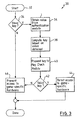
- Fig. 3 is a flow chart 50 illustrating the process following presentation of the key to the validation module in steps 18 and 42 of Figs. 1 and 2, respectively. Following presentation to the validation module 52, the application will be queried to determine if it has been provided access to the hardware resources of the CPU 54 based on the response received from steps 18 or 42. If the application does have access to the hardware resources, it may use the full speed game specific hardware available 56. However, if the application does not have access to all or some of the hardware resources, it must emulate the game specific hardware to which it has been denied access 58. Accordingly, the process outlined in Fig. 3 shows the steps for the application following the presentation of the key to the validation module.
- Fig. 4 is a block diagram 72 illustrating the different components of the game set system.
- an application with a valid key 76 or an application without a valid key 74 may be requesting access to the hardware components of the game set system.
- the authentication module 78 is within the trusted firmware layer of the system 80.
- the system includes the hardware 82 of the game set.
- the hardware may include a display accelerator 84, a high resolution clock interrupt 86, as well as standard video hardware 88 and CPU memory 90.
- an application 74 with a non-valid key presents the key to the authentication module 78 within the trusted firmware layer 80.
- the validation module determines that the key is not valid and limits access of the non-game application to the standard video hardware 88.
- the unauthorized software may emulate the enhanced functions of the CPU. However, this generally provides poor quality results, such as a slow display, reduced graphics resolution, and/or decreased realism.
- Fig. 5 is a block diagram 95 illustrating the components of the game set system as shown in Fig. 4.
- an application 74 presents a valid key to the authentication module 78 within the trusted firmware layer 80.
- the validation module determines that the key is valid and enables access of the application to the display accelerator 84 and the high resolution clock interrupt 86. Accordingly, Figs. 4 and 5 are merely illustrative of the structure of the system and the placement of the authentication module within the trusted firmware layer.
- the authentication module may be implemented in software as part of the trusted firmware layer.
- the key is presented to the authentication module through a firmware call, such as a software interrupt or a protected procedure call.
- the application gives the key to the trusted firmware layer which presents the key to the validation module.
- the software can communicate with the validation module.
- An application program interface (API) executes a call to enable the validation module to either validate or invalidate the key.
- the software will be provided or denied access to the hardware resources of the CPU.
- the trusted firmware layer controls restricted access to the hardware resources. Accordingly, this enables the software and firmware to communicate with the validation module within the firmware layer that stores the addresses for the hardware resources.
- the authentication module may utilize hardware registers for presentation of the key.
- a set of registers of the CPU are set aside for assigning key verification instructions.
- the register is resident in a CPU and an external CPU cannot access the registers of another CPU.
- a first register holds the key address
- a second register communicates with the hardware resource
- a third register may be used to present a value from which the key must be computed.
- the third register is only necessary in the case of a challenged response where an arbitrary value is set aside for computation of the key as shown in Fig. 2.
- the execution of an authentication instruction will reference addresses indicated by the first and second registers.
- the authentication instruction specifies a request for authentication of the key address held by the first register.
- the second register Upon validation of the key held by the first register, the second register will provide access to the hardware it controls. In the embodiment which encompasses computation of the key, the value for the computation is held in the third register. The computation is conducted as shown in step 38 of Fig. 2. Accordingly, the hardware registers may be implemented in conjunction with the authentication and validation modules to control access of an application to hardware resources.
- the present invention restricts access to the authentication module by placing it within the trusted firmware layer of the CPU.
- the firmware controls the address location of the hardware resources in communication with the CPU.
- the placement of the authentication module within the trusted firmware layer provides another level of restriction to the hardware resources.
- the achievement of the authentication module in conjunction with the validation module enables restricted access to the hardware resources that are otherwise not accessible to non-authorized applications.
- the authentication and validation modules provide limited access to the hardware resources for uses such as research and development and/or other educational purposes. Accordingly, the authentication and validation modules provide a level of security to the game set manufacturers to prevent unauthorized access to the hardware resources of the game set as well as provide security against unauthorized access of game accessories to the hardware resources.
- the challenged response to the key may take on a variety of forms either embedded in the software or hardware. Additionally, one could take steps to ensure that the program in the cartridge or disc could not be executed on unauthorized hardware or on a simulator. One could also take steps to ensure that the execution of the software on the game set could not be subjected to unauthorized monitoring by a logic analyzer or other equipment.
Landscapes
- Engineering & Computer Science (AREA)
- Theoretical Computer Science (AREA)
- Computer Security & Cryptography (AREA)
- Software Systems (AREA)
- Computer Hardware Design (AREA)
- Physics & Mathematics (AREA)
- General Physics & Mathematics (AREA)
- General Engineering & Computer Science (AREA)
- Multimedia (AREA)
- Signal Processing (AREA)
- Databases & Information Systems (AREA)
- Technology Law (AREA)
- Library & Information Science (AREA)
- Radar, Positioning & Navigation (AREA)
- Computer Networks & Wireless Communication (AREA)
- Remote Sensing (AREA)
- Health & Medical Sciences (AREA)
- Bioethics (AREA)
- General Health & Medical Sciences (AREA)
- Mathematical Physics (AREA)
- Business, Economics & Management (AREA)
- General Business, Economics & Management (AREA)
- Storage Device Security (AREA)
Applications Claiming Priority (2)
| Application Number | Priority Date | Filing Date | Title |
|---|---|---|---|
| US334483 | 1989-04-07 | ||
| US10/334,483 US7392376B2 (en) | 2002-12-30 | 2002-12-30 | Security module |
Publications (2)
| Publication Number | Publication Date |
|---|---|
| EP1435557A2 true EP1435557A2 (fr) | 2004-07-07 |
| EP1435557A3 EP1435557A3 (fr) | 2004-07-28 |
Family
ID=32507380
Family Applications (1)
| Application Number | Title | Priority Date | Filing Date |
|---|---|---|---|
| EP03257862A Withdrawn EP1435557A3 (fr) | 2002-12-30 | 2003-12-15 | Accès restreint à des resources matérielles par des logiciels |
Country Status (2)
| Country | Link |
|---|---|
| US (3) | US7392376B2 (fr) |
| EP (1) | EP1435557A3 (fr) |
Cited By (4)
| Publication number | Priority date | Publication date | Assignee | Title |
|---|---|---|---|---|
| WO2007064359A1 (fr) * | 2005-11-29 | 2007-06-07 | Thomson Licensing | Procede et dispositif de securisation de contenu numerique |
| EP1881467A3 (fr) * | 2006-07-19 | 2008-03-05 | Aristocrat Technologies Australia Pty. Ltd. | Machine de jeu |
| EP2040176A1 (fr) | 2004-09-09 | 2009-03-25 | Solarflare Communications Incorporated | Affectation de ressources dynamiques |
| WO2009062165A1 (fr) * | 2007-11-08 | 2009-05-14 | Cheng Holdings, Llc | Accès à un fichier et extraction de celui-ci au moyen d'une technologie douce de gestion des droits numériques |
Families Citing this family (16)
| Publication number | Priority date | Publication date | Assignee | Title |
|---|---|---|---|---|
| US7392376B2 (en) * | 2002-12-30 | 2008-06-24 | International Business Machines Corporation | Security module |
| US8135795B2 (en) * | 2003-04-03 | 2012-03-13 | International Business Machines Corporation | Method to provide on-demand resource access |
| US7493488B2 (en) * | 2003-07-24 | 2009-02-17 | International Business Machines Corporation | Method to disable on/off capacity in demand |
| US7712135B2 (en) * | 2004-08-05 | 2010-05-04 | Savant Protection, Inc. | Pre-emptive anti-virus protection of computing systems |
| US8074223B2 (en) * | 2005-01-31 | 2011-12-06 | International Business Machines Corporation | Permanently activating resources based on previous temporary resource usage |
| JP4464297B2 (ja) * | 2005-03-10 | 2010-05-19 | パナソニック株式会社 | 再生装置、再生方法、及び再生プログラム |
| US8320880B2 (en) | 2005-07-20 | 2012-11-27 | Qualcomm Incorporated | Apparatus and methods for secure architectures in wireless networks |
| US8875271B2 (en) * | 2006-12-08 | 2014-10-28 | Microsoft Corporation | Executing unsigned content and securing access in a closed system |
| US7809895B2 (en) * | 2007-03-09 | 2010-10-05 | Oracle America, Inc. | Low overhead access to shared on-chip hardware accelerator with memory-based interfaces |
| US7827383B2 (en) * | 2007-03-09 | 2010-11-02 | Oracle America, Inc. | Efficient on-chip accelerator interfaces to reduce software overhead |
| US20080263679A1 (en) * | 2007-04-23 | 2008-10-23 | Microsoft Corporation | Storing information in closed computing devices |
| US9369440B2 (en) * | 2012-07-24 | 2016-06-14 | Empire Technology Development Llc | Securing private information in public, private and mobile devices |
| US20140143885A1 (en) * | 2012-11-20 | 2014-05-22 | Ati Technologies Ulc | Firmware-implemented software licensing |
| US9729320B2 (en) * | 2014-02-25 | 2017-08-08 | Cavium, Inc. | Apparatus and method for software enabled access to protected hardware resources |
| US10891139B1 (en) * | 2017-07-27 | 2021-01-12 | American Megatrends International, Llc | Providing firmware specific information via ACPI tables |
| CN111601038B (zh) * | 2020-05-28 | 2021-10-01 | 无锡睿勤科技有限公司 | 一种摄像头的控制方法及装置、电子终端及存储介质 |
Family Cites Families (8)
| Publication number | Priority date | Publication date | Assignee | Title |
|---|---|---|---|---|
| US4321765A (en) * | 1979-06-01 | 1982-03-30 | Gillum Richard R | Two handed holding apparatus for firearms |
| US5199066A (en) * | 1989-04-18 | 1993-03-30 | Special Effects Software, Inc. | Method and apparatus for protecting software |
| US5136643A (en) * | 1989-10-13 | 1992-08-04 | Fischer Addison M | Public/key date-time notary facility |
| CA2073495C (fr) * | 1992-07-08 | 1999-01-12 | Michael Wright | Selection et controle d'options |
| US5469507A (en) * | 1994-03-01 | 1995-11-21 | International Business Machines Corporation | Secure communication and computation in an insecure environment |
| JP3395863B2 (ja) * | 1994-08-10 | 2003-04-14 | 富士通株式会社 | ソフトウエア管理モジュール、ソフトウエア再生管理装置およびソフトウエア再生管理システム |
| US6190257B1 (en) | 1995-11-22 | 2001-02-20 | Nintendo Co., Ltd. | Systems and method for providing security in a video game system |
| US7392376B2 (en) * | 2002-12-30 | 2008-06-24 | International Business Machines Corporation | Security module |
-
2002
- 2002-12-30 US US10/334,483 patent/US7392376B2/en not_active Expired - Lifetime
-
2003
- 2003-12-15 EP EP03257862A patent/EP1435557A3/fr not_active Withdrawn
-
2007
- 2007-05-31 US US11/756,606 patent/US20070226792A1/en not_active Abandoned
- 2007-05-31 US US11/756,615 patent/US7971243B2/en not_active Expired - Fee Related
Cited By (6)
| Publication number | Priority date | Publication date | Assignee | Title |
|---|---|---|---|---|
| EP2040176A1 (fr) | 2004-09-09 | 2009-03-25 | Solarflare Communications Incorporated | Affectation de ressources dynamiques |
| WO2007064359A1 (fr) * | 2005-11-29 | 2007-06-07 | Thomson Licensing | Procede et dispositif de securisation de contenu numerique |
| EP1881467A3 (fr) * | 2006-07-19 | 2008-03-05 | Aristocrat Technologies Australia Pty. Ltd. | Machine de jeu |
| AU2007203334B2 (en) * | 2006-07-19 | 2010-08-05 | Aristocrat Technologies Australia Pty Limited | A gaming machine |
| US9230392B2 (en) | 2006-07-19 | 2016-01-05 | Aristocrat Technologies Australia Pty Limited | Gaming machine |
| WO2009062165A1 (fr) * | 2007-11-08 | 2009-05-14 | Cheng Holdings, Llc | Accès à un fichier et extraction de celui-ci au moyen d'une technologie douce de gestion des droits numériques |
Also Published As
| Publication number | Publication date |
|---|---|
| US7392376B2 (en) | 2008-06-24 |
| EP1435557A3 (fr) | 2004-07-28 |
| US20080022127A1 (en) | 2008-01-24 |
| US20040128507A1 (en) | 2004-07-01 |
| US7971243B2 (en) | 2011-06-28 |
| US20070226792A1 (en) | 2007-09-27 |
Similar Documents
| Publication | Publication Date | Title |
|---|---|---|
| US7971243B2 (en) | Security module | |
| US7139915B2 (en) | Method and apparatus for authenticating an open system application to a portable IC device | |
| US7010684B2 (en) | Method and apparatus for authenticating an open system application to a portable IC device | |
| EP1638031B1 (fr) | Système et procédé pour l'exécution sécurisée de code logiciel | |
| CA2491447C (fr) | Telechargement securise de jeux | |
| US7337147B2 (en) | Dynamic digital content licensing | |
| US20120244950A1 (en) | System and method for cross-platform and cross-game virtual asset creation and management | |
| US8177641B2 (en) | Systems and methods for quickly selecting video games | |
| US20090327094A1 (en) | Platform independent ecosystem for creation, consumption and trade of user-generated digital content | |
| JP2009059303A (ja) | アクセス制御装置、アクセス制御方法およびアクセス制御プログラム | |
| KR20130033385A (ko) | 보안 트랜잭션을 촉진하기 위하여 도메인-특정 보안 샌드박스를 사용하기 위한 시스템 및 방법 | |
| JP2007527056A (ja) | 閉鎖型のコンテンツ配信システムにおけるショートメッセージングシステムプロトコルを用いたライセンス情報の配信 | |
| CN100478970C (zh) | 启用收集敏感数据的信任对话框的方法 | |
| US20090215530A1 (en) | Virtual eprom simulator apparatus | |
| Levinthal et al. | The Silicon Gaming Odyssey Slot Machine | |
| EP1679634A2 (fr) | Téléchargement de jeux sûr | |
| US20120184366A1 (en) | Player Specific Limited Licenses | |
| CA2548823C (fr) | Telechargement securise de jeux | |
| KR20090012488A (ko) | 인벤토리 아이템 보호 장치 및 그 방법 | |
| JP2003047746A (ja) | 遊技制御データ供給システム | |
| CN102741852A (zh) | 网络游戏的认证架构与方法 | |
| HK1094060A (en) | Secure game download | |
| HK1093931A (en) | Secure game download | |
| KR20110027102A (ko) | Usb장치를 이용한 서비스 제공 시스템 및 그 방법 |
Legal Events
| Date | Code | Title | Description |
|---|---|---|---|
| PUAI | Public reference made under article 153(3) epc to a published international application that has entered the european phase |
Free format text: ORIGINAL CODE: 0009012 |
|
| PUAL | Search report despatched |
Free format text: ORIGINAL CODE: 0009013 |
|
| AK | Designated contracting states |
Kind code of ref document: A2 Designated state(s): AT BE BG CH CY CZ DE DK EE ES FI FR GB GR HU IE IT LI LU MC NL PT RO SE SI SK TR |
|
| AX | Request for extension of the european patent |
Extension state: AL LT LV MK |
|
| AK | Designated contracting states |
Kind code of ref document: A3 Designated state(s): AT BE BG CH CY CZ DE DK EE ES FI FR GB GR HU IE IT LI LU MC NL PT RO SE SI SK TR |
|
| AX | Request for extension of the european patent |
Extension state: AL LT LV MK |
|
| 17P | Request for examination filed |
Effective date: 20050114 |
|
| AKX | Designation fees paid |
Designated state(s): AT BE BG CH CY CZ DE DK EE ES FI FR GB GR HU IE IT LI LU MC NL PT RO SE SI SK TR |
|
| 17Q | First examination report despatched |
Effective date: 20081230 |
|
| STAA | Information on the status of an ep patent application or granted ep patent |
Free format text: STATUS: THE APPLICATION IS DEEMED TO BE WITHDRAWN |
|
| 18D | Application deemed to be withdrawn |
Effective date: 20090512 |