EP1436609B1 - Procede d'extraction microfluidique - Google Patents
Procede d'extraction microfluidique Download PDFInfo
- Publication number
- EP1436609B1 EP1436609B1 EP02781236A EP02781236A EP1436609B1 EP 1436609 B1 EP1436609 B1 EP 1436609B1 EP 02781236 A EP02781236 A EP 02781236A EP 02781236 A EP02781236 A EP 02781236A EP 1436609 B1 EP1436609 B1 EP 1436609B1
- Authority
- EP
- European Patent Office
- Prior art keywords
- carrier
- target molecules
- sample
- receptors
- molecules
- Prior art date
- Legal status (The legal status is an assumption and is not a legal conclusion. Google has not performed a legal analysis and makes no representation as to the accuracy of the status listed.)
- Expired - Lifetime
Links
- 238000000605 extraction Methods 0.000 title description 14
- 238000000034 method Methods 0.000 claims abstract description 67
- 239000000523 sample Substances 0.000 claims abstract description 67
- 102000039446 nucleic acids Human genes 0.000 claims description 29
- 108020004707 nucleic acids Proteins 0.000 claims description 29
- 150000007523 nucleic acids Chemical class 0.000 claims description 29
- 239000011159 matrix material Substances 0.000 claims description 23
- 238000006243 chemical reaction Methods 0.000 claims description 18
- 238000009396 hybridization Methods 0.000 claims description 17
- 239000000203 mixture Substances 0.000 claims description 15
- 230000008569 process Effects 0.000 claims description 12
- 238000011065 in-situ storage Methods 0.000 claims description 11
- 230000002452 interceptive effect Effects 0.000 claims description 10
- 238000004458 analytical method Methods 0.000 claims description 9
- 108090000765 processed proteins & peptides Proteins 0.000 claims description 7
- 102000004196 processed proteins & peptides Human genes 0.000 claims description 6
- 239000000463 material Substances 0.000 claims description 4
- 239000002773 nucleotide Substances 0.000 claims description 3
- 125000003729 nucleotide group Chemical group 0.000 claims description 3
- 229920000642 polymer Polymers 0.000 claims description 3
- 150000001720 carbohydrates Chemical class 0.000 claims description 2
- 238000001514 detection method Methods 0.000 claims description 2
- 229920001184 polypeptide Polymers 0.000 claims description 2
- 230000001225 therapeutic effect Effects 0.000 claims description 2
- 238000010828 elution Methods 0.000 abstract description 12
- 108020003175 receptors Proteins 0.000 description 31
- 102000005962 receptors Human genes 0.000 description 31
- 238000002955 isolation Methods 0.000 description 29
- 108090000623 proteins and genes Proteins 0.000 description 20
- 230000015572 biosynthetic process Effects 0.000 description 12
- 102000004169 proteins and genes Human genes 0.000 description 12
- 238000003786 synthesis reaction Methods 0.000 description 12
- 108020004414 DNA Proteins 0.000 description 11
- 108091032973 (ribonucleotides)n+m Proteins 0.000 description 10
- 230000027455 binding Effects 0.000 description 10
- 108020004999 messenger RNA Proteins 0.000 description 8
- 241000894007 species Species 0.000 description 7
- 238000000746 purification Methods 0.000 description 6
- 239000000126 substance Substances 0.000 description 6
- 239000000872 buffer Substances 0.000 description 5
- 239000012530 fluid Substances 0.000 description 5
- 230000003993 interaction Effects 0.000 description 5
- 238000002493 microarray Methods 0.000 description 5
- 238000011160 research Methods 0.000 description 5
- YBJHBAHKTGYVGT-ZKWXMUAHSA-N (+)-Biotin Chemical compound N1C(=O)N[C@@H]2[C@H](CCCCC(=O)O)SC[C@@H]21 YBJHBAHKTGYVGT-ZKWXMUAHSA-N 0.000 description 4
- 238000000018 DNA microarray Methods 0.000 description 4
- 108091093037 Peptide nucleic acid Proteins 0.000 description 4
- 239000000969 carrier Substances 0.000 description 4
- 238000006911 enzymatic reaction Methods 0.000 description 4
- 238000002360 preparation method Methods 0.000 description 4
- 102000053642 Catalytic RNA Human genes 0.000 description 3
- 108090000994 Catalytic RNA Proteins 0.000 description 3
- 102000053602 DNA Human genes 0.000 description 3
- 239000011324 bead Substances 0.000 description 3
- 230000008901 benefit Effects 0.000 description 3
- 238000010276 construction Methods 0.000 description 3
- 238000004519 manufacturing process Methods 0.000 description 3
- 108091092562 ribozyme Proteins 0.000 description 3
- 238000013519 translation Methods 0.000 description 3
- 101150098072 20 gene Proteins 0.000 description 2
- 230000003321 amplification Effects 0.000 description 2
- 238000002820 assay format Methods 0.000 description 2
- 229960002685 biotin Drugs 0.000 description 2
- 235000020958 biotin Nutrition 0.000 description 2
- 239000011616 biotin Substances 0.000 description 2
- 230000008859 change Effects 0.000 description 2
- 238000010367 cloning Methods 0.000 description 2
- 230000000295 complement effect Effects 0.000 description 2
- 238000011161 development Methods 0.000 description 2
- 230000000694 effects Effects 0.000 description 2
- 238000011067 equilibration Methods 0.000 description 2
- 239000012634 fragment Substances 0.000 description 2
- 238000000338 in vitro Methods 0.000 description 2
- 238000011835 investigation Methods 0.000 description 2
- 239000000178 monomer Substances 0.000 description 2
- 238000003199 nucleic acid amplification method Methods 0.000 description 2
- -1 of plasmid DNA Chemical class 0.000 description 2
- 238000012545 processing Methods 0.000 description 2
- 238000003908 quality control method Methods 0.000 description 2
- 125000006850 spacer group Chemical group 0.000 description 2
- 238000005406 washing Methods 0.000 description 2
- 208000035657 Abasia Diseases 0.000 description 1
- GFFGJBXGBJISGV-UHFFFAOYSA-N Adenine Chemical compound NC1=NC=NC2=C1N=CN2 GFFGJBXGBJISGV-UHFFFAOYSA-N 0.000 description 1
- 108091023037 Aptamer Proteins 0.000 description 1
- 108090001008 Avidin Proteins 0.000 description 1
- 239000003298 DNA probe Substances 0.000 description 1
- 102000052510 DNA-Binding Proteins Human genes 0.000 description 1
- 108700020911 DNA-Binding Proteins Proteins 0.000 description 1
- 230000004568 DNA-binding Effects 0.000 description 1
- 108090000790 Enzymes Proteins 0.000 description 1
- 102000004190 Enzymes Human genes 0.000 description 1
- 108700039887 Essential Genes Proteins 0.000 description 1
- 206010073306 Exposure to radiation Diseases 0.000 description 1
- 108090000288 Glycoproteins Proteins 0.000 description 1
- 102000003886 Glycoproteins Human genes 0.000 description 1
- 108010058683 Immobilized Proteins Proteins 0.000 description 1
- 108060003951 Immunoglobulin Proteins 0.000 description 1
- 108090001030 Lipoproteins Proteins 0.000 description 1
- 102000004895 Lipoproteins Human genes 0.000 description 1
- 241001465754 Metazoa Species 0.000 description 1
- 108020004711 Nucleic Acid Probes Proteins 0.000 description 1
- 108091028043 Nucleic acid sequence Proteins 0.000 description 1
- 108091005461 Nucleic proteins Proteins 0.000 description 1
- 102000011931 Nucleoproteins Human genes 0.000 description 1
- 108010061100 Nucleoproteins Proteins 0.000 description 1
- 108091034117 Oligonucleotide Proteins 0.000 description 1
- 102000015636 Oligopeptides Human genes 0.000 description 1
- 108010038807 Oligopeptides Proteins 0.000 description 1
- 108010026552 Proteome Proteins 0.000 description 1
- 108020004682 Single-Stranded DNA Proteins 0.000 description 1
- 241000191967 Staphylococcus aureus Species 0.000 description 1
- 108010090804 Streptavidin Proteins 0.000 description 1
- 241001441724 Tetraodontidae Species 0.000 description 1
- IQFYYKKMVGJFEH-XLPZGREQSA-N Thymidine Chemical compound O=C1NC(=O)C(C)=CN1[C@@H]1O[C@H](CO)[C@@H](O)C1 IQFYYKKMVGJFEH-XLPZGREQSA-N 0.000 description 1
- JLCPHMBAVCMARE-UHFFFAOYSA-N [3-[[3-[[3-[[3-[[3-[[3-[[3-[[3-[[3-[[3-[[3-[[5-(2-amino-6-oxo-1H-purin-9-yl)-3-[[3-[[3-[[3-[[3-[[3-[[5-(2-amino-6-oxo-1H-purin-9-yl)-3-[[5-(2-amino-6-oxo-1H-purin-9-yl)-3-hydroxyoxolan-2-yl]methoxy-hydroxyphosphoryl]oxyoxolan-2-yl]methoxy-hydroxyphosphoryl]oxy-5-(5-methyl-2,4-dioxopyrimidin-1-yl)oxolan-2-yl]methoxy-hydroxyphosphoryl]oxy-5-(6-aminopurin-9-yl)oxolan-2-yl]methoxy-hydroxyphosphoryl]oxy-5-(6-aminopurin-9-yl)oxolan-2-yl]methoxy-hydroxyphosphoryl]oxy-5-(6-aminopurin-9-yl)oxolan-2-yl]methoxy-hydroxyphosphoryl]oxy-5-(6-aminopurin-9-yl)oxolan-2-yl]methoxy-hydroxyphosphoryl]oxyoxolan-2-yl]methoxy-hydroxyphosphoryl]oxy-5-(5-methyl-2,4-dioxopyrimidin-1-yl)oxolan-2-yl]methoxy-hydroxyphosphoryl]oxy-5-(4-amino-2-oxopyrimidin-1-yl)oxolan-2-yl]methoxy-hydroxyphosphoryl]oxy-5-(5-methyl-2,4-dioxopyrimidin-1-yl)oxolan-2-yl]methoxy-hydroxyphosphoryl]oxy-5-(5-methyl-2,4-dioxopyrimidin-1-yl)oxolan-2-yl]methoxy-hydroxyphosphoryl]oxy-5-(6-aminopurin-9-yl)oxolan-2-yl]methoxy-hydroxyphosphoryl]oxy-5-(6-aminopurin-9-yl)oxolan-2-yl]methoxy-hydroxyphosphoryl]oxy-5-(4-amino-2-oxopyrimidin-1-yl)oxolan-2-yl]methoxy-hydroxyphosphoryl]oxy-5-(4-amino-2-oxopyrimidin-1-yl)oxolan-2-yl]methoxy-hydroxyphosphoryl]oxy-5-(4-amino-2-oxopyrimidin-1-yl)oxolan-2-yl]methoxy-hydroxyphosphoryl]oxy-5-(6-aminopurin-9-yl)oxolan-2-yl]methoxy-hydroxyphosphoryl]oxy-5-(4-amino-2-oxopyrimidin-1-yl)oxolan-2-yl]methyl [5-(6-aminopurin-9-yl)-2-(hydroxymethyl)oxolan-3-yl] hydrogen phosphate Polymers Cc1cn(C2CC(OP(O)(=O)OCC3OC(CC3OP(O)(=O)OCC3OC(CC3O)n3cnc4c3nc(N)[nH]c4=O)n3cnc4c3nc(N)[nH]c4=O)C(COP(O)(=O)OC3CC(OC3COP(O)(=O)OC3CC(OC3COP(O)(=O)OC3CC(OC3COP(O)(=O)OC3CC(OC3COP(O)(=O)OC3CC(OC3COP(O)(=O)OC3CC(OC3COP(O)(=O)OC3CC(OC3COP(O)(=O)OC3CC(OC3COP(O)(=O)OC3CC(OC3COP(O)(=O)OC3CC(OC3COP(O)(=O)OC3CC(OC3COP(O)(=O)OC3CC(OC3COP(O)(=O)OC3CC(OC3COP(O)(=O)OC3CC(OC3COP(O)(=O)OC3CC(OC3COP(O)(=O)OC3CC(OC3COP(O)(=O)OC3CC(OC3CO)n3cnc4c(N)ncnc34)n3ccc(N)nc3=O)n3cnc4c(N)ncnc34)n3ccc(N)nc3=O)n3ccc(N)nc3=O)n3ccc(N)nc3=O)n3cnc4c(N)ncnc34)n3cnc4c(N)ncnc34)n3cc(C)c(=O)[nH]c3=O)n3cc(C)c(=O)[nH]c3=O)n3ccc(N)nc3=O)n3cc(C)c(=O)[nH]c3=O)n3cnc4c3nc(N)[nH]c4=O)n3cnc4c(N)ncnc34)n3cnc4c(N)ncnc34)n3cnc4c(N)ncnc34)n3cnc4c(N)ncnc34)O2)c(=O)[nH]c1=O JLCPHMBAVCMARE-UHFFFAOYSA-N 0.000 description 1
- 229960000643 adenine Drugs 0.000 description 1
- 239000000443 aerosol Substances 0.000 description 1
- 238000001042 affinity chromatography Methods 0.000 description 1
- 239000012491 analyte Substances 0.000 description 1
- 238000003975 animal breeding Methods 0.000 description 1
- 230000004888 barrier function Effects 0.000 description 1
- 230000001588 bifunctional effect Effects 0.000 description 1
- 238000002306 biochemical method Methods 0.000 description 1
- 238000005842 biochemical reaction Methods 0.000 description 1
- 239000012472 biological sample Substances 0.000 description 1
- 210000001124 body fluid Anatomy 0.000 description 1
- 239000010839 body fluid Substances 0.000 description 1
- 238000005119 centrifugation Methods 0.000 description 1
- 238000003776 cleavage reaction Methods 0.000 description 1
- 239000002299 complementary DNA Substances 0.000 description 1
- 150000001875 compounds Chemical class 0.000 description 1
- 239000005289 controlled pore glass Substances 0.000 description 1
- 238000012864 cross contamination Methods 0.000 description 1
- 238000004925 denaturation Methods 0.000 description 1
- 230000036425 denaturation Effects 0.000 description 1
- 230000001419 dependent effect Effects 0.000 description 1
- 238000001212 derivatisation Methods 0.000 description 1
- 238000009792 diffusion process Methods 0.000 description 1
- 238000007599 discharging Methods 0.000 description 1
- 239000003814 drug Substances 0.000 description 1
- 230000009881 electrostatic interaction Effects 0.000 description 1
- 230000007613 environmental effect Effects 0.000 description 1
- 238000002474 experimental method Methods 0.000 description 1
- 238000001914 filtration Methods 0.000 description 1
- 238000005194 fractionation Methods 0.000 description 1
- 230000002068 genetic effect Effects 0.000 description 1
- 238000010353 genetic engineering Methods 0.000 description 1
- 230000002209 hydrophobic effect Effects 0.000 description 1
- 102000018358 immunoglobulin Human genes 0.000 description 1
- 229940072221 immunoglobulins Drugs 0.000 description 1
- 230000006872 improvement Effects 0.000 description 1
- 238000002372 labelling Methods 0.000 description 1
- 239000004816 latex Substances 0.000 description 1
- 229920000126 latex Polymers 0.000 description 1
- 239000002523 lectin Substances 0.000 description 1
- 238000002844 melting Methods 0.000 description 1
- 230000008018 melting Effects 0.000 description 1
- 238000012986 modification Methods 0.000 description 1
- 230000004048 modification Effects 0.000 description 1
- 238000012544 monitoring process Methods 0.000 description 1
- 239000002853 nucleic acid probe Substances 0.000 description 1
- 238000003976 plant breeding Methods 0.000 description 1
- 239000013612 plasmid Substances 0.000 description 1
- 230000005855 radiation Effects 0.000 description 1
- 238000005215 recombination Methods 0.000 description 1
- 230000006798 recombination Effects 0.000 description 1
- 230000003252 repetitive effect Effects 0.000 description 1
- 230000007017 scission Effects 0.000 description 1
- 238000012216 screening Methods 0.000 description 1
- 238000000926 separation method Methods 0.000 description 1
- 239000007787 solid Substances 0.000 description 1
- 239000007790 solid phase Substances 0.000 description 1
- 230000009870 specific binding Effects 0.000 description 1
- 238000003860 storage Methods 0.000 description 1
- 239000000758 substrate Substances 0.000 description 1
- 235000000346 sugar Nutrition 0.000 description 1
- 150000008163 sugars Chemical class 0.000 description 1
- 230000002194 synthesizing effect Effects 0.000 description 1
- 229920002994 synthetic fiber Polymers 0.000 description 1
- 230000002277 temperature effect Effects 0.000 description 1
- 238000012360 testing method Methods 0.000 description 1
- 229940104230 thymidine Drugs 0.000 description 1
- 238000013518 transcription Methods 0.000 description 1
- 230000035897 transcription Effects 0.000 description 1
- 230000002103 transcriptional effect Effects 0.000 description 1
- 238000001890 transfection Methods 0.000 description 1
- 238000012546 transfer Methods 0.000 description 1
- 230000009466 transformation Effects 0.000 description 1
- 239000013598 vector Substances 0.000 description 1
Images
Classifications
-
- B—PERFORMING OPERATIONS; TRANSPORTING
- B82—NANOTECHNOLOGY
- B82Y—SPECIFIC USES OR APPLICATIONS OF NANOSTRUCTURES; MEASUREMENT OR ANALYSIS OF NANOSTRUCTURES; MANUFACTURE OR TREATMENT OF NANOSTRUCTURES
- B82Y30/00—Nanotechnology for materials or surface science, e.g. nanocomposites
-
- C—CHEMISTRY; METALLURGY
- C12—BIOCHEMISTRY; BEER; SPIRITS; WINE; VINEGAR; MICROBIOLOGY; ENZYMOLOGY; MUTATION OR GENETIC ENGINEERING
- C12Q—MEASURING OR TESTING PROCESSES INVOLVING ENZYMES, NUCLEIC ACIDS OR MICROORGANISMS; COMPOSITIONS OR TEST PAPERS THEREFOR; PROCESSES OF PREPARING SUCH COMPOSITIONS; CONDITION-RESPONSIVE CONTROL IN MICROBIOLOGICAL OR ENZYMOLOGICAL PROCESSES
- C12Q1/00—Measuring or testing processes involving enzymes, nucleic acids or microorganisms; Compositions therefor; Processes of preparing such compositions
- C12Q1/68—Measuring or testing processes involving enzymes, nucleic acids or microorganisms; Compositions therefor; Processes of preparing such compositions involving nucleic acids
- C12Q1/6806—Preparing nucleic acids for analysis, e.g. for polymerase chain reaction [PCR] assay
-
- C—CHEMISTRY; METALLURGY
- C12—BIOCHEMISTRY; BEER; SPIRITS; WINE; VINEGAR; MICROBIOLOGY; ENZYMOLOGY; MUTATION OR GENETIC ENGINEERING
- C12N—MICROORGANISMS OR ENZYMES; COMPOSITIONS THEREOF; PROPAGATING, PRESERVING, OR MAINTAINING MICROORGANISMS; MUTATION OR GENETIC ENGINEERING; CULTURE MEDIA
- C12N15/00—Mutation or genetic engineering; DNA or RNA concerning genetic engineering, vectors, e.g. plasmids, or their isolation, preparation or purification; Use of hosts therefor
- C12N15/09—Recombinant DNA-technology
- C12N15/10—Processes for the isolation, preparation or purification of DNA or RNA
- C12N15/1003—Extracting or separating nucleic acids from biological samples, e.g. pure separation or isolation methods; Conditions, buffers or apparatuses therefor
- C12N15/1006—Extracting or separating nucleic acids from biological samples, e.g. pure separation or isolation methods; Conditions, buffers or apparatuses therefor by means of a solid support carrier, e.g. particles, polymers
-
- B—PERFORMING OPERATIONS; TRANSPORTING
- B01—PHYSICAL OR CHEMICAL PROCESSES OR APPARATUS IN GENERAL
- B01J—CHEMICAL OR PHYSICAL PROCESSES, e.g. CATALYSIS OR COLLOID CHEMISTRY; THEIR RELEVANT APPARATUS
- B01J2219/00—Chemical, physical or physico-chemical processes in general; Their relevant apparatus
- B01J2219/00274—Sequential or parallel reactions; Apparatus and devices for combinatorial chemistry or for making arrays; Chemical library technology
- B01J2219/00277—Apparatus
- B01J2219/00279—Features relating to reactor vessels
- B01J2219/00281—Individual reactor vessels
- B01J2219/00286—Reactor vessels with top and bottom openings
-
- B—PERFORMING OPERATIONS; TRANSPORTING
- B01—PHYSICAL OR CHEMICAL PROCESSES OR APPARATUS IN GENERAL
- B01J—CHEMICAL OR PHYSICAL PROCESSES, e.g. CATALYSIS OR COLLOID CHEMISTRY; THEIR RELEVANT APPARATUS
- B01J2219/00—Chemical, physical or physico-chemical processes in general; Their relevant apparatus
- B01J2219/00274—Sequential or parallel reactions; Apparatus and devices for combinatorial chemistry or for making arrays; Chemical library technology
- B01J2219/00277—Apparatus
- B01J2219/00351—Means for dispensing and evacuation of reagents
- B01J2219/00427—Means for dispensing and evacuation of reagents using masks
- B01J2219/00434—Liquid crystal masks
-
- B—PERFORMING OPERATIONS; TRANSPORTING
- B01—PHYSICAL OR CHEMICAL PROCESSES OR APPARATUS IN GENERAL
- B01J—CHEMICAL OR PHYSICAL PROCESSES, e.g. CATALYSIS OR COLLOID CHEMISTRY; THEIR RELEVANT APPARATUS
- B01J2219/00—Chemical, physical or physico-chemical processes in general; Their relevant apparatus
- B01J2219/00274—Sequential or parallel reactions; Apparatus and devices for combinatorial chemistry or for making arrays; Chemical library technology
- B01J2219/00277—Apparatus
- B01J2219/00351—Means for dispensing and evacuation of reagents
- B01J2219/00436—Maskless processes
-
- B—PERFORMING OPERATIONS; TRANSPORTING
- B01—PHYSICAL OR CHEMICAL PROCESSES OR APPARATUS IN GENERAL
- B01J—CHEMICAL OR PHYSICAL PROCESSES, e.g. CATALYSIS OR COLLOID CHEMISTRY; THEIR RELEVANT APPARATUS
- B01J2219/00—Chemical, physical or physico-chemical processes in general; Their relevant apparatus
- B01J2219/00274—Sequential or parallel reactions; Apparatus and devices for combinatorial chemistry or for making arrays; Chemical library technology
- B01J2219/00277—Apparatus
- B01J2219/00497—Features relating to the solid phase supports
- B01J2219/00527—Sheets
-
- B—PERFORMING OPERATIONS; TRANSPORTING
- B01—PHYSICAL OR CHEMICAL PROCESSES OR APPARATUS IN GENERAL
- B01J—CHEMICAL OR PHYSICAL PROCESSES, e.g. CATALYSIS OR COLLOID CHEMISTRY; THEIR RELEVANT APPARATUS
- B01J2219/00—Chemical, physical or physico-chemical processes in general; Their relevant apparatus
- B01J2219/00274—Sequential or parallel reactions; Apparatus and devices for combinatorial chemistry or for making arrays; Chemical library technology
- B01J2219/00277—Apparatus
- B01J2219/0054—Means for coding or tagging the apparatus or the reagents
- B01J2219/00572—Chemical means
- B01J2219/00576—Chemical means fluorophore
-
- B—PERFORMING OPERATIONS; TRANSPORTING
- B01—PHYSICAL OR CHEMICAL PROCESSES OR APPARATUS IN GENERAL
- B01J—CHEMICAL OR PHYSICAL PROCESSES, e.g. CATALYSIS OR COLLOID CHEMISTRY; THEIR RELEVANT APPARATUS
- B01J2219/00—Chemical, physical or physico-chemical processes in general; Their relevant apparatus
- B01J2219/00274—Sequential or parallel reactions; Apparatus and devices for combinatorial chemistry or for making arrays; Chemical library technology
- B01J2219/00583—Features relative to the processes being carried out
- B01J2219/00585—Parallel processes
-
- B—PERFORMING OPERATIONS; TRANSPORTING
- B01—PHYSICAL OR CHEMICAL PROCESSES OR APPARATUS IN GENERAL
- B01J—CHEMICAL OR PHYSICAL PROCESSES, e.g. CATALYSIS OR COLLOID CHEMISTRY; THEIR RELEVANT APPARATUS
- B01J2219/00—Chemical, physical or physico-chemical processes in general; Their relevant apparatus
- B01J2219/00274—Sequential or parallel reactions; Apparatus and devices for combinatorial chemistry or for making arrays; Chemical library technology
- B01J2219/00583—Features relative to the processes being carried out
- B01J2219/00596—Solid-phase processes
-
- B—PERFORMING OPERATIONS; TRANSPORTING
- B01—PHYSICAL OR CHEMICAL PROCESSES OR APPARATUS IN GENERAL
- B01J—CHEMICAL OR PHYSICAL PROCESSES, e.g. CATALYSIS OR COLLOID CHEMISTRY; THEIR RELEVANT APPARATUS
- B01J2219/00—Chemical, physical or physico-chemical processes in general; Their relevant apparatus
- B01J2219/00274—Sequential or parallel reactions; Apparatus and devices for combinatorial chemistry or for making arrays; Chemical library technology
- B01J2219/00583—Features relative to the processes being carried out
- B01J2219/00603—Making arrays on substantially continuous surfaces
- B01J2219/00605—Making arrays on substantially continuous surfaces the compounds being directly bound or immobilised to solid supports
-
- B—PERFORMING OPERATIONS; TRANSPORTING
- B01—PHYSICAL OR CHEMICAL PROCESSES OR APPARATUS IN GENERAL
- B01J—CHEMICAL OR PHYSICAL PROCESSES, e.g. CATALYSIS OR COLLOID CHEMISTRY; THEIR RELEVANT APPARATUS
- B01J2219/00—Chemical, physical or physico-chemical processes in general; Their relevant apparatus
- B01J2219/00274—Sequential or parallel reactions; Apparatus and devices for combinatorial chemistry or for making arrays; Chemical library technology
- B01J2219/00583—Features relative to the processes being carried out
- B01J2219/00603—Making arrays on substantially continuous surfaces
- B01J2219/00605—Making arrays on substantially continuous surfaces the compounds being directly bound or immobilised to solid supports
- B01J2219/00614—Delimitation of the attachment areas
- B01J2219/00617—Delimitation of the attachment areas by chemical means
- B01J2219/00619—Delimitation of the attachment areas by chemical means using hydrophilic or hydrophobic regions
-
- B—PERFORMING OPERATIONS; TRANSPORTING
- B01—PHYSICAL OR CHEMICAL PROCESSES OR APPARATUS IN GENERAL
- B01J—CHEMICAL OR PHYSICAL PROCESSES, e.g. CATALYSIS OR COLLOID CHEMISTRY; THEIR RELEVANT APPARATUS
- B01J2219/00—Chemical, physical or physico-chemical processes in general; Their relevant apparatus
- B01J2219/00274—Sequential or parallel reactions; Apparatus and devices for combinatorial chemistry or for making arrays; Chemical library technology
- B01J2219/00583—Features relative to the processes being carried out
- B01J2219/00603—Making arrays on substantially continuous surfaces
- B01J2219/00605—Making arrays on substantially continuous surfaces the compounds being directly bound or immobilised to solid supports
- B01J2219/00623—Immobilisation or binding
- B01J2219/00626—Covalent
-
- B—PERFORMING OPERATIONS; TRANSPORTING
- B01—PHYSICAL OR CHEMICAL PROCESSES OR APPARATUS IN GENERAL
- B01J—CHEMICAL OR PHYSICAL PROCESSES, e.g. CATALYSIS OR COLLOID CHEMISTRY; THEIR RELEVANT APPARATUS
- B01J2219/00—Chemical, physical or physico-chemical processes in general; Their relevant apparatus
- B01J2219/00274—Sequential or parallel reactions; Apparatus and devices for combinatorial chemistry or for making arrays; Chemical library technology
- B01J2219/00583—Features relative to the processes being carried out
- B01J2219/00603—Making arrays on substantially continuous surfaces
- B01J2219/00605—Making arrays on substantially continuous surfaces the compounds being directly bound or immobilised to solid supports
- B01J2219/00623—Immobilisation or binding
- B01J2219/0063—Other, e.g. van der Waals forces, hydrogen bonding
-
- B—PERFORMING OPERATIONS; TRANSPORTING
- B01—PHYSICAL OR CHEMICAL PROCESSES OR APPARATUS IN GENERAL
- B01J—CHEMICAL OR PHYSICAL PROCESSES, e.g. CATALYSIS OR COLLOID CHEMISTRY; THEIR RELEVANT APPARATUS
- B01J2219/00—Chemical, physical or physico-chemical processes in general; Their relevant apparatus
- B01J2219/00274—Sequential or parallel reactions; Apparatus and devices for combinatorial chemistry or for making arrays; Chemical library technology
- B01J2219/00583—Features relative to the processes being carried out
- B01J2219/00603—Making arrays on substantially continuous surfaces
- B01J2219/00659—Two-dimensional arrays
-
- B—PERFORMING OPERATIONS; TRANSPORTING
- B01—PHYSICAL OR CHEMICAL PROCESSES OR APPARATUS IN GENERAL
- B01J—CHEMICAL OR PHYSICAL PROCESSES, e.g. CATALYSIS OR COLLOID CHEMISTRY; THEIR RELEVANT APPARATUS
- B01J2219/00—Chemical, physical or physico-chemical processes in general; Their relevant apparatus
- B01J2219/00274—Sequential or parallel reactions; Apparatus and devices for combinatorial chemistry or for making arrays; Chemical library technology
- B01J2219/00583—Features relative to the processes being carried out
- B01J2219/00603—Making arrays on substantially continuous surfaces
- B01J2219/00675—In-situ synthesis on the substrate
-
- B—PERFORMING OPERATIONS; TRANSPORTING
- B01—PHYSICAL OR CHEMICAL PROCESSES OR APPARATUS IN GENERAL
- B01J—CHEMICAL OR PHYSICAL PROCESSES, e.g. CATALYSIS OR COLLOID CHEMISTRY; THEIR RELEVANT APPARATUS
- B01J2219/00—Chemical, physical or physico-chemical processes in general; Their relevant apparatus
- B01J2219/00274—Sequential or parallel reactions; Apparatus and devices for combinatorial chemistry or for making arrays; Chemical library technology
- B01J2219/0068—Means for controlling the apparatus of the process
- B01J2219/00686—Automatic
- B01J2219/00689—Automatic using computers
-
- B—PERFORMING OPERATIONS; TRANSPORTING
- B01—PHYSICAL OR CHEMICAL PROCESSES OR APPARATUS IN GENERAL
- B01J—CHEMICAL OR PHYSICAL PROCESSES, e.g. CATALYSIS OR COLLOID CHEMISTRY; THEIR RELEVANT APPARATUS
- B01J2219/00—Chemical, physical or physico-chemical processes in general; Their relevant apparatus
- B01J2219/00274—Sequential or parallel reactions; Apparatus and devices for combinatorial chemistry or for making arrays; Chemical library technology
- B01J2219/0068—Means for controlling the apparatus of the process
- B01J2219/00702—Processes involving means for analysing and characterising the products
- B01J2219/00704—Processes involving means for analysing and characterising the products integrated with the reactor apparatus
-
- B—PERFORMING OPERATIONS; TRANSPORTING
- B01—PHYSICAL OR CHEMICAL PROCESSES OR APPARATUS IN GENERAL
- B01J—CHEMICAL OR PHYSICAL PROCESSES, e.g. CATALYSIS OR COLLOID CHEMISTRY; THEIR RELEVANT APPARATUS
- B01J2219/00—Chemical, physical or physico-chemical processes in general; Their relevant apparatus
- B01J2219/00274—Sequential or parallel reactions; Apparatus and devices for combinatorial chemistry or for making arrays; Chemical library technology
- B01J2219/00709—Type of synthesis
- B01J2219/00711—Light-directed synthesis
-
- B—PERFORMING OPERATIONS; TRANSPORTING
- B01—PHYSICAL OR CHEMICAL PROCESSES OR APPARATUS IN GENERAL
- B01J—CHEMICAL OR PHYSICAL PROCESSES, e.g. CATALYSIS OR COLLOID CHEMISTRY; THEIR RELEVANT APPARATUS
- B01J2219/00—Chemical, physical or physico-chemical processes in general; Their relevant apparatus
- B01J2219/00274—Sequential or parallel reactions; Apparatus and devices for combinatorial chemistry or for making arrays; Chemical library technology
- B01J2219/00718—Type of compounds synthesised
- B01J2219/0072—Organic compounds
- B01J2219/00722—Nucleotides
-
- B—PERFORMING OPERATIONS; TRANSPORTING
- B01—PHYSICAL OR CHEMICAL PROCESSES OR APPARATUS IN GENERAL
- B01J—CHEMICAL OR PHYSICAL PROCESSES, e.g. CATALYSIS OR COLLOID CHEMISTRY; THEIR RELEVANT APPARATUS
- B01J2219/00—Chemical, physical or physico-chemical processes in general; Their relevant apparatus
- B01J2219/00274—Sequential or parallel reactions; Apparatus and devices for combinatorial chemistry or for making arrays; Chemical library technology
- B01J2219/00718—Type of compounds synthesised
- B01J2219/0072—Organic compounds
- B01J2219/00725—Peptides
-
- B—PERFORMING OPERATIONS; TRANSPORTING
- B01—PHYSICAL OR CHEMICAL PROCESSES OR APPARATUS IN GENERAL
- B01J—CHEMICAL OR PHYSICAL PROCESSES, e.g. CATALYSIS OR COLLOID CHEMISTRY; THEIR RELEVANT APPARATUS
- B01J2219/00—Chemical, physical or physico-chemical processes in general; Their relevant apparatus
- B01J2219/00274—Sequential or parallel reactions; Apparatus and devices for combinatorial chemistry or for making arrays; Chemical library technology
- B01J2219/00718—Type of compounds synthesised
- B01J2219/0072—Organic compounds
- B01J2219/00727—Glycopeptides
-
- B—PERFORMING OPERATIONS; TRANSPORTING
- B01—PHYSICAL OR CHEMICAL PROCESSES OR APPARATUS IN GENERAL
- B01J—CHEMICAL OR PHYSICAL PROCESSES, e.g. CATALYSIS OR COLLOID CHEMISTRY; THEIR RELEVANT APPARATUS
- B01J2219/00—Chemical, physical or physico-chemical processes in general; Their relevant apparatus
- B01J2219/00274—Sequential or parallel reactions; Apparatus and devices for combinatorial chemistry or for making arrays; Chemical library technology
- B01J2219/00718—Type of compounds synthesised
- B01J2219/0072—Organic compounds
- B01J2219/00729—Peptide nucleic acids [PNA]
-
- G—PHYSICS
- G01—MEASURING; TESTING
- G01N—INVESTIGATING OR ANALYSING MATERIALS BY DETERMINING THEIR CHEMICAL OR PHYSICAL PROPERTIES
- G01N30/00—Investigating or analysing materials by separation into components using adsorption, absorption or similar phenomena or using ion-exchange, e.g. chromatography or field flow fractionation
- G01N30/02—Column chromatography
Definitions
- the invention relates to an extraction method for isolating target molecules from a sample using a microfluidic carrier.
- nucleic acids usually DNA and RNA.
- Essential steps of the recombination technique involve the isolation and purification of certain nucleic acids, e.g. of plasmid DNA, advance.
- mRNA messenger RNA
- Biochemical, biological and medical analysis methods can be enormously increased in their efficiency and significance by miniaturization and parallelization.
- Such miniaturization relates, for example, to the analysis of genetic material by means of hybridization experiments on DNA microarrays.
- Microarrays of suitable DNA probes as receptors can be used to analyze whole genomes and transcriptomes.
- Extraction methods play an important role in the production and application of the microarrays and are also an important cost factor in the case of microarrays in which the corresponding DNA polymer probes are synthesized independently of the reaction support ("off-chip” synthesis) and then onto the reaction support be applied.
- Microreaction techniques can be coupled with such microarrays to provide fast and efficient systems both in sample preparation and in the fabrication of the actual array. This also includes the use of microfluidic methods.
- mRNA molecules can be isolated relatively specifically by growing on a solid phase, eg latex beads, magnetic beads, controlled pore glass beads or the matrix of a column poly-thymidine Strands (poly-T strands) immobilized. These poly-T strands hybridize upon addition of total RNA with the poly-adenine (poly-A) tail of mRNA molecules and allow the separation of unbound RNA molecules.
- the mRNA molecules are then isolated by changing the buffer accordingly to abrogate hybridization in favor of single strands. The liberated mRNA molecules can then be eluted.
- the information content of such an isolation matrix is comparatively low, since only two categories of target molecules can be distinguished, namely with or without poly-A tail.
- immunoglobulins are often isolated by an isolation matrix in a column of immobilized protein A (from Staphylococcus aureus) ( Brown et al., Biochem. Soc. Transactions (England) 26 (1998), 249 ).
- immobilized protein A from Staphylococcus aureus
- antibodies to one or a few target molecules are bound to the isolation matrix.
- U.S. Patent 6,013,440 describes a method of making an affinity matrix wherein a set of different nucleic acid probes are immobilized on a solid support to thereby enrich target nucleic acids of a still unknown sequence from a sample.
- the proposed method uses sheet carriers as the isolation matrix, allowing only unfavorable elution. Even with this method, the known from the prior art disadvantages can not be eliminated.
- a method and apparatus uses a microfluidic support as an isolation matrix that provides for selective isolation of particular biochemical functional molecules (target molecules), particularly a selective parallel isolation of multiple species of target molecules from a mixture allowed.
- the method involves selective isolation of biochemically functional target molecules by binding to a substrate with immobilized receptors as interaction partners.
- the functionality of a target molecule is defined by its ability to selectively bind to a receptor-specific receptor, preferably through bioaffinity interactions such as hybridization, receptor-lingand binding, antigen-antibody binding, saccharide-lectin binding, etc.
- the method according to the invention is defined in the claims. It uses a microfluidic carrier with an array of selectively binding receptors or capture probes as an isolation matrix for the target molecules.
- an in situ synthesis of the receptors takes place on or in the microfluidic reaction carrier. This procedure in the preparation of the isolation matrix allows a very high information content of the isolation matrix when using appropriate methods for in situ synthesis.
- a suitable system for the in situ synthesis of the corresponding capture probes can produce thousands of defined sequences on the isolation matrix.
- the invention provides a way to selectively extract hundreds to thousands of individual DNA or RNA molecules from a mixture.
- the carrier containing the immobilized receptors can be used, for example, in academic research, basic research, industrial research, in quality control, in pharmaceutical research, in biotechnology, in clinical research, in clinical diagnostics, in screening procedures, in patient-specific diagnostics, in clinical trials, in forensics, for genetic tests, such as parenting regulations, in animal and plant breeding or in environmental monitoring.
- the invention thus provides a process for isolating target molecules from a sample according to claim 1.
- the target molecules isolated by the method of the invention are preferably selected from biological polymers such as nucleic acids, e.g. double-stranded or single-stranded DNA molecules, e.g. genomic DNA molecules or cDNA molecules, or RNA molecules, polypeptides such as proteins, glycoproteins, lipoproteins, nucleoproteins, etc., peptides and saccharides.
- biological polymers such as nucleic acids, e.g. double-stranded or single-stranded DNA molecules, e.g. genomic DNA molecules or cDNA molecules, or RNA molecules, polypeptides such as proteins, glycoproteins, lipoproteins, nucleoproteins, etc., peptides and saccharides.
- the target molecules are nucleic acids and the receptors on the microfluidic support are selected from complementary hybridization probes.
- the hybridization probes may likewise be nucleic acids, in particular DNA molecules, but also nucleic acid analogs, such as peptide nucleic acids (PNA), locked nucleic acids (LNA), etc.
- PNA peptide nucleic acids
- LNA locked nucleic acids
- the Hybridization probes preferably have a length corresponding to 10-100 nucleotides and do not necessarily consist of building blocks with bases, ie they may also contain, for example, abasic building blocks, linkers, spacers, etc.
- the hybridization probes may be attached to the support at the 3'-end, 5'-end or therebetween or at several positions.
- the receptors can be immobilized on the microfluidic support by non-covalent or covalent interactions.
- Covalent immobilization preferably takes place, more preferably via bifunctional or polyfunctional spacer molecules.
- immobilization via electrostatic interactions or bioaffinity interactions e.g. Streptavidin / biotin, avidin / biotin, etc. are preferred.
- receptors are peptides.
- low-molecular substance libraries can be used as receptors.
- the receptors immobilized on the support e.g. the hybridization probes
- in situ synthesis e.g. by step-by-step construction of synthetic building blocks, produced on the support and are thus freely selectable.
- the building blocks for this in situ synthesis may be monomers of the relevant substance class, ie in the case of nucleic acids, e.g. Nucleotide.
- they can also be more complex building blocks, e.g. Oligonucleotides or oligopeptides of several, e.g. 2, 3, or 4, monomer units.
- the sample used for the method according to the invention is preferably a complex sample, ie the target molecules must be selectively isolated from a variety of similar molecular species.
- the sample may be a biological sample, eg a sample from a biological organism, eg from a body fluid, a sample from a cell or Furthermore, the sample can also be obtained from synthetic sources, for example from a synthesizer, or be a mixture of biological and synthetic material.
- the sample may optionally be processed prior to application to the support, e.g. by enzymatic reaction, such as amplification, restriction cleavage, labeling, transcription, translation, fractionation, pre-purification, etc.
- enzymatic reaction such as amplification, restriction cleavage, labeling, transcription, translation, fractionation, pre-purification, etc.
- the target molecules to be isolated can thus be present in labeled or unlabeled form.
- the inventive method is performed on struktr endangered carriers, with closed channels.
- the channels are, for example, microchannels with a cross section of 10-10,000 microns.
- suitable carriers with channels are in WO00 / 13017 and WO00 / 13018 described.
- carriers are used which are at least partially optically transparent and / or electrically conductive in the region of the positions with the immobilized receptors.
- the microfluidic carrier used in the method of the invention contains an array of several different receptors, e.g. with at least 10 and preferably at least 20 different receptors.
- the receptors are preferably built up in situ stepwise by local or / and time-specific immobilization of receptor building blocks at the respectively predetermined positions on or in the carrier.
- a single one of receptor species or receptor sequence or a mixture of several different receptor species or receptor sequences can be immobilized or synthesized.
- the method according to the invention is particularly suitable for use as an integrated synthesis analysis (ISA) method, ie a support can be produced in situ according to specific specifications and subsequently used for an extraction cycle. This may optionally be followed by further synthesis-extraction cycles analogous to those described in WO00 / 13018 connect the described ISA principle. In this way, very different molecules, such as mRNA molecules or DNA sequences can be extracted with a carrier. In addition, a switch to new extraction targets with a single carrier is possible.
- the method can be easily automated and can be combined with further subsequent processing steps, such as an amplification reaction, for example using a PCR thermocycler, detection or in vitro translation. For these subsequent processing steps, a common, integrated reaction carrier can be used.
- the carrier may also contain further microfluidic functions or elements, such as additional reaction spaces, eg for enzyme reactions within the carrier, reservoirs, valves, pumps, thermocouples, reaction areas with other biologically functional molecules immobilized there, etc.
- means for controlling the temperature of the carrier are present, for example for setting a specific temperature or a specific temperature profile during the extraction process.
- the support particularly preferably contains thermocouples, eg Peltier elements, which enable a local or / and time-specific adjustment of the temperature on the support or individual regions of the support, for hybridizations and subsequent melting of nucleic acid double strands and for other temperature-dependent or temperature-controlled biochemical reactions.
- the support may contain additional functional biological molecules in immobilized form, for example polymer probes used to analyze the isolated target molecules, e.g. for quality control, serve.
- functional biological molecules in immobilized form can be used for enzymatic reactions, e.g. Enzymes, PCR primers, ribozymes, etc., modifications or derivatizations of the target molecules are present.
- the carrier is integrated in a device comprising a programmable light source matrix, a detector matrix, a carrier preferably arranged between light source and detector matrix and means for supplying fluids into the carrier and for discharging fluids from the carrier.
- the programmable light source or exposure matrix may be a reflection matrix, a light valve matrix, eg, an LCD matrix or a self-emitting exposure matrix.
- Such light matrices are in WO00 / 13017 and WO00 / 13018 disclosed.
- the detector matrix can be integrated in the carrier body.
- In situ construction of receptors on the support can include fluid chemical steps, photochemical steps, electrochemical steps, or combinations of two or more of these steps.
- An example of an electrochemical synthesis of receptors on a support is in DE 101 20 633.1 described.
- An example of a hybrid process comprising the combination of fluid chemical steps and photochemical steps is disclosed in U.S. Pat DE 101 22 357.9 described.
- a support comprising an array with a variety of different receptors allows the immobilization of several different target molecules from a complex sample in a single step.
- the elution of the target molecules immobilized on the support can also take place in a single step.
- preference is given to a location- or / and time-specific elution wherein individual target molecules or individual groups of target molecules are first eluted from carrier in a first step and the elution of further target molecules or groups of target molecules takes place in one or more subsequent steps.
- This site- or / and time-specific elution preferably comprises fluid chemical, photochemical or electrochemical steps or combinations thereof. Also preferred is the use of local temperature changes on the carrier.
- the elution is carried out by means of a site-specific temperature change, e.g. a temperature increase that leads to a denaturation of nucleic acid double strands.
- a site-specific temperature change e.g. a temperature increase that leads to a denaturation of nucleic acid double strands.
- site-specific temperature change may be due to site-specific thermocouples and / or spatially resolved exposure to radiation, e.g. UV / VIS and in particular IR radiation, carried out, which leads spatially resolved to a heat development.
- a separate site- or / and time-specific elution of different target molecules can also be achieved by separating individual reaction spaces by means of hydrophobic barriers along channels in order to control the diffusion-related mixtures of eluted target molecules, e.g. Nucleic acids, to avoid.
- eluted target molecules e.g. Nucleic acids
- target molecules gradients or gradient mixtures can be achieved by different elution effect at different locations, for example, by different lengths of temperature effects produced.
- the method according to the invention can also be used for the isolation of proteins and other molecules, in particular DNA-binding molecules, if capture probes suitable as receptors are selected.
- DNA-binding proteins can be extracted with the aid of DNA capture probes, which can be present as a double or single strand.
- peptide capture probes may also be used for the isolation of proteins or DNA molecules.
- capture probes used are nucleic acids having specific binding properties, e.g. Aptamers or ribozymes.
- the method according to the invention has the advantage over the prior art of allowing selective isolation of several target molecules by a single operation.
- the use of microfluidic supports causes this with small sample volumes of e.g. 0.1 ⁇ l to 100 ⁇ l can be worked. Despite these small sample volumes, high local concentrations of the target molecules are achieved in the carrier, so that very specific and comprehensive extraction is possible.
- nucleic acids selectively extracted according to the invention are therefore easier to handle in subsequent steps, such as eg PCR, than a mixture, as a result of which fewer problems, for example incorrect binding of primers etc., are caused.
- the method according to the invention can also be easily automated. In particular, processes occurring before or after can be coupled automatically, for example an enzymatic reaction or storage of the isolated molecules in suitable containers.
- microfluidic supports as an isolation matrix
- one or more cycles of binding and subsequent elution of target molecules can be accomplished by the flow-through principle, such a cycle comprising the steps of: binding, washing unwanted molecules, eluting the desired molecules, and reconstituting of the carrier.
- the isolation can also be done with circulation of the target molecule mixture to improve active interactions between receptor and analyte or improvement of the washing process and the reconstitution.
- the extracted target molecules can be used directly or indirectly for diagnostic or therapeutic purposes. Furthermore, the extracted material can be used in follow-up reactions. Thus, proteins or peptides can be generated from extracted nucleic acids, for example by transfer into suitable vectors (cloning), or into suitable target cells (transformation or transfection) or by in vitro translation, in particular isolation of mRNA target molecules.
- the principle described above may also be used in a modified form for the selective removal of certain components (preferably more than one species) from a sample containing a target molecule or a target molecule mixture.
- Disturbing components can be removed, e.g. repetitive elements or telomeric sequences upon analysis of gene fragments; Filtering out certain genes (e.g., housekeeping genes) in transcriptional analysis; Proteins or protein classes that interfere with the proteome analysis of (rare) proteins.
- known components can be trapped and only desired, e.g. known or unknown, target molecules are eluted. This leads to a concentration of desired nucleic acids or proteins or other desired biomolecules.
- interfering components are depleted so that subsequent analysis of the desired molecules can be performed with higher precision. Furthermore, a concentration of the desired target molecules of the sample to be examined is achieved and interfering molecules, e.g. several species in parallel, can be selectively removed from the molecule mixture.
- Another object of the invention is thus a process for the isolation of target molecules from a sample according to claim 19.
- the procedure in this embodiment is carried out according to the explanations for the first embodiment, with the proviso that the target molecules present in the sample do not bind or bind to the receptors on the carrier to a lesser extent than the interfering components.
- the present invention also encompasses an embodiment relating to a method for isolating target molecules from a sample, wherein at least one process cycle in which the target molecules bind to the receptors and at least one process cycle in which the target molecules do not or only weakly bind to the receptors, be combined.
- a process cycle is carried out in which the target molecules do not bind or bind only slightly, to which a Connected process cycle, in which the target molecules bind and then site or / and time-specific eluted from the carrier.
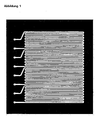
- illustration 1 shows an example of a suitable microfluidic reaction carrier with a total of 4 separate channels.
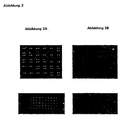
- Figure 2 shows the specific hybridization of nucleic acid target molecules on a microfluidic reaction carrier and their quantitative extractability.
- Figure 2A is the hybridization of a target molecule at predetermined Posititonen recognizable on a microfluidic reaction carrier.
- Figure 2B shows the carrier after extraction. It can be seen that a quantitative elution of the target molecule has occurred.
Landscapes
- Chemical & Material Sciences (AREA)
- Engineering & Computer Science (AREA)
- Life Sciences & Earth Sciences (AREA)
- Health & Medical Sciences (AREA)
- Organic Chemistry (AREA)
- Zoology (AREA)
- Genetics & Genomics (AREA)
- Wood Science & Technology (AREA)
- General Engineering & Computer Science (AREA)
- Biotechnology (AREA)
- Bioinformatics & Cheminformatics (AREA)
- Physics & Mathematics (AREA)
- Biomedical Technology (AREA)
- Analytical Chemistry (AREA)
- Biochemistry (AREA)
- Crystallography & Structural Chemistry (AREA)
- Microbiology (AREA)
- Nanotechnology (AREA)
- Proteomics, Peptides & Aminoacids (AREA)
- General Health & Medical Sciences (AREA)
- Biophysics (AREA)
- Molecular Biology (AREA)
- Plant Pathology (AREA)
- Chemical Kinetics & Catalysis (AREA)
- Composite Materials (AREA)
- Condensed Matter Physics & Semiconductors (AREA)
- General Physics & Mathematics (AREA)
- Materials Engineering (AREA)
- Immunology (AREA)
- Measuring Or Testing Involving Enzymes Or Micro-Organisms (AREA)
- Apparatus Associated With Microorganisms And Enzymes (AREA)
- Peptides Or Proteins (AREA)
- Extraction Or Liquid Replacement (AREA)
- Organic Low-Molecular-Weight Compounds And Preparation Thereof (AREA)
Claims (19)
- Procédé d'isolement de molécules cibles à partir d'un échantillon, comprenant les étapes consistant à :(a) se munir d'un support microfluidique comportant des canaux fermés et une série de plusieurs récepteurs différents qui sont immobilisés chacun en une position différente sur le support ou dans celui-ci,(b) faire passer un échantillon qui contient plusieurs molécules cibles à isoler de façon différente à travers le support microfluidique dans des conditions dans lesquelles les molécules cibles peuvent se lier spécifiquement aux récepteurs immobilisés sur le support,(c) éliminer du support du matériau non lié de l'échantillon et(d) procéder à une élution spécifique à un site des différentes molécules cibles liées au support, dans une étape unique de sorte que plusieurs espèces de molécules cibles sont isolées en parallèle et un mélange de molécules cibles choisies est produit.
- Procédé selon la revendication 1, caractérisé en ce que les molécules cibles sont choisies parmi les acides nucléiques, les polypeptides, les peptides et les saccharides.
- Procédé selon la revendication 1 ou 2, caractérisé en ce que les molécules cibles sont choisies parmi les acides nucléiques, en particulier, les molécules d'ADN et/ou d'ARN.
- Procédé selon la revendication 3, caractérisé en ce que l'on utilise comme récepteurs, des sondes d'hybridation.
- Procédé selon la revendication 4, caractérisé en ce que l'on utilise, comme sondes d'hybridation, des acides nucléiques ou des analogues d'acide nucléique.
- Procédé selon la revendication 4 ou 5, caractérisé en ce que les sondes d'hybridation présentent une longueur de 10 à 100 nucléotides.
- Procédé selon l'une des revendications précédentes, caractérisé en ce que l'on utilise un échantillon d'origine biologique et/ou synthétique.
- Procédé selon l'une des revendications précédentes, caractérisé en ce que l'on utilise un échantillon qui est soumis à une ou plusieurs étapes de prétraitement.
- Procédé selon la revendication 1, caractérisé en ce que les microcanaux du support présentent un diamètre de 10 à 1 000 µm.
- Procédé selon l'une des revendications précédentes, caractérisé en ce que la série sur le support contient au moins 10, de préférence au moins 20 positions avec des récepteurs différents.
- Procédé selon l'une des revendications précédentes, caractérisé en ce que les récepteurs contiennent au niveau des positions individuelles, des séquences individuelles et/ou des mélanges de séquences.
- Procédé selon l'une des revendications précédentes, caractérisé en ce que les récepteurs de la série sont montés in situ par étape sur ou dans le support par immobilisation spécifique au site et/ou au temps, d'éléments de récepteur sur chacune des positions prédéterminées.
- Procédé selon la revendication 12, caractérisé en ce que l'on utilise le support pour un ou plusieurs cycles de synthèse - analyse intégrés.
- Procédé selon la revendication 12 ou 13, caractérisé en ce que l'on utilise le support conjointement avec une matrice de source lumineuse programmable et une matrice de détection.
- Procédé selon l'une des revendications précédentes, caractérisé en ce qu'on soumet la molécule cible extraite à une réaction subséquente.
- Procédé selon l'une des revendications précédentes, caractérisé en ce que les molécules cibles extraites sont prévues pour l'utilisation diagnostique ou thérapeutique directe ou indirecte.
- Procédé selon l'une des revendications précédentes, caractérisé en ce que l'on utilise un support qui contient des molécules biologiques fonctionnelles supplémentaires sous forme immobilisée.
- Procédé selon la revendication 17, caractérisé en ce que les molécules biologiques fonctionnelles supplémentaires sont des sondes polymères et servent à l'analyse des molécules cibles isolées.
- Procédé d'isolement de molécules cibles d'un échantillon, comprenant au moins un cycle du procédé selon la revendication 1 et au moins un cycle du procédé comprenant les étapes consistant à :(a) se munir d'un support microfluidique comportant des canaux fermés et une série de plusieurs récepteurs différents qui sont immobilisés chacun en une position différente sur le support ou dans celui-ci,(b) faire passer un échantillon qui contient des molécules cibles à isoler à travers le support microfluidique dans des conditions dans lesquelles les composants gênants d'un échantillon peuvent se lier spécifiquement aux récepteurs immobilisés sur le support et dans lequel les molécules cibles présentes dans l'échantillon ne se lient pas ou se lie dans une moindre mesure que les composants gênants, aux récepteurs sur le support, et dans lequel plusieurs espèces de composants gênants se lient aux récepteurs immobilisés sur le support, et(c) rincer et recueillir les molécules cibles non liées du support.
Priority Applications (1)
| Application Number | Priority Date | Filing Date | Title |
|---|---|---|---|
| EP09002448A EP2065702B1 (fr) | 2001-10-10 | 2002-10-10 | Procédé d'extraction microfluidique |
Applications Claiming Priority (3)
| Application Number | Priority Date | Filing Date | Title |
|---|---|---|---|
| DE10149947A DE10149947A1 (de) | 2001-10-10 | 2001-10-10 | Mikrofluidisches Extraktionsverfahren |
| DE10149947 | 2001-10-10 | ||
| PCT/EP2002/011383 WO2003031965A2 (fr) | 2001-10-10 | 2002-10-10 | Procede d'extraction microfluidique |
Related Child Applications (1)
| Application Number | Title | Priority Date | Filing Date |
|---|---|---|---|
| EP09002448A Division EP2065702B1 (fr) | 2001-10-10 | 2002-10-10 | Procédé d'extraction microfluidique |
Publications (2)
| Publication Number | Publication Date |
|---|---|
| EP1436609A2 EP1436609A2 (fr) | 2004-07-14 |
| EP1436609B1 true EP1436609B1 (fr) | 2009-03-18 |
Family
ID=7702023
Family Applications (2)
| Application Number | Title | Priority Date | Filing Date |
|---|---|---|---|
| EP02781236A Expired - Lifetime EP1436609B1 (fr) | 2001-10-10 | 2002-10-10 | Procede d'extraction microfluidique |
| EP09002448A Expired - Lifetime EP2065702B1 (fr) | 2001-10-10 | 2002-10-10 | Procédé d'extraction microfluidique |
Family Applications After (1)
| Application Number | Title | Priority Date | Filing Date |
|---|---|---|---|
| EP09002448A Expired - Lifetime EP2065702B1 (fr) | 2001-10-10 | 2002-10-10 | Procédé d'extraction microfluidique |
Country Status (6)
| Country | Link |
|---|---|
| US (2) | US7320862B2 (fr) |
| EP (2) | EP1436609B1 (fr) |
| AT (2) | ATE426158T1 (fr) |
| AU (1) | AU2002349344A1 (fr) |
| DE (2) | DE10149947A1 (fr) |
| WO (1) | WO2003031965A2 (fr) |
Families Citing this family (20)
| Publication number | Priority date | Publication date | Assignee | Title |
|---|---|---|---|---|
| DE10149947A1 (de) * | 2001-10-10 | 2003-04-17 | Febit Ferrarius Biotech Gmbh | Mikrofluidisches Extraktionsverfahren |
| US7300755B1 (en) * | 2003-05-12 | 2007-11-27 | Fred Hutchinson Cancer Research Center | Methods for haplotyping genomic DNA |
| US7410763B2 (en) * | 2005-09-01 | 2008-08-12 | Intel Corporation | Multiplex data collection and analysis in bioanalyte detection |
| US8383338B2 (en) | 2006-04-24 | 2013-02-26 | Roche Nimblegen, Inc. | Methods and systems for uniform enrichment of genomic regions |
| US20080194413A1 (en) * | 2006-04-24 | 2008-08-14 | Albert Thomas J | Use of microarrays for genomic representation selection |
| US20080194414A1 (en) * | 2006-04-24 | 2008-08-14 | Albert Thomas J | Enrichment and sequence analysis of genomic regions |
| EP2076609A1 (fr) * | 2006-10-10 | 2009-07-08 | Illumina Inc. | Compositions et procédés pour une sélection représentative d'acides nucléiques à partir de mélanges complexes |
| US8188255B2 (en) * | 2006-10-20 | 2012-05-29 | Exiqon A/S | Human microRNAs associated with cancer |
| US8080372B2 (en) * | 2007-04-11 | 2011-12-20 | Canon Kabushiki Kaisha | Method for detecting nucleic acid in sample, method for designing probes, system for designing probes therefor |
| EP2053132A1 (fr) * | 2007-10-23 | 2009-04-29 | Roche Diagnostics GmbH | Enrichissement et analyse de séquence de régions génomiques |
| DE102007056398A1 (de) | 2007-11-23 | 2009-05-28 | Febit Holding Gmbh | Flexibles Extraktionsverfahren für die Herstellung sequenzspezifischer Molekülbibliotheken |
| JP5795255B2 (ja) | 2008-07-18 | 2015-10-14 | キヤノン ユー.エス. ライフ サイエンシズ, インコーポレイテッドCanon U.S. Life Sciences, Inc. | 微小流体dna試料調製のための方法およびシステム |
| US8304185B2 (en) | 2009-07-17 | 2012-11-06 | Canon U.S. Life Sciences, Inc. | Methods and systems for DNA isolation on a microfluidic device |
| JP2012502660A (ja) * | 2008-09-22 | 2012-02-02 | エフ.ホフマン−ラ ロシュ アーゲー | マイクロアレイ基板上の生体物質の選択的プロセシング |
| DE102008061772A1 (de) | 2008-12-11 | 2010-06-17 | Febit Holding Gmbh | Verfahren zur Untersuchung von Nukleinsäure-Populationen |
| DE102008061774A1 (de) | 2008-12-11 | 2010-06-17 | Febit Holding Gmbh | Indexierung von Nukleinsäure-Populationen |
| US20100331204A1 (en) * | 2009-02-13 | 2010-12-30 | Jeff Jeddeloh | Methods and systems for enrichment of target genomic sequences |
| GB2489686B (en) * | 2011-04-01 | 2018-06-27 | Agilent Technologies Inc | Fluidic chip with laminated reinforcing layer for pressure reinforcement |
| US20170357717A1 (en) | 2016-06-12 | 2017-12-14 | Apple Inc. | Arrangement of Documents In A Document Feed |
| CN109374159B (zh) * | 2018-09-28 | 2020-09-08 | 深圳大学 | 一种多壁碳纳米管压阻传感器及其制备方法 |
Family Cites Families (18)
| Publication number | Priority date | Publication date | Assignee | Title |
|---|---|---|---|---|
| US6169169B1 (en) * | 1994-05-19 | 2001-01-02 | Dako A/S | PNA probes for detection of Neisseria gonorrhoeae and Chlamydia trachomatis |
| US6013440A (en) | 1996-03-11 | 2000-01-11 | Affymetrix, Inc. | Nucleic acid affinity columns |
| US5985651A (en) * | 1996-06-17 | 1999-11-16 | The Board Of Trustees Of The Leland Stanford Junior University | Thermocycling apparatus and method |
| US5804384A (en) | 1996-12-06 | 1998-09-08 | Vysis, Inc. | Devices and methods for detecting multiple analytes in samples |
| US6391622B1 (en) * | 1997-04-04 | 2002-05-21 | Caliper Technologies Corp. | Closed-loop biochemical analyzers |
| CA2293820A1 (fr) * | 1997-06-25 | 1998-12-30 | Promega Corporation | Procede d'isolement d'arn |
| US6093370A (en) * | 1998-06-11 | 2000-07-25 | Hitachi, Ltd. | Polynucleotide separation method and apparatus therefor |
| US6306643B1 (en) * | 1998-08-24 | 2001-10-23 | Affymetrix, Inc. | Methods of using an array of pooled probes in genetic analysis |
| CA2341896A1 (fr) * | 1998-08-28 | 2000-03-09 | Febit Ferrarius Biotechnology Gmbh | Support pour un procede de determination d'analyte et procede de fabrication du support |
| EP2175021B1 (fr) * | 1999-02-19 | 2013-06-19 | Synthetic Genomics, Inc. | Procédé de production de polymères |
| US6953686B1 (en) * | 1999-05-28 | 2005-10-11 | Cambrex Bio Science Baltimore, Inc. | Methods of DNA purification and purified DNA |
| DE19957319A1 (de) * | 1999-11-29 | 2001-05-31 | Febit Ferrarius Biotech Gmbh | Dynamische Bestimmung von Analyten |
| US6596487B2 (en) * | 2000-03-10 | 2003-07-22 | Ana-Gen Technologies, Inc. | Mutation detection using denaturing gradients |
| CA2314398A1 (fr) * | 2000-08-10 | 2002-02-10 | Edward Shipwash | Jeux ordonnes de microechantillons et microsystemes pour l'analyse d'acides amines et le sequencage de proteines |
| WO2002052045A1 (fr) | 2000-12-26 | 2002-07-04 | Aviva Biosciences | Plate-formes actives et biocompatibles preparees par polymerisation de films de revetement de surface |
| DE10119468A1 (de) | 2001-04-12 | 2002-10-24 | Epigenomics Ag | Mikroarray-Verfahren zur Anreicherung von DNA-Fragmenten aus komplexen Mischungen |
| DE10122357A1 (de) | 2001-05-09 | 2002-11-14 | Febit Ferrarius Biotech Gmbh | Hybridverfahren zur Herstellung von Trägern für die Analytbestimmung |
| DE10149947A1 (de) * | 2001-10-10 | 2003-04-17 | Febit Ferrarius Biotech Gmbh | Mikrofluidisches Extraktionsverfahren |
-
2001
- 2001-10-10 DE DE10149947A patent/DE10149947A1/de not_active Withdrawn
-
2002
- 2002-10-10 AU AU2002349344A patent/AU2002349344A1/en not_active Abandoned
- 2002-10-10 AT AT02781236T patent/ATE426158T1/de active
- 2002-10-10 AT AT09002448T patent/ATE545019T1/de active
- 2002-10-10 DE DE50213370T patent/DE50213370D1/de not_active Expired - Lifetime
- 2002-10-10 EP EP02781236A patent/EP1436609B1/fr not_active Expired - Lifetime
- 2002-10-10 WO PCT/EP2002/011383 patent/WO2003031965A2/fr not_active Ceased
- 2002-10-10 US US10/492,014 patent/US7320862B2/en not_active Expired - Fee Related
- 2002-10-10 EP EP09002448A patent/EP2065702B1/fr not_active Expired - Lifetime
-
2007
- 2007-11-28 US US11/946,666 patent/US7901886B2/en not_active Expired - Fee Related
Non-Patent Citations (4)
Also Published As
| Publication number | Publication date |
|---|---|
| EP2065702B1 (fr) | 2012-02-08 |
| US7320862B2 (en) | 2008-01-22 |
| DE50213370D1 (de) | 2009-04-30 |
| DE10149947A1 (de) | 2003-04-17 |
| US20050040043A1 (en) | 2005-02-24 |
| ATE545019T1 (de) | 2012-02-15 |
| US7901886B2 (en) | 2011-03-08 |
| EP2065702A1 (fr) | 2009-06-03 |
| WO2003031965A3 (fr) | 2003-12-31 |
| AU2002349344A1 (en) | 2003-04-22 |
| WO2003031965A2 (fr) | 2003-04-17 |
| EP1436609A2 (fr) | 2004-07-14 |
| ATE426158T1 (de) | 2009-04-15 |
| US20080146791A1 (en) | 2008-06-19 |
Similar Documents
| Publication | Publication Date | Title |
|---|---|---|
| EP1436609B1 (fr) | Procede d'extraction microfluidique | |
| EP1153127B1 (fr) | Procede de production de polymeres | |
| DE60010058T2 (de) | Biochemische reinigungsgeräte mit immobilisierten fangsonden und ihre anwendungen | |
| EP2057176B1 (fr) | Synthèse programmable d'oligonucléotides | |
| DE60110256T2 (de) | Verfahren zum konzentrieren von analyten in proben | |
| WO2005051970A2 (fr) | Synthetiseur d'adn a parallelisme eleve sur une base matricielle | |
| WO2000013018B1 (fr) | Support pour un procede de determination d'analyte et procede de fabrication du support | |
| WO2005105308A1 (fr) | Supports poreux fonctionnalises pour microreseaux | |
| EP1075546A1 (fr) | Procede et dispositif pour isoler des acides nucleiques | |
| WO2001046686A9 (fr) | Materiau chromatographique et procedes d'utilisation d'un tel materiau | |
| DE19612356A1 (de) | Optischer Nachweis von Hybridisierungs-Signalen | |
| EP2022559A2 (fr) | Bibliothèque d'acides nucléiques ou bibliothèque de peptides ou de protéines | |
| EP2217364A2 (fr) | Procédé d'extraction flexible permettant la production de bibliothèques de molécules spécifiques d'une séquence | |
| DE19902391A1 (de) | Verfahren zur reversiblen, ortsspezifischen, hocheffizienten und gleichzeitigen Immobilisierung verschiedenartiger (biologischer) Makromoleküle auf Festphasen | |
| EP1234056B1 (fr) | Determination dynamique d'analytes en utilisant une puce localisee sur une surface interne | |
| WO2001040510A2 (fr) | Sequençage dynamique par hybridation | |
| DE10033091A1 (de) | Polymer-Chip | |
| DE10152925A1 (de) | Asymmetrische Sonden | |
| EP1649045A2 (fr) | Incorporation de groupes haptene lors de la production de supports pour la determination de substances a analyser | |
| DE10335107A1 (de) | Verfahren zur Bereitstellung eines Reaktionsgemisches für eine nachfolgende Mikroarrayanalyse | |
| WO2003058240A2 (fr) | Procédé de détection comparative qualitative et quantitative de substances chimiques |
Legal Events
| Date | Code | Title | Description |
|---|---|---|---|
| PUAI | Public reference made under article 153(3) epc to a published international application that has entered the european phase |
Free format text: ORIGINAL CODE: 0009012 |
|
| 17P | Request for examination filed |
Effective date: 20040408 |
|
| AK | Designated contracting states |
Kind code of ref document: A2 Designated state(s): AT BE BG CH CY CZ DE DK EE ES FI FR GB GR IE IT LI LU MC NL PT SE SK TR |
|
| AX | Request for extension of the european patent |
Extension state: AL LT LV MK RO SI |
|
| RAP1 | Party data changed (applicant data changed or rights of an application transferred) |
Owner name: FEBIT BIOTECH GMBH |
|
| 17Q | First examination report despatched |
Effective date: 20060214 |
|
| GRAP | Despatch of communication of intention to grant a patent |
Free format text: ORIGINAL CODE: EPIDOSNIGR1 |
|
| RAP1 | Party data changed (applicant data changed or rights of an application transferred) |
Owner name: FEBIT HOLDING GMBH |
|
| GRAS | Grant fee paid |
Free format text: ORIGINAL CODE: EPIDOSNIGR3 |
|
| GRAA | (expected) grant |
Free format text: ORIGINAL CODE: 0009210 |
|
| AK | Designated contracting states |
Kind code of ref document: B1 Designated state(s): AT BE BG CH CY CZ DE DK EE ES FI FR GB GR IE IT LI LU MC NL PT SE SK TR |
|
| REG | Reference to a national code |
Ref country code: GB Ref legal event code: FG4D Free format text: NOT ENGLISH |
|
| REG | Reference to a national code |
Ref country code: CH Ref legal event code: NV Representative=s name: BOHEST AG Ref country code: CH Ref legal event code: EP |
|
| REG | Reference to a national code |
Ref country code: IE Ref legal event code: FG4D Free format text: LANGUAGE OF EP DOCUMENT: GERMAN |
|
| REF | Corresponds to: |
Ref document number: 50213370 Country of ref document: DE Date of ref document: 20090430 Kind code of ref document: P |
|
| PG25 | Lapsed in a contracting state [announced via postgrant information from national office to epo] |
Ref country code: NL Free format text: LAPSE BECAUSE OF FAILURE TO SUBMIT A TRANSLATION OF THE DESCRIPTION OR TO PAY THE FEE WITHIN THE PRESCRIBED TIME-LIMIT Effective date: 20090318 Ref country code: FI Free format text: LAPSE BECAUSE OF FAILURE TO SUBMIT A TRANSLATION OF THE DESCRIPTION OR TO PAY THE FEE WITHIN THE PRESCRIBED TIME-LIMIT Effective date: 20090318 |
|
| PG25 | Lapsed in a contracting state [announced via postgrant information from national office to epo] |
Ref country code: SE Free format text: LAPSE BECAUSE OF FAILURE TO SUBMIT A TRANSLATION OF THE DESCRIPTION OR TO PAY THE FEE WITHIN THE PRESCRIBED TIME-LIMIT Effective date: 20090618 |
|
| NLV1 | Nl: lapsed or annulled due to failure to fulfill the requirements of art. 29p and 29m of the patents act | ||
| REG | Reference to a national code |
Ref country code: IE Ref legal event code: FD4D |
|
| PG25 | Lapsed in a contracting state [announced via postgrant information from national office to epo] |
Ref country code: EE Free format text: LAPSE BECAUSE OF FAILURE TO SUBMIT A TRANSLATION OF THE DESCRIPTION OR TO PAY THE FEE WITHIN THE PRESCRIBED TIME-LIMIT Effective date: 20090318 Ref country code: ES Free format text: LAPSE BECAUSE OF FAILURE TO SUBMIT A TRANSLATION OF THE DESCRIPTION OR TO PAY THE FEE WITHIN THE PRESCRIBED TIME-LIMIT Effective date: 20090629 Ref country code: PT Free format text: LAPSE BECAUSE OF FAILURE TO SUBMIT A TRANSLATION OF THE DESCRIPTION OR TO PAY THE FEE WITHIN THE PRESCRIBED TIME-LIMIT Effective date: 20090826 Ref country code: CZ Free format text: LAPSE BECAUSE OF FAILURE TO SUBMIT A TRANSLATION OF THE DESCRIPTION OR TO PAY THE FEE WITHIN THE PRESCRIBED TIME-LIMIT Effective date: 20090318 Ref country code: IE Free format text: LAPSE BECAUSE OF FAILURE TO SUBMIT A TRANSLATION OF THE DESCRIPTION OR TO PAY THE FEE WITHIN THE PRESCRIBED TIME-LIMIT Effective date: 20090318 |
|
| PG25 | Lapsed in a contracting state [announced via postgrant information from national office to epo] |
Ref country code: SK Free format text: LAPSE BECAUSE OF FAILURE TO SUBMIT A TRANSLATION OF THE DESCRIPTION OR TO PAY THE FEE WITHIN THE PRESCRIBED TIME-LIMIT Effective date: 20090318 |
|
| PLBI | Opposition filed |
Free format text: ORIGINAL CODE: 0009260 |
|
| PLAX | Notice of opposition and request to file observation + time limit sent |
Free format text: ORIGINAL CODE: EPIDOSNOBS2 |
|
| PG25 | Lapsed in a contracting state [announced via postgrant information from national office to epo] |
Ref country code: DK Free format text: LAPSE BECAUSE OF FAILURE TO SUBMIT A TRANSLATION OF THE DESCRIPTION OR TO PAY THE FEE WITHIN THE PRESCRIBED TIME-LIMIT Effective date: 20090318 Ref country code: BG Free format text: LAPSE BECAUSE OF FAILURE TO SUBMIT A TRANSLATION OF THE DESCRIPTION OR TO PAY THE FEE WITHIN THE PRESCRIBED TIME-LIMIT Effective date: 20090618 |
|
| 26 | Opposition filed |
Opponent name: ROCHE DIAGNOSTICS GMBH Effective date: 20091217 |
|
| PLAF | Information modified related to communication of a notice of opposition and request to file observations + time limit |
Free format text: ORIGINAL CODE: EPIDOSCOBS2 |
|
| BERE | Be: lapsed |
Owner name: FEBIT HOLDING G.M.B.H. Effective date: 20091031 |
|
| PG25 | Lapsed in a contracting state [announced via postgrant information from national office to epo] |
Ref country code: MC Free format text: LAPSE BECAUSE OF NON-PAYMENT OF DUE FEES Effective date: 20091031 |
|
| PLBB | Reply of patent proprietor to notice(s) of opposition received |
Free format text: ORIGINAL CODE: EPIDOSNOBS3 |
|
| PG25 | Lapsed in a contracting state [announced via postgrant information from national office to epo] |
Ref country code: BE Free format text: LAPSE BECAUSE OF NON-PAYMENT OF DUE FEES Effective date: 20091031 Ref country code: GR Free format text: LAPSE BECAUSE OF FAILURE TO SUBMIT A TRANSLATION OF THE DESCRIPTION OR TO PAY THE FEE WITHIN THE PRESCRIBED TIME-LIMIT Effective date: 20090619 |
|
| PLCK | Communication despatched that opposition was rejected |
Free format text: ORIGINAL CODE: EPIDOSNREJ1 |
|
| PG25 | Lapsed in a contracting state [announced via postgrant information from national office to epo] |
Ref country code: IT Free format text: LAPSE BECAUSE OF FAILURE TO SUBMIT A TRANSLATION OF THE DESCRIPTION OR TO PAY THE FEE WITHIN THE PRESCRIBED TIME-LIMIT Effective date: 20090318 |
|
| PG25 | Lapsed in a contracting state [announced via postgrant information from national office to epo] |
Ref country code: LU Free format text: LAPSE BECAUSE OF NON-PAYMENT OF DUE FEES Effective date: 20091010 |
|
| APBM | Appeal reference recorded |
Free format text: ORIGINAL CODE: EPIDOSNREFNO |
|
| APBP | Date of receipt of notice of appeal recorded |
Free format text: ORIGINAL CODE: EPIDOSNNOA2O |
|
| APAH | Appeal reference modified |
Free format text: ORIGINAL CODE: EPIDOSCREFNO |
|
| APBQ | Date of receipt of statement of grounds of appeal recorded |
Free format text: ORIGINAL CODE: EPIDOSNNOA3O |
|
| PG25 | Lapsed in a contracting state [announced via postgrant information from national office to epo] |
Ref country code: TR Free format text: LAPSE BECAUSE OF FAILURE TO SUBMIT A TRANSLATION OF THE DESCRIPTION OR TO PAY THE FEE WITHIN THE PRESCRIBED TIME-LIMIT Effective date: 20090318 |
|
| PG25 | Lapsed in a contracting state [announced via postgrant information from national office to epo] |
Ref country code: CY Free format text: LAPSE BECAUSE OF FAILURE TO SUBMIT A TRANSLATION OF THE DESCRIPTION OR TO PAY THE FEE WITHIN THE PRESCRIBED TIME-LIMIT Effective date: 20090318 |
|
| PGFP | Annual fee paid to national office [announced via postgrant information from national office to epo] |
Ref country code: AT Payment date: 20121022 Year of fee payment: 11 |
|
| APBU | Appeal procedure closed |
Free format text: ORIGINAL CODE: EPIDOSNNOA9O |
|
| PLBP | Opposition withdrawn |
Free format text: ORIGINAL CODE: 0009264 |
|
| PLBN | Opposition rejected |
Free format text: ORIGINAL CODE: 0009273 |
|
| STAA | Information on the status of an ep patent application or granted ep patent |
Free format text: STATUS: OPPOSITION REJECTED |
|
| 27O | Opposition rejected |
Effective date: 20130412 |
|
| REG | Reference to a national code |
Ref country code: DE Ref legal event code: R100 Ref document number: 50213370 Country of ref document: DE Effective date: 20130412 |
|
| REG | Reference to a national code |
Ref country code: AT Ref legal event code: MM01 Ref document number: 426158 Country of ref document: AT Kind code of ref document: T Effective date: 20131010 |
|
| REG | Reference to a national code |
Ref country code: CH Ref legal event code: PCAR Free format text: NEW ADDRESS: HOLBEINSTRASSE 36-38, 4051 BASEL (CH) |
|
| PGFP | Annual fee paid to national office [announced via postgrant information from national office to epo] |
Ref country code: GB Payment date: 20140429 Year of fee payment: 12 |
|
| PG25 | Lapsed in a contracting state [announced via postgrant information from national office to epo] |
Ref country code: AT Free format text: LAPSE BECAUSE OF NON-PAYMENT OF DUE FEES Effective date: 20131010 |
|
| PGFP | Annual fee paid to national office [announced via postgrant information from national office to epo] |
Ref country code: FR Payment date: 20140429 Year of fee payment: 12 Ref country code: CH Payment date: 20140429 Year of fee payment: 12 Ref country code: DE Payment date: 20140430 Year of fee payment: 12 |
|
| REG | Reference to a national code |
Ref country code: DE Ref legal event code: R119 Ref document number: 50213370 Country of ref document: DE |
|
| REG | Reference to a national code |
Ref country code: CH Ref legal event code: PL |
|
| GBPC | Gb: european patent ceased through non-payment of renewal fee |
Effective date: 20141010 |
|
| PG25 | Lapsed in a contracting state [announced via postgrant information from national office to epo] |
Ref country code: CH Free format text: LAPSE BECAUSE OF NON-PAYMENT OF DUE FEES Effective date: 20141031 Ref country code: LI Free format text: LAPSE BECAUSE OF NON-PAYMENT OF DUE FEES Effective date: 20141031 Ref country code: DE Free format text: LAPSE BECAUSE OF NON-PAYMENT OF DUE FEES Effective date: 20150501 Ref country code: GB Free format text: LAPSE BECAUSE OF NON-PAYMENT OF DUE FEES Effective date: 20141010 |
|
| REG | Reference to a national code |
Ref country code: FR Ref legal event code: ST Effective date: 20150630 |
|
| PG25 | Lapsed in a contracting state [announced via postgrant information from national office to epo] |
Ref country code: FR Free format text: LAPSE BECAUSE OF NON-PAYMENT OF DUE FEES Effective date: 20141031 |