EP1437145A1 - Verbesserte szintigraphische bildgebende Mittel zur Darstellung von Infektionen und Entzündungen - Google Patents
Verbesserte szintigraphische bildgebende Mittel zur Darstellung von Infektionen und Entzündungen Download PDFInfo
- Publication number
- EP1437145A1 EP1437145A1 EP20030000204 EP03000204A EP1437145A1 EP 1437145 A1 EP1437145 A1 EP 1437145A1 EP 20030000204 EP20030000204 EP 20030000204 EP 03000204 A EP03000204 A EP 03000204A EP 1437145 A1 EP1437145 A1 EP 1437145A1
- Authority
- EP
- European Patent Office
- Prior art keywords
- reagent
- peptide
- radiolabel
- composition
- infection
- Prior art date
- Legal status (The legal status is an assumption and is not a legal conclusion. Google has not performed a legal analysis and makes no representation as to the accuracy of the status listed.)
- Withdrawn
Links
- 208000015181 infectious disease Diseases 0.000 title claims abstract description 54
- 206010061218 Inflammation Diseases 0.000 title claims abstract description 38
- 239000012216 imaging agent Substances 0.000 title claims abstract description 38
- 230000004054 inflammatory process Effects 0.000 title claims abstract description 38
- 238000003384 imaging method Methods 0.000 title claims abstract description 21
- 108090000765 processed proteins & peptides Proteins 0.000 claims abstract description 103
- 239000000203 mixture Substances 0.000 claims abstract description 80
- 150000001875 compounds Chemical class 0.000 claims abstract description 37
- 150000004676 glycans Chemical class 0.000 claims abstract description 35
- 238000000034 method Methods 0.000 claims abstract description 31
- GKLVYJBZJHMRIY-OUBTZVSYSA-N Technetium-99 Chemical compound [99Tc] GKLVYJBZJHMRIY-OUBTZVSYSA-N 0.000 claims abstract description 12
- 229940056501 technetium 99m Drugs 0.000 claims abstract description 12
- 241000124008 Mammalia Species 0.000 claims abstract 2
- 239000003153 chemical reaction reagent Substances 0.000 claims description 82
- 229920000045 Dermatan sulfate Polymers 0.000 claims description 51
- 229940051593 dermatan sulfate Drugs 0.000 claims description 40
- AVJBPWGFOQAPRH-FWMKGIEWSA-L dermatan sulfate Chemical compound CC(=O)N[C@H]1[C@H](O)O[C@H](CO)[C@H](OS([O-])(=O)=O)[C@@H]1O[C@H]1[C@H](O)[C@@H](O)[C@H](O)[C@H](C([O-])=O)O1 AVJBPWGFOQAPRH-FWMKGIEWSA-L 0.000 claims description 40
- 150000001413 amino acids Chemical class 0.000 claims description 31
- 235000001014 amino acid Nutrition 0.000 claims description 24
- 210000004369 blood Anatomy 0.000 claims description 24
- 239000008280 blood Substances 0.000 claims description 24
- 125000000217 alkyl group Chemical group 0.000 claims description 23
- 210000003205 muscle Anatomy 0.000 claims description 22
- 125000001997 phenyl group Chemical group [H]C1=C([H])C([H])=C(*)C([H])=C1[H] 0.000 claims description 21
- 102000004211 Platelet factor 4 Human genes 0.000 claims description 20
- 108090000778 Platelet factor 4 Proteins 0.000 claims description 20
- 125000000637 arginyl group Chemical group N[C@@H](CCCNC(N)=N)C(=O)* 0.000 claims description 18
- -1 bromoacetyl Chemical group 0.000 claims description 16
- 125000005647 linker group Chemical group 0.000 claims description 15
- 241000283973 Oryctolagus cuniculus Species 0.000 claims description 14
- 125000003588 lysine group Chemical group [H]N([H])C([H])([H])C([H])([H])C([H])([H])C([H])([H])C([H])(N([H])[H])C(*)=O 0.000 claims description 14
- 241000588724 Escherichia coli Species 0.000 claims description 13
- 238000001727 in vivo Methods 0.000 claims description 13
- 238000002347 injection Methods 0.000 claims description 12
- 239000007924 injection Substances 0.000 claims description 12
- 230000007170 pathology Effects 0.000 claims description 12
- OEANUJAFZLQYOD-CXAZCLJRSA-N (2r,3s,4r,5r,6r)-6-[(2r,3r,4r,5r,6r)-5-acetamido-3-hydroxy-2-(hydroxymethyl)-6-methoxyoxan-4-yl]oxy-4,5-dihydroxy-3-methoxyoxane-2-carboxylic acid Chemical compound CC(=O)N[C@H]1[C@H](OC)O[C@H](CO)[C@H](O)[C@@H]1O[C@H]1[C@H](O)[C@@H](O)[C@H](OC)[C@H](C(O)=O)O1 OEANUJAFZLQYOD-CXAZCLJRSA-N 0.000 claims description 11
- 125000003545 alkoxy group Chemical group 0.000 claims description 11
- VFNGKCDDZUSWLR-UHFFFAOYSA-L disulfate(2-) Chemical compound [O-]S(=O)(=O)OS([O-])(=O)=O VFNGKCDDZUSWLR-UHFFFAOYSA-L 0.000 claims description 11
- 125000003118 aryl group Chemical group 0.000 claims description 10
- 239000008194 pharmaceutical composition Substances 0.000 claims description 10
- 125000006239 protecting group Chemical group 0.000 claims description 10
- 230000002285 radioactive effect Effects 0.000 claims description 10
- 238000002372 labelling Methods 0.000 claims description 9
- 101000582950 Homo sapiens Platelet factor 4 Proteins 0.000 claims description 8
- 125000003178 carboxy group Chemical group [H]OC(*)=O 0.000 claims description 8
- 239000003638 chemical reducing agent Substances 0.000 claims description 8
- 102000052196 human PF4 Human genes 0.000 claims description 8
- 238000002360 preparation method Methods 0.000 claims description 8
- 125000000524 functional group Chemical group 0.000 claims description 6
- 238000010647 peptide synthesis reaction Methods 0.000 claims description 6
- 150000003573 thiols Chemical group 0.000 claims description 6
- 239000004472 Lysine Substances 0.000 claims description 5
- KDXKERNSBIXSRK-UHFFFAOYSA-N Lysine Natural products NCCCCC(N)C(O)=O KDXKERNSBIXSRK-UHFFFAOYSA-N 0.000 claims description 5
- 125000002887 hydroxy group Chemical group [H]O* 0.000 claims description 5
- 239000003446 ligand Substances 0.000 claims description 5
- 125000002496 methyl group Chemical group [H]C([H])([H])* 0.000 claims description 5
- 238000006467 substitution reaction Methods 0.000 claims description 5
- KWOLFJPFCHCOCG-UHFFFAOYSA-N Acetophenone Chemical compound CC(=O)C1=CC=CC=C1 KWOLFJPFCHCOCG-UHFFFAOYSA-N 0.000 claims description 4
- 125000004453 alkoxycarbonyl group Chemical group 0.000 claims description 4
- 125000004122 cyclic group Chemical group 0.000 claims description 4
- 125000000623 heterocyclic group Chemical group 0.000 claims description 4
- APFVFJFRJDLVQX-AHCXROLUSA-N indium-111 Chemical compound [111In] APFVFJFRJDLVQX-AHCXROLUSA-N 0.000 claims description 4
- 239000007790 solid phase Substances 0.000 claims description 4
- UYOUGRXVHQNLON-UHFFFAOYSA-N 1-[1-(2,5-dioxopyrrolidin-1-yl)hexyl]pyrrolidine-2,5-dione Chemical compound O=C1CCC(=O)N1C(CCCCC)N1C(=O)CCC1=O UYOUGRXVHQNLON-UHFFFAOYSA-N 0.000 claims description 3
- 125000004105 2-pyridyl group Chemical group N1=C([*])C([H])=C([H])C([H])=C1[H] 0.000 claims description 3
- 125000003349 3-pyridyl group Chemical group N1=C([H])C([*])=C([H])C([H])=C1[H] 0.000 claims description 3
- 125000000339 4-pyridyl group Chemical group N1=C([H])C([H])=C([*])C([H])=C1[H] 0.000 claims description 3
- CWYNVVGOOAEACU-UHFFFAOYSA-N Fe2+ Chemical compound [Fe+2] CWYNVVGOOAEACU-UHFFFAOYSA-N 0.000 claims description 3
- GYHNNYVSQQEPJS-OIOBTWANSA-N Gallium-67 Chemical compound [67Ga] GYHNNYVSQQEPJS-OIOBTWANSA-N 0.000 claims description 3
- ZCYVEMRRCGMTRW-AHCXROLUSA-N Iodine-123 Chemical compound [123I] ZCYVEMRRCGMTRW-AHCXROLUSA-N 0.000 claims description 3
- 235000018417 cysteine Nutrition 0.000 claims description 3
- XUJNEKJLAYXESH-UHFFFAOYSA-N cysteine Natural products SCC(N)C(O)=O XUJNEKJLAYXESH-UHFFFAOYSA-N 0.000 claims description 3
- 229910001448 ferrous ion Inorganic materials 0.000 claims description 3
- 238000002156 mixing Methods 0.000 claims description 3
- 230000008569 process Effects 0.000 claims description 3
- WUAPFZMCVAUBPE-IGMARMGPSA-N rhenium-186 Chemical compound [186Re] WUAPFZMCVAUBPE-IGMARMGPSA-N 0.000 claims description 3
- 238000003786 synthesis reaction Methods 0.000 claims description 3
- NAWDYIZEMPQZHO-AHCXROLUSA-N ytterbium-169 Chemical compound [169Yb] NAWDYIZEMPQZHO-AHCXROLUSA-N 0.000 claims description 3
- QWFGVJAKZIICCU-UHFFFAOYSA-N 1-[2-[bis[2-(2,5-dioxopyrrolidin-1-yl)ethyl]amino]ethyl]pyrrolidine-2,5-dione Chemical compound O=C1CCC(=O)N1CCN(CCN1C(CCC1=O)=O)CCN1C(=O)CCC1=O QWFGVJAKZIICCU-UHFFFAOYSA-N 0.000 claims description 2
- FJZFPQVTPJCIAT-UHFFFAOYSA-N 1-[bis(2,5-dioxopyrrolidin-1-yl)methoxy-(2,5-dioxopyrrolidin-1-yl)methyl]pyrrolidine-2,5-dione Chemical compound O=C1CCC(=O)N1C(N1C(CCC1=O)=O)OC(N1C(CCC1=O)=O)N1C(=O)CCC1=O FJZFPQVTPJCIAT-UHFFFAOYSA-N 0.000 claims description 2
- FLICZDVBYUMMAS-UHFFFAOYSA-N 4-(2-methylpropanoyl)benzoic acid Chemical compound CC(C)C(=O)C1=CC=C(C(O)=O)C=C1 FLICZDVBYUMMAS-UHFFFAOYSA-N 0.000 claims description 2
- SQDAZGGFXASXDW-UHFFFAOYSA-N 5-bromo-2-(trifluoromethoxy)pyridine Chemical compound FC(F)(F)OC1=CC=C(Br)C=N1 SQDAZGGFXASXDW-UHFFFAOYSA-N 0.000 claims description 2
- 229920001287 Chondroitin sulfate Polymers 0.000 claims description 2
- GYHNNYVSQQEPJS-YPZZEJLDSA-N Gallium-68 Chemical compound [68Ga] GYHNNYVSQQEPJS-YPZZEJLDSA-N 0.000 claims description 2
- 150000001408 amides Chemical class 0.000 claims description 2
- 125000002843 carboxylic acid group Chemical group 0.000 claims description 2
- 125000002668 chloroacetyl group Chemical group ClCC(=O)* 0.000 claims description 2
- 229940059329 chondroitin sulfate Drugs 0.000 claims description 2
- 229960000633 dextran sulfate Drugs 0.000 claims description 2
- 239000003937 drug carrier Substances 0.000 claims description 2
- 229940006110 gallium-67 Drugs 0.000 claims description 2
- 238000000338 in vitro Methods 0.000 claims description 2
- 229940055742 indium-111 Drugs 0.000 claims description 2
- XMBWDFGMSWQBCA-YPZZEJLDSA-N iodane Chemical compound [125IH] XMBWDFGMSWQBCA-YPZZEJLDSA-N 0.000 claims description 2
- 229940044173 iodine-125 Drugs 0.000 claims description 2
- IWEGPIDWRVBFSW-UHFFFAOYSA-N n-[(acetamidomethylamino)methyl]acetamide Chemical compound CC(=O)NCNCNC(C)=O IWEGPIDWRVBFSW-UHFFFAOYSA-N 0.000 claims description 2
- ATWBNBXPQDWWPQ-UHFFFAOYSA-N n-[2-(2-acetamidoethylamino)ethyl]acetamide Chemical compound CC(=O)NCCNCCNC(C)=O ATWBNBXPQDWWPQ-UHFFFAOYSA-N 0.000 claims description 2
- BFEOXSZBXGCZOJ-UHFFFAOYSA-N n-[2-[2-(2-acetamidoethoxy)ethoxy]ethyl]acetamide Chemical compound CC(=O)NCCOCCOCCNC(C)=O BFEOXSZBXGCZOJ-UHFFFAOYSA-N 0.000 claims description 2
- JLLHOJAQRZZXCM-UHFFFAOYSA-N n-[2-[bis(2-acetamidoethyl)amino]ethyl]acetamide Chemical compound CC(=O)NCCN(CCNC(C)=O)CCNC(C)=O JLLHOJAQRZZXCM-UHFFFAOYSA-N 0.000 claims description 2
- 150000003141 primary amines Chemical class 0.000 claims description 2
- 239000012217 radiopharmaceutical Substances 0.000 claims description 2
- 229940121896 radiopharmaceutical Drugs 0.000 claims description 2
- 230000002799 radiopharmaceutical effect Effects 0.000 claims description 2
- 150000003335 secondary amines Chemical class 0.000 claims description 2
- 125000003396 thiol group Chemical group [H]S* 0.000 claims description 2
- 125000003275 alpha amino acid group Chemical group 0.000 claims 6
- 238000004519 manufacturing process Methods 0.000 claims 2
- IUTCEZPPWBHGIX-UHFFFAOYSA-N tin(2+) Chemical compound [Sn+2] IUTCEZPPWBHGIX-UHFFFAOYSA-N 0.000 claims 2
- 150000002333 glycines Chemical class 0.000 claims 1
- 229920000669 heparin Polymers 0.000 description 26
- 102000004196 processed proteins & peptides Human genes 0.000 description 21
- 229960002897 heparin Drugs 0.000 description 20
- HTTJABKRGRZYRN-UHFFFAOYSA-N Heparin Chemical compound OC1C(NC(=O)C)C(O)OC(COS(O)(=O)=O)C1OC1C(OS(O)(=O)=O)C(O)C(OC2C(C(OS(O)(=O)=O)C(OC3C(C(O)C(O)C(O3)C(O)=O)OS(O)(=O)=O)C(CO)O2)NS(O)(=O)=O)C(C(O)=O)O1 HTTJABKRGRZYRN-UHFFFAOYSA-N 0.000 description 19
- 210000000265 leukocyte Anatomy 0.000 description 15
- ZFGMDIBRIDKWMY-PASTXAENSA-N heparin Chemical compound CC(O)=N[C@@H]1[C@@H](O)[C@H](O)[C@@H](COS(O)(=O)=O)O[C@@H]1O[C@@H]1[C@@H](C(O)=O)O[C@@H](O[C@H]2[C@@H]([C@@H](OS(O)(=O)=O)[C@@H](O[C@@H]3[C@@H](OC(O)[C@H](OS(O)(=O)=O)[C@H]3O)C(O)=O)O[C@@H]2O)CS(O)(=O)=O)[C@H](O)[C@H]1O ZFGMDIBRIDKWMY-PASTXAENSA-N 0.000 description 11
- 230000000694 effects Effects 0.000 description 9
- QAOWNCQODCNURD-UHFFFAOYSA-L Sulfate Chemical compound [O-]S([O-])(=O)=O QAOWNCQODCNURD-UHFFFAOYSA-L 0.000 description 8
- 229960001008 heparin sodium Drugs 0.000 description 7
- FAPWRFPIFSIZLT-UHFFFAOYSA-M Sodium chloride Chemical compound [Na+].[Cl-] FAPWRFPIFSIZLT-UHFFFAOYSA-M 0.000 description 6
- 239000000243 solution Substances 0.000 description 6
- 210000001685 thyroid gland Anatomy 0.000 description 6
- 210000001519 tissue Anatomy 0.000 description 6
- 239000002738 chelating agent Substances 0.000 description 5
- 235000018977 lysine Nutrition 0.000 description 5
- 210000000440 neutrophil Anatomy 0.000 description 5
- 238000003908 quality control method Methods 0.000 description 5
- 150000003839 salts Chemical class 0.000 description 5
- 241001465754 Metazoa Species 0.000 description 4
- 206010000269 abscess Diseases 0.000 description 4
- 239000008186 active pharmaceutical agent Substances 0.000 description 4
- 239000000306 component Substances 0.000 description 4
- 125000000600 disaccharide group Chemical group 0.000 description 4
- 230000002349 favourable effect Effects 0.000 description 4
- 230000004807 localization Effects 0.000 description 4
- 239000002609 medium Substances 0.000 description 4
- 210000003254 palate Anatomy 0.000 description 4
- 244000052769 pathogen Species 0.000 description 4
- SIOXPEMLGUPBBT-UHFFFAOYSA-N picolinic acid Chemical compound OC(=O)C1=CC=CC=N1 SIOXPEMLGUPBBT-UHFFFAOYSA-N 0.000 description 4
- 238000000163 radioactive labelling Methods 0.000 description 4
- 239000000700 radioactive tracer Substances 0.000 description 4
- 230000019635 sulfation Effects 0.000 description 4
- 238000005670 sulfation reaction Methods 0.000 description 4
- WOXFMYVTSLAQMO-UHFFFAOYSA-N 2-Pyridinemethanamine Chemical compound NCC1=CC=CC=N1 WOXFMYVTSLAQMO-UHFFFAOYSA-N 0.000 description 3
- WEVYAHXRMPXWCK-UHFFFAOYSA-N Acetonitrile Chemical compound CC#N WEVYAHXRMPXWCK-UHFFFAOYSA-N 0.000 description 3
- KDXKERNSBIXSRK-YFKPBYRVSA-N L-lysine Chemical compound NCCCC[C@H](N)C(O)=O KDXKERNSBIXSRK-YFKPBYRVSA-N 0.000 description 3
- OKKJLVBELUTLKV-UHFFFAOYSA-N Methanol Chemical compound OC OKKJLVBELUTLKV-UHFFFAOYSA-N 0.000 description 3
- 238000009825 accumulation Methods 0.000 description 3
- 235000009697 arginine Nutrition 0.000 description 3
- 230000008901 benefit Effects 0.000 description 3
- 230000015572 biosynthetic process Effects 0.000 description 3
- 230000003993 interaction Effects 0.000 description 3
- 210000004185 liver Anatomy 0.000 description 3
- 210000004072 lung Anatomy 0.000 description 3
- 210000001616 monocyte Anatomy 0.000 description 3
- 230000001717 pathogenic effect Effects 0.000 description 3
- 229920001184 polypeptide Polymers 0.000 description 3
- 125000000547 substituted alkyl group Chemical group 0.000 description 3
- XLYOFNOQVPJJNP-UHFFFAOYSA-N water Substances O XLYOFNOQVPJJNP-UHFFFAOYSA-N 0.000 description 3
- 239000004475 Arginine Substances 0.000 description 2
- 101710091342 Chemotactic peptide Proteins 0.000 description 2
- URDUGPGPLNXXES-WHFBIAKZSA-N Cys-Gly-Cys Chemical compound SC[C@H](N)C(=O)NCC(=O)N[C@@H](CS)C(O)=O URDUGPGPLNXXES-WHFBIAKZSA-N 0.000 description 2
- DHMQDGOQFOQNFH-UHFFFAOYSA-N Glycine Natural products NCC(O)=O DHMQDGOQFOQNFH-UHFFFAOYSA-N 0.000 description 2
- 239000004471 Glycine Substances 0.000 description 2
- 229920002971 Heparan sulfate Polymers 0.000 description 2
- 101001126487 Homo sapiens Platelet factor 4 variant Proteins 0.000 description 2
- KFZMGEQAYNKOFK-UHFFFAOYSA-N Isopropanol Chemical compound CC(C)O KFZMGEQAYNKOFK-UHFFFAOYSA-N 0.000 description 2
- 206010024774 Localised infection Diseases 0.000 description 2
- 238000013459 approach Methods 0.000 description 2
- 239000012736 aqueous medium Substances 0.000 description 2
- ODKSFYDXXFIFQN-UHFFFAOYSA-N arginine Natural products OC(=O)C(N)CCCNC(N)=N ODKSFYDXXFIFQN-UHFFFAOYSA-N 0.000 description 2
- 238000009835 boiling Methods 0.000 description 2
- 125000004432 carbon atom Chemical group C* 0.000 description 2
- 150000001768 cations Chemical class 0.000 description 2
- 230000008859 change Effects 0.000 description 2
- 239000003795 chemical substances by application Substances 0.000 description 2
- 238000007796 conventional method Methods 0.000 description 2
- 239000012634 fragment Substances 0.000 description 2
- 125000003630 glycyl group Chemical group [H]N([H])C([H])([H])C(*)=O 0.000 description 2
- 239000012535 impurity Substances 0.000 description 2
- 238000010348 incorporation Methods 0.000 description 2
- 210000004347 intestinal mucosa Anatomy 0.000 description 2
- 238000010253 intravenous injection Methods 0.000 description 2
- 210000000056 organ Anatomy 0.000 description 2
- 230000007918 pathogenicity Effects 0.000 description 2
- 230000001575 pathological effect Effects 0.000 description 2
- 229940081066 picolinic acid Drugs 0.000 description 2
- 210000002381 plasma Anatomy 0.000 description 2
- 229920000642 polymer Polymers 0.000 description 2
- 235000018102 proteins Nutrition 0.000 description 2
- 102000004169 proteins and genes Human genes 0.000 description 2
- 108090000623 proteins and genes Proteins 0.000 description 2
- 102000005962 receptors Human genes 0.000 description 2
- 108020003175 receptors Proteins 0.000 description 2
- 229940033078 sodium pertechnetate tc 99m Drugs 0.000 description 2
- 239000002904 solvent Substances 0.000 description 2
- 238000012546 transfer Methods 0.000 description 2
- IAJILQKETJEXLJ-KLVWXMOXSA-N (2s,3r,4r,5r)-2,3,4,5-tetrahydroxy-6-oxohexanoic acid Chemical compound O=C[C@H](O)[C@H](O)[C@@H](O)[C@H](O)C(O)=O IAJILQKETJEXLJ-KLVWXMOXSA-N 0.000 description 1
- AEMOLEFTQBMNLQ-LVBGKUAWSA-N (2s,3r,4r,5s,6r)-3,4,5,6-tetrahydroxyoxane-2-carboxylic acid Chemical compound O[C@@H]1O[C@H](C(O)=O)[C@H](O)[C@@H](O)[C@@H]1O AEMOLEFTQBMNLQ-LVBGKUAWSA-N 0.000 description 1
- 125000003088 (fluoren-9-ylmethoxy)carbonyl group Chemical group 0.000 description 1
- IXHBSOXJLNEOPY-UHFFFAOYSA-N 2'-anilino-6'-(n-ethyl-4-methylanilino)-3'-methylspiro[2-benzofuran-3,9'-xanthene]-1-one Chemical compound C=1C=C(C2(C3=CC=CC=C3C(=O)O2)C2=CC(NC=3C=CC=CC=3)=C(C)C=C2O2)C2=CC=1N(CC)C1=CC=C(C)C=C1 IXHBSOXJLNEOPY-UHFFFAOYSA-N 0.000 description 1
- MSWZFWKMSRAUBD-IVMDWMLBSA-N 2-amino-2-deoxy-D-glucopyranose Chemical compound N[C@H]1C(O)O[C@H](CO)[C@@H](O)[C@@H]1O MSWZFWKMSRAUBD-IVMDWMLBSA-N 0.000 description 1
- CZMRCDWAGMRECN-UHFFFAOYSA-N 2-{[3,4-dihydroxy-2,5-bis(hydroxymethyl)oxolan-2-yl]oxy}-6-(hydroxymethyl)oxane-3,4,5-triol Chemical compound OCC1OC(CO)(OC2OC(CO)C(O)C(O)C2O)C(O)C1O CZMRCDWAGMRECN-UHFFFAOYSA-N 0.000 description 1
- IXPHOHNWDLRFJH-UHFFFAOYSA-N 6-amino-2-[[6-amino-2-[[6-amino-2-[[6-amino-2-(2,6-diaminohexanoylamino)hexanoyl]amino]hexanoyl]amino]hexanoyl]amino]hexanoic acid Chemical group NCCCCC(N)C(=O)NC(CCCCN)C(=O)NC(CCCCN)C(=O)NC(CCCCN)C(=O)NC(CCCCN)C(O)=O IXPHOHNWDLRFJH-UHFFFAOYSA-N 0.000 description 1
- ARSRBNBHOADGJU-UHFFFAOYSA-N 7,12-dimethyltetraphene Chemical compound C1=CC2=CC=CC=C2C2=C1C(C)=C(C=CC=C1)C1=C2C ARSRBNBHOADGJU-UHFFFAOYSA-N 0.000 description 1
- QGZKDVFQNNGYKY-UHFFFAOYSA-O Ammonium Chemical compound [NH4+] QGZKDVFQNNGYKY-UHFFFAOYSA-O 0.000 description 1
- USFZMSVCRYTOJT-UHFFFAOYSA-N Ammonium acetate Chemical compound N.CC(O)=O USFZMSVCRYTOJT-UHFFFAOYSA-N 0.000 description 1
- 239000005695 Ammonium acetate Substances 0.000 description 1
- 241000894006 Bacteria Species 0.000 description 1
- KRKNYBCHXYNGOX-UHFFFAOYSA-K Citrate Chemical compound [O-]C(=O)CC(O)(CC([O-])=O)C([O-])=O KRKNYBCHXYNGOX-UHFFFAOYSA-K 0.000 description 1
- FBPFZTCFMRRESA-KVTDHHQDSA-N D-Mannitol Chemical compound OC[C@@H](O)[C@@H](O)[C@H](O)[C@H](O)CO FBPFZTCFMRRESA-KVTDHHQDSA-N 0.000 description 1
- 150000008574 D-amino acids Chemical class 0.000 description 1
- RGHNJXZEOKUKBD-SQOUGZDYSA-M D-gluconate Chemical compound OC[C@@H](O)[C@@H](O)[C@H](O)[C@@H](O)C([O-])=O RGHNJXZEOKUKBD-SQOUGZDYSA-M 0.000 description 1
- VFZRZRDOXPRTSC-UHFFFAOYSA-N DMBA Natural products COC1=CC(OC)=CC(C=O)=C1 VFZRZRDOXPRTSC-UHFFFAOYSA-N 0.000 description 1
- FEWJPZIEWOKRBE-JCYAYHJZSA-N Dextrotartaric acid Chemical compound OC(=O)[C@H](O)[C@@H](O)C(O)=O FEWJPZIEWOKRBE-JCYAYHJZSA-N 0.000 description 1
- KCXVZYZYPLLWCC-UHFFFAOYSA-N EDTA Chemical compound OC(=O)CN(CC(O)=O)CCN(CC(O)=O)CC(O)=O KCXVZYZYPLLWCC-UHFFFAOYSA-N 0.000 description 1
- 208000035357 Focal Infection Diseases 0.000 description 1
- IAJILQKETJEXLJ-UHFFFAOYSA-N Galacturonsaeure Natural products O=CC(O)C(O)C(O)C(O)C(O)=O IAJILQKETJEXLJ-UHFFFAOYSA-N 0.000 description 1
- 208000022559 Inflammatory bowel disease Diseases 0.000 description 1
- 150000008575 L-amino acids Chemical class 0.000 description 1
- 229930195725 Mannitol Natural products 0.000 description 1
- 102000014962 Monocyte Chemoattractant Proteins Human genes 0.000 description 1
- 108010064136 Monocyte Chemoattractant Proteins Proteins 0.000 description 1
- WHCJUIFHMJFEFZ-UIAUGNHASA-N N-acetyl-beta-D-galactosamine 4-sulfate Chemical compound CC(=O)N[C@H]1[C@H](O)O[C@H](CO)[C@H](OS(O)(=O)=O)[C@@H]1O WHCJUIFHMJFEFZ-UIAUGNHASA-N 0.000 description 1
- 241001494479 Pecora Species 0.000 description 1
- 241001482237 Pica Species 0.000 description 1
- FKNQFGJONOIPTF-UHFFFAOYSA-N Sodium cation Chemical compound [Na+] FKNQFGJONOIPTF-UHFFFAOYSA-N 0.000 description 1
- 239000002253 acid Substances 0.000 description 1
- 229910052783 alkali metal Inorganic materials 0.000 description 1
- 125000005210 alkyl ammonium group Chemical group 0.000 description 1
- 150000001370 alpha-amino acid derivatives Chemical class 0.000 description 1
- 235000008206 alpha-amino acids Nutrition 0.000 description 1
- 150000001412 amines Chemical class 0.000 description 1
- 229940043376 ammonium acetate Drugs 0.000 description 1
- 235000019257 ammonium acetate Nutrition 0.000 description 1
- 150000003863 ammonium salts Chemical class 0.000 description 1
- 230000003698 anagen phase Effects 0.000 description 1
- 125000000129 anionic group Chemical group 0.000 description 1
- 206010003246 arthritis Diseases 0.000 description 1
- 229940125717 barbiturate Drugs 0.000 description 1
- HNYOPLTXPVRDBG-UHFFFAOYSA-N barbituric acid Chemical compound O=C1CC(=O)NC(=O)N1 HNYOPLTXPVRDBG-UHFFFAOYSA-N 0.000 description 1
- 238000001574 biopsy Methods 0.000 description 1
- 239000006161 blood agar Substances 0.000 description 1
- 239000012503 blood component Substances 0.000 description 1
- 230000036760 body temperature Effects 0.000 description 1
- 239000000872 buffer Substances 0.000 description 1
- 210000004899 c-terminal region Anatomy 0.000 description 1
- FATUQANACHZLRT-KMRXSBRUSA-L calcium glucoheptonate Chemical compound [Ca+2].OC[C@@H](O)[C@@H](O)[C@H](O)[C@@H](O)C(O)C([O-])=O.OC[C@@H](O)[C@@H](O)[C@H](O)[C@@H](O)C(O)C([O-])=O FATUQANACHZLRT-KMRXSBRUSA-L 0.000 description 1
- 244000309466 calf Species 0.000 description 1
- 229910052799 carbon Inorganic materials 0.000 description 1
- 238000012754 cardiac puncture Methods 0.000 description 1
- 210000004027 cell Anatomy 0.000 description 1
- 238000006243 chemical reaction Methods 0.000 description 1
- 230000003399 chemotactic effect Effects 0.000 description 1
- PRQROPMIIGLWRP-BZSNNMDCSA-N chemotactic peptide Chemical compound CSCC[C@H](NC=O)C(=O)N[C@@H](CC(C)C)C(=O)N[C@H](C(O)=O)CC1=CC=CC=C1 PRQROPMIIGLWRP-BZSNNMDCSA-N 0.000 description 1
- 229940001468 citrate Drugs 0.000 description 1
- 238000003776 cleavage reaction Methods 0.000 description 1
- 230000009918 complex formation Effects 0.000 description 1
- 230000021615 conjugation Effects 0.000 description 1
- 125000000151 cysteine group Chemical group N[C@@H](CS)C(=O)* 0.000 description 1
- 230000001419 dependent effect Effects 0.000 description 1
- 238000001514 detection method Methods 0.000 description 1
- 238000003745 diagnosis Methods 0.000 description 1
- 230000003292 diminished effect Effects 0.000 description 1
- 208000037265 diseases, disorders, signs and symptoms Diseases 0.000 description 1
- 208000035475 disorder Diseases 0.000 description 1
- 229940009662 edetate Drugs 0.000 description 1
- XEKOWRVHYACXOJ-UHFFFAOYSA-N ethyl acetate Substances CCOC(C)=O XEKOWRVHYACXOJ-UHFFFAOYSA-N 0.000 description 1
- 229940049268 euthasol Drugs 0.000 description 1
- 210000001035 gastrointestinal tract Anatomy 0.000 description 1
- 229940050410 gluconate Drugs 0.000 description 1
- 239000008187 granular material Substances 0.000 description 1
- 230000002519 immonomodulatory effect Effects 0.000 description 1
- 230000028993 immune response Effects 0.000 description 1
- 230000006872 improvement Effects 0.000 description 1
- 230000002757 inflammatory effect Effects 0.000 description 1
- 238000011081 inoculation Methods 0.000 description 1
- 238000001990 intravenous administration Methods 0.000 description 1
- 150000002500 ions Chemical class 0.000 description 1
- 208000028867 ischemia Diseases 0.000 description 1
- 238000002955 isolation Methods 0.000 description 1
- 210000003734 kidney Anatomy 0.000 description 1
- 231100000518 lethal Toxicity 0.000 description 1
- 230000001665 lethal effect Effects 0.000 description 1
- 210000003141 lower extremity Anatomy 0.000 description 1
- 239000000594 mannitol Substances 0.000 description 1
- 235000010355 mannitol Nutrition 0.000 description 1
- 229960001855 mannitol Drugs 0.000 description 1
- 239000000463 material Substances 0.000 description 1
- 238000005259 measurement Methods 0.000 description 1
- 230000001404 mediated effect Effects 0.000 description 1
- 230000003278 mimic effect Effects 0.000 description 1
- 230000004048 modification Effects 0.000 description 1
- 238000012986 modification Methods 0.000 description 1
- 230000003472 neutralizing effect Effects 0.000 description 1
- 238000011587 new zealand white rabbit Methods 0.000 description 1
- 238000009206 nuclear medicine Methods 0.000 description 1
- 230000003204 osmotic effect Effects 0.000 description 1
- 239000000902 placebo Substances 0.000 description 1
- 229940068196 placebo Drugs 0.000 description 1
- 239000003755 preservative agent Substances 0.000 description 1
- 238000000746 purification Methods 0.000 description 1
- 230000005855 radiation Effects 0.000 description 1
- 239000000376 reactant Substances 0.000 description 1
- 239000011347 resin Substances 0.000 description 1
- 229920005989 resin Polymers 0.000 description 1
- 230000004044 response Effects 0.000 description 1
- 238000012552 review Methods 0.000 description 1
- 210000003079 salivary gland Anatomy 0.000 description 1
- 230000007017 scission Effects 0.000 description 1
- 239000011780 sodium chloride Substances 0.000 description 1
- 159000000000 sodium salts Chemical class 0.000 description 1
- 239000007787 solid Substances 0.000 description 1
- 210000000952 spleen Anatomy 0.000 description 1
- 239000000126 substance Substances 0.000 description 1
- 229940095064 tartrate Drugs 0.000 description 1
- 229910052713 technetium Inorganic materials 0.000 description 1
- GKLVYJBZJHMRIY-UHFFFAOYSA-N technetium atom Chemical compound [Tc] GKLVYJBZJHMRIY-UHFFFAOYSA-N 0.000 description 1
- 230000001225 therapeutic effect Effects 0.000 description 1
- 208000037816 tissue injury Diseases 0.000 description 1
- 231100000331 toxic Toxicity 0.000 description 1
- 230000002588 toxic effect Effects 0.000 description 1
- 238000002604 ultrasonography Methods 0.000 description 1
- 210000003932 urinary bladder Anatomy 0.000 description 1
- 210000002700 urine Anatomy 0.000 description 1
Images



Classifications
-
- A—HUMAN NECESSITIES
- A61—MEDICAL OR VETERINARY SCIENCE; HYGIENE
- A61K—PREPARATIONS FOR MEDICAL, DENTAL OR TOILETRY PURPOSES
- A61K31/00—Medicinal preparations containing organic active ingredients
- A61K31/70—Carbohydrates; Sugars; Derivatives thereof
-
- A—HUMAN NECESSITIES
- A61—MEDICAL OR VETERINARY SCIENCE; HYGIENE
- A61K—PREPARATIONS FOR MEDICAL, DENTAL OR TOILETRY PURPOSES
- A61K51/00—Preparations containing radioactive substances for use in therapy or testing in vivo
- A61K51/02—Preparations containing radioactive substances for use in therapy or testing in vivo characterised by the carrier, i.e. characterised by the agent or material covalently linked or complexing the radioactive nucleus
- A61K51/04—Organic compounds
- A61K51/08—Peptides, e.g. proteins, carriers being peptides, polyamino acids, proteins
-
- A—HUMAN NECESSITIES
- A61—MEDICAL OR VETERINARY SCIENCE; HYGIENE
- A61K—PREPARATIONS FOR MEDICAL, DENTAL OR TOILETRY PURPOSES
- A61K51/00—Preparations containing radioactive substances for use in therapy or testing in vivo
- A61K51/02—Preparations containing radioactive substances for use in therapy or testing in vivo characterised by the carrier, i.e. characterised by the agent or material covalently linked or complexing the radioactive nucleus
- A61K51/04—Organic compounds
- A61K51/08—Peptides, e.g. proteins, carriers being peptides, polyamino acids, proteins
- A61K51/088—Peptides, e.g. proteins, carriers being peptides, polyamino acids, proteins conjugates with carriers being peptides, polyamino acids or proteins
-
- Y—GENERAL TAGGING OF NEW TECHNOLOGICAL DEVELOPMENTS; GENERAL TAGGING OF CROSS-SECTIONAL TECHNOLOGIES SPANNING OVER SEVERAL SECTIONS OF THE IPC; TECHNICAL SUBJECTS COVERED BY FORMER USPC CROSS-REFERENCE ART COLLECTIONS [XRACs] AND DIGESTS
- Y02—TECHNOLOGIES OR APPLICATIONS FOR MITIGATION OR ADAPTATION AGAINST CLIMATE CHANGE
- Y02A—TECHNOLOGIES FOR ADAPTATION TO CLIMATE CHANGE
- Y02A50/00—TECHNOLOGIES FOR ADAPTATION TO CLIMATE CHANGE in human health protection, e.g. against extreme weather
- Y02A50/30—Against vector-borne diseases, e.g. mosquito-borne, fly-borne, tick-borne or waterborne diseases whose impact is exacerbated by climate change
Definitions
- This invention relates to reagents, compositions, and scintigraphic imaging agents useful for example to localize infection or inflammation, particularly in a mammalian body.
- this invention relates to reagents, compositions, and enhanced imaging agents that comprise a polybasic peptide having at least four arginine residues and a radiolabel-binding moiety covalently linked to the peptide, the compositions further comprising a polysulfated glycan such as dermatan sulfate and dermatan disulfate, optionally radiolabeled with a radioisotope such as technetium-99m (Tc-99m).
- Tc-99m technetium-99m
- the enhanced imaging agents exhibit increased binding affinity to the polysulfated glycans and better biodistribution with improved infection uptake, thus leading to better imaging results. Also included in the invention are methods and kits for making such agents and compositions and methods of using said reagents, compositions and imaging agents to image sites of infection and inflammation, particularly in the mammalian body.
- radioactively-labeled tracer compounds i.e. radiotracers or radiopharmaceuticals
- a variety of radionuclides are known to be useful for radioimaging, including 67 Ga, 99m Tc (Tc-99m), 111 In, 123 I, 125 I, 169 Yb and 186 Re.
- an abscess may be caused by any one of many possible pathogens, so that a radiotracer specific for a particular pathogen would have limited scope.
- infection is almost invariably accompanied by inflammation, which is a general response of the body to tissue injury. Therefore, a radiotracer specific for sites of inflammation would be expected to be useful in localizing sites of infection caused by any pathogen, as well as being useful for localizing other inflammatory sites.
- Radiotracers specific for leukocytes would be useful in detecting leukocytes at the sites of localized infection.
- the direct radiolabeling of leukocytes involves a number of technical steps and a delay of 12 to 48 hours between injection and imaging to obtain optimal results. While Tc-99m labeled leukocytes have been used to shorten this delay period (see, e.g. Vorne et al., 1989, J. Nucl. Med. 30: 1332-1336), extra-corporeal labeling is still required.
- a preferred radiotracer would be one that either would label leukocytes in whole blood or would not require removal and manipulation of autologous blood components ex corpora.
- Radiolabeled peptides that specifically bind to leukocytes with high affinity. This approach avoids the problems inherent in the removal and labeling of leukocytes.
- One class of peptides known to bind to leukocytes are chemotactic peptides. These peptides bind to receptors on the surface of leukocytes with high affinity.
- One particular peptide which has been extensively studied and shown to bind to leukocytes with high affinity is Platelet Factor 4.
- Platelet Factor 4 is a naturally-occurring chemotactic peptide consisting of 70 amino acids and is known in the prior art to be chemotactic and to bind to neutrophils and monocytes (Deuel et al., 1981, Proc. Natl. Acad. Sci., 78:4584-4587), cell types known to be associated with sites of infection and inflammation in vivo.
- PF4 is a 7,8 kDa polypeptide that is released from platelets upon degranulation and aids in neutralizing heparin. The amino acid sequence of PF4 has been determined (Deuel et al., 1977, Proc. Natl. Acad. Sci., 74:2256-2258).
- the C-terminus of PF4 binds to heparin with high affinity. (Loscalzo et al., 1985, Arch. Biochem. Biophys., 246:446-455). Moreover, the C-terminus of PF4 possesses higher monocyte chemotactic potency (Osterman et al., 1982, Biochem. Biophys. Res. Comm. 107: 130-135). Holt & Niewiarowski, 1985, Sem. Hematol. 22: 151-163 provide a review of the biochemistry of platelet a-granule proteins, including platelet factor 4 and Goldman et al., 1985, Immunol. 54: 163-171 reveal that fMLF receptor-mediated uptake is inhibited in human neutrophils by platelet factor 4 and a carboxy-terminal dodecapeptide thereof.
- EP-A-0 301 458 disclose compositions and methods for modulating immune responses comprising administering an immunomodulating amount of platelet factor 4 or peptides derived therefrom.
- P483 is a 23-amino acid peptide derivative of the heparin-binding tridecapeptide C-terminus of PF4.
- the amino acid sequence of P483 is shown below with the PF4 mimic sequence in italics:
- P483 contains a CGC sequence (depicted in bold letters) for binding of Tc-99m and contains an acetylated N-terminus comprised of five lysine residues. Similar to PF4, P483 also binds to heparin to form a peptide-heparin complex (PHC), P483H.
- PHC peptide-heparin complex
- Compositions comprising P483H complexes and the use of Tc-99m-labeled compositions (Tc-99m P483H) in imaging applications have been disclosed in U.S. 6,019,958.
- the present invention provides enhanced scintigraphic imaging agents that are compositions comprising radioactively-labeled reagents and polysulfated glycans.
- the compositions of the invention accumulate at sites of a pathology such as inflammation in vivo.
- the reagents comprised in the compositions of the invention and useful for their preparation are themselves comprised of a polybasic compound comprising a peptide that are capable, preferably by virtue of the peptide, of specifically localizing at sites of infection or inflammation, wherein said peptides are covalently linked to radiolabel binding, preferably technetium-99m-binding, moieties.
- a radiolabeled polybasic compound comprising a peptide and a polysulfated glycan advantageously enables the acquisition of high quality scintigraphic images of focal sites of infection and inflammation in vivo. Administration of this combination results in a greater degree of localization of the radioactive signal of the radioisotope such as Tc-99m at the site of infection when compared to administration of prior art agents or the radiolabeled polybasic compound alone.
- polybasic peptide compounds according to the present invention e.g. fragments of PF4, or P483, having arginine residues in addition or instead of lysine residues exhibit an increased binding affinity to heparin and other polysulfated glycans, thus yielding enhanced binding of the peptide to the polysulfated glycan, and that coadministration thereof leads to more favorable biodistribution and increased image contrast values.
- the exchange of heparin with a polysulfated glycan comprising a higher and more homogeneous sulfation yields even more favorable biodistribution and higher image contrast values.
- the invention provides radiolabeled and unlabeled compositions that accumulate at sites of inflammation in vivo, reagents and methods for preparing said compositions, and methods for using said radiolabeled compositions for imaging sites of infection and inflammation within a mammalian body.
- reagents comprise (a) a polybasic compound comprising a peptide, wherein the peptide comprises at least four arginine residues; and (b) a radiolabel-binding moiety covalently linked to the polybasic compound, wherein the reagent is capable of accumulating at sites of pathology in the body.
- reagents wherein the polybasic compound is said peptide comprising at least four arginine residues.
- the compositions according to the present invention are capable of accumulating at sites of pathology in the body, preferably by virtue of the peptides comprised therein.
- the compositions are capable of accumulating at sites of inflammation or infection, i.e., said compositions may bind to leukocytes, preferably monocytes and neutrophils and most preferably to neutrophils in vivo.
- the term "accumulation at sites of infection or inflammation in vivo" is intended to mean that the compositions of the invention are capable of accumulating at sites of infection or inflammation in the mammalian body in such a way so as to allow detection of accumulated radiolabeled complexes prepared from the compositions as disclosed herein at sites of infection or inflammation by gamma scintigraphy.
- Each polybasic peptide-containing embodiment of the invention comprises a sequence of amino acids.
- amino acid as used in this invention is intended to include all L- and D-amino acids, naturally occurring and otherwise. Preferred are embodiments, wherein the amino acids are naturally occurring L-amino acids.
- the peptide has from about 5 to about 100 amino acids.
- said reagents comprise a peptide, wherein the peptide comprises an amino acid sequence corresponding to a sequence of about 5 to 70, preferably about 50, 40, 30, 20, 15, 14, 13, 12, 11, 10, or 9 contiguous amino acids of human Platelet Factor 4, or having at least 40, 50, 60, 70, 80, 90, 95, 96, 97, 98, or 99% sequence identity to said sequence.
- the sequence of contiguous amino acids is preferably from the C-terminus of human Platelet Factor 4 (PF4).
- Peptides useful in the practice of this invention include those capable of accumulating at sites of infection and inflammation in a mammalian body. Examples of such peptides and reagents are presented hereinafter in the Examples.
- the enhanced scintigraphic imaging agents comprising the polybasic compounds of the present invention yield enhanced imaging as a result of the presence of arginine residues, in particular when administered in a composition further comprising a polysulfated glycan, as explained in more detail below.
- the at least four arginine residues of the polybasic compound may either represent a substitution of corresponding lysine residues in the amino acid sequence of human PF4, or represent an addition to the amino acid sequence corresponding to said sequence of human PF4.
- the arginine residues represent substitutions of lysine residues, but any combination of addition and substitution is also within the scope of the present invention.
- the polybasic compounds of the present invention may comprise any number of arginine residues. However, it is preferred that at least four, and preferably five, or six, more preferably seven, or eight, and most preferably nine arginine residues are present in the reagents of the present invention.
- the present invention provides reagents comprising a polybasic compound covalently linked to a radiolabel-binding moiety of formula I.
- Cp(aa)Cp wherein Cp is a protected or unprotected cysteine residue and (aa) stands for any amino acid.
- the amino acid is an alpha amino acid and most preferably is glycine.
- the S-protecting groups are the same or different and may be but are not limited to:
- Radiolabel-binding moieties comprising cysteine-sulfur protecting groups designated “(pgp) s ", such as the bisamino, bisthiol moieties of the invention, are also described by the above-mentioned listing of protecting groups.
- a preferred protecting group has the formula -CH 2 -NHCOR wherein R is a lower alkyl, 2-pyridyl, 3-pyridyl, 4-pyridyl, phenyl, or phenyl substitute with lower alkyl, hydroxy, lower alkoxy, carboxy, or lower alkoxycarbonyl.
- lower alkyl alkoxy, carboxy, or alkoxycarbonyl and the like
- “lower” is meant throughout the specification and the claims as having from 1 to 6 carbon atoms in the respective residue.
- lower alkyl is a CH 3 or C 2 H 5 group. Accordingly, the most preferred protecting group is an acetamidomethyl group.
- radiolabel-binding moiety of the reagents of the present invention is a single thiol-group containing moiety having the following formula: II.
- A-CZ(B)-[C(R 1 R 2 )] n- X wherein A is H, HOOC, H 2 NOC, (peptide)-NHOC, (peptide)-OOC or R 4 ;
- B is H, SH, -NHR 3 , -N(R 3 )-(peptide), or R 4 ;
- X is H, SH, -NHR 3 , -N(R 3 )-(peptide) or R 4 ;
- Z is H or R 4 ;
- R 1 , R 2 , R 3 and R 4 are independently H or lower straight or branched chain or cyclic alkyl; n is 0, 1 or 2; and
- Yet another preferred radiolabel-binding moiety of the reagents of the present invention has one of the following formulae: or wherein X is H or a protecting group and (amino acid) represents any amino acid; or wherein each R 5 is independently H, lower alkyl, phenyl, or phenyl substituted with lower alkyl or lower alkoxy, and each (pgp) s is independently a thiol protecting group or H; m, n and p are independently 2 or 3, and A represents linear or cyclic lower alkyl, aryl, heterocyclyl, combinations or substituted derivatives thereof; or wherein each R 5 is independently H, lower alkyl, phenyl, or phenyl substituted with lower alkyl or lower alkoxy and each (pgp) s is independently a thiol protecting group or H; m, n and p are independently 1, 2 or 3, and A is linear or cyclic lower alkyl, aryl, heterocyclyl, or combinations or
- the above-mentioned radiolabel-binding moieties may be covalently linked to the polybasic compound through from about one to about twenty amino acids.
- a particularly preferred amino acid for covalently linking the polybasic compound and the radiolabel-binding moiety is glycine, but in general, any amino acid may be used.
- the reagent comprises the amino acid sequence of P483, i.e., except that at least four, preferably five, six, seven, eight and most preferably nine of the lysine residues of said peptide are substituted by arginine residues.
- Particularly suitable embodiments of the present invention comprise reagents wherein the polybasic compound and the radiolabel-binding moiety covalently linked thereto together form a peptide having an amino acid sequence selected from the group consisting of: and
- the reagents of the invention may also comprise a polyvalent linking moiety, thus resulting in a multimeric reagent that comprises (a) at least two polybasic compounds as described above, which may be identical or different, (b) at least one radiolabel-binding moiety as described above covalently linked to at least one of the polybasic compounds, and (c) a polyvalent linker moiety covalently linked to the polybasic compounds, the radiolabel-binding moieties or both, wherein the molecular weight of the multimeric polyvalent reagent is less than about 20,000 Da.
- linker functional groups capable of covalently bonding to the polybasic compounds or the radiolabel-binding moieties, preferably wherein at least 2 of the linker functional groups are identical.
- the linker functional groups may be primary or secondary amines, hydroxyl groups, carboxylic acid groups or thiol-reactive groups, the thiol-reactive groups being selected from maleimido groups and chloroacetyl, bromoacetyl and iodoacetyl groups.
- the polyvalent linker is selected from bis -succinimidylmethylether (BSME), 4-(2,2-dimethylacetyl)benzoic acid (DMBA), tris (succinimidylethyl)amine (TSEA), bis -succinimidohexane (BSH), 4-(O-H 2 CO-Gly-Gly-Cys.amide)acetophenone (ETAC), tris (acetamidoethyl)amine (TAEA), bis (acetamidomethyl)amine, bis (acetamidoethyl)amine, ⁇ , ⁇ - bis (acetyl)lysine, lysine, 1,8- bis -acetamido-3,6-dioxaoctane, or a derivative of any of the above-listed polyvalent linkers.
- BSME bis -succinimidylmethylether
- DMBA 4-(2,2-dimethylacetyl)benzoic acid
- the above-described reagents are useful components for preparing the enhanced imaging agents of the present invention.
- compositions comprise (a) a reagent as described above, including any of the reagents that may represent one of the preferred embodiments described above, and (b) a polysulfated glycan having a molecular weight of at least about 1000 Da, wherein the composition is capable of accumulating at sites of pathology such as infection and/or inflammation in a mammalian body.
- Particularly suitable polysulfated glycans in this aspect of the invention comprise dextran sulfate, chondroitin sulfate, dermatan sulfate, dermatan disulfate, or any derivatives or mixtures thereof, although other known polysulfated glycans such as heparin or heparan sulfate may also be used.
- Particularly preferred polysulfated glycans in the compositions of the present invention are those polysulfated glycans having a constant carboxyl:sulfate ratio, such as dermatan sulfate or dermatan disulfate.
- Heparin is a linear chain polymer of 2-deoxy-2-aminoglucopyranose and hexuronic acid.
- Heparin Sodium USP is isolated from porcine intestinal mucosa and exhibits a molecular weight distribution ranging from 5 to 40 kDa with varying levels of sulfation.
- the negatively-charged sulfate groups of heparin are reported to bind to the positively-charged lysine residues on PF4 (and P483).
- dermatan sulfate is a linear homogeneous chain polymer consisting of repeating units of the same disaccharide moiety consisting of beta-iduronic acid and N-acetyl-galactosamine-4-sulfate.
- Dermatan Disulfate (DDS) is a site-specific hypersulfated derivative of DS.
- DDS the 6-position of N-acetyl- ⁇ -beta-galactosamine-4-sulfate is also sulfated.
- the carboxyl to sulfate ratio in DDS is 1.7 and DDS retains the structural/physiochemical homogeneity of DS.
- Both DS and DDS bind with high affinity to P483 and to the polybasic peptides of the invention forming so-called protein glycan complexes (PGC's).
- a suitable (weight/weight) ratio of the polybasic compound to the polysulfated glycan is within the skill of those skilled in the art. Particularly preferred is a range from 0.1:1 to 20:1, preferably from 0.2:1 to 10:1, 0.5 to 5, or 1:1 to 2:1, and is most preferably about or exactly 1.45:1 or 1.5:1.
- compositions of the present invention accumulate at sites of inflammation in vivo and are thus useful for acquiring scintigraphic images when labeled with a suitable radioisotope, such as Tc-99m.
- compositions of the invention are capable of achieving a favorable biodistribution that is characterized by a specific accumulation at the site to be imaged, e.g. in an infected muscle, and at the same time a low concentration in uninfected areas, such as normal muscle or blood.
- the biodistribution of the radiolabeled compositions of the invention may be expressed by means of an image contrast ratio.
- the image contrast ratio can be determined as the ratio I max (infected muscle) / I max (control muscle), hereinafter referred to as I max :C, i.e., the maximum radioactivity accumulated in an infected muscle sample versus the maximum radioactivity accumulated in a control, i.e., uninfected, muscle sample.
- the radioactivity is measured as % of injected dose per gram of tissue/blood, i.e., %ID/g.
- I max values and I avg values; see below
- the tissue or blood samples are divided into six parts of equal size / weight and the radioactivity in each of the six samples is counted. The sample with the highest radioactivity is used for the I max value (the average of all six samples was used for I avg ).
- I max (and I avg ) values are expressed as %ID/g.
- the image contrast ratio can be determined as the ratio I max (infected muscle) / I max (blood), hereinafter referred to as I max :B, i.e., the maximum radioactivity accumulated in infected muscle versus the maximum radioactivity accumulated in the blood.
- I max :B the ratio I max (infected muscle) / I max (blood), hereinafter referred to as I max :B, i.e., the maximum radioactivity accumulated in infected muscle versus the maximum radioactivity accumulated in the blood.
- the radioactivity is measured as % of injected dose per gram of tissue/blood, i.e., %ID/g.
- compositions of the invention are capable of achieving an image contrast ratio I max :C between muscle tissue infected by E. coli and uninfected muscle tissue in the rabbit injection model described herein (see Examples 5 to 8) of more than 25, preferably more than 40, and most preferably more than 60, when the reagent of the composition is labeled with Tc-99m and administered together with the polysulfated glycan.
- the preferred compositions of the invention are capable of achieving an image contrast ratio I max :B between muscle tissue infected by E. coli and terminal blood in the rabbit injection model described herein (see Examples 5 to 8) of more than 3, preferably more than 4, 5, 6, 7, or 8 and most preferably more than 9, when the reagent of the composition is labeled with Tc-99m and administered together with the polysulfated glycan.
- the present invention also provides scintigraphic imaging agents that comprise any of the above-described compositions of the present invention and a radioisotope complexed to the reagent of the composition via its radiolabel-binding moiety.
- the imaging agents of the invention specifically bind to sites of pathology, e.g., inflammation or infection in vivo.
- the combination of radiolabeled polybasic peptide-containing compounds and a polysulfated glycan, such as dermatan sulfate, enables the acquisition of improved scintigraphic images at sites of infection and inflammation.
- the radioactive label is preferably technetium-99m, although other radioisotopes such as fluor-18, gallium-67, gallium-68, indium-111, iodine-123, iodine-125, ytterbium-169, or rhenium-186 may also be used to label the reagents of the invention.
- the possibility of labeling with Tc-99m is an advantage of the present invention because the nuclear and radioactive properties of this isotope make it an ideal component of a scintigraphic imaging agent.
- the isotope has a single photon energy of 140 keV and a radioactive half-life of about 6 hours, and is readily available from a Mo- 99m Tc generator (Pinkerton et al., 1985, Journal of Chemical Education, 62:965-973).
- Other radionuclides known in the prior art have effective half-lives which are much longer or may be toxic.
- compositions comprising the above reagents, compositions or radiolabeled scintigraphic imaging agents and one ore more pharmaceutically acceptable carriers are also provided by the present invention.
- the reagents, compositions, radiolabeled scintigraphic imaging agents, or pharmaceutical compositions may also be used for preparing a diagnostic pharmaceutical suitable for imaging a site of pathology, such as inflammation or infection, within the mammalian body.
- the present invention also provides methods for preparing the reagents of the scintigraphic imaging agents by in vitro chemical synthesis.
- the peptide embodiments of the reagents of the invention can be chemically synthesized using methods and means well-known to those with skill in the art and described herein below.
- peptides are synthesized by solid phase peptide synthesis. (Fields et al., Principles and Practice of Solid-Phase-Peptide Synthesis, in Synthetic peptides, 2002, Oxford University Press).
- Radiolabel-binding moieties of the invention may be covalently linked to the target specific polybasic compound comprising a peptide during peptide synthesis.
- the radiolabel-binding moiety can be synthesized as the last (i.e., amino-terminal) residue in the synthesis.
- the picolinic acid-containing radiolabel-binding moiety may be covalently linked to the epsilon-amino group of lysine to give, for example, ⁇ N(Fmoc)-Lys- ⁇ N[Pic-Gly-Cys(protecting group)], which may be incorporated at any position in the peptide chain.
- This sequence is particularly advantageous as it affords an easy mode of incorporation into the target binding peptide.
- the picolylamine (Pica)-containing radiolabel-binding moiety [-Cys(protecting group)-Gly-Pica] can be prepared during peptide synthesis by including the sequence [-Cys(protecting group)-Gly-] at the carboxyl terminus of the peptide chain. Following cleavage of the peptide from the resin the carboxy terminus of the peptide is activated and coupled to picolylamine. This synthetic route requires that reactive side-chain functionalities remain masked (protected) and do not react during the conjugation of the picolylamine.
- This invention provides for the incorporation of these radiolabel-binding moieties (chelators) into virtually any polybasic peptide, resulting in radiolabeled peptide components of the scintigraphic imaging agent compositions of the invention.
- Radiolabeled complexes provided by the invention are formed by reacting the reagents of the invention with the radionuclide, such as Tc-99m, the latter preferably in form of a salt of Tc-99m pertechnetate, in the presence of a reducing agent.
- reducing agents include but are not limited to dithionite ions, stannous ions and ferrous ions, or may be a solid-phase reducing agent.
- the complex may be formed by reacting a reagent of the invention with a pre-formed labile complex of technetium and another compound known as a transfer ligand. This process is known as ligand exchange and is well known to those skilled in the art.
- the labile complex may be formed using such transfer ligands as tartrate, citrate, gluconate or mannitol, for example.
- Tc-99m pertechnetate salts useful with the present invention are included the alkali metal salts such as the sodium salt, or ammonium salts or lower alkyl ammonium salts.
- the reaction of the reagents of the invention with Tc-99m pertechnetate or preformed Tc-99m labile complex can be carried out in an aqueous medium at room temperature.
- the radiolabeled complex is in the form of a salt with a suitable cation such as sodium cation, ammonium cation, mono, di- or tri-lower alkyl amine cation, or any pharmaceutically acceptable cation.
- a suitable cation such as sodium cation, ammonium cation, mono, di- or tri-lower alkyl amine cation, or any pharmaceutically acceptable cation.
- Complexes with other radiolabels can be similarly prepared.
- Radioactively labeled scintigraphic imaging agents provided by the present invention are provided having a suitable amount of radioactivity.
- compositions comprising scintigraphic imaging agents comprised of radiolabeled reagents and polysulfated glycans provided by this invention can be used for visualizing sites of inflammation, including abscesses and sites of "occult" infection.
- the radiolabeled compositions can also be used for visualizing sites of inflammation caused by tissue ischemia, including such disorders as inflammatory bowel diseases and arthritis.
- the radiolabeled pharmaceutical compositions of the invention may be administered intravenously, in any conventional medium for intravenous injection such as an aqueous saline medium, or in blood plasma medium to diagnostically image various organs, pathogenicities and the like in accordance with this invention.
- aqueous saline medium or in blood plasma medium to diagnostically image various organs, pathogenicities and the like in accordance with this invention.
- Such medium may also contain conventional pharmaceutical adjunct materials such as, for example, pharmaceutically acceptable salts to adjust the osmotic pressure, buffers, preservatives and the like.
- pharmaceutically acceptable salts to adjust the osmotic pressure, buffers, preservatives and the like.
- the preferred media are normal saline and plasma.
- the radiolabeled compositions wherein the reagents are provided either as a complex or as a salt with a pharmaceutically acceptable counterion, are administered in a single unit injectable dose.
- the unit dose to be administered has a radioactivity of about 0.01 mCi to about 100 mCi, preferably 1 mCi to 20 mCi.
- the composition to be injected at unit dosage is from about 0.01 ml to about 10 ml.
- imaging of the organ or pathogenicity in vivo can take place as a matter of a few minutes. However, imaging can take place, if desired, in hours or even longer, after injecting into patients. In most instances, a sufficient amount of the administered dose will accumulate in the area to be imaged within about 0.5 of an hour to permit the taking of scintigraphic images. Any conventional method of scintigraphic imaging for diagnostic purposes can be utilized in accordance with this invention.
- kits for preparing the scintigraphic imaging agents of the invention comprise a first sealed vial containing a predetermined quantity of an unlabeled reagent of the invention and a sufficient amount of reducing agent to label the reagent with the radionuclide, e.g. Tc-99m, and a second sealed vial containing a predetermined quantity of a polysulfated glycan of the invention.
- Radiolabeled compositions of the invention are then made by labeling the contents of the first vial with the radionuclide and then mixing the contents of the first vial with the contents of the second vial to provide the composition ready for administration.
- the unlabeled reagent and the polysulfated glycan can be contained in a single vial.
- the polysulfated glycan is dermatan sulfate or dermatan disulfate, or derivatives or mixtures thereof, although other polysulfated glycans may also be used.
- the invention provides methods for using the radiolabeled, preferably Tc-99m labeled, scintigraphic imaging agent of the present invention for imaging sites of pathology, such as inflammation and infection, within a mammalian body by obtaining in vivo gamma scintigraphic images.
- a preferred method comprises the steps of administering an effective diagnostic amount of a radiolabeled scintigraphic imaging agent or a pharmaceutical composition of the invention and detecting the gamma radiation emitted by the radiolabel localized at the site to be detected within the mammalian body. All of the aforementioned reagents, compositions and scintigraphic imaging agents may be used in this method, including the preferred embodiments as described above.
- the method comprises the steps of mixing whole blood with an amount, preferably from about 1 microgram to 100 milligrams, of a polysulfated glycan to form a mixture.
- a radiolabeled whole blood mixture is then formed by adding an amount, from about 1 microgram to 100 milligrams, of a radiolabeled, preferably Tc-99m labeled, composition that is a reagent comprising a polybasic moiety covalently linked to a radiolabel binding moiety, to the first whole blood mixture.
- the polysulfated glycan may first be added to the radiolabeled reagent of the invention and the resulting composition be added to form the radiolabeled whole blood mixture.
- This radiolabeled whole blood mixture is then administered to an animal such as a human being having or suspected of having a site of inflammation or infection in vivo, and the radioactive signal detected to localize the site of inflammation or infection as described herein.
- an animal such as a human being having or suspected of having a site of inflammation or infection in vivo
- the radioactive signal detected to localize the site of inflammation or infection as described herein.
- the requirement for antigenically-compatible, preferably but not necessarily autologous, heparinized whole blood to be used in this embodiment of the invention will be understood by those skilled in the art.
- the method provides an advantage over methods for labeling leukocytes known in the prior art, since the instant method eliminates the need for isolation of leukocytes from whole blood and attendant extensive ex corpora manipulation of whole blood.
- a vial from the kit for the preparation of Tc-99m P483 (143 ⁇ g of P483 peptide) was reconstituted with approximately 20 mCi of sodium pertechnetate Tc-99m Injection Solution in 1 ml total volume.
- the vial was incubated in a boiling water bath for 10 minutes after which time it was allowed to cool to room temperature.
- Three USP units of heparin sodium from a Lock-flush syringe were added to Tc-99m P483 and the mixture swirled gently.
- the vial was stored at room temperature for 10 minutes before quality control analysis was performed by ITLC.
- each peptide (as an anhydrous, counter-ion free peptide) in 0.9% saline (150 ⁇ L volume) was added to the Placebo Kit for the Preparation of Tc-99m P483.
- Each vial was incubated in a boiling water bath for 10 minutes after which time it was allowed to cool to room temperature.
- Three USP units of heparin sodium from a Lock-Flush® syringe were added to the respective Tc-99m peptide and the mixtures swirled gently.
- the vial was stored at room temperature for 10 minutes before quality control analysis was performed by ITLC.
- peptides were radiolabeled as described above except that DS or DDS were added to the vial in place of heparin as indicated in Table 2. Briefly, a 1 mg/mL solution of either DS or DDS was prepared by dissolving solid DS or DDS in 0.9% saline. After addition of an appropriate amount of DS or DDS, the resulting solution of Tc-99m Peptide-DS or -DDS was swirled and stored at room temperature for 10 minutes prior to quality control analysis by ITLC.
- Tc-99m Peptide-H, -DS or -DDS Tc-99m PGC's
- Tc-99m PGC's The analysis for determining the radiochemical purity of Tc-99m Peptide-H, -DS or -DDS (Tc-99m PGC's) was performed by radiometric ITLC.
- the radiochemical purity (RCP) was calculated from IPW and SDS strips, whereas the AAA strips yielded the distribution ratio (DR).
- the fraction containing free Tc-99m pertechnetate, Tc-99m edetate and Tc-99m glucoheptonate is located in the top 2 cm of the "IPW” strip, whereas the fraction containing Tc-99m non-peptide products (i.e. "non-mobile” impurities) that do not move with the solvent in the ITLC, is located in the bottom 3cm of the "S" strip.
- E. coli organisms are serially passaged on sheep blood agar plates during 24 hour cycles to assure the organisms are in a growth-phase.
- Normal adult (2-2.5 kg) New Zealand White (NZW) rabbits are administered approximately 10 8 freshly cultured E. coli organisms in 1 mL of normal saline (1.35 OD @ 600 nm) into the left calf.
- the inoculation of bacteria is done 18-24 hours prior to the injection of Tc-99m Peptide-H, -DS, or -DDS. Rabbits exhibit elevated body temperature and reactive hind leg retraction after 18-24 hours as hallmark of active infection.
- Tc-99m PGC's Tc-99m Peptide-H, -DS, or -DDS
- a 1 mCi dose is withdrawn in a weighed disposable syringe and the entire amount of Tc-99m PGC's is injected intravenously into the ear.
- the rabbits are left undisturbed until imaging time.
- Tc-99m PGC Four hours after injection of Tc-99m PGC, the animals received a lethal intravenous injection of barbiturate (Euthasol®. Each animal is placed on the face of the gamma camera (inverted camera) for anterior views. A low energy/high efficiency collimator is preferred. The Tc-99m window is opened to 20%.
- the image collection protocol includes either a count maximum of 500 kilocounts or a time maximum of 300 seconds, whichever occurs first.
- Biodistribution (see Table 3) is presented as %ID and %ID/g as well as by the image contrast ratios I max :B (infected muscle versus terminal blood) and I max :C (infected muscle versus control muscle).
- the binding of PF4 derivative peptides to polysulfated glycans is purported to be due to ionic interactions between lysines and sulfate groups.
- the lysine residues were substituted with arginine residues which are known to bind to polysulfated glycans with higher affinity.
- One measurement value for Tc-99m PGC formation is the distribution ratio (DR, see Quality Control Example); a higher DR indicates enhanced binding of the polysulfated glycan to the peptide. As shown in Table 2, the DR for Tc-99m P483H was 0.68. When arginine residues were substituted.
- the higher binding affinity of polysulfated glycans to Tc-99m P1827 also translated into a more favorable biodistribution (Table 3).
- P2007 and P2017 are two P483 analogs in which the Cys-Gly-Cys chelator has been replaced with iso Cys-Gly- iso Cys and Pen-Gly-Cys, respectively. These peptides were radiolabeled with Tc-99m to > 95% RCP and, with heparin, formed PHC's.
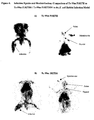
- Tc-99m P2007H and Tc-99m P2017H showed lower uptake in thyroid when compared to Tc-99m P483H (Table 3, Figure 2) in the rabbit infection model (an advantage), but infection imaging parameters were unaffected by the change in Tc-99m chelator (Figure 2) from a Cys-Gly-Cys to Pen-Gly-Cys or iso Cys-Gly -iso Cys ligand.
- Heparin is a polydisperse mixture of variably sulfated glycans.
- dermatan sulfate is a homogeneous linear chain polysulfated glycan with a single repeating disaccharide unit.
- the level of sulfation of dermatan sulfate is comparable with heparin.
- dermatan disulfate is formed. Dermatan disulfate has all the structural/physiochemical properties of DS but it contains two sulfate groups per disaccharide unit rather than one as in DS.
- Peptides containing lysine (P483, P2007, P2017) or arginine (P1827, P1828, P1829) residues are proposed to bind to polysulfated glycans via amine or guanidine-to-sulfate ionic interactions (Hilemann, R.E. et al. (1998) Bioessays, 20:156-167). Similar binding interaction is envisioned for these peptides with DS and DDS.
- Tc-99m P483 and Tc-99m P1827 form complexes with DS and DDS (Table 2).
- P1827 would be expected to bind to DDS and DS with higher affinity than P483 analogous to their heparin binding characteristics.
- Tc-99m P483DS exhibited similar %ID/g in palate and thyroid as Tc-99m P483H in a rabbit infection model (Table 3). Thyroid uptake is diminished upon using DDS with Tc-99m P483.
- the image-contrast ratios of I max :C and I max :B show a dramatic increase when the polysulfated glycan is well-defined, homogenous and sulfate-rich entity like DS or DDS (Table 3) compared to heparin.
- the infection uptake and contrast value is further dependent on the peptide-to-polysulfated glycan ratio.
- the optimal weight ratio between the two components was determined.
- a P1827/DS ratio of 1.5:1 (w/w) results in the highest uptake at the infection site and the highest contrast values for Tc-99m P1827DS (see Table 4).
- Table 4 Dependence of Infection Uptake (%ID/g and Image Contrast Ratios) of Tc-99m P1827DS on the Peptide / Polysulfated Glycan weight ratio Amount of DS added to 150 ⁇ g P1827 I max (%ID/g) I avg (%ID/g) I max :C I max :B 10 ⁇ g 0.036 0.026 26.5 0.7 30 ⁇ g 0.083 0.062 62.5 5.2 60 ⁇ g 0.088 0.058 66.5 2.0 100 ⁇ g 0.331 0.25 165 27.6 200 ⁇ g 0.184 0.128 184 11.5 1000 ⁇ g 0.029 0.021 19.2 2.4
Landscapes
- Health & Medical Sciences (AREA)
- Life Sciences & Earth Sciences (AREA)
- Proteomics, Peptides & Aminoacids (AREA)
- Animal Behavior & Ethology (AREA)
- Chemical & Material Sciences (AREA)
- Medicinal Chemistry (AREA)
- Pharmacology & Pharmacy (AREA)
- Epidemiology (AREA)
- General Health & Medical Sciences (AREA)
- Public Health (AREA)
- Veterinary Medicine (AREA)
- Optics & Photonics (AREA)
- Physics & Mathematics (AREA)
- Molecular Biology (AREA)
- Medicines Containing Antibodies Or Antigens For Use As Internal Diagnostic Agents (AREA)
Priority Applications (5)
| Application Number | Priority Date | Filing Date | Title |
|---|---|---|---|
| EP20030000204 EP1437145A1 (de) | 2003-01-07 | 2003-01-07 | Verbesserte szintigraphische bildgebende Mittel zur Darstellung von Infektionen und Entzündungen |
| US10/752,096 US20050002861A1 (en) | 2003-01-07 | 2004-01-07 | Enhanced scintigraphic imaging agents for imaging of infection and inflammation |
| JP2006500527A JP2006515612A (ja) | 2003-01-07 | 2004-01-07 | 感染及び炎症の造影用強化シンチグラフィーイメージング剤 |
| EP04700452A EP1583565A1 (de) | 2003-01-07 | 2004-01-07 | Verbesserte szintigraphische bildgebungsmittel zur darstellung von infektion und entzündung |
| PCT/EP2004/000051 WO2004060409A1 (en) | 2003-01-07 | 2004-01-07 | Enhanced scintigraphic imaging agents for imaging of infection and inflammation |
Applications Claiming Priority (1)
| Application Number | Priority Date | Filing Date | Title |
|---|---|---|---|
| EP20030000204 EP1437145A1 (de) | 2003-01-07 | 2003-01-07 | Verbesserte szintigraphische bildgebende Mittel zur Darstellung von Infektionen und Entzündungen |
Publications (1)
| Publication Number | Publication Date |
|---|---|
| EP1437145A1 true EP1437145A1 (de) | 2004-07-14 |
Family
ID=32479882
Family Applications (2)
| Application Number | Title | Priority Date | Filing Date |
|---|---|---|---|
| EP20030000204 Withdrawn EP1437145A1 (de) | 2003-01-07 | 2003-01-07 | Verbesserte szintigraphische bildgebende Mittel zur Darstellung von Infektionen und Entzündungen |
| EP04700452A Withdrawn EP1583565A1 (de) | 2003-01-07 | 2004-01-07 | Verbesserte szintigraphische bildgebungsmittel zur darstellung von infektion und entzündung |
Family Applications After (1)
| Application Number | Title | Priority Date | Filing Date |
|---|---|---|---|
| EP04700452A Withdrawn EP1583565A1 (de) | 2003-01-07 | 2004-01-07 | Verbesserte szintigraphische bildgebungsmittel zur darstellung von infektion und entzündung |
Country Status (4)
| Country | Link |
|---|---|
| US (1) | US20050002861A1 (de) |
| EP (2) | EP1437145A1 (de) |
| JP (1) | JP2006515612A (de) |
| WO (1) | WO2004060409A1 (de) |
Cited By (2)
| Publication number | Priority date | Publication date | Assignee | Title |
|---|---|---|---|---|
| US8975082B2 (en) | 2008-05-13 | 2015-03-10 | University Of Kansas | Metal abstraction peptide (MAP) tag and associated methods |
| US9187735B2 (en) | 2012-06-01 | 2015-11-17 | University Of Kansas | Metal abstraction peptide with superoxide dismutase activity |
Families Citing this family (7)
| Publication number | Priority date | Publication date | Assignee | Title |
|---|---|---|---|---|
| JP2009508970A (ja) | 2005-09-21 | 2009-03-05 | ザ リージェンツ オブ ザ ユニバーシティ オブ カリフォルニア | 疼痛の局所造影および治療のためのシステム、組成物並びに方法 |
| BR112017005313A2 (pt) | 2014-09-17 | 2017-12-05 | Memorial Sloan Kettering Cancer Center | formação de imagem e terapia para inflamação e infecção direcionadas por hsp90 |
| EP3680241A1 (de) | 2017-03-20 | 2020-07-15 | Forma Therapeutics, Inc. | Pyrrolopyrrolzusammensetzungen als pyruvatkinase(pkr)-aktivatoren |
| WO2020061255A1 (en) | 2018-09-19 | 2020-03-26 | Forma Therapeutics, Inc. | Activating pyruvate kinase r |
| US10675274B2 (en) | 2018-09-19 | 2020-06-09 | Forma Therapeutics, Inc. | Activating pyruvate kinase R |
| HUE072832T2 (hu) | 2019-09-19 | 2025-12-28 | Novo Nordisk Healthcare Ag | Piruvát kináz R-t (PKR) aktiváló készítmények |
| US12128035B2 (en) | 2021-03-19 | 2024-10-29 | Novo Nordisk Health Care Ag | Activating pyruvate kinase R |
Citations (5)
| Publication number | Priority date | Publication date | Assignee | Title |
|---|---|---|---|---|
| WO1993023085A1 (en) * | 1992-05-21 | 1993-11-25 | Diatech, Inc. | TECHNETIUM-99m LABELED PEPTIDES FOR THROMBUS IMAGING |
| US5346686A (en) * | 1992-10-05 | 1994-09-13 | Mallinckrodt Medical, Inc. | Labelled interleukin-8 and medical uses thereof |
| US5605671A (en) * | 1992-10-05 | 1997-02-25 | The Regents Of The University Of Michigan | Radiolabeled neutrophil activating peptides for imaging |
| US6017510A (en) * | 1992-03-13 | 2000-01-25 | Diatide, Inc. | Technetium-99M labeled peptides for imaging inflammation |
| WO2000020594A1 (en) * | 1998-10-02 | 2000-04-13 | Ludwig Institute For Cancer Research | Tsg-5: a tnf-inducible gene |
-
2003
- 2003-01-07 EP EP20030000204 patent/EP1437145A1/de not_active Withdrawn
-
2004
- 2004-01-07 JP JP2006500527A patent/JP2006515612A/ja active Pending
- 2004-01-07 EP EP04700452A patent/EP1583565A1/de not_active Withdrawn
- 2004-01-07 WO PCT/EP2004/000051 patent/WO2004060409A1/en not_active Ceased
- 2004-01-07 US US10/752,096 patent/US20050002861A1/en not_active Abandoned
Patent Citations (5)
| Publication number | Priority date | Publication date | Assignee | Title |
|---|---|---|---|---|
| US6017510A (en) * | 1992-03-13 | 2000-01-25 | Diatide, Inc. | Technetium-99M labeled peptides for imaging inflammation |
| WO1993023085A1 (en) * | 1992-05-21 | 1993-11-25 | Diatech, Inc. | TECHNETIUM-99m LABELED PEPTIDES FOR THROMBUS IMAGING |
| US5346686A (en) * | 1992-10-05 | 1994-09-13 | Mallinckrodt Medical, Inc. | Labelled interleukin-8 and medical uses thereof |
| US5605671A (en) * | 1992-10-05 | 1997-02-25 | The Regents Of The University Of Michigan | Radiolabeled neutrophil activating peptides for imaging |
| WO2000020594A1 (en) * | 1998-10-02 | 2000-04-13 | Ludwig Institute For Cancer Research | Tsg-5: a tnf-inducible gene |
Non-Patent Citations (3)
| Title |
|---|
| DEUEL, T.F. ET AL.: "Amino acid sequences of human platelet factor 4", PROC. NATL. ACAD. SCI., vol. 74, 1977, pages 2256 - 8, XP009012231 * |
| KNIGHT, L.C. ET AL.: "In vitro platelet binding compared with in vivo thrombus imaging using alpha(IIb)beta(3)-targeted radioligands", THROMBOSIS AND HAEMOSTASIS, vol. 80, no. 5, 1998, pages 845 - 851, XP009012157 * |
| MAYO, KEVIN H. ET AL: "Heparin binding to platelet factor-4. An NMR and site-directed mutagenesis study: arginine residues are crucial for binding", BIOCHEMICAL JOURNAL (1995), 312(2), 357-65, 1995, XP009012158 * |
Cited By (3)
| Publication number | Priority date | Publication date | Assignee | Title |
|---|---|---|---|---|
| US8975082B2 (en) | 2008-05-13 | 2015-03-10 | University Of Kansas | Metal abstraction peptide (MAP) tag and associated methods |
| US9096652B2 (en) | 2008-05-13 | 2015-08-04 | University Of Kansas | Metal abstraction peptide (MAP) tag and associated methods |
| US9187735B2 (en) | 2012-06-01 | 2015-11-17 | University Of Kansas | Metal abstraction peptide with superoxide dismutase activity |
Also Published As
| Publication number | Publication date |
|---|---|
| WO2004060409A1 (en) | 2004-07-22 |
| US20050002861A1 (en) | 2005-01-06 |
| EP1583565A1 (de) | 2005-10-12 |
| JP2006515612A (ja) | 2006-06-01 |
Similar Documents
| Publication | Publication Date | Title |
|---|---|---|
| CA2131816C (en) | Technetium-99m labeled peptides for imaging inflammation | |
| CA2164707C (en) | Technetium-99m labeled peptides for imaging inflammation | |
| EP0684843B1 (de) | TECHNETIUM-99m MARKIERTE PEPTIDE ZUR DIAGNOSTISCHEN BILDERZEUGUNG VON ENTZÜNDUNGEN | |
| EP0641222B1 (de) | Technetium-99m markierte peptide zur bilderzeugung von thrombus | |
| US20050002861A1 (en) | Enhanced scintigraphic imaging agents for imaging of infection and inflammation | |
| US5879660A (en) | Radiolabeled glucans which bind to leukocytes, sites of infection, inflammation, atherosclerosis, or cancer | |
| US6019958A (en) | Technetium-99m labeled peptides for imaging inflammation | |
| US6107459A (en) | Technetium-99m labeled peptides for diagnostic imaging | |
| HK1031192A (en) | Technetium-99m labeled peptides for thrombus imaging |
Legal Events
| Date | Code | Title | Description |
|---|---|---|---|
| PUAI | Public reference made under article 153(3) epc to a published international application that has entered the european phase |
Free format text: ORIGINAL CODE: 0009012 |
|
| AK | Designated contracting states |
Kind code of ref document: A1 Designated state(s): AT BE BG CH CY CZ DE DK EE ES FI FR GB GR HU IE IT LI LU MC NL PT SE SI SK TR |
|
| AX | Request for extension of the european patent |
Extension state: AL LT LV MK RO |
|
| STAA | Information on the status of an ep patent application or granted ep patent |
Free format text: STATUS: THE APPLICATION HAS BEEN WITHDRAWN |
|
| 17P | Request for examination filed |
Effective date: 20050114 |
|
| 18W | Application withdrawn |
Effective date: 20050126 |
|
| D17P | Request for examination filed (deleted) |