EP1437659A2 - Système et procédé de gestion de cycle de vie d' un serveur d'applications - Google Patents
Système et procédé de gestion de cycle de vie d' un serveur d'applications Download PDFInfo
- Publication number
- EP1437659A2 EP1437659A2 EP03258002A EP03258002A EP1437659A2 EP 1437659 A2 EP1437659 A2 EP 1437659A2 EP 03258002 A EP03258002 A EP 03258002A EP 03258002 A EP03258002 A EP 03258002A EP 1437659 A2 EP1437659 A2 EP 1437659A2
- Authority
- EP
- European Patent Office
- Prior art keywords
- test
- application
- application server
- applications
- test applications
- Prior art date
- Legal status (The legal status is an assumption and is not a legal conclusion. Google has not performed a legal analysis and makes no representation as to the accuracy of the status listed.)
- Ceased
Links
- 238000000034 method Methods 0.000 title claims abstract description 114
- 238000012360 testing method Methods 0.000 claims abstract description 414
- 238000012545 processing Methods 0.000 claims abstract description 82
- 238000004590 computer program Methods 0.000 claims description 6
- 238000013515 script Methods 0.000 description 52
- 235000010627 Phaseolus vulgaris Nutrition 0.000 description 26
- 244000046052 Phaseolus vulgaris Species 0.000 description 26
- 230000008569 process Effects 0.000 description 18
- 238000010586 diagram Methods 0.000 description 17
- 230000000694 effects Effects 0.000 description 10
- 230000002028 premature Effects 0.000 description 5
- 230000008901 benefit Effects 0.000 description 4
- 238000004891 communication Methods 0.000 description 4
- 230000001419 dependent effect Effects 0.000 description 4
- 238000012544 monitoring process Methods 0.000 description 4
- 230000003287 optical effect Effects 0.000 description 4
- 230000002688 persistence Effects 0.000 description 3
- 238000013522 software testing Methods 0.000 description 3
- 235000006719 Cassia obtusifolia Nutrition 0.000 description 2
- 235000014552 Cassia tora Nutrition 0.000 description 2
- 244000201986 Cassia tora Species 0.000 description 2
- 230000005540 biological transmission Effects 0.000 description 2
- 238000013500 data storage Methods 0.000 description 2
- 238000011161 development Methods 0.000 description 2
- 230000000977 initiatory effect Effects 0.000 description 2
- 238000007726 management method Methods 0.000 description 2
- 238000012986 modification Methods 0.000 description 2
- 230000004048 modification Effects 0.000 description 2
- 238000009825 accumulation Methods 0.000 description 1
- 230000006399 behavior Effects 0.000 description 1
- 239000012141 concentrate Substances 0.000 description 1
- 230000007547 defect Effects 0.000 description 1
- 238000013461 design Methods 0.000 description 1
- 238000005516 engineering process Methods 0.000 description 1
- 230000006870 function Effects 0.000 description 1
- 230000035800 maturation Effects 0.000 description 1
- 230000002085 persistent effect Effects 0.000 description 1
- 238000011176 pooling Methods 0.000 description 1
- 238000011112 process operation Methods 0.000 description 1
- 239000007787 solid Substances 0.000 description 1
- 230000009466 transformation Effects 0.000 description 1
Images





Classifications
-
- H—ELECTRICITY
- H04—ELECTRIC COMMUNICATION TECHNIQUE
- H04L—TRANSMISSION OF DIGITAL INFORMATION, e.g. TELEGRAPHIC COMMUNICATION
- H04L43/00—Arrangements for monitoring or testing data switching networks
- H04L43/50—Testing arrangements
-
- H—ELECTRICITY
- H04—ELECTRIC COMMUNICATION TECHNIQUE
- H04L—TRANSMISSION OF DIGITAL INFORMATION, e.g. TELEGRAPHIC COMMUNICATION
- H04L69/00—Network arrangements, protocols or services independent of the application payload and not provided for in the other groups of this subclass
- H04L69/40—Network arrangements, protocols or services independent of the application payload and not provided for in the other groups of this subclass for recovering from a failure of a protocol instance or entity, e.g. service redundancy protocols, protocol state redundancy or protocol service redirection
Definitions
- the present invention relates generally to computer software testing, and more particularly, to methods and systems for managing an application server running a plurality of test applications.
- each group is responsible for developing a certain portion of the application source code (i.e., a workspace).
- Each group is further responsible to ensure that its workspace functions properly.
- different test applications are created to specifically test each portion of the application.
- test applications are run on the server application designed to execute the software application.
- the test applications are commonly submitted to the application server manually, which depending on preference, are processed serially or in parallel.
- Successfully processed test applications are marked as having a "pass” test result while unsuccessfully processed test applications, are marked as having a "fail” test result.
- a fail test result maybe generated as a result of detecting a bug in the software application being tested, in the application server processing the software application being tested, or in the test applications testing the software application.
- test execution report includes a corresponding fail test result for the failed test application as well as all the succeeding test applications.
- failure in processing one of test applications terminates the execution of the test application, generating a test execution report that contains fail results for all of the test applications being run.
- the generated test report includes an entry for each test application submitted for processing. That is, the test report has a corresponding pass or fail result entry for each test application fully processed.
- the test report further includes a corresponding fail result entry for improperly terminated test application as well as all test applications being run in parallel or subsequent to the terminated test application.
- the test application failure was proper (i.e., due to a bug in the application being tested, the application server, or the test applications testing the software application) or improper (i.e., resulting from succeeding an improperly terminated test application being run concurrently with a improperly terminated test application).
- test report contains a corresponding entry for each test application fully processed during the period the application server or network was functioning.
- the test report either does not include an entry for the remaining test applications or the corresponding result entries in the test report are solely failures. Again, one reviewing the test results cannot determine whether the failure of such test applications was due to a bug in the application being tested, a bug in the application server, or a bug in the test application.
- the present invention fills these needs by providing an application server lifecycle manager to manage and monitor a lifecycle of an application server executing a software application being tested by a plurality of test applications.
- the application server is a Java 2 Platform, Enterprise Edition (J2EE) application server processing a deployed J2EE application being tested by a plurality of test applications.
- J2EE Java 2 Platform, Enterprise Edition
- the present invention can be implemented in numerous ways, including as a process, an apparatus, a system, a device, or a method. Several inventive embodiments of the present invention are described below.
- a method for managing an application server that is configured to execute a plurality of test applications includes the operations of (a) processing a first one of the plurality of test applications, (b) determining if the first application fails to be processed to completion, (c) recording an exception identifying an explanation for the failure if the first test application fails to be processed to completion, (d) refreshing the application server, (e) executing a next one of the plurality of test applications, and (f) repeating operations (a) through (e) if there are remaining ones of the plurality of test applications that still need to be processed.
- a method for managing an application server that is configured to execute a plurality of test applications includes the operations of (a) processing a first one of the plurality of test applications, (b) determining if the first application fails to be processed to completion for a predetermined period of time, (c) if the first test application fails to be processed to completion for the predetermined period of time, refreshing the application server, (d) recording an exception identifying an explanation for the failure, (e) executing a next one of the plurality of test applications, and (f) repeating the operations of (a) through (e) if there are remaining ones of the plurality of test applications that still need to be processed.
- a method for managing an application server that is configured to execute a plurality of test applications includes the operations of (a) refreshing the application server, (b) processing a first one of the plurality of test applications, (c) recording a pass explanation if the processing of the first one of the plurality of test applications proceeds to completion, (d) recording a fail explanation if the processing of the first one of the plurality of test applications fails to proceed to completion, (e) executing a next one of the plurality of test applications, and (f) repeating operations (a) through (e) if there are remaining ones of the plurality of test applications that still need to be processed.
- a method for managing an application server that is configured to execute a plurality of test applications includes the operations of (a) processing a first one of the plurality of test applications; (b) recording a pass explanation if the processing of the first one of the plurality of test applications proceeds to completion, (c) recording a fail explanation if the processing of the first one of the plurality of test applications fails to proceed to completion, (d) refreshing the application server, (e) executing a next one of the plurality of test applications, and (f) repeating the operations of (a) through (e) if there are remaining ones of the plurality of test applications that still need to be processed.
- a method for managing an application server that is configured to execute a plurality of test applications in parallel includes building a plurality of test applications in parallel and deploying the plurality of test applications in parallel. The method also includes recording an exception if a test application of the plurality of test applications fails to deploy successfully. Also included are shutting down the application server and restarting the application server. Further included in the method is running the plurality of test applications in parallel.
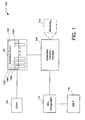
- Figure 1 is a simplified schematic diagram illustrating the monitoring and managing of an application server processing an application, in accordance with one embodiment of the present invention.
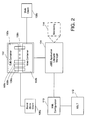
- FIG. 2 is a simplified block diagram depicting the monitoring and managing of a J2EE application server by a J2EE application lifecycle manager, in accordance with another embodiment of the present invention.
- Figure 3A-1 is a simplified block diagram depicting the processing of a plurality of test applications serially implementing an exemplary script, in accordance with another embodiment of the present invention.
- Figure 3A-2 is a simplified block diagram depicting the processing of a plurality of test applications serially implementing an exemplary script, in accordance with another embodiment of the present invention.
- Figure 3A-3 is a simplified block diagram depicting the processing of a plurality of test applications serially implementing an exemplary script, in accordance with another embodiment of the present invention.
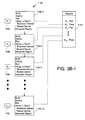
- Figure 3B-1 is a simplified schematic diagram illustrating in series processing of a plurality of test applications utilizing an exemplary script, in accordance with another embodiment of the present invention.
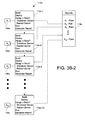
- Figure 3B-2 is a simplified schematic diagram illustrating in series processing of a plurality of test applications utilizing an exemplary script, in accordance with another embodiment of the present invention.
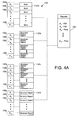
- Figure 4A is a block diagram illustrating in parallel processing of a plurality of test applications utilizing an exemplary script, in accordance to yet another embodiment of the present invention.
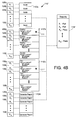
- Figure 4B is a block diagram illustrating in parallel processing of a plurality of test applications utilizing an exemplary script, in accordance to yet another embodiment of the present invention
- Figure 5A depicts a plurality of test cases having been assembled into a plurality of groups for execution by a plurality of distributed application servers, in accordance with yet another embodiment of the present invention.
- Figure 5B depicts distributed processing of groups of test cases by a plurality of distributed application servers, in accordance with yet another embodiment of the present invention.
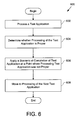
- Figure 6 is a flow chart diagram illustrating a method operations performed by an exemplary application server lifecycle manger, in accordance with yet another embodiment of the present invention.
- Figure 7 is a flow chart diagram illustrating a method operations implemented by an exemplary application server lifecycle manger applying a scenario, in accordance with yet another embodiment of the present invention.
- Figure 8 is a flow chart diagram illustrating a method operations implemented by an exemplary application server lifecycle manger applying a different scenario, in accordance with yet another embodiment of the present invention.
- the application lifecycle manager implements a plurality of scripts (herein also referred to as scenarios) to process a plurality of test applications testing the software application being executed by the application server.
- the scripts are stored to Extensible Markup Language (XML) files.
- the application lifecycle manger monitors the application server by starting/stopping the application server, initiating/terminating processing of the application on the application server, initiating/terminating processing of the test applications, restarting the application server when a fatal error occurs, launching the application server, installing an application on the application server, pinging the application server, etc.
- the application server lifecycle manager implements the script whereby the application server is shut down and restarted prior to deploying a test case into the application server for execution.
- the application server is shut down and restarted once it has been determined that the application server has hung greater than a predefined period of time while deploying or running a test application.
- EJB Enterprise JavaBeans
- J2EE Java 2 Platform, Enterprise Edition
- EJB architecture promotes the creation of re-usable server-side behaviors or instructions in the Java language, connectors to enable access to existing enterprise systems, and easy-to-deploy program modules.
- the EJB architecture creates a collaborative architecture to provide services virtually anywhere, and for a wide range of customers and devices.
- the EJB architecture defines a model for the development and deployment of reusable Java server components called EJB components.
- the EJB component is a non-visible server component having methods that provide business logic in a distributed application.
- the EJB architecture includes the EJB client and the EJB server.
- the EJB client is configured to provide the user-interface logic on a client machine and to make calls to remote EJB components on a server. For instance, the EJB client is provided the information as to how to find the EJB server and how to interact with the EJB components.
- the EJB client does not communicate directly with the EJB component.
- the EJB container provides the client proxy objects that implement the home and remote interfaces of the component.
- the remote interface is configured to define the business methods that can be called by the client.
- the client is configured to invoke the methods resulting in the updating of the database.
- the EJB beans are reusable components that can be accessed by client programs.
- the application programmer codes the business logic into the EJBs and deploys them into a J2EE compliant server.
- the server complying with the J2EE specification provides the required system-level services, thus allowing the application programmer to concentrate on business logic.
- the EJB server (i.e., the EJB application) includes an EJB container, which in one example provides the services required by the EJB component.
- the EJB container may be configured to include one of an EJB home interface or EJB Remote interface and EJB beans.
- the EJB home interface and the EJB remote interface are defined in the same Java virtual machine.
- the EJB home interface and the EJB remote interface may be defined on different Java virtual machines or separate physical computers.
- the EJB specification defines a container as the environment in which one or more EJB components execute.
- the EJB container provides the infrastructure required to run distributed components thus allowing the clients and component developers to focus on programming business logic.
- the container manages the low-level communications between the clients and the EJB beans.
- the client invokes methods on the EJB bean as if the EJB beans were running in the same virtual machine as the client.
- the clients are unaware of activities on the EJB bean, since the container is configured to sit between the clients and the EJB beans. For instance, if an EJB bean is passivated, its remote reference on the client remains intact. Thus, when the client later invokes a method on the remote reference, the container activates the EJB bean to service the request.
- the EJB container encapsulates:
- three types of EJB components can be enumerated.
- Each EJB component further has a transaction attribute configured to determine the manner the instances of the component participate in transactions.
- the EJB container provides services which can include transaction and persistence support to the EJB components.
- the EJB container is configured to support transactions.
- the EJB container provides the necessary transaction support.
- the persistence support the EJB container is configured to provide support for persistence of the EJB components, which in one embodiment, is defined as the capability of the EJB component to save and retrieve its state. In this manner, the EJB component does not have to be re-created with each use.
- the EJB architecture is a three-tiered architecture in which the clients reside on the first tier, the application server and the components (i.e., EJB beans) reside on the second tier, and the databases reside on the same host as the EJB server.
- the EJB server executes methods on a component from the client or another component, retrieves data from databases, and performs other communications.
- the EJB server further handles the details of transactions, threads, security, database connections, and network communication.
- the EJB clients request business-logic services from EJB beans running on the second-tier.
- the EJB beans then use the system services provided by the second-tier server to access data from existing systems in the third tier.
- the EJB beans apply the business rules to the data, and return the results to the clients in the first-tier.
- the client contains the user interface.
- the business logic is configured to be separate from both the clients and the databases and resides in the same tier (i.e., second tier) as components that analyze data, perform computations, or retrieve information from data sources and processes.
- Java JavaTM programming language
- the application layer generally provides the user interface for the system.
- a Java module is used to process commands received by the application layer.
- a Java virtual machine is used as an interpreter to provide portability to Java applications.
- developers design Java applications as hardware independent software modules, which are executed Java virtual machines.
- the Java virtual machine layer is developed to operate in conjunction with the native operating system of a particular hardware, which represents the physical hardware on which the system operates or runs. In this manner, Java applications can be ported from one hardware device to another without requiring updating of the application code.
- Java classes are compiled into machine independent byte code class files which are executed by a machine-dependent virtual machine.
- the virtual machine provides a level of abstraction between the machine independence of the byte code classes and the machine-dependent instruction set of the underlying computer hardware.
- a class loader is responsible for loading the byte code class files as needed, and an interpreter or just-in-time compiler provides for the transformation of byte codes into machine code.
- Java is a programming language designed to generate applications that can run on all hardware platforms, small, medium and large, without modification.
- Java has been promoted and geared heavily for the Web, both for public Web sites and Intranets.
- Java programs can be called from within HTML documents or launched standalone.
- Java is an interpreted language.
- the source code of a Java program is compiled into an intermediate language called "byte code”.
- the byte code is then converted (interpreted) into machine code at runtime.
- the Web browser Upon finding a Java applet, the Web browser invokes a Java interpreter (Java Virtual Machine), which translates the byte code into machine code and runs it.
- Java programs are not dependent on any specific hardware and will run in any computer with the Java Virtual Machine software.
- Java programs can also be compiled into machine language for faster performance. However a compiled Java program loses hardware independence as a result.
- an application lifecycle manger 104 manages the processing of the application 103, as the application 103 is being tested by a plurality of test applications 106a-106 n .
- the client 108 is configured to invoke remote methods on the EJBs.
- the application lifecycle manger 104 uses a script provided in an Extensible Markup Language (XML) file defined in an XML configuration component 110.
- the XML configuration 110 includes an XML file containing the script for processing each of the test applications 106a-106 n .
- Extensible Stylesheet Language (XSLT) Stylesheet 112 is implemented to transform the XML file into a Hyper Text Markup Language (HTML) document for viewing.
- HTML Hyper Text Markup Language
- the application lifecycle manger 104 monitors the application server using 114.
- the application lifecycle manger 104 is configured to start/stop the application server 102, initiate/terminate processing of the application 103 on the application server 102, initiate/terminate processing of the test applications 106a-106 n , restart the application server 102 when a fatal error occurs, launch the application server 102, install an application on the application server 102, ping the application server 102, etc.
- any application server e.g., J2EE application server, reference implementation (RI), Iplanet, etc.
- the J2EE application server 102 includes two applications, an EJB container 102a and a web container 102b.
- the EJB container 102a is a database that includes the relational operations while the web container 102b is a web page accessible with a browser (e.g., a graphical user interface (GUI), etc.).
- GUI graphical user interface
- a stand alone client 108a and a web client 108b have deployed a plurality of test applications 106a-106 n into the J2EE application server 102 to test the functionality of the EJB container 102a and web container 102b.
- the stand alone client 108a be configured to deploy a few of the plurality of test applications 106a-106 n to test the functionality of the EJB container 102a while the web client 108b deploys the remainder of the plurality of test applications 106a-106 n to test the functionality of the web container 102b.
- the test applications 106a-106 n are deployed to the application server 102 by the application 103.
- the J2EE application lifecycle manger 104 monitors the J2EE application server 102 as shown in 114.
- the J2EE application lifecycle manger 104 is configured to start/stop the J2EE application server 102, initiate/terminate processing of the EJB container 102a or the web container 102b on the application server 102, initiate/terminate processing of the test applications 106a-106 n , restart the J2EE application server 102 when a fatal error occurs, launch the J2EE application server 102, install an application on the J2EE application server 102, ping the J2EE application server 102, etc.
- the J2EE application lifecycle manger 104 implements an XML file defined in the XML configuration component 110.
- the XML file contains the script which the J2EE application lifecycle manager 104 will execute to test the EJB container 102a and 102b using the test applications 106a-106 n .
- the XML file may include the script in which the test application 106a is first built and then deployed into the J2EE application server 102. Thereafter, the test application 106a is run followed by generation of the test report.
- the test applications 106a-106 n may be processed in series or in parallel.
- FIGS 3A-1 through 3A-3 depict processing of a plurality of test applications 106a-106j, serially, respectively implementing exemplary scripts, in accordance with one embodiment of the present invention.
- the first test application 106a is shown to follow the script 110a-1 in which the first test application 106a is built and deployed into the J2EE application server.
- the J2EE application server is shut down followed by restarting of the J2EE application server.
- the first test application 106a is run followed by generating of a report.
- a pass result entry for fully processed test application 106a is shown in the reports 116a.
- the J2EE application lifecycle manger 104 continues to process the subsequent test applications.
- the J2EE application lifecycle manager 104 uses the script 110a-2 to process the second test application 106b.
- the second test application 106b is built and deployed into the J2EE application server.
- the J2EE application server is shut down followed by restarting of the J2EE application server.
- the second test application 106b is run followed by generating of a report.
- a pass result entry for fully processed test application 106a is shown in the reports 116a.
- third test application 106c through tenth test application 106j are respectively processed, generating corresponding reports shown in reports 116a.
- the second test application 106b is shown to have been executed fully and successfully, thereby generating the pass result entry in the reports 116a while the third test application 106c and 106j are shown to have been unsuccessfully processed, as demonstrated by the fail entries in reports 116a.
- the J2EE application lifecycle manger 104 has continued to process the next in line test application, the fourth test application using a script substantially similar to the scripts 110a-2 and 110a-3. In this manner, processing of the test applications continues, serially, until the J2EE application lifecycle manager 104 reaches the last test application, the tenth test application 106j.
- the J2EE application lifecycle manager 104 of the present invention is capable of limiting unwanted effects associated with improper and premature termination of a test application execution to that test application only.
- the failure of a test application has no significant effect on processing the remaining test applications configured to be processed concurrently or subsequent to the prematurely terminated test application. For instance, hanging of a test application or occurrence of a fatal error in deploying or running of a test application will not have a significant effect on other test applications running on the J2EE application server 102.
- the embodiments of the present invention have been shown to shut down and restart the J2EE application server after deploying of each application, one having ordinary skill in the art should appreciate that in a different embodiment, the script may be written so as to shut down the application server after deploying or running any appropriate number of test applications (e.g., two (2), three (3), etc.).
- Figure 3A-2 depict processing of a plurality of test applications 106a-106j, serially, respectively implementing exemplary scripts 110a'-1 through 110a'-10, in accordance with one embodiment of the present invention.
- the first test application 106a is shown to follow the script 110a-1 in which initially, the J2EE application server is shut down and restarted. Then, the first test application 106a is built, deployed into the J2EE application server, and run followed by generating of a report. As shown, a pass result entry for fully processed test application 106a is shown in the reports 116'a.
- the J2EE application lifecycle manger 104 continues to process the subsequent test applications.
- the J2EE application lifecycle manager 104 uses the script 110a'-2 to process the second test application 106b.
- the J2EE application server is shut down and restarted.
- building of the second test application 106b deploying the second test application 106b into the J2EE application server, and running the second test application 106b, and generating of a report.
- a pass result entry for fully processed test application 106b is shown in the reports 116'a.
- the J2EE application server is shut down and restarted again following the scenarios 110'a-3 through 110'a-10, while third test application 106c through tenth test application 106j are respectively processed, generating corresponding reports shown in reports 116'a.
- the third test application 106c and the tenth test application 106j are shown to have been unsuccessfully processed, as demonstrated by the fail entries in reports 116'a.
- occurrence of a fatal error during processing of the third test application 106c has not caused the reports 116'a to merely include fail results.
- the J2EE application lifecycle manger 104 has continued to process the next in lines test application. In this manner, processing of the test applications continues, serially, until the J2EE application lifecycle manager 104 reaches the last test application, the tenth test application 106j.
- the J2EE application lifecycle manager 104 of the present invention is capable of limiting unwanted effects associated with improper and premature termination of a test application execution to that test application only. In this manner, occurrence of a fatal error during processing each test application will not have a significant effect on other test applications running on the J2EE application server 102.
- Figure 3A-3 depicts processing of a plurality of test applications 106a-106j, serially, respectively implementing exemplary scripts 110"a-1 through 110"a-10, in accordance with one embodiment of the present invention.
- the first test application 106a is shown to follow the script 110"a-1 in which the first test application 106a is built, deployed into the J2EE application server, and run followed by generating of a report.
- a pass result entry for fully processed test application 106a is shown in the reports 116"a.
- the J2EE application server is shut down followed by restarting of the J2EE application server.
- the J2EE application lifecycle manger 104 uses the script 110a"-2 to process the second test application 106b.
- second test application 106b is built, deployed into the J2EE application server, and run followed by generating of a report.
- a pass result entry for fully processed test application 106b is shown in the reports 116a".
- the J2EE application server is shut down again, followed by restarting of the J2EE application server.
- third test application 106c through tenth test application 106j are respectively processed, generating corresponding reports shown in reports 116"a.
- the third test application 106c and the tenth test application 106j are shown to have been unsuccessfully processed, as demonstrated by the fail entries in reports 116"a.
- occurrence of a fatal error during processing of the third test application 106c has not caused the reports 116"a to merely include fail results.
- the J2EE application lifecycle manger 104 has continued to process the next in lines test application. In this manner, processing of the test applications continues, serially, until the J2EE application lifecycle manager 104 reaches the last test application, the tenth test application 106j.
- the J2EE application lifecycle manager 104 of the present invention is capable of limiting unwanted effects associated with improper and premature termination of a test application execution to that test application only. In this manner, occurrence of a fatal error during processing each test application will not have a significant effect on other test applications running on the J2EE application server 102.
- FIG. 3B-1 illustrating in series processing of a plurality of test applications 106a-106j utilizing exemplary scripts 110b-1 through 110b-10, in accordance with one embodiment of the present invention.
- test applications 106a-106j are shown to be processed serially using the respective scripts 110b-1 through 110b-10.
- the processing of the first test application 106a is initiated by building the test application 106a followed by deploying and running of the test application 106a.
- the J2EE application server 102 while running the test application 106a, the J2EE application server 102 is shown to have hung for a period greater than X seconds. If such situation occurs, the J2EE application server 102 is shut down and restarted prior to generating a test report.
- the reports 116b includes a corresponding fail result entry for the test application 106a.
- the second test application 106b (the next in line test application) is processed using the script 110b-2.
- the second test application 106b is also built, deployed, and run. At this point, if it is determined that the J2EE application server 102 has hung for a period greater than X seconds, the script shuts down the J2EE application server 102. Since in the embodiment shown in Figure 3B-1 processing of the second test application 106b has not exceeded X seconds, processing of the second test application 106b is shown to have continued to generate a test report and the inclusion of the pass result entry in the reports 116b.
- the in series processing of the test applications is shown to have continued by processing the third test application 106c using the script 110b-3.
- the third test application 106c is built, deployed, and run.
- a determination is made that execution of the third test application has exceeded the X-second limit.
- the J2EE application server 102 is shut down and restarted are followed by generating the test report and inclusion of the fail result entry in the reports 116b.
- test application 106j the last test application is processed which in the embodiment of Figure 3B, is the test application 106j. Ensuing the script 110b-10, the test application 106j is built, deployed, and run. As shown, the J2EE has not been shown to process the tenth test application 106j for greater than X seconds. Thus, processing the tenth test application concludes properly followed by test report generation and inclusion of the pass result entry in the reports 116b.
- the embodiments of the present invention beneficially allow test applications designed to be executed subsequent to a failed test application to be processed to maturation so as to generate a pass/fail test result.
- viewing and reviewing of the reports 116b provides developers a list that includes limited number of test applications failed during execution. This is in contrast to the prior art in which the list includes the failed test applications as well as all ancillary test applications configured to be processed subsequent to the failed test applications.
- Figure 3B-2 illustrates in series processing of a plurality of test applications 106a-106J utilizing exemplary scripts 110c-1 through 110c-10, in accordance with one embodiment of the present invention.
- the scripts 110c-1 through 110c-10 determine whether the J2EE application server has hung for greater than X seconds after deploying of the respective test applications 106a through 106j.
- the first test application 106a is shown to be processed by building followed by deploying of the test application 106a.
- a determination is made as to whether the J2EE application server 102 has hung for a period greater than X seconds while running the test application 106a.
- the J2EE application server 102 is shut down and restarted prior to generation of the test report. As shown, the execution of the first test application 106a did not extend greater than X seconds, thereby generation of the test report and inclusion of a corresponding pass result entry in the reports 116b.
- the second test application 106b is also built and deployed.
- the script 110c-2 shuts down the J2EE application server 102 upon determining that the J2EE application server 102 has hung for a period greater than X seconds while deploying the second test application 106b.
- the script follows to test report generation and inclusion of the corresponding fail test result in the reports 116c.
- the in-series processing of the test applications is shown to have continued by processing of the third test application 106c using the script 110c-3.
- the third test application 106c is built and deployed.
- deploying of the third test application 106c has not exceeded the X-second limit.
- the script 110c-3 continues to running the third test application 106c and generating the test report and inclusion of a pass result entry in the reports 116c.
- test application 106j is built and deployed.
- the J2EE application server has processed the tenth test application 106j within the X-second limit.
- processing of the tenth test application 106j concludes with generation of test report and inclusion of the pass result entry in the reports 116c.
- the X-seconds implemented as the determinative length of time the script may be written such that the application server is shut after any appropriate length of time.
- the embodiments of the present invention may implement different parameters, which in implementation depends on a type of the application, process the test applications.
- test applications 106a-106j are built in parallel using the script 110'a followed by deploying of all test applications 106a-106j using the script 110'b.
- the application server is shown to be shut down and restarted.
- all test applications 106a-106j are run using the script 110'c followed by generating a respective test report using the script 110'd.
- the application server 102 is shut down and restarted.
- a plurality of threads is used to process all the test cases in parallel.
- any suitable structure may be implemented to enable in parallel processing of the test cases (e.g., time interval, all threads running simultaneously, creating a plurality of threads simultaneously and running the treads one at a time, etc.).
- test cases 106a-106j have not been successfully deployed or run.
- Deployment of the test case 106a was prematurely terminated due to an error (e.g., the application server 102 being hung for greater than 40 seconds), as marked by the asterisk 111.
- processing of the test case 106a was terminated prematurely followed by generation of the test report generation and inclusion of the respective fail result entry in the reports 116'.
- the reports 116' also includes a fail result entry for the second test case 106b.
- the reports 116' includes pass result entries for all the remaining test cases.
- the test cases 106a and 106b may have failed due to an error in the network connections or the respective test applications 106a and 106b.
- the reports 116' includes fail result entries only for failed test cases, as opposed to including fail result entries for all test cases being processed in parallel, as performed by the prior art.
- test cases A1 through A45 has been assembled into a plurality of groups 107a-107c.
- Test cases A1-A15 are shown to form the group 107a
- test cases A16-A29 are shown to have makeup the group 107b
- test cases A30-A45 are shown to form the group 107c.
- the test cases 106" can be processed by a plurality of distributed application servers 102, 120', and 102" connected via a network 120.
- the application server 102 is configured to be a main application server as the application server 102 includes the application server lifecycle manager 104.
- an application server lifecycle manager dispatcher 104a defined in the application server lifecycle manager 104 is configured to distribute groups 107a-107c to the application servers 102, 102', and 102".
- the application server lifecycle manager dispatcher 104a is shown to have dispatched the group 107b to the application server 102' and the group 107c to the application server 102".
- the group 107a is maintained by the application server 102 for processing.
- the test reports generated for each group is communicated to the lifecycle manager 104.
- groups 107a-c can implement similar or diverse scripts.
- Figure 6 is a flow chart diagram 600 of a method operations performed by an exemplary application server lifecycle manger, in accordance with one embodiment of the present invention.
- the method begins in operation 602 in which a test application is processed followed by operation 604 in which a determination is made as to whether processing the test application was proper.
- operation 606 a scenario is applied at the completion of the test case or at a point where processing of the test case was not proper.
- operation 608 the method moves to process the next test application.
- an exemplary script is used to shut down and restart the application server prior to deploying the test application into the application server.
- another exemplary script is used to shut down and restart the application server upon detecting a specific status of the application server.
- the present invention has the capability to limit the unwanted effects associated with improper and premature termination of a test application to that specific test application only. As a consequence, failure of a test application has no significant effect on processing test applications configured to be processed concurrently or subsequent to the terminated test application.
- a flow chart diagram 700 illustrating a method operations performed by an exemplary application server lifecycle manger applying a scenario is provided, in accordance with one embodiment of the present invention.
- the method begins in operation 702 in which a test application is built followed by operation 704 in which the test application is deployed.
- operation 706 a determination is made as to whether the operation of deploying the test application has failed. If it is determined that deploying the test application was performed properly, the method continues to operation 708 in which the test application is run. The method next proceeds to operation 710 in which a decision is made as to whether the operation of running the test application has failed. If running the test application did not fail, the method continues to operation 712 in which the test report covering the test application is generated.
- the method continues to operation 714 in which the application server is shut down followed by the operation 716 in which the application server is restarted.
- a determination is made as to whether there exists another test application to be deployed into the application server. If another test application to be deployed exists, the method continues to operation 702, in which the test application is built.
- operation 706 If in operation 706 a determination is made that deploying of the test application has failed, or that in operation 710 a determination is made that the operation of running the test application has failed, the method continues to operation 714 in which the application server is shut down. Thereafter, in operation 716 the application server is restarted. Next, a determination is made as to whether there exists another test application to be deployed into the application server. If another test application to be deployed exists, the method continues to operation 702, in which the test application is built.
- FIG. 800 depicting a method operations performed by an exemplary application server lifecycle manger applying another scenario, in accordance with one embodiment of the present invention.
- the method begins in operation 802 in which a test application is built followed by operation 804 in which the test application is deployed.
- operation 806 a determination is made as to whether the application server processing the test application has hung for greater than 40 seconds.
- the method continues to operation 808 in which an exception is stored into an XML file reflecting hanging of the application server. Then, the application server is shut down in operation 810 and then restarted in operation 812. The method next continues to operation 826 in which a determination is made as to whether there exists another test application to be processed. If another test application awaits processing, the method continues to operation 802 in which the test application is built.
- operation 806 If in operation 806 it is determined that the application server has not hung for greater than 40 seconds, the method continues to operation 814 in which the test application is run. Next, in operation 816 a decision is made as to whether the application server has hung for greater than 40 seconds while running the test application. If the application server has not hung for greater than 40 seconds, the method continues to operation 824 in which a test report is generated followed by operation 826 in which it is determined whether there exists another test application to be processed. If there is another test application to be processed, the method continues to operation 802 in which the test application is built.
- operation 816 if in operation 816 a determination is made that the application server has hung for greater than 40 seconds while running the test case, the method continues to operation 818 in which an exception is stored into an XML file. Thereafter, the application server is shut down and restarted in operations 820 and 822, respectively. Thereafter, the method continues to operation 826.
- the advantages of the present invention are numerous. Most importantly, in contrast to the prior art, the embodiments of the present invention limit the list of failed test applications to those test applications that were fully processed and failed or those test applications, which have failed due to being prematurely terminated. Another advantage of the embodiments of the present invention is generating results having high accuracy. Yet another advantage of the embodiments of the present invention is the reliability and availability of the system.
- the invention may be practiced with other computer system configurations including hand-held devices, microprocessor systems, microprocessor-based or programmable consumer electronics, minicomputers, mainframe computers and the like.
- the invention may employ various computer-implemented operations involving data stored in computer systems. These operations are those requiring physical manipulation of physical quantities. Usually, though not necessarily, these quantities take the form of electrical or magnetic signals capable of being stored, transferred, combined, compared, and otherwise manipulated. Further, the manipulations performed are often referred to in terms, such as producing, identifying, determining, or comparing.
- the invention also relates to a device or an apparatus for performing these operations.
- the apparatus may be specially constructed for the required purposes, or it may be a general-purpose computer selectively activated or configured by a computer program stored in the computer.
- various general-purpose machines may be used with computer programs written in accordance with the teachings herein, or it may be more convenient to construct a more specialized apparatus to perform the required operations.
- a computer program product for implementing the invention can be in the form of a computer program on a carrier medium.
- the carrier medium could be a storage medium, such as a solid state, magnetic, optical, magneto-optical or other storage medium.
- the carrier medium could be a transmission medium such as broadcast, telephonic, computer network, wired, wireless, electrical, electromagnetic, optical or indeed any other transmission medium.
- the invention can also be embodied as computer readable code on a computer readable medium.
- the computer readable medium is any data storage device that can store data which thereafter be read by a computer system. Examples of the computer readable medium include hard drives, network attached storage (NAS), read-only memory, random-access memory, CD-ROMs, CD-Rs, CD-RWs, magnetic tapes, and other optical and non-optical data storage devices.
- the computer readable medium can also be distributed over a network coupled computer systems so that the computer readable code is stored and executed in a distributed fashion.
- the present invention implements Java programming language, other programming languages may be used to implement the embodiments of the present invention (e.g., C, C ++ , any object oriented programming language, etc.).
Landscapes
- Engineering & Computer Science (AREA)
- Computer Networks & Wireless Communication (AREA)
- Signal Processing (AREA)
- Computer Security & Cryptography (AREA)
- Debugging And Monitoring (AREA)
- Hardware Redundancy (AREA)
Applications Claiming Priority (2)
| Application Number | Priority Date | Filing Date | Title |
|---|---|---|---|
| US328883 | 2002-12-23 | ||
| US10/328,883 US7395526B2 (en) | 2002-12-23 | 2002-12-23 | Method and system for managing application server lifecycle |
Publications (2)
| Publication Number | Publication Date |
|---|---|
| EP1437659A2 true EP1437659A2 (fr) | 2004-07-14 |
| EP1437659A3 EP1437659A3 (fr) | 2008-02-27 |
Family
ID=32507349
Family Applications (1)
| Application Number | Title | Priority Date | Filing Date |
|---|---|---|---|
| EP03258002A Ceased EP1437659A3 (fr) | 2002-12-23 | 2003-12-18 | Système et procédé de gestion de cycle de vie d' un serveur d'applications |
Country Status (2)
| Country | Link |
|---|---|
| US (1) | US7395526B2 (fr) |
| EP (1) | EP1437659A3 (fr) |
Cited By (1)
| Publication number | Priority date | Publication date | Assignee | Title |
|---|---|---|---|---|
| CN103793320A (zh) * | 2012-10-31 | 2014-05-14 | 晨星软件研发(深圳)有限公司 | 配合多个应用程序的整合系统和测试系统 |
Families Citing this family (18)
| Publication number | Priority date | Publication date | Assignee | Title |
|---|---|---|---|---|
| US8166152B1 (en) * | 2003-12-30 | 2012-04-24 | Sap Ag | Architecture and method for monitoring system resources within an enterprise network |
| WO2006072977A1 (fr) * | 2005-01-05 | 2006-07-13 | Fujitsu Limited | Serveur web, méthode de test d’application web et programme de test d’application web |
| US7729363B2 (en) * | 2005-01-24 | 2010-06-01 | Research In Motion Limited | System and method for managing communication for component applications |
| US7809988B1 (en) * | 2006-12-29 | 2010-10-05 | The Mathworks, Inc. | Test environment having synchronous and asynchronous distributed testing |
| US20080270974A1 (en) * | 2007-04-30 | 2008-10-30 | Krasimir Topchiyski | Enterprise JavaBeans Metadata Model |
| US8239505B2 (en) * | 2007-06-29 | 2012-08-07 | Microsoft Corporation | Progressively implementing declarative models in distributed systems |
| US8230386B2 (en) * | 2007-08-23 | 2012-07-24 | Microsoft Corporation | Monitoring distributed applications |
| US7831865B1 (en) * | 2007-09-26 | 2010-11-09 | Sprint Communications Company L.P. | Resource allocation for executing automation scripts |
| US8099720B2 (en) | 2007-10-26 | 2012-01-17 | Microsoft Corporation | Translating declarative models |
| US20090113292A1 (en) * | 2007-10-26 | 2009-04-30 | Microsoft Corporation | Flexibly editing heterogeneous documents |
| US8225308B2 (en) * | 2007-10-26 | 2012-07-17 | Microsoft Corporation | Managing software lifecycle |
| US7974939B2 (en) | 2007-10-26 | 2011-07-05 | Microsoft Corporation | Processing model-based commands for distributed applications |
| US8429540B1 (en) | 2008-10-10 | 2013-04-23 | Adobe Systems Incorporated | End user created collaborative and non-collaborative workspace application container system and method |
| US8356288B2 (en) * | 2008-11-10 | 2013-01-15 | Sap Ag | Method and apparatus for monitoring runtime of persistence applications |
| EP2247032A1 (fr) * | 2009-04-27 | 2010-11-03 | Alcatel Lucent | Gestion à distance d'une application sur un dispositif par un serveur de gestion |
| US9507699B2 (en) * | 2011-06-16 | 2016-11-29 | Microsoft Technology Licensing, Llc | Streamlined testing experience |
| CN109783288A (zh) * | 2019-01-02 | 2019-05-21 | 郑州云海信息技术有限公司 | 一种自动化重启复位测试服务器稳定性的方法及系统 |
| CN116069663A (zh) * | 2023-02-14 | 2023-05-05 | 中国工商银行股份有限公司 | 业务版本测试方法、装置、设备、介质和程序产品 |
Citations (2)
| Publication number | Priority date | Publication date | Assignee | Title |
|---|---|---|---|---|
| WO2001090886A2 (fr) * | 2000-05-24 | 2001-11-29 | Sun Microsystems, Inc. | Gestion de transactions locales |
| EP1179776A1 (fr) | 2000-08-11 | 2002-02-13 | Sony Service Centre (Europe) N.V. | Structure d'essai automatisée |
Family Cites Families (13)
| Publication number | Priority date | Publication date | Assignee | Title |
|---|---|---|---|---|
| US5671351A (en) * | 1995-04-13 | 1997-09-23 | Texas Instruments Incorporated | System and method for automated testing and monitoring of software applications |
| US6157940A (en) * | 1997-11-21 | 2000-12-05 | International Business Machines Corporation | Automated client-based web server stress tool simulating simultaneous multiple user server accesses |
| US6044398A (en) * | 1997-11-21 | 2000-03-28 | International Business Machines Corporation | Virtual dynamic browsing system and method for automated web server and testing |
| US6615166B1 (en) * | 1999-05-27 | 2003-09-02 | Accenture Llp | Prioritizing components of a network framework required for implementation of technology |
| US6473794B1 (en) * | 1999-05-27 | 2002-10-29 | Accenture Llp | System for establishing plan to test components of web based framework by displaying pictorial representation and conveying indicia coded components of existing network framework |
| CA2297994A1 (fr) * | 2000-02-04 | 2001-08-04 | Ibm Canada Limited-Ibm Canada Limitee | Composants de systemes informatiques pour tests automatises |
| US6701514B1 (en) * | 2000-03-27 | 2004-03-02 | Accenture Llp | System, method, and article of manufacture for test maintenance in an automated scripting framework |
| US20010028359A1 (en) * | 2000-04-11 | 2001-10-11 | Makoto Muraishi | Test support apparatus and test support method for GUI system program |
| EP1292886A1 (fr) * | 2000-04-21 | 2003-03-19 | Togethersoft Corporation | Procedes et systemes de support et deploiement de composants informatiques distribues |
| US7139805B2 (en) * | 2000-05-30 | 2006-11-21 | Hewlett-Packard Development Company, L.P. | Scalable java servers for network server applications |
| US6823478B1 (en) * | 2000-09-12 | 2004-11-23 | Microsoft Corporation | System and method for automating the testing of software processing environment changes |
| US7206827B2 (en) * | 2002-07-25 | 2007-04-17 | Sun Microsystems, Inc. | Dynamic administration framework for server systems |
| US8073935B2 (en) * | 2002-07-25 | 2011-12-06 | Oracle America, Inc. | Pluggable semantic verification and validation of configuration data |
-
2002
- 2002-12-23 US US10/328,883 patent/US7395526B2/en not_active Expired - Lifetime
-
2003
- 2003-12-18 EP EP03258002A patent/EP1437659A3/fr not_active Ceased
Patent Citations (2)
| Publication number | Priority date | Publication date | Assignee | Title |
|---|---|---|---|---|
| WO2001090886A2 (fr) * | 2000-05-24 | 2001-11-29 | Sun Microsystems, Inc. | Gestion de transactions locales |
| EP1179776A1 (fr) | 2000-08-11 | 2002-02-13 | Sony Service Centre (Europe) N.V. | Structure d'essai automatisée |
Non-Patent Citations (1)
| Title |
|---|
| R KLEMM; N SINGH: "Enhancing Java server availability with JAS", SOFTWARE - PRACTICE AND EXPERIENCE, vol. 31, 2001, pages 697 - 716, XP001060148, DOI: doi:10.1002/spe.387 |
Cited By (2)
| Publication number | Priority date | Publication date | Assignee | Title |
|---|---|---|---|---|
| CN103793320A (zh) * | 2012-10-31 | 2014-05-14 | 晨星软件研发(深圳)有限公司 | 配合多个应用程序的整合系统和测试系统 |
| CN103793320B (zh) * | 2012-10-31 | 2017-02-08 | 晨星软件研发(深圳)有限公司 | 配合多个应用程序的整合系统和测试系统 |
Also Published As
| Publication number | Publication date |
|---|---|
| US7395526B2 (en) | 2008-07-01 |
| US20040122928A1 (en) | 2004-06-24 |
| EP1437659A3 (fr) | 2008-02-27 |
Similar Documents
| Publication | Publication Date | Title |
|---|---|---|
| US7395526B2 (en) | Method and system for managing application server lifecycle | |
| US7203928B2 (en) | Method and system for generating and maintaining uniform test results | |
| US7882492B2 (en) | Intelligent computer program debugger, and system and method for implementing the same | |
| US7243352B2 (en) | Distributed process runner | |
| US6983400B2 (en) | Distributed test harness model | |
| US7130881B2 (en) | Remote execution model for distributed application launch and control | |
| US7054881B2 (en) | Method and system for reporting standardized and verified data | |
| US7418697B2 (en) | Method and system for fast application debugging | |
| US7020699B2 (en) | Test result analyzer in a distributed processing framework system and methods for implementing the same | |
| US20030051186A1 (en) | Methods to restore tests execution after unexpected crashes for use in a distributed test framework | |
| US6892202B2 (en) | Optimistic transaction compiler | |
| EP1296240A2 (fr) | Procédé et dispositif pour le service de transactions par l'utilisation de ressources non-transactionnelles | |
| EP1094391A1 (fr) | Procédé et appareil de test d'un système informatique par injection de fautes logicielles | |
| US20030018950A1 (en) | Dynamic redeploying environment for the rapid iterative development of software applications | |
| US20040049362A1 (en) | Same virtual machine mode for distributed test execution | |
| US7174542B2 (en) | System and method Xlet and applet manager testing | |
| US20110246967A1 (en) | Methods and systems for automation framework extensibility | |
| US7243137B2 (en) | Remote system controller and data center and methods for implementing the same | |
| Chang et al. | In-field healing of integration problems with COTS components | |
| US7257613B2 (en) | Methods to develop remote applications with built in feedback ability for use in a distributed test framework | |
| US9069619B2 (en) | Self-testable HA framework library infrastructure | |
| Ma et al. | Analyzing distributed Java applications by automatic centralization | |
| Valetto et al. | A uniform programming abstraction for effecting autonomic adaptations onto software systems | |
| Takala et al. | An adapter framework for keyword-driven testing | |
| Baldassari | Design and evaluation of a public resource computing framework |
Legal Events
| Date | Code | Title | Description |
|---|---|---|---|
| PUAI | Public reference made under article 153(3) epc to a published international application that has entered the european phase |
Free format text: ORIGINAL CODE: 0009012 |
|
| AK | Designated contracting states |
Kind code of ref document: A2 Designated state(s): AT BE BG CH CY CZ DE DK EE ES FI FR GB GR HU IE IT LI LU MC NL PT RO SE SI SK TR |
|
| AX | Request for extension of the european patent |
Extension state: AL LT LV MK |
|
| PUAL | Search report despatched |
Free format text: ORIGINAL CODE: 0009013 |
|
| AK | Designated contracting states |
Kind code of ref document: A3 Designated state(s): AT BE BG CH CY CZ DE DK EE ES FI FR GB GR HU IE IT LI LU MC NL PT RO SE SI SK TR |
|
| AX | Request for extension of the european patent |
Extension state: AL LT LV MK |
|
| 17P | Request for examination filed |
Effective date: 20080821 |
|
| AKX | Designation fees paid |
Designated state(s): DE FR GB |
|
| 17Q | First examination report despatched |
Effective date: 20090401 |
|
| RAP1 | Party data changed (applicant data changed or rights of an application transferred) |
Owner name: ORACLE AMERICA, INC. |
|
| STAA | Information on the status of an ep patent application or granted ep patent |
Free format text: STATUS: THE APPLICATION HAS BEEN REFUSED |
|
| 18R | Application refused |
Effective date: 20140923 |