EP1438082B1 - Hüftprothese und entsprechendes entwurfsverfahren - Google Patents
Hüftprothese und entsprechendes entwurfsverfahren Download PDFInfo
- Publication number
- EP1438082B1 EP1438082B1 EP02703847A EP02703847A EP1438082B1 EP 1438082 B1 EP1438082 B1 EP 1438082B1 EP 02703847 A EP02703847 A EP 02703847A EP 02703847 A EP02703847 A EP 02703847A EP 1438082 B1 EP1438082 B1 EP 1438082B1
- Authority
- EP
- European Patent Office
- Prior art keywords
- peek
- disc
- pin
- test
- wettability
- Prior art date
- Legal status (The legal status is an assumption and is not a legal conclusion. Google has not performed a legal analysis and makes no representation as to the accuracy of the status listed.)
- Expired - Lifetime
Links
- 238000000034 method Methods 0.000 title claims description 11
- 238000004519 manufacturing process Methods 0.000 claims abstract description 14
- 239000000463 material Substances 0.000 claims description 56
- 229910045601 alloy Inorganic materials 0.000 claims description 42
- 239000000956 alloy Substances 0.000 claims description 42
- 230000002209 hydrophobic effect Effects 0.000 claims description 9
- OKTJSMMVPCPJKN-UHFFFAOYSA-N Carbon Chemical compound [C] OKTJSMMVPCPJKN-UHFFFAOYSA-N 0.000 claims description 7
- 229910052799 carbon Inorganic materials 0.000 claims description 7
- 229910000684 Cobalt-chrome Inorganic materials 0.000 claims 1
- 239000010952 cobalt-chrome Substances 0.000 claims 1
- 238000012360 testing method Methods 0.000 description 88
- 230000008878 coupling Effects 0.000 description 43
- 238000010168 coupling process Methods 0.000 description 43
- 238000005859 coupling reaction Methods 0.000 description 43
- 239000004698 Polyethylene Substances 0.000 description 36
- -1 polyethylene Polymers 0.000 description 36
- 229920000573 polyethylene Polymers 0.000 description 36
- 239000004963 Torlon Substances 0.000 description 30
- 229920003997 Torlon® Polymers 0.000 description 30
- 229910000831 Steel Inorganic materials 0.000 description 25
- 239000010959 steel Substances 0.000 description 25
- 239000004699 Ultra-high molecular weight polyethylene Substances 0.000 description 19
- 229920000785 ultra high molecular weight polyethylene Polymers 0.000 description 19
- 239000011651 chromium Substances 0.000 description 12
- 238000005461 lubrication Methods 0.000 description 11
- 210000001624 hip Anatomy 0.000 description 9
- XLYOFNOQVPJJNP-UHFFFAOYSA-N water Substances O XLYOFNOQVPJJNP-UHFFFAOYSA-N 0.000 description 9
- 238000004626 scanning electron microscopy Methods 0.000 description 8
- 229910052751 metal Inorganic materials 0.000 description 7
- 239000002184 metal Substances 0.000 description 7
- 230000008093 supporting effect Effects 0.000 description 7
- CSCPPACGZOOCGX-UHFFFAOYSA-N Acetone Chemical compound CC(C)=O CSCPPACGZOOCGX-UHFFFAOYSA-N 0.000 description 4
- 230000008901 benefit Effects 0.000 description 4
- 210000002540 macrophage Anatomy 0.000 description 4
- 239000007769 metal material Substances 0.000 description 4
- 150000002739 metals Chemical class 0.000 description 4
- 229910001220 stainless steel Inorganic materials 0.000 description 4
- 239000000126 substance Substances 0.000 description 4
- 239000004696 Poly ether ether ketone Substances 0.000 description 3
- 230000009471 action Effects 0.000 description 3
- 230000037396 body weight Effects 0.000 description 3
- 239000012530 fluid Substances 0.000 description 3
- 230000009931 harmful effect Effects 0.000 description 3
- 230000033001 locomotion Effects 0.000 description 3
- 238000005259 measurement Methods 0.000 description 3
- 229950001060 parsalmide Drugs 0.000 description 3
- 229920002530 polyetherether ketone Polymers 0.000 description 3
- YWIVKILSMZOHHF-QJZPQSOGSA-N sodium;(2s,3s,4s,5r,6r)-6-[(2s,3r,4r,5s,6r)-3-acetamido-2-[(2s,3s,4r,5r,6r)-6-[(2r,3r,4r,5s,6r)-3-acetamido-2,5-dihydroxy-6-(hydroxymethyl)oxan-4-yl]oxy-2-carboxy-4,5-dihydroxyoxan-3-yl]oxy-5-hydroxy-6-(hydroxymethyl)oxan-4-yl]oxy-3,4,5-trihydroxyoxane-2- Chemical compound [Na+].CC(=O)N[C@H]1[C@H](O)O[C@H](CO)[C@@H](O)[C@@H]1O[C@H]1[C@H](O)[C@@H](O)[C@H](O[C@H]2[C@@H]([C@@H](O[C@H]3[C@@H]([C@@H](O)[C@H](O)[C@H](O3)C(O)=O)O)[C@H](O)[C@@H](CO)O2)NC(C)=O)[C@@H](C(O)=O)O1 YWIVKILSMZOHHF-QJZPQSOGSA-N 0.000 description 3
- 229920001169 thermoplastic Polymers 0.000 description 3
- GWEVSGVZZGPLCZ-UHFFFAOYSA-N Titan oxide Chemical compound O=[Ti]=O GWEVSGVZZGPLCZ-UHFFFAOYSA-N 0.000 description 2
- 238000005299 abrasion Methods 0.000 description 2
- 230000015556 catabolic process Effects 0.000 description 2
- 239000000919 ceramic Substances 0.000 description 2
- 238000006243 chemical reaction Methods 0.000 description 2
- 238000005260 corrosion Methods 0.000 description 2
- 230000007797 corrosion Effects 0.000 description 2
- 230000001939 inductive effect Effects 0.000 description 2
- 239000007788 liquid Substances 0.000 description 2
- 239000000203 mixture Substances 0.000 description 2
- 239000002245 particle Substances 0.000 description 2
- 239000002904 solvent Substances 0.000 description 2
- 210000000689 upper leg Anatomy 0.000 description 2
- 239000011800 void material Substances 0.000 description 2
- KIUKXJAPPMFGSW-DNGZLQJQSA-N (2S,3S,4S,5R,6R)-6-[(2S,3R,4R,5S,6R)-3-Acetamido-2-[(2S,3S,4R,5R,6R)-6-[(2R,3R,4R,5S,6R)-3-acetamido-2,5-dihydroxy-6-(hydroxymethyl)oxan-4-yl]oxy-2-carboxy-4,5-dihydroxyoxan-3-yl]oxy-5-hydroxy-6-(hydroxymethyl)oxan-4-yl]oxy-3,4,5-trihydroxyoxane-2-carboxylic acid Chemical compound CC(=O)N[C@H]1[C@H](O)O[C@H](CO)[C@@H](O)[C@@H]1O[C@H]1[C@H](O)[C@@H](O)[C@H](O[C@H]2[C@@H]([C@@H](O[C@H]3[C@@H]([C@@H](O)[C@H](O)[C@H](O3)C(O)=O)O)[C@H](O)[C@@H](CO)O2)NC(C)=O)[C@@H](C(O)=O)O1 KIUKXJAPPMFGSW-DNGZLQJQSA-N 0.000 description 1
- 206010066414 Allergy to metals Diseases 0.000 description 1
- 239000004215 Carbon black (E152) Substances 0.000 description 1
- VYZAMTAEIAYCRO-UHFFFAOYSA-N Chromium Chemical compound [Cr] VYZAMTAEIAYCRO-UHFFFAOYSA-N 0.000 description 1
- VGGSQFUCUMXWEO-UHFFFAOYSA-N Ethene Chemical compound C=C VGGSQFUCUMXWEO-UHFFFAOYSA-N 0.000 description 1
- 239000005977 Ethylene Substances 0.000 description 1
- 239000004705 High-molecular-weight polyethylene Substances 0.000 description 1
- 239000004962 Polyamide-imide Substances 0.000 description 1
- PPBRXRYQALVLMV-UHFFFAOYSA-N Styrene Natural products C=CC1=CC=CC=C1 PPBRXRYQALVLMV-UHFFFAOYSA-N 0.000 description 1
- 241001227561 Valgus Species 0.000 description 1
- 230000002159 abnormal effect Effects 0.000 description 1
- 210000000588 acetabulum Anatomy 0.000 description 1
- 230000003213 activating effect Effects 0.000 description 1
- 239000000853 adhesive Substances 0.000 description 1
- 230000001070 adhesive effect Effects 0.000 description 1
- 238000004458 analytical method Methods 0.000 description 1
- 210000000988 bone and bone Anatomy 0.000 description 1
- 210000004027 cell Anatomy 0.000 description 1
- 229910052804 chromium Inorganic materials 0.000 description 1
- AXTNPHLCOKUMDY-UHFFFAOYSA-N chromium cobalt Chemical compound [Co][Cr][Co] AXTNPHLCOKUMDY-UHFFFAOYSA-N 0.000 description 1
- 230000009194 climbing Effects 0.000 description 1
- 229910017052 cobalt Inorganic materials 0.000 description 1
- 239000010941 cobalt Substances 0.000 description 1
- GUTLYIVDDKVIGB-UHFFFAOYSA-N cobalt atom Chemical compound [Co] GUTLYIVDDKVIGB-UHFFFAOYSA-N 0.000 description 1
- 150000001875 compounds Chemical class 0.000 description 1
- 229920001577 copolymer Polymers 0.000 description 1
- 230000001472 cytotoxic effect Effects 0.000 description 1
- 230000002950 deficient Effects 0.000 description 1
- 238000006731 degradation reaction Methods 0.000 description 1
- 238000009826 distribution Methods 0.000 description 1
- 230000000694 effects Effects 0.000 description 1
- 230000007613 environmental effect Effects 0.000 description 1
- 230000001747 exhibiting effect Effects 0.000 description 1
- 239000000835 fiber Substances 0.000 description 1
- NBVXSUQYWXRMNV-UHFFFAOYSA-N fluoromethane Chemical compound FC NBVXSUQYWXRMNV-UHFFFAOYSA-N 0.000 description 1
- 210000004394 hip joint Anatomy 0.000 description 1
- 229920002674 hyaluronan Polymers 0.000 description 1
- 229960003160 hyaluronic acid Drugs 0.000 description 1
- 229930195733 hydrocarbon Natural products 0.000 description 1
- 230000000899 immune system response Effects 0.000 description 1
- 239000007943 implant Substances 0.000 description 1
- 238000000338 in vitro Methods 0.000 description 1
- 230000004054 inflammatory process Effects 0.000 description 1
- 230000007774 longterm Effects 0.000 description 1
- 239000000314 lubricant Substances 0.000 description 1
- 230000001050 lubricating effect Effects 0.000 description 1
- 239000010687 lubricating oil Substances 0.000 description 1
- 230000007246 mechanism Effects 0.000 description 1
- 239000012528 membrane Substances 0.000 description 1
- 230000002503 metabolic effect Effects 0.000 description 1
- 230000004060 metabolic process Effects 0.000 description 1
- 229910021645 metal ion Inorganic materials 0.000 description 1
- 230000001483 mobilizing effect Effects 0.000 description 1
- 150000002894 organic compounds Chemical group 0.000 description 1
- 230000000399 orthopedic effect Effects 0.000 description 1
- 230000001599 osteoclastic effect Effects 0.000 description 1
- 230000001575 pathological effect Effects 0.000 description 1
- 230000004962 physiological condition Effects 0.000 description 1
- 229920003023 plastic Polymers 0.000 description 1
- 239000004033 plastic Substances 0.000 description 1
- 238000005498 polishing Methods 0.000 description 1
- 229920002312 polyamide-imide Polymers 0.000 description 1
- 239000002861 polymer material Substances 0.000 description 1
- 238000002360 preparation method Methods 0.000 description 1
- 238000001243 protein synthesis Methods 0.000 description 1
- 102000004169 proteins and genes Human genes 0.000 description 1
- 108090000623 proteins and genes Proteins 0.000 description 1
- 229910052705 radium Inorganic materials 0.000 description 1
- HCWPIIXVSYCSAN-UHFFFAOYSA-N radium atom Chemical compound [Ra] HCWPIIXVSYCSAN-UHFFFAOYSA-N 0.000 description 1
- 238000011160 research Methods 0.000 description 1
- 230000000284 resting effect Effects 0.000 description 1
- 150000003839 salts Chemical class 0.000 description 1
- 238000004088 simulation Methods 0.000 description 1
- 230000009885 systemic effect Effects 0.000 description 1
- 229920005992 thermoplastic resin Polymers 0.000 description 1
- 210000001519 tissue Anatomy 0.000 description 1
- 230000014616 translation Effects 0.000 description 1
- GPPXJZIENCGNKB-UHFFFAOYSA-N vanadium Chemical compound [V]#[V] GPPXJZIENCGNKB-UHFFFAOYSA-N 0.000 description 1
- 229910052720 vanadium Inorganic materials 0.000 description 1
- 238000012795 verification Methods 0.000 description 1
- 238000005303 weighing Methods 0.000 description 1
- 230000004580 weight loss Effects 0.000 description 1
- 238000003466 welding Methods 0.000 description 1
Images






Classifications
-
- A—HUMAN NECESSITIES
- A61—MEDICAL OR VETERINARY SCIENCE; HYGIENE
- A61F—FILTERS IMPLANTABLE INTO BLOOD VESSELS; PROSTHESES; DEVICES PROVIDING PATENCY TO, OR PREVENTING COLLAPSING OF, TUBULAR STRUCTURES OF THE BODY, e.g. STENTS; ORTHOPAEDIC, NURSING OR CONTRACEPTIVE DEVICES; FOMENTATION; TREATMENT OR PROTECTION OF EYES OR EARS; BANDAGES, DRESSINGS OR ABSORBENT PADS; FIRST-AID KITS
- A61F2/00—Filters implantable into blood vessels; Prostheses, i.e. artificial substitutes or replacements for parts of the body; Appliances for connecting them with the body; Devices providing patency to, or preventing collapsing of, tubular structures of the body, e.g. stents
- A61F2/02—Prostheses implantable into the body
- A61F2/30—Joints
- A61F2/46—Special tools for implanting artificial joints
- A61F2/468—Testing instruments for artificial joints
-
- A—HUMAN NECESSITIES
- A61—MEDICAL OR VETERINARY SCIENCE; HYGIENE
- A61F—FILTERS IMPLANTABLE INTO BLOOD VESSELS; PROSTHESES; DEVICES PROVIDING PATENCY TO, OR PREVENTING COLLAPSING OF, TUBULAR STRUCTURES OF THE BODY, e.g. STENTS; ORTHOPAEDIC, NURSING OR CONTRACEPTIVE DEVICES; FOMENTATION; TREATMENT OR PROTECTION OF EYES OR EARS; BANDAGES, DRESSINGS OR ABSORBENT PADS; FIRST-AID KITS
- A61F2/00—Filters implantable into blood vessels; Prostheses, i.e. artificial substitutes or replacements for parts of the body; Appliances for connecting them with the body; Devices providing patency to, or preventing collapsing of, tubular structures of the body, e.g. stents
- A61F2/02—Prostheses implantable into the body
- A61F2/30—Joints
- A61F2/3094—Designing or manufacturing processes
- A61F2/30965—Reinforcing the prosthesis by embedding particles or fibres during moulding or dipping
-
- A—HUMAN NECESSITIES
- A61—MEDICAL OR VETERINARY SCIENCE; HYGIENE
- A61L—METHODS OR APPARATUS FOR STERILISING MATERIALS OR OBJECTS IN GENERAL; DISINFECTION, STERILISATION OR DEODORISATION OF AIR; CHEMICAL ASPECTS OF BANDAGES, DRESSINGS, ABSORBENT PADS OR SURGICAL ARTICLES; MATERIALS FOR BANDAGES, DRESSINGS, ABSORBENT PADS OR SURGICAL ARTICLES
- A61L27/00—Materials for grafts or prostheses or for coating grafts or prostheses
- A61L27/02—Inorganic materials
- A61L27/04—Metals or alloys
- A61L27/045—Cobalt or cobalt alloys
-
- A—HUMAN NECESSITIES
- A61—MEDICAL OR VETERINARY SCIENCE; HYGIENE
- A61L—METHODS OR APPARATUS FOR STERILISING MATERIALS OR OBJECTS IN GENERAL; DISINFECTION, STERILISATION OR DEODORISATION OF AIR; CHEMICAL ASPECTS OF BANDAGES, DRESSINGS, ABSORBENT PADS OR SURGICAL ARTICLES; MATERIALS FOR BANDAGES, DRESSINGS, ABSORBENT PADS OR SURGICAL ARTICLES
- A61L27/00—Materials for grafts or prostheses or for coating grafts or prostheses
- A61L27/40—Composite materials, i.e. containing one material dispersed in a matrix of the same or different material
- A61L27/44—Composite materials, i.e. containing one material dispersed in a matrix of the same or different material having a macromolecular matrix
- A61L27/443—Composite materials, i.e. containing one material dispersed in a matrix of the same or different material having a macromolecular matrix with carbon fillers
-
- A—HUMAN NECESSITIES
- A61—MEDICAL OR VETERINARY SCIENCE; HYGIENE
- A61L—METHODS OR APPARATUS FOR STERILISING MATERIALS OR OBJECTS IN GENERAL; DISINFECTION, STERILISATION OR DEODORISATION OF AIR; CHEMICAL ASPECTS OF BANDAGES, DRESSINGS, ABSORBENT PADS OR SURGICAL ARTICLES; MATERIALS FOR BANDAGES, DRESSINGS, ABSORBENT PADS OR SURGICAL ARTICLES
- A61L27/00—Materials for grafts or prostheses or for coating grafts or prostheses
- A61L27/50—Materials characterised by their function or physical properties, e.g. injectable or lubricating compositions, shape-memory materials, surface modified materials
-
- A—HUMAN NECESSITIES
- A61—MEDICAL OR VETERINARY SCIENCE; HYGIENE
- A61F—FILTERS IMPLANTABLE INTO BLOOD VESSELS; PROSTHESES; DEVICES PROVIDING PATENCY TO, OR PREVENTING COLLAPSING OF, TUBULAR STRUCTURES OF THE BODY, e.g. STENTS; ORTHOPAEDIC, NURSING OR CONTRACEPTIVE DEVICES; FOMENTATION; TREATMENT OR PROTECTION OF EYES OR EARS; BANDAGES, DRESSINGS OR ABSORBENT PADS; FIRST-AID KITS
- A61F2/00—Filters implantable into blood vessels; Prostheses, i.e. artificial substitutes or replacements for parts of the body; Appliances for connecting them with the body; Devices providing patency to, or preventing collapsing of, tubular structures of the body, e.g. stents
- A61F2/02—Prostheses implantable into the body
- A61F2/30—Joints
- A61F2/32—Joints for the hip
-
- A—HUMAN NECESSITIES
- A61—MEDICAL OR VETERINARY SCIENCE; HYGIENE
- A61F—FILTERS IMPLANTABLE INTO BLOOD VESSELS; PROSTHESES; DEVICES PROVIDING PATENCY TO, OR PREVENTING COLLAPSING OF, TUBULAR STRUCTURES OF THE BODY, e.g. STENTS; ORTHOPAEDIC, NURSING OR CONTRACEPTIVE DEVICES; FOMENTATION; TREATMENT OR PROTECTION OF EYES OR EARS; BANDAGES, DRESSINGS OR ABSORBENT PADS; FIRST-AID KITS
- A61F2/00—Filters implantable into blood vessels; Prostheses, i.e. artificial substitutes or replacements for parts of the body; Appliances for connecting them with the body; Devices providing patency to, or preventing collapsing of, tubular structures of the body, e.g. stents
- A61F2/02—Prostheses implantable into the body
- A61F2/30—Joints
- A61F2/32—Joints for the hip
- A61F2/34—Acetabular cups
-
- A—HUMAN NECESSITIES
- A61—MEDICAL OR VETERINARY SCIENCE; HYGIENE
- A61F—FILTERS IMPLANTABLE INTO BLOOD VESSELS; PROSTHESES; DEVICES PROVIDING PATENCY TO, OR PREVENTING COLLAPSING OF, TUBULAR STRUCTURES OF THE BODY, e.g. STENTS; ORTHOPAEDIC, NURSING OR CONTRACEPTIVE DEVICES; FOMENTATION; TREATMENT OR PROTECTION OF EYES OR EARS; BANDAGES, DRESSINGS OR ABSORBENT PADS; FIRST-AID KITS
- A61F2/00—Filters implantable into blood vessels; Prostheses, i.e. artificial substitutes or replacements for parts of the body; Appliances for connecting them with the body; Devices providing patency to, or preventing collapsing of, tubular structures of the body, e.g. stents
- A61F2/02—Prostheses implantable into the body
- A61F2/30—Joints
- A61F2002/30001—Additional features of subject-matter classified in A61F2/28, A61F2/30 and subgroups thereof
- A61F2002/30003—Material related properties of the prosthesis or of a coating on the prosthesis
- A61F2002/30004—Material related properties of the prosthesis or of a coating on the prosthesis the prosthesis being made from materials having different values of a given property at different locations within the same prosthesis
- A61F2002/30009—Material related properties of the prosthesis or of a coating on the prosthesis the prosthesis being made from materials having different values of a given property at different locations within the same prosthesis differing in fibre orientations
-
- A—HUMAN NECESSITIES
- A61—MEDICAL OR VETERINARY SCIENCE; HYGIENE
- A61F—FILTERS IMPLANTABLE INTO BLOOD VESSELS; PROSTHESES; DEVICES PROVIDING PATENCY TO, OR PREVENTING COLLAPSING OF, TUBULAR STRUCTURES OF THE BODY, e.g. STENTS; ORTHOPAEDIC, NURSING OR CONTRACEPTIVE DEVICES; FOMENTATION; TREATMENT OR PROTECTION OF EYES OR EARS; BANDAGES, DRESSINGS OR ABSORBENT PADS; FIRST-AID KITS
- A61F2/00—Filters implantable into blood vessels; Prostheses, i.e. artificial substitutes or replacements for parts of the body; Appliances for connecting them with the body; Devices providing patency to, or preventing collapsing of, tubular structures of the body, e.g. stents
- A61F2/02—Prostheses implantable into the body
- A61F2/30—Joints
- A61F2002/30001—Additional features of subject-matter classified in A61F2/28, A61F2/30 and subgroups thereof
- A61F2002/30003—Material related properties of the prosthesis or of a coating on the prosthesis
- A61F2002/30004—Material related properties of the prosthesis or of a coating on the prosthesis the prosthesis being made from materials having different values of a given property at different locations within the same prosthesis
- A61F2002/30031—Material related properties of the prosthesis or of a coating on the prosthesis the prosthesis being made from materials having different values of a given property at different locations within the same prosthesis differing in wettability, e.g. in hydrophilic or hydrophobic behaviours
-
- A—HUMAN NECESSITIES
- A61—MEDICAL OR VETERINARY SCIENCE; HYGIENE
- A61F—FILTERS IMPLANTABLE INTO BLOOD VESSELS; PROSTHESES; DEVICES PROVIDING PATENCY TO, OR PREVENTING COLLAPSING OF, TUBULAR STRUCTURES OF THE BODY, e.g. STENTS; ORTHOPAEDIC, NURSING OR CONTRACEPTIVE DEVICES; FOMENTATION; TREATMENT OR PROTECTION OF EYES OR EARS; BANDAGES, DRESSINGS OR ABSORBENT PADS; FIRST-AID KITS
- A61F2/00—Filters implantable into blood vessels; Prostheses, i.e. artificial substitutes or replacements for parts of the body; Appliances for connecting them with the body; Devices providing patency to, or preventing collapsing of, tubular structures of the body, e.g. stents
- A61F2/02—Prostheses implantable into the body
- A61F2/30—Joints
- A61F2002/30001—Additional features of subject-matter classified in A61F2/28, A61F2/30 and subgroups thereof
- A61F2002/30667—Features concerning an interaction with the environment or a particular use of the prosthesis
- A61F2002/30682—Means for preventing migration of particles released by the joint, e.g. wear debris or cement particles
- A61F2002/30685—Means for reducing or preventing the generation of wear particulates
-
- A—HUMAN NECESSITIES
- A61—MEDICAL OR VETERINARY SCIENCE; HYGIENE
- A61F—FILTERS IMPLANTABLE INTO BLOOD VESSELS; PROSTHESES; DEVICES PROVIDING PATENCY TO, OR PREVENTING COLLAPSING OF, TUBULAR STRUCTURES OF THE BODY, e.g. STENTS; ORTHOPAEDIC, NURSING OR CONTRACEPTIVE DEVICES; FOMENTATION; TREATMENT OR PROTECTION OF EYES OR EARS; BANDAGES, DRESSINGS OR ABSORBENT PADS; FIRST-AID KITS
- A61F2/00—Filters implantable into blood vessels; Prostheses, i.e. artificial substitutes or replacements for parts of the body; Appliances for connecting them with the body; Devices providing patency to, or preventing collapsing of, tubular structures of the body, e.g. stents
- A61F2/02—Prostheses implantable into the body
- A61F2/30—Joints
- A61F2/32—Joints for the hip
- A61F2/36—Femoral heads ; Femoral endoprostheses
- A61F2/3609—Femoral heads or necks; Connections of endoprosthetic heads or necks to endoprosthetic femoral shafts
- A61F2002/3611—Heads or epiphyseal parts of femur
-
- A—HUMAN NECESSITIES
- A61—MEDICAL OR VETERINARY SCIENCE; HYGIENE
- A61F—FILTERS IMPLANTABLE INTO BLOOD VESSELS; PROSTHESES; DEVICES PROVIDING PATENCY TO, OR PREVENTING COLLAPSING OF, TUBULAR STRUCTURES OF THE BODY, e.g. STENTS; ORTHOPAEDIC, NURSING OR CONTRACEPTIVE DEVICES; FOMENTATION; TREATMENT OR PROTECTION OF EYES OR EARS; BANDAGES, DRESSINGS OR ABSORBENT PADS; FIRST-AID KITS
- A61F2250/00—Special features of prostheses classified in groups A61F2/00 - A61F2/26 or A61F2/82 or A61F9/00 or A61F11/00 or subgroups thereof
- A61F2250/0014—Special features of prostheses classified in groups A61F2/00 - A61F2/26 or A61F2/82 or A61F9/00 or A61F11/00 or subgroups thereof having different values of a given property or geometrical feature, e.g. mechanical property or material property, at different locations within the same prosthesis
- A61F2250/0028—Special features of prostheses classified in groups A61F2/00 - A61F2/26 or A61F2/82 or A61F9/00 or A61F11/00 or subgroups thereof having different values of a given property or geometrical feature, e.g. mechanical property or material property, at different locations within the same prosthesis differing in fibre orientations
-
- A—HUMAN NECESSITIES
- A61—MEDICAL OR VETERINARY SCIENCE; HYGIENE
- A61F—FILTERS IMPLANTABLE INTO BLOOD VESSELS; PROSTHESES; DEVICES PROVIDING PATENCY TO, OR PREVENTING COLLAPSING OF, TUBULAR STRUCTURES OF THE BODY, e.g. STENTS; ORTHOPAEDIC, NURSING OR CONTRACEPTIVE DEVICES; FOMENTATION; TREATMENT OR PROTECTION OF EYES OR EARS; BANDAGES, DRESSINGS OR ABSORBENT PADS; FIRST-AID KITS
- A61F2250/00—Special features of prostheses classified in groups A61F2/00 - A61F2/26 or A61F2/82 or A61F9/00 or A61F11/00 or subgroups thereof
- A61F2250/0014—Special features of prostheses classified in groups A61F2/00 - A61F2/26 or A61F2/82 or A61F9/00 or A61F11/00 or subgroups thereof having different values of a given property or geometrical feature, e.g. mechanical property or material property, at different locations within the same prosthesis
- A61F2250/0056—Special features of prostheses classified in groups A61F2/00 - A61F2/26 or A61F2/82 or A61F9/00 or A61F11/00 or subgroups thereof having different values of a given property or geometrical feature, e.g. mechanical property or material property, at different locations within the same prosthesis differing in wettability, e.g. in hydrophilic or hydrophobic behaviours
-
- A—HUMAN NECESSITIES
- A61—MEDICAL OR VETERINARY SCIENCE; HYGIENE
- A61F—FILTERS IMPLANTABLE INTO BLOOD VESSELS; PROSTHESES; DEVICES PROVIDING PATENCY TO, OR PREVENTING COLLAPSING OF, TUBULAR STRUCTURES OF THE BODY, e.g. STENTS; ORTHOPAEDIC, NURSING OR CONTRACEPTIVE DEVICES; FOMENTATION; TREATMENT OR PROTECTION OF EYES OR EARS; BANDAGES, DRESSINGS OR ABSORBENT PADS; FIRST-AID KITS
- A61F2310/00—Prostheses classified in A61F2/28 or A61F2/30 - A61F2/44 being constructed from or coated with a particular material
- A61F2310/00005—The prosthesis being constructed from a particular material
- A61F2310/00011—Metals or alloys
- A61F2310/00029—Cobalt-based alloys, e.g. Co-Cr alloys or Vitallium
Definitions
- the present invention relates to a hip prosthesis and to a designing method thereof.
- a prosthesis comprising a first prosthetic body reproducing an acetabular cup and a second prosthetic body reproducing a femoral head and apt to be coupled to said first prosthetic body.
- the hip joint has been prosthesized for more than forty years by prosthetic bodies apt to reproduce the coupling between the femoral head and the acetabular cup.
- These bodies work in an environment encapsulated by the so-called sinovial membrane, which contains a viscous liquid lubricant consisting of plasma, water, salts and hyaluronic acid, called sinovial liquid, apt to ease the sliding of the contacting articular surfaces. Therefore, the relative motion of the latter takes place under aqueous lubrication conditions.
- the friction coefficient between the articular surfaces is usually comprised in a range of values of about 0.005 ⁇ 0.025.
- the current prosthetic systems fail to reproduce the performances of the natural system, due to the difficulties of ensuring the setting up of a supporting and stable meatus of sinovial liquid between the prosthetic bodies.
- the main problem is that of the wear detritus, often referred to as 'debris', which are one of the main causes for long-term failure of the orthopedic prostheses in general and of the hip prostheses in particular.
- debris can get stuck between the two prosthetic bodies, favoring the three-body wear mechanism, or deposit onto the femoral surface near to the prosthetic stem.
- the macrophages aggregate, forming polynucleated giant cells. If, as it often happens, the macrophages fail to eliminate the debris as the latter are too much and/or too large, an inflammatory process sets up. Moreover, the aggregated macrophages induce the production of substances activating the osteoclastic reaction and therefore the degradation of the bone tissue at the proximal region of the stem. Hence, these circumstances concur to modify the distribution of the mechanical load onto the prosthesis, unbalancing it, with a consequent danger of mobilizing the latter.
- the technical problem underlying the present invention is to provide a hip prosthesis and designing method thereof which allow to overcome the drawbacks hereto mentioned with reference to the known art.
- a hip prosthesis comprising a first prosthetic body reproducing an acetabular cup and a second prosthetic body reproducing a femoral head and apt to be coupled to said first prosthetic body, characterized in that said prosthetic bodies have low debris production and in that said first prosthetic body has a wettability substantially different from that of said second prosthetic body.
- the present invention further relates to a designing method of a hip prosthesis comprising two prosthetic bodies reproducing an acetabular cup and a femoral head, respectively, characterized in that it provides that said prosthetic bodies have a low debris production and a substantially different wettability.
- substantially different wettability it is meant that the two prosthetic bodies must have appreciably different wettability properties, e.g. having one an essentially hydrophilic and the other one an essentially hydrophobic behaviour, or the one a slightly hydrophilic and the other one a markedly hydrophobic behaviour, or vice versa, and so on. In this condition, a lubricated system ensues which, as such, does not produces debris.
- the present invention provides several relevant advantages.
- the main advantage lies in that said opposite wettability of the prosthetic bodies enables the setting up of a markedly stable supporting meatus therebetween.
- the polyethylene was replaced by materials exhibiting a lower debris emission, and in particular first by torlon and then by natural peek. Subsequently, always pin material being equal, a Carbon fibre - reinforced peek disc was used, in order to maintain the wettability properties of the preceding case, yet obtaining a higher mechanical strength.
- Torlon 4203L Polyamide-imide, thermoplastic polymer reinforced by TiO 2 (3%) and fluorocarbon (0.5%), having optimal fatigue wear resistance at high-frequency cycles and with temperatures greater than 200°C.
- UHMWPE High - molecular weight thermoplastic polymer of ethylene, having Polyethylene low friction in pure sliding contacts and apt to attenuate pulse forces, yet producing a high amount of debris.
- the magnitude of the load to be applied onto the pin was selected according to the criteria reported below. Moreover, prior to each test the wear surfaces of the disc and of the pin underwent lapping and subsequent roughness verification, the wettability of the materials was measured and the biocompatibility thereof was verified. Also each of these preliminary steps is detailed hereinafter.
- the current femoral heads made of CoCr alloy have a spherical surface of a radium equal to 1.4 cm, and therefore a total outer surface equal to about 24.7 cm 2 .
- the actual surface which supports an equally distributed load is equal to 30% of the total one, i.e. it has an extension equal to about 7.5 cm 2 .
- a maximum total load of about 500 kg has been hypothesized, and hence a load per surface unit equal to about 0.67 kg/mm 2 .
- the allowance attained by applying said safety factor also enabled to extend the applicability of the results obtained to time periods longer than the actual testing time.
- the pins and the discs underwent a thorough cleansing in acetone solvent.
- a first biocompatibility analysis for the materials for articular prostheses is that associated with the corrosion of the metals they are made of.
- localized corrosion could result, combined with mechanical fatigue, in an early breaking of the femoral stem, and the generation of metal ions could determine harmful effects in the host organism, at a local as well as at a systemic level.
- these values are magnified, and such magnified values remain chronically.
- abnormal metal concentrations are found in the tissues of such patients, both locally, near to the prosthesis, and in remote regions.
- Some metals e.g. Vanadium
- the effects of high quantities of metal in the human body are not entirely known, although it is known that some metals magnify certain metabolic and catabolic processes, for example cobalt magnifies protein synthesis and chromium magnifies the regulation of the metabolic energy.
- metals, combining with some proteins can activate the immune system response, inducing an allergy to metal.
- the tribometer has provided the time pattern of the friction coefficient between the pin and the disc at the increase of the number of cycles, evaluated by detecting the tangential contact force.
- the tribometer has provided the time pattern of a wear parameter, assessed in millimeters and evaluated as the lowering of the pin onto the disc.
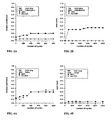
- Figures 2A and 2B show each an experimental graph, depicting the pattern of the friction coefficient and that of wear during the dry and the aqueous test, respectively.
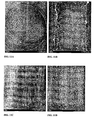
- Figures 3A e 3C show each a SEM photo of the pin at the end of the dry and of the aqueous test, respectively.
- Figures 3B and 3D show likewise photos for the disc.
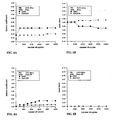
- Figures 4A and 4B show each an experimental graph depicting the pattern of the friction coefficient and that of wear during the dry and the aqueous test, respectively.
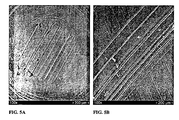
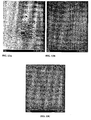
- Figures 5A and 5B show each a SEM photo related to the pin and to the disc, respectively, at the end of the aqueous test.
- Figures 6A e 6B show each an experimental graph depicting the pattern of the friction coefficient and that of wear during the dry and the aqueous test, respectively.
- Figures 7A and 7B show each a SEM photo of the pin at the end of the dry test and of the disc at the end of the aqueous test, respectively.
- Figures 8A and 8B show each an experimental graph depicting the pattern of the friction coefficient and that of wear during the dry and the aqueous test, respectively.
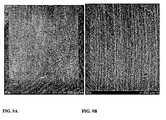
- Figures 9A and 9B show each a SEM photo of the pin and of the disc, respectively, at the end of the aqueous test.
- Figures 10A and 10B show each an experimental graph depicting the pattern of the friction coefficient and that of wear during the dry and the aqueous test, respectively.
- Figures 11A and 11C show each a SEM photo of the pin, at the end of the dry and of the aqueous test, respectively.
- Figures 11B and 11D show likewise photos for the disc.
- Figures 12A e 12B show each an experimental graph depicting the pattern of the friction coefficient and that of wear during the dry and the aqueous test, respectively.
- Figure 13A shows a SEM photo of the pin at the end of the dry test.
- Figures 13B and 13C show each a SEM photo of the disc at the end of the dry and of the aqueous test, respectively.
- the aqueous test showed a low friction coefficient and a low wear.
- wear was almost null for the pin as well as for the disc, with a nearly invisible track on the latter.
- the quantity of debris was lower with respect to the corresponding test of the CoCr alloy-polyethylene coupling, and in particular almost null.
- Figures 14A and 14B show each an experimental graph depicting the pattern of the friction coefficient and that of wear during the dry and the aqueous test, respectively.
- Figures 15A and 15C show each a SEM photo of the pin at the end of the dry and of the aqueous test, respectively.
- Figures 15B and 15D show likewise photos for the disc.
- Tables 8 and 9 indicate that the dry test entailed a high friction coefficient and a low wear. However, this latter datum was altered by the presence of debris. In fact, the SEM analysis highlighted a wear of the pin surface and the presence onto the disc track of thin layers of material detached by micro-welding.
- Figures 16A and 16B show each an experimental graph depicting the pattern of the friction coefficient and that of wear during the dry and the aqueous test, respectively.
- Figures 17A and 17C show each a SEM photo of the pin at the end of the dry and of the aqueous test, respectively.
- Figures 17B and 17D show likewise photos for the disc.
- null wear value highlighted in Tables 8 and 9 is altered by the presence of the debris itself.
- Figures 18A and 18B show each an experimental graph representing the pattern of the friction coefficient and that of wear during the dry and the aqueous test, respectively.
- Figures 19A and 19B show each an experimental graph depicting the pattern of the friction coefficient and that of wear during the dry and the aqueous test, respectively.
- the dry test showed a very high friction coefficient and an increasing wear up to a value of 0.045 mm. Moreover, at the end of the test, there was a lot of debris both in the pin and in the disc.
- the aqueous test yielded more unsatisfactory results than those of the dry one, in particular in terms of wear.
- Results obtained by the above-described experimental tests have highlighted the fundamental importance of the wettability of the materials constituting the prosthetic bodies of acetabular cup and femoral head for the setting up of a permanent aqueous lubrication system therebetween.
- the greater the difference of wettability between the material forming the acetabulum and the material forming the femoral head the easier is the establishment of a stable supporting meatus in the coupling under aqueous lubrication.
- the setting up of this meatus by determining the conditions of relative motion between the prosthetic bodies, influences also the forming of wear debris.
- the present invention provides a hip prosthesis formed by prosthetic bodies made of materials as defined in claim 1.
- the hydrophilic body has an angle of wettability lower than 50 deg, and the hydrophobic body has an angle of wettability greater than 60 deg.
- the involved materials in order to attain an effective supporting meatus, preferably have a difference between the respective angles of wettability greater than 10 deg, and even more preferably equal to or greater than 15 deg.
- an ideal coupling is that between CoCr alloy and peek reinforced by Carbon fibres, in particular peek CF. This entails the additional advantage that the mechanical properties in general and those of workability in particular of the involved materials are very high.
- Another preferred coupling is that between CoCr alloy and Peek CA.
- the present invention further provides a designing method of hip prostheses, providing the manufacturing of prosthetic bodies having substantially different wettability.
Landscapes
- Health & Medical Sciences (AREA)
- Transplantation (AREA)
- Life Sciences & Earth Sciences (AREA)
- Veterinary Medicine (AREA)
- Public Health (AREA)
- General Health & Medical Sciences (AREA)
- Chemical & Material Sciences (AREA)
- Oral & Maxillofacial Surgery (AREA)
- Animal Behavior & Ethology (AREA)
- Engineering & Computer Science (AREA)
- Medicinal Chemistry (AREA)
- Orthopedic Medicine & Surgery (AREA)
- Dermatology (AREA)
- Epidemiology (AREA)
- Heart & Thoracic Surgery (AREA)
- Cardiology (AREA)
- Biomedical Technology (AREA)
- Vascular Medicine (AREA)
- Inorganic Chemistry (AREA)
- Manufacturing & Machinery (AREA)
- Composite Materials (AREA)
- Materials Engineering (AREA)
- Physical Education & Sports Medicine (AREA)
- Materials For Medical Uses (AREA)
- Prostheses (AREA)
Claims (5)
- Verfahren zum Herstellen einer Hüftprothese, die zwei prothetische Körper umfasst, welche eine Hüftgelenkpfanne bzw. einen Oberschenkelknochenkopf darstellen,
dadurch gekennzeichnet, dass es vorsieht, dass die prothetischen Körper eine geringe Verschleißteilchenproduktion haben, und dass es beinhaltet:- einen Schritt des Auswählens einer CoCr-Legierung zum Herstellen von einem der Körper und von PEEK verstärkt mit Kohlefasern zum Herstellen des anderen der Körper;- einen Schritt des Läppens einer Verschleißoberfläche der Materialien, um so eine unterschiedliche Oberflächenbenetzbarkeit (θ) zu schaffen, wobei eine ein hauptsächlich hydrophiles und die andere ein hauptsächlich hydrophobes Verhalten oder eine ein geringfügig hydrophiles und die andere ein markant hydrophobes Verhalten hat, oder umgekehrt,wobei die prothetischen Körper eine Differenz (Δθ) zwischen ihren Benetzungswinkeln von größer als 10 Grad haben. - Verfahren nach Anspruch 1, wobei das PEEK von dem Typ verstärkt mit monodirektionalen dünnen Kohlefasern ist.
- Verfahren nach Anspruch 1, wobei das PEEK von dem Typ verstärkt mit willkürlich ausgerichteten Kohlefasern ist.
- Verfahren nach einem der Ansprüche 1 bis 3, welches vorsieht, dass einer der prothetischen Körper einen Benetzungswinkel (θ) hat, der niedriger als 50 Grad ist, und der andere der prothetischen Körper einen Benetzungswinkel hat, der größer als 60 Grad ist.
- Verfahren nach Anspruch 4, welches vorsieht, dass die prothetischen Körper eine Differenz (Δθ) zwischen ihren Benetzungswinkeln haben, die gleich oder größer als 15 Grad ist.
Applications Claiming Priority (3)
| Application Number | Priority Date | Filing Date | Title |
|---|---|---|---|
| ITRM20010628 | 2001-10-23 | ||
| IT2001RM000628A ITRM20010628A1 (it) | 2001-10-23 | 2001-10-23 | Protesi d'anca e relativo metodo di progettazione. |
| PCT/IT2002/000086 WO2003035129A1 (en) | 2001-10-23 | 2002-02-14 | Hip prosthesis and designing method thereof |
Publications (2)
| Publication Number | Publication Date |
|---|---|
| EP1438082A1 EP1438082A1 (de) | 2004-07-21 |
| EP1438082B1 true EP1438082B1 (de) | 2010-07-14 |
Family
ID=11455839
Family Applications (1)
| Application Number | Title | Priority Date | Filing Date |
|---|---|---|---|
| EP02703847A Expired - Lifetime EP1438082B1 (de) | 2001-10-23 | 2002-02-14 | Hüftprothese und entsprechendes entwurfsverfahren |
Country Status (7)
| Country | Link |
|---|---|
| US (1) | US7896925B2 (de) |
| EP (1) | EP1438082B1 (de) |
| AT (1) | ATE473769T1 (de) |
| DE (1) | DE60237025D1 (de) |
| ES (1) | ES2348932T3 (de) |
| IT (1) | ITRM20010628A1 (de) |
| WO (1) | WO2003035129A1 (de) |
Families Citing this family (20)
| Publication number | Priority date | Publication date | Assignee | Title |
|---|---|---|---|---|
| US7497874B1 (en) | 2001-02-23 | 2009-03-03 | Biomet Manufacturing Corp. | Knee joint prosthesis |
| US20020120340A1 (en) | 2001-02-23 | 2002-08-29 | Metzger Robert G. | Knee joint prosthesis |
| US8388684B2 (en) | 2002-05-23 | 2013-03-05 | Pioneer Signal Technology, Inc. | Artificial disc device |
| GB0604061D0 (en) * | 2006-03-01 | 2006-04-12 | Invibio Ltd | Polymetric materials |
| US8715350B2 (en) | 2006-09-15 | 2014-05-06 | Pioneer Surgical Technology, Inc. | Systems and methods for securing an implant in intervertebral space |
| EP2063817A4 (de) * | 2006-09-15 | 2012-04-18 | Pioneer Surgical Technology Inc | Gelenkarthroplastie-vorrichtung mit beweglichen elementen |
| GB0621227D0 (en) * | 2006-10-25 | 2006-12-06 | Invibio Ltd | Polymeric material |
| GB0621228D0 (en) * | 2006-10-25 | 2006-12-06 | Invibio Ltd | Polymeric material |
| US8328873B2 (en) | 2007-01-10 | 2012-12-11 | Biomet Manufacturing Corp. | Knee joint prosthesis system and method for implantation |
| US8187280B2 (en) | 2007-10-10 | 2012-05-29 | Biomet Manufacturing Corp. | Knee joint prosthesis system and method for implantation |
| US8562616B2 (en) | 2007-10-10 | 2013-10-22 | Biomet Manufacturing, Llc | Knee joint prosthesis system and method for implantation |
| US8157869B2 (en) * | 2007-01-10 | 2012-04-17 | Biomet Manufacturing Corp. | Knee joint prosthesis system and method for implantation |
| US8163028B2 (en) * | 2007-01-10 | 2012-04-24 | Biomet Manufacturing Corp. | Knee joint prosthesis system and method for implantation |
| US9545311B2 (en) | 2009-03-05 | 2017-01-17 | Tornier, Inc. | Glenoid implant anchor post |
| CA2706233C (en) * | 2009-06-04 | 2015-05-05 | Howmedica Osteonics Corp. | Orthopedic peek-on-polymer bearings |
| US20110015752A1 (en) * | 2009-07-14 | 2011-01-20 | Biomet Manufacturing Corp. | System and Method for Acetabular Cup |
| GB2496633B (en) * | 2011-11-17 | 2018-01-17 | Biomet Uk Healthcare Ltd | A prosthesis |
| US9198769B2 (en) | 2011-12-23 | 2015-12-01 | Pioneer Surgical Technology, Inc. | Bone anchor assembly, bone plate system, and method |
| EP3678602A4 (de) | 2017-09-08 | 2021-10-06 | Pioneer Surgical Technology, Inc. | Bandscheibenimplantate, instrumente und verfahren |
| USD907771S1 (en) | 2017-10-09 | 2021-01-12 | Pioneer Surgical Technology, Inc. | Intervertebral implant |
Family Cites Families (29)
| Publication number | Priority date | Publication date | Assignee | Title |
|---|---|---|---|---|
| US3992725A (en) * | 1973-11-16 | 1976-11-23 | Homsy Charles A | Implantable material and appliances and method of stabilizing body implants |
| GB2069340B (en) * | 1980-02-15 | 1984-07-25 | Hardinge K | Bone joint replacement |
| US4808186A (en) * | 1988-02-02 | 1989-02-28 | Boehringer Mannheim Corporation | Controlled stiffness femoral hip implant |
| US4963151A (en) * | 1988-12-28 | 1990-10-16 | Trustees Of The University Of Pennsylvania | Reinforced bone cement, method of production thereof and reinforcing fiber bundles therefor |
| US5169597A (en) * | 1989-12-21 | 1992-12-08 | Davidson James A | Biocompatible low modulus titanium alloy for medical implants |
| JP2833718B2 (ja) * | 1990-06-01 | 1998-12-09 | イー・アイ・デユポン・ドウ・ヌムール・アンド・カンパニー | 金属/複合物混成整形外科インプラント |
| US5100736A (en) * | 1991-02-19 | 1992-03-31 | The United States Of America As Represented By The Secretary Of The Navy | Polymer-reinforced metal matrix composite |
| US5609646A (en) * | 1992-01-23 | 1997-03-11 | Howmedica International | Acetabular cup for a total hip prosthesis |
| US5571193A (en) * | 1992-03-12 | 1996-11-05 | Kampner; Stanley L. | Implant with reinforced resorbable stem |
| US5807407A (en) * | 1992-05-04 | 1998-09-15 | Biomet, Inc. | Medical implant device and method for making same |
| US5549700A (en) * | 1993-09-07 | 1996-08-27 | Ortho Development Corporation | Segmented prosthetic articulation |
| US5707231A (en) * | 1994-07-25 | 1998-01-13 | Rmo, Inc. | Orthodontic assembly with reinforcement structure |
| US6425922B1 (en) * | 2000-01-30 | 2002-07-30 | Diamicron, Inc. | Prosthetic hip joint having at least one sintered polycrystalline diamond compact articulation surface |
| US6290726B1 (en) * | 2000-01-30 | 2001-09-18 | Diamicron, Inc. | Prosthetic hip joint having sintered polycrystalline diamond compact articulation surfaces |
| US5594651A (en) * | 1995-02-14 | 1997-01-14 | St. Ville; James A. | Method and apparatus for manufacturing objects having optimized response characteristics |
| DE69633850T2 (de) * | 1996-04-23 | 2005-12-08 | Biomet Ltd., Bridgend | Verfahren zum Herstellen einer Hüftgelenkpfanne |
| US6299649B1 (en) * | 1996-06-22 | 2001-10-09 | Fu-Kuo Chang | Unbalanced prosthetic device for providing side-dependent twisting-rotational axial-loading coupling |
| US5981827A (en) * | 1996-11-12 | 1999-11-09 | Regents Of The University Of California | Carbon based prosthetic devices |
| US6641893B1 (en) * | 1997-03-14 | 2003-11-04 | Massachusetts Institute Of Technology | Functionally-graded materials and the engineering of tribological resistance at surfaces |
| US6121027A (en) * | 1997-08-15 | 2000-09-19 | Surmodics, Inc. | Polybifunctional reagent having a polymeric backbone and photoreactive moieties and bioactive groups |
| US6368350B1 (en) * | 1999-03-11 | 2002-04-09 | Sulzer Spine-Tech Inc. | Intervertebral disc prosthesis and method |
| US6582715B1 (en) * | 1999-04-27 | 2003-06-24 | Agion Technologies, Inc. | Antimicrobial orthopedic implants |
| US6193516B1 (en) * | 1999-06-18 | 2001-02-27 | Sulzer Calcitek Inc. | Dental implant having a force distribution shell to reduce stress shielding |
| JP4777568B2 (ja) * | 1999-11-11 | 2011-09-21 | 株式会社 ジャパン・ティッシュ・エンジニアリング | 移植材料及びその製造方法 |
| US6709463B1 (en) * | 2000-01-30 | 2004-03-23 | Diamicron, Inc. | Prosthetic joint component having at least one solid polycrystalline diamond component |
| GB0027210D0 (en) * | 2000-11-07 | 2000-12-27 | Benoist Girard & Cie | Prosthesis bearing component |
| DE50205771D1 (de) * | 2001-11-23 | 2006-04-13 | Univ Duisburg Essen | Implantat |
| US7238203B2 (en) * | 2001-12-12 | 2007-07-03 | Vita Special Purpose Corporation | Bioactive spinal implants and method of manufacture thereof |
| US6699289B2 (en) * | 2001-12-31 | 2004-03-02 | Depuy Orthopaedics, Inc. | Augmented glenoid component having an interrupted surface and associated method for securing the augmented glenoid component to a glenoid surface of a scapula |
-
2001
- 2001-10-23 IT IT2001RM000628A patent/ITRM20010628A1/it unknown
-
2002
- 2002-02-14 DE DE60237025T patent/DE60237025D1/de not_active Expired - Lifetime
- 2002-02-14 US US10/493,285 patent/US7896925B2/en not_active Expired - Fee Related
- 2002-02-14 WO PCT/IT2002/000086 patent/WO2003035129A1/en not_active Ceased
- 2002-02-14 EP EP02703847A patent/EP1438082B1/de not_active Expired - Lifetime
- 2002-02-14 ES ES02703847T patent/ES2348932T3/es not_active Expired - Lifetime
- 2002-02-14 AT AT02703847T patent/ATE473769T1/de not_active IP Right Cessation
Also Published As
| Publication number | Publication date |
|---|---|
| ITRM20010628A1 (it) | 2003-04-23 |
| ES2348932T3 (es) | 2010-12-17 |
| ITRM20010628A0 (it) | 2001-10-23 |
| WO2003035129A1 (en) | 2003-05-01 |
| US7896925B2 (en) | 2011-03-01 |
| DE60237025D1 (de) | 2010-08-26 |
| EP1438082A1 (de) | 2004-07-21 |
| US20050021149A1 (en) | 2005-01-27 |
| ATE473769T1 (de) | 2010-07-15 |
Similar Documents
| Publication | Publication Date | Title |
|---|---|---|
| US7896925B2 (en) | Hip prosthesis and designing method thereof | |
| Patel et al. | Tribological evaluation of oxidized zirconium using an articular cartilage counterface: a novel material for potential use in hemiarthroplasty | |
| JP5632148B2 (ja) | ジルコニウム合金の表面酸化法及びこの方法による製品 | |
| Hallab et al. | Biomaterial optimization in total disc arthroplasty | |
| Streicher et al. | Metal-on-metal articulation for artificial hip joints: laboratory study and clinical results | |
| Fisher et al. | An in vitro study of the reduction in wear of metal-on-metal hip prostheses using surface-engineered femoral heads | |
| US9044323B2 (en) | High wear-resistant bearing material and artificial joint replacement using the same | |
| KR101118800B1 (ko) | 조인트 대체물용 금속 베어링 | |
| Hoseini et al. | Tribological investigation of coatings for artificial joints | |
| JP2009528110A (ja) | 支持表面のための複合材料を含むアセンブリー、および再建的または人工的関節におけるその用途 | |
| Gilbert et al. | Corrosion of modular tapers in total joint replacements: a critical assessment of design, materials, surface structure, mechanics, electrochemistry, and biology | |
| Butter et al. | Diamond-like carbon for biomedical applications | |
| Pettersson et al. | Morphology and dissolution rate of wear debris from silicon nitride coatings | |
| Feng et al. | Preparation and properties of the poly (ether ether ketone)(PEEK)/nano-zinc oxide (ZnO)–short carbon fiber (SCF) artificial joint composites | |
| Nevelös et al. | Examination of alumina ceramic components from total hip arthroplasties | |
| Sathishkumar et al. | Wear debris implications on bioimplants: artificial hip joints | |
| Figueiredo-Pina et al. | Understanding the differences between the wear of metal-on-metal and ceramic-on-metal total hip replacements | |
| Borruto et al. | The difference of material wettability as critical factor in the choice of a tribological prosthetic coupling without debris release | |
| Negroni | Corrosion and tribocorrosion study of CoCrMo biomedical alloys | |
| Wang et al. | The biotribological behaviour of an artificial cervical disc model with ball-on-socket contact type under different material configurations | |
| Amstutz | Biomaterials for artificial joints | |
| Arru et al. | Relationship between some design characteristics and wear in the Bicarbon heart valve prosthesis | |
| Badita-Voicu et al. | Evaluation of the applicative-tribological capacity of thin films used to increase the lifetime of hip prostheses components | |
| Diomidis | Wear phenomena of metal joints | |
| Wiśniewski et al. | Friction and Wear Test of Components of a Hip Joint Endoprosthesis with Ceramic–Polyethylene Material Contact Using Hip Joint Movement Simulator |
Legal Events
| Date | Code | Title | Description |
|---|---|---|---|
| PUAI | Public reference made under article 153(3) epc to a published international application that has entered the european phase |
Free format text: ORIGINAL CODE: 0009012 |
|
| 17P | Request for examination filed |
Effective date: 20040506 |
|
| AK | Designated contracting states |
Kind code of ref document: A1 Designated state(s): AT BE CH CY DE DK ES FI FR GB GR IE IT LI LU MC NL PT SE TR |
|
| AX | Request for extension of the european patent |
Extension state: AL LT LV MK RO SI |
|
| 17Q | First examination report despatched |
Effective date: 20061027 |
|
| GRAP | Despatch of communication of intention to grant a patent |
Free format text: ORIGINAL CODE: EPIDOSNIGR1 |
|
| GRAS | Grant fee paid |
Free format text: ORIGINAL CODE: EPIDOSNIGR3 |
|
| GRAA | (expected) grant |
Free format text: ORIGINAL CODE: 0009210 |
|
| AK | Designated contracting states |
Kind code of ref document: B1 Designated state(s): AT BE CH CY DE DK ES FI FR GB GR IE IT LI LU MC NL PT SE TR |
|
| REG | Reference to a national code |
Ref country code: GB Ref legal event code: FG4D |
|
| REG | Reference to a national code |
Ref country code: CH Ref legal event code: EP |
|
| REG | Reference to a national code |
Ref country code: IE Ref legal event code: FG4D |
|
| REF | Corresponds to: |
Ref document number: 60237025 Country of ref document: DE Date of ref document: 20100826 Kind code of ref document: P |
|
| REG | Reference to a national code |
Ref country code: NL Ref legal event code: VDEP Effective date: 20100714 |
|
| REG | Reference to a national code |
Ref country code: CH Ref legal event code: NV Representative=s name: PATENTANWAELTE SCHAAD, BALASS, MENZL & PARTNER AG |
|
| REG | Reference to a national code |
Ref country code: ES Ref legal event code: FG2A Effective date: 20101203 |
|
| PG25 | Lapsed in a contracting state [announced via postgrant information from national office to epo] |
Ref country code: NL Free format text: LAPSE BECAUSE OF FAILURE TO SUBMIT A TRANSLATION OF THE DESCRIPTION OR TO PAY THE FEE WITHIN THE PRESCRIBED TIME-LIMIT Effective date: 20100714 Ref country code: AT Free format text: LAPSE BECAUSE OF FAILURE TO SUBMIT A TRANSLATION OF THE DESCRIPTION OR TO PAY THE FEE WITHIN THE PRESCRIBED TIME-LIMIT Effective date: 20100714 Ref country code: FI Free format text: LAPSE BECAUSE OF FAILURE TO SUBMIT A TRANSLATION OF THE DESCRIPTION OR TO PAY THE FEE WITHIN THE PRESCRIBED TIME-LIMIT Effective date: 20100714 |
|
| PG25 | Lapsed in a contracting state [announced via postgrant information from national office to epo] |
Ref country code: PT Free format text: LAPSE BECAUSE OF FAILURE TO SUBMIT A TRANSLATION OF THE DESCRIPTION OR TO PAY THE FEE WITHIN THE PRESCRIBED TIME-LIMIT Effective date: 20101115 Ref country code: CY Free format text: LAPSE BECAUSE OF FAILURE TO SUBMIT A TRANSLATION OF THE DESCRIPTION OR TO PAY THE FEE WITHIN THE PRESCRIBED TIME-LIMIT Effective date: 20100714 |
|
| PG25 | Lapsed in a contracting state [announced via postgrant information from national office to epo] |
Ref country code: BE Free format text: LAPSE BECAUSE OF FAILURE TO SUBMIT A TRANSLATION OF THE DESCRIPTION OR TO PAY THE FEE WITHIN THE PRESCRIBED TIME-LIMIT Effective date: 20100714 Ref country code: SE Free format text: LAPSE BECAUSE OF FAILURE TO SUBMIT A TRANSLATION OF THE DESCRIPTION OR TO PAY THE FEE WITHIN THE PRESCRIBED TIME-LIMIT Effective date: 20100714 Ref country code: GR Free format text: LAPSE BECAUSE OF FAILURE TO SUBMIT A TRANSLATION OF THE DESCRIPTION OR TO PAY THE FEE WITHIN THE PRESCRIBED TIME-LIMIT Effective date: 20101015 |
|
| PG25 | Lapsed in a contracting state [announced via postgrant information from national office to epo] |
Ref country code: DK Free format text: LAPSE BECAUSE OF FAILURE TO SUBMIT A TRANSLATION OF THE DESCRIPTION OR TO PAY THE FEE WITHIN THE PRESCRIBED TIME-LIMIT Effective date: 20100714 |
|
| PLBE | No opposition filed within time limit |
Free format text: ORIGINAL CODE: 0009261 |
|
| STAA | Information on the status of an ep patent application or granted ep patent |
Free format text: STATUS: NO OPPOSITION FILED WITHIN TIME LIMIT |
|
| PG25 | Lapsed in a contracting state [announced via postgrant information from national office to epo] |
Ref country code: IT Free format text: LAPSE BECAUSE OF FAILURE TO SUBMIT A TRANSLATION OF THE DESCRIPTION OR TO PAY THE FEE WITHIN THE PRESCRIBED TIME-LIMIT Effective date: 20100714 |
|
| 26N | No opposition filed |
Effective date: 20110415 |
|
| REG | Reference to a national code |
Ref country code: DE Ref legal event code: R097 Ref document number: 60237025 Country of ref document: DE Effective date: 20110415 |
|
| PG25 | Lapsed in a contracting state [announced via postgrant information from national office to epo] |
Ref country code: MC Free format text: LAPSE BECAUSE OF NON-PAYMENT OF DUE FEES Effective date: 20110228 |
|
| REG | Reference to a national code |
Ref country code: IE Ref legal event code: MM4A |
|
| PG25 | Lapsed in a contracting state [announced via postgrant information from national office to epo] |
Ref country code: IE Free format text: LAPSE BECAUSE OF NON-PAYMENT OF DUE FEES Effective date: 20110214 |
|
| REG | Reference to a national code |
Ref country code: DE Ref legal event code: R082 Ref document number: 60237025 Country of ref document: DE Representative=s name: SCHUMACHER & WILLSAU PATENTANWALTSGESELLSCHAFT, DE |
|
| PG25 | Lapsed in a contracting state [announced via postgrant information from national office to epo] |
Ref country code: LU Free format text: LAPSE BECAUSE OF NON-PAYMENT OF DUE FEES Effective date: 20110214 |
|
| PG25 | Lapsed in a contracting state [announced via postgrant information from national office to epo] |
Ref country code: TR Free format text: LAPSE BECAUSE OF FAILURE TO SUBMIT A TRANSLATION OF THE DESCRIPTION OR TO PAY THE FEE WITHIN THE PRESCRIBED TIME-LIMIT Effective date: 20100714 |
|
| REG | Reference to a national code |
Ref country code: DE Ref legal event code: R082 Ref document number: 60237025 Country of ref document: DE Representative=s name: SCHUMACHER & WILLSAU PATENTANWALTSGESELLSCHAFT, DE |
|
| REG | Reference to a national code |
Ref country code: GB Ref legal event code: 732E Free format text: REGISTERED BETWEEN 20140904 AND 20140910 |
|
| REG | Reference to a national code |
Ref country code: DE Ref legal event code: R082 Ref document number: 60237025 Country of ref document: DE Representative=s name: SCHUMACHER & WILLSAU PATENTANWALTSGESELLSCHAFT, DE Effective date: 20140919 Ref country code: DE Ref legal event code: R082 Ref document number: 60237025 Country of ref document: DE Representative=s name: SCHUMACHER & WILLSAU PATENTANWALTSGESELLSCHAFT, DE Effective date: 20130127 Ref country code: DE Ref legal event code: R081 Ref document number: 60237025 Country of ref document: DE Owner name: BORRUTO, ADELINA TERESA MARIA, IT Free format text: FORMER OWNER: UNIVERSITA' DEGLI STUDI DI ROMA "LA SAPIENZA", ROM/ROMA, IT Effective date: 20140919 |
|
| REG | Reference to a national code |
Ref country code: FR Ref legal event code: TP Owner name: ADELINA BORRUTO, IT Effective date: 20140926 Ref country code: CH Ref legal event code: PUE Owner name: ADELINA TERESA MARIA BORRUTO, IT Free format text: FORMER OWNER: UNIVERSITA' DEGLI STUDI DI ROMA "LA SAPIENZA", IT |
|
| REG | Reference to a national code |
Ref country code: ES Ref legal event code: PC2A Owner name: ADELINA TERESA MARIA BORRUTO Effective date: 20150205 |
|
| REG | Reference to a national code |
Ref country code: FR Ref legal event code: PLFP Year of fee payment: 15 |
|
| REG | Reference to a national code |
Ref country code: FR Ref legal event code: PLFP Year of fee payment: 16 |
|
| REG | Reference to a national code |
Ref country code: FR Ref legal event code: PLFP Year of fee payment: 17 |
|
| PGFP | Annual fee paid to national office [announced via postgrant information from national office to epo] |
Ref country code: DE Payment date: 20200219 Year of fee payment: 19 Ref country code: ES Payment date: 20200322 Year of fee payment: 19 Ref country code: GB Payment date: 20200219 Year of fee payment: 19 |
|
| PGFP | Annual fee paid to national office [announced via postgrant information from national office to epo] |
Ref country code: CH Payment date: 20200219 Year of fee payment: 19 |
|
| PGFP | Annual fee paid to national office [announced via postgrant information from national office to epo] |
Ref country code: FR Payment date: 20200219 Year of fee payment: 19 |
|
| REG | Reference to a national code |
Ref country code: DE Ref legal event code: R119 Ref document number: 60237025 Country of ref document: DE |
|
| GBPC | Gb: european patent ceased through non-payment of renewal fee |
Effective date: 20210214 |
|
| PG25 | Lapsed in a contracting state [announced via postgrant information from national office to epo] |
Ref country code: CH Free format text: LAPSE BECAUSE OF NON-PAYMENT OF DUE FEES Effective date: 20210228 Ref country code: LI Free format text: LAPSE BECAUSE OF NON-PAYMENT OF DUE FEES Effective date: 20210228 |
|
| PG25 | Lapsed in a contracting state [announced via postgrant information from national office to epo] |
Ref country code: FR Free format text: LAPSE BECAUSE OF NON-PAYMENT OF DUE FEES Effective date: 20210228 Ref country code: GB Free format text: LAPSE BECAUSE OF NON-PAYMENT OF DUE FEES Effective date: 20210214 Ref country code: DE Free format text: LAPSE BECAUSE OF NON-PAYMENT OF DUE FEES Effective date: 20210901 |
|
| REG | Reference to a national code |
Ref country code: ES Ref legal event code: FD2A Effective date: 20220513 |
|
| PG25 | Lapsed in a contracting state [announced via postgrant information from national office to epo] |
Ref country code: ES Free format text: LAPSE BECAUSE OF NON-PAYMENT OF DUE FEES Effective date: 20210215 |