EP1439760B1 - Procede de cuisson prealable de graines et appareil destine a la mise en oeuvre de ce procede - Google Patents
Procede de cuisson prealable de graines et appareil destine a la mise en oeuvre de ce procede Download PDFInfo
- Publication number
- EP1439760B1 EP1439760B1 EP02716558A EP02716558A EP1439760B1 EP 1439760 B1 EP1439760 B1 EP 1439760B1 EP 02716558 A EP02716558 A EP 02716558A EP 02716558 A EP02716558 A EP 02716558A EP 1439760 B1 EP1439760 B1 EP 1439760B1
- Authority
- EP
- European Patent Office
- Prior art keywords
- reactor
- process according
- soybeans
- grains
- pressure
- Prior art date
- Legal status (The legal status is an assumption and is not a legal conclusion. Google has not performed a legal analysis and makes no representation as to the accuracy of the status listed.)
- Expired - Lifetime
Links
Images


Classifications
-
- A—HUMAN NECESSITIES
- A23—FOODS OR FOODSTUFFS; TREATMENT THEREOF, NOT COVERED BY OTHER CLASSES
- A23B—PRESERVATION OF FOODS, FOODSTUFFS OR NON-ALCOHOLIC BEVERAGES; CHEMICAL RIPENING OF FRUIT OR VEGETABLES
- A23B7/00—Preservation of fruit or vegetables; Chemical ripening of fruit or vegetables
- A23B7/005—Preserving by heating
-
- A—HUMAN NECESSITIES
- A23—FOODS OR FOODSTUFFS; TREATMENT THEREOF, NOT COVERED BY OTHER CLASSES
- A23B—PRESERVATION OF FOODS, FOODSTUFFS OR NON-ALCOHOLIC BEVERAGES; CHEMICAL RIPENING OF FRUIT OR VEGETABLES
- A23B7/00—Preservation of fruit or vegetables; Chemical ripening of fruit or vegetables
- A23B7/06—Blanching
-
- A—HUMAN NECESSITIES
- A23—FOODS OR FOODSTUFFS; TREATMENT THEREOF, NOT COVERED BY OTHER CLASSES
- A23B—PRESERVATION OF FOODS, FOODSTUFFS OR NON-ALCOHOLIC BEVERAGES; CHEMICAL RIPENING OF FRUIT OR VEGETABLES
- A23B9/00—Preservation of edible seeds, e.g. cereals
- A23B9/02—Preserving by heating
-
- A—HUMAN NECESSITIES
- A23—FOODS OR FOODSTUFFS; TREATMENT THEREOF, NOT COVERED BY OTHER CLASSES
- A23L—FOODS, FOODSTUFFS OR NON-ALCOHOLIC BEVERAGES, NOT OTHERWISE PROVIDED FOR; PREPARATION OR TREATMENT THEREOF
- A23L11/00—Pulses, i.e. fruits of leguminous plants, for production of food; Products from legumes; Preparation or treatment thereof
- A23L11/01—Pulses or legumes in the form of whole pieces or fragments thereof, without mashing or comminuting
- A23L11/03—Soya beans, e.g. full-fat soya bean flakes or grits
-
- A—HUMAN NECESSITIES
- A23—FOODS OR FOODSTUFFS; TREATMENT THEREOF, NOT COVERED BY OTHER CLASSES
- A23L—FOODS, FOODSTUFFS OR NON-ALCOHOLIC BEVERAGES, NOT OTHERWISE PROVIDED FOR; PREPARATION OR TREATMENT THEREOF
- A23L11/00—Pulses, i.e. fruits of leguminous plants, for production of food; Products from legumes; Preparation or treatment thereof
- A23L11/30—Removing undesirable substances, e.g. bitter substances
- A23L11/31—Removing undesirable substances, e.g. bitter substances by heating without chemical treatment, e.g. steam treatment, cooking
-
- A—HUMAN NECESSITIES
- A23—FOODS OR FOODSTUFFS; TREATMENT THEREOF, NOT COVERED BY OTHER CLASSES
- A23L—FOODS, FOODSTUFFS OR NON-ALCOHOLIC BEVERAGES, NOT OTHERWISE PROVIDED FOR; PREPARATION OR TREATMENT THEREOF
- A23L7/00—Cereal-derived products; Malt products; Preparation or treatment thereof
- A23L7/10—Cereal-derived products
- A23L7/196—Products in which the original granular shape is maintained, e.g. parboiled rice
-
- A—HUMAN NECESSITIES
- A23—FOODS OR FOODSTUFFS; TREATMENT THEREOF, NOT COVERED BY OTHER CLASSES
- A23L—FOODS, FOODSTUFFS OR NON-ALCOHOLIC BEVERAGES, NOT OTHERWISE PROVIDED FOR; PREPARATION OR TREATMENT THEREOF
- A23L7/00—Cereal-derived products; Malt products; Preparation or treatment thereof
- A23L7/10—Cereal-derived products
- A23L7/197—Treatment of whole grains not provided for in groups A23L7/117 - A23L7/196
- A23L7/1975—Cooking or roasting
-
- A—HUMAN NECESSITIES
- A23—FOODS OR FOODSTUFFS; TREATMENT THEREOF, NOT COVERED BY OTHER CLASSES
- A23N—MACHINES OR APPARATUS FOR TREATING HARVESTED FRUIT, VEGETABLES OR FLOWER BULBS IN BULK, NOT OTHERWISE PROVIDED FOR; PEELING VEGETABLES OR FRUIT IN BULK; APPARATUS FOR PREPARING ANIMAL FEEDING- STUFFS
- A23N17/00—Apparatus specially adapted for preparing animal feeding-stuffs
- A23N17/004—Apparatus specially adapted for preparing animal feeding-stuffs for treating by application of heat, e.g. by means of potato cookers
Definitions
- the present invention relates to a process of precooking grains, particularly used in precooking soybeans for the purpose of enhancing the digestibility of this foodstuff, beside reducing/eliminating the existence of mycotoxins or toxins formed by fungi.
- soybeans are processed by indirect and/or direct heating with vapor, by electrical resistances, flames produced by gas, combustible oil, firewood and others, in open or closed containers, either fixed or rotary, with stirrers of various types, such as blades, pallets and helicoids.
- the oxidation rate is 3 to 5 times lesser, but the smaller and broken grains are excessively heated and the bigger grains go through more quickly and are insufficiently treated, which causes the enzymes not to be satisfactorily eliminated.
- the product additionally goes to the cooler at a high temperature and, consequently, the problem of contamination by microorganism arises.
- the US 4,413,018 relates to a method of preparing whole oat grains for the purpose of deactivating the enzymes and extending the period of preservation of the product.
- the water is in direct contact with the product, which represents a serious problem due to excess humidity, loss of nutrients in the water and problems of polluted effluents.
- document EP 0222965 describes a method of precooking rice and other cereals. This precooking process comprises steps of adding pressurized vapor and pressurizing the product in autoclaves. However, rice needs to be soaked, and both the equipment and the process used are not adaptable to soybeans, maize and others.
- Document PI 9005734-1 relates to a process and an equipment for deactivating soybeans in natura, with a view to eliminate the enzymes present in the soybeans, which inhibit the production of calcium when assimilated by living organisms.
- the equipment described in this document utilizes stirring blades, which inject vapor into the product.
- injecting vapor by means of these blades is problematic, because, when the perforations in the blades are clogged with product, it is almost impossible to clean them, and this cause irregular heating of the product to the detriment of its quality.
- the blades are rotary and the container that holds the product usually is not filled completely, a portion of this vapor is injected onto the surface of the product, which overheats the latter, impairs its quality, and results in excessive consumption of vapor.
- Document GB 759 478 relates to a precooked cereal food and a method of preparing the cereal food. To precook the cereal is described a process comprising steps of applying vacuum in a reactor, however, pressure applied is insufficient to have the grains cooked, the water boiled or micotoxins dragged out of the grains. Since the grains are not sufficiently cooked the digestibility of the grains will not be enhanced, due to the fact that the cell membranes of the grains will not be broken.
- FR 2 774 913 discloses the use a pressure range that is insufficient to have the grains cooked in order to enhance the digestibility of the grains by braking the cell membranes of the grains.
- Document US 5,284,085 discloses an apparatus for the heat treatment of food comprising a vessel which may be pressurized and a perforated agitator through wich steam is furnished to a layer of material under treatment in the bottom of the vessel while the agitator is oscillated. Although the material is heated with steam, it is not mentioned that it is cooked and, also, that the cell membranes of the material will be broken in order to enhance the digestibility of the food.
- Document JP 11 004760 describes a steam-cooking room and means to reduce pressure in the room, to execute a steam-cooking process of a food material but it is not mentioned that the cell membranes of the food will be broken in order to enhance the digestibility of the food.
- the objective of the present invention is to provide a process of precooking grains, capable of enhancing the digestibility of the processed grains and simultaneously eliminating the micotoxins and pesticides contained in the grains, without adding other chemicals to the product.
- an equipment for precooking grains which comprises at least one reactor that is associable with means for applying negative pressure.
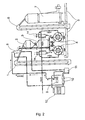
- the equipment for precooking grains comprises a first vertical conveying element 1, a feeder 2, a dosing means 3, one or two reactors 4, a horizontal conveyor 5, a second vertical conveyor 6, a cooler 7, a barometric condenser 8, a means for applying negative pressure 9, centrifugal pumps 10, a barometric tank 11, and a cooling tower 12.
- the first vertical conveyor 1 may be a vertical bucket elevator or the like.
- the latter is responsible for supplying grains to the feeder 2, which is associated with the dosing means 3.
- the flow of grains between the feeder 2 and the dosing means 3 is controlled by means of automatic valves.
- the reactor 4 is associated with the dosing means 3 and receives therefrom a calculated and monitored amount of grains. This grain-flow control is also effected by means of automatic valves.
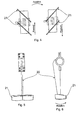
- each arm 20 comprising inclined flaps 21, as illustrated in figures 4, 5 and 6 .
- the function of this assembly is to homogenize the product while the latter is inside the reactor 4 and also to facilitate the complete discharge of the product after it has been cooked.
- the flaps 21 may be right or left and work in rotation movement.
- the grains contained in the reactor 4 are indirectly heated by means of the dry saturated vapor that passes through a sleeve and that transfers heat to the grains. This way of heating provides a variable of moistening the grains by 1% more and/or less.
- the grains are also heated in a direct way, also by means of dry saturated vapor.
- This vapor is distributed by an injection system that injects live vapor in a tangential way, by dipping the product. In this way, this vapor first comes in contact with the base of the product before reaching the surface of the volume.
- This direct vapor-injection system is independent from the inclined flaps 21 existing inside the reactor 4.
- the reactor 4 further receives an application of negative pressure or vacuum, so that the internal environment will be free from air.
- the equipment is provided with means for applying negative pressure 9 associated with a barometric condenser 8 and with a barometric tank 11.
- the vacuum pump 9 is replaced by two ejectors, the first ejector being of the "Z" 9' type, arranged between the barometric tank 11 and the barometric condenser 8, and the second ejector being of the "Y" 7' type, also called vapor booster (thermocompressor), arranged between the barometric condenser 8 and the reactor 4.
- the ejector 9' may replace the vacuum pump in the function of applying negative pressure to the interior of the reactor 4 when it is necessary to apply a negative pressure, or vacuum, of up to absolute 45mmHg. This ejector produces vacuum above the boiling point of the water in the barometric condenser 8.
- the equipment when one intends to work with vacuum up to absolute 6mmHg, the equipment is complemented with the booster 7', when the final temperature of the product reaches 15°C or less, without any need for the cooler 7 of figures 1 and 2 .
- the booster 7' produces vacuum below the boiling point of the water of the barometric condenser 8.
- the booster 7' receives, at one end, vapor under high pressure.
- gases and vapors are aspirated on the vapor inlet side and compressed on the opposite side, which enlarges the vacuum in the system in which it is incorporated.
- the booster7' increases the consumption of vapor and cooling water, it should be used whenever the precooked product is intended for human consumption, considering the possibility and need for it reaching pressures in the range of up to 6mmHg.
- the cooling tower 12 is associated with the barometric condenser 8 for the purpose of supplying cooling water for the heat exchange that takes place inside the condenser. This water is circulated due to the pressure supplied by the centrifugal pumps 10.
- the barometric condenser 8 condenses the water vapors that are aspirated from the reactor 4 in the form of vapor and discharges them in the form of water to the barometric tank 11.
- the water from the cooling tower 12 is at a temperature of about 30°C. This water condenses the vapor that comes from the reactor 4, in the barometric condenser 8, increasing its temperature to 35°C. Each 1 kilo of vapor aspirated has 650 Kcal. Thus, 130 liters of water are required for condensing 1 kilo of vapor, heating this water from 30°C to 35°C.
- the water falls out of the condenser 8 into the barometric tank 11 and is them pumped to the cooling tower 12, in which the function is inverted and again 1 liter of water is evaporated, causing the water to cool from 35°C down to 30°C. This water is again pumped into the condenser.
- the water-to-vapor and vice-versa phase change absorbs 550 Kcal, which is equivalent to heat 550 liters of water at 1°C.
- the horizontal conveyor 5 carries the product extracted from the reactor 4 as far as the second vertical conveyor 6. Once the grains are in the second conveyor 6, they are placed in the cooler 7, as illustrated in figures 1 and 2 .
- the equipment for precooking grains may be equipped with automatic moisteners 14. These moisteners are used when the humidity of the processed grains is lower than 11%; then the moisteners will correct the humidity to the ideal range, which is from 12 to 12,5% humidity.
- the process of precooking grains comprises the steps of:
- the first vertical conveyor 1 carries the still not cooked grains as far as the feeder 2. From the feeder 2 the grains are charged into the dosing means 3, and then they are carried in a controlled and monitored way into the container 4, which is a reactor.
- the reactor 4 containing the grains to be cooked is hermetically closed. Then, a first negative pressure, vacuum, is applied to the inside of the reactor 4, which causes its internal pressure to be around an absolute pressure of 6mmHg until a relative pressure about 4Kg/cm2.
- This negative pressure is applied by means of a vacuum pump 9 and also by means of ejectors of types "Z" and "Y" 9' and 7', respectively.
- the product is no longer in contact with oxygen, which provides a reduction of the oxidation of peroxides by 40 to 80% and also prevents further co-oxidation of the proteins and anizidin.
- the grains may reach a temperature of about 100°C to 125°C.
- the grains are cooked. This step consists ion maintaining the grains at the cooking temperature, about 100°C - 125°C, for a determined period of time which may vary from 1 to 25 minutes. Depending upon time, temperature and pressure, the cooking may be more or less intensive.
- the internal pressure of the reactor 4 which is positive, ranges from 0.5 to 1.5 Kg/cm2.
- This pressure will again be reduced due to application of the second negative pressure, vacuum, when this pressure will be negative and around 0.9 Kg/cm2, that is to say, there is a differential of from 1.4 to 2.5 Kg/cm2.
- the great effect of the cooking and the consequent increase in digestibility of the product will take place upon variation of the pressure, mainly in this application of the second negative pressure, when the positive pressure of 0.5 - 1.5 Kg/cm2 is changed into the negative pressure of 0.9 Kg/cm2, or else absolute pressure of 6mmHg.
- one liter of water which is equivalent to 1 Kg of vapor, changes into 1.2 m3 of vapor (an increase of 1:1.200), exploding within the grain, breaking the cell membranes and exposing the nutrients, so that the can be absorbed in the digestion of the animals or human beings more easily.
- the temperature of the product drops from about 100°C - 125°C to about 60°C - 15°C, depending upon the vacuum intensity, and the humidity of the product, which was between 20 and 21%, drops to the range of from 12 to 12.5%.
- the humidity of the end product is lower than that of the product in the beginning of the process.
- the end temperature is higher than 100°C, and so there is a need to cool the product intensively, which results in physical losses and high oxidation.
- a lyophilization process takes place, which consists in evaporating water from the grains in vacuum, that is to say, in consuming heat from the grains, and lowering their temperature and humidity.
- a lyophilization process takes place, which consists in evaporating water from the grains in vacuum, that is to say, in consuming heat from the grains, and lowering their temperature and humidity.
- each liter of water evaporated in vacuum consumes 550 Kcal, cooling the product.
- soybeans as an example, one knows that it has a specific heat of 0.6 Kcal/Kg, which means that 0.6 Kcal will be required to cool 1 Kg of soybeans at 1°C, or else one liter of water evaporated in vacuum to cool 9.6Kg of soybeans from 110°C down to 15°C, or to cool 23Kg of soybeans from 110°C down to 70°C, beside reducing the temperature of the water in the product too.
- the volume of vapor injected into the product during the heating condenses, moistens, heats and raises the pressure inside the reactor 4.
- the situation is inverted, that is to say, the pressure (vacuum) drops, the condensed vapor evaporates again and the heat and water added in the heating are removed and go to the barometric condenser. This is the inversion of values.
- the micotoxins and pesticides are dragged by the re-evaporation of water (vapor) during the step of applying the second negative pressure (vacuum). Most pesticides have an evaporation, volatilization point that is raised in vacuum and aided by re-evaporation of water.
- the micotoxins are residues of fungi deposited into microchannels which the fungi usually make between the husk and the pulp of the grain and around the germ.
- the water condensed in the grain expands over the vacuum of 1:1.200 or more, and emigrates from the barometric condenser at a speed of from 40 to 50 m/s (144 - 180 Kg/h), it preferably utilizes the ducts (channels) left by the fungi, thus dragging the micotoxins deposited in these channels. It should be pointed out that the crushed or ground grains that have the ducts left by the fungi destroyed will no longer permit elimination of toxins.
- the lyophilization process reduces micotoxins by up to 99% and pesticides by 75 to 99%.
- the next step is that of end cooling, which requires special care, so that no oxidation and contamination will occur.
- the product is vacuum cooled within the reactor 4, down to a temperature range in which oxidation virtually does not take place or is minimum, this range being comprised by the maximum temperature of 70°C and the minimum temperature of 15°C.
- This cooling takes place partly in vacuum, within the reactor 4, and partly in the cooler 7, according to figures 1 and 2 , and in the constructive variation of this equipment and process, the cooling may occur totally in vacuum within the reactor 4, according to figure 3 .
- the internal pressure of the reactor 4 is negative and is of about 0.9 Kg/cm2.
- the temperature of the product when it comes out of the reactor 4 at the end of this step it depends upon the negative pressure, or vacuum, applied. In this way, for a vacuum of up to absolute 45mmHg, the product of the reactor 4 is discharged at a temperature ranging from 65 to 70°C.
- vacuum is applied with ejector 9' and booster 7', the absolute pressure drops to absolute 6mmHg, the product is discharged at a temperature ranging from 10°C to 15°C and does not need to be further cooled in the cooler 7. In this case, one avoids 99% of oxidation.
- the process of the present invention enhances the digestibility of the processed products by about 8 - 22% or more.
- the present process and equipment are particularly useable in precooking soybeans. However, one can see that they can be employed in precooking various other kinds of grains, as for example, peanut, maize, among others.
- the times of residence in the steps, the necessary pressure and the volume of processed products are automatically controlled by means of automation equipment, such as, for example, a PLC or CLP and by using computers, which brings about a much more homogeneous production.
- automation equipment such as, for example, a PLC or CLP and by using computers, which brings about a much more homogeneous production.
Landscapes
- Life Sciences & Earth Sciences (AREA)
- Engineering & Computer Science (AREA)
- Chemical & Material Sciences (AREA)
- Polymers & Plastics (AREA)
- Food Science & Technology (AREA)
- Nutrition Science (AREA)
- Health & Medical Sciences (AREA)
- Zoology (AREA)
- Wood Science & Technology (AREA)
- Chemical Kinetics & Catalysis (AREA)
- General Chemical & Material Sciences (AREA)
- Agronomy & Crop Science (AREA)
- Botany (AREA)
- Drying Of Solid Materials (AREA)
- Beans For Foods Or Fodder (AREA)
- Fertilizers (AREA)
- Apparatuses For Bulk Treatment Of Fruits And Vegetables And Apparatuses For Preparing Feeds (AREA)
- Fodder In General (AREA)
- Commercial Cooking Devices (AREA)
Claims (14)
- Processus d'amélioration de la digestibilité d'aliments contenant du soja comprenant une précuisson du soja dans un réacteur, caractérisé par les opérations suivantes :a) le chargement du soja dans un réacteur (4) d'une manière contrôlée,b) l'application d'une première pression négative et la réduction de la pression interne du réacteur (4) de sorte que la pression interne du réacteur atteigne une pression absolue de 0,8 kPa (6 mmHg),c) le chauffage du soja contenu dans le réacteur (4) jusqu'à une plage de température allant de 100°C à 125°C et la cuisson du soja,d) l'application d'une deuxième pression négative au réacteur de façon à obtenir un différentiel de pression allant de 137,2 à 245,2 kPa (1,4 à 2,5 kg/cm2) tout en retirant de l'eau et, entre autres, des toxines, des mycotoxines et divers pesticides,e) le refroidissement sous vide du soja dans le réacteur et l'obtention d'un produit de soja sec ou humide refroidi d'une digestibilité améliorée.
- Le processus selon la revendication 1 où, à l'opération (b), de l'air est évacué du réacteur (4).
- Le processus selon la revendication 1 ou 2 où, à l'opération (c), une injection directe de vapeur sur le soja et un chauffage indirect ont lieu.
- Le processus selon l'une quelconque des revendications 1 à 3 où, à l'opération (c), le soja reste dans la plage de température allant de 100°C à 125°C pendant une période de 1 à 25 minutes.
- Le processus selon la revendication 4 où, à l'opération (c), la pression relative interne du réacteur (4) est de 49,0 à 147,1 kPa (0,5 à 1,5 kg/cm2).
- Le processus selon l'une quelconque des Revendications 1 à 5 où, à l'opération (d), la pression relative à l'intérieur du réacteur (4) est de négatif 88,3 kPa (0,9 kg/cm2).
- Le processus selon la revendication 6 où, à l'opération (d), des membranes de cellules sont rompues et des substances nutritives de soja exposées par l'eau d'évaporation.
- Le processus selon la revendication 6 ou 7 où l'opération (d) comprend un processus de lyophilisation.
- Le processus selon la revendication 8 où, à l'opération (d), les quantités de mycotoxines et de pesticides sont réduites de 99% et 75 à 99%, respectivement.
- Le processus selon l'une quelconque des revendications 6 à 9 où, à l'opération (d), la température est réduite à une plage entre 60°C et 15°C et l'humidité à une plage entre 12 et 12,5%.
- Le processus selon l'une quelconque des revendications 1 à 10 où, à l'opération (e), le refroidissement se déroule dans le réacteur (4) et ensuite dans un refroidisseur (7).
- Le processus selon l'une quelconque des revendications 1 à 10 où, à l'opération (e), le refroidissement se déroule dans le réacteur (4).
- Le processus selon la revendication 11 ou 12 où, à l'opération (e), le refroidissement se déroule avec une pression interne relative du réacteur de négatif 88,3 kPa (0,9 kg/cm2).
- Le processus selon la revendication 13 où, à l'opération (e), la température maximale est d'environ 70°C et la température minimale est d'environ 10°C.
Applications Claiming Priority (3)
| Application Number | Priority Date | Filing Date | Title |
|---|---|---|---|
| BR0104889 | 2001-10-30 | ||
| BRPI0104889-9A BR0104889B1 (pt) | 2001-10-30 | 2001-10-30 | processo de prÉ-cozimento de grços e equipamento para prÉ-cozimento de grços. |
| PCT/BR2002/000054 WO2003037106A1 (fr) | 2001-10-30 | 2002-04-16 | Procede de cuisson prealable de graines et appareil destine a la mise en oeuvre de ce procede |
Publications (2)
| Publication Number | Publication Date |
|---|---|
| EP1439760A1 EP1439760A1 (fr) | 2004-07-28 |
| EP1439760B1 true EP1439760B1 (fr) | 2012-12-05 |
Family
ID=38325132
Family Applications (1)
| Application Number | Title | Priority Date | Filing Date |
|---|---|---|---|
| EP02716558A Expired - Lifetime EP1439760B1 (fr) | 2001-10-30 | 2002-04-16 | Procede de cuisson prealable de graines et appareil destine a la mise en oeuvre de ce procede |
Country Status (7)
| Country | Link |
|---|---|
| US (2) | US20050069615A1 (fr) |
| EP (1) | EP1439760B1 (fr) |
| JP (1) | JP2005506848A (fr) |
| CN (1) | CN1610509A (fr) |
| BR (1) | BR0104889B1 (fr) |
| RU (1) | RU2300900C2 (fr) |
| WO (1) | WO2003037106A1 (fr) |
Families Citing this family (6)
| Publication number | Priority date | Publication date | Assignee | Title |
|---|---|---|---|---|
| RU2009119402A (ru) * | 2009-05-25 | 2010-11-27 | Сергей Александрович Пономарев (RU) | Способ продажи обжаренных сыпучих пищевых продуктов, преимущественно орехов, семян масличных культур и других подобных продуктов посредством торгового автомата и торговый автомат для его осуществления |
| RU2435447C1 (ru) * | 2010-04-26 | 2011-12-10 | Александр Васильевич Подобедов | Установка для инактивационной переработки семян бобовых культур |
| RU2471369C1 (ru) * | 2011-07-05 | 2013-01-10 | Александр Васильевич Подобедов | Способ термической обработки компонентов кормов и кормовых добавок и термически обработанный продукт |
| CN102948471B (zh) * | 2012-11-08 | 2014-02-26 | 南昌大学 | 一种延长精米贮藏期的方法 |
| CN108634161A (zh) * | 2018-04-25 | 2018-10-12 | 佛山市甄睿智能科技有限公司 | 一种食材预处理机 |
| IT201800006468A1 (it) * | 2018-06-19 | 2019-12-19 | Processo ed impianto per la cottura ed il confezionamento di alimenti freschi. |
Family Cites Families (13)
| Publication number | Priority date | Publication date | Assignee | Title |
|---|---|---|---|---|
| GB759478A (en) | 1952-10-30 | 1956-10-17 | Guardite Corp | Improvements in or relating to precooked cereal food and method of making the same |
| US3647484A (en) * | 1969-02-27 | 1972-03-07 | Kikkoman Shoyu Co Ltd | Method of preparing soy |
| DE2116140B2 (de) * | 1971-04-02 | 1973-07-12 | Daempfgeraet zum garen von speisen im ueberdruck- oder unterdruckbereich | |
| GB1507682A (en) * | 1975-04-25 | 1978-04-19 | Heinz Co H J | Heat treating particulate material |
| US4413018A (en) | 1981-06-01 | 1983-11-01 | The Quaker Oats Company | Method for preparing whole grain oat product |
| EP0222965A1 (fr) | 1985-11-21 | 1987-05-27 | Carlo Viazzo | Méthode et appareil pour la précuisson de riz et d'autres céréales |
| FR2625891B1 (fr) * | 1988-01-20 | 1991-05-10 | Gether | Procede et installation de cuisson d'aliments a la vapeur |
| SE466883B (sv) * | 1989-01-27 | 1992-04-27 | Alfa Laval Food Eng Ab | Anordning foer vaermebehandling av partikelformat material innefattande roerverk anslutet till aangkaella |
| FR2674116B1 (fr) * | 1991-03-22 | 1993-07-09 | Gether Sa | Installation de cuisson d'aliments a la vapeur. |
| JP3423576B2 (ja) | 1997-06-16 | 2003-07-07 | 株式会社三和製作所 | 調理機 |
| FR2774913A1 (fr) | 1998-02-19 | 1999-08-20 | Karim Allaf | Procede de reduction ou d'elimination de micro-organismes, de pasteurisation, de sterilisation des produits solides en morceaux ou pulverulents et installations pour la mise en oeuvre d'un tel procede |
| FR2774911B1 (fr) * | 1998-02-19 | 2005-01-14 | Karim Allaf | Procede de traitement thermique, thermo-mecanique, hydro-thermo-mecanique de produits divers solides ou pulverulents, pateux, liquides ou melanges de liquides, applications de ce procede |
| US6387430B1 (en) * | 1999-02-23 | 2002-05-14 | Purely Supreme Foods, Llc | Food preparation and packaging process |
-
2001
- 2001-10-30 BR BRPI0104889-9A patent/BR0104889B1/pt active IP Right Grant
-
2002
- 2002-04-16 WO PCT/BR2002/000054 patent/WO2003037106A1/fr not_active Ceased
- 2002-04-16 CN CNA028263472A patent/CN1610509A/zh active Pending
- 2002-04-16 JP JP2003539462A patent/JP2005506848A/ja active Pending
- 2002-04-16 EP EP02716558A patent/EP1439760B1/fr not_active Expired - Lifetime
- 2002-04-16 US US10/477,844 patent/US20050069615A1/en not_active Abandoned
- 2002-04-16 RU RU2004116334/13A patent/RU2300900C2/ru not_active IP Right Cessation
-
2009
- 2009-07-06 US US12/498,156 patent/US8105639B2/en not_active Expired - Fee Related
Also Published As
| Publication number | Publication date |
|---|---|
| US8105639B2 (en) | 2012-01-31 |
| BR0104889A (pt) | 2003-08-26 |
| RU2300900C2 (ru) | 2007-06-20 |
| US20050069615A1 (en) | 2005-03-31 |
| US20100003385A1 (en) | 2010-01-07 |
| WO2003037106A1 (fr) | 2003-05-08 |
| CN1610509A (zh) | 2005-04-27 |
| EP1439760A1 (fr) | 2004-07-28 |
| RU2004116334A (ru) | 2005-05-27 |
| JP2005506848A (ja) | 2005-03-10 |
| BR0104889B1 (pt) | 2013-05-14 |
Similar Documents
| Publication | Publication Date | Title |
|---|---|---|
| US8105639B2 (en) | Process of precooking grains and an equipment for precooking grains | |
| US5690987A (en) | Food grade processing method and products obtained therefrom | |
| US3278311A (en) | Method of manufacturing corn dough and corn chips | |
| US5558773A (en) | Method for producing and drying a filter cake, while avoiding entering of the filter cake into a thermoplastic phase | |
| US2585793A (en) | Soybean treating process | |
| US5972413A (en) | Process for cooking cereal grains | |
| EP2849570B1 (fr) | Procédé et système pour la pasteurisation ou la stérilisation superficielle d'aliments particulaires à basse teneur en humidité | |
| EP0070496B1 (fr) | Appareil pour le traitement des matériaux floconneux ou granuleux avec des gaz ou des vapeurs dans un procédé contre-courant et en continu | |
| US1766033A (en) | Apparatus for processing animal matter | |
| Becker | Processing of oilseeds to meal and protein flakes | |
| DK166117B (da) | Apparat til at fremstille sojaboenneflager | |
| CN101120698A (zh) | 小麦胚芽在线微波灭酶的方法和装置 | |
| FI79779C (fi) | Saett att behandla raps- eller rypsfroeer till en produkt med vilken mjoelkavkastningen hos mjoelkkor kan hoejas och apparat foer utfoerande av saettet. | |
| GB2598528A (en) | A method of preparing a re-boiled soy milk | |
| US4299857A (en) | Method for producing corn masa | |
| US2710258A (en) | Soy bean product | |
| KR20060030024A (ko) | 건조분말 대두의 제조방법 및 이 방법에 의하여 제조된건조분말 대두 | |
| JP2001103947A (ja) | 家畜飼料の殺菌、乾燥冷却装置 | |
| KR101487539B1 (ko) | 곡물 증숙 건조 일관 제조장치 | |
| US3033683A (en) | Preparation of oilseed meal containing soybean soapstock | |
| KR20170090010A (ko) | 취반이 용이한 보리가공방법 | |
| US20030138534A1 (en) | Production of liquid foods without off-flavors | |
| US3845229A (en) | Method of preparing soybean products free of antitrypsin | |
| KR102754011B1 (ko) | 생강 발효장치, 이를 이용하여 제조된 생강 발효차 및 그 제조방법 | |
| Becker | Current trends in meal desolventizing |
Legal Events
| Date | Code | Title | Description |
|---|---|---|---|
| PUAI | Public reference made under article 153(3) epc to a published international application that has entered the european phase |
Free format text: ORIGINAL CODE: 0009012 |
|
| 17P | Request for examination filed |
Effective date: 20031117 |
|
| AK | Designated contracting states |
Kind code of ref document: A1 Designated state(s): AT BE CH CY DE DK ES FI FR GB GR IE IT LI LU MC NL PT SE TR |
|
| AX | Request for extension of the european patent |
Extension state: AL LT LV MK RO SI |
|
| 17Q | First examination report despatched |
Effective date: 20051024 |
|
| GRAP | Despatch of communication of intention to grant a patent |
Free format text: ORIGINAL CODE: EPIDOSNIGR1 |
|
| GRAS | Grant fee paid |
Free format text: ORIGINAL CODE: EPIDOSNIGR3 |
|
| GRAA | (expected) grant |
Free format text: ORIGINAL CODE: 0009210 |
|
| AK | Designated contracting states |
Kind code of ref document: B1 Designated state(s): AT BE CH CY DE DK ES FI FR GB GR IE IT LI LU MC NL PT SE TR |
|
| RAP1 | Party data changed (applicant data changed or rights of an application transferred) |
Owner name: WAGNER, WERNER, ERWIN |
|
| REG | Reference to a national code |
Ref country code: GB Ref legal event code: FG4D |
|
| RIN1 | Information on inventor provided before grant (corrected) |
Inventor name: WAGNER, WERNER, ERWIN |
|
| REG | Reference to a national code |
Ref country code: CH Ref legal event code: EP |
|
| REG | Reference to a national code |
Ref country code: AT Ref legal event code: REF Ref document number: 586767 Country of ref document: AT Kind code of ref document: T Effective date: 20121215 |
|
| REG | Reference to a national code |
Ref country code: IE Ref legal event code: FG4D |
|
| REG | Reference to a national code |
Ref country code: DE Ref legal event code: R096 Ref document number: 60244159 Country of ref document: DE Effective date: 20130131 |
|
| REG | Reference to a national code |
Ref country code: AT Ref legal event code: MK05 Ref document number: 586767 Country of ref document: AT Kind code of ref document: T Effective date: 20121205 |
|
| PG25 | Lapsed in a contracting state [announced via postgrant information from national office to epo] |
Ref country code: SE Free format text: LAPSE BECAUSE OF FAILURE TO SUBMIT A TRANSLATION OF THE DESCRIPTION OR TO PAY THE FEE WITHIN THE PRESCRIBED TIME-LIMIT Effective date: 20121205 Ref country code: ES Free format text: LAPSE BECAUSE OF FAILURE TO SUBMIT A TRANSLATION OF THE DESCRIPTION OR TO PAY THE FEE WITHIN THE PRESCRIBED TIME-LIMIT Effective date: 20130316 Ref country code: FI Free format text: LAPSE BECAUSE OF FAILURE TO SUBMIT A TRANSLATION OF THE DESCRIPTION OR TO PAY THE FEE WITHIN THE PRESCRIBED TIME-LIMIT Effective date: 20121205 |
|
| REG | Reference to a national code |
Ref country code: NL Ref legal event code: VDEP Effective date: 20121205 |
|
| PG25 | Lapsed in a contracting state [announced via postgrant information from national office to epo] |
Ref country code: GR Free format text: LAPSE BECAUSE OF FAILURE TO SUBMIT A TRANSLATION OF THE DESCRIPTION OR TO PAY THE FEE WITHIN THE PRESCRIBED TIME-LIMIT Effective date: 20130306 Ref country code: CY Free format text: LAPSE BECAUSE OF FAILURE TO SUBMIT A TRANSLATION OF THE DESCRIPTION OR TO PAY THE FEE WITHIN THE PRESCRIBED TIME-LIMIT Effective date: 20121205 |
|
| PG25 | Lapsed in a contracting state [announced via postgrant information from national office to epo] |
Ref country code: AT Free format text: LAPSE BECAUSE OF FAILURE TO SUBMIT A TRANSLATION OF THE DESCRIPTION OR TO PAY THE FEE WITHIN THE PRESCRIBED TIME-LIMIT Effective date: 20121205 |
|
| PG25 | Lapsed in a contracting state [announced via postgrant information from national office to epo] |
Ref country code: BE Free format text: LAPSE BECAUSE OF FAILURE TO SUBMIT A TRANSLATION OF THE DESCRIPTION OR TO PAY THE FEE WITHIN THE PRESCRIBED TIME-LIMIT Effective date: 20121205 |
|
| PG25 | Lapsed in a contracting state [announced via postgrant information from national office to epo] |
Ref country code: PT Free format text: LAPSE BECAUSE OF FAILURE TO SUBMIT A TRANSLATION OF THE DESCRIPTION OR TO PAY THE FEE WITHIN THE PRESCRIBED TIME-LIMIT Effective date: 20130405 Ref country code: NL Free format text: LAPSE BECAUSE OF FAILURE TO SUBMIT A TRANSLATION OF THE DESCRIPTION OR TO PAY THE FEE WITHIN THE PRESCRIBED TIME-LIMIT Effective date: 20121205 |
|
| PLBE | No opposition filed within time limit |
Free format text: ORIGINAL CODE: 0009261 |
|
| STAA | Information on the status of an ep patent application or granted ep patent |
Free format text: STATUS: NO OPPOSITION FILED WITHIN TIME LIMIT |
|
| PG25 | Lapsed in a contracting state [announced via postgrant information from national office to epo] |
Ref country code: DK Free format text: LAPSE BECAUSE OF FAILURE TO SUBMIT A TRANSLATION OF THE DESCRIPTION OR TO PAY THE FEE WITHIN THE PRESCRIBED TIME-LIMIT Effective date: 20121205 |
|
| 26N | No opposition filed |
Effective date: 20130906 |
|
| PG25 | Lapsed in a contracting state [announced via postgrant information from national office to epo] |
Ref country code: MC Free format text: LAPSE BECAUSE OF FAILURE TO SUBMIT A TRANSLATION OF THE DESCRIPTION OR TO PAY THE FEE WITHIN THE PRESCRIBED TIME-LIMIT Effective date: 20121205 |
|
| REG | Reference to a national code |
Ref country code: CH Ref legal event code: PL |
|
| GBPC | Gb: european patent ceased through non-payment of renewal fee |
Effective date: 20130416 |
|
| PG25 | Lapsed in a contracting state [announced via postgrant information from national office to epo] |
Ref country code: IT Free format text: LAPSE BECAUSE OF FAILURE TO SUBMIT A TRANSLATION OF THE DESCRIPTION OR TO PAY THE FEE WITHIN THE PRESCRIBED TIME-LIMIT Effective date: 20121205 |
|
| REG | Reference to a national code |
Ref country code: DE Ref legal event code: R097 Ref document number: 60244159 Country of ref document: DE Effective date: 20130906 |
|
| REG | Reference to a national code |
Ref country code: IE Ref legal event code: MM4A |
|
| PG25 | Lapsed in a contracting state [announced via postgrant information from national office to epo] |
Ref country code: GB Free format text: LAPSE BECAUSE OF NON-PAYMENT OF DUE FEES Effective date: 20130416 Ref country code: CH Free format text: LAPSE BECAUSE OF NON-PAYMENT OF DUE FEES Effective date: 20130430 Ref country code: LI Free format text: LAPSE BECAUSE OF NON-PAYMENT OF DUE FEES Effective date: 20130430 |
|
| PG25 | Lapsed in a contracting state [announced via postgrant information from national office to epo] |
Ref country code: IE Free format text: LAPSE BECAUSE OF NON-PAYMENT OF DUE FEES Effective date: 20130416 |
|
| REG | Reference to a national code |
Ref country code: FR Ref legal event code: PLFP Year of fee payment: 14 |
|
| PG25 | Lapsed in a contracting state [announced via postgrant information from national office to epo] |
Ref country code: TR Free format text: LAPSE BECAUSE OF FAILURE TO SUBMIT A TRANSLATION OF THE DESCRIPTION OR TO PAY THE FEE WITHIN THE PRESCRIBED TIME-LIMIT Effective date: 20121205 |
|
| PG25 | Lapsed in a contracting state [announced via postgrant information from national office to epo] |
Ref country code: LU Free format text: LAPSE BECAUSE OF NON-PAYMENT OF DUE FEES Effective date: 20130416 |
|
| PGFP | Annual fee paid to national office [announced via postgrant information from national office to epo] |
Ref country code: DE Payment date: 20150414 Year of fee payment: 14 |
|
| PGFP | Annual fee paid to national office [announced via postgrant information from national office to epo] |
Ref country code: FR Payment date: 20150423 Year of fee payment: 14 |
|
| REG | Reference to a national code |
Ref country code: DE Ref legal event code: R119 Ref document number: 60244159 Country of ref document: DE |
|
| REG | Reference to a national code |
Ref country code: FR Ref legal event code: ST Effective date: 20161230 |
|
| PG25 | Lapsed in a contracting state [announced via postgrant information from national office to epo] |
Ref country code: DE Free format text: LAPSE BECAUSE OF NON-PAYMENT OF DUE FEES Effective date: 20161101 Ref country code: FR Free format text: LAPSE BECAUSE OF NON-PAYMENT OF DUE FEES Effective date: 20160502 |