EP1443113B1 - Verfahren zur gewinnung von indolocarbazolen mit hilfe von rebeccamycin-biosynthesegenen - Google Patents
Verfahren zur gewinnung von indolocarbazolen mit hilfe von rebeccamycin-biosynthesegenen Download PDFInfo
- Publication number
- EP1443113B1 EP1443113B1 EP02801342A EP02801342A EP1443113B1 EP 1443113 B1 EP1443113 B1 EP 1443113B1 EP 02801342 A EP02801342 A EP 02801342A EP 02801342 A EP02801342 A EP 02801342A EP 1443113 B1 EP1443113 B1 EP 1443113B1
- Authority
- EP
- European Patent Office
- Prior art keywords
- rebeccamycin
- indolocarbazole
- seq
- nucleic acid
- acid molecule
- Prior art date
- Legal status (The legal status is an assumption and is not a legal conclusion. Google has not performed a legal analysis and makes no representation as to the accuracy of the status listed.)
- Expired - Lifetime
Links
- INSACQSBHKIWNS-QZQSLCQPSA-N rebeccamycin Chemical compound O[C@@H]1[C@@H](O)[C@H](OC)[C@@H](CO)O[C@H]1N1C2=C3N=C4[C](Cl)C=CC=C4C3=C3C(=O)NC(=O)C3=C2C2=CC=CC(Cl)=C21 INSACQSBHKIWNS-QZQSLCQPSA-N 0.000 title claims abstract description 79
- 229960005567 rebeccamycin Drugs 0.000 title claims abstract description 73
- ZGCSNRKSJLVANE-UHFFFAOYSA-N Aglycone-Rebeccamycin Natural products N1C2=C3NC4=C(Cl)C=CC=C4C3=C(C(=O)NC3=O)C3=C2C2=C1C(Cl)=CC=C2 ZGCSNRKSJLVANE-UHFFFAOYSA-N 0.000 title claims abstract description 72
- QEHOIJJIZXRMAN-UHFFFAOYSA-N Rebeccamycin Natural products OC1C(O)C(OC)C(CO)OC1N1C2=C3NC4=C(Cl)C=CC=C4C3=C3C(=O)NC(=O)C3=C2C2=CC=CC(Cl)=C21 QEHOIJJIZXRMAN-UHFFFAOYSA-N 0.000 title claims abstract description 71
- VVVPGLRKXQSQSZ-UHFFFAOYSA-N indolo[3,2-c]carbazole Chemical class C1=CC=CC2=NC3=C4C5=CC=CC=C5N=C4C=CC3=C21 VVVPGLRKXQSQSZ-UHFFFAOYSA-N 0.000 title claims abstract description 52
- 108090000623 proteins and genes Proteins 0.000 title claims abstract description 48
- 229960005544 indolocarbazole Drugs 0.000 title claims abstract description 44
- 230000001851 biosynthetic effect Effects 0.000 title claims abstract description 17
- 238000000034 method Methods 0.000 title claims abstract description 11
- 238000004519 manufacturing process Methods 0.000 claims abstract description 24
- 241000970318 Lechevalieria aerocolonigenes Species 0.000 claims abstract description 17
- 241000187747 Streptomyces Species 0.000 claims abstract description 16
- 230000015572 biosynthetic process Effects 0.000 claims abstract description 15
- 239000012634 fragment Substances 0.000 claims abstract description 13
- 108091008053 gene clusters Proteins 0.000 claims abstract description 11
- 238000002955 isolation Methods 0.000 claims abstract description 5
- 241000187759 Streptomyces albus Species 0.000 claims abstract description 4
- 229920001184 polypeptide Polymers 0.000 claims description 21
- 102000004196 processed proteins & peptides Human genes 0.000 claims description 21
- 108090000765 processed proteins & peptides Proteins 0.000 claims description 21
- 239000013598 vector Substances 0.000 claims description 20
- 239000002773 nucleotide Substances 0.000 claims description 17
- 125000003729 nucleotide group Chemical group 0.000 claims description 17
- 108020004707 nucleic acids Proteins 0.000 claims description 14
- 102000039446 nucleic acids Human genes 0.000 claims description 14
- 150000007523 nucleic acids Chemical class 0.000 claims description 14
- 230000000295 complement effect Effects 0.000 claims description 10
- 210000004027 cell Anatomy 0.000 claims description 9
- 239000002243 precursor Substances 0.000 claims description 9
- 241000588724 Escherichia coli Species 0.000 claims description 5
- 230000002906 microbiologic effect Effects 0.000 claims description 5
- 230000001105 regulatory effect Effects 0.000 claims description 4
- 238000003786 synthesis reaction Methods 0.000 claims description 4
- JSKFWUPVIZYJMR-UHFFFAOYSA-N 1,11-dichloro-6-[2-(diethylamino)ethyl]-12-(4-o-methylhexopyranosyl)-12,13-dihydro-5h-indolo[2,3-a]pyrrolo[3,4-c]carbazole-5,7(6h)-dione Chemical compound O=C1N(CCN(CC)CC)C(=O)C(C2=C3[CH]C=CC(Cl)=C3NC2=C23)=C1C2=C1C=CC=C(Cl)[C]1N3C1OC(CO)C(OC)C(O)C1O JSKFWUPVIZYJMR-UHFFFAOYSA-N 0.000 claims description 3
- 102000004190 Enzymes Human genes 0.000 claims description 3
- 108090000790 Enzymes Proteins 0.000 claims description 3
- 238000012258 culturing Methods 0.000 claims description 3
- 210000005260 human cell Anatomy 0.000 claims 9
- 230000009261 transgenic effect Effects 0.000 claims 4
- 230000005714 functional activity Effects 0.000 claims 3
- 125000003275 alpha amino acid group Chemical group 0.000 claims 2
- 230000002068 genetic effect Effects 0.000 claims 2
- 239000001963 growth medium Substances 0.000 claims 1
- 244000005700 microbiome Species 0.000 abstract description 6
- 241000828256 Streptomyces albus J1074 Species 0.000 description 29
- 108020004414 DNA Proteins 0.000 description 23
- 150000001413 amino acids Chemical class 0.000 description 19
- 239000000284 extract Substances 0.000 description 19
- CSCPPACGZOOCGX-UHFFFAOYSA-N Acetone Chemical compound CC(C)=O CSCPPACGZOOCGX-UHFFFAOYSA-N 0.000 description 12
- 239000000047 product Substances 0.000 description 12
- 239000013612 plasmid Substances 0.000 description 11
- 150000001875 compounds Chemical class 0.000 description 10
- 238000004128 high performance liquid chromatography Methods 0.000 description 10
- 235000000346 sugar Nutrition 0.000 description 10
- WEVYAHXRMPXWCK-UHFFFAOYSA-N Acetonitrile Chemical compound CC#N WEVYAHXRMPXWCK-UHFFFAOYSA-N 0.000 description 9
- 238000004458 analytical method Methods 0.000 description 8
- 239000002609 medium Substances 0.000 description 8
- 239000000523 sample Substances 0.000 description 7
- DKVBOUDTNWVDEP-NJCHZNEYSA-N teicoplanin aglycone Chemical compound N([C@H](C(N[C@@H](C1=CC(O)=CC(O)=C1C=1C(O)=CC=C2C=1)C(O)=O)=O)[C@H](O)C1=CC=C(C(=C1)Cl)OC=1C=C3C=C(C=1O)OC1=CC=C(C=C1Cl)C[C@H](C(=O)N1)NC([C@H](N)C=4C=C(O5)C(O)=CC=4)=O)C(=O)[C@@H]2NC(=O)[C@@H]3NC(=O)[C@@H]1C1=CC5=CC(O)=C1 DKVBOUDTNWVDEP-NJCHZNEYSA-N 0.000 description 7
- HEDRZPFGACZZDS-UHFFFAOYSA-N Chloroform Chemical compound ClC(Cl)Cl HEDRZPFGACZZDS-UHFFFAOYSA-N 0.000 description 6
- ISWSIDIOOBJBQZ-UHFFFAOYSA-N Phenol Chemical compound OC1=CC=CC=C1 ISWSIDIOOBJBQZ-UHFFFAOYSA-N 0.000 description 6
- 230000002759 chromosomal effect Effects 0.000 description 6
- 230000000694 effects Effects 0.000 description 6
- 108091034117 Oligonucleotide Proteins 0.000 description 5
- 108700026244 Open Reading Frames Proteins 0.000 description 5
- 238000000862 absorption spectrum Methods 0.000 description 5
- HKSZLNNOFSGOKW-UHFFFAOYSA-N ent-staurosporine Natural products C12=C3N4C5=CC=CC=C5C3=C3CNC(=O)C3=C2C2=CC=CC=C2N1C1CC(NC)C(OC)C4(C)O1 HKSZLNNOFSGOKW-UHFFFAOYSA-N 0.000 description 5
- CGPUWJWCVCFERF-UHFFFAOYSA-N staurosporine Natural products C12=C3N4C5=CC=CC=C5C3=C3CNC(=O)C3=C2C2=CC=CC=C2N1C1CC(NC)C(OC)C4(OC)O1 CGPUWJWCVCFERF-UHFFFAOYSA-N 0.000 description 5
- HKSZLNNOFSGOKW-FYTWVXJKSA-N staurosporine Chemical compound C12=C3N4C5=CC=CC=C5C3=C3CNC(=O)C3=C2C2=CC=CC=C2N1[C@H]1C[C@@H](NC)[C@@H](OC)[C@]4(C)O1 HKSZLNNOFSGOKW-FYTWVXJKSA-N 0.000 description 5
- 238000012546 transfer Methods 0.000 description 5
- 241000186361 Actinobacteria <class> Species 0.000 description 4
- ULGZDMOVFRHVEP-RWJQBGPGSA-N Erythromycin Chemical compound O([C@@H]1[C@@H](C)C(=O)O[C@@H]([C@@]([C@H](O)[C@@H](C)C(=O)[C@H](C)C[C@@](C)(O)[C@H](O[C@H]2[C@@H]([C@H](C[C@@H](C)O2)N(C)C)O)[C@H]1C)(C)O)CC)[C@H]1C[C@@](C)(OC)[C@@H](O)[C@H](C)O1 ULGZDMOVFRHVEP-RWJQBGPGSA-N 0.000 description 4
- QIVBCDIJIAJPQS-VIFPVBQESA-N L-tryptophane Chemical compound C1=CC=C2C(C[C@H](N)C(O)=O)=CNC2=C1 QIVBCDIJIAJPQS-VIFPVBQESA-N 0.000 description 4
- 239000002246 antineoplastic agent Substances 0.000 description 4
- 238000010276 construction Methods 0.000 description 4
- 229930014626 natural product Natural products 0.000 description 4
- 229960004799 tryptophan Drugs 0.000 description 4
- IAZDPXIOMUYVGZ-UHFFFAOYSA-N Dimethylsulphoxide Chemical compound CS(C)=O IAZDPXIOMUYVGZ-UHFFFAOYSA-N 0.000 description 3
- PEDCQBHIVMGVHV-UHFFFAOYSA-N Glycerine Chemical compound OCC(O)CO PEDCQBHIVMGVHV-UHFFFAOYSA-N 0.000 description 3
- 241000191938 Micrococcus luteus Species 0.000 description 3
- 108091028043 Nucleic acid sequence Proteins 0.000 description 3
- QIVBCDIJIAJPQS-UHFFFAOYSA-N Tryptophan Natural products C1=CC=C2C(CC(N)C(O)=O)=CNC2=C1 QIVBCDIJIAJPQS-UHFFFAOYSA-N 0.000 description 3
- 230000000844 anti-bacterial effect Effects 0.000 description 3
- 230000000259 anti-tumor effect Effects 0.000 description 3
- XZNUGFQTQHRASN-XQENGBIVSA-N apramycin Chemical compound O([C@H]1O[C@@H]2[C@H](O)[C@@H]([C@H](O[C@H]2C[C@H]1N)O[C@@H]1[C@@H]([C@@H](O)[C@H](N)[C@@H](CO)O1)O)NC)[C@@H]1[C@@H](N)C[C@@H](N)[C@H](O)[C@H]1O XZNUGFQTQHRASN-XQENGBIVSA-N 0.000 description 3
- 229950006334 apramycin Drugs 0.000 description 3
- 238000012869 ethanol precipitation Methods 0.000 description 3
- 238000000605 extraction Methods 0.000 description 3
- 102000034356 gene-regulatory proteins Human genes 0.000 description 3
- 108091006104 gene-regulatory proteins Proteins 0.000 description 3
- 239000002207 metabolite Substances 0.000 description 3
- 238000001823 molecular biology technique Methods 0.000 description 3
- 108091008146 restriction endonucleases Proteins 0.000 description 3
- 238000012163 sequencing technique Methods 0.000 description 3
- 239000000126 substance Substances 0.000 description 3
- 230000009466 transformation Effects 0.000 description 3
- 239000007195 tryptone soya broth Substances 0.000 description 3
- 239000003643 water by type Substances 0.000 description 3
- FETFZHLVPOJEBR-UHFFFAOYSA-N 133805-03-5 Chemical compound N1C2=C3NC4=C(O)C=CC=C4C3=C(C(=O)NC3=O)C3=C2C2=C1C(O)=CC=C2 FETFZHLVPOJEBR-UHFFFAOYSA-N 0.000 description 2
- PBCZSGKMGDDXIJ-HQCWYSJUSA-N 7-hydroxystaurosporine Chemical compound N([C@H](O)C1=C2C3=CC=CC=C3N3C2=C24)C(=O)C1=C2C1=CC=CC=C1N4[C@H]1C[C@@H](NC)[C@@H](OC)[C@]3(C)O1 PBCZSGKMGDDXIJ-HQCWYSJUSA-N 0.000 description 2
- PBCZSGKMGDDXIJ-UHFFFAOYSA-N 7beta-hydroxystaurosporine Natural products C12=C3N4C5=CC=CC=C5C3=C3C(O)NC(=O)C3=C2C2=CC=CC=C2N1C1CC(NC)C(OC)C4(C)O1 PBCZSGKMGDDXIJ-UHFFFAOYSA-N 0.000 description 2
- -1 AT-2433 Natural products 0.000 description 2
- 229920001817 Agar Polymers 0.000 description 2
- 239000012623 DNA damaging agent Substances 0.000 description 2
- 241000192125 Firmicutes Species 0.000 description 2
- 102000051366 Glycosyltransferases Human genes 0.000 description 2
- 108700023372 Glycosyltransferases Proteins 0.000 description 2
- 108090000301 Membrane transport proteins Proteins 0.000 description 2
- 102000003939 Membrane transport proteins Human genes 0.000 description 2
- 102000008109 Mixed Function Oxygenases Human genes 0.000 description 2
- 108010074633 Mixed Function Oxygenases Proteins 0.000 description 2
- DTQVDTLACAAQTR-UHFFFAOYSA-N Trifluoroacetic acid Chemical compound OC(=O)C(F)(F)F DTQVDTLACAAQTR-UHFFFAOYSA-N 0.000 description 2
- 239000008272 agar Substances 0.000 description 2
- 230000000843 anti-fungal effect Effects 0.000 description 2
- 229940121375 antifungal agent Drugs 0.000 description 2
- 229940045988 antineoplastic drug protein kinase inhibitors Drugs 0.000 description 2
- 230000000975 bioactive effect Effects 0.000 description 2
- 238000004166 bioassay Methods 0.000 description 2
- 238000005119 centrifugation Methods 0.000 description 2
- 238000001514 detection method Methods 0.000 description 2
- 230000029087 digestion Effects 0.000 description 2
- 229940079593 drug Drugs 0.000 description 2
- 239000003814 drug Substances 0.000 description 2
- 238000010828 elution Methods 0.000 description 2
- 229960003276 erythromycin Drugs 0.000 description 2
- 238000009396 hybridization Methods 0.000 description 2
- 238000000338 in vitro Methods 0.000 description 2
- 238000011534 incubation Methods 0.000 description 2
- 239000000543 intermediate Substances 0.000 description 2
- 230000014759 maintenance of location Effects 0.000 description 2
- 239000000203 mixture Substances 0.000 description 2
- 238000010369 molecular cloning Methods 0.000 description 2
- 239000003909 protein kinase inhibitor Substances 0.000 description 2
- 210000001938 protoplast Anatomy 0.000 description 2
- 238000012216 screening Methods 0.000 description 2
- 150000008163 sugars Chemical class 0.000 description 2
- 239000000725 suspension Substances 0.000 description 2
- 108010071964 tryptophan halogenase Proteins 0.000 description 2
- XLYOFNOQVPJJNP-UHFFFAOYSA-N water Substances O XLYOFNOQVPJJNP-UHFFFAOYSA-N 0.000 description 2
- UGQUOHHDWLIZQM-NYMZXIIRSA-N (2r,3r,4r,5s,6r)-6-(hydroxymethyl)-5-methoxyoxane-2,3,4-triol Chemical compound CO[C@H]1[C@H](O)[C@@H](O)[C@H](O)O[C@@H]1CO UGQUOHHDWLIZQM-NYMZXIIRSA-N 0.000 description 1
- LRBHDUWDZCAYDA-UHFFFAOYSA-N 3,4-bis(1h-indol-2-yl)pyrrole-2,5-dione Chemical group C1=CC=C2NC(C=3C(=O)NC(C=3C=3NC4=CC=CC=C4C=3)=O)=CC2=C1 LRBHDUWDZCAYDA-UHFFFAOYSA-N 0.000 description 1
- 108020004774 Alkaline Phosphatase Proteins 0.000 description 1
- 102000002260 Alkaline Phosphatase Human genes 0.000 description 1
- 229930193059 Arcyriaflavin Natural products 0.000 description 1
- 229930186562 Arcyriarubin Natural products 0.000 description 1
- 241000894006 Bacteria Species 0.000 description 1
- 102000002004 Cytochrome P-450 Enzyme System Human genes 0.000 description 1
- 108010015742 Cytochrome P-450 Enzyme System Proteins 0.000 description 1
- 102000053602 DNA Human genes 0.000 description 1
- 102000012410 DNA Ligases Human genes 0.000 description 1
- 108010061982 DNA Ligases Proteins 0.000 description 1
- 108090000323 DNA Topoisomerases Proteins 0.000 description 1
- 102000003915 DNA Topoisomerases Human genes 0.000 description 1
- 230000003682 DNA packaging effect Effects 0.000 description 1
- 102000004860 Dipeptidases Human genes 0.000 description 1
- 108090001081 Dipeptidases Proteins 0.000 description 1
- 241000194032 Enterococcus faecalis Species 0.000 description 1
- 241000701959 Escherichia virus Lambda Species 0.000 description 1
- 108090000371 Esterases Proteins 0.000 description 1
- 101710157404 Flavin reductase Proteins 0.000 description 1
- 102100027944 Flavin reductase (NADPH) Human genes 0.000 description 1
- KOZFSFOOLUUIGY-SOLYNIJKSA-N K-252a Chemical compound C12=C3N4C5=CC=CC=C5C3=C3CNC(=O)C3=C2C2=CC=CC=C2N1[C@H]1C[C@@](C(=O)OC)(O)[C@]4(C)O1 KOZFSFOOLUUIGY-SOLYNIJKSA-N 0.000 description 1
- KOZFSFOOLUUIGY-UHFFFAOYSA-N K252a Natural products C12=C3N4C5=CC=CC=C5C3=C3CNC(=O)C3=C2C2=CC=CC=C2N1C1CC(C(=O)OC)(O)C4(C)O1 KOZFSFOOLUUIGY-UHFFFAOYSA-N 0.000 description 1
- 102000016397 Methyltransferase Human genes 0.000 description 1
- 108060004795 Methyltransferase Proteins 0.000 description 1
- 241000699670 Mus sp. Species 0.000 description 1
- GUSZURKCVDXKJB-UHFFFAOYSA-N N1C2=CC=CC=C2C2=C1C1=NC3=CC=CC=C3C1=C1C2=CN=C1 Chemical group N1C2=CC=CC=C2C2=C1C1=NC3=CC=CC=C3C1=C1C2=CN=C1 GUSZURKCVDXKJB-UHFFFAOYSA-N 0.000 description 1
- 206010028980 Neoplasm Diseases 0.000 description 1
- 108090000854 Oxidoreductases Proteins 0.000 description 1
- 102000004316 Oxidoreductases Human genes 0.000 description 1
- 108090000608 Phosphoric Monoester Hydrolases Proteins 0.000 description 1
- 102000004160 Phosphoric Monoester Hydrolases Human genes 0.000 description 1
- 102000001253 Protein Kinase Human genes 0.000 description 1
- 229940123924 Protein kinase C inhibitor Drugs 0.000 description 1
- 108700005075 Regulator Genes Proteins 0.000 description 1
- 241000187559 Saccharopolyspora erythraea Species 0.000 description 1
- 241000204098 Saccharothrix Species 0.000 description 1
- 238000012300 Sequence Analysis Methods 0.000 description 1
- 241000191967 Staphylococcus aureus Species 0.000 description 1
- 241000187398 Streptomyces lividans Species 0.000 description 1
- 241001134665 Streptomyces longisporoflavus Species 0.000 description 1
- 102000007537 Type II DNA Topoisomerases Human genes 0.000 description 1
- 108010046308 Type II DNA Topoisomerases Proteins 0.000 description 1
- JLCPHMBAVCMARE-UHFFFAOYSA-N [3-[[3-[[3-[[3-[[3-[[3-[[3-[[3-[[3-[[3-[[3-[[5-(2-amino-6-oxo-1H-purin-9-yl)-3-[[3-[[3-[[3-[[3-[[3-[[5-(2-amino-6-oxo-1H-purin-9-yl)-3-[[5-(2-amino-6-oxo-1H-purin-9-yl)-3-hydroxyoxolan-2-yl]methoxy-hydroxyphosphoryl]oxyoxolan-2-yl]methoxy-hydroxyphosphoryl]oxy-5-(5-methyl-2,4-dioxopyrimidin-1-yl)oxolan-2-yl]methoxy-hydroxyphosphoryl]oxy-5-(6-aminopurin-9-yl)oxolan-2-yl]methoxy-hydroxyphosphoryl]oxy-5-(6-aminopurin-9-yl)oxolan-2-yl]methoxy-hydroxyphosphoryl]oxy-5-(6-aminopurin-9-yl)oxolan-2-yl]methoxy-hydroxyphosphoryl]oxy-5-(6-aminopurin-9-yl)oxolan-2-yl]methoxy-hydroxyphosphoryl]oxyoxolan-2-yl]methoxy-hydroxyphosphoryl]oxy-5-(5-methyl-2,4-dioxopyrimidin-1-yl)oxolan-2-yl]methoxy-hydroxyphosphoryl]oxy-5-(4-amino-2-oxopyrimidin-1-yl)oxolan-2-yl]methoxy-hydroxyphosphoryl]oxy-5-(5-methyl-2,4-dioxopyrimidin-1-yl)oxolan-2-yl]methoxy-hydroxyphosphoryl]oxy-5-(5-methyl-2,4-dioxopyrimidin-1-yl)oxolan-2-yl]methoxy-hydroxyphosphoryl]oxy-5-(6-aminopurin-9-yl)oxolan-2-yl]methoxy-hydroxyphosphoryl]oxy-5-(6-aminopurin-9-yl)oxolan-2-yl]methoxy-hydroxyphosphoryl]oxy-5-(4-amino-2-oxopyrimidin-1-yl)oxolan-2-yl]methoxy-hydroxyphosphoryl]oxy-5-(4-amino-2-oxopyrimidin-1-yl)oxolan-2-yl]methoxy-hydroxyphosphoryl]oxy-5-(4-amino-2-oxopyrimidin-1-yl)oxolan-2-yl]methoxy-hydroxyphosphoryl]oxy-5-(6-aminopurin-9-yl)oxolan-2-yl]methoxy-hydroxyphosphoryl]oxy-5-(4-amino-2-oxopyrimidin-1-yl)oxolan-2-yl]methyl [5-(6-aminopurin-9-yl)-2-(hydroxymethyl)oxolan-3-yl] hydrogen phosphate Polymers Cc1cn(C2CC(OP(O)(=O)OCC3OC(CC3OP(O)(=O)OCC3OC(CC3O)n3cnc4c3nc(N)[nH]c4=O)n3cnc4c3nc(N)[nH]c4=O)C(COP(O)(=O)OC3CC(OC3COP(O)(=O)OC3CC(OC3COP(O)(=O)OC3CC(OC3COP(O)(=O)OC3CC(OC3COP(O)(=O)OC3CC(OC3COP(O)(=O)OC3CC(OC3COP(O)(=O)OC3CC(OC3COP(O)(=O)OC3CC(OC3COP(O)(=O)OC3CC(OC3COP(O)(=O)OC3CC(OC3COP(O)(=O)OC3CC(OC3COP(O)(=O)OC3CC(OC3COP(O)(=O)OC3CC(OC3COP(O)(=O)OC3CC(OC3COP(O)(=O)OC3CC(OC3COP(O)(=O)OC3CC(OC3COP(O)(=O)OC3CC(OC3CO)n3cnc4c(N)ncnc34)n3ccc(N)nc3=O)n3cnc4c(N)ncnc34)n3ccc(N)nc3=O)n3ccc(N)nc3=O)n3ccc(N)nc3=O)n3cnc4c(N)ncnc34)n3cnc4c(N)ncnc34)n3cc(C)c(=O)[nH]c3=O)n3cc(C)c(=O)[nH]c3=O)n3ccc(N)nc3=O)n3cc(C)c(=O)[nH]c3=O)n3cnc4c3nc(N)[nH]c4=O)n3cnc4c(N)ncnc34)n3cnc4c(N)ncnc34)n3cnc4c(N)ncnc34)n3cnc4c(N)ncnc34)O2)c(=O)[nH]c1=O JLCPHMBAVCMARE-UHFFFAOYSA-N 0.000 description 1
- 238000000246 agarose gel electrophoresis Methods 0.000 description 1
- PNNNRSAQSRJVSB-BXKVDMCESA-N aldehydo-L-rhamnose Chemical group C[C@H](O)[C@H](O)[C@@H](O)[C@@H](O)C=O PNNNRSAQSRJVSB-BXKVDMCESA-N 0.000 description 1
- 229930013930 alkaloid Natural products 0.000 description 1
- 230000000845 anti-microbial effect Effects 0.000 description 1
- 230000000118 anti-neoplastic effect Effects 0.000 description 1
- 230000002141 anti-parasite Effects 0.000 description 1
- 229940041181 antineoplastic drug Drugs 0.000 description 1
- 239000003096 antiparasitic agent Substances 0.000 description 1
- 238000013459 approach Methods 0.000 description 1
- 229930184504 arcyroxocin Natural products 0.000 description 1
- 239000007613 bennett's agar Substances 0.000 description 1
- NMMGUHANGUWNBN-OGLOGDKOSA-N cep-751 Chemical compound C12=C3N4C5=CC=CC=C5C3=C3CNC(=O)C3=C2C2=CC=CC=C2N1C1C[C@](OC)(CO)[C@]4(C)O1 NMMGUHANGUWNBN-OGLOGDKOSA-N 0.000 description 1
- 238000012512 characterization method Methods 0.000 description 1
- 238000007385 chemical modification Methods 0.000 description 1
- 239000003795 chemical substances by application Substances 0.000 description 1
- 238000010367 cloning Methods 0.000 description 1
- 230000006835 compression Effects 0.000 description 1
- 238000007906 compression Methods 0.000 description 1
- 230000007547 defect Effects 0.000 description 1
- 239000007857 degradation product Substances 0.000 description 1
- 238000011161 development Methods 0.000 description 1
- 239000005546 dideoxynucleotide Substances 0.000 description 1
- 238000009792 diffusion process Methods 0.000 description 1
- 238000009510 drug design Methods 0.000 description 1
- 238000006911 enzymatic reaction Methods 0.000 description 1
- 238000000855 fermentation Methods 0.000 description 1
- 230000004151 fermentation Effects 0.000 description 1
- 238000007710 freezing Methods 0.000 description 1
- 230000008014 freezing Effects 0.000 description 1
- 238000010353 genetic engineering Methods 0.000 description 1
- 230000006872 improvement Effects 0.000 description 1
- 238000001727 in vivo Methods 0.000 description 1
- 230000002779 inactivation Effects 0.000 description 1
- FQKSBRCHLNOAGY-UHFFFAOYSA-N indolo[2,3-a]carbazole Chemical group C1=CC=C2N=C3C4=NC5=CC=CC=C5C4=CC=C3C2=C1 FQKSBRCHLNOAGY-UHFFFAOYSA-N 0.000 description 1
- 239000007924 injection Substances 0.000 description 1
- 238000002347 injection Methods 0.000 description 1
- 238000010829 isocratic elution Methods 0.000 description 1
- 238000002372 labelling Methods 0.000 description 1
- 239000000463 material Substances 0.000 description 1
- 238000001840 matrix-assisted laser desorption--ionisation time-of-flight mass spectrometry Methods 0.000 description 1
- 230000010534 mechanism of action Effects 0.000 description 1
- BMGQWWVMWDBQGC-IIFHNQTCSA-N midostaurin Chemical compound CN([C@H]1[C@H]([C@]2(C)O[C@@H](N3C4=CC=CC=C4C4=C5C(=O)NCC5=C5C6=CC=CC=C6N2C5=C43)C1)OC)C(=O)C1=CC=CC=C1 BMGQWWVMWDBQGC-IIFHNQTCSA-N 0.000 description 1
- 229950010895 midostaurin Drugs 0.000 description 1
- 230000004048 modification Effects 0.000 description 1
- 239000003607 modifier Substances 0.000 description 1
- 230000035772 mutation Effects 0.000 description 1
- 230000017066 negative regulation of growth Effects 0.000 description 1
- 239000002547 new drug Substances 0.000 description 1
- 239000003592 new natural product Substances 0.000 description 1
- 239000002245 particle Substances 0.000 description 1
- 238000002360 preparation method Methods 0.000 description 1
- 238000004321 preservation Methods 0.000 description 1
- 108060006633 protein kinase Proteins 0.000 description 1
- 239000003881 protein kinase C inhibitor Substances 0.000 description 1
- 102000004169 proteins and genes Human genes 0.000 description 1
- 230000009291 secondary effect Effects 0.000 description 1
- 238000011218 seed culture Methods 0.000 description 1
- 239000002689 soil Substances 0.000 description 1
- 239000007787 solid Substances 0.000 description 1
- 239000000243 solution Substances 0.000 description 1
- 239000002904 solvent Substances 0.000 description 1
- 230000003595 spectral effect Effects 0.000 description 1
- 238000010561 standard procedure Methods 0.000 description 1
- 239000007858 starting material Substances 0.000 description 1
- 239000006228 supernatant Substances 0.000 description 1
- 229930183668 tjipanazole Natural products 0.000 description 1
- 229960000707 tobramycin Drugs 0.000 description 1
- NLVFBUXFDBBNBW-PBSUHMDJSA-N tobramycin Chemical compound N[C@@H]1C[C@H](O)[C@@H](CN)O[C@@H]1O[C@H]1[C@H](O)[C@@H](O[C@@H]2[C@@H]([C@@H](N)[C@H](O)[C@@H](CO)O2)O)[C@H](N)C[C@@H]1N NLVFBUXFDBBNBW-PBSUHMDJSA-N 0.000 description 1
- 210000004881 tumor cell Anatomy 0.000 description 1
- 241001446247 uncultured actinomycete Species 0.000 description 1
- LEJQUNAZZRYZKJ-UHFFFAOYSA-N violacein Natural products Oc1ccc2NCC(C3=CC(=C4/C(=O)Nc5ccccc45)C(=O)N3)c2c1 LEJQUNAZZRYZKJ-UHFFFAOYSA-N 0.000 description 1
- XAPNKXIRQFHCHN-QGOAFFKASA-N violacein Chemical compound O=C\1NC2=CC=CC=C2C/1=C(C(=O)N1)/C=C1C1=CNC2=CC=C(O)C=C21 XAPNKXIRQFHCHN-QGOAFFKASA-N 0.000 description 1
Images







Classifications
-
- C—CHEMISTRY; METALLURGY
- C12—BIOCHEMISTRY; BEER; SPIRITS; WINE; VINEGAR; MICROBIOLOGY; ENZYMOLOGY; MUTATION OR GENETIC ENGINEERING
- C12Q—MEASURING OR TESTING PROCESSES INVOLVING ENZYMES, NUCLEIC ACIDS OR MICROORGANISMS; COMPOSITIONS OR TEST PAPERS THEREFOR; PROCESSES OF PREPARING SUCH COMPOSITIONS; CONDITION-RESPONSIVE CONTROL IN MICROBIOLOGICAL OR ENZYMOLOGICAL PROCESSES
- C12Q1/00—Measuring or testing processes involving enzymes, nucleic acids or microorganisms; Compositions therefor; Processes of preparing such compositions
- C12Q1/68—Measuring or testing processes involving enzymes, nucleic acids or microorganisms; Compositions therefor; Processes of preparing such compositions involving nucleic acids
- C12Q1/6876—Nucleic acid products used in the analysis of nucleic acids, e.g. primers or probes
- C12Q1/6888—Nucleic acid products used in the analysis of nucleic acids, e.g. primers or probes for detection or identification of organisms
- C12Q1/689—Nucleic acid products used in the analysis of nucleic acids, e.g. primers or probes for detection or identification of organisms for bacteria
-
- C—CHEMISTRY; METALLURGY
- C12—BIOCHEMISTRY; BEER; SPIRITS; WINE; VINEGAR; MICROBIOLOGY; ENZYMOLOGY; MUTATION OR GENETIC ENGINEERING
- C12P—FERMENTATION OR ENZYME-USING PROCESSES TO SYNTHESISE A DESIRED CHEMICAL COMPOUND OR COMPOSITION OR TO SEPARATE OPTICAL ISOMERS FROM A RACEMIC MIXTURE
- C12P19/00—Preparation of compounds containing saccharide radicals
- C12P19/26—Preparation of nitrogen-containing carbohydrates
- C12P19/28—N-glycosides
-
- A—HUMAN NECESSITIES
- A61—MEDICAL OR VETERINARY SCIENCE; HYGIENE
- A61P—SPECIFIC THERAPEUTIC ACTIVITY OF CHEMICAL COMPOUNDS OR MEDICINAL PREPARATIONS
- A61P35/00—Antineoplastic agents
-
- C—CHEMISTRY; METALLURGY
- C07—ORGANIC CHEMISTRY
- C07H—SUGARS; DERIVATIVES THEREOF; NUCLEOSIDES; NUCLEOTIDES; NUCLEIC ACIDS
- C07H19/00—Compounds containing a hetero ring sharing one ring hetero atom with a saccharide radical; Nucleosides; Mononucleotides; Anhydro-derivatives thereof
- C07H19/02—Compounds containing a hetero ring sharing one ring hetero atom with a saccharide radical; Nucleosides; Mononucleotides; Anhydro-derivatives thereof sharing nitrogen
- C07H19/04—Heterocyclic radicals containing only nitrogen atoms as ring hetero atom
-
- C—CHEMISTRY; METALLURGY
- C12—BIOCHEMISTRY; BEER; SPIRITS; WINE; VINEGAR; MICROBIOLOGY; ENZYMOLOGY; MUTATION OR GENETIC ENGINEERING
- C12N—MICROORGANISMS OR ENZYMES; COMPOSITIONS THEREOF; PROPAGATING, PRESERVING, OR MAINTAINING MICROORGANISMS; MUTATION OR GENETIC ENGINEERING; CULTURE MEDIA
- C12N15/00—Mutation or genetic engineering; DNA or RNA concerning genetic engineering, vectors, e.g. plasmids, or their isolation, preparation or purification; Use of hosts therefor
- C12N15/09—Recombinant DNA-technology
- C12N15/11—DNA or RNA fragments; Modified forms thereof; Non-coding nucleic acids having a biological activity
- C12N15/52—Genes encoding for enzymes or proenzymes
Definitions
- the invention refers to the pharmaceutical field and particularly to compounds with potential application in oncology, with indolocarbazole chemical structure and obtained by fermentation of transformed microorganisms.
- Rebeccamycin ( Figure 1, A ) is a natural product of Saccharothrix aerocolonigenes ATCC39243, a Gram-positive bacterium of the actinomycetes group ( Bush et al. J. Antibiot. 40: 668-678, 1987 ). Actinomycetes are natural soil inhabitants with great industrial and biotechnological interest, especially the Streptomyces genus, because they are the source of many known bioactive compounds. Many of these compounds have pharmaceutical application due to their antitumor, antibacterial, antifungal, antiparasitic, or immunosupressor activity.
- Rebeccamycin shows antibacterial activity against Gram-positive bacteria such as Staphylococcus aureus, Micrococcus luteus and Streptococcus faecalis ( Bush et al. J. Antibiot. 40: 668-678, 1987 ).
- its major significance resides in its antitumor activity, demonstrated in vivo against several tumors implanted in mice, and in vitro against several tumor cell lines ( Bush et al. J. Antibiot. 40: 668-678, 1987 ).
- There are currently two rebeccamycin derivatives in clinical trials for their future use as antineoplasic agents (NB-506, NSC655649).
- rebeccamycin belongs to the indolocarbazole family of natural products. Since their discovery in 1977, more than 60 indolocarbazole natural products have been described, which can be classified in three groups containing either an indolo[2,3-a]pyrrolo[3,4-c]carbazole core (e.g. rebeccamycin), an indolo[2,3-a]carbazole core (e.g. tjipanazoles), or a bis -indolylmaleimide core (e.g. arcyriarubin).
- an indolo[2,3-a]pyrrolo[3,4-c]carbazole core e.g. rebeccamycin
- an indolo[2,3-a]carbazole core e.g. tjipanazoles
- a bis -indolylmaleimide core e.g. arcyriarubin
- indolopyrrolocarbazoles constitute a new class of antitumor agents, which can be further classified in two subgroups according to their mechanism of action.
- One subgroup consists of protein kinase inhibitors (especially protein kinase C inhibitors), and includes staurosporine ( Figure 1, B ) and analogs.
- the second subgroup consists of DNA-damaging agents acting on topoisomerase I or II, but not on protein kinases, and includes rebeccamycin ( Figure 1, A ) and analogs.
- the chemical structures of most indolocarbazole natural products consist of two components: the indolocarbazole aglycon, and one or more sugar moieties.
- the indolocarbazole aglycon is biosynthesized from two tryptophan molecules, at least in the case of indolopyrrolocarbazoles.
- the sugar moiety present in rebeccamycin is a 4 -O- methyl-p-D-glucose ( Figure 1, A ).
- the sugar is an L-rhamnose derivative ( Figure 1, B ).
- the present invention refers to a method for production of indolocarbazoles by using rebeccamycin biosynthetic genes, which includes the following steps:
- Step 1 Isolation of a chromosomal region from Saccharothrix aeroco / onigenes which contains (among others) a gene encoding the rebeccamycin N- glucosyltransferase.
- Example 1 Construction of a genomic library of the DNA of Saccharothrix aerocolonigenes ATCC39243.
- vector pKC505 For preparation of a genomic library of the DNA of Saccharothrix aerocolonigenes we used vector pKC505, which can replicate in both Escherichia coli and Streptomyces spp.
- Vector pKC505 was completely cleaved with restriction enzyme Hpa I, followed by phenol/chloroform extraction and ethanol precipitation, and then treated with alkaline phosphatase (Boehringer Mannheim). After phosphatase inactivation, the vector was completely digested with restriction enzyme Bam HI, followed by phenol/chloroform extraction and ethanol precipitation. The vector was then ligated to the (previously obtained) partially-digested genomic DNA by using T4 DNA ligase (New England Biolabs). This ligation mixture was in vitro packaged into lambda phage particles by using a DNA Packaging Kit
- the phage suspension was used to infect Escherichia coli ED8767 cells, and transductants were selected on plates containing TSA medium (tryptone soya broth [Oxoid] plus 2% agar) containing 20 ⁇ g/ml tobramycin. About 3000 randomly-chosen transductant colonies were grown on microtiter plates, forming a genomic library representative of the genomic DNA of Saccharothrix aerocolonigenes . For preservation, glycerol was added (25% final concentration) to the microtiter plates, which were stored at -70°C.
- Example 2 Analysis of the Saccharothrix aerocolonigenes genomic library using an ngt probe.
- the identification of those clones in the genomic library containing rebeccamycin biosynthetic genes was done by colony hybridization, using as a probe an internal fragment of the ngt gene from Saccharothrix aerocolonigenes encoding rebeccamycin N -glucosyltransferase ( Ohuchi et al. J. Antibiot. 53: 393-403, 2000 ).
- a fragment of the ngt gene was obtained by standard PCR techniques, using genomic DNA from Saccharothrix aerocolonigenes as template (obtained following Example 1) and synthetic oligonucleotides CS003 SEQ ID NO: 20 and CS004 SEQ ID NO: 21, designed from the reported ngt sequence ( Ohuchi et al.
- Step 2 Transfer of the ability to biosynthesize rebeccamycin to a Streptomyces spp. microorganism by introduction of said chromosomal region.
- Vector pKC505 (as a control) and the four cosmids including the ngt gene were separately introduced into a Streptomyces spp. strain by protoplast transformation, following a method described in Kieser et al (Practical Streptomyces genetics, The John Innes Foundation, Norwich, UK, 2000 ).
- the chosen host strain was Streptomyces albus J1074, which does not produce rebeccamycin or any other similar metabolites, though for this purpose any other actinomycete may be used as far as vector pKC505 can replicate in said microorganism.
- Several colonies from each transformation were grown at 28°C for 10 days in solid R5A medium containing 25 ⁇ g/ml apramycin and 2.2% agar.
- R5A medium is modified R5 medium described by Fernández et al. (J. Bacteriol. 180: 4929-4937, 1998 ). These cultures were acetone extracted, and the resulting extracts were analyzed by bioassay and by HPLC, screening for rebeccamycin. Bioassays were performed following standard microbiological techniques using the bacterium Micrococcus luteus ATCC1024, which is sensitive to rebeccamycin. The extracts obtained from S. albus J1074/14E8 transformants and S. albus J1074/17A12 transformants inhibited M. luteus growth, while the extracts obtained from control S. albus J1074/pKC505 had no apparent effect.
- HPLC analysis was performed in a reversed-phase column (Symmetry C18, 4.6 x 250 mm, Waters), with acetonitrile and 0.1% trifluoroacetic acid in water as solvents. A linear gradient from 20% to 75% acetonitrile in 20 minutes, at a flow rate of 1 ml/min, was used. Detection and spectral characterization of peaks were performed with a photodiode array detector and Millennium software (Waters), and two-dimension chromatograms were extracted at 316 nm. HPLC analysis of extracts from S . albus J1074/14E8 and S.
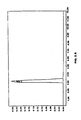
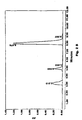
- albus J1074/17A12 resulted in similar chromatograms, with two new peaks ( Figure 2, B ) not detected in the extract from control S. albus J1074/pKC505 ( Figure 2, A ).
- the major peak eluted with same retention time than a sample of pure rebeccamycin ( Figure 2, C ) and showed rebeccamycin characteristic absorption spectrum.
- the minor peak while having a different retention time, also showed rebeccamycin-like absorption spectrum. This minor peak could correspond to a rebeccamycin degradation product, as sometimes it is detected in HPLC chromatograms of pure rebeccamycin samples.
- the compound corresponding to the major peak was purified as follows. Spores of strain S. albus J1074/14E8 were inoculated in TSB medium (tryptone soya broth, Oxoid) containing 25 ⁇ g/ml apramycin, followed by incubation for 24 hours at 30°C and 250 rpm. This seed culture was used to inoculate (at 2.5%, v/v) eight 2-liter Erlenmeyer flasks containing 400 ml of R5A medium. After incubation for 5 days at 30°C and 250 rpm, cells were harvested by centrifugation (12000 rpm, 30 min). The relevant compound was found largely associated with the mycelium; therefore, the supernatant was discarded.
- TSB medium tryptone soya broth, Oxoid
- the mycelium was extracted with 400 ml acetone, shaken for 2 hours, centrifuged, and the organic extract was evaporated in vacuo.
- This material was dissolved in 5 ml DMSO:acetone mixture (50:50) and chromatographed in a ⁇ Bondapak C18 radial compression cartridge (PrepPak Cartridge, 25 x 100 mm, Waters), via isocratic elution with acetonitrile:water (55:45) at 10 ml/min.
- the purified compound was collected after multiple injections, dried in vacuo and finally lyophilized.
- This compound was analyzed by MALDI-ToF mass spectrometry using a Voyager-DE STR Biospectrometry Workstation. As result of this, a major peak was obtained with a mass of 568 corresponding to rebeccamycin, and a secondary peak with a mass of 392 corresponding to rebeccamycin aglycon.
- Step 3 Determination and analysis of the nucleotide sequence of the gene cluster responsible for rebeccamycin biosynthesis.
- Example 5 Determination and analysis of the nucleotide sequence of the insert in cosmid 14E8.
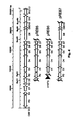
- Cosmid 14E8 was chosen for further study, and the complete DNA sequence of its insert was determined. Sequencing was performed on doublestranded DNA templates in pUC18, using the dideoxynucleotide chain termination method and the Cy5 AutoCycle Sequencing Kit (Amersham Pharmacia Biotech). Both DNA strands were sequenced, using an Alf-Express automatic DNA sequencer (Amersham Pharmacia Biotech). Computer-aided sequence analysis was carried out using software by the University of Wisconsin Genetics Computer Group (GCG). The determined sequence (SEQ ID NO:1) consisted of 25,681 nucleotides. Computer-aided analysis of this sequence revealed the presence of 16 complete open reading frames (ORFs) and two incomplete ORFs ( Figure 3 ).
- Step 4 Expression of certain genes from the mentioned gene cluster in a host organism, in order to produce rebeccamycin-derived indolocarbazoles.
- Plasmid pREB5 was made by inserting a DNA fragment encompassing nucleotides 7119 ( Bgl II) and 17783 ( Eco RI) of SEQ ID NO:1 into vector pWHM3 ( Kieser et al. Practical Streptomyces genetics, The John Innes Foundation, Norwich, UK, 2000 ). Plasmid pREB6 was constructed by inserting a DNA fragment encompassing nucleotides 8562 ( Bgl II) and 17783 ( Eco RI) of SEQ ID NO:1 into vector pEM4 ( Quirós et al. Mol. Microbiol. 28: 1177-1185, 1998 ).
- Plasmid pREB7 was made by inserting a DNA fragment encompassing nucleotides 7119 ( Bgl II) and 22241 ( Eco RI) of SEQ ID NO:1 into vector pWHM3 ( Kieser et al. Practical Streptomyces genetics, The John Innes Foundation, Norwich, UK, 2000 ).
- plasmid pREB6 contains an additional promoter, from the erythromycin resistance gene ( ermE ) of Saccharopolyspora erythraea , which would cause a constitutive expression of the included genes.
- ermE erythromycin resistance gene
- Example 7 Production of rebeccamycin intermediates in Streptomyces albus directed by plasmids pREB5, pREB6 and pREB7.
- Plasmids pREB5, pREB6, pREB7, and control pEM4 were separately introduced into Streptomyces albus J1074 by protoplast transformation, as described in Kieser et al. (Practical Streptomyces genetics, The John Innes Foundation, Norwich, UK, 2000 ). We chose again Streptomyces albus J1074 as host strain but many other actinomycetes can be utilized, due to the wide host range of the vectors used for construction of pREBS, pREB6 and pREB7. Transformants were grown and extracts were obtained that were analyzed by HPLC, under conditions described in Example 3.
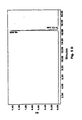
- Extracts obtained from transformants S . albus J1074/pREB5 did not appear to contain any indolocarbazole, and their HPLC chromatograms were essentially identical to those of extracts from control strain S. albus J1074/pEM4 ( Figure 5, A ).
Landscapes
- Chemical & Material Sciences (AREA)
- Life Sciences & Earth Sciences (AREA)
- Health & Medical Sciences (AREA)
- Organic Chemistry (AREA)
- Engineering & Computer Science (AREA)
- Genetics & Genomics (AREA)
- Wood Science & Technology (AREA)
- Zoology (AREA)
- Biotechnology (AREA)
- Molecular Biology (AREA)
- General Health & Medical Sciences (AREA)
- Biochemistry (AREA)
- General Engineering & Computer Science (AREA)
- Bioinformatics & Cheminformatics (AREA)
- Biomedical Technology (AREA)
- Microbiology (AREA)
- Analytical Chemistry (AREA)
- Proteomics, Peptides & Aminoacids (AREA)
- Physics & Mathematics (AREA)
- Biophysics (AREA)
- General Chemical & Material Sciences (AREA)
- Chemical Kinetics & Catalysis (AREA)
- Plant Pathology (AREA)
- Immunology (AREA)
- Animal Behavior & Ethology (AREA)
- Veterinary Medicine (AREA)
- Public Health (AREA)
- Medicinal Chemistry (AREA)
- Nuclear Medicine, Radiotherapy & Molecular Imaging (AREA)
- Pharmacology & Pharmacy (AREA)
- Micro-Organisms Or Cultivation Processes Thereof (AREA)
- Preparation Of Compounds By Using Micro-Organisms (AREA)
- Pharmaceuticals Containing Other Organic And Inorganic Compounds (AREA)
- Saccharide Compounds (AREA)
- Compounds Of Unknown Constitution (AREA)
Claims (23)
- Verfahren zur Herstellung von Indolocarbazolen unter Verwendung von Rebeccamycin-Biosynthesegenen, das die folgenden Schritte umfasst:(a) Isolierung eines DNA-Fragments aus dem Genom eines Indolocarbazolproduzierenden Organismus wie Saccharothrix aerocolonigenes, umfassend:(i) eine Nukleotidsequenz wie in SEQ ID NO: 1 gezeigt; oder(ii) eine Nukleotidsequenz, die komplementär zu SEQ ID NO: 1 ist; oder(iii) eine Nukleotidsequenz, die gegenüber SEQ ID NO:1 degeneriert ist.(b) Einbau des besagten DNA-Fragments in einen für die Wirtszellen geeigneten Vektor.(c) Einbringen des besagten rekombinanten Vektors in Wirtszellen in einer Weise, dass er stabil gehalten werden kann.(d) Züchtung der erhaltenen Wirtszellen in einem Kulturmedium, das für die Produktion von Indolocarbazol geeignet ist.
- Nukleinsäuremolekül, das(i) eine Nukleotidsequenz wie in SEQ ID NO: 1 gezeigt; oder(ii) eine Nukleotidsequenz, die komplementär zu SEQ ID NO: 1 ist; oder(iii) eine Nukleotidsequenz, die gegenüber SEQ ID NO:1 degeneriert ist, umfasst, wobei besagte Sequenz für eine Sequenz kodiert oder komplementär dazu ist, die für mindestens ein biosynthetisches Enzym von Rebeccamycin kodiert.
- Nukleinsäuremolekül gemäß Anspruch 2, das für ein oder mehrere Polypeptide kodiert oder ein oder mehrere genetische Elemente umfasst, die eine funktionelle Aktivität bei der Synthese einer Indolocarbazol-Struktur oder eines Indolocarbazol-Vorläufers aufweisen.
- Nukleinsäuremolekül gemäß Anspruch 3, wobei besagte Indolocarbazol-Struktur Rebeccamycin oder ein Rbeccamycin-Derivat oder ein Rebeccamycin-Vorläufer ist.
- Nukleinsäuremolekül gemäß Anspruch 2, wobei besagtes Molekül ein oder mehrere Gene und/oder eine oder mehrere regulatorische Sequenzen und/oder nicht-kodierende oder kodierende funktionelle genetische Elemente eines Biosynthesegenclusters von Indolocarbazol umfasst.
- Nukleinsäuremolekül gemäß Anspruch 2, umfassend eine Nukleotidsequenz, die für eine oder mehrere Aminosäuresequenzen ausgewählt aus SEQ ID NO:2 bis 19 kodiert, oder eine Nukleotidsequenz, die komplementär dazu ist oder ihr gegenüber degeneriert ist.
- Polypeptid, das von einem Nukleinsäuremolekül gemäß irgendeinem der Ansprüche 2 bis 6 kodiert wird und eine funktionelle Aktivität bei der Synthese einer Indolocarbazol-Struktur oder eines Indolocarbazol-Vorläufers aufweist.
- Polypeptid gemäß Anspruch 7, das eine Aminosäuresequenz, wie in irgendeiner oder mehreren der SEQ ID NO:2 bis 19 gezeigt, umfasst und eine funktionelle Aktivität bei der Synthese einer Indolocarbazol-Struktur aufweist.
- Vektor, der ein Nukleinsäuremolekül gemäß irgendeinem der Ansprüche 2 bis 6 umfasst.
- Vektor gemäß Anspruch 9, der als Cosmid 14E8 bezeichnet wird und im Escherichia coli Stamm ED8767/14E8 unter der Zugangsnummer CECT 5984 deponiert ist.
- Nicht humane Wirtszelle oder transgener mikrobiologischer Organismus, der ein Nukleinsäuremolekül gemäß irgendeinem der Ansprüche 2 bis 6 umfasst.
- Nicht humane Wirtszelle oder transgener mikrobiologischer Organismus, der einen Vektor gemäß irgendeinem der Ansprüche 9 oder 10 umfasst.
- Nicht humane Wirtszellen gemäß Anspruch 11 oder 12, bestehend aus einem reinen Stamm von Streptomyces spp. oder aus dessen Mutanten oder dessen transformierten Derivaten.
- Nicht humane Wirtszellen gemäß Anspruch 13, bestehend aus einem reinen Stamm von Streptomyces albus oder aus dessen Mutanten oder dessen transformierten Derivaten.
- Nicht humane Wirtszellen gemäß irgendeinem der Ansprüche 11 bis 14, die Resistenz gegenüber Rebeccamycin exprimieren.
- Nicht humane Wirtszellen gemäß irgendeinem der Ansprüche 11 bis 14, die Resistenz gegenüber ein Indolocarbazol exprimieren.
- Verwendung eines Nukleinsäuremoleküls gemäß irgendeinem der Ansprüche 2 bis 6 in der Herstellung von Indolocarbazolen oder Indolocarbazol-Derivaten oder Indolocarbazol-Vorläufern.
- Verwendung eines Nukleinsäuremoleküls gemäß irgendeinem der Ansprüche 2 bis 6 in der Herstellung von Rebeccamycin oder Rebeccamycin-Derivaten oder Rebeccamycin-Vorläufern.
- Verwendung eines Nukleinsäuremoleküls gemäß irgendeinem der Ansprüche 2 bis 6 zur Steigerung der Produktion eines Indolocarbazols.
- Verwendung eines Nukleinsäuremoleküls gemäß irgendeinem der Ansprüche 2 bis 6 zur Gewinnung von nicht humanen Wirtszellen, die Resistenz gegenüber eines Indolocarbazols exprimieren.
- Verwendung eines Nukleinsäuremoleküls gemäß irgendeinem der Ansprüche 2 bis 6 in PCR-Techniken, die auf die Isolierung von Biosynthesegenen des Indolocarbazols ausgerichtet sind.
- Verwendung von nicht humanen Wirtszellen oder transgenen mikrobiologischen Organismen gemäß irgendeinem der Ansprüche 11 bis 16 in der Herstellung von Indolocarbazolen oder Indolocarbazol-Derivaten oder Indolocarbazol-Vorläufern.
- Verwendung von nicht humanen Wirtszellen oder transgenen mikrobiologischen Organismen gemäß irgendeinem der Ansprüche 11 bis 16 in der Herstellung von Rebeccamycin oder Rebeccamycin-Derivaten oder Rebeccamycin-Vorläufern.
Applications Claiming Priority (3)
| Application Number | Priority Date | Filing Date | Title |
|---|---|---|---|
| ES200102312 | 2001-10-19 | ||
| ES200102312A ES2255331B1 (es) | 2001-10-19 | 2001-10-19 | Procedimiento de obtencion de indolocarbazoles mediante la utilizacion de genes biosinteticos de rebecamicina. |
| PCT/ES2002/000492 WO2003033706A1 (es) | 2001-10-19 | 2002-10-17 | Procedimiento de obtencion de indolocarbazoles mediante la utilizacion de genes biosinteticos de rebecamicina |
Publications (2)
| Publication Number | Publication Date |
|---|---|
| EP1443113A1 EP1443113A1 (de) | 2004-08-04 |
| EP1443113B1 true EP1443113B1 (de) | 2010-08-18 |
Family
ID=8499217
Family Applications (1)
| Application Number | Title | Priority Date | Filing Date |
|---|---|---|---|
| EP02801342A Expired - Lifetime EP1443113B1 (de) | 2001-10-19 | 2002-10-17 | Verfahren zur gewinnung von indolocarbazolen mit hilfe von rebeccamycin-biosynthesegenen |
Country Status (7)
| Country | Link |
|---|---|
| US (1) | US8207321B2 (de) |
| EP (1) | EP1443113B1 (de) |
| AT (1) | ATE478149T1 (de) |
| DE (1) | DE60237382D1 (de) |
| ES (2) | ES2255331B1 (de) |
| MX (1) | MXPA04003701A (de) |
| WO (1) | WO2003033706A1 (de) |
Families Citing this family (7)
| Publication number | Priority date | Publication date | Assignee | Title |
|---|---|---|---|---|
| DK1826267T3 (da) * | 2006-02-22 | 2012-07-23 | Brain Biotechnology Res & Information Network Ag | Ny halogenase |
| ES2326459B1 (es) * | 2008-04-08 | 2010-05-28 | Universidad De Oviedo | Indolocarbazoles glicosilados, su procedimiento de obtencion y sus usos. |
| WO2015081228A2 (en) * | 2013-11-27 | 2015-06-04 | The Universtiy Of Chicago | Directed evolution of a regioselective halogenase for increased thermostability |
| CN107674105B (zh) * | 2017-09-27 | 2020-05-22 | 杭州科兴生物化工有限公司 | 吲哚咔唑类化合物及其制备方法和应用 |
| AU2020351033A1 (en) * | 2019-09-16 | 2022-04-07 | Danmarks Tekniske Universitet | Yeast cells and methods for production of tryptophan derivatives |
| CN112852899A (zh) * | 2021-03-17 | 2021-05-28 | 百缮药业(苏州)有限公司 | 一种星孢菌素中间体K252c及其衍生物的催化合成体系及催化合成方法 |
| CN116716233A (zh) * | 2023-05-06 | 2023-09-08 | 国药集团健康产业研究院有限公司 | 一种生产星形孢菌素的基因工程菌及其制备方法 |
Family Cites Families (2)
| Publication number | Priority date | Publication date | Assignee | Title |
|---|---|---|---|---|
| JP3707075B2 (ja) * | 1994-06-13 | 2005-10-19 | 萬有製薬株式会社 | グリコシルトランスフェラーゼをコードする遺伝子及びその用途 |
| US6210935B1 (en) * | 1995-08-30 | 2001-04-03 | Novartis Ag | Staurosporin biosynthesis gene clusters |
-
2001
- 2001-10-19 ES ES200102312A patent/ES2255331B1/es not_active Expired - Fee Related
-
2002
- 2002-10-17 DE DE60237382T patent/DE60237382D1/de not_active Expired - Lifetime
- 2002-10-17 US US10/493,000 patent/US8207321B2/en not_active Expired - Fee Related
- 2002-10-17 MX MXPA04003701A patent/MXPA04003701A/es not_active Application Discontinuation
- 2002-10-17 EP EP02801342A patent/EP1443113B1/de not_active Expired - Lifetime
- 2002-10-17 AT AT02801342T patent/ATE478149T1/de not_active IP Right Cessation
- 2002-10-17 ES ES02801342T patent/ES2350685T3/es not_active Expired - Lifetime
- 2002-10-17 WO PCT/ES2002/000492 patent/WO2003033706A1/es not_active Ceased
Also Published As
| Publication number | Publication date |
|---|---|
| ATE478149T1 (de) | 2010-09-15 |
| ES2255331B1 (es) | 2007-08-16 |
| ES2255331A1 (es) | 2006-06-16 |
| MXPA04003701A (es) | 2005-04-08 |
| DE60237382D1 (de) | 2010-09-30 |
| US8207321B2 (en) | 2012-06-26 |
| US20080004326A1 (en) | 2008-01-03 |
| WO2003033706A1 (es) | 2003-04-24 |
| EP1443113A1 (de) | 2004-08-04 |
| ES2350685T3 (es) | 2011-01-26 |
Similar Documents
| Publication | Publication Date | Title |
|---|---|---|
| Wiest et al. | Identification of peptaibols from Trichoderma virens and cloning of a peptaibol synthetase | |
| Omura et al. | Genome sequence of an industrial microorganism Streptomyces avermitilis: deducing the ability of producing secondary metabolites. | |
| EP2271666B1 (de) | Nrps-pks gencluster und dessen manipulation und verwendung | |
| Olano et al. | A two-plasmid system for the glycosylation of polyketide antibiotics: bioconversion of ε-rhodomycinone to rhodomycin D | |
| CN110305881B (zh) | 一种聚酮类化合物neoenterocins的生物合成基因簇及其应用 | |
| Stevenson et al. | Metathramycin, a new bioactive aureolic acid discovered by heterologous expression of a metagenome derived biosynthetic pathway | |
| KR20050086873A (ko) | 매크로라이드계 화합물의 제조 방법 | |
| Xu et al. | Discovery and biosynthesis of bosamycins from Streptomyces sp. 120454 | |
| EP0769555B1 (de) | Glycosyltransferase kodierendes gen und seine verwendung | |
| US8030325B2 (en) | Biosynthetic gene cluster for the production of a complex polyketide | |
| US8207321B2 (en) | Method of obtaining idolocarbazoles using biosynthetic rebeccamycin genes | |
| Praseuth et al. | Complete sequence of biosynthetic gene cluster responsible for producing triostin A and evaluation of quinomycin‐type antibiotics from Streptomyces triostinicus | |
| CN103215282B (zh) | 越野他汀的生物合成基因簇及其应用 | |
| Kim et al. | Genetic organization of the biosynthetic gene cluster for the indolocarbazole K-252a in Nonomuraea longicatena JCM 11136 | |
| Sun et al. | Identification of a gene cluster encoding meilingmycin biosynthesis among multiple polyketide synthase contigs isolated from Streptomyces nanchangensis NS3226 | |
| Heo et al. | Elucidation of the di-c-glycosylation steps during biosynthesis of the antitumor antibiotic, kidamycin | |
| EP1137796A2 (de) | Gene aus -i(micromonospora echinospora), welche für enzyme der calicheamicin-biosynthese kodieren und eigenresistenz dagegen | |
| CN101962647B (zh) | 诺卡噻唑菌素的生物合成基因簇及其应用 | |
| EP2297181B1 (de) | Synthetische pfadenzyme zur herstellung von argyrinen | |
| Heo et al. | di-c-glycosylation steps during | |
| Praseuth et al. | APPLIED CELLULAR PHYSIOLOGY AND METABOLIC ENGINEERING | |
| KR100834257B1 (ko) | 프라디마이신의 생합성효소인 o―메틸트랜스퍼라제의유전자가 파괴된 액티노마두라 히비스카 변이균주 및 그생성물인 디메틸프라디마이신 | |
| JP2005506050A (ja) | カリケマイシンの生合成およびそれに対する自己耐性をコードするミクロモノスポラ・エチノスポラ(Micromonosporaechinospora)遺伝子 | |
| JP2004173537A (ja) | カナマイシン生合成遺伝子 | |
| Shuai | Discovery of natural products through heterologous expression of biosynthetic gene clusters in Streptomyces albus |
Legal Events
| Date | Code | Title | Description |
|---|---|---|---|
| PUAI | Public reference made under article 153(3) epc to a published international application that has entered the european phase |
Free format text: ORIGINAL CODE: 0009012 |
|
| 17P | Request for examination filed |
Effective date: 20040510 |
|
| AK | Designated contracting states |
Kind code of ref document: A1 Designated state(s): AT BE BG CH CY CZ DE DK EE ES FI FR GB GR IE IT LI LU MC NL PT SE SK TR |
|
| AX | Request for extension of the european patent |
Extension state: AL LT LV MK RO SI |
|
| 17Q | First examination report despatched |
Effective date: 20040803 |
|
| RIN1 | Information on inventor provided before grant (corrected) |
Inventor name: SANCHEZ REILLO, CESARDEPARTAM. DE BIOL. FUNCIONAL Inventor name: SALAS FERNANDEZDEPARTAM. DE BIOLOGIA FUNCIONAL Inventor name: FERNANDEZ BRANA, ALFREDO DEPT. DE BIOL. FUNCIONAL Inventor name: MENDEZ FERNANDEZ, CARMENDEPT. DE BIOL. FUNCIONAL |
|
| 17Q | First examination report despatched |
Effective date: 20040803 |
|
| GRAP | Despatch of communication of intention to grant a patent |
Free format text: ORIGINAL CODE: EPIDOSNIGR1 |
|
| GRAS | Grant fee paid |
Free format text: ORIGINAL CODE: EPIDOSNIGR3 |
|
| GRAA | (expected) grant |
Free format text: ORIGINAL CODE: 0009210 |
|
| AK | Designated contracting states |
Kind code of ref document: B1 Designated state(s): AT BE BG CH CY CZ DE DK EE ES FI FR GB GR IE IT LI LU MC NL PT SE SK TR |
|
| AX | Request for extension of the european patent |
Extension state: AL LT LV MK RO SI |
|
| REG | Reference to a national code |
Ref country code: GB Ref legal event code: FG4D |
|
| REG | Reference to a national code |
Ref country code: CH Ref legal event code: EP |
|
| REG | Reference to a national code |
Ref country code: IE Ref legal event code: FG4D |
|
| REF | Corresponds to: |
Ref document number: 60237382 Country of ref document: DE Date of ref document: 20100930 Kind code of ref document: P |
|
| REG | Reference to a national code |
Ref country code: NL Ref legal event code: VDEP Effective date: 20100818 |
|
| LTIE | Lt: invalidation of european patent or patent extension |
Effective date: 20100818 |
|
| REG | Reference to a national code |
Ref country code: ES Ref legal event code: FG2A Effective date: 20110114 |
|
| PG25 | Lapsed in a contracting state [announced via postgrant information from national office to epo] |
Ref country code: AT Free format text: LAPSE BECAUSE OF FAILURE TO SUBMIT A TRANSLATION OF THE DESCRIPTION OR TO PAY THE FEE WITHIN THE PRESCRIBED TIME-LIMIT Effective date: 20100818 Ref country code: FI Free format text: LAPSE BECAUSE OF FAILURE TO SUBMIT A TRANSLATION OF THE DESCRIPTION OR TO PAY THE FEE WITHIN THE PRESCRIBED TIME-LIMIT Effective date: 20100818 |
|
| PG25 | Lapsed in a contracting state [announced via postgrant information from national office to epo] |
Ref country code: PT Free format text: LAPSE BECAUSE OF FAILURE TO SUBMIT A TRANSLATION OF THE DESCRIPTION OR TO PAY THE FEE WITHIN THE PRESCRIBED TIME-LIMIT Effective date: 20101220 Ref country code: BG Free format text: LAPSE BECAUSE OF FAILURE TO SUBMIT A TRANSLATION OF THE DESCRIPTION OR TO PAY THE FEE WITHIN THE PRESCRIBED TIME-LIMIT Effective date: 20101118 Ref country code: CY Free format text: LAPSE BECAUSE OF FAILURE TO SUBMIT A TRANSLATION OF THE DESCRIPTION OR TO PAY THE FEE WITHIN THE PRESCRIBED TIME-LIMIT Effective date: 20100818 |
|
| PG25 | Lapsed in a contracting state [announced via postgrant information from national office to epo] |
Ref country code: GR Free format text: LAPSE BECAUSE OF FAILURE TO SUBMIT A TRANSLATION OF THE DESCRIPTION OR TO PAY THE FEE WITHIN THE PRESCRIBED TIME-LIMIT Effective date: 20101119 Ref country code: BE Free format text: LAPSE BECAUSE OF FAILURE TO SUBMIT A TRANSLATION OF THE DESCRIPTION OR TO PAY THE FEE WITHIN THE PRESCRIBED TIME-LIMIT Effective date: 20100818 Ref country code: NL Free format text: LAPSE BECAUSE OF FAILURE TO SUBMIT A TRANSLATION OF THE DESCRIPTION OR TO PAY THE FEE WITHIN THE PRESCRIBED TIME-LIMIT Effective date: 20100818 Ref country code: SE Free format text: LAPSE BECAUSE OF FAILURE TO SUBMIT A TRANSLATION OF THE DESCRIPTION OR TO PAY THE FEE WITHIN THE PRESCRIBED TIME-LIMIT Effective date: 20100818 |
|
| PG25 | Lapsed in a contracting state [announced via postgrant information from national office to epo] |
Ref country code: DK Free format text: LAPSE BECAUSE OF FAILURE TO SUBMIT A TRANSLATION OF THE DESCRIPTION OR TO PAY THE FEE WITHIN THE PRESCRIBED TIME-LIMIT Effective date: 20100818 |
|
| PG25 | Lapsed in a contracting state [announced via postgrant information from national office to epo] |
Ref country code: IT Free format text: LAPSE BECAUSE OF FAILURE TO SUBMIT A TRANSLATION OF THE DESCRIPTION OR TO PAY THE FEE WITHIN THE PRESCRIBED TIME-LIMIT Effective date: 20100818 Ref country code: CZ Free format text: LAPSE BECAUSE OF FAILURE TO SUBMIT A TRANSLATION OF THE DESCRIPTION OR TO PAY THE FEE WITHIN THE PRESCRIBED TIME-LIMIT Effective date: 20100818 Ref country code: SK Free format text: LAPSE BECAUSE OF FAILURE TO SUBMIT A TRANSLATION OF THE DESCRIPTION OR TO PAY THE FEE WITHIN THE PRESCRIBED TIME-LIMIT Effective date: 20100818 Ref country code: MC Free format text: LAPSE BECAUSE OF NON-PAYMENT OF DUE FEES Effective date: 20101031 Ref country code: EE Free format text: LAPSE BECAUSE OF FAILURE TO SUBMIT A TRANSLATION OF THE DESCRIPTION OR TO PAY THE FEE WITHIN THE PRESCRIBED TIME-LIMIT Effective date: 20100818 |
|
| REG | Reference to a national code |
Ref country code: CH Ref legal event code: PL |
|
| PLBE | No opposition filed within time limit |
Free format text: ORIGINAL CODE: 0009261 |
|
| STAA | Information on the status of an ep patent application or granted ep patent |
Free format text: STATUS: NO OPPOSITION FILED WITHIN TIME LIMIT |
|
| 26N | No opposition filed |
Effective date: 20110519 |
|
| PG25 | Lapsed in a contracting state [announced via postgrant information from national office to epo] |
Ref country code: CH Free format text: LAPSE BECAUSE OF NON-PAYMENT OF DUE FEES Effective date: 20101031 Ref country code: LI Free format text: LAPSE BECAUSE OF NON-PAYMENT OF DUE FEES Effective date: 20101031 |
|
| REG | Reference to a national code |
Ref country code: DE Ref legal event code: R097 Ref document number: 60237382 Country of ref document: DE Effective date: 20110519 |
|
| PG25 | Lapsed in a contracting state [announced via postgrant information from national office to epo] |
Ref country code: IE Free format text: LAPSE BECAUSE OF NON-PAYMENT OF DUE FEES Effective date: 20101017 |
|
| PG25 | Lapsed in a contracting state [announced via postgrant information from national office to epo] |
Ref country code: LU Free format text: LAPSE BECAUSE OF NON-PAYMENT OF DUE FEES Effective date: 20101017 |
|
| PG25 | Lapsed in a contracting state [announced via postgrant information from national office to epo] |
Ref country code: TR Free format text: LAPSE BECAUSE OF FAILURE TO SUBMIT A TRANSLATION OF THE DESCRIPTION OR TO PAY THE FEE WITHIN THE PRESCRIBED TIME-LIMIT Effective date: 20100818 |
|
| REG | Reference to a national code |
Ref country code: FR Ref legal event code: PLFP Year of fee payment: 14 |
|
| REG | Reference to a national code |
Ref country code: FR Ref legal event code: PLFP Year of fee payment: 15 |
|
| REG | Reference to a national code |
Ref country code: FR Ref legal event code: PLFP Year of fee payment: 16 |
|
| REG | Reference to a national code |
Ref country code: FR Ref legal event code: PLFP Year of fee payment: 17 |
|
| PGFP | Annual fee paid to national office [announced via postgrant information from national office to epo] |
Ref country code: DE Payment date: 20191021 Year of fee payment: 18 |
|
| PGFP | Annual fee paid to national office [announced via postgrant information from national office to epo] |
Ref country code: FR Payment date: 20191028 Year of fee payment: 18 |
|
| PGFP | Annual fee paid to national office [announced via postgrant information from national office to epo] |
Ref country code: GB Payment date: 20191021 Year of fee payment: 18 |
|
| REG | Reference to a national code |
Ref country code: DE Ref legal event code: R119 Ref document number: 60237382 Country of ref document: DE |
|
| GBPC | Gb: european patent ceased through non-payment of renewal fee |
Effective date: 20201017 |
|
| PG25 | Lapsed in a contracting state [announced via postgrant information from national office to epo] |
Ref country code: FR Free format text: LAPSE BECAUSE OF NON-PAYMENT OF DUE FEES Effective date: 20201031 Ref country code: DE Free format text: LAPSE BECAUSE OF NON-PAYMENT OF DUE FEES Effective date: 20210501 |
|
| PG25 | Lapsed in a contracting state [announced via postgrant information from national office to epo] |
Ref country code: GB Free format text: LAPSE BECAUSE OF NON-PAYMENT OF DUE FEES Effective date: 20201017 |
|
| PGFP | Annual fee paid to national office [announced via postgrant information from national office to epo] |
Ref country code: ES Payment date: 20211031 Year of fee payment: 20 |
|
| REG | Reference to a national code |
Ref country code: ES Ref legal event code: FD2A Effective date: 20221028 |
|
| PG25 | Lapsed in a contracting state [announced via postgrant information from national office to epo] |
Ref country code: ES Free format text: LAPSE BECAUSE OF EXPIRATION OF PROTECTION Effective date: 20221018 |