EP1443404A2 - Résolution non-spéculative de conflicts répartis pour un protocol de cohérence d'antémémoire - Google Patents
Résolution non-spéculative de conflicts répartis pour un protocol de cohérence d'antémémoire Download PDFInfo
- Publication number
- EP1443404A2 EP1443404A2 EP03257787A EP03257787A EP1443404A2 EP 1443404 A2 EP1443404 A2 EP 1443404A2 EP 03257787 A EP03257787 A EP 03257787A EP 03257787 A EP03257787 A EP 03257787A EP 1443404 A2 EP1443404 A2 EP 1443404A2
- Authority
- EP
- European Patent Office
- Prior art keywords
- node
- peer
- copy
- data
- requested data
- Prior art date
- Legal status (The legal status is an assumption and is not a legal conclusion. Google has not performed a legal analysis and makes no representation as to the accuracy of the status listed.)
- Withdrawn
Links
Images








Classifications
-
- G—PHYSICS
- G06—COMPUTING OR CALCULATING; COUNTING
- G06F—ELECTRIC DIGITAL DATA PROCESSING
- G06F12/00—Accessing, addressing or allocating within memory systems or architectures
- G06F12/02—Addressing or allocation; Relocation
- G06F12/08—Addressing or allocation; Relocation in hierarchically structured memory systems, e.g. virtual memory systems
- G06F12/0802—Addressing of a memory level in which the access to the desired data or data block requires associative addressing means, e.g. caches
- G06F12/0806—Multiuser, multiprocessor or multiprocessing cache systems
- G06F12/0815—Cache consistency protocols
- G06F12/0831—Cache consistency protocols using a bus scheme, e.g. with bus monitoring or watching means
-
- G—PHYSICS
- G06—COMPUTING OR CALCULATING; COUNTING
- G06F—ELECTRIC DIGITAL DATA PROCESSING
- G06F12/00—Accessing, addressing or allocating within memory systems or architectures
- G06F12/02—Addressing or allocation; Relocation
- G06F12/08—Addressing or allocation; Relocation in hierarchically structured memory systems, e.g. virtual memory systems
- G06F12/0802—Addressing of a memory level in which the access to the desired data or data block requires associative addressing means, e.g. caches
- G06F12/0806—Multiuser, multiprocessor or multiprocessing cache systems
- G06F12/0813—Multiuser, multiprocessor or multiprocessing cache systems with a network or matrix configuration
Definitions
- the invention relates to cache memories. Most particularly, the invention relates to distributed conflict resolution in a multi-cache multiprocessor system.
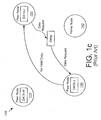
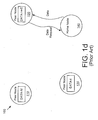
- Figures 1a through 1e provide a conceptual illustration of a conflict condition in a multi-node system.
- Nodes 110, 120 and 130 are peer nodes that can store a copy of the requested data (e.g., a cache line) in cache memory.
- Home node 140 is the Home (H) node for the requested data.
- peer nodes 110 and 120 store an invalid copy, or no copy, of the requested data
- peer node 130 stores a modified copy of the requested data that has not been written back to memory.
- the Home node stores the original copy of the data in memory or modified versions of the data when the modifications are written back to memory.
- peer node 120 transmits a Data Request message to request a copy of a block of data, for example, a cache line.
- the Data Request message is transmitted to peer node 110 and to peer node 130.
- the Data Request message to peer node 130 is delayed. The delay can be caused, for example, by lack of available bandwidth, buffering considerations, etc.
- Peer node 110 responds to the Data Request message from peer node 120 with a No Valid Copy message, which indicates to peer node 120 that peer node 110 does not have a valid copy of the requested data. At some time after peer node 120 transmits Data Request messages, Peer node 110 transmits Data Request messages to peer nodes 120 and 130, as illustrated in Figure 1c, requesting the same data as was requested by peer node 120.
- Peer node 120 provides a No Valid Copy message to peer node 110 in response to the Data Request message.
- Peer node 130 provides the requested data to peer node 110.
- the copy of the data, if any, maintained by peer node 130 is marked invalid and the copy of the data stored by peer node 110 is marked Modified.
- peer node 130 receives the delayed Data Request message from peer node 120, as illustrated in Figure 1c.
- peer node 130 provides a No Valid Copy message to peer node 120. Note that the state of the data stored by peer node 130 changed from the time of the original Data Request message to the time the peer node 130 responds to the Data Request message.
- peer nodes 110 and 130 respond to the Data Request message from peer node 120 with No Valid Copy messages
- peer node 120 finds no valid cached copy of the requested data, requests a copy of the data from home node 140.
- peer node transmits a Read message to home node 140.
- Home node 140 retrieves the requested data from memory and provides the data to peer node 120.
- Peer node 120 then stores the requested data in the Exclusive state.
- the sequence of messages illustrated in Figures 1a through 1e result in two incompatible copies of a data line.
- peer node 110 stores a copy of the data in the Modified state
- peer node 120 stores a copy of the data in the Exclusive state.
- the copy stored by peer node 120 is not exclusive to peer node 120.
- multi-node systems can result in incompatible copies of data under certain circumstances unless a mechanism is provided to resolve cache conflicts.
- Port Read Line This is a request for a copy of a data segment such as, for example, a cache line.
- Port Read Invalidate Line This is a request for a copy of a data segment where the provider node's copy of the data is invalidated. This message can also be referred to as a "request for ownership.”
- Port Write Line PWL: This message causes data (e.g., a modified cache line) to be written to memory.
- Port Invalidate Line (PIL): This message causes the state of designated data to change from Shared to Exclusive.
- Port Write Invalidate Line PWIL: This message causes data to be written to memory and the target copy of the data to be invalidated.
- IACK Invalid State Acknowledgement
- SACK Shared State Acknowledgement
- DACK Acknowledgement of Data Received
- the target node for the DACK message is the forwarding node included in the CNCL message.
- a node receiving the transferred data or memory data from the home node does not respond to the sending node.
- Conflict This message indicates that there is a copending request for the requested cache line.
- Data(Conflicts) This message is used to forward data and lists conflicts, if any. The conflict list is empty when data is forwarded or when the home node sends memory data to the first owner. When data is transferred, the sending node attaches a list of conflicts. The receiving node uses the list to send CNFL responses to matching requests stored in a buffer.
- This message includes the requested data and can indicate the state of the data (M/E/F) to be used by the Requesting node.
- Acknowledge (ACK) This message indicates that the requested data has been sent to the Requesting node. When the home node sends an ACK message, the current epoch is terminated.
- Transfer (XFR) This message causes the receiving node to transfer data to the node indicated in the message. The home node sends this message to the current owner of requested data when the home node is informed of a conflict condition requiring that the current owner of the data transfer the data to the target node.
- a XFRI message is sent instead of a XFR message if the home node determines that an unresolved conflicting request is a PRIL or PWIL message, meaning that the current owner must invalidate the line when initiating the data transfer.
- the first node in an epoch to send a CNCL message is the current owner.
- An epoch is the period between a first request for data and the resolution of all conflicting requests for the data. If the home node sends data to a node from memory, that node is the current owner. Sending a XFR/XFRI message causes the target node to become the current owner.
- the target node is selected from a list of conflicts provided to the home node in a READ or a CNCL message.
- Target nodes are selected from nodes from which the home node has received a READ message.
- the home node waits until a READ message comes from B or C to send a XFR/XFRI message to A to cause A to forward the data to the node (B or C) that sent the READ message.
- the home node then waits for the third node to sent a READ message before sending a XFR/XFRI message causing the data to be sent to the third node.
- each valid copy of a cache line is held by a unit that must recognize its responsibility whenever any node requests permission to access the cache line in a new way.
- the location of this node is generally unknown to requesting nodes--the requesting nodes simply broadcast the address of a requested cache line, along with permissions needed, and all nodes that might have a copy must respond to assure that consistency is maintained, with the node containing the uncached copy responding if no other (peer) node responds.
- a node In order to access a cache line in a new way, a node must communicate with the node containing the directory, which is usually the same node containing the uncached data repository, thus allowing the responding node to provide the data when the main storage copy is valid. Such a node is referred to as the Home node.
- the directory may be distributed in two ways. First, main storage data (the uncached repository) is often distributed among nodes, with the directory distributed in the same way. Secondly, the meta-information itself may be distributed, keeping at the Home node as little information as whether the line is cached, and if so, where a single copy resides.
- Snooping schemes rely on broadcast, because there is no single place where the meta-information is held, so all nodes must be notified of each query, each node being responsible for doing its part to assure that coherence is maintained. This includes intervention messages, informing the Home node not to respond when another node is providing the data.
- Snooping schemes have the advantage that responses can be direct and quick, but do not scale well because all nodes are required to observe all queries.
- Directory schemes are more scalable, but require more complex responses, often involving three nodes in point-to-point communications.
- the basic MESIF protocol described herein provides a snooping-like protocol without the limitations of a single, serializing bus. Like a snooping cache protocol, MESIF relies on nodes with cached copies of data to maintain coherence. The use of point-to-point links rather than a synchronous, centralized broadcast introduces the problem of time-warp--the fact that events appear to occur in a different order from the viewpoint of different node. As described in greater detail below, the MESIF protocol handles time-warp, recognizing when potential errors could result and making sure that they are handled correctly.
- MESIF achieves the low latency associated with snooping protocols, acquiring a cacheable copy of the data in most cases in the minimum possible latency: a single roundtrip request-response.
- the basic MESIF protocol involves broadcasting an initial request to all peer nodes as well as the Home node. If a copy is cached in state E, F, or M, it is included in the response. A second message is then sent to the Home node, informing it that the request has been satisfied. If the requested line is uncached, or if only S-state copies exist, the second request sent to the Home node is used to confirm the previous request, which the Home node may have by now fetched from its memory. In either case, the Home node must respond to the second request (and to the first, though they can sometimes be combined) for purposes of synchronization and conflict resolution. Note that the Home node may have one or more caches, so it may respond to the initial request just like any other node.
- conflicts are handled in a distributed way.
- the timewarp problem makes it difficult to detect conflicts, because individual requests can be delayed for an arbitrarily long time.
- a conflict will be detected, however, if each node monitors for conflicts after making a request. Both nodes mayor may not detect a conflict, but at least one will. Because all nodes must respond to a broadcast request either by supplying the data or indicating they do not have a copy (or, under some circumstances, are not supplying the copy they have), the response can include an indication of a conflict, so conflicting nodes will detect the conflict.
- Complications arise from allowing a node to use the data as soon as the data arrives rather than waiting for all responses.
- a node receiving a copy of the data is allowed to use the data internally immediately upon receipt, but may not make the effects of using the data visible to the rest of the system until the node has received a confirmation from Home.
- the confirmation may also include instructions that the node must forward its copy to another node, and perhaps evict the node from its own cache.
- a node when a node responds to a request from another node by supplying the cached data, the node must defer all other requests it receives for the same cache line until the node receives a response from the Home node acknowledging the fact that the node forwarded the data, thus assuring that all nodes observe the same order of transfer of the (possibly writable) cache line.
- the Home node is the respository for the uncached data, but the home node also may have a processor generating requests and include one or more caches. Like any other node, when the home nodes processor misses, the home node must broadcast requests to all other (peer) nodes, and the home node must handle the request internally as it would any other request arriving for the Home node. Note that this is a special case in that the home node does not explicitly send messages to itself (the Home node). In addition, when an external request arrives for data that is cached locally, the Home node must respond in a way to assure that a later response from the Home node is not ambiguous. That is, the home node may respond to the initial request by supplying the data, but the home node must also respond to the second request as the Home node.
- Variants of the protocol allow the Home node to respond with the uncached copy of the data without knowing whether this data is valid, leaving it to the requesting node and the second response from the Home node to sort out the case where data was supplied inappropriately.
- a cache coherency protocol requires conflict resolution in order to provide orderly changes of state for the various cache lines or other blocks of data.
- a conflict resolution technique described herein provides sequential consistency, which means that only a single, modifiable copy of a cache line can be present at any time, and that no copy of a cache line can be modified while other copies are readable.
- Conflicting requests to modify a copy of a cache line must, therefore, be resolved in order to maintain sequential consistency.
- a conflict is resolved using the property of time. That is, regardless of delays, two nodes cannot both request a cache line before the other. Thus, conflicts can be detected by at least one of the conflicting requestors if each node monitors all requests after that node has made its own request.
- a line is in the Exclusive (E), Modified (M) or Forward (F) state
- conflicts are resolved at the node holding the unique copy.
- the winner of the conflict resolution, and possibly the losers report the conflict to the home node, which pairs conflict reports and issues forwarding instructions to assure that all requesting nodes eventually receive the requested data.
- the home node for the requested cache line if a requested cache line is either uncached or present only in the Shared (S) state, the home node for the requested cache line provides a copy of the requested data and resolves conflicts.
- the distributed conflict resolution described herein is part of a cache protocol referred to as the MESIF protocol in which one of five states is associated with a cached copy of a cache line (Modified, Exclusive, Shared, Invalid, Forward).
- MESIF protocol in which one of five states is associated with a cached copy of a cache line (Modified, Exclusive, Shared, Invalid, Forward).
- a blackout period after all responses for a request until an acknowledgement message has been received from the home node allows all conflicting nodes to be aware of conflicts in which the nodes are involved. The blackout period does not limit use of the data in the cache, but does prevent the data from being propagated to other caches.
- a node includes a processor having an internal cache memory, an external cache memory and/or an external memory.
- a node is an electronic system (e.g., computer system, mobile device) interconnected with other electronic systems. Other types of node configurations can also be used.
- dashed lines represent messages previously sent and solid lines represent messages being described. In order to keep the figures more clear, when a set of messages (e.g., PRIL and corresponding IACK) are resolved, the lines representing the messages are no longer included in the figures.
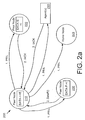
- Figures 2a and 2b are conceptual illustrations of a request for a shared cached line.
- the numbering associated with the various messages of Figures 2a and 2b e.g., 1. PRIL, 7. IACK
- the exact timing relationships illustrated in Figures 2a and 2b, as well as the other examples provided are not required.
- peer node 210 transmits a PRIL message to peer nodes 220 and 230 and to home node 240.
- Peer node 210 could also request the same block of data using a PRL message, in which case peer node 230 would not invalidate its copy in response to the request message.
- Peer node 220 responds to the PRIL message with an IACK message indicating that peer node 220 cannot provide a valid copy of the requested data.
- Peer node 220 is illustrated as initially having a copy of the requested data in the S state, which is a valid copy of the data, but not a copy that can be provided in response to a request for a copy of the data.
- peer node 220 transitions the copy of the data in the S state to the I state. Because peer node 230 has a copy of the requested data in the F state (the only valid copy to be provided to a requestor), peer node 230 provides a copy of the requested data to peer node 210. Peer node 230 also transitions its copy of the requested data to the I state. Peer node 210 stores the requested data in the E state. Alternatively, peer node 210 stores the requested data in the F state.
- peer node 210 in response to receiving the requested data from peer node 230, sends a CNCL(230)() message to home node 240, which causes home node 240 to cancel retrieval of the requested data from memory (or to not transmit the data, if already retrieved).
- the CNCL(230)() message also indicates to home node 240 that a copy of the requested data was received from peer node 230 and that peer node 210 has not identified any conflicts with the PRIL message requesting the data.
- home node 240 In response to the CNCL(230)() message from peer node 210, home node 240 transmits an ACK message to peer node 210 and a DACK message to peer node 230.
- the ACK message indicates to peer node 210 that home node 240 acknowledges receipt of the CNCL(230)() message.
- the DACK message from peer node 240 to peer node 230 acknowledges receipt of the data by peer node 210 and concludes the process for requesting data by peer node 210.
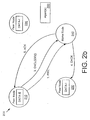
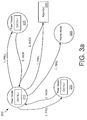
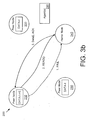
- Figures 3a and 3b are conceptual illustrations of a request for a shared uncached line.
- peer node 210 transmits a PRIL message to request a copy of a block of data. Because peer nodes 220 and 230 do not store a valid copy of the requested data, nodes 220 and 230 respond with an IACK message.
- peer node 210 sends a READ() message to home node 240, which requests a copy of the previously requested data that has been retrieved from memory by home node 240.
- the READ() message also indicates to home node 240 that peer node 210 has not identified any conflicts with the PRIL message.
- Home node 240 provides a copy of the requested data with a DataE message.
- home node 240 also includes an ACK message with the DataE message (i.e., in the same message packet). In an alternate embodiment, the DataE and ACK messages are transmitted separately.
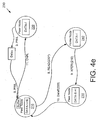
- Figures 4a through 4f are a conceptual illustration of three-way conflicting requests for a shared, cached line.
- peer node 210 sends a PRL message to peer nodes 220 and 230 and to home node 240.
- the PRL message to home node 240 is delayed for some reason, for example, latency delays within system 200.
- peer node 220 and peer node 230 send IACK messages to peer node 210.
- the PRL message from peer node 210 does not require any of the receiving peer nodes to invalidate copies, if any, stored by the receiving peer nodes.
- Peer node 210 can also use a PRIL message to request the data, which would require that all peer nodes storing the requested data, whether provided to the requesting node or not, to invalidate the copy of the requested data stored by the node.
- Conflicts can be caused by any combination of messages that would otherwise cause an inconsistent result.
- peer node 220 transmits a PRIL message requesting the same block of data.
- peer node 220 transmits the PRIL message to peer nodes 210 and 230 and to home node 240; however, the PRIL message to peer node 210 is delayed.
- Peer node 230 and home node 240 respond to the PRIL message from peer node 220 with IACK messages.
- peer node 230 subsequently transmits a PRIL message to peer nodes 210 and 220 and to home node 240.
- Home node 240 responds to the PRIL message with an IACK message indicating that home node 240 does not store a valid copy of the requested data.
- Peer node 210 responds to the PRIL message from peer node 230 with a CNFL message indicating that peer node 210 has a conflict with the PRIL message received from peer node 230.
- Peer node 220 responds to the PRIL message from peer node 230 with a CNFLI message indicating that peer node 220 has a conflict with the PRIL message received from peer node 230.
- the CNFLI message indicates that the conflicting message from peer node 220 is a PRIL message, which requires invalidation.
- the CNFL message from peer node 210 indicates that the conflicting message from peer node 210 is a PRL message, which does not require invalidation.
- home node 240 when home node 240 receives the delayed PRL message from peer node 210, home node 240 responds with an IACK message indicating that home node 240 does not have a valid copy of the requested data.
- peer node 230 In response to receiving the CNFL message from peer node 210 and the CNFLI message from peer node 220, peer node 230 transmits a READ(210, 220*) message to home node 240.
- the READ(210, 220*) message requests a copy of the data from memory controlled by home node 240.
- the READ(210, 220*) message also indicates that the request for data from peer node 230 conflicts with requests from peer nodes 210 and 220 and that the request from peer node 220 requires invalidation (as indicated by the asterisk). Because peer node 230 is the first node with a conflicting request to send a READ message to home node 240, peer node 230 is the first peer node to received a copy of the requested data and is the current owner of the requested data.
- home node In response to the READ(210, 220*) message, home node provides the requested data to Peer node 230 with a DataE message.
- the DataE message causes peer node 230 to store the data in the E state.
- other data messages e.g., DataF, DataS
- Home node 240 retains the conflict list provided by peer node 230 to respond to subsequent READ/CNCL messages from peer nodes 210 and 220.
- peer node 210 in response to the IACK message from home node 240, peer node 210 transmits a READ(230*) message to home node 240.
- the READ message does not indicate the conflict with the PRIL message from peer node 220 because peer node 210 has not received the PRIL message yet. If peer node 210 had received the PRIL message from peer node 220, the READ message would indicate a conflict with peer node 220.
- home node 240 sends a XFRI(210) message to peer node 230, which causes peer node 230 to send the requested data to peer node 210.
- the XFRI message also indicates to peer node 230 that a conflicting message from a peer node that has not yet received its data (peer node 220) requires invalidation of the data after the data is sent to peer node 210.
- Peer node 230 sends the requested data to peer node 210 with a DataE(220) message, which causes peer node 210 to store the requested data in the E mode, and informs peer node 210 that the requesting message might conflict with a message from peer node 220. Peer node 230 had detected the conflict with the message from peer node 220. Before peer node 210 receives the requested data, the delayed PRIL message is received from peer node 220.
- peer node 210 Because peer node 210 has already delivered its list of conflicts to home node 240 and has not received the requested data from peer node 230, peer node 210 stores the PRIL message received from peer node 220 in a buffer. In response to receiving the Data message from peer node 230 containing the conflict with peer node 220, peer node 210 responds with a CNFL message indicating that peer node 210 has a conflict with the PRIL message from peer node 220.
- peer node 230 in response to the CNFL message from peer node 210, peer node 230 sends a READ (210,230*) message to home node 240, which indicates a conflict with the PRL message from peer node 210 and the PRIL message from peer node 230.
- Home node 240 responds to the READ(210,230*) message with an ACK message to peer node 220 and a XFRI(220) message to peer node 210.
- Peer node 210 sends the requested data to peer node 220 with a DataE(230) message.
- Peer node 220 previously detected the conflict with peer node 230. Delivery of the ACK message to peer node 220 indicates that no further conflicts exist with the PRIL message from peer node 220.
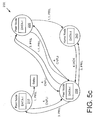
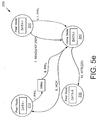
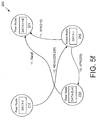
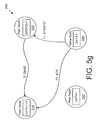
- Figures 5a through 5g are conceptual illustrations of three-way conflicting requests for a uncached line.
- peer node 210 transmits a PRIL message to peer nodes 220 and 230 and to home node 240 to request a block of data.
- the PRIL message for home node 240 is delayed.
- peer node 220 transmits a PRIL message to peer nodes 210 and 230 and to home node 240 requesting a copy of the same block of data.
- peer node 230 responds to the PRIL message from peer node 210 with an IACK message.
- Peer node 230 indicates a delay in processing its response to the PRIL message from peer node 220.
- Peer node 210 responds to the PRIL message from peer node 220 with a CNFLI message.
- peer node 220 responds to the PRIL message from peer node 210 with a CNFLI message.
- peer node 230 transmits a PRIL message to peer nodes 210 and 220 and to home node 240.
- Peer nodes 210 and 220 respond to the PRIL message from peer node 230 with CNFLI messages. Due to its delay in processing the PRIL from peer node 220, peer node 230 sends a CNFLI message, instead of an IACK message, to peer node 220 to indicate a conflict with the newly generated request for the same block of data by peer node 230.
- peer node 230 after receiving responses from all peer nodes, peer node 230 sends a READ(210*,220*) message to home node 240.
- Home node 240 responds with a DataE message to provide the requested data to peer node 230 because peer node 230 is the first peer node to send a READ message to home node 240.
- Peer node 230 is the current owner of the data.
- peer node 210 after receiving responses from all peer nodes, peer node 210 sends a READ(210*,230*) message to home node 240.
- Home node 240 also receives the delayed PRIL message from peer node 210.
- Home node 240 responds to the PRIL message from peer node 210 with an IACK message, which indicates that home node 240 will not provide a copy of the requested data. This is because peer node 230 has a valid, cached copy of the requested data.
- Home node 240 sends a XFRI(220) message to peer node 230 to cause peer node 230 to provide a copy of the requested data to peer node 210.
- Peer node 230 is the second peer node to receive a copy of the requested data because peer node 230 is the second peer node to send a READ message to home node 240 requesting the data.
- peer node 230 sends a copy of the requested data to peer node 220 with a DataE message.
- Peer node 210 sends a READ(220*, 230*) message to home node 240.
- Home node 240 responds to the READ message from peer node 210 by sending a XFRI(210) message to peer node 220, which causes peer node 220 to send a copy of the requested data to peer node 210.
- peer node 220 sends a copy of the requested data to peer node 210 with a DataE message.
- Peer node 220 also invalidates the copy of the data stored by peer node 220.
- Home node 240 sends an ACK message to peer node 210 to indicate that all requests for the block of data have been resolved and satisfied.
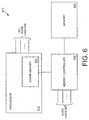
- FIG. 6 is a block diagram of one embodiment of a node.
- Node 600 is illustrated with a single processor, cache memory, memory controller and memory; however, any number of any of these components can be included in a node. Further, additional and/or different components (e.g., a bus bridge) can also be included in a node.
- a bus bridge e.g., a bus bridge
- Processor 610 can be any type of processor known in the art.
- processor 610 includes cache memory 620.
- cache memory 620 is external to processor 610, or additional cache memories can be included that are internal or external to processor 610.
- Memory controller 630 is coupled with cache memory 620 and memory 640. Memory controller 630 operates as an interface between cache memory 620 and memory 640. In one embodiment, memory controller 630 maintains cache coherency according to the cache coherency protocol described herein. Memory controller 630 interacts with other nodes via node links 650. In an alternate embodiment, processor 610 interacts with memory controller 630 to maintain cache coherency as described herein and processor 610 interacts with other nodes via alternative node links 655.
- node links 650 include a dedicated interface for each node with which node 600 interacts. In an alternate embodiment, node links 650 include a number of interfaces that is different than the number of nodes with which node 600 interacts. In one embodiment, node 600 interacts with one or more agents that represent multiple nodes.
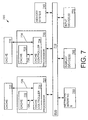
- Multiprocessor system 700 is intended to represent a range of systems having multiple processors, for example, computer systems, real-time monitoring systems, etc. Alternative multiprocessor systems can include more, fewer and/or different components. In certain situations, the cache management techniques described herein can be applied to both single processor and to multiprocessor systems. Multiprocessor system 700 can be configured to operate as a multi-node system.
- Multiprocessor system 700 includes bus system 710 or other communication device(s) to communicate information.
- Bus system 710 can include any number of buses and associated interconnection circuitry, for example, bus bridges.
- Processor 720 is coupled with bus system 710 to process information.
- Processor 720 can include cache memory 722, for example a level zero (L0) cache memory, and cache controller 724.
- processor 720 is also coupled with cache 725, which can be any type of cache memory.
- cache 725 can be coupled with bus system 710.
- Other types of processor-cache configurations can also be used.
- cache controller 724 is coupled with cache memory 722 via cache memory interface 728, which can be, for example, a bus internal to processor 720.
- Cache controller is coupled with cache memory 725 via cache interface 726, which provides an interface between processor 720 and an external cache memory.
- Multiprocessor system 700 further includes processor 730 with cache memory 732 and cache controller 734.
- Cache controller 734 is coupled with cache memory 732 via cache interface 738.
- cache controller 734 is coupled with cache memory 735 via cache interface 736.
- cache memory 735 is coupled with processor 730.
- Multiprocessor system 700 is illustrated with two processors, multiprocessor system 700 can include any number of processors and/or co-processors.
- Multiprocessor system 700 further includes memory system 740 coupled with bus system 710.
- Memory system 740 can include any combination of dynamic (e.g., random access memory) and static (e.g., read-only memory, CD-ROM, disk storage, flash memory) memory devices and associated drives, where appropriate.
- the memory devices of memory system 740 are used to store information and instructions to be executed by processors of multiprocessor system 700.
- Memory system 740 also can be used to store temporary variables or other intermediate information during execution of instructions by the processors.
- Instructions can be provided to memory system 740 from a static or remote storage device, such as magnetic disk, a read-only memory (ROM) integrated circuit, CD-ROM, DVD, via a remote connection that is either wired or wireless, etc.
- a static or remote storage device such as magnetic disk, a read-only memory (ROM) integrated circuit, CD-ROM, DVD, via a remote connection that is either wired or wireless, etc.
- ROM read-only memory
- DVD digital versatile disc-only memory
- ROM read-only memory
- hard-wired circuitry can be used in place of or in combination with software instructions.
- execution of sequences of instructions is not limited to any specific combination of hardware circuitry and software instructions.
- Multiprocessor system 700 further includes network interface 750 to provide access to a network, such as a local area network and/or the Internet.
- Network interface 750 can provide wireless and/or wired network interfaces, which can include communication of instructions to and/or from remote electronically-accessible media.
- An electronically-accessible medium includes any mechanism that provides (i.e., stores and/or transmits) content (e.g., computer executable instructions) in a form readable by an electronic device (e.g., a computer, a personal digital assistant, a cellular telephone).
- a machine-accessible medium includes read only memory (ROM); random access memory (RAM); magnetic disk storage media; optical storage media; flash memory devices; electrical, optical, acoustical or other form of propagated signals (e.g., carrier waves, infrared signals, digital signals).
- ROM read only memory
- RAM random access memory
- magnetic disk storage media includes magnetic disk storage media; optical storage media; flash memory devices; electrical, optical, acoustical or other form of propagated signals (e.g., carrier waves, infrared signals, digital signals).
- Multiprocessor system 700 can also include display device 760, such as a cathode ray tube (CRT) or liquid crystal display (LCD), to display information.
- Display device 760 such as a cathode ray tube (CRT) or liquid crystal display (LCD), to display information.
- Input device(s) 770 including, for example, a keyboard having alphanumeric and other keys, is typically coupled to bus 710 to communicate information and command selections to processors 720 and/or 730.
- a cursor control device such as a mouse, a trackball, or cursor direction keys to communicate direction information and command selections to processors 720 and 730 and to control cursor movement on display device 760.
Landscapes
- Engineering & Computer Science (AREA)
- Theoretical Computer Science (AREA)
- Physics & Mathematics (AREA)
- General Engineering & Computer Science (AREA)
- General Physics & Mathematics (AREA)
- Memory System Of A Hierarchy Structure (AREA)
- Information Retrieval, Db Structures And Fs Structures Therefor (AREA)
- Computer And Data Communications (AREA)
- Information Transfer Between Computers (AREA)
Applications Claiming Priority (2)
| Application Number | Priority Date | Filing Date | Title |
|---|---|---|---|
| US326232 | 2002-12-19 | ||
| US10/326,232 US6954829B2 (en) | 2002-12-19 | 2002-12-19 | Non-speculative distributed conflict resolution for a cache coherency protocol |
Publications (2)
| Publication Number | Publication Date |
|---|---|
| EP1443404A2 true EP1443404A2 (fr) | 2004-08-04 |
| EP1443404A3 EP1443404A3 (fr) | 2007-03-28 |
Family
ID=32593970
Family Applications (1)
| Application Number | Title | Priority Date | Filing Date |
|---|---|---|---|
| EP03257787A Withdrawn EP1443404A3 (fr) | 2002-12-19 | 2003-12-11 | Résolution non-spéculative de conflicts répartis pour un protocol de cohérence d'antémémoire |
Country Status (5)
| Country | Link |
|---|---|
| US (2) | US6954829B2 (fr) |
| EP (1) | EP1443404A3 (fr) |
| CN (1) | CN1282929C (fr) |
| RU (2) | RU2263344C2 (fr) |
| TW (1) | TWI273404B (fr) |
Cited By (3)
| Publication number | Priority date | Publication date | Assignee | Title |
|---|---|---|---|---|
| GB2447119A (en) * | 2004-04-27 | 2008-09-03 | Intel Corp | Resolving data request conflicts among a plurality of peer nodes using a home node |
| RU2406167C2 (ru) * | 2005-09-30 | 2010-12-10 | Квэлкомм Инкорпорейтед | Ассоциативная память со смешанным параллельно-последовательным поиском |
| US7917646B2 (en) | 2002-12-19 | 2011-03-29 | Intel Corporation | Speculative distributed conflict resolution for a cache coherency protocol |
Families Citing this family (46)
| Publication number | Priority date | Publication date | Assignee | Title |
|---|---|---|---|---|
| US8185602B2 (en) | 2002-11-05 | 2012-05-22 | Newisys, Inc. | Transaction processing using multiple protocol engines in systems having multiple multi-processor clusters |
| US7565419B1 (en) * | 2002-11-22 | 2009-07-21 | Symantec Operating Corporation | Conflict resolution in a peer to peer network |
| US20050144320A1 (en) * | 2003-12-16 | 2005-06-30 | Jagana Venkata R. | Avoiding conflict of a mobile node IP address |
| US8090914B2 (en) * | 2004-01-20 | 2012-01-03 | Hewlett-Packard Development Company, L.P. | System and method for creating ordering points |
| US8176259B2 (en) | 2004-01-20 | 2012-05-08 | Hewlett-Packard Development Company, L.P. | System and method for resolving transactions in a cache coherency protocol |
| US7818391B2 (en) | 2004-01-20 | 2010-10-19 | Hewlett-Packard Development Company, L.P. | System and method to facilitate ordering point migration |
| US8468308B2 (en) * | 2004-01-20 | 2013-06-18 | Hewlett-Packard Development Company, L.P. | System and method for non-migratory requests in a cache coherency protocol |
| US7149852B2 (en) * | 2004-01-20 | 2006-12-12 | Hewlett Packard Development Company, Lp. | System and method for blocking data responses |
| US7769959B2 (en) | 2004-01-20 | 2010-08-03 | Hewlett-Packard Development Company, L.P. | System and method to facilitate ordering point migration to memory |
| US7620696B2 (en) | 2004-01-20 | 2009-11-17 | Hewlett-Packard Development Company, L.P. | System and method for conflict responses in a cache coherency protocol |
| US20050160238A1 (en) * | 2004-01-20 | 2005-07-21 | Steely Simon C.Jr. | System and method for conflict responses in a cache coherency protocol with ordering point migration |
| US8145847B2 (en) * | 2004-01-20 | 2012-03-27 | Hewlett-Packard Development Company, L.P. | Cache coherency protocol with ordering points |
| US20050240734A1 (en) * | 2004-04-27 | 2005-10-27 | Batson Brannon J | Cache coherence protocol |
| US20050262250A1 (en) * | 2004-04-27 | 2005-11-24 | Batson Brannon J | Messaging protocol |
| US7957428B2 (en) | 2004-05-21 | 2011-06-07 | Intel Corporation | Methods and apparatuses to effect a variable-width link |
| US7472133B2 (en) * | 2004-07-30 | 2008-12-30 | Microsoft Corporation | System and method for improved prefetching |
| US9727468B2 (en) | 2004-09-09 | 2017-08-08 | Intel Corporation | Resolving multi-core shared cache access conflicts |
| US8010682B2 (en) * | 2004-12-28 | 2011-08-30 | International Business Machines Corporation | Early coherency indication for return data in shared memory architecture |
| US7496710B1 (en) | 2005-04-01 | 2009-02-24 | Sun Microsystems, Inc. | Reducing resource consumption by ineffective write operations |
| US7366848B1 (en) * | 2005-06-02 | 2008-04-29 | Sun Microsystems, Inc. | Reducing resource consumption by ineffective write operations in a shared memory system |
| IN2005MU00878A (fr) * | 2005-07-22 | 2009-06-29 | ||
| US20070083715A1 (en) * | 2005-09-13 | 2007-04-12 | International Business Machines Corporation | Early return indication for return data prior to receiving all responses in shared memory architecture |
| US7536514B2 (en) * | 2005-09-13 | 2009-05-19 | International Business Machines Corporation | Early return indication for read exclusive requests in shared memory architecture |
| US20070073977A1 (en) * | 2005-09-29 | 2007-03-29 | Safranek Robert J | Early global observation point for a uniprocessor system |
| US20070150664A1 (en) * | 2005-12-28 | 2007-06-28 | Chris Dombrowski | System and method for default data forwarding coherent caching agent |
| US10741034B2 (en) | 2006-05-19 | 2020-08-11 | Apdn (B.V.I.) Inc. | Security system and method of marking an inventory item and/or person in the vicinity |
| US7536515B2 (en) * | 2006-06-30 | 2009-05-19 | Intel Corporation | Repeated conflict acknowledgements in a cache coherency protocol |
| US7721050B2 (en) * | 2006-06-30 | 2010-05-18 | Intel Corporation | Re-snoop for conflict resolution in a cache coherency protocol |
| US7506108B2 (en) * | 2006-06-30 | 2009-03-17 | Intel Corporation | Requester-generated forward for late conflicts in a cache coherency protocol |
| US7568073B2 (en) * | 2006-11-06 | 2009-07-28 | International Business Machines Corporation | Mechanisms and methods of cache coherence in network-based multiprocessor systems with ring-based snoop response collection |
| US7778282B2 (en) * | 2006-12-18 | 2010-08-17 | Microsoft Corporation | Propagation of conflict knowledge |
| US7836144B2 (en) * | 2006-12-29 | 2010-11-16 | Intel Corporation | System and method for a 3-hop cache coherency protocol |
| US7934059B2 (en) * | 2008-01-29 | 2011-04-26 | International Business Machines Corporation | Method, system and computer program product for preventing lockout and stalling conditions in a multi-node system with speculative memory fetching |
| US8688622B2 (en) * | 2008-06-02 | 2014-04-01 | The Boeing Company | Methods and systems for loading data into a temporal data warehouse |
| US8250311B2 (en) | 2008-07-07 | 2012-08-21 | Intel Corporation | Satisfying memory ordering requirements between partial reads and non-snoop accesses |
| US8566533B1 (en) * | 2009-09-30 | 2013-10-22 | Netlogic Microsystems, Inc. | System, method, and computer program product for conditionally sending a request for data to a node based on a determination |
| US9477600B2 (en) | 2011-08-08 | 2016-10-25 | Arm Limited | Apparatus and method for shared cache control including cache lines selectively operable in inclusive or non-inclusive mode |
| US10268583B2 (en) | 2012-10-22 | 2019-04-23 | Intel Corporation | High performance interconnect coherence protocol resolving conflict based on home transaction identifier different from requester transaction identifier |
| US9344525B2 (en) * | 2013-11-25 | 2016-05-17 | Violin Memory Inc. | Method and apparatus for data migration |
| CN104750536B (zh) * | 2013-12-30 | 2018-08-21 | 华为技术有限公司 | 一种实现虚拟机自省的方法和装置 |
| CN106103121B (zh) | 2014-03-18 | 2019-12-06 | 亚普蒂恩(B.V.I.)公司 | 用于安全应用的加密光学标记物 |
| EP2953313A1 (fr) * | 2014-06-05 | 2015-12-09 | Thomson Licensing | Procédé pour faire fonctionner un cache disposé le long d'un trajet de transmission entre des terminaux clients et au moins un serveur, antémémoire correspondante |
| US9727464B2 (en) | 2014-11-20 | 2017-08-08 | International Business Machines Corporation | Nested cache coherency protocol in a tiered multi-node computer system |
| US9886382B2 (en) | 2014-11-20 | 2018-02-06 | International Business Machines Corporation | Configuration based cache coherency protocol selection |
| CN107291564B (zh) * | 2017-06-08 | 2020-06-26 | 北京金山安全软件有限公司 | 信息复制粘贴方法、装置和电子设备 |
| US10917198B2 (en) * | 2018-05-03 | 2021-02-09 | Arm Limited | Transfer protocol in a data processing network |
Citations (2)
| Publication number | Priority date | Publication date | Assignee | Title |
|---|---|---|---|---|
| US6405289B1 (en) | 1999-11-09 | 2002-06-11 | International Business Machines Corporation | Multiprocessor system in which a cache serving as a highest point of coherency is indicated by a snoop response |
| US20020129211A1 (en) | 2000-12-30 | 2002-09-12 | Arimilli Ravi Kumar | Data processing system and method for resolving a conflict between requests to modify a shared cache line |
Family Cites Families (16)
| Publication number | Priority date | Publication date | Assignee | Title |
|---|---|---|---|---|
| GB2210479B (en) * | 1987-10-02 | 1992-06-17 | Sun Microsystems Inc | Alias address support. |
| US5546546A (en) * | 1994-05-20 | 1996-08-13 | Intel Corporation | Method and apparatus for maintaining transaction ordering and arbitrating in a bus bridge |
| US5649143A (en) * | 1995-06-02 | 1997-07-15 | Sun Microsystems, Inc. | Apparatus and method for providing a cache indexing scheme less susceptible to cache collisions |
| KR19990071554A (ko) * | 1996-09-25 | 1999-09-27 | 요트.게.아. 롤페즈 | 어드레스충돌검출기능을갖는멀티포트캐시메모리 |
| US6145057A (en) * | 1997-04-14 | 2000-11-07 | International Business Machines Corporation | Precise method and system for selecting an alternative cache entry for replacement in response to a conflict between cache operation requests |
| US6009488A (en) | 1997-11-07 | 1999-12-28 | Microlinc, Llc | Computer having packet-based interconnect channel |
| US6275905B1 (en) | 1998-12-21 | 2001-08-14 | Advanced Micro Devices, Inc. | Messaging scheme to maintain cache coherency and conserve system memory bandwidth during a memory read operation in a multiprocessing computer system |
| US6370621B1 (en) * | 1998-12-21 | 2002-04-09 | Advanced Micro Devices, Inc. | Memory cancel response optionally cancelling memory controller's providing of data in response to a read operation |
| US6279085B1 (en) * | 1999-02-26 | 2001-08-21 | International Business Machines Corporation | Method and system for avoiding livelocks due to colliding writebacks within a non-uniform memory access system |
| US6442597B1 (en) * | 1999-07-08 | 2002-08-27 | International Business Machines Corporation | Providing global coherence in SMP systems using response combination block coupled to address switch connecting node controllers to memory |
| US6457100B1 (en) * | 1999-09-15 | 2002-09-24 | International Business Machines Corporation | Scaleable shared-memory multi-processor computer system having repetitive chip structure with efficient busing and coherence controls |
| US6539457B1 (en) * | 2000-02-21 | 2003-03-25 | Hewlett-Packard Company | Cache address conflict mechanism without store buffers |
| US6640287B2 (en) * | 2000-06-10 | 2003-10-28 | Hewlett-Packard Development Company, L.P. | Scalable multiprocessor system and cache coherence method incorporating invalid-to-dirty requests |
| US6594733B1 (en) * | 2000-09-27 | 2003-07-15 | John T. Cardente | Cache based vector coherency methods and mechanisms for tracking and managing data use in a multiprocessor system |
| US6615319B2 (en) * | 2000-12-29 | 2003-09-02 | Intel Corporation | Distributed mechanism for resolving cache coherence conflicts in a multi-node computer architecture |
| US6842830B2 (en) * | 2001-03-31 | 2005-01-11 | Intel Corporation | Mechanism for handling explicit writeback in a cache coherent multi-node architecture |
-
2002
- 2002-12-19 US US10/326,232 patent/US6954829B2/en not_active Expired - Fee Related
-
2003
- 2003-09-24 TW TW092126354A patent/TWI273404B/zh not_active IP Right Cessation
- 2003-12-08 CN CNB2003101182348A patent/CN1282929C/zh not_active Expired - Fee Related
- 2003-12-11 EP EP03257787A patent/EP1443404A3/fr not_active Withdrawn
- 2003-12-18 RU RU2003136668/09A patent/RU2263344C2/ru not_active IP Right Cessation
-
2005
- 2005-03-18 RU RU2005107611/09A patent/RU2372642C2/ru not_active IP Right Cessation
- 2005-06-24 US US11/165,688 patent/US7434006B2/en not_active Expired - Lifetime
Patent Citations (2)
| Publication number | Priority date | Publication date | Assignee | Title |
|---|---|---|---|---|
| US6405289B1 (en) | 1999-11-09 | 2002-06-11 | International Business Machines Corporation | Multiprocessor system in which a cache serving as a highest point of coherency is indicated by a snoop response |
| US20020129211A1 (en) | 2000-12-30 | 2002-09-12 | Arimilli Ravi Kumar | Data processing system and method for resolving a conflict between requests to modify a shared cache line |
Non-Patent Citations (1)
| Title |
|---|
| AZIMI M ET AL.: "Scalability port: a coherent interface for shared memory multiprocessors", HIGH PERFORMANCE INTERCONNECTS, 2002. PROCEEDINGS. 10TH SYMPOSIUM, 21 August 2002 (2002-08-21), pages 65 - 70, XP010606264 |
Cited By (6)
| Publication number | Priority date | Publication date | Assignee | Title |
|---|---|---|---|---|
| US7917646B2 (en) | 2002-12-19 | 2011-03-29 | Intel Corporation | Speculative distributed conflict resolution for a cache coherency protocol |
| US8171095B2 (en) | 2002-12-19 | 2012-05-01 | Intel Corporation | Speculative distributed conflict resolution for a cache coherency protocol |
| GB2447119A (en) * | 2004-04-27 | 2008-09-03 | Intel Corp | Resolving data request conflicts among a plurality of peer nodes using a home node |
| GB2447119B (en) * | 2004-04-27 | 2008-12-03 | Intel Corp | An efficient two-hop cache coherency protocol |
| US7822929B2 (en) | 2004-04-27 | 2010-10-26 | Intel Corporation | Two-hop cache coherency protocol |
| RU2406167C2 (ru) * | 2005-09-30 | 2010-12-10 | Квэлкомм Инкорпорейтед | Ассоциативная память со смешанным параллельно-последовательным поиском |
Also Published As
| Publication number | Publication date |
|---|---|
| TW200424854A (en) | 2004-11-16 |
| HK1065390A1 (en) | 2005-02-18 |
| US20040123052A1 (en) | 2004-06-24 |
| US20050237941A1 (en) | 2005-10-27 |
| CN1508696A (zh) | 2004-06-30 |
| US7434006B2 (en) | 2008-10-07 |
| RU2003136668A (ru) | 2005-05-27 |
| CN1282929C (zh) | 2006-11-01 |
| EP1443404A3 (fr) | 2007-03-28 |
| TWI273404B (en) | 2007-02-11 |
| RU2372642C2 (ru) | 2009-11-10 |
| RU2005107611A (ru) | 2006-08-27 |
| RU2263344C2 (ru) | 2005-10-27 |
| US6954829B2 (en) | 2005-10-11 |
Similar Documents
| Publication | Publication Date | Title |
|---|---|---|
| EP1443404A2 (fr) | Résolution non-spéculative de conflicts répartis pour un protocol de cohérence d'antémémoire | |
| US7917646B2 (en) | Speculative distributed conflict resolution for a cache coherency protocol | |
| US6922756B2 (en) | Forward state for use in cache coherency in a multiprocessor system | |
| US8205045B2 (en) | Satisfying memory ordering requirements between partial writes and non-snoop accesses | |
| US6859864B2 (en) | Mechanism for initiating an implicit write-back in response to a read or snoop of a modified cache line | |
| US20120137080A1 (en) | System and method for creating ordering points | |
| US6922755B1 (en) | Directory tree multinode computer system | |
| KR100880059B1 (ko) | 효율적인 이홉(two-hop) 캐시 일관성 프로토콜 | |
| CN118550849A (zh) | 一种缓存一致性维护方法、多核系统及电子设备 | |
| US7506108B2 (en) | Requester-generated forward for late conflicts in a cache coherency protocol | |
| US7380107B2 (en) | Multi-processor system utilizing concurrent speculative source request and system source request in response to cache miss |
Legal Events
| Date | Code | Title | Description |
|---|---|---|---|
| PUAI | Public reference made under article 153(3) epc to a published international application that has entered the european phase |
Free format text: ORIGINAL CODE: 0009012 |
|
| 17P | Request for examination filed |
Effective date: 20031229 |
|
| AK | Designated contracting states |
Kind code of ref document: A2 Designated state(s): AT BE BG CH CY CZ DE DK EE ES FI FR GB GR HU IE IT LI LU MC NL PT RO SE SI SK TR |
|
| AX | Request for extension of the european patent |
Extension state: AL LT LV MK |
|
| PUAL | Search report despatched |
Free format text: ORIGINAL CODE: 0009013 |
|
| AK | Designated contracting states |
Kind code of ref document: A3 Designated state(s): AT BE BG CH CY CZ DE DK EE ES FI FR GB GR HU IE IT LI LU MC NL PT RO SE SI SK TR |
|
| AX | Request for extension of the european patent |
Extension state: AL LT LV MK |
|
| AKX | Designation fees paid |
Designated state(s): DE |
|
| 17Q | First examination report despatched |
Effective date: 20080325 |
|
| STAA | Information on the status of an ep patent application or granted ep patent |
Free format text: STATUS: THE APPLICATION IS DEEMED TO BE WITHDRAWN |
|
| 18D | Application deemed to be withdrawn |
Effective date: 20121108 |