EP1443779A1 - Verfharen zur Verwaltung der Dienstqualität (QOS) in einem Mobilfunkkommunicationssystem - Google Patents
Verfharen zur Verwaltung der Dienstqualität (QOS) in einem Mobilfunkkommunicationssystem Download PDFInfo
- Publication number
- EP1443779A1 EP1443779A1 EP04290226A EP04290226A EP1443779A1 EP 1443779 A1 EP1443779 A1 EP 1443779A1 EP 04290226 A EP04290226 A EP 04290226A EP 04290226 A EP04290226 A EP 04290226A EP 1443779 A1 EP1443779 A1 EP 1443779A1
- Authority
- EP
- European Patent Office
- Prior art keywords
- parameter
- transport
- qos
- network
- radio
- Prior art date
- Legal status (The legal status is an assumption and is not a legal conclusion. Google has not performed a legal analysis and makes no representation as to the accuracy of the status listed.)
- Granted
Links
- 238000000034 method Methods 0.000 title claims abstract description 27
- 230000011664 signaling Effects 0.000 claims abstract description 28
- 238000012546 transfer Methods 0.000 claims description 25
- 238000012545 processing Methods 0.000 claims description 14
- 230000005540 biological transmission Effects 0.000 claims description 13
- 238000004891 communication Methods 0.000 claims description 6
- 238000005516 engineering process Methods 0.000 description 14
- 230000007246 mechanism Effects 0.000 description 12
- 230000002452 interceptive effect Effects 0.000 description 6
- 230000006978 adaptation Effects 0.000 description 2
- 230000004069 differentiation Effects 0.000 description 2
- 230000003044 adaptive effect Effects 0.000 description 1
- 238000013459 approach Methods 0.000 description 1
- 230000015556 catabolic process Effects 0.000 description 1
- 238000006731 degradation reaction Methods 0.000 description 1
- 230000001934 delay Effects 0.000 description 1
- 230000004907 flux Effects 0.000 description 1
- 238000011328 necessary treatment Methods 0.000 description 1
- 238000005457 optimization Methods 0.000 description 1
- 238000011144 upstream manufacturing Methods 0.000 description 1
Images
Classifications
-
- H—ELECTRICITY
- H04—ELECTRIC COMMUNICATION TECHNIQUE
- H04W—WIRELESS COMMUNICATION NETWORKS
- H04W92/00—Interfaces specially adapted for wireless communication networks
- H04W92/04—Interfaces between hierarchically different network devices
- H04W92/12—Interfaces between hierarchically different network devices between access points and access point controllers
-
- H—ELECTRICITY
- H04—ELECTRIC COMMUNICATION TECHNIQUE
- H04W—WIRELESS COMMUNICATION NETWORKS
- H04W28/00—Network traffic management; Network resource management
- H04W28/16—Central resource management; Negotiation of resources or communication parameters, e.g. negotiating bandwidth or QoS [Quality of Service]
- H04W28/26—Resource reservation
Definitions
- the present invention relates generally to mobile radiocommunications.
- the present invention is particularly applicable to third generation mobile radio communications, in particular of the UMTS type ("Universal Mobile Telecommunication System").
- mobile radio systems are the object of standardization, and for more information we can refer to the standards corresponding, published by the corresponding standardization bodies.
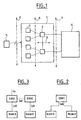
- the RAN includes network elements such as base stations 2 and of base station controllers 3.
- the RAN is in part related to mobile terminals 5, via an interface 6, and on the other hand with the CN 4 via a interface 7.
- CN 4 is in contact with external networks (not illustrated specifically).
- the base stations communicate with the base station controllers via an interface 8.
- the RAN In UMTS-type systems, the RAN is called UTRAN ("UMTS Terrestrial Radio Access Network "), the base stations are called” Node B ", the base station controllers are called RNC ("Radio Network Controller"), and mobile terminals are called UE (“User Equipment”).
- Interface 6 is called “Uu interface”
- interface 7 is called “read interface”
- interface 8 is called “Interface lub”
- an interface 9 between RNCs, called “interface lur” is in additionally introduced.
- Interface 6 is also called radio interface
- interfaces 7, 8, 9 are also called terrestrial interfaces.
- the RNC which controls it is also called CRNC (for "Controlling Radio Network Controller”).
- the CRNC has a load control role and allocation of radio resources for the Node B units it controls.
- Figure 2 illustrates thus a CRNC controlling a set of Node B and the cells (not illustrated specifically) covered by these Node B.
- SRNC for "Serving Radio Network Controller”
- DRNC for "Drift RNC”
- FIG. 3 thus illustrates on the one hand an SRNC controlling a UE, this SRNC being in relation with CN via the interface read, and on the other hand a DRNC controlling the EU for radio links established for cells (not shown specifically) controlled by this DRNC.
- QoS Quality of Service
- UMTS 3rd Generation Partnership Project
- RAB Radio Access Bearer
- Radio Bearer Radio Bearer
- traffic class or "traffic class”
- maximum bit rate or “maximum bitrate”
- guaranteed bit rate or “guaranteed bitrate”
- transfer delay or “transfer delay”
- priority of traffic processing or “traffic handling priority”
- traffic class or "traffic class”
- maximum bit rate or “maximum bitrate”
- guaranteed bit rate or “guaranteed bitrate”
- transfer delay or “transfer delay”
- QoS attributes other than the traffic class may be different for different types of services of the same traffic class; for example, for the “conversational” traffic class, the transfer delay for a telephony type service is less than the transfer delay for a video-telephony type service, which is itself lower, for example the transfer delay for a web browsing type service (or "web browsing") for the "interactive" traffic class for example.
- the transfer delay is specified only for the conversational or streaming traffic classes, and the traffic processing priority is specified only for the interactive class.
- a model has been defined for the protocols for communication on terrestrial interfaces, in which a layer is distinguished radio network (or “Radio Network Layer”) corresponding to related functionalities radio access regardless of the technology used for transport on the terrestrial interfaces, and a transport network layer (or “Transport Network layer ”) corresponding to transport-related functionalities, depending on the technology used for transport on land interfaces.
- Radio Network Layer radio network
- Transport Network layer transport network layer
- two types of data can be communicated according to these protocols: data corresponding to traffic sent or received by a UE (or user data, or "user data") and data corresponding to signaling, necessary for system operation.
- signaling linked to the radio network layer and signaling linked to the transport network layer.
- the RANAP protocol notably includes signaling relating to the establishment of radio access support (or RAB, for "Radio Access Bearer").
- the NBAP protocol notably includes signaling relating to link establishment radio for cells controlled by the SRNC.
- the RNSAP protocol notably includes signaling relating to the establishment of radio links for controlled cells by the DRNC.
- QoS management in such a system involves on the one hand, a QoS management linked to radio access independently of the technology used for transport on terrestrial interfaces, and secondly a transport QoS management, function of the technology used for transport on terrestrial interfaces.
- QoS management linked to radio access is typical of type systems CDMA (“Code Division Multiple Access”), such as in particular UMTS, and includes mechanisms such as: radio admission control, selection of transport formats suitable for transport channels, ... etc.
- exchanges signaling defined in the application protocols mentioned above allow the relevant network elements of UTRAN to know the QoS constraints necessary for the implementation of such management mechanisms QoS related to radio access.
- the main network element of UTRAN concerned by the implementation of QoS management mechanisms related to radio access is RNC, in its role as SRNC.
- the SRNC can decide what type of service is required for a UE, and therefore translate these QoS parameters into usable parameters for the establishment of radio links between Node B and UE, if necessary via one or several DRNCs, then report these parameters to the network elements concerned: Node B (according to the NBAP protocol), DRNC (according to the RNSAP protocol).
- transport over land interfaces uses the packet mode to optimize the use of available transmission resources on these interfaces.
- the packet mode was rather designed initially for non-real-time services (having no time constraints and / or strict priority) and additional mechanisms, including QoS management mechanisms, were then introduced to allow the mode packet to also support real-time services (having constraints of time and / or strict priority), such as voice services.
- real-time services having constraints of time and / or strict priority
- voice services having constraints of time and / or strict priority
- the introduction of the concept of real time for services package is also necessary for the problem of "soft handover" which requires the RNC to provide the times of data transmission to the different Node B controlling the cells with which the mobile is connected.
- These transmission times are given in the form of radio frame numbers, and therefore limit the maximum delay authorized for data transmission between RNC and Node B. This delay maximum cannot be set too high, in particular for reasons power control and radio admission control efficiency.
- ATM Asynchronous Transfer Mode
- ATM based on time multiplexing asynchronous small packets of fixed size called cells.
- ATM technology is subject to standardization, and for more information may refer to the corresponding standards, published by the corresponding standardization.
- AAL layer for “ATM Adaptation Layer” placed between the ATM layer and the users.
- the ATM layer is connection oriented, and realizes a cell transmission on a logical connection between a source and a destination, this logical connection also being called virtual circuit or VC (for "Virtual Channel").
- AAL2 layer For the application of ATM to transport inside UTRAN, a specific AAL layer, called AAL2 layer, is used for user data.
- AAL2 layer When a UE communicates with the UTRAN, a logical connection corresponding, or AAL2 connection, is established on one or more of the interfaces UTRAN concerned terrestrials.
- the mechanisms allowing to manage the transport QoS include in particular an admission control of connection (to decide if the transmission resources are sufficient to accept a new AAL2 connection request while ensuring that the QoS required) and queuing (or "scheduling" in English) for the multiplexing of AAL2 connections inside a virtual circuit VC, for example depending on the priority.
- IP Internet Protocol
- IP technology is also subject to standardization, and for more information we can also refer to the corresponding standards, published by the corresponding standardization bodies.
- mechanisms to manage transport QoS can be planned.
- the present invention relates more particularly to the management of the QoS related to transport, and more particularly still to the mechanisms allowing to the relevant network elements of the UTRAN to know the constraints of QoS necessary for the implementation of this QoS management. In the absence of such knowledge, or in the case of insufficient knowledge, this QoS management does not can be implemented optimally and it can then result in QoS degradations unacceptable to users.
- the SRNC can decide what type of service is required for a UE, and therefore which QoS should be used in the network transport to transmit user data (or “user data” in English) for this UE in downward direction on the lub interface to Node B (respectively on the lur interface to the DRNC).
- RAB Radio Access Bearer
- Node B (respectively DRNC) of know which QoS should be used in the transport network to transmit user data for a UE in the uplink direction on the lub interface (respectively in the upward direction on the lur interface and / or downward on the lub interface).
- signaling relating to transport network layer includes the ALCAP protocol ("Access Link Control Application Part ”) as defined in particular in the ITU-T specifications Q.2360-1 and ITU-T Q.2360-2 published by the ITU ("International Telecommunication Union"), and corresponding to successive versions of the 3GPP standard, respectively the version R99 (for the ITU-T specification Q.2360-1) and versions R4 then R5 (for the ITU-T specification Q.2360-2).
- ITU-T specification Q.2360-2 defines a parameter QoS called "AAL type 2 requested type path" which can take one of three following values, depending on the type of service: "stringent", “tolerant”, “stringent bi-level ”.
- This parameter is transmitted by the CRNC (respectively SRNC) to Node B (respectively DRNC) and allows Node B (respectively DRNC) to know, within the limits thus defined by these three possible values, the QoS constraints applicable for the transmission of user data in the uplink direction on the lub interface (respectively in the up and down directions on the lur interface).
- this first solution is only applicable from the R4 version of the 3GPP standard. It is neither applicable in the case of the R99 version, nor in the case of the R5 version if the transport network uses IP technology.
- the signaling relating to the transport network layer is such that Node B (DRNC respectively) does not know which QoS should be used in the transport network to transmit user data in the direction mounting on the lub interface (respectively in the mounting directions on the lur interface and / or descending on the lub interface).
- the three possible values recalled above for the parameter “AAL type requested type path” do not allow necessarily sufficient differentiation of different types of services possible, and therefore do not necessarily make it possible to implement the optimal QoS management mechanisms.
- Node B (respectively DRNC) could recognize, from parameters transmitted by the CRNC (respectively SRNC) according to the ALCAP protocol, which connections are associated with voice services, and assign them a high transport QoS, and conversely assign a QoS of lower transport to connections associated with other types of services (e.g. example web browsing (or "web browsing"), ftp, dedicated signage, video-telephony, etc.).
- the present invention uses another approach to solve this problem.
- the present invention is based in particular on the following observations.
- Some QoS parameters such as representative transfer delay parameters (or “Transfer delay”) and / or traffic processing priority (or “traffic handling” priority ”), as defined in particular in the 3GPP TS 23.107 specification recalled previously, are of very high importance to guarantee QoS, in particular the Transport QoS, within such a network.
- Such parameters are already used for QoS management related to radio access.
- knowledge of such QoS parameters remains essentially localized to SRNC level.
- the SRNC can decide what type of service is required for a UE.
- the SRNC can then translate these parameters into parameters that can be used to establish radio links between Node B and UE, if necessary via one or more DRNCs, then report these parameters to the network elements concerned: Node B (according to the protocol NBAP), DRNC (according to the RNSAP protocol).
- Such parameters include, in particular, for establishing a radio link between Node B and UE, parameters such as in particular transport format parameters or TFCS (for "Transport Format Combination Set ”), and if necessary for multiplexing by the DRNC on common or shared transport channels, parameters such as the class of traffic (or "traffic class”) and the priority of traffic processing (or “traffic handling” priority ”).
- such signaling of transport format settings generally do not indicate the QoS constraints for the transport network layer, and such signaling of traffic class and traffic processing priority is performed only on the lur interface (and not on the lub interface) and only in the case of common or shared transport (and not in the case of dedicated channels).
- a such signaling does not allow to indicate the QoS constraints for the layer transport network, at least in terms of transfer time.
- it does not not allow to distinguish between different class services "Conversational", between services (such as, in particular, telephony) that require a short transfer time and services (such as example of video-telephony services) which can tolerate transfer delays more important.
- the object of the present invention is in particular to resolve all or part of the problems, and / or avoid all or part of the various disadvantages mentioned previously.
- the present invention also aims to propose different mechanisms allowing the concerned network elements of the UTRAN to know the transport QoS constraints necessary for the implementation of the management of this QoS. More generally, the present invention aims to improve and / or simplify the management of the quality of service in these systems.
- said first network element is a CRNC ("Controlling Radio Network Controller").
- said second network element is a Node B, or base station.
- said signaling protocol for the radio network layer is a signaling protocol (NBAP) applicable to the interface (lub) between CRNC and Node B.
- NBAP signaling protocol
- said second network element uses said at least one parameter for the management of transport QoS, for the upstream transmission on the interface (lub) between CRNC and Node B.
- said first network element is a SRNC ("Serving Radio Network Controller").
- said second network element is a DRNC ("Drift Radio Network Controller”).
- said signaling protocol for the radio network layer is a signaling protocol (RNSAP) applicable to the interface (lur) between SRNC and DRNC.
- RNSAP signaling protocol
- said second network element uses said at least one parameter for the management of transport QoS, for the transmission in the uplink direction, on the interface (lur) between SRNC and DRNC, and / or in the downward direction, on the interface (lub) between DRNC and Node B.
- said at least one representative parameter transport QoS corresponds to a specific parameter intended to indicate a transport QoS level.
- said at least one representative parameter of transport QoS corresponds to at least one parameter of RAB ("Radio Access Bearer ”) which can also be used as a transport QoS parameter.
- RAB Radio Access Bearer
- said at least one parameter of RAB (“Radio Access Bearer”) can also be used as a QoS parameter of transport corresponds to the transfer time.
- said at least one parameter of RAB (“Radio Access Bearer”) can also be used as a QoS parameter transport corresponds to the traffic processing priority.
- said at least one parameter of RAB (“Radio Access Bearer”) can also be used as a QoS parameter transport corresponds to the traffic class.
- said at least one parameter corresponding to at least one RAB (“Radio Access Bearer”) parameter which can also be used as a transport QoS parameter is copied or translated from RANAP to NBAP, respectively from RANAP to RNSAP protocol.
- RAB Radio Access Bearer
- said at least one representative parameter transport QoS corresponds to at least one parameter that can be associated with a transport QoS level or at least one RAB parameter ("Radio Access Bearer ”) which can also be used as a transport QoS parameter.
- said at least one parameter which can be associated with a transport QoS level or at least one RAB parameter ("Radio Access Bearer”) can also be used as a QoS parameter transport corresponds to a time adjustment parameter, values of this parameter being assigned to connections with constraints highest transfer delay and / or traffic processing priority, and highest values of this parameter being assigned to connections with most constrained transfer delay and / or traffic processing priority high.
- said time adjustment parameter is the TOAWS (“Time Of Arrival Window Start”) parameter.
- said at least one parameter which can be associated with a transport QoS level or at least one RAB parameter ("Radio Access Bearer”) can also be used as a QoS parameter transport corresponds to a parameter representative of the number of dedicated channels (or DCH, for “Dedicated CHannel”) allocated to a connection, a high number of dedicated channels being allocated to connections having time constraints of high traffic forwarding and / or priority, and fewer dedicated channels being allocated to connections with time constraints of lower traffic handling and / or priority.
- Another object of the present invention is a network element, comprising means for implementing such a method.
- said network element corresponds to a NRC.
- said network element corresponds to a NRPC.
- said network element corresponds to a DRNC.
- said network element corresponds to a Node B.
- one or more new parameters can be entered in one or more signaling messages transmitted from CRNC to Node B according to the NBAP protocol (respectively from SRNC to DRNC according to the RNSAP protocol).
- the CRNC (respectively SRNC) can assign a high level of transport QoS to certain types of services (including types of services with high constraints on delay and / or priority), and a lower level of transport QoS to other types services (in particular types of services with time and / or time constraints less stringent priority).
- a high level of transport QoS could be allocated to voice services and a lower transport QoS level may be assigned to other types of services.
- Intermediate QoS levels may also be provided, in sufficient number to allow differentiation sufficient types of services, and therefore an optimization of QoS management.
- this or these new parameters can be transmitted in a message such as the message "Radio Link Setup Request" transmitted from CRNC to Node B according to NBAP protocol (respectively from SRNC to DRNC according to the RNSAP protocol).
- this or these new parameters may correspond to one or several parameters "traffic class”, “transfer delay” and “traffic handling priority ”, which can then be copied (or translated) from the RANAP protocol to the NBAP protocol, or to one or more of the "transfer delay” and “traffic” parameters handling priority ", which can then be copied (or translated) from the RANAP protocol towards the RNSAP protocol (the “traffic class” parameter already being copied from the protocol RANAP to RNSAP protocol).
- this or these new parameters can be transmitted in a message such as the "Radio Link Setup Request" message transmitted from CRNC to Node B according to the NBAP protocol (respectively from SRNC to DRNC according to the RNSAP protocol).
- one or more existing parameters communicated to Node B (respectively DRNC) according to the NBAP protocol (respectively RNSAP) can be used by Node B (respectively DRNC) to assign a high level of transport QoS to certain types of services (in particular types of services with strict time and / or priority) and a lower level of transport QoS to other types of services (in particular types of services with time and / or priority constraints less strict).
- a first possible example of such existing parameters is the parameter TOAWS (“Time Of Arrival Window Start”) defined in particular in the specification 3GPP TS 25.402. It is recalled that for the transfer of user data on the terrestrial interfaces, specific protocols called “Frame Protocol” are used, as defined in particular in the 3GPP TS 25.425, 3GPP TS specifications 25.427, 3GPP TS 25.435. These protocols provide for data structuring according to a frame format, and time adjustment and synchronization, notably involving the TOAWS parameter. More precisely, a reception window is defined, in which should be located the instant of arrival at Node B of a frame transmitted by the RNC.
- This window is defined by a window start time (or TOAWS, for "Time Of Arrival Window Start ”), defined relative to a window end time (or TOAWE, for "Time Of Arrival Window End”), defined itself relative to a time limit of arrival (or LTOA, for “Latest Time Of Arrival”).
- TOAWS window start time
- TOAWE window end time
- LTOA time limit of arrival
- Such a reception window is configured in Node B at each link establishment radio; TOAWE and TOAWS values are thus signaled by the SRNC (respectively SRNC) to Node B (respectively DRNC) in different messages provided according to the NBAP protocol (RNSAP respectively), such as in particular the "Radio Link Set-up Request” message, ... etc.
- the CRNC (respectively SRNC) can thus, in particular, assigning the lowest TOAWS values to connections having a higher level of transport QoS, and Node B (respectively DRNC) can then use these TOAWS values for transport QoS management.
- a time adjustment parameter such as the TOAWS parameter can be considered as a representative parameter of transport QoS, in the extent it can be associated with a transport QoS level or at least one RAB parameter that can be used as a transport QoS parameter.
- the CRNC (respectively SRNC) can assign for example a value of TOAWS equal to 10 ms at connections with a high level of transport QoS (such that in particular connections for voice services), or a value of TOAWS higher at connections with a lower level of transport QoS, and report this value to Node B (respectively DRNC) in particular in the message NBAP (RNSAP respectively) "Radio Link Setup request". Node B (respectively DRNC) then assigns a high level of transport QoS to connections having lower TOAWS values, or lower transport QoS level at connections with higher TOAWS values.
- a second possible example of such existing parameters is the number of dedicated channels (or DCH, for “Dedicated CHannel”) allocated to a connection.
- the CRNC (respectively SRNC) can allocate several channels DCHs to connections with a high level of transport QoS (such as connections for voice services), or a single DCH channel to connections for other types of services with a lower QoS level of transport.
- QoS such as connections for voice services
- a single DCH channel to connections for other types of services with a lower QoS level of transport.
- Three different transport channels are generally used: one for so-called class A bits, one for so-called class B bits and one for so-called class bits C, where these three classes of bits correspond to different levels of importance bits.
- One can also refer for example to the specification 3GPP TS 34.108.
- the CRNC (respectively SRNC) can then report this number of channels dedicated to Node B (respectively DRNC) in particular in the NBAP message (respectively RNSAP
- Node B can then, in particular, assign a high level of transport QoS to connections such as connections for voice services with three allocated DCH channels, or a lower transport QoS level to single channel connections DCH allocated.
- a parameter such as the number of dedicated channels allocated to a connection can also be considered as a parameter representative of transport QoS, insofar as it can be associated with a level transport QoS or at least one RAB parameter that can be used as transport QoS parameter.
- each time that the CRNC (respectively SRNC) establishes a radio link associated with a type of service having high time and / or priority constraints, it signals to Node B (respectively DRNC), using the NBAP protocol (respectively RNSAP), that the transport connection associated with this particular radio link has a high level of Transport QoS (in particular high time and / or priority constraints).
- the CRNC (respectively SRNC) establishes a radio link associated with a type of service with a lower level of transport QoS (notably lower time and / or priority constraints)
- the Node B (respectively DRNC)
- the NBAP protocol (respectively RNSAP) that the transport connection associated with this particular radio link has a lower level of transport QoS (in particular time and / or priority constraints more low).
- Node B (respectively DRNC) is then capable of implementing transport QoS management mechanisms, in upward direction on the lub interface (respectively upward direction on the lur interface and / or descending on the lub interface), so as to satisfy the transport QoS constraints indicated by the CRNC (respectively SRNC), especially time and / or priority constraints. This allows in particular to meet time constraints for voice services.
- the present invention also relates to a network element (such as in particular CRNC, SRNC, DRNC, Node B) comprising means for setting implements a method according to the invention.
- a network element such as in particular CRNC, SRNC, DRNC, Node B
- means for setting implements a method according to the invention.
Landscapes
- Engineering & Computer Science (AREA)
- Computer Networks & Wireless Communication (AREA)
- Signal Processing (AREA)
- Mobile Radio Communication Systems (AREA)
- Data Exchanges In Wide-Area Networks (AREA)
- Telephonic Communication Services (AREA)
- Communication Control (AREA)
Applications Claiming Priority (2)
| Application Number | Priority Date | Filing Date | Title |
|---|---|---|---|
| FR0301103A FR2850828B1 (fr) | 2003-01-31 | 2003-01-31 | Procede pour la gestion de la qualite de service dans un systeme de radiocommunications mobiles |
| FR0301103 | 2003-01-31 |
Publications (2)
| Publication Number | Publication Date |
|---|---|
| EP1443779A1 true EP1443779A1 (de) | 2004-08-04 |
| EP1443779B1 EP1443779B1 (de) | 2006-05-03 |
Family
ID=32605972
Family Applications (1)
| Application Number | Title | Priority Date | Filing Date |
|---|---|---|---|
| EP04290226A Expired - Lifetime EP1443779B1 (de) | 2003-01-31 | 2004-01-28 | Verfharen zur Verwaltung der Dienstqualität (QOS) in einem Mobilfunkkommunikationssystem |
Country Status (8)
| Country | Link |
|---|---|
| US (1) | US9204491B2 (de) |
| EP (1) | EP1443779B1 (de) |
| JP (1) | JP4565849B2 (de) |
| CN (1) | CN100358372C (de) |
| AT (1) | ATE325509T1 (de) |
| DE (1) | DE602004000763T2 (de) |
| ES (1) | ES2262098T3 (de) |
| FR (1) | FR2850828B1 (de) |
Families Citing this family (14)
| Publication number | Priority date | Publication date | Assignee | Title |
|---|---|---|---|---|
| GB0410481D0 (en) * | 2004-05-11 | 2004-06-16 | Nokia Corp | Frame transmission interval |
| CN100370853C (zh) * | 2004-09-21 | 2008-02-20 | 华为技术有限公司 | 一种无线接入网络及其通信方法 |
| US7516226B2 (en) * | 2004-09-30 | 2009-04-07 | Agere Systems Inc. | Transmit adaptive equalization using ordered sets |
| JP4643650B2 (ja) * | 2004-10-08 | 2011-03-02 | テレフオンアクチーボラゲット エル エム エリクソン(パブル) | 無線アクセスネットワーク内での輻輳制御 |
| ATE513393T1 (de) * | 2005-02-01 | 2011-07-15 | Ericsson Telefon Ab L M | Automatische verwaltung der dienstgüteklasse |
| JP2006229381A (ja) * | 2005-02-16 | 2006-08-31 | Nec Corp | 移動通信システムのトランスポートベアラ設定制御システム及びその方法、無線アクセスネットワーク |
| US8665735B2 (en) * | 2007-07-20 | 2014-03-04 | Broadcom Corporation | Method and system for quality of service management in a multi-standard mesh of networks |
| BRPI0911022A2 (pt) | 2008-08-01 | 2015-12-29 | Nec Corp | sistema de comunicação móvel, dispositivo de controle, dispositivo de estação base, método de controle de comunicação e método de controle de dispositivo |
| CN102196493B (zh) * | 2010-03-02 | 2015-01-28 | 中兴通讯股份有限公司 | 本地小区支持能力的确定方法、系统及c-rnc |
| US9107096B2 (en) * | 2010-09-08 | 2015-08-11 | Nokia Solutions And Networks Oy | Radio access parameter tuning |
| CN102547610B (zh) * | 2010-12-31 | 2016-03-30 | 华为技术有限公司 | 消息处理方法、设备及系统 |
| CN102761850A (zh) * | 2011-04-25 | 2012-10-31 | 鼎桥通信技术有限公司 | 一种专用过程信令的上报方法 |
| WO2015198101A1 (en) * | 2014-06-27 | 2015-12-30 | Telefonaktiebolaget Lm Ericsson (Publ) | Inter-rnc transport channel synchronization |
| KR101621878B1 (ko) * | 2015-01-21 | 2016-05-17 | 현대자동차주식회사 | 차량용 avn 통신 시스템 및 그의 무선 통신 방법 |
Citations (2)
| Publication number | Priority date | Publication date | Assignee | Title |
|---|---|---|---|---|
| WO2001086974A2 (en) * | 2000-05-08 | 2001-11-15 | Nokia Corporation | Data bearers in a communication system |
| US20020093925A1 (en) * | 2001-01-18 | 2002-07-18 | Chuah Mooi Choo | Universal mobile telecommunications system (UMTS) quality of service (QoS) supporting variable QoS negotiation |
Family Cites Families (22)
| Publication number | Priority date | Publication date | Assignee | Title |
|---|---|---|---|---|
| SE9801172D0 (sv) * | 1998-04-01 | 1998-04-01 | Ericsson Telefon Ab L M | Cell selection in a system with different cell capabilities |
| AU756958B2 (en) * | 1998-04-03 | 2003-01-30 | Telefonaktiebolaget Lm Ericsson (Publ) | Flexible radio access and resource allocation in a universal mobile telephone system (UMTS) |
| FI108601B (fi) * | 1999-01-05 | 2002-02-15 | Nokia Corp | QoS-kartoitustiedon välitys pakettiradioverkossa |
| EP1091528A3 (de) * | 1999-09-28 | 2003-05-28 | AT&T Corp. | Systeme und Verfahren zur Bindung von Dienstqualitäten durch Kommunikationssysteme |
| US6795689B1 (en) * | 2000-02-22 | 2004-09-21 | Telefonaktiebolaget Lm Ericsson (Publ) | Cell status messaging in a radio communications system |
| US6941132B2 (en) * | 2000-03-20 | 2005-09-06 | Telefonaktiebolaget L M Ericsson (Publ) | Transport of radio network-originated control information |
| GB0009226D0 (en) * | 2000-04-12 | 2000-05-31 | Nokia Networks Oy | Transporting information in a communication system |
| ATE371321T1 (de) * | 2000-05-22 | 2007-09-15 | Ericsson Telefon Ab L M | Anwendungsbeeinflusste richtlinie |
| CN1150698C (zh) * | 2000-06-22 | 2004-05-19 | 三星电子株式会社 | 用于选通专用物理控制信道的设备及方法 |
| EP1207711B1 (de) * | 2000-11-18 | 2007-09-26 | LG Electronics, Inc. | Verfahren zur Leistungssteuerung des TFCI-Datenfeldes des DSCH in einem Mobilkommunikationssystem der dritten Generation |
| US6889050B1 (en) * | 2000-11-22 | 2005-05-03 | Telefonaktiebolaget Lm Ericsson (Publ) | Variable transmission rate services in a radio access network |
| GB0104281D0 (en) * | 2001-02-21 | 2001-04-11 | Nokia Networks Oy | A communication system |
| EP1250022A1 (de) * | 2001-04-09 | 2002-10-16 | Lucent Technologies Inc. | Bereitstellung einer Dienstgüte in einem Telekommunikationssystem wie zum Beispiel UMTS oder andere Systeme der dritten Generation |
| AU2002348925A1 (en) * | 2001-11-26 | 2003-06-10 | Nokia Corporation | High-speed aal2 transport service |
| CN1173500C (zh) * | 2001-12-05 | 2004-10-27 | 华为技术有限公司 | 高速下行数据包接入系统对不同服务质量业务的支持方法 |
| US7031254B2 (en) * | 2002-01-25 | 2006-04-18 | Lucent Technologies Inc. | Rate control system and method for a link within a wireless communications system |
| US8009607B2 (en) * | 2002-04-24 | 2011-08-30 | Telefonaktiebolaget Lm Ericsson (Publ) | Method and apparatus for uplink transmission timing in a mobile communications system |
| US20040203640A1 (en) * | 2002-05-10 | 2004-10-14 | Anders Molander | Providing RNC internet protocol address to circuit switched domain |
| US8165061B2 (en) * | 2002-06-06 | 2012-04-24 | Thomson Licensing | Inter working function (IWF) as logical radio network controller (RNC) for hybrid coupling in an interworking between WLAN and a mobile communications network |
| WO2004032373A1 (ja) * | 2002-09-30 | 2004-04-15 | Fujitsu Limited | 送信電力制御方法および送信電力制御装置 |
| US7197314B2 (en) * | 2002-12-05 | 2007-03-27 | Nokia Corporation | Communication system |
| EP1437912B1 (de) * | 2003-01-04 | 2010-09-08 | Samsung Electronics Co., Ltd. | Verfahren zur Bestimmung der Datenrate eines Teilnehmergerätes das den Dienst EUDCH unterstützt |
-
2003
- 2003-01-31 FR FR0301103A patent/FR2850828B1/fr not_active Expired - Fee Related
-
2004
- 2004-01-28 JP JP2004019236A patent/JP4565849B2/ja not_active Expired - Fee Related
- 2004-01-28 ES ES04290226T patent/ES2262098T3/es not_active Expired - Lifetime
- 2004-01-28 EP EP04290226A patent/EP1443779B1/de not_active Expired - Lifetime
- 2004-01-28 DE DE602004000763T patent/DE602004000763T2/de not_active Expired - Lifetime
- 2004-01-28 AT AT04290226T patent/ATE325509T1/de not_active IP Right Cessation
- 2004-01-30 CN CNB2004100283488A patent/CN100358372C/zh not_active Expired - Fee Related
- 2004-01-30 US US10/766,843 patent/US9204491B2/en active Active
Patent Citations (2)
| Publication number | Priority date | Publication date | Assignee | Title |
|---|---|---|---|---|
| WO2001086974A2 (en) * | 2000-05-08 | 2001-11-15 | Nokia Corporation | Data bearers in a communication system |
| US20020093925A1 (en) * | 2001-01-18 | 2002-07-18 | Chuah Mooi Choo | Universal mobile telecommunications system (UMTS) quality of service (QoS) supporting variable QoS negotiation |
Non-Patent Citations (1)
| Title |
|---|
| 3GPP: "Universal Mobile Telecommunication System (UMTS) Quality of Service (QoS) concept and architecture(3GPP TS 23.107 version 5.7.0 Release 5)", ETSI TS 123 107 V5.7.0, XX, XX, December 2002 (2002-12-01), pages - 41, XP002251214 * |
Also Published As
| Publication number | Publication date |
|---|---|
| FR2850828B1 (fr) | 2005-04-29 |
| DE602004000763T2 (de) | 2007-05-31 |
| ATE325509T1 (de) | 2006-06-15 |
| CN1522080A (zh) | 2004-08-18 |
| JP2004254301A (ja) | 2004-09-09 |
| JP4565849B2 (ja) | 2010-10-20 |
| CN100358372C (zh) | 2007-12-26 |
| FR2850828A1 (fr) | 2004-08-06 |
| US9204491B2 (en) | 2015-12-01 |
| US20040252699A1 (en) | 2004-12-16 |
| ES2262098T3 (es) | 2006-11-16 |
| EP1443779B1 (de) | 2006-05-03 |
| DE602004000763D1 (de) | 2006-06-08 |
Similar Documents
| Publication | Publication Date | Title |
|---|---|---|
| EP1475979B1 (de) | Verfahren zur Aufbau einer Verbindung in einem mobilen Funkkommunikationssystem | |
| EP1792447B1 (de) | Verfahren für präemptives verwalten von funkbetriebsmitteln in einem mobilkommunikationsnetz | |
| EP1796332B1 (de) | Dynamische Bandbreitzuteilung mit Token-Bucket | |
| EP1767033B1 (de) | Verfahren zur verwaltung von funkbetriebsmitteln in einem utran-funkzugangsnetzwerk | |
| US6690679B1 (en) | Method and system for bearer management in a third generation mobile telecommunications system | |
| EP2080326B1 (de) | System und verfahren zur lastabhängigen ratenkontrolle | |
| FI111506B (fi) | Menetelmä palvelun laatutason valitsemiseksi langattomassa tiedonsiirtojärjestelmässä | |
| EP1503548A1 (de) | Verteiltes Dienstgüte Management System | |
| EP1443779B1 (de) | Verfharen zur Verwaltung der Dienstqualität (QOS) in einem Mobilfunkkommunikationssystem | |
| EP1241910A1 (de) | Verfahren zur Steuerung einer multimedia Anrufsitzung in einem zellularen System der beweglichen Funkverbindungen | |
| EP1282969B1 (de) | Übertragung von paketdaten | |
| EP1434454A1 (de) | Verfahren zur Dimensionierung eines Transportnetzes für ein Funkzugangsnetzwerk eines Mobilfunknetzwerkes | |
| CN1252970C (zh) | 在通信系统中传输信息的方法及通信系统 | |
| EP1043870B1 (de) | Verfahren zum dynamischen Einstellen der Dauer einer Signalbündelübertragung in drahtlosen Übertragungssystemen | |
| EP1538852B1 (de) | Verfahren zur Funkbetriebsmittelzuweisung durch Bevorrechtigung in einem mobilen Kommunikationsnetzwerk zum Aufbau eines Dienstes gemäß dem maximalen Durchsatz der zugeordneten Bevorrechtigung | |
| EP1265400B1 (de) | Verfahren und Vorrichtung zur steuerung der Übertragung von Datenblöcken | |
| FR2831009A1 (fr) | Procede pour la reprise de transfert sur une connexion temporaire en mode paquet dans un systeme de radiocommunications mobiles | |
| EP1616450B1 (de) | Steuerungsverfahren zum weiterreichen einer mobilen vermittlungsdienstanfrage zwischen umts- und gsm-netzwerken und steuerungsanordnung dafür | |
| EP1609253A2 (de) | Verfahren zur verbesserung der leistungsfähigkeit eines mobilfunkkommunikationssystems | |
| EP2879431B1 (de) | Gatewayvorrichtung zum mobilen Zugang im Internet |
Legal Events
| Date | Code | Title | Description |
|---|---|---|---|
| PUAI | Public reference made under article 153(3) epc to a published international application that has entered the european phase |
Free format text: ORIGINAL CODE: 0009012 |
|
| AK | Designated contracting states |
Kind code of ref document: A1 Designated state(s): AT BE BG CH CY CZ DE DK EE ES FI FR GB GR HU IE IT LI LU MC NL PT RO SE SI SK TR |
|
| AX | Request for extension of the european patent |
Extension state: AL LT LV MK |
|
| 17P | Request for examination filed |
Effective date: 20041216 |
|
| AKX | Designation fees paid |
Designated state(s): AT BE BG CH CY CZ DE DK EE ES FI FR GB GR HU IE IT LI LU MC NL PT RO SE SI SK TR |
|
| GRAP | Despatch of communication of intention to grant a patent |
Free format text: ORIGINAL CODE: EPIDOSNIGR1 |
|
| GRAS | Grant fee paid |
Free format text: ORIGINAL CODE: EPIDOSNIGR3 |
|
| GRAA | (expected) grant |
Free format text: ORIGINAL CODE: 0009210 |
|
| AK | Designated contracting states |
Kind code of ref document: B1 Designated state(s): AT BE BG CH CY CZ DE DK EE ES FI FR GB GR HU IE IT LI LU MC NL PT RO SE SI SK TR |
|
| PG25 | Lapsed in a contracting state [announced via postgrant information from national office to epo] |
Ref country code: SI Free format text: LAPSE BECAUSE OF FAILURE TO SUBMIT A TRANSLATION OF THE DESCRIPTION OR TO PAY THE FEE WITHIN THE PRESCRIBED TIME-LIMIT Effective date: 20060503 Ref country code: FI Free format text: LAPSE BECAUSE OF FAILURE TO SUBMIT A TRANSLATION OF THE DESCRIPTION OR TO PAY THE FEE WITHIN THE PRESCRIBED TIME-LIMIT Effective date: 20060503 Ref country code: IT Free format text: LAPSE BECAUSE OF FAILURE TO SUBMIT A TRANSLATION OF THE DESCRIPTION OR TO PAY THE FEE WITHIN THE PRESCRIBED TIME-LIMIT;WARNING: LAPSES OF ITALIAN PATENTS WITH EFFECTIVE DATE BEFORE 2007 MAY HAVE OCCURRED AT ANY TIME BEFORE 2007. THE CORRECT EFFECTIVE DATE MAY BE DIFFERENT FROM THE ONE RECORDED. Effective date: 20060503 Ref country code: RO Free format text: LAPSE BECAUSE OF FAILURE TO SUBMIT A TRANSLATION OF THE DESCRIPTION OR TO PAY THE FEE WITHIN THE PRESCRIBED TIME-LIMIT Effective date: 20060503 Ref country code: AT Free format text: LAPSE BECAUSE OF FAILURE TO SUBMIT A TRANSLATION OF THE DESCRIPTION OR TO PAY THE FEE WITHIN THE PRESCRIBED TIME-LIMIT Effective date: 20060503 Ref country code: SK Free format text: LAPSE BECAUSE OF FAILURE TO SUBMIT A TRANSLATION OF THE DESCRIPTION OR TO PAY THE FEE WITHIN THE PRESCRIBED TIME-LIMIT Effective date: 20060503 Ref country code: IE Free format text: LAPSE BECAUSE OF FAILURE TO SUBMIT A TRANSLATION OF THE DESCRIPTION OR TO PAY THE FEE WITHIN THE PRESCRIBED TIME-LIMIT Effective date: 20060503 Ref country code: CZ Free format text: LAPSE BECAUSE OF FAILURE TO SUBMIT A TRANSLATION OF THE DESCRIPTION OR TO PAY THE FEE WITHIN THE PRESCRIBED TIME-LIMIT Effective date: 20060503 |
|
| REG | Reference to a national code |
Ref country code: GB Ref legal event code: FG4D Free format text: NOT ENGLISH |
|
| REG | Reference to a national code |
Ref country code: CH Ref legal event code: EP |
|
| REF | Corresponds to: |
Ref document number: 602004000763 Country of ref document: DE Date of ref document: 20060608 Kind code of ref document: P |
|
| REG | Reference to a national code |
Ref country code: IE Ref legal event code: FG4D Free format text: LANGUAGE OF EP DOCUMENT: FRENCH |
|
| PG25 | Lapsed in a contracting state [announced via postgrant information from national office to epo] |
Ref country code: DK Free format text: LAPSE BECAUSE OF FAILURE TO SUBMIT A TRANSLATION OF THE DESCRIPTION OR TO PAY THE FEE WITHIN THE PRESCRIBED TIME-LIMIT Effective date: 20060803 Ref country code: SE Free format text: LAPSE BECAUSE OF FAILURE TO SUBMIT A TRANSLATION OF THE DESCRIPTION OR TO PAY THE FEE WITHIN THE PRESCRIBED TIME-LIMIT Effective date: 20060803 |
|
| GBT | Gb: translation of ep patent filed (gb section 77(6)(a)/1977) |
Effective date: 20060724 |
|
| PG25 | Lapsed in a contracting state [announced via postgrant information from national office to epo] |
Ref country code: PT Free format text: LAPSE BECAUSE OF FAILURE TO SUBMIT A TRANSLATION OF THE DESCRIPTION OR TO PAY THE FEE WITHIN THE PRESCRIBED TIME-LIMIT Effective date: 20061003 |
|
| REG | Reference to a national code |
Ref country code: ES Ref legal event code: FG2A Ref document number: 2262098 Country of ref document: ES Kind code of ref document: T3 |
|
| REG | Reference to a national code |
Ref country code: IE Ref legal event code: FD4D |
|
| PG25 | Lapsed in a contracting state [announced via postgrant information from national office to epo] |
Ref country code: MC Free format text: LAPSE BECAUSE OF NON-PAYMENT OF DUE FEES Effective date: 20070131 |
|
| PLBE | No opposition filed within time limit |
Free format text: ORIGINAL CODE: 0009261 |
|
| STAA | Information on the status of an ep patent application or granted ep patent |
Free format text: STATUS: NO OPPOSITION FILED WITHIN TIME LIMIT |
|
| 26N | No opposition filed |
Effective date: 20070206 |
|
| BERE | Be: lapsed |
Owner name: EVOLIUM S.A.S. Effective date: 20070131 |
|
| PG25 | Lapsed in a contracting state [announced via postgrant information from national office to epo] |
Ref country code: BE Free format text: LAPSE BECAUSE OF NON-PAYMENT OF DUE FEES Effective date: 20070131 |
|
| REG | Reference to a national code |
Ref country code: FR Ref legal event code: TP |
|
| PG25 | Lapsed in a contracting state [announced via postgrant information from national office to epo] |
Ref country code: GR Free format text: LAPSE BECAUSE OF FAILURE TO SUBMIT A TRANSLATION OF THE DESCRIPTION OR TO PAY THE FEE WITHIN THE PRESCRIBED TIME-LIMIT Effective date: 20060804 |
|
| PG25 | Lapsed in a contracting state [announced via postgrant information from national office to epo] |
Ref country code: BG Free format text: LAPSE BECAUSE OF FAILURE TO SUBMIT A TRANSLATION OF THE DESCRIPTION OR TO PAY THE FEE WITHIN THE PRESCRIBED TIME-LIMIT Effective date: 20060803 |
|
| PG25 | Lapsed in a contracting state [announced via postgrant information from national office to epo] |
Ref country code: EE Free format text: LAPSE BECAUSE OF FAILURE TO SUBMIT A TRANSLATION OF THE DESCRIPTION OR TO PAY THE FEE WITHIN THE PRESCRIBED TIME-LIMIT Effective date: 20060503 |
|
| REG | Reference to a national code |
Ref country code: CH Ref legal event code: PL |
|
| PG25 | Lapsed in a contracting state [announced via postgrant information from national office to epo] |
Ref country code: CH Free format text: LAPSE BECAUSE OF NON-PAYMENT OF DUE FEES Effective date: 20080131 Ref country code: LI Free format text: LAPSE BECAUSE OF NON-PAYMENT OF DUE FEES Effective date: 20080131 |
|
| PG25 | Lapsed in a contracting state [announced via postgrant information from national office to epo] |
Ref country code: LU Free format text: LAPSE BECAUSE OF NON-PAYMENT OF DUE FEES Effective date: 20070128 Ref country code: CY Free format text: LAPSE BECAUSE OF FAILURE TO SUBMIT A TRANSLATION OF THE DESCRIPTION OR TO PAY THE FEE WITHIN THE PRESCRIBED TIME-LIMIT Effective date: 20060503 |
|
| PG25 | Lapsed in a contracting state [announced via postgrant information from national office to epo] |
Ref country code: HU Free format text: LAPSE BECAUSE OF FAILURE TO SUBMIT A TRANSLATION OF THE DESCRIPTION OR TO PAY THE FEE WITHIN THE PRESCRIBED TIME-LIMIT Effective date: 20061104 Ref country code: TR Free format text: LAPSE BECAUSE OF FAILURE TO SUBMIT A TRANSLATION OF THE DESCRIPTION OR TO PAY THE FEE WITHIN THE PRESCRIBED TIME-LIMIT Effective date: 20060503 |
|
| REG | Reference to a national code |
Ref country code: FR Ref legal event code: GC Effective date: 20131018 |
|
| REG | Reference to a national code |
Ref country code: FR Ref legal event code: RG Effective date: 20141016 |
|
| REG | Reference to a national code |
Ref country code: FR Ref legal event code: PLFP Year of fee payment: 12 |
|
| REG | Reference to a national code |
Ref country code: FR Ref legal event code: PLFP Year of fee payment: 13 |
|
| REG | Reference to a national code |
Ref country code: FR Ref legal event code: PLFP Year of fee payment: 14 |
|
| REG | Reference to a national code |
Ref country code: FR Ref legal event code: PLFP Year of fee payment: 15 |
|
| REG | Reference to a national code |
Ref country code: DE Ref legal event code: R082 Ref document number: 602004000763 Country of ref document: DE Representative=s name: LOUIS POEHLAU LOHRENTZ PATENTANWAELTE PARTNERS, DE Ref country code: DE Ref legal event code: R082 Ref document number: 602004000763 Country of ref document: DE Representative=s name: LOUIS, POEHLAU, LOHRENTZ, DE Ref country code: DE Ref legal event code: R081 Ref document number: 602004000763 Country of ref document: DE Owner name: NOKIA TECHNOLOGIES OY, FI Free format text: FORMER OWNER: EVOLIUM S.A.S., PARIS, FR |
|
| REG | Reference to a national code |
Ref country code: GB Ref legal event code: 732E Free format text: REGISTERED BETWEEN 20190613 AND 20190619 |
|
| PGFP | Annual fee paid to national office [announced via postgrant information from national office to epo] |
Ref country code: NL Payment date: 20221220 Year of fee payment: 20 Ref country code: GB Payment date: 20221208 Year of fee payment: 20 Ref country code: FR Payment date: 20221208 Year of fee payment: 20 |
|
| PGFP | Annual fee paid to national office [announced via postgrant information from national office to epo] |
Ref country code: ES Payment date: 20230216 Year of fee payment: 20 |
|
| PGFP | Annual fee paid to national office [announced via postgrant information from national office to epo] |
Ref country code: IT Payment date: 20221213 Year of fee payment: 20 Ref country code: DE Payment date: 20221207 Year of fee payment: 20 |
|
| REG | Reference to a national code |
Ref country code: DE Ref legal event code: R071 Ref document number: 602004000763 Country of ref document: DE |
|
| REG | Reference to a national code |
Ref country code: NL Ref legal event code: MK Effective date: 20240127 |
|
| REG | Reference to a national code |
Ref country code: ES Ref legal event code: FD2A Effective date: 20240202 |
|
| REG | Reference to a national code |
Ref country code: GB Ref legal event code: PE20 Expiry date: 20240127 |
|
| PG25 | Lapsed in a contracting state [announced via postgrant information from national office to epo] |
Ref country code: ES Free format text: LAPSE BECAUSE OF EXPIRATION OF PROTECTION Effective date: 20240129 |
|
| PG25 | Lapsed in a contracting state [announced via postgrant information from national office to epo] |
Ref country code: ES Free format text: LAPSE BECAUSE OF EXPIRATION OF PROTECTION Effective date: 20240129 Ref country code: GB Free format text: LAPSE BECAUSE OF EXPIRATION OF PROTECTION Effective date: 20240127 |