EP1445703B1 - Transmission de données - Google Patents
Transmission de données Download PDFInfo
- Publication number
- EP1445703B1 EP1445703B1 EP04100331A EP04100331A EP1445703B1 EP 1445703 B1 EP1445703 B1 EP 1445703B1 EP 04100331 A EP04100331 A EP 04100331A EP 04100331 A EP04100331 A EP 04100331A EP 1445703 B1 EP1445703 B1 EP 1445703B1
- Authority
- EP
- European Patent Office
- Prior art keywords
- content
- activity
- receptor
- item
- control means
- Prior art date
- Legal status (The legal status is an assumption and is not a legal conclusion. Google has not performed a legal analysis and makes no representation as to the accuracy of the status listed.)
- Expired - Lifetime
Links
- 238000012546 transfer Methods 0.000 title claims abstract description 129
- 230000000694 effects Effects 0.000 claims abstract description 131
- 230000005540 biological transmission Effects 0.000 claims description 24
- 238000000034 method Methods 0.000 claims description 14
- 230000000977 initiatory effect Effects 0.000 claims description 12
- 238000012544 monitoring process Methods 0.000 claims description 8
- 238000004458 analytical method Methods 0.000 claims description 7
- 230000004044 response Effects 0.000 claims description 3
- 238000007906 compression Methods 0.000 abstract description 9
- 230000006835 compression Effects 0.000 abstract description 9
- 230000006837 decompression Effects 0.000 abstract description 6
- 238000012545 processing Methods 0.000 description 25
- 238000003032 molecular docking Methods 0.000 description 13
- 230000000007 visual effect Effects 0.000 description 9
- 238000005516 engineering process Methods 0.000 description 6
- 238000004891 communication Methods 0.000 description 5
- 238000012986 modification Methods 0.000 description 5
- 230000004048 modification Effects 0.000 description 5
- 230000008569 process Effects 0.000 description 5
- 230000008901 benefit Effects 0.000 description 4
- 230000008859 change Effects 0.000 description 4
- 238000013144 data compression Methods 0.000 description 3
- 230000006870 function Effects 0.000 description 3
- 230000007246 mechanism Effects 0.000 description 3
- 230000001413 cellular effect Effects 0.000 description 2
- 230000003247 decreasing effect Effects 0.000 description 2
- 230000003111 delayed effect Effects 0.000 description 2
- 238000012217 deletion Methods 0.000 description 2
- 230000037430 deletion Effects 0.000 description 2
- 238000001514 detection method Methods 0.000 description 2
- 238000001914 filtration Methods 0.000 description 2
- 238000009877 rendering Methods 0.000 description 2
- 230000006399 behavior Effects 0.000 description 1
- 230000009286 beneficial effect Effects 0.000 description 1
- 239000000872 buffer Substances 0.000 description 1
- 239000003795 chemical substances by application Substances 0.000 description 1
- 230000001419 dependent effect Effects 0.000 description 1
- 238000002955 isolation Methods 0.000 description 1
- 238000012423 maintenance Methods 0.000 description 1
- 230000005055 memory storage Effects 0.000 description 1
- 238000013508 migration Methods 0.000 description 1
- 230000005012 migration Effects 0.000 description 1
- 229920001690 polydopamine Polymers 0.000 description 1
- 230000035755 proliferation Effects 0.000 description 1
- 230000005236 sound signal Effects 0.000 description 1
- 239000000725 suspension Substances 0.000 description 1
Images
Classifications
-
- H—ELECTRICITY
- H04—ELECTRIC COMMUNICATION TECHNIQUE
- H04L—TRANSMISSION OF DIGITAL INFORMATION, e.g. TELEGRAPHIC COMMUNICATION
- H04L67/00—Network arrangements or protocols for supporting network services or applications
- H04L67/50—Network services
- H04L67/53—Network services using third party service providers
-
- H—ELECTRICITY
- H04—ELECTRIC COMMUNICATION TECHNIQUE
- H04L—TRANSMISSION OF DIGITAL INFORMATION, e.g. TELEGRAPHIC COMMUNICATION
- H04L67/00—Network arrangements or protocols for supporting network services or applications
- H04L67/50—Network services
- H04L67/535—Tracking the activity of the user
-
- H—ELECTRICITY
- H04—ELECTRIC COMMUNICATION TECHNIQUE
- H04L—TRANSMISSION OF DIGITAL INFORMATION, e.g. TELEGRAPHIC COMMUNICATION
- H04L67/00—Network arrangements or protocols for supporting network services or applications
- H04L67/50—Network services
- H04L67/60—Scheduling or organising the servicing of application requests, e.g. requests for application data transmissions using the analysis and optimisation of the required network resources
- H04L67/62—Establishing a time schedule for servicing the requests
-
- H—ELECTRICITY
- H04—ELECTRIC COMMUNICATION TECHNIQUE
- H04L—TRANSMISSION OF DIGITAL INFORMATION, e.g. TELEGRAPHIC COMMUNICATION
- H04L9/00—Cryptographic mechanisms or cryptographic arrangements for secret or secure communications; Network security protocols
- H04L9/40—Network security protocols
-
- H—ELECTRICITY
- H04—ELECTRIC COMMUNICATION TECHNIQUE
- H04L—TRANSMISSION OF DIGITAL INFORMATION, e.g. TELEGRAPHIC COMMUNICATION
- H04L69/00—Network arrangements, protocols or services independent of the application payload and not provided for in the other groups of this subclass
- H04L69/30—Definitions, standards or architectural aspects of layered protocol stacks
- H04L69/32—Architecture of open systems interconnection [OSI] 7-layer type protocol stacks, e.g. the interfaces between the data link level and the physical level
- H04L69/322—Intralayer communication protocols among peer entities or protocol data unit [PDU] definitions
- H04L69/329—Intralayer communication protocols among peer entities or protocol data unit [PDU] definitions in the application layer [OSI layer 7]
Definitions
- the present invention relates to methods and devices used to transfer content.
- the invention provides resource efficient and/or user convenient use of wireless communication terminals, such as a Personal Digital Assistant (PDA) or a mobile telephone, particularly suited to the so-called mobile information society.
- PDA Personal Digital Assistant
- mobile telephone particularly suited to the so-called mobile information society.
- Such an arrangement considers device activity prior to the transfer of content from the content provider device to the content receptor device.
- the aim of considering device activity prior to content transfer, and transferring content according to an acceptable level of determined device activity, is to make effective use of resources and/or to minimise inconvenience to a user of the content receptor device.
- Device activity may be that of the content provider and/or receptor device and may distinguish between different threshold levels of device activity, such as high, moderate, low or some or no level of device activity.
- the initiation will lead to the transfer of content from the content provider device to the content receptor device.
- the content provider/receptor device may be busy and/or unable to respond immediately, or even respond at all, to the initiation call.
- the content transfer control means is arranged to initiate the transfer of an item of content upon determining a period of low device activity.
- the present invention uses periods of low device activity to seek the transfer of an item of content from the content provider device to the receptor device. Efficient use of device resources is thus accomplished by making efficient use of device resource downtime.
- the content transfer control means is comprised in the device of which the level of activity is determined.
- the content transfer control means may be contained in a device which does not determine the level of activity.
- the content receptor device can comprises the content transfer control means.
- the content transfer control means is arranged to determine the level of activity of the content receptor device. This would be convenient for a user as the user would not be delayed/interrupted during his/her usage of the device by, for example, the processor and other components in the receptor device being occupied by the concurrent downloading of a particular item of content.
- the content transfer control means may determine device activity by analysing the passing of time and by associating acceptable levels of device activity with particular times.
- the content transfer control means in the content receptor device may be arranged to monitor the time, and be configured to initiate a transfer of content from the content provider device at a particular pre-determined low activity time, e.g. night-time, early morning, and/or weekends, when periods of activity of the device are expected to be low (acceptable).
- the content transfer control means is programmable to allow the selection of particular times to be varied, for example, by a user of the content receptor device.
- the user can program and re-program different times when the transfer of content is convenient.
- the content transfer control means may determine device activity by monitoring the usage of one or more of the device components, such as a processor or transmission component, over a particular time duration.
- the content receptor device may comprise the content transfer control means configured to determine a low (acceptable) activity period by monitoring component usage over a particular time duration, wherein the content transfer control means is configured to consider that a low activity period has occurred when component usage has been below a particular threshold level over the particular time duration.
- the low activity period may be considered to have occurred when there has been no component usage at all over a particular time duration.
- the content transfer control means determines at the end of the time duration that the device is in a low activity period and accordingly initiates transfer of content from the content provider device.
- Device activity may be determined by content transfer control means arranged to analyse changes in the activity of the or each device over a time duration, such as a hour/day/week, in order to predict acceptable device activity levels for subsequent time durations. This can predict times for future acceptable activity levels based on learning from historical activity levels.
- the content transfer control means may be contained within the content receptor device, and be configured to analyse levels of activity during an initial time duration to predict levels of activity during a subsequent time duration. The analysis of levels of activity may be limited to the determination of low levels of device activity.
- the or each of the content provider/receptor device(s) are configured to initiate the transfer of the whole of an item of content, as opposed to a proportion of the content item, to the memory means. This is preferably done during a period of low device activity.
- Activity levels may not stay constant during the transfer of content
- a low (acceptable) activity period of one of the devices such as that of the receptor device, may be interrupted by a high (unacceptable) activity period when a user begins to use the device.
- the devices are arranged respectively to store the partially transferred item of content in respective memory means for subsequent continued transmission.
- the devices may be configured to terminate the transmission and re-transmit the whole item of content during a subsequent low (acceptable) activity period, which may be the next low (acceptable) activity period.
- the content receptor device prefferably configured to provide the user with the option to continue with the download of the item of content or suspend/terminate the download until a subsequent low (acceptable) activity period, which may be the next low (acceptable) activity period, and to arrange the devices to operate in this manner.
- the or each item of content has an associated transmission duration which can be analysed by the content transfer control means, and the content transfer control means is arranged to analyse whether a sufficient duration of an acceptable level of device activity is available for the transfer of the content.
- the acceptable level of activity may be low device activity.
- the content transfer control means is arranged to transfer the item of content if a sufficient time duration is available to transfer the whole, or a significant proportion, of the item of content.
- the content transfer control means may be arranged to compress the content. This may be done using content/data compression algorithms stored on the memory means, and may be done once the content has been transferred to the memory means of the content receptor device or during the transfer process. Compression of content is ordinarily a processing intensive task, and this performs this processing intensive task according to acceptable device activity periods, when sufficient processing capacity should be available without unduly affecting device performance.
- the transferred content which may have been compressed previously, would advantageously be removed from the memory means to leave the compressed content. This may occur immediately following, or during, the compression by the content transfer control means, or at some later time, such as a subsequent level of device activity.
- the removal may be by deletion or transfer to a storage area, e.g. on a content provider device, or onto a removable memory card of the content receptor device. Such increases the amount of memory space available on the memory means for subsequent storage of content.
- the content transfer control means may be arranged to configure the content into a form suitable for delivery using the particular delivery capabilities of the content receptor device. This makes efficient use of device processing resources to configure the content at a time when the content receptor device resources are at acceptable levels of activity. Furthermore, such does not require any modification to a content provider device, which can be provided to deliver content to content receptor devices having different delivery capabilities.
- the content transfer control means may be arranged to reformat the content into a form suitable for display on a display means of the content receptor device. This may be done by considering the particular screen capability/size/resolution of the content receptor device, and re-configuring the content into a format particularly suitable for display on the content receptor device screen. This would be particularly advantageous in mobile content receptor devices which often have a display screen of limited capability/size/ resolution, and are thus not able to fully display "rich content”. So, for example, the content transfer control means may be arranged to configure a high resolution image into a lower resolution image, or replace colour content with black and white content, or remove advertising messages to leave the core content which would be useful to a user.
- the content transfer control means may be arranged to filter out either visual or audible content from content comprising audio and visual content, to leave either audio or visual content. So, in the case of a content receptor device having audio means but no screen display, the device is preferably configured to remove visual content and leave audio content for delivery to a user of the content receptor device.
- the content provider/ receptor device are arranged to comprise wireless transmission means to transfer content from the content provider to the content receptor device.
- the content receptor device is a portable device.
- Such devices generally have a limited processing/resource capability and thus the present invention does not overburden the receptor device during peak usage periods where the device resources are likely to be stretched.
- the content provider device is a fixed device, such as a television set, video recorder, a digital video broadcasting device, a wireless local area network access point device or a cellular network device.
- a fixed device such as a television set, video recorder, a digital video broadcasting device, a wireless local area network access point device or a cellular network device.
- the memory means may be internal or external to the content receptor device.
- the memory means may also be volatile or non-volatile memory. Removable memory cards, RAM and ROMs are included.
- the content receptor device comprises a user interface to deliver the content to a user.
- the user interface is configured to deliver sound/visual content.
- An item of content may be user information or application software for the receptor device to, for example, improve the functionality/operability of receptor device.
- the content transfer control means is configured to allow user control of the items of content transmitted. Accordingly, the user has control over what forms on content are received by the device.
- the content receptor device may also be a content provider device.
- the content receptor device is arranged to initiate the transfer of content contained in its memory, into the memory of the content provider device. This would be particularly advantageous in a portable content receptor device which would ordinarily have comparatively limited memory storage capacity.
- This transfer of content from the content receptor device to the content provider device may also be according to a determination of device activity, preferably a level falling below a threshold.
- This transfer of content from the content receptor device may occur before or after the transfer of new content to the content receptor device.
- the transfer of content to the content provider device is initiated before the transfer of new content to the content receptor device.
- the content originally transferred to the content provider device from the content receptor device would ordinarily be re-transferred back to the content receptor device following the decompression/re-configuration of the new content.
- the content transfer control means may be in hardware, software or a combination thereof.
- One or more of the above aspects of the invention in isolation or in combination are within the scope of the present invention.
- the invention is particularly suited to forms of content which do not require instantaneous delivery to a user e.g. a broadcast of news summary, or historical stock market movements in the previous day/week.
- the invention is also particularly suited to data rich content, such as a video stream, which would ordinarily occupy a relatively large amount of processing power, or other resource capability, of the content provider/receptor device. For example, it is increasingly found that the vast majority of news items do not change during the day such that the difference between a news transmission first thing in the morning and that at the end of a day is not far different.
- the present invention would be able to make advantageous use of this minimal difference in content to download the news items first thing in the morning, before the user has started to use his/her content receptor device, and store it in the memory means for delivery to the user at a more convenient time later on during the day.
- the content receptor device may be mountable in a docking device, such as a docking cradle.
- the docking device may include a connection to allow the charging of a battery of the content receptor device.
- This feature is particularly convenient when the content receptor is a mobile device, such as a mobile telephone or a personal digital assistant.
- the provision of a docking device allows the beneficial feature of communicating data between the content receptor device and the docking device by way of a connection forming part of the docking mechanism. In this case, any signal generated by or within the content receptor device for initiating the transfer of content may be sent to the docking device, from where it can be forwarded onto the content provider device with or without processing or modification.
- the present invention provides a content receptor device as claimed in claim 15.
- the invention provides a method of providing content from a content provider device to a content receptor device, the method being as claimed in claim 24.
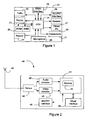
- a content receptor device 20 such as a PDA, with which a user may amongst other activities, view content.
- Content may be taken to include video and audio files which are rendered on the content receptor device 20 by a content provider device 40.
- the content receptor device 20 includes a controller 21 which co-ordinates and controls the operation of the other elements of the content receptor device 20 such as a transceiver 22, display 23, memory 24, input device 25 such as a keypad, microphone 26, and loudspeaker 27 as will be readily understood by those skilled in the art.
- the memory 24 comprises Read Only and Random Access portions (ROM, RAM) 35, 36 to provide storage for the code necessary to implement the functions of the content receptor device 10.
- the memory 24 is also used to store data which has been generated, received or is otherwise utilised by the content receptor device 20.
- the content receptor device 20 is provided with separate infrared/low power radio frequency (LPRF) interface 28 and wired interface 29.
- the content receptor device is also provided with a wired audio/video outputs 30 and a headphone jack 31.
- the Infrared and LPRF interfaces 28/29 provide wireless point to point connectivity whilst the audio/video outputs 30 and headphone jack 31 expand the multimedia capabilities of the content receptor device 20.
- the wireless connectivity provided by the IR and LPRF interfaces 28/29 allow connections to be made to other suitably equipped devices, such as a cellular mobile telephone, a digital television/video set and the like.
- the interfaces 28/29 provide the physical functionality necessary to implement their respective transport protocols.
- the protocol might be based on that proposed by the Infrared Data Association (IrDA) and whose website providing links to information on the protocol currently is to be found at www.irda.org.
- IrDA Infrared Data Association
- LPRF the protocol might be that proposed by the Bluetooth TM Special Interest Group (Bluetooth TM ) and whose website providing links to information on the protocol is currently to be found at www.bluetooth.com.
- Transport protocols including those mentioned above allow different devices to communicate and thereby enable the sharing of applications and data.
- this is typically line of site, point to point communication between two devices.
- the communication need not take place in line of site, and may extend beyond point to point in to local clusters of connected devices such as a piconet or scatternet. Whether a content receptor device 20 enters into a point to point, piconet, or scatternet connection is entirely within the control of the user through a user interface 25.
- FIG 2 there is shown content provider device 40, such as a set-top box (STB) for delivering digital broadband broadcasts to a user.
- the content of the broadcasts is encapsulated within a packetised transport stream such as that provided in the ISO MPEG-2 standard, by way of example. Details of the ISO MPEG-2 standard are, of course, well known to those skilled in the art.
- transport streams may be delivered using a variety of technologies including cable, terrestrial and satellite, however for the purposes of understanding and to avoid complexity the terrestrial standard is referred to throughout the following although this should be understood to incorporate features common to the other delivery technologies.
- the STB 40 includes a transport demultiplexer 44, audio decoder 42 and video decoder 43 whose operation is co-ordinated by a controller 41 having a memory 45 which provides storage for a number of functions including a host application.
- a transport stream is received from a RF stage connected to an antenna 46 or other such feed.
- the transport stream contains multiplexed compressed content streams of audio, video and data together with system information streams carrying the information required to facilitate the selection of content streams for delivery to the video and audio decoders.
- the output (not shown) of the audio and video decoders is delivered to rendering subsystems which includes digital to analogue converters whose own output is provided via a scart connection or the like to a television.
- the STB 40 functionality is included within the television.
- the output may also be delivered to a content receptor device 20 via an infrared/low power radio frequency interface 48, or a wired interface 49. These interfaces are designed to allow communications via the interfaces 28/29 of the content receptor device 20.
- a user selects a particular content stream for rendering via a user interface, typically via a remote control.
- this functionality may be provided in the content receptor device 20. Only a part of the content may be transferred in one operation, but preferably the whole content is selected for transfer.
- the user simply enters a desired channel number at the remote control, which is transmitted via an IR signal to the STB 40 where the channel indication is analysed by the host application utilising the system data delivered in the transport stream to obtain a set of parameters which are then supplied to the transport demultiplexer.
- the parameters cause the transport demultiplexer to be configured in a manner which causes the content stream or streams to be identified in the transport stream.
- an on-screen display permits a user to select directly from a program list or suchlike.
- the OSD is generated by the video decoder from information obtained by the host application via the controller 41.
- the host application generates instructions for the controller 41 which in turn configures the transport demultiplexer 44 to capture tables and program specific information from the transport stream. This information is then used to build the OSD.
- the content receptor device controller 21 may monitor the time of day and is arranged to initiate transmission of content, which the user has previously selected or authorised for transmission, after midnight. Subsequently, the controller 41 in the content provider device is arranged to transmit the user selected content to the content receptor device 20 via the interfaces 28/29. This is received by the content receptor device 20 via the interfaces 48/49 and stored in the memory 24 for later retrieval by a user of the content receptor device 20.
- the controller 21 may instead be arranged to determine a measure of the usage or activity of the receptor device 20, and to monitor the usage or activity over time.
- a period of low activity is considered to be present if the device has not been utilised, other than perhaps by maintaining an IDLE connection with a network, for two hours, for example. Other schemes by which a period of low device activity could be inferred will be apparent.
- the controller 21 is arranged to monitor device usage or activity over an extended period, for example a few weeks or months. From this monitoring, the controller 21 can determine times of low device activity in a predictive way. Obviously, the greater the amount of usage data and the more sophisticated the prediction algorithm, then the more accurate the predictions become.
- prediction capabilities can provide a device 20 with more flexible behaviour, which might for example perform better if the user is employed at unusual times, for example nights and/or weekends.
- the controller serves as a transfer control means and initiates the sending of a content request signal to the content provider device 40, which then responds by sending an item of content as appropriate.
- a determination that device activity no longer is low results in transmission being terminated and the received content data being deleted from the memory 24.
- the whole item of content must be transmitted at a later time if it is to be present in the content receptor device 20.
- transmission is resumed or recommenced, as the case may be, only in a period of low device activity, be it determined or predicted.
- data compression is carried out during periods of low device activity or usage.
- the uncompressed data can be deleted, to free memory space.
- received content which is already compressed may be decompressed under control of the controller 21 during periods of low device activity, and the compressed data then deleted in favour of the uncompressed data.
- the controller may be arranged during periods of low device activity to configure received content into a form suitable for delivery using the particular delivery capabilities of the device 20.
- the reformatting may be in terms of display parameters, or in terms of filtering out (i.e. removing) an audio or visual component of the content
- the filtering preferably takes account of the capabilities of the device 20.
- the controller 21 in the content receptor device is arranged to analyse the format of the content received and, if required, re-configure the content into a format suitable for subsequent delivery to the user using the particular hardware/software features of the content receptor device 20.
- the controller 21 may also use the period of reduced activity to decompress the content if the content has been transmitted in a compressed format.
- the content receptor device 20 may be arranged to back up the content contained in its memory 24, into the memory 45 of the content provider device 40. Any content which is not immediately required by the content receptor device 20, for example, for the device 20 to function, may be initially transferred to the memory 45 prior to being re-transmitted back into the memory 24 following the transfer of new content into the memory 24.
- the delivery of the content streams to a content receptor device 20 is contingent on there being a connection established with the content receptor device 40.
- a content receptor device 20 user who wishes to receive the content streams will have already registered his/her device with the application software of the controller 41. Such a registration process will involve the authentication of the content receptor device 20, typically before the transmission of the content streams.
- the initiation of data transfer is expected to lead to the transfer of content from the content provider device 40 to the content receptor device 20, this may not always be possible. If, for example, the content provider device 40 is busy or unable to immediately respond for some other reason (for example because of some system error), it may reply to an initiation call from the content receptor device with a wait' or 'request not currently executable' signal. The content receptor device 20 may in response to receiving such a signal wait for a predetermined period before sending a further initiation call.
- the content transfer control means is arranged to initiate the transfer of an item of content upon determining a period of low device activity.
- the present invention uses periods of low device activity to seek the transfer of an item of content from the content provider device to the receptor device. Efficient use of device resources is thus accomplished by making efficient use of device resource downtime, such as can occur during the night-time.
- the processing or communication resources of the device are not used for the downloading or uploading of content when the device is being used for other, time critical, purposes, or there is a high chance that it will be so used, such as during the daytime and evening.
- the content transfer control means forms part of the device of which the level of activity is most important.
- the content receptor device 20 is a PDA or a mobile telephone, for instance, it is the level of activity of that device which is important, so the level of activity is detected therein and the controller 21 serves as the content transfer control means.
- the controller 21 serves as the content transfer control means.
- the content transfer control means may be contained in the other device, namely the device whose level of activity is not determined.
- the content transfer control means may determine device activity by analysing the passing of time and by associating low (acceptable) levels of device activity with particular times.
- the content transfer control means in the content receptor device is arranged to monitor the time, for example using a system clock, and to initiate a transfer of content from the content provider device at a particular pre-determined low activity time, e.g. night-time, early morning, and/or weekends, when periods of activity of the device are expected to be low (acceptable).
- the content transfer control means includes software which allows a user to change the times when content is transferred.
- supposing a PDA pre-determines that 10pm to midnight is a suitable time for transferring data content. This information is available to a user through an item on a menu of the PDA. If the user then decides that the pre-determined time is not convenient, for example because the user has planned an on-line conference with a friend, the user may change the time at which data content may be transferred to a later time. Alternatively, the user may simply specify that the pre-determined time is not convenient, in response to which the PDA determines another time period in which to transfer content, and makes this information available for display to the user. Thus, the user can program and re-program different times when the transfer of content is convenient.
- the content transfer control means such as the processor 21 of the content receiver device 20, preferably determines device activity by monitoring the usage of one or more of the device components, such as a processor or transmission component, over a particular period of time. A measure of the usage of the or each component is then compared to a threshold, and a low level of device usage is determined when the threshold is not exceeded. Alternatively, low activity period is considered to be present when it is detected that there has been no component usage at all, except for non-user initiated activity such as the maintenance of network connections, for a predetermined time.
- a timer within the content receptor device is arranged to be reset at the end of each period of component usage arising from a user initiated activity, and transfer of content is initiated when the timer reaches a predetermined value.
- the predetermined time period may vary depending on the time of day, for example the time period may be longer during the daytime when use of the content receptor device by a user is more likely than at night-time.
- the content transfer control means is arranged to monitor device activity over a period of time, which might be an hour, a day, a week or a month depending on the circumstances.
- the transfer control means uses the monitored device activity to predict future device activity levels, and from the predicted activity levels identify times at which the device activity is expected to be low for a suitably long duration that content transfer might be appropriate at those times. This predicts times for future acceptable activity levels based on learning from historical activity levels.
- the analysis of levels of activity may be limited to the determination of low levels of device activity.
- one or each of the devices 20, 40 is arranged such that transfer content can be suspended and an indication of what data has been transferred and/or what data remains to be transferred stored at an appropriate location.
- Content which has been received at the content receiver device remains stored, and the corresponding data may be deleted from the content transmitter device.
- the devices may be configured to terminate the transmission and re-transmit the whole item of content during a subsequent low activity period, which may be the next low activity period.
- software in the content receptor device causes it to provide the user with the option either to continue with the download of the item of content or to suspend the download until a subsequent low device activity period, and to control the devices appropriately depending on the user input.
- a transmission duration may be estimated for each item of content, for example by dividing a value equal to the size of the file by a value equal to an expected transfer rate.
- the transmission duration for an item of content is considered by the content transfer control means, which then makes a decision on whether the content should be begun to be transferred based on the expected transmission time and on the expected duration of low level device activity. Only if a reasonable chance that the content is transferable without interruption is determined does the content transfer control means initiate transfer. The decision as to whether or not to initiate transfer is made depending on factors such as the time remaining to the next expected period of low device activity and the age of the content to be transferred.
- the content transfer control means is controlled by software to initiate transfer and, if transfer is suspended for any reason, to resume transfer as soon as low device activity is again detected, even if the period of low device activity is not known or expected to be of sufficient duration to allow the remainder of the content to be transferred without further suspension.
- the content transfer control means may be arranged to compress the content. This may be done using content/data compression algorithms stored on the memory means, and may be done once the content has been transferred to the memory means of the content receptor device or in real-time as part of the transfer process. Compression of content is ordinarily a processing intensive task, and this performs processing according to acceptable device activity periods, when sufficient processing capacity should be available without unduly affecting device performance.
- the transferred content which may have been compressed previously, would advantageously be removed from the memory means to leave the compressed content. This may occur immediately following, or during, the compression by the content transfer control means, or at some later time. The removal may be by deletion or transfer to a storage area, e.g. on the content provider device, or onto a removable memory card of the content receptor device. Such increases the amount of memory space available on the memory means for subsequent storage of content.
- the content transfer control means may be arranged to configure the content into a form suitable for the delivery capabilities of the content receptor device. This makes efficient use of device processing resources to configure the content at a time when the content receptor device resources are at acceptable levels of activity. Furthermore, such does not require any special hardware or software of the content provider device, which can be provided to deliver content to content receptor devices having different delivery capabilities.
- the content transfer control means may be arranged to reformat the content into a form suitable for display on a display means of the content receptor device. This may be done by considering the particular screen capability, size or resolution of the content receptor device, and re-configuring the content into a format particularly suitable for display on the content receptor device screen.
- the content transfer control means may be arranged to configure a high resolution image into a lower resolution image, or to replace colour content with black and white content, or to remove advertising messages to leave the useful content.
- the content transfer control means may be arranged to filter out one of visual and audible content from content comprising both, leaving the other of the audio and visual content. So, in the case of a content receptor device having audio means but no screen display, the device is preferably configured to remove visual content and leave audio content for delivery to a user of the content receptor device.
- the content provider device 40 may be a set-top box, which stores audio-visual content, for example data received using a digital television receiver.
- a short program or film may comprise many megabytes of data, which is downloaded to a content receiver device 20, such as a PDA, for storage on a memory card associated therewith using a Bluetooth TM link.
- the content is not in a form usable by the PDA.
- the data in the memory card is processed into a form suitable for use. The processing might involve the modification of image signals so as to reduce the resolution to one suitable for the display provided on the PDA, and the modification of audio signals to produce a mono output having a bandwidth commensurate with that of the audio output capabilities of the PDA.
- the processing might also involve compression of one or both of the audio and video signals, e.g. using MPEG-4 or MP3 format, to reduce the amount of memory that is required to store the program or film.
- the processing of the data can be carried out when the PDA is no longer able to communicate with the set-top box, for example when the user has taken the PDA from the user's home to the user's car.
- the opportunities for processing data during periods of low level device activity are increased compared to the opportunities for downloading content.
- the PDA is arranged, though, to perform processing when the PDA is connected to a battery charging source, so that the processing does not unnecessarily consume power, if the PDA knows or expects there to be charging periods within an appropriate time period.
- a significant advantage of processing signals in this way is found in that the processor is not used during periods of device activity other than low device activity. Processing resources are not, therefore, used when they might be required by a user to be used for other purposes, for example web browsing.
- compression of data comprising content of interest is carried out by the content provider device 40, or at some other location.
- compressed data is transferred to the content receiver device 20, such as a PDA, in an efficient form, which has the advantage that the time taken to transfer the content between the devices is reduced.
- the content receiver device 20 such as a PDA
- the PDA 20 is arranged such that decompression processing occurs during periods of low level device activity, with decompressed data being stored locally in place of the compressed data. This has particular advantage since many devices at present, and particularly mobile devices, are not provided with sufficient processing power to enable decompression of video or other signals to be carried out in real-time.
- carrying out decompression during low level device activity periods can allow a user to avoid having to wait for his device 20 to decompress stored data before it can be viewed or otherwise used. Also, the processing resources of the PDA 20 need not be used for decompressing content data when they might be required for other purposes.
- the content receptor device may also serve as a content provider device.
- a PDA 20 For example, supposing a PDA 20 has stored in its memory compressed data concerning an audio-visual object which consumes a large proportion of the available memory. If the user then wanted to download from a content provider device content for which there is insufficient space in the memory, the PDA would detect this before transfer had been initiated and as a result a transfer initiation signal is not sent. Instead, the PDA 20 signals to the content provider device 40 that it requires the uploading of content for storage thereby. Following receipt of an acknowledgment signal, the PDA 20 transmits the data comprising the audio-visual object to the content provider device, which then stores it in its memory.
- the PDA On detection that the file has transferred, the PDA then sends a signal initiating transmission from the content provider device of the required file.
- the file uploaded to the content provider device 40 may then be downloaded at any subsequent time, if for example the PDA 20 has deleted the second file upon instruction from the user.
- the transfer of content from the PDA 20 to the content provider device 40 is dependent on a determination of device activity.
- the PDA 20 may be arranged subsequently to process the received content so as to compress it, so that it requires less memory for storage. Following compression, then PDA 20 then stores the compressed content in memory, and deletes the uncompressed content.
- the PDA 20 may then initiate transfer of the audio-visual object from the content provider device 40 back to the PDA 20 for storage therein.
- the PDA 20 comes to have stored therein both content files after having compressed the second file even though it did not have sufficient memory to store the first file and the second file, when un-compressed, simultaneously.
- the invention is particularly suited to forms of content which do not require instantaneous delivery to a user e.g. a broadcast of news summary, or historical stock market movements in the previous day/week.
- the invention is also particularly suited to data rich content, such as a video stream, which would ordinarily occupy a relatively large amount of processing power, or other resource capability, of the content provider/receptor device. For example, it is increasingly found that the vast majority of news items do not change during the day such that the difference between a news transmission first thing in the morning and that at the end of a day is not far different.
- the present invention would be able to make advantageous use of this minimal difference in content to download the news items first thing in the morning, before the user has started to use his/her content receptor device, and store it in the memory means for delivery to the user at a more convenient time later on during the day.
- the content receptor device 20, especially when implemented as a PDA, may be used in conjunction with a docking device (not shown), which may or may not include a battery charging facility. Docking devices are known; the advanced desktop charger available for use with the Nokia Communicator TM being one such example.
- data preferably is communicated between the content provider device 40 and the docking device via a wired or a wireless link, and communicated between the content receptor device 20 and the docking device by way of a connection forming part of the docking mechanism.
- a signal generated by the content receptor device for initiating the transfer of content may be sent to the docking device, where it is forwarded onto the content provider device 40 with or without processing or modification.
Landscapes
- Engineering & Computer Science (AREA)
- Computer Networks & Wireless Communication (AREA)
- Signal Processing (AREA)
- Computer Hardware Design (AREA)
- General Engineering & Computer Science (AREA)
- Computer Security & Cryptography (AREA)
- Information Transfer Between Computers (AREA)
- Two-Way Televisions, Distribution Of Moving Picture Or The Like (AREA)
- Holo Graphy (AREA)
- Refuse Collection And Transfer (AREA)
Claims (13)
- Dispositif (20) comprenant des moyens d'interface utilisateur pour permettre à un utilisateur de sélectionner un élément de contenu, et des moyens de contrôle de transfert de contenu configurés pour déterminer une période d'activité acceptable en surveillant l'utilisation d'un ou plusieurs composants du dispositif (20) pendant une durée de temps particulière, et dans lequel les moyens de contrôle de transfert de contenu sont configurés pour déterminer qu'une période d'activité acceptable est présente lorsque l'utilisation de composant est déterminée comme ayant été inférieure à un niveau de seuil particulier pendant la durée de temps particulière, les moyens de contrôle de transfert de contenu étant agencés pour initier le transfert de l'élément de contenu à partir d'un dispositif fournisseur de contenu en fonction de la détermination d'une période d'activité acceptable, pour recevoir l'élément de contenu et stocker le contenu dans des moyens de mémoire (24).
- Dispositif (20) comprenant des moyens d'interface utilisateur pour permettre à un utilisateur de sélectionner un élément de contenu, et des moyens de contrôle de transfert de contenu agencés pour déterminer l'activité de dispositif en analysant l'activité du dispositif pendant une durée de temps et pour prédire à partir de cela des niveaux d'activité de dispositif acceptables pendant des durées de temps ultérieures, les moyens de contrôle de transfert de contenu étant agencés pour initier le transfert de l'élément de contenu à partir d'un dispositif fournisseur de contenu à un moment prédit des niveaux d'activité de dispositif acceptables, le dispositif étant utilisable pour recevoir les éléments de contenu et pour stocker le contenu dans des moyens de mémoire (24).
- Dispositif selon la revendication 2, dans lequel les moyens de contrôle de transfert de contenu sont agencés pour déterminer l'activité de dispositif en surveillant l'utilisation d'un ou plusieurs composants du dispositif pendant une durée de temps particulière.
- Dispositif selon l'une quelconque des revendications précédentes, dans lequel les moyens de contrôle de transfert de contenu sont agencés pour distinguer entre les différents niveaux de seuil d'activité de dispositif.
- Dispositif selon l'une quelconque des revendications précédentes, dans lequel les moyens de contrôle de transfert de contenu sont configurés pour terminer le transfert de l'élément de contenu à l'interruption d'un niveau acceptable d'activité de dispositif par un niveau inacceptable d'activité de dispositif.
- Dispositif selon l'une quelconque des revendications précédentes, dans lequel les moyens de contrôle de transfert de contenu sont configurés pour suspendre le transfert de l'élément de contenu jusqu'à une période d'activité de dispositif acceptable à l'interruption d'un niveau acceptable d'activité de dispositif par un niveau inacceptable d'activité de dispositif.
- Dispositif selon l'une quelconque des revendications précédentes, dans lequel l'élément de contenu a une durée de transmission associée qui peut être analysée par les moyens de contrôle de transfert de contenu, et les moyens de contrôle de transfert de contenu sont agencés pour analyser si une durée suffisante d'un niveau acceptable d'activité de dispositif est disponible pour le transfert du contenu.
- Dispositif selon l'une quelconque des revendications précédentes, dans lequel les moyens de contrôle de transfert de contenu sont agencés pour compresser le contenu transféré.
- Système comprenant un dispositif fournisseur de contenu (40) et un dispositif récepteur de contenu (20) selon l'une quelconque des revendications précédentes, le dispositif fournisseur de contenu étant utilisable pour transférer un élément de contenu au dispositif récepteur de contenu à l'initiation par le dispositif récepteur de contenu (20).
- Système selon la revendication 9, dans lequel le dispositif fournisseur de contenu est agencé pour configurer le contenu dans une forme adaptée à la livraison en tenant compte des capacités de livraison du dispositif récepteur de contenu.
- Système selon l'une quelconque des revendications 9 et 10, dans lequel le dispositif fournisseur de contenu comprend un moyen émetteur sans fil (48) pour transporter le contenu jusqu'à un moyen récepteur sans fil (28) du dispositif récepteur de contenu.
- Procédé pour fournir un contenu d'un dispositif fournisseur de contenu (40) à un dispositif récepteur de contenu (20), le procédé comprenant les étapes consistant à permettre à un utilisateur de sélectionner un élément de contenu par l'intermédiaire de moyens d'interface utilisateur, déterminer un niveau acceptable d'activité de dispositif pas les moyens de contrôle de transfert de contenu en surveillant l'utilisation d'un ou plusieurs composants du dispositif récepteur de contenu (20) pendant une durée de temps particulière et en déterminant qu'une période d'activité acceptable est survenue lorsque l'utilisation de composant est déterminée comme ayant été inférieure à un niveau de seuil particulier pendant la durée de temps particulière, et en réponse à cela initier le transfert de l'élément de contenu, recevoir l'élément de contenu au niveau du dispositif récepteur de contenu, et stocker le contenu dans des moyens de mémoire (24) du dispositif récepteur de contenu.
- Procédé pour fournir un contenu à partir d'un dispositif fournisseur de contenu (40) à un dispositif récepteur de contenu (20), le procédé comprenant les étapes consistant à autoriser à un utilisateur de sélectionner un élément de contenu par l'intermédiaire des moyens d'interface utilisateur, déterminer un niveau acceptable d'activité de dispositif par les moyens de contrôle de transfert de contenu en analysant l'activité du dispositif récepteur de contenu (20) sur une durée de temps et prédire à partir de cela les niveaux d'activité de dispositif acceptables pendant des durées de temps ultérieures, initier le transfert de l'élément de contenu à un moment prédit des niveaux d'activité de dispositif acceptables, recevoir l'élément de contenu au niveau du dispositif récepteur de contenu, et stocker le contenu dans des moyens de mémoire (24) du dispositif récepteur de contenu.
Applications Claiming Priority (2)
| Application Number | Priority Date | Filing Date | Title |
|---|---|---|---|
| GB0303059 | 2003-02-10 | ||
| GB0303059A GB2398199A (en) | 2003-02-10 | 2003-02-10 | A system for transferring content audio and video data from a provider to a personal digital assistant |
Related Child Applications (1)
| Application Number | Title | Priority Date | Filing Date |
|---|---|---|---|
| EP07106403 Division | 2007-04-18 |
Publications (2)
| Publication Number | Publication Date |
|---|---|
| EP1445703A1 EP1445703A1 (fr) | 2004-08-11 |
| EP1445703B1 true EP1445703B1 (fr) | 2007-10-24 |
Family
ID=9952788
Family Applications (1)
| Application Number | Title | Priority Date | Filing Date |
|---|---|---|---|
| EP04100331A Expired - Lifetime EP1445703B1 (fr) | 2003-02-10 | 2004-01-29 | Transmission de données |
Country Status (5)
| Country | Link |
|---|---|
| US (1) | US8595283B2 (fr) |
| EP (1) | EP1445703B1 (fr) |
| AT (1) | ATE376689T1 (fr) |
| DE (1) | DE602004009622T2 (fr) |
| GB (1) | GB2398199A (fr) |
Cited By (12)
| Publication number | Priority date | Publication date | Assignee | Title |
|---|---|---|---|---|
| US8205060B2 (en) | 2008-12-16 | 2012-06-19 | Sandisk Il Ltd. | Discardable files |
| US8375192B2 (en) | 2008-12-16 | 2013-02-12 | Sandisk Il Ltd. | Discardable files |
| US8463802B2 (en) | 2010-08-19 | 2013-06-11 | Sandisk Il Ltd. | Card-based management of discardable files |
| US8549229B2 (en) | 2010-08-19 | 2013-10-01 | Sandisk Il Ltd. | Systems and methods for managing an upload of files in a shared cache storage system |
| US8676682B2 (en) | 2007-06-14 | 2014-03-18 | Apple Inc. | Method and a system for delivering messages |
| US8788849B2 (en) | 2011-02-28 | 2014-07-22 | Sandisk Technologies Inc. | Method and apparatus for protecting cached streams |
| US8849856B2 (en) | 2008-12-16 | 2014-09-30 | Sandisk Il Ltd. | Discardable files |
| US8983978B2 (en) | 2010-08-31 | 2015-03-17 | Apple Inc. | Location-intention context for content delivery |
| US9015209B2 (en) | 2008-12-16 | 2015-04-21 | Sandisk Il Ltd. | Download management of discardable files |
| US9020993B2 (en) | 2008-12-16 | 2015-04-28 | Sandisk Il Ltd. | Download management of discardable files |
| US9104686B2 (en) | 2008-12-16 | 2015-08-11 | Sandisk Technologies Inc. | System and method for host management of discardable objects |
| US9141504B2 (en) | 2012-06-28 | 2015-09-22 | Apple Inc. | Presenting status data received from multiple devices |
Families Citing this family (61)
| Publication number | Priority date | Publication date | Assignee | Title |
|---|---|---|---|---|
| US8151259B2 (en) * | 2006-01-03 | 2012-04-03 | Apple Inc. | Remote content updates for portable media devices |
| EP1455501B1 (fr) * | 2003-03-06 | 2007-05-09 | NTT DoCoMo, Inc. | Procédé et dispositif pour commander du transfert de contenu |
| US7724716B2 (en) | 2006-06-20 | 2010-05-25 | Apple Inc. | Wireless communication system |
| US7831199B2 (en) | 2006-01-03 | 2010-11-09 | Apple Inc. | Media data exchange, transfer or delivery for portable electronic devices |
| US7827232B2 (en) * | 2003-05-05 | 2010-11-02 | Microsoft Corporation | Record button on a computer system |
| US7221331B2 (en) * | 2003-05-05 | 2007-05-22 | Microsoft Corporation | Method and system for auxiliary display of information for a computing device |
| US7551199B2 (en) * | 2003-05-05 | 2009-06-23 | Microsoft Corporation | Computer camera system and method for reducing parallax |
| US20040240650A1 (en) * | 2003-05-05 | 2004-12-02 | Microsoft Corporation | Real-time communications architecture and methods for use with a personal computer system |
| US20040235520A1 (en) | 2003-05-20 | 2004-11-25 | Cadiz Jonathan Jay | Enhanced telephony computer user interface allowing user interaction and control of a telephone using a personal computer |
| US7548255B2 (en) | 2003-09-30 | 2009-06-16 | Microsoft Corporation | Method and system for capturing video on a personal computer |
| US7216221B2 (en) | 2003-09-30 | 2007-05-08 | Microsoft Corporation | Method and system for unified audio control on a personal computer |
| US8032008B2 (en) * | 2003-12-25 | 2011-10-04 | Sony Corporation | Content recording/reproduction device, content recording/reproduction method, information processing device, and content recording/reproduction system |
| US7774378B2 (en) | 2004-06-04 | 2010-08-10 | Icentera Corporation | System and method for providing intelligence centers |
| JP4252599B2 (ja) * | 2004-07-06 | 2009-04-08 | パナソニック株式会社 | 再生装置 |
| EP1650971A1 (fr) * | 2004-10-19 | 2006-04-26 | APS Astra Platform Services GmbH | Procédés et systèmes de transmission de données à une unité mobile de traitement de données |
| US7706637B2 (en) | 2004-10-25 | 2010-04-27 | Apple Inc. | Host configured for interoperation with coupled portable media player device |
| US7711868B2 (en) | 2004-11-23 | 2010-05-04 | Microsoft Corporation | Waking a main computer system to pre-fetch data for an auxiliary computing device |
| US7634780B2 (en) * | 2004-11-23 | 2009-12-15 | Microsoft Corporation | Method and system for exchanging data between computer systems and auxiliary displays |
| US7581034B2 (en) * | 2004-11-23 | 2009-08-25 | Microsoft Corporation | Sending notifications to auxiliary displays |
| US7593782B2 (en) | 2005-01-07 | 2009-09-22 | Apple Inc. | Highly portable media device |
| US7784065B2 (en) * | 2005-02-07 | 2010-08-24 | Microsoft Corporation | Interface for consistent program interaction with auxiliary computing devices |
| US8819569B2 (en) | 2005-02-18 | 2014-08-26 | Zumobi, Inc | Single-handed approach for navigation of application tiles using panning and zooming |
| JP4325579B2 (ja) * | 2005-03-29 | 2009-09-02 | ヤマハ株式会社 | コンテンツデータ再生装置およびコンテンツデータ再生プログラム |
| US8300841B2 (en) | 2005-06-03 | 2012-10-30 | Apple Inc. | Techniques for presenting sound effects on a portable media player |
| US20070091736A1 (en) * | 2005-10-10 | 2007-04-26 | Lectronix, Inc. | System and method for storing and managing digital content |
| US7930369B2 (en) | 2005-10-19 | 2011-04-19 | Apple Inc. | Remotely configured media device |
| US8654993B2 (en) | 2005-12-07 | 2014-02-18 | Apple Inc. | Portable audio device providing automated control of audio volume parameters for hearing protection |
| US8255640B2 (en) | 2006-01-03 | 2012-08-28 | Apple Inc. | Media device with intelligent cache utilization |
| US20070192763A1 (en) * | 2006-02-15 | 2007-08-16 | Helvick Richard E | Method and system for scheduling application of software updates |
| US7848527B2 (en) | 2006-02-27 | 2010-12-07 | Apple Inc. | Dynamic power management in a portable media delivery system |
| US8358273B2 (en) | 2006-05-23 | 2013-01-22 | Apple Inc. | Portable media device with power-managed display |
| US7729791B2 (en) | 2006-09-11 | 2010-06-01 | Apple Inc. | Portable media playback device including user interface event passthrough to non-media-playback processing |
| US8341524B2 (en) | 2006-09-11 | 2012-12-25 | Apple Inc. | Portable electronic device with local search capabilities |
| US8090130B2 (en) | 2006-09-11 | 2012-01-03 | Apple Inc. | Highly portable media devices |
| US8095699B2 (en) * | 2006-09-29 | 2012-01-10 | Mediatek Inc. | Methods and apparatus for interfacing between a host processor and a coprocessor |
| JP2008090626A (ja) * | 2006-10-02 | 2008-04-17 | Sony Corp | 転送装置、転送システム、プログラムおよび転送方法 |
| US8978066B2 (en) * | 2006-12-08 | 2015-03-10 | Verizon Patent And Licensing Inc. | Method, computer program product, and apparatus for providing communications with at least one media provider |
| GB2440990B (en) * | 2007-01-09 | 2008-08-06 | Cvon Innovations Ltd | Message scheduling system |
| US7589629B2 (en) | 2007-02-28 | 2009-09-15 | Apple Inc. | Event recorder for portable media device |
| US8914786B2 (en) | 2007-03-23 | 2014-12-16 | Zumobi, Inc. | Systems and methods for controlling application updates across a wireless interface |
| US9398346B2 (en) | 2007-05-04 | 2016-07-19 | Time Warner Cable Enterprises Llc | Methods and apparatus for predictive capacity allocation |
| US8533847B2 (en) | 2007-05-24 | 2013-09-10 | Sandisk Il Ltd. | Apparatus and method for screening new data without impacting download speed |
| GB2450387B (en) | 2007-06-18 | 2009-07-08 | Cvon Innovations Ltd | Method and system for managing delivery of communications |
| US7577433B2 (en) | 2007-06-18 | 2009-08-18 | Cvon Innovations Limited | Method and system for managing delivery of communications |
| US9060208B2 (en) | 2008-01-30 | 2015-06-16 | Time Warner Cable Enterprises Llc | Methods and apparatus for predictive delivery of content over a network |
| US8612571B2 (en) * | 2008-03-31 | 2013-12-17 | At&T Intellectual Property I, L.P. | Audio content identification system and methods thereof |
| US20100088157A1 (en) * | 2008-10-06 | 2010-04-08 | Sidebar, Inc. | System and method for the throttled delivery of advertisements and content based on a sliding scale of usage |
| US9014640B2 (en) * | 2008-10-31 | 2015-04-21 | Qualcomm Incorporated | Wake-up trigger for implementation of target actions |
| US9043467B2 (en) | 2009-01-30 | 2015-05-26 | Movik Networks | Adaptive chunked and content-aware pacing of multi-media delivery over HTTP transport and network controlled bit rate selection |
| CN102282550A (zh) * | 2009-01-30 | 2011-12-14 | 莫维克网络公司 | 应用和使用以及无线链路感知传输网络调度程序 |
| US8881132B2 (en) * | 2009-03-05 | 2014-11-04 | Hewlett-Packard Development Company, L.P. | System and method for update of firmware of a storage array controller in a storage area network |
| CN102511035A (zh) | 2009-11-09 | 2012-06-20 | 莫维克网络公司 | 用于umts/hspa网络中改善的ran效率的突发分组调度器 |
| US8886811B2 (en) | 2010-11-29 | 2014-11-11 | Motorola Mobility Llc | Method and device for improving a browsing experience |
| US8978079B2 (en) | 2012-03-23 | 2015-03-10 | Time Warner Cable Enterprises Llc | Apparatus and methods for managing delivery of content in a network with limited bandwidth using pre-caching |
| US9141637B2 (en) * | 2012-09-26 | 2015-09-22 | International Business Machines Corporation | Predictive data management in a networked computing environment |
| US20140167686A1 (en) * | 2012-12-18 | 2014-06-19 | Elngot Llc | Content download and synchronization |
| US9593670B2 (en) | 2014-04-30 | 2017-03-14 | General Electric Company | System and methods for reducing wind turbine noise |
| US9872255B2 (en) * | 2015-04-01 | 2018-01-16 | Ebay Inc. | Battery charge aware communications |
| US10306586B2 (en) | 2016-06-10 | 2019-05-28 | Apple Inc. | Coordinated notifications |
| WO2018154667A1 (fr) * | 2017-02-23 | 2018-08-30 | 株式会社日立製作所 | Système de stockage de type évolutif |
| US10785611B1 (en) | 2019-06-03 | 2020-09-22 | Motorola Solutions, Inc. | Method and cloud service for updating a cloud component |
Citations (1)
| Publication number | Priority date | Publication date | Assignee | Title |
|---|---|---|---|---|
| US6067565A (en) * | 1998-01-15 | 2000-05-23 | Microsoft Corporation | Technique for prefetching a web page of potential future interest in lieu of continuing a current information download |
Family Cites Families (16)
| Publication number | Priority date | Publication date | Assignee | Title |
|---|---|---|---|---|
| GB9007541D0 (en) * | 1990-04-03 | 1990-05-30 | Int Computers Ltd | Switching network |
| WO1995003679A1 (fr) * | 1993-07-20 | 1995-02-02 | Nomadic Systems, Inc. | Procede et appareil de gestion du transfert de donnees dans un systeme de communication cellulaire |
| JP4309480B2 (ja) * | 1995-03-07 | 2009-08-05 | 株式会社東芝 | 情報処理装置 |
| AUPO600897A0 (en) * | 1997-04-04 | 1997-05-01 | Canon Information Systems Research Australia Pty Ltd | An efficient method of image compression comprising a low resolution image in the bit stream |
| US6239843B1 (en) * | 1997-05-05 | 2001-05-29 | Wavo Corporation | Method and system for decoding data in a signal |
| US6061686A (en) * | 1997-06-26 | 2000-05-09 | Digital Equipment Corporation | Updating a copy of a remote document stored in a local computer system |
| US6182133B1 (en) * | 1998-02-06 | 2001-01-30 | Microsoft Corporation | Method and apparatus for display of information prefetching and cache status having variable visual indication based on a period of time since prefetching |
| US6237039B1 (en) * | 1998-06-30 | 2001-05-22 | Webtv Networks, Inc. | Method and apparatus for downloading auxiliary data to a client from a network during client idle periods |
| US6721288B1 (en) * | 1998-09-16 | 2004-04-13 | Openwave Systems Inc. | Wireless mobile devices having improved operation during network unavailability |
| US6920110B2 (en) * | 2001-02-14 | 2005-07-19 | Microsoft Corporation | System and method for transferring data over a network |
| US6842768B1 (en) * | 2000-03-01 | 2005-01-11 | Siemens Communications, Inc. | Apparatus and method for selectable compression |
| IL136207A0 (en) * | 2000-05-17 | 2001-05-20 | Naftel Technologies Ltd | An e-mail management system for wireless pcd |
| US6742033B1 (en) * | 2000-06-12 | 2004-05-25 | Gateway, Inc. | System, method and computer program product that pre-caches content to provide timely information to a user |
| US6966034B2 (en) * | 2000-06-30 | 2005-11-15 | Microsoft Corporation | Supplemental request header for applications or devices using web browsers |
| US20020052925A1 (en) * | 2000-08-29 | 2002-05-02 | Yoohwan Kim | Method and apparatus for information delivery on the internet |
| JP2003186794A (ja) * | 2001-12-13 | 2003-07-04 | Fujitsu Ltd | 情報提供プログラム,情報提供プログラムを記録したコンピュータ読取可能な記録媒体及び情報提供装置 |
-
2003
- 2003-02-10 GB GB0303059A patent/GB2398199A/en not_active Withdrawn
-
2004
- 2004-01-29 DE DE602004009622T patent/DE602004009622T2/de not_active Expired - Lifetime
- 2004-01-29 AT AT04100331T patent/ATE376689T1/de not_active IP Right Cessation
- 2004-01-29 EP EP04100331A patent/EP1445703B1/fr not_active Expired - Lifetime
- 2004-02-03 US US10/770,868 patent/US8595283B2/en active Active
Patent Citations (1)
| Publication number | Priority date | Publication date | Assignee | Title |
|---|---|---|---|---|
| US6067565A (en) * | 1998-01-15 | 2000-05-23 | Microsoft Corporation | Technique for prefetching a web page of potential future interest in lieu of continuing a current information download |
Non-Patent Citations (1)
| Title |
|---|
| KANTER T. ET AL: "Smart Delivery of Multimedia Content for Wireless Applications", LECTURE NOTES IN COMPUTER SCIENCE, vol. 1818, January 2000 (2000-01-01), pages 70, Retrieved from the Internet <URL:http://www.springerlink.com/media/59dam5dwwj6yuk5pfmel/contributions/f/e/9/g/fe9g5wyc7fvq3ax0.pdf> [retrieved on 20060505] * |
Cited By (13)
| Publication number | Priority date | Publication date | Assignee | Title |
|---|---|---|---|---|
| US8676682B2 (en) | 2007-06-14 | 2014-03-18 | Apple Inc. | Method and a system for delivering messages |
| US8799123B2 (en) | 2007-06-14 | 2014-08-05 | Apple Inc. | Method and a system for delivering messages |
| US9015209B2 (en) | 2008-12-16 | 2015-04-21 | Sandisk Il Ltd. | Download management of discardable files |
| US8375192B2 (en) | 2008-12-16 | 2013-02-12 | Sandisk Il Ltd. | Discardable files |
| US8849856B2 (en) | 2008-12-16 | 2014-09-30 | Sandisk Il Ltd. | Discardable files |
| US8205060B2 (en) | 2008-12-16 | 2012-06-19 | Sandisk Il Ltd. | Discardable files |
| US9020993B2 (en) | 2008-12-16 | 2015-04-28 | Sandisk Il Ltd. | Download management of discardable files |
| US9104686B2 (en) | 2008-12-16 | 2015-08-11 | Sandisk Technologies Inc. | System and method for host management of discardable objects |
| US8549229B2 (en) | 2010-08-19 | 2013-10-01 | Sandisk Il Ltd. | Systems and methods for managing an upload of files in a shared cache storage system |
| US8463802B2 (en) | 2010-08-19 | 2013-06-11 | Sandisk Il Ltd. | Card-based management of discardable files |
| US8983978B2 (en) | 2010-08-31 | 2015-03-17 | Apple Inc. | Location-intention context for content delivery |
| US8788849B2 (en) | 2011-02-28 | 2014-07-22 | Sandisk Technologies Inc. | Method and apparatus for protecting cached streams |
| US9141504B2 (en) | 2012-06-28 | 2015-09-22 | Apple Inc. | Presenting status data received from multiple devices |
Also Published As
| Publication number | Publication date |
|---|---|
| EP1445703A1 (fr) | 2004-08-11 |
| DE602004009622T2 (de) | 2008-08-28 |
| GB0303059D0 (en) | 2003-03-19 |
| DE602004009622D1 (de) | 2007-12-06 |
| GB2398199A (en) | 2004-08-11 |
| ATE376689T1 (de) | 2007-11-15 |
| US20040210628A1 (en) | 2004-10-21 |
| US8595283B2 (en) | 2013-11-26 |
Similar Documents
| Publication | Publication Date | Title |
|---|---|---|
| EP1445703B1 (fr) | Transmission de données | |
| US8631451B2 (en) | Server architecture supporting adaptive delivery to a variety of media players | |
| CN102782709B (zh) | 用于数据的存储和无线收发的存储卡和方法 | |
| US8718698B2 (en) | Method and apparatus to facilitate download scheduling | |
| US9667435B2 (en) | Remote audio | |
| US20040237104A1 (en) | System and method for recording and displaying video programs and mobile hand held devices | |
| US20030157960A1 (en) | Remote storage for electronics | |
| US20080291263A1 (en) | Communication system | |
| WO2022089088A1 (fr) | Dispositif d'affichage, terminal mobile, procédé de transmission de données de diffusion d'écran et système de transmission | |
| EP1449368A1 (fr) | Systeme et procede d'enregistrement et d'affichage de programmes video pour dispositifs mobiles portables | |
| CN113301586A (zh) | 网络选择方法及电子设备 | |
| CN113840269A (zh) | 一种多媒体数据传输方法、装置、电子设备和存储介质 | |
| EP1670250A2 (fr) | Dispositif de communcation mobile et système supportant le contrôle de flux de média | |
| WO2007000455A1 (fr) | Changement de canal sur un dispositif mobile | |
| US12373157B2 (en) | Terminal device and mirroring method performed thereby | |
| US8260933B2 (en) | Multimedia content redirection method | |
| US20110320571A1 (en) | Apparatus and method for live streaming between mobile communication terminals | |
| KR101104244B1 (ko) | 셋탑박스를 이용한 홈네트워크 시스템 | |
| KR100703315B1 (ko) | 휴대단말기의 블루투스 통신에서 파일전송 장치 및 방법 | |
| WO2007077774A1 (fr) | Systeme audiovisuel, dispositif de commande, dispositif de sortie et programme | |
| EP1796354B1 (fr) | Méthode et terminal mobile pour la gestion de logs pendant une communication Bluetooth | |
| CN114339388B (zh) | 一种音频输出模式的控制方法及装置 | |
| KR100678034B1 (ko) | 휴대단말기에서 블루투스 통신을 이용한 파일 공유 방법 | |
| JP2004166189A (ja) | マルチメディアデータ管理装置、ネットワークシステム、及び、マルチメディアデータ管理方法 | |
| US20060146824A1 (en) | Mobile station and content playback method thereof |
Legal Events
| Date | Code | Title | Description |
|---|---|---|---|
| PUAI | Public reference made under article 153(3) epc to a published international application that has entered the european phase |
Free format text: ORIGINAL CODE: 0009012 |
|
| AK | Designated contracting states |
Kind code of ref document: A1 Designated state(s): AT BE BG CH CY CZ DE DK EE ES FI FR GB GR HU IE IT LI LU MC NL PT RO SE SI SK TR |
|
| AX | Request for extension of the european patent |
Extension state: AL LT LV MK |
|
| 17P | Request for examination filed |
Effective date: 20040823 |
|
| AKX | Designation fees paid |
Designated state(s): AT BE BG CH CY CZ DE DK EE ES FI FR GB GR HU IE IT LI LU MC NL PT RO SE SI SK TR |
|
| 17Q | First examination report despatched |
Effective date: 20050629 |
|
| GRAP | Despatch of communication of intention to grant a patent |
Free format text: ORIGINAL CODE: EPIDOSNIGR1 |
|
| RIC1 | Information provided on ipc code assigned before grant |
Ipc: H04L 12/28 20060101ALI20070529BHEP Ipc: H04L 29/00 20060101ALI20070529BHEP Ipc: H04L 12/00 20060101ALI20070529BHEP Ipc: H04L 12/26 20060101ALI20070529BHEP Ipc: H04L 29/06 20060101ALI20070529BHEP Ipc: G06F 13/00 20060101AFI20070529BHEP |
|
| GRAC | Information related to communication of intention to grant a patent modified |
Free format text: ORIGINAL CODE: EPIDOSCIGR1 |
|
| GRAS | Grant fee paid |
Free format text: ORIGINAL CODE: EPIDOSNIGR3 |
|
| GRAA | (expected) grant |
Free format text: ORIGINAL CODE: 0009210 |
|
| AK | Designated contracting states |
Kind code of ref document: B1 Designated state(s): AT BE BG CH CY CZ DE DK EE ES FI FR GB GR HU IE IT LI LU MC NL PT RO SE SI SK TR |
|
| REG | Reference to a national code |
Ref country code: GB Ref legal event code: FG4D |
|
| REG | Reference to a national code |
Ref country code: CH Ref legal event code: EP |
|
| REG | Reference to a national code |
Ref country code: IE Ref legal event code: FG4D |
|
| REF | Corresponds to: |
Ref document number: 602004009622 Country of ref document: DE Date of ref document: 20071206 Kind code of ref document: P |
|
| ET | Fr: translation filed | ||
| PG25 | Lapsed in a contracting state [announced via postgrant information from national office to epo] |
Ref country code: CH Free format text: LAPSE BECAUSE OF FAILURE TO SUBMIT A TRANSLATION OF THE DESCRIPTION OR TO PAY THE FEE WITHIN THE PRESCRIBED TIME-LIMIT Effective date: 20071024 Ref country code: SE Free format text: LAPSE BECAUSE OF FAILURE TO SUBMIT A TRANSLATION OF THE DESCRIPTION OR TO PAY THE FEE WITHIN THE PRESCRIBED TIME-LIMIT Effective date: 20080124 Ref country code: ES Free format text: LAPSE BECAUSE OF FAILURE TO SUBMIT A TRANSLATION OF THE DESCRIPTION OR TO PAY THE FEE WITHIN THE PRESCRIBED TIME-LIMIT Effective date: 20080204 Ref country code: LI Free format text: LAPSE BECAUSE OF FAILURE TO SUBMIT A TRANSLATION OF THE DESCRIPTION OR TO PAY THE FEE WITHIN THE PRESCRIBED TIME-LIMIT Effective date: 20071024 |
|
| REG | Reference to a national code |
Ref country code: CH Ref legal event code: PL |
|
| PG25 | Lapsed in a contracting state [announced via postgrant information from national office to epo] |
Ref country code: BG Free format text: LAPSE BECAUSE OF FAILURE TO SUBMIT A TRANSLATION OF THE DESCRIPTION OR TO PAY THE FEE WITHIN THE PRESCRIBED TIME-LIMIT Effective date: 20080124 Ref country code: SI Free format text: LAPSE BECAUSE OF FAILURE TO SUBMIT A TRANSLATION OF THE DESCRIPTION OR TO PAY THE FEE WITHIN THE PRESCRIBED TIME-LIMIT Effective date: 20071024 Ref country code: PT Free format text: LAPSE BECAUSE OF FAILURE TO SUBMIT A TRANSLATION OF THE DESCRIPTION OR TO PAY THE FEE WITHIN THE PRESCRIBED TIME-LIMIT Effective date: 20080324 |
|
| PG25 | Lapsed in a contracting state [announced via postgrant information from national office to epo] |
Ref country code: AT Free format text: LAPSE BECAUSE OF FAILURE TO SUBMIT A TRANSLATION OF THE DESCRIPTION OR TO PAY THE FEE WITHIN THE PRESCRIBED TIME-LIMIT Effective date: 20071024 |
|
| PG25 | Lapsed in a contracting state [announced via postgrant information from national office to epo] |
Ref country code: DK Free format text: LAPSE BECAUSE OF FAILURE TO SUBMIT A TRANSLATION OF THE DESCRIPTION OR TO PAY THE FEE WITHIN THE PRESCRIBED TIME-LIMIT Effective date: 20071024 Ref country code: CZ Free format text: LAPSE BECAUSE OF FAILURE TO SUBMIT A TRANSLATION OF THE DESCRIPTION OR TO PAY THE FEE WITHIN THE PRESCRIBED TIME-LIMIT Effective date: 20071024 |
|
| PG25 | Lapsed in a contracting state [announced via postgrant information from national office to epo] |
Ref country code: BE Free format text: LAPSE BECAUSE OF FAILURE TO SUBMIT A TRANSLATION OF THE DESCRIPTION OR TO PAY THE FEE WITHIN THE PRESCRIBED TIME-LIMIT Effective date: 20071024 Ref country code: MC Free format text: LAPSE BECAUSE OF NON-PAYMENT OF DUE FEES Effective date: 20080131 Ref country code: SK Free format text: LAPSE BECAUSE OF FAILURE TO SUBMIT A TRANSLATION OF THE DESCRIPTION OR TO PAY THE FEE WITHIN THE PRESCRIBED TIME-LIMIT Effective date: 20071024 Ref country code: RO Free format text: LAPSE BECAUSE OF FAILURE TO SUBMIT A TRANSLATION OF THE DESCRIPTION OR TO PAY THE FEE WITHIN THE PRESCRIBED TIME-LIMIT Effective date: 20071024 |
|
| PLBE | No opposition filed within time limit |
Free format text: ORIGINAL CODE: 0009261 |
|
| STAA | Information on the status of an ep patent application or granted ep patent |
Free format text: STATUS: NO OPPOSITION FILED WITHIN TIME LIMIT |
|
| 26N | No opposition filed |
Effective date: 20080725 |
|
| PG25 | Lapsed in a contracting state [announced via postgrant information from national office to epo] |
Ref country code: GR Free format text: LAPSE BECAUSE OF FAILURE TO SUBMIT A TRANSLATION OF THE DESCRIPTION OR TO PAY THE FEE WITHIN THE PRESCRIBED TIME-LIMIT Effective date: 20080125 Ref country code: EE Free format text: LAPSE BECAUSE OF FAILURE TO SUBMIT A TRANSLATION OF THE DESCRIPTION OR TO PAY THE FEE WITHIN THE PRESCRIBED TIME-LIMIT Effective date: 20071024 Ref country code: IE Free format text: LAPSE BECAUSE OF NON-PAYMENT OF DUE FEES Effective date: 20080129 |
|
| PG25 | Lapsed in a contracting state [announced via postgrant information from national office to epo] |
Ref country code: FI Free format text: LAPSE BECAUSE OF FAILURE TO SUBMIT A TRANSLATION OF THE DESCRIPTION OR TO PAY THE FEE WITHIN THE PRESCRIBED TIME-LIMIT Effective date: 20071024 |
|
| PG25 | Lapsed in a contracting state [announced via postgrant information from national office to epo] |
Ref country code: CY Free format text: LAPSE BECAUSE OF FAILURE TO SUBMIT A TRANSLATION OF THE DESCRIPTION OR TO PAY THE FEE WITHIN THE PRESCRIBED TIME-LIMIT Effective date: 20071024 |
|
| PGFP | Annual fee paid to national office [announced via postgrant information from national office to epo] |
Ref country code: FR Payment date: 20100208 Year of fee payment: 7 |
|
| PG25 | Lapsed in a contracting state [announced via postgrant information from national office to epo] |
Ref country code: LU Free format text: LAPSE BECAUSE OF NON-PAYMENT OF DUE FEES Effective date: 20080129 Ref country code: HU Free format text: LAPSE BECAUSE OF FAILURE TO SUBMIT A TRANSLATION OF THE DESCRIPTION OR TO PAY THE FEE WITHIN THE PRESCRIBED TIME-LIMIT Effective date: 20080425 |
|
| PG25 | Lapsed in a contracting state [announced via postgrant information from national office to epo] |
Ref country code: TR Free format text: LAPSE BECAUSE OF FAILURE TO SUBMIT A TRANSLATION OF THE DESCRIPTION OR TO PAY THE FEE WITHIN THE PRESCRIBED TIME-LIMIT Effective date: 20071024 |
|
| PG25 | Lapsed in a contracting state [announced via postgrant information from national office to epo] |
Ref country code: IT Free format text: LAPSE BECAUSE OF NON-PAYMENT OF DUE FEES Effective date: 20080131 |
|
| PGFP | Annual fee paid to national office [announced via postgrant information from national office to epo] |
Ref country code: GB Payment date: 20110126 Year of fee payment: 8 |
|
| REG | Reference to a national code |
Ref country code: FR Ref legal event code: ST Effective date: 20110930 |
|
| PG25 | Lapsed in a contracting state [announced via postgrant information from national office to epo] |
Ref country code: FR Free format text: LAPSE BECAUSE OF NON-PAYMENT OF DUE FEES Effective date: 20110131 |
|
| GBPC | Gb: european patent ceased through non-payment of renewal fee |
Effective date: 20120129 |
|
| PG25 | Lapsed in a contracting state [announced via postgrant information from national office to epo] |
Ref country code: GB Free format text: LAPSE BECAUSE OF NON-PAYMENT OF DUE FEES Effective date: 20120129 |
|
| PGFP | Annual fee paid to national office [announced via postgrant information from national office to epo] |
Ref country code: NL Payment date: 20130110 Year of fee payment: 10 |
|
| REG | Reference to a national code |
Ref country code: NL Ref legal event code: V1 Effective date: 20140801 |
|
| PG25 | Lapsed in a contracting state [announced via postgrant information from national office to epo] |
Ref country code: NL Free format text: LAPSE BECAUSE OF NON-PAYMENT OF DUE FEES Effective date: 20140801 |
|
| REG | Reference to a national code |
Ref country code: DE Ref legal event code: R082 Ref document number: 602004009622 Country of ref document: DE Representative=s name: EISENFUEHR SPEISER PATENTANWAELTE RECHTSANWAEL, DE Ref country code: DE Ref legal event code: R081 Ref document number: 602004009622 Country of ref document: DE Owner name: NOKIA TECHNOLOGIES OY, FI Free format text: FORMER OWNER: NOKIA CORP., 02610 ESPOO, FI |
|
| PGFP | Annual fee paid to national office [announced via postgrant information from national office to epo] |
Ref country code: DE Payment date: 20160127 Year of fee payment: 13 |
|
| REG | Reference to a national code |
Ref country code: DE Ref legal event code: R119 Ref document number: 602004009622 Country of ref document: DE |
|
| PG25 | Lapsed in a contracting state [announced via postgrant information from national office to epo] |
Ref country code: DE Free format text: LAPSE BECAUSE OF NON-PAYMENT OF DUE FEES Effective date: 20170801 |
|
| REG | Reference to a national code |
Ref country code: DE Ref legal event code: R082 Ref document number: 602004009622 Country of ref document: DE Representative=s name: BARKHOFF REIMANN VOSSIUS, DE Ref country code: DE Ref legal event code: R081 Ref document number: 602004009622 Country of ref document: DE Owner name: WSOU INVESTMENTS, LLC, LOS ANGELES, US Free format text: FORMER OWNER: NOKIA TECHNOLOGIES OY, ESPOO, FI |