EP1448363B1 - Procede permettant de reduire l'imbrication dans des articles en papier et articles en papier ainsi produits - Google Patents
Procede permettant de reduire l'imbrication dans des articles en papier et articles en papier ainsi produits Download PDFInfo
- Publication number
- EP1448363B1 EP1448363B1 EP02759614A EP02759614A EP1448363B1 EP 1448363 B1 EP1448363 B1 EP 1448363B1 EP 02759614 A EP02759614 A EP 02759614A EP 02759614 A EP02759614 A EP 02759614A EP 1448363 B1 EP1448363 B1 EP 1448363B1
- Authority
- EP
- European Patent Office
- Prior art keywords
- ridges
- bridging regions
- valleys
- paper
- layer
- Prior art date
- Legal status (The legal status is an assumption and is not a legal conclusion. Google has not performed a legal analysis and makes no representation as to the accuracy of the status listed.)
- Revoked
Links
- 238000000034 method Methods 0.000 title claims description 28
- 238000004049 embossing Methods 0.000 claims abstract description 55
- 239000000835 fiber Substances 0.000 claims description 37
- 238000001035 drying Methods 0.000 claims description 13
- 238000004804 winding Methods 0.000 claims description 11
- 230000013011 mating Effects 0.000 claims description 8
- 230000015572 biosynthetic process Effects 0.000 claims description 4
- 238000000151 deposition Methods 0.000 claims description 3
- 238000004519 manufacturing process Methods 0.000 claims description 2
- 230000002401 inhibitory effect Effects 0.000 abstract 1
- 239000000123 paper Substances 0.000 description 69
- 239000004744 fabric Substances 0.000 description 54
- 239000000523 sample Substances 0.000 description 39
- 239000000047 product Substances 0.000 description 36
- 238000012546 transfer Methods 0.000 description 23
- 239000011122 softwood Substances 0.000 description 16
- 238000003490 calendering Methods 0.000 description 9
- 238000007605 air drying Methods 0.000 description 8
- 230000008569 process Effects 0.000 description 6
- 239000000126 substance Substances 0.000 description 6
- 230000000930 thermomechanical effect Effects 0.000 description 6
- 229910000831 Steel Inorganic materials 0.000 description 5
- 239000007787 solid Substances 0.000 description 5
- 239000010959 steel Substances 0.000 description 5
- 239000000463 material Substances 0.000 description 4
- 238000012360 testing method Methods 0.000 description 4
- XLYOFNOQVPJJNP-UHFFFAOYSA-N water Substances O XLYOFNOQVPJJNP-UHFFFAOYSA-N 0.000 description 4
- 244000166124 Eucalyptus globulus Species 0.000 description 3
- 229920002994 synthetic fiber Polymers 0.000 description 3
- 239000012209 synthetic fiber Substances 0.000 description 3
- 239000007900 aqueous suspension Substances 0.000 description 2
- 238000005520 cutting process Methods 0.000 description 2
- 238000006073 displacement reaction Methods 0.000 description 2
- 229920001971 elastomer Polymers 0.000 description 2
- 230000001815 facial effect Effects 0.000 description 2
- 238000010438 heat treatment Methods 0.000 description 2
- 230000007246 mechanism Effects 0.000 description 2
- QSHDDOUJBYECFT-UHFFFAOYSA-N mercury Chemical compound [Hg] QSHDDOUJBYECFT-UHFFFAOYSA-N 0.000 description 2
- 229910052753 mercury Inorganic materials 0.000 description 2
- 238000012986 modification Methods 0.000 description 2
- 230000004048 modification Effects 0.000 description 2
- 230000035515 penetration Effects 0.000 description 2
- 239000011148 porous material Substances 0.000 description 2
- 238000003825 pressing Methods 0.000 description 2
- 239000005060 rubber Substances 0.000 description 2
- 244000283070 Abies balsamea Species 0.000 description 1
- 235000007173 Abies balsamea Nutrition 0.000 description 1
- 240000005020 Acaciella glauca Species 0.000 description 1
- 241000208140 Acer Species 0.000 description 1
- 241000217377 Amblema plicata Species 0.000 description 1
- 244000099147 Ananas comosus Species 0.000 description 1
- 235000007119 Ananas comosus Nutrition 0.000 description 1
- 235000018185 Betula X alpestris Nutrition 0.000 description 1
- 235000018212 Betula X uliginosa Nutrition 0.000 description 1
- 229910001369 Brass Inorganic materials 0.000 description 1
- JOYRKODLDBILNP-UHFFFAOYSA-N Ethyl urethane Chemical compound CCOC(N)=O JOYRKODLDBILNP-UHFFFAOYSA-N 0.000 description 1
- 229920000219 Ethylene vinyl alcohol Polymers 0.000 description 1
- 241000945868 Eulaliopsis Species 0.000 description 1
- 244000207543 Euphorbia heterophylla Species 0.000 description 1
- 241000628997 Flos Species 0.000 description 1
- 241000721662 Juniperus Species 0.000 description 1
- 235000014556 Juniperus scopulorum Nutrition 0.000 description 1
- 235000014560 Juniperus virginiana var silicicola Nutrition 0.000 description 1
- FYYHWMGAXLPEAU-UHFFFAOYSA-N Magnesium Chemical compound [Mg] FYYHWMGAXLPEAU-UHFFFAOYSA-N 0.000 description 1
- 240000000907 Musa textilis Species 0.000 description 1
- 241000218657 Picea Species 0.000 description 1
- 240000009002 Picea mariana Species 0.000 description 1
- 235000017997 Picea mariana var. mariana Nutrition 0.000 description 1
- 235000018000 Picea mariana var. semiprostrata Nutrition 0.000 description 1
- 235000008331 Pinus X rigitaeda Nutrition 0.000 description 1
- 241000018646 Pinus brutia Species 0.000 description 1
- 235000011613 Pinus brutia Nutrition 0.000 description 1
- 235000005018 Pinus echinata Nutrition 0.000 description 1
- 241001236219 Pinus echinata Species 0.000 description 1
- 235000017339 Pinus palustris Nutrition 0.000 description 1
- 229920005830 Polyurethane Foam Polymers 0.000 description 1
- 241000183024 Populus tremula Species 0.000 description 1
- 229920001131 Pulp (paper) Polymers 0.000 description 1
- 229920000297 Rayon Polymers 0.000 description 1
- 235000008691 Sabina virginiana Nutrition 0.000 description 1
- LSNNMFCWUKXFEE-UHFFFAOYSA-N Sulfurous acid Chemical compound OS(O)=O LSNNMFCWUKXFEE-UHFFFAOYSA-N 0.000 description 1
- 239000000654 additive Substances 0.000 description 1
- 239000000853 adhesive Substances 0.000 description 1
- 230000001070 adhesive effect Effects 0.000 description 1
- 230000004075 alteration Effects 0.000 description 1
- 229910052782 aluminium Inorganic materials 0.000 description 1
- XAGFODPZIPBFFR-UHFFFAOYSA-N aluminium Chemical compound [Al] XAGFODPZIPBFFR-UHFFFAOYSA-N 0.000 description 1
- 239000010951 brass Substances 0.000 description 1
- 230000008859 change Effects 0.000 description 1
- 238000004891 communication Methods 0.000 description 1
- 230000003247 decreasing effect Effects 0.000 description 1
- 238000013461 design Methods 0.000 description 1
- 239000012467 final product Substances 0.000 description 1
- 239000011121 hardwood Substances 0.000 description 1
- 230000002209 hydrophobic effect Effects 0.000 description 1
- 230000001788 irregular Effects 0.000 description 1
- 239000002655 kraft paper Substances 0.000 description 1
- 229910052749 magnesium Inorganic materials 0.000 description 1
- 239000011777 magnesium Substances 0.000 description 1
- 230000000873 masking effect Effects 0.000 description 1
- 229910052751 metal Inorganic materials 0.000 description 1
- 239000002184 metal Substances 0.000 description 1
- 239000000203 mixture Substances 0.000 description 1
- 239000011087 paperboard Substances 0.000 description 1
- 229920000098 polyolefin Polymers 0.000 description 1
- 239000011496 polyurethane foam Substances 0.000 description 1
- 238000004537 pulping Methods 0.000 description 1
- 239000002964 rayon Substances 0.000 description 1
- 230000009467 reduction Effects 0.000 description 1
- 235000003499 redwood Nutrition 0.000 description 1
- 235000001520 savin Nutrition 0.000 description 1
- 238000001228 spectrum Methods 0.000 description 1
- 239000000725 suspension Substances 0.000 description 1
- 239000002699 waste material Substances 0.000 description 1
- 239000002759 woven fabric Substances 0.000 description 1
Images




Classifications
-
- B—PERFORMING OPERATIONS; TRANSPORTING
- B31—MAKING ARTICLES OF PAPER, CARDBOARD OR MATERIAL WORKED IN A MANNER ANALOGOUS TO PAPER; WORKING PAPER, CARDBOARD OR MATERIAL WORKED IN A MANNER ANALOGOUS TO PAPER
- B31F—MECHANICAL WORKING OR DEFORMATION OF PAPER, CARDBOARD OR MATERIAL WORKED IN A MANNER ANALOGOUS TO PAPER
- B31F1/00—Mechanical deformation without removing material, e.g. in combination with laminating
- B31F1/07—Embossing, i.e. producing impressions formed by locally deep-drawing, e.g. using rolls provided with complementary profiles
-
- B—PERFORMING OPERATIONS; TRANSPORTING
- B31—MAKING ARTICLES OF PAPER, CARDBOARD OR MATERIAL WORKED IN A MANNER ANALOGOUS TO PAPER; WORKING PAPER, CARDBOARD OR MATERIAL WORKED IN A MANNER ANALOGOUS TO PAPER
- B31F—MECHANICAL WORKING OR DEFORMATION OF PAPER, CARDBOARD OR MATERIAL WORKED IN A MANNER ANALOGOUS TO PAPER
- B31F2201/00—Mechanical deformation of paper or cardboard without removing material
- B31F2201/07—Embossing
- B31F2201/0707—Embossing by tools working continuously
- B31F2201/0715—The tools being rollers
- B31F2201/0723—Characteristics of the rollers
- B31F2201/0728—Material
-
- B—PERFORMING OPERATIONS; TRANSPORTING
- B31—MAKING ARTICLES OF PAPER, CARDBOARD OR MATERIAL WORKED IN A MANNER ANALOGOUS TO PAPER; WORKING PAPER, CARDBOARD OR MATERIAL WORKED IN A MANNER ANALOGOUS TO PAPER
- B31F—MECHANICAL WORKING OR DEFORMATION OF PAPER, CARDBOARD OR MATERIAL WORKED IN A MANNER ANALOGOUS TO PAPER
- B31F2201/00—Mechanical deformation of paper or cardboard without removing material
- B31F2201/07—Embossing
- B31F2201/0707—Embossing by tools working continuously
- B31F2201/0715—The tools being rollers
- B31F2201/0723—Characteristics of the rollers
- B31F2201/0733—Pattern
-
- B—PERFORMING OPERATIONS; TRANSPORTING
- B31—MAKING ARTICLES OF PAPER, CARDBOARD OR MATERIAL WORKED IN A MANNER ANALOGOUS TO PAPER; WORKING PAPER, CARDBOARD OR MATERIAL WORKED IN A MANNER ANALOGOUS TO PAPER
- B31F—MECHANICAL WORKING OR DEFORMATION OF PAPER, CARDBOARD OR MATERIAL WORKED IN A MANNER ANALOGOUS TO PAPER
- B31F2201/00—Mechanical deformation of paper or cardboard without removing material
- B31F2201/07—Embossing
- B31F2201/0707—Embossing by tools working continuously
- B31F2201/0715—The tools being rollers
- B31F2201/0723—Characteristics of the rollers
- B31F2201/0738—Cross sectional profile of the embossments
-
- B—PERFORMING OPERATIONS; TRANSPORTING
- B31—MAKING ARTICLES OF PAPER, CARDBOARD OR MATERIAL WORKED IN A MANNER ANALOGOUS TO PAPER; WORKING PAPER, CARDBOARD OR MATERIAL WORKED IN A MANNER ANALOGOUS TO PAPER
- B31F—MECHANICAL WORKING OR DEFORMATION OF PAPER, CARDBOARD OR MATERIAL WORKED IN A MANNER ANALOGOUS TO PAPER
- B31F2201/00—Mechanical deformation of paper or cardboard without removing material
- B31F2201/07—Embossing
- B31F2201/0756—Characteristics of the incoming material, e.g. creped, embossed, corrugated
-
- B—PERFORMING OPERATIONS; TRANSPORTING
- B31—MAKING ARTICLES OF PAPER, CARDBOARD OR MATERIAL WORKED IN A MANNER ANALOGOUS TO PAPER; WORKING PAPER, CARDBOARD OR MATERIAL WORKED IN A MANNER ANALOGOUS TO PAPER
- B31F—MECHANICAL WORKING OR DEFORMATION OF PAPER, CARDBOARD OR MATERIAL WORKED IN A MANNER ANALOGOUS TO PAPER
- B31F2201/00—Mechanical deformation of paper or cardboard without removing material
- B31F2201/07—Embossing
- B31F2201/0758—Characteristics of the embossed product
-
- B—PERFORMING OPERATIONS; TRANSPORTING
- B31—MAKING ARTICLES OF PAPER, CARDBOARD OR MATERIAL WORKED IN A MANNER ANALOGOUS TO PAPER; WORKING PAPER, CARDBOARD OR MATERIAL WORKED IN A MANNER ANALOGOUS TO PAPER
- B31F—MECHANICAL WORKING OR DEFORMATION OF PAPER, CARDBOARD OR MATERIAL WORKED IN A MANNER ANALOGOUS TO PAPER
- B31F2201/00—Mechanical deformation of paper or cardboard without removing material
- B31F2201/07—Embossing
- B31F2201/0758—Characteristics of the embossed product
- B31F2201/0761—Multi-layered
- B31F2201/0764—Multi-layered the layers being nested
-
- B—PERFORMING OPERATIONS; TRANSPORTING
- B31—MAKING ARTICLES OF PAPER, CARDBOARD OR MATERIAL WORKED IN A MANNER ANALOGOUS TO PAPER; WORKING PAPER, CARDBOARD OR MATERIAL WORKED IN A MANNER ANALOGOUS TO PAPER
- B31F—MECHANICAL WORKING OR DEFORMATION OF PAPER, CARDBOARD OR MATERIAL WORKED IN A MANNER ANALOGOUS TO PAPER
- B31F2201/00—Mechanical deformation of paper or cardboard without removing material
- B31F2201/07—Embossing
- B31F2201/0758—Characteristics of the embossed product
- B31F2201/0761—Multi-layered
- B31F2201/0766—Multi-layered the layers being superposed tip to tip
-
- B—PERFORMING OPERATIONS; TRANSPORTING
- B31—MAKING ARTICLES OF PAPER, CARDBOARD OR MATERIAL WORKED IN A MANNER ANALOGOUS TO PAPER; WORKING PAPER, CARDBOARD OR MATERIAL WORKED IN A MANNER ANALOGOUS TO PAPER
- B31F—MECHANICAL WORKING OR DEFORMATION OF PAPER, CARDBOARD OR MATERIAL WORKED IN A MANNER ANALOGOUS TO PAPER
- B31F2201/00—Mechanical deformation of paper or cardboard without removing material
- B31F2201/07—Embossing
- B31F2201/0779—Control
-
- B—PERFORMING OPERATIONS; TRANSPORTING
- B31—MAKING ARTICLES OF PAPER, CARDBOARD OR MATERIAL WORKED IN A MANNER ANALOGOUS TO PAPER; WORKING PAPER, CARDBOARD OR MATERIAL WORKED IN A MANNER ANALOGOUS TO PAPER
- B31F—MECHANICAL WORKING OR DEFORMATION OF PAPER, CARDBOARD OR MATERIAL WORKED IN A MANNER ANALOGOUS TO PAPER
- B31F2201/00—Mechanical deformation of paper or cardboard without removing material
- B31F2201/07—Embossing
- B31F2201/0784—Auxiliary operations
-
- Y—GENERAL TAGGING OF NEW TECHNOLOGICAL DEVELOPMENTS; GENERAL TAGGING OF CROSS-SECTIONAL TECHNOLOGIES SPANNING OVER SEVERAL SECTIONS OF THE IPC; TECHNICAL SUBJECTS COVERED BY FORMER USPC CROSS-REFERENCE ART COLLECTIONS [XRACs] AND DIGESTS
- Y10—TECHNICAL SUBJECTS COVERED BY FORMER USPC
- Y10T—TECHNICAL SUBJECTS COVERED BY FORMER US CLASSIFICATION
- Y10T156/00—Adhesive bonding and miscellaneous chemical manufacture
- Y10T156/10—Methods of surface bonding and/or assembly therefor
- Y10T156/1002—Methods of surface bonding and/or assembly therefor with permanent bending or reshaping or surface deformation of self sustaining lamina
- Y10T156/1007—Running or continuous length work
- Y10T156/1023—Surface deformation only [e.g., embossing]
-
- Y—GENERAL TAGGING OF NEW TECHNOLOGICAL DEVELOPMENTS; GENERAL TAGGING OF CROSS-SECTIONAL TECHNOLOGIES SPANNING OVER SEVERAL SECTIONS OF THE IPC; TECHNICAL SUBJECTS COVERED BY FORMER USPC CROSS-REFERENCE ART COLLECTIONS [XRACs] AND DIGESTS
- Y10—TECHNICAL SUBJECTS COVERED BY FORMER USPC
- Y10T—TECHNICAL SUBJECTS COVERED BY FORMER US CLASSIFICATION
- Y10T156/00—Adhesive bonding and miscellaneous chemical manufacture
- Y10T156/10—Methods of surface bonding and/or assembly therefor
- Y10T156/1002—Methods of surface bonding and/or assembly therefor with permanent bending or reshaping or surface deformation of self sustaining lamina
- Y10T156/1039—Surface deformation only of sandwich or lamina [e.g., embossed panels]
- Y10T156/1041—Subsequent to lamination
-
- Y—GENERAL TAGGING OF NEW TECHNOLOGICAL DEVELOPMENTS; GENERAL TAGGING OF CROSS-SECTIONAL TECHNOLOGIES SPANNING OVER SEVERAL SECTIONS OF THE IPC; TECHNICAL SUBJECTS COVERED BY FORMER USPC CROSS-REFERENCE ART COLLECTIONS [XRACs] AND DIGESTS
- Y10—TECHNICAL SUBJECTS COVERED BY FORMER USPC
- Y10T—TECHNICAL SUBJECTS COVERED BY FORMER US CLASSIFICATION
- Y10T428/00—Stock material or miscellaneous articles
- Y10T428/24—Structurally defined web or sheet [e.g., overall dimension, etc.]
- Y10T428/24355—Continuous and nonuniform or irregular surface on layer or component [e.g., roofing, etc.]
-
- Y—GENERAL TAGGING OF NEW TECHNOLOGICAL DEVELOPMENTS; GENERAL TAGGING OF CROSS-SECTIONAL TECHNOLOGIES SPANNING OVER SEVERAL SECTIONS OF THE IPC; TECHNICAL SUBJECTS COVERED BY FORMER USPC CROSS-REFERENCE ART COLLECTIONS [XRACs] AND DIGESTS
- Y10—TECHNICAL SUBJECTS COVERED BY FORMER USPC
- Y10T—TECHNICAL SUBJECTS COVERED BY FORMER US CLASSIFICATION
- Y10T428/00—Stock material or miscellaneous articles
- Y10T428/24—Structurally defined web or sheet [e.g., overall dimension, etc.]
- Y10T428/24479—Structurally defined web or sheet [e.g., overall dimension, etc.] including variation in thickness
-
- Y—GENERAL TAGGING OF NEW TECHNOLOGICAL DEVELOPMENTS; GENERAL TAGGING OF CROSS-SECTIONAL TECHNOLOGIES SPANNING OVER SEVERAL SECTIONS OF THE IPC; TECHNICAL SUBJECTS COVERED BY FORMER USPC CROSS-REFERENCE ART COLLECTIONS [XRACs] AND DIGESTS
- Y10—TECHNICAL SUBJECTS COVERED BY FORMER USPC
- Y10T—TECHNICAL SUBJECTS COVERED BY FORMER US CLASSIFICATION
- Y10T428/00—Stock material or miscellaneous articles
- Y10T428/28—Web or sheet containing structurally defined element or component and having an adhesive outermost layer
Definitions
- Paper products are commonly formed from pulp fibers, either alone or in combination with other types of fibers.
- a dilute aqueous suspension of pulp fibers may be deposited onto a foraminous surface using a headbox.
- a vacuum device is often located.beneath the foraminous surface for removing water away from the web to facilitate web formation. After the web passes over the vacuum device, it is then dried using a conventional drier, such as a through-air dryer.
- the paper web is sometimes formed with an undulating surface that includes multiple ridges and valleys.
- the foraminous surface on which the pulp fiber suspension is deposited may contain certain features that cause the wet paper web to be formed with ridges and valleys when it passes over the vacuum device. These ridges and valleys can become further defined when the wet web is passed over a dryer that does not utilize compressive forces, such as a through-air dryer.
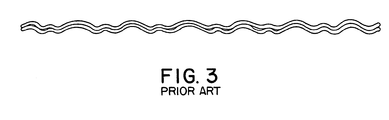
- a rolled or stacked paper product containing multiple layers of a paper web having ridges and valleys can possess a certain degree of "nesting". Specifically, “nesting” occurs when the ridges and valleys of one layer are placed adjacent to corresponding ridges and valleys of another layer, which causes the roll (or stack) to become more tightly packed, thereby reducing roll bulk (increasing density) and making the winding of the product more consistent and controllable. For example, referring to Fig. 3 , one example of a nested paper product is illustrated.
- EP-A-1,099,539 describes a tissue product according to the pre-characterizing part of claim 1.
- the invention is characterized as set out in claim 1 and 14.
- a paper product includes a first layer and a second layer formed from at least one paper web.
- the layers of the paper product can form a wound roll, while in other embodiments, the layers can be individually stacked.
- first and second layers of the paper product have an outer surface that defines ridges and valleys.
- the outer surface of the first layer is positioned adjacent to the outer surface of the second layer.
- the present invention provides for the use of bridging regions formed by embossing into at least one of the outer surfaces of the layers.
- the bridging regions are positioned at an angle of between about 0° to about 180° relative to the ridges defined by the outer surface. In one embodiment, for example, the bridging regions are positioned at an angle of about 90° relative to the ridges.
- the bridging regions also have a length sufficient to extend between the peaks of at least two of the ridges defined by the outer surface.
- a method includes depositing a furnish containing cellulosic fibers onto a foraminous surface and forming a paper web from the furnish such that the web has a surface that defines ridges and valleys.
- the method also includes embossing the paper web to form bridging regions into at least one surface of the paper web.
- embossing roll having embossing elements can be utilized to form the bridging regions.
- the method also includes incorporating the paper web into at least one layer of a multi-layered paper product such that the surface of the paper web is disposed on the outer surface of the layer. Moreover, the outer surface is then placed adjacent to the outer surface of another layer of the paper product, which also defines ridges and valleys. As a result, the bridging regions can at least partially obstruct the ridges and valleys of one layer from mating with the ridges and valleys of another layer to inhibit nesting.
- the present invention is directed to a method for reducing the level of "nesting" in a paper product.
- “nesting” occurs when the ridges and valleys of one layer are placed adjacent to corresponding ridges and valleys of another layer.
- the ridges and valleys of one layer of the paper web(s) mate with the ridges and valleys of another layer of the paper web(s), thereby causing the rolled or stacked paper product to become more tightly packed and thus reducing bulk.
- the bridging regions formed according to the present invention can have a certain size, shape, orientation, pattern, and the like, which allow them to optimally inhibit the mating of ridges and valleys from one layer of the paper product with another layer of the paper product.
- a paper product such as facial tissue, bath tissue, napkins, paper towels, wipes, napkins, etc.
- the paper product can contain a single-layered paper web formed from a blend of fibers.
- the paper product can contain a multi-layered paper (i.e., stratified) web.
- the paper product can also be a single- or multi-ply product (e.g., more than one paper web), wherein one or more of the plies may contain a paper web formed according to the present invention.
- the basis weight of a paper product of the present invention is between about 10 to about 400 grams per square meter (gsm).
- tissue products e.g., facial tissue, bath tissue, etc.
- tissue products typically have a basis weight less than about 120 gsm, and in some embodiments, between about 10 to about 70 gsm.
- the material used to make the paper product can include fibers formed by a variety of pulping processes, such as kraft pulp, sulfite pulp, thermomechanical pulp, etc.
- the pulp fibers may include softwood fibers having an average fiber length of greater than 1 mm and particularly from about 2 to 5 mm based on a length-weighted average.
- softwood fibers can include, but are not limited to, northern softwood, southern softwood, redwood, red cedar, hemlock, pine (e.g., southern pines), spruce (e.g., black spruce), combinations thereof, and the like.
- Exemplary commercially available pulp fibers suitable for the present invention include those available from Kimberly-Clark Corporation under the trade designations "Longlac-19".
- hardwood fibers such as eucalyptus, maple, birch, aspen, and the like
- eucalyptus fibers may be particularly desired to increase the softness of the web.
- Eucalyptus fibers can also enhance the brightness, increase the opacity, and change the pore structure of the paper to increase the wicking ability of the paper web.
- secondary fibers obtained from recycled materials may be used, such as fiber pulp from sources such as, for example, newsprint, reclaimed paperboard, and office waste.
- other natural fibers can also be used in the present invention, such as abaca, sabai grass, milkweed floss, pineapple leaf, and the like.
- furnishes including recycled fibers may also be utilized.
- suitable synthetic fibers can be used, such as, but not limited to, hydrophilic synthetic fibers, such as rayon fibers and ethylene vinyl alcohol copolymer fibers, as well as hydrophobic synthetic fibers, such as polyolefin fibers.
- papermaking techniques such as, but not limited to, through-drying, creped through-drying, uncreped through-drying, embossing, adhesive creping, wet creping, double creping, wet-pressing, air pressing, as well as other steps, can be utilized in forming the paper web.
- Some examples of such techniques are disclosed in U.S. Patent Nos. 5,048,589 to Cook, et al. ; 5,399,412 to Sudall, et al. ; 5,129,988 to Farrington, Jr. ; 5,494,554 to Edwards, et al .
- One particular embodiment of the present invention utilizes an uncreped through-drying technique to form the paper web. Examples of such a technique are disclosed in U.S. Patent Nos. 5,048,589 to Cook, et al. ; 5,399,412 to Sudall. et al. ; 5,510,001 to Hermans, et al. ; 5,591,309 to Rugowski, et al. ; and 6,017,417 to Wendt, et al .
- Uncreped through-drying generally involves the steps of: (1) forming a furnish of cellulosic fibers, water, and optionally, other additives; (2) depositing the furnish on a traveling foraminous belt, thereby forming a fibrous web on top of the traveling foraminous belt; (3) subjecting the fibrous web to through-drying to remove the water from the fibrous web; and (4) removing the dried fibrous web from the traveling foraminous belt.
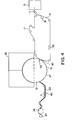
- a papermaking headbox 10 can be used to inject or deposit a stream of an aqueous suspension of papermaking fibers onto a forming fabric 13, which serves to support and carry the newly-formed wet web 11 downstream in the process as the web 11 is partially dewatered to a solids consistency of about 10% dry weight. Additional dewatering of the wet web 11 can be carried out, such as by vacuum suction, while the wet web 11 is supported by the forming fabric 13.
- the headbox 10 may be a conventional headbox or may be a stratified headbox capable of producing a multilayered unitary web. Further, multiple headboxes may be used to create a layered structure, as is known in the art.
- the forming fabric 13 can generally be made from any suitable porous material, such as metal wires or polymeric filaments. Suitable fabrics can include, but are not limited to, Albany 84M and 94M available from Albany International of Albany, N.Y.; Asten 856, 866, 892, 959, 937 and Asten Synweve Design 274, available from Asten Forming Fabrics, Inc. of Appleton, Wis.
- the fabric 13 can also be a woven fabric as taught in U.S. Patent No. 4,529,480 to Trokhan . Forming fabrics or felts containing nonwoven base layers may also be useful, including those of Scapa Corporation made with extruded polyurethane foam such as the Spectra Series.
- Relatively smooth forming fabrics can be used, as well as textured fabrics suitable for imparting texture and basis weight variations to the web.
- Other suitable fabrics may include Asten 934 and 939, or Lindsey 952-S05 and 2164 fabric from Appleton Mills, Wis.
- a "transfer fabric” is a fabric that is positioned between the forming section and the drying section of the web manufacturing process.
- the transfer fabric 17 typically travels at a slower speed than the forming fabric 13 in order to impart increased stretch into the web.
- the relative speed difference between the two fabrics 13 and 17 can be from 0% to about 80%, particularly greater than about 10%, more particularly from about 10% to about 60%, and most particularly from about 10% to about 40%. This is commonly referred to as "rush" transfer.
- rush transfer One useful method of performing rush transfer is taught in U.S. Pat. No. 5,667,636 to Engel et al .
- Transfer may be carried out with the assistance of a vacuum shoe 18 such that the forming fabric 13 and the transfer fabric 17 simultaneously converge and diverge at the leading edge of the vacuum slot.
- the vacuum shoe 18 can supply pressure at levels between about 25.4 to 63.5 cm (10 to about 25 inches) of mercury.
- the vacuum transfer shoe 18 (negative pressure) can be supplemented or replaced by the use of positive pressure from the opposite side of the web 11 to blow the web 11 onto the next fabric.
- other vacuum shoes such as a vacuum shoe 20, can also be utilized to assist in drawing the fibrous web 11 onto the surface of the transfer fabric 17.
- the solids consistency of the fibrous web 11 can vary.
- the solids consistency of the web 11 may be up to about 35% dry weight, and particularly between about 15% to about 30% dry weight.
- the transfer fabric 17 is a patterned fabric having protrusions or impression knuckles, such as described in U.S. Patent No. 6,017,417 to Wendt et al .
- a patterned transfer fabric 17 can have protrusions that cause the fibrous web 11 to be imparted with ridges and valleys as it is pressed into contact with the transfer fabric 17.
- at least one surface of the fibrous web 11 is imparted with ridges 12 and valleys 14 as shown in Figs 1-2 .
- a patterned transfer fabric 17 can generally have any pattern desired.
- the protrusions of the fabric 17 may, in some embodiments, have a pitch depth greater than about 0.010 millimeters (mm), in some embodiments between about 0.025 to about 2 mm, and in some embodiments, between about 1 to about 1.8 mm; and a pitch width greater than about 0.001 mm, in some embodiments between about 0.005 to about 5 mm, and in some embodiments, between about 0.25 to about 2.5,mm.
- the transfer fabric 17 can have a wire-mesh surface, as is well known in the art.
- the transfer fabric 17 has a wire-mesh surface where the wire has a diameter of 1.14 millimeters and a "mesh-count" of 8 x 13.
- the mesh-count refers to the number of open spaces formed per inch by the wire-mesh in a certain direction.
- a mesh-count of 8 x 13 refers to a wire-mesh with 8 spaces in length and 13 spaces in width.
- the fibrous web 11 is then transferred to the through-air dryer 21, optionally with the aid of a vacuum transfer shoe 42 or roll.
- the vacuum transfer shoe 42 (negative pressure) can also be supplemented or replaced by the use of positive pressure from the opposite side of the web 11 to blow the web 11 onto the next fabric.
- the web 11 is typically transferred from the transfer fabric 17 to the through-air dryer 21 at the nip 40 at a solids consistency less than about 60% by weight, and particularly between about 25% to about 50% dry weight.
- the through-air dryer 21 may also be provided with a through-air drying fabric 19.
- the through-air drying fabric 19 can travel at about the same speed or a different speed relative to the transfer fabric 17.
- the through-air drying fabric 19 can run at a slower speed to further enhance stretch.
- the through-air drying fabric 19 can be provided with various protrusions or impression knuckles to impart a surface of the fibrous web with ridges and valleys. Some examples of such fabrics are described in U.S. Patent No. 6,017,417 to Wendt et al .
- the through-air drying fabric 19 may be woven or nonwoven.
- the through-air dryer 21 can then accomplish the removal of moisture from the web 11 by passing air through the web 11 without applying any mechanical pressure. Through-air drying can also increase the bulk and softness of the web 11.
- the through-dryer 21 can contain a rotatable, perforated cylinder and a hood 50 for receiving hot air blown through perforations of the cylinder as the through-air drying fabric 19 carries the fibrous web 11 over the upper portion of the cylinder. The heated air is forced through the perforations in the cylinder of the through-air dryer 21 and removes the remaining water from the fibrous web 11.
- the temperature of the air forced through the fibrous web 11 by the through-air dryer 21 can vary, but is typically from about (121°C to about 260°C (250°F to about 500°F).
- other through-air dryers may also be utilized to assist in the drying of the web.
- other non-compressive drying methods such as microwave or infrared heating, can be used.
- certain compressive heating methods such as Yankee dryers, may be used as well.
- the web While supported by the through-air drying fabric 19, the web can then be dried to a solids consistency of about 95% or greater by the through-air dryer 21 and thereafter transferred to a carrier fabric 22.
- the dried web 11 having at least one surface with ridges and valleys is then transported from the carrier fabric 22 to a reel 24, where it is wound.
- An optional turning roll 26 can be used to facilitate transfer of the web 11 from the carrier fabric 22 to the reel 24.
- the web 11 after being wound on a reel 24, the web 11 can then be transferred to a converting stage in which the web 11 is transferred to smaller rolls or stacks for consumer-sized products.
- the web 11 can be initially unwound from the roll 24. Thereafter, the web 11 can be transferred to a rewinder system (not shown) where it is rewound onto smaller rolls.
- a papermaking process can impart various ridges 12 and valleys 14 into at least one surface of the fibrous web 11 during formation.
- the patterned transfer fabric 17 can cause the formation of the ridges 12 and valleys 14, particularly when used in conjunction with the vacuum shoes 18 and/or 20 and textured and/or topographical through-drying fabrics.
- the description provided above is but one embodiment of the present invention, and that the ridges 12 and valleys 14 may be imparted into the web 11 in any manner desired.
- the present invention is not limited to any particular mechanism for forming the ridges 12 and valleys 14 into a surface of the web 11.
- the ridges 12 and valleys 14 can generally have any shape, size, or pattern, so long as the mating of such ridges 12 and valleys 14 can cause at least some "nesting".
- a "bridging region” 16 is defined as a region of a paper web that at least partially overlaps the peaks of at least two ridges. For example, as shown in Fig. 2 , each bridging region 16 overlaps the peaks of three ridges 12.
- the bridging regions 16 can inhibit nesting by obstructing at least a portion of the ridges 12 and valleys 14 of one paper layer from mating with at least a portion of the ridges 12 and valleys 14 of another paper layer in such a manner as shown in Fig. 3 .
- various properties of the bridging regions 16 can be varied, such as, but not limited to, the shape, size, orientation, pattern, etc., of the bridging regions 16.
- the bridging regions 16 may possess the shape of a square, rectangle, circle, oval, dot, triangle, decorative patterns, etc., and may also have various regular or irregular shapes as well.
- the dimensions of the bridging regions 16 can also vary.
- the bridging regions 16 are typically relatively long so that they can extend across the peaks of at least two ridges 12.
- such long bridging regions 16 have a length of from about 0.317 cm (0.125 inches) to about 7.62 cm (3 inches), in some embodiments from about 0.635 cm (0.25 inches) to about 7.62 cm (3 inches), and in some embodiments, from about 0.952 cm to about 3.81 cm (0.375 to about 1.5 inches).
- the bridging regions 16 can also have a relatively small depth.
- the bridging regions 16 can have a depth from about 0.051 cm to about 0.305 cm (0.02 to about 0.12 inches), and in some embodiments, from about 0.114 cm to about 0.152 cm (0.045 to about 0.06 inches).
- the length-to-depth ratio of the bridging regions 16 can also vary.
- the bridging regions 16 have a length-to-depth ratio of from about 1:1 to about 150:1, and in some embodiments from about 5:1 to about 40:1.
- the width of the bridging regions 16 can be about 0.076 cm (0.030 inches).
- the orientation of the bridging regions 16 relative to the ridges 12 and/or valleys 14 can also be varied.
- the bridging regions 16 can be positioned at an angle between about 0° to about 180° relative to the ridges 12 and valleys 14.
- the bridging regions 16 are positioned at approximately a 90° angle relative to the ridges 12 and valleys 14 to better inhibit nesting.
- the pattern that the bridging regions 16 are spaced about the web 11 can also be varied (e.g., density, spacing distance, etc.).
- the density of the bridging regions 16 can be varied to provide a relatively large or relatively small number of bridging regions 16 on the web 11.
- the spacing of the bridging regions 16 can also be varied.
- the bridging regions 16 can be arranged in spaced apart rows.
- the rows of bridging regions 16 can be spaced apart to form a single arc.
- diagonal rows 18 of bridging regions 16 can be arranged at approximately a 45° relative to the ridges 12 and/or valleys 14.
- the distance between spaced apart rows and/or between the bridging regions 16 within a single row can also be varied.
- the diagonal rows 28 are spaced apart approximately 1 inch.
- the bridging regions 16 can possess a certain density and spacing distance so that they form a two-dimensional sinusoidal pattern on the surface of the web 11.
- one bridging region 16 can be the same or different than another bridging region 16. Moreover, some bridging regions 16 may form a certain pattern and be spaced apart a certain distance, while other bridging regions 16 may form a different pattern and be spaced apart a different distance.
- the bridging regions 16 are imparted into a surface of the paper web 11 by embossing.
- embossing For instance, referring again to Fig. 4 , one embodiment of the present invention for imparting bridging regions 16 into a surface of the web 11 is illustrated.
- two rotatable embossing rolls 45 can be utilized to emboss the dried web 11 prior to being wound on the roll 24.
- the embossing rolls 45 can be utilized to emboss the web 11 after it is unwound from the roll 24. It should be understood that the embossing rolls 45 can be utilized at multiple positions, as well as additional other positions not specifically mentioned herein.
- a single rotatable embossing roll 45 can also be utilized against a moving resilient or hard surface, such as a moving belt, etc.
- a moving resilient or hard surface such as a moving belt, etc.
- any embossing method known in the art can be utilized in the present invention.
- the embossing rolls 45 can be made from any of a variety of materials, such as of steel, aluminum, magnesium, brass, rubber, hard urethane, or combinations thereof.
- the embossing roll(s) 45 generally presses the web 11 at a certain pressure. For instance, in some embodiments, a roll pressure of from about 25 pounds per liner inch (PLI) (4.45 Kg/cm) to about 300 PLI (53.4 Kg/cm) can be utilized.
- PLI pounds per liner inch
- the embossing roll(s) 45 can also be heated or cooled if desired.
- the surface of the embossing roll 45 can contain a certain number of embossing elements (not shown) that are configured to be placed into communication with the surface of the fibrous web 11 to form the bridging regions 16.
- embossing elements not shown
- the shape, size, orientation, and pattern of the embossing elements are thereby imparted into the fibrous web 11.
- the resulting shape, size, orientation, and pattern left by the embossing elements of the embossing roll 45 define the bridging regions 16 described above.
- the shape, size, orientation, and pattern of the embossing elements are typically identical to or at least substantially similar to the shape, size, orientation, and pattern of the bridging regions 16, such as set forth above.
- the paper web 11 can be formed into a paper product in a variety of ways.
- the paper web 11, either alone or in conjunction with other paper webs, can be wound into a roll or stacked (continuous or discontinuous layers).
- the paper product 50 contains two continuous stacked layers 60 and 70.
- each layer 60 and 70 are formed from the fibrous web 11 and, as shown, also contain an outer surface that defines ridges and valleys 12 and 14 and bridging regions 16.
- the layers 60 and 70 need not both contain the same fibrous web 11, but can also be formed from different fibrous webs that may or may not be formed in the same manner as the fibrous web 11.
- the layers 60 and/or 70 may also contain other webs in conjunction with the fibrous web 11.
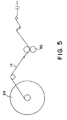
- a finished product sheet was made as described above and shown in Figs. 4 and 5 .
- a non-layered basesheet was made in which the furnish was comprised of 75% of LL-19 softwood pulp fibers and 25% of bleached chemical thermomechanical (BCTMP) softwood pulp fibers.
- the sheet was formed on a forming fabric having a ridge spacing of approximately 0.317 cm (0.125 inches).
- the sheet was then subjected to steel-on-rubber cross-directional bar embossing with an embossing roll at 13.35 Kg/cm (75 pounds per linear inch). Once embossed, the sheet was dried and wound onto cores to form rolls of paper towels.
- embossing pattern utilized is shown in Fig. 6 and included embossing elements having the following dimensions: Length: 0.40625" (1.03 cm) Width: 0.030" (0.076 cm) Height: 0.045" (0.114 cm) Area per element: 0.0121875 ⁇ in 2 (0.078 cm 2 ) 9 elements in 6.5 cross directional inches (16.51 cm) 0.75 inches (1.9 cm) between rows of emboss % area of emboss: 2.7%
- a product using the same sheet described above was also prepared for comparison, but rather than being embossed, was steel-on-steel calendered at a 0.005 inch gap prior to winding. Rolls were also formed using the second sheet.
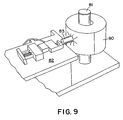
- Roll firmness was determined using a Model RDT-101 Roll Density Tester from Kershaw Instrumentation, Inc., Swedesboro, N.J. For instance, the apparatus utilized to measure roll firmness is illustrated in Fig. 9 .
- a towel roll 80 being measured is supported on a spindle 81.
- a traverse table 82 begins to move toward the roll.
- Mounted to the traverse table is a sensing probe 83. The motion of the traverse table causes the sensing probe to make contact with the towel roll. The instant the sensing probe contacts the roll, the force exerted on the load cell will exceed the low set point of 6 grams and the displacement display will be zeroed and begin indicating the penetration of the probe.
- the traverse table will stop and the displacement display will indicate the penetration in millimeters.
- the tester will record this reading.
- the tester will rotate the towel roll 90° on the spindle and repeat the test.
- the roll firmness value is the average of the two readings.
- the test is performed in a controlled environment of 73.4°F ⁇ 1.8°F (23 + 1 °C) and 50% ⁇ 2% relative humidity. The rolls to be tested are introduced to this environment at least 4 hours before testing.
- the method for determining roll firmness is also described in U.S. Patent No. 6,077,590 to Archer et al .
- Table 1 Sample Characteristics Sample Initial Caliper (inches) (2.54 cm) Final Caliper (inches) (2.54 cm) Roll Firmness (mm) Average Roll Diameter (mm) Embossed 0.033 0.0269 7.2 5.08 Calendered 0.033 0.0267 7.8 5.11
- % of wraps nested 1 - # total wraps in roll - total wraps nested / # total wraps in roll x 100
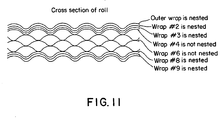
- the # wraps nested was determined by cutting a roll with a known number of wraps radially in the cross section, as shown in Fig. 10 . Before being cut, the roll is wrapped with at least 1 strip of masking tape about 1/4 of the length into the roll to hold the roll together during and after cutting. Once cut, an expert examines the roll to determine the number of wraps that are nested. A wrap is considered nested if its valleys lie within the valleys of the next wrap, such as shown in Fig. 11 .
- Table 2 Sample Characteristics Embossed Calendered Sample number % of wraps nested Roll number % of wraps nested 1 38% 6 62% 2 19% 7 51 % 3 19% 8 48% 4 29% 9 61 % 5 29% 10 61% Average 27% Average 57%
- Table 3 shows the results of the same samples summarized in Table 2, but with the first 15 wraps of each roll eliminated from the total count of the # of wraps.
- Table 3 Sample Characteristics Embossed Calendered Sample number % of wraps nested Sample number % of wraps nested 1 15% 6 60% 2 7% 7 43% 3 6% 8 46% 4 17% 9 54% 5 22% 10 57% Average 13% Average 52%
- the non-embossed (calendered) rolls generally exhibited more nesting than the embossed rolls. Moreover, as indicated by the results in Table 3, more nesting appeared to occur near the end of the wind. Thus, by removing the first 15 wraps from the rolls, the level of nesting could be decreased.
- the first two sets of rolls were formed as described in Example 1, and included both embossed and calendered rolls.
- the third set of rolls were non-layered single-ply towels made in from a furnish comprised of 75% LL-19 softwood pulp fibers and 25% bleached chemical thermomechanical (BCTMP) softwood pulp fibers.
- the sheet was formed on a forming fabric having a ridge spacing of approximately 0.508 cm (0.2 inches). The sheet had a significantly greater amount of cross-direction ridges than the sheet formed in Example 1.
- the web was dried and wound onto a standard roll to form the final product.
- the third set of rolls was steel-on-steel calendered at a gap of 0.0076 cm (0.003 inches) prior to winding. Comparison of five rolls for each condition is summarized below in Table 4.
- a first basesheet was made as described above and shown in Figs. 4 and 5 .
- a non-layered basesheet was made in which the furnish was comprised of 75% of LL-19 softwood pulp fibers and 25% of bleached chemical thermomechanical (BCTMP) softwood pulp fibers.
- the basesheet was formed on a forming fabric having a ridge spacing of approximately 0.3175 cm (0.125 inches).
- the basesheet was then subjected to cross-directional bar embossing with an embossing roll at various pressures. The embossing pattern utilized is shown in Fig.
- embossing elements having the following dimensions: Length: 0.4375" (1.11 cm) Width: 0.030" (0.076 cm) Height: 0.060" (0.15 cm) Area per element: 0.118125 in 2 (0.761 cm 2 ) 9 elements in 6.5 cross directional inches (16.5 cm) 0.75 inches (1.9 cm) between rows of embossing elements % area of emboss: 2.4%
- a second basesheet (Sample B) was also made as described above and shown in Figs. 4 and 5 .
- a non-layered basesheet was made in which the furnish was comprised of 75% of LL-19 softwood pulp fibers and 25% of bleached chemical thermomechanical (BCTMP) softwood pulp fibers.
- the basesheet was formed on a forming fabric having a ridge spacing of approximately 0.508 cm (0.2 inches).
- the basesheet was then subjected to cross-directional bar embossing with an embossing roll at various pressures. Once embossed, the basesheet was wound onto to form rolls of paper towels.
- various samples of this basesheet were also steel-on-steel calendered at various gaps prior to winding.
- Table 5 Sample Characteristics Basesheet Initial Firmness Firmness 30-60 min. after initial Initial Caliper Final Caliper 30-60 min. after initial Sample A (embossed, 150 pli (26.7 Kg/cm) 10-11 mm 9.5 mm 0.024"-0.026" 0.025" Sample A (embossed, 50 pli (8.9 Kg/cm)) 7.5-8.5 mm 6.5 mm 0.0275" 0.0283" Sample A (S/S cal., 0.055" (0.14 cm) gap) 7.5-8.5 mm 5.8 mm 0.0275" 0.0292" Sample B (embossed, 200 pli (35.6 Kg/cm)) 8.5-9.0 mm 7.59 mm 0.027" 0.028" Sample B (S/S cal., 0.004" (0.01 cm) gap) 8.0 mm 6.0 mm 0.027" 0.029"
- Various basesheets were prepared and formed into rolls. Specifically, five samples of a first basesheet (Sample A) were made as described above and shown in Figs. 4 and 5 . Specifically, a non-layered basesheet was made in which the furnish was comprised of 75% of LL-19 softwood pulp fibers and 25% of bleached chemical thermomechanical (BCTMP) softwood pulp fibers. The basesheet was formed on a forming fabric having a ridge spacing of approximately 0.32 cm (0.125 inches). The basesheet was then subjected to cross-directional bar embossing with an embossing roll at various pressures.
- a first basesheet Sample A
- a non-layered basesheet was made in which the furnish was comprised of 75% of LL-19 softwood pulp fibers and 25% of bleached chemical thermomechanical (BCTMP) softwood pulp fibers.
- the basesheet was formed on a forming fabric having a ridge spacing of approximately 0.32 cm (0.125 inches).
- the basesheet was then subjected to
- embossing patterns utilized for the first base sheet are shown in Figs. 6-8 , and have the following dimensions: Embossing Pattern #1 ( Fig. 6 ) Length: 0.4375" (1.11 cm) Width: 0.030" (0.076 cm) Height: 0.060" (0.15 cm) Area per element: 0.118125 in 2 (0.761 cm 2 ) 9 elements in 6.5 cross directional inches (16.5 cm) 0.75 inches (1.9 cm) between rows of embossing elements % area of emboss: 2.4% Embossing Pattern #2 ( Fig. 6 ) Length: 0.4375" (1.11 cm) Width: 0.030" (0.076 cm) Height: 0.060" (0.15 cm) Area per element: 0.118125 in 2 (0.761 cm 2 ) 9 elements in 6.5 cross directional inches (16.5 cm) 0.75 inches (1.9 cm) between rows of embossing elements % area of emboss: 2.4% Embossing Pattern #2 ( Fig.
- a second basesheet (Sample B) was also made as described above and shown in Figs. 4 and 5 .
- a non-layered basesheet was made in which the furnish was comprised of 75% of LL-19 softwood pulp fibers and 25% of bleached chemical thermomechanical (BCTMP) softwood pulp fibers.
- the basesheet was formed on a forming fabric having a ridge spacing of approximately 0.508 cm (0.2 inches).
- the basesheet was then subjected to cross-directional bar embossing with an embossing roll at various pressures with the embossing patterns set forth above. Once embossed, the basesheet was wound onto to form rolls of paper towels.
- samples A and B were also steel-on-steel calendered at various gaps prior to winding.
Landscapes
- Engineering & Computer Science (AREA)
- Mechanical Engineering (AREA)
- Paper (AREA)
- Machines For Manufacturing Corrugated Board In Mechanical Paper-Making Processes (AREA)
Abstract
Claims (20)
- Produit en papier enroulé ou empilé (50), comprenant :une première couche (60) et une seconde couche (70) formées à partir d'au moins un voile de papier (11), les couches (60, 70) du produit en papier soit formant un rouleau de produit enroulé soit étant individuellement empilées, lesdites première et seconde couches (60, 70) ayant une surface extérieure qui définit des crêtes (12) et des vallées (14), ladite surface extérieure de ladite première couche étant positionnée adjacente à ladite surface extérieure de ladite seconde couche ;caractérisé en ce que des régions de pontage (16) sont gaufrées dans l'une au moins desdites surfaces extérieures desdites couches, lesdites régions de pontage étant positionnées selon un angle compris entre environ 0° et environ 180° par rapport auxdites crêtes définies par ladite surface extérieure, lesdites régions de pontage (16) ayant également une longueur suffisante pour s'étendre entre les sommets d'au moins deux desdites crêtes définies par ladite surface extérieure, lesdites régions de pontage (16) empêchant au moins partiellement lesdites crêtes (12) et vallées (14) de ladite première couche de s'apparier auxdites crêtes et vallées de ladite seconde couche pour inhiber l'imbrication.
- Produit en papier selon la revendication 1, dans lequel lesdites régions de pontage (16) sont agencées en rangées espacées les unes des autres.
- Produit en papier selon la revendication 2, dans lequel lesdites rangées espacées les unes des autres sont agencées selon un angle d'environ 45° par rapport auxdites crêtes définies par ladite surface extérieure.
- Produit en papier selon l'une quelconque des revendications précédentes, dans lequel la longueur desdites régions de pontage (16) est sensiblement plus grande que la largeur desdites régions de pontage (16).
- Produit en papier selon l'une quelconque des revendications précédentes, dans lequel la longueur desdites régions de pontage (16) est comprise entre environ 0,317 cm (0,125 pouce) et environ 7,62 cm (3 pouces), de préférence entre environ 0,952 cm (0,375 pouce) et environ 3,81 cm (1,5 pouces).
- Produit en papier selon l'une quelconque des revendications précédentes, dans lequel lesdites régions de pontage (16) ont une profondeur comprise entre 0,051 cm (0,02 pouce) et environ 0,305 cm (0,12 pouce), de préférence entre environ 0,114 cm (0,045 pouce) et environ 0,152 cm (0,06 pouce).
- Produit en papier selon l'une quelconque des revendications précédentes, dans lequel lesdites régions de pontage sont positionnées selon un angle d'environ 90° par rapport auxdites crêtes définies par ladite surface extérieure.
- Produit en papier selon l'une quelconque des revendications précédentes, dans lequel le voile de papier (11) de chacune des couches est un voile de papier séché par soufflage transversal d'air, non crêpé.
- Produit en papier selon l'une quelconque des revendications précédentes, dans lequel la masse surfacique du produit en papier est inférieure à 140 g/m2.
- Produit en papier selon l'une quelconque des revendications précédentes, dans lequel lesdites régions de pontage (16) sont formées dans lesdites surfaces extérieures tant de ladite première que de ladite seconde couches.
- Produit en papier selon l'une quelconque des revendications précédentes, dans lequel lesdites crêtes (12) et vallées (14) sont des rangées continues.
- Produit en papier selon l'une quelconque des revendications précédentes, dans lequel lesdites régions de pontage (16) ont un rapport longueur:profondeur compris entre environ 1:1 et environ 150:1, de préférence un rapport longueur:profondeur compris entre environ 5:1 et environ 40:1.
- Produit en papier selon l'une quelconque des revendications précédentes, dans lequel lesdites régions de pontage (16) forment un motif sinusoïdal en deux dimensions.
- Procédé de fabrication d'un produit en papier mousseline tel que revendiqué dans l'une quelconque des revendications précédentes, comprenant :le dépôt d'une composition de fabrication contenant des fibres cellulosiques sur une surface poreuse ;la formation d'un voile de papier (11) à partir de ladite composition de fabrication, ledit voile de papier ayant une surface qui définit des crêtes (12) et des vallées (14) ;le gaufrage dudit voile de papier pour former des régions de pontage (16) dans l'une au moins des surfaces dudit voile de papier, lesdites régions de pontage étant positionnées selon un angle compris entre environ 0 et environ 180° par rapport auxdites crêtes définies par ladite surface dudit voile de papier et ayant une longueur suffisante pour s'étendre entre les sommets d'au moins deux desdites crêtes définies par ladite surface dudit voile de papier ; etl'incorporation dudit voile de papier dans au moins une couche d'un produit en papier à couches multiples (50) de telle sorte que ladite surface dudit voile de papier soit disposée sur la surface extérieure de ladite au moins une couche (60), ladite surface extérieure de ladite au moins une couche étant placée adjacente à la surface extérieure d'une autre couche (70) du produit en papier, ladite surface extérieure de ladite une autre couche définissant également des crêtes et des vallées, lesdites régions de pontage (16) empêchant au moins partiellement lesdites crêtes et vallées de ladite une couche de s'apparier auxdites crêtes et vallées de l'autre couche pour inhiber l'imbrication.
- Procédé selon la revendication 14, comprenant, en outre, le séchage dudit voile de papier (11) avant la formation desdites régions de pontage.
- Procédé selon la revendication 14, dans lequel ledit séchage est accompli en utilisant un séchoir par soufflage transversal d'air (21).
- Procédé selon la revendication 14, 15 ou 16, dans lequel ledit gaufrage est accompli au moyen d'un rouleau (45) ayant des éléments de gaufrage selon un certain motif, lesdites régions de pontage ayant un motif qui correspond au motif desdits éléments de gaufrage.
- Procédé selon l'une quelconque des revendications 14 à 17, dans lequel ledit rouleau de gaufrage (14) applique une pression comprise entre environ 4,45 kg/cm (25 livres/pouce linéaire) et environ 53,4 kg/cm (300 livres/pouce linéaire) audit voile de papier.
- Procédé selon la revendication 14, comprenant le gaufrage dudit voile de papier séché au moyen d'un rouleau (45) ayant des éléments de gaufrage selon un certain motif pour former les régions de pontage (16) dans ladite surface dudit voile de papier, lesdites régions de pontage ayant un motif qui correspond audit motif desdits éléments de gaufrage, lesdites régions de pontage étant positionnées selon un angle d'environ 90° par rapport auxdites crêtes (12) définies par ladite surface, et l'enroulement dudit voile de papier pour former un rouleau à couches multiples de telle sorte que ledit voile de papier est disposé sur la surface extérieure de l'une au moins des couches du rouleau, ladite surface extérieure de ladite au moins une couche étant placée adjacente à la surface extérieure d'une autre couche du rouleau, ladite surface extérieure de ladite autre couche définissant également des crêtes et des vallées, lesdites régions de pontage empêchant au moins partiellement lesdites crêtes et vallées de ladite une couche de s'apparier auxdites crêtes et vallées d'une autre couche pour inhiber l'imbrication.
- Procédé selon la revendication 19, dans lequel le séchage est accompli au moyen d'un séchoir par soufflage transversal d'air.
Applications Claiming Priority (3)
| Application Number | Priority Date | Filing Date | Title |
|---|---|---|---|
| US995416 | 1992-12-18 | ||
| US09/995,416 US7235156B2 (en) | 2001-11-27 | 2001-11-27 | Method for reducing nesting in paper products and paper products formed therefrom |
| PCT/US2002/028757 WO2003045681A1 (fr) | 2001-11-27 | 2002-09-09 | Procede permettant de reduire l'imbrication dans des articles en papier et articles en papier ainsi produits |
Publications (2)
| Publication Number | Publication Date |
|---|---|
| EP1448363A1 EP1448363A1 (fr) | 2004-08-25 |
| EP1448363B1 true EP1448363B1 (fr) | 2011-03-09 |
Family
ID=25541756
Family Applications (1)
| Application Number | Title | Priority Date | Filing Date |
|---|---|---|---|
| EP02759614A Revoked EP1448363B1 (fr) | 2001-11-27 | 2002-09-09 | Procede permettant de reduire l'imbrication dans des articles en papier et articles en papier ainsi produits |
Country Status (9)
| Country | Link |
|---|---|
| US (1) | US7235156B2 (fr) |
| EP (1) | EP1448363B1 (fr) |
| KR (1) | KR100912980B1 (fr) |
| AU (1) | AU2002324939B2 (fr) |
| BR (1) | BR0214110B1 (fr) |
| CA (1) | CA2467149C (fr) |
| MX (1) | MXPA04004274A (fr) |
| TW (1) | TW200300809A (fr) |
| WO (1) | WO2003045681A1 (fr) |
Families Citing this family (58)
| Publication number | Priority date | Publication date | Assignee | Title |
|---|---|---|---|---|
| US6733626B2 (en) * | 2001-12-21 | 2004-05-11 | Georgia Pacific Corporation | Apparatus and method for degrading a web in the machine direction while preserving cross-machine direction strength |
| US7037406B2 (en) * | 1999-11-12 | 2006-05-02 | Fort James Corporation | Cross-machine direction embossing of absorbent paper products having an undulatory structure including ridges extending in the machine direction |
| US6887348B2 (en) * | 2002-11-27 | 2005-05-03 | Kimberly-Clark Worldwide, Inc. | Rolled single ply tissue product having high bulk, softness, and firmness |
| TWI268972B (en) | 2002-11-27 | 2006-12-21 | Kimberly Clark Co | Rolled tissue products having high bulk, softness, and firmness |
| US7297226B2 (en) | 2004-02-11 | 2007-11-20 | Georgia-Pacific Consumer Products Lp | Apparatus and method for degrading a web in the machine direction while preserving cross-machine direction strength |
| US7524399B2 (en) * | 2004-12-22 | 2009-04-28 | Kimberly-Clark Worldwide, Inc. | Multiple ply tissue products having enhanced interply liquid capacity |
| US20070131368A1 (en) * | 2005-12-14 | 2007-06-14 | Sonoco Development, Inc. | Paperboard with discrete densified regions, process for making same, and laminate incorporating same |
| CA2617812C (fr) * | 2007-01-12 | 2013-07-09 | Cascades Canada Inc. | Carton gaufre humide et methode et appareillage de fabrication |
| US8012309B2 (en) * | 2007-01-12 | 2011-09-06 | Cascades Canada Ulc | Method of making wet embossed paperboard |
| EP2126176B1 (fr) * | 2007-03-19 | 2011-10-19 | The Procter & Gamble Company | Structure fibreuse non tissée comprenant des sites comprimés et des éléments moulés |
| US8753737B2 (en) | 2009-05-19 | 2014-06-17 | The Procter & Gamble Company | Multi-ply fibrous structures and methods for making same |
| US9243368B2 (en) * | 2009-05-19 | 2016-01-26 | The Procter & Gamble Company | Embossed fibrous structures and methods for making same |
| US20100297395A1 (en) * | 2009-05-19 | 2010-11-25 | Andre Mellin | Fibrous structures comprising design elements and methods for making same |
| US8968517B2 (en) | 2012-08-03 | 2015-03-03 | First Quality Tissue, Llc | Soft through air dried tissue |
| AU2013352145B2 (en) | 2012-11-30 | 2017-12-14 | Kimberly-Clark Worldwide, Inc. | Smooth and bulky tissue |
| USD771958S1 (en) * | 2014-05-06 | 2016-11-22 | Avintiv Specialty Materials Inc. | Nonwoven fabric |
| MX2016014887A (es) | 2014-05-16 | 2018-03-01 | First Quality Tissue Llc | Toallita lavable y metodo para formarla. |
| WO2016077594A1 (fr) | 2014-11-12 | 2016-05-19 | First Quality Tissue, Llc | Fibre de cannabis, structures cellulosiques absorbantes contenant de la fibre de cannabis et procédés de fabrication de celles-ci |
| US10273635B2 (en) | 2014-11-24 | 2019-04-30 | First Quality Tissue, Llc | Soft tissue produced using a structured fabric and energy efficient pressing |
| US9719213B2 (en) * | 2014-12-05 | 2017-08-01 | First Quality Tissue, Llc | Towel with quality wet scrubbing properties at relatively low basis weight and an apparatus and method for producing same |
| CA2967986C (fr) | 2014-12-05 | 2023-09-19 | Structured I, Llc | Procede de fabrication de courroies pour la fabrication du papier utilisant une technologie d'impression 3d |
| US10544547B2 (en) | 2015-10-13 | 2020-01-28 | First Quality Tissue, Llc | Disposable towel produced with large volume surface depressions |
| US10538882B2 (en) | 2015-10-13 | 2020-01-21 | Structured I, Llc | Disposable towel produced with large volume surface depressions |
| US11220394B2 (en) | 2015-10-14 | 2022-01-11 | First Quality Tissue, Llc | Bundled product and system |
| USD807047S1 (en) * | 2015-10-29 | 2018-01-09 | Medline Industries, Inc. | Sterile wrap |
| USD807046S1 (en) * | 2015-10-29 | 2018-01-09 | Medline Industries, Inc. | Sterile wrap |
| WO2017139786A1 (fr) | 2016-02-11 | 2017-08-17 | Structured I, Llc | Courroie ou tissu comprenant une couche polymère pour machine à papier |
| USD813480S1 (en) | 2016-02-18 | 2018-03-20 | Kimberly-Clark Worldwide, Inc. | Wiper substrate |
| US20170314206A1 (en) | 2016-04-27 | 2017-11-02 | First Quality Tissue, Llc | Soft, low lint, through air dried tissue and method of forming the same |
| USD819983S1 (en) | 2016-08-23 | 2018-06-12 | Kimberly-Clark Worldwide, Inc. | Tissue paper with embossing pattern |
| CA3168412C (fr) | 2016-08-26 | 2024-10-22 | Structured I, Llc | Procede de production de structures absorbantes presentant une resistance a l'etat humide, une capacite d'absorption et une souplesse elevees |
| WO2018049390A1 (fr) | 2016-09-12 | 2018-03-15 | Structured I, Llc | Dispositif de formation d'un actif déposé par voie humide utilisant un tissu structuré en tant que fil externe |
| US11583489B2 (en) | 2016-11-18 | 2023-02-21 | First Quality Tissue, Llc | Flushable wipe and method of forming the same |
| WO2019005036A1 (fr) | 2017-06-28 | 2019-01-03 | Kimberly-Clark Worldwide, Inc. | Rouleaux de tissu ouaté ayant des propriétés variables dans le sens travers |
| US10619309B2 (en) | 2017-08-23 | 2020-04-14 | Structured I, Llc | Tissue product made using laser engraved structuring belt |
| EP3688212B1 (fr) | 2017-09-29 | 2025-07-09 | Kimberly-Clark Worldwide, Inc. | Tissus de fabrication de papier sergés |
| WO2019067690A1 (fr) | 2017-09-29 | 2019-04-04 | Kimberly-Clark Worldwide, Inc. | Tissu de fabrication de papier ayant une topographie orientée dans la direction de fabrication et perpendiculaire à la direction de fabrication |
| MX2020002861A (es) | 2017-09-29 | 2020-07-24 | Kimberly Clark Co | Tela tejida de fabricacion de papel que tiene topografia convergente, divergente o de fusion. |
| US11377793B2 (en) | 2017-09-29 | 2022-07-05 | Kimberly-Clark Worldwide, Inc. | Woven papermaking fabric including stabilized weave providing textured contacting surface |
| DE102018114748A1 (de) | 2018-06-20 | 2019-12-24 | Voith Patent Gmbh | Laminierte Papiermaschinenbespannung |
| US11738927B2 (en) | 2018-06-21 | 2023-08-29 | First Quality Tissue, Llc | Bundled product and system and method for forming the same |
| US11697538B2 (en) | 2018-06-21 | 2023-07-11 | First Quality Tissue, Llc | Bundled product and system and method for forming the same |
| EP3856961B1 (fr) * | 2018-09-28 | 2024-12-04 | Kimberly-Clark Worldwide, Inc. | Tissu de fabrication de papier ayant des protubérances sens machine distinctes |
| US11920301B2 (en) * | 2018-09-28 | 2024-03-05 | Kimberly-Clark Worldwide, Inc. | Woven papermaking fabric having intersecting twill patterns |
| MX2021004515A (es) * | 2018-10-31 | 2021-06-15 | Kimberly Clark Co | Productos de papel tisu de multiples hojas grabados. |
| US10927506B2 (en) | 2018-11-30 | 2021-02-23 | Kimberly-Clark Worldwide, Inc. | Papermaking fabrics having machine and cross-machine direction elements and paper products made therewith |
| US10927508B2 (en) | 2018-11-30 | 2021-02-23 | Kimberly-Clark Worldwide, Inc. | Papermaking fabrics having machine and cross-machine direction elements and paper products made therewith |
| US10927507B2 (en) | 2018-11-30 | 2021-02-23 | Kimberly-Clark Worldwide, Inc. | Papermaking fabrics having machine and cross-machine direction elements and paper products made therewith |
| USD897117S1 (en) | 2019-01-14 | 2020-09-29 | Kimberly-Clark Worldwide, Inc. | Absorbent sheet |
| JP7060570B2 (ja) * | 2019-12-18 | 2022-04-26 | 日本製紙クレシア株式会社 | ペーパータオルのロール体 |
| US20230287630A1 (en) | 2020-07-03 | 2023-09-14 | Essity Hygiene And Health Aktiebolag | Coreless Rolls of a Tissue Paper Product and Methods of Manufacturing Coreless Rolls |
| JP7766447B2 (ja) * | 2021-09-30 | 2025-11-10 | 大王製紙株式会社 | トイレットロール |
| USD1061952S1 (en) * | 2022-05-17 | 2025-02-11 | Elmdene Group, Ltd. | Tessellating board |
| USD1061955S1 (en) * | 2022-05-17 | 2025-02-11 | Elmdene Group, Ltd. | Tessellating board |
| USD1061954S1 (en) * | 2022-05-17 | 2025-02-11 | Elmdene Group, Ltd. | Tessellating board |
| USD1061953S1 (en) * | 2022-05-17 | 2025-02-11 | Elmdene Group, Ltd. | Tessellating board |
| USD1122441S1 (en) * | 2023-06-08 | 2026-04-14 | Standard Textile Co., Inc. | Incontinence pad with patterned surface |
| USD1114248S1 (en) * | 2023-06-08 | 2026-02-17 | Standard Textile Co., Inc. | Incontinence pad with patterned surface |
Family Cites Families (20)
| Publication number | Priority date | Publication date | Assignee | Title |
|---|---|---|---|---|
| US4659608A (en) | 1980-01-28 | 1987-04-21 | James River-Norwalk, Inc. | Embossed fibrous web products and method of producing same |
| US4339088A (en) | 1980-04-07 | 1982-07-13 | Paper Converting Machine Company | Embossing method to avoid nesting in convolutely wound rolls and product |
| US4803032A (en) | 1983-05-17 | 1989-02-07 | James River-Norwalk, Inc. | Method of spot embossing a fibrous sheet |
| US4529480A (en) | 1983-08-23 | 1985-07-16 | The Procter & Gamble Company | Tissue paper |
| US5048589A (en) | 1988-05-18 | 1991-09-17 | Kimberly-Clark Corporation | Non-creped hand or wiper towel |
| US5129988A (en) | 1991-06-21 | 1992-07-14 | Kimberly-Clark Corporation | Extended flexible headbox slice with parallel flexible lip extensions and extended internal dividers |
| US5620776A (en) | 1992-12-24 | 1997-04-15 | James River Corporation Of Virginia | Embossed tissue product with a plurality of emboss elements |
| US5597639A (en) | 1992-12-24 | 1997-01-28 | James River Corporation Of Virginia | High softness embossed tissue |
| US5436057A (en) | 1992-12-24 | 1995-07-25 | James River Corporation | High softness embossed tissue with nesting prevention embossed pattern |
| US5494554A (en) | 1993-03-02 | 1996-02-27 | Kimberly-Clark Corporation | Method for making soft layered tissues |
| US5667636A (en) | 1993-03-24 | 1997-09-16 | Kimberly-Clark Worldwide, Inc. | Method for making smooth uncreped throughdried sheets |
| US5399412A (en) | 1993-05-21 | 1995-03-21 | Kimberly-Clark Corporation | Uncreped throughdried towels and wipers having high strength and absorbency |
| US5411636A (en) | 1993-05-21 | 1995-05-02 | Kimberly-Clark | Method for increasing the internal bulk of wet-pressed tissue |
| CA2142805C (fr) | 1994-04-12 | 1999-06-01 | Greg Arthur Wendt | Methode pour l'obtention de papier-mouchoirs |
| US5591309A (en) | 1995-02-06 | 1997-01-07 | Kimberly-Clark Corporation | Papermaking machine for making uncreped throughdried tissue sheets |
| EP0738588A1 (fr) | 1995-04-13 | 1996-10-23 | Scott Paper Company | Papier absorbant amélioré et son procédé de fabrication |
| US5965235A (en) | 1996-11-08 | 1999-10-12 | The Procter & Gamble Co. | Three-dimensional, amorphous-patterned, nesting-resistant sheet materials and method and apparatus for making same |
| US6077590A (en) | 1998-04-15 | 2000-06-20 | Kimberly-Clark Worldwide, Inc. | High bulk paper towels |
| ES2281325T3 (es) | 1999-11-12 | 2007-10-01 | Georgia-Pacific Consumer Operations Llc | Productos de papel absorbente gofrados de una capa o multicapa. |
| US6348131B1 (en) * | 1999-11-12 | 2002-02-19 | Fort James Corporation | Multi-ply embossed absorbent paper products |
-
2001
- 2001-11-27 US US09/995,416 patent/US7235156B2/en not_active Expired - Lifetime
-
2002
- 2002-09-09 MX MXPA04004274A patent/MXPA04004274A/es active IP Right Grant
- 2002-09-09 WO PCT/US2002/028757 patent/WO2003045681A1/fr not_active Ceased
- 2002-09-09 BR BRPI0214110-8A patent/BR0214110B1/pt not_active IP Right Cessation
- 2002-09-09 KR KR1020047007167A patent/KR100912980B1/ko not_active Expired - Fee Related
- 2002-09-09 CA CA2467149A patent/CA2467149C/fr not_active Expired - Fee Related
- 2002-09-09 EP EP02759614A patent/EP1448363B1/fr not_active Revoked
- 2002-09-09 AU AU2002324939A patent/AU2002324939B2/en not_active Expired
- 2002-11-26 TW TW091134262A patent/TW200300809A/zh unknown
Also Published As
| Publication number | Publication date |
|---|---|
| AU2002324939A1 (en) | 2003-06-10 |
| US7235156B2 (en) | 2007-06-26 |
| BR0214110A (pt) | 2006-05-23 |
| TW200300809A (en) | 2003-06-16 |
| CA2467149A1 (fr) | 2003-06-05 |
| AU2002324939B2 (en) | 2008-03-13 |
| MXPA04004274A (es) | 2004-08-11 |
| CA2467149C (fr) | 2011-11-01 |
| EP1448363A1 (fr) | 2004-08-25 |
| BR0214110B1 (pt) | 2011-02-08 |
| KR20040058276A (ko) | 2004-07-03 |
| US20030106657A1 (en) | 2003-06-12 |
| KR100912980B1 (ko) | 2009-08-20 |
| WO2003045681A1 (fr) | 2003-06-05 |
Similar Documents
| Publication | Publication Date | Title |
|---|---|---|
| EP1448363B1 (fr) | Procede permettant de reduire l'imbrication dans des articles en papier et articles en papier ainsi produits | |
| US7531062B2 (en) | Cross-machine direction embossing of absorbent paper products having an undulatory structure including ridges extending in the machine direction | |
| US6746569B1 (en) | Nested rolled paper product | |
| US9745702B2 (en) | High bulk tissue sheets and products | |
| EP2794992B1 (fr) | Feuilles de tissu ayant des propriétés diagonales améliorées | |
| KR100606305B1 (ko) | 개선된 특성을 갖는 티슈 시트 롤 | |
| EP3205769A1 (fr) | Procédé de fabrication d'une bande cellulosique absorbante et bande cellulosique absorbante | |
| AU2017262480B2 (en) | Textured subtractive patterning | |
| ZA200007449B (en) | Rolls of tissue sheets having improved properties. | |
| US11111633B2 (en) | Tissue products having macrofolds | |
| EP3277143B1 (fr) | Produits de papier mousseline en rouleau du type lisse et volumineux | |
| US20070062656A1 (en) | Linerboard With Enhanced CD Strength For Making Boxboard | |
| HK1234796A (en) | Method of making a cellulosic absorbent web and cellulosic absorbent web | |
| KR20040014390A (ko) | 비-평면 티슈 제품 | |
| HK1234796A1 (en) | Method of making a cellulosic absorbent web and cellulosic absorbent web |
Legal Events
| Date | Code | Title | Description |
|---|---|---|---|
| PUAI | Public reference made under article 153(3) epc to a published international application that has entered the european phase |
Free format text: ORIGINAL CODE: 0009012 |
|
| 17P | Request for examination filed |
Effective date: 20040429 |
|
| AK | Designated contracting states |
Kind code of ref document: A1 Designated state(s): AT BE BG CH CY CZ DE DK EE ES FI FR GB GR IE IT LI LU MC NL PT SE SK TR |
|
| AX | Request for extension of the european patent |
Extension state: AL LT LV MK RO SI |
|
| 17Q | First examination report despatched |
Effective date: 20071008 |
|
| REG | Reference to a national code |
Ref country code: DE Ref legal event code: 8566 |
|
| GRAP | Despatch of communication of intention to grant a patent |
Free format text: ORIGINAL CODE: EPIDOSNIGR1 |
|
| GRAC | Information related to communication of intention to grant a patent modified |
Free format text: ORIGINAL CODE: EPIDOSCIGR1 |
|
| GRAS | Grant fee paid |
Free format text: ORIGINAL CODE: EPIDOSNIGR3 |
|
| GRAA | (expected) grant |
Free format text: ORIGINAL CODE: 0009210 |
|
| AK | Designated contracting states |
Kind code of ref document: B1 Designated state(s): FR GB IT |
|
| REG | Reference to a national code |
Ref country code: GB Ref legal event code: FG4D |
|
| PLBI | Opposition filed |
Free format text: ORIGINAL CODE: 0009260 |
|
| PLAX | Notice of opposition and request to file observation + time limit sent |
Free format text: ORIGINAL CODE: EPIDOSNOBS2 |
|
| 26 | Opposition filed |
Opponent name: GEORGIA-PACIFIC FRANCE Effective date: 20111208 |
|
| PLBB | Reply of patent proprietor to notice(s) of opposition received |
Free format text: ORIGINAL CODE: EPIDOSNOBS3 |
|
| PLAB | Opposition data, opponent's data or that of the opponent's representative modified |
Free format text: ORIGINAL CODE: 0009299OPPO |
|
| R26 | Opposition filed (corrected) |
Opponent name: SCA TISSUE FRANCE Effective date: 20111208 |
|
| PGFP | Annual fee paid to national office [announced via postgrant information from national office to epo] |
Ref country code: FR Payment date: 20130919 Year of fee payment: 12 Ref country code: GB Payment date: 20130927 Year of fee payment: 12 |
|
| PGFP | Annual fee paid to national office [announced via postgrant information from national office to epo] |
Ref country code: IT Payment date: 20130924 Year of fee payment: 12 |
|
| RDAF | Communication despatched that patent is revoked |
Free format text: ORIGINAL CODE: EPIDOSNREV1 |
|
| RDAG | Patent revoked |
Free format text: ORIGINAL CODE: 0009271 |
|
| STAA | Information on the status of an ep patent application or granted ep patent |
Free format text: STATUS: PATENT REVOKED |
|
| 27W | Patent revoked |
Effective date: 20140205 |
|
| GBPR | Gb: patent revoked under art. 102 of the ep convention designating the uk as contracting state |
Effective date: 20140205 |