EP1449677A2 - Schutzverfahren der Bildempfangsschicht eines Aufzeichnungslelements vor bzw. nach der Bebilderung - Google Patents
Schutzverfahren der Bildempfangsschicht eines Aufzeichnungslelements vor bzw. nach der Bebilderung Download PDFInfo
- Publication number
- EP1449677A2 EP1449677A2 EP04075376A EP04075376A EP1449677A2 EP 1449677 A2 EP1449677 A2 EP 1449677A2 EP 04075376 A EP04075376 A EP 04075376A EP 04075376 A EP04075376 A EP 04075376A EP 1449677 A2 EP1449677 A2 EP 1449677A2
- Authority
- EP
- European Patent Office
- Prior art keywords
- receiving layer
- image receiving
- recording element
- laminate
- layer
- Prior art date
- Legal status (The legal status is an assumption and is not a legal conclusion. Google has not performed a legal analysis and makes no representation as to the accuracy of the status listed.)
- Granted
Links
- 238000000034 method Methods 0.000 title claims abstract description 32
- 238000007639 printing Methods 0.000 title claims description 18
- 230000001681 protective effect Effects 0.000 claims abstract 3
- 239000010410 layer Substances 0.000 claims description 123
- 239000012790 adhesive layer Substances 0.000 claims description 22
- 239000011241 protective layer Substances 0.000 claims description 20
- 238000005520 cutting process Methods 0.000 claims description 5
- 239000000123 paper Substances 0.000 description 27
- 239000000463 material Substances 0.000 description 24
- 239000002131 composite material Substances 0.000 description 21
- -1 poly(vinyl alcohol) Polymers 0.000 description 18
- 230000001070 adhesive effect Effects 0.000 description 17
- 239000000853 adhesive Substances 0.000 description 15
- 238000000576 coating method Methods 0.000 description 11
- 238000004519 manufacturing process Methods 0.000 description 11
- 229920000642 polymer Polymers 0.000 description 10
- 229920003023 plastic Polymers 0.000 description 8
- 239000004033 plastic Substances 0.000 description 8
- 239000002985 plastic film Substances 0.000 description 8
- 229920006255 plastic film Polymers 0.000 description 8
- 239000011248 coating agent Substances 0.000 description 7
- 229920000728 polyester Polymers 0.000 description 7
- 238000001035 drying Methods 0.000 description 5
- 239000000975 dye Substances 0.000 description 5
- 229920001477 hydrophilic polymer Polymers 0.000 description 5
- 230000000254 damaging effect Effects 0.000 description 4
- 238000003384 imaging method Methods 0.000 description 4
- 239000002245 particle Substances 0.000 description 4
- XLYOFNOQVPJJNP-UHFFFAOYSA-N water Substances O XLYOFNOQVPJJNP-UHFFFAOYSA-N 0.000 description 4
- 239000000654 additive Substances 0.000 description 3
- 239000011230 binding agent Substances 0.000 description 3
- 238000010586 diagram Methods 0.000 description 3
- 239000000203 mixture Substances 0.000 description 3
- 239000011146 organic particle Substances 0.000 description 3
- 229920000098 polyolefin Polymers 0.000 description 3
- 229920002635 polyurethane Polymers 0.000 description 3
- 239000004814 polyurethane Substances 0.000 description 3
- 239000011347 resin Substances 0.000 description 3
- 229920005989 resin Polymers 0.000 description 3
- 238000000926 separation method Methods 0.000 description 3
- SOGAXMICEFXMKE-UHFFFAOYSA-N Butylmethacrylate Chemical compound CCCCOC(=O)C(C)=C SOGAXMICEFXMKE-UHFFFAOYSA-N 0.000 description 2
- VTYYLEPIZMXCLO-UHFFFAOYSA-L Calcium carbonate Chemical compound [Ca+2].[O-]C([O-])=O VTYYLEPIZMXCLO-UHFFFAOYSA-L 0.000 description 2
- CBENFWSGALASAD-UHFFFAOYSA-N Ozone Chemical compound [O-][O+]=O CBENFWSGALASAD-UHFFFAOYSA-N 0.000 description 2
- 239000004952 Polyamide Substances 0.000 description 2
- 239000004698 Polyethylene Substances 0.000 description 2
- 239000004793 Polystyrene Substances 0.000 description 2
- VYPSYNLAJGMNEJ-UHFFFAOYSA-N Silicium dioxide Chemical compound O=[Si]=O VYPSYNLAJGMNEJ-UHFFFAOYSA-N 0.000 description 2
- GWEVSGVZZGPLCZ-UHFFFAOYSA-N Titan oxide Chemical compound O=[Ti]=O GWEVSGVZZGPLCZ-UHFFFAOYSA-N 0.000 description 2
- 239000002313 adhesive film Substances 0.000 description 2
- 239000003963 antioxidant agent Substances 0.000 description 2
- 239000002216 antistatic agent Substances 0.000 description 2
- TZCXTZWJZNENPQ-UHFFFAOYSA-L barium sulfate Chemical compound [Ba+2].[O-]S([O-])(=O)=O TZCXTZWJZNENPQ-UHFFFAOYSA-L 0.000 description 2
- 239000011324 bead Substances 0.000 description 2
- 230000009286 beneficial effect Effects 0.000 description 2
- 229920002678 cellulose Polymers 0.000 description 2
- 230000001419 dependent effect Effects 0.000 description 2
- 238000009792 diffusion process Methods 0.000 description 2
- 230000007613 environmental effect Effects 0.000 description 2
- 239000007789 gas Substances 0.000 description 2
- 239000010954 inorganic particle Substances 0.000 description 2
- 239000002648 laminated material Substances 0.000 description 2
- 238000010030 laminating Methods 0.000 description 2
- 238000003475 lamination Methods 0.000 description 2
- 239000007788 liquid Substances 0.000 description 2
- 229920002647 polyamide Polymers 0.000 description 2
- 229920000573 polyethylene Polymers 0.000 description 2
- 229920000139 polyethylene terephthalate Polymers 0.000 description 2
- 239000005020 polyethylene terephthalate Substances 0.000 description 2
- 229920002223 polystyrene Polymers 0.000 description 2
- 229920002451 polyvinyl alcohol Polymers 0.000 description 2
- 239000002356 single layer Substances 0.000 description 2
- 239000002904 solvent Substances 0.000 description 2
- 238000000859 sublimation Methods 0.000 description 2
- 230000008022 sublimation Effects 0.000 description 2
- 239000004094 surface-active agent Substances 0.000 description 2
- 229920001169 thermoplastic Polymers 0.000 description 2
- 239000004416 thermosoftening plastic Substances 0.000 description 2
- GJCOSYZMQJWQCA-UHFFFAOYSA-N 9H-xanthene Chemical compound C1=CC=C2CC3=CC=CC=C3OC2=C1 GJCOSYZMQJWQCA-UHFFFAOYSA-N 0.000 description 1
- 229920000178 Acrylic resin Polymers 0.000 description 1
- 239000004925 Acrylic resin Substances 0.000 description 1
- 229920001817 Agar Polymers 0.000 description 1
- 102000009027 Albumins Human genes 0.000 description 1
- 108010088751 Albumins Proteins 0.000 description 1
- 241000416162 Astragalus gummifer Species 0.000 description 1
- 229920008347 Cellulose acetate propionate Polymers 0.000 description 1
- 229920001747 Cellulose diacetate Polymers 0.000 description 1
- 229920002284 Cellulose triacetate Polymers 0.000 description 1
- 229920002101 Chitin Polymers 0.000 description 1
- 229920001661 Chitosan Polymers 0.000 description 1
- 102000008186 Collagen Human genes 0.000 description 1
- 108010035532 Collagen Proteins 0.000 description 1
- 239000004971 Cross linker Substances 0.000 description 1
- 244000303965 Cyamopsis psoralioides Species 0.000 description 1
- 229920002307 Dextran Polymers 0.000 description 1
- LFQSCWFLJHTTHZ-UHFFFAOYSA-N Ethanol Chemical compound CCO LFQSCWFLJHTTHZ-UHFFFAOYSA-N 0.000 description 1
- IMROMDMJAWUWLK-UHFFFAOYSA-N Ethenol Chemical compound OC=C IMROMDMJAWUWLK-UHFFFAOYSA-N 0.000 description 1
- 108010010803 Gelatin Proteins 0.000 description 1
- 241000206672 Gelidium Species 0.000 description 1
- 244000151018 Maranta arundinacea Species 0.000 description 1
- 235000010804 Maranta arundinacea Nutrition 0.000 description 1
- 239000004642 Polyimide Substances 0.000 description 1
- 239000004743 Polypropylene Substances 0.000 description 1
- 239000004372 Polyvinyl alcohol Substances 0.000 description 1
- 239000004820 Pressure-sensitive adhesive Substances 0.000 description 1
- 229920002125 Sokalan® Polymers 0.000 description 1
- 235000012419 Thalia geniculata Nutrition 0.000 description 1
- 229920001615 Tragacanth Polymers 0.000 description 1
- 229920000690 Tyvek Polymers 0.000 description 1
- 239000004775 Tyvek Substances 0.000 description 1
- XTXRWKRVRITETP-UHFFFAOYSA-N Vinyl acetate Chemical compound CC(=O)OC=C XTXRWKRVRITETP-UHFFFAOYSA-N 0.000 description 1
- 229920002494 Zein Polymers 0.000 description 1
- NNLVGZFZQQXQNW-ADJNRHBOSA-N [(2r,3r,4s,5r,6s)-4,5-diacetyloxy-3-[(2s,3r,4s,5r,6r)-3,4,5-triacetyloxy-6-(acetyloxymethyl)oxan-2-yl]oxy-6-[(2r,3r,4s,5r,6s)-4,5,6-triacetyloxy-2-(acetyloxymethyl)oxan-3-yl]oxyoxan-2-yl]methyl acetate Chemical compound O([C@@H]1O[C@@H]([C@H]([C@H](OC(C)=O)[C@H]1OC(C)=O)O[C@H]1[C@@H]([C@@H](OC(C)=O)[C@H](OC(C)=O)[C@@H](COC(C)=O)O1)OC(C)=O)COC(=O)C)[C@@H]1[C@@H](COC(C)=O)O[C@@H](OC(C)=O)[C@H](OC(C)=O)[C@H]1OC(C)=O NNLVGZFZQQXQNW-ADJNRHBOSA-N 0.000 description 1
- 238000005299 abrasion Methods 0.000 description 1
- 239000006096 absorbing agent Substances 0.000 description 1
- 238000010521 absorption reaction Methods 0.000 description 1
- 229920006397 acrylic thermoplastic Polymers 0.000 description 1
- 230000001464 adherent effect Effects 0.000 description 1
- 239000002318 adhesion promoter Substances 0.000 description 1
- 235000010419 agar Nutrition 0.000 description 1
- PNEYBMLMFCGWSK-UHFFFAOYSA-N aluminium oxide Inorganic materials [O-2].[O-2].[O-2].[Al+3].[Al+3] PNEYBMLMFCGWSK-UHFFFAOYSA-N 0.000 description 1
- 239000003139 biocide Substances 0.000 description 1
- 229910000019 calcium carbonate Inorganic materials 0.000 description 1
- 238000003490 calendering Methods 0.000 description 1
- 239000000679 carrageenan Substances 0.000 description 1
- 235000010418 carrageenan Nutrition 0.000 description 1
- 229920001525 carrageenan Polymers 0.000 description 1
- 229940113118 carrageenan Drugs 0.000 description 1
- 239000005018 casein Substances 0.000 description 1
- BECPQYXYKAMYBN-UHFFFAOYSA-N casein, tech. Chemical compound NCCCCC(C(O)=O)N=C(O)C(CC(O)=O)N=C(O)C(CCC(O)=N)N=C(O)C(CC(C)C)N=C(O)C(CCC(O)=O)N=C(O)C(CC(O)=O)N=C(O)C(CCC(O)=O)N=C(O)C(C(C)O)N=C(O)C(CCC(O)=N)N=C(O)C(CCC(O)=N)N=C(O)C(CCC(O)=N)N=C(O)C(CCC(O)=O)N=C(O)C(CCC(O)=O)N=C(O)C(COP(O)(O)=O)N=C(O)C(CCC(O)=N)N=C(O)C(N)CC1=CC=CC=C1 BECPQYXYKAMYBN-UHFFFAOYSA-N 0.000 description 1
- 235000021240 caseins Nutrition 0.000 description 1
- 230000015556 catabolic process Effects 0.000 description 1
- 239000001913 cellulose Substances 0.000 description 1
- 229920006217 cellulose acetate butyrate Polymers 0.000 description 1
- 229920003086 cellulose ether Polymers 0.000 description 1
- 239000003795 chemical substances by application Substances 0.000 description 1
- 239000004927 clay Substances 0.000 description 1
- 229910052570 clay Inorganic materials 0.000 description 1
- 239000008199 coating composition Substances 0.000 description 1
- 229920001436 collagen Polymers 0.000 description 1
- 239000003086 colorant Substances 0.000 description 1
- 238000010276 construction Methods 0.000 description 1
- 238000011109 contamination Methods 0.000 description 1
- 229920001577 copolymer Polymers 0.000 description 1
- 230000007812 deficiency Effects 0.000 description 1
- 238000006731 degradation reaction Methods 0.000 description 1
- 238000000151 deposition Methods 0.000 description 1
- 238000004090 dissolution Methods 0.000 description 1
- 238000001125 extrusion Methods 0.000 description 1
- 238000007765 extrusion coating Methods 0.000 description 1
- 238000009472 formulation Methods 0.000 description 1
- 229920000159 gelatin Polymers 0.000 description 1
- 239000008273 gelatin Substances 0.000 description 1
- 235000019322 gelatine Nutrition 0.000 description 1
- 235000011852 gelatine desserts Nutrition 0.000 description 1
- 239000011521 glass Substances 0.000 description 1
- 238000007641 inkjet printing Methods 0.000 description 1
- 239000000314 lubricant Substances 0.000 description 1
- 239000012229 microporous material Substances 0.000 description 1
- 238000012986 modification Methods 0.000 description 1
- 230000004048 modification Effects 0.000 description 1
- 230000003287 optical effect Effects 0.000 description 1
- 239000003960 organic solvent Substances 0.000 description 1
- 239000003002 pH adjusting agent Substances 0.000 description 1
- 239000001814 pectin Substances 0.000 description 1
- 229920001277 pectin Polymers 0.000 description 1
- 235000010987 pectin Nutrition 0.000 description 1
- 239000004014 plasticizer Substances 0.000 description 1
- 229920000233 poly(alkylene oxides) Polymers 0.000 description 1
- 229920003229 poly(methyl methacrylate) Polymers 0.000 description 1
- 229920002492 poly(sulfone) Polymers 0.000 description 1
- 229920002401 polyacrylamide Polymers 0.000 description 1
- 229920000058 polyacrylate Polymers 0.000 description 1
- 229920001707 polybutylene terephthalate Polymers 0.000 description 1
- 229920000515 polycarbonate Polymers 0.000 description 1
- 239000004417 polycarbonate Substances 0.000 description 1
- 229920000570 polyether Polymers 0.000 description 1
- 229920001601 polyetherimide Polymers 0.000 description 1
- 229920001721 polyimide Polymers 0.000 description 1
- 229920001155 polypropylene Polymers 0.000 description 1
- 239000011148 porous material Substances 0.000 description 1
- 239000006254 rheological additive Substances 0.000 description 1
- 239000000377 silicon dioxide Substances 0.000 description 1
- 239000007787 solid Substances 0.000 description 1
- 239000007858 starting material Substances 0.000 description 1
- 230000008961 swelling Effects 0.000 description 1
- KKEYFWRCBNTPAC-UHFFFAOYSA-L terephthalate(2-) Chemical compound [O-]C(=O)C1=CC=C(C([O-])=O)C=C1 KKEYFWRCBNTPAC-UHFFFAOYSA-L 0.000 description 1
- ISXSCDLOGDJUNJ-UHFFFAOYSA-N tert-butyl prop-2-enoate Chemical compound CC(C)(C)OC(=O)C=C ISXSCDLOGDJUNJ-UHFFFAOYSA-N 0.000 description 1
- 229920006345 thermoplastic polyamide Polymers 0.000 description 1
- 239000000196 tragacanth Substances 0.000 description 1
- 235000010487 tragacanth Nutrition 0.000 description 1
- 229940116362 tragacanth Drugs 0.000 description 1
- 229920006305 unsaturated polyester Polymers 0.000 description 1
- 229920001285 xanthan gum Polymers 0.000 description 1
- 239000005019 zein Substances 0.000 description 1
- 229940093612 zein Drugs 0.000 description 1
- UHVMMEOXYDMDKI-JKYCWFKZSA-L zinc;1-(5-cyanopyridin-2-yl)-3-[(1s,2s)-2-(6-fluoro-2-hydroxy-3-propanoylphenyl)cyclopropyl]urea;diacetate Chemical compound [Zn+2].CC([O-])=O.CC([O-])=O.CCC(=O)C1=CC=C(F)C([C@H]2[C@H](C2)NC(=O)NC=2N=CC(=CC=2)C#N)=C1O UHVMMEOXYDMDKI-JKYCWFKZSA-L 0.000 description 1
Images


Classifications
-
- B—PERFORMING OPERATIONS; TRANSPORTING
- B32—LAYERED PRODUCTS
- B32B—LAYERED PRODUCTS, i.e. PRODUCTS BUILT-UP OF STRATA OF FLAT OR NON-FLAT, e.g. CELLULAR OR HONEYCOMB, FORM
- B32B38/00—Ancillary operations in connection with laminating processes
- B32B38/14—Printing or colouring
-
- B—PERFORMING OPERATIONS; TRANSPORTING
- B41—PRINTING; LINING MACHINES; TYPEWRITERS; STAMPS
- B41J—TYPEWRITERS; SELECTIVE PRINTING MECHANISMS, i.e. MECHANISMS PRINTING OTHERWISE THAN FROM A FORME; CORRECTION OF TYPOGRAPHICAL ERRORS
- B41J2/00—Typewriters or selective printing mechanisms characterised by the printing or marking process for which they are designed
- B41J2/005—Typewriters or selective printing mechanisms characterised by the printing or marking process for which they are designed characterised by bringing liquid or particles selectively into contact with a printing material
- B41J2/0057—Typewriters or selective printing mechanisms characterised by the printing or marking process for which they are designed characterised by bringing liquid or particles selectively into contact with a printing material where an intermediate transfer member receives the ink before transferring it on the printing material
-
- B—PERFORMING OPERATIONS; TRANSPORTING
- B41—PRINTING; LINING MACHINES; TYPEWRITERS; STAMPS
- B41M—PRINTING, DUPLICATING, MARKING, OR COPYING PROCESSES; COLOUR PRINTING
- B41M7/00—After-treatment of prints, e.g. heating, irradiating, setting of the ink, protection of the printed stock
- B41M7/0027—After-treatment of prints, e.g. heating, irradiating, setting of the ink, protection of the printed stock using protective coatings or layers by lamination or by fusion of the coatings or layers
-
- B—PERFORMING OPERATIONS; TRANSPORTING
- B44—DECORATIVE ARTS
- B44C—PRODUCING DECORATIVE EFFECTS; MOSAICS; TARSIA WORK; PAPERHANGING
- B44C1/00—Processes, not specifically provided for elsewhere, for producing decorative surface effects
- B44C1/16—Processes, not specifically provided for elsewhere, for producing decorative surface effects for applying transfer pictures or the like
- B44C1/165—Processes, not specifically provided for elsewhere, for producing decorative surface effects for applying transfer pictures or the like for decalcomanias; sheet material therefor
-
- B—PERFORMING OPERATIONS; TRANSPORTING
- B32—LAYERED PRODUCTS
- B32B—LAYERED PRODUCTS, i.e. PRODUCTS BUILT-UP OF STRATA OF FLAT OR NON-FLAT, e.g. CELLULAR OR HONEYCOMB, FORM
- B32B37/00—Methods or apparatus for laminating, e.g. by curing or by ultrasonic bonding
- B32B37/12—Methods or apparatus for laminating, e.g. by curing or by ultrasonic bonding characterised by using adhesives
Definitions
- This invention relates generally to a recording element used in printing and, more particularly, to protecting the image receiving layer of the recording element prior to and after printing.
- Inkjet prints prepared by depositing ink drops onto inkjet recording elements, are subject to environmental degradation. These prints are especially vulnerable to damage resulting from contact with water and atmospheric gases such as ozone. The damage resulting from the post imaging contact with water can take the form of water spots resulting from deglossing of the top coat; dye smearing due to unwanted dye diffusion; and/or even gross dissolution of the image recording layer. Ozone bleaches inkjet dyes resulting in loss of density thereby reducing the lifetime of the prints. To overcome these deficiencies, inkjet prints are often laminated. However, conventional lamination processes require a separate roll of laminate material that is applied over the image only after the image has been printed onto the inkjet recording element, and thereby afford no protection to the element prior to printing, leaving the element vulnerable to handling and environmental damage
- Japanese Unexamined Patent Publication 2000-135856 A relates to a recording medium and a method for inkjet printing wherein a protective layer is simultaneously removed from a backside of an unprinted recording media and applied to a frontside of a printed recording media. This process is disadvantaged in that the image receiving layer of the recording media is left unprotected prior to printing.
- a roll of the first composite is unwound and the paper is printed.
- An adhesive is then coated over the printed paper.
- a second roll of the plastic film from a previously exhausted roll of the first composite is transferred onto the printed paper now bearing the adhesive creating a second composite having the following structure: plastic film, paper, adhesive, and plastic film.
- the plastic film is then stripped from the second composite to provide the label having the following structure: plastic film, paper, and adhesive and the second roll (the previously exhausted roll of the first composite).
- the plastic film from the first composite (referred to as a release liner) is redirected via a set of rollers to the printed paper surface of the first composite without being collected.
- This process is disadvantaged in that an adhesive must be applied to the surface of the printed image in order to adhere the plastic film to the paper.
- a roll of the composite is unwound and plastic layer 1 is removed and, after passing through a series of rollers, is reattached via a heat seal onto the back surface of the paper creating a reconfigured composite having the following structure: plastic layer 2, paper, and plastic layer 1.
- the top surface of plastic layer 2 remains sterile throughout the process.
- the reconfigured composite is then sealed thermally along its bottom and longitudinal edges creating the aseptic tube.
- the roll of composite is unwound and passed through a series of rollers so that the web of material winds back such that plastic layer 1 contacts the back paper surface of the web of material.
- the transfer of plastic layer 1 then takes place as described above.
- This method is disadvantaged because the image receiving layer of the recording media is left unprotected prior to printing, and is thereby vulnerable to mechanical abrasion and contamination.
- a transferable laminate for example, a polymeric film
- a method of producing a laminated image on a receiver includes providing a recording element comprising an unimaged image receiving layer having a removable laminate adhered to the unimaged image receiving layer; and transferring the removable laminate to an imaged image receiving layer.
- a method of producing a laminated image on a receiver includes providing a first recording element comprising an unimaged image receiving layer having a removable laminate contacting the unimaged image receiving layer; providing a second recording element comprising an unimaged image receiving layer; printing an image on the unimaged receiving layer of the second recording element, wherein the unimaged receiving layer of the second recording element becomes an imaged image receiving layer of the second recording element; and transferring the laminate from the unimaged image receiving layer of the first recording element to the imaged image receiving layer of the second recording element.
- a method of producing a laminated image on a receiver includes providing a parent recording element comprising an image receiving layer having a removable laminate contacting the image receiving layer; providing a daughter recording element comprising an image receiving layer; transferring the laminate from the image receiving layer of the parent recording element to an imaged image receiving layer of the daughter recording element.
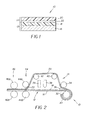
- Web 10 comprises a recording element 12 and a transferable laminate 14.
- Recording element 12 includes a support 16 and at least one image receiving layer 18 positioned over the support 16.
- Support 16 can be transparent or opaque.
- the at least one imaging receiving layer 18 can be porous, non-porous, or polymeric.
- Transferable laminate 14, described in more detail below, can include a protective layer 20 (for example, a polymeric film layer) having a thermally activated (commonly referred to in the industry as heat sensitive) adhesive layer 22 contacting one side of the polymeric film layer 20.
- the thermally activated adhesive layer 22 also contacts the at least one image receiving layer 18.
- adhesive layer 22 can be activated using pressure (commonly referred to a pressure sensitive adhesive layer) or activated using other suitable means known in the industry.
- the support 16 of the recording element 12 can incorporate or include the image receiving layer 18. In this sense, the recording element 12 would be considered to have only layer.
- transferable laminate means a removable (peelable, etc.) laminate that can, at the user's option under the appropriate operating conditions, be rendered non-removable (permanent, etc.).
- the degree of adhesion or tack of the thermally activated adhesive used in layer 22 is temperature dependent such that when applied initially, at a relatively low temperature, it adheres but remains removable, whereas when applied at relatively higher temperatures, the level of adhesion is substantially greater so as to become permanently adhered.
- the process begins with the unwinding of material web 10 from a supply roll 30 positioned around a roller 32.
- the transferable laminate 14 is removed (peeled, etc.) from the unimaged image receiving layer 18 of recording element 12 and caused to travel around roller 34.
- protective layer 20 provides protection to the image receiving layer 18 of the recording element 12 prior to printing on the image receiving layer 18 of the recording element 12.
- a removal device 36 Kernife, blade, wedge, etc.
- Recording element 12 travels past one or more print stations 38.
- image receiving layer 18 receives ink (forming an image) from the one or more printheads (not shown) positioned at each print station 38.
- print station(s) 38 will have inkjet printheads.
- other types of printheads can be used, for example, dye sublimation printheads, laser printheads, etc.
- drying zone(s) 39 can be any type known in the industry, for example, heat lamps, ultraviolet dryers, infrared dryers, etc.
- transferable laminate 14 bypasses the one or more print stations 38 traveling around rollers 40 and 42.
- Transferable laminate 14 is caused to contact the imaged image receiving layer 18 as the laminate 14 and the recording element 12 travel through a laminator assembly 44 (for example, a heated roller assembly 44A and 44B).
- a laminator assembly 44 for example, a heated roller assembly 44A and 44B.
- the temperature of the rollers causes the thermally activated adhesive layer 22 of the transferable laminate 14 to adhere itself to the surface of the image receiving layer 18 such that the protective layer 20 of the transferable laminate 14 becomes non-removable, described in more detail below.
- the imaged recording element 12 is laminated with the protective layer 20 of the transferable laminate 14.
- the laminator assembly 44 can be a pressure roller assembly provided the adhesive layer 22 is a pressure activated adhesive layer.
- adhesive layer 22 is pressure activated the degree of adhesion or tack of the pressure activated adhesive used in layer 22 is pressure dependent such that when applied initially, at a relatively low pressure, it adheres but remains removable, whereas when applied at relatively higher pressures, the level of adhesion is substantially greater so as to become permanently adhered.
- the thermally activated adhesive layer 22 can be any suitable type of adhesive provided the thermally activated adhesive layer 22 is of the type that is initially removable but can be caused to become non-removable using suitable means.
- the thermally activated adhesive layer 22 can include a wide variety of different adhesives or blends of adhesives such as polyester thermoplastic adhesives; polyurethane thermoplastic adhesives including polyurethane polyesters and polyurethane polyethers; unsaturated polyester; thermoplastic polyamide adhesives; and/or an acrylic resin, for example, a butyl methacrylate resin, such as ELVACITE.RTM. 2045, which is commercially available from ICI Acrylics Inc., Wilmington, DE. The same can be said for a pressure activated adhesive layer.
- the material web passes through a cutter assembly 46 which makes a perforated cut perpendicular (or parallel) to the longitudinal axis of the material web 10 at predetermined intervals. These cuts are sufficient to permit easy separation of individual pictures, images, documents, etc. by manual or automated processes.
- the cutter assembly 46 can be a two roller system in which cuts are made by cutting wheel 46B from the bottom of the material web 10 as the material web 10 is pressed against pressure wheel 46A.
- Cutter assembly 46 can be positioned either parallel or perpendicular to the material web 10.
- any known perforating, cutting, or scoring assembly may be used as well as any method for defining when the cuts are made to be material web 10.
- the protective layer 20 of the transferable laminate 14 provides protection and/or added functionality to the recording element 12 (image receiving layer 18 and/or support 16).
- Protective layer 20 can be chosen to provide protection from physical damage, for example, scratches, spills, etc.
- Protective layer 20 can be selected to provide protection from damaging effects of light, for example, UV light exposure, and atmospheric gases which can cause the image to fade, or the support 16 under the image to crack. This helps to increase the life and durability of the recording element 12.
- Protective layer 20 can be designed with a fine line or pattern of dots that provides the recording element 12 with anti-copying protection.
- Protective layer 20 can be chosen to provide a matte or texture to the surface of the recording element 12.
- the protective layer 20 can be selected to be a transparent or substantially transparent polymer sheet.
- the protective layer 20 is a polymer sheet
- a matte or textured surface can be incorporated in or on the polymer sheet.
- the polymer sheet can include unique patterns, for example, a border pattern, an artistic brushstroke pattern, a fine line pattern, etc.
- Protective layer 20 can include a polymeric film (a polymer sheet, etc.). Any suitable polymer can be used for the transferable (peelable) protective layer 20. Polyolefins, polyesters, polyamides, and others can be used. Additionally, it is desirable to have a polymer layer, for example, a polyolefin and/or a polyester, that does not stretch or has minimal yield to the sheet as a force is applied to remove it from the unimaged image receiving layer 18 of the recording element 12. Polymers that are oriented in at least one direction are the most effective in minimizing stretch and have the greatest versatility in adding additional functionality to an imaging element.
- FIGS. 3-5 additional example embodiments of manufacturing processes useable with the material web 10 are shown with like elements being described using like reference symbols. Both processes shown in FIGS. 3 and 4 operate using sets of material rolls 10 and 64 in tandem, as described below.
- the process begins with the unwinding of material web 10 from a parent roll 50 (alternatively referred to as a first recording element 12 and the transferable laminate 14) positioned around a roller 52.
- the transferable laminate 14 is removed (peeled, etc.) from the unimaged image receiving layer 18 of the parent roll 50 (now, the first recording element 12 without the transferable laminate 14) and caused to travel around roller 54 in the direction indicated by arrow 56.
- protective layer 20 provides protection to the image receiving layer 18 of the parent roll 50 (the first recording element 12) prior to printing on the image receiving layer 18 of the parent roll 50 (the first recording element 12).
- a removal device 58 (knife, blade, wedge, etc.) to assist with the removal of the transferable laminate 14 from the image receiving layer 18 of the parent roll 50.
- the first recording element 12 of the parent roll 50 is caused to travel in the direction indicated by arrow 60 and is rewound around roller 62.
- a daughter roll 64 of a second recording element 66 is unwound around roller 68.
- the daughter roll 64 of the second recording element 66 can be a roll of a former first recording element 12.
- the daughter roll 64 of the second recording element 66 can be a roll of a recording element comprised of support 16 and image receiving layer 18 having no transferable laminate 14. This would commonly occur at the start of a printing process when a new parent roll 50 and a new daughter roll 64 were being used.
- the second recording element 66 travels past one or more print stations 38 in the direction indicated by arrow 70.
- image receiving layer 18 receives ink (forming an image) from the one or more printheads (not shown) positioned at each print station 38.
- print station(s) 38 will have inkjet printheads.
- other types of printheads can be used, for example, dye sublimation printheads, laser printheads, etc.
- the second recording element 66 can optionally travel past a drying zone(s) 39. Drying zone(s) 39 can be any type known in the industry, for example, heat lamps, ultraviolet dryers, infrared dryers, etc.
- transferable laminate 14 from parent roll 50 is caused to contact the imaged image receiving layer 18 of the daughter roll 64 as the laminate 14 and the second recording element 66 travel through a laminator assembly 72 (for example, a heated roller assembly 72A and 72B).
- a laminator assembly 72 for example, a heated roller assembly 72A and 72B.
- the temperature of the rollers causes the thermally activated adhesive layer 22 of the transferable laminate 14 of the parent roll 50 to adhere itself to the surface of the image receiving layer 18 of the daughter roll 64 such that the protective layer 20 of the transferable laminate 14 becomes non-removable, described in more detail below.
- the second recording element 66 of the imaged daughter roll 64 is laminated with the protective layer 20 of the transferable laminate 14 of the parent roll 50.
- the laminator assembly 72 can be a pressure roller assembly provided the adhesive layer 22 is a pressure activated adhesive layer, as described above with respect to FIG. 2.
- the daughter roll 64 passes through a cutter assembly 74 which makes a perforated cut perpendicular (or parallel) to the longitudinal axis of the daughter roll 64 at predetermined intervals. These cuts are sufficient to permit easy separation of individual pictures, images, documents, etc. by manual or automated processes.
- the cutter assembly 74 can be a two roller system in which cuts are made by cutting wheel 74B from the bottom of the daughter roll 64 as the daughter roll 64 is pressed against pressure wheel 74A.
- Cutter assembly 74 can be positioned either parallel or perpendicular to the material web 10. Alternatively, any known perforating, cutting, or scoring assembly may be used as well as any method for defining when the cuts are made to the daughter roll 64.
- the thermally activated adhesive layer 22 and the protective layer 20 of the laminate 14 can be the types described above provided the thermally activated adhesive layer 22 is of the type that is initially removable but can be caused to become non-removable using suitable means. Additionally, when the daughter roll 64 and the parent roll 50 are exhausted, the first recording element 12 of the parent roll 50 becomes a new (fresh, etc.) daughter roll 64 and a new parent roll replaces the exhausted parent roll 50. The process is then repeated as many times as is necessary.
- printing can alternatively take place on the image receiving layer 18 of the first recording element 12 from the parent roll 50.
- the imaged image receiving layer 18 of the parent roll 50 is then laminated when it becomes the daughter roll 64.
- the recording element 12 will now be described in more detail.
- Recording element 12 can be any known recording element, for example, one that employs porous or non-porous single layer or multilayer coatings that act as suitable image receiving or ink receiving layers on one or both sides of the support 16. Porous recording elements have been developed which provide nearly instantaneous drying as long as they have sufficient thickness and pore volume to effectively contain the liquid ink. Representative porous recording elements are disclosed in U.S. Patents 6,087,051; 6,037,050; 5,750,200; 5,576,088 and 5,264,275.
- Recording elements 12 that employ non-porous single layer or multilayer coatings predominantly containing hydrophilic polymer and little, if any, particles can also be used.
- hydrophilic polymer layers absorb and retain ink through swelling. Aqueous liquids flow into such a layer by molecular diffusion and not by capillary action as would occur in a porous layer.
- Typical hydrophilic polymers include those listed below. Examples of non-porous recording elements have been disclosed in U.S. Patents 6,045,917 and 5,789,070.
- the at least one image receiving layer 18 can also be any known type of image receiving layer, for example, porous image receiving layers typically containing from about 50 % to about 95 % particles. Typical particles include silica, alumina, titania, zircona, clay, calcium carbonate, barium sulfate or organic particles such as polymeric beads. Examples of organic particles are disclosed in at least U.S. Patent 6,364,477. Porous image receiving layers can also contain fusible or partially fusible organic particles as disclosed in U.S. Patent 4,785,313. Additionally, porous image receiving layers typically containing from about 5 % to about 80 % hydrophilic polymer as binder can also be used.
- hydrophilic polymers include poly(vinyl alcohol), poly(vinyl pyrrolidone), gelatin, cellulose ethers, poly(oxazolines), poly(vinylacetamides), partially hydrolyzed poly(vinyl acetate/vinyl alcohol), poly(acrylic acid), poly(acrylamide), poly(alkylene oxide), sulfonated or phosphated polyesters and polystyrenes, casein, zein, albumin, chitin, chitosan, dextran, pectin, collagen derivatives, collodian, agar-agar, arrowroot, guar, carrageenan, tragacanth, xanthan, rhamsan and the like.
- Porous image receiving layers can also contain polymer microporous structures without particles as disclosed in U.S. Patents 5,374,475 and 4,954,395.
- mordants, UV absorbers, radical quenchers or antioxidants can also be added to the at least one image receiving layer 18 as is well known in the art.
- Other additives include pH modifiers, adhesion promoters, crosslinkers, rheology modifiers, surfactants, biocides, lubricants, colorants, optical brighteners, matte agents, antistatic agents, etc.
- additives known to those familiar with such art such as surfactants, defoamers, alcohol and the like can be used.
- the thickness of the image receiving layer 18 can range from about 1 to about 60 ⁇ m, preferably from about 5 to about 40 ⁇ m.
- the coating thickness required is typically determined through the need for the coating to act as a sump for absorption of ink solvent and the need to hold the ink near the coating surface.
- the recording element 12 can also contain a base layer (not shown), next to the support 16, the function of which is to absorb the solvent from the ink.
- Materials useful for this layer include inorganic particles and polymeric binder.
- the recording element 12 can also contain a layer on top of the image-receiving layer, the function of which is to provide gloss. Materials useful for this layer include sub-micron inorganic particles and/or polymeric binder.
- the support 16 for the recording element 12 can be any of those usually used for inkjet recording elements 12, such as resin-coated paper, paper, polyesters, or microporous materials such as polyethylene polymer-containing material sold by PPG Industries, Inc., Pittsburgh, Pennsylvania under the trade name of Teslin®, Tyvek® synthetic paper (DuPont Corp.), impregnated paper such as Duraform®, and OPPalyte® films (Mobil Chemical Co.) and other composite films listed in U.S. Patent 5,244,861.
- Opaque supports include plain paper, coated paper, synthetic paper, photographic paper support, melt-extrusion-coated paper, and laminated paper, such as biaxially oriented support laminates. Biaxially oriented support laminates are described in U.S.
- Transparent supports include glass, cellulose derivatives, e.g., a cellulose ester, cellulose triacetate, cellulose diacetate, cellulose acetate propionate, cellulose acetate butyrate; polyesters, such as poly(ethylene terephthalate), poly(ethylene naphthalate), poly(1,4-cyclohexanedimethylene terephthalate), poly(butylene terephthalate), and copolymers thereof; polyimides; polyamides; polycarbonates; polystyrene; polyolefins, such as polyethylene or polypropylene; polysulfones; polyacrylates; polyetherimides; and mixtures thereof.
- the papers listed above include a broad range of papers, from high end papers, such as photographic paper to low end papers, such as newsprint.
- support 16 can have a thickness of from about 50 to about 500 ⁇ m, preferably from about 75 to 300 ⁇ m.
- Antioxidants, antistatic agents, plasticizers and other known additives can be incorporated into the support 16, if desired.
- the coating composition can be applied from either water or organic solvents to one or both support 16 surfaces through conventional pre-metered or post-metered coating methods such as blade, air knife, rod, roll, curtain, slide, bead, or extrusion coating, etc.
- pre-metered or post-metered coating methods such as blade, air knife, rod, roll, curtain, slide, bead, or extrusion coating, etc.
- the choice of coating process would be determined from the economics of the operation and in turn, would determine the formulation specifications such as coating solids, coating viscosity, and coating speed.
- the recording element 12 can be subject to calendering or supercalendering to enhance surface smoothness.
- Samples were prepared by contacting the image receiving layer of an inkjet recording element, comprising a resin coated support having thereon a polyvinyl alcohol image receiving layer, to the heat activated adhesive layer of a series of commercial film laminates: (1) GBC Octiva Lo-Melt Glossy 3 mil.,(2) Glenroy 1 ⁇ 2 Digital Imaging Laminate, (3) Transilwrap 1/2 Trans-Kote® DigiKoteTM Laminating Film, (4) Transilwrap (50/20) PET/MR Clear Laminating film, to form the corresponding series of composites, #1 - #4.
- the peel force is the force required to peel the laminate from the surface of the image receiving layer of the inkjet recording element. In general, the higher the peel force, the harder it is to remove the laminate from the image receiving layer. If the peel force is greater than about 175 N/m, then the recording element is considered permanently protected by the laminate under typical viewing conditions, and the laminate cannot be removed without damaging the image receiving layer.
- the level of adhesion is adjustable ranging from non-adherent, through increasing tack, to permanently adhered, depending upon the applied heat and/or pressure.
- the above results also show that the peel force varies depending on the type of adhesive used. As such, the peel force can be allowed to vary (less than 175 N/m, greater than 175 N/m) depending on the particular application, as long as the laminate is adherable to the unimaged image receiving layer under normal working conditions and operating environments and removable from the unimaged image receiving layer without damaging the image receiving layer.
- Composite #1 was constructed as described above and laminated at 57°C thereby creating a parent roll of the invention having a transferable laminate layer and a peel force of 25 N/m. Thus, the transferable laminate was easily removable from the image receiving layer.
- a starter roll without the adhered laminate was used as the first daughter roll, and was printed using an inkjet printer.
- the laminate of the parent roll from composite #1 was removed at room temperature using a peel force of 25 N/m.
- the adhesive layer of the laminate was then placed in contact with the imaged image receiving layer of the daughter roll, and the resulting composite passed through the heated nip of the laminator at 91°C.
- the peel force required to remove the laminate from the imaged image receiving layer was 298 N/m. Because the peel force was well above 175 N/m, the laminate is considered to be permanently adhered to the image receiving layer under typical viewing conditions and could not be removed from the image receiving layer without damaging the imaged image receiving layer.
Landscapes
- Ink Jet Recording Methods And Recording Media Thereof (AREA)
- Ink Jet (AREA)
- Thermal Transfer Or Thermal Recording In General (AREA)
- Laminated Bodies (AREA)
Applications Claiming Priority (2)
| Application Number | Priority Date | Filing Date | Title |
|---|---|---|---|
| US368163 | 2003-02-18 | ||
| US10/368,163 US6689532B1 (en) | 2003-02-18 | 2003-02-18 | Method of protecting an image receiving layer of a recording element prior to and after printing |
Publications (3)
| Publication Number | Publication Date |
|---|---|
| EP1449677A2 true EP1449677A2 (de) | 2004-08-25 |
| EP1449677A3 EP1449677A3 (de) | 2005-08-10 |
| EP1449677B1 EP1449677B1 (de) | 2007-03-28 |
Family
ID=30770855
Family Applications (1)
| Application Number | Title | Priority Date | Filing Date |
|---|---|---|---|
| EP04075376A Expired - Lifetime EP1449677B1 (de) | 2003-02-18 | 2004-02-06 | Schutzverfahren der Bildempfangsschicht eines Aufzeichnungslelements vor bzw. nach der Bebilderung |
Country Status (4)
| Country | Link |
|---|---|
| US (1) | US6689532B1 (de) |
| EP (1) | EP1449677B1 (de) |
| JP (1) | JP2004276599A (de) |
| DE (1) | DE602004005516T2 (de) |
Families Citing this family (4)
| Publication number | Priority date | Publication date | Assignee | Title |
|---|---|---|---|---|
| US20030203132A1 (en) * | 2002-04-24 | 2003-10-30 | Cornelius Lester E. | Protection of ink prints |
| GB0312591D0 (en) * | 2003-06-02 | 2003-07-09 | Fisco Tools Ltd | Manufacture of tape measures |
| JP2005178135A (ja) * | 2003-12-18 | 2005-07-07 | Noritsu Koki Co Ltd | ラミネートシート、及びラミネート方法 |
| US11351767B2 (en) * | 2019-12-26 | 2022-06-07 | Paul Weedlun | High loft material transfer and method of manufacture |
Citations (7)
| Publication number | Priority date | Publication date | Assignee | Title |
|---|---|---|---|---|
| US4495016A (en) | 1981-12-29 | 1985-01-22 | Tetra Pak International Ab | Method of making a packing laminate web |
| US5201976A (en) | 1991-05-06 | 1993-04-13 | Morgan Adhesives Company | Method of producing a continuous label web |
| US5264275A (en) | 1991-07-26 | 1993-11-23 | Asahi Glass Company Ltd. | Recording sheet for an ink jet printer |
| US5576088A (en) | 1994-05-19 | 1996-11-19 | Mitsubishi Paper Mills Limited | Ink jet recording sheet and process for its production |
| US6037050A (en) | 1996-10-25 | 2000-03-14 | Konica Corporation | Ink-jet recording sheet |
| JP2000135856A (ja) | 1998-10-30 | 2000-05-16 | Canon Inc | 記録媒体 |
| US6087051A (en) | 1996-07-12 | 2000-07-11 | Konica Corporation | Information recording material |
Family Cites Families (17)
| Publication number | Priority date | Publication date | Assignee | Title |
|---|---|---|---|---|
| US2813052A (en) | 1952-02-11 | 1957-11-12 | Plastic Film Corp | Composite moisture-proof plasticized fabric and method of making the same |
| US3039907A (en) | 1958-08-21 | 1962-06-19 | William M Scholl | Laminated material and method of making the same |
| US3442742A (en) | 1963-04-26 | 1969-05-06 | Donald E Jorgensen | Processes for applying printing to metal substrates |
| JPS63286393A (ja) * | 1987-05-20 | 1988-11-24 | Canon Inc | 被記録材及びそれを用いた記録方法 |
| JPH02117170U (de) * | 1989-03-07 | 1990-09-19 | ||
| JP2562814Y2 (ja) * | 1992-02-17 | 1998-02-16 | 花王株式会社 | 記録表示用紙 |
| US5483321A (en) | 1993-04-02 | 1996-01-09 | Rexam Graphics | Electrographic element having a combined dielectric/adhesive layer and process for use in making an image |
| US5363179A (en) | 1993-04-02 | 1994-11-08 | Rexham Graphics Inc. | Electrographic imaging process |
| US5795425A (en) | 1993-09-03 | 1998-08-18 | Rexam Graphics Incorporated | Ink jet imaging process and recording element for use therein |
| JPH07228059A (ja) * | 1994-02-17 | 1995-08-29 | Mitsubishi Rayon Co Ltd | 昇華型感熱転写記録方式の被記録体 |
| JPH07256907A (ja) * | 1994-03-25 | 1995-10-09 | Fuji Photo Film Co Ltd | カラー画像形成装置 |
| JPH0895494A (ja) | 1994-09-26 | 1996-04-12 | Petsutaa:Kk | ラベル連続体およびその製造方法 |
| JPH10187043A (ja) * | 1996-12-20 | 1998-07-14 | Lintec Corp | インクジェット用接着シート及びラベル |
| US6103989A (en) * | 1998-02-09 | 2000-08-15 | Lasercraft, Inc. | System and method for forming discrete laser-etched labels from continuous label stock |
| JP2000043369A (ja) * | 1998-07-31 | 2000-02-15 | Canon Inc | インクジェット記録メディアセット |
| US6130024A (en) | 1998-11-20 | 2000-10-10 | Eastman Kodak Company | Strippable repositionable back sheet for photographic element |
| JP2002046355A (ja) * | 2000-08-04 | 2002-02-12 | Fuji Photo Film Co Ltd | 感熱記録シートの集積物 |
-
2003
- 2003-02-18 US US10/368,163 patent/US6689532B1/en not_active Expired - Fee Related
-
2004
- 2004-02-06 DE DE602004005516T patent/DE602004005516T2/de not_active Expired - Lifetime
- 2004-02-06 EP EP04075376A patent/EP1449677B1/de not_active Expired - Lifetime
- 2004-02-18 JP JP2004041331A patent/JP2004276599A/ja active Pending
Patent Citations (8)
| Publication number | Priority date | Publication date | Assignee | Title |
|---|---|---|---|---|
| US4495016A (en) | 1981-12-29 | 1985-01-22 | Tetra Pak International Ab | Method of making a packing laminate web |
| US5201976A (en) | 1991-05-06 | 1993-04-13 | Morgan Adhesives Company | Method of producing a continuous label web |
| US5264275A (en) | 1991-07-26 | 1993-11-23 | Asahi Glass Company Ltd. | Recording sheet for an ink jet printer |
| US5576088A (en) | 1994-05-19 | 1996-11-19 | Mitsubishi Paper Mills Limited | Ink jet recording sheet and process for its production |
| US5750200A (en) | 1994-05-19 | 1998-05-12 | Mitsubishi Paper Mills Limited | Ink jet recording sheet and process for its production |
| US6087051A (en) | 1996-07-12 | 2000-07-11 | Konica Corporation | Information recording material |
| US6037050A (en) | 1996-10-25 | 2000-03-14 | Konica Corporation | Ink-jet recording sheet |
| JP2000135856A (ja) | 1998-10-30 | 2000-05-16 | Canon Inc | 記録媒体 |
Also Published As
| Publication number | Publication date |
|---|---|
| DE602004005516T2 (de) | 2007-12-13 |
| US6689532B1 (en) | 2004-02-10 |
| DE602004005516D1 (de) | 2007-05-10 |
| EP1449677B1 (de) | 2007-03-28 |
| EP1449677A3 (de) | 2005-08-10 |
| JP2004276599A (ja) | 2004-10-07 |
Similar Documents
| Publication | Publication Date | Title |
|---|---|---|
| EP1261493B1 (de) | Bedruckter träger, der durch übertragung eines tintenstrahlbildes von einem bedruckbaren übertragungsblatt erzeugt wird | |
| US6945647B2 (en) | Method for increasing the diameter of an ink jet ink dot | |
| WO2002002348A1 (en) | Image forming method | |
| EP0919397B1 (de) | Verfahren zur Herstellung von thermischen Farbstoffübertragungsbildern auf magnetischen Substraten | |
| EP1449677B1 (de) | Schutzverfahren der Bildempfangsschicht eines Aufzeichnungslelements vor bzw. nach der Bebilderung | |
| JPH0421446A (ja) | 液体噴射記録装置 | |
| US6634743B2 (en) | Method for increasing the diameter of an ink jet ink dot | |
| US6264321B1 (en) | Method of producing recorded images having enhanced durability on a variety of substrates | |
| US6921562B2 (en) | Ink jet recording element | |
| EP0711224B1 (de) | Verfahrn zur herstellung von aufgenommenen bildern | |
| WO1995030547A1 (en) | Recording process | |
| EP1388426B1 (de) | Tintenstrahlaufzeichnungselement und Druckverfahren | |
| US6454896B1 (en) | Process for laminating an ink jet print | |
| JPH0421447A (ja) | 液体噴射記録装置 | |
| US7008676B2 (en) | Ink jet recording element | |
| JP2618357B2 (ja) | 被記録材 | |
| EP1388425B1 (de) | Tintenstrahlaufzeichnungselement und Druckverfahren | |
| JP3532536B2 (ja) | ラベル又はタグ用インクジェット記録紙 | |
| US6492004B1 (en) | Transfer laminating element | |
| JP2007181985A (ja) | インクジェット用記録シートの製造方法 | |
| US20040028842A1 (en) | Ink jet printing method | |
| JPH11268399A (ja) | 記録用シート | |
| JPH1178085A (ja) | 記録方法、記録装置、および熱溶融型感熱転写記録媒体 | |
| HK1194332A (en) | Open perforated material and method of imaging to form a vision control panel |
Legal Events
| Date | Code | Title | Description |
|---|---|---|---|
| PUAI | Public reference made under article 153(3) epc to a published international application that has entered the european phase |
Free format text: ORIGINAL CODE: 0009012 |
|
| AK | Designated contracting states |
Kind code of ref document: A2 Designated state(s): AT BE BG CH CY CZ DE DK EE ES FI FR GB GR HU IE IT LI LU MC NL PT RO SE SI SK TR |
|
| AX | Request for extension of the european patent |
Extension state: AL LT LV MK |
|
| PUAL | Search report despatched |
Free format text: ORIGINAL CODE: 0009013 |
|
| AK | Designated contracting states |
Kind code of ref document: A3 Designated state(s): AT BE BG CH CY CZ DE DK EE ES FI FR GB GR HU IE IT LI LU MC NL PT RO SE SI SK TR |
|
| AX | Request for extension of the european patent |
Extension state: AL LT LV MK |
|
| 17P | Request for examination filed |
Effective date: 20060124 |
|
| AKX | Designation fees paid |
Designated state(s): DE FR GB |
|
| GRAP | Despatch of communication of intention to grant a patent |
Free format text: ORIGINAL CODE: EPIDOSNIGR1 |
|
| GRAS | Grant fee paid |
Free format text: ORIGINAL CODE: EPIDOSNIGR3 |
|
| GRAA | (expected) grant |
Free format text: ORIGINAL CODE: 0009210 |
|
| AK | Designated contracting states |
Kind code of ref document: B1 Designated state(s): DE FR GB |
|
| REG | Reference to a national code |
Ref country code: GB Ref legal event code: FG4D |
|
| REF | Corresponds to: |
Ref document number: 602004005516 Country of ref document: DE Date of ref document: 20070510 Kind code of ref document: P |
|
| ET | Fr: translation filed | ||
| PLBE | No opposition filed within time limit |
Free format text: ORIGINAL CODE: 0009261 |
|
| STAA | Information on the status of an ep patent application or granted ep patent |
Free format text: STATUS: NO OPPOSITION FILED WITHIN TIME LIMIT |
|
| 26N | No opposition filed |
Effective date: 20080102 |
|
| PGFP | Annual fee paid to national office [announced via postgrant information from national office to epo] |
Ref country code: GB Payment date: 20130125 Year of fee payment: 10 Ref country code: FR Payment date: 20130218 Year of fee payment: 10 |
|
| PGFP | Annual fee paid to national office [announced via postgrant information from national office to epo] |
Ref country code: DE Payment date: 20140228 Year of fee payment: 11 |
|
| GBPC | Gb: european patent ceased through non-payment of renewal fee |
Effective date: 20140206 |
|
| REG | Reference to a national code |
Ref country code: FR Ref legal event code: ST Effective date: 20141031 |
|
| PG25 | Lapsed in a contracting state [announced via postgrant information from national office to epo] |
Ref country code: GB Free format text: LAPSE BECAUSE OF NON-PAYMENT OF DUE FEES Effective date: 20140206 Ref country code: FR Free format text: LAPSE BECAUSE OF NON-PAYMENT OF DUE FEES Effective date: 20140228 |
|
| REG | Reference to a national code |
Ref country code: DE Ref legal event code: R119 Ref document number: 602004005516 Country of ref document: DE |
|
| PG25 | Lapsed in a contracting state [announced via postgrant information from national office to epo] |
Ref country code: DE Free format text: LAPSE BECAUSE OF NON-PAYMENT OF DUE FEES Effective date: 20150901 |