EP1450252B1 - Zentrale verarbeitungseinrichtung, verfahren, und betriebsprogramm zur verwaltung von mehreren betriebsmoden - Google Patents
Zentrale verarbeitungseinrichtung, verfahren, und betriebsprogramm zur verwaltung von mehreren betriebsmoden Download PDFInfo
- Publication number
- EP1450252B1 EP1450252B1 EP01274843A EP01274843A EP1450252B1 EP 1450252 B1 EP1450252 B1 EP 1450252B1 EP 01274843 A EP01274843 A EP 01274843A EP 01274843 A EP01274843 A EP 01274843A EP 1450252 B1 EP1450252 B1 EP 1450252B1
- Authority
- EP
- European Patent Office
- Prior art keywords
- command
- operation mode
- firmware
- section
- usable
- Prior art date
- Legal status (The legal status is an assumption and is not a legal conclusion. Google has not performed a legal analysis and makes no representation as to the accuracy of the status listed.)
- Expired - Lifetime
Links
Images


















Classifications
-
- G—PHYSICS
- G06—COMPUTING OR CALCULATING; COUNTING
- G06F—ELECTRIC DIGITAL DATA PROCESSING
- G06F9/00—Arrangements for program control, e.g. control units
- G06F9/06—Arrangements for program control, e.g. control units using stored programs, i.e. using an internal store of processing equipment to receive or retain programs
- G06F9/22—Microcontrol or microprogram arrangements
- G06F9/24—Loading of the microprogram
-
- G—PHYSICS
- G06—COMPUTING OR CALCULATING; COUNTING
- G06F—ELECTRIC DIGITAL DATA PROCESSING
- G06F21/00—Security arrangements for protecting computers, components thereof, programs or data against unauthorised activity
- G06F21/50—Monitoring users, programs or devices to maintain the integrity of platforms, e.g. of processors, firmware or operating systems
- G06F21/57—Certifying or maintaining trusted computer platforms, e.g. secure boots or power-downs, version controls, system software checks, secure updates or assessing vulnerabilities
- G06F21/572—Secure firmware programming, e.g. of basic input output system [BIOS]
-
- G—PHYSICS
- G06—COMPUTING OR CALCULATING; COUNTING
- G06F—ELECTRIC DIGITAL DATA PROCESSING
- G06F8/00—Arrangements for software engineering
- G06F8/60—Software deployment
-
- G—PHYSICS
- G06—COMPUTING OR CALCULATING; COUNTING
- G06F—ELECTRIC DIGITAL DATA PROCESSING
- G06F9/00—Arrangements for program control, e.g. control units
- G06F9/06—Arrangements for program control, e.g. control units using stored programs, i.e. using an internal store of processing equipment to receive or retain programs
- G06F9/30—Arrangements for executing machine instructions, e.g. instruction decode
- G06F9/30145—Instruction analysis, e.g. decoding, instruction word fields
-
- G—PHYSICS
- G06—COMPUTING OR CALCULATING; COUNTING
- G06F—ELECTRIC DIGITAL DATA PROCESSING
- G06F9/00—Arrangements for program control, e.g. control units
- G06F9/06—Arrangements for program control, e.g. control units using stored programs, i.e. using an internal store of processing equipment to receive or retain programs
- G06F9/30—Arrangements for executing machine instructions, e.g. instruction decode
- G06F9/30181—Instruction operation extension or modification
- G06F9/30189—Instruction operation extension or modification according to execution mode, e.g. mode flag
Definitions
- the present invention relates to a central processing unit and an operation program for realizing a security function, for example.
- the invention relates to the central processing unit and the operation program, which can maintain security and simultaneously improving extensibility.
- the security functions are desirably realized by a security system composed of a plurality of computers having independent security functions.
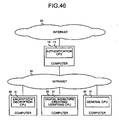
- Fig. 46 is a block diagram illustrating a constitution of the conventional security system.
- a computer 10 is connected to the Internet 20 and an intranet 30, and an authentication CPU (central processing unit) 11 realizes authentication as the security function.
- the authentication CPU 11 is constituted so as to be capable of using only a command group for the authentication in order to strengthen the security.
- a computer 40 is connected to the intranet 30, and an encryption/decryption CPU 41 realizes encryption/decryption as the security function.
- the encryption/decryption CPU 41 is also constituted so as to be capable of using only a command group, which is specific to the encryption/decryption in order to strengthen the security.
- a computer 50 is connected to the intranet 30, and a digital signature creating/verifying CPU 51 realizes creating/verification of digital signature as the security function.
- the digital signature creating/verifying CPU 51 is also constituted so as to be capable of using only a command group, which is specific to the creating/verification of digital signature in order to strengthen the security.
- a computer 60 is connected to the intranet 30, and a general CPU 61 realizes a general function other than the security functions.
- the general CPU 61 is constituted so as to be capable of using only a command group, which is specific to a general purpose. In the conventional security system, the respective computers realize the security functions.
- the present invention is devised in order to solve the above problems, and its object is to provide the central processing unit and the operation program, which can improve extensibility and reduce the cost while the security is being maintained.
- WO 00/67115A discloses a central processing unit and a method of operation thereof as detailed in the preamble to the independent claims herein.
- US-A-5,652,887 discloses a system for enabling expanded instruction sets, applications, data and parameters to be downloaded from one processor to another so that processors ordinarily intended for specific tasks can run other tasks without having an expanded instruction set and application code specifically developed or always resident.
- four types of extended commands are issued by the system processor to the peripheral processor in which a command table is built to point to interpretable images resident therein.
- Cryptographic microcode loading controller for secure function IBM Technical Disclosure Bulletin, IBM Corp. New York, US, vol. 34, no. 4B, 1 September 1991 (1991-09-01), pages 34-36 discloses a central processor unit.
- the document discloses a single-chip microcontroller and a method of operation thereof so as to load microcode in a secure manner.
- the microcode may be encrypted.
- a central processing unit comprising: an input unit that inputs a command that can be executed by using a firmware or a logic circuit: a storing unit that stores a plurality of operation modes, each one of the operation modes corresponding to a different set of commands; and a determining unit that determines whether the input command is included or not in the set of commands corresponding to a current operation mode, characterized by further comprising: a resource storing unit that stores a different set of resources required for executing the commands that are available when the each one of the operation modes is set; an access control unit that, when the input command is included in the set of commands corresponding to the current operation mode, determines whether a necessary resource to execute the input command is included or not in an available set of resources corresponding to the current operation mode, and that prohibits access to the necessary resource that is not included in the available set of resources; and an execution unit that, when the necessary resource is included in the available set of resources, executes the input command by using the firmware or the logic circuit
- a method for managing a plurality of operation modes comprising: inputting a command that can be executed by using a firmware or a logic circuit: and determining whether the input command is included or not in a set of commands corresponding to a current operation mode, where each one of the operation modes corresponds to a different set of commands, characterized by the each one of the operation modes corresponding to a different set of resources required for executing the commands that are available when the each one of the operation modes is set, and further comprising: determining whether a necessary resource to execute the input command is included or not in an available set of resources corresponding to the current operation mode, when the input command is included in the set of commands corresponding to the current operation mode; prohibiting access to the necessary resource that is not included in the available set of resources; and executing the input command by using the firmware or the logic circuit in conjunction with the necessary resource, when the necessary resource is included in the available set of resources.
- a computer-readable recording medium that stores a computer program for managing a plurality of operation modes, the computer program makes a computer execute: inputting a command that can be executed by using a firmware or a logic circuit; and determining whether the input command is included or not in a set of commands corresponding to a current operation mode, where each one of the operation modes corresponds to a different set of commands, characterized by the each one of the operation modes corresponding to a different set of resources required for executing the commands that are available when the each one of the operation modes is set, and further comprising: determining whether a necessary resource to execute the input command is included or not in an available set of resources corresponding to the current operation mode, when the input command is included in the set of commands corresponding to the current operation mode; prohibiting access to the necessary resource that is not included in the available set of resources; and executing the input command by using the firmware or the logic circuit in conjunction with the necessary resource, when the necessary resource is included in the available set of resources.
- Fig. 1 is a block diagram illustrating a constitution according to a first example
- Fig. 2 is a block diagram illustrating a constitution of a CPU 310 shown in Fig. 1
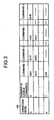
- Fig. 3 is a diagram illustrating an operation mode/command table 400 in the first embodiment
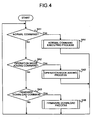
- Fig. 4 is a flowchart explaining an operation of the CPU 310 shown in Fig. 2 , an operation of a CPU 1110 shown in Fig. 27 , an operation of a CPU 310 shown in Fig. 34 and an operation of a CPU 1510 shown in Fig. 43
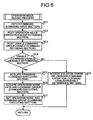
- Fig. 5 is a flowchart explaining a normal command executing process shown in Figs. 4 , 18 and 23
- FIG. 6 is a flowchart explaining an operation mode adding process shown in Figs. 4 , 18 and 23 ;
- Fig. 7 is a flowchart explaining a firmware download process shown in Fig. 4 ;
- Fig. 8 is a flowchart explaining an operation of the first example;
- Fig. 9 is a block diagram illustrating a constitution of a second example;
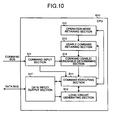
- Fig. 10 is a block diagram illustrating a constitution of a CPU 610 shown in Fig. 9 ;
- Fig. 11 is a flowchart explaining an operation of the CPU 610 shown in Fig. 10 ;
- Fig. 12 is a flowchart explaining the normal command executing process shown in Fig. 11 ;
- Fig. 13 is a flowchart explaining the operation mode adding process shown in Fig.
- Fig. 16 is a block diagram illustrating a constitution according to a third example
- Fig. 17 is a block diagram illustrating a constitution of a CPU 810 shown in Fig. 16
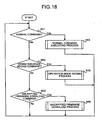
- Fig. 18 is a flowchart explaining an operation of the CPU 810 shown in Fig. 17
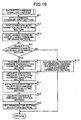
- Fig. 19 is a flowchart explaining an encrypted firmware download process shown in Fig. 18
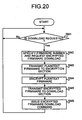
- Fig. 20 is a flowchart explaining an operation of a third example
- Fig. 21 is a block diagram illustrating a constitution according to a fourth example
- Fig. 21 is a block diagram illustrating a constitution according to a fourth example
- Fig. 21 is a block diagram illustrating a constitution according to a fourth example ; Fig.
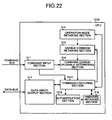
- FIG. 22 is a block diagram illustrating a constitution of a CPU 1010 shown in Fig. 21 ;
- Fig. 23 is a flowchart explaining an operation of the CPU 1010 shown in Fig. 21 ;
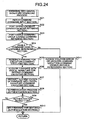
- Fig. 24 is a flowchart explaining a firmware with digital signature download process shown in Fig. 23 ;
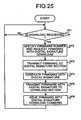
- Fig. 25 is a flowchart explaining an operation of the fourth example;
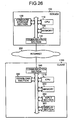
- Fig. 26 is a block diagram illustrating a constitution according to an embodiment of the present invention;
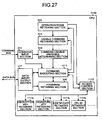
- Fig. 27 is a block diagram illustrating a constitution of a CPU 1110 shown in Fig. 26 ;
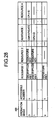
- Fig. 28 is a diagram illustrating an operation mode/resource table 1200 according to the invention;
- FIG. 29 is a flowchart explaining the normal command executing process in the invention
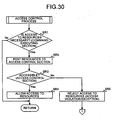
- Fig. 30 is a flowchart explaining an access control process shown in Fig. 29
- Fig. 31 is a flowchart explaining the operation mode adding process in the invention
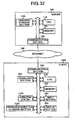
- Fig. 32 is a block diagram illustrating a constitution of a sixth example
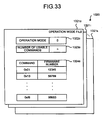
- Fig. 33 is a diagram illustrating a data structure of operation mode files 13210 to 1321k in the sixth example
- Fig. 34 is a block diagram illustrating constitutions of an operating system 1310 and the CPU 310 shown in Fig. 32
- Fig. 35 is a flowchart explaining an operation of the operating system 1310 shown in Fig. 34
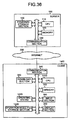
- FIG. 36 is a block diagram illustrating a constitution according to a seventh example ;
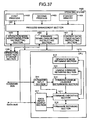
- Fig. 37 is a block diagram illustrating constitutions of a CPU 1410 and an operating system 1420 shown in Fig. 36 ;
- Fig. 38 is a flowchart explaining an operation of the CPU 1410 shown in Fig. 37 ;
- Fig. 39 is a flowchart explaining an operation mode deleting process shown in Fig. 38 ;
- Fig. 40 is a flowchart explaining a firmware unload process shown in Fig. 38 ;
- Fig. 41 is a flowchart explaining an operation of the operating system 1420 shown in Fig. 37 ;
- Fig. 42 is a block diagram illustrating a constitution according to an eighth example;
- Fig. 37 is a block diagram illustrating constitutions of a CPU 1410 and an operating system 1420 shown in Fig. 36 ;
- Fig. 38 is a flowchart explaining an operation of the CPU 1410 shown in Fig. 37 ;
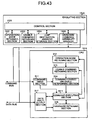
- FIG. 43 is a block diagram illustrating constitutions of a CPU 1510 and an emulating section 1520 shown in Fig. 42 ;
- Fig. 44 is a flowchart explaining an operation of the emulating section 1520 shown in Fig. 43 ;
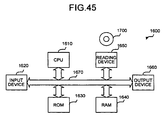
- Fig. 45 is a block diagram illustrating a constitution of a modified example;
- Fig. 46 is a block diagram illustrating a constitution of a conventional security system.
- Fig. 1 is a block diagram illustrating a constitution according to the first example.
- a server 100 provides various firmware to a client 300 via the Internet 200.
- a CPU 110 controls the providing of the firmware.
- a memory 120 retains various data about control in the CPU 110, and it is composed of a RAM (Random Access Memory), a ROM (Read Only Memory), or the like.
- a firmware storage section 130 stores firmware to be used for command execution in the CPU 310, mentioned later. The firmware is related with a firmware number, and is stored into the firmware storage section 130.
- a communication section 140 controls communication in the server 100 according to communication protocols such as TCP/IP (Transmission Control Protocol/Internet Protocol).
- TCP/IP Transmission Control Protocol/Internet Protocol
- the client 300 is connected to the Internet 200, and it has a function for downloading firmware from the server 100 via the Internet 200 and a function for executing various commands using the firmware so as to output results.
- a CPU 310 controls to download firmware dynamically and sets an operation mode and a command group, mentioned later.
- a memory 320 retains various data relating to the control in the CPU 310, and it is composed of a RAM, a ROM, or the like.
- a download section 330 downloads firmware from the server 100 according to the control of the CPU 310.
- An input section 350 is an input device such as a keyboard and a mouse.
- a display section 360 is a display for displaying command executed results or the like in the CPU 310.
- Fig. 2 is a block diagram illustrating a constitution of the CPU 310 shown in Fig. 1 .
- a command input section 311 inputs a command therein via a command bus, and fetches the command to a command executing section 315 and a command usable/unusable determining section 314.
- An operation mode retaining section 312 retains operation modes of the CPU 310.
- Fig. 3 illustrates an operation mode/command table 400 which represents a relationship between the operation modes and the commands.
- the operations modes are designated by "0" to "k”.
- the number of usable commands is set for each operation mode, and this number represents the number of the commands usable in the command executing section 315 in the operation mode.
- the number of usable commands is n. That is to say, in the case of the operation mode 0, n types of commands including a command 1 (0x01) to a command n (0xf8) are usable in the command executing section 315.
- the number of usable commands is i. That is to say, in the case of the operation mode 1, i types of commands including a command 1 (0x11) to a command i (0xe7) are usable in the command executing section 315. Further, when the operation mode 1 is set, commands other than the command 1 (0x11) to the command i (0xe7) cannot be used in the command executing section 315.
- the number of usable commands is 1. That is to say, in the case of the operation mode k, one type of a command 1 (0xff) is usable in the command executing section 315. When only the operation mode k is set, commands other than the command 1 (0xff) cannot be used in the command executing section 315.
- the operation modes sets in the operation mode retaining section 312 are added dynamically.
- a usable command retaining section 313 retains usable commands which are related with the operation modes set in the operation mode retaining section 312.
- the command (0x01) to a command n (0xf8) which are related with the operation mode 0 are retained as the usable commands in the usable command retaining section 313.
- the command usable/unusable determining section 314 determines whether the command fetched by the command input section 311 is usable. Concretely, the command usable/unusable determining section 314 refers to the operation mode/command table 400 (see Fig. 3 ), and when the fetched command is included in a command group usable in the current operation mode set in the operation mode retaining section 312, it determines this command as usable.
- the command usable/unusable determining section 314 determines this command as unusable.
- the usable commands are limited according to the operation modes.
- the command executing section 315 executes the command determined as usable by the command usable/unusable determining section 314. Further, the command executing section 315 acquires firmware to be used for executing the command from a firmware retaining section 316.
- the firmware retaining section 316 retains firmware related with the command group in the operation mode set in the operation mode retaining section 312.
- the firmware is downloaded from the server 100 (see Fig. 1 ).
- the firmware retaining section 316 retains new firmware.
- a data input/output section 317 has a function for inputting various data necessary for executing the command in the command executing section 315 and a function for outputting an executed result.
- the CPU 310 determines whether a normal command is input at step SA1 shown in Fig. 4 , and in this case a determined result is supposed to be "No".
- the normal command is a command other than an operation mode adding command and a firmware download command, mentioned later, which is executed in the CPU 310.
- the CPU 310 determines whether the operation mode adding command is input at step SA2, and in this case a determined result is supposed to be "No".
- the operation mode adding command is for adding an operation mode of the operation mode/command table 400 shown in Fig. 3 .
- the CPU 310 determines whether the firmware download command is input at step SA3. In this case, a determined result is supposed to be "No", and it makes the determination at step SA1.
- the firmware download command is for setting firmware acquired from the server 100 via the Internet 200 in the CPU 310. Thereafter, the CPU 310 repeats the determinations at steps SA1 to SA3.
- the CPU 310 sets the determined result at step SA1 to "Yes”.
- the CPU 310 executes a normal command executing process at step SA4.
- the command input section 311 fetches the normal command input via the command bus to the command usable/unusable determining section 314 and the command executing section 315 at step SB1 shown in Fig. 5 .
- the operation mode retaining section 312 posts the operation mode set at this time to the usable command retaining section 313 at step SB2.
- the posted operation mode is supposed to be "1" shown in Fig. 3 .
- the usable command retaining section 313 posts a command group related with the posted operation mode as the usable command group to the command usable/unusable determining section 314 at step SB3.
- the usable command group in this case includes the command 1 (0x11) to the command i (0xe7) related with the operation mode 1 shown in Fig. 3 .
- the command usable/unusable determining section 314 determines whether the normal command fetched at step SB1 is usable in the operation mode at step SB4. Concretely, the command usable/unusable determining section 314 determines whether the usable command group posted at step SB3 includes the normal command fetched at step SB1, and in this case, a determined result is supposed to be "Yes".
- the command executing section 315 acquires firmware related with the normal command (usable command) fetched at step SB1 from the firmware retaining section 316 at step SB5.
- the command executing section 315 acquires data to be used for the command execution from the data input/output section 317 at step SB6.
- the command executing section 315 executes the normal command using the firmware and the data at step SB7.
- the command executing section 315 outputs a result of executing the normal command via the data input/output section 317 at step SB8.
- the command usable/unusable determining section 314 processes the normal command as improper authority or undefined command exceptional interruption occurrence (error) at step SB9.
- the operation mode 1 may be added.
- the operation mode adding process is explained below.
- the CPU 310 sets the determined result at step SA2 shown in Fig. 4 to "Yes”.
- the CPU 310 executes the operation mode adding process at step SA5.
- the command input section 311 fetches the operation mode adding command input via the command bus to the command usable/unusable determining section 314 and the command executing section 315 at step SC1 shown in Fig. 6 .
- the operation mode retaining section 312 posts the operation mode set at this time (in this case, the operation mode 1) to the usable command retaining section 313 at step SC2.
- the usable command retaining section 313 posts the command 1 (0x11) to the command i (0xe7) related with the posted operation mode 1 as the usable command group to the command usable/unusable determining section 314 at step SC3.
- the command usable/unusable determining section 314 determines whether the operation mode adding command fetched at step SC1 is usable in the operation mode at step SC4. Concretely, the command usable/unusable determining section 314 determines whether the usable command group posted at step SC3 includes the operation mode adding command fetched at step SC1, and in this case, a determined result is supposed to be "Yes".
- the command executing section 315 acquires firmware related with the operation mode adding command (usable command) fetched at step SC1 from the firmware retaining section 316 at step SC5.
- the command executing section 315 acquires the operation mode data and the command group from the data input/output section 317 at step SC6.
- the operation mode data are "0" related with the operation mode to be added (see Fig. 3 ).
- the command group includes the command 1 (0x01) to the command n (0xf8) related with the operation mode 0 shown in Fig. 3 .
- the command executing section 315 sets the operation mode 0 to be added to the operation mode retaining section 312, and sets a command group related with the operation mode 0 in the usable command retaining section 313 at step SC7. As a result, the command group 0 is usable in the operation mode.
- the command usable/unusable determining section 314 processes this command as improper authority or undefined command exceptional interruption occurrence (error) at step SC8.
- the download section 330 shown in Fig. 1 determines whether a download request is made from the CPU 310 at step SE1 shown in Fig. 8 . In this case, a determined result is supposed to be "No", and the determination is repeated.
- the download section 330 sets the determined result at step SE1 to "Yes".
- the download section 330 specifies a firmware number corresponding to the firmware requested by the CPU 310 based on a firmware/firmware number table (not shown) at step SE2.
- the download section 330 posts the firmware download request to the server 100 via the Internet 200 based on the firmware number.
- the CPU 110 of the server 100 reads the firmware from the firmware storage section 130 using the firmware number as a key at step SE3, and transmits the firmware to the download section 330 of the client 300.
- the download section 330 issues the firmware download command to the CPU 310, and makes the determination at step SE1.
- the CPU 310 sets the determined result at step SA3 shown in Fig. 4 to "Yes”.
- the CPU 310 executes the firmware download process at step SA6.
- the command input section 311 fetches the firmware download command input via the command bus to the command usable/unusable determining section 314 and the command executing section 315 at step SD1 shown in Fig. 7 .
- the operation mode retaining section 312 posts the operation mode set at this time (in this case, the operation modes 0 and 1) to the usable command retaining section 313 at step SD2.
- the usable command retaining section 313 posts the command 1 (0x01) to the command n (0xf8), and the command 1 (0x11) to the command i (0xe7) related with the posted operation modes 0 and 1 as the usable command groups to the command usable/unusable determining section 314 at step SD3.
- the command usable/unusable determining section 314 determines whether the firmware download command fetched at step SD1 is usable in the operation modes 0 and 1 at step SD4. Concretely, the command usable/unusable determining section 314 determines whether the usable command groups posted at step SD3 include the firmware download command fetched at step SD1. In this case, a determined result is supposed to be "Yes".
- the command executing section 315 acquires firmware for execution related with the firmware download command (usable command) fetched step SD1 from the firmware retaining section 316 at step SD5.
- the command executing section 315 acquires the firmware for setting from the download section 330 via the data input/output section 317 and the data bus based on the firmware download command and the related firmware for execution at step SD6.
- the command executing section 315 sets the firmware for setting in the firmware retaining section 316 at step SD7. As a result, the command group is usable in the operation mode 0 added by the operation mode adding process.
- step SD4 determines whether the firmware download command fetched at step SD1 is unusable in the operation modes 0 and 1.
- the command usable/unusable determining section 314 processes this command as improper authority or undefined command exceptional interruption occurrence (error) at step SD8.
- the dynamically specified operation mode in the plural operation modes is added into the operation mode retaining section 312 shown in Fig. 2 , and the command related with the added operation mode is set in the usable command retaining section 313. Further, the firmware to be used for executing the command is acquired from the external server 100 (see Fig. 1 ). For this reason, while the security is being maintained, the extensibility can be improved, and the cost can be reduced.
- the first example explains the example that the command executing section 315 (see Fig. 2 ) executes the command using the firmware.
- the command may be, however, executed by using a logic circuit instead of the firmware. This constitutional example is explained below as the second example.
- Fig. 9 is a block diagram illustrating a constitution according to the second example.
- a server 500 provides logic circuit data to a client 600 via the Internet 200.
- the logic circuit data are used for generating a logic circuit which realizes the function of the firmware in the first embodiment.
- a CPU 510 controls providing of the logic circuit data.
- a logic circuit data storage section 520 stores a plurality of logic circuit data for generating the logic circuit to be used for executing the command in a CPU 610, mentioned later, thereinto.
- the logic circuit data are related with logic circuit data numbers, so as to be stored into the logic circuit data storage section 520.
- the client 600 is connected to the Internet 200.
- the client 600 has a function for downloading the logic circuit data from the server 500 via the Internet 200, a function for generating the logic circuit based on the logic circuit data, and a function for executing various commands using the logic circuit so as to output results.
- the CPU 610 controls dynamic download of the logic circuit data and sets operation modes and command groups, mentioned later.
- a download section 620 downloads the logic circuit data from the server 500 according to control of the CPU 610.
- Fig. 10 is a block diagram illustrating a constitution of the CPU 610 shown in Fig. 9 .
- a command executing section 611 has the logic circuit which is dynamically generated, and executes a command determined as usable by the command usable/unusable determining section 314 in the logic circuit.
- the command executing section 611 makes a logic circuit generating section 612 dynamically generate the logic circuit based on the logic circuit data related with the command.
- the logic circuit generating section 612 retains the logic circuit data related with the command group in the operation modes set in the operation modes retaining section 312.
- the logic circuit generating section 612 generates the logic circuit, which is related with the command to be executed by the command executing section 611 under the control of the command executing section 611, in the command executing section 611.
- the CPU 610 determines whether a normal command is input at step SF1 shown in Fig. 11 , and in this case, a determined result is supposed to be "No".
- the normal command is a command other than the operation mode adding command in the first embodiment and the logic circuit data download command. It is executed by the CPU 610.
- the CPU 610 determines whether the operation mode adding command is input at step SF2, and in this case, a determined result is supposed to be "No".
- the operation mode adding command is for adding an operation mode of the operation mode/command table 400 shown in Fig. 3 .
- the CPU 610 determines whether the logic circuit data download command is input at step SF3. In this case, a determined result is supposed to be "No", and the determination at step SF1 is made.
- the logic circuit data download command is for downloading the logic circuit data from the server 500 via the Internet 200. Thereafter, the CPU 610 repeats the determinations at steps SF1 to SF3.
- the CPU 610 sets the determined result at step SF1 to "Yes".
- the CPU 610 executes the normal command executing process at step SF4.
- the command input section 311 fetches the normal command input via the command bus to the command usable/unusable determining section 314 and the command executing section 611 at step SG1 shown in Fig. 12 .
- the operation mode retaining section 312 posts the operation mode set at this time to the usable command retaining section 313 at step SG2.
- the posted operation mode is supposed to be "1" shown in Fig. 3 .
- the usable command retaining section 313 posts the command group related with the posted operation mode as the usable command group to the command usable/unusable determining section 314 at step SG3.
- the usable command group in this case includes the command 1 (0x11) to the command i (0xe7) related with the operation mode 1 shown in Fig. 3 .
- the command usable/unusable determining section 314 determines whether the normal command fetched at step SG1 is usable in the operation mode at step SG4. Concretely, the command usable/unusable determining section 314 determines whether the usable command group posted at step SG3 includes the normal command fetched at step SG1. In this case, a determined result is supposed to be "Yes".
- the command executing section 611 instructs the logic circuit generating section 612 to generate the logic circuit related with the normal command (usable command) fetched at step SG1.
- the logic circuit generating section 612 generates the logic circuit in the command executing section 611 based on the logic circuit data related with the normal command at step SG6.
- the command executing section 611 acquires data to be used for executing the command from the data input/output section 317 at step SG7.
- the command executing section 611 executes the normal command using the generated logic circuit and the data at step SG8.
- the command executing section 611 outputs a result of executing the normal command via the data input/output section 317 at step SG9.
- the command usable/unusable determining section 314 processes the command as improper authority or undefined command exceptional interruption occurrence (error) at step SG10.
- the operation mode 1 may be added.
- the operation mode adding process is explained below.
- the CPU 610 sets the determined result at step SF2 shown in Fig. 11 to "Yes".
- the CPU 610 executes the operation mode adding process at step SF5.
- the command input section 311 fetches the operation mode adding command input via the command bus to the command usable/unusable determining section 314 and the command executing section 611 at step SH1 shown in Fig. 13 .
- the operation mode retaining section 312 posts the operation mode set at this time (in this case, the operation mode 1) to the usable command retaining section 313 at step SH2.
- the usable command retaining section 313 posts the command 1 (0x11) to the command i (0xe7) related with the posted operation mode 1 as the usable command group to the command usable/unusable determining section 314 at step SH3.
- the command usable/unusable determining section 314 determines whether the operation mode adding command fetched at step SH1 is usable in the operation mode at step SH4 similarly to step SC4 (see Fig. 6 ). In this case, a determined result is supposed to be "Yes".
- the command executing section 611 instructs the logic circuit generating section 612 to generate the logic circuit related with the operation mode adding command (usable command) fetched at step SH1.
- the logic circuit generating section 612 generates the logic circuit in the command executing section 611 based on the logic circuit data related with the operation mode adding command at step SH6.
- the command executing section 611 acquires the operation mode data and the command group from the data input/output section 317 at step SH7.
- the operation mode data are "0" related with the operation mode to be added (see Fig. 3 ).
- the command group includes the command 1 (0x01) to the command n (0xf8) related with the operation mode 0 shown in Fig. 3 .
- the command executing section 611 sets the operation mode 0 to be added into the operation mode retaining section 312, and sets the command group related with the operation mode 0 into the usable command retaining section 313 at step SH8. As a result, the command group is usable in the operation mode 0.
- the command usable/unusable determining section 314 processes the command as improper authority or undefined command exceptional interruption occurrence (error) at step SH9.
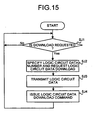
- the download section 620 shown in Fig. 9 determines whether the download is requested by the CPU 610 at step SJ1 shown in Fig. 15 . In this case, a determined result is supposed to be "No", and the determination is repeated.
- the download section 620 sets the determined result at step SJ1 to "Yes".
- the download section 620 specifies a logic circuit data number related with the logic circuit data requested by the CPU 610 based on the logic circuit data/logic circuit data number table (not shown) at step SJ2.
- the download section 620 gives the logic circuit data download request to the server 500 via the Internet 200 based on the logic circuit data number.
- the CPU 510 of the server 500 reads the logic circuit data from the logic circuit data storage section 520 using the logic circuit data number as a key at step SJ3.
- the CPU 510 transmits the logic circuit data to the download section 620 of the client 600.
- the download section 620 issues the logic circuit data download command to the CPU 610 at step SJ4, and makes the determination at step SJ1.
- the CPU 610 sets the determined result at step SF3 shown in Fig. 11 to "Yes".
- the CPU 610 executes the logic circuit data download process at step SF6.
- the command input section 311 fetches the logic circuit data download command input via the command bus to the command usable/unusable determining section 314 and the command executing section 611 at step SI1 shown in Fig. 14 .
- the operation mode retaining section 312 posts the operation modes set at this time (in this case, the operation modes 0 and 1) to the usable command retaining section 313 at step SI2.
- the usable command retaining section 313 posts the command 1 (0x01) to the command n (0xf8), and the command 1 (0x11) to the command i (0xe7) related with the posted operation modes 0 and 1 as the usable command groups to the command usable/unusable determining section 314 at step SI3.
- the command usable/unusable determining section 314 determines whether the logic circuit data download command fetched at step SI1 is usable in the operation modes 0 and 1 at step SI4. In this case, a determined result is supposed to be "Yes".
- the command executing section 611 instructs the logic circuit generating section 612 to generate a logic circuit related with the logic circuit data download command (usable command) fetched at step SI1.
- the logic circuit generating section 612 generates the logic circuit in the command executing section 611 based on the logic circuit data related with the logic circuit data download command at step SI6.
- the command executing section 611 acquires the logic circuit data for setting from the download section 620 via the data input/output section 317 and the data bus based on the logic circuit data download command and the generated logic circuit at step S17.
- the command executing section 611 sets the logic circuit data for setting in the logic circuit generating section 612 at step SI8. As a result, the command group is usable in the operation mode 0 added by the operation mode adding process.
- the command usable/unusable determining section 314 processes the command as improper authority or undefined command exceptional interruption occurrence (error) at step S19.
- the operation mode dynamically specified in the plural operation modes is added into the operation mode retaining section 312 shown in Fig. 10 , and the command related with the added operation mode is set in the usable command retaining section 313.
- the logic circuit data which are related with the operation mode retained in the operation mode retaining section 312 and is for generating the logic circuit to be used for executing the command in the command executing section 611, are acquired from the external server 500 (see Fig. 9 ). For this reason, while the security is being maintained, the extensibility can be improved, and the cost can be reduced.
- the first example does not particularly explain the security of firmware downloaded from the server 100 (see Fig. 1 ), but the security may be strengthened by using an encryption technique.
- This constitutional example is explained below as the third embodiment.
- Fig. 16 is a block diagram illustrating a constitution according to the third example.
- like portions corresponding to those in Fig. 1 are designated by like reference numbers, and the explanation thereof is omitted.
- a server 700 shown in Fig. 16 provides encrypted firmware to a client 800 via the Internet 200.
- a CPU 710 controls providing of the encrypted firmware.
- a plaintext firmware storage section 720 stores plaintext firmware to be used for executing commands in a CPU 810, mentioned later.
- the plaintext firmware is related with a plaintext firmware number, so as to be stored into the plaintext firmware storage section 720.
- the plaintext firmware in the third embodiment is the same as that in the first embodiment.
- An encryption section 730 encrypts plaintext firmware according to a RSA (Rivest Shamir Adleman) encryption system, a DES (Data Encryption Standard) encryption system or the like under control of the CPU 710, and outputs it as an encrypted firmware.
- RSA Raster Shamir Adleman
- DES Data Encryption Standard
- the client 800 is connected to the Internet 200.
- the client 800 has a function for downloading the encoded firmware from the server 700 via the Internet 200, a function for decrypting the encrypted firmware, and a function for executing various commands using the decrypted plaintext firmware so as to output a result.
- the CPU 810 controls dynamic download of the encrypted firmware, decrypts the encrypted firmware, and sets the operation modes and the command groups explained in the first embodiment.
- a download section 820 downloads the encrypted firmware from the server 700 by control of the CPU 810.
- Fig. 17 is a block diagram illustrating a constitution of the CPU 810 shown in Fig. 16 .
- like portions corresponding to those in Fig. 2 are designated by like reference numbers, and the explanation thereof is omitted.
- a command executing section 811 executes a command determined as usable by the command usable/unusable determining section 314.
- the command executing section 811 acquires the plaintext firmware to be used for executing the command from the firmware retaining section 316.
- a decryption section 812 decrypts the encrypted firmware downloaded by the download section 820 (see Fig. 16 ) under control of the command executing section 811.
- the firmware retaining section 316 retains a decrypted result as the plaintext firmware.
- firmware retaining section 316 retains the plaintext firmware related with the command group in the operation mode set in the operation mode retaining section 312.
- the plaintext firmware is obtained by decrypting the encrypted firmware downloaded from the server 700 (see Fig. 16 ). Moreover, when an operation mode is added, a new plaintext firmware is retained in the firmware retaining section 316.
- the CPU 810 determines whether a normal command is input at step SK1 shown in Fig. 18 similarly to step SA1 (see Fig. 4 ). In this case, a determined result is supposed to be "No".
- the CPU 810 determines whether the operation mode adding command is input at step SK2 similarly to step SA2 (see Fig. 4 ), and in this case, a determined result is supposed to be "No".
- the CPU 810 determines whether the encrypted firmware download command is input at step SK3. In this case, a determined result is supposed to be "No", and the determination at step SK1 is made.
- the encrypted firmware download command is for downloading the encrypted firmware from the server 700 via the Internet 200.
- the CPU 810 repeats the determinations at steps SK1 to SK3.
- the CPU 810 sets the determined result at step SK1 to "Yes".
- the CPU 810 executes the normal command executing process (see Fig. 5 ) at step SK4 similarly to the first example.
- the CPU 810 sets the determined result at step SK2 to "Yes".
- the CPU 810 executes the operation mode adding process (see Fig. 6 ) at step SK5 similarly to the first embodiment.
- the encrypted firmware corresponding to the plaintext firmware should be downloaded from the server 700.
- the encrypted firmware downloading process is explained below.
- the download section 820 shown in Fig. 16 determines whether the download is requested from the CPU 810 at step SM1 shown in Fig. 20 . In this case, a determined result is supposed to be "No", and the determination is repeated.
- the download section 820 sets the determined result at step SM1 to "Yes".
- the download section 820 specifies the firmware number related with the encrypted firmware requested from the CPU 810 based on the firmware/firmware number table (not shown) at step SM2.
- the download section 820 gives the encrypted firmware download request to the server 700 via the Internet 200 based on the firmware number.
- the CPU 710 of the server 700 reads the plaintext firmware from the plaintext firmware storage section 720 using the firmware number as a key at step SM3, and transmits it to the encryption section 730.
- the encryption section 730 encrypts the plaintext firmware according to the RSA encryption system, the DES encryption system or the like at step SM4.
- the CPU 710 transmits the encrypted firmware from the encryption section 730 to the download section 820 of the client 800 via the Internet 200 at step SM5.
- the download section 820 issues the encrypted firmware download command to the CPU 810 at step SM6, and makes the determination at step SM1.
- the CPU 810 sets the determined result at step SK3 shown in Fig. 18 to "Yes".
- the CPU 810 executes the encrypted firmware download process at step SK6.
- the command input section 311 fetches the encrypted firmware download command input via the command bus to the command usable/unusable determining section 314 and the command executing section 811 at step SL1 shown in Fig. 19 .
- the operation mode retaining section 312 posts the operation mode set at this time to the usable command retaining section 313 at step SL2.
- the usable command retaining section 313 posts the command group related with the posted operation mode as the usable command group to the command usable/unusable determining section 314 at step SL3.
- the command usable/unusable determining section 314 determines whether the encrypted firmware download command fetched at step SL1 is usable in the operation mode at step SL4. In this case, a determined result is supposed to be "Yes".
- the command executing section 811 acquires the plaintext firmware for executing related with the encrypted firmware download command (usable command) fetched at step SL1 from the firmware retaining section 316 at step SL5.
- the command executing section 811 acquires the encrypted firmware for setting from the download section 820 via the data input/output section 317 and the data bus at step SL6 based on the encrypted firmware download command and the related plaintext firmware for execution.
- the command executing section 811 instructs the decryption section 812 to decrypt the encrypted firmware at step SL7.
- the decryption section 812 decrypts the encrypted firmware at step SL8.
- the decryption section 812 sets the decrypted plaintext firmware in the firmware retaining section 316 under the control of the command executing section 811 at step SL9.
- the command group is usable in the operation mode added by the operation mode adding process.
- the command usable/unusable determining section 314 processes the command as improper authority or undefined command exceptional interruption occurrence (error) at step SL10.
- the encrypted firmware is acquired from the external server 700 (see Fig. 16 ), it is decrypted by the decryption section 812 (see Fig. 17 ). For this reason, the security during the acquiring of the firmware can be strengthened.
- the third example explains the constitutional example that the security is strengthened by encrypting the firmware, but the security may be strengthened by using a digital signature technique. This constitutional example is explained below as the fourth embodiment.
- Fig. 21 is a block diagram illustrating a constitution according to the fourth example.
- like portions corresponding to those in Fig. 1 are designated by like reference numbers, and the explanation thereof is omitted
- a server 900 shown in Fig. 21 provides firmware with digital signature to a client 1000 via the Internet 200.
- a CPU 910 controls the providing of the firmware with digital signature.
- a digital signature section 920 generates firmware with digital signature under control of the CPU 910.
- the digital signature is a security technique which represents that the firmware is sent from a proper sender and the firmware is not interpolated.
- the client 1000 is connected to the Internet 200.
- the client 1000 has a function for downloading firmware with digital signature from the server 900 via the Internet 200, a function for authorizing the firmware with digital signature, and a function for executing various commands using the authenticated firmware so as to output results.
- a CPU 1010 controls the dynamic download of the firmware with digital signature, authenticates the firmware with digital signature, and sets the operation modes and the command groups explained in the first embodiment.
- a download section 1020 downloads the firmware with digital signature form the server 900 by the control of the CPU 1010.
- Fig. 22 is a block diagram illustrating a constitution of the CPU 1010 shown in Fig. 21 .
- like portions corresponding to those in Fig. 2 are designated by like reference numbers, and the explanation thereof is omitted.
- a command executing section 1011 executes a command determined as usable by the command usable/unusable determining section 314. Moreover, the command executing section 1011 acquires firmware to be used for executing the command from the firmware retaining section 316.
- An authentication section 1012 authenticates the firmware with digital signature downloaded by the download section 1020 (see Fig. 21 ) under the control of the command executing section 1011. When an authentication result is OK; the firmware is retained in the firmware retaining section 316.
- the CPU 1010 determines whether a normal command is input at step SN1 shown in Fig. 23 similarly to steps SA1 (see Fig. 4 ), and in this case, a determined result is supposed to be "No".
- the CPU 1010 determines whether the operation mode adding command is input at step SN2 similarly to step SA2 (see Fig. 4 ), and in this case, a determined result is supposed to be "No".
- the CPU 1010 determines whether a firmware with digital signature download command is input at step SN3. In this case, a determined result is supposed to be "No", and the determination at step SN1 is made.
- the firmware with digital signature download command is a command for downloading the firmware with digital signature from the server 900 via the Internet 200. Thereafter, the CPU 1010 repeats the determinations at steps SN1 to SN3.
- the CPU 1010 sets the determined result at step SN1 to "Yes".
- the CPU 1010 executes the normal command executing process (see Fig. 5 ) at step SN4 similarly to the first example.
- the CPU 1010 sets the determined result at step SN2 to "Yes".
- the CPU 1010 executes the operation mode adding process (see Fig. 6 ) at step SN5 similarly to the first example.
- the firmware with digital signature related with the firmware should be downloaded from the server 900.
- the firmware with digital signature download process is explained below.
- the download section 1020 shown in Fig. 21 determines whether the CPU 1010 requests the download at step SP1 shown in Fig. 25 . In this case, a determined result is supposed to be "No", and the determination is repeated.
- the download section 1020 sets the determined result at step SP1 to "Yes".
- the download section 1020 specifies a firmware number related with the firmware requested from the CPU 1010 based on the firmware/firmware number table (not shown) at step SP2.
- the download section 1020 sends the firmware with digital signature download request to the server 900 via the Internet 200 based on the firmware number.
- the CPU 910 of the server 900 reads the firmware from the firmware storage section 130 using the firmware number as a key, and transmits it to the digital signature section 920 at step SP3.
- the digital signature section 920 generates the firmware with digital signature at step SP4.
- the CPU 910 transmits the firmware with digital signature from the digital signature section 920 to the download section 1020 of the client 1000 via the Internet 200 at step SP5.
- the download section 1020 issues the firmware with digital signature download command to the CPU 1010 at step SP6, and makes the determination at step SP1.
- the CPU 1010 sets the determined result at step SN3 shown in Fig. 23 to "Yes”.
- the CPU 1010 executes the firmware with digital signature download process at step SN6.
- the command input section 311 fetches the firmware with digital signature download command input via the command bus to the command usable/unusable determining section 314 and the command executing section 1011 at step SO1 shown in Fig. 24 .
- the operation mode retaining section 312 posts the operation mode set at this time to the usable command retaining section 313 at step SO2.
- the usable command retaining section 313 posts the command group related with the posted operation mode as the usable command group to the command usable/unusable determining section 314 at step SO3.
- the command usable/unusable determining section 314 determines whether the firmware with digital signature download command fetched at step SO1 is usable in the operation mode at step SO4. In this case, a determined result is supposed to be "Yes".
- the command executing section 1011 acquires the firmware for executing related with the firmware with digital signature download command (usable command) fetched at step SO1 from the firmware retaining section 316 at step SO5.
- the command executing section 1011 acquires the firmware with digital signature for setting from the download section 1020 via the data input/output section 317 and the data bus based on the firmware with digital signature download command and the related firmware for execution at step SO6.
- the command executing section 1011 instructs the authentication section 1012 to authenticate the firmware with digital signature at step SO7.
- the authentication section 1012 authenticates the firmware with digital signature at step SO8, and posts an authentication result to the command executing section 1011.
- the command executing section 1011 determines whether the authentication result in the authentication section 1012 is OK at step SO9.
- the command executing section 1011 sets the determined result at step SO9 to "No". The command executing section 1011 then cancels the setting, and returns to the main routine shown in Fig. 23 .
- the command executing section 1011 sets the determined result at step SO9 to "Yes".
- the authentication section 1012 sets the authenticated firmware in the firmware retaining section 316 under the control of the command executing section 1011 at step SO10.
- the command group is usable in the operation mode added by the operation mode adding process.
- the command usable/unusable determining section 314 processes the command as improper authority or undefined command exceptional interruption occurrence (error) at step SO11.
- the firmware with digital signature is acquired from the external server 900 (see Fig. 21 ), it is authenticated by the authentication section 1012 (see Fig. 22 ). For this reason, interpolation or the like during the acquiring of the firmware can be prevented.
- the first example does not particularly explain access to resources retained in the CPU (for example, encryption key, signature key, certificate, and the like) at the time of executing the command.
- the access control may be, however, made. This constitutional example is explained below as the fifth embodiment.
- Fig. 26 is a block diagram illustrating a constitution according to the present invention.
- like parts corresponding to those in Fig. 1 are designated by like reference numbers, and the explanation thereof is omitted.
- a client 1100 shown in Fig. 26 is connected to the Internet 200.
- the client 1100 has a function for downloading firmware from the server 100 via the Internet 200, and a function for executing various commands using the firmware and outputting results.
- a CPU 1110 controls dynamic download of the firmware, sets operation modes and command groups, mentioned later, and control the above-mentioned access.
- Fig. 27 is a block diagram illustrating a constitution of the CPU 1110 shown in Fig. 26 .
- a command executing section 1111 executes a command determined as usable by the command usable/unusable determining section 314.
- the command executing section 1111 acquires firmware to be used for executing the command from the firmware retaining section 316. Further, the command executing section 1111 accesses to resources in the CPU 1110 (encryption key, signature key, and the like) according to a type of the command. For example, when the executing command is an encryption command, the command executing section 1111 accesses to the encryption key, and encrypts data using this encryption key.
- Encryption keys, signature keys, certificates, CPU IDs ... as resources are retained in an encryption key retaining section 11131, a signature key retaining section 11132, a certificate retaining section 11133, a CPU ID retaining section 11134 ..., respectively.
- the encryption keys are used when data are encrypted.
- the signature keys are used when digital signature are given to data.
- an access control section 1112 determines whether the access is permitted or rejected according to the operation mode in an operation mode/resource table 1200 shown in Fig. 28 .
- the operation modes include “0" to "k”, and they correspond to the operation modes in the operation mode/command table 400 (see Fig. 3 ).
- An accessible number is set for each operation mode, and it is the number of the resources accessible by the command executing section 1111 in the operation modes.
- the accessible number is n. That is to say, in the case of the operation mode 0, the command executing section 1111 can access to totally n types of the resources including a resource 1 (encryption key) to a resource n (CPU ID).
- the accessible number is i. That is to say, in the case of the operation mode 1, the command executing section 1111 can access to totally i types of the resources including the resource 1 (encryption key) to a resource i (CPU ID).
- the accessible number is 1. That is to say, in the case of the operation mode k, the command executing section 1111 can access to one kind of the resource 1 (signature key). Further, when only the operation mode k is set, the command executing section 1111 cannot access to the resources other than the resource 1 (signature key).
- the CPU 1110 determines whether a normal command is input at step SA1 shown in Fig. 4 , and in this case, a determined result is supposed to be "No".
- the CPU 1110 determines whether the operation mode adding command is input at step SA2, and in this case, a determined result is supposed to be "No".
- the CPU 1110 determines whether the firmware download command is input at step SA3, and in this case, a determined result is supposed to be "No". Thereafter, the CPU 1110 repeats the determination at steps SA1 to SA3.
- the CPU 1110 sets the determined result at step SA1 to "Yes”.
- the CPU 1110 executes the normal command executing process at step SA4.
- the command input section 311 fetches the normal command input via the command bus to the command usable/unusable determining section 314 and the command executing section 1111 at step SQ1 shown in Fig. 29 .
- the operation mode retaining section 312 posts the operation mode set at this time to the usable command retaining section 313 and the access control section 1112 at step SQ2.
- the posted operation mode is "1" shown in Figs. 3 and 28 .
- the usable command retaining section 313 posts the command group related with the posted operation mode as the usable command group to the command usable/unusable determining section 314 at step SQ3.
- the usable command group in this case includes the command 1 (0x11) to the command i (0xe7) related with the operation mode 1 shown in Fig. 3 .
- the command usable/unusable determining section 314 determines whether the normal command fetched at step SQ1 is usable in the operation mode at step SQ4. Concretely, the command usable/unusable determining section 314 determines whether the usable command group posted at step SQ3 includes the normal command fetched at step SQ1. In this case, a determined result is supposed to be "Yes".
- the access control process is executed at step SQ5 so that the access from the command executing section 1111 to the resources (encryption keys, signature keys, certificate, CPU IDs, and the like) is controlled.
- the command executing section 1111 determines whether the access to the resources is necessary at the time of executing the normal command at step SR1 shown in Fig. 30 .
- the normal command is encrypted, and thus the encryption key as the resource is necessary.
- the command executing section 1111 sets the determined result at step SR1 to "Yes”.
- the command executing section 1111 executes the process at step SQ6 shown in Fig. 29 .
- the command executing section 1111 posts the resource (encryption key) to the access control section 1112 at step SR2.
- the access control section 1112 refers to the operation mode/resource table 1200 (see Fig. 28 ) so as to determine whether the command executing section 1111 can access to the resource (encryption key) posted at step SR2 in the current operation mode 1.
- the access control section 1112 determines whether the resource 1 (encryption key) to the resource i (CPU ID) corresponding to the operation mode 1 shown in Fig. 28 include the resource (encryption key) posted at step SR2. In this case, a determined result is supposed to be "Yes".
- the access control section 1112 allows the command executing section 1111 to access to the resource (encryption key) at step SR4.
- the access control section 1112 rejects the access of the command executing section 1111 to the resource (encryption key) at step SR5.
- the access control section 1112 processes the access as improper authority exceptional interruption occurrence (error).
- the command executing section 1111 acquires firmware related with the normal command (usable command) fetched at step SQ1 from the firmware retaining section 316 at step SQ6.
- the command executing section 1111 acquires data to be used for executing the command from the data input/output section 317 at step SQ7.
- the command executing section 1111 accesses to the encryption key (the encryption key retaining section 11131) as the resource permitted by the access control section 1112 so as to acquire the encryption key.
- the command executing section 1111 executes the normal command using the firmware, the data and the resource (encryption key) at step SQ8.
- the command executing section 1111 outputs the result of executing the normal command via the data input/output section 317 at step SQ9.
- the command usable/unusable determining section 314 processes the normal command as improper authority or undefined command exceptional interruption occurrence (error) at step SQ10.
- the operation mode adding process is explained below.
- the CPU 1110 sets the determined result at step SA2 shown in Fig. 4 to "Yes".
- the CPU 1110 executes the operation mode adding process at step SA5.
- the command input section 311 fetches the operation mode adding command input via the command bus to the command usable/unusable determining section 314 and the command executing section 1111 at step SS1 shown in Fig. 31 .
- the operation mode retaining section 312 posts the operation mode set at this time (in this case, the operation mode 1) to the usable command retaining section 313 at step SS2.
- the usable command retaining section 313 posts the command 1 (0x11) to the command i (0xe7) related with the posted operation mode 1 as the usable command group to the command usable/unusable determining section 314 at step SS3.
- the command usable/unusable determining section 314 determines whether the operation mode adding command fetched at step SS1 is usable in the operation mode at step SS4. In this case, a determined result is supposed to be "Yes".
- the command usable/unusable determining section 314 processes the command as improper authority or undefined command exceptional interruption occurrence (error) at step SS10.
- the command executing section 1111 acquires the firmware related with the operation mode adding command (usable command) fetched at step SS1 from the firmware retaining section 316 at step SS5.
- the command executing section 1111 acquires the adding operation mode data and the command group from the data input/output section 317 at step SS6.
- the adding operation mode data are "0" (see Fig. 3 ) related with the operation mode to be added.
- the command group includes the command 1 (1x01) to the command n (0xf8) related with the operation mode 0 shown in Fig. 3 .
- the command executing section 1111 checks the operation mode (1) set at this time in the operation mode retaining section 312 at step SS7. The command executing section 1111 determines whether the adding operation mode (0) is lower than the current operation mode (1) at step SS8. In other words, the command executing section 1111 determines whether the number of usable commands increases due to the adding operation mode.
- the command executing section 1111 determines whether the number of the command in the added operation mode dynamically specified is larger than the number of the command in the operation mode retained in the operation mode retaining section 312 (see Fig. 27 ).
- the command executing section 1111 sets the determined result at step SS8 to "Yes".
- the command executing section 1111 sets the operation mode 0 to be added into the operation mode retaining section 312, and sets the command group related with the operation mode 0 in the usable command retaining section 313 at step SS9. As a result, the command group is usable in the operation mode 0.
- the command executing section 1111 cancels the addition of the operation mode so as to process it as improper authority exceptional interruption occurrence (error) at step SS11.
- the CPU 1110 sets the determined result at step SA3 shown in Fig. 4 to "Yes".
- the CPU 1110 executes the firmware download process (see Fig. 7 ) at step SA6 similarly to the first example.
- the access control section 1112 controls the access to the various resources (encryption key, signature key, certificate, CPU ID and the like) to be used at the time of executing the command according to the operation mode. For this reason, the resources can be dynamically allocated according to the operation mode.
- the number of commands in the adding operation mode dynamically specified is larger than the number of commands in the operation mode already retained in the operation mode retaining section 312 (see Fig. 27 ). Only in this case, the dynamically specified operation mode is added into the operation mode retaining section 312. For this reason, an operation mode can be added under more strict condition, so that the security can be further strengthened.
- the addition of operation mode or the firmware download may be instructed by an operating system on the outside of the CPU 310 (see Fig. 1 ).
- This constitutional example is explained below as the sixth embodiment.
- Fig. 32 is a block diagram illustrating a constitution according to the sixth example. In this drawing, like parts corresponding to those in Fig. 1 are designated by like reference numbers.
- a client 1300 shown in Fig. 32 is connected to the Internet 200.
- the client 1300 has a function for downloading firmware from the server 100 via the Internet 200, and a function for executing various commands using firmware so as to output results.
- an operating system 1310 is for instructing the addition of operation mode and the firmware download.
- An operation mode file storage section 1320 stores operation mode files 13210 to 1321 k shown in Fig. 33 thereinto.
- the operation mode files 13210 to 1321 k correspond to the operation mode/command table 400 shown in Fig. 3 .
- the operation mode file 13210 is composed of operation mode data 13220, data about the number of usable commands 13230, and command/firmware number data 13240.
- the operation mode data 13220 represent the operation mode 0 shown in Fig. 3 .
- the data about number of usable commands 13230 represent the number of usable command n shown in Fig. 3 .
- the command/firmware number data 13240 include the commands 1 (0x01) to the command n (0x8f) shown in Fig. 3 , and firmware numbers for specifying firmware related with the commands.
- the operation mode files 13211 to 1321 k have the same data structure as that of the operation mode file 13210, and are composed of the data about the operation modes 1 to k.
- the download section 330 shown in Fig. 32 does not issue the firmware download command, and has only the download function.
- the firmware download command is issued by the operation system 1310.
- Fig. 34 is a block diagram illustrating constitutions of the operating system 1310 and the CPU 310 shown in Fig. 32 .
- like parts corresponding to those in Figs. 2 and 32 are designated by like reference numbers, and the explanation thereof is omitted.
- a process management section 1311 manages a shell process 1312 (addition of operation mode, firmware download, and the like), and a child process 1313.
- a file system 1314 reads an operation mode file from the operation mode file storage section 1320 under the control of the process management section 1311.
- An operation mode addition instructing section 1315 instructs the addition of operation mode in the CPU 310 under the control of the process management section 1311.
- a firmware download instructing section 1316 instructs the firmware download from the server 100 (see Fig. 32 ) under the control of the process management section 1311
- the CPU 310 determines whether the normal command is input at step SA1 shown in Fig. 4 , and in this case, the determined result is supposed to be "No".
- the CPU 310 determines whether the operation mode adding command is input at step SA2, and in this case, the determined result is supposed to be "No".
- the CPU 310 determines whether the firmware download command is input at step SA3. In this case, the determined result is supposed to be "No", and the determinations at steps SA1 to SA3 are repeated.
- the CPU 310 sets the determined result at step SA1 to "Yes”.
- the CPU 310 executes the normal command executing process (see Fig. 5 ) at step SA4 similarly to the first embodiment.
- the shell process 1312 of the operating system 1310 shown in Fig. 34 instructs the process management section 1311 to start up the process at step ST1 shown in Fig. 35 .
- the process management section 1311 instructs the file system 1314 to read the operation mode file 13210 related with the operation mode 0 to be added from the operation mode file storage section 1320 shown in Fig. 33 at step ST2.
- the file system 1314 reads the operation mode file 13210 from the operation mode file storage section 1320 at step ST3.
- the process management section 1311 instructs the operation mode addition instructing section 1315 to add the operation mode 0 at step ST4.
- the operation mode addition instructing section 1315 issues the operation mode adding command as the operation mode instructing process to the CPU 310 at step ST5.
- the CPU 310 sets the determined result at step SA2 shown in Fig. 4 to "Yes”.
- the CPU 310 executes the operation mode adding process at step SA5.
- the command input section 311 fetches the operation mode adding command input via the command bus to the command usable/unusable determining section 314 and the command executing section 315 at step SC1 shown in Fig. 6 .
- the operation mode retaining section 312 posts the operation mode set at this time (in this case, the operation mode 1) to the usable command retaining section 313 at step SC2.
- the usable command retaining section 313 posts the usable command group related with the posted operation mode 1 to the command usable/unusable determining section 314 at step SC3.
- the command usable/unusable determining section 314 determines whether the operation mode adding command fetched at step SC1 is usable in the operation mode at step SC4. In this case, a determined result is supposed to be "Yes".
- the command executing section 315 acquires the firmware related with the operation mode adding command (usable command) fetched at step SC1 from the firmware retaining section 316 at step SC5.
- the command executing section 315 acquires the operation mode data and the command group from the data input/output section 317 at step SC6.
- the operation mode data are "0" (see
- the command group includes the command 1 (0x01) to the command n (0xf8) related with the operation mode 0 shown in Fig. 3 .
- the command executing section 315 sets the operation mode 0 to be added into the operation mode retaining section 312 at step SC7, and sets the command group related with the operation mode 0 into the usable command retaining section 313. As a result, the command group is usable in the operation mode 0.
- the processing management section 1311 instructs the file system 1314 to read the operation mode file 13210 related with the added operation mode 0 from the operation mode file storage section 1320 shown in Fig. 33 at step ST6.
- the file system 1314 reads the operation mode file 13210 shown in Fig. 33 from the operation mode file storage section 1320 at step ST7.
- the process management section 1311 sends the command/firmware number data 13240 of the operation mode file 13210 to the firmware download instructing section 1316 and instructs the download at step ST8.
- the firmware download instructing section 1316 issues the firmware download command to the CPU 310, and outputs the command/firmware number data 13240 to the data input/output section 317.
- the CPU 310 sets the determined result at step SA3 shown in Fig. 4 to "Yes”.
- the CPU 310 executes the firmware download process at step SA6.
- the command input section 311 fetches the firmware download command input via the command bus to the command usable/unusable determining section 314 and the command executing section 315 at step SD1 shown in Fig. 7 .
- the operation mode retaining section 312 posts the operation mode set at this time to the usable command retaining section 313 at step SD2.
- the usable command retaining section 313 posts the usable command group related with the posted operation mode to the command usable/unusable determining section 314 at step SD3.
- the command usable/unusable determining section 314 determines whether the firmware download command fetched at step SD1 is usable in the operation mode at step SD4. Concretely, the command usable/unusable determining section 314 determines whether the usable command group posted at step SD3 includes the firmware download command fetched at step SD1. In this case, a determined result is supposed to be "Yes".
- the command executing section 315 acquires the firmware for execution related with the firmware download command (usable command) fetched at step SD1 from the firmware retaining section 316 at step SD5.
- the command executing section 315 acquires the firmware for setting from the download section 330 via the data input/output section 317 and the data bus based on the firmware download command and the related firmware for execution at step SD6.
- the command executing section 315 outputs the command/firmware number data 13240 (see Fig. 33 ) to the download section 330 shown in Fig. 32 , and sends the download request to it.
- the download section 330 sets the determined result at step SE1 shown in Fig. 8 to "Yes".
- the download section 330 specifies the firmware number related with the requested firmware based on the command/firmware number data 13240 at step SE2.
- the download section 330 requests the server 100 to download the firmware via the Internet 200 based on the firmware number.
- the CPU 110 of the server 100 reads the firmware from the firmware storage section 130 using the firmware number as a key at step SE3.
- the CPU 110 transmits the firmware to the download section 330 of the client 1300.
- the step SE4 is skipped.
- the command executing section 315 shown in Fig. 34 acquires the firmware for setting from the download section 330.
- the command executing section 315 sets the firmware for setting in the firmware retaining section 316 at step SD7.
- the command group is usable in the operation mode added by the operation mode adding process.
- the sixth example explains a constitutional example that the operating system on the outside of the CPU 310 (see Fig. 32 ) instructs the addition of operation mode and the firmware download.
- the operating system may, however, instruct deletion of operation mode and firmware unload. This constitutional example is explained below as the seventh embodiment.
- Fig. 36 is a block diagram illustrating a constitution according to the seventh example.
- like parts corresponding to those in Fig. 32 are designated by like reference numbers.
- a client 1400 shown in Fig. 36 is connected to the Internet 200.
- the client 1400 has a function for downloading firmware from the server 100 via the Internet 200, a function for unloading firmware, and a function for executing various commands using firmware and outputting results.
- an operating system 1420 instructs the addition of operation mode, the deletion of operation mode, the firmware download, and the firmware unload.
- the download section 330 shown in Fig. 36 does not issue the firmware download command but has only the download function.
- the firmware download command is issued by the operating system 1420.
- Fig. 37 is a block diagram illustrating constitutions of the operating system 1420 and a CPU 1410 shown in Fig. 36 .
- like parts corresponding to those in Fig. 34 are designated by like reference numerals, and the explanation thereof is omitted.
- the process management section 1421 manages a first process 1422 and a second process 1423.
- a save memory 1424 temporarily saves various data under the control of the process management section 1421.
- An operation mode addition/deletion instructing section 1425 instructs addition and deletion of operation mode in the CPU 1410 under the control of the process management section 1421.
- a firmware download/unload instructing section 1426 instructs the firmware download from the server 100 (see Fig. 36 ) and the unloading of the firmware set in the firmware retaining section 316 under the control of the process management section 1421.
- a context data load/unload instructing section 1427 instructs load and unload of context data (a value of a register (not shown) in the CPU 1410).
- the CPU 1410 determines whether the normal command is input at step SU 1 shown in Fig. 38 , and in this case, a determined result is supposed to be "No".
- the CPU 1410 determines whether the operation mode adding command is input at step SU2, and in this case, a determined result is supposed to be "No".
- the CPU 1410 determines whether the firmware download command is input at step SU3, and in this case, a determined result is supposed to be "No".
- the CPU 1410 determines whether an operation mode deleting command is input at step SU 4, and in this case, a determined result is supposed to be "No".
- the operation mode deleting command is for deleting the operation mode set in the operation mode retaining section 312 (see Fig. 37 ).
- the CPU 1410 determines whether the firmware unload command is input at step SU5, and in this case, a determined result is supposed to be "No".
- the firmware unload command is for unloading the firmware set in the firmware retaining section 316. Thereafter, the CPU 1410 repeats the determinations at steps SU1 to SU5.
- the CPU 1410 sets the determined result at step SU1 to "Yes".
- the CPU 1410 executes the normal command executing process (see Fig. 5 ) at step SU6 similarly to the first embodiment.
- the process management section 1421 of the operating system 1420 shown in Fig. 37 instructs the context data load/unload instructing section 1427 to unload context data of the first process 1422 at step SX1 shown in Fig. 41 .
- the context data load/unload instructing section 1427 unloads the context data of the first process 1422 from the CPU 1410 at step SX2, and saves them in the save memory 1424 via the process management section 1421.
- the process management section 1421 instructs the firmware download/unload instructing section 1426 to unload firmware related with the operation mode (operation mode 1) of the first process 1422 at step SX3.
- the firmware download/unload instructing section 1426 issues the firmware unload command to the CPU 1410 at step SX4.
- the CPU 1410 sets the determined result at step SU5 shown in Fig. 38 to "Yes”.
- the CPU 1410 executes the firmware unload process at step SU10.
- the command input section 311 fetches the firmware unload command input via the command bus to the command usable/unusable determining section 314 and the command executing section 1411 at step SW1 shown in Fig. 40 .
- the operation mode retaining section 312 posts the operation mode 1 set at this time to the usable command retaining section 313 at step SW2.
- the usable command retaining section 313 posts the usable command groups related with the posted operation mode to the command usable/unusable determining section 314 at step SW3.
- the command usable/unusable determining section 314 determines whether the firmware unload command fetched at step SW1 is usable in the operation mode at step SW4. When the determined result is "No", the command usable/unusable determining section 314 processes this command as improper authority or undefined command exceptional interruption occurrence (error) at step SW7.
- the command executing section 1411 acquires the firmware for execution related with the firmware unload command (usable command) fetched at step SW1 from the firmware retaining section 316 at step SW5.
- the command executing section 1411 unloads the firmware related with the firmware unload command from the firmware retaining section 316 based on the firmware unload command and the related firmware for execution at step SW6.
- the command executing section 1411 outputs the firmware to the firmware download/unload instructing section 1426 via the data input/output section 317.
- the firmware download/unload instructing section 1426 saves the unloaded firmware to the save memory 1424 via the process management section 1421 at step SX5.
- the process management section 1421 instructs the operation mode addition/deletion instructing section 1425 to delete the operation mode 1 of the first process 1422 at step SX6.
- the operation mode addition/deletion instructing section 1425 issues the operation mode deleting command for deleting the operation mode 1 to the CPU 1410 at step SX7.
- the CPU 1410 sets the determined result at step SU4 shown in Fig. 38 to "Yes".
- the CPU 1410 executes the operation mode deleting process at step SU9.
- the command input section 311 fetches the operation mode deleting command input via the command bus to the command usable/unusable determining section 314 and the command executing section 1411 at step SV1 shown in Fig. 39 .
- the operation mode retaining section 312 posts the operation mode set at this time to the usable command retaining section 313 at step SV2.
- the usable command retaining section 313 posts the usable command group related with the posted operation mode to the command usable/unusable determining section 314 at step SV3.
- the command usable/unusable determining section 314 determines whether the operation mode deleting command fetched at step SV1 is usable in the operation mode at step SV4. When the determined result is "No", the command usable/unusable determining section 314 processes the command as improper authority or undefined command interruption occurrence (error) at step SV7.
- the command executing section 1411 acquires the firmware related with the operation mode deleting command (usable command) fetched at step SV1 from the firmware retaining section 316 at step SV5.
- the command executing section 1411 deletes the operation mode instructed by the operation mode addition/deletion instructing section 1425 from the operation modes set in the operation mode retaining section 312 at step SV6.
- the process management section 1421 instructs the operation mode addition/deletion instructing section 1425 to add the operation mode 0 of the second process 1423 at step SX8.
- the operation mode addition/deletion instructing section 1425 issues the operation mode adding command for adding the operation mode 0 to the CPU 1410 at step SX9.
- the CPU 1410 sets the determined result at step SU2 shown in Fig. 38 to "Yes".
- the CPU 1410 executes the operation mode adding process (see Fig. 6 ) at step SU7 similarly to the first embodiment.
- the operation mode 0 is added to the operation mode retaining section 312.
- the process management section 1421 instructs the firmware download/unload instructing section 1426 to download the firmware related with the operation mode (operation mode 0) of the second process 1423 at step SX10.
- the firmware download/unload instructing section 1426 issues the firmware download command to the CPU 1410 at step SX11.
- the CPU 1410 sets the determined result at step SU3 shown in Fig. 38 to "Yes".
- the CPU 1410 executes the firmware download process (see Fig. 7 ) at step SU8 similarly to the first example.
- the firmware related with the operation mode 0 is set in the firmware retaining section 316.
- the process management section 1421 of the operating system 1420 shown in Fig. 37 instructs the context data load/unload instructing section 1427 to load the context data of the second process 1423 at step SX12.
- the context data load/unload instructing section 1427 loads the context data of the second process 1423 to the CPU 1410 at step SX13.
- the dynamically specified operation mode of the plural operation modes is deleted from the operation mode retaining section 312 (see Fig. 37 ). Further, the firmware related with the deleted operation mode is deleted from the firmware retaining section 316. For this reason, the limited resources of the CPU 1410 can be used effectively.
- the first example explains the example that in the case of undefined command exceptional interruption occurrence (error) at step SB9 (see Fig. 5 ), step SC8 (see Fig. 6 ) or step SD8 (see Fig. 7 ), the normal command executing process, the operation mode adding process or the firmware download process are interrupted.
- An emulating section which emulates various processes in the CPU 310 may be provided on the outside of the CPU 310. This constitutional example is explained below as the eighth example.
- Fig. 42 is a block diagram illustrating a constitution according to the eight example.
- like parts corresponding to those in Fig. 1 are designated by like reference numerals, and the explanation thereof is omitted.
- a client 1500 is connected to the Internet 200.
- the client 1500 has a function for downloading firmware from the server 100 via the Internet 200, a function for executing various commands using the firmware and outputting results, and an emulating function.
- a CPU 1510 controls the dynamic download of firmware, and sets operation modes and command groups, mentioned later.
- an emulating section 1520 emulates the normal command executing process, the operation mode adding process or the firmware download process.
- Fig. 43 is a block diagram illustrating constitutions of the CPU 1510 and the emulating section 1520 shown in Fig. 42 .
- like parts corresponding to those in Fig .2 are designated by like reference numerals, and the explanation thereof is omitted.
- the command executing section 1511 acquires firmware to be used for executing a command determined as usable by the command usable/unusable determining section 314 from the firmware retaining section 316 so as to execute the command. Further, when undefined command exceptional interruption (error) occurs at the time of executing the command, the command executing section 1511 jumps to an address of the emulating section 1520. The command executing section 1511 makes the emulate section 1520 emulate the process related with the command.
- a control section 1521 controls the respective sections.
- An operation mode retaining section 1522 has the same function as that of the operation mode retaining section 312 so as to retain operation modes.
- a usable command retaining section 1523 has the same function as that of the usable command retaining section 313 so as to retain usable commands related with the operation modes set in the operation mode retaining section 1522.
- a jump destination address storage section 1524 stores jump destination addresses in the case of undefined command exceptional interruption occurrence (error) therein.
- An unknown command interrupt handler 1525 has the same function as that of the command executing section 1511 so as to emulate a process in the command executing section 1511 in the case of undefined command exceptional interruption occurrence (error).
- the command executing section 1511 determines whether undefined command exceptional interruption (error) occurs in the normal command executing process, the operation mode adding process or the firmware download process shown in Fig. 5 , 6 or 7 at step SY1 shown in Fig. 44 . In this case, a determined result is supposed to be "No", and the determination is repeated.
- the command executing section 1511 sets the determined result at step SY1 shown in Fig. 44 to "Yes".
- the command executing section 1511 jumps to a jump destination address at step SY2, and posts the command (in this case, the normal command) and the operation mode to the undefined command interrupt handler 1525.
- the undefined command interrupt handler 1525 starts execution of the undefined command interrupt handler at step SY3.
- the undefined command interrupt handler 1525 determines a type of the command posted by the command executing section 1511 at step SY4. The undefined command interrupt handler 1525 determines whether the command (in this case, the normal command) is usable at step SY5.
- the undefined command interrupt handler 1525 acquires the usable command group related with the operation mode posted by the command executing section 1511 from the usable command retaining section 1523.
- the undefined command interrupt handler 1525 determines whether the usable command group includes the command (in this case, the normal command), and in this case, a determined result is supposed to be "Yes".
- the undefined command interrupt handler 1525 executes the emulating process for emulating the execution of the command (in this case, the normal command) at step SY6. Concretely, the undefined command interrupt handler 1525 acquires the firmware related with the command (in this case, the normal command) from the firmware retaining section 316.
- the undefined command interrupt 1525 After the undefined command interrupt 1525 acquires data to be used for executing the command from the data bus, it executes the normal command using the firmware and the data.
- the undefined command interrupt handler 1525 outputs a result of executing the normal command to the data bus.
- the undefined command interrupt handler 1525 posts improper authority exceptional interruption to the command executing section 1511 at step SY7.
- the emulating section 1520 is requested to execute the command. For this reason, reliability of the command execution can be heightened.
- programs for realizing the various functions are recorded into a recording medium 1700 readable by a computer shown in Fig. 45 .
- the programs recorded into the recording medium 1700 are read by the computer 1600 in Fig. 45 , and are executed so as to realize the functions.
- the computer 1600 shown in Fig. 45 is composed of a CPU 1610 for executing the programs, an input device 1620 such as a keyboard and a mouse, a ROM 1630 for storing various data, a RAM 1640 for storing operation parameters or the like, a reading device 1650 for reading the programs from the recording medium 1700, an output device 1660 such as a display or a printer, and a bus 1670 for connecting the respective sections.
- a CPU 1610 for executing the programs
- an input device 1620 such as a keyboard and a mouse
- ROM 1630 for storing various data
- a RAM 1640 for storing operation parameters or the like
- a reading device 1650 for reading the programs from the recording medium 1700
- an output device 1660 such as a display or a printer
- a bus 1670 for connecting the respective sections.
- the CPU 1610 reads the programs recorded in the recording medium 1700 via the reading device 1650, and executes the programs so as to realize the functions.
- the recording medium 1700 includes portable recording media such as an optical disc, a flexible disc and a hard disc, and also transmission media such as a network for temporarily recording data therein.
- a dynamically specified operation mode in the plural operation modes is added into an operation mode retaining unit, and a command related with the added operation mode is set in a usable command retaining unit. Further, firmware to be used for executing the command is acquired from the outside. For this reason, while the security is being maintained, the extensibility can be improved, and the cost can be reduced.
- the firmware is decrypted. For this reason, the security during the acquiring of the firmware can be strengthened.
- firmware with digital signature is acquired form the outside, the firmware is authenticated. For this reason, interpolation or the like during the acquiring of the firmware can be prevented.
- the access to the various resources to be used for executing the command is controlled according to the operation modes. For this reason, the resources can be dynamically allocated according to the operation modes.
- the dynamically specified operation mode is added into the operation mode retaining unit. For this reason, an operation mode can be added under more strict condition, and thus the security can be further strengthened.
- a dynamically specified operation mode in the plural operation modes is deleted from the operation mode retaining unit, and the firmware related with the deleted operation mode is deleted. For this reason, the limited resources in the central processing unit can be used effectively.
- the external emulator when an error occurs in the command related with the operation mode retained in the operation mode retaining unit, the external emulator is requested to execute the command. For this reason, the reliability of the command execution can be improved.
- a dynamically specified operation mode in the plural operation modes is added into the operation mode retaining unit, and a command related with the added operation mode is set in the usable command retaining unit.
- logic circuit data which is related with an operation mode retained in the operation mode retaining unit and is for generating a logic circuit to be used for executing the command, are acquired from the outside. For this reason, while the security is being maintained, the extensibility can be improved, and the cost can be reduced.
- the logic circuit when a command is executed, the logic circuit is dynamically generated based on the logic circuit data related with the command. For this reason, while the security is being maintained, the extensibility can be improved, and the cost can be reduced.
- the central processing unit and the operation program of the present invention are useful to a server and a client which provide the security functions such as encryption/decryption and digital signature.
Landscapes
- Engineering & Computer Science (AREA)
- Software Systems (AREA)
- Theoretical Computer Science (AREA)
- General Engineering & Computer Science (AREA)
- Physics & Mathematics (AREA)
- General Physics & Mathematics (AREA)
- Computer Hardware Design (AREA)
- Computer Security & Cryptography (AREA)
- Stored Programmes (AREA)
- Executing Machine-Instructions (AREA)
- Debugging And Monitoring (AREA)
Claims (11)
- Zentrale Verarbeitungseinheit (1110) mit:einer Eingabeeinheit (311), die einen Befehl eingibt, der unter Verwendung von Firmware oder einer Logikschaltung ausgeführt werden kann;einer Speichereinheit (312), die eine Vielzahl von Operationsmodi speichert, wobei jeder der Operationsmodi einem verschiedenen Satz von Befehlen entspricht; undeiner Bestimmungseinheit (313; 314), die bestimmt, ob der Eingabebefehl in dem Satz von Befehlen enthalten ist oder nicht, der einem gegenwärtigen Operationsmodus entspricht,dadurch gekennzeichnet, dass sie ferner umfasst:eine Ressourcenspeichereinheit (11131, 11132, 11133, 11134), die einen verschiedenen Satz von Ressourcen speichert, der zum Ausführen der Befehle erforderlich ist, die verfügbar sind, wenn ein jeweiliger der Operationsmodi eingestellt ist;eine Zugriffssteuereinheit (1112), die bestimmt, wenn der Eingabebefehl in dem Satz von Befehlen enthalten ist, der dem gegenwärtigen Operationsmodus entspricht, ob eine erforderliche Ressource zum Ausführen des Eingabebefehls in einem verfügbaren Satz von Ressourcen enthalten ist oder nicht, der dem gegenwärtigen Operationsmodus entspricht, und die den Zugriff auf die erforderliche Ressource verhindert, die nicht in dem verfügbaren Satz von Ressourcen enthalten ist; undeine Ausführungseinheit (1111), die dann, wenn die erforderliche Ressource in dem verfügbaren Satz von Ressourcen enthalten ist, den Eingabebefehl unter Verwendung der Firmware oder der Logikschaltung in Verbindung mit der erforderlichen Ressource ausführt.
- Zentrale Verarbeitungseinheit nach Anspruch 1, bei der
die Eingabeeinheit einen Operationsmodushinzufügungsbefehl zum Speichern eines neuen Operationsmodus in der Speichereinheit eingibt und
die Ausführungseinheit bewirkt, dass die Speichereinheit den neuen Operationsmodus speichert, wenn der Operationsmodushinzufügungsbefehl in dem Satz von Befehlen enthalten ist, der dem gegenwärtigen Operationsmodus entspricht. - Zentrale Verarbeitungseinheit nach Anspruch 2, bei der die Ausführungseinheit bewirkt, dass die Speichereinheit den neuen Operationsmodus nur speichert, wenn eine Anzahl von Befehlen, die dem neuen Operationsmodus entsprechen, größer ist als eine Anzahl von Befehlen, die einem der in der Speichereinheit gespeicherten Operationsmodi entsprechen.
- Zentrale Verarbeitungseinheit nach Anspruch 1, bei der
die Eingabeeinheit einen Firmwareerfassungsbefehl zum Erfassen einer neuen Firmware eingibt, die verwendet wird, um einen Befehl auszuführen, und
die Ausführungseinheit die neue Firmware von außen erfasst, wenn der Firmwareerfassungsbefehl in dem Satz von Befehlen enthalten ist, der dem gegenwärtigen Operationsmodus entspricht. - Zentrale Verarbeitungseinheit nach Anspruch 4, bei der die Ausführungseinheit eine verschlüsselte Firmware erfasst und die verschlüsselte Firmware entschlüsselt.
- Zentrale Verarbeitungseinheit nach Anspruch 4, bei der die Ausführungseinheit eine digital signierte Firmware erfasst und die Firmware authentifiziert.
- Zentrale Verarbeitungseinheit nach Anspruch 1, ferner mit:einer Operationsmoduslöscheinheit (1425, 1411), die einen spezifizierten Operationsmodus aus der Speichereinheit löscht; undeiner Firmwarelöscheinheit (1426, 1411), die eine Firmware löscht, die dem gelöschten Operationsmodus entspricht.
- Zentrale Verarbeitungseinheit nach Anspruch 1, ferner mit einer Ausführungsaufforderungseinheit (1511), die einen externen Emulator auffordert, den Eingabebefehl auszuführen, wenn eine außergewöhnliche Befehlsunterbrechung in der CPU (1510) auftritt.
- Zentrale Verarbeitungseinheit nach Anspruch 1, bei der
die Eingabeeinheit einen Logikschaltungsdatenerfassungsbefehl zum Erfassen von Logikschaltungsdaten eingibt, um eine neue Logikschaltung zu erzeugen, die verwendet wird, um einen Befehl auszuführen, und
die Ausführungseinheit die Logikschaltungsdaten von außen erfasst, wenn der Logikschaltungsdatenerfassungsbefehl in dem Satz von Befehlen enthalten ist, der dem gegenwärtigen Operationsmodus entspricht, und die neue Logikschaltung auf der Basis der erfassten Logikschaltungsdaten erzeugt. - Verfahren zum Verwalten einer Vielzahl von Operationsmodi, umfassend:Eingeben eines Befehls, der unter Verwendung von Firmware oder einer Logikschaltung ausgeführt werden kann; undBestimmen, ob der Eingabebefehl in einem Satz von Befehlen enthalten ist oder nicht, der einem gegenwärtigen Operationsmodus entspricht, wobei ein jeder der Operationsmodi einem verschiedenen Satz von Befehlen entspricht,dadurch gekennzeichnet, dassein jeder der Operationsmodi einem verschiedenen Satz von Ressourcen entspricht, der zum Ausführen der Befehle erforderlich ist, die verfügbar sind, wenn ein jeweiliger der Operationsmodi eingestellt ist, und es ferner umfasst:Bestimmen, ob eine erforderliche Ressource zum Ausführen des Eingabebefehls in einem verfügbaren Satz von Ressourcen enthalten ist oder nicht, der dem gegenwärtigen Operationsmodus entspricht, wenn der Eingabebefehl in dem Satz von Befehlen enthalten ist, der dem gegenwärtigen Operationsmodus entspricht;Verhindern des Zugriffs auf die erforderliche Ressource, die nicht in dem verfügbaren Satz von Ressourcen enthalten ist; undAusführen des Eingabebefehls unter Verwendung der Firmware oder der Logikschaltung in Verbindung mit der erforderlichen Ressource, wenn die erforderliche Ressource in dem verfügbaren Satz von Ressourcen enthalten ist.
- Computerlesbares Aufzeichnungsmedium, das ein Computerprogramm zum Verwalten einer Vielzahl von Operationmodi speichert, welches Computerprogramm bewirkt, dass ein Computer ausführt:Eingeben eines Befehls, der unter Verwendung von Firmware oder einer Logikschaltung ausgeführt werden kann; undBestimmen, ob der Eingabebefehl in einem Satz von Befehlen enthalten ist oder nicht, der einem gegenwärtigen Operationsmodus entspricht, wobei ein jeder der Operationsmodi einem verschiedenen Satz von Befehlen entspricht,dadurch gekennzeichnet, dassein jeder der Operationsmodi einem verschiedenen Satz von Ressourcen entspricht, der zum Ausführen der Befehle erforderlich ist, die verfügbar sind, wenn ein jeweiliger der Operationsmodi eingestellt ist, und es ferner umfasst:Bestimmen, ob eine erforderliche Ressource zum Ausführen des Eingabebefehls in einem verfügbaren Satz von Ressourcen enthalten ist oder nicht, der dem gegenwärtigen Operationsmodus entspricht, wenn der Eingabebefehl in dem Satz von Befehlen enthalten ist, der dem gegenwärtigen Operationsmodus entspricht;Verhindern des Zugriffs auf die erforderliche Ressource, die nicht in dem verfügbaren Satz von Ressourcen enthalten ist; undAusführen des Eingabebefehls unter Verwendung der Firmware oder der Logikschaltung in Verbindung mit der erforderlichen Ressource, wenn die erforderliche Ressource in dem verfügbaren Satz von Ressourcen enthalten ist.
Applications Claiming Priority (1)
| Application Number | Priority Date | Filing Date | Title |
|---|---|---|---|
| PCT/JP2001/010446 WO2003046715A1 (en) | 2001-11-29 | 2001-11-29 | Central processing device and operation program |
Publications (3)
| Publication Number | Publication Date |
|---|---|
| EP1450252A1 EP1450252A1 (de) | 2004-08-25 |
| EP1450252A4 EP1450252A4 (de) | 2007-11-21 |
| EP1450252B1 true EP1450252B1 (de) | 2010-08-18 |
Family
ID=11737983
Family Applications (1)
| Application Number | Title | Priority Date | Filing Date |
|---|---|---|---|
| EP01274843A Expired - Lifetime EP1450252B1 (de) | 2001-11-29 | 2001-11-29 | Zentrale verarbeitungseinrichtung, verfahren, und betriebsprogramm zur verwaltung von mehreren betriebsmoden |
Country Status (4)
| Country | Link |
|---|---|
| US (1) | US20040193916A1 (de) |
| EP (1) | EP1450252B1 (de) |
| JP (1) | JP3961483B2 (de) |
| WO (1) | WO2003046715A1 (de) |
Families Citing this family (6)
| Publication number | Priority date | Publication date | Assignee | Title |
|---|---|---|---|---|
| US7734741B2 (en) | 2004-12-13 | 2010-06-08 | Intel Corporation | Method, system, and apparatus for dynamic reconfiguration of resources |
| US7738484B2 (en) * | 2004-12-13 | 2010-06-15 | Intel Corporation | Method, system, and apparatus for system level initialization |
| US7962725B2 (en) * | 2006-05-04 | 2011-06-14 | Qualcomm Incorporated | Pre-decoding variable length instructions |
| US8438385B2 (en) * | 2008-03-13 | 2013-05-07 | Fujitsu Limited | Method and apparatus for identity verification |
| WO2015001614A1 (ja) | 2013-07-02 | 2015-01-08 | 富士通株式会社 | マシン提供方法,マシン提供システム,およびマシン提供プログラム |
| US10657262B1 (en) * | 2014-09-28 | 2020-05-19 | Red Balloon Security, Inc. | Method and apparatus for securing embedded device firmware |
Family Cites Families (12)
| Publication number | Priority date | Publication date | Assignee | Title |
|---|---|---|---|---|
| GB2136998B (en) * | 1983-03-24 | 1986-05-21 | Int Computers Ltd | Computer system |
| JPH02231634A (ja) * | 1989-03-03 | 1990-09-13 | Nec Corp | ソフトウェア互換性維持方法 |
| US5530841A (en) * | 1990-12-21 | 1996-06-25 | Synopsys, Inc. | Method for converting a hardware independent user description of a logic circuit into hardware components |
| JPH07182155A (ja) * | 1993-12-21 | 1995-07-21 | Hitachi Ltd | 処理装置の機能追加方法 |
| JP3138171B2 (ja) * | 1994-06-22 | 2001-02-26 | インターナショナル・ビジネス・マシーンズ・コーポレ−ション | システム機能をダウンロードする方法 |
| US5752032A (en) * | 1995-11-21 | 1998-05-12 | Diamond Multimedia Systems, Inc. | Adaptive device driver using controller hardware sub-element identifier |
| JP3790323B2 (ja) * | 1997-04-16 | 2006-06-28 | 株式会社ルネサステクノロジ | データ転送制御装置、マイクロコンピュータ及びデータ処理システム |
| US6427202B1 (en) * | 1999-05-04 | 2002-07-30 | Microchip Technology Incorporated | Microcontroller with configurable instruction set |
| US6622246B1 (en) * | 1999-11-12 | 2003-09-16 | Xerox Corporation | Method and apparatus for booting and upgrading firmware |
| US6633758B1 (en) * | 1999-11-16 | 2003-10-14 | Nokia Corporation | Methods and devices for operational modes in communication devices being modified with application specific parameters and operational modes automatically launching applications or commands |
| US6581159B1 (en) * | 1999-12-23 | 2003-06-17 | Intel Corporation | Secure method of updating bios by using a simply authenticated external module to further validate new firmware code |
| US6507904B1 (en) * | 2000-03-31 | 2003-01-14 | Intel Corporation | Executing isolated mode instructions in a secure system running in privilege rings |
-
2001
- 2001-11-29 EP EP01274843A patent/EP1450252B1/de not_active Expired - Lifetime
- 2001-11-29 WO PCT/JP2001/010446 patent/WO2003046715A1/ja not_active Ceased
- 2001-11-29 JP JP2003548081A patent/JP3961483B2/ja not_active Expired - Fee Related
-
2004
- 2004-04-13 US US10/822,689 patent/US20040193916A1/en not_active Abandoned
Also Published As
| Publication number | Publication date |
|---|---|
| JPWO2003046715A1 (ja) | 2005-04-14 |
| WO2003046715A1 (en) | 2003-06-05 |
| EP1450252A1 (de) | 2004-08-25 |
| US20040193916A1 (en) | 2004-09-30 |
| EP1450252A4 (de) | 2007-11-21 |
| JP3961483B2 (ja) | 2007-08-22 |
Similar Documents
| Publication | Publication Date | Title |
|---|---|---|
| CN112639778B (zh) | 指针认证及指针认证方案之间的动态切换 | |
| EP2864925B1 (de) | Verwaltung der benutzung einer programmierbaren gate-anordnung mit neuprogrammierbaren kryptografischen operationen | |
| TWI585612B (zh) | 管理具有隔離元件的現場可程式設計閘陣列的使用 | |
| JP5828081B2 (ja) | 情報処理装置、情報処理方法、及びプログラム配信システム | |
| JP4291970B2 (ja) | 暗号処理装置 | |
| US20130227267A1 (en) | Information processing apparatus, method, and computer-readable storage medium that encrypts and decrypts data using a value calculated from operating-state data | |
| EP1970830A2 (de) | Informationsverarbeitungsgerät, Softwareaktualisierungsverfahren und Bildverarbeitungsverfahren | |
| KR100619657B1 (ko) | 메모리 관리 유닛, 코드 검증 장치 및 코드 복호 장치 | |
| US9256756B2 (en) | Method of encryption and decryption for shared library in open operating system | |
| EP1450252B1 (de) | Zentrale verarbeitungseinrichtung, verfahren, und betriebsprogramm zur verwaltung von mehreren betriebsmoden | |
| JP2005135265A (ja) | 情報処理装置 | |
| JP4027482B2 (ja) | 暗号復元を行う翻訳装置およびその方法 | |
| JP2010267089A (ja) | 情報処理装置、制御方法、コンピュータプログラム及び記憶媒体 | |
| US7962746B2 (en) | Computer system and program creating device | |
| US20020169976A1 (en) | Enabling optional system features | |
| CN109086080B (zh) | 信息处理方法、信息处理装置、程序和记录介质 | |
| MXPA01010826A (es) | Aparato de entretenimiento y metodo de carga para informacion digital. | |
| Garcia et al. | Mapping of the AES cryptographic algorithm on a Coarse-Grain reconfigurable array processor | |
| US12008087B2 (en) | Secure reduced power mode | |
| JP2007310601A (ja) | マイクロコンピュータおよびそのソフトウェア保護方法 | |
| JP4643351B2 (ja) | 機器及びプログラム起動方法 | |
| KR20060117769A (ko) | Drm 기반의 사용 권한 양도 서비스 방법 및 장치 | |
| CN101118603A (zh) | 信息处理设备,信息处理方法及程序 | |
| JPH07295802A (ja) | プログラムカード及びこれを用いた計算機 | |
| KR100611119B1 (ko) | Drm 기반의 wipi 컨텐츠 서비스 방법 및 장치 |
Legal Events
| Date | Code | Title | Description |
|---|---|---|---|
| PUAI | Public reference made under article 153(3) epc to a published international application that has entered the european phase |
Free format text: ORIGINAL CODE: 0009012 |
|
| 17P | Request for examination filed |
Effective date: 20040524 |
|
| AK | Designated contracting states |
Kind code of ref document: A1 Designated state(s): AT BE CH CY DE DK ES FI FR GB GR IE IT LI LU MC NL PT SE TR |
|
| A4 | Supplementary search report drawn up and despatched |
Effective date: 20071019 |
|
| REG | Reference to a national code |
Ref country code: DE Ref legal event code: 8566 |
|
| 17Q | First examination report despatched |
Effective date: 20080326 |
|
| RIC1 | Information provided on ipc code assigned before grant |
Ipc: G06F 9/30 20060101AFI20081112BHEP Ipc: G06F 21/00 20060101ALI20081112BHEP |
|
| RTI1 | Title (correction) |
Free format text: CENTRAL PROCESSING UNIT, METHOD, AND OPERATION PROGRAM FOR MANAGING A PLURALITY OF OPERATION MODES |
|
| GRAP | Despatch of communication of intention to grant a patent |
Free format text: ORIGINAL CODE: EPIDOSNIGR1 |
|
| GRAS | Grant fee paid |
Free format text: ORIGINAL CODE: EPIDOSNIGR3 |
|
| GRAA | (expected) grant |
Free format text: ORIGINAL CODE: 0009210 |
|
| AK | Designated contracting states |
Kind code of ref document: B1 Designated state(s): GB |
|
| REG | Reference to a national code |
Ref country code: GB Ref legal event code: FG4D |
|
| PGFP | Annual fee paid to national office [announced via postgrant information from national office to epo] |
Ref country code: GB Payment date: 20101124 Year of fee payment: 10 |
|
| PLBE | No opposition filed within time limit |
Free format text: ORIGINAL CODE: 0009261 |
|
| STAA | Information on the status of an ep patent application or granted ep patent |
Free format text: STATUS: NO OPPOSITION FILED WITHIN TIME LIMIT |
|
| 26N | No opposition filed |
Effective date: 20110519 |
|
| GBPC | Gb: european patent ceased through non-payment of renewal fee |
Effective date: 20121129 |
|
| PG25 | Lapsed in a contracting state [announced via postgrant information from national office to epo] |
Ref country code: GB Free format text: LAPSE BECAUSE OF NON-PAYMENT OF DUE FEES Effective date: 20121129 |