EP1452617B1 - Procédés de formation d'acier - Google Patents
Procédés de formation d'acier Download PDFInfo
- Publication number
- EP1452617B1 EP1452617B1 EP04012846A EP04012846A EP1452617B1 EP 1452617 B1 EP1452617 B1 EP 1452617B1 EP 04012846 A EP04012846 A EP 04012846A EP 04012846 A EP04012846 A EP 04012846A EP 1452617 B1 EP1452617 B1 EP 1452617B1
- Authority
- EP
- European Patent Office
- Prior art keywords
- metallic glass
- alloy
- steel
- metallic
- powder
- Prior art date
- Legal status (The legal status is an assumption and is not a legal conclusion. Google has not performed a legal analysis and makes no representation as to the accuracy of the status listed.)
- Revoked
Links
Images






Classifications
-
- B—PERFORMING OPERATIONS; TRANSPORTING
- B22—CASTING; POWDER METALLURGY
- B22F—WORKING METALLIC POWDER; MANUFACTURE OF ARTICLES FROM METALLIC POWDER; MAKING METALLIC POWDER; APPARATUS OR DEVICES SPECIALLY ADAPTED FOR METALLIC POWDER
- B22F9/00—Making metallic powder or suspensions thereof
- B22F9/002—Making metallic powder or suspensions thereof amorphous or microcrystalline
- B22F9/007—Transformation of amorphous into microcrystalline state
-
- B—PERFORMING OPERATIONS; TRANSPORTING
- B32—LAYERED PRODUCTS
- B32B—LAYERED PRODUCTS, i.e. PRODUCTS BUILT-UP OF STRATA OF FLAT OR NON-FLAT, e.g. CELLULAR OR HONEYCOMB, FORM
- B32B15/00—Layered products comprising a layer of metal
- B32B15/01—Layered products comprising a layer of metal all layers being exclusively metallic
- B32B15/013—Layered products comprising a layer of metal all layers being exclusively metallic one layer being formed of an iron alloy or steel, another layer being formed of a metal other than iron or aluminium
-
- C—CHEMISTRY; METALLURGY
- C21—METALLURGY OF IRON
- C21D—MODIFYING THE PHYSICAL STRUCTURE OF FERROUS METALS; GENERAL DEVICES FOR HEAT TREATMENT OF FERROUS OR NON-FERROUS METALS OR ALLOYS; MAKING METAL MALLEABLE, e.g. BY DECARBURISATION OR TEMPERING
- C21D1/00—General methods or devices for heat treatment, e.g. annealing, hardening, quenching or tempering
- C21D1/06—Surface hardening
- C21D1/09—Surface hardening by direct application of electrical or wave energy; by particle radiation
-
- C—CHEMISTRY; METALLURGY
- C21—METALLURGY OF IRON
- C21D—MODIFYING THE PHYSICAL STRUCTURE OF FERROUS METALS; GENERAL DEVICES FOR HEAT TREATMENT OF FERROUS OR NON-FERROUS METALS OR ALLOYS; MAKING METAL MALLEABLE, e.g. BY DECARBURISATION OR TEMPERING
- C21D6/00—Heat treatment of ferrous alloys
-
- C—CHEMISTRY; METALLURGY
- C22—METALLURGY; FERROUS OR NON-FERROUS ALLOYS; TREATMENT OF ALLOYS OR NON-FERROUS METALS
- C22C—ALLOYS
- C22C30/00—Alloys containing less than 50% by weight of each constituent
-
- C—CHEMISTRY; METALLURGY
- C22—METALLURGY; FERROUS OR NON-FERROUS ALLOYS; TREATMENT OF ALLOYS OR NON-FERROUS METALS
- C22C—ALLOYS
- C22C33/00—Making ferrous alloys
- C22C33/003—Making ferrous alloys making amorphous alloys
-
- C—CHEMISTRY; METALLURGY
- C22—METALLURGY; FERROUS OR NON-FERROUS ALLOYS; TREATMENT OF ALLOYS OR NON-FERROUS METALS
- C22C—ALLOYS
- C22C33/00—Making ferrous alloys
- C22C33/04—Making ferrous alloys by melting
-
- C—CHEMISTRY; METALLURGY
- C22—METALLURGY; FERROUS OR NON-FERROUS ALLOYS; TREATMENT OF ALLOYS OR NON-FERROUS METALS
- C22C—ALLOYS
- C22C45/00—Amorphous alloys
- C22C45/02—Amorphous alloys with iron as the major constituent
-
- C—CHEMISTRY; METALLURGY
- C23—COATING METALLIC MATERIAL; COATING MATERIAL WITH METALLIC MATERIAL; CHEMICAL SURFACE TREATMENT; DIFFUSION TREATMENT OF METALLIC MATERIAL; COATING BY VACUUM EVAPORATION, BY SPUTTERING, BY ION IMPLANTATION OR BY CHEMICAL VAPOUR DEPOSITION, IN GENERAL; INHIBITING CORROSION OF METALLIC MATERIAL OR INCRUSTATION IN GENERAL
- C23C—COATING METALLIC MATERIAL; COATING MATERIAL WITH METALLIC MATERIAL; SURFACE TREATMENT OF METALLIC MATERIAL BY DIFFUSION INTO THE SURFACE, BY CHEMICAL CONVERSION OR SUBSTITUTION; COATING BY VACUUM EVAPORATION, BY SPUTTERING, BY ION IMPLANTATION OR BY CHEMICAL VAPOUR DEPOSITION, IN GENERAL
- C23C4/00—Coating by spraying the coating material in the molten state, e.g. by flame, plasma or electric discharge
- C23C4/04—Coating by spraying the coating material in the molten state, e.g. by flame, plasma or electric discharge characterised by the coating material
-
- C—CHEMISTRY; METALLURGY
- C23—COATING METALLIC MATERIAL; COATING MATERIAL WITH METALLIC MATERIAL; CHEMICAL SURFACE TREATMENT; DIFFUSION TREATMENT OF METALLIC MATERIAL; COATING BY VACUUM EVAPORATION, BY SPUTTERING, BY ION IMPLANTATION OR BY CHEMICAL VAPOUR DEPOSITION, IN GENERAL; INHIBITING CORROSION OF METALLIC MATERIAL OR INCRUSTATION IN GENERAL
- C23C—COATING METALLIC MATERIAL; COATING MATERIAL WITH METALLIC MATERIAL; SURFACE TREATMENT OF METALLIC MATERIAL BY DIFFUSION INTO THE SURFACE, BY CHEMICAL CONVERSION OR SUBSTITUTION; COATING BY VACUUM EVAPORATION, BY SPUTTERING, BY ION IMPLANTATION OR BY CHEMICAL VAPOUR DEPOSITION, IN GENERAL
- C23C4/00—Coating by spraying the coating material in the molten state, e.g. by flame, plasma or electric discharge
- C23C4/04—Coating by spraying the coating material in the molten state, e.g. by flame, plasma or electric discharge characterised by the coating material
- C23C4/06—Metallic material
- C23C4/08—Metallic material containing only metal elements
-
- B—PERFORMING OPERATIONS; TRANSPORTING
- B22—CASTING; POWDER METALLURGY
- B22F—WORKING METALLIC POWDER; MANUFACTURE OF ARTICLES FROM METALLIC POWDER; MAKING METALLIC POWDER; APPARATUS OR DEVICES SPECIALLY ADAPTED FOR METALLIC POWDER
- B22F2998/00—Supplementary information concerning processes or compositions relating to powder metallurgy
- B22F2998/10—Processes characterised by the sequence of their steps
-
- C—CHEMISTRY; METALLURGY
- C21—METALLURGY OF IRON
- C21D—MODIFYING THE PHYSICAL STRUCTURE OF FERROUS METALS; GENERAL DEVICES FOR HEAT TREATMENT OF FERROUS OR NON-FERROUS METALS OR ALLOYS; MAKING METAL MALLEABLE, e.g. BY DECARBURISATION OR TEMPERING
- C21D2201/00—Treatment for obtaining particular effects
- C21D2201/03—Amorphous or microcrystalline structure
-
- C—CHEMISTRY; METALLURGY
- C21—METALLURGY OF IRON
- C21D—MODIFYING THE PHYSICAL STRUCTURE OF FERROUS METALS; GENERAL DEVICES FOR HEAT TREATMENT OF FERROUS OR NON-FERROUS METALS OR ALLOYS; MAKING METAL MALLEABLE, e.g. BY DECARBURISATION OR TEMPERING
- C21D6/00—Heat treatment of ferrous alloys
- C21D6/002—Heat treatment of ferrous alloys containing Cr
-
- C—CHEMISTRY; METALLURGY
- C21—METALLURGY OF IRON
- C21D—MODIFYING THE PHYSICAL STRUCTURE OF FERROUS METALS; GENERAL DEVICES FOR HEAT TREATMENT OF FERROUS OR NON-FERROUS METALS OR ALLOYS; MAKING METAL MALLEABLE, e.g. BY DECARBURISATION OR TEMPERING
- C21D6/00—Heat treatment of ferrous alloys
- C21D6/004—Heat treatment of ferrous alloys containing Cr and Ni
-
- C—CHEMISTRY; METALLURGY
- C21—METALLURGY OF IRON
- C21D—MODIFYING THE PHYSICAL STRUCTURE OF FERROUS METALS; GENERAL DEVICES FOR HEAT TREATMENT OF FERROUS OR NON-FERROUS METALS OR ALLOYS; MAKING METAL MALLEABLE, e.g. BY DECARBURISATION OR TEMPERING
- C21D9/00—Heat treatment, e.g. annealing, hardening, quenching or tempering, adapted for particular articles; Furnaces therefor
- C21D9/30—Heat treatment, e.g. annealing, hardening, quenching or tempering, adapted for particular articles; Furnaces therefor for crankshafts; for camshafts
Definitions
- Steel is a metallic alloy which can have exceptional strength characteristics, and which, accordingly, is commonly utilized in structures where strength is required or advantageous. Steel can be utilized in, for example, the skeletal supports of building structures, tools, engine components, and protective shielding of modern armaments.
- steel is defined as any iron-based alloy in which no other single element (besides iron) is present in excess of 30 weight percent, and for which the iron content amounts to, at least, 55 weight percent, and carbon is limited to a maximum of 2 weight percent.
- steel alloys can incorporate, for example, manganese, nickel, chromium, molybdenum, and/or vanadium.
- Steel alloys can also incorporate carbon, silicon, phosphorus and/or sulfur.
- phosphorus, carbon, sulfur and silicon can be detrimental to overall steel quality if present in quantities greater than a few percent. Accordingly, steel typically contains small amounts of phosphorus, carbon, sulfur and silicon.
- Steel comprises regular arrangements of atoms, with the periodic stacking arrangements forming 3-dimensional lattices which define the internal structure of the steel.
- the internal structure (sometimes called "microstructure") of conventional steel alloys is always metallic and polycrystalline (consisting of many crystalline grains).
- Steel is typically formed by cooling a molten alloy.
- the rate of cooling will determine whether the alloy cools to form an internal structure that predominately comprises crystalline grains, or, in rare cases, a structure which is predominately amorphous (a so-called metallic glass).
- metallic glass a structure which is predominately amorphous
- the particular composition of the molten alloy generally determines whether the alloy solidifies to form microcrystalline grain structures or an amorphous glass when the alloy is cooled rapidly. Also, it is noted that particular alloy compositions have recently been discovered which can lead to microscopic grain formation, or metallic glass formation, at relatively low cooling rates (cooling rates on the order of 10 K/s), but such alloy compositions are, to date, bulk metallic glasses that are not steels.
- microcrystalline grain internal structures and metallic glass internal structures can have properties which are desirable in particular applications for steel.
- the amorphous character of metallic glass can provide desired properties.
- some glasses can have exceptionally high strength and hardness.
- the particular properties of microcrystalline grain structures are preferred.
- desired properties of microcrystalline grains i.e, grains having a size on the order of 10 -6 meters
- nanocrystalline grains i.e., grains having a size on the order of 10 -9 meters.
- JP-A-56163064 describes a multi-layer amorphous alloy manufacture, in which a first amorphous layer is formed by spraying molten metal onto a moving belt.
- New iron base alloys containing aluminium and boron are disclosed in US 4,405,368.
- the alloys further comprise one or more of the elements copper, nickel and chromium as well as one of the elements molybdenum, tungsten, niobium, tantalum and vanadium and do further comprise silicium.
- the invention encompasses a method of forming a steel.
- a metallic glass steel substrate is provided, and a molten alloy is formed over the metallic glass steel substrate to heat and devitrify at least some of the underlying metallic glass of the substrate.
- a molten alloy is formed.
- Such alloy comprises a steel composition.
- An exemplary alloy comprises at least 50% Fe, at least one element selected from the group consisting of Ti, Zr, Hf, V, Nb, Ta, Cr, Mo, W, Al, La, Ce, Pr, Nd, Sm, Eu, Gd, Tb, Dy, Ho, Er, Tm, Yb, and Lu; and at least one element selected from the group consisting of B, C, N, O, P and S. Particular compositions of the alloy are listed in Table 1.
- the alloy of step (A) can be formed by, for example, melting a composition under an argon atmosphere.
- step (B) of Fig. 1 the alloy is cooled to form a metallic glass.
- Such cooling typically comprises a rate of at least about 10 4 K/s, with the rate varying depending on the particular composition of the molten alloy.
- the cooling can be accomplished by a number of different processes, including, for example, melt-spinning, gas atomization, centrifugal atomization, and splat quenching.
- the powder can be consolidated by, for example, hipping, hot pressing, hot extrusion, powder rolling, powder forging and dynamic compaction.
- the cooling of step (B) is accomplished by centrifugal atomization.
- the melt stream leaves a centrifugal cup and is hit by high pressure helium gas to facilitate fast cooling (greater than 10 5 K/s).
- the helium gas can be collected, purified and reused.
- the speed of the rotating centrifugal cup is preferably about 40,000 RPM, and such speed can be adjusted to produce a fine powder with about a 25 micrometer mean size.
- the metallic glass of step (B) is devitrified to form a crystalline steel material having a nanocrystalline grain size.
- Such devitrification can be accomplished by heating the metallic glass to a temperature of from about 600°C to less than the melting temperature of the glass. Such heating enables a solid state phase change wherein the amorphous phase of the metallic glass is converted to one or more crystalline solid phases.
- the solid state devitrification of the amorphous precursor from step (B) enables uniform nucleation to occur throughout the metallic glass to form nanocrystalline grains within the glass.
- the metal matrix microstructure formed via the devitrification can comprise a steel matrix (iron with dissolved interstitials), with an intimate mixture of ceramic precipitates (transition metal carbides, borides, silicides, etc.).
- the nanocrystalline scale metal matrix composite grain structure can enable a combination of mechanical properties which are improved compared to the properties which would exist with larger grain sizes or with the metallic glass. Such improved mechanical properties can include, for example, high strength, and high hardness coupled with significant ductility.
- the particular temperature employed for devitrifying the metal glass can be varied depending on the particular alloy utilized in the glass, and a particular time of application.
- the devitrified metallic material from step (C) can be subsequently treated to convert the crystalline steel material back to a metallic glass.
- the post treatment of the devitrified metallic material from step (C) can be a surface treatment utilized to convert only the surface of the material to a metallic glass.
- Exemplary surface treatment techniques are high and low pressure plasma spraying, spray forming, and laser glazing.
- step (D) can offer improvements in, for example, corrosion resistance and lowering the coefficient of friction of a steel material. Accordingly, it can be advantageous to treat at least the surface of a crystalline steel material to convert such surface to a metallic glass. It is noted that a metallic glass coating can also offer advantages over existing coatings such as, for example, chrome, nickel and tin plating in that the metallic glass coating can be cheaper and can give a better metallurgical bond between the surface and the base metal (as the surface and the base metal have the same composition).
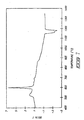
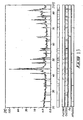
- TEM transmission electron microscopy
- the secondary phases are thermodynamically stable and all appear to be based on cubic systems, which can aid in the development of ductility for the steel materials.
- the devitrified steel materials of the present invention have been found to have extreme diamond pyramid hardness (DPH), with numbers over 1600 being determined by microhardness tests. Such numbers are beyond the R c measuring scale, and far beyond those of any existing steel. Note that a DPH number of 940 corresponds to an R c of 68 which would be the hardness of a tool steel.
- Tensile testing indicates that a yield strength of a powder is about 725 ksi (obtained from nanoindentor testing using a Berkovich indentor). Note that this value is much higher than ultrahigh strength steels, which are defined as having a yield strength greater than or equal to 200 ksi.
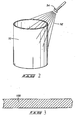
- Fig. 2 illustrates a metallic barrel 50 being sprayed with a molten metal material 52.
- Molten metal material 52 is sprayed from a spraying device 54, and can comprise, for example, Fe 69 Zr 3 Mo 7 P 16 C 3 Si 2 , DNS2C, DNA3 or DNA6
- the molten metal can be formed by melting an alloy composition under an argon atmosphere and subsequently centrifugally atomizing the alloy composition. As the melt stream leaves a centrifugal cup, it can be hit by a high pressure helium gas to form a fine powder of solidified metallic alloy material with such fine powder having about a 25 micrometer mean size.
- the fine powder can be fed into a plasma (high or low pressure) system wherein it is converted to a liquid spray which is sprayed on the inside and outside of metallic drum 50.
- drum 50 comprises a steel drum, such as, for example, a 55 gallon steel drum. It is noted that the powder may not be melted upon exposure to the plasma, but may instead simply be heated and deposited into and on barrel 50 as a fine powder. In either event, the metallic material 52 sprayed onto and within drum 50 cools rapidly to form a metallic glass. Drum 50 can be subsequently heat treated at a temperature of equal to or greater than 600°C to devitrify the metallic glass.
- the metallic structure formed over and within barrel 50 from material 52 can have greater corrosion resistance than stainless steel.
- Drum 50 can be utilized, for example, for storing corrosive and otherwise dangerous materials, such as, for example, spent nuclear fuel. If a surface of material 52 is reconverted to a metallic glass, the anti-corrosive properties and low coefficient of friction properties associated with metallic glass can be obtained.
- Figs. 3-6 illustrate another embodiment application of the present invention.
- a metallic substrate 100 is provided.
- Such substrate can comprise, for example, one or more materials selected from the group consisting of Fe 69 Zr 3 Mo 7 P 16 C 3 Si 2 , Fe 71 Ti 3 Cr 7 B 14 C 3 Si 2 , Fe 68 Cr 4 Mo 7 P 12 B 6 C 3 , DNS2C, DNA3 and DNA6.
- a metallic melt 102 is sprayed onto substrate 100 utilizing a sprayer 104.
- Melt 102 can comprise, for example, a molten alloy of Fe 68 Cr 4 Mo 7 P 12 B 6 C 3 .
- material 102 can comprise a powder material heated to a sufficient temperature to bond with the metal of layer 100.
- Material 102 deposits on substrate 100 to form a layer 106. Material 102 also heats an exposed surface of material 100 to form a heat-treated portion 108 of material 100. If material 100 comprises a metallic glass, heat-treated portion 108 can comprise a devitrified material. Specifically, if layer 106 is formed at a temperature which heats a surface of layer 100 to greater than 600°C, such heating can devitrify a portion of material 100 exposed to such temperatures. In particular applications, temperatures greater than 600°C can permeate entirely through substrate 100 to heat-treat an entire thickness of material 100. Spray nozzle 104 is preferably resistant to the temperature and composition of material 102.
- substrate 100 is illustrated after layer 106 has been formed across an entire surface of substrate 100.
- Heat-treated portion 108 also extends across an entire surface of substrate 100.
- layer 106 can be formed as a metallic glass.
- subsequent treatments of the type illustrated in Fig. 4 can be utilized to form multiple heat-treated layers 120 and an exposed outer surface layer 124.
- one of the lower heat-treated layers 120 is previous layer 106.
- the subsequent formation of another metallic glass layer over layer 106 has heat-treated the entire layer 106.
- layer 106 comprises a metallic glass
- heat treatment can devitrify layer 106.
- heat treated layers 120 can comprise devitrified metal layers.
- Outermost layer 124 is not heat-treated, and can comprise a metallic glass. Accordingly, the method of the present invention has enabled an exterior coating to be formed over layer 100, with said exterior coating comprising devitrified metal layers 120 and an outermost surface of metallic glass 124.
- Figs. 3-6 can have application for a number of uses, including military uses.
- armor can be formed out of a material 100. If the armor becomes punctured or cracked, the methodology of Figs. 3-6 can be utilized to repair the armor and effectively build a metallic shell over the weakened areas of the armor.
- Spraying device 104 can be adapted to be utilizable in battlefield situations.
- the materials can also be utilized as powders for surface finishing (i.e., mechanical blasting) and surface treatments such as, for example, shot peening.
- a modified steel alloy was formed by charging to an arc-furnace suitable amounts of iron, titanium, chromium, molybdenum, boron, carbon, silicon, aluminum, and gadolinium.
- the composition of the 15 gram alloy (DNA3 - see Table 1) was (weight percent); 74.47 Fe, 2.99 Ti, 5.42 Cr, 4.00 Mo, 3.60 B, 1.25 C, 0.59 Si, 1.12 Al, and 6.55 Gd.
- the solid charges were made into an alloy by arc-melting in argon on a water cooled copper hearth. The melt was homogenized by undergoing several flipping and remelting cycles.
- the arc-melted alloy was contained in a quartz crucible with an exit hole diameter of 0.81 mm.
- the melt was heated up by Rf induction until molten at 1375°C and then was ejected with a gas pressure of 150 torr onto a moving copper chill wheel (5 mm melt fall).
- the tangential velocity of the melt-spinning wheel was slowed down to 15 m/s to reduce the average cooling rate below 10 5 K/s.
- a modified steel alloy was formed by weighing out the appropriate amounts of iron, chromium, molybdenum, boron, carbon, silicon, and aluminum.
- the composition of the 8 lb alloy (alloy DNS2C - see Table 1) in weight percent was; 78.08 Fe, 9.23 Cr, 4.26 Mo, 4.08 B, 1.33 C, 0.62 Si, and 2.40 Al.
- the elements were placed into a zirconia crucible coated with BN and the crucible was placed in a close coupled annular gas atomization system.
- the crucible had a pour tube with an internal exit hole diameter of 0.100" (inch).
- the melt was heated up by Rf induction until a liquid melt temperature of 1550°C was obtained at an argon pressure of 1 atmosphere.
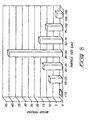
- the liquid melt was atomized with 350 psi helium gas to form spherical particles with an average diameter of about 40 ⁇ m,
- the sieve analysis of the atomized run is shown in Figure 8.
- a modified steel alloy was formed by weighing out the appropriate amounts of iron, nickel, titanium, chromium, molybdenum, boron, carbon, silicon, aluminum, and gadolinium.
- the composition of the 8 lb alloy (alloy DNA6 - see Table 1) in weight percent was; 64.86 Fe, 9.74 Ni, 2.98 Ti, 5.39 Cr, 3.98 Mo, 3.59 B, 1.25 C, 0.58 Si, 1.12 Al, and 6.52 Gd.
- the elements were placed into a zirconia crucible coated with BN and the crucible was placed in a close-coupled annular gas atomization system.
- the crucible had a pour tube with an internal exit hole diameter of 0.090" (inch).
- the melt was heated by Rf induction until a liquid melt temperature of 1650° C was obtained at an argon pressure of 1 atmosphere.
- the liquid melt was atomized with 300 psi helium gas to form spherical particles from submicron to 150 ⁇ m in diameter. Additionally, approximately 1 lb of gas atomized flake was formed during the atomization run. The flake formed from molten particles hitting the wall of the atomizer, solidifying on the water cooled stainless steel atomizer wall, and then falling off into the collection chamber.
- DNS2C powder (10-20 ⁇ m as-atomized, 10-20 ⁇ m heat treated at 700°C for 1 hour, 75-100 ⁇ m as-atomized, 75-100 ⁇ m heat treated at 700°C for 1 hour) were mounted in epoxy and polished to reveal the powder cross sections (using standard metallographic practices). The mounted particles were then tested by a Nano Instrument using a Berkovich Nanoindentor. The Elastic Modulus was measured versus distance for the 4 samples and they exhibited very high elastic moduli, typically from 150 to 300 GPa ( Figure 15). On these same samples, the hardness was tested versus depth, and they showed extreme hardness from 10 to 18 GPa ( Figure 16). Since plasticity was fully developed, the yield strength can be estimated to be equal to 1/3 the hardness or 725 ksi.
- Diamond pyramid hardness (DPH) tests were done on the cross sections of the 75-100 gas atomized particles for the DNS2C, DNA3, and DNA6 alloys mounted in the same method as above.
- the hardness of the powder was studied in the as-solidified state and as a function of heat treatment temperature at a constant 1 hour annealing time ( Figure 17). Note that the hardness data is reported as an average of ten independent measurements using 10 different powder particles.
- the powder particles, consistent with the nanoindentor testing were found to exhibit extreme hardness from 1000 to 1600 DPH. In the inset of Figure 17, the actual diamond indentations on individual powder particles can be seen. No cracking was ever observed from the cube corners indicating that the particles have significant ductility and fracture toughness.
Landscapes
- Chemical & Material Sciences (AREA)
- Engineering & Computer Science (AREA)
- Organic Chemistry (AREA)
- Mechanical Engineering (AREA)
- Materials Engineering (AREA)
- Metallurgy (AREA)
- Physics & Mathematics (AREA)
- Crystallography & Structural Chemistry (AREA)
- Chemical Kinetics & Catalysis (AREA)
- Plasma & Fusion (AREA)
- Thermal Sciences (AREA)
- Manufacture Of Metal Powder And Suspensions Thereof (AREA)
- Heat Treatment Of Steel (AREA)
- Other Surface Treatments For Metallic Materials (AREA)
- Powder Metallurgy (AREA)
- Coating With Molten Metal (AREA)
- Rehabilitation Tools (AREA)
- Forging (AREA)
- Coating By Spraying Or Casting (AREA)
- Treatment Of Steel In Its Molten State (AREA)
- Crystals, And After-Treatments Of Crystals (AREA)
- Glass Compositions (AREA)
Claims (7)
- Procédé de formation d'un acier, comprenant:la fourniture d'un premier substrat d'acier à base de verre métallique,la formation d'un alliage fondu sur le premier substrat d'acier à base de verre métallique pour chauffer et dévitrifier au moins une partie du verre métallique sous-jacent du substrat d'acier.
- Procédé de la revendication 1 dans lequel l'alliage fondu se solidifie en tant que second substrat à base de verre métallique, et comprenant en outre la formation d'un second alliage fondu sur le second substrat d'acier à base de verre métallique pour chauffer et dévitrifier le second substrat d'acier à base de verre métallique.
- Procédé de la revendication 1 dans lequel l'alliage fondu comprend:au moins 50% de Fe,au moins un élément choisi parmi ceux du groupe formé de Ti, Zr, Hf, V, Nb, Ta, Cr, Mo, W, Al, La, Ce, Pr, Nd, Sm, Eu, Gd, Tb, Dy, Ho, Er, Tm, Yb, et Lu, etau moins un élément choisi parmi ceux du groupe formé de B, C, N, O, P et S.
- Procédé de la revendication 1 dans lequel la formation de l'alliage fondu sur le premier substrat d'acier à base de verre métallique comprend la pulvérisation de l'alliage fondu.
- Procédé de la revendication 1 dans lequel l'alliage fondu comprend un matériau choisi parmi ceux du groupe formé de Fe69Zr3MO7P16C3Si2, Fe71Ti3Cr7B14C3Si2, Fe68Cr4Mo7P12B6C3, DNA3, DNS2C et DNA6.
- Procédé de la revendication 1 dans lequel le premier substrat à base de verre métallique comprend un matériau choisi parmi ceux du groupe formé de Fe69Zr3Mo7P16C3Si2, Fe71Ti3Cr7B14C3Si2, Fe68Cr4Mo7P12B6C3, DNA3, DNS2C et DNA6.
- Procédé de la revendication 1 dans lequel le premier substrat à base de verre métallique comprend un alliage choisi parmi ceux du groupe formé de Fe69Zr3Mo7P16C3Si2, Fe71Ti3Cr7B14C3Si2, Fe68Cr4Mo7P12B6C3, DNA3, DNS2C et DNA6, et dans lequel l'alliage fondu comprend un alliage choisi parmi ceux du groupe formé de Fe69Zr3MO7P16C3Si2, Fe71Ti3Cr7B14C3Si2, Fe68Cr4MO7P12B6C3, DNA3, DNS2C et DNA6.
Priority Applications (1)
| Application Number | Priority Date | Filing Date | Title |
|---|---|---|---|
| CY20061101050T CY1107328T1 (el) | 1999-05-25 | 2006-07-28 | Μεθοδοι σχηματισμου χαλυβος |
Applications Claiming Priority (3)
| Application Number | Priority Date | Filing Date | Title |
|---|---|---|---|
| US09/318,242 US6258185B1 (en) | 1999-05-25 | 1999-05-25 | Methods of forming steel |
| US318424 | 1999-05-25 | ||
| EP00936186A EP1198605B8 (fr) | 1999-05-25 | 2000-05-22 | Procedes de formation d'acier |
Related Parent Applications (1)
| Application Number | Title | Priority Date | Filing Date |
|---|---|---|---|
| EP00936186A Division EP1198605B8 (fr) | 1999-05-25 | 2000-05-22 | Procedes de formation d'acier |
Publications (4)
| Publication Number | Publication Date |
|---|---|
| EP1452617A1 EP1452617A1 (fr) | 2004-09-01 |
| EP1452617A3 EP1452617A3 (fr) | 2006-02-01 |
| EP1452617B1 true EP1452617B1 (fr) | 2006-05-10 |
| EP1452617B8 EP1452617B8 (fr) | 2009-04-15 |
Family
ID=23237323
Family Applications (2)
| Application Number | Title | Priority Date | Filing Date |
|---|---|---|---|
| EP00936186A Revoked EP1198605B8 (fr) | 1999-05-25 | 2000-05-22 | Procedes de formation d'acier |
| EP04012846A Revoked EP1452617B8 (fr) | 1999-05-25 | 2000-05-22 | Procédés de formation d'acier |
Family Applications Before (1)
| Application Number | Title | Priority Date | Filing Date |
|---|---|---|---|
| EP00936186A Revoked EP1198605B8 (fr) | 1999-05-25 | 2000-05-22 | Procedes de formation d'acier |
Country Status (14)
| Country | Link |
|---|---|
| US (1) | US6258185B1 (fr) |
| EP (2) | EP1198605B8 (fr) |
| JP (1) | JP3911388B2 (fr) |
| AT (2) | ATE302292T1 (fr) |
| AU (1) | AU768010B2 (fr) |
| CA (1) | CA2370291C (fr) |
| CY (1) | CY1105662T1 (fr) |
| DE (2) | DE60027933T2 (fr) |
| DK (2) | DK1198605T3 (fr) |
| ES (2) | ES2246857T3 (fr) |
| HK (1) | HK1047963B (fr) |
| MX (1) | MXPA01012193A (fr) |
| PT (2) | PT1452617E (fr) |
| WO (1) | WO2000071759A2 (fr) |
Families Citing this family (54)
| Publication number | Priority date | Publication date | Assignee | Title |
|---|---|---|---|---|
| US7217746B2 (en) * | 2000-05-19 | 2007-05-15 | Ppg Industries Ohio, Inc. | Coating compositions having a geometrically ordered array of polymeric particles and substrates coated therewith |
| WO2002027050A1 (fr) | 2000-09-25 | 2002-04-04 | Johns Hopkins University | Alliage avec verre metallique et proprietes quasi-cristallines |
| DE60130027T2 (de) * | 2000-10-28 | 2008-05-08 | Purdue Research Foundation, West Lafayette | Verfahren zur herstellung nanokristalliner strukturen |
| US6767419B1 (en) * | 2000-11-09 | 2004-07-27 | Bechtel Bwxt Idaho, Llc | Methods of forming hardened surfaces |
| US6689234B2 (en) * | 2000-11-09 | 2004-02-10 | Bechtel Bwxt Idaho, Llc | Method of producing metallic materials |
| US7323071B1 (en) | 2000-11-09 | 2008-01-29 | Battelle Energy Alliance, Llc | Method for forming a hardened surface on a substrate |
| WO2003040422A1 (fr) * | 2001-11-05 | 2003-05-15 | Johns Hopkins University | Alliage et procede de production de celui-ci |
| US6919576B2 (en) * | 2002-02-04 | 2005-07-19 | Bechtel Bwxt Idaho Llc | Composite neutron absorbing coatings for nuclear criticality control |
| US6810939B2 (en) * | 2003-02-04 | 2004-11-02 | Ford Motor Company | Spray formed articles made of boron steel and method for making the same |
| DE112004000275T5 (de) * | 2003-02-11 | 2006-03-16 | The Nanosteel Co., Maitland | Hochaktive flüssige Schmelzen zur Bildung von Beschichtungen |
| CA2515739C (fr) * | 2003-02-11 | 2012-08-14 | The Nanosteel Company | Formation d'alliages metalliques servant de barrieres thermiques |
| WO2004074196A2 (fr) * | 2003-02-14 | 2004-09-02 | The Nanosteel Company | Proprietes ameliorees de revetements amorphes/partiellement cristallins |
| CA2526990C (fr) * | 2003-05-23 | 2014-01-14 | The Nanosteel Company | Matiere metallique en couche formee d'alliages de verre a base de fer |
| US20050006205A1 (en) * | 2003-07-07 | 2005-01-13 | Kuo Ming Hong | Transporting device for a vertical-type thin circuit board etching machine |
| US7341765B2 (en) * | 2004-01-27 | 2008-03-11 | Battelle Energy Alliance, Llc | Metallic coatings on silicon substrates, and methods of forming metallic coatings on silicon substrates |
| EP1559807A1 (fr) * | 2004-01-28 | 2005-08-03 | Ford Global Technologies, LLC, A subsidary of Ford Motor Company | Procédé de réparation de surfaces coulissantes, en particulier des alésages de cylindres de blocs de moteur |
| JP5165895B2 (ja) * | 2004-01-29 | 2013-03-21 | ザ・ナノスティール・カンパニー・インコーポレーテッド | 耐摩耗性材料 |
| KR101329851B1 (ko) * | 2004-04-28 | 2013-11-20 | 더 나노스틸 컴퍼니, 인코포레이티드 | 나노 결정 강철 시트 |
| AU2005248324B2 (en) * | 2004-05-06 | 2008-08-28 | Battelle Energy Alliance, Llc | Method for forming a hardened surface on a substrate |
| WO2006034054A1 (fr) * | 2004-09-16 | 2006-03-30 | Belashchenko Vladimir E | Systeme et procede de depot, et matieres pour revetements composites |
| US20060065333A1 (en) * | 2004-09-28 | 2006-03-30 | The Regents Of The University Of California | Generation of high strength metal through formation of nanocrystalline structure by laser peening |
| US7935198B2 (en) * | 2005-02-11 | 2011-05-03 | The Nanosteel Company, Inc. | Glass stability, glass forming ability, and microstructural refinement |
| US7553382B2 (en) * | 2005-02-11 | 2009-06-30 | The Nanosteel Company, Inc. | Glass stability, glass forming ability, and microstructural refinement |
| US8704134B2 (en) * | 2005-02-11 | 2014-04-22 | The Nanosteel Company, Inc. | High hardness/high wear resistant iron based weld overlay materials |
| KR100734433B1 (ko) | 2005-07-25 | 2007-07-03 | 연세대학교 산학협력단 | 고강도, 고연성을 가지는 철기 벌크 나노공정 합금 |
| US7598788B2 (en) * | 2005-09-06 | 2009-10-06 | Broadcom Corporation | Current-controlled CMOS (C3MOS) fully differential integrated delay cell with variable delay and high bandwidth |
| JP2007084901A (ja) * | 2005-09-26 | 2007-04-05 | Akihisa Inoue | 金属ガラス薄膜積層体 |
| JP4895561B2 (ja) * | 2005-09-26 | 2012-03-14 | 国立大学法人東北大学 | 金属ガラス溶射被膜及びその形成方法 |
| US20070107809A1 (en) * | 2005-11-14 | 2007-05-17 | The Regents Of The Univerisity Of California | Process for making corrosion-resistant amorphous-metal coatings from gas-atomized amorphous-metal powders having relatively high critical cooling rates through particle-size optimization (PSO) and variations thereof |
| US7618500B2 (en) | 2005-11-14 | 2009-11-17 | Lawrence Livermore National Security, Llc | Corrosion resistant amorphous metals and methods of forming corrosion resistant amorphous metals |
| US8480864B2 (en) | 2005-11-14 | 2013-07-09 | Joseph C. Farmer | Compositions of corrosion-resistant Fe-based amorphous metals suitable for producing thermal spray coatings |
| SE529789C8 (sv) * | 2006-03-10 | 2007-12-27 | Abb Ab | Mätanordning omfattande ett skikt av en magnetoelastisk legering och förfarande för tillverkning av mätanordningen |
| US8245661B2 (en) * | 2006-06-05 | 2012-08-21 | Lawrence Livermore National Security, Llc | Magnetic separation of devitrified particles from corrosion-resistant iron-based amorphous metal powders |
| CA2756033C (fr) * | 2009-03-24 | 2014-01-28 | Alstom Technology Ltd. | Revetement sans chrome pour un substrat |
| CA2760455A1 (fr) * | 2009-04-30 | 2010-11-04 | Chevron U.S.A. Inc. | Traitement de surface pour revetements amorphes |
| EP2558607B1 (fr) * | 2010-03-19 | 2017-08-09 | Crucible Intellectual Property, LLC | Matériau de projection à base de fer, de chrome et de molybdène et procede de son fabrication. |
| JP2014504328A (ja) * | 2010-11-02 | 2014-02-20 | ザ・ナノスティール・カンパニー・インコーポレーテッド | ガラス状ナノ材料 |
| KR101286993B1 (ko) | 2011-10-14 | 2013-07-23 | 한국기계연구원 | 강관 및 그 제조방법 |
| CN102424896A (zh) * | 2011-11-18 | 2012-04-25 | 北京工业大学 | 激光辐照制备管状卷带铁基非晶纳米晶软磁合金的方法 |
| EP2664683B1 (fr) * | 2012-05-16 | 2018-07-04 | Max-Planck-Institut für Eisenforschung GmbH | Procédé de production de carbure mésoporeux |
| KR20250024862A (ko) | 2013-03-14 | 2025-02-19 | 캘리포니아 인스티튜트 오브 테크놀로지 | 비정상 검출을 위한 방법, 비정상을 검출하기 위한 시스템, 및 에너지 저장 시스템 |
| CN103882421B (zh) * | 2014-03-26 | 2016-02-10 | 中国科学院上海硅酸盐研究所 | 采用等离子体喷涂技术制备的非晶合金涂层及其制备方法 |
| EP3356836B1 (fr) | 2015-10-01 | 2022-06-29 | California Institute of Technology | Systèmes et procédés pour surveiller des caractéristiques d'unités d'énergie |
| CN108817393B (zh) * | 2018-06-13 | 2021-02-05 | 江苏理工学院 | 一种耐碱性铝合金复合材料及其制备方法 |
| DE102018115815B4 (de) * | 2018-06-29 | 2025-07-17 | Amorphous Metal Solutions GmbH | Vorrichtung und Verfahren zur Herstellung eines aus einem amorphen oder teilamorphen Metall gebildeten Gussteils |
| CN110699538A (zh) * | 2018-07-10 | 2020-01-17 | 青岛云路先进材料技术股份有限公司 | 一种非晶合金带材的激光热处理方法 |
| CN111999328B (zh) * | 2019-05-10 | 2021-12-10 | 中国科学院金属研究所 | 一种激光高通量筛选多组元非晶成分的方法 |
| US11931763B2 (en) | 2019-11-08 | 2024-03-19 | Abilene Christian University | Identifying and quantifying components in a high-melting-point liquid |
| US11828342B2 (en) | 2020-09-24 | 2023-11-28 | Lincoln Global, Inc. | Devitrified metallic alloy coating for rotors |
| US12467831B2 (en) | 2022-11-18 | 2025-11-11 | Georgia Tech Research Corporation | Molten salt sampling system and methods of use thereof |
| US12480860B2 (en) | 2022-12-07 | 2025-11-25 | Abilene Christian University | In-situ corrosion monitoring device and methods of use thereof |
| US12603187B2 (en) | 2023-07-11 | 2026-04-14 | Abilene Christian University | Fluid level control system for a molten fuel salt sampling tank in a nuclear reactor system |
| WO2025034739A2 (fr) | 2023-08-07 | 2025-02-13 | Abilene Christian University | Procédé d'étalonnage de moniteurs de puissance pour réacteurs à sels fondus à faible puissance |
| US12347577B1 (en) | 2024-04-11 | 2025-07-01 | Natura Resources LLC | Fuel salt shipping system |
Family Cites Families (18)
| Publication number | Priority date | Publication date | Assignee | Title |
|---|---|---|---|---|
| USRE32925E (en) | 1972-12-26 | 1989-05-18 | Allied-Signal Inc. | Novel amorphous metals and amorphous metal articles |
| GB1505841A (en) | 1974-01-12 | 1978-03-30 | Watanabe H | Iron-chromium amorphous alloys |
| US4144058A (en) | 1974-09-12 | 1979-03-13 | Allied Chemical Corporation | Amorphous metal alloys composed of iron, nickel, phosphorus, boron and, optionally carbon |
| US3989517A (en) | 1974-10-30 | 1976-11-02 | Allied Chemical Corporation | Titanium-beryllium base amorphous alloys |
| US4290808A (en) | 1979-03-23 | 1981-09-22 | Allied Chemical Corporation | Metallic glass powders from glassy alloys |
| US4386896A (en) | 1979-03-23 | 1983-06-07 | Allied Corporation | Apparatus for making metallic glass powder |
| US4576653A (en) * | 1979-03-23 | 1986-03-18 | Allied Corporation | Method of making complex boride particle containing alloys |
| JPS56163064A (en) * | 1980-05-21 | 1981-12-15 | Toshiba Corp | Production of multilayer amorphous alloy |
| US4405368A (en) * | 1981-05-07 | 1983-09-20 | Marko Materials, Inc. | Iron-aluminum alloys containing boron which have been processed by rapid solidification process and method |
| US4523621A (en) | 1982-02-18 | 1985-06-18 | Allied Corporation | Method for making metallic glass powder |
| US4581081A (en) | 1984-09-14 | 1986-04-08 | The United States Of America As Represented By The United States Department Of Energy | Metallic glass composition |
| GB8527852D0 (en) * | 1985-11-12 | 1985-12-18 | Osprey Metals Ltd | Atomization of metals |
| US4881989A (en) * | 1986-12-15 | 1989-11-21 | Hitachi Metals, Ltd. | Fe-base soft magnetic alloy and method of producing same |
| JP2713714B2 (ja) * | 1987-12-11 | 1998-02-16 | 日立金属株式会社 | Fe基磁性合金 |
| JPH01275717A (ja) * | 1988-04-28 | 1989-11-06 | Hitachi Metals Ltd | 微細結晶合金の製造方法 |
| KR950014314B1 (ko) * | 1990-11-30 | 1995-11-24 | 미쓰이세끼유 가가꾸고오교오 가부시끼가이샤 | Fe기 연자성합성 |
| JPH06285595A (ja) * | 1993-04-08 | 1994-10-11 | Nippon Steel Corp | 多層非晶質合金薄帯の製造方法 |
| US5589011A (en) | 1995-02-15 | 1996-12-31 | The University Of Connecticut | Nanostructured steel alloy |
-
1999
- 1999-05-25 US US09/318,242 patent/US6258185B1/en not_active Expired - Lifetime
-
2000
- 2000-05-22 AT AT00936186T patent/ATE302292T1/de not_active IP Right Cessation
- 2000-05-22 DE DE60027933T patent/DE60027933T2/de not_active Expired - Lifetime
- 2000-05-22 MX MXPA01012193A patent/MXPA01012193A/es active IP Right Grant
- 2000-05-22 ES ES00936186T patent/ES2246857T3/es not_active Expired - Lifetime
- 2000-05-22 CA CA002370291A patent/CA2370291C/fr not_active Expired - Lifetime
- 2000-05-22 EP EP00936186A patent/EP1198605B8/fr not_active Revoked
- 2000-05-22 EP EP04012846A patent/EP1452617B8/fr not_active Revoked
- 2000-05-22 DE DE60022053T patent/DE60022053T2/de not_active Revoked
- 2000-05-22 WO PCT/US2000/014080 patent/WO2000071759A2/fr not_active Ceased
- 2000-05-22 PT PT04012846T patent/PT1452617E/pt unknown
- 2000-05-22 JP JP2000620136A patent/JP3911388B2/ja not_active Expired - Lifetime
- 2000-05-22 DK DK00936186T patent/DK1198605T3/da active
- 2000-05-22 AT AT04012846T patent/ATE325903T1/de active
- 2000-05-22 AU AU51539/00A patent/AU768010B2/en not_active Expired
- 2000-05-22 ES ES04012846T patent/ES2264068T3/es not_active Expired - Lifetime
- 2000-05-22 PT PT00936186T patent/PT1198605E/pt unknown
- 2000-05-22 DK DK04012846T patent/DK1452617T3/da active
- 2000-05-22 HK HK02107708.6A patent/HK1047963B/en not_active IP Right Cessation
-
2005
- 2005-10-21 CY CY20051101282T patent/CY1105662T1/el unknown
Also Published As
| Publication number | Publication date |
|---|---|
| EP1452617A1 (fr) | 2004-09-01 |
| ATE302292T1 (de) | 2005-09-15 |
| US6258185B1 (en) | 2001-07-10 |
| WO2000071759A2 (fr) | 2000-11-30 |
| DE60022053T2 (de) | 2006-06-08 |
| JP3911388B2 (ja) | 2007-05-09 |
| DE60027933D1 (de) | 2006-06-14 |
| EP1198605A2 (fr) | 2002-04-24 |
| WO2000071759A3 (fr) | 2001-05-31 |
| AU5153900A (en) | 2000-12-12 |
| AU768010B2 (en) | 2003-11-27 |
| EP1198605B1 (fr) | 2005-08-17 |
| EP1452617B8 (fr) | 2009-04-15 |
| EP1198605B8 (fr) | 2005-11-02 |
| HK1047963A1 (en) | 2003-03-14 |
| EP1198605A4 (fr) | 2002-11-06 |
| JP2003500532A (ja) | 2003-01-07 |
| PT1198605E (pt) | 2005-10-31 |
| ES2246857T3 (es) | 2006-03-01 |
| HK1047963B (en) | 2006-07-21 |
| DK1198605T3 (da) | 2005-12-19 |
| CA2370291A1 (fr) | 2000-11-30 |
| ATE325903T1 (de) | 2006-06-15 |
| CY1105662T1 (el) | 2010-12-22 |
| PT1452617E (pt) | 2006-08-31 |
| DK1452617T3 (da) | 2006-08-21 |
| DE60022053D1 (de) | 2005-09-22 |
| DE60027933T2 (de) | 2007-01-04 |
| EP1452617A3 (fr) | 2006-02-01 |
| CA2370291C (fr) | 2006-01-31 |
| ES2264068T3 (es) | 2006-12-16 |
| MXPA01012193A (es) | 2003-06-30 |
Similar Documents
| Publication | Publication Date | Title |
|---|---|---|
| AU768010B2 (en) | Methods of forming steel | |
| EP2226398B1 (fr) | Procédé de production d'une surface durcie sur un substrat | |
| US6767419B1 (en) | Methods of forming hardened surfaces | |
| EP0069406A2 (fr) | Procédé de fabrication d'articles à partir de corps en métaux vitreux | |
| US7323071B1 (en) | Method for forming a hardened surface on a substrate | |
| US6641917B2 (en) | Spray powder and method for its production | |
| AU2005248324B2 (en) | Method for forming a hardened surface on a substrate | |
| Branagan | Method for protecting a surface | |
| HK1079246B (en) | Hard metallic materials, hard metallic coatings, methods of processing metallic materials and methods of producing metallic coatings |
Legal Events
| Date | Code | Title | Description |
|---|---|---|---|
| PUAI | Public reference made under article 153(3) epc to a published international application that has entered the european phase |
Free format text: ORIGINAL CODE: 0009012 |
|
| AC | Divisional application: reference to earlier application |
Ref document number: 1198605 Country of ref document: EP Kind code of ref document: P |
|
| AK | Designated contracting states |
Kind code of ref document: A1 Designated state(s): AT BE CH CY DE DK ES FI FR GB GR IE IT LI LU MC NL PT SE |
|
| RIN1 | Information on inventor provided before grant (corrected) |
Inventor name: BURCH, JOSEPH V. Inventor name: BRANAGAN, DANIEL J. |
|
| 17P | Request for examination filed |
Effective date: 20050119 |
|
| 17Q | First examination report despatched |
Effective date: 20050223 |
|
| AKX | Designation fees paid |
Designated state(s): AT BE CH CY DE DK ES FI FR GB GR IE IT LI LU MC NL PT SE |
|
| GRAP | Despatch of communication of intention to grant a patent |
Free format text: ORIGINAL CODE: EPIDOSNIGR1 |
|
| PUAB | Information related to the publication of an a document modified or deleted |
Free format text: ORIGINAL CODE: 0009199EPPU |
|
| PUAF | Information related to the publication of a search report (a3 document) modified or deleted |
Free format text: ORIGINAL CODE: 0009199SEPU |
|
| PUAL | Search report despatched |
Free format text: ORIGINAL CODE: 0009013 |
|
| D17D | Deferred search report published (deleted) | ||
| RA1 | Application published (corrected) |
Date of ref document: 20040901 Kind code of ref document: A2 |
|
| AK | Designated contracting states |
Kind code of ref document: A3 Designated state(s): AT BE CH CY DE DK ES FI FR GB GR IE IT LI LU MC NL PT SE |
|
| GRAS | Grant fee paid |
Free format text: ORIGINAL CODE: EPIDOSNIGR3 |
|
| GRAA | (expected) grant |
Free format text: ORIGINAL CODE: 0009210 |
|
| AC | Divisional application: reference to earlier application |
Ref document number: 1198605 Country of ref document: EP Kind code of ref document: P |
|
| AK | Designated contracting states |
Kind code of ref document: B1 Designated state(s): AT BE CH CY DE DK ES FI FR GB GR IE IT LI LU MC NL PT SE |
|
| REG | Reference to a national code |
Ref country code: GB Ref legal event code: FG4D |
|
| REG | Reference to a national code |
Ref country code: CH Ref legal event code: EP |
|
| REF | Corresponds to: |
Ref document number: 60027933 Country of ref document: DE Date of ref document: 20060614 Kind code of ref document: P |
|
| REG | Reference to a national code |
Ref country code: IE Ref legal event code: FG4D |
|
| REG | Reference to a national code |
Ref country code: CH Ref legal event code: NV Representative=s name: CABINET ROLAND NITHARDT CONSEILS EN PROPRIETE INDU |
|
| REG | Reference to a national code |
Ref country code: SE Ref legal event code: TRGR |
|
| REG | Reference to a national code |
Ref country code: DK Ref legal event code: T3 |
|
| REG | Reference to a national code |
Ref country code: PT Ref legal event code: SC4A Effective date: 20060628 |
|
| REG | Reference to a national code |
Ref country code: GR Ref legal event code: EP Ref document number: 20060402663 Country of ref document: GR |
|
| ET | Fr: translation filed | ||
| REG | Reference to a national code |
Ref country code: ES Ref legal event code: FG2A Ref document number: 2264068 Country of ref document: ES Kind code of ref document: T3 |
|
| REG | Reference to a national code |
Ref country code: GB Ref legal event code: 732E |
|
| PLBI | Opposition filed |
Free format text: ORIGINAL CODE: 0009260 |
|
| REG | Reference to a national code |
Ref country code: PT Ref legal event code: PC4A Owner name: BATELLE ENERGY ALLIANCE, LLC, US Effective date: 20061229 |
|
| NLS | Nl: assignments of ep-patents |
Owner name: BATTELLE ENERGY ALLIANCE, LLC Effective date: 20070104 |
|
| PLAB | Opposition data, opponent's data or that of the opponent's representative modified |
Free format text: ORIGINAL CODE: 0009299OPPO |
|
| PLAX | Notice of opposition and request to file observation + time limit sent |
Free format text: ORIGINAL CODE: EPIDOSNOBS2 |
|
| 26 | Opposition filed |
Opponent name: DURUM, VERSCHLEISS-SCHUTZ GMBH Effective date: 20070208 |
|
| R26 | Opposition filed (corrected) |
Opponent name: DURUM, VERSCHLEISS-SCHUTZ GMBH Effective date: 20070208 |
|
| NLR1 | Nl: opposition has been filed with the epo |
Opponent name: DURUM, VERSCHLEISS-SCHUTZ GMBH |
|
| REG | Reference to a national code |
Ref country code: FR Ref legal event code: TP |
|
| NLR1 | Nl: opposition has been filed with the epo |
Opponent name: DURUM, VERSCHLEISS-SCHUTZ GMBH |
|
| PLAF | Information modified related to communication of a notice of opposition and request to file observations + time limit |
Free format text: ORIGINAL CODE: EPIDOSCOBS2 |
|
| PLBB | Reply of patent proprietor to notice(s) of opposition received |
Free format text: ORIGINAL CODE: EPIDOSNOBS3 |
|
| BECA | Be: change of holder's address |
Owner name: *BATTELLE ENERGY ALLIANCE LLCP.O. BOX 1625, 2525 N Effective date: 20060510 |
|
| BECH | Be: change of holder |
Owner name: *BATTELLE ENERGY ALLIANCE LLC Effective date: 20060510 |
|
| REG | Reference to a national code |
Ref country code: CH Ref legal event code: PK Free format text: LE NUMERO DE PRIORITE A ETE RECTIFIEE: |
|
| RDAF | Communication despatched that patent is revoked |
Free format text: ORIGINAL CODE: EPIDOSNREV1 |
|
| APAH | Appeal reference modified |
Free format text: ORIGINAL CODE: EPIDOSCREFNO |
|
| APBM | Appeal reference recorded |
Free format text: ORIGINAL CODE: EPIDOSNREFNO |
|
| APBP | Date of receipt of notice of appeal recorded |
Free format text: ORIGINAL CODE: EPIDOSNNOA2O |
|
| APBQ | Date of receipt of statement of grounds of appeal recorded |
Free format text: ORIGINAL CODE: EPIDOSNNOA3O |
|
| REG | Reference to a national code |
Ref country code: CH Ref legal event code: PK Free format text: RECTIFICATION TITULAIRE |
|
| RAP2 | Party data changed (patent owner data changed or rights of a patent transferred) |
Owner name: BATTELLE ENERGY ALLIANCE, LLC |
|
| PLAB | Opposition data, opponent's data or that of the opponent's representative modified |
Free format text: ORIGINAL CODE: 0009299OPPO |
|
| R26 | Opposition filed (corrected) |
Opponent name: DURUM, VERSCHLEISS-SCHUTZ GMBH Effective date: 20070208 |
|
| REG | Reference to a national code |
Ref country code: DE Ref legal event code: R064 Ref document number: 60027933 Country of ref document: DE Ref country code: DE Ref legal event code: R103 Ref document number: 60027933 Country of ref document: DE |
|
| APBU | Appeal procedure closed |
Free format text: ORIGINAL CODE: EPIDOSNNOA9O |
|
| APBC | Information on closure of appeal procedure deleted |
Free format text: ORIGINAL CODE: EPIDOSDNOA9O |
|
| APBU | Appeal procedure closed |
Free format text: ORIGINAL CODE: EPIDOSNNOA9O |
|
| PGFP | Annual fee paid to national office [announced via postgrant information from national office to epo] |
Ref country code: CH Payment date: 20120427 Year of fee payment: 13 Ref country code: IE Payment date: 20120430 Year of fee payment: 13 Ref country code: MC Payment date: 20120425 Year of fee payment: 13 Ref country code: NL Payment date: 20120515 Year of fee payment: 13 Ref country code: LU Payment date: 20120531 Year of fee payment: 13 Ref country code: DE Payment date: 20120531 Year of fee payment: 13 Ref country code: DK Payment date: 20120426 Year of fee payment: 13 |
|
| RDAG | Patent revoked |
Free format text: ORIGINAL CODE: 0009271 |
|
| STAA | Information on the status of an ep patent application or granted ep patent |
Free format text: STATUS: PATENT REVOKED |
|
| PGFP | Annual fee paid to national office [announced via postgrant information from national office to epo] |
Ref country code: FR Payment date: 20120510 Year of fee payment: 13 Ref country code: SE Payment date: 20120507 Year of fee payment: 13 Ref country code: GR Payment date: 20120427 Year of fee payment: 13 Ref country code: GB Payment date: 20120426 Year of fee payment: 13 Ref country code: FI Payment date: 20120507 Year of fee payment: 13 |
|
| REG | Reference to a national code |
Ref country code: CH Ref legal event code: PL |
|
| REG | Reference to a national code |
Ref country code: PT Ref legal event code: MP4A Effective date: 20120829 |
|
| 27W | Patent revoked |
Effective date: 20120508 |
|
| GBPR | Gb: patent revoked under art. 102 of the ep convention designating the uk as contracting state |
Effective date: 20120508 |
|
| PGFP | Annual fee paid to national office [announced via postgrant information from national office to epo] |
Ref country code: IT Payment date: 20120516 Year of fee payment: 13 Ref country code: CY Payment date: 20120412 Year of fee payment: 13 |
|
| PG25 | Lapsed in a contracting state [announced via postgrant information from national office to epo] |
Ref country code: LI Free format text: LAPSE BECAUSE OF THE APPLICANT RENOUNCES Effective date: 20060510 Ref country code: CH Free format text: LAPSE BECAUSE OF THE APPLICANT RENOUNCES Effective date: 20060510 |
|
| PGFP | Annual fee paid to national office [announced via postgrant information from national office to epo] |
Ref country code: BE Payment date: 20120607 Year of fee payment: 13 |
|
| REG | Reference to a national code |
Ref country code: DE Ref legal event code: R107 Ref document number: 60027933 Country of ref document: DE Effective date: 20121031 |
|
| PGFP | Annual fee paid to national office [announced via postgrant information from national office to epo] |
Ref country code: ES Payment date: 20120511 Year of fee payment: 13 |
|
| REG | Reference to a national code |
Ref country code: AT Ref legal event code: MA03 Ref document number: 325903 Country of ref document: AT Kind code of ref document: T Effective date: 20120508 |
|
| PGFP | Annual fee paid to national office [announced via postgrant information from national office to epo] |
Ref country code: PT Payment date: 20120430 Year of fee payment: 13 |
|
| REG | Reference to a national code |
Ref country code: SE Ref legal event code: ECNC |
|
| PGFP | Annual fee paid to national office [announced via postgrant information from national office to epo] |
Ref country code: AT Payment date: 20120426 Year of fee payment: 13 |
|
| REG | Reference to a national code |
Ref country code: SE Ref legal event code: ECNC |