EP1455267A2 - Dispositif de traitement d'image et programme - Google Patents
Dispositif de traitement d'image et programme Download PDFInfo
- Publication number
- EP1455267A2 EP1455267A2 EP04004864A EP04004864A EP1455267A2 EP 1455267 A2 EP1455267 A2 EP 1455267A2 EP 04004864 A EP04004864 A EP 04004864A EP 04004864 A EP04004864 A EP 04004864A EP 1455267 A2 EP1455267 A2 EP 1455267A2
- Authority
- EP
- European Patent Office
- Prior art keywords
- image data
- wireless
- projector
- information processing
- processing apparatus
- Prior art date
- Legal status (The legal status is an assumption and is not a legal conclusion. Google has not performed a legal analysis and makes no representation as to the accuracy of the status listed.)
- Withdrawn
Links
Images



Classifications
-
- G—PHYSICS
- G06—COMPUTING OR CALCULATING; COUNTING
- G06F—ELECTRIC DIGITAL DATA PROCESSING
- G06F3/00—Input arrangements for transferring data to be processed into a form capable of being handled by the computer; Output arrangements for transferring data from processing unit to output unit, e.g. interface arrangements
- G06F3/14—Digital output to display device ; Cooperation and interconnection of the display device with other functional units
- G06F3/1454—Digital output to display device ; Cooperation and interconnection of the display device with other functional units involving copying of the display data of a local workstation or window to a remote workstation or window so that an actual copy of the data is displayed simultaneously on two or more displays, e.g. teledisplay
-
- G—PHYSICS
- G06—COMPUTING OR CALCULATING; COUNTING
- G06F—ELECTRIC DIGITAL DATA PROCESSING
- G06F3/00—Input arrangements for transferring data to be processed into a form capable of being handled by the computer; Output arrangements for transferring data from processing unit to output unit, e.g. interface arrangements
- G06F3/14—Digital output to display device ; Cooperation and interconnection of the display device with other functional units
- G06F3/1423—Digital output to display device ; Cooperation and interconnection of the display device with other functional units controlling a plurality of local displays, e.g. CRT and flat panel display
- G06F3/1431—Digital output to display device ; Cooperation and interconnection of the display device with other functional units controlling a plurality of local displays, e.g. CRT and flat panel display using a single graphics controller
-
- H—ELECTRICITY
- H04—ELECTRIC COMMUNICATION TECHNIQUE
- H04N—PICTORIAL COMMUNICATION, e.g. TELEVISION
- H04N21/00—Selective content distribution, e.g. interactive television or video on demand [VOD]
- H04N21/40—Client devices specifically adapted for the reception of or interaction with content, e.g. set-top-box [STB]; Operations thereof
- H04N21/41—Structure of client; Structure of client peripherals
- H04N21/4104—Peripherals receiving signals from specially adapted client devices
- H04N21/4122—Peripherals receiving signals from specially adapted client devices additional display device, e.g. video projector
-
- H—ELECTRICITY
- H04—ELECTRIC COMMUNICATION TECHNIQUE
- H04N—PICTORIAL COMMUNICATION, e.g. TELEVISION
- H04N21/00—Selective content distribution, e.g. interactive television or video on demand [VOD]
- H04N21/40—Client devices specifically adapted for the reception of or interaction with content, e.g. set-top-box [STB]; Operations thereof
- H04N21/43—Processing of content or additional data, e.g. demultiplexing additional data from a digital video stream; Elementary client operations, e.g. monitoring of home network or synchronising decoder's clock; Client middleware
- H04N21/436—Interfacing a local distribution network, e.g. communicating with another STB or one or more peripheral devices inside the home
- H04N21/4363—Adapting the video stream to a specific local network, e.g. a Bluetooth® network
- H04N21/43637—Adapting the video stream to a specific local network, e.g. a Bluetooth® network involving a wireless protocol, e.g. Bluetooth®, RF or wireless LAN [IEEE 802.11]
-
- H—ELECTRICITY
- H04—ELECTRIC COMMUNICATION TECHNIQUE
- H04N—PICTORIAL COMMUNICATION, e.g. TELEVISION
- H04N21/00—Selective content distribution, e.g. interactive television or video on demand [VOD]
- H04N21/40—Client devices specifically adapted for the reception of or interaction with content, e.g. set-top-box [STB]; Operations thereof
- H04N21/43—Processing of content or additional data, e.g. demultiplexing additional data from a digital video stream; Elementary client operations, e.g. monitoring of home network or synchronising decoder's clock; Client middleware
- H04N21/436—Interfacing a local distribution network, e.g. communicating with another STB or one or more peripheral devices inside the home
- H04N21/4367—Establishing a secure communication between the client and a peripheral device or smart card
-
- H—ELECTRICITY
- H04—ELECTRIC COMMUNICATION TECHNIQUE
- H04N—PICTORIAL COMMUNICATION, e.g. TELEVISION
- H04N21/00—Selective content distribution, e.g. interactive television or video on demand [VOD]
- H04N21/80—Generation or processing of content or additional data by content creator independently of the distribution process; Content per se
- H04N21/81—Monomedia components thereof
- H04N21/8146—Monomedia components thereof involving graphical data, e.g. 3D object, 2D graphics
- H04N21/8153—Monomedia components thereof involving graphical data, e.g. 3D object, 2D graphics comprising still images, e.g. texture, background image
-
- H—ELECTRICITY
- H04—ELECTRIC COMMUNICATION TECHNIQUE
- H04N—PICTORIAL COMMUNICATION, e.g. TELEVISION
- H04N7/00—Television systems
- H04N7/10—Adaptations for transmission by electrical cable
- H04N7/106—Adaptations for transmission by electrical cable for domestic distribution
Definitions
- the present invention relates to an information processing apparatus such as PDA (Personal Digital Assistants) and a program used in this information processing apparatus.
- PDA Personal Digital Assistants
- an information display system which displays image data wirelessly transmitted from an information processing apparatus onto a large screen by using a projector (see, e.g., FIG. 1 of Jpn. Pat. Appln. KOKAI Publication No. 2000-222163).
- image data stored in a storage device of an information processing apparatus is transmitted to a projector via radio waves.
- Conventional information processing apparatuses have a problem in function and usability with respect to a presentation function targeting at a plurality of external display devices.
- An object of the present invention is to provide an information processing apparatus and a program which can realize a presentation function with the high functionality and the excellent usability.
- the present invention is characterized in that the presentation function can be simultaneously realized with respect to a plurality of external display devices capable of performing wireless communication.
- An information processing apparatus is characterized by comprising: means capable of wirelessly communicating with a plurality of external devices which display received image data; means for simultaneously transmitting the image data to the plurality of external devices by using the means capable of communicating; and means for updating the image data transmitted by the means for simultaneously transmitting the image data.
- the present invention can be also achieved as an invention of a method, and a program, etc.
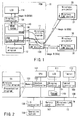
- FIG. 1 is a block diagram showing an information processing apparatus according to a first embodiment of the present invention.
- the information processing apparatus is realized as a PDA 10.
- the PDA10 is a portable information processing apparatus which functions as a mobile terminal.
- the PDA 10 comprises a wireless LAN device 130.
- the wireless LAN device 130 is a wireless communication device which executes wireless communication in accordance with, e.g., IEEE 802.11a/IEEE 802. 11b standard.
- a wireless presentation function provided to the PDA 10 will now be described hereinafter.
- the wireless presentation function is a function to display screen image data drawn by a presentation program 12 executed by the PDA 10 onto a projection screen of a wireless projector.
- the presentation function can be simultaneously executed to the respective wireless projectors by transmitting the same image data or different image data to all wireless projectors, which exist around the PDA 10 and can communicate with the PDA 10, and updating each image data.
- Each function such as communication connection between the PDA 10 and the plurality of wireless projectors, selection of the projector or the like in this example will be described later.
- the wireless presentation function in the first embodiment has a function to display VGA screen image data (image A) which can be a base of screen image displayed in a display device (LCD) 111 of the PDA 10 onto a projection screen of a wireless projector 20 which has established communication. Further, the wireless presentation function has a function to display VGA screen image data (image B) drawn by the presentation program 12 executed in the background by the PDA 10 onto a projection screen of a wireless projector 30 which has established communication.
- the presentation program 12 is an application program which executes, e.g., a slide show, and the presentation program 12 can generate screen image data having a VGA (640 x 480) size as slide data.
- the slide data having the VGA (640 x 480) size will be referred to as VGA slide data hereinafter.
- VGA slide data is generated by processing of an application program (not shown) which executes the slide show like the presentation program 12 with respect to the screen image data (image A) displayed in the wireless projector 20 in the first embodiment.
- the VGA slide data is converted into screen image data corresponding to a display resolution of the display device 111 of the PDA 10, and drawn in a video memory (VRAM) 142 in an display memory area 140.
- the display resolution of the display device 111 in this embodiment is QVGA (320 x 240) which is a resolution corresponding to 1/4 of VGA (640 x 480). Therefore, the screen image constituting the VGA slide data is contracted to 1/4 and then displayed in the display device 111 by control of a display controller 104.
- the above-described wireless presentation function is realized by utilizing wireless communication between the PDA 10 and the wireless projectors 20 and 30.
- the wireless projector 20 comprises a wireless LAN device 21.
- the wireless projector 30 comprises a wireless LAN device 31.
- the wireless LAN devices 21 and 31 are wireless communication devices which are configured to execute wireless communication in accordance with, e.g., IEEE 802.11a/IEEE 802.11b standard.
- a wireless utility program 11 is installed in the PDA 10 in advance.
- the wireless utility program 11 is a program which is used to control the wireless presentation.
- the wireless utility program 11 in the first embodiment transmits the VGA slide data (image A) drawn in a video memory (VRAM) 141 in the display memory area 140 by a non-illustrated application program to the wireless projector 20 through a wireless signal by using the wireless LAN device 130.
- the presentation program 12 which operates in the background, transmits the VGA slide data (image B) drawn in a video memory (VRAM) 143 in the display memory area 140 to the wireless projector 30 through a wireless signal by using the wireless LAN device 130.
- the updated VGA slide data is transmitted from the PDA 10 to the wireless projector 20.
- the updated VGA slide data is transmitted from the PDA 10 to the wireless projector 30.
- the updated VGA slide data is transmitted to the wireless LAN device 130 after compressed and encoded by the wireless utility program 11.
- the VGA slide data is not transmitted from the PDA 10 to the wireless projector 20 in a period that a content of the VGA slide data is not changed.
- each of the wireless projector 20 and the wireless projector 30 Upon receiving the VGA slide data, each of the wireless projector 20 and the wireless projector 30 projects an optical image corresponding to the received VGA slide data onto a large screen for projection.
- the received VGA slide data is decoded and then written into a frame buffer.
- the optical image corresponding to the VGA slide data stored in the frame buffer is projected onto the large screen for projection.
- the PDA 10 comprises a CPU 101, a system controller 102, a memory 103, a display controller 104, a tablet controller 105, an I/O controller 106, a memory card 107, an operation button group 108, a tablet 112 integrated with the LCD 111 and others as shown in the drawing in addition to the display controller 104, the display device (LCD) 111, the wireless LAN device 130 and the display memory area 140 in which the VRAMs 141 to 143 are provided.
- LCD display device
- the CPU 101 is a processor used to control operations of the PDA 10, and executes an operating system (OS) and various kinds of application programs/utility programs.
- the operating system (OS) has a tablet control function used to realize a pen input operation.
- the memory 103 comprises a non-volatile memory which stores the operating system (OS) and various kinds of application programs/utility programs, a RAM used as a main memory and a display memory area in which VRAMs are formed.
- the non-volatile memory also stores the wireless utility program 11 and the presentation program 12 which are described above.
- the system controller 102 is a bridge device which connects a local bus of the CPU 101 with a system bus 100.
- the system controller 102 also contains a memory controller which controls the memory 103.
- the display controller 104 displays screen image data drawn in the VRAM 142 in the display memory area 140 to the display device 111 by controlling the display device 111 which is also used as a display device of the PDA 10.
- a display resolution of the display device 111 is QVGA (320 x 240) which is a resolution corresponding to 1/4 of VGA (640 x 480) as described above.
- the tablet controller 105 controls the tablet 112 which is integrated with the LCD constituting the display device 111.
- the tablet 112 comprises a transparent coordinate detection device provided on a display screen of the display device 111.
- a touch screen on which a pen input operation can be performed is constituted of the LCD configuring the display device 111 and the tablet 112.
- the I/O controller 106 performs the control over a memory card 107 which is detachably attached to the PDA 10 and the control over the operation button group 108.
- the operation button group 108 comprises a plurality of operation buttons such as a power button, an application button used to activate a specific application, a cursor key and others.
- a slide show to display a plurality of sets of slide data in the display device 111 in sequence is executed by using a non-illustrated presentation program.
- the presentation program generates the VGA slide data (image A), and draws the VGA slide data in the VRAM 141 through a display driver.
- the QVGA slide data actually displayed in the display device 111 is generated from screen image data constituting the VGA slide data.
- processing to reduce a size of the screen image data constituting the VGA slide data to 1/4 scaling processing
- the scaling processing is executed by the operating system (OS) which manages a screen image of the VRAM 142. This scaling processing may be executed by the display controller 104 under the control of the operating system.
- OS operating system
- the display controller 104 reads the QVGA slide data (image A) from the VRAM 142, and displays this slide data in the display device 111.
- the wireless utility program 11 reads the VGA slide data generated by the presentation program from the VRAM 141 through the display driver instead of the QVGA slide data, and transmits the VGA slide data to the wireless LAN device 130 as transmission data.
- the wireless utility program 11 reads the VGA slide data generated by the presentation program 12 which operates in the background, and transmits the VGA slide data to the wireless LAN device 130 as transmission data.
- the QVGA slide data can be displayed in the display device 111, whilst the original VGA slide data (image A) used for generation of the QVGA slide data can be transmitted to the wireless projector 20.
- image A used for generation of the QVGA slide data
- the VGA slide data generated by the presentation program 12 which operates in the background can be read from the VRAM 143, and this VGA slide data (image B) can be transmitted to the wireless projector 30.
- the processing to transmit the VGA slide data to the wireless projector 20 and the wireless projector 30 is executed every time new VGA slide data is generated by the presentation program. That is, the wireless utility program 11 monitors whether each VGA slide data is updated in a period that the PDA 10 is individually connected with the wireless projector 20 and the wireless projector 30 wirelessly, and transmits the updated VGA slide data to a corresponding wireless projector when updating of the VGA slide data is detected.
- the wireless presentation function provided by the wireless utility program 11 will now be described in detail.
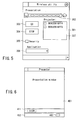
- FIG. 5 shows a wireless utility window 301 displayed in the display device 111 by using the wireless utility program 11.
- the wireless utility program 11 When the wireless utility program 11 is activated by a user, the wireless utility window 301 shown in FIG. 5 is displayed on the screen of the display device 111.
- a transmission indicator 302 As shown in the drawing, a transmission indicator 302, a [GO] button 303, a [STOP] button 304, a [Security] check box 305, an application selection pull-down menu 306, and a projector list 307 are arranged in the wireless utility window 301.
- the transmission indicator 302 shows a state of communication between the PDA 10 and the wireless projector 20 or the wireless projector 30 which is currently performing communication.
- the [GO] button 303 is a button used to instruct start of the wireless presentation function in order to automatically transmit slide data from the PDA 10 to the wireless projector 20 and the wireless projector 30.
- the [STOP] button 304 is a button which instructs to stop the wireless presentation function.
- the projector list 307 shows a list of the wireless projectors which exist in a range to which a wireless signal transmitted from the PDA 10 can be supplied. That is, a list of device identification information (e.g., a MAC address) corresponding to each wireless projector detected by the wireless utility program 11 is displayed in the projector list 306.
- a list of device identification information e.g., a MAC address
- a check box is displayed in accordance with device identification information of each wireless projector capable of communicating with the PDA 10.
- a user can select a destination projector to which slide data should be transmitted by tapping the check box.
- the PDA 10 can communicate with each of the plurality of projectors. Selecting a destination projector by a user using the projector list 307 can prevent slide data from being accidentally transmitted to a projector which is not intended by the user.
- the [GO] button 303 is not displayed in the wireless utility window 301 until a destination projector is selected by a user.
- each of the wireless projector 20 and the wireless projector 30 can be connected with the PDA 10 for wireless communication by tapping each check box of the wireless projector 20 and the wireless projector 30 from a list of the wireless projectors displayed in the projector list 307.
- the [Security] check box 305 is used to cause a user to specify whether slide data which should be transmitted is to be encrypted.
- the wireless utility program 11 is set to a security mode. In the security mode, slide data is encrypted and then transmitted to the wireless projector 20 and the wireless projector 30.
- the application selection pull-down menu 306 is used to cause a user to specify a presentation program which should be used in the wireless presentation function.
- the wireless utility window 301 is minimized and stored as an icon 403 in a command bar 403 as shown in FIG. 6.
- the presentation program specified in the application selection pull-down menu 306 is activated, and an operation window 401 of that presentation program is displayed in the display device 111.
- a user can instruct the presentation program to execute the slide show by taping a [VIEW] button 411 in the operation window 401 of the presentation program.
- the wireless utility window 301 is again displayed.
- the [STOP] button 304 is tapped, execution of the wireless presentation function is stopped.
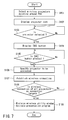
- the wireless utility program 11 When the wireless utility program 11 is activated, the wireless utility program 11 displays the wireless utility window 301, and then detects wireless projectors existing around the PDA 10 (step S101 in FIG. 7). At the step S101, device discovery processing to detect devices capable of communicating with the PDA 10 (wireless projectors in this example) is executed.
- the wireless utility program 11 broadcasts a device discovery command to discover devices by using the wireless LAN device 13, and waits for a response with respect to that device discovery command.
- each wireless projector 30 which has received the device discovery command returns a response including an MAC address assigned to the wireless LAN device 31 thereof and an identifier indicative of a device type thereof to the PDA 10.
- the wireless utility program 11 can detect each wireless projector existing in a range to which a wireless signal transmitted from the PDA 10 can be supplied.
- the wireless utility program 11 displays a list of the detected wireless projectors in the projector list 307 shown in FIG. 5 (step S102 in FIG. 7).
- the wireless utility program 11 displays the [GO] button 303 in the wireless utility window 301 (step S104 in FIG. 7).
- the [GO] button 303 is displayed in the wireless utility window 301.
- the wireless utility program 11 transmits a connection request to each of the wireless projector 20 and the wireless projector 30 selected from the projector list 306 (step S106 in FIG. 7), and establishes wireless connection with the selected wireless projector 20 and wireless projector 30 (step S107 in FIG. 7).
- step S107 not only a physical wireless link between the PDA 10 and the selected wireless projectors 20 and 30 is established but also a session between them is achieved.
- the wireless utility program 11 minimizes the wireless utility window 301, and activates an application program (presentation program) which performs presentation relative to the wireless projectors 20 and 30 (step S109).
- an application program presentation program
- the slide show VGA slide show using the plurality of wireless projectors 20 and 30 is started.
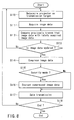
- the wireless utility program 11 first determines a wireless projector to which data is transmitted, and acquires VGA slide data which is transmitted to that wireless projector (steps S110 and S111 in FIG. 8).
- the wireless projector 20 which displays the VGA slide data (image A) having the same content as that of the QVGA slide data displayed in the display device 111 over the wireless projector 30 which displays the VGA slide data generated by the presentation program 12 which operates in the background. Therefore, first, the VGA side data (image A) which is transmitted to the wireless projector 20 is acquired from the VRAM 141.
- the wireless utility program 11 judges whether the VGA slide data (image A) is updated (step S112 in FIG. 8) by comparing newly acquired screen image data (image A) with screen image data (image A) previously transmitted in later-described data transmission processing (step S117 in FIG. 8).
- the lately acquired screen image data is different from the previously transmitted screen image data, it is recognized that the VGA slide data (image A) is updated, i.e., new VGA slide data (image A) is generated by the presentation program (YES at a step S113 in FIG. 8).
- the newly acquired screen image data is data which should be transmitted (i.e., updated VGA slide data).
- the processing to acquire the VGA slide data (step S111 in FIG. 8) and the processing to judge whether that acquired VGA slide data is different from the previously transmitted VGA slide data (step S112 in FIG. 8) are repeatedly executed at fixed time intervals.
- the wireless utility program 11 compresses and encodes the acquired VGA slide data (step S114 in FIG. 8). Then, the wireless utility program 11 judges whether the security mode is selected (step S115 in FIG. 8). If the security mode is selected (YES at the step S115 in FIG. 8), the wireless utility program 11 encrypts the compressed and encoded VGA slide data (step S116 in FIG. 8), and transmits the encrypted VGA slide data to the selected projector 20 by using the wireless LAN device 130 (step S117 in FIG. 8). Furthermore, if the security mode is not selected (NO at the step S115 in FIG. 8), the compressed and encoded VGA slide data is transmitted to the projector 20 without being encrypted.
- the wireless utility program 11 After the VGA slide data (image A) drawn in the VRAM 141 is transmitted to the wireless projector 20 in this manner, the wireless utility program 11 then acquires VGA slide data (image B) generated by the presentation program 12 operating in the background and drawn in the VRAM 143 and transmits this VGA slide data (image B) to the wireless projector 30 by using the wireless LAN device 130 based on the same processing (steps S110 to 117 in FIG. 8). Since this processing can be readily understood from the processing to transmit the VGA slide data (image A) to the wireless projector 20, the explanation of each processing is eliminated here.
- Wireless connection between the PDA 10 and the wireless projector 20 and the wireless projector 30 is maintained until a user taps the [STOP] button. In a period that this wireless connection is maintained, the processing shown in FIG. 8 is repeatedly executed.
- the wireless presentation processing is stopped.
- the PDA 10 transmits a disconnection request to each of the wireless projectors 20 and 30.
- the wireless connection between the PDA 10 and the wireless projectors 20 and 30 is cut off, and the wireless presentation processing according to this embodiment is terminated (YES at a step S118 in FIG. 8).
- the original VGA slide data (image A) with the high image quality used to generate the QVGA slide data displayed in the display device is transmitted to the wireless projector 20 instead of that QVGA slide data.
- the VGA slide data (image B) generated by the presentation program 12 operating in the background is transmitted to the wireless projector 30 concurrently with the wireless presentation. Additionally, since no data is transmitted in a period that screen image data of the VGA slide data is not changed, occurrence of wasteful wireless communication can be suppressed.
- FIG. 9 shows an information processing apparatus according to a second embodiment of the present invention.
- the second embodiment depicted in FIG. 9 realizes a function to cause screen image data (image B) drawn in a VRAM 141 by a presentation program 12 to be simultaneously displayed on respective projection screens of a plurality of wireless projectors 20 and 30 which have achieved communication.
- FIG. 10 shows an information processing apparatus according to a third embodiment of the present invention.
- the third embodiment depicted in FIG. 10 realizes a function to divide screen image data (image B) drawn in a VRAM 141 by a presentation program executed in the background into a plurality of areas and display a result in a plurality of wireless projectors 20 and 30 by means of multi-screen display.
- FIG. 11 shows an information processing apparatus according to a fourth embodiment of the present invention.
- the fourth embodiment depicted in FIG. 11 realizes a function to cause screen image data (image B) drawn in a VRAM 141 by a presentation program 12 executed in the background to be displayed in a wireless projector 20 and cause screen image data (image C) drawn in a VRAM 142 to be displayed in a wireless projector 30.
- wireless utility program 11 which realizes the functions illustrated in FIGS. 7 and 8 to existing various information processing apparatuses having wireless communication with external devices as well as the PDA having the structure depicted in FIG. 1 and FIGS. 9 to 11 can realize the presentation function using high-definition images in a plurality of external devices at the same time like the foregoing embodiments.
- the present invention it is possible to realize the information processing apparatus having the wireless presentation function with the high functionality and the excellent usability.
- the present invention is not restricted to the two wireless projectors 20 and 30, and the wireless presentation function using high-definition image data such as SVGA (800 x 600, 1024 x 768, 1280 x 1024 and the like) can be simultaneously realized with respect to three or more external display devices capable of communicating with the PDA 10 by wireless.
- SVGA 800 x 600, 1024 x 768, 1280 x 1024 and the like
- one wireless communication device does not perform communication connection with respect to each external display device which is to be connected by wireless, but a plurality of types of communicating means having different communication protocols, communication lines and others can be used to realize the presentation function utilizing high-definition images with respect to a plurality of external display devices at the same time.
- the communication connection can be carried out with respect to a given specific external display device through a metal communication table, and the wireless connection can be achieved relative to the other remaining external devices, thereby realizing the presentation function using high-definition image data in the respective external display devices.
Landscapes
- Engineering & Computer Science (AREA)
- Multimedia (AREA)
- Signal Processing (AREA)
- Theoretical Computer Science (AREA)
- Computer Graphics (AREA)
- Computer Networks & Wireless Communication (AREA)
- Human Computer Interaction (AREA)
- Physics & Mathematics (AREA)
- General Engineering & Computer Science (AREA)
- General Physics & Mathematics (AREA)
- Controls And Circuits For Display Device (AREA)
- Digital Computer Display Output (AREA)
Applications Claiming Priority (2)
| Application Number | Priority Date | Filing Date | Title |
|---|---|---|---|
| JP2003057366A JP2004264769A (ja) | 2003-03-04 | 2003-03-04 | 情報処理装置およびプログラム |
| JP2003057366 | 2003-03-04 |
Publications (1)
| Publication Number | Publication Date |
|---|---|
| EP1455267A2 true EP1455267A2 (fr) | 2004-09-08 |
Family
ID=32821182
Family Applications (1)
| Application Number | Title | Priority Date | Filing Date |
|---|---|---|---|
| EP04004864A Withdrawn EP1455267A2 (fr) | 2003-03-04 | 2004-03-02 | Dispositif de traitement d'image et programme |
Country Status (3)
| Country | Link |
|---|---|
| US (1) | US20040222983A1 (fr) |
| EP (1) | EP1455267A2 (fr) |
| JP (1) | JP2004264769A (fr) |
Cited By (6)
| Publication number | Priority date | Publication date | Assignee | Title |
|---|---|---|---|---|
| EP1653437A2 (fr) | 2004-11-02 | 2006-05-03 | Cannon Kabushiki Kaisha | Dispositif et procédé de traitement d'informations d'images |
| WO2009061356A1 (fr) * | 2007-11-06 | 2009-05-14 | Advanced Micro Devices, Inc. | Ordinateur mobile avec dispositif d'affichage auxiliaire sur un dispositif secondaire |
| WO2009143294A3 (fr) * | 2008-05-20 | 2010-01-21 | Citrix Systems, Inc. | Procédés et systèmes pour utiliser des dispositifs d'affichage externes avec un dispositif informatique mobile |
| WO2012004159A1 (fr) * | 2010-07-08 | 2012-01-12 | Oce-Technologies B.V. | Système de réseau comprenant un ordinateur et un dispositif de lecture |
| EP2436183A4 (fr) * | 2009-05-28 | 2012-11-14 | American Megatrends Inc | Dispositif d'affichage et environnement d'interaction pour dispositifs mobiles |
| CN103282870A (zh) * | 2010-12-31 | 2013-09-04 | 摩托罗拉移动有限责任公司 | 用于使外部显示器的使用与移动设备适配的方法和系统 |
Families Citing this family (38)
| Publication number | Priority date | Publication date | Assignee | Title |
|---|---|---|---|---|
| JP2004287160A (ja) | 2003-03-24 | 2004-10-14 | Seiko Epson Corp | 画像表示システム、プロジェクタ、画像表示方法、プロジェクタ制御方法、画像表示プログラムおよびプロジェクタ制御プログラム |
| JP2005208823A (ja) * | 2004-01-21 | 2005-08-04 | Seiko Epson Corp | プロジェクタのネットワークシステム |
| US20060168661A1 (en) * | 2005-01-25 | 2006-07-27 | Kisley Richard V | Apparatus and method to implement data management protocols using a projector |
| US20060167997A1 (en) * | 2005-01-27 | 2006-07-27 | Nokia Corporation | System, method and computer program product for establishing a conference session and synchronously rendering content during the same |
| US7370978B2 (en) * | 2005-05-09 | 2008-05-13 | Anderson Daryl E | Encrypting data |
| US8806035B2 (en) * | 2005-05-12 | 2014-08-12 | Hewlett-Packard Development Company, L.P. | Transfer of control in digital content access sessions |
| US7764243B2 (en) * | 2006-08-16 | 2010-07-27 | Gatr Technologies | Antenna positioning system |
| JP5262080B2 (ja) * | 2007-11-19 | 2013-08-14 | セイコーエプソン株式会社 | 画像表示装置及び画像データ送信方法 |
| JP2009251784A (ja) * | 2008-04-03 | 2009-10-29 | Win System:Kk | Hmi画面イメージの拡大縮小表示方法 |
| JP5014259B2 (ja) * | 2008-05-30 | 2012-08-29 | パナソニック株式会社 | 表示制御装置および表示制御方法 |
| US8608321B2 (en) | 2008-06-17 | 2013-12-17 | The Invention Science Fund I, Llc | Systems and methods for projecting in response to conformation |
| US8955984B2 (en) | 2008-06-17 | 2015-02-17 | The Invention Science Fund I, Llc | Projection associated methods and systems |
| US8376558B2 (en) | 2008-06-17 | 2013-02-19 | The Invention Science Fund I, Llc | Systems and methods for projecting in response to position change of a projection surface |
| US8384005B2 (en) | 2008-06-17 | 2013-02-26 | The Invention Science Fund I, Llc | Systems and methods for selectively projecting information in response to at least one specified motion associated with pressure applied to at least one projection surface |
| US8733952B2 (en) * | 2008-06-17 | 2014-05-27 | The Invention Science Fund I, Llc | Methods and systems for coordinated use of two or more user responsive projectors |
| US8723787B2 (en) | 2008-06-17 | 2014-05-13 | The Invention Science Fund I, Llc | Methods and systems related to an image capture projection surface |
| US8944608B2 (en) | 2008-06-17 | 2015-02-03 | The Invention Science Fund I, Llc | Systems and methods associated with projecting in response to conformation |
| US8936367B2 (en) | 2008-06-17 | 2015-01-20 | The Invention Science Fund I, Llc | Systems and methods associated with projecting in response to conformation |
| US8262236B2 (en) | 2008-06-17 | 2012-09-11 | The Invention Science Fund I, Llc | Systems and methods for transmitting information associated with change of a projection surface |
| US20090309826A1 (en) | 2008-06-17 | 2009-12-17 | Searete Llc, A Limited Liability Corporation Of The State Of Delaware | Systems and devices |
| US8641203B2 (en) | 2008-06-17 | 2014-02-04 | The Invention Science Fund I, Llc | Methods and systems for receiving and transmitting signals between server and projector apparatuses |
| US8602564B2 (en) | 2008-06-17 | 2013-12-10 | The Invention Science Fund I, Llc | Methods and systems for projecting in response to position |
| JP5566624B2 (ja) * | 2009-04-08 | 2014-08-06 | 三菱電機株式会社 | 画像表示システム |
| KR101606134B1 (ko) * | 2009-08-28 | 2016-03-25 | 삼성전자주식회사 | 휴대용 단말기에서 이미지 인식을 통하여 디바이스 연결을 수행하기 위한 장치 및 방법 |
| US8010603B2 (en) * | 2009-12-07 | 2011-08-30 | International Business Machines Corporation | Automated web conference system for generating higher quality of presentation slide by client and submitting to server |
| US9472939B1 (en) | 2010-01-05 | 2016-10-18 | Amazon Technologies, Inc. | Remote display |
| JP5771981B2 (ja) * | 2010-03-15 | 2015-09-02 | 株式会社リコー | 描画画像共有装置、データ処理方法、プログラムおよび記録媒体 |
| US9159298B2 (en) | 2010-09-08 | 2015-10-13 | Lg Electronics Inc. | Terminal and contents sharing method for terminal |
| JP5800513B2 (ja) * | 2011-02-02 | 2015-10-28 | キヤノン株式会社 | 複数の映像データを合成出力する通信システム、合成出力する映像データの品質を決定する装置及びその制御方法とプログラム |
| TWI533197B (zh) * | 2012-06-19 | 2016-05-11 | 緯創資通股份有限公司 | 影像輸出方法與電子裝置 |
| JP2014063259A (ja) * | 2012-09-20 | 2014-04-10 | Fujitsu Ltd | 端末装置,及び処理プログラム |
| US10942735B2 (en) * | 2012-12-04 | 2021-03-09 | Abalta Technologies, Inc. | Distributed cross-platform user interface and application projection |
| JP2015164031A (ja) * | 2014-01-30 | 2015-09-10 | 株式会社リコー | 画像表示システム |
| CN104935559A (zh) * | 2014-03-22 | 2015-09-23 | 宇龙计算机通信科技(深圳)有限公司 | 一种子机操控主机的方法及操控系统 |
| JP6512796B2 (ja) * | 2014-11-14 | 2019-05-15 | キヤノン株式会社 | 表示制御装置及び表示制御方法、プログラム |
| JP6772466B2 (ja) | 2016-01-26 | 2020-10-21 | セイコーエプソン株式会社 | 表示システム、表示装置、制御装置、及びこれらの制御方法 |
| JP2018163685A (ja) * | 2018-06-08 | 2018-10-18 | キヤノン株式会社 | 電子機器及び画面データ転送方法 |
| CN117435156B (zh) * | 2023-12-20 | 2024-05-28 | 汉朔科技股份有限公司 | 电子价签的显示信息生成方法、装置、设备及介质 |
Family Cites Families (5)
| Publication number | Priority date | Publication date | Assignee | Title |
|---|---|---|---|---|
| US7103834B1 (en) * | 1997-06-25 | 2006-09-05 | Samsung Electronics Co., Ltd. | Method and apparatus for a home network auto-tree builder |
| JP2001075785A (ja) * | 1999-09-09 | 2001-03-23 | Nec Corp | データ更新システム |
| JP3743371B2 (ja) * | 2000-03-27 | 2006-02-08 | セイコーエプソン株式会社 | ネットワークに接続されたデバイスの管理システム |
| US20020112026A1 (en) * | 2000-07-18 | 2002-08-15 | Leonid Fridman | Apparatuses, methods, and computer programs for displaying information on signs |
| WO2003026216A1 (fr) * | 2001-09-14 | 2003-03-27 | Sony Corporation | Systeme et procede de traitement d'informations de reseau |
-
2003
- 2003-03-04 JP JP2003057366A patent/JP2004264769A/ja not_active Withdrawn
-
2004
- 2004-03-02 EP EP04004864A patent/EP1455267A2/fr not_active Withdrawn
- 2004-03-03 US US10/790,798 patent/US20040222983A1/en not_active Abandoned
Cited By (10)
| Publication number | Priority date | Publication date | Assignee | Title |
|---|---|---|---|---|
| EP1653437A2 (fr) | 2004-11-02 | 2006-05-03 | Cannon Kabushiki Kaisha | Dispositif et procédé de traitement d'informations d'images |
| EP1653437A3 (fr) * | 2004-11-02 | 2010-03-24 | Canon Kabushiki Kaisha | Dispositif et procédé de traitement d'informations d'images |
| US7895269B2 (en) | 2004-11-02 | 2011-02-22 | Canon Kabushiki Kaisha | Information processing apparatus and method in which data rasterized on a plurality of memories is transmitted to corresponding external apparatuses |
| WO2009061356A1 (fr) * | 2007-11-06 | 2009-05-14 | Advanced Micro Devices, Inc. | Ordinateur mobile avec dispositif d'affichage auxiliaire sur un dispositif secondaire |
| WO2009143294A3 (fr) * | 2008-05-20 | 2010-01-21 | Citrix Systems, Inc. | Procédés et systèmes pour utiliser des dispositifs d'affichage externes avec un dispositif informatique mobile |
| EP2283421B1 (fr) * | 2008-05-20 | 2019-08-14 | Citrix Systems, Inc. | Procédés et systèmes pour utiliser des dispositifs d'affichage externes avec un dispositif informatique mobile |
| EP2436183A4 (fr) * | 2009-05-28 | 2012-11-14 | American Megatrends Inc | Dispositif d'affichage et environnement d'interaction pour dispositifs mobiles |
| WO2012004159A1 (fr) * | 2010-07-08 | 2012-01-12 | Oce-Technologies B.V. | Système de réseau comprenant un ordinateur et un dispositif de lecture |
| CN103282870A (zh) * | 2010-12-31 | 2013-09-04 | 摩托罗拉移动有限责任公司 | 用于使外部显示器的使用与移动设备适配的方法和系统 |
| CN103282870B (zh) * | 2010-12-31 | 2017-02-08 | 谷歌技术控股有限责任公司 | 用于使外部显示器的使用与移动设备适配的方法和系统 |
Also Published As
| Publication number | Publication date |
|---|---|
| US20040222983A1 (en) | 2004-11-11 |
| JP2004264769A (ja) | 2004-09-24 |
Similar Documents
| Publication | Publication Date | Title |
|---|---|---|
| EP1455267A2 (fr) | Dispositif de traitement d'image et programme | |
| EP1445689A2 (fr) | Dispositif de traitement d'informations pour afficher de premières données d'image et pour transmettre de secondes données à une resolution plus haute vers un projecteur portatif et méthode de transmission utilisée dans ce dispositif | |
| US20040267981A1 (en) | Information processing apparatus and method for controlling a transmission of image data | |
| US10282159B2 (en) | Information processing apparatus for transmitting an image to a display apparatus and method of controlling the same | |
| EP4123437A1 (fr) | Procédé et système d'affichage par projection d'écran, dispositif terminal et support de stockage | |
| US20070005607A1 (en) | Interface control program, interface control method, interface control apparatus, plug-in program and information processing apparatus | |
| EP1463283A2 (fr) | Dispositif de traitement d'informations et programme | |
| JP5522381B2 (ja) | 表示装置、端末装置、表示システム、プログラム、情報記憶媒体、表示方法および画像変更方法 | |
| EP2824936B1 (fr) | Projecteur, procédé de commande de projecteur et support d'enregistrement stockant un programme de commande de projecteur | |
| JP3680059B2 (ja) | 情報処理装置および画面イメージデータ送信方法 | |
| KR20080040526A (ko) | 이동 단말에서 복수의 영상을 디스플레이 하기 위한 방법및 장치 | |
| JP2009075593A (ja) | 表示装置、表示システム及び表示方法 | |
| CN106598213A (zh) | 一种虚拟现实设备及其控制方法、系统 | |
| JP2004120284A (ja) | 画像共有システム、画像共有方法、画像表示機器、情報端末機器及び画像共有プログラム | |
| EP1961218B1 (fr) | Appareil et procede d'affichage et appareil et procede de traitement d'informations proposant une fonction d'incrustation d'image | |
| JP2004317733A (ja) | 表示制御装置および表示制御方法 | |
| JP5944000B2 (ja) | 画像表示システム、情報端末、情報端末の制御方法及び制御プログラム | |
| JP2005257948A (ja) | 画像伝送システムおよび画像伝送方法 | |
| CN108881800B (zh) | 显示装置、其中的信息终端机的设定方法以及显示系统 | |
| US20260006278A1 (en) | Electronic device and control method therefor | |
| JP2010161610A (ja) | 装置内の操作機能を外部設備に移転するコントロールシステム及びその方法 | |
| JP2004259089A (ja) | 情報処理装置および情報処理方法 | |
| JP2004258284A (ja) | 情報処理装置、プロジェクタ、情報処理装置システム及び制御方法 | |
| JP2007101852A (ja) | ネットワーク機能を有するプロジェクタを使用したプレゼンテーションシステムおよびプレゼンテーション方法 | |
| JP2006106172A (ja) | 表示制御装置および方法、記録媒体、並びにプログラム |
Legal Events
| Date | Code | Title | Description |
|---|---|---|---|
| PUAI | Public reference made under article 153(3) epc to a published international application that has entered the european phase |
Free format text: ORIGINAL CODE: 0009012 |
|
| 17P | Request for examination filed |
Effective date: 20040302 |
|
| AK | Designated contracting states |
Kind code of ref document: A2 Designated state(s): AT BE BG CH CY CZ DE DK EE ES FI FR GB GR HU IE IT LI LU MC NL PL PT RO SE SI SK TR |
|
| AX | Request for extension of the european patent |
Extension state: AL LT LV MK |
|
| STAA | Information on the status of an ep patent application or granted ep patent |
Free format text: STATUS: THE APPLICATION HAS BEEN WITHDRAWN |
|
| 18W | Application withdrawn |
Effective date: 20060306 |