EP1460530A2 - Système de mise a jour des connexions d'imprimantes de réseau pour des clients d'imprimante - Google Patents
Système de mise a jour des connexions d'imprimantes de réseau pour des clients d'imprimante Download PDFInfo
- Publication number
- EP1460530A2 EP1460530A2 EP04006267A EP04006267A EP1460530A2 EP 1460530 A2 EP1460530 A2 EP 1460530A2 EP 04006267 A EP04006267 A EP 04006267A EP 04006267 A EP04006267 A EP 04006267A EP 1460530 A2 EP1460530 A2 EP 1460530A2
- Authority
- EP
- European Patent Office
- Prior art keywords
- printer
- configuration
- network
- connections
- directory
- Prior art date
- Legal status (The legal status is an assumption and is not a legal conclusion. Google has not performed a legal analysis and makes no representation as to the accuracy of the status listed.)
- Withdrawn
Links
Images


Classifications
-
- G—PHYSICS
- G06—COMPUTING OR CALCULATING; COUNTING
- G06F—ELECTRIC DIGITAL DATA PROCESSING
- G06F17/00—Digital computing or data processing equipment or methods, specially adapted for specific functions
-
- G—PHYSICS
- G06—COMPUTING OR CALCULATING; COUNTING
- G06F—ELECTRIC DIGITAL DATA PROCESSING
- G06F3/00—Input arrangements for transferring data to be processed into a form capable of being handled by the computer; Output arrangements for transferring data from processing unit to output unit, e.g. interface arrangements
- G06F3/12—Digital output to print unit, e.g. line printer, chain printer
- G06F3/1201—Dedicated interfaces to print systems
- G06F3/1202—Dedicated interfaces to print systems specifically adapted to achieve a particular effect
- G06F3/1203—Improving or facilitating administration, e.g. print management
- G06F3/1205—Improving or facilitating administration, e.g. print management resulting in increased flexibility in print job configuration, e.g. job settings, print requirements, job tickets
-
- G—PHYSICS
- G06—COMPUTING OR CALCULATING; COUNTING
- G06F—ELECTRIC DIGITAL DATA PROCESSING
- G06F3/00—Input arrangements for transferring data to be processed into a form capable of being handled by the computer; Output arrangements for transferring data from processing unit to output unit, e.g. interface arrangements
- G06F3/12—Digital output to print unit, e.g. line printer, chain printer
-
- G—PHYSICS
- G06—COMPUTING OR CALCULATING; COUNTING
- G06F—ELECTRIC DIGITAL DATA PROCESSING
- G06F3/00—Input arrangements for transferring data to be processed into a form capable of being handled by the computer; Output arrangements for transferring data from processing unit to output unit, e.g. interface arrangements
- G06F3/12—Digital output to print unit, e.g. line printer, chain printer
- G06F3/1201—Dedicated interfaces to print systems
- G06F3/1223—Dedicated interfaces to print systems specifically adapted to use a particular technique
- G06F3/1224—Client or server resources management
- G06F3/1225—Software update, e.g. print driver, modules, plug-ins, fonts
-
- G—PHYSICS
- G06—COMPUTING OR CALCULATING; COUNTING
- G06F—ELECTRIC DIGITAL DATA PROCESSING
- G06F3/00—Input arrangements for transferring data to be processed into a form capable of being handled by the computer; Output arrangements for transferring data from processing unit to output unit, e.g. interface arrangements
- G06F3/12—Digital output to print unit, e.g. line printer, chain printer
- G06F3/1201—Dedicated interfaces to print systems
- G06F3/1278—Dedicated interfaces to print systems specifically adapted to adopt a particular infrastructure
- G06F3/1285—Remote printer device, e.g. being remote from client or server
- G06F3/1288—Remote printer device, e.g. being remote from client or server in client-server-printer device configuration
Definitions
- the present invention relates generally to networked computing systems. More particularly, the present invention relates to methods and computer system mechanisms for administering/configuring print server clients in a network printing environment.
- One popular and economical way for utilizing printers within an enterprise including multiple distinct users/computers linked together on a network is to share the networked printers among the multiple distinct users/computers.
- the users submit their print requests for a particular printer to a specific print queue maintained by a print server that is also connected to the network.
- the specific print queue is identified to the print clients in the form of a printer connection.
- the printer connection specifies an operational path between a client and an intended networked printer at which the print request is ultimately output
- the print request is formatted and sent to the print queue according to a network printer driver.
- One challenge facing network administrators is to enable networked clients to print to new printers once the printers become available on the network.
- Another challenge faced by network administrators is to maintain the printer connections up-to-date for each of the network printer clients This entails adding new connections when a new printer is available and deleting connections when a printer is no longer available. Administrators have encountered high overhead costs when adding new printers to a network or new servers that receive and carry out print requests for the network printers.
- Administrators carry out the task of maintaining such printer connections by manually changing the network connections at each computer in a network when a set of printer connections for a particular computer changes.
- changes are implemented by an administrator, or administrator assistants, physically going to each of the print client computers and entering changes to a printer directory
- updating the printer connections can be very time consuming.
- the printer corresponding to the printer connection cannot be used by the non-updated users. This can lead to long periods of time before a new printer connection can be utilized by logged on users via networked computers.
- Administrators potentially avoid the aforementioned update delays by sending email instructions to users. If the users are capable of finding and changing the proper entries in their computers, then the administrators can save some time and effort. However, there exists the possibility, if not probability, that some users will not understand the instructions, ignore the email, or will not implement the instructions correctly. In such case, the administrator resorts to personally instructing the particular users or resorts to the aforementioned personal manual updating the appropriate network printer connections on the offending clients.
- An alternative to the aforementioned manual methods is to specify printer connections in logon scripts.
- printer clients users/machines
- complex logon scripts specifying a set of printer connections for an individual user or group of users assign printer connections to the clients.
- complex logon scripts that execute when a user logs onto a network, are specified for each of the affected clients.
- the client logon scripts In response to changes to the printer connections (or print servers) the client logon scripts must all be modified. This method, while achieving a certain degree of automation, does not ensure that currently logged on users will receive the new printer connections. Furthermore, the programming of logon scripts is not a trivial task.
- the administrator hard codes the printer UNC/Share name into the logon script, and the parsing needed to add/delete connections is name-based.
- the logon scripts are edited to conform to the new name(s). The changed connections are then implemented, at some undetermined time in the future, when an affected user logs onto a network.
- the printer connection update/maintenance architecture disclosed herein addresses the absence of a truly administrator-friendly, reliable printer connection update maintenance facility for ensuring that users and/or machines have up-to-date printer connections in a network environment comprising networked printers and print servers.
- a printer connection management framework is incorporated, in the form of computer instructions and data structures, into a client computer system.
- the printer connection management framework on a client computer system updates printer connections according to configuration definitions applicable to logged on users or the computer entity upon which the framework executes.
- the present invention is directed to a method for updating printer connections by a client machine, in a network comprising printers, a directory including an enumeration of network entities and configuration definitions including configurable parameters assignable to the network entities.
- the method comprises a step of the client machine requesting an update of information maintained in a configuration definition assigned to a first network entity in the directory with which the client machine is associated.
- the client machine receives a notification of a change to a set of printer connections in the configuration definition assigned to the first network entity. Thereafter, the change to the set of printer connections is incorporated into the printer sub-system of the client machine.
- a printer connection administration framework is incorporated into a networked client machine.
- the framework maintains printer connections, in a network comprising printers, a directory comprising an enumeration of network entities and configuration definitions assignable to the network entities, and wherein the configuration definitions potentially include printer connections.
- the printer connection administration framework comprises a printer connection extension.
- the printer connection extension is a program module including instructions for processing a printer connection update can corresponding to at least a first configuration definition in the directory service server and assigned to a first network entity with which the client machine is associated.
- the printer connection also includes computer executable instructions for submitting an update request to a printer sub-system on the client machine informing the printer sub-system on the client machine of changes to printer connections in accordance with the printer connection update.
- the aforementioned framework is integrated in a computer network including a directory server machine.
- the directory server machine maintains a current set of configuration definitions and links to network entities to which particular ones of the configuration definitions apply.
- the present invention is embodied, by way of example, within a networked computer system environment including printer clients, printer servers, printers and a directory/repository of network resources and client group configuration information.
- the directory of network resources/configurations maintains a network directory providing a structured enumeration of network entities (users, machines, and groups thereof).
- the directory of network resources/configurations also includes information pertaining to resources/configurations associated with the enumerated network entities.
- the network entities are represented/arranged in a set of directory containers (e.g., sites, domains, and organization units). Separately maintained configuration definitions are associated with one or more of the directory containers. Such associations are specified through a network administration utility.
- printer connections are applicable to users, machines, and/or groups of either users or machines.
- the changes to printer connections are entered into the configuration definitions of the directory of network resources, the changes are propagated, during an event-driven configuration information refresh operation, to the clients (users and/or machines) falling within the scope of directory containers associated with the changed configuration definitions.
- complimentary processes on the client machines tailored to retrieve and update printer connections, periodically request/obtain updated printer connections based upon the changes entered into corresponding configuration definitions in the directory of network resources.
- the printer connections are also requested from the directory of network resources/configurations when a user logs onto a client machine.
- the clients incorporate the printer connection updates into their printer sub-systems.
- the printer sub-systems apply the printer connection changes to the machine and appropriate logged on users.
- the client printer connection update feature operates in concert with an automated printer driver update mechanism.
- the automated driver update mechanism determines whether a driver exists on the client machine corresponding to a particular printer associated with a new printer connection. A new driver is located and loaded to the client machine in the case where the client machine does not have the proper driver for the identified printer.
- the printer connection entries stored within the configuration definitions maintained by the directory of network resources/configurations service structure include, in an exemplary embodiment, a number of fields.
- the exemplary printer connection entries include a name assigned to the connection, a name of the printer, a name of a print server, and attributes describing the type of connection (e.g., a machine connection, a user connection, a shared print connection (multiple print servers), etc.).
- the configuration definition source is also identified to facilitate subsequent updates to the printer connections based upon changes to corresponding configuration definitions maintained by the directory of network resources/configurations (e.g., deletions of previously specified printer connections in a configuration definition).
- the names and functions of the printer connection fields differ in alternative embodiments of the invention.
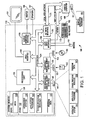
- FIG. 1 illustratively depicts an example of a suitable operating environment 100 for carrying out printer client-side functionality of the network printer connection update scheme in accordance with the present invention.
- the operating environment 100 is only one example of a suitable operating environment and is not intended to suggest any limitation as to the scope of use or functionality of the invention.
- Other well known computing systems, environments, and/or configurations that may be suitable for use with the invention include, but are not limited to, personal computers, server computers, laptop/portable computing devices, hand-held computing devices, multiprocessor systems, microprocessor-based systems, network PCs, minicomputers, mainframe computers, distributed computing environments that include any of the above systems or devices, and the like.
- program modules include routines, programs, objects, components, data structures, etc. that perform particular tasks or implement particular abstract data types.
- program modules are generally located in both local and remote computer storage media including memory storage devices.
- an exemplary system for implementing the invention includes a general purpose computing device in the form of a computer 110.
- Components of computer 110 may include, but are not limited to, a processing unit 120, a system memory 130, and a system bus 121 that couples various system components including the system memory to the processing unit 120.
- the system bus 121 may be any of several types of bus structures including a memory bus or memory controller, a peripheral bus, and a local bus using any of a variety of bus architectures.
- such architectures include Industry Standard Architecture (ISA) bus, Micro Channel Architecture (MCA) bus, Enhanced ISA (EISA) bus, Video Electronics Standards Association (VESA) local bus, and Peripheral Component Interconnect (PCI) bus also known as Mezzanine bus.
- ISA Industry Standard Architecture
- MCA Micro Channel Architecture
- EISA Enhanced ISA
- VESA Video Electronics Standards Association
- PCI Peripheral Component Interconnect
- Computer 110 typically includes a variety of computer readable media.
- Computer readable media can be any available media that can be accessed by computer 110 and includes both volatile and nonvolatile media, removable and non-removable media.
- Computer readable media may comprise computer storage media and communication media.
- Computer storage media includes both volatile and nonvolatile, removable and non-removable media implemented in any method or technology for storage of information such as computer readable instructions, data structures, program modules or other data.
- Computer storage media includes, but is not limited to, RAM, ROM, EEPROM, flash memory or other memory technology, CD-ROM, digital versatile disks (DVD) or other optical disk storage, magnetic cassettes, magnetic tape, magnetic disk storage or other magnetic storage devices, or any other medium which can be used to store the desired information and which can accessed by computer 110.
- Communication media typically embodies computer readable instructions, data structures, program modules or other data in a modulated data signal such as a carrier wave or other transport mechanism and includes any information delivery media.
- modulated data signal means a signal that has one or more of its characteristics set or changed in such a manner as to encode information in the signal.
- communication media includes wired media such as a wired network or direct-wired connection, and wireless media such as acoustic, RF, infrared and other wireless media. Combinations of the any of the above should also be included within the scope of computer readable media.
- the system memory 130 includes computer storage media in the form of volatile and/or nonvolatile memory such as read only memory (ROM) 131 and random access memory (RAM) 132.
- ROM read only memory
- RAM random access memory
- BIOS basic input/output system
- RAM 132 typically Contains data and/or program modules that are immediately accessible to and/or presently being operated on by processing unit 120.
- FIG. 1 illustrates operating system 134, application programs 135, other program modules 136, and program data 137.
- the computer 110 may also include other removable/non-removable, volatile/nonvolatile computer storage media.
- FIG. 1 illustrates a hard disk drive 140 that reads from or writes to non-removable, nonvolatile magnetic media, a magnetic disk drive 151 that reads from or writes to a removable, nonvolatile magnetic disk 152, and an optical disk drive 155 that reads from or writes to a removable, nonvolatile optical disk 156 such as a CD ROM or other optical media.
- removable/non-removable, volatile/nonvolatile computer storage media that can be used in the exemplary operating environment include, but are not limited to, magnetic tape cassettes, flash memory cards, digital versatile disks, digital video tape, solid state RAM, solid state ROM, and the like.
- the hard disk drive 141 is typically connected to the system bus 121 through an non-removable memory interface such as interface 140, and magnetic disk drive 151 and optical disk drive 155 are typically connected to the system bus 121 by a removable memory interface, such as interface 150.
- hard disk drive 141 is illustrated as storing operating system 144, application programs 145, other program modules 146, and program data 147 Note that these components can either be the same as or different from operating system 134, application programs 135, other program modules 136, and program data 137. Operating system 144, application programs 145, other program modules 146, and program data 147 are given different numbers here to illustrate that, at a minimum, they are different copies.
- a user may enter commands and information into the computer 20 through input devices such as a keyboard 162 and pointing device 161, commonly referred to as a mouse, trackball or touch pad.
- Other input devices may include a microphone, joystick, game pad, satellite dish, scanner, or the like.
- a monitor 191 or other type of display device may also be connected to the system bus 121 via an interface, such as a video interface 190.
- computers may also include other peripheral output devices such as speakers 197 and printer 196, which may be connected through a output peripheral interface 190.
- the computer 110 potentially operates in a networked environment using logical connections to one or more remote computers, such as a remote computer 180.
- the remote computer 180 may be a personal computer, a server, a router, a network PC, a peer device or other common network node, and typically includes many or all of the elements described above relative to the computer 110, although only a memory storage device 181 has been illustrated in FIG. 1.
- the logical connections depicted in FIG. 1 include a local area network (LAN) 171 and a wide area network (WAN) 173, but may also include other networks.
- LAN local area network
- WAN wide area network
- Such networking environments are commonplace in offices, enterprise-wide computer networks, intranets and the Internet.
- the computer 110 When used in a LAN networking environment, the computer 110 is connected to the LAN 171 through a network interface or adapter 170. When used in a WAN networking environment, the computer 110 typically includes a modem 172 or other means for establishing communications over the WAN 173, such as the Internet.
- the modem 172 which may be internal or external, may be connected to the system bus 121 via the user input interface 160, or other appropriate mechanism.
- program modules depicted relative to the computer 110, or portions thereof may be stored in the remote memory storage device.
- FIG. 1 illustrates remote application programs 185 as residing on memory device 181. It will be appreciated that the network connections shown are exemplary and other means of establishing a communications link between the computers may be used.
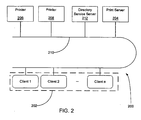
- FIG. 2 illustratively depicts an exemplary network including a set of network system entities that participate in network printer client configuration and print operations in accordance with an exemplary embodiment of the present invention.
- the exemplary computer network environment 200 includes a set of client machines 202(1-n) that execute application programs on behalf of logged on users.
- the number of client computers (n) is generally anywhere from a few computers to hundreds or even thousands.
- Such network conceivably includes wide area network links that open up the network to virtually any number of additional client machines.
- the client machines 202 submit print requests to a print server 204 to output printed documents on a printer connected to the network such as printer 206 or printer 208 via a network link 210.
- the print server 204 renders print jobs to the printer 206 or printer 208 on behalf of the client machines 202.
- the printers 206 and 208 thereafter receive the rendered print jobs from the print server 204, and the printers 206 and 208 generate printed document output.
- a client computer of the client machines 202 issues print requests after first establishing a printer connection at the print server 204.
- a printer connection establishes an identification for directing subsequent print requests to a networked printer (e.g., printer 206) via a print server (e.g., print server 204).
- the printer connection specifies a name for a combination of a printer and a print server (or group of print servers) that renders print requests to the printer on behalf of requesting clients.
- the printer connection corresponds to a print queue maintained within the print server 204 to handle requests from the client machines 202 to a particular one of the printers 206 and 208.
- the client machines 202 also require a print driver corresponding to the particular printer type to which the client machines 202 submit print requests.
- print drivers convert high level printer-independent print requests by applications on the client machines 202 into printer-specific print requests that are then forwarded via the link 210 to the print server 204.
- the print server 204 then places the print request onto a print queue corresponding to a printer connection identified in the print request.
- the print drivers are either manually installed on the client machines 202 or, alternatively, are downloaded in a known manner from a source of printer drivers on the network 204 according to an automated printer driver installation method.
- Embodiments of the present invention include network resource directory and configuration definition facilities that enable an administrator to designate/update printer connections for groups of users and machines in a network.
- a directory service server computer 212 maintains a structured enumeration of network entities (users, machines, and groups thereof).
- the directory service server computer 212 also includes configuration definitions.
- the configuration definitions store a variety of information that is utilized by applicable client machines 202 to set of their operational state.
- the operational state of the client machines 202 includes an enumeration of available printer connections.
- the network entities are represented/arranged in a set of directory containers (e.g., sites, domains, and organization units) maintained by the directory service server computer 212.
- Associations between the separately maintained configuration definitions and one or more of the directory containers enable a network administrator to assign printer connections (defined within the configuration definitions) to machines and users represented in the set of directory containers.
- Such configuration definitions (including the printer connections), and associations between directory containers and configuration definitions, are specified through a network administration utility.
- the printer connection assignments are propagated to individual machines and users through configuration update mechanisms described, by way of example, herein below.
- Maintaining the printer connections within the directory service server computer 212 provides a network administrator an efficient and reliable mechanism for updating the printers available to the client machines 202 and logged on users within the computer network environment 200. Rather than making specific changes to logon scripts of particular users, sending emails to users, or sending assistants to each client machine 202 to update the listing of printer connections (to incorporate a change to the networked computers), an administrator specifies printer connection changes through the configuration definitions (e.g., group policy objects in the WINDOWS 2000 operating system environment) maintained on the directory service computer 212. Thereafter, the changes to the printer connections are propagated to client computers and/or users in the network through event-driven configuration refresh operations (e.g., every 90 minutes) that propagate configuration changes to constituents of the computer network environment 200.
- the configuration definitions e.g., group policy objects in the WINDOWS 2000 operating system environment
- the printer connections are updated in response to an individual user logon event.
- the printer connections specified in associated configuration definitions are applied to a particular user when a user logs onto the network 200 after the printer connection changes have been specified in the directory service server computer 212.
- the present invention contemplates using a variety of network resource configuration repository structures for carrying out the printer connection change repository function supported by the above-described directory service server computer 212.
- the exemplary embodiment utilizes configuration definitions associated with directory containers to designate/maintain printer connections and changes to printer connections from a network administrator management console.
- alternative directory and configuration repository structures are contemplated in alternative embodiments of the invention that facilitate receiving and maintaining changes to printer connections specified by a network administrator through a network resource management console interface.
- alternative embodiments of the invention include multiple instances/types of repositories within which printer connection changes are maintained for subsequent distribution to appropriate network entities (e.g., logged on users, machines, etc.).
- the above-described network environment 200 is exemplary. As those skilled in the art will readily appreciate, the present invention, enabling an administrator to specify/store changes to printer connections in a directory service or similar network resource configuration specification repository, can be incorporated into a variety of networks. Thus, the present invention is not limited to any particular network topology or environment.
- components of the directory service server 212 and client machines 202 cooperatively interact to distribute/apply printer connection actions (e.g., remove, add, etc.) to logged on users and networked machines.
- printer connection actions e.g., remove, add, etc.
- FIG. 3 an exemplary embodiment of the present invention is described with reference to components of the directory service server computer 212 and an exemplary one of the client machines 202.
- a directory of network resources/configurations 300 on the directory service server computer 212 stores/maintains a directory 302 comprising a structured enumeration of network entities represented in the form of directory containers (e.g., sites, domains, and organization units).
- the directory 302 includes a plurality of group resource configuration units arranged, by way of example, into one or more hierarchical tree structures representing groups and sub-groups within an organization.
- the directory 302 includes a first sub-tree 304 representing user groups and a second sub-tree 306 representing machines.
- GPOs (storing printer connections)
- the directory of network resources/configurations 300 also comprises aforementioned configuration definitions maintained in a container of group policies 308.
- the configuration definitions define setup states (policies) applied to groups of the client machines 202 and logged on users in the network 200.
- the configuration definitions in the container of group policies 308 include printer connections (as well as other specified configuration parameters). Such printer connections are specified by network administrators.
- the specified printer connections are then stored, as individual instances of configuration definitions, in the container of group policies 308.
- the individual configuration definitions are then associated with one or more particular groups of users and/or machines represented in the directory 302. The configuration definitions are thereafter distributed to the appropriate users and/or client machines 202.
- Group policy objects supported in WINDOWS 2000 and later generations of the WINDOWS operation system, are utilized by network administrators to designate/specify options for managed client computer configurations for particular groups of users and/or physical computing machines.
- group policy objects are stored within the container of group policies 308, and the GPOs are capable of specifying the aforementioned printer connections.
- an administrator creates a GPO (e.g., GPO1) using a MICROSOFT MANAGEMENT CONSOLE group policy snap-in interface, and stores GPO1 in the container of group policies 308.
- GPO1 includes printer connections PC1, PC2, and PC3.
- An exemplary format for the printer connections is illustratively depicted in FIG. 4 described herein below.
- the administrator associates GPO1 with particular objects-(defining groups of users or machines) in the directory 302.
- the MICROSOFT MANAGEMENT CONSOLE enables an administrator to edit and re-save a GPO that was previously saved in the container of group policies 308.
- the printer connections e.g., PC1, PC2, and PC3
- printer connection a configuration data type identifier
- Such identification is achievable by tagging each printer connection or alternatively by grouping multiple printer connections together and tagging the group.
- the repository components of the directory service server computer 212 are potentially present in multiple networked entities that include designated repositories of specified printer connections and/or printer connection actions (e.g., remove, add, etc.).
- the directory of network resources/configurations 300 includes a group policy object change notification optimization feature that limits invoking client-side group policy extensions.
- server-side group policy code 310 executing upon the directory service server 212 records an identification corresponding to a particular type of configuration description data (e.g., printer connections) when a particular group policy object (e.g., GPO1) is changed.
- the identification is associated with a particular client-side group policy extension (e.g., printer extension) that is invoked on the client machine 202a.
- the changed data type identifications are organized according to group policy object.
- a corresponding list of changed data types is maintained in a set of lists 312.
- the set of lists 312 hold globally unique identifiers corresponding to particular client-side extensions. Thus, a client side extension need not be invoked unless client-side group policy management Code first determines that the client side extension is identified by an entry in the set of lists 312.
- Event-driven processes on the client machines 202 request print connection updates, pertaining to the particular ones of the client machines 202 and users logged thereon, from the directory of network resources/configurations 300.
- the client machines 202 also include processes for carrying out changes to printer connections based upon responsive updated printer connection information extracted from particular configuration definitions (associated with the particular client machines) in the container of group policies 308.
- Notification and distribution of the printer connection updates by the directory of ) network resources/configurations 300 to client machines 202 in the network 200 occurs in any one of a variety of ways.
- the client machines 202 prompted by a periodic timer 316 (having, by way of example, an administrator-configurable period), periodically query the directory of network resources/configurations 300 for changes, and extract printer connection data specified in GPOs associated with the entities represented in the directory 302.
- the printer connection changes are pushed by the directory of network resources/configurations 300 to the client machines 202.
- Yet another printer connection update triggering mechanism/method, incorporated into a user logon process 318 ensures that users have up-to-date printer connections when they initially log onto a network.
- a client machine 202a executes processes for retrieving changed data from the group policy objects maintained by the directory of network resources/configurations 300.
- the client machine 202a includes client-side group policy management code 320.
- the event-driven client-side group policy management code 320 executes periodically (e g., based upon an administrator-set duration such as every 90 minutes) and during user logon.
- the group policy management code 320 once invoked, queries the directory of network resources/configurations 300 for changes to all group policy objects associated with the client machine 202a or logged on user.
- Such query is directed to particular ones of the set of lists 312 corresponding to the group policy objects associated with the client machine 202a or a user logged onto the machine 202a.
- the set of lists 312 includes a list having a GUID corresponding to printer connection data, for a group policy object associated with a user logged onto the client machine 202a or the client machine 202a itself.
- the client machine 202a also includes client-side group policy extensions 322.
- the group policy management code 320 invokes such extensions on the client machine 202a on an as needed basis to process corresponding configuration definition data types (e.g., printer connections) specified by group policy objects (e.g., GPO1 ) in the group policy container 308.
- group policy extensions 322 include a printer group policy extension 324 that is customized to retrieve and process changes to the printer connections maintained by the group policy container 308
- the printer group policy extension 324 of the client machine 202a processes updates to printer connections specified for group policy objects in the group policy container 308.
- the printer connections are maintained by the client machine 202a in a manner such that when a previously stored printer connection is removed/modified in the group policy container 308, then the old set of connections maintained in a group policy extension registry structure 326 is readily updated by deleting/modifying the corresponding printer connection in a printer connections section/branch 328.
- the printer group policy extension 324 appends a GPO identification, uniquely identifying the source GPO of the printer connection, to each retrieved printer connection. The GPO identification facilitates subsequent deletion of printer connections in response to an updated GPO containing a differing set of printer connections.
- the new set(s) of printer connections are placed within the printer connections section/branch 328 of the group policy extension registry structure 326.
- a sub-section/branch is created within the printer connections section/branch 328 for each GPO.
- the individual stored connections need not be separately tagged with a unique identification corresponding to the GPO from which they were extracted.
- the printer connections section/branch 328 of the extension registry structure 326 in maintaining an association between a printer connection and its source GPO, supports storing duplicate printer connections associated with differing GPOs.
- the present invention is not limited to any particular update mechanism or printer connection storage facility. Rather, the present invention is potentially carried out by a number of different methods and structures that maintain a current set of printer connections that are applicable to a client machine/user.
- printer connection updates is the re-configuration of printer sub-system components based upon the updated printer connections.
- the printer group policy extension 324 calls an update method on a print spooler 330 of the client machine 202a to notify the print spooler 330 of print connection updates.
- the call to the print spooler 330 includes an array of printer connections representing a composite of all printer connections that are present in the printer connections section 328 of the extension registry structure 326.
- the print spooler 330 does not maintain duplicate printer connections (i.e., the source GPO of the connection is irrelevant to the spooler).
- a spooler server 332 queues the printer connection update call from the printer group policy extension 324 for later processing by a spooler router 334.
- the spooler router 334 applies the array of printer connections, passed in the call to the print spooler, to its print request routing operations.
- the spooler router 334 determines entries to delete/add based upon a comparison between the printer connections listed in the passed array and printer connections previously installed in the print sub-system printer connections 336 of the client machine 202a.
- the spooler router 334 In processing the contents of the passed printer connection array, the spooler router 334 initially processes the deleted printer connections, then adds the new printer connections.
- deleted printer connections are identified by their absence in the passed array from the printer extension.
- the spooler 330 determines whether a corresponding driver exists for each printer connection. If a driver for a particular printer type is not yet installed on the client machine 202a, then the spooler 330 requests downloading and installing the printer driver. However, the present invention does not require any particular printer driver download mechanisms/methods. Many ways of obtaining and installing printer drivers on the client machine 202a are known to those skilled in the art. For example, rather than installing a new printer driver without a user's knowledge, a dialog box on the client machine 202a prompts a user to download the driver for a networked printer.
- the printer group policy extension 324 uses the policy refresh interval to retry failed attempts to pass printer connections to the spooler 330.
- Retry logic is built into the client-side group policy code 320 to accommodate instances where printer connections are successfully retrieved from the group policy container 308, but the new printer connections are not successfully installed by the spooler 330 on the client machine 202a.
- the group policy management code 320 does not invoke the extension unless corresponding data in a GPO has changed.
- the printer group policy extension 324 is invoked after each awakening event of the group policy management code 320 ⁇ without regard to whether there are changes to printer connections in associated group policy objects in the group policy container 308.
- the printer group policy extension 324 will not query the directory of network resources/configurations 300 (a task requiring time and resource consuming communications over the network between the client machine 202a and the directory service server computer 212) Instead, the printer group policy extension 324 calls the update method on the print spooler 330 and passes the array of printer connections representing a composite of all printer connections that are present in the printer connections section 328 of the extension registry structure 326.
- the spooler 330 takes steps to by-pass updating its configuration when no changes have occurred.
- the spooler 330 utilizes CRC's, generated on the array of printer connections passed by the printer group policy extension 324, to track changes to the printer connection list.
- the spooler 330 on each successful update of the printer connections, generates a CRC on its list of printer connections.
- the spooler 330 compares the current pushed printer connection CRC with the last successful CRC if they are equal it will do nothing.
- the spooler queues the new printer connection list for background processing on the client machine 202a. If the spooler 330 fails to carry out an update to the set of printer connections, the spooler 330 invalidates the CRC. The spooler then waits for the call from the printer group policy extension 324 to retry a previous unsuccessful printer connection update operation.
- printer connections sources (like the directory of network resources/configurations 300) operate as sources of printer connections.
- a Universal Naming Convention Name field 400 stores a full printer connection name using the well known UNC convention (i.e., ⁇ servername ⁇ sharename).
- UNC convention i.e., ⁇ servername ⁇ sharename
- a printer connection is specified by a printer and print server, and the UNCName field 400 comprises a composite of the printer name and print server name.
- the UNCName field 400 stores " ⁇ foo ⁇ bar.”
- a printerName field 402 stores the printer (share) name portion (e.g., bar) of the printer connection.
- a serverName field 404 stores the server name portion (e.g., foo) of the printer connection
- a printAttributes field 406 designates attributes for a printer connection.
- three types of printer connection attributes are designated. One or more of such attributes can be designated for each printer connection by, for example, setting an appropriate bit in the printAttributes field 406.
- three bits are used to specify three distinct attributes assignable to a printer connection.
- a first connection attribute identifies a connection as assignable to a client machine.
- a second connection attribute identifies a connection as being assignable to a user and then provided to such user's client machine after the user successfully logs onto the network.
- Yet another connection attribute identifies the printer connection as a distributed print server (DPS) connection.
- DPS connections specify a single printer, but allow any one of multiple print servers to handle the print request from a client machine specifying the printer connection.
- the printer connections are specified by tagged fields according to a printer connection XML schema.
- the tagged fields of a printer connection include a category 500 (e.g., "printer connection policy” ) that facilitates identifying the configuration (group policy) information as a printer connection.
- a description 502 identifies a descriptive text string for identifying the policy structure type (e.g., "printer policy” ).
- a class type 504 identifies the class of the policy definition (e g., "structural" ).
- a common name 506 is a place holder for the common name identifying printer connections (eg., "printer connection policy” ).
- a mandatory attributes 508 specifies any required attributes for the printer connection definition.
- An optional attributes section 510 identifies the fields depicted in FIG. 4 that define a printer connection.
- the client-side printer group policy extension 324 when storing a received printer connection in the printer connections section 328 of the extension registry structure 326, augments the above-described printer connection fields set forth in FIG. 4 with a configuration definition source (GPO) identification.
- GPO configuration definition source
- a Unicode string identifies a source GPO in each printer connection entry of the printer connections 328.
- FIG. 6 summarizes steps performed by the exemplary components to distribute printer connections from a directory of network resources/configurations 300 to a number of networked client machines and logged on users.
- the steps summarized herein below represent the combined operations of multiple components of a computer network (described by way of example herein above) with regard to a set of printer connections associated with one or more group policy objects maintained by the directory service server machine 212 and associated with one or more of the client machines 202.
- an administrator through a configuration interface, adds or removes printer connections to/from a GPO in the group policy container 308 of the directory of network resources/configurations 300.
- Such changes achieved during step 600 include an initial designation of printer connections for network entities that currently have none.
- the group policy code 31 0 records, in particular ones of the changed data lists 312, that a change for a specific group policy client side extension (or type of configuration data) was made for the particular GPO.
- the group policy code 310 records an extension-specific GUID to which the changed configuration data applies as well as the GPO containing the changed data.
- Step 602 is an optimization feature, of a particular embodiment of the invention, that prevents invoking client side extensions to obtain updated configuration data of a particular type from the group policy container 308 when no data for the particular extension was changed.
- the group policy extensions on the client machine 202a are potentially invoked to perform other functions that do not rely upon whether new configuration data is present in the group policy container 308.
- the directory of network resources/configurations 300 does not initiate updating printer connections in client computers in response to update actions by an administrator. Instead, the directory of network resources/configurations 300 waits for queries regarding the group policy container 308 and changes relating thereto. It is noted that during such wait period, further changes are potentially added to the configuration information maintained by the group policy container 308 and registered in the changed data lists 312. Thus, steps 600 and 602 potentially execute multiple times before the accumulated changes are passed to requesting ones of the client machines 202.
- an event wakes up the client-side group policy management code 320.
- such event occurs when a group policy refresh cycle period expires (e.g., every 90 minutes) on one of the client machines 202 or when a new user logs onto one of the client machines 202.
- the group policy code 320 queries the directory of network resources/configurations 300 (e.g., the changed data lists 312) for all the group policy objects that apply to the client machine 202a or any users logged onto the client machine 202a. It is noted that in the above-described exemplary embodiment, the client machines 202 poll the directory of network resources/configurations 300 for changes to relevant configuration data.
- the directory of network resources/configurations 300 pushes or broadcasts the changed data to the client machines.
- hybrids/variations of the above-described polling and pushing methods are utilized by the directory of network resources/configurations 300 and the client machines 202 to distribute/present updated printer connection lists to the printer sub-systems of the client machines 202.
- the call to the printer group policy extension 324 includes references to the GPOs having changed printer connections (if such changes have occurred).
- the printer group policy extension 324 is not passed the actual printer connection data. Instead, the extension 324 is passed a list of locations (e.g., directory service path names) in the directory of network resources/configurations 300 corresponding to the group policy objects that have changed printer Connection data.
- the GPO's are associated with particular nodes representing machine locations, directory service user groups, etc.
- Printer connections are assignable to multiple group policy objects associated with different levels of directory service groups (a general and then more specific user group) in a same directory service tree branch. Pushed printers at all levels of the directory service are union-ed together to form the pushed printer of the user - i.e.
- printer connection limiting mechanisms are provided such that an administrator can specify that a client machine/user only receive printer connections specified by a GPO assigned at the directory service level having the greater degree of specificity (i.e , at the lower level of a branch in the directory service tree).
- printer connection setup retry logic is linked to the event-driven awakening of the group policy code 320.
- the printer group policy extension 324 is called (with a null list of GPO references), even when none of the printer connections relevant to the client machine 202a have changed, to provide an opportunity for the printer group policy extension to resend printer connections to the spooler 330.
- two distinct execution paths are taken by the extension 324 based upon whether a GPO is identified in the group policy code's call (e.g., at least one printer connection has changed).
- step 612 If the call to the extension 324 includes at least one reference to a GPO, then control passes from step 610 to step 612.
- the printer group policy extension 324 locates all printer connections associated with the referenced GPOs in the group policy container 308, and updates the printer connections in the printer connections section 328 of the extension registry structure 326.
- each printer connection entry in the printer connections section 328 identifies the GPO from which the printer connection was originally obtained.
- Identifying the printer connection source (e.g., GPO) in the printer connections section 328 facilitates identifying printer connections deleted from a source (e g., a changed GPO) of printer connections.
- the extension 324 for each GPO identified in the call from the group policy code during step 608, replaces the current set of printer connections with the new connections.
- Storing the printer connections in the printer connections section 328 facilitates retrying, without costly network communications, a previously failed attempt by the spooler 330 to install one or more new printer connection.
- the extension 324 need only read the printer connections section 328 rather than perform a costly network request of the group policy container 308.
- An exemplary retry method is built into the normal operation of the extension 324 and spooler 330 described herein. Such retry logic is exercised in response to the extension 324 being called during step 608, regardless of whether any printer connections have changed. Thus, if no changes to printer connections are identified in the call from the group policy code during step 608, then control passes from step 610 to step 614. Alternatively, the spooler 330 maintains its own retry logic (process/thread), and control passes to the End in the event that the printer extension 324 determines at step 610 that no changes have occurred to the printer connections.
- the spooler never reads the connection information from the printer connections section 328 that is maintained by the printer group policy extension 324. Instead, during step 614 the extension calls an update method on the spooler 330 and passes the current set of printer connections (without duplicates) maintained in the printer connections section 328.
- the call includes an array designating the current set of printer connections associated with the client machine 202a.
- the spooler server 332 queues the array of printer connections.
- the spooler router 334 initially determines whether a new list of printer connections differs from a previously processed printer connection list. It is noted that in a particular embodiment of the invention, the spooler router 334, on each successful update to the printer connection, generates a cyclical redundancy code (CRC) on the list of printer connections. If the spooler router 334 fails to complete the printer connection update, then the spooler router 334 invalidates the printer connection CRC. The spooler router 334 then waits for the next call of from the printer group policy extension 324 to retry failed printer connection update operations.
- CRC cyclical redundancy code
- the spooler router 334 compares the current pushed printer connection CRC with the last successful CRC. If the two CRC values are equal, then the printer connections are not updated, and control passes to the End. However, if they are not equal, then control passes to step 618 for further processing of the new printer connection list.
- the spooler router 334 determines what printer connections to delete by comparing the new list of printer connections to the current set of previously passed printer connections. The router 334 processes deleted connections first, and then new connections are added. Upon completion of the processing steps to the printer connection list, the old CRC is either replaced with a new one (based upon new list of printer connections) or invalidated. Configuration of the printer sub-system is completed by installing any new printer connections necessitated by a reference to a new printer type for which a driver has not previously been installed. Control then passes from step 618 to the End.
- the above-described infrastructure and method for specifying printer connections in a network environment is an administrative capability that is most beneficial in relatively large (e.g., corporate-wide) networks.
- an administrative tool/utility enables an administrator to easily select printers and users and have those printer connections placed upon the users' client machines without having to physically travel to each user's machine.
- an administrator graphical user interface supports specifying printer connections for, by way of example groups of users or machines in the network.
- the printer connection administration graphical user interface in an embodiment of the invention, is accessed via the MICROSOFT Print Management Console.
- all functionality exposed by the administrative graphical user interface can also be achieved via scripts.
- incorporating the present invention into a network gives rise to at least two classes of printer connections
- a "pushed" printer connection class is established by the above-described automated method.
- a "non-pushed" printer connection class includes all printer connections that were established using other methods of specifying printer connections, including by directly specifying the printer connections via a user interface on the particular client machine to which the printer connection is assigned.
- a set rules are set up with regard to replacing previously installed printer connections.
- An administrator's designation of a (pushed) printer connection via the above-described mechanism will generally trump a previous same (but non-pushed) printer connection established via other mechanisms.
- the following examples demonstrate how various acts affect the status of the printer connections on a client machine:
- a management console utility utilized by network administrators, executes upon any networked machine and enables network administrators to view and specify changes to printer connections.
- the management console utility described herein below with reference to a set of exemplary graphical user interfaces, provides a conduit enabling administrators to designate changes to printer connections that are stored within the directory of network resources/configurations 300 maintained by the directory service server 212.
- the management console utility in an embodiment of the invention, is a MICROSOFT MANAGEMENT CONSOLE (MMC) software utility augmented by a printer connection action specification snap-in program module.
- MMC MICROSOFT MANAGEMENT CONSOLE
- the printer connection snap-in program module supports designating print connection action commands that are received by the directory of network resources/configurations 300. Such commands push printer connection actions to the directory of network resources/configurations 300. Thereafter, the network resource directory 300 packages the actions in the aforementioned group policyobjects (GPOs).
- GPOs group policyobjects
- the management console utility enables a network resource administrator to view a current set of printer connections and specify actions relating to printer connections (e.g., add, delete, etc).
- an administrator begins a session for designating (pushing) printer connections for group policy objects (GPOs) by initially launching a printer management console including an interface, as depicted in FIG. 7 , enumerating all network printers.
- the administrator selects a printer for which a printer connection is to be designated for a GPO.
- the administrator pushes a selected printer connection to a GPO by launching a context menu on the printer from any of the printers folders and then invoking a "push printer" operation.
- a dialog depicted by way of example in FIG. 8 .
- the push printers dialog in addition to listing the UNCNames for selected printers, allows browsing/searching for GPOs in the directory of network resources.
- An administrator through the dialog, selects a GPO to which the listed printer connections are to be pushed.
- the dialog also supports designating whether the connection is a per-machine or per-user connection or both.
- multiple printer connections can be pushed to a GPO by multi-selection of the printer connections.
- an administrator in an embodiment of the invention, cannot select an entire folder of printers such as "building 10 printers" and push them because the set of printers within the folder may change (or be hidden) ⁇ giving rise to complications.
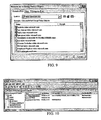
- FIG. 9 an exemplary browse dialog is depicted that enables a user to select a GPO to which particular connections apply.
- Clicking "Browse" in the dialog depicted in FIG. 8 launches a standard GPO dialog enabling an administrator to select a desired GPO.
- the administrator will only be able to select one GPO at a time
- the pushing printer connection transaction succeeds or fails without the complexities of determining what pushed connection failed (the case when several GPOs are assigned multiple printer connections as a transaction) and undoing actions that occurred during the push operation. If the printer connection push operation is partially or completely unsuccessful, a dialog box will inform the administrator which printer connections could not be pushed to that GPO.
- Another exemplary user interface displays the current set of pushed printer connections in the network.
- the exemplary display interface enumerates the pushed connection GPO- From the pushed printers (connections) filter under the Printers folder, an administrator views all printers that have been pushed, their associated servers, and the GPO's to which the printer connections have been pushed.
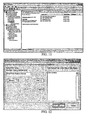
- a group policy editing interface is enhanced (by for example a snap-in) to display all printer connections that are pushed to a particular GPO.
- Such interface is accessed using the left-hand tree, underneath the Computer Configuration->Administrative Templates->Printers->Pushed Printers node (for per-machine connections) or underneath the User Configuraton->Adminstrative Templates->Pushed Printers node (for per-user connections).
- the display interface enumerates all the pushed per user or per machine connections associated with that GPO.
- a context menu is presented that includes an Add/Remove Printer menu item enabling the administrator to designate (push) a new printer connection to the GPO or remove a previously added printer connection.
- the administrator is able to right click on a printer to get the "remove” task or just select a printer or group of printers and hit delete.
- Add/Remove Printer the dialog depicted in FIG. 12 , is rendered. By clicking the Remove button, the administrator is able to remove a listed printer from that GPO.
- "Browse" is selected, a Find Printers dialog is launched. When the administrator clicks "OK” , the printer names are checked for correctness. Then, text is generated stating "Adding Connection,” “Error” etc.
Landscapes
- Engineering & Computer Science (AREA)
- Theoretical Computer Science (AREA)
- Physics & Mathematics (AREA)
- General Engineering & Computer Science (AREA)
- General Physics & Mathematics (AREA)
- Human Computer Interaction (AREA)
- Data Mining & Analysis (AREA)
- Databases & Information Systems (AREA)
- Mathematical Physics (AREA)
- Software Systems (AREA)
- Accessory Devices And Overall Control Thereof (AREA)
- Computer And Data Communications (AREA)
Applications Claiming Priority (2)
| Application Number | Priority Date | Filing Date | Title |
|---|---|---|---|
| US10/391,252 US20040184070A1 (en) | 2003-03-18 | 2003-03-18 | Network printer connection update scheme for printer clients |
| US391252 | 2003-03-18 |
Publications (2)
| Publication Number | Publication Date |
|---|---|
| EP1460530A2 true EP1460530A2 (fr) | 2004-09-22 |
| EP1460530A3 EP1460530A3 (fr) | 2005-12-14 |
Family
ID=32824856
Family Applications (1)
| Application Number | Title | Priority Date | Filing Date |
|---|---|---|---|
| EP04006267A Withdrawn EP1460530A3 (fr) | 2003-03-18 | 2004-03-16 | Système de mise a jour des connexions d'imprimantes de réseau pour des clients d'imprimante |
Country Status (13)
| Country | Link |
|---|---|
| US (1) | US20040184070A1 (fr) |
| EP (1) | EP1460530A3 (fr) |
| JP (1) | JP2004280838A (fr) |
| KR (1) | KR20040082332A (fr) |
| CN (1) | CN1530820A (fr) |
| AU (1) | AU2004200644A1 (fr) |
| BR (1) | BRPI0400213A (fr) |
| CA (1) | CA2458177A1 (fr) |
| MX (1) | MXPA04002480A (fr) |
| PL (1) | PL365982A1 (fr) |
| RU (1) | RU2357283C2 (fr) |
| TW (1) | TW200502773A (fr) |
| ZA (1) | ZA200401489B (fr) |
Families Citing this family (36)
| Publication number | Priority date | Publication date | Assignee | Title |
|---|---|---|---|---|
| US6553414B1 (en) * | 1998-10-02 | 2003-04-22 | Canon Kabushiki Kaisha | System used in plural information processing devices for commonly using peripheral device in network |
| JP4229735B2 (ja) * | 2003-03-20 | 2009-02-25 | シャープ株式会社 | 情報処理方法、情報処理システム、管理サーバ、コンピュータプログラム、及び記録媒体 |
| US20040239978A1 (en) * | 2003-05-29 | 2004-12-02 | Hewlett-Packard Co. | Method and apparatus for tracking a plurality of image devices in a network |
| US7636584B2 (en) * | 2003-10-17 | 2009-12-22 | Hewlett-Packard Development Company, L.P. | Computing device and methods for mobile-printing |
| US7143210B2 (en) * | 2003-11-12 | 2006-11-28 | Sharp Laboratories Of America, Inc. | User-defined printer selection administration policy |
| JP4453594B2 (ja) * | 2005-03-30 | 2010-04-21 | ブラザー工業株式会社 | レイアウト表示システム |
| JP4645419B2 (ja) * | 2005-11-15 | 2011-03-09 | 富士ゼロックス株式会社 | プリンタ制御装置、プリンタ制御方法及びプログラム |
| JP4806625B2 (ja) * | 2006-02-20 | 2011-11-02 | 株式会社リコー | 画像処理装置、画像処理方法、画像処理プログラム及び画像処理システム |
| JP4197188B2 (ja) * | 2006-12-28 | 2008-12-17 | キヤノンマーケティングジャパン株式会社 | 印刷管理サーバ、印刷システム、印刷管理サーバの制御方法、印刷システムの制御方法、およびプログラム |
| JP4958611B2 (ja) * | 2007-04-10 | 2012-06-20 | キヤノン株式会社 | 通信装置、ネットワークシステム、通信方法、及びプログラム |
| GB0707492D0 (en) * | 2007-04-18 | 2007-05-23 | Canon Europa Nv | A print apparatus, a method of controlling printing, and a program |
| KR101405919B1 (ko) * | 2007-07-20 | 2014-06-12 | 삼성전자주식회사 | 폴더 공유 서비스 설정을 위한 호스트 장치, 디바이스 및폴더 공유 서비스 설정방법 |
| US20090031052A1 (en) * | 2007-07-27 | 2009-01-29 | Xerox Corporation | Print device diagnosis method and system |
| US20090066993A1 (en) * | 2007-09-11 | 2009-03-12 | Xerox Corporation | Remote print device management |
| US8570550B2 (en) * | 2007-09-11 | 2013-10-29 | Xerox Corporation | Method and system for remote management of print devices |
| US7752345B2 (en) | 2007-12-20 | 2010-07-06 | Avery Dennison Corporation | Automatic configuration of network devices |
| CN101350829B (zh) * | 2008-08-29 | 2011-04-20 | 中国移动通信集团福建有限公司 | 基于wap的营业厅电子广告屏内容更换方法及装置 |
| US9542139B2 (en) * | 2009-01-13 | 2017-01-10 | Canon Europa N.V. | Network printing system having a print server and a logon server |
| US20100306056A1 (en) * | 2009-05-28 | 2010-12-02 | Xerox Corporation | System and method of remote machine servicing |
| US20100302578A1 (en) * | 2009-05-28 | 2010-12-02 | Xerox Corporation | System and method of remote machine servicing |
| EP2583211B1 (fr) | 2010-06-15 | 2020-04-15 | Oracle International Corporation | Infrastructure informatique virtuelle |
| US10715457B2 (en) | 2010-06-15 | 2020-07-14 | Oracle International Corporation | Coordination of processes in cloud computing environments |
| JP6460798B2 (ja) | 2012-02-10 | 2019-01-30 | オラクル・インターナショナル・コーポレイション | クラウドコンピューティングサービスフレームワーク |
| US9619545B2 (en) | 2013-06-28 | 2017-04-11 | Oracle International Corporation | Naïve, client-side sharding with online addition of shards |
| JP6366247B2 (ja) * | 2013-10-08 | 2018-08-01 | キヤノン株式会社 | 管理サーバシステム、およびその制御方法 |
| TWI536192B (zh) * | 2014-02-25 | 2016-06-01 | 三緯國際立體列印科技股份有限公司 | 3d列印資料生成方法、3d圖檔列印方法及3d 列印資料處理系統 |
| JP6528449B2 (ja) * | 2014-06-26 | 2019-06-12 | 株式会社リコー | プログラム、情報処理装置、及び情報処理システム |
| JP6963168B2 (ja) * | 2017-06-21 | 2021-11-05 | 富士通株式会社 | 情報処理装置、メモリ制御方法およびメモリ制御プログラム |
| JP6838580B2 (ja) * | 2018-04-27 | 2021-03-03 | 京セラドキュメントソリューションズ株式会社 | サーバー、画像形成システム、及び管理方法 |
| JP6838581B2 (ja) * | 2018-04-27 | 2021-03-03 | 京セラドキュメントソリューションズ株式会社 | サーバー、画像形成システム、及び管理方法 |
| JP2024129560A (ja) * | 2023-03-13 | 2024-09-27 | 富士フイルムビジネスイノベーション株式会社 | 情報処理システムおよびプログラム |
| US12355770B2 (en) * | 2023-10-03 | 2025-07-08 | strongDM, Inc. | Identity and activity based network security policies |
| US12242599B1 (en) | 2024-09-27 | 2025-03-04 | strongDM, Inc. | Fine-grained security policy enforcement for applications |
| US12348519B1 (en) | 2025-02-07 | 2025-07-01 | strongDM, Inc. | Evaluating security policies in aggregate |
| US12432242B1 (en) | 2025-03-28 | 2025-09-30 | strongDM, Inc. | Anomaly detection in managed networks |
| US12603921B1 (en) | 2025-11-19 | 2026-04-14 | strongDM, Inc. | Indexing entities and attributes for policy enforcement |
Citations (1)
| Publication number | Priority date | Publication date | Assignee | Title |
|---|---|---|---|---|
| EP1178393A2 (fr) * | 2000-08-02 | 2002-02-06 | Xerox Corporation | Méthode et dispositif de mise à jour automatique de configuration d'imprimante et des données d'état |
Family Cites Families (29)
| Publication number | Priority date | Publication date | Assignee | Title |
|---|---|---|---|---|
| US4556959A (en) * | 1983-03-29 | 1985-12-03 | International Business Machines Corp. | Printer selection of options |
| CA2010056C (fr) * | 1990-02-14 | 1998-05-12 | Charles Brian Hall | Methode utilisant une generation universelle d'instructions de mise a jour pour ameliorer le rendement de la generation de codes arithmetiques dans un compilateur optimiseur |
| US5922070A (en) * | 1994-01-11 | 1999-07-13 | Texas Instruments Incorporated | Pipelined data processing including program counter recycling |
| JP3706694B2 (ja) * | 1996-01-09 | 2005-10-12 | キヤノン株式会社 | 情報処理装置、プリンタ制御方法及び記憶媒体 |
| US5922072A (en) * | 1997-01-03 | 1999-07-13 | Ncr Corporation | Method and apparatus for creating alternate boot environments in a computer |
| US6046816A (en) * | 1997-07-01 | 2000-04-04 | Adobe Systems Incorporated | Print data flow operation standardized test technique |
| US6594682B2 (en) * | 1997-10-28 | 2003-07-15 | Microsoft Corporation | Client-side system for scheduling delivery of web content and locally managing the web content |
| JP3201319B2 (ja) * | 1997-11-01 | 2001-08-20 | 日本電気株式会社 | ネットワークに接続可能な電子機器 |
| US6148340A (en) * | 1998-04-30 | 2000-11-14 | International Business Machines Corporation | Method and system for differencing container files |
| US6288790B1 (en) * | 1998-05-15 | 2001-09-11 | International Business Machines Corporation | Mobility support for printing |
| JP3159174B2 (ja) * | 1998-06-19 | 2001-04-23 | 日本電気株式会社 | プリンタ制御装置 |
| US6466932B1 (en) * | 1998-08-14 | 2002-10-15 | Microsoft Corporation | System and method for implementing group policy |
| US6578037B1 (en) * | 1998-10-05 | 2003-06-10 | Oracle Corporation | Partitioned access control to a database |
| US6418456B1 (en) * | 1998-11-24 | 2002-07-09 | International Business Machines Corporation | Clean-up of files in a network system |
| JP2000330750A (ja) * | 1999-05-18 | 2000-11-30 | Nec Eng Ltd | ネットワークプリンタ管理装置及びネットワークプリンタシステム |
| RU19188U1 (ru) * | 2000-02-24 | 2001-08-10 | Дергунов Александр Игоревич | Система печати |
| US6788429B1 (en) * | 2000-04-14 | 2004-09-07 | Hewlett-Packard Development Company, Lp. | Remote print queue management |
| DE10107440A1 (de) * | 2000-04-14 | 2001-10-18 | Hewlett Packard Co | Dynamische Benutzerschnittstelle für Vorrichtungsverwaltungsanwendungen |
| US7350204B2 (en) * | 2000-07-24 | 2008-03-25 | Microsoft Corporation | Policies for secure software execution |
| US7024476B1 (en) * | 2000-09-13 | 2006-04-04 | Canon Kabushiki Kaisha | Directory-enabled device management |
| JP2002120417A (ja) * | 2000-10-17 | 2002-04-23 | Canon Inc | 周辺機器管理装置、印刷装置、周辺機器管理システム、印刷システム、周辺機器管理方法、リソース更新方法及び記憶媒体 |
| US7698389B2 (en) * | 2001-05-16 | 2010-04-13 | Hewlett-Packard Development Company, L.P. | Device configuration in a distributed environment |
| US6920506B2 (en) * | 2001-06-28 | 2005-07-19 | Canon Information Systems, Inc. | Discovery and management of network printers |
| JP3888452B2 (ja) * | 2001-07-02 | 2007-03-07 | セイコーエプソン株式会社 | ネットワークを介した印刷方法 |
| JP2003044246A (ja) * | 2001-07-26 | 2003-02-14 | Canon Inc | 情報処理装置、印刷制御方法、プログラム、及び記憶媒体 |
| US20030063305A1 (en) * | 2001-09-28 | 2003-04-03 | Mcintyre C. Kevin | Method and system for saving and restoring printer control panel settings |
| KR100444988B1 (ko) * | 2001-12-20 | 2004-08-21 | 삼성전자주식회사 | 변경된 프린터정보를 실시간으로 전송하는 프린터정보전송방법 및 이를 이용한 네트워크 프린터 |
| US20040143651A1 (en) * | 2003-01-21 | 2004-07-22 | Allen Kram H. | System and method for distributing configuration changes made to a printing device |
| US7337330B2 (en) * | 2003-03-10 | 2008-02-26 | Cyberview Technology, Inc. | Universal game download system for legacy gaming machines |
-
2003
- 2003-03-18 US US10/391,252 patent/US20040184070A1/en not_active Abandoned
-
2004
- 2004-02-18 AU AU2004200644A patent/AU2004200644A1/en not_active Abandoned
- 2004-02-20 CA CA002458177A patent/CA2458177A1/fr not_active Abandoned
- 2004-02-24 ZA ZA200401489A patent/ZA200401489B/xx unknown
- 2004-03-08 PL PL36598204A patent/PL365982A1/xx unknown
- 2004-03-10 TW TW093106397A patent/TW200502773A/zh unknown
- 2004-03-15 BR BR0400213-0A patent/BRPI0400213A/pt not_active IP Right Cessation
- 2004-03-16 EP EP04006267A patent/EP1460530A3/fr not_active Withdrawn
- 2004-03-16 MX MXPA04002480A patent/MXPA04002480A/es not_active Application Discontinuation
- 2004-03-17 CN CNA2004100304107A patent/CN1530820A/zh active Pending
- 2004-03-17 KR KR1020040018052A patent/KR20040082332A/ko not_active Ceased
- 2004-03-17 RU RU2004107929/09A patent/RU2357283C2/ru not_active IP Right Cessation
- 2004-03-18 JP JP2004078868A patent/JP2004280838A/ja active Pending
Patent Citations (1)
| Publication number | Priority date | Publication date | Assignee | Title |
|---|---|---|---|---|
| EP1178393A2 (fr) * | 2000-08-02 | 2002-02-06 | Xerox Corporation | Méthode et dispositif de mise à jour automatique de configuration d'imprimante et des données d'état |
Also Published As
| Publication number | Publication date |
|---|---|
| BRPI0400213A (pt) | 2004-12-28 |
| MXPA04002480A (es) | 2004-12-02 |
| KR20040082332A (ko) | 2004-09-24 |
| JP2004280838A (ja) | 2004-10-07 |
| CA2458177A1 (fr) | 2004-09-18 |
| PL365982A1 (en) | 2004-09-20 |
| AU2004200644A1 (en) | 2004-10-07 |
| RU2004107929A (ru) | 2005-09-20 |
| TW200502773A (en) | 2005-01-16 |
| CN1530820A (zh) | 2004-09-22 |
| US20040184070A1 (en) | 2004-09-23 |
| ZA200401489B (en) | 2004-08-30 |
| EP1460530A3 (fr) | 2005-12-14 |
| RU2357283C2 (ru) | 2009-05-27 |
Similar Documents
| Publication | Publication Date | Title |
|---|---|---|
| EP1460530A2 (fr) | Système de mise a jour des connexions d'imprimantes de réseau pour des clients d'imprimante | |
| US8234639B2 (en) | Autonomic auto-configuration using prior installation configuration relationships | |
| US6993562B2 (en) | Method and system to print via email | |
| US5751962A (en) | Object-based systems management of computer networks | |
| KR101376916B1 (ko) | 소프트웨어 애플리케이션을 신규 버전의 소프트웨어 애플리케이션으로 점진적으로 업그레이드하기 위한 방법, 기계 판독가능 저장 매체를 포함하는 제품 및 장치 | |
| US7590669B2 (en) | Managing client configuration data | |
| KR101075388B1 (ko) | 복수의 네트워크 주변장치 드라이버들의 컴포넌트들을 유지보수하기 위한 방법, 시스템, 및 컴퓨터 판독가능 기록 매체 | |
| US7290258B2 (en) | Managing multiple devices on which operating systems can be automatically deployed | |
| US9256353B2 (en) | Providing application and device management using entitlements | |
| US8782098B2 (en) | Using task sequences to manage devices | |
| US7519908B2 (en) | Application server configuration tool | |
| US20060007944A1 (en) | Managing network device configuration using versioning and partitioning | |
| US20080147745A1 (en) | Method and system for providing synchronization of directory data | |
| KR101278743B1 (ko) | 서버 팜에서의 솔루션 배치 | |
| US8086659B2 (en) | Task sequence interface | |
| US7225202B2 (en) | Method and apparatus for generating query and response statements at runtime from generic requests | |
| WO2003052637A2 (fr) | Preparation de fichiers electroniques pour leur stockage dans un serveur | |
| US20020198908A1 (en) | Method and apparatus for delivery of external data from a centralized repository in a network data processing system | |
| US7376666B2 (en) | Driver database auto-configuration methods and means | |
| US20200174770A1 (en) | Webserver interface for deployment management tool | |
| US7058632B1 (en) | Method and system for facilitating execution of a user-inputted message in a client-server database network | |
| US20130103706A1 (en) | Method for Objectclass Versioning | |
| WO2003093957A2 (fr) | Systeme de surveillance pour ordinateurs universels |
Legal Events
| Date | Code | Title | Description |
|---|---|---|---|
| PUAI | Public reference made under article 153(3) epc to a published international application that has entered the european phase |
Free format text: ORIGINAL CODE: 0009012 |
|
| AK | Designated contracting states |
Kind code of ref document: A2 Designated state(s): AT BE BG CH CY CZ DE DK EE ES FI FR GB GR HU IE IT LI LU MC NL PL PT RO SE SI SK TR |
|
| AX | Request for extension of the european patent |
Extension state: AL LT LV MK |
|
| 17P | Request for examination filed |
Effective date: 20050310 |
|
| PUAL | Search report despatched |
Free format text: ORIGINAL CODE: 0009013 |
|
| AK | Designated contracting states |
Kind code of ref document: A3 Designated state(s): AT BE BG CH CY CZ DE DK EE ES FI FR GB GR HU IE IT LI LU MC NL PL PT RO SE SI SK TR |
|
| AX | Request for extension of the european patent |
Extension state: AL LT LV MK |
|
| RIC1 | Information provided on ipc code assigned before grant |
Ipc: 7G 06F 9/44 A |
|
| AKX | Designation fees paid |
Designated state(s): AT BE BG CH CY CZ DE DK EE ES FI FR GB GR HU IE IT LI LU MC NL PL PT RO SE SI SK TR |
|
| STAA | Information on the status of an ep patent application or granted ep patent |
Free format text: STATUS: THE APPLICATION IS DEEMED TO BE WITHDRAWN |
|
| 18D | Application deemed to be withdrawn |
Effective date: 20120919 |