EP1460807A1 - Système, procédé et dispositif de routage de trafic dans des réseaux de télécommunication - Google Patents
Système, procédé et dispositif de routage de trafic dans des réseaux de télécommunication Download PDFInfo
- Publication number
- EP1460807A1 EP1460807A1 EP03006496A EP03006496A EP1460807A1 EP 1460807 A1 EP1460807 A1 EP 1460807A1 EP 03006496 A EP03006496 A EP 03006496A EP 03006496 A EP03006496 A EP 03006496A EP 1460807 A1 EP1460807 A1 EP 1460807A1
- Authority
- EP
- European Patent Office
- Prior art keywords
- network
- router
- sub
- criteria
- routing
- Prior art date
- Legal status (The legal status is an assumption and is not a legal conclusion. Google has not performed a legal analysis and makes no representation as to the accuracy of the status listed.)
- Withdrawn
Links
- 238000000034 method Methods 0.000 title claims description 26
- 238000010586 diagram Methods 0.000 description 6
- 230000006870 function Effects 0.000 description 3
- 238000012544 monitoring process Methods 0.000 description 2
- 210000000988 bone and bone Anatomy 0.000 description 1
- 239000000969 carrier Substances 0.000 description 1
- 230000002860 competitive effect Effects 0.000 description 1
- 230000007547 defect Effects 0.000 description 1
- 230000000694 effects Effects 0.000 description 1
- 230000001960 triggered effect Effects 0.000 description 1
Images


Classifications
-
- H—ELECTRICITY
- H04—ELECTRIC COMMUNICATION TECHNIQUE
- H04L—TRANSMISSION OF DIGITAL INFORMATION, e.g. TELEGRAPHIC COMMUNICATION
- H04L45/00—Routing or path finding of packets in data switching networks
-
- H—ELECTRICITY
- H04—ELECTRIC COMMUNICATION TECHNIQUE
- H04L—TRANSMISSION OF DIGITAL INFORMATION, e.g. TELEGRAPHIC COMMUNICATION
- H04L45/00—Routing or path finding of packets in data switching networks
- H04L45/58—Association of routers
Definitions
- the present invention relates to routing traffic in a telecommunications network and, more particularly, to triggering the switching of traffic in a telecommunications network.
- data is transferred from one device to the next. This is typically accomplished using routing, wherein routing devices situated at network points determine the next network point to which data, normally packets, should be forwarded toward its destination.
- a packet may travel through a number of network points with routers before ultimately arriving at its destination.
- a router is often included as part of a network switch.
- a network 102 which may be an Internet Network, that is coupled to a Sub-Network 104.
- a Core Router 106n forwards the data 108 to Edge Routers 110a, b, which sits at the boundary between the networks 102, 104.
- the core router 106n may be part of an IP Backbone, which includes a network of Core Routers 106a, b.
- the Edge Routers 110a, b forward the data to a particular Host (112a...112n).
- the data is switched on the Sub-Network side 104 according to a switching protocol, such as the Virtual Router Redundancy Protocol (VRRP), to direct the data to the corresponding Host 112a..n.
- the Sub-Network may be an Ethernet Network 114.
- the Sub-Network 104 of the Hosts 112a..n are redundantly connected to a second Edge Router, or Back Up Edge Router, 110b.
- VRRP orchestrates the manner in which one or more such Backup Routers are switched when using a statically configured router on a local network, such as Local Area Network (LAN).
- LAN Local Area Network
- a virtual MAC address is shared among the routers, technically Layer-3-Switches, with one designated as the master router and the others as backups. In case the master fails, the virtual MAC address is mapped to a backup router's IP address. From the End User, the network appears as a single Router.
- IETF Internet Engineering Task Force
- FIG 1 shows the redundant connection of the Hosts over the VRRP without redundant connection to the IP-backbone (Core Router) in case of an interruption of the interface.
- the VRRP Process coordinates, however, only the Access Area (ie, Hosts, Gateways, Ethernet-Equipment) over, for example Fast Ethernet or Gigabit Ethernet Interfaces, to the redundant Routers. Therefore, the VRRP enabled router is not aware of the interruption of the connection, or link, to the IP-backbone, ie Core Router, and arranges no bypass of the Ethernet-frames of the backup router. As a result, the connection data is lost.
- the telecommunications network 200 of Figure 2 illustrates the problem from the side of the network 202.
- the concept of redundancy has been extended to the connection between the Access Area 203 of the sub-network 204 and the IP Backbone 205 of the network 202.
- Core Routers 206a-n redundantly connect 207a,b the traffic 208 to the Edge Routers 210a,b, as well as the Layer-3-Switches, over the IP-Backbone 205.
- such a connection between the Access Area and the IP backbone 205 would, with assistance of standardized routings protocol (for example, Open Shortest Path First, OSPF), be switched to the second redundant connection 210b to route the traffic to one of the particular Hosts 212a-n.
- OSPF Open Shortest Path First
- an interruption of such a connection in the Core Router network 202 has no influence on the VRRP switching process within the Sub-Network 204.
- such a redundant core router connection can only be achieved through increased hardware complexity. Additional costs would be necessary to enhance the router(s) and the IP-network, especially when it is desired to establish a 'carrier grade' connection to the IP-backbone.
- the solution of the problem is achieved by providing criteria, or policies, defined for the connection between the Access Area and IP-Back bone that trigger the switching process in the sub-network.
- the policy-function influences the VRRP-Process and can therewith guarantee the redundancy from the Access Area to the IP-Backbone.
- the assignable criteria Policies
- the VRRP-Process trigger the VRRP-Process. Through which, a redundant IP-connection over the Ethernet from the Access Area to the IP-backbone (core router) is guaranteed.
- a method for routing telecommunications traffic between a network and a sub-network in which routing devices of the sub-network route the traffic in the sub-network according to a redundancy protocol. Criteria is set that relates a condition of the network to the redundancy protocol of the sub-network. The switching of the routing devices of the sub-network is triggered on the basis of the criteria.
- the present invention further provides a system for routing telecommunications traffic.
- a network sends/receives the telecommunications traffic.
- a sub-network for receiving/sending the telecommunications traffic from/to the network. Routing devices route the telecommunications traffic in the sub-network according to a redundancy protocol.
- a criteria relates a condition of the network to the redundancy protocol, thereby causing the routing devices to route the telecommunications traffic according to the condition in the network.
- the present invention is cost effective for Network Carriers.
- the redundant connection connects the Networkcarrier by carrier grade IP connection of that Network to the IP-Backbone without requiring costly enhancements to the core router or the IP-Backbone.
- the invention provides the Solution Provider with a competitive advantage, as well, because it provides lower cost solutions.
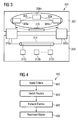
- a network 302 is coupled to a sub-network 304.
- Core Routers 306a-n route traffic 308 to Edge Routers 310a,b, which route the traffic 308 to Hosts 312a-n via an Ethernet 314.
- Figure 3 shows the new policy function, ie, criteria, 316.
- the present invention triggers the switching from the VRRP-master 310a to the VRRP-Backup 310b.
- the criteria 316 in operation, for example, in the case of an interruption of the connection to the Core Router 306a, arranges for the control the switching of the VRRP-Master 310a to the Backup-Router 310b.
- the Ethernet Frames will from thereon be managed over the Backup-Router 310b.
- the connection data is not lost.
- the VRRP-Protocol has been applied only to the Edge Routers 310a,b for link interruptions in the Sub-Network 304 as criteria for switching to a second VRRP-Router 310b. Rather, the present invention initiates, ie, triggers, the switching of the VRRP router on the Sub-Network 304 side.
- the invention defines, for example, a number of criteria 316, which relate the connection between the Access Area and the IP-Backbone. In the invention, this means that a condition of the network 302 or network 302 parameter regarding a routing element on the sub-network side.
- the new policy criteria, or functions are applied in step 402 to trigger the redundancy protocol according to predetermined conditions.
- step 404 the active process of the VRRP-Master is switched to the backup. The manner of switching is similar to the situation when an interface is interrupted to the Master router. Through this switching, the Ethernet frames are forwarded through the redundant router in step 406.
- step 408 the VRRP-Master is reactivated when it is again capable of transmitting traffic.
- the manner of coding the routers is similar to the VRRP and anyone skilled in the art of programming redundancy protocols will know readily how to implement the criteria. While the invention relates to the VRRP Protocol, any suitable redundancy protocol is within the present invention. And, while the invention is explained with reference to an Ethernet Interface of an Access Area, the invention relates more broadly to triggering switching in any type of Sub-Network.
- the criteria of the present invention for triggering the switching of the routers will be described with reference to the flow diagram 500 of Figure 5.
- the criteria in steps 502 to 520 are monitored and, in the event, any of the criteria are fulfilled, the invention switches the router connection in the Sub-Network to the back up router in step 522.
- the criteria are freely administerable to trigger the switching. That is, the invention is not limited to any particular criteria, but that any or a combination of the criteria may be employed.
- further criteria that relate the connection of the Access Area to the IP-Backbone not specified are within the invention.
- a link interruption criteria, or policy, in step 502 takes into account link interruptions.
- the router-interfaces are assigned when a link interruption occurs.
- the present invention recognizes such an interruption in the link when a relevant router-interface is in a status 'down' condition, for example. This may occur because the corresponding cable is broken.
- the criteria triggers the VRRP process to switch the connection in the Sub-Network to the back up router.
- step 504 another criteria tracks the number of bit failures of the links to be watched. When the number of bit failures exceeds an assigned limit, then the present invention triggers the VRRP-Process to switch the connection to the back up router in the Sub-Network.
- the traffic load on the links is monitored by the criteria of step 506.
- the traffic load exceeds an assigned limit by determining, for example, when an assigned maximum bit rate of the interfaces is exceeded, then the present invention triggers the VRRP-Process to switch the connection to the back up router in the Sub-Network.
- the present invention handles networks that utilize traffic classes (or categories) as well, such as in Multi-Protocol Label Switching (MPLS).
- MPLS involves setting up a specific path for a given sequence of packets, identified by a label put in each packet. This saves the time needed for a router to look up the address, which indicates where to forward the data, ie, the next node.
- the routers are caused to be switched as in the previous step of 506. In this case, however, only the relevant MPLS parameters, ie, the traffic class specific counter and assigned limits, are evaluated.
- step 510 a criteria for monitoring an interruption of routing-protocol neighbors is provided. In this case, when the routing neighbors are interrupted, a back up is assigned.
- the criteria triggers the assignment of another adjacent router.
- the invention monitors when the adjacent neighbor no longer signals the IP network, for example, using the regular protocol (eg, OSPF-Hellos). When this occurs, the invention triggers the neighboring router to be switched.
- the regular protocol eg, OSPF-Hellos
- An availability/unavailability of assigned routing tables entries criteria triggers the switching of the routers according to step 512.
- the invention causes the router in the Sub-Network to be switched. This may occur, for example, because a router in the direction of a known destination is lost because of a defect.
- the criteria indicates when the number of entries of a routing table exceed an assigned limit.
- the present invention triggers the VRRP-Process to switch the connection to the back up router in the Sub-Network.
- the criteria of step 516 triggers the VRRP-Process to switch the connection to the back up router in the Sub-Network.
- the router in the Sub-Network is switched.
- the CPU load may be that which is assigned to specified modules of the router and / or the central processor.
- a criteria provides that, when a Simple Network Management Protocol (SNMP) load exceeds an assigned value, the routers are switched.
- SNMP is the protocol governing network management and the monitoring of network devices and their functions. It is not necessarily limited to TCP/IP networks.
- the present invention triggers the VRRP-Process to switch the connection to the back up router in the Sub-Network.
- SNMP is described formally in the Internet Engineering Task Force (IETF) Request for Comment (RFC) 1157.
- the criteria of step 520 triggers the VRRP-Process to switch the connection to the back up router in the Sub-Network.
- the criteria of step 520 triggers the VRRP-Process to switch the connection to the back up router in the Sub-Network.
- RAM Random Access Memory
- non-volatile memory non-volatile memory
- flash cards etc. It may occur, for example, that the resource limit may be exceeded due to memory leaks.
- the invention causes the router in the Sub-Network to be switched.
- a carrier grade redundant connection that effects a 'virtual trunking' of a media gateway, shown simply as the displayed Host 312a-n ( Figure 3).
- the criteria may be implemented, for that matter, by a soft switch provided, in part, by the Edge Router.
- the VRRP handles redundant routing of the Sub-Network.
- IP-Addresses for routing data such as in a Pro-Gateway system, are instantiated according to the known VRRP-Process.
- the protocol may be other than a VRRP and may generally include any redundancy protocol.
- OSPF Open Shortest Path First
- OSPF is a router protocol usually used within larger autonomous system networks.
- a host that obtains a change to a routing table or detects a change in the network immediately multicasts the information to all other hosts in the network so that all have the same routing table information.
- the host using OSPF sends only the part that has changed.
- OSPF multicasts the updated information only when a change has taken place.
- OSPF bases its path descriptions on "link states" that take into account additional network information.
- OSPF also lets the user assign cost metrics to a given host router so that some paths are given preference-and supports a variable network sub-net mask so that a network can be subdivided. More information regarding OSPF can be obtained from the well-known literature.
- the Core Router 306a-n may be part of a global data network, for example, the Internet.
- the Core Router 306a-n routes IP Download Traffic 308 from the Internet Network 302 to the Edge Routers 310a, b.
- the Edge Routers could form part of an IP-Backbone, which is a set of paths that local or regional networks connect to for long-distance interconnection.
- the connection points could be network nodes or telecommunication data switching exchanges (DSEs).
Landscapes
- Engineering & Computer Science (AREA)
- Computer Networks & Wireless Communication (AREA)
- Signal Processing (AREA)
- Data Exchanges In Wide-Area Networks (AREA)
Priority Applications (5)
| Application Number | Priority Date | Filing Date | Title |
|---|---|---|---|
| EP03006496A EP1460807A1 (fr) | 2003-03-21 | 2003-03-21 | Système, procédé et dispositif de routage de trafic dans des réseaux de télécommunication |
| CN200480007710.1A CN1762136A (zh) | 2003-03-21 | 2004-03-22 | 用于在电信网中路由选择业务的系统方法和设备 |
| EP04722287A EP1606911A1 (fr) | 2003-03-21 | 2004-03-22 | Systeme, procede et appareil d'acheminement de trafic dans un reseau de telecommunications |
| US10/550,146 US20060077922A1 (en) | 2003-03-21 | 2004-03-22 | System method & apparatus for routing traffic in a telecommunications network |
| PCT/EP2004/003023 WO2004084499A1 (fr) | 2003-03-21 | 2004-03-22 | Systeme, procede et appareil d'acheminement de trafic dans un reseau de telecommunications |
Applications Claiming Priority (1)
| Application Number | Priority Date | Filing Date | Title |
|---|---|---|---|
| EP03006496A EP1460807A1 (fr) | 2003-03-21 | 2003-03-21 | Système, procédé et dispositif de routage de trafic dans des réseaux de télécommunication |
Publications (1)
| Publication Number | Publication Date |
|---|---|
| EP1460807A1 true EP1460807A1 (fr) | 2004-09-22 |
Family
ID=32798867
Family Applications (2)
| Application Number | Title | Priority Date | Filing Date |
|---|---|---|---|
| EP03006496A Withdrawn EP1460807A1 (fr) | 2003-03-21 | 2003-03-21 | Système, procédé et dispositif de routage de trafic dans des réseaux de télécommunication |
| EP04722287A Ceased EP1606911A1 (fr) | 2003-03-21 | 2004-03-22 | Systeme, procede et appareil d'acheminement de trafic dans un reseau de telecommunications |
Family Applications After (1)
| Application Number | Title | Priority Date | Filing Date |
|---|---|---|---|
| EP04722287A Ceased EP1606911A1 (fr) | 2003-03-21 | 2004-03-22 | Systeme, procede et appareil d'acheminement de trafic dans un reseau de telecommunications |
Country Status (4)
| Country | Link |
|---|---|
| US (1) | US20060077922A1 (fr) |
| EP (2) | EP1460807A1 (fr) |
| CN (1) | CN1762136A (fr) |
| WO (1) | WO2004084499A1 (fr) |
Cited By (2)
| Publication number | Priority date | Publication date | Assignee | Title |
|---|---|---|---|---|
| EP2157746A1 (fr) * | 2008-08-21 | 2010-02-24 | Hitachi Ltd. | Système de commande de routage dans un L3VPN réseau de service |
| CN106533536A (zh) * | 2016-11-07 | 2017-03-22 | 北京航空航天大学 | 极地轨道低轨道卫星网络ip编址方法及装置 |
Families Citing this family (9)
| Publication number | Priority date | Publication date | Assignee | Title |
|---|---|---|---|---|
| US7586838B2 (en) * | 2004-06-22 | 2009-09-08 | Skylead Assets Limited | Flexible M:N redundancy mechanism for packet inspection engine |
| US7929421B2 (en) * | 2004-10-18 | 2011-04-19 | Hewlett-Packard Development Company, L.P. | Application driven router redundancy protocol |
| CN1980230B (zh) * | 2005-11-30 | 2011-06-01 | 华为技术有限公司 | 对vrrp组进行管理的方法 |
| US8130638B2 (en) * | 2006-01-24 | 2012-03-06 | Cisco Technology, Inc. | Method and apparatus to elect ABRs dynamically and intelligently |
| PL2041922T3 (pl) * | 2006-07-14 | 2013-08-30 | Siemens Ag | Sposób generowania komunikatu żądania rozszerzonej trasy oraz komunikatu odpowiedzi rozszerzonej trasy dla procedur wykrywania tras |
| US20090141661A1 (en) * | 2007-11-29 | 2009-06-04 | Nokia Siemens Networks Oy | Residual traffic state for wireless networks |
| CN101951326A (zh) * | 2010-09-29 | 2011-01-19 | 河南辉煌科技股份有限公司 | 大型环网中实现核心网络设备的冗余方法 |
| JP5960102B2 (ja) | 2013-08-19 | 2016-08-02 | メビオール株式会社 | 植物栽培システムおよび植物栽培方法 |
| EP3641278A1 (fr) * | 2018-10-17 | 2020-04-22 | Siemens Aktiengesellschaft | Procédé de fourniture d'une fonction de relais, en particulier de routage redondante, système, programme informatique et support lisible par ordinateur |
Citations (1)
| Publication number | Priority date | Publication date | Assignee | Title |
|---|---|---|---|---|
| US20030031180A1 (en) * | 1999-12-31 | 2003-02-13 | Ragula Systems D/B/A/ Fatpipe Networks | Combining routers to increase concurrency and redundancy in external network access |
Family Cites Families (5)
| Publication number | Priority date | Publication date | Assignee | Title |
|---|---|---|---|---|
| JP3224963B2 (ja) * | 1994-08-31 | 2001-11-05 | 株式会社東芝 | ネットワーク接続装置及びパケット転送方法 |
| CA2371432A1 (fr) * | 2001-02-13 | 2002-08-13 | Telecommunications Research Laboratory | Retablissement de reseaux ip utilisant des tables de routage de retablissement precalcule |
| US7035202B2 (en) * | 2001-03-16 | 2006-04-25 | Juniper Networks, Inc. | Network routing using link failure information |
| US6883108B2 (en) * | 2001-05-07 | 2005-04-19 | Sun Microsystems, Inc. | Fault-tolerant routing scheme for a multi-path interconnection fabric in a storage network |
| US7092354B2 (en) * | 2001-06-07 | 2006-08-15 | Intel Corporation | Method and apparatus to provide redundancy in a network |
-
2003
- 2003-03-21 EP EP03006496A patent/EP1460807A1/fr not_active Withdrawn
-
2004
- 2004-03-22 EP EP04722287A patent/EP1606911A1/fr not_active Ceased
- 2004-03-22 WO PCT/EP2004/003023 patent/WO2004084499A1/fr not_active Ceased
- 2004-03-22 CN CN200480007710.1A patent/CN1762136A/zh active Pending
- 2004-03-22 US US10/550,146 patent/US20060077922A1/en not_active Abandoned
Patent Citations (1)
| Publication number | Priority date | Publication date | Assignee | Title |
|---|---|---|---|---|
| US20030031180A1 (en) * | 1999-12-31 | 2003-02-13 | Ragula Systems D/B/A/ Fatpipe Networks | Combining routers to increase concurrency and redundancy in external network access |
Non-Patent Citations (2)
| Title |
|---|
| "Extreme Standby Router Protocol and Virtual Routing Redundancy Protocol", EXTREME NETWORKS, 31 July 2002 (2002-07-31), XP002243350, Retrieved from the Internet <URL:http://builder.itpapers.com/whitepapers/> [retrieved on 20030603] * |
| KNIGHT S ET AL: "Virtual Router Redundancy Protocol", IETF, April 1998 (1998-04-01), XP002135272, Retrieved from the Internet <URL:ftp://ftp.isi.edu/in-notes/rfc2338.txt> [retrieved on 20000410] * |
Cited By (4)
| Publication number | Priority date | Publication date | Assignee | Title |
|---|---|---|---|---|
| EP2157746A1 (fr) * | 2008-08-21 | 2010-02-24 | Hitachi Ltd. | Système de commande de routage dans un L3VPN réseau de service |
| US9185031B2 (en) | 2008-08-21 | 2015-11-10 | Hitachi, Ltd. | Routing control system for L3VPN service network |
| CN106533536A (zh) * | 2016-11-07 | 2017-03-22 | 北京航空航天大学 | 极地轨道低轨道卫星网络ip编址方法及装置 |
| CN106533536B (zh) * | 2016-11-07 | 2019-07-26 | 北京航空航天大学 | 极地轨道低轨道卫星网络ip编址方法及装置 |
Also Published As
| Publication number | Publication date |
|---|---|
| WO2004084499A1 (fr) | 2004-09-30 |
| US20060077922A1 (en) | 2006-04-13 |
| CN1762136A (zh) | 2006-04-19 |
| EP1606911A1 (fr) | 2005-12-21 |
Similar Documents
| Publication | Publication Date | Title |
|---|---|---|
| EP2680510B1 (fr) | Protection de réacheminement rapide déclenchée par un plan de service | |
| Sharma et al. | Fast failure recovery for in-band OpenFlow networks | |
| US7765306B2 (en) | Technique for enabling bidirectional forwarding detection between edge devices in a computer network | |
| EP1079570B1 (fr) | Cycles pour la protection de routage de données de réseau pour la commutation automatique de protection | |
| US9166877B2 (en) | Distinguishing between connectivity verification availability and forwarding protocol functionality in a computer network | |
| EP2093944B1 (fr) | Procédé, système et routeur pour mettre en oeuvre une communication entre des dispositifs ip | |
| US7551551B2 (en) | Fast reroute (FRR) protection at the edge of a RFC 2547 network | |
| US7636364B2 (en) | Redundant router network | |
| EP1905203B1 (fr) | Routeur et procede pour la migration de processus de protocole | |
| EP2364539B1 (fr) | Système et procédé de mise en oeuvre des réacheminements rapides légers non par ip dans un réseau de télécommunication | |
| KR100840136B1 (ko) | 예비 접속들을 위한 다이내믹하게 변경된 메트릭들을 이용한 트래픽 네트워크 흐름 제어 | |
| US20020078232A1 (en) | OSPF backup interface | |
| RU2358398C2 (ru) | Способ пересылки трафика, имеющего предварительно определенную категорию обслуживания передачи данных, в сети связи без установления соединений | |
| EP1006702A2 (fr) | Méthode et procédé pour un VRRP (Virtual Router Redundancy Protocol) amélioré | |
| JP2006135972A (ja) | SoftRouterの分離制御ネットワーク | |
| CN110891018B (zh) | 网络流量恢复方法、装置、sdn控制器及存储介质 | |
| JP5024195B2 (ja) | 負荷分散サーバ、ネットワーク負荷分散方法および輻輳回避方法 | |
| US7457248B1 (en) | Graceful shutdown of network resources in data networks | |
| US20080123521A1 (en) | Failure protection for P2MP tunnel tail-end node | |
| CN113366804A (zh) | 防止网络拓扑改变期间的微环路的方法和系统 | |
| US10116494B2 (en) | Shared path recovery scheme | |
| US20060077922A1 (en) | System method & apparatus for routing traffic in a telecommunications network | |
| WO2024021976A1 (fr) | Procédé de traitement de message et dispositif associé | |
| CN110719219B (zh) | 一种端口状态的配置方法及网络设备 | |
| EP3937437B1 (fr) | Procédé de traitement de perte de paquets et dispositif de réseau |
Legal Events
| Date | Code | Title | Description |
|---|---|---|---|
| PUAI | Public reference made under article 153(3) epc to a published international application that has entered the european phase |
Free format text: ORIGINAL CODE: 0009012 |
|
| AK | Designated contracting states |
Kind code of ref document: A1 Designated state(s): AT BE BG CH CY CZ DE DK EE ES FI FR GB GR HU IE IT LI LU MC NL PT RO SE SI SK TR |
|
| AX | Request for extension of the european patent |
Extension state: AL LT LV MK |
|
| AKX | Designation fees paid | ||
| REG | Reference to a national code |
Ref country code: DE Ref legal event code: 8566 |
|
| STAA | Information on the status of an ep patent application or granted ep patent |
Free format text: STATUS: THE APPLICATION IS DEEMED TO BE WITHDRAWN |
|
| 18D | Application deemed to be withdrawn |
Effective date: 20050323 |